


PART 1 — The Message I Was Never Meant to Hear
My son called me a burden while quietly preparing to take control of my $875,000 home. While he and his wife traveled through Europe on a lavish vacation, I sold the property, safeguarded my savings, and relocated somewhere they wouldn’t know to look. Three weeks later, they came back carrying expensive purchases and discovered that his key no longer worked. But the locked door was only the beginning. What I had left on the kitchen counter would tell him how completely things had changed.
Daniel stood on the doorstep in the navy jacket he had worn for the flight home. He held his suitcase with one hand and worked at the lock with the other. He tried the key once, then again, then pushed harder. Nothing. Behind him, Melissa adjusted her designer sunglasses and rearranged the luxury shopping bags hanging from her arm. They had returned with souvenirs from Florence, Paris, and Rome, looking rested and pleased with themselves. That ease disappeared as Daniel made another unsuccessful attempt.
“What is going on?” he muttered. Melissa’s forehead creased. “Are you sure you’re using the correct key?” He turned a sharp look on her. “I grew up in this house, Melissa.” Then he pushed the key into the lock again. Across the street, I sat inside a parked rental truck, watching with my hands still in my lap. Only three weeks before, the possibility of upsetting him would have frightened me. I had believed that keeping my family happy meant quietly accepting whatever they decided.
Now I understood something I should have recognized much sooner: loving my son did not require handing him control of my life. The house in front of him no longer belonged to me, and he knew nothing about the sale. My name is Eleanor. Thirty-two years earlier, my husband, Frank, and I had bought that Cedar Grove home when Daniel was still a little boy. The mortgage had felt enormous, but we had taken it on together, determined to build a home for our family.
We worked extra hours, passed up costly vacations, repaired appliances ourselves, and watched every dollar. Frank handled the gutters. I painted the bedrooms. Between us, we renovated the kitchen, replaced the windows, and cared for the garden. Nothing about paying for that house had happened easily or quickly. When the mortgage was finally gone, Frank opened an inexpensive bottle of champagne, kissed me, and whispered, “Now we’ll always have somewhere that belongs to us.” After all those years of effort, the words meant everything.
Then cancer took him from me. Afterward, the house held both the comfort of our life together and the ache of his absence. His favorite chair stayed near the window. His coffee mug remained in the kitchen cupboard. For nearly a year, I could not bring myself to take his winter coat out of the hallway. Little by little, though, I learned how to live there without him. Missing my husband did not mean I had forgotten how to look after myself.
I handled my money, worked in the garden, went to church, and saw my friends at book club. I was not helpless. I was a widow learning to carry on. When Daniel and Melissa began coming over more often, their attention initially seemed kind. He carried groceries for me, and she brought homemade soup. They offered assistance with appointments and chores. Other people kept telling me how lucky I was to have them, and at first, I thought so too.
Their helpfulness gradually took on a different tone. “This house is too much for one person,” Melissa said one afternoon. “I manage perfectly well,” I replied. “For now,” she said. Soon Daniel was bringing up the stairs, while Melissa sent brochures for retirement communities. The pictures showed gardens, pools, and smiling older residents, but none of it made me want to leave. This was where I had raised Daniel and celebrated anniversaries with Frank. Its value to me could not be reduced to a price.
To Daniel and Melissa, however, it was increasingly becoming something they expected to inherit. I did not fully grasp that until the day before they left for Europe. I was upstairs folding laundry when my phone rang. The call ended before I could answer, and a voicemail notification appeared. Daniel seldom left a message, so I played it. At first there was only traffic and the sound of a car door. Then I heard Melissa laugh, followed by my son’s voice.
“She’s becoming a burden, Mel. We’ve put our lives on hold long enough.” My heart stopped. Melissa replied, “Once we get the house situation handled, everything will be easier.” Daniel sighed. “I know.” Then she added the words I would never forget: “You’re her only son. Eventually, everything she owns will belong to you anyway.” I lowered myself onto the stairs. “She’s too stubborn,” Daniel said. Melissa laughed again. “She’s getting old. Once she signs those documents, we can manage everything.” Then the recording stopped.
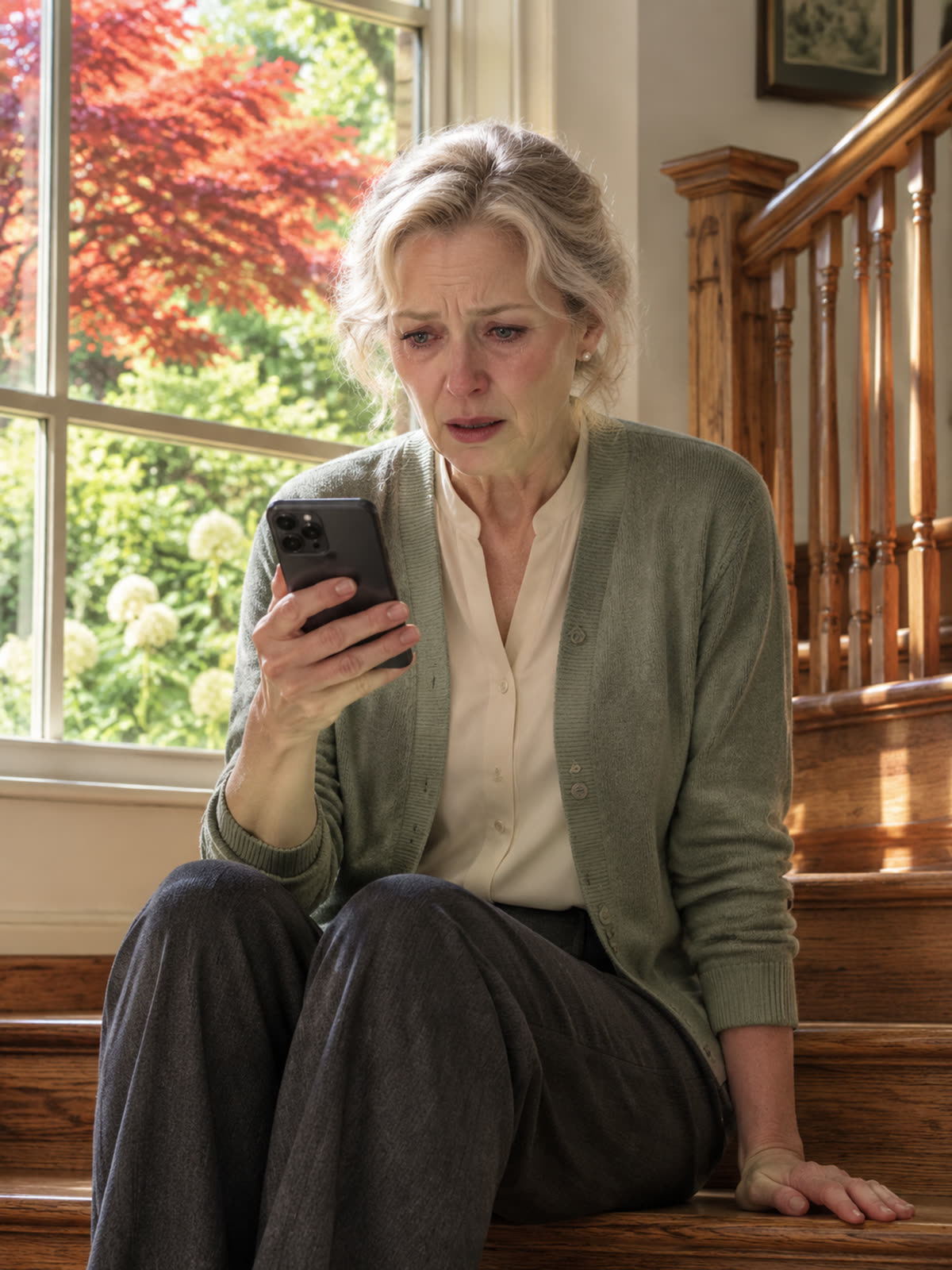
I remained on the stairs, staring at the phone. A burden. That was how my son described me when he believed I could not hear him. Not as the mother who had raised him, or the woman still grieving his father, or the person who had spent decades helping build his childhood home. In that conversation, I had become an obstacle. My life, my wishes, and my independence seemed to matter less than the inheritance he expected to receive.
That evening, I moved slowly through the house. I ran my hand over the wooden banister Frank had restored and went into Daniel’s old bedroom. Every room held reminders of the family we had been. Until then, those memories had helped make the house feel safe. Now they made it harder to understand what I had heard. The home we had worked so hard to provide had somehow become something our son believed he was entitled to claim before I was finished living in it.
In the laundry room, I found the pencil lines Frank had drawn to record Daniel’s height. Six years old. Eight. Ten. Thirteen. Sixteen. Beneath the last mark, Frank had written, “Finally taller than Dad.” Looking at those familiar words, I began to cry. I remembered the little boy who had stood against that wall and the father who had measured him. I could not reconcile those memories with the grown man discussing how to move me aside.
The tears were not about losing a piece of property. What hurt was knowing that the child we had loved so deeply had become a man willing to plan away my independence. The stairs, the garden, the rooms, and the memories were all mine to make decisions about. Yet Daniel and Melissa were discussing them as though my wishes were an inconvenience they simply needed to overcome. Their concern no longer sounded like concern. It sounded like preparation.
Near midnight, I went into Frank’s old office and began looking through his files. While I searched, I came across a storage box Daniel had left several months earlier. He had described it as financial paperwork, and until that night I had had no reason to question him. Inside were bank statements, copies of documents, and a folder with my name on it. After hearing that voicemail, I could not leave the folder unopened.
What I found inside made my blood run cold. There was a draft power of attorney, a list of doctors, and notes questioning whether I could make financial decisions for myself. Another document carried the title “Concerns Regarding Eleanor’s Independent Decision-Making.” I looked at my own name on those pages and understood that the conversation in the voicemail had not been idle frustration. They had already begun putting their intentions into a form that could be used against me.
The pages described me as forgetful and resistant to safer housing. They suggested that my emotional connection to the house prevented me from making sensible choices. My grief and my attachment to the home Frank and I had built were being presented as reasons to doubt my judgment. I had been managing my affairs, living independently, and making my own decisions. Yet here was paperwork making those same choices sound like evidence that I should no longer be allowed to make them.
Then I recognized Daniel’s handwriting. “Contact attorney after Europe.” Beneath it were more notes: “Obtain financial power of attorney.” “House value approximately $850,000–$900,000.” “Consider listing after relocation.” I read each line more than once. The plans were laid out plainly enough that I no longer had room to pretend I had misunderstood the voicemail. Their vacation was not interrupting a discussion they intended to have with me. It was simply coming before the next step.
They were not wondering whether I wanted to move. In their minds, the decision had already been made. First there would be questions about my judgment, then authority over my finances, then relocation, then a sale. The house Frank and I had paid for would become the answer to plans I had never agreed to. I had been trying to understand why their affection felt different. Now the explanation sat in front of me, written in my son’s own hand.
Something changed in me that night. I stopped crying, and I stopped searching for excuses that might make their behavior less painful. I could love my son without overlooking what he was preparing to do. For weeks, they had spoken as though my future was theirs to arrange. For years, I had made keeping the peace feel like a duty. But I was still capable of deciding what happened next—and they had no idea I was about to make that decision.
PART 2 — The House He Thought Would Be His
At eight-thirty the next morning, I called Martin Hale, the attorney who had handled Frank’s legal matters for more than twenty years. When we met, I laid out everything I had found. He studied the documents carefully rather than brushing aside my concerns. After the night I had spent reading my son’s plans, there was comfort in having someone examine the facts without treating my independence as a problem. I had come for help protecting my wishes, not for someone else to choose them.
“Did you sign any of these papers?” he asked. “No.” “Did you authorize Daniel to make decisions about your finances?” “Absolutely not.” “Has a medical professional told you that you’re incapable of managing your affairs?” “No.” Martin shut the folder. “Then we need to protect your independence before anyone tries to challenge it.” His questions were direct, and so were my answers. There was no confusion about what I had authorized, what I wanted, or whether those documents represented my consent.
Together, we updated my estate documents, checked previous authorizations, changed the relevant account arrangements, and recorded my wishes. These were decisions about my life, made with my knowledge and permission. Then Martin asked the question my own family had never thought to ask. “Eleanor, what do you want to do with the house?” I looked toward the window. Until that moment, refusing Daniel’s plans and staying in Cedar Grove had seemed inseparable. Suddenly, I understood that they were not the same thing.
I could choose to leave without allowing anyone to force me out. For the first time, the idea of a simpler life felt like a possibility that belonged to me rather than a threat coming from someone else. “I think I’d like to sell it,” I answered. Martin smiled. “That’s very different from someone forcing you out.” He was right. The difference was not merely who signed the papers. It was whose wishes those papers carried out, and whose life was being decided.
I contacted Susan Keller, a local real estate agent, and explained that I wanted the sale handled quietly. There would be no public sign, no open houses, and no unnecessary attention. After viewing the property, she told me the market was strong. Within days, she had found a qualified buyer. The offer came to $875,000. The financing was secure, the conditions were uncomplicated, and the buyers were able to close quickly. I accepted because the decision was right for me.
That afternoon, a message arrived from Daniel in Rome. “Mom! We made it! The hotel is amazing. Love you!” I stared at his words before answering, “Enjoy your vacation.” I meant it. While he and Melissa continued through Rome, Florence, and Paris, I would take care of what needed doing at home. They had left believing their plans could wait until they returned. I no longer felt any obligation to put my own future on hold for their convenience.
I packed the belongings I could not imagine leaving behind: Frank’s favorite chair, our family photographs, a few pieces of furniture, and the albums holding Daniel’s childhood. The things that mattered were not necessarily the largest or most valuable. They were the pieces of our life I still wanted around me. Everything I no longer needed, I donated. Packing was emotional, but it was also a reminder that choosing a different home did not require throwing away the life I had already lived.
I rented a lovely two-bedroom home near a quiet lake. It had generous windows, a small patio, and no stairs. For years, I had feared that leaving Cedar Grove would feel like abandoning Frank and our memories. As I began unpacking, I realized those memories had not stayed trapped in the old rooms. They had come with me in photographs, familiar belongings, and the life I carried inside myself. Leaving the house did not mean leaving my husband behind.
The sale was completed four days before Daniel came home. The buyers, Rachel and Thomas, were a young couple with two children. Seeing another family prepare to live there brought its own sadness, but it also reminded me why Frank and I had loved the place. It had been a home, not merely an asset. Now it would have another family’s ordinary days inside it. That did not erase our years there or make them belong to us any less.
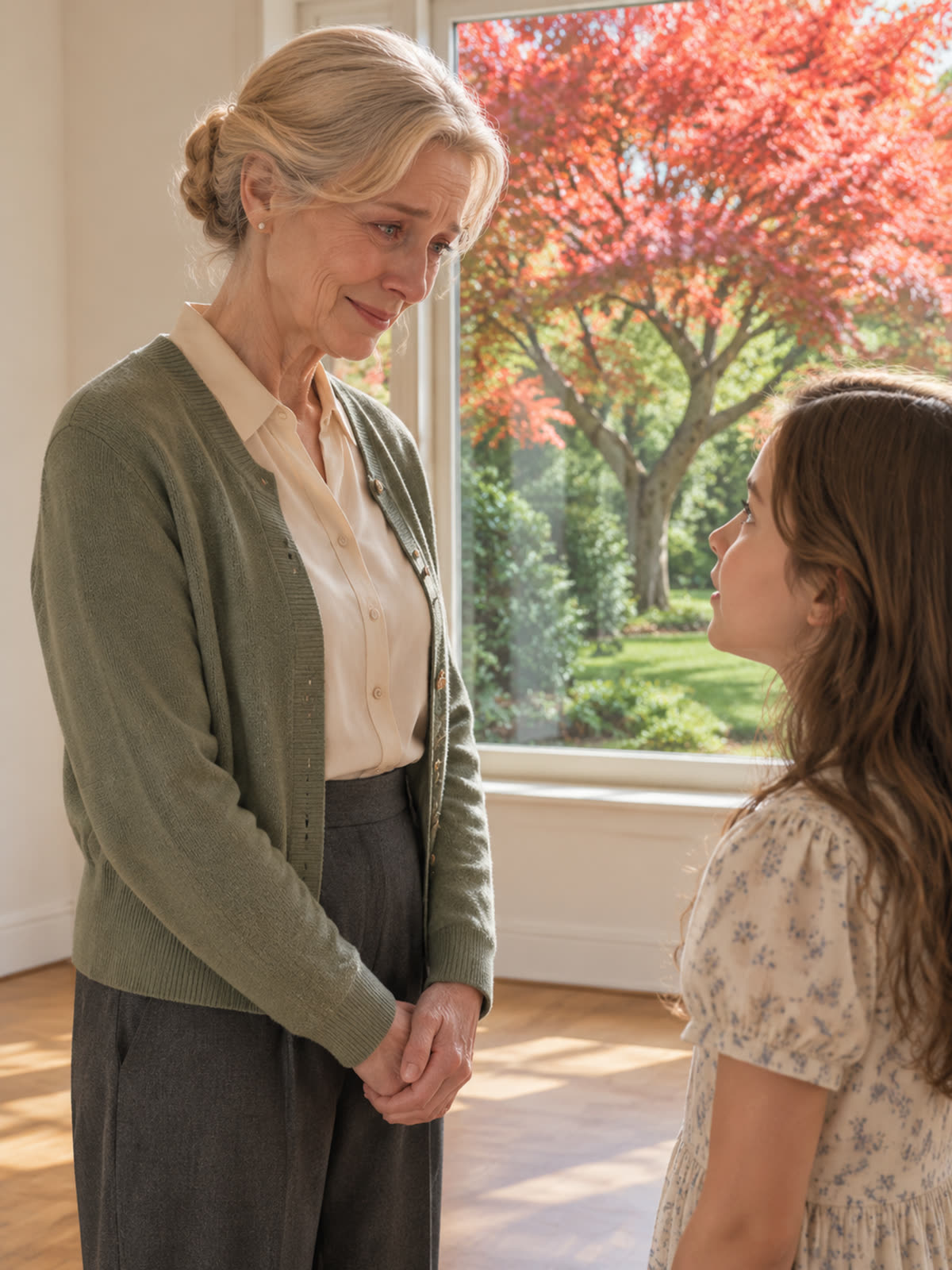
During their final visit, their daughter ran upstairs and asked whether she could have the bedroom facing the maple tree. I smiled. “That used to be my son’s room.” She looked at me and asked, “Was it a good room?” I swallowed before answering. “For many years, sweetheart.” The question was simple, but it held more than she could have known. For a long time, that room had held a boy we loved and a future we had never imagined would turn out this way.
After signing the last documents, I sat by myself in my car and cried. Then I drove toward the lake. Before leaving Cedar Grove, I had placed a white envelope on the kitchen counter with Daniel’s name across it. Now, three weeks after the voicemail, I watched from the rental truck as he struggled with the lock. The new owners had allowed a final, arranged window for collecting belongings, and the door was unlocked during that period. When Daniel finally pushed it, it opened.
He stepped inside with Melissa following him, and both stopped. The living room was nearly bare. The furniture and family photographs were gone. He hurried through the rooms, calling, “Mom?” His voice carried through the emptiness, but nobody answered. Then he noticed the envelope. He tore it open and unfolded the letter. I had spent years making room for his feelings, often before considering my own. This time, I had put my own wishes into words he could not mistake.
“Daniel,
You called me a burden.
You said your life would become easier once the house was taken care of.
Melissa said everything would eventually belong to you.
So I decided to take care of the house myself.
I sold it.
The transaction is complete.
The money belongs to me.
My financial decisions belong to me.
And my future belongs to me.
I also discovered your plans involving power of attorney and questions about my ability to manage my affairs.
My attorney has copies of everything.
Do not attempt to access my accounts or make decisions on my behalf.
I will always love you because you’re my son.
But loving you doesn’t mean surrendering my independence.
You wanted freedom from your burden.
Now you have it.
Mom.”
Daniel read the letter twice before Melissa took it from him. Even from across the street, I could see her expression change. My phone rang with Daniel’s name on the screen. I let it ring. He tried again, then kept calling until there were seven missed calls. Finally, a message appeared: “MOM! WHAT DID YOU DO? YOU SOLD THE HOUSE?” I left it unanswered. Another followed: “CALL ME IMMEDIATELY!” Inside the empty living room, he paced while I watched quietly from the truck.
When he called again, I answered. “Hello, Daniel.” “Mom! Where are you?” “I’m safe.” “Why is the house empty?” “Because I moved.” “You moved? Without telling us?” “Yes.” His voice grew louder. “You sold an $875,000 house without discussing it with me?” “Yes, Daniel.” Silence followed. He seemed unable to accept that such a decision could have been made without first being placed before him, even though he had been preparing to make decisions about my life without asking me.
Then he said what made his assumptions unmistakable. “But that house was supposed to stay in the family!” I looked toward the porch. “No, Daniel. That house belonged to me until I decided otherwise.” He protested and insisted that they had only been concerned about my safety. I listened, but the explanation could not change what I had heard or found. Worry about a parent did not explain speaking of her belongings as though she had already surrendered them.
When I mentioned the voicemail, his voice changed. “You weren’t supposed to hear that.” I closed my eyes. There was no apology in those words, and no denial. He was admitting only that I had heard something he had wanted hidden. Until that moment, some part of me had still been waiting for him to recognize what he had done. Instead, his first response was about the fact that I knew. The distinction hurt as much as the admission itself.
I told him about the documents in the storage box. This time, he went completely quiet. “Mom, those were only preliminary plans.” “Plans to move me out and sell my home?” “We were trying to prepare for the future.” “Whose future, Daniel? Mine or yours?” He offered no answer. The question stayed between us because there was nothing more complicated to hide behind. My future had been discussed, priced, and outlined, yet my wishes had been absent from every page.
Then another voice interrupted. Thomas, the new homeowner, had arrived. Daniel looked toward the entrance as Thomas explained that the property now legally belonged to him. Listening through the phone, I could hear my son trying to resist a fact that had already been settled. The house had been sold, the documents were complete, and its new owner was standing there. Daniel could no longer treat my decision as something he might still persuade me to undo.
“My mother owns this house!” he protested. “Owned,” I corrected quietly. Daniel stopped speaking. For all his anger, there was no argument that could turn that word back into the present tense. He had returned from Europe believing the house would be waiting, just as he had left it, with my life still arranged around his expectations. Now he stood inside somebody else’s property, holding my letter, while the man who owned it waited for him to accept what came next.
PART 3 — The Door I Would Open on My Own Terms
The new owner asked Daniel and Melissa to leave, and I ended the call. A few minutes later, they came outside with their suitcases. They had arrived believing they were returning to a home that would eventually become theirs. Instead, they were walking away from property they had no right to claim. I drove off before they noticed me. I did not need to see any more. The house was no longer mine, and their expectations were no longer mine to fulfill.
Over the following days, Daniel called repeatedly. Eventually, Martin contacted him about the financial documents, and the tone of the messages changed at once. Daniel became more careful. He said there had been a misunderstanding, insisted that he loved me, and pleaded for a meeting. I read what he sent without allowing the urgency to make the decision for me. I still loved him, but love could not restore trust merely because he wanted the consequences to end.
At last, I agreed to see him, with conditions. He would come alone. Melissa would not be there, and my bank accounts would not be discussed. We met in a small café. He looked exhausted. “Mom, I’m sorry,” he said. I waited rather than helping him past the difficult part. “I shouldn’t have called you a burden.” “No, you shouldn’t have.” It was the first time he had said plainly that those words were wrong instead of explaining why I should not have heard them.
He began describing the financial trouble he and Melissa were in: credit card debt, expensive renovations, investments that had gone badly, and the European vacation they had already booked. They had come to think of my house as the safety net that would eventually catch them. Listening to him, I understood more about the pressure behind their plans. Understanding that pressure did not make their choices acceptable. Their financial problems had not given them ownership of my home or authority over my future.
“So you planned to move me into a retirement community?” I asked. Daniel lowered his eyes. “We thought selling the house would make sense.” “For whom?” He did not answer. That silence was familiar now. Whenever the conversation reached the difference between what helped me and what helped them, he seemed to run out of explanations. They had described their intentions as practical, but practicality meant very little when the person whose life would change had never been asked.
I leaned toward him. “Daniel, if you’d come to me honestly, perhaps I could have helped you. But instead, you began making decisions about my life without my permission.” Tears rose in his eyes. “I’m sorry.” This time, I believed he was beginning to understand what he had done. Still, understanding was not the same as earning back my trust. I could recognize his remorse without pretending the voicemail and the paperwork had never existed.
“I love you,” I told him. “But you will never control my finances.” He nodded. “And you will never make decisions about my home or my future without my consent.” “I understand.” These were not punishments I was laying out to hurt him. They were boundaries that should never have needed defending. He was my son, but being my son did not entitle him to take charge of the life I was still living.
“My estate plan has been changed.” His expression tightened. “Changed how?” I met his eyes. “That’s no longer something you’re entitled to know.” The question brought us back to the same assumption that had been underneath so much of what had happened. Even after his apology, he still wanted information about what might someday become his. I would not turn my remaining years into a waiting room for an inheritance or let reconciliation become another discussion about my money.
He stared at me, and I let the silence remain. There was no need to soften what I had said or explain it until it became something easier for him to accept. My estate was mine to arrange. My accounts were mine to manage. I could be his mother and still have parts of my life that did not require his approval. Those facts had not changed because he was frightened by the possibility that I meant them.
“Mom, I’m your only child.” “And I’m still alive, Daniel.” For a long moment, neither of us spoke. The words were simple, but they contained everything he had failed to consider. I was not a future inheritance, a house waiting to be sold, or a problem to be relocated. I was his mother, sitting across from him, still making choices about my own life. Whatever happened between us afterward would have to begin with his accepting that.
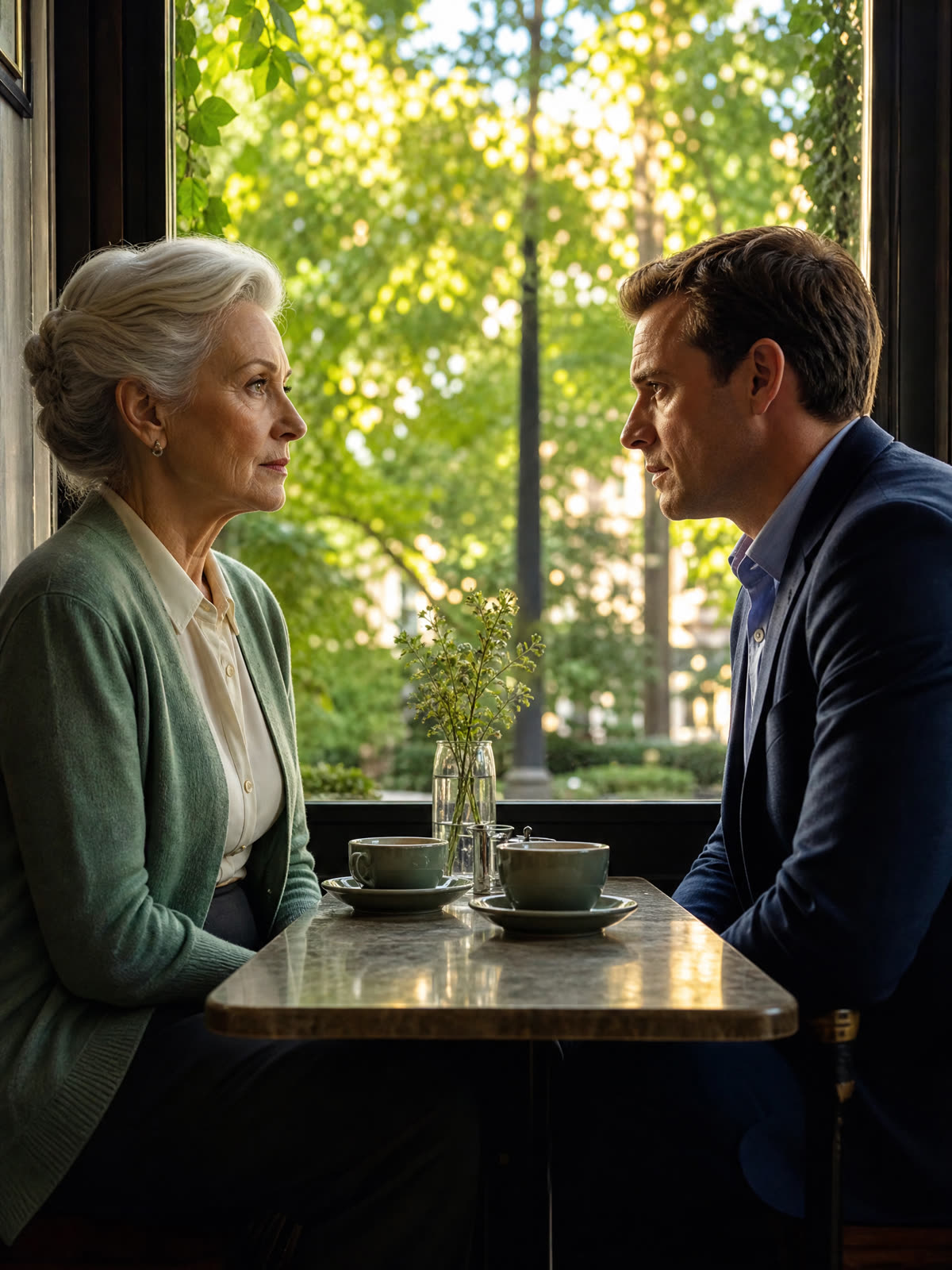
Eventually, he asked, “What happens to us now?” My heart ached. Despite everything, he was still the boy whose height Frank had marked on the laundry-room wall, the teenager I had waited up for, and the young man we had celebrated at graduation. Those memories had not disappeared because he had hurt me. “I don’t know,” I admitted. “That depends on what you do next.” I could not promise him forgiveness on a schedule, or give him an answer he had not yet helped create.
Melissa never gave me a sincere apology. She sent an email saying that her intentions had been misunderstood, and I chose not to answer. I had already spent enough time trying to turn what they had done into something less painful. Instead, I put my attention into the life I had chosen. There was no reason to keep defending my decision to someone who could describe the problem only as a failure to understand her intentions.
I joined a walking group, began painting, and planted flowers on the patio. In the evenings, I watched the lake. The quieter life I had wanted was becoming mine, not because someone had decided I was no longer capable of anything else, but because I had chosen it. There was peace in that difference. I had left behind a house full of memories without losing the memories themselves, and I was learning that there could still be things ahead worth enjoying.
Daniel started calling once a week. Our early conversations were strained, but over time he stopped asking about money. He asked how I was doing instead. When I talked about the garden, he listened. Those changes did not erase what had happened, yet they mattered. Eventually, when I felt ready, I gave him my address. It was a decision I made in my own time, rather than one pulled from me by guilt, urgency, or the assumption that he was owed it.
The first time he visited, he came alone and carried a small cardboard box. Inside were Frank’s old pocketknife, a family photograph from Yellowstone, and a brass keychain engraved with one word: “HOME.” Daniel held it carefully. “Dad gave me this when I left for college.” I remembered. Frank had told him then that he could always come home. Seeing that keychain again brought back the promise exactly as it had been meant, before a house and an inheritance had become confused with love.
Daniel looked at me. “I think I misunderstood what he meant.” I said nothing. “I thought he was promising that the house would always be waiting for me.” His voice cracked. “But he meant you.” Tears filled my eyes. For the first time since the voicemail, I cried in front of my son. Not because everything was forgiven or because we could simply go back, but because he finally seemed to understand what he had come so close to destroying.
A year after the Cedar Grove sale, Susan sent me a photograph. Rachel and Thomas had renovated the kitchen, and their children were standing beneath the maple tree. The little girl had painted Daniel’s former bedroom blue. I looked at the picture and smiled. The house was still doing what Frank and I had made it a home to do: giving a family somewhere to belong. That family was no longer ours, but the thought no longer felt like a loss I had to fight.
That evening, golden sunlight moved across the lake while I sat on the patio. Daniel called. “Hi, Mom.” “Hello, sweetheart.” He asked whether I would have dinner with him on Sunday. I smiled. “I’d love to.” It was a simple invitation, with no conversation about accounts, documents, or what would happen to the house. After everything, that simplicity mattered. We were not pretending the past had disappeared. We were making room for something different from what had brought us to that café.
When the call ended, I reached for the little bowl near my front door. A single silver key rested inside. My key, to my home, and to the life I had chosen. For years, I had mistaken keeping every door open for being a good mother, even when people stopped asking permission to enter. Now I understood that love did not give anyone the right to control another person’s life. A home was not an inheritance simply because someone had begun waiting for it.
Frank and I had spent thirty-two years paying for our old house, but the greatest thing he had left me was not the property. It was the confidence to build a life of my own. Daniel had called me a burden and expected to find me exactly where he had left me. Instead, while he and Melissa celebrated in Europe, I had sold the house, protected my savings, packed my memories, and begun again. His old key could no longer open my door. From now on, that door would open only by my choice—and who had truly earned the right to come inside?
Disclaimer: This story is a work of fiction inspired by real-life themes. Names, characters, places and events are fictionalized, and any resemblance to real persons is purely coincidental. It does not represent any person or organization and does not encourage inappropriate behavior. Images are for illustration purposes only.
