


PART 1: The Pillow
The Tuesday I discovered my husband dripping an unidentified liquid onto my pillow, he had already spent two days assuring me he was in Dallas. Seeing him slip into our house was terrible enough. What made it worse was the message that arrived five minutes later: “Still in meetings, babe. Take care of yourself.” My name is Dana Whitfield. I was thirty-nine, living in Chicago, and until that afternoon, I believed I understood the man I had married.
Garrett Pruitt and I had been together for twelve years. When we married, furnishing our apartment had stretched what little money we had. He went into real estate development; I worked for a private firm, auditing companies and following questionable transactions. Around our friends, Garrett often reduced my work to checking invoices while other people conducted actual business. I used to laugh rather than start an argument. Looking back, that contempt explained his first mistake: he assumed I would never examine his accounts.
For nearly a month, I had been unwell. At first, I woke with headaches. Nausea and dizziness followed, along with a disturbing inability to arrange my thoughts clearly. My family doctor ordered routine tests, but the results provided no explanation. Garrett kept blaming stress. “You’re wearing yourself out, Dee. You should take some time off from the firm,” he kept telling me, fluffing my pillow before I went to sleep.
That Tuesday, I managed barely three hours at my computer before my boss noticed how pale I looked and sent me home. I arrived shortly after noon, left my bag beside the armchair, and pulled a blanket over myself. I wanted quiet, so I left the television off. At 12:27, the lock turned. For a moment, I assumed the cleaner had arrived. Then I remembered that she came on Fridays, and it was only Tuesday.
A man’s shoes cast a moving shadow beneath the door. “Who’s there?” I asked. No one replied. I slipped behind the large armchair, where the glass front of the dining room cabinet reflected the staircase. When Garrett came into view wearing a navy-blue shirt and carrying a paper bag, relief passed through me. It lasted only a second. Then I saw the disposable gloves on his hands.
He headed upstairs without calling my name. I pulled out my phone and opened the camera app, selecting the bedroom feed. We had installed the cameras after an attempted break-in next door. The camera in our bedroom showed the doorway and one corner of the bed. I had once suggested switching it off, but Garrett had insisted that we leave it running.
On my screen, he approached my side of the bed. He removed a small dark bottle from the paper bag and lifted the pillowcase. I watched him let several drops fall onto the fabric that rested against my face every night. Afterward, he photographed it and slipped the bottle into his pocket. My hands lost their feeling. I wanted to escape, but he was still upstairs, between me and any certainty that I could leave unnoticed.
As he came down, I heard him speaking on the phone. “It’s done for today. No, she wasn’t here.” Then my own phone vibrated: “Still in meetings, babe. Take care of yourself.” I looked at the message, scarcely allowing myself to breathe. He paused before saying, “We’ll settle it Thursday. Don’t text this number again.” I knew that tone. It was the one he used when he spoke to Lindsey Crane, his business partner.
Lindsey had shared dinner at our house more times than I could remember. When my mother underwent surgery, she had accompanied me to the hospital. I had thought of her as a friend. Garrett left twelve minutes later. Only after his car disappeared did I move. I downloaded the original camera recording, preserved the time and access log, and sent a copy to a backup account. Then I called 911.
“My husband just put something on my pillow. I’ve been getting sick for weeks,” I told the operator, my voice cracking. She instructed me to leave, avoid touching anything in the bedroom, and wait somewhere safe for the officers. My keys were already in my hand when the family tablet rang on the table. The old iPad was still linked to Garrett’s account because we used it for video calls. Lindsey’s notification covered the screen: “Did you confirm the beneficiary thing? The deposit is already paid.”
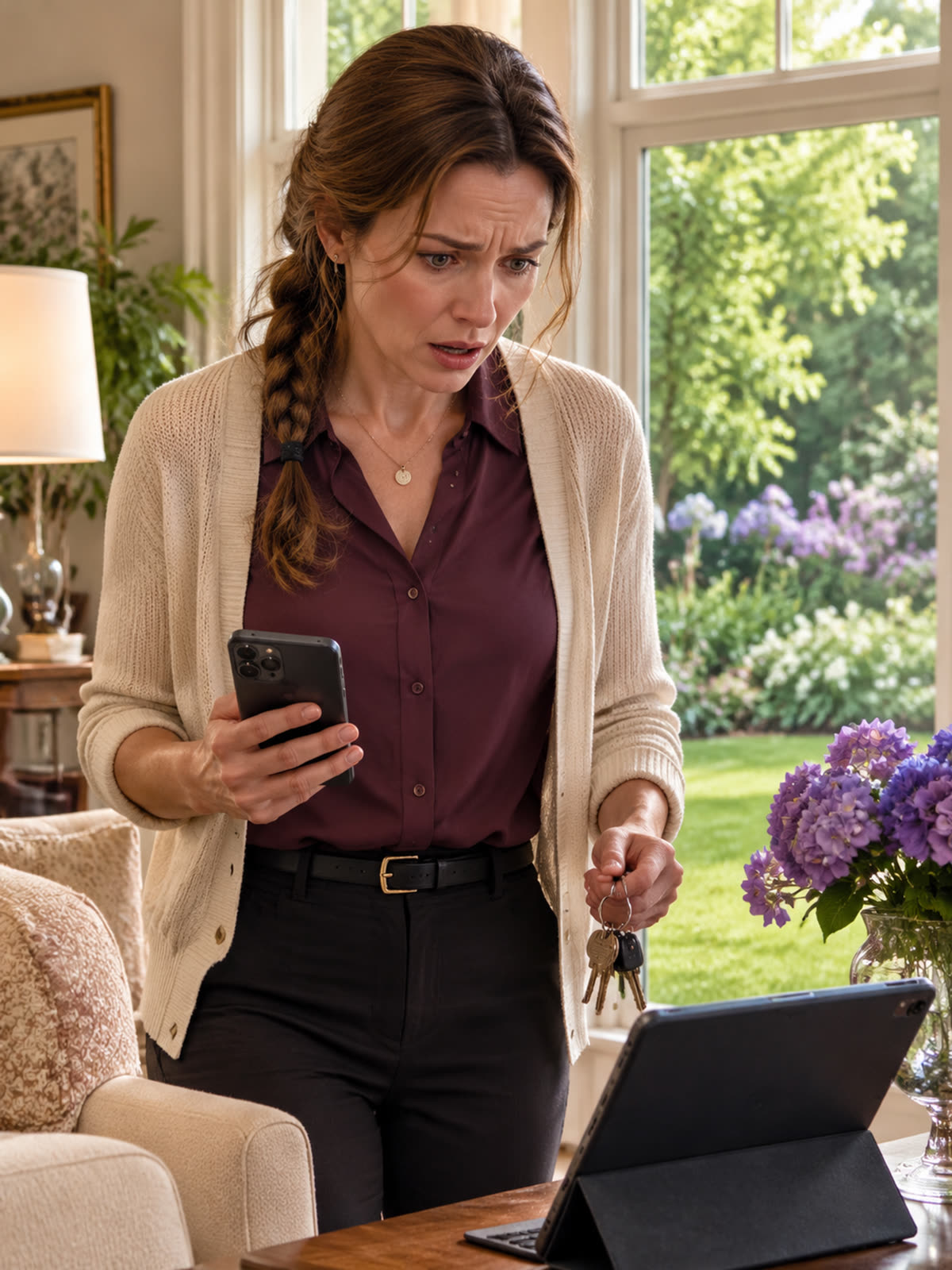
Garrett had never changed his password, so I did not have to work it out. I opened the conversation and photographed what I saw, leaving everything intact. There were pictures of a $400,000 life insurance policy, a letter bearing a signature forged to look like mine, and an alleged medical report claiming that I experienced periods of confusion. Farther down, a shared folder labeled “Planning” contained a funeral home estimate, cremation instructions, and a receipt showing a deposit paid by Garrett’s company.
On the final page, someone had written an expected date of death by hand. It was the coming Sunday—my fortieth birthday. I left the house without taking so much as a sweater. Across the street, I sat on the curb and stared up at our bedroom windows until a patrol car pulled in. I did not go back inside.
Officer Tamara Boyd listened to my account, recorded the location of each device, and explained the importance of preserving the originals. A paramedic examined me before an ambulance took me to the emergency room. There, the staff drew blood and performed a neurological examination. They questioned me about my medications, my work, and the cleaning products we kept at home. The doctor chose her words carefully.
“Your symptoms can have many causes,” she said. “I can’t tell you that you were poisoned without specific tests. But from what you’ve described, you should not sleep in that house.” I asked her to document my symptoms, when they had begun, and the reason for my concern. My work had taught me that one accurate record could carry more weight than twenty furious accusations.
I called my sister, Becca, in Evanston and asked whether she could collect some belongings for me when the police permitted it. After that, I contacted my lawyer, Joan Sutter. Garrett and I maintained separate finances. Joan had been helping me arrange the share I had inherited from my grandfather in a real estate trust. “Don’t use that tablet to dig any further,” she told me. “You’ve already seen enough to alert the prosecutors. Now we protect your accounts and write everything down.”
When I repeated Lindsey’s message, Joan fell silent. Then she asked, “Does your husband know what your share is really worth?” I answered, “He thinks it’s around four hundred thousand,” and explained, “He never read the financial statements. He only asked how much he could get out of it.” In fact, its value was nearer $1.6 million. But it was not readily available cash. Administrators, withdrawal limits, and trust rules stood between the assets and anyone hoping to take them. Garrett knew only some of that and had never bothered to understand the rest.
He called that evening. “How’s my sick girl?” he asked, using a sweetness that now turned my stomach. “Tired. I’m staying with Becca.” His tone shifted. “Your sister’s? Why aren’t you home?” I told him, “I got dizzy again.” A brief silence followed. Then he said, “You should stay in bed tomorrow. Well, you know. On your own pillow. I’ll be back Friday.”
I shut my eyes. He had placed particular weight on “your own pillow,” as though he needed to be certain I understood the instruction. “And Dallas?” I asked. “All good, babe. I’ll tell you when I get back.” I ended the call before my voice could tremble. He was still pretending to be away, and he still expected me to lay my head on that pillow.
PART 2: The Paper Trail
The following day, Joan brought the bank records I had requested, together with the alert emails from my accounts. Someone had attempted to transfer $80,000 out of an account held solely in my name and into a company connected to Garrett. The transaction had failed because it lacked my second-step authorization. Our joint account had not offered the same protection. Both of us could use it, and $35,000 had disappeared in three separate transfers.
Those payments had gone to a contractor pursuing Garrett over unpaid work and to a travel agency. This was not money he hoped to inherit someday. It was money we already owned, used without my knowledge. Joan had also contacted the trust company. Its records contained an email supposedly written by me, asking that Garrett be appointed my representative “to help me manage things,” accompanied by a power of attorney carrying another false signature.
The trust officer had rejected the request and insisted that I appear in person. “His plan didn’t only depend on you dying,” Joan said. “He also wanted you to look unable to handle your own affairs.” I began remembering dinners when Garrett joked that I could never remember where I had left my keys. Lindsey was always ready to contribute. “Dee works too hard. Then she can’t even remember what she signs.”
They had made those remarks in front of my mother, our friends, and clients. What I had taken for humiliating jokes had been something more deliberate: they were constructing a version of me they might eventually need. The Cook County State’s Attorney’s Office instructed us to retain every piece of digital material and arranged for the bedroom to be searched and the documents reviewed. A laboratory technician collected samples from both the pillow and its case. We would have to wait for the results.
Investigators also checked the supposed medical report. The clinic named on its letterhead said it had never produced the document. That afternoon, another alert reached me from the bank. An unfamiliar device was attempting to reset my password. With the bank’s assistance, I secured the accounts and passed the information to the investigators. I assumed Garrett was scrambling because I had begun cutting off his access.
Then Joan showed me a photograph prosecutors had added to my complaint. It came from the “Planning” folder. On a calendar page, Lindsey had written: If she won’t sign, Sunday. Suddenly, the liquid on the pillow no longer looked like the only danger. Sunday had been chosen deliberately. Garrett and Lindsey had arranged a birthday dinner for me at our house, and Lindsey had offered to take care of everything.
I canceled the dinner before doing anything else. I did not tell the family group chat that I was feeling poorly or invent a courteous explanation. Instead, I telephoned my mother and told her as plainly as possible not to come to our home and not to eat or drink anything Garrett or Lindsey prepared. I asked Becca to give the same warning to the other close guests without sharing details of the investigation.
My mother needed a few seconds before she could respond. “Three weeks ago he told me you were having memory problems,” she admitted. “He asked me not to upset you with questions.” Her words hurt more than I had anticipated. She had withheld her concerns because she believed she was protecting me. Before I had even begun to suspect Garrett, he had persuaded the people who loved me most to question whether they could trust what I said.
“Mom, I need you to believe me now, even though I can’t explain everything.” Her reply was immediate. “I believe you. And I’ll say exactly what he told me, if anyone asks.” She did not set out to investigate or confront either of them. She simply stopped helping sustain a lie she had never realized she was part of.
During the next several days, I stayed in Becca’s apartment. Using a clean computer, I replaced my passwords, ended every shared login session, and requested additional safeguards from the banks. Joan filed the civil actions necessary to prevent anyone from using disputed documents to act in my name. Because of the danger I had described, she also accompanied me to request protective measures. While those steps moved forward, the calendar entry and the birthday dinner remained impossible to forget.

There were forms to complete and interviews that required me to repeat myself. Some nights, I woke convinced I could smell the pillowcase. I wanted to shout at Garrett, to make him hear what I knew. But accusations could not take the place of laboratory evidence. On Friday, the day he was supposedly returning from Dallas, he sent me a photograph of roses.
I’m home. Let’s talk. Lindsey says we can fix your stress thing. I replied that I would not return and that any discussion involving money had to go through Joan. In less than three minutes, he called seven times. Then another message appeared: Don’t listen to your sister. She’s putting ideas in your head. You need help. I kept every message. Even then, he was trying to cast me as someone incapable of making decisions for herself.
I reviewed the bank records still available to me and requested a copy of an old guarantee I had signed for his company. It had expired. At least that agreement could not be used to saddle me with additional debts. Another discovery helped explain Garrett and Lindsey’s plans. Through the investigators, a travel agency confirmed that the two had booked a trip to Lisbon, scheduled to depart immediately after my birthday.
Recovered messages revealed that their relationship was not limited to business. They had been lovers for almost two years. I remembered Lindsey sitting at my table, meeting my eyes, and asking whether I was still feeling ill. Later financial inquiries showed just how much trouble they were in. Garrett’s development company had accepted advance payments on condos in a building that had been stalled for months, without permits or the money needed to proceed.
Suppliers and buyers wanted their money returned. Garrett could not repay his personal loans. Lindsey, as his partner, had signed some of the obligations herself. They were not simply lovers pretending they were wealthy. Both were trying to escape the people demanding payment. They had expected the $400,000 life insurance policy to provide quick money. I had named Garrett as its beneficiary years earlier, when trusting him had felt natural.
They also intended to sell the home we jointly owned and obtain control over my assets with fabricated paperwork. They had failed to account for the trust’s protections. Presenting a power of attorney would not allow them to empty it. The false medical report could undermine my credibility if I survived and told someone what had happened. If I died, Garrett intended to collect the insurance while convincing everyone that he had already been handling my affairs.
A full confession was not necessary to uncover the pattern. A specialist challenged the signatures on the power of attorney. The clinic rejected the medical report attributed to it. Financial records traced the payments. The security recording placed Garrett beside my pillow with a bottle in his hand. But one question still stood between what I had witnessed and the proof we needed: what, exactly, had he put inside it?
PART 3: The Life I Took Back
The laboratory detected residue on the pillowcase from a compound that did not belong in household cleaning products. My doctors explained that repeated exposure was consistent with my symptoms, although they could not determine the amount my body had absorbed. During a court-authorized search of Garrett’s office, investigators recovered a container bearing traces of the same compound. Later testing supported the match between what they found there and what had been left on my pillow.
When I received the results, I had to step into the hallway and catch my breath. Night after night, he had encouraged me to rest in the very place where I could be harmed. Joan asked if I was willing to testify about his repeated claims that I was losing my mind as well. I agreed. I wanted the entire deception brought into the open, rather than allowing everything to be reduced to the bottle and the pillow.
Before the hearing, I prepared a timeline covering the weeks beforehand. I recorded more than the headaches. I included my visit to the doctor, the calls Garrett had made during his invented trip, and when he had started telling my family that I was confused. Joan reviewed it with me so we could distinguish what I personally remembered from what records could establish. I wanted to be precise, even about experiences that still left me shaken.
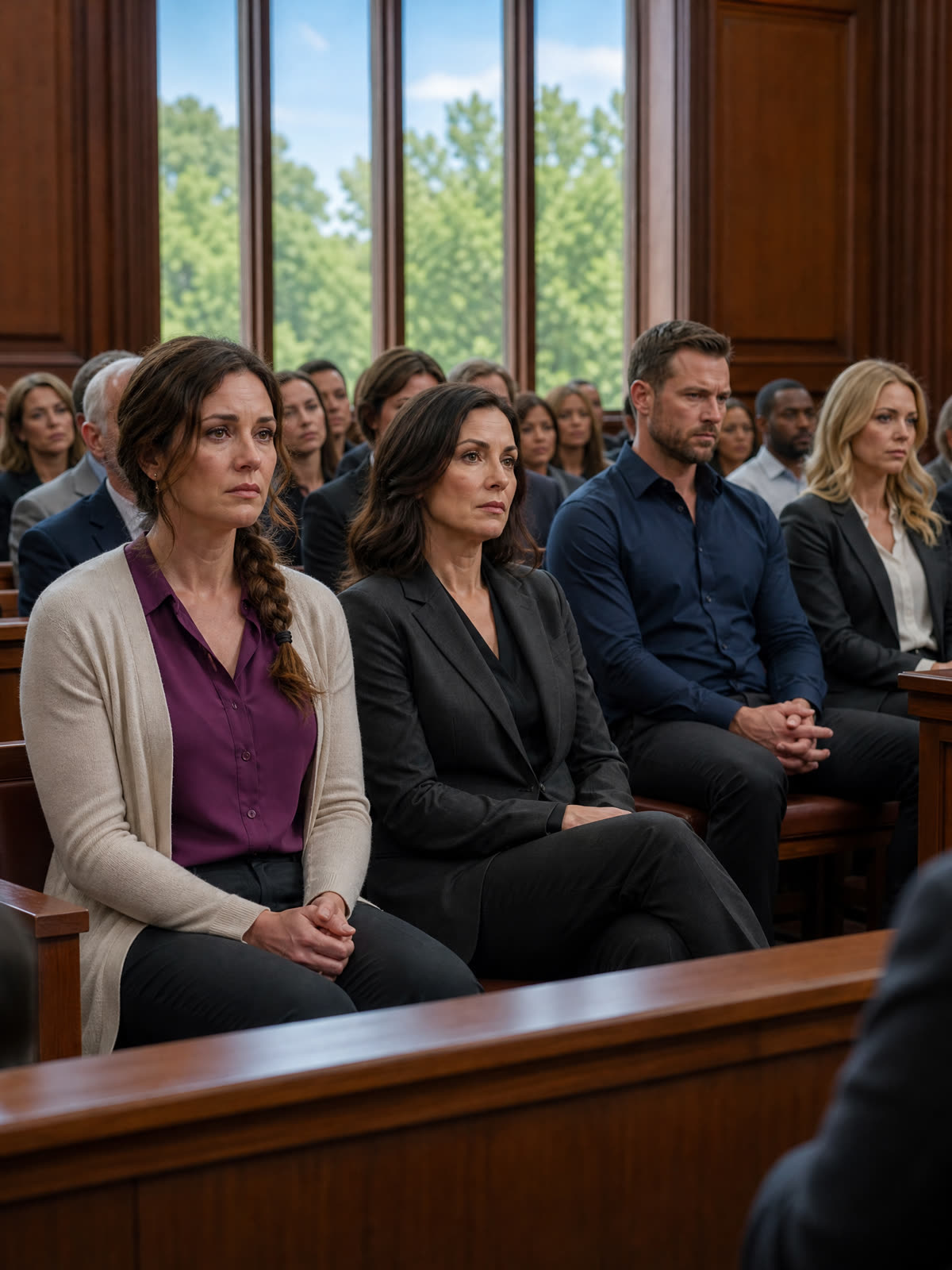
I saw him again at a hearing after his lawyer challenged the protective orders. Joan was beside me while I testified from the place the judge assigned. I did not approach Garrett. His lawyer characterized the situation as a disagreement between spouses, exaggerated by my medical problems. Even there, the account they offered depended on making me appear too unwell to understand my own life.
Garrett requested permission to speak. “I never wanted to hurt my wife. She’s misreading things because she hasn’t been well lately.” Hearing him use my illness that way again did not make his explanation any more believable. With the judge’s permission, I asked him a question. “Were you in Dallas that Tuesday?” He answered, “Yes. For work.”
“Then explain why our security system recorded you entering our house that noon, and why you appear walking to my pillow with a bottle.” I continued, “I also want to know,” and asked, “why you tried to use my assets with a signature that isn’t mine, and why you circulated a medical report the clinic itself denies.” The records and the recording were no longer things he could dismiss simply by telling people I was confused.
“Everything we built, we built because of me,” he snapped. “You always treated me like I didn’t understand anything.” I answered him without accepting the version of our marriage he was offering. “I never denied you respect,” I said. “What I denied you was permission to run my life.” The protective orders remained in effect.
There was no conviction at that hearing. Still, I walked out understanding that I no longer had to justify myself against the woman Garrett had invented. Months afterward, when the laboratory findings and document reports were complete, prosecutors formally charged both Garrett and Lindsey with attempted murder and use of forged documents. Each pleaded not guilty. Their lawyers disputed the interpretation of the messages and testing. More evidence, witnesses, and delays followed.
As the case developed, I learned more about Lindsey’s involvement. She had proposed holding my birthday dinner at home. She knew my routine and had listened for weeks as Garrett described my supposed confusion. Messages obtained through court orders established her role in the insurance arrangements and false paperwork. She had not merely been nearby while Garrett made plans. The evidence showed the part she had played.
I still have a photograph of the three of us celebrating our tenth wedding anniversary. Losing the friend I believed Lindsey had been brought its own kind of grief. The case continued for more than a year. Eventually, the evidence admitted at trial resulted in prison sentences for both of them: fourteen years for Garrett and nine for Lindsey. Their attorneys announced appeals. The financial claims continued separately.
The entire $35,000 never came back to me. Some of the money had already been spent, and pursuing restitution became another drawn-out, draining process. I had to accept that a judgment does not instantly restore what someone has taken. It certainly cannot restore the trust that made the loss possible. The criminal case had reached a result, but the practical work of separating my life from Garrett’s was still unfinished.
In the meantime, I filed for divorce, replaced the beneficiaries on my insurance policy, and secured my access to the trust. I moved out of the house. Selling it required us to determine what belonged to each of us as joint owners. Whatever had to be resolved financially, I knew I would never again sleep in the bedroom where someone had planned for me to die.
Gradually, my health improved. The headaches subsided, though an unexpectedly opening door could still make me jump. I began counseling and returned to my job in stages. Some people suggested that I leave Chicago and begin again somewhere else. But I had done nothing that required me to hide. I could rebuild without surrendering the city where I had already made my life.
Eighteen months after that Tuesday, my mother came to dinner at the apartment I had rented near my office. As we washed the dishes, she mentioned the invitation to the birthday celebration that had never taken place. “I’ve thrown it away a hundred times in my head,” she said, “but I wanted to ask if it would bother you if we planned something this year.”
I looked at her and noticed that, for the first time, imagining a family dinner did not make me feel sick. “I do want a dinner,” I said. “But we pick the cake.” We laughed, and we cried a little too. My mother continued to blame herself for believing Garrett when he claimed that my memory was failing. I asked only one thing of her: never again accept someone speaking for me without first asking me herself.
That evening, I replaced my pillowcase and opened the window. Not all the fear had disappeared. But I finally understood that the shame belonged to the people who had tried to destroy me, not to me. Sometimes people ask whether I will forgive Garrett. I do not know the answer. I do know that taking back my life does not require his forgiveness—or mine.
And one question remains with me: how many times does a woman have to say that something is wrong before her own family stops calling her dramatic?
Disclaimer: This story is a work of fiction inspired by real-life themes. Names, characters, places and events are fictionalized, and any resemblance to real persons is purely coincidental. It does not represent any person or organization and does not encourage inappropriate behavior. Images are for illustration purposes only.
