

The Last Load
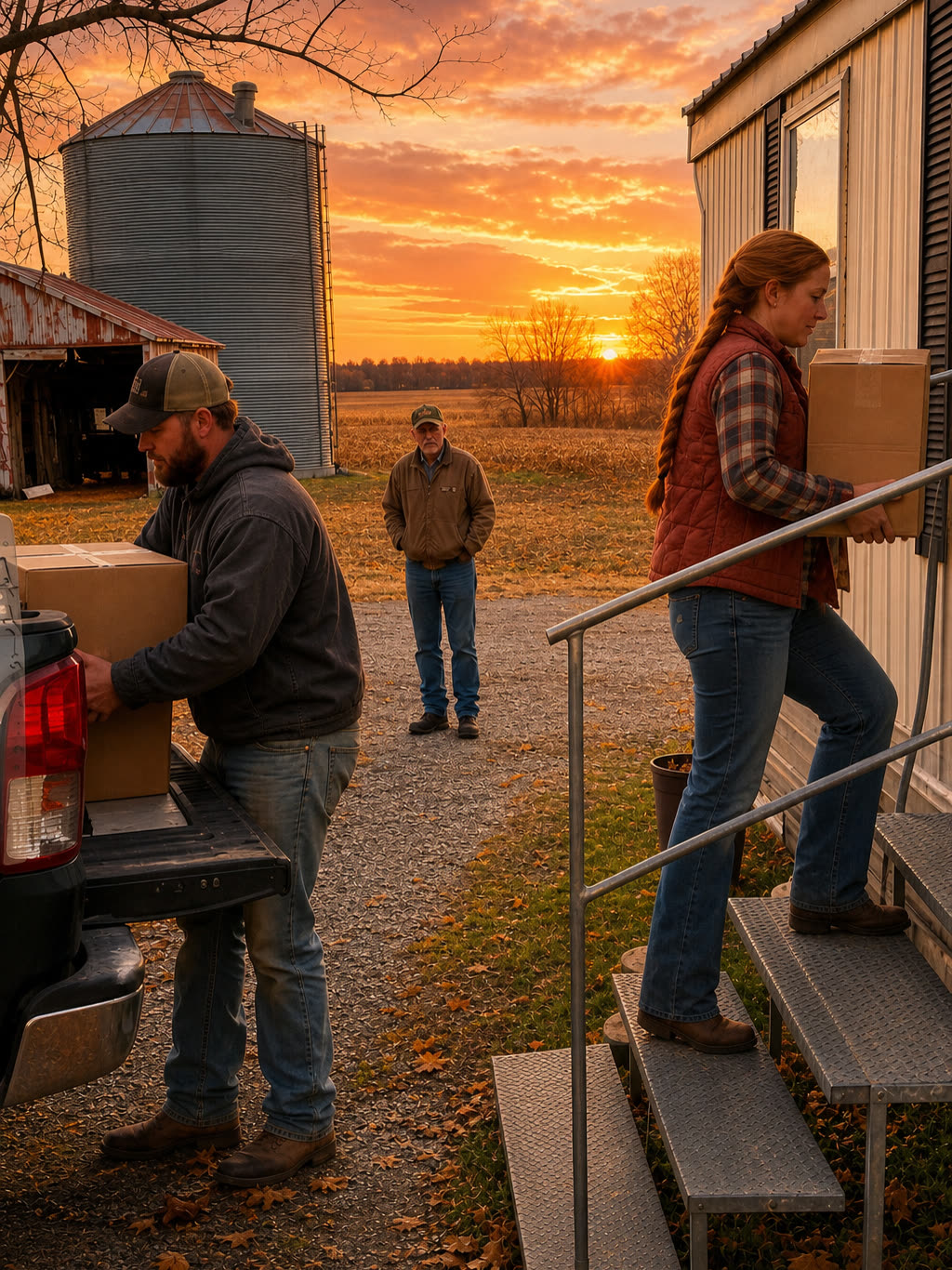
Vern stood beside the grain bin and watched us load the pickup. He never came over. He never said a word.
It was dusk on a Thursday at the end of October. Over the stubble fields the sky had turned the color of a bruise, purple fading into gray. The yard light on the pole by the machine shed had just flickered on, humming the way it always did, a sound I had heard every night for ten years. My father-in-law stood at the foot of the big grain bin with his hands pushed into the pockets of his chore coat. He was sixty-seven, broad and stooped, with his feed cap pulled low. He watched us the entire time.
Nate lifted another box into the bed of the pickup and kept his back to his dad. It was kitchen things, that box: pots and pans, and the cast iron skillet my grandmother gave me when we got married. Nate set it down gently beside the box of towels and nudged it toward the cab so it wouldn’t slide. He never glanced at the bin, not once. But I could see his jaw working.
I came down the trailer steps carrying the next box. Ten years we had lived in that single-wide, a 1994 Fleetwood, fourteen by seventy, beige with brown trim. Vern had it hauled in on a semi the spring we got married and set it on cinder blocks forty feet from the machine shed. He called it temporary, just until we got on our feet. The furnace was older than our marriage. The windows sweated in winter and then froze shut. The bathroom floor was soft beside the toilet, and you learned to step around that spot. In January, if the wind came out of the northwest, you could see your breath in the back bedroom.
We made it a home anyway. I hung curtains. Nate built me a little deck out of scrap lumber. In July we set a kiddie pool out front for the dog. But it was never ours. It was always Vern’s trailer on Vern’s land, forty feet from Vern’s shed.
We were paid fifteen hundred dollars a month, the two of us together. That was the wage for running twelve hundred acres of corn and soybeans in Lyon County, Minnesota. For planting and spraying and combining and hauling, and fixing every broken thing on the place. For checking bins at two in the morning in a blizzard. For calving the forty head of cows Vern kept because he liked looking at them. Eighteen thousand dollars a year, for both of us. No raise, not once.
I know the number because I keep the farm books, and I have for ten years. The winter after we married I took a bookkeeping course at the community college in Marshall, because Judy’s eyes were failing and she could no longer read the figures. I took over the farm accounts that March and have done them every month since. Every check, every invoice, every grain ticket. Every payment to the bank in Marshall, the co-op and the seed dealer. I wrote them all and balanced them all. So I know exactly what twelve hundred acres brings in on a good year, and exactly what goes out. And I know exactly what came to Nate and me: fifteen hundred a month.
There was no contract, only family pay on a handshake. Vern and Nate shook on it in the shop the week before our wedding. Fifteen hundred a month, the trailer and the electric. And someday, Vern said, the land would come to Nate anyway, so it would all come out in the wash. Someday. Nobody ever said when.
We were never going to sue Nate’s parents. We talked about it once, lying in bed in that cold back bedroom, and Nate said no before I could finish the sentence.
“I’m not taking my dad to court, Holly,” he said. “Not ever.”
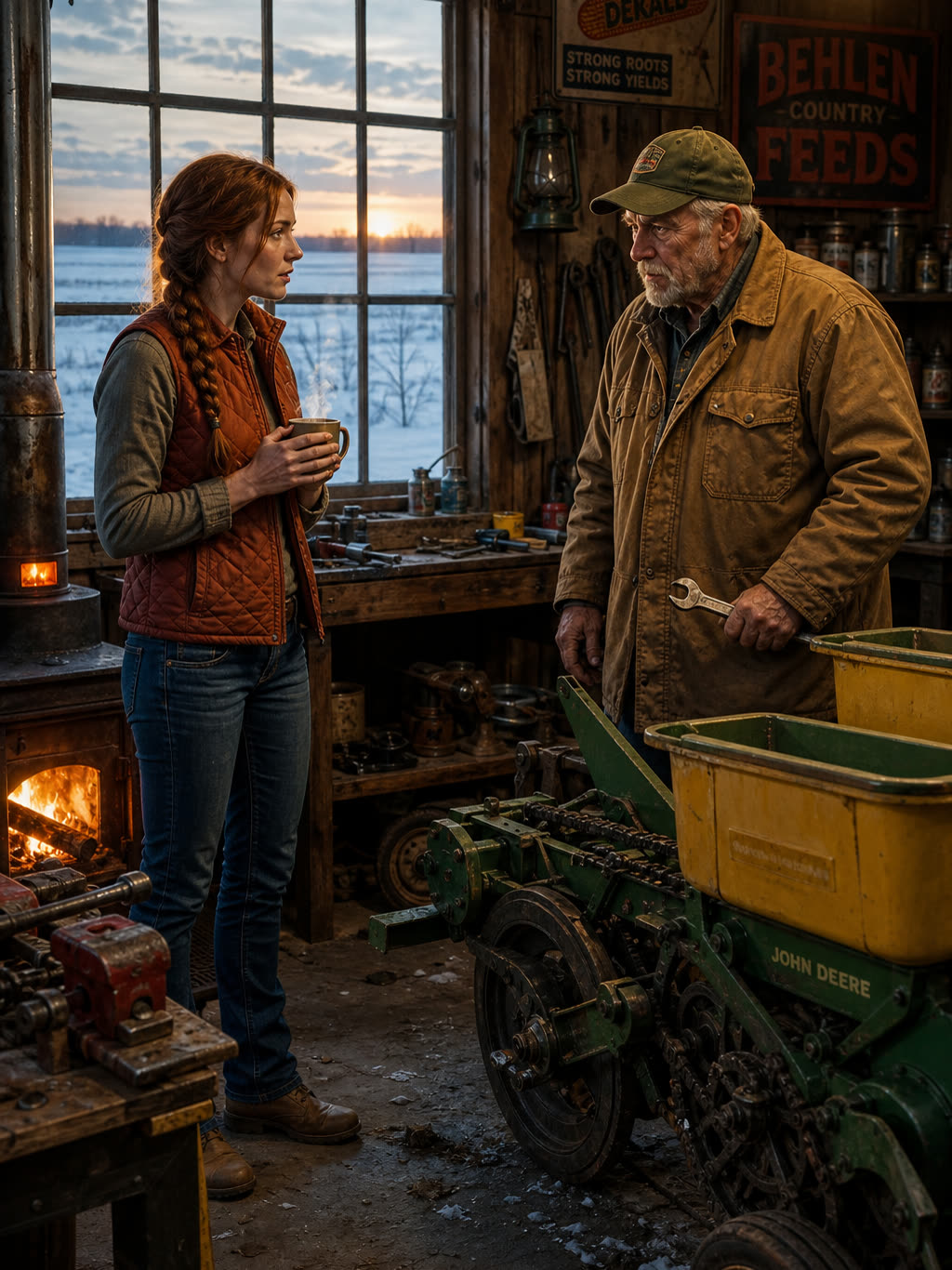
All we could do was stop working for nothing. So in March I asked Vern for five hundred dollars more a month. I didn’t ask Nate to do it. He would have, but I knew how it would go. Nate and his dad don’t talk about money. They talk about weather and seed and the price of diesel and whether the Vikings will ever win a Super Bowl. Money makes them both go quiet. So I did it myself. I’m the bookkeeper, and money is my job. I picked a Tuesday afternoon, when Vern was in the shop working on the planter. It was twelve degrees outside and the woodstove in the corner was roaring. I brought him a cup of coffee and stood by the workbench. “Vern,” I said. “Can I ask you something?”
He looked up from the planter. “Sure.”
“Nate and I need more,” I said. “Five hundred more a month. Two thousand instead of fifteen hundred.”
He set down his wrench.
“The trailer furnace quit twice this winter,” I said. “In January, for three days. We slept in our coats. Then again in February. The repairman says it’s done. It needs to be replaced. That’s thirty-two hundred dollars.”
Vern didn’t say anything.
“And we haven’t had a raise in ten years,” I said. “Not once. Everything costs more than it did ten years ago. Groceries, gas, insurance. We’re paying for our own health insurance on the MNsure exchange. That’s six hundred and forty a month by itself.”
I took a breath. “Five hundred, Vern. That’s all I’m asking.”
He studied me for a long time. Then he picked his wrench back up. “There’s no money this year, Holly,” he said. He returned to the planter, and that was all. I stood by the workbench a minute longer. The woodstove ticked. The coffee I had brought him sat steaming on the bench.
I knew it wasn’t true. I keep the books. Last fall’s crop had been the best in five years, two hundred and eight bushels an acre on the corn and fifty-eight on the beans. We had sold some at harvest and stored the rest, and fourteen thousand bushels of corn sat in the big bin waiting for a better price. At four-sixty a bushel, that came to more than sixty thousand dollars. There was money. There just wasn’t money for us.
I walked back to the trailer through the snow. Nate was at the little kitchen table in his coveralls, eating a sandwich. He looked up when I came in. “Well?” he said.
“He said there’s no money this year.”
Nate set his sandwich down and said nothing for a long while. “There’s fourteen thousand bushels in the big bin,” he said finally.
“I know.”
He looked out the window at the shop, at the smoke curling from the stovepipe. “Okay,” he said. That was all. Okay.
That night the furnace quit again. At two in the morning I woke up shivering. Nate was already out of bed in his long underwear, banging on the furnace closet with a flashlight, swearing under his breath. He got it going around three-thirty, came back to bed and lay there with his arm over his eyes.
“I’m going to fix this, Holly,” he said in the dark. “I don’t know how yet. But I’m going to.”
In June, fourteen thousand bushels of corn left the bin. I watched the trucks come, three semis from the elevator in Marshall, backing up to the big bin one after another while the auger ran for two days. I stood at the trailer window with a cup of coffee and watched the corn pour into the trucks in a long gold stream. That night I wrote the grain tickets into the books. Fourteen thousand, two hundred bushels at four-forty-one. Sixty-two thousand, six hundred and twenty-two dollars. Vern had waited for the June rally, and it came, and he sold.
It paid for Tiffany’s barn wedding. Tiffany is Nate’s little sister. She was twenty-eight that summer and lives in Minneapolis now, a marketing director for a company that makes yoga clothes. She met her fiancé, Brandon, on a dating app. He works in finance, something with spreadsheets, and wears loafers without socks. They wanted a barn wedding on the farm, in Vern’s old red hay barn, the one Nate’s great-grandfather built in 1912.
Sixty thousand dollars. I know, because I wrote every one of those checks myself. The tent was a big white sailcloth one from a rental company in Sioux Falls, with sides that rolled up, pitched on the lawn between the barn and the house: twelve thousand, four hundred dollars. The band was a six-piece from Minneapolis that played covers of eighties songs, eight thousand dollars plus their rooms at the AmericInn in Marshall. The lights in the rafters, strings and strings of them, hundreds of feet, hung by a company from Mankato who came out with a lift and spent two days up in the hayloft: forty-six hundred. Then the caterer, the florist, the photographer, the rented chairs and tables and linens, and the portable bathrooms, the nice kind, with sinks and mirrors. And the barn itself needed work before anyone could stand in it. New boards for the hayloft floor, a railing on the stairs, three visits from the county building inspector. Nine thousand dollars, all told.
Vern signed every one without reading it. I would carry the checks into the house in the evening in a manila folder, all filled out, and set them on the kitchen table in front of him. He would pull out his pen and sign his name on each. Vernon A. Haugland, over and over. He never looked at the amounts. He never asked what any of it was for. He trusted me, and that was the part that stung.
I would sit across the table and watch him sign. Twelve thousand four hundred. Eight thousand. Forty-six hundred. Nine thousand. And I would think about the furnace in the trailer, thirty-two hundred dollars, and five hundred a month. There’s no money this year, Holly. He would hand the folder back and say, “Thanks, Holly. Don’t know what we’d do without you.” And I would say, “You’re welcome, Vern.” Then I would walk back to the trailer in the dark.
At the wedding, Judy found me by the dessert table. It was the second Saturday in August, hot and still, and the barn looked beautiful. I’ll say that for it. The lights in the rafters glowed gold, the tent was full of round tables with white cloths and mason jars of sunflowers, and the band was playing “Don’t Stop Believin’” while two hundred people danced in the hayloft. I stood by the dessert table, a rented antique buffet crowded with little pies and cupcakes because Tiffany hadn’t wanted a regular cake, holding a lemon bar on a napkin I hadn’t touched.
My mother-in-law came up beside me with a glass of white wine, her cheeks pink. “Isn’t it beautiful?” she said.
“It’s beautiful, Judy.”
She looked out at the dance floor, at Tiffany in her four-thousand-dollar dress dancing with Brandon in his loafers. “She only gets married once,” Judy said. I said nothing. Judy looked at me, and something moved across her face for just a second. “I know about the furnace, Holly,” she said quietly. “Vern told me you asked.”
I set the lemon bar on the buffet. “And?” I said.
Judy looked down into her wine glass. “And it’s a lot of money,” she said. “This year. With the wedding.” She patted my arm and went back out to the dance floor.
Later I found Nate behind the barn by the old silo, where it was dark. He stood alone with a can of beer, looking out at the cornfield. He had talked to his dad during the cocktail hour, about the money and the corn. “What’d he say?” I asked. Nate took a long drink. “He said, That was your mother’s to give,” Nate said.
I knew what that meant. Judy grew up on a farm too, a hundred and sixty acres three miles east. Her parents left it to her when they died, and it is in her name, not Vern’s and not the operation’s. Vern and Nate farm it with the rest, but the crop off Judy’s quarter is technically Judy’s. That is how her father set it up, and how it always worked. That fall I had put the corn off her quarter in the big bin with everything else, and it all looked the same.
“So it was Judy’s corn,” I said.
“Some of it,” Nate said. “Not all of it. Not fourteen thousand bushels. Her quarter only made about six thousand.” He looked at me in the dark. “But he’s not wrong, Hol. Legally. Mom’s quarter, Mom’s money. And the rest was his.”
Nate didn’t argue that night. He didn’t go back in and make a scene. He said nothing to Tiffany or Brandon or his mother. He finished his beer and threw the can in a trash barrel by the silo. Then he took my hand and we walked back to the trailer in the dark, past the barn with its golden lights and its eighties music, and went to bed.
He waited.
Harvest
He would not leave his dad short in the middle of harvest. That is who Nate is, and who his father raised him to be. You don’t walk off a job half done. You don’t leave a man with twelve hundred acres of standing crops and nobody to run the combine. So in September we started harvest, and we ran every acre.
The soybeans came first, in late September. Nate ran the combine, a John Deere S670, the same one he had run for six years. Vern drove the semi to the elevator in Marshall. I was on the grain cart. Then came the corn in October, with the same jobs and the same long days. We were up at five-thirty and combining by ten, as soon as the dew burned off, and we ran until midnight, or one, or two, under the lights, until the moisture climbed too high. Judy brought food out to the field every day at noon and six, sandwiches and bars and coffee in a cooler.
You have to understand what the grain cart means. It is a tractor pulling a giant hopper alongside the combine while both are moving, matching its speed exactly, so the combine can unload without stopping. You watch the auger and the combine and the ground and your speed all at once. Get too close and you hit the header. Get too far and you spill corn on the ground. I had done it for nine harvests and I’m good at it. Nate says I’m the best cart driver in Lyon County.
So for six weeks I drove beside my husband every day, unload after unload, watching him through the side window of my cab as he sat up in the combine with his cap turned backward and his eyes on the header. We didn’t talk about it, not once, all harvest. We talked about moisture and the yield monitor and the price of corn, and whether the front coming in from South Dakota would bring rain. We talked about which field to hit tomorrow, and about the bearing on the grain cart that was beginning to squeal.
We didn’t talk about what we would do when it was over. But I knew, and Nate knew. I could see it in his face every night when he came in from the field at one in the morning and stood in the trailer kitchen eating a cold sandwich over the sink.
Paul Engstrom came by the field in early October. Paul farms across the road, two thousand acres. He is sixty, a widower with no kids. His wife, Lynn, died of cancer four years ago, and his hired man retired in August, so he had been running everything himself all fall.
He pulled his pickup to the end of the field where I sat parked with the grain cart, waiting for Nate to fill, and rolled down his window.
“Holly,” he said.
“Hi, Paul.”
“Nate tell you what I asked him?”
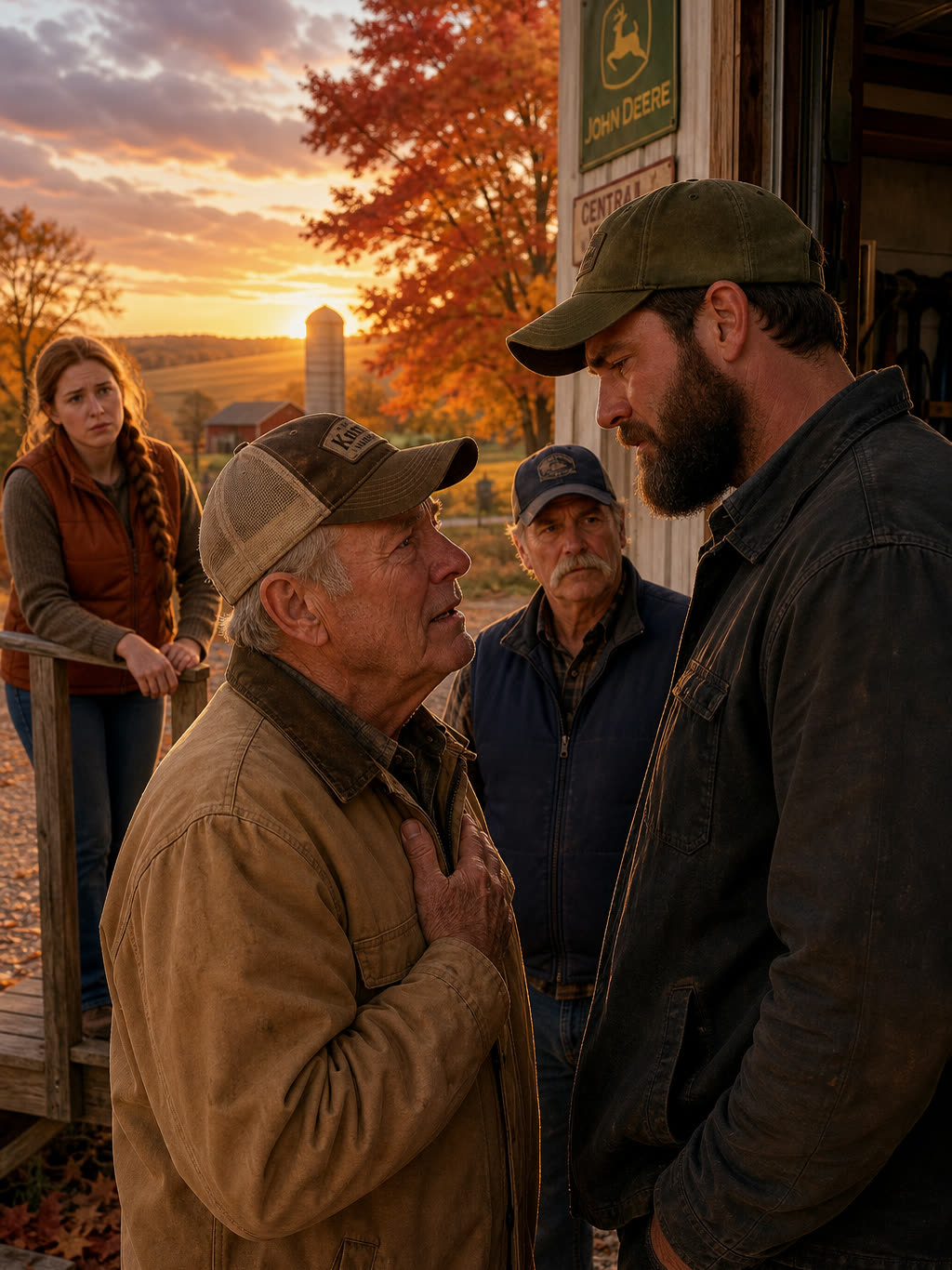
I nodded. Paul had come over in August, after the wedding. He found Nate alone in the shop, sat on an overturned bucket and talked to him for an hour. He needed a hired man, full time, year round, someone who could run his whole operation, because his back was going and he couldn’t manage alone anymore. Fifty-eight thousand a year, plus health insurance for both of us. Plus the house, Lynn’s mother’s old place on Paul’s home place across the road, a two-story farmhouse with four bedrooms and a new furnace he had put in after Lynn died, rent-free. And after five years, a chance to buy into the operation. Paul had no heirs, and he wanted somebody to take over.
“He told me no,” Paul said. “In August. He said he couldn’t leave his dad short at harvest.”
“I know.”
“That’s why I want him,” Paul said. “That’s exactly why.” He looked out at the combine coming down the row toward us. “Offer stands, Holly. After harvest. Whenever he’s ready.” He rolled up his window and drove away.
That was a Thursday in October. The last field was the eighty on the north end, by the county road. Nate finished it at four in the afternoon. The last row of corn went into the header, through the combine, up the auger and into my grain cart in a long gold stream. I took it to the semi, where Vern waited with the truck. He watched the corn pour in, then climbed into the cab and drove it to Marshall. Nate brought the combine back to the yard, parked it in the machine shed and shut it off. The engine ticked as it cooled. He sat up in that cab for a long time without moving.
After supper, Nate slid a sheet of paper across his folks’ table. We always ate with them during harvest, and Judy cooked for everybody. That night it was pot roast, as she did every year for the last day of harvest, a tradition, with mashed potatoes, green beans and apple pie. When the pie was gone, Nate took a folded piece of paper from the pocket of his flannel shirt. He unfolded it on the table and smoothed it flat with his hand. Then he slid it across to his father.
It was our notice, in my handwriting, signed by both of us. I had written it the night before at the trailer kitchen table, with the furnace ticking, while Nate sat next to me and told me what to say.
Dad and Mom,
After ten years, we are giving our notice. We will finish cleaning up after harvest. We will be done working for the farm on November 1.
We love you both. This is not about love. It’s about what’s fair.
Nate and Holly
“Paul Engstrom offered us work,” Nate said. “We’re taking it.”
Judy put her hand over her mouth. Vern didn’t move. He looked at the paper in front of him, then picked it up and held it at arm’s length, because his reading glasses were in his shirt pocket and he didn’t reach for them. He read it twice. The kitchen was dead quiet. The clock over the stove ticked. Outside, the yard light hummed. Judy was crying, silently, her hand pressed over her mouth.
Vern set the paper down and looked at his son across the table. “My dad never paid me a dime until I was forty,” he said. His voice was quiet. It wasn’t angry, just flat, as if he were stating the weather.
I knew that story. Everybody in the family knew it. Vern’s father, Arvid Haugland, farmed this same ground, and Vern worked for him from the time he was twelve. No wages, only room and board and a little spending money. Arvid said the land would come to Vern someday, so it would all come out in the wash. Vern married at twenty-four and brought Judy home to a little house on the edge of the farmstead, and still there were no wages. They lived on Judy’s paycheck from the bank in Marshall for sixteen years. Arvid finally started paying Vern a salary when Vern was forty, the year Arvid’s heart started going.
“I know, Dad,” Nate said. “I know your dad never paid you.” He leaned forward and put his forearms on the table. “And I watched what it did to you. I was a kid. I watched you come in at night and sit at this table and stare at the wall. I watched Mom pay every bill out of her paycheck. I watched Grandpa tell you what to plant and when to plant it and how to plant it for sixteen years after you knew better.”
Vern said nothing.
“I’m not waiting till I’m forty,” Nate said quietly. “I’m thirty-six. I’ve got a wife who sleeps in her coat in January. I’m not doing it.”
Vern looked at his son for a long time. Then he picked up the notice, folded it carefully in half and in half again, and tucked it into his shirt pocket next to his reading glasses. He pushed back his chair, got up from the table and took his chore coat off the hook by the door. And he went out to the shop.
We sat at the kitchen table with Judy, and nobody spoke. After a while she wiped her eyes with her napkin and looked at me. “Holly,” she said. “The wedding. Did you…” She stopped. “How much did it all come to? In the end?”
I didn’t want to say it. But she asked. “Sixty thousand, two hundred and forty dollars,” I said.
Judy closed her eyes. “I didn’t know,” she said. “I knew it was a lot. I didn’t know it was that much. I never looked at the checks.” She shook her head. “Neither did Vern.”
“I know,” I said. “I wrote them all.”
We spent a week finishing up. That is what you do. You don’t just walk off. You leave things the way you would want to find them. Nate spent two full days on the S670, blowing out every inch of it with the air compressor, every chaff-packed corner, every screen and sieve. He greased every fitting, changed the oil and replaced the belts that were wearing thin. He wrote down every part he used on a notepad and left it on the seat. He did the same for the grain cart, the planter, the sprayer and the semi. He climbed into every bin on the place and leveled the corn with a shovel so it would dry evenly, checked the fans and the aeration and the temperature cables, and wrote down every number.
My job was ten years of books, balanced to the penny and left for Vern. I sat at the trailer kitchen table for four days with every ledger and bank statement and grain ticket. I went through every month and balanced every account. I listed every vendor, every bill, every account number and due date, and wrote out instructions for each thing I did. How to pay the property taxes. How to handle the crop insurance. Which seed dealer gave a discount for early payment. How to read the grain contracts. Where the passwords were for the online banking. The phone number of the man at the co-op who would always give you a good price on fuel if you asked for him by name. I put it all in a three-ring binder two inches thick, with tabs. On the front I wrote: FARM BOOKS. FOR VERN.
Paul came over and told Vern himself, man to man. That was his idea, not ours. He didn’t want Vern hearing it secondhand, or to look as if he had gone behind Vern’s back. He came on a Saturday morning and found Vern in the shop, and the two of them stood by the woodstove for twenty minutes. I watched from the trailer window and couldn’t hear a thing. At the end, Vern held out his hand and shook Paul’s. Then Paul walked back across the road to his own place.
Then came the last load, at dusk, that last Thursday in October, a week after we gave notice. Everything was done. The combine was clean, the bins were leveled and the binder sat on Vern’s kitchen table. We had been loading the pickup since three. Most of our things had already gone across the road in three trips. Paul’s house was big, with four bedrooms, and we didn’t own enough furniture to fill one of them. This was the last of it: the kitchen boxes, the towels, Nate’s toolbox, my grandmother’s skillet.
That’s when Vern came out and stood by the bin, just as I told you at the beginning, hands in the pockets of his chore coat, feed cap pulled low, watching us. He didn’t come over. He didn’t say a word. Nate lifted the last box into the bed and shut the tailgate halfway. He stood there with one hand on it.
“Do you want to go talk to him?” I asked.
He didn’t look toward the bin. He looked at the tailgate. “Not tonight,” Nate said. “I’d unload the truck.”
I knew what he meant. If he walked over there and looked at his father’s face, he would turn around, unload every box and carry it back into the trailer. We would sleep in our coats again in January, and it would all start over. He shut the tailgate. We got in the pickup and Nate started it. He backed out from beside the trailer and pulled out of the yard, past the machine shed, past the barn with the wedding lights still strung in the rafters, dark now. Past the grain bin, where Vern was standing. Nate didn’t look. But I did. Vern watched the pickup go. His face was gray in the yard light. He didn’t move. He didn’t wave.
We slept across the road. Paul had left the furnace running, and that was the first thing I noticed when we walked in the back door of that old farmhouse. Warm, and not only warm but warm all the way through, every room. The floors were warm. The windows didn’t sweat. On the kitchen table lay a note in Paul’s handwriting, on the back of an envelope. Furnace is set at 70. Turn it up if you want. Fridge has milk and eggs. Welcome home. Paul.
I stood in that kitchen a long time. Then I went upstairs to the bedroom Paul said was ours, a big room at the front with two windows that looked over the road. Across it I could see Vern and Judy’s place, the yard light, the grain bins and the dark shape of the trailer forty feet from the shed. The kitchen light was on in their house. Nate came up behind me and put his arms around me.
“You okay?” he asked.
“I’m warm,” I said. That was all I could say. It was the first time in ten years I had gone to bed in October without being cold.
At six the next morning, Nate’s pickup sat in Paul’s yard. He had been up at five, out of habit, making coffee in Lynn’s old percolator and standing at the window to drink it, looking across the road. At five-forty-five he went out to Paul’s shop, where Paul was already waiting. They stood by the woodstove and talked about the day: fall tillage, a load of corn to haul to Marshall, a broken hydraulic hose on Paul’s chisel plow. I stayed in the kitchen and unpacked boxes.
At a quarter to seven I saw Vern coming across the road on foot. I was at the window, setting my cast iron skillet on the stove, and I looked up and there he was, walking down his own driveway in his chore coat and feed cap, across the gravel county road and up Paul’s driveway. On foot, not in his pickup. My heart was pounding.
Nate had seen him too. He stood in the open door of Paul’s shop with a coffee cup in his hand, set it on a fence post and waited with his arms at his sides. I went out on the back porch and didn’t go any farther. Vern came up the driveway slowly, his knees being bad, past the corncrib and the old chicken house and across the yard toward the shop. Toward Nate.
Vern walked right past him. He didn’t stop. He didn’t look at his son. He walked right past Nate, standing in the shop doorway, as if he weren’t there. Nate’s face went white.
Vern stopped in front of Paul, who had come out behind Nate and stood by the tailgate of his own pickup with his coffee cup in one hand. Vern halted about four feet away. Paul set his coffee on the tailgate. Vern took off his feed cap and held it in both hands at his belt buckle, the way men out here hold their caps at funerals, or in church.
“Paul,” he said. “What are you paying my boy?”
Everybody Gets Paid
Nobody moved. Paul looked at Vern for a long moment, then at Nate in the shop doorway, then back at Vern. He didn’t hesitate and he didn’t soften it. “Fifty-eight thousand a year,” Paul said. “Plus health insurance for both of them. Plus the house. Rent-free. Plus the heat and electric.” Vern said nothing.
“And in five years,” Paul said, “if it works out, I’m going to sell him half of my operation. On contract. At a fair price. Because I’ve got no kids, Vern. And I’ve watched that boy farm across the road from me for ten years, and he’s the best young farmer in this county.”
Vern stood in Paul’s yard holding his cap, quiet for a long time. Fifty-eight thousand, plus insurance, plus a house. I watched him do the math, holding it up against eighteen thousand and a single-wide with a dead furnace. “Fifty-eight,” Vern said finally. “Fifty-eight,” Paul said. “To start.”
I thought Vern was going to argue. I thought he would say something about family, about how the land would come to Nate someday, about Paul stealing his son, about how it all comes out in the wash. I was ready for it, standing on the back porch with my hands gripping the railing. Vern looked down at his cap. Then he looked up at Paul.
“That’s not enough,” he said.
Paul blinked. Nobody spoke. Nate still stood in the shop doorway, his mouth hanging open.
“Pay him more than that,” Vern said. “He’s worth it.” Then he said it again, quietly, to Paul. “He’s worth more than that. He knows every field on my place by the feel of it. He can run a combine in the dark. He can fix anything with a motor. He’s never once in ten years missed a morning.” His voice cracked. “Pay him more, Paul. Because I never did.”
Then Vern put his cap back on and turned around. He looked at his son for the first time, with Nate standing four feet away in the doorway of Paul’s shop, his arms at his sides.
They looked at each other for a long time.
“I’m sorry, Nate,” Vern said. That was all. I had never heard him say those words before, not to anybody.
Then he turned and walked back across the road, on foot and slow on his bad knees. He didn’t look back. Nate stood in the doorway and watched him go, all the way down Paul’s driveway, across the gravel county road, up his own driveway, past the grain bins and into his own shop. Then Nate turned, walked into Paul’s shop and stood by the woodstove with his back to the door.
Paul came over to the back porch and stood at the bottom of the steps looking up at me. “Holly,” he said. “You know what that cost him? To walk over here? On foot?”
“I know,” I said.
“That’s a proud man,” Paul said. “Proudest man I ever met. Arvid Haugland was prouder.” He shook his head. “I’ve known Vern sixty years. I’ve never once heard him say I’m sorry.”
“Neither have I,” I said.
Paul looked across the road at Vern’s shop, at the smoke coming from the stovepipe. “I’ll give Nate sixty-two,” he said. “Starting today. Don’t tell him I said it in front of you.”
Nate came in at noon for dinner and sat at Paul’s kitchen table. He ate nothing. He just sat with his hands around a cup of coffee. “He’s never said that,” he said finally. “In thirty-six years. Never once.”
“I know,” I said.
“He said pay him more.” Nate’s voice broke. “He said, because I never did.” He put his face in his hands. I came around the table, stood behind him and put my arms around his shoulders. I held on.
Judy came to see me in December. She drove across the road in her Buick and knocked on Paul’s back door like a stranger. She stood on the porch in her winter coat holding a pan of bars covered in tinfoil. “Can I come in?” she asked. I let her in and made coffee while she sat at the kitchen table.
“Vern’s not doing well,” she said.
“Is he sick?”
“Not sick.” She stared into her coffee. “He’s lost. He sits in the shop all day. He doesn’t do anything. He just sits by the woodstove. He’s got twelve hundred acres to plant in four months and nobody to help him, and he can’t run a combine by himself with his back.” She looked up at me. “He reads your binder,” she said. “Every night. At the kitchen table. With his reading glasses on. Page by page. I’ve never seen him read anything that long in forty-four years of marriage.”
“Judy,” I said. “Why did he say there was no money? In March? When I asked for five hundred?”
She was quiet for a long time. “Because he was scared,” she said finally. “He’s always scared about money. Ever since his dad. Arvid never gave him a dime, and when Arvid died, there was no will. Vern had to buy out his three sisters. Two hundred and forty thousand dollars. He’s been paying that off for twenty years.” She shook her head. “He paid the last of it in February. A month before you asked.”
I stared at her. “So there was money,” I said.
“For the first time in twenty years,” Judy said. “And he didn’t know what to do with it. He was still scared. He said no to you out of habit. And then Tiffany called about the wedding.” She put her hand over her mouth. “That was me, Holly. Not Vern. Me. Tiffany called and said she wanted a barn wedding, and I said yes before she finished asking. And I told Vern my quarter would pay for it. And he said fine.” She shook her head. “Neither of us ever looked at the checks. I didn’t know it was sixty thousand dollars. I swear to God. I thought it was maybe twenty.”
“Your quarter only made about six thousand bushels,” I said. “That’s twenty-six thousand. The rest came out of the operation.”
“I know. I read it in your binder.” Judy’s eyes filled. “Page forty-one. You wrote it all down. Every check. With the date and the amount. And next to the furnace repair in January, you wrote, Requested raise denied. March fourteenth.”
She reached into her coat pocket, took out an envelope and set it on the table. “Tiffany sent this,” she said. “Last week. To Vern and me.” I opened it. It was a check from Tiffany and Brandon Kessler, made out to Nate and Holly Haugland. Twenty thousand dollars. A note was folded with it, in Tiffany’s handwriting.
Holly and Nate. Mom told me about the furnace and the trailer and the raise. I didn’t know. I swear I didn’t. I’m so sorry. This is from our wedding gifts. It’s not enough. Please take it. I want my brother to be warm. Tiff.
I sat there with that check in my hand, unable to speak. “She cried for an hour on the phone,” Judy said. “She said she’d never have had the wedding if she’d known. She said she’d have gotten married at the courthouse.”
I set the check on the table. “Judy,” I said. “I can’t.”
“You can,” Judy said. “And you will. Because that’s my daughter making it right. And I’m not going to let you take that from her.”
In January, Vern called Nate on the phone. He hates phones. He holds them two inches from his ear and shouts. “I need you and Holly to come to Marshall,” he said. “Tuesday. Ten o’clock. Megan Kittelson’s office. Next to the Hy-Vee.”
“Dad, what’s this about?”
“Just come,” Vern said, and hung up.
Megan Kittelson is a lawyer who handles farm estates, land contracts and succession planning. She is about forty, with dark hair in a ponytail and glasses, and she grew up on a farm outside Tracy. Vern and Judy were already there when we came in, sitting in two chairs by her desk, Vern with his feed cap on his knee. Megan pulled out two more chairs for us. “Thank you for coming,” she said. “Your father asked me to walk you through some documents.”
The first was a lease, a real one, written, seven pages. A crop-share lease for the twelve hundred acres. Starting next year, Nate would rent the land from Vern and Judy, not work for them, and farm it as his own operation, splitting the crop fifty-fifty. “It’s the standard lease from the University of Minnesota Extension,” Megan said. “I’ve modified it some. Your father pays half the seed, fertilizer and chemical. Nate pays half and provides all the labor and machinery.” She looked at Nate. “On a twelve-hundred-acre operation in this county, with normal yields, Nate’s half should come to somewhere between a hundred and forty and a hundred and eighty thousand gross. Before his expenses.” Nate couldn’t speak.
The second was a contract for deed on the machinery: the combine, the planter, the sprayer, the grain cart, the tractors, all of it. “Your father’s selling you the line of equipment,” Megan said. “At appraised value. On a seven-year contract. Four percent interest. Payments start after next harvest.”
“Dad,” Nate said. “I can’t afford…”
“You can,” Vern said. “I ran the numbers. In Holly’s binder. Page sixty-two.” He almost smiled. “She’s got everything in there.”
The third was a deed for the home place: the house, the yard, the barn, the machine shed, the grain bins and forty acres around them, to Nate and Holly Haugland. “It’s a gift,” Megan said. “Your parents are giving you the farmstead outright. They’ll file a gift tax return, but there’s no tax due. It comes out of their lifetime exemption.”
“Where will you live?” I asked Judy.
“Town,” Judy said. “There’s a two-bedroom on Lyon Street in Marshall. By the hospital. One floor. No stairs.” She smiled through her tears. “Vern’s knees can’t do stairs anymore. And I’m tired of driving twenty minutes to church.”
Nate sat with three documents in front of him, a lease, a contract and a deed, and didn’t touch them. “Dad,” he said. “I gave Paul my word. For a year. I can’t walk out on him in the middle of the year.”
Vern nodded slowly. “I know you can’t,” he said. “I wouldn’t want you to.” He looked at Megan. “That’s why the lease starts next November. After Paul’s harvest.”
“But who’s going to plant your crop this spring?” Nate asked. “Who’s going to run it?”
Vern looked at his hands. “Paul called me,” he said. “Last week. He said he’s got two thousand acres and he could use a hand. On my twelve hundred. He’ll run it alongside his this one year. With you as his hired man. I pay him custom rates.” He shook his head. “Sixty years we’ve farmed across the road from each other. And I never once asked that man for help.”
Nate was quiet a long time. Then he picked up the pen from Megan’s desk, signed the lease and signed the contract. He handed me the pen, and I signed the deed. Holly Haugland, my own name on my own deed, for the first time in my life.
Out in the parking lot, in the snow, Vern stopped by his pickup. He reached into his shirt pocket and took out a folded piece of paper. Our notice, the one from October, in my handwriting. He held it out to Nate. “I kept this in my pocket,” he said. “Every day. Since October. In my shirt.”
“Dad…”
“I read it every morning,” Vern said. “It’s not about love. It’s about what’s fair.” He shook his head. “I never thought about it like that. Not once in my whole life. My dad never thought about it like that either.” He swallowed. “You were right, son. You and Holly both.” He put the notice in Nate’s hand. “Keep that,” he said. “Show it to your kids someday. If you have any.”
In April they hauled the single-wide away. A semi from a mobile home company in Worthington pulled it off its cinder blocks and backed it onto a flatbed. The driver said it was bound for a hunting camp up by Bemidji, where somebody would strip it for parts. Nate and I stood in the yard and watched it go, down the driveway and onto the county road, north toward Marshall. Ten years, forty feet from the shed. What was left was a rectangle of dead grass, the cinder blocks and the little deck Nate had built me out of scrap lumber.
“You want me to tear out the deck?” Nate asked. I looked at it, gray and weathered and a little crooked. “No,” I said. “Leave it.”
“For what?”
“I don’t know yet,” I said. “Something.”
We planted that spring for Paul, both farms, thirty-two hundred acres. Nate ran Paul’s big sixteen-row planter and Paul ran Vern’s twelve-row, while I drove the tractor with the tender truck, keeping them both full of seed and fuel. Vern came out to the field every day in his pickup, parked at the end of the row and sat with the window down, watching. Some days he brought sandwiches. Some days he just sat.
Once, in May, Nate pulled the planter up to the end of the field where Vern was parked, stopped and opened the cab door. “Dad,” he said. “You want to run a round?”
Vern looked up at him. “My back.”
“It’s got a seat with air suspension,” Nate said. “Smoothest ride in the county. Come on.” Vern got out of his pickup and walked to the planter. Nate climbed down and helped his father up the steps into the cab. Vern sat and put his hands on the wheel. He ran one round, down to the end of the field and back, half a mile each way, straight as a string. When he came back he shut it down and sat there a long time with his hands on the wheel. “That’s the first time,” he said, “anybody ever asked me if I wanted to.”
Paul paid Nate sixty-two thousand that year, as he promised. When the year was up, in November, Nate tried to give some of it back, and Paul wouldn’t take it. “You earned every dime,” Paul said. “And I’m going to need you next year anyway. On my two thousand. Custom. While you’re running your dad’s twelve hundred.”
“I can’t run both, Paul.”
“Sure you can,” Paul said. “You’ll hire a man. Pay him fair.” He grinned. “I know a fella who’s real good at telling people what’s fair.”
It’s November again now, two years since the last load. The corn is in and the beans are in, twelve hundred acres of Haugland ground and two thousand acres of Engstrom ground, harvested by the Haugland operation. Our operation, Nate’s and mine. We have a hired man now, a young guy from Tracy named Tyler, twenty-four and just married. We pay him forty-six thousand a year plus insurance. We put a new furnace in the old foreman’s house on Paul’s place, where he and his wife live. He has never once slept in his coat.
I still keep the books, in the old house now, at the big oak table in Judy’s kitchen, which is my kitchen now. Judy left the table. She said it was too big for a two-bedroom on Lyon Street. The binder sits on the shelf, FARM BOOKS. FOR VERN. Vern brought it back when they moved to town. He said I would need it more than he would.
Last week I wrote the first lease payment to Vern and Judy. Their half of the crop, sold at the elevator in Marshall, came to fifty-two thousand, three hundred and eighteen dollars. I filled out the check at the oak table and put it in a manila folder. Then I drove to town and up Lyon Street to their little house by the hospital. Vern was in his recliner. Judy was in the kitchen making coffee. I set the folder on the coffee table in front of him. “Your lease payment,” I said. “For this year.”
He opened the folder and took out the check. Then he reached into his shirt pocket, took out his reading glasses and put them on. And he read it. Every line: the date, the amount written out in words, the memo line, the signature. He read it twice. He held it up to the lamp to see it closer. It took him almost a full minute. When he finished, he took off his glasses, folded them and put them back in his shirt pocket. He looked up at me.
“Ten years,” he said. “I signed every check you ever put in front of me. And I never once read one.”
“I know, Vern.”
“I trusted you,” he said. “That’s what I told myself. I trusted Holly.” He looked down at the check in his hands. “That wasn’t trust,” he said. “That was just not wanting to know.”
He set the check on the coffee table, very carefully. Then he reached into the drawer of the end table beside his recliner and took out the old farm checkbook, the one I used to keep. He opened it and picked up a pen. He wrote a check slowly, in his blocky farmer’s handwriting, reading every line as he went. He tore it out and held it out to me. I took it.
Pay to the order of: Holly Haugland. Amount: Five thousand, five hundred dollars. Memo: Furnace. And five hundred a month. March to October. With interest.
“Vern,” I said. “You don’t have to…”
“Yes, I do,” he said. “You asked me for five hundred dollars on March fourteenth. In my shop. You brought me a cup of coffee.” He looked at me. “And I said there’s no money this year.”
“That was a long time ago.”
“Page forty-one,” Vern said. “In your binder. Requested raise denied. March fourteenth.” He shook his head. “I read that page every night for a year, Holly. Every single night.”
Judy came in from the kitchen with three cups of coffee and set them on the table. She saw the check in my hand and said nothing. She sat on the arm of Vern’s recliner and put her hand on his shoulder. I sat on their couch holding that check. Then I folded it in half and put it in my coat pocket. “Thank you, Vern,” I said.
“Don’t thank me,” he said. “It’s what was fair.”
When I got home that night, Nate was standing in the yard by the big grain bin, where his dad had stood two years ago watching us load the pickup. The yard light was on. It hummed. I parked, walked over and stood beside him, and we looked out across the yard together. At the barn, with the wedding lights still strung in the rafters, because nobody ever took them down. Some nights we switch them on just to see them glow. At the machine shed, where the S670 sits clean and greased. And at the little crooked deck, forty feet from the shed, standing all by itself on the rectangle of new grass where the single-wide used to be.
I had figured out what to do with it the spring before. I put a bench on it, and two flower boxes, and a sign Nate made in the shop, burned into a board with a wood-burning tool. It says: HIRED MAN’S PORCH. EVERYBODY GETS PAID.
“Dad came by today,” Nate said. “While you were in town.”
“He did?”
“He sat on the deck,” Nate said. “On your bench. For about an hour. Just looking at the bin.” I said nothing. I took his hand. “He said something before he left,” Nate said.
“What?”
Nate looked at the grain bin, at the yard light humming on its pole. “He said his dad would never have sat on that porch,” Nate said. “And neither would he, ten years ago.” He swallowed. “And then he said, I’m glad somebody built it.”
We stood there a long time in the cold, the yard light humming and the stars coming out over the stubble fields. Then we went inside. The furnace was running. The house was warm all the way through, every room, every floor. I hung my coat on the hook by the door, the check still in the pocket. I left it there. I didn’t need to cash it, not right away. I just wanted to know it was there.
Disclaimer: This story is a work of fiction inspired by real-life themes. Names, characters, places and events are fictionalized, and any resemblance to real persons is purely coincidental. Images are for illustration purposes only.
