

PART 1
When Daniel Mitchell walked through the heavy oak doors of my courtroom, the atmosphere inside seemed to change.
He wore a perfectly tailored charcoal-navy suit that looked custom-made, and his polished leather shoes made firm sounds on the marble floor.
He had the confident expression of a man used to getting his way.
At forty, Daniel was one of Chicago’s top criminal defense lawyers.
His face appeared often in legal magazines, newspapers, and sometimes on late-night news shows.
He moved smoothly, set his monogrammed leather briefcase by the defense table, and leaned in to speak quietly with his nervous client.
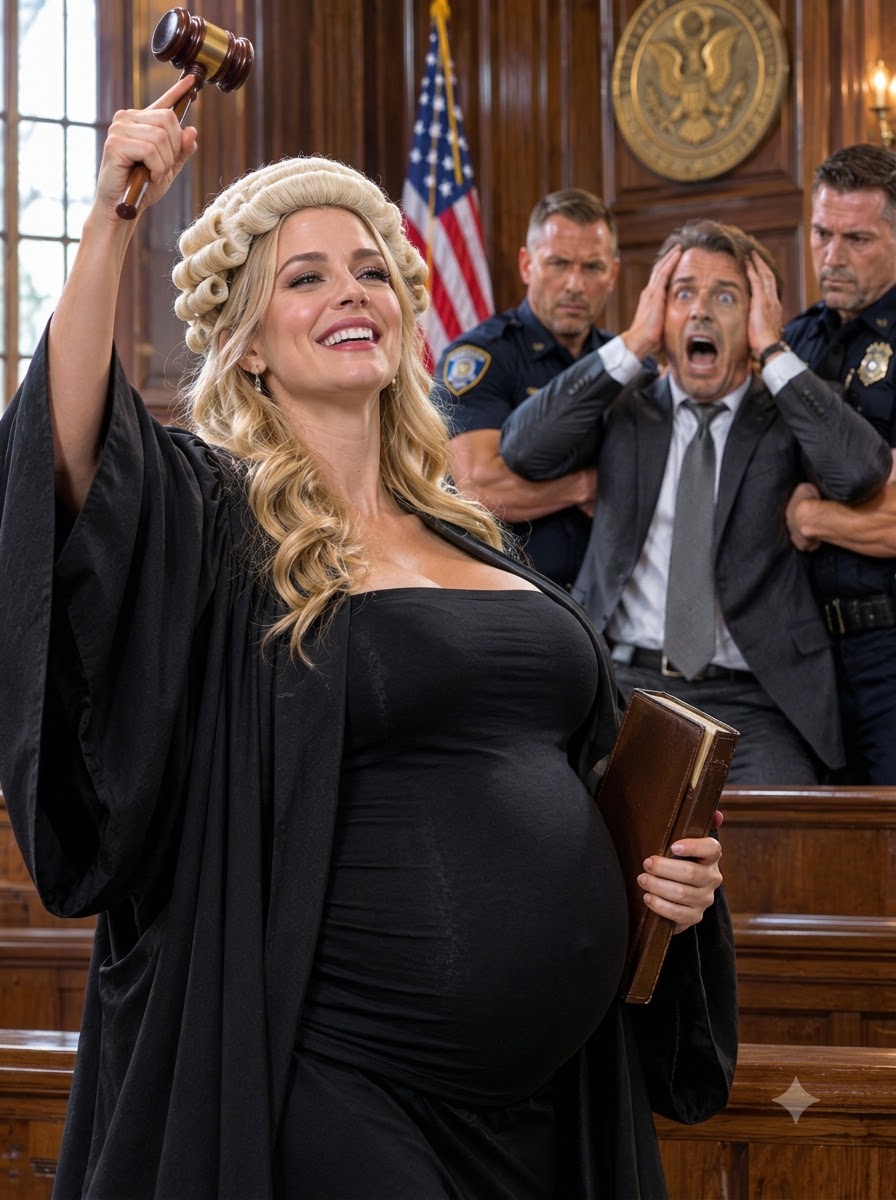
From my seat behind the judicial bench, I watched him.
A cold feeling settled in my stomach along with a sharp rush of energy.
My black robe suddenly felt too heavy.
Then the courtroom clerk called out my name without emotion.
“All rise for the Honorable Judge Emily Carter.”
Daniel’s head jerked up.
For a brief moment his usual smile disappeared and his face went blank.
His blue eyes widened as he looked at the woman sitting above him.
The State of Illinois seal hung behind me.
He blinked several times as if he could not believe what he saw.
He did not know.
He had no idea.
He had no idea that the woman he left ten years ago—the woman he thought lacked ambition—had become a judge.
And he had no idea that when he handed me the separation papers across our kitchen island, I was pregnant with his child.
I kept my face calm and judicial.
I straightened the folders on my desk, feeling the paper under my slightly shaking fingers.
“Good morning,” I said, my voice steady through the microphone.
“Please be seated.”
People in the gallery sat down with the sound of clothes and chairs.
Daniel stayed standing a moment longer, looking stunned, before he finally sat beside his client.
Over the past ten years I had imagined seeing him again many times.
Sometimes I pictured walking past him on the street and ignoring him.
Other times I imagined confronting him and listing every hard night and missed moment.
But I never imagined looking down at him from the judge’s bench in Cook County while he handled a major case.
The clerk read the docket.
Daniel represented a real estate developer charged with large-scale financial fraud.
The prosecution claimed the defendant had altered investment records and taken money from retirees.
When it was his turn, Daniel stood.
“Your Honor,” he began.
His voice was deep, a little lower than I remembered.
“My client maintains his absolute innocence.
We are fully prepared to demonstrate, beyond a shadow of a doubt, that the prosecution’s interpretation of these complex fiscal records is fundamentally, tragically flawed.”
His speaking was polished and persuasive.
I looked at him and nodded, but my thoughts were divided.
An ethical issue stood out clearly.
Daniel and I had a complicated past.
Presiding over a case where he was the lawyer would create a risk of bias.
My personal feelings had no place here.
I raised a hand and stopped the prosecutor before she could reply.
“Counselors, we are going to take a brief recess,” I said.
“I have a procedural matter to address in chambers.”
Ten minutes later, after I spoke with the Chief Judge about the conflict, I returned to the bench.
I recused myself from the case and said only that prior connections required the transfer so the court would remain impartial.
As people left, I gathered my things.
From the corner of my eye I saw Daniel leave his client and come through the gate.
He stood near the bench.
“Emily,” he said, his voice quiet and without courtroom tone.
I paused and held my leather folder against my chest.
“Is it… is it really you?” he asked, studying my face.
“Yes, Daniel,” I answered, the words short and clear.
“It is.”
He looked at the chair I had just left.
“I… I never knew you became a judge.
I never saw your name on the ballots.”
“There are a great many things you never knew, Daniel.”
His jaw tightened.
The past between us felt heavy in the air.
Before I could leave through the private exit, he stepped closer, his expression suddenly serious.
“Emily, wait,” he said, the habit of a man who expects to be listened to.
“That look in your eyes just now… is there something else?
Is there something else you’ve been hiding from me all these years?”
I stopped.
My breath caught.
The secret I had kept for ten years pressed at my throat.
To understand that moment in the courtroom, it is necessary to go back ten years, when Emily Carter was known only through her connection to him.
Ten years ago I was Emily Mitchell.
I was married to a man who measured worth by the size of a paycheck, the corner office, and the politicians who had his number.
But when we first met, Daniel was different.
We met at a loud alumni event at Northwestern University.
I was a second-year law student buried in classes; he was a new associate full of energy.
He was charming, clear-spoken, and easy to talk to.
He talked about justice and changing the system with real enthusiasm that drew me in.
I fell in love with his drive and thought we wanted the same things.
We married two years later in a garden.
I believed we were building something together where both of our goals would matter.
Daniel knew I had a law degree.
What he did not know was that I had quietly started a Master of Laws program.
I took night classes, studied late, and handled the house while he worked long hours at the firm.
I wanted the degree to be a surprise that showed my own effort.
Instead the marriage slowly became a one-sided contest I never agreed to.
As Daniel rose higher, the idealism faded into pure ambition.
He started missing parts of our life.
Anniversary dinners were canceled by text.
Weekend plans turned into work emergencies.
Talk at home became mostly about his hours, his rivals, and his path to partnership.
Whenever I mentioned my own work goals, he brushed them aside.
“Emily, sweetheart,” he said one evening while loosening his tie as I washed cups at the sink.
“Not everyone is cut out to chase a corner office.
The world needs balance.
Someone has to make sure our home actually functions while I’m out there securing our legacy.”
I remember that moment clearly.
I held a wet cloth, my hands tight.
A deep quiet settled over me.
I did not yell.
I did not throw anything.
I had already learned that arguing about my mind only led to long fights where his skill with words wore me down.
I stayed quiet day after day and slowly disappeared in my own house.
Then came a cold Tuesday in November that ended what we had.
Daniel came through the door without hanging his coat.
He set his briefcase on the floor with a heavy sound.
He did not look at me.
He looked past me.
“I can’t keep doing this,” he said, his voice flat.
“I want a divorce.”
I sat still on the sofa, my heart tight in my chest.
“I need a partner, Emily,” he went on, walking the room.
“Someone who understands the velocity of where I am going.
You’re content to just… exist.
I’m building an empire, and you’re dragging your feet.
It’s not fair to either of us.”
I waited for him to say he was only tired and take it back.
He did not.
He stood there waiting for me to agree.
The timing was cruel.
That same morning I had picked up a thick envelope from Northwestern that said I had passed my final exams and earned my Master of Laws.
And in the bottom of my purse, wrapped in tissue, was a plastic test showing two pink lines.
I was going to be a mother.
For hours after Daniel packed a bag and went to a hotel, I sat on the bathroom floor.
I held the university letter in one hand and the pregnancy test in the other.
In a different version of that night I had planned to cook his favorite meal, open a good bottle of wine, and show him both things.
I had pictured him happy, lifting me up, and promising we would face the new chapter together.
But looking at the empty spot where his briefcase had been, I knew that plan was gone.
If I told him about the baby then, he would not stay because he loved me.
He would stay from a sense of duty and see the child as something that held him to a woman he did not respect.
Three weeks later we sat in a mediator’s office to sign the divorce papers.
My pen stayed over the line for a moment.
I looked at Daniel.
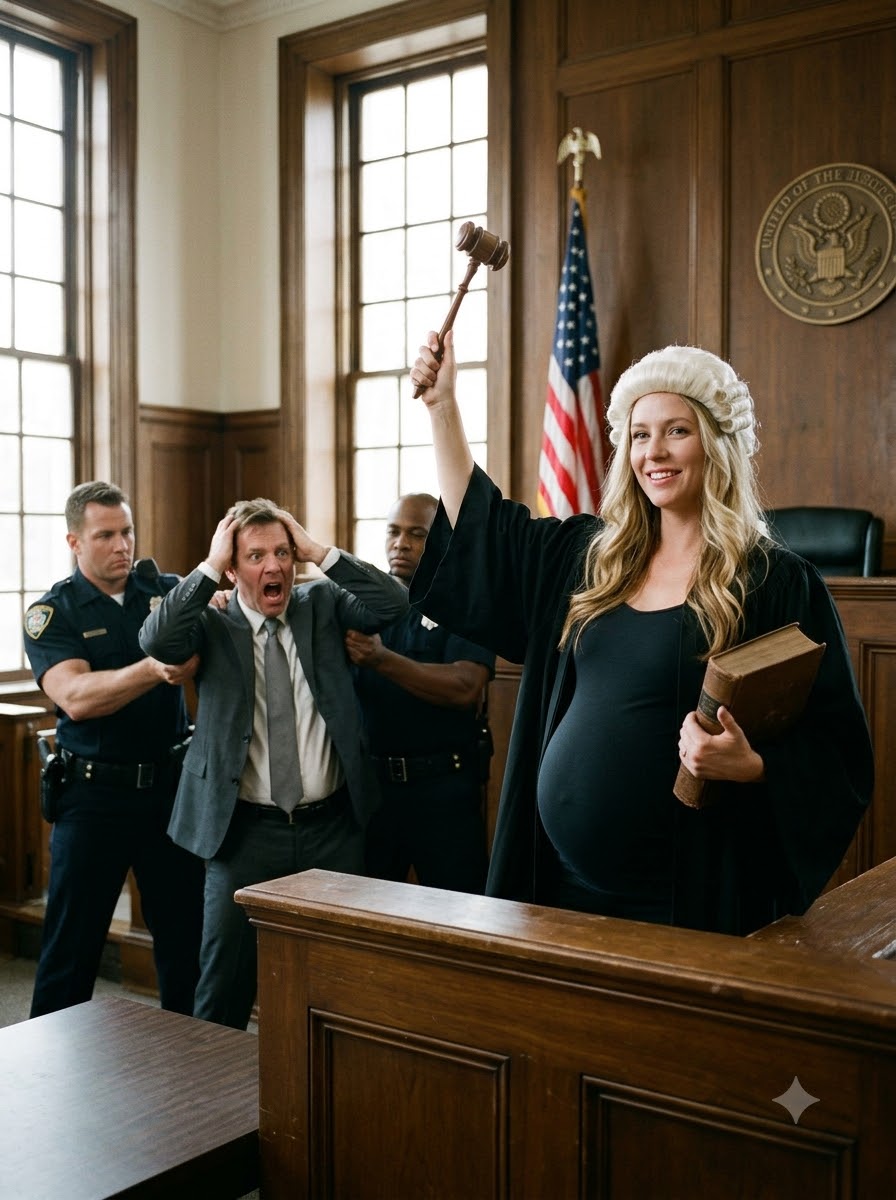
He was checking his watch.
I signed my name.
I said nothing about the Master’s degree.
And I said nothing about the child growing inside me.
I packed my things into a rented van, left the keys on the counter, and moved into a small apartment on the edge of the city, ready to face everything alone.
Standing in the courthouse hallway now, Daniel’s question pulled me back to the present.
Is there something else you’ve been hiding from me?
I looked at the man who had broken me, the man whose face I saw every day in the son he did not know existed.
The silence between us stretched thin.
“Yes,” I finally said, the word cutting through the air of the hallway.
I held his look and did not blink.
“Something infinitely more important.”
Daniel’s stance changed.
The sharp, questioning posture eased into something closer to worry.
He took a small step toward me and glanced around to make sure no clerks or bailiffs were nearby.
“Emily, please,” he said, a note of real need in his voice.
“Just… give me five minutes.”
I studied his face.
Ten years ago that same look and those same words would have made me give in.
I would have bent myself to fit what he wanted.
Now the words sounded empty, like a language I no longer spoke.
“What exactly do you want to know, Daniel?” I asked, my voice calm.
He motioned back toward the courtroom doors.
“How did any of this happen?
You’re sitting on the bench in Cook County.
You… you never even told me you finished your Master’s degree!”
I took a long breath.
“I finished it before we separated, Daniel.
I passed my final exams the week before you left.”
His eyes widened.
“What?
Why in God’s name didn’t you tell me?”
“Because,” I said, my voice lower and heavy with years of resentment, “by the time the letter arrived, you had already delivered your verdict on my character.
You decided I wasn’t ambitious enough.
You decided I was dead weight.
I refused to spend the remainder of my one, precious life waving a piece of paper in your face, begging to be deemed worthy of your respect.”
Daniel looked as if he had been hit.
He looked down at the floor.
“I was under a crushing amount of pressure back then, Emily.
I was trying to build a career from dirt.
I was drowning.”
“So was I,” I answered.
“The fundamental difference between us was that I never believed your dreams made mine irrelevant.”
He had no reply.
The well-known speaker of Chicago stayed silent.
The quiet between us held many memories.
It held the hard years after I left.
The first three years were a constant struggle.
After Ethan was born—a long labor where a nurse held my hand—I faced life alone.
I worked as a paralegal and legal researcher during the day, pumping milk in small closets.
At night I studied for the bar exam with a crying baby in a carrier on my chest.
There were many nights when I cried at the kitchen table, books under my head, sure I was failing at both law and being a mother.
But every time I looked at Ethan’s sleeping face, a strong determination rose in me.
I passed the bar.
I got a job at a mid-sized firm.
I took the difficult cases that bigger firms ignored.
I built a name through careful work, honesty, and skill in court rather than through appearances on television.
When I was appointed to the bench, my mother cried at the small backyard gathering we held.
Ethan, who was eight, ran around wearing a plastic badge and told neighbors that his mom was now the boss of the courthouse.
I laughed with real joy, but underneath it I knew the cost of every step that brought me there.
I never spoke badly of Daniel to Ethan.
When he asked about his father, I gave a careful truth: Sometimes, adults make choices they are not proud of later.
But you were born out of love.
Daniel cleared his throat and brought me back to the hallway.
“You said…” Daniel’s voice shook a little.
“You said there was something more important than the degree.
What did you mean, Emily?”
I turned and looked through the large windows at the end of the hall.
Outside, Chicago moved on with its usual energy.
Cabs passed in the rain and people hurried under umbrellas.
Life had continued for ten years without him.
Now a few words would change his world.
“Daniel,” I said, turning back to him, my heart beating hard.
“I was pregnant when we signed the separation papers.”
He froze.
Every muscle locked.
“What?”
“I was pregnant.
I took the test the exact same afternoon you walked into our living room and told me you wanted a divorce.”
He shook his head slowly, as if the motion could undo what he had heard.
“You’re… you’re saying…”
“Yes,” I said, my voice steady even though my hands shook and I gripped the folder tighter.
“We have a son.”
All color left Daniel’s face.
He stepped back until his shoulder hit the wall.
“A… a son?” he managed.
“His name is Ethan.
He turned ten years old last month.”
Daniel pressed his hand to his forehead.
His fingers trembled.
He looked like a man who had just received terrible news.
“Why… dear God, Emily… why didn’t you tell me?” he whispered, the question raw.
It was a fair question, even if the answer did not excuse either of us.
“Because I was terrified,” I said, setting aside the judge’s calm.
“I was profoundly hurt.
You made it abundantly, brutally clear that a life with me was a cage you desperately wanted to escape.
I couldn’t fathom bringing a helpless infant into a war zone where he would be viewed as an inconvenience to your greatness.”
“But I was his father!” Daniel’s voice rose and echoed in the hall.
“I had a right to know!”
“I know,” I answered, standing my ground.
“And I made that unilateral decision without giving you the opportunity to choose what kind of man, what kind of father, you wanted to be.
I am not pretending my choice was flawless.
I carried that guilt for ten years.”
For the first time since we met, I saw an emotion in Daniel that was not covered by pride.
I saw deep grief.
It was the weight of every missed bedtime, every birthday, and every first step landing on him at once.
“Can I…” He swallowed.
His eyes were wet.
“Can I see him?”
I stiffened.
“Ethan knows next to nothing about you, Daniel.
I am not going to abruptly drop a stranger into his life and expect a ten-year-old boy to process the emotional fallout of our failed marriage.
He deserves stability, patience, and absolute honesty.”
“I understand,” Daniel said, raising his hands.
“Whatever you dictate.
Please.”
I hesitated, the protective mother and the careful judge both present in my mind.
Slowly I opened the side pocket of my bag and took out my phone.
I found a photo from Ethan’s tenth birthday at the arcade.
In the picture Ethan stood next to a skee-ball machine holding a stack of tickets.
He was smiling—a crooked, familiar grin.
I turned the screen toward Daniel.
He stared at it.
PART 2
He did not just look; he took it in completely.
His breath caught.
Slowly he reached out, his fingers stopping just above the glass.
“He… he looks exactly like me,” Daniel whispered.
A tear ran down his cheek.
“He has your smile,” I said softly.
“And your stubbornness.”
Daniel covered his mouth with his hand to hold back a sob.
“I missed everything, didn’t I?”
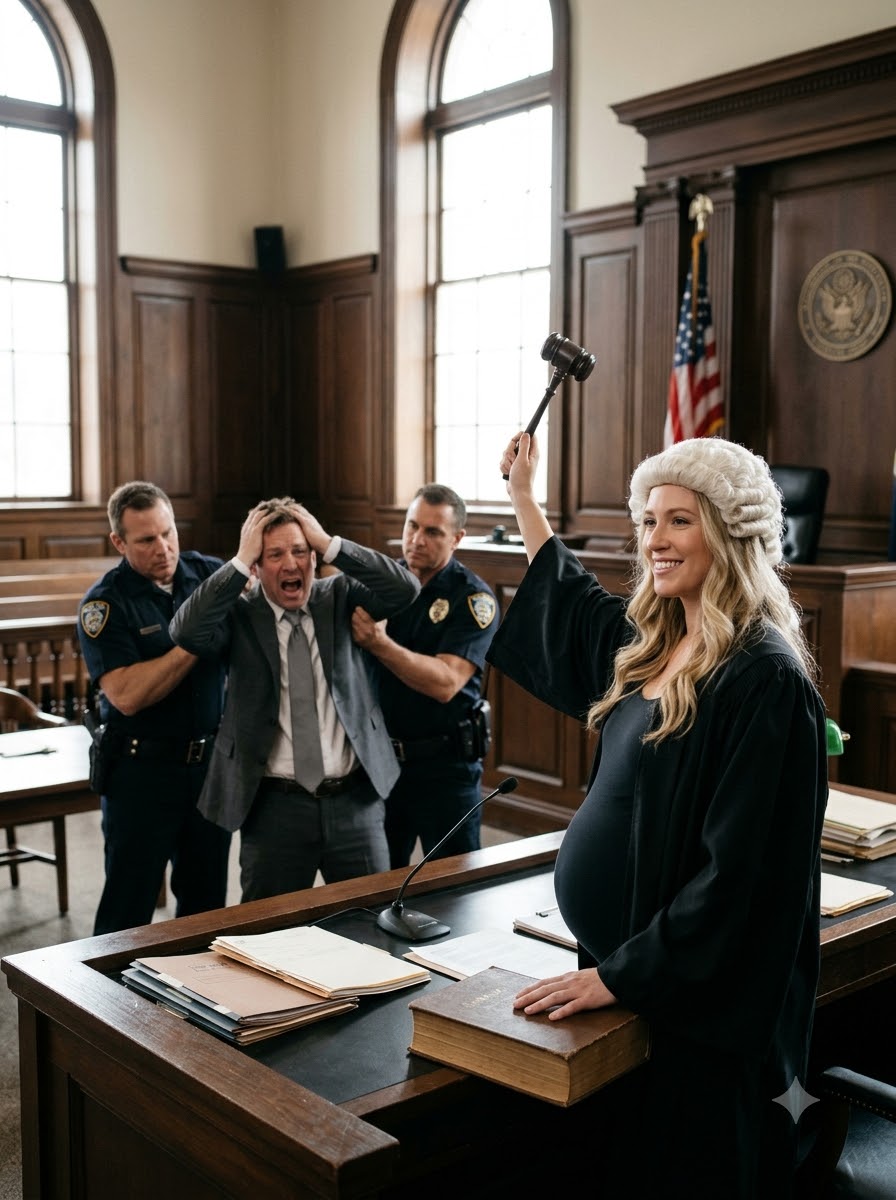
I did not soften it.
“His first steps in our cramped apartment.
His first day of kindergarten.
Every fever, every nightmare, every time he needed someone to explain a piece of the world his mother couldn’t.”
Daniel leaned his head against the wall and closed his eyes.
“I don’t even know what to say to you.”
“Then don’t say anything yet,” I said, putting the phone away.
“Words are cheap in our profession, Daniel.
Show me what you are willing to do.”
I turned and walked toward the private elevator, leaving Daniel Mitchell standing in the corridor.
That evening, while I sat at my kitchen island going over legal papers, my phone buzzed.
A text from an unsaved number appeared.
Emily, I do not expect your forgiveness.
I don’t deserve it.
I just pray you will give me the chance to earn the right to be his father.
I read the text twice.
My thumb stayed over the keyboard.
I thought about the boy sleeping down the hall, a boy who watched other fathers play catch in the park with quiet longing.
I locked the phone and set it face down on the counter, leaving the message unanswered.
Let him wait.
If Daniel Mitchell wanted a place in our lives, he would have to face a harder test than anything the court could give him.
The following Saturday the wind off Lake Michigan blew hard and scattered the autumn leaves.
I sat in a quiet corner booth of a small coffee shop near Lincoln Park, holding a mug of black coffee to warm my hands.
Ethan sat beside me.
He wore his favorite Cubs jersey and twisted a paper straw wrapper between his fingers.
I had spent the last four days preparing him.
I explained in clear, age-appropriate words that his biological father had not known about him because of choices I made long ago.
I told Ethan that his father wanted to meet him, but that Ethan could leave at any moment if he felt uncomfortable.
The bell above the door rang.
Daniel walked in.
He looked stripped of his usual appearance.
The custom suit and silk tie were gone.
He wore a simple navy sweater and dark jeans, looking older and more exposed than the man in the courtroom.
His eyes searched the room and found our booth.
I saw him take a steadying breath before he came over.
“Hello, Emily,” he said quietly, then turned fully to the boy beside me.
He did not stand over the table.
Instead Daniel crouched on the wooden floor so his eyes were slightly below Ethan’s.
“Hi, Ethan,” Daniel said, his voice thick.
Ethan looked at him, his blue eyes—matching Daniel’s—wide and careful.
“Hi.”
A heavy silence sat over the table.
The lawyer who could sway a jury with a whisper had no words ready.
“I… I heard through your mom that you’re a big baseball fan,” Daniel tried, forcing a small smile.
“I am,” Ethan answered, his voice small.
“I’m a pitcher.
I’m trying out for the middle school traveling team next month.”
“That’s incredible,” Daniel said, his eyes lighting up.
“I used to play shortstop when I was exactly your age.
I wasn’t half bad, either.”
Ethan tilted his head and studied the man kneeling in front of him.
Children can sense when something is not genuine, and I watched Ethan test him.
“If you liked baseball so much,” Ethan asked, the question direct, “why haven’t I ever seen you at any of my games?
Why haven’t I ever met you before?”
Daniel flinched as if struck.
He looked up at me for help, but I only raised an eyebrow and sipped my coffee.
This was his to carry.
Daniel turned back to his son, his face open and sincere.
“Ethan,” he began, his voice unsteady.
“Your mother and I… we made some very poor decisions a long, long time ago.
I was selfish.
I was focused on the wrong things.
Because of that, I wasn’t here while you were growing up.
And that is the biggest mistake of my life.
I am so incredibly sorry.
But I want you to know, with absolute certainty, that you did nothing wrong.
Not one thing.”
Ethan took in the apology.
He did not smile and he did not forgive right away.
He only gave a small, serious nod.
“Okay.”
It was not a perfect reunion, but it was a start.
Over the next six months Daniel worked steadily to prove himself.
He did not do it with big gifts or sudden displays.
He did it through ordinary, repeated acts of being present.
He came to every cold, rainy baseball practice and stood by the fence with two cups of hot chocolate.
He learned Ethan’s allergies, his favorite cleats, and the names of his teammates.
He called at 7:00 PM every Wednesday to ask how a math test went, and he never pushed when Ethan gave short answers.
Sometimes Ethan was eager and wanted to show Daniel a new pitching grip.
Other times Ethan was quiet and distant, punishing Daniel with silence for an absence he still did not fully understand.
Daniel accepted the rejections without complaint.
He was learning that the lost years could not be argued back; they had to be met with patience.
One Tuesday afternoon in March the real test came.
I was at my desk in chambers finishing a sentencing memo when my phone rang.
It was Daniel.
“Emily, I have a massive problem,” he said, the old urgency back in his voice.
“I’m scheduled to be at Ethan’s science fair at the gymnasium in two hours.
But my senior partners just ambushed me.
They’ve called an emergency strategy session for the federal racketeering case.
If I walk out on this, it could literally cost me the managing partner vote next month.”
I leaned back in my chair and felt a cold disappointment.
Here it comes, I thought.
The return to old patterns.
“Daniel,” I said evenly.
“You do not need my permission to manage your career.
You are a grown man.
I will tell Ethan you had a work emergency.”
“No!” Daniel almost shouted.
“No, Emily, that’s not what I’m asking.
I’m asking… God, I don’t know what I’m asking.”
“You are asking me to validate your choice to prioritize a boardroom over your son,” I said plainly.
“I won’t do it.
You have to make the call, Daniel.
You have to decide which legacy actually matters to you.”
I hung up.
Two hours later I stood in the crowded middle-school gymnasium.
Ethan stood nervously beside his display board about the aerodynamics of a curveball.
He kept looking toward the double doors.
“Mom,” Ethan asked, his voice tight.
“Is he coming?”
I put a hand on his shoulder.
“Honey, his work is very demanding—”
Suddenly the gym doors swung open.
Daniel came in out of breath, his tie gone and his jacket over one shoulder.
He scanned the room of cardboard boards.
When he saw Ethan his face broke into a wide smile.
He hurried across the floor.
“I’m here! I’m here,” Daniel said, out of breath, and clapped Ethan on the shoulder.
“I wouldn’t miss the curveball analysis for the world, buddy.”
Ethan smiled fully, a bright, open smile.
I watched Daniel carefully.
“The strategy session?” I asked quietly.
Daniel looked at me, his eyes clear.
“Let the partners sort it out.
I’m exactly where I’m supposed to be.”
Watching them lean over the board and talk about wind resistance, I felt something inside me that had been closed for years begin to open.
I was not falling in love with him again—that possibility was gone—but for the first time in a decade I felt something I thought was lost: respect.
The change happened slowly, like seasons shifting.
Daniel and I sat on my back porch one warm summer evening with glasses of iced tea while Ethan practiced pitching against a net in the yard.
“I’ve spent a lot of time in therapy lately,” Daniel said without warning, looking at his glass.
“Thinking about who I was when we were married.”
I stayed quiet and let him continue.
“I spent years convinced that professional dominance made me invincible,” he went on, his voice soft.
“I thought I was building this impenetrable fortress of a life.
But I was totally blind to the fact that I was systematically bulldozing the only things that actually mattered to lay the foundation.”
He turned to look at me.
The arrogance was gone, replaced by a quieter understanding.
“I should have championed your ambitions, Emily.
I should have been in the front row when you got your degree.
I was threatened by your brilliance because I was insecure.
I was a terrible husband.”
“You were,” I agreed without softening it.
“You shattered my heart, Daniel.
But you cannot rewrite the past.
You can only legislate the future.”
He nodded slowly.
“I know I forfeit the right to ever ask you to be my wife again.
I burned that down.
But I want to thank you.”
“For what?”
“For hiding him,” Daniel said, tears in his eyes as he looked at Ethan.
“If you had told me ten years ago, I would have ruined him.
I would have demanded he be perfect.
I would have neglected him.
You protected him from the man I used to be, so that I could eventually become the father he deserves.”
I smiled a little, a real warmth moving through me.
“Just keep showing up, Daniel.
That’s the only verdict that matters now.”
Months later the three of us sat together in the school auditorium for the end-of-year awards ceremony.
When the principal announced, “And the award for Scholar-Athlete of the Year goes to… Ethan Mitchell-Carter,” the room filled with applause.
Ethan stood, his face flushed, and walked toward the stage.
Beside me Daniel clapped hard enough that his palms reddened.
He looked over at me, his eyes wet, and gave a small nod of thanks.
After the ceremony we walked out into the cool evening air toward the parking lot.
Ethan, still excited and holding his glass trophy, suddenly reached out.
With his left hand he took mine.
With his right hand he took Daniel’s.
We walked to the cars like that, connected.
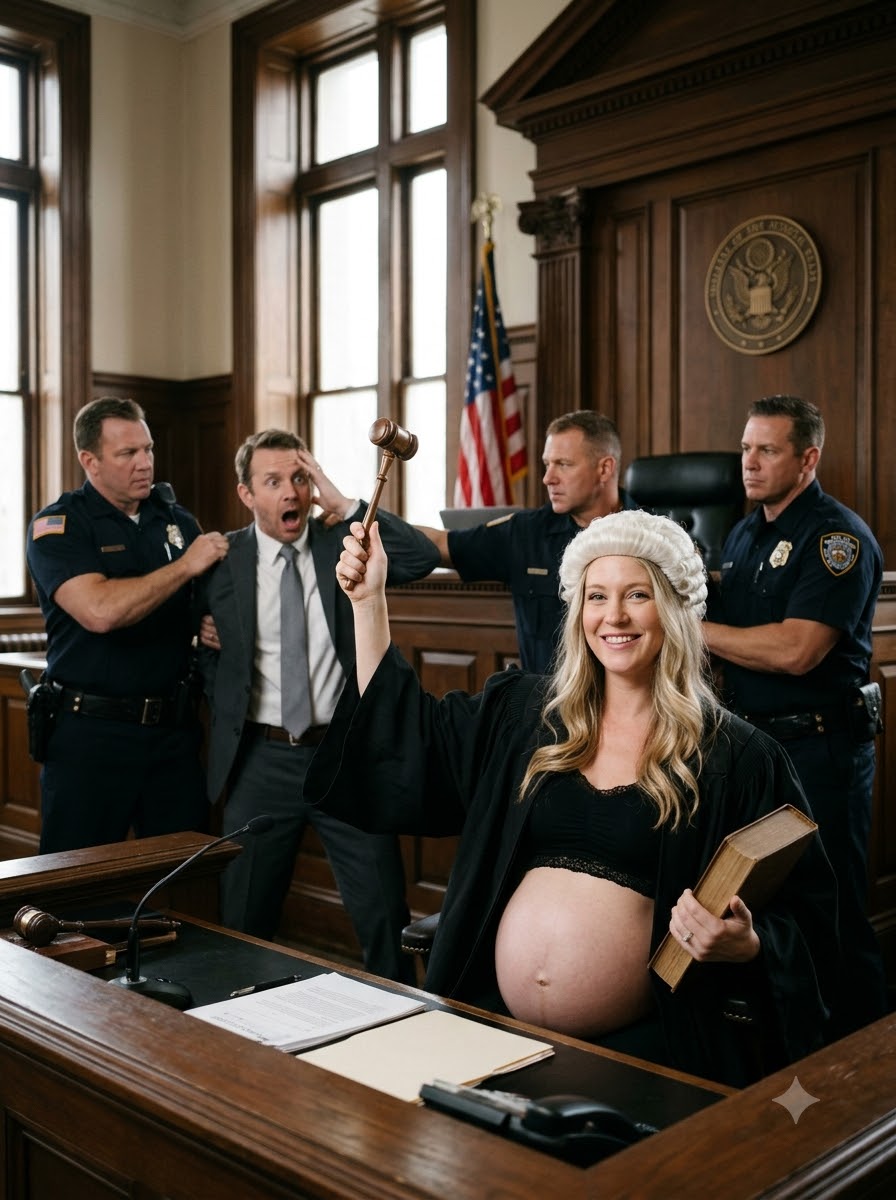
A strange, broken, but healing family.
For a short moment I felt the ache of the ten years that were gone.
I could not bring them back.
Neither could Daniel.
But looking at the man walking beside me, a man who had set aside his pride for his child, I realized we did not need those years back.
We had the present, and it was real.
That night, lying in bed, I thought about the frightened, heartbroken woman I had been ten years earlier, holding a pregnancy test and a degree and believing everything had ended.
I had believed that keeping silent was my only way to survive.
I learned something on this path.
Vengeance does not always mean causing pain to those who hurt you.
True vindication can mean building a life so full and meaningful that the opinions of people who once dismissed you no longer control how you stand.
At the same time I learned that forgiveness does not mean removing accountability.
Daniel had to work through hard ground to earn his place in Ethan’s life, and I had to accept that hiding the truth, even with reasons, carries a heavy cost.
We chase success in courtrooms and boardrooms and in the pursuit of titles and money.
We build monuments to our own ambition.
But in the quiet moments, prestige cannot hold your hand.
A corner office cannot attend a science fair.
Success can give the feeling of lasting power, but it can never replace accountability, honesty, and the difficult, necessary work of loving the people right in front of you.
