

PART 1
I was a problem my husband had set down, much like a heavy, cumbersome suitcase he simply didn’t feel like dragging through an airport terminal anymore.
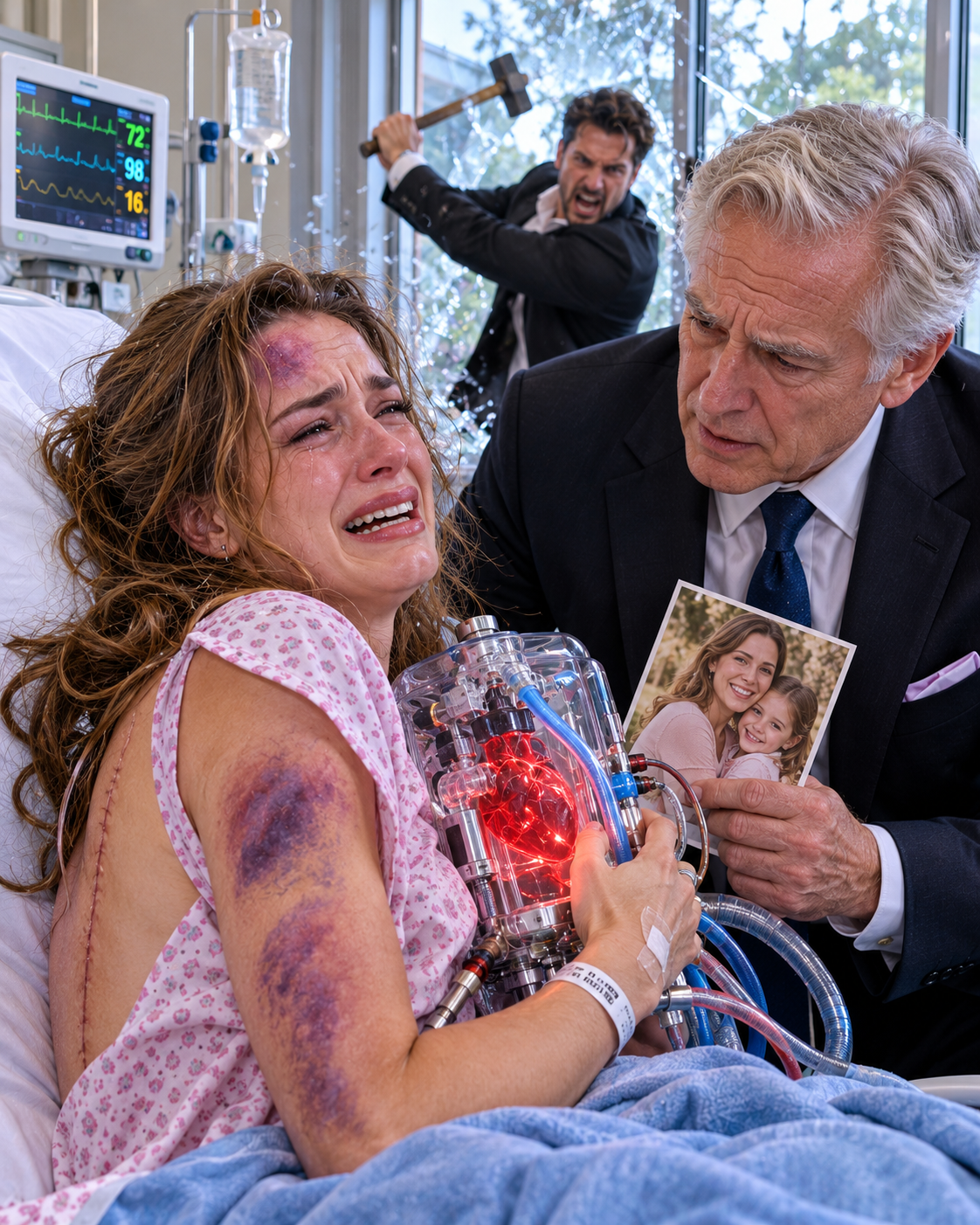
I lay entirely paralyzed by that realization, staring up at the fluorescent lights of the cardiac intensive care unit at St. Bridget’s Medical Center. The ceiling tiles seemed to swim and warp above me, a dizzying mosaic of sterile white. Beside my head, a vital signs monitor chirped in a slow, rhythmic cadence, documenting the persistent survival of a woman who wasn’t supposed to wake up. My esophagus felt as though it had been scoured with crushed glass, a lingering souvenir from the ventilator tube. With every shallow breath I dared to take, the row of metal staples running down the center of my sternum pulled taut, a vicious reminder of the cracked bone and mended flesh beneath.
“Mrs. Mercer?” A face swam into my peripheral vision. She wore blue scrubs and a badge that read Denise. “Honey, can you tell me your birthday?”
I croaked out the date. My voice sounded like gravel grinding under a tire.
Denise tapped a stylus against her digital tablet. She paused, her brow furrowing, and checked the screen a second time. I could feel the sudden, heavy hesitation in the room. She was stalling, and my instincts—honed by a lifetime of anticipating the worst—knew it before my brain could process why.
“Where is my husband?” I rasped, the effort costing me precious oxygen.
Denise slowly lowered the tablet to the foot of my bed. She picked it back up, her knuckles turning white. “Mrs. Mercer… your health insurance was canceled,” she said, her voice dropping to a delicate, bruised whisper. “The primary policyholder terminated it two days ago. Right before your procedure.”
“That’s impossible.” I tried to shake my head, but the world tilted sickeningly. “My husband, Brian Mercer, signed my surgical consent forms. He was sitting right in that chair on Wednesday evening.”
“He was,” Denise agreed softly. She finally met my gaze, and I instantly wished she hadn’t. Her eyes were pooling with unshed tears. “Our financial department has been trying to reach him since you went under the knife. We dialed his cell phone eleven times. He never picks up his office line. Finally, a woman answered his mobile.”
My newly reconstructed heart executed a violent, arrhythmic flutter against its fresh stitches. The monitor beside me shrieked a high-pitched warning before settling back into a sullen rhythm. Denise immediately reached out, laying a warm, grounding hand on my shoulder until the digital numbers dipped back into the safe zone.
“What… what did this woman say?” I whispered.
Denise swallowed hard, her throat bobbing. “She told us that you are no longer his problem.”
No longer his problem.
I let the sheer brutality of those five words land, feeling them crater into my chest deeper than the surgeon’s scalpel. I had been Brian’s wife for four years. I had meticulously ironed his dress shirts so the collars wouldn’t fray. I had co-signed the suffocating loan on his oversized truck. I had once sat shivering in a frozen parking lot at two in the morning, holding his hands while he sobbed uncontrollably over the memory of the father who abandoned him.
“The surgery,” I managed to say, pivoting away from the abyss opening beneath me. “Did it work?”
“It was a complete success. Dr. Reyes noted that your new aortic valve is functioning perfectly.” Denise attempted a reassuring smile, but her lips trembled. “However, the billing department asked me to inform you that your account currently reflects an uninsured, out-of-pocket balance. They’ve held off as long as they could. It’s… substantial.”
“How much?”
She slid a single, crisp sheet of paper from her clipboard. It bore the hospital’s embossed logo at the crest and a bold, catastrophic number at the footer. I blinked, forcing my blurry eyes to focus, reading the digits three consecutive times because my mind vehemently rejected the mathematics of it.
$403,500.
I possessed exactly $61 in my personal checking account. I was acutely aware of this humiliating figure because Brian had gently, almost patronizingly, pointed it out when he insisted on taking over our household finances back in January.
“Is there anyone at all I can call for you?” Denise pleaded.
I mentally cataloged the people I loved. It was a devastatingly brief inventory. My adopted mother had succumbed to pancreatic cancer when I was twenty-four. My best friend, Marcy Dillard, lived just across town but had abruptly ceased all communication weeks ago, citing that my illness was “too draining.”
“My husband,” I said, the words tasting like ash. It was the only autonomic response my mouth knew how to formulate. “Please. Just try his number one more time.”
I watched her dial. I watched her press the receiver to her ear, her expression tightening as she waited through the rings. Eleven, twelve, thirteen. Then, a sharp click, followed by the sterile, automated voice of a cellular provider informing us that the number dialed was no longer in service.
Denise slowly lowered the handset. The silence in the ICU room felt suffocating.
The night before my chest was sawed open, Brian had tenderly kissed my forehead. He had stroked my hair and told me he needed to make a quick run to the bank. It was 8:40 at night. I had let the absurdity of a late-night bank run pass without comment. That was the tragic reality of my marriage: I had been letting things pass for a very, very long time. He never returned.
I stared blindly at the acoustic ceiling tiles, desperately attempting to construct a fictional reality where he had been in a horrific multi-car pileup. A narrative where he was currently lying comatose in a trauma ward on another floor of this very building. I worked feverishly on building that lie in my head. I maintained it for approximately sixty seconds.
Then, I remembered the tea.
Every single night, he brought me a warm white mug. Every night, he offered that soft, melancholic little smile. I didn’t yet possess the vocabulary to understand why my stomach violently convulsed at the memory of that tea, but the primal fear was undeniable.
I was thirty-one years old. I was the proud owner of a mechanical heart valve, a crushing debt of nearly half a million dollars, and not a single soul on this earth who knew, or cared, where I was.
I had absolutely no idea how drastically wrong that last assumption was.
My name, at the time, was Hannah Mercer. Before my health inexplicably plummeted, I managed the bustling front desk at Hillcrest Family Dental in Worcester, Massachusetts, earning a modest $52,000 annually. I prided myself on knowing every patient’s first name, their specific dental anxieties, and precisely what kind of turkey sub they ordered from the deli downstairs. I was exceptionally gifted at remembering details about people. Tragically, I was utterly blind to noticing what those people were actually doing in the shadows.
My foundation was built on shifting sand; I was a product of the foster care system. I don’t offer this detail to solicit pity, but rather because it is the crucial architecture of everything that followed. The Commonwealth of Massachusetts first documented my existence at the age of two—a nameless, terrified little girl pulled from a horrific highway wreck in February of 1997. No wallet was recovered. No identification was found. No frantic relatives came searching. The state bureaucracy stamped me as ‘Jane Doe’ for eleven agonizing weeks.
Eventually, salvation arrived in the form of Ruth Callaway. She was a fiery, fifty-eight-year-old widow and school cafeteria manager who resided in a cheery yellow house on Pleasant Street. She fostered me at three, adopted me at five, and christened me Hannah. Ruth was a woman of iron and pragmatism. She taught me to reconcile a bank ledger before she taught me how to ride a bicycle. When she died, I nursed her through her final, agonizing months. After settling her hospice debts, I was left with a meager inheritance, which I fiercely protected, growing it to $84,000 by my early thirties. Every penny was mine, earned by a girl who never splurged on a coffee she could brew at home.
That girl was currently staring at a hospital bill she could never hope to pay, when a sharp, authoritative knock broke the ICU’s hypnotic beeping.
At exactly 3:47 on Friday afternoon, a man materialized in my doorway. He was in his late fifties, possessing distinguished silver hair and draped in a bespoke charcoal suit that radiated quiet, old money. He gripped a weathered leather briefcase in one hand, while his other hand was pressed flat against his chest, as if he had sprinted a great distance.
“Mrs. Mercer?” he inquired, his voice laced with an uncharacteristic tremor. “Hannah Mercer?”
“Who are you?” I rasped, instinctively pulling the thin hospital blanket higher.
“My name is Walter Hayes. I am a senior partner at a law firm in Boston.” He stepped over the threshold, closing the heavy wooden door behind him with deliberate care. “I have been searching for you for twenty-nine years.”
“You have the wrong room,” I stated, the exhaustion threatening to pull me under.
“I assure you, I do not.” He crossed the linoleum floor, stopping beside my bed. To my utter shock, he reached out and enveloped my trembling hand in both of his. His eyes shimmered, and a solitary tear carved a path down the side of his nose. He made no effort to wipe it away. “You have her face. You have your mother’s exact face.”
My breath hitched, catching painfully on the titanium staples in my chest.
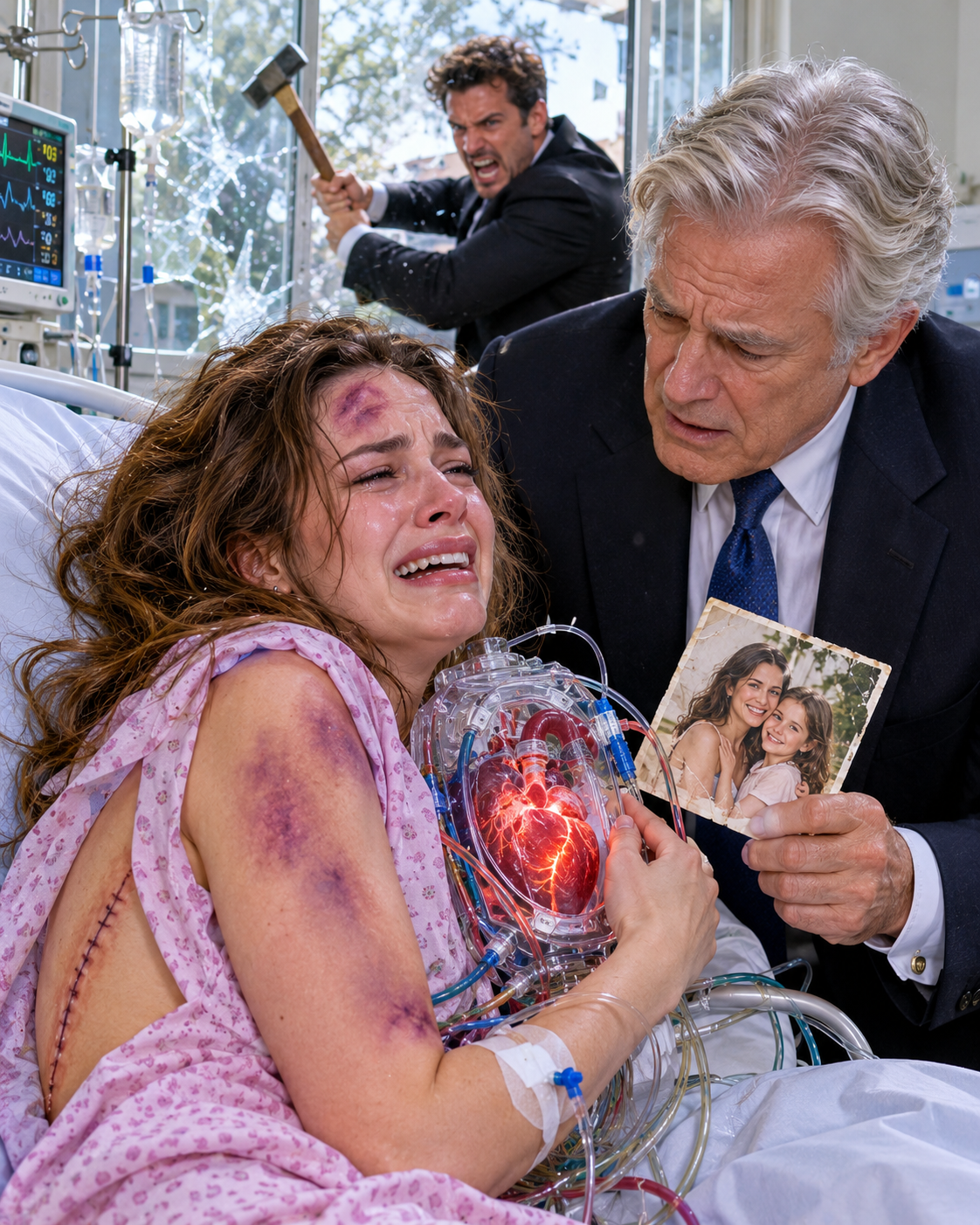
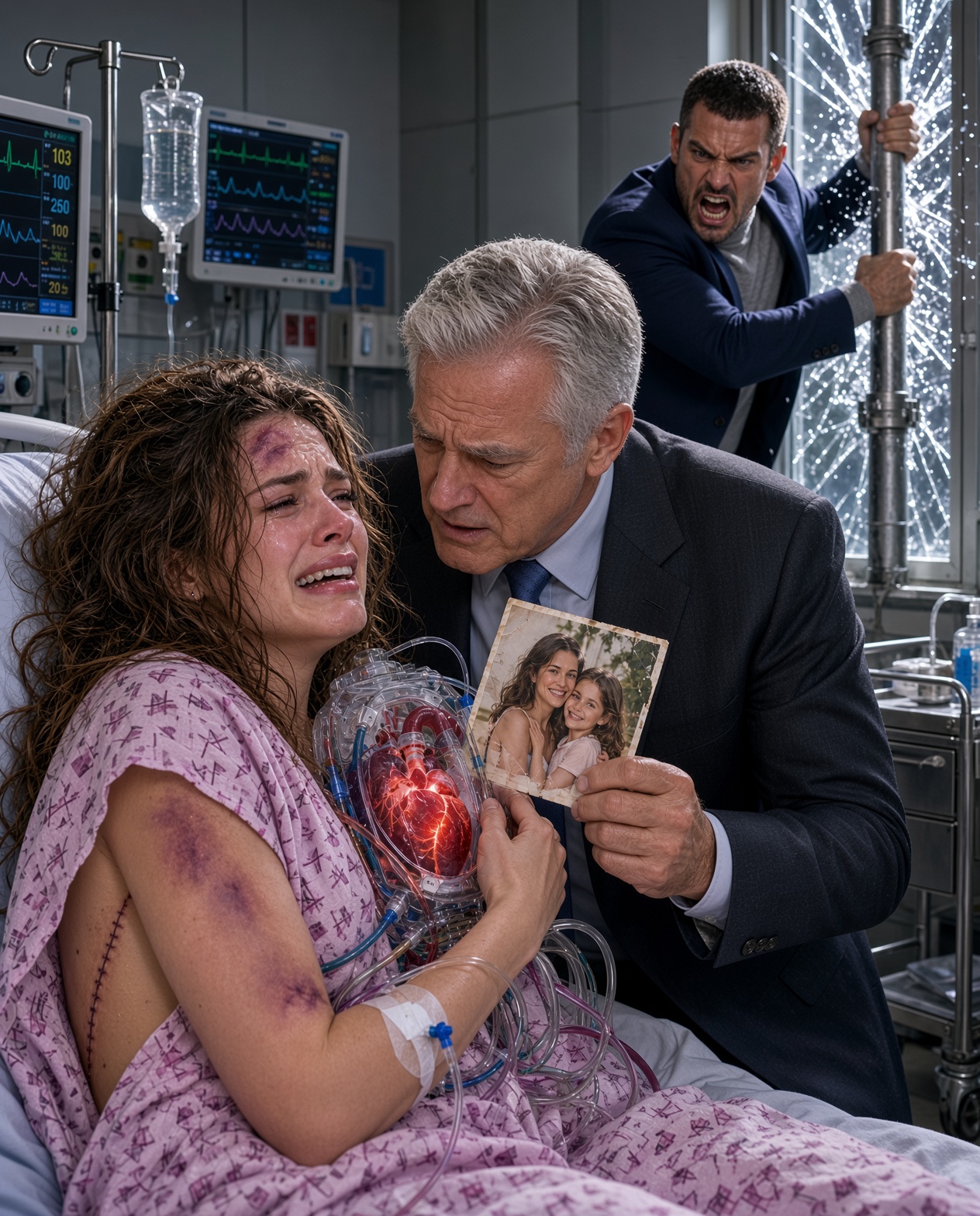
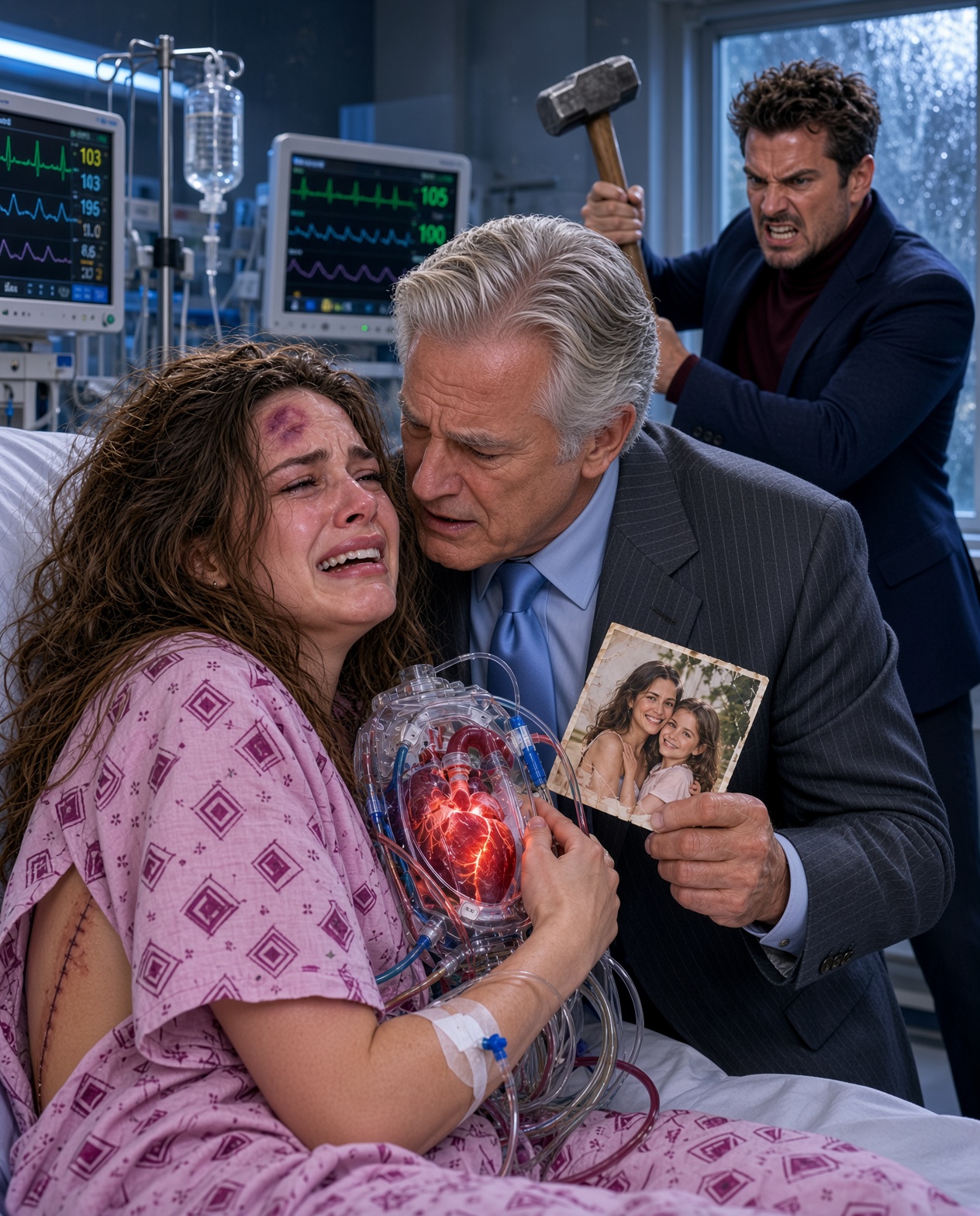
Walter popped the brass latches of his briefcase and withdrew a slightly yellowed, glossy photograph. He placed it gently on my lap. The image captured a vibrant, laughing young woman with wind-tossed hair. Perched on her lap was a toddler with dark, unruly curls and a strikingly serious little mouth.
The toddler had my face.
“Your birth name was Hannah Rose Ashford,” Walter said, his voice dropping to a reverent hush. “You were pulled from a submerged vehicle after a catastrophic accident on the Mass Pike in February of 1997. You were two years old. For three decades, everyone in your family believed you perished in the freezing waters of the Westfield River.”
“I am Ruth Callaway’s daughter,” I whispered fiercely, a defensive reflex born of loyalty to the woman who saved me.
“I know,” Walter nodded slowly. “I am intimately aware of what she did for you, and I intend to visit her grave to thank her myself. But your biological grandfather, Edmund Ashford, never ceased his pursuit of the truth. He passed away fourteen months ago. Upon his death, he left his entire estate to you. The liquid assets, the corporate shares, the blind trusts. All of it.”
I stared at the impeccably dressed attorney, convinced the anesthesia was inducing vivid hallucinations. The heart monitor beside me accelerated its tempo.
Walter leaned in, his voice taking on the conspiratorial tone of a man passing a dangerous secret in a crowded cathedral. “Hannah… the estate is valued at four hundred and twelve million dollars.”
A terrible, cracked sound escaped my throat. It was supposed to be a laugh. “I have sixty-one dollars to my name, Mr. Hayes.”
“Not anymore.”
I looked back down at the photograph. The toddler staring back at me was an heiress. Then, a sensation older and infinitely colder than mere disbelief began to uncoil in my gut. I thought of Brian. I thought of the sudden onset of my mysterious illness.
“Mr. Hayes,” I began, my voice miraculously steadying. “I started feeling violently ill about three weeks ago. Before that, I assumed I was just fatigued from my heart defect. But it accelerated rapidly.”
I watched the tender, emotional relief drain entirely from Walter’s face. It was instantly replaced by the hardened, calculating mask of a ruthless litigator.
“Three weeks ago,” he repeated, his tone sharpening into a blade.
“Yes. Why?”
Walter’s grip on my hand tightened painfully. “Hannah… did you, by any chance, submit a mail-in DNA ancestry kit around the second week of February?”
My blood ran cold. Marcy had gifted me a kit for Christmas. I had finally spit into the tube and mailed it on February 9th—the exact day Brian had convinced me to take medical leave from the dental clinic.
Walter went completely, terrifyingly still. “Your late grandfather’s genealogical data is heavily logged in that company’s database. So is the data of your estranged cousin, Gerald Ashford. Any close biological relative who submits a sample triggers an automatic alert to everyone on that specific family tree. My firm received that confidential alert the second week of February. It took us three arduous weeks to legally verify the genetic match and physically trace you to this hospital bed.”
“The second week of February,” I echoed, the room beginning to spin.
“Yes.” Walter’s voice was barely a whisper. “Hannah, your cousin Gerald received that identical alert on that exact same day. And under the stipulations of the trust… if you were to suddenly die, Gerald is the next heir in line.”
I felt the sterile ICU tilt dangerously on its axis. The revelation hit me like a physical blow: Brian wasn’t the only one with a motive. Someone else might have discovered my existence and decided a dead heiress was far more profitable than a living one.
Walter didn’t pause to let me hyperventilate. He whipped a sleek smartphone from his breast pocket and dialed with practiced urgency. His voice was no longer that of a weeping man; it was the voice of a predator who had spent thirty years negotiating in boardrooms where powerful men lied for sport.
“I need the attending medical toxicologist at St. Bridget’s,” he commanded into the receiver. “Immediately. And I require a private security detail stationed outside this door. Now.”
I tried to push myself up against the pillows. “You think my cousin poisoned me?”
“I think a man I have never met suddenly acquired a four-hundred-million-dollar motive that was completely invisible three weeks ago,” Walter stated, pulling up a chair and anchoring himself beside me. “I could be wrong. I pray that I am wrong. But I promise you this, Hannah: I will not be careless with your life twice.”
Twice.
I didn’t yet comprehend the damning weight of that word, but the shadow it cast over the room was unmistakable.
For the next hour, the ICU transformed into a fortress. A burly, unsmiling security guard took up residence in the corridor. Nurses darted in and out under Walter’s hawkish scrutiny. At one point, he vanished briefly, returning with a chilled paper cup of ginger ale, holding the plastic straw to my parched lips with the intuitive gentleness of a father.
But my mind was trapped in a terrifying loop, endlessly replaying the timeline of my own physical destruction.
I thought about the tea. The honey chamomile blend Brian claimed was his grandmother’s secret recipe, brewed with special herbs from an obscure tin shop in Providence. I thought of the chipped white mug he exclusively served it in, the distinct metallic tang hidden beneath the aggressive sweetness of the honey, and the strange numbness that began creeping into my toes in December. I obsessively did the arithmetic of dates in my head, and the math stubbornly refused to yield a comforting answer.
At precisely 4:55 PM, the door clicked open, admitting a petite woman in a gray cardigan, a tablet clutched securely against her chest. Her badge identified her as Dr. Anita Palmer, the on-call medical toxicologist. She locked the heavy door behind her, a sharp, decisive click that signaled doom.
“Mrs. Mercer,” Dr. Palmer began, her face devoid of any comforting bedside manner. “Your pre-surgical admission labs flagged several severe anomalies. Dr. Reyes noted your profound nerve neuropathy, the unexplained alopecia, and the severe gastrointestinal cramping. Two days ago, she forwarded a sample of your blood to my lab for an expanded, specialized panel.”
“Tell me,” I demanded, my voice surprisingly firm.
Dr. Palmer pulled a chair close, glancing briefly at Walter before focusing entirely on me. “Your toxicology report confirmed the presence of a lethal heavy metal compound. This specific toxin is not something you would accidentally ingest through environmental exposure, your workplace, or a standard diet. Furthermore, the distinct banding pattern found in your hair follicles indicates that this substance has been introduced into your system in measured, sub-lethal doses over a period of several months.”
The heart monitor betrayed my panic, its tempo accelerating into a frantic staccato.
“Small doses,” I repeated, the words tasting like poison themselves.
“Yes, Mrs. Mercer.” Dr. Palmer’s voice was an anchor of absolute certainty. “Someone has been meticulously and intentionally poisoning you.”
I stared blankly at the acoustic ceiling tiles. The image of a warm, chipped white mug materialized in my mind’s eye, carried across the darkened expanse of our kitchen by a husband who smiled tenderly and whispered, ‘Drink up, babe. It’s for your stress.’
He hadn’t been making tea. He had been brewing my execution.
“I want the police,” I said, the shock finally giving way to a searing, purifying rage.
“I preemptively contacted them,” Dr. Palmer nodded. “A detective from Major Crimes is already en route.”
Detective Renee Wells arrived at 5:40 PM. She possessed the broad shoulders of a linebacker and the patient, unnerving stillness of an interrogator who knew that prolonged silence extracted more truth than a barrage of questions. She clicked a digital recorder onto my tray table.
“Let’s start with the tea, Hannah,” she said gently.
So, I purged it all. I chronicled the chipped mug, the phantom tin shop in Providence, the heavy metal aftertaste. I told her how, in a desperate attempt to hide my nausea, I had secretly poured the dregs of the tea into a potted basil plant above the sink, only for the resilient plant to turn black and rot within days. I detailed Brian’s sudden insistence on a new padlock for the garage, his aggressive takeover of our finances, and the $250,000 life insurance policy from Iron Valley Life he had badgered me into signing—the one where he had helpfully affixed a bright yellow sticky flag next to the signature line.
Wells scribbled sparsely in her notebook. When I finally exhausted my narrative, she leaned forward.
“Mrs. Mercer, you mentioned the dead basil plant. Do you know where it is now?”
“Brian tossed it in the compost bin behind our garage,” I replied.
A shadow of a smile flickered across the detective’s stoic face. “Then I know exactly where my crime scene unit is heading tonight.”
That evening, the crushing weight of my $403,500 medical debt simply evaporated. A visibly trembling woman from the hospital’s financial office entered my room, stuttering as she presented a statement showing a balance of zero. It had been paid in full, via an untraceable wire transfer from an account I couldn’t comprehend, orchestrated by a man I had known for a matter of hours.
“Why?” I asked Walter, once the billing clerk had retreated. “You don’t owe me a dime.”
Walter stared intently at the scuffed linoleum. A complex emotion—something agonizingly close to profound shame—twisted his aristocratic features. “You are my client,” he deflected quietly. “That is the primary reason.”
“And the second reason?”
“I will explain it to you when you are strong enough to hear it.”
By nightfall, I was strapped into a private ambulance. By 9:00 PM, I was ensconced in a VIP suite at the Beacon Heart Institute in Boston, gazing out at the glittering reflection of the Charles River. A team of elite specialists, who treated me with the reverence reserved for royalty, began the arduous process of flushing the lingering heavy metals from my blood.
Lying in the pristine bed, I finally wept. I didn’t cry for the husband who had systematically tried to murder me. I cried for Denise, the Worcester nurse who had fought for a dying woman with no insurance. I cried at the staggering realization that my miraculous survival was entirely funded by the accumulated grief of a grandfather I would never get the chance to meet.
Detective Wells arrived at my Boston suite on Saturday morning, a thick manila folder resting ominously on her knee.
“I’ll give you the facts, Hannah, without the padding,” Wells began, her tone strictly professional. “Your $84,000 in savings? Gone. Brian transferred the entire balance out on Wednesday afternoon, mere hours before he walked you into St. Bridget’s for surgery. That tablet you signed at the credit union didn’t create a joint high-yield account. It legally transferred sole ownership to him.”
“I signed it without reading,” I admitted, a flush of deep humiliation creeping up my neck. “I trusted him.”
“You trusted your spouse,” Wells countered firmly. “That isn’t a character flaw. It’s a societal norm that predators count on.”
Wells opened the folder, laying out the architecture of my husband’s deceit. The woman who had answered Brian’s phone was Tiffany Doyle, a twenty-nine-year-old sales coordinator who worked in Brian’s building at Grainger Supply. They had been carrying on an aggressive affair for nineteen months. The romantic Valentine’s Day hotel receipt I had found wasn’t a client dinner gone late; it was a weekend rendezvous while I lay rotting in our bed.
“There is another variable,” Wells continued, glancing momentarily at Walter, who stood rigidly by the window. “Mr. Hayes requested I thoroughly vet your cousin, Gerald Ashford. He was attending a corporate retreat in Scottsdale for the entirety of February. We subpoenaed his digital footprint. No suspicious searches, no contact with your husband. In fact, Gerald hadn’t even opened his DNA match alert until Mr. Hayes explicitly called him about it.”
Wells leaned in, her gaze piercing. “This conspiracy wasn’t about a four-hundred-million-dollar inheritance, Hannah. Brian Mercer never once Googled the name ‘Ashford’. But we have his search history. He obsessively researched how long life insurance payouts take to clear, and what hospitals legally do with indigent patients who die with massive uninsured medical debt.”
I closed my eyes, the horrific clarity of it all washing over me. “He had absolutely no idea about the Ashford estate,” I breathed. “He was going to casually execute me for a measly two hundred and fifty thousand dollars. And I was secretly worth nearly half a billion.”
“Precisely,” Wells said.
A laugh bubbled up from my throat—a harsh, jagged sound that ripped at my chest staples. Walter immediately stepped forward, placing a stabilizing hand on my shoulder, while Wells waited with the patience of a saint for my hysteria to subside.
The cosmic irony was asphyxiating. I had spent four years desperately trying to earn the love of a man who was eagerly waiting to trade my life for a fraction of what I was actually worth. The colossal fortune waiting in the wings had never touched his radar. The one shield that could have deflected his greed remained entirely invisible to him.
“We executed the search warrant on your property last night,” Wells continued, her voice cutting through my dark reverie. “Hidden beneath a cord of firewood behind your garage, my technicians uncovered a rusted paint can. Inside was a heavy-duty ziplock bag containing pale crystalline powder and a box of latex gloves. In the compost bin, we recovered the dead basil plant. The lab confirmed the exact same heavy metal compound in the soil, the crystals, and embedded in the micro-fissures of the chipped white mug Brian carelessly left in the dishwasher.”
She laid out credit card statements like a prosecuting attorney presenting a royal flush. Brian had resurrected a defunct business card to secretly purchase the toxic chemicals from an industrial supply vendor, shipping them to a ghost P.O. Box in a neighboring town.
“He was cautious,” Wells noted, “but his mistress was arrogant. We impounded Tiffany Doyle’s phone. They used an encrypted messaging app, but we broke it. He had her saved as ‘Dale from Logistics’. The messages weren’t about supply chains, Hannah. They were debating your decline. Discussing lethal dosages.”
Wells slid a printout across my tray table. It was a message dated March 3rd, the eve of my catastrophic collapse.
Is she gone yet? I’m so tired of waiting.
My fingers went numb. I pushed the paper away, nauseated.
“I’ve worked homicide for two decades,” Wells said softly, buttoning her gray wool coat. “It is almost always the husband. And the most terrifying part is that they rarely start out as monsters. They are just fundamentally weak men who decide their temporary comfort is more valuable than your permanent existence, making a hundred tiny, selfish choices until they cross a line they can’t uncross.”
“I want them all,” I said, my voice vibrating with a newfound, lethal authority. “I don’t just want him. I want anyone who helped him.”
Wells nodded approvingly. “We’re already pulling the threads.”
The final, devastating thread unraveled on the first of April. Wells discovered that Tiffany Doyle had forwarded a text on the morning of my surgery to a contact labeled ‘Sis’.
Do it today, Sharon. Please.
The chilling reply, sent four minutes later: Done. Lose this number.
‘Sharon’ was Sharon Pike, Tiffany’s older sister. She was fifty-two years old and wielded significant power as the Vice President of Claims at Harbor Shield Insurance in Boston—the exact carrier that managed Brian’s employee healthcare plan. Utilizing a high-level administrative override reserved exclusively for proven fraud cases, Sharon Pike had unilaterally terminated my dependent coverage while I was being prepped for open-heart surgery. She had signed my digital death warrant as a favor to her sister.
When Walter brought me the corporate dossiers on Harbor Shield later that evening, he opened a leather-bound folder and laid a specific ownership chart across my lap.
“Read the majority shareholders list,” Walter instructed quietly.
I scanned the document, my eyes locking onto a specific line item. Harbor Shield Insurance. Majority Stakeholder: The Ashford Family Trust – 41%.
“Your grandfather aggressively acquired a controlling stake during the late nineties,” Walter explained, his tone clinical. “It was a silent investment, but it carries supreme voting rights. As the sole, uncontested beneficiary of the Ashford Trust, you effectively own Harbor Shield. You could have Mrs. Pike unceremoniously terminated and blacklisted by dawn, and the media would never catch a whiff of the scandal.”
Walter studied my face, searching for my grandfather’s ruthless pragmatism. “Or, we can deploy the district attorney. Settle it with a quiet plea deal. Bury it in NDAs. That is how the Ashfords have traditionally handled unpleasantness, Hannah. We make things evaporate. How do you wish to proceed?”
I looked at the corporate logo. I thought of Denise, weeping in frustration as she dialed a disconnected number. I thought of a woman I had never met, sitting in a plush corner office, casually signing away my right to survive.
“No,” I said, the word ringing with finality. “I don’t want it quiet. I want a spectacle.”
PART 2
I orchestrated my coup d’état exactly sixteen days later.
The venue was the McKim Building at the Boston Public Library on Copley Square. It was a masterpiece of Gilded Age architecture, featuring sweeping marble staircases, soaring painted ceilings, and an aura of untouchable prestige. I had rented the entire grand hall for the inaugural gala of the Ruth Callaway Heart Fund—a charitable foundation I had capitalized three weeks prior with the first two million dollars from the Ashford Trust, dedicated to paying the catastrophic medical debts of uninsured patients.
I put my adopted mother’s name on the embossed invitations, not my biological one. It was an homage to the woman who had taught me how to balance a ledger, not the bloodline that had funded the evening.
Walter, acting as the menacing proxy for the Ashford Trust’s immense wealth, personally extended invitations to the entire executive board of Harbor Shield Insurance. When a billionaire shareholder summons you to a charity dinner, you do not decline.
I stood on the Juliet balcony overlooking the main floor, swathed in an emerald-green silk gown selected by Marcy, who had tearfully begged her way back into my life. The gown’s high, elegant neckline perfectly concealed the angry red zipper of my surgical scar. My mechanical heart ticked in my chest, steady and relentless. Below me, four hundred of Boston’s elite mingled, sipping vintage champagne under the glow of brass lamps. Detective Wells stood inconspicuously near the north exit, wearing a severe black dress that couldn’t quite mask the stance of a seasoned cop.
Sharon Pike made her grand entrance at 7:20 PM.
She was draped in navy silk, accessorized with three strands of luminous Akoya pearls. She possessed her younger sister’s sharp cheekbones, but none of Tiffany’s neurotic anxiety. Sharon moved through the opulent room with the entitled swagger of a woman who believed she was the apex predator. I watched her casually snap her fingers at a passing waiter, demanding a fresh flute of champagne.
At 8:10 PM, the string quartet faded into silence. I descended the marble staircase, my heels clicking with a rhythmic, terrifying precision. I stepped up to the crystal podium. My hands, which had trembled violently for months under Brian’s toxic regimen, were now perfectly, terrifyingly still.
“Good evening,” my voice boomed through the state-of-the-art acoustic system, washing over the sea of upturned faces. “I want to extend my deepest gratitude to all of you for being here. A special acknowledgment goes to one of our platinum sponsors tonight: Harbor Shield Insurance. And a very specific thank you to their esteemed Vice President of Claims, Mrs. Sharon Pike.”
At table four, Sharon offered a brittle, pageant-ready smile and raised her crystal flute. “Anything for a noble cause, darling,” she called out. A ripple of polite, sycophantic laughter followed.
I let the silence stretch until it became uncomfortable.
“My name is Hannah Ashford,” I announced, dropping the Mercer surname like a piece of filthy clothing. “Six weeks ago, I was not an heiress. I was a dying patient, lying in an ICU, bleeding out on your denied coverage list.”
The grand hall instantly descended into a suffocating, absolute silence. It wasn’t the polite quiet of an attentive audience; it was the paralyzed hush of a room realizing a bomb had just been armed.
I nodded curtly to the AV technician in the shadows. The massive projection screen behind me flared to life. It displayed a highly magnified, undeniable image: a digital termination of dependent coverage form.
“This document,” I stated, my voice echoing off the vaulted ceilings, “was manually processed on March 4th, approximately twelve hours before a surgeon cracked my chest open to save my life. It bears a single, authorized signature. Yours, Mrs. Pike.”
Sharon’s smug facade shattered. The champagne flute trembled in her grip. “This is… this is an outrageous fabrication!” she shrieked, her voice shrill and panicked. “I don’t know who this lunatic is!”
“Then perhaps you can explain the timeline of this,” I countered, nodding to the technician again.
The screen transitioned to a massive screenshot of the decrypted text messages.
9:12 AM: Do it today, Sharon. Please.
9:16 AM: Done. Lose this number.
A collective gasp swept through the room. I saw a prominent city councilman at table two cover his mouth in horror.
Sharon vaulted from her chair, the heavy wood scraping violently against the marble floor. She stared at the fifty-foot projection of her own digital footprint, then wildly scanned the faces of her peers, colleagues, and the board members she reported to. In that agonizing span of seconds, she realized that four hundred of the most powerful people in the city were reading the exact anatomy of her crime.
“Do you have any idea who the hell I am?” she screamed at me, the veneer of high society entirely stripped away.
“I know exactly what you are,” I replied, lowering my voice so the microphone carried the lethal intimacy of a whisper. “You are the arrogant bureaucrat who helped dig my grave. You simply forgot to verify who owned the deed to the cemetery.”
In her blind fury, Sharon’s hand flew to her throat. Her manicured fingers tangled in the heavy strands of her Akoya pearls. With a violent, spasmodic jerk, the silk thread snapped. Hundreds of luminous white beads cascaded onto the marble floor, bouncing and scattering in a chaotic, percussive symphony of ruin. Four hundred elites watched the physical manifestation of her destruction roll beneath their designer shoes.
“I am not finished,” I commanded, and the murmuring instantly ceased. “Mrs. Pike, to you, I was nothing more than a blinking cursor on a ledger. A financial liability with a defective heart, easily erased with a keystroke on a Wednesday morning. You did it casually, because you believed you were untouchable, and because you assumed no one would ever care enough to ask why I died.”
I locked eyes with her, projecting every ounce of my inherited authority. “But I was never ‘nobody’s problem’. I am a human being. I have a name, and I possess the resources to ensure you remember it for the rest of your natural life.”
Detective Wells moved out from the shadows, flanked by two uniformed Boston police officers. They did not rush. They marched across the marble with the grim, inevitable cadence of an execution squad.
“As the sole executor of the Ashford Family Trust,” I announced, delivering the final blow, “I have instructed the Harbor Shield Board of Directors to terminate Sharon Pike, effectively immediately. Furthermore, a forensic audit of every single claim she has denied over the past decade will commence at 8:00 AM on Monday.”
The applause didn’t erupt immediately. It started with a solitary man in the back—a prominent cardiac surgeon—who stood and began clapping with slow, deliberate ferocity. Then, the entire room rose, a tidal wave of vindication.
Sharon didn’t resist when the officers clamped the steel cuffs around her wrists. Her mouth hung slack, a streak of mascara ruining her aristocratic makeup. As they dragged her toward the grand brass doors, she twisted violently, locking her crazed eyes on mine.
And she smiled.
It was the terrifying, triumphant grin of a cornered animal realizing it still possessed one venomous bite.
“You think I’m the monster in this room, Hannah?” Sharon’s voice sliced through the applause, sharp as a guillotine. “Why don’t you ask your beloved Mr. Hayes who signed the legal documents that erased your existence twenty-nine years ago?”
I froze. The applause faded into a dull, underwater hum. I turned slowly, my mechanical heart stuttering.
Walter Hayes was standing by the grand staircase, still wearing his immaculate charcoal suit. But his face had drained of all color, resembling a corpse exhumed from a fresh grave. He refused to meet my gaze.
The confrontation occurred in the library’s opulent, cavernous reading room at 11:40 PM. The grand hall had been cleared, the caterers dismissed, the tables stripped of their finery. Only Walter and I remained, sitting across from each other at a massive oak table, illuminated by the harsh, unforgiving glare of a single green-glass banker’s lamp.
Walter did not insult my intelligence by begging for forgiveness. He did not offer pathetic rationalizations. He sat with his hands folded meticulously on the oak surface and delivered his confession like a condemned man reading his own execution warrant.
“In February of 1997, I was twenty-eight years old,” Walter began, his voice hollow, stripped of its usual commanding resonance. “I was the most junior associate at Witcomb and Hayes. My father’s name was etched on the glass door, but I was still fetching coffee and carrying senior partners’ briefcases.”
He meticulously detailed the timeline. A frantic social worker from a Springfield hospital had contacted the firm. A nameless toddler had survived a horrific crash on the Mass Pike. The identifying marker was a distinctive crescent-shaped birthmark behind the left ear. A submerged vehicle had been dredged from the Westfield River, containing the bodies of Daniel and Caroline Ashford—my biological parents.
“Your grandfather, Edmund, was heavily sedated, consumed by grief,” Walter explained, his eyes fixed on the grain of the wood. “He was entirely incapacitated. The vacuum of power was filled by his younger son, your uncle Raymond Ashford.”
Walter’s mouth twisted into a bitter sneer. “Raymond was the co-trustee. The mathematics of the Ashford trust were brutally simple. If Daniel’s child—you—was declared dead, Raymond’s inheritance doubled. If you were alive, it was halved.”
I sat perfectly still, enveloped in a chilling, transcendent calm. It was the emotional detachment of watching a house burn to the foundation from across the street.
“Raymond brought me into a closed-door meeting,” Walter confessed. “He looked me in the eye and stated unequivocally that the hospital Jane Doe was not an Ashford. He claimed the family could not endure the psychological torture of a false hope. He ordered a formal ‘Declaration of Kinship’ drafted and sent to the state—a legally binding document stating the Ashford family formally disavowed any connection or claim to the child.”
Walter finally looked up, his eyes bloodshot and haunted. “My supervising partner—my own father—agreed with Raymond. He framed it as an act of mercy for a grieving old man. He ordered me to sign the declaration as the firm’s representative.”
“And you signed it,” I said, the words falling like stones into a bottomless well.
“I did. On February 21st, 1997. I used a blue Montblanc pen. I remember the exact weight of it in my hand.”
The silence in the reading room was absolute, save for the rhythmic clicking of my titanium valve.
“I was young, ambitious, and cowed by two men who held my entire future in their hands,” Walter said, his voice cracking. “That is a pathetic explanation, Hannah, not a defense. I possessed the legal acumen to know the questions I should have asked, and I intentionally chose blindness. I signed away the only living piece of your grandfather’s legacy, went back to my luxury apartment, and ate dinner.”
He continued, unraveling the decades of guilt that followed. Three years later, in the spring of 2000, a firm audit unearthed a misfiled box. Inside was a Polaroid of the toddler—a little girl with dark curls and a crescent birthmark.
Walter had spent an entire night staring at my face. The next morning, risking career suicide, he drove to Edmund Ashford’s sprawling estate in Lennox and confessed the entire conspiracy.
“I fully expected him to destroy me,” Walter whispered. “He sat in his leather armchair for an eternity. Then, he looked at me and said, ‘Walter, I am going to need you to find her.’ And that was the extent of his wrath. He severed Raymond from the trust that very week, and we spent the next quarter-century hunting for a ghost.”
But the Massachusetts state records had been hermetically sealed. My adoption by Ruth Callaway had generated a new identity, a new social security number, burying ‘Jane Doe’ in a bureaucratic vault that only a supreme court judge could crack. They poured millions into private investigators and shadow genealogists. Raymond Ashford died in 2017, taking his greed to the grave.
“Edmund passed away fourteen months ago,” Walter said, a rogue tear finally escaping to splash against the oak table. “I was holding his hand in his suite at Mass General. His final, dying breath was a question: ‘Did you find her?’ I told him, ‘Not yet.’ He knew I was lying to comfort him. He squeezed my hand anyway.”
Two weeks after Edmund’s death, the DNA alert finally triggered.
“I should have deployed a team to your doorstep the second that alert pinged,” Walter admitted, his self-loathing palpable. “But I wanted absolute, undeniable verification. I told myself I was exercising professional due diligence. The truth is, I was a coward, terrified of failing Edmund one last time. And in those three weeks of my hesitation, your husband nearly succeeded in murdering you.”
I finally understood the crushing weight of his vow in the ICU: I will not be careless with you twice.
“You paid my four-hundred-thousand-dollar medical debt,” I stated flatly.
“It was a microscopic fraction of what I stole from you.”
I stared at the man across the table. He was the savior who had held a cup of ginger ale to my blistered lips, navigating me through the darkest hours of my life. He was also the ambitious architect who had callously condemned me to an existence where I was nobody’s daughter for three decades.
I won’t lie and claim I felt a sudden rush of cinematic forgiveness. Nor did I feel an all-consuming hatred. I felt an exhausting, crushing weariness. I thought of little Hannah Callaway, lying awake in a twin bed in Worcester, crying into a pillow because no one had come looking for her. I now knew someone had been looking, tirelessly, for twenty-five years. And the man sitting across from me was the reason they couldn’t find me.
“I am not going to offer you absolution tonight, Walter,” I said, my voice steady. “Because I wouldn’t mean it.”
“I understand,” he murmured, bracing for the axe to fall.
“But I am not going to fire you, either.”
Walter’s head snapped up, shock warring with desperate hope in his eyes.
“I am going to go back to my hotel room,” I said, standing and smoothing the silk of my gown. “And you are going to let me leave.”
He stood, offering a deep, old-world bow of his head. As I walked out into the empty, echoing corridors of the McKim Building, I left the architect of my erasure alone in the dark.
PART 3
The aftermath was a hurricane of legal violence and media spectacle.
Someone at table four had discreetly recorded the entire confrontation at the gala. By noon the next day, the footage had generated two million views. By Monday’s closing bell, Harbor Shield Insurance’s stock had cratered by fourteen percent. The terrified board of directors ratified my demand, terminating Sharon Pike with extreme prejudice. The subsequent forensic audit uncovered 212 maliciously denied claims bearing her signature over a decade. Tragically, forty-seven of those patients had subsequently died. Sharon’s high-priced defense attorney screamed entrapment for three days before quietly withdrawing from the radioactive case.
My cousin, Gerald Ashford, understandably contested the will. He had expected to inherit a dynasty, only for a resurrected cousin to snatch the crown. His lawyers used the viral video of Sharon Pike’s accusation against Walter to claim the trust was tainted by corruption.
Judge Marguerite Alden of the Suffolk County Probate Court tolerated exactly eleven minutes of Gerald’s grandstanding before slamming her gavel.
“Mr. Hayes committed a grievous error three decades ago,” Judge Alden ruled from the bench, her glare freezing the courtroom. “He confessed that error to the testator, who then spent twenty-five years aggressively attempting to rectify it. Frankly, Mr. Ashford, the only individual in this historical record who financially benefited from the original sin was your late father. Petition denied.”
I wrote Gerald a handwritten letter that afternoon, expressing genuine regret for the shock of my sudden existence. He replied with a single, remarkably decent line: ‘I don’t know how to be angry at you. I tried, but I can’t.’ We’ve since had lunch twice. It is a fragile, awkward truce, but it is real.
The Mercer family, predictably, retreated into a fortress of delusion.
On April 22nd, I attended Brian’s arraignment, flanked by Detective Wells. When I limped down the center aisle, leaning heavily on a cane, Brian’s mother, Linda Mercer, intercepted me. She didn’t see a woman who had survived a literal poisoning and open-heart surgery. She saw the malicious witch who had put her precious son in an orange jumpsuit.
“You did this to him,” Linda hissed, clutching a rosary until her knuckles whitened. “He sacrificed everything to take care of you.”
“Mrs. Mercer,” I said, my voice eerily calm. “Before we married, you warned me that Brian was fragile. You demanded I take care of him.”
Her jaw tightened. “He is fragile.”
“He was a parasite,” I corrected gently. “And in the entire time I was your daughter-in-law, watching my hair fall out and my body fail, not once did you ever call to ask if I was okay.”
She had no retort. She simply turned her back.
When the bailiffs marched Brian into the courtroom, the reality of his confinement hit me. He looked diminished, the gray at his temples no longer distinguished, just tired. For a fleeting, agonizing second, I saw the charming man from the chili cook-off who had memorized my coffee order.
He spotted me in the gallery. His eyes welled with perfectly weaponized tears.
“Han,” he mouthed silently, before raising his voice as the guards yanked his chains. “Han, please! I can explain everything! I did it for us!”
I hadn’t planned to speak. The court decorum forbade it. But the words bypassed my brain and erupted from my chest.
“No, Brian,” I said, my voice echoing off the mahogany walls. “You did it for yourself. And I am no longer your problem.”
He flinched violently, as if struck by a physical blow. I didn’t say it to inflict cruelty. I said it because it was the final, undeniable truth of our existence together, and it demanded to be spoken into the public record.
Brian Mercer eventually pleaded guilty to attempted murder, grand larceny, and wire fraud, primarily because his mistress, Tiffany Doyle, folded like a cheap suit and testified against him in exchange for a reduced twelve-year sentence. Brian was handed twenty-five years in a maximum-security penitentiary. Sharon Pike received six years for corporate conspiracy. I attended none of their sentencings.
The quieter, more profound aftermath involved the rebuilding of my soul.
Marcy Dillard visited me in rehab, bringing a pathetic bag of grapes and a heart full of agonizing guilt. She confessed she had known the texts “she” received from my phone in February were actually Brian’s cadence, his strange punctuation, his insidious gaslighting.
“I should have kicked your front door off its hinges,” Marcy sobbed, burying her face in the hospital blankets.
“You tried to visit,” I soothed her.
“I didn’t try hard enough!”
We cried together for an hour, mourning the years we had lost to a predator’s manipulation. I later hired Denise, the fiercely compassionate ICU nurse from St. Bridget’s. She now serves as the Director of Patient Navigation for the Callaway Heart Fund, sitting in sterile waiting rooms holding the hands of terrified families, telling them their bills are zeroed out before they even have to ask.
In late summer, I demanded Walter accompany me to Mount Auburn Cemetery in Cambridge. We walked in silence under the ancient canopy of copper beech trees until we reached the Ashford family plot. I sank to my knees before the polished granite stones of Daniel, Caroline, and Edmund Ashford.
I placed my hand flat against the cool stone. How do you properly introduce yourself to a grandfather who died hunting for you? How do you apologize for arriving fourteen months too late?
Walter remained thirty paces back, respectfully giving me the space to commune with the ghosts he had helped create.
On the first Monday of September, I marched into Walter’s corner office on State Street. I slid a wire transfer confirmation across his mahogany desk. It was for $403,500—repaying the medical debt in full from my first trust distribution.
Walter’s hand shook as he picked up the paper. “I will donate every cent of this to your Heart Fund,” he rasped.
“That is your prerogative,” I replied. “But I refuse to carry a financial debt to the man who signed my death warrant in 1997.”
He nodded, accepting the blow.
“I am not firing you, Walter,” I continued, pacing before the floor-to-ceiling windows. “And I am not formally forgiving you. Not today. But I need you to remain. I need you to execute the philanthropy of this trust with ruthless efficiency, and I need you to answer every single question I ever have about the family you kept from me. Your continued presence in my life will be earned, every single day.”
Walter bowed his head. For the first time since he had materialized in my ICU room, he didn’t look like a man bracing for the gallows. He looked like a man who had finally been granted a path to redemption.
It has been fourteen months since I woke up with a cracked chest and a shattered reality. I am thirty-two years old. I reside in a historic brick townhouse in Jamaica Plain, sharing it with a clumsy, seventy-pound rescue dog I named Pancake—not in honor of Brian, but in honor of the peaceful Sunday mornings I intend to reclaim.
I brew my own coffee now. It is black, and it is safe.
People frequently ask me for the moral of the story. Society craves a neat, digestible lesson. They want me to declare that cosmic justice always prevails, or that inheriting half a billion dollars magically cauterizes deep psychological wounds.
I tell them that is a comfortable fiction.
The brutal reality is that on a Friday afternoon, I woke up abandoned, bankrupt, and dying, discarded by a man who had sworn an oath to protect me. Hours later, a stranger paid my ransom and declared I was worth four hundred and twelve million dollars.
For the longest time, I believed the staggering monetary figure was the miracle. It wasn’t. It took surviving a monster to comprehend the true calculus of my worth.
I was immensely valuable on March 4th, when I possessed exactly $61 and a defective valve, and a man in my kitchen decided I was worthless trash. I was valuable during all those lonely nights in the foster system when no one came searching for the little girl from the Westfield River crash.
Brian Mercer never possessed the capacity to understand that. Sharon Pike couldn’t comprehend it. They only saw a line item, a logistical annoyance, a woman who was mathematically cheaper to bury than to heal.
Being ruthlessly discarded and miraculously discovered can occupy the exact same afternoon, behind the exact same hospital door. One trauma does not magically erase the other. I carry the weight of both realities now: the husband who couldn’t wait to stop looking at me, and the grandfather who defied death to keep searching.
I survived the architect of my erasure, and in the ashes of his conspiracy, I forged my own empire.
