

PART 1
I arrived home from cardiac rehabilitation nine days ahead of schedule and found a stranger standing on my front porch wearing my bathrobe. “Checkout’s at 11,” he told me. My son had listed my property on Airbnb while I was away. Worse, my sixteen-year-old granddaughter was spending her nights in my old pickup parked in the driveway. In January.
My name is Floyd Haskins. I’m 74, a retired electrical lineman from Duluth, Minnesota.
I’ve been the one raising my granddaughter, Avery, ever since she turned eight. Her mother died, and her father, my son Darren, decided that parenting “wasn’t his thing.”
He lives about forty minutes away with his wife, Tina.
Last November, I suffered a heart attack while shoveling snow.
I needed a triple bypass, followed by six weeks of inpatient cardiac rehabilitation in Minneapolis.
Darren assured me he’d move into my home and look after Avery until I returned.
“Don’t worry about a thing, Dad,” he said. “Focus on your heart.”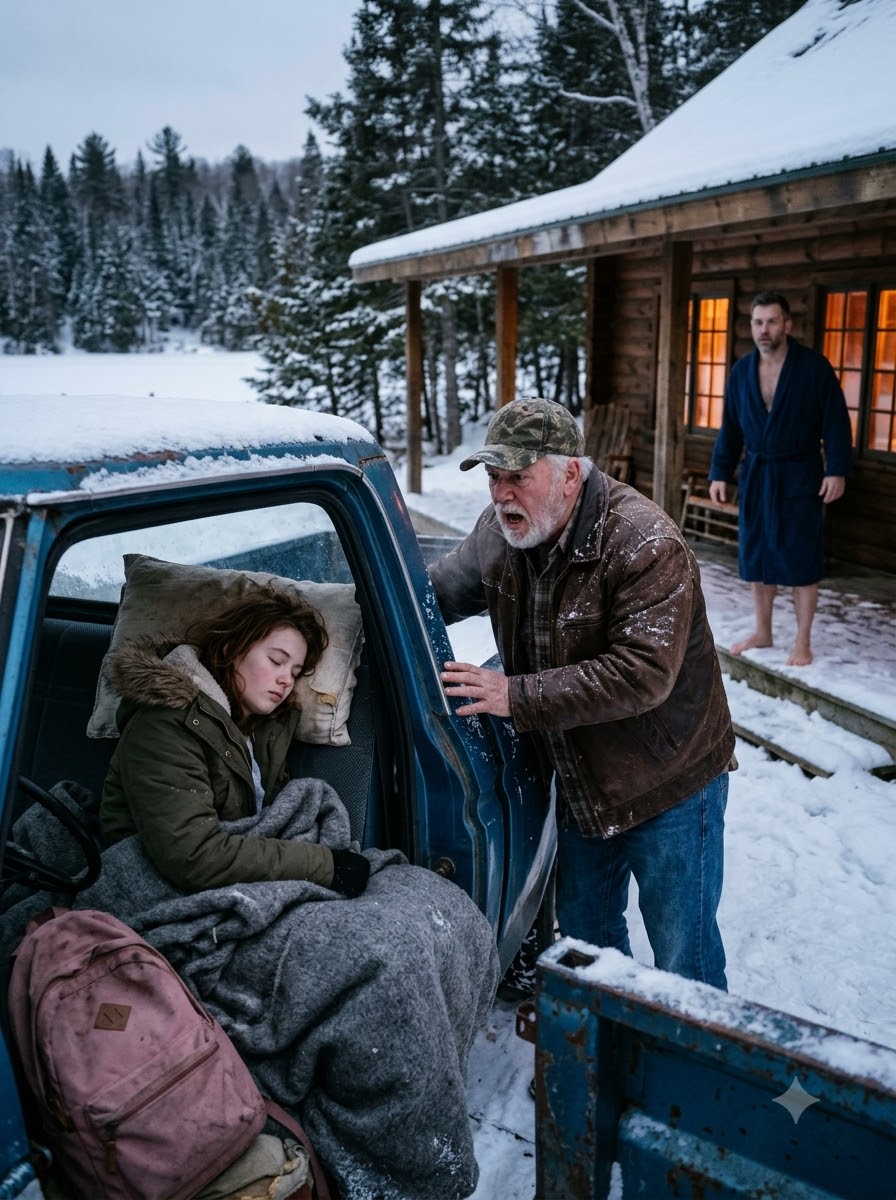
I phoned Avery every evening.
Without fail, she told me, “I’m fine, Grandpa.”
On a Thursday, my rehabilitation doctor decided I was well enough to leave early. I never called anyone to announce my arrival. I wanted to surprise my granddaughter.
My neighbor Gus picked me up at the bus station and drove me home.
As soon as we reached my driveway, I noticed a minivan with Iowa license plates.
A stranger I’d never encountered was standing on my porch, sipping coffee. He had my plaid bathrobe on.
“Can I help you?” he asked.
“This is my house.”
He gave me a courteous little laugh. “I think you’ve got the wrong place, sir. We booked through Airbnb. Checkout’s at 11.”
Then he held up his phone for me to see.
It displayed my house. My kitchen. My recliner. Even my late wife’s quilt spread across the bed.
“Cozy Lakeside Cabin. $189/night. Superhost: Darren.”
There were forty-one reviews.
I glanced beyond the man and into my own home.
Travelers’ luggage was scattered throughout my hallway. Children’s toys covered the rug in my living room.
“Where’s Avery?” I asked.
The man stared at me in confusion. “Who?”
Gus gently put his hand on my arm, then gestured toward the edge of the driveway.
My old blue pickup sat beneath the pine tree.
Its windows were completely fogged from the inside.
I hurried toward it as quickly as my recently operated-on heart allowed.
When I opened the door, I found Avery curled up across the back seat, wrapped in two sleeping bags with her winter coat still on. A space heater was connected to an extension cord that ran through the garage window.
She immediately sat upright when she recognized me. Her nose was red, and her lips were painfully chapped.
“Grandpa? You’re not supposed to be home yet.”
“How long have you been sleeping out here?”
She lowered her eyes.
“Since right after Christmas. Dad said the house was booked every weekend. He said the guests would freak out if a teenager was inside. He gives me twenty bucks to go to McDonald’s.”
Temperatures had dropped to nineteen below zero that week.
I called Darren.
He answered on the fourth ring. A television was playing somewhere behind him.
“Dad! Hey. How’s rehab?”
“I’m standing in my driveway.”
Nothing.
“Okay,” he replied slowly. “Before you get upset—”
“Avery is sleeping in a truck.”
“She’s fine. She’s sixteen. It’s an adventure. Do you know what that house makes? Four grand a month. Somebody had to cover your medical bills.”
“My medical bills are covered by Medicare.”
“Well, then somebody had to cover my bills,” he snapped. “You’re not going to live forever, Dad. That house is going to be mine anyway.”
Then I heard Tina speaking somewhere in the background.
“Tell him the truth, Darren. He’s not going to be able to live alone anymore.”
I ended the call.
I didn’t raise my voice.
I helped Avery climb out of the truck. Then I politely asked the man wearing my bathrobe whether we could sit in the kitchen for a few minutes.
After that, I opened my laptop.
Years earlier, Darren had created my Airbnb account when he helped me “get on the internet.”
He had registered it using my email address.
I signed in.
At the very top was a pinned message conversation. It wasn’t from a guest.
It was from someone named “Pam — Northland Realty.”
Her most recent message had arrived yesterday.
“Confirming Saturday’s showing at 10. Has the old man’s stuff been cleared out yet?”
The words sat on the screen like a second heart attack. I read them twice. The kitchen still smelled like the stranger’s coffee and the faint lemon cleaner the guests had used. Avery stood just inside the doorway in her sleeping bags, arms crossed tight against the cold that had followed her in from the truck. Gus waited on the porch, hat in his hands, watching through the glass.
I clicked the conversation. There were more messages. Pam had been corresponding with Darren for three weeks. She wanted photos of the empty rooms. She wanted confirmation that the title work could move forward once “the current occupant” was relocated. She had already scheduled an open house for the following Saturday. Darren had replied that the old man was still in rehab and would not be a problem.
My hands were steady on the keyboard. That surprised me. The surgeon had warned me about spikes in blood pressure. I felt the familiar tightness behind my sternum, but it did not rise. I opened a new tab and searched the county recorder’s site. The deed was still in my name. No transfer had been filed. Yet.
Avery spoke first. “He told me the money was for your medicine.”
“I know what he told you.”
The guest cleared his throat. He had taken the bathrobe off and folded it over a chair. “Look, we paid for the weekend. My kids are in the living room. If this is some family thing, we can leave, but I need a refund.”
“You’ll get your refund,” I said. “Give me twenty minutes.”
I stood, slowly, the way the physical therapist had taught me. The laptop stayed open on the table. I walked to the hall closet and found the folder I kept behind the winter coats—the one with the original deed, the will I had written after Avery’s mother died, and the power of attorney I had never given Darren. I set them on the counter beside the laptop.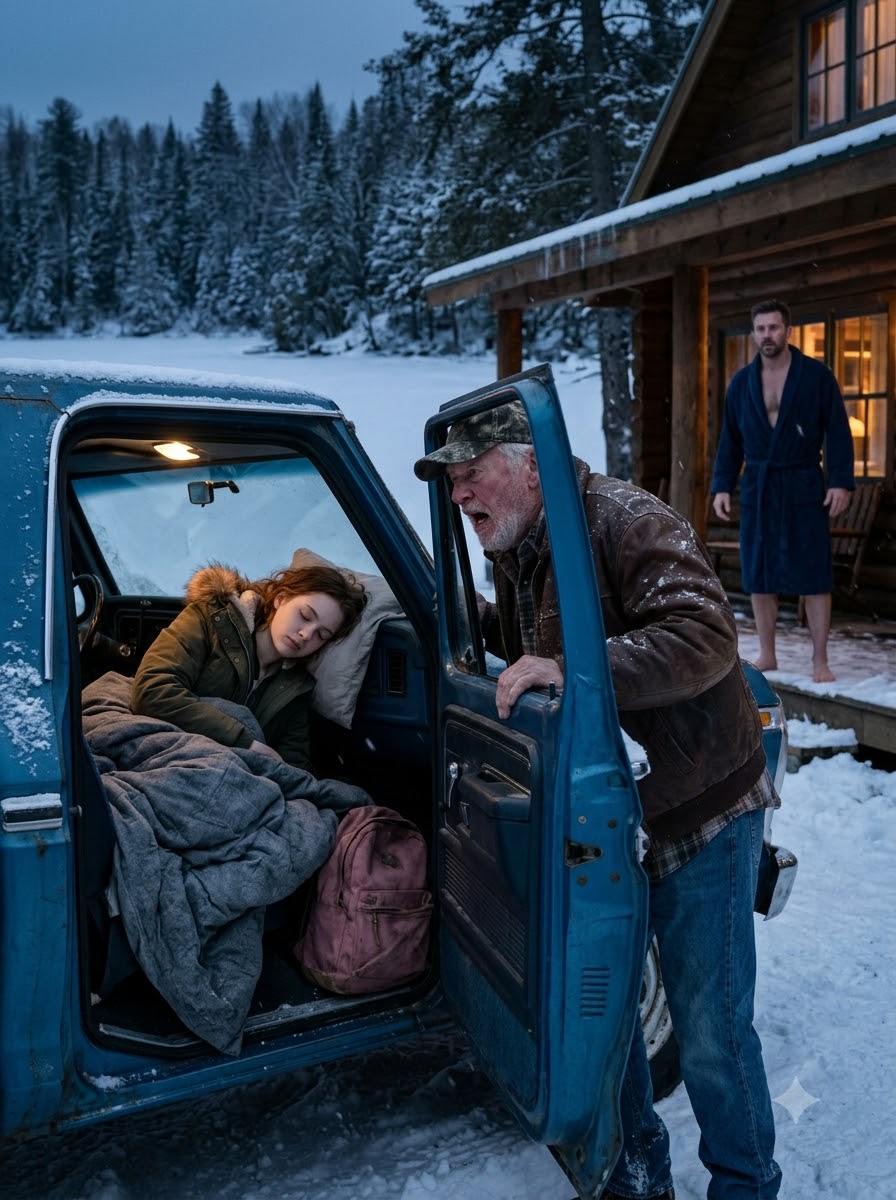
Gus stepped inside and closed the door against the wind. “You want me to call the police?”
“Not yet.”
I turned back to the guest. “Your reservation is canceled. Airbnb will refund you in full. I’ll cover any extra night you need somewhere else. There’s a motel on the highway with heat and cable. I’ll pay for it.”
He looked at his phone, then at Avery still wrapped in the sleeping bags, then at me. “This is messed up.”
“It is.”
He went into the living room and told his family they were leaving early. I heard the children complain and the mother hush them. Within fifteen minutes the minivan was packed. I walked them to the porch, handed the man two hundred dollars in cash for the motel, and watched them drive away. The house felt larger once they were gone.
PART 2
Avery had not moved from the doorway. I went to her and put my hand on the top of her head the way I used to when she was small. Her hair was greasy. She needed a shower and a real meal.
“Go run the water as hot as you can stand,” I told her. “There are clean towels in the hall closet. After that we’ll figure out the rest.”
She nodded and disappeared down the hallway. I heard the bathroom door close and the pipes knock when she turned the taps. Gus stayed in the kitchen with me.
“What are you going to do about Darren?” he asked.
“I’m going to finish what he started.”
I sat back down at the laptop. First I canceled every future reservation and messaged Airbnb support with the proof that the listing was unauthorized. Then I changed the password on the account and the recovery email. Next I called the number Pam had left in her signature. She answered on the second ring, bright and professional.
“Northland Realty, this is Pam.”
“This is Floyd Haskins. You’re scheduled to show my house on Saturday.”
A short pause. “Mr. Haskins. Darren said you were still in Minneapolis.”
“I’m home. The house is not for sale. Cancel the showing. If you continue to represent my son in any transaction involving this property, I’ll have my attorney contact your broker.”
She recovered quickly. “Of course. I’ll remove it from the schedule right away. May I ask—”
“No.” I ended the call.
Gus whistled low. “That felt good.”
“It felt necessary.”
Avery came out of the bathroom twenty minutes later in clean clothes, her hair wet and her cheeks pink from the heat. She looked smaller than I remembered. I made grilled cheese and tomato soup while she sat at the table and watched the snow fall against the window. We ate without talking much. When the bowls were empty she finally asked the question I had been waiting for.
“Are we staying here?”
“Yes.”
“What about Dad?”
“Your father and I are going to have a conversation. You’re not part of that conversation. You go back to school on Monday. You sleep in your own bed tonight. That’s the only thing that matters right now.”
She nodded, but her shoulders stayed tight. I reached across the table and covered her hand with mine. The skin on the back of my hand was thin and spotted. Hers was still smooth.
“I should have come home sooner,” I said.
“You were sick.”
“I should have come home sooner.”
She squeezed my fingers once, then let go and carried the dishes to the sink. Gus left after making sure the space heater was unplugged and the extension cord was coiled. He told me to call if I needed anything. I locked the door behind him and checked every window. The house smelled like soup and Avery’s shampoo. For the first time in weeks it smelled like home.
That night Avery slept in her room. I sat in the recliner with the deed and the will on the armrest and listened to the furnace cycle. Around midnight I called my attorney, the same man who had handled the estate when my wife died. He was retired but still took calls from old clients. I told him everything. He listened without interrupting. When I finished he said he would draw up a new will on Monday, one that left the house and everything else to Avery in trust until she turned twenty-five, with a clear provision that Darren received nothing. He also said he would send a cease-and-desist letter to Darren and to Northland Realty first thing in the morning.
I slept for four hours. At dawn I made coffee and stood at the kitchen window watching the light come up over the frozen lake. Avery came downstairs in her school clothes even though it was still the weekend. She poured cereal and ate it standing up.
“Grandpa?”
“Yes.”
“If Dad comes over, do I have to talk to him?”
“No.”
She nodded and finished her cereal. We spent the morning cleaning. I moved slowly. She worked fast. We stripped the beds the guests had used, washed the sheets, and put my wife’s quilt back on the bed in the room I still thought of as ours. By noon the house looked like itself again.
Darren arrived just after one. I heard the car door and then the key in the lock. I had changed the locks that morning with the spare set Gus kept in his garage. The key turned but the deadbolt did not. He knocked. I opened the door but did not step aside.
“Dad. Can we talk?”
“We can talk on the porch.”
He looked past me into the house. Avery was not visible. He stepped back and shoved his hands into his coat pockets. The wind cut across the lake and lifted the edge of his scarf.
“I was trying to help,” he said.
“You listed my house for sale.”
“It was just an idea. Pam said the market was good. You’re seventy-four. You just had heart surgery. Avery needs stability. Tina and I could have moved in, fixed the place up, given her a real family.”
“She has a real family.”
His mouth tightened. “You can’t take care of a teenager forever. What happens when you have another heart attack?”
“Then the house still belongs to her, not to you.”
He stared at the porch boards. “I spent my own money on those medical bills before Medicare paid.”
“Send me the receipts. I’ll reimburse you.”
“That’s not the point.”
“It is exactly the point. You put your daughter in a truck in January so you could collect rent and talk to a realtor about selling a house that is not yours. That is the point.”
He looked up. For a moment I saw the boy who used to wait for me at the end of the driveway when I came home from a storm call. Then the look closed.
“She’s sixteen. She’ll be fine.”
“She is fine now. She sleeps in her bed. You do not come here again without calling first. You do not speak to her about the house or about money. If you want to see her, you ask her, not me. And you do it somewhere else.”
“You can’t keep me from my kid.”
“I’m not. I’m keeping you from my house.”
He stood there another minute. Then he turned and walked back to his car. I watched until the taillights disappeared around the bend. My chest ached, but the ache was old and familiar, not the sharp warning the doctors had taught me to fear.
Inside, Avery was sitting on the stairs. She had heard everything. I sat on the step below her.
“You don’t have to choose,” I said.
“I already did.”
We stayed like that until the light outside turned blue. Then she went to start dinner and I went to the recliner with the laptop. I wrote the email to Airbnb confirming the account was closed. I wrote the email to my attorney confirming the new will. I wrote nothing to Darren.
On Monday Avery went to school. I drove her in the truck we had cleaned out the day before. The heater worked. She sat with her backpack on her lap and watched the road. When I pulled up to the curb she hesitated.
“Thanks for coming home early,” she said.
“Thanks for waiting.”
She got out and walked toward the building. I watched until she was inside, then drove to the attorney’s office and signed the papers. The house would be hers. The accounts would be hers. Darren’s name appeared nowhere.
In the weeks that followed the snow kept falling and the lake stayed frozen. Avery’s grades improved. She stopped checking the driveway every time a car passed. Gus came over on Saturdays and we fixed the loose board on the porch together. Sometimes Avery joined us. Sometimes she stayed inside and played the radio too loud. I never told her to turn it down.
Darren called twice. The first time Avery answered and said she was busy. The second time she let it go to voicemail. He did not come to the house. Tina sent a short text asking if Avery wanted to spend a weekend with them. Avery replied that she had plans. The plans were homework and a movie on the couch with me.
One evening in late February I found Avery in the kitchen with the deed folder open on the table. She was reading the new will. She looked up when I came in.
“You didn’t have to do all this,” she said.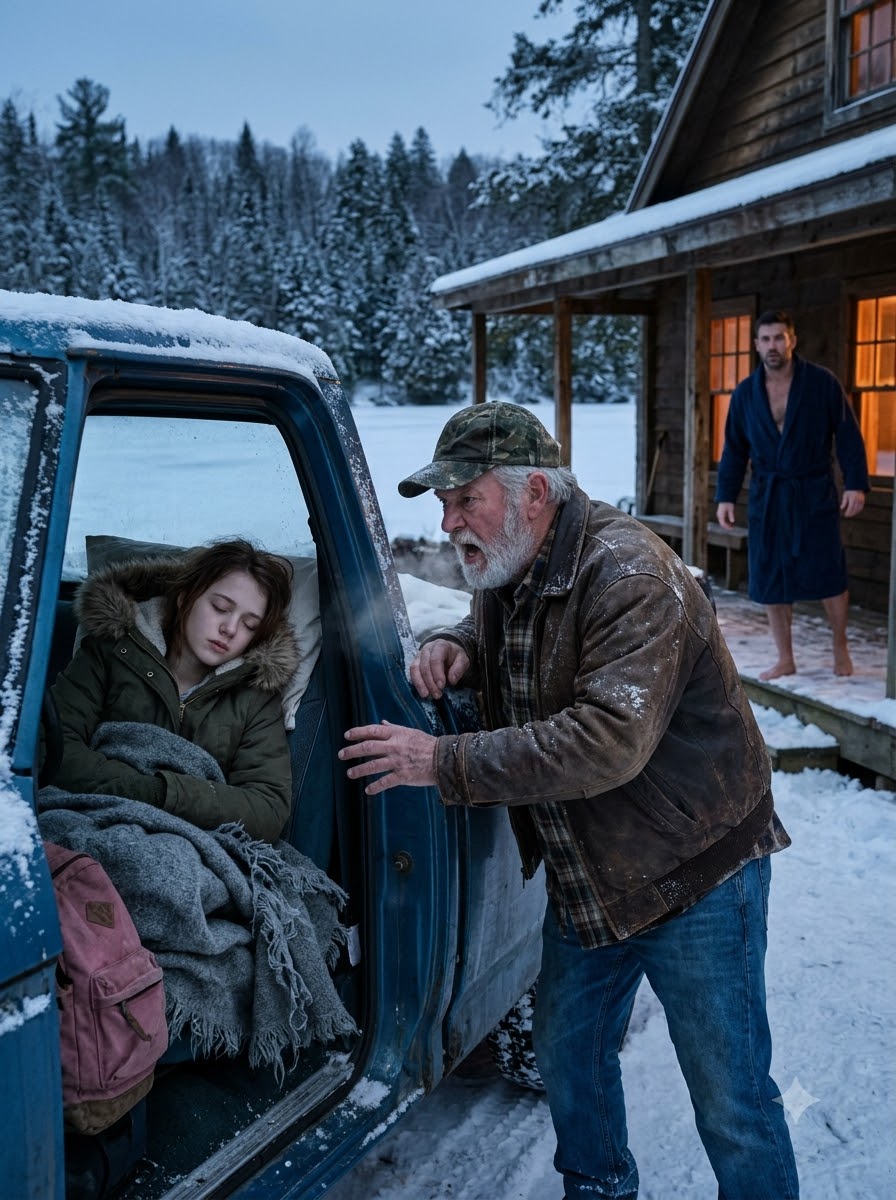
“I did.”
She closed the folder and slid it toward me. “I’m not going anywhere.”
“I know.”
Outside the wind moved through the pines. Inside the house the furnace kicked on and the radiators ticked. Avery put the folder back in the closet where it belonged. Then she started the water for dishes and I dried them when she was finished. The work was ordinary. The quiet was ordinary. For the first time since I had opened the truck door and found her sleeping in the cold, ordinary felt like enough.
