

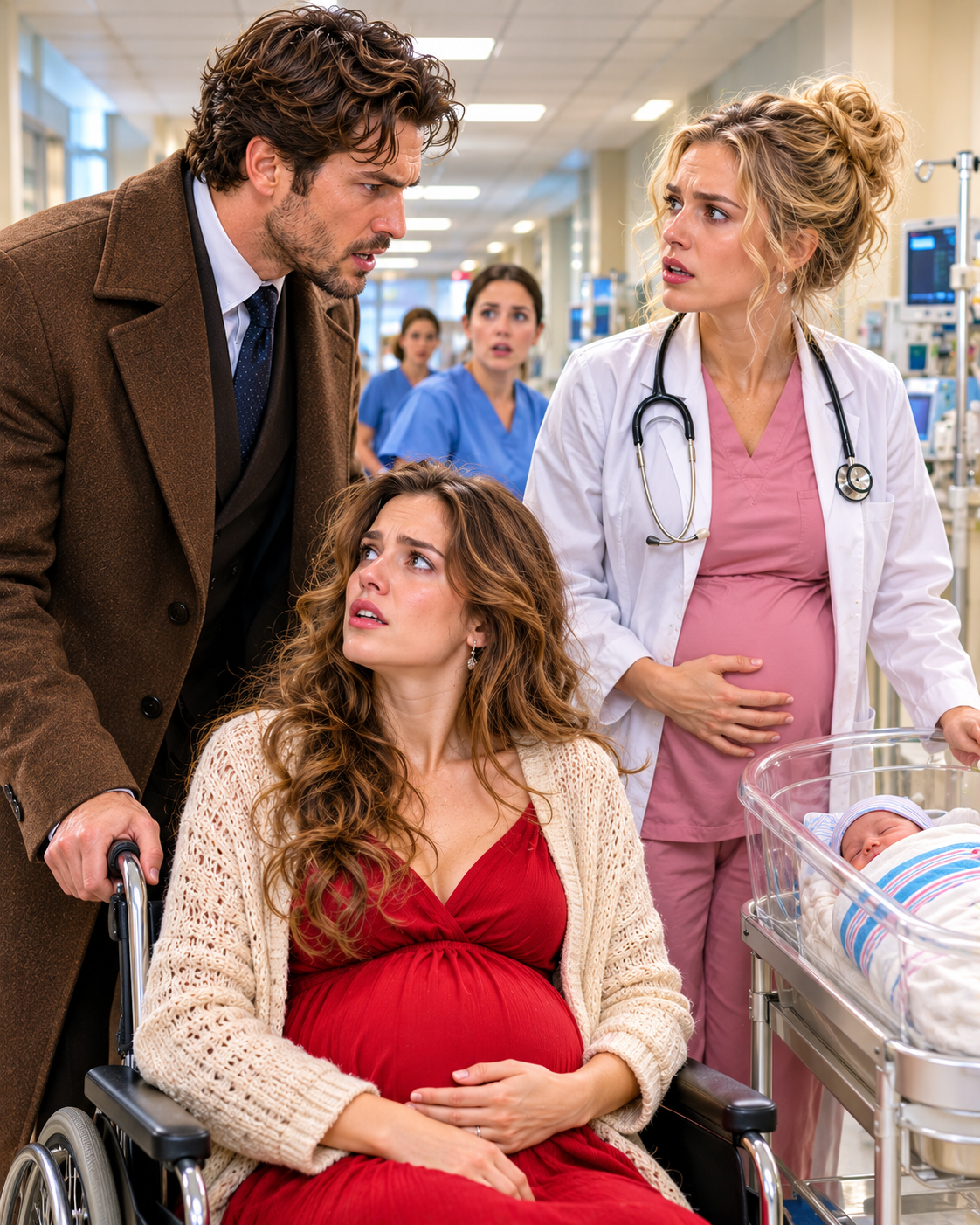
PART 1: THE VOICE I NEVER EXPECTED TO HEAR AGAIN
My name is Ethan Calloway. At thirty-eight, I was the man in charge of Calloway Biotech, a pharmaceutical corporation whose value stretched into the billions.
For most of my life, I had believed that wealth, influence, and authority could shield me from almost anything.
I was wrong.
Eight months earlier, that belief had driven away Claire Bennett, the only woman I had ever loved without reservation.
And on a bitterly cold December afternoon, I was about to discover just how much my arrogance had cost me.
I sat alone in my car outside Hawthorne Medical Center in Chicago, watching snow gather across the parking lot.
My fiancée, Vivian Mercer, had undergone elective surgery earlier that morning.
Our engagement was more than a romantic arrangement. It had strengthened an important alliance between the Mercer family and mine, and both families expected me to behave like a devoted future husband.
My phone vibrated.
My father had sent a message.
“Vivian is asking for you. The Mercers notice these things.”
I stared at the screen before finally stepping out into the cold.
Inside the hospital, Vivian was resting in a luxurious private suite. Her mother sat beside her, helping her browse photographs of wedding locations.
They were planning an extravagant June ceremony beside Lake Geneva.
“What do you think, Ethan?” Vivian asked.
“Looks nice.”
“Nice?”
“Beautiful,” I corrected.
Vivian smiled faintly, but I could tell she knew my thoughts were somewhere else.
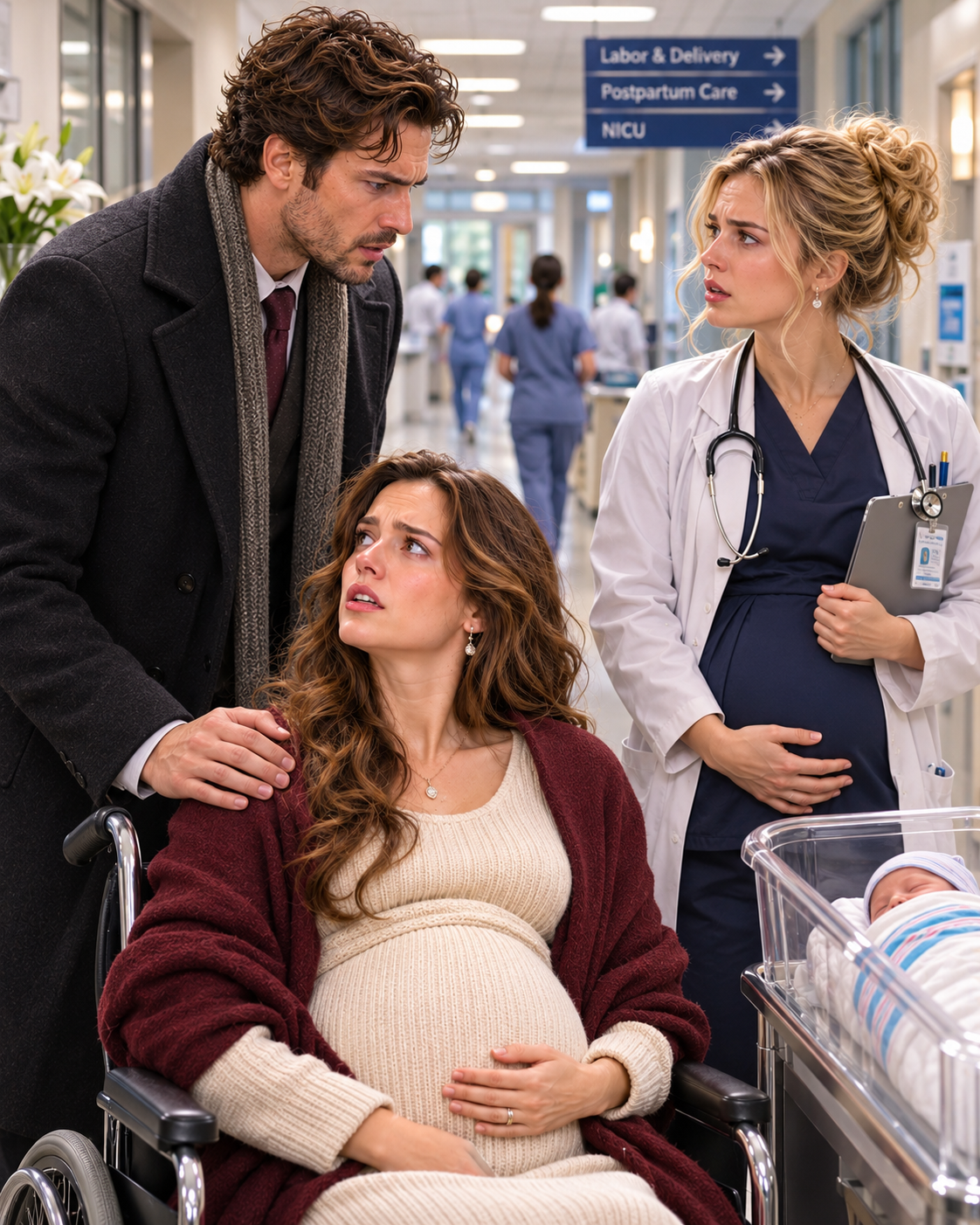
Then a woman spoke in the corridor.
“No, take him to neonatal observation first. His oxygen saturation is dropping again.”
My entire body went rigid.
I knew that voice.
Claire.
Eight months had passed since I last heard her speak, yet I recognized her immediately.
Through the partially open doorway, I glimpsed honey-blond hair disappearing around a corner.
The hospital around me seemed to vanish.
Suddenly, I was back in Claire’s small Lincoln Park apartment.
She stood before me holding a pregnancy test, her fingers shaking with a mixture of happiness and fear.
“Ethan, I’m pregnant.”
For one brief, extraordinary second, I had felt joy.
Then my father’s warnings returned.
He had insisted Claire was concealing something.
He claimed she had been secretly meeting a doctor named Nolan Price, and that a woman involved with a wealthy man might have reasons to lie about a pregnancy.
I confronted Claire about dinner with Nolan.
She admitted meeting him but tried to explain why.
I refused to listen.
Instead, I asked the question that destroyed our relationship.
“Is the baby even mine?”
Claire stared at me in disbelief.
“What did you just ask?”
“I know about Nolan. If you’re pregnant, I want a paternity test.”
Her hand moved protectively across her stomach.
For a moment, she appeared unable to speak.
Then she whispered:
“Get out.”
I obeyed.
Three weeks later, my family publicly announced my relationship with Vivian Mercer.
Two months after that, we became engaged.
I told myself Claire had deceived me.
I repeated that story until it became easier to believe than the truth I had never bothered to investigate.
Now I was standing in the very hospital where Claire had worked before taking maternity leave.
And I had just heard her discussing a newborn who was struggling to breathe.
“Ethan?” Vivian called from her bed. “What’s wrong?”
“Nothing. I need coffee.”
“A nurse can bring you some.”
“I need to walk.”
I left before she could object.
My heart hammered as I approached the nurses’ station near the neonatal unit.
Had Claire given birth?
Was the infant hers?
And had I abandoned my own child because I trusted my father’s accusations more than the woman I loved?
The nurse behind the desk looked up.
“Can I help you, sir?”
I struggled to steady my voice.
“I’m looking for Dr. Claire Bennett.”
She waited for an explanation.
Only then did I realize how unreasonable it was to arrive after eight months of silence and behave as though I still belonged in Claire’s life.
“I heard her in the neonatal corridor,” I explained.
“She’s with a patient.”
“My name is Ethan Calloway.”
Recognition crossed the nurse’s face.
The Calloway name was displayed on hospital donation plaques and research grants throughout Chicago.
“Are you family?” she asked.
The question struck painfully.
“I used to be.”
She studied me for a moment.
“Dr. Bennett is assisting with a premature infant.”
“Her baby?”
I had asked before I could stop myself.
The nurse glanced toward the secured corridor.
“I’m not permitted to discuss patient information.”
“I understand.”
But I understood nothing.
For eight months, I had insisted the unborn child could not be mine.
Yet the possibility had haunted every quiet moment of my life.
The nurse lifted the telephone.
“Wait here, please.”
I remained beside the station, surrounded by the smells of disinfectant, coffee, and heated hospital air.
Electronic alarms sounded faintly beyond the doors.
Minutes later, Claire appeared.
She wore blue scrubs beneath a white medical coat.
Her honey-blond hair was pulled back carelessly, and loose strands clung to her pale cheeks.
She looked thinner than I remembered.
Deep shadows rested beneath her eyes.
Her hands were bare except for the narrow silver ring she had always worn on her right hand.
She stopped when she saw me.
Neither of us spoke.
A nurse passed between us with a cart.
Someone called for respiratory therapy.
Nearby, a family laughed beside the elevators, unaware that my life was collapsing around me.
“What are you doing here?” Claire finally asked.
“I came to visit Vivian.”
“Of course you did.”
The quietness of her reply was devastating.
“I heard your voice,” I said.
“You shouldn’t have followed it.”
“I needed to know if you were all right.”
For an instant, pain moved through her eyes.
Then her expression hardened.
“You lost the right to ask that eight months ago.”
I had no right to dispute it.
“Is the baby yours?”
Claire’s face became unreadable.
“You heard me giving instructions.”
“I heard you mention neonatal observation.”
“You heard enough to frighten yourself.”
“I’m not frightened.”
She glanced at my trembling hands.
“Then why do you look as though you’re waiting for a verdict?”
I could not answer.
Claire crossed her arms.
“His name is Noah Bennett.”
Noah.
The name seemed to settle somewhere deep inside my chest.
“How early was he born?” I asked.
“Thirty-one weeks.”
“And he’s struggling to breathe?”
“He has respiratory distress, but the neonatal team is treating him.”
“Is he stable?”
“He is stable for now.”
For now.
Those two words terrified me.
“Can I see him?”
“No.”
“I’m not asking to touch him.”
“You’re still asking to enter a place where you have no permission to be.”
“I can arrange whatever the hospital needs.”
Claire’s eyes sharpened.
“There it is.”
“What?”
“The part where you try to solve a human emergency with money.”
“I’m trying to help.”
“You’re trying to make yourself useful before you know whether you’re responsible.”
She was right.
“I don’t know if he’s mine,” I admitted.
“No.”
She held my gaze.
“You don’t know.”
I swallowed.
“Claire, I never received anything from you.”
Her expression changed.
“Anything?”
“After I left, I never heard from you.”
“I sent you a letter.”
My heart seemed to stop.
“What letter?”
“A registered letter.”
“When?”
“Eight months ago.”
“I never got it.”
“I know.”
“How do you know?”
“Because it was returned to me.”
I stared at her.
“Why didn’t you send it again?”
“Because by then, your engagement had been announced.”
“That was two months after we separated.”
“I found out before the letter came back.”
“You could have called.”
“I did.”
I felt suddenly dizzy.
“When?”
“After Noah was born.”
“When was that?”
“Three weeks ago.”
Three weeks.
My child might have been fighting for his life for three weeks while I attended meetings, reviewed financial reports, and planned a wedding with another woman.
“I never received a call from you.”
Claire’s mouth tightened.
“That was the point at which I understood you didn’t want one.”
“I would have answered.”
“Would you?”
I thought about the hundreds of calls filtered through my assistants, family offices, and lawyers.
I did not know whether her call had ever reached my phone.
“You were engaged,” Claire continued.
“I didn’t know you were in labor or that the baby had been born.”
“You knew I was pregnant.”
“I thought—”
“You thought the baby belonged to Nolan.”
I remembered the photographs my father had shown me.
Claire leaving a research building with Nolan.
Claire meeting him for dinner.
Claire speaking to him in a parking lot.
I had treated every image as confirmation of betrayal.
Now I wondered what had been happening outside those carefully selected frames.
“Nolan isn’t the father, is he?” I asked.
Claire gave a bitter smile.
“You still want to begin there.”
“I need to understand.”
“No, Ethan.”
She stepped closer.
“You need to hear yourself.”
Her voice remained controlled as she reminded me how quickly I had accepted the worst accusations against her.
“You walked away because you believed the worst thing anyone could say about me,” she continued.
“You didn’t ask what Nolan and I were working on.”
“You didn’t ask why I was meeting him.”
“You didn’t ask what I needed.”
“I asked one question, and you answered it by leaving.”
“I asked for a test.”
“You accused me of betraying you while I was carrying your child.”
The phrase your child nearly brought me to my knees.
“Are you saying Noah is mine?” I asked.
“I am saying that you do not get to turn this into a convenient revelation.”
“That isn’t what I’m doing.”
“Then what are you doing?”
I looked toward the neonatal doors.
“I heard a baby was struggling,” I said.
“And you wondered whether he belonged to you.”
“Yes.”
Claire closed her eyes.
“His condition is more important than your questions.”
“I understand.”
“No, you don’t.”
She described the previous three weeks.
The alarms.
The oxygen readings.
The sleepless nights.
The frightening conversations with specialists.
The hours spent watching her newborn struggle for each breath.
“I have spent three weeks measuring every breath he takes.”
“I have learned which alarms mean danger and which mean a sensor has shifted.”
“I have slept in chairs and forgotten meals and listened to doctors explain possibilities I was afraid to repeat out loud.”
“You arriving here does not make this about you.”
“I know.”
“Do you?”
“Yes.”
Claire studied me.
“Go back to Vivian.”
“I can’t.”
“You can.”
“She doesn’t know I’m here.”
“Then go before she does.”
I asked about Noah’s surname.
Claire confirmed it was Bennett.
When I asked why, she answered simply.
“Because he is my son.”
I wanted to argue.
Instead, I remained silent.
A nurse approached.
“The respiratory therapist is ready.”
Claire nodded.
Before she turned away, I whispered her name.
She stopped.
“I’m sorry.”
Her shoulders rose with a tired breath.
“I know you are.”
It was not forgiveness.
She entered the neonatal unit, leaving me alone.
I remained outside for nearly an hour before moving into the waiting area.
Through the glass, I saw premature infants lying inside incubators.
Parents sat nearby, watching monitors and holding hands.
At the far end, Claire leaned over a particularly small incubator.
Inside lay a tiny boy.
His reddish skin looked almost transparent.
Thin wires stretched across his chest.
An oxygen tube rested near his nose.
His fists were scarcely larger than walnuts.
I placed my hand against the glass.
Claire noticed me.
She continued assisting the respiratory therapist, then briefly met my gaze.
I saw the question in her eyes.
Would I remain after the emergency ended?
I stayed.
That evening, Vivian’s mother found me.
She wore an elegant camel-colored coat and carried herself with the same polished authority I had known throughout our engagement.
“Ethan.”
“Mrs. Mercer.”
“Vivian is asking for you.”
“I know.”
“She thought you were getting coffee.”
“I’m sorry.”
Her attention moved toward the neonatal unit.
“Why are you here?”
I refused to lie.
“Claire Bennett is here.”
Her expression shifted briefly.
“You should return to Vivian.”
“I will.”
“Now.”
“I need to understand something first.”
“About Claire?”
“Yes.”
Mrs. Mercer folded her gloves.
“Whatever happened between you and that woman ended long ago.”
“Did it?”
“Your engagement is a matter of record.”
“That isn’t what I asked.”
She glanced toward the elevator.
“Ethan, your father has worked very hard to protect your future.”
I felt immediate suspicion.
“From what?”
“From unnecessary complications.”
“Was Claire one of them?”
She did not answer.
“Did you know she sent me a letter?” I asked.
“No.”
Her reply came too quickly.
I no longer believed it.
Before I could press her, my phone rang.
Martin Hale, my father’s longtime assistant, was calling.
He had managed my father’s affairs for twenty-two years.
“Martin?”
“Mr. Calloway, your father wants you at the office tonight.”
“I’m at Hawthorne Medical Center.”
“I’m aware.”
“How?”
“Your location was shared with the family security service.”
I felt cold anger rising.
“Why is my father monitoring me?”
“He is concerned that an old personal matter may interfere with the Mercer arrangement.”
I looked through the glass at Claire.
“Tell him the Mercer arrangement is not my concern right now.”
“Ethan—”
“I’ll call him when I’m ready.”
I ended the call.
Mrs. Mercer watched me.
“Your father is worried,” she said.
“My father is always worried when he cannot control a conversation.”
“That is unfair.”
“Is it?”
She looked at her gloves.
“There are things you don’t know.”
“What things?”
“I can’t discuss them here.”
“Then tell me somewhere else.”
“Not tonight.”
“Why not?”
“Because Vivian is recovering, and Claire’s child is ill.”
“Those are precisely the reasons I need the truth.”
She hesitated.
Then she walked toward the elevator.
“Go to Vivian,” she said.
“Then ask yourself why you never received that letter.”
The doors closed behind her.
I turned back toward the neonatal unit.
At midnight, Claire finally came outside.
She looked exhausted.
“How is he?” I asked.
“He made it through the evening.”
Relief rushed through me.
“Can I see him again?”
“You have been seeing him.”
“Can I come closer?”
She hesitated.
“He has a strict visitor policy.”
“I’m not asking as his father.”
Her eyes lifted.
“Then what are you asking as?”
I did not know how to answer.
I was a stranger who might be the boy’s father.
A man who had abandoned his mother.
Someone desperate to understand a life that had continued without him.
“Someone who wants to understand,” I finally said.
Claire reached into her white coat.
She removed a worn envelope.
My name was written across the front in handwriting I recognized immediately.
“This is the letter I sent,” she said.
My pulse quickened.
“You kept it?”
“It came back unopened.”
“Why didn’t you destroy it?”
“Because I wanted proof that I had tried.”
She handed it to me.
I examined the postmark and the address.
The letter had been sent eight months earlier.
A return stamp appeared two weeks later.
In blue ink, someone had written:
Recipient unavailable.
The address was correct.
The letter had not simply vanished.
Someone had received it.
Someone had opened it.
And someone had ensured that I would never read what Claire had written.
I stared at the envelope, suddenly understanding that our separation might not have happened the way either of us believed.
Then I noticed where the letter had originally been delivered.
My father’s residence.
And I realized that the man who had taught me to fear betrayal might have been the one orchestrating it.
PART 2: THE SECRETS HIDDEN INSIDE MY FATHER’S EMPIRE
I continued staring at the envelope.
Someone had handled Claire’s letter before it was returned.
Someone had decided that its contents should never reach me.
Claire watched my expression.
“You believe me now,” she said.
“I believe that you sent it.”
“That is not the same thing.”
“No.”
I asked where she had mailed it.
She said she used the address I had given her.
My father’s townhouse on Astor Street.
I remembered explaining that personal correspondence was processed through his office whenever I traveled.
To me, it had seemed normal.
For Claire, it had been a way to reach me.
Instead, it had become a barrier.
“You sent it there,” I said.
“You gave me that address.”
“I did.”
“You said you received everything through your father’s office while you were traveling.”
“I did.”
“And I believed you.”
She sounded exhausted.
I asked what she had written.
Claire refused to let me read it in the corridor.
She feared I would react to the pain of its contents as though she had deliberately caused it.
I promised I would not.
“You have before,” she reminded me.
I could not deny it.
She reclaimed the envelope and returned to Noah.
I remained outside until morning.
At six-thirty, Vivian called.
“Where are you?”
“I’m still at the hospital.”
“Are you all right?”
“Yes.”
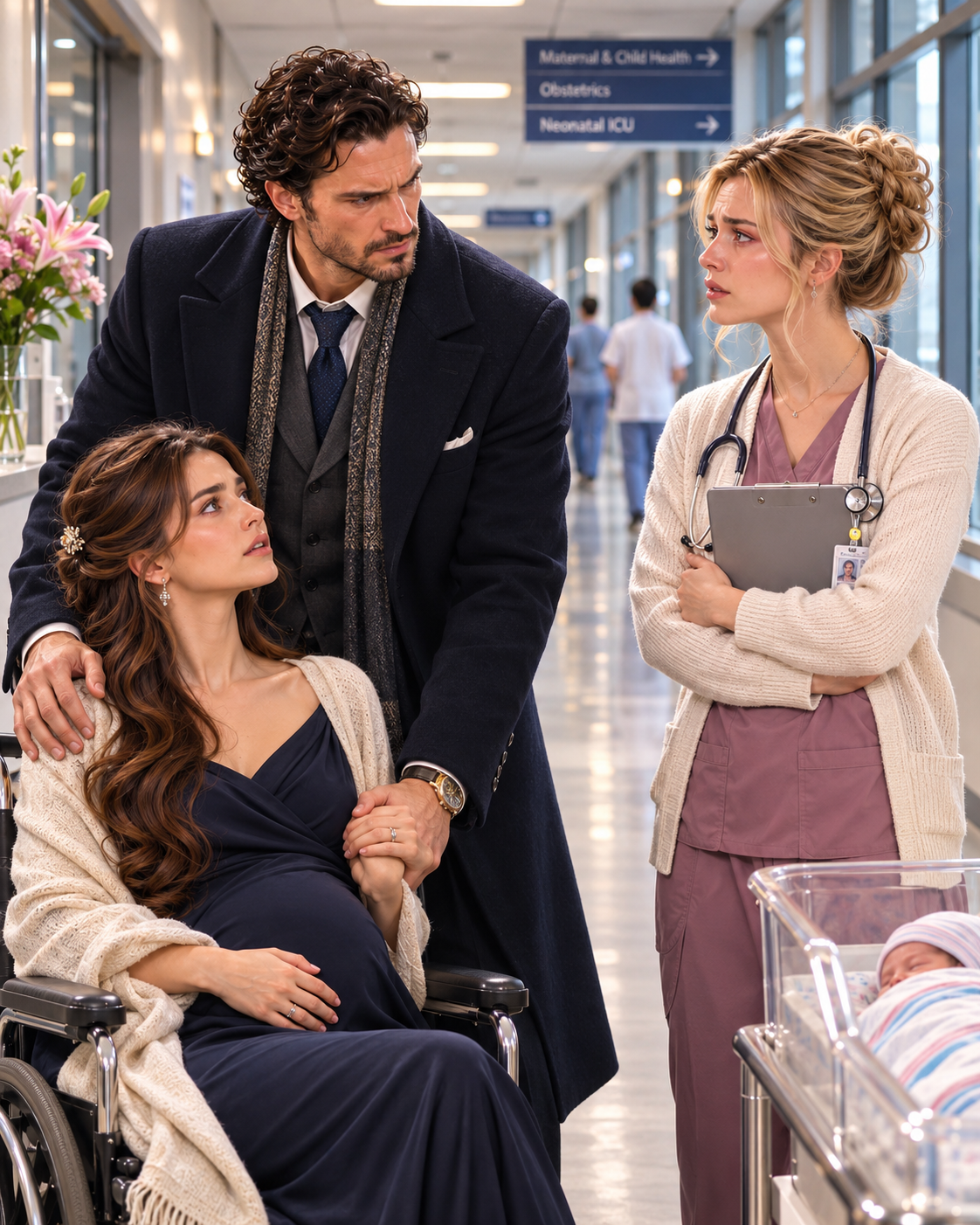
“Your assistant said you never came back.”
“I’m sorry.”
Then she asked whether I had gone to find Claire.
I admitted that I had.
Vivian asked about Noah.
I told her he was premature and struggling with respiratory distress.
Then she asked the question that had haunted me all night.
“Is he yours?”
“I don’t know.”
Vivian gave a quiet, broken laugh.
“You don’t know.”
“I never received a letter from Claire.”
“That doesn’t answer me.”
“No.”
I admitted that I wanted to know whether Noah was my son.
Vivian then revealed that her mother had told her Claire was pregnant when we became engaged.
She had also been told that Claire was involved with another man.
I asked whether Vivian knew the man was Nolan.
She did not remember his name.
She had accepted the story our families gave her.
“I knew what your family told me.”
The sentence made me realize that Vivian had also been living inside a carefully constructed version of the truth.
When she asked whether our former relationship was really over, I could no longer answer with certainty.
“I thought it was.”
“That isn’t the same thing.”
“No.”
Vivian asked me to return to her room.
Not because her mother demanded it.
Because she needed to decide what to do with the truth.
Before I could leave the neonatal corridor, Martin Hale arrived.
He wore a charcoal suit and carried a leather folder.
My father had sent him.
I immediately asked whether he had intercepted Claire’s letter.
Martin tried to avoid answering.
Then he admitted that he had handled it.
He had opened and read it.
My father ordered him to return it.
According to Martin, my father believed Claire’s letter might interfere with my future.
I demanded to know why.
Martin refused to explain everything.
He said he had made promises whose consequences he had not understood.
Then he produced a laboratory report.
It came from a research facility contracted by Calloway Biotech.
Several sections had been blacked out.
The visible words referred to maternal cardiac markers.
Claire had never told me she was being examined for a cardiac condition.
Martin warned that the situation involved more than a failed relationship.
He also revealed that my father had learned about Claire’s pregnancy three days before I supposedly told him.
But that was impossible.
I had informed my father the day after Claire told me.
Martin explained that someone at the hospital had supplied the information.
He would not identify the source.
Before leaving, he issued one final warning.
“Do not assume the child is the only reason Claire was afraid to speak.”
I returned to the neonatal unit.
Claire recognized the report immediately.
She demanded to know where Martin had obtained it.
I told her it came from my father’s files.
She explained that it was incomplete.
Important patient identifiers and pages had been removed.
Then she finally began revealing what had happened eight months earlier.
She and Nolan had been investigating irregularities in a cardiovascular clinical trial involving a medication developed by a Calloway Biotech subsidiary.
Some trial participants possessed a hereditary genetic marker that made them vulnerable to serious complications.
Patient follow-up records had begun disappearing.
Claire suspected that the data was being manipulated.
Nolan Price was an outside geneticist helping her compare profiles and identify patterns.
He was not her lover.
He was her research colleague.
The meetings my father had presented as evidence of infidelity were connected to the investigation.
I felt ashamed beyond words.
Claire explained that the hospital had pressured her to withdraw from the project after her pregnancy became known.
Later, lawyers contacted her and warned that continued access to certain records might expose her to legal liability.
She had not believed the warnings were ordinary professional concerns.
She had tried to tell me.
But I had already accused her of betraying me.
Vivian’s mother then revealed more of the deception.
When I finally returned to Vivian’s hospital suite, she asked me to tell her everything.
I explained what Claire had said and what Martin had admitted.
Vivian questioned her mother.
Mrs. Mercer eventually acknowledged that she had known my father was trying to separate Claire and me.
She also knew Claire had been pregnant.
She had accepted the intervention because the proposed Calloway-Mercer alliance benefited both families.
She defended herself by saying she believed Claire was manipulating me.
Vivian was devastated.
She understood that our engagement had been built on information neither of us had independently verified.
When I admitted I had never stopped loving Claire, Vivian ended the engagement.
She did not scream.
She did not blame Noah.
She simply refused to marry a man whose heart was still tied to another woman.
I accepted her decision.
Then I returned to Claire.
For the first time, she allowed me inside the neonatal unit.
Noah lay inside his incubator.
His breathing had improved slightly.
He was impossibly small.
I leaned toward him and watched his fingers move.
When he briefly opened his dark eyes, tears began running down my cheeks.
Claire noticed.
“This is not proof,” she said quietly.
“I know.”
“Blood type is not proof.”
“I know.”
“You cannot begin imagining a life with him because he moved his hand.”
“I know.”
She looked at me.
“Then why are you crying?”
I could not explain.
A neonatal physician entered with additional laboratory results.
A hereditary cardiac marker had been flagged in Claire’s prenatal screening records.
Then he showed us an old consultation note.
The father was recorded as unavailable.
But a genetic counseling referral had been opened using a Calloway family account.
Claire had never authorized the referral.
The physician asked whether I was the father.
Neither of us was prepared to answer.
Then we examined the authorization more closely.
Beneath the billing information was a signature.
Vivian Mercer’s mother.
And beside it appeared a handwritten instruction:
Do not let Ethan see this.
Claire went pale.
The doctor left to request the original records.
We remained beside Noah’s incubator, trying to understand why anyone had arranged genetic screening without our permission.
Claire explained that several pages of her prenatal records had gone missing.
The missing documents concerned genetic counseling, laboratory referrals, and a specialist she had never met.
She suspected the same people who had interfered with the cardiovascular trial were also monitoring her pregnancy.
A nurse eventually delivered the original referral.
It had been opened eight months earlier, two days before I confronted Claire.
The requesting physician was Dr. Samuel Weller.
I recognized his name.
He had overseen the clinical trial for Calloway Biotech.
The form referred to a possible hereditary risk affecting both the pregnant patient and the biological father.
Someone had wanted to examine my genetic background.
Someone had also been tracking Claire’s pregnancy.
I contacted Martin.
He acknowledged that Dr. Weller had requested genetic counseling.
He also admitted that my father had ordered an internal review after receiving warnings that the trial irregularities might expose the company to regulatory action.
The data had been altered.
The patients’ records had been divided among separate teams.
And Claire had copied portions of the original research before the revisions occurred.
My father knew that exposing the records could seriously damage Calloway Biotech.
He had ordered Martin to gather correspondence involving Claire and Nolan.
The photographs used to convince me of Claire’s supposed infidelity had been selected for that purpose.
I asked Martin what Claire’s intercepted letter contained.
He admitted reading the first page.
It explained that Nolan was helping Claire investigate the trial and that she believed important records had been deliberately changed.
My father intercepted it because he feared I would support Claire against the company.
He was right.
But I had never been given the chance to choose.
Then Martin told me that the original clinical-trial archive had disappeared from Calloway Biotech’s secure compliance server.
My father suspected Claire.
Yet Martin knew she had not removed it.
The archive had vanished while she was in the hospital giving birth to Noah.
Someone had used the moment when Claire was most vulnerable to remove the evidence.
Claire then revealed that a woman claiming to represent Calloway Biotech’s legal department had visited her apartment after Noah’s birth.
The woman had asked whether the baby had been tested for the hereditary marker.
She offered private medical care on behalf of the company.
Claire refused.
Before leaving, the woman claimed my father had already made arrangements for Noah.
She left behind Dr. Weller’s private contact information.
Claire had written a note on the card afterward.
He already knew Noah’s blood type.
I stared at the handwriting.
Noah’s medical records were supposed to be protected.
How could Dr. Weller know his blood type?
And why had anyone been so interested in testing a premature baby before his own father knew he existed?
My phone vibrated.
Martin had sent another message.
There is one more file your father kept hidden.
It concerns your own medical history.
A second message followed.
And it explains why he was so afraid of Claire’s research.
I looked toward Claire.
Then a third message arrived.
Your father is not the only Calloway who carries the marker.
I read the words repeatedly.
For the first time, I wondered whether my father had concealed more than a clinical trial.
Perhaps he had concealed something inside our own bloodline.
And perhaps Noah’s life was connected to a secret our family had spent generations refusing to face.
PART 3: THE TRUTH MY FAMILY TRIED TO BURY
Claire studied the messages on my phone.
She insisted we needed to understand the hereditary risk before my family turned the matter into another private arrangement.
I promised I would not allow that to happen.
She reminded me that I had made promises before.
I accepted the warning.
Then my father called.
His voice was controlled.
He knew Martin had contacted me.
When I demanded an explanation, he dismissed my questions as emotional reactions to matters I did not understand.
I reminded him that I was thirty-eight, not a child.
He replied that my age did not make me a cardiologist, geneticist, or compliance investigator.
I told him I was Noah’s father.
He immediately challenged that claim.
Once again, he tried to make uncertainty sound like proof.
I confronted him about the intercepted letter, the misleading photographs, and the clinical-trial data.
He admitted knowing Claire had concerns about the research.
He also acknowledged that he had read her letter.
But he insisted he had acted to prevent unsupported allegations from damaging the company.
I asked why he had allowed me to believe Claire had betrayed me.
He claimed he had been protecting my judgment.
I finally understood what protection meant to him.
It meant preventing anyone from challenging his decisions.
When I told him I wanted an independent investigation, his voice hardened.
He ordered me to come to his office.
I agreed.
Claire initially feared I would be manipulated again.
I told her I needed to find the truth for myself.
She reminded me that the choice was not simply between her and the company.
It was between honesty and the identity my father had taught me to defend.
I left the hospital with that warning in mind.
For the first time in years, I dismissed my driver and drove myself.
Calloway Biotech occupied an imposing glass tower overlooking the Chicago River.
The employees who saw me entering looked uneasy.
Martin waited outside my father’s office.
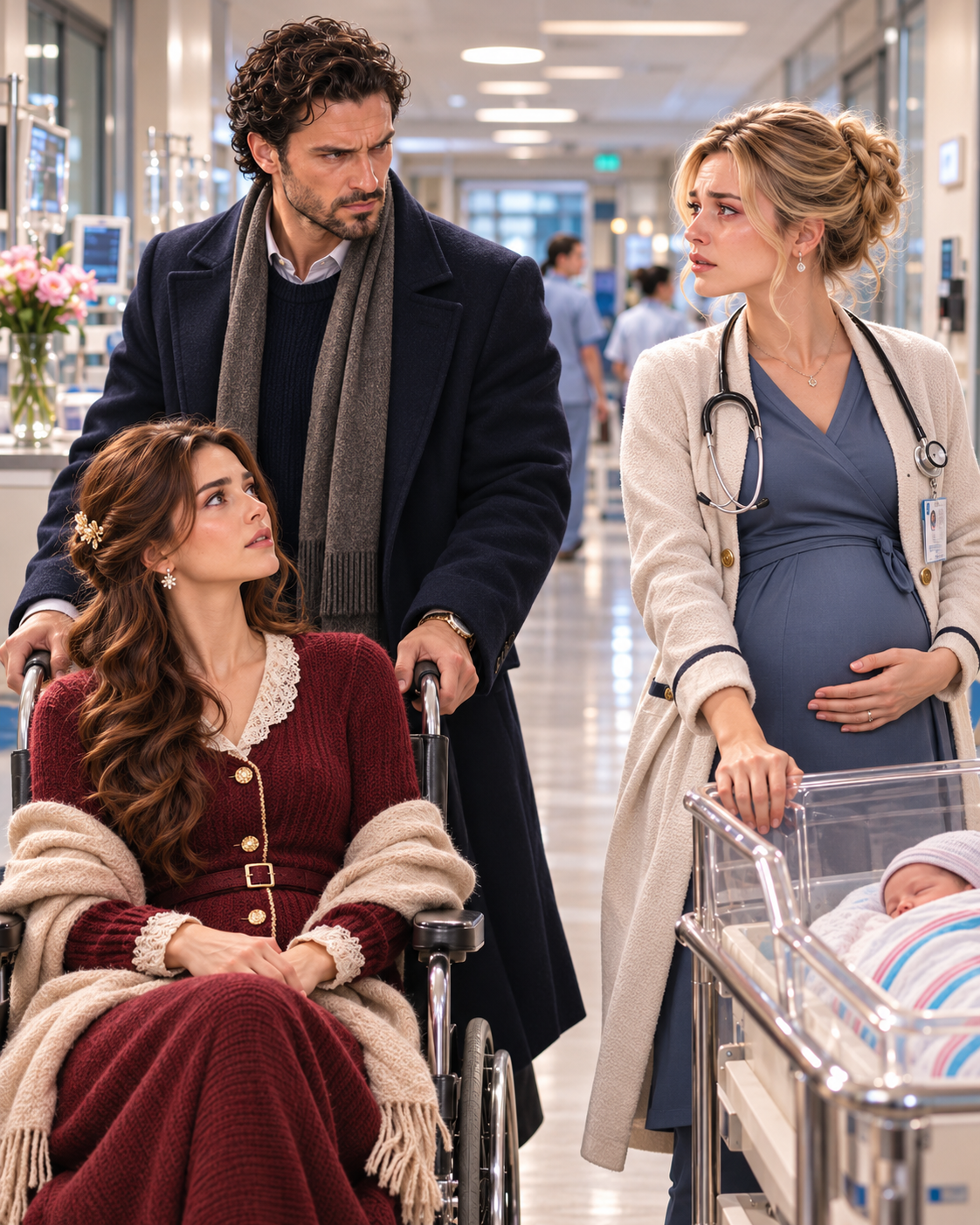
He revealed that my father had expected the intercepted letter to resurface eventually.
He had known the truth could not remain hidden forever.
But he feared I would destroy everything he had built if I discovered what happened.
I entered the office.
My father stood beside the windows.
When I confronted him, he continued insisting that Claire’s investigation endangered the company.
I demanded the full truth.
He opened his desk and placed a medical file before me.
My own name appeared on the first page.
The report was six years old.
It concerned an evaluation conducted after I fainted during a board meeting.
At the time, I had been told I was dehydrated and needed to reduce caffeine.
Now I discovered the examination had identified an inherited cardiac risk marker.
I had never received the complete results.
My father admitted concealing them.
He said he believed the condition was inactive and did not want me to become frightened unnecessarily.
I accused him of withholding my own medical history.
He called it protecting my future.
Then I demanded to know who else in our family carried the marker.
My grandfather had carried it.
My father carried it.
And my father had once had a younger brother named Daniel.
Daniel died at twenty-seven from the same hereditary condition.
I had never even known he existed.
My grandfather considered the illness shameful and had erased Daniel from the family story.
The realization was horrifying.
The Calloway family had concealed the very medical history that might have helped researchers understand the cardiovascular complications now affecting patients.
I asked whether Noah carried the marker.
My father admitted that we did not know.
Then I turned to the clinical-trial records.
The documents showed that patients with the hereditary risk factor had experienced dangerous complications.
Arrhythmias.
Sudden blood-pressure changes.
Extreme fatigue.
The reports also contained repeated concerns about potential liability.
My father admitted that the company had delayed notifying regulators while it attempted to determine whether the medication was responsible.
The delay lasted seven months.
Patients continued receiving the drug.
He insisted that prematurely withdrawing the treatment might have harmed those who benefited from it.
I reminded him that concealing the risk endangered the patients who carried the marker.
He finally acknowledged that he knew the situation had been mishandled.
Claire and Nolan had discovered the pattern.
My father ordered an internal review but allowed the information to remain fragmented.
He feared that if I learned what Claire had uncovered, I would expose the company before its leadership could contain the damage.
So he interfered with our relationship.
He knew Claire was pregnant.
He knew she was trying to contact me.
And he allowed me to believe she had been unfaithful.
I asked what he had been so afraid of losing.
He admitted he feared responsibility for approving the continuation of a trial with unresolved safety concerns.
His answer did not excuse him.
But for the first time, he was no longer pretending the company had done nothing wrong.
I told him that the evidence needed independent review.
He warned that regulators might dismantle Calloway Biotech.
Thousands of employees could lose their jobs.
Patients might lose access to medicines.
The family fortune could vanish.
I understood the risks.
But I refused to let those risks justify further deception.
When he reminded me that the company was my inheritance, I told him I would not accept an empire that required me to become the man who had destroyed my family.
I left his office determined to cooperate with investigators.
At Hawthorne, Claire listened while I explained everything.
She was concerned about my hereditary condition.
She was also astonished that my father had known about the pregnancy before I did.
I told her I would support an independent investigation, even if doing so meant testifying against my own father.
Claire warned that I could lose my inheritance.
I told her that no amount of wealth could justify abandoning the truth again.
She allowed me to remain beside Noah that night.
For the first time, I felt the possibility that she might eventually believe my promises.
But the medical mystery was not over.
With Claire’s authorization, I reviewed the original prenatal records.
The missing consultation notes had been transferred to a secure archive.
There, we found Noah’s blood type entered three days before his birth.
Dr. Weller’s account had submitted the information.
Another authorization carried my father’s signature.
Then a hospital administrator produced an envelope added to the file that afternoon.
My name appeared on the front.
Inside was a handwritten warning.
Ethan, do not trust the paternity test.
The date beneath it was tomorrow.
The handwriting resembled Claire’s.
But she denied writing it.
Moments later, the private laboratory I had hired called.
The technician said the sample associated with my paternity case had been compromised.
No reliable result could be obtained.
The sample had been accessible to three authorized parties.
Me.
Claire.
And a Calloway Biotech representative.
That representative was Dr. Samuel Weller.
Someone had interfered with the test before it could establish whether Noah was my son.
Claire and I refused to let fear dictate our next decision.
We preserved the records.
We documented the compromised sample.
We arranged another test through an independent university laboratory with no ties to Calloway Biotech, Hawthorne Medical Center, or either family.
The laboratory used monitored collection procedures, independent witnesses, sealed samples, and documented custody.
The analysts would perform the examination twice.
We agreed to wait forty-eight hours.
That night, Claire and I slept in chairs near Noah’s incubator.
We were not reconciled.
We did not know whether our relationship could survive everything that had happened.
But when Claire’s exhausted shoulder came to rest against mine, neither of us moved away.
The following morning, Noah’s physician reported encouraging progress.
His oxygen requirements had decreased.
His breathing remained fragile, but his condition was improving.
Then Martin arrived.
He informed us that my father had placed himself on administrative leave.
He had also submitted a statement acknowledging that he concealed important trial irregularities.
Dr. Weller had resigned from the oversight committee, and authorities had ordered preservation of his records.
Martin handed me an independent audit commissioned by my father.
The report documented the fragmented review process, the missing follow-up information, and the cardiac risks associated with the hereditary marker.
It also included a personal letter.
My father admitted he had confused protecting the company with protecting the people who depended on it.
He acknowledged that secrecy had become a substitute for responsibility.
He did not ask for forgiveness.
Instead, he agreed that the evidence should be released, even if the company suffered.
He also gave Martin a key to his private archive.
The archive contained medical correspondence, board documents, and records connected to the trial.
I instructed Martin to deliver everything to investigators.
Nothing would remain hidden simply because it carried the Calloway name.
Claire soon testified before the state medical board.
She described the missing records, the pressure placed on her research team, and the unauthorized prenatal referral.
She carefully distinguished the facts she could prove from the suspicions she could not.
When investigators asked about Noah’s biological father, she explained that an independent paternity test was pending.
I waited outside.
Vivian joined me.
We spoke openly for the first time since ending our engagement.
She told me her mother had agreed to testify.
Then she revealed that the Mercer and Calloway families had discussed Claire’s pregnancy before our engagement was announced.
They were concerned that a child inheriting the cardiac marker might affect succession arrangements tied to medical incapacity.
The discovery made me sick.
The families had been planning around the potential rights of an unborn child while pretending his existence did not matter.
Vivian understood that our engagement had been built on manipulation.
We apologized to one another.
There was no bitterness left between us.
Only the painful recognition that both of us deserved relationships based on truth.
The following afternoon, the independent laboratory contacted Claire and me.
We chose to receive the results together.
We sat in a consultation room overlooking the hospital garden.
The physician explained that two separate analysts had confirmed the findings.
Then she told us the result.
The probability of paternity exceeded 99.99 percent.
I was Noah Bennett’s biological father.
For several seconds, I could not speak.
I looked at the report.
Then I covered my face and began crying.
Eight months earlier, I had demanded a paternity test as though Claire were guilty until proven innocent.
Now the result confirmed what I should never have treated as an accusation.
Noah was my son.
Claire watched me quietly.
I promised to remain in his life.
She warned that fatherhood would require more than my surname, money, or promises made during a crisis.
I would have to attend ordinary appointments.
Help with daily care.
Listen to her.
Respect Noah’s needs.
And remain present when there was no emergency forcing me to stay.
I accepted every condition.
When she asked what made my promises different this time, I admitted that nothing I said could prove I had changed.
Only time could do that.
Claire considered my answer.
Then she agreed to let me try.
EPILOGUE: THE SECOND CHANCE MONEY COULD NEVER BUY
Noah continued growing stronger.
Over the following weeks, his doctors gradually reduced his oxygen support.
Eventually, he moved from the incubator to an open bassinet.
Then came the day he began breathing completely on his own.
I was there.
I learned how to hold his fragile body.
How to change his diapers.
How to recognize his feeding cues.
How to calm him when he cried.
I attended medical rounds and wrote down instructions in a notebook because I was terrified of forgetting something important.
Claire observed everything.
She did not congratulate me for completing basic responsibilities.
She did not need to.
Every ordinary act was part of the trust I had to rebuild.
The investigation into Calloway Biotech continued.
Authorities discovered that Dr. Weller had manipulated clinical-trial records and pressured members of the research team to minimize the significance of the hereditary risk.
My father had not personally created the falsifications.
But he had delayed reporting serious concerns and allowed the company’s reputation to take priority over patient safety.
He eventually accepted responsibility.
He permanently resigned from Calloway Biotech and pleaded guilty to regulatory violations connected to the concealment of adverse-event information.
The company survived, but only after major restructuring.
I accepted temporary leadership under strict conditions.
An independent ethics council would oversee research decisions.
A compensation fund would support affected patients.
Clinical-trial oversight would remain separate from executive leadership.
To help finance restitution, I sold the family’s private jet and several estates.
The fortune my father had spent his life defending finally began serving people it had harmed.
My father initially resisted.
Eventually, he signed the necessary documents.
During one of our later conversations, he admitted he did not know how to be my father without attempting to control me.
I told him he would have to learn.
He began counseling.
He also attempted to meet patients affected by the trial through their advocates.
Some refused.
For the first time, he accepted rejection without trying to overcome it through influence.
Meanwhile, Claire resumed her medical career six months later.
She declined an invitation to lead a research division at Calloway Biotech.
Instead, she joined a university hospital and continued investigating hereditary cardiac conditions through an independent patient-advocacy grant.
Nolan remained one of her trusted colleagues.
He eventually became one of Noah’s godfathers.
When I finally met him properly, I understood how badly I had misjudged him.
He had not been trying to steal Claire from me.
He had been helping her investigate a medical problem that my family wanted to ignore.
We shook hands and left the misunderstanding behind.
My relationship with Claire did not repair itself overnight.
We disagreed about Noah’s medical appointments, feeding schedules, and travel arrangements.
Sometimes I moved too quickly, still believing that having resources meant I should immediately use them.
Once, I arranged a specialist consultation without asking Claire.
She canceled it.
I became angry.
Then I realized she was right.
I had once again confused concern with authority.
I apologized.
Over time, our disagreements became less destructive because we were finally learning to listen.
Noah flourished.
He developed an obsession with water and laughed whenever we prepared his bath.
He reached for every cup, towel, and faucet he could see.
On his first birthday, Claire organized a small celebration beside Lake Michigan.
There were no reporters.
No corporate photographers.
No extravagant displays.
Only family and close friends.
Nolan attended.
Vivian came with her new partner.
Claire’s parents were there.
Martin, now retired from my father’s office and advising the hospital’s ethics board, joined us.
My father did not attend, but he sent a handwritten letter and a small wooden toy he had carved himself.
Noah ignored the toy and began chewing the wrapping paper.
Everyone laughed.
Later, I stood beside Claire overlooking the lake.
Our son toddled unsteadily between us.
I admitted that I had never expected our lives to reach such a peaceful moment.
Claire agreed.
When I asked whether she was happy, she said she was.
With Noah.
With her work.
With the life she had rebuilt.
Then I asked whether she was happy with me.
She looked at me for a long moment before admitting that she was learning to be.
It was not a declaration of forgiveness.
It was something more precious.
An honest beginning.
I reached for her hand.
She let me hold it.
A year later, I asked Claire to marry me.
I did not arrange a spectacular proposal.
There was no private orchestra or lavish celebration.
We were sitting in the kitchen after finally getting Noah to sleep.
I placed a simple ring on the table.
Claire immediately warned me that marriage could not be used to prove I had repaired the past.
I assured her that was not why I was asking.
She told me she could not become the woman who had loved me eight months earlier.
I said I did not want her to become that woman again.
I loved the person she had become.
Strong.
Careful.
Independent.
Unwilling to surrender her judgment to anyone.
Claire told me she needed time.
I agreed.
Three months later, she said yes.
We married beside Lake Michigan on a cool spring morning.
The ceremony was small and private.
Vivian sat in the front row with her new partner.
Martin stood near my father, who attended quietly without attempting to command the occasion.
Claire’s parents held hands.
Nolan carried the flowers.
And Noah, wearing a tiny blue suit, was carried between us by his grandfather.
When Claire reached me, she looked directly into my eyes.
“I choose you,” she said.
“Not your name.”
“I know.”
“Not your money.”
“I know.”
“Not because you are Noah’s father.”
“I know.”
She placed her hand in mine.
“Because you finally learned that love is not something you own.”
Tears gathered in my eyes.
I told her I was choosing her because she had taught me that trust could not be demanded through promises.
It had to be earned by showing up.
She smiled.
“Then keep showing up.”
“I will.”
Noah reached toward both of us.
Together, we lifted him into our arms.
For one moment, the three of us stood beneath the open sky, surrounded by the people who had remained and the family we had chosen to build.
The past had not disappeared.
There were still scars.
There were still consequences that money could never erase.
I would always remember the night I accused Claire of carrying another man’s child.
I would remember walking out of her apartment.
I would remember the eight months during which she endured pregnancy and childbirth without me.
And I would remember finding Noah in the neonatal unit, struggling to breathe while I stood outside the glass, terrified that I had already lost the chance to become his father.
But those memories no longer existed to punish us.
They reminded me what could happen when fear replaced trust.
I had once believed the Calloway fortune could purchase security, respect, and loyalty.
Now I understood that the most important things in my life could never be bought.
A second chance had to be offered freely.
Trust had to be rebuilt through consistent action.
And love could survive only when both people were allowed to choose it.
I had lost Claire because I listened to everyone except her.
I found my way back because, at last, I learned to listen.
And every time Noah reached for me, laughing without knowing anything about the secrets that had nearly kept us apart, I understood the promise I would spend the rest of my life keeping.
I would be there.
Not merely when he needed saving.
Not only when the world was watching.
But through every ordinary day that followed.
Because being a father was not about proving that Noah belonged to me.
It was about proving, day after day, that I would always belong in his life.
THE END.
