

PART 1 — THE NIGHT MY MOTHER BEGGED ME NOT TO TAKE HER HOME
“SHE’S LOSING HER MIND. SOMEBODY NEEDS TO TAKE HER AWAY!”
“SHE’S NOT SAFE ANYMORE! SHE’S CONFUSED, SHE’S AGGRESSIVE, AND I’M NOT TAKING HER BACK INTO MY HOUSE!”
My sister-in-law, Karen, was practically shouting at a police officer when I walked into a Richmond police station at 2:27 on a Thursday morning.
Across the room, my eighty-year-old mother sat alone on a plastic chair, clutching a faded blue cardigan against her chest.
Her hands were trembling so badly she couldn’t fasten the buttons.
When I approached, she hurriedly pulled the sleeves over her wrists, but not before I noticed the dark bruises underneath.
Then she whispered something that made me stop breathing for a moment.
“Sarah, please don’t tell David you found me.”
David was my older brother.
He was forty-five, worked as a financial adviser, and had spent the past year assuring me that he was taking excellent care of our mother.
My name is Sarah Johnson.
I was thirty-nine and had spent twelve years working as an FBI special agent investigating financial crimes.
I’d questioned dishonest executives, examined forged documents, and listened to people invent elaborate explanations for missing money.
But nothing in my career prepared me to see my mother frightened of her own son.
I knelt beside her and gently took her hand.
“Mom, I’m here. Tell me what happened.”
She glanced toward Karen.
“They said I was making things up. David said I needed to stop causing trouble.”
Karen noticed us talking and hurried over.
“Oh, thank goodness you’re here, Sarah. Maybe she’ll listen to you. Your mother’s been accusing us of stealing, screaming at people, and refusing to cooperate with anything!”
I looked at the bruises.
“Why are there marks around her wrists?”
Karen stopped.
“She gets upset when we try to help her. You know how stubborn she can be.”
“Help her do what?”
“Don’t start interrogating me. You haven’t been around for months, and now suddenly you’re going to tell us how to care for her?”
I stood.
“I’m asking why my mother is sitting in a police station with bruises on her arms.”
Karen folded her arms.
“Because she’s not well, Sarah. That’s what I’ve been trying to tell everybody.”
I introduced myself to Officer Bennett and requested that Mom’s injuries, statements, and any available recordings be documented.
I showed my federal identification but made clear that I was there as her daughter, not acting in an official capacity.
I also asked that Mom receive medical attention before anyone made decisions about where she should go.
Karen shook her head.
“Unbelievable. David and I have been doing everything for that woman, and this is the thanks we get.”
Mom flinched at the words.
That was enough for me.
“Mom isn’t going anywhere with you tonight.”
Karen’s expression changed.
“You don’t get to make that decision.”
“Neither do you. Mom does, and she’s already told me what she wants.”
For the first time that night, Karen had nothing to say.
The Money Nobody Was Supposed to Question
My mother, Mary Johnson, had spent forty years building a commercial real estate business alongside my late father, Robert.
After Dad retired, she continued overseeing the properties herself, and even after he passed away ten years earlier, she remained involved in major financial decisions.
Her assets were worth approximately eleven million dollars, including rental properties, investments, retirement accounts, and her home outside Richmond.
But Mom never behaved like someone who considered herself wealthy.
She drove a seven-year-old Toyota, bought groceries with coupons, and insisted that replacing a perfectly good refrigerator was a waste of money.
Every Sunday, she called me to ask whether I was eating properly and whether I had finally taken a vacation.
She was eighty, but she wasn’t helpless.
That was why Karen’s recent claims about sudden memory loss had bothered me.
For months, my sister-in-law had called with increasingly alarming stories.
“Your mother keeps losing her keys,” she’d say.
“Last week she accused David of taking her checkbook. She’s getting suspicious of everybody.”
I’d suggested taking Mom to her regular physician.
Karen always had an answer.
“We’re handling it, Sarah. You don’t need to fly down here every time she forgets something.”
I had believed that David was supervising everything.
Now I wondered what else I’d accepted without asking questions.
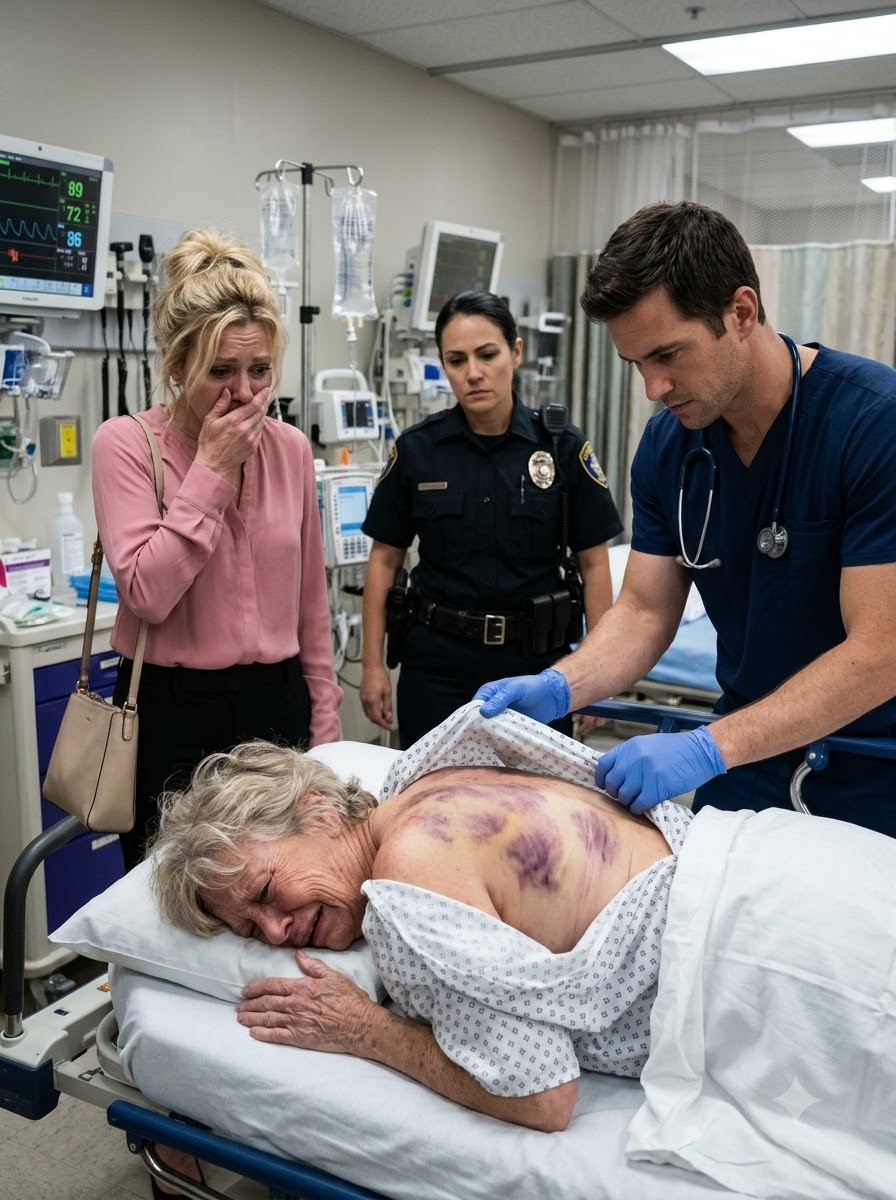
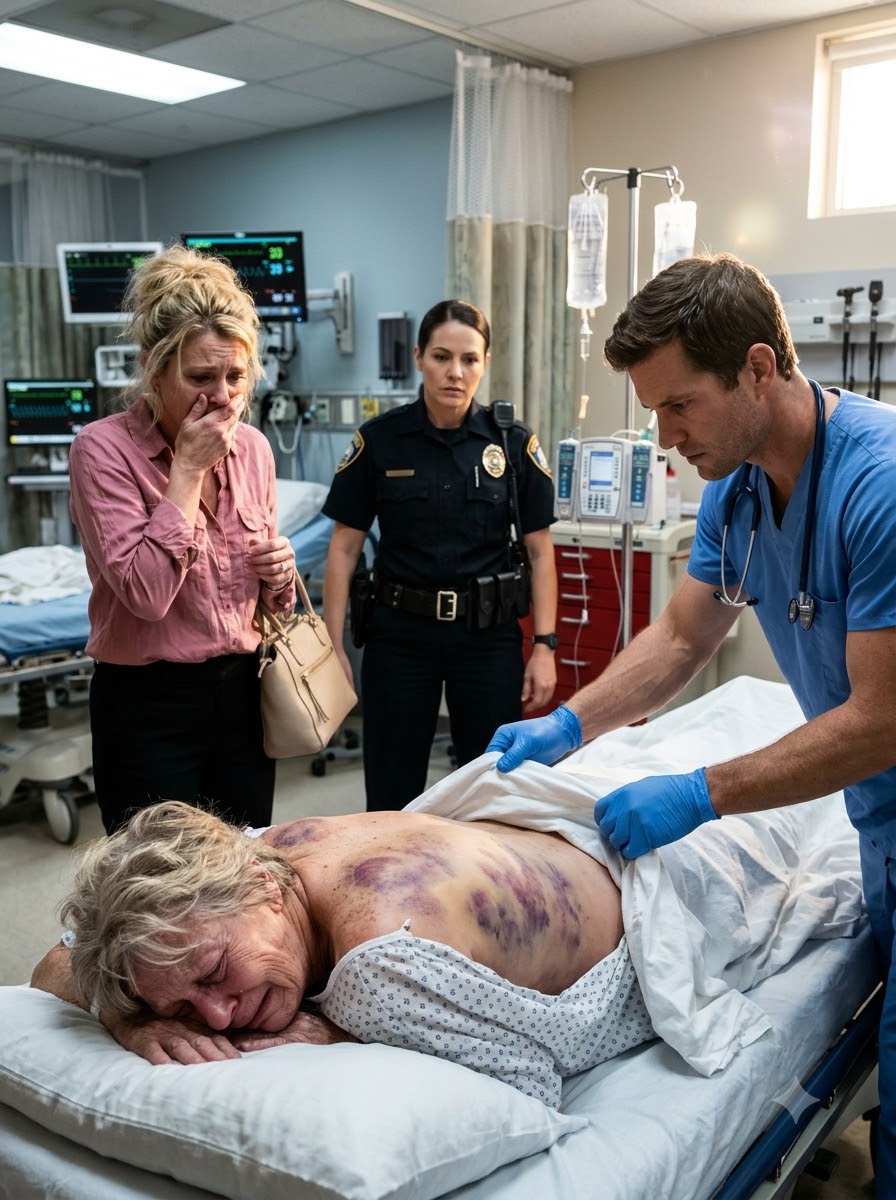
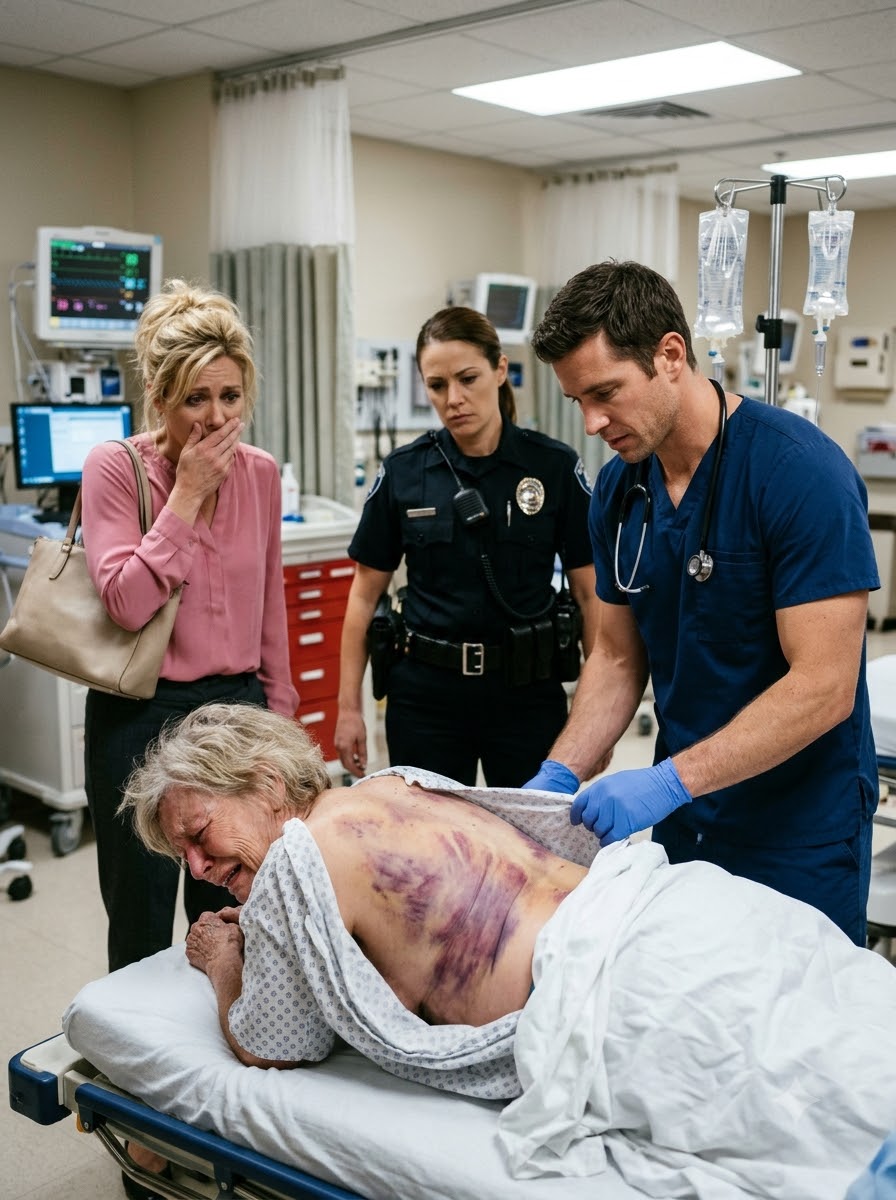
At the hospital, a physician documented bruises on Mom’s wrists, arms, and shoulders.
Some appeared recent, while others were already fading.
He recommended further assessment and contacted Adult Protective Services.
When we were finally alone, Mom stared at the blanket covering her knees.
“It started with the bank accounts,” she said.
“What happened?”
“I found withdrawals I didn’t recognize. At first they were small. Then I noticed much larger amounts.”
“Did you ask David?”
She nodded.
“He told me they were accounting adjustments. When I asked for the statements, Karen said I was getting confused again.”
Mom rubbed her hands together.
“Then things started disappearing. My checkbook, my insurance folder, even the little notebook where I keep my passwords. Karen would tell me I’d moved them myself.”
“Did you?”
She looked straight at me.
“Sarah, I know where I put my own things.”
I believed her.
She explained that Karen had arranged several appointments with a physician named Dr. Thomas Miller.
Supposedly, he was evaluating her memory, but Mom said he seemed far more interested in whether she was paranoid, aggressive, or capable of handling money.
Then David brought legal documents to her house.
“He said I should sign them so he could take care of everything,” she told me.
“Did you sign?”
“No. I said I wanted James Harris to look at them first.”
James was Mom’s longtime estate attorney.
“And what did David say?”
Her voice became quieter.
“He told me I was making everybody’s life difficult. Karen said I was too old to understand what was best for me.”
I looked down at her bruised wrists.
“Mom, how did these happen?”
She hesitated.
“Karen grabbed me when I tried to get my bank statements. I pulled away, and she grabbed harder.”
“Was David there?”
Mom nodded.
“He told me to stop upsetting his wife.”
I sat beside her, struggling to find something useful to say.
My brother had always been the dependable one.
When Dad passed away, David handled the funeral arrangements, checked on Mom every week, and insisted that I shouldn’t worry because he lived nearby.
I had thanked him for it.
Now Mom was afraid to return home.
The Papers My Brother Wanted Signed
The next morning, I called James Harris, who had represented my parents for nearly twenty years.
He sounded relieved to hear from me.
“Sarah, I’ve been trying to reach your mother all week. David’s attorney has filed an emergency petition asking the court to appoint someone to manage her personal and financial affairs.”
I gripped the phone.
“On what grounds?”
“They’re claiming Mary has serious cognitive impairment and cannot protect herself financially.”
I stared at the wall.
“She’s been reviewing her own investment statements.”
“That’s part of why I’m concerned. The allegations don’t match my recent conversations with her.”
The petition included a medical assessment from Dr. Miller and copies of documents supposedly signed by Mom, including one that appeared to give David broad financial authority.
James had already begun preparing an objection and requesting an independent medical evaluation.
Then he mentioned something that made me sit upright.
“One of those signatures doesn’t look right.”
“You think someone forged it?”
“I think a qualified examiner needs to determine that. I’m not going to make accusations before we have evidence.”
I asked him to proceed with protecting Mom’s legal rights.
Then I contacted my supervisor and explained what had happened.
Because I was the victim’s daughter and potentially a witness, I would not be involved in an official investigation.
Any criminal inquiry would be handled by investigators without my personal conflict.
That afternoon, I returned to Mom’s hospital room.
She was sitting beside the window, carefully folding her cardigan.
“Did you speak to James?” she asked.
“Yes. He’s helping us.”
Her shoulders relaxed.
“I thought they’d convinced everybody I was crazy.”
I pulled up a chair.
“Mom, why didn’t you tell me how bad things had become?”
She looked embarrassed.
“Every time I tried, Karen would say I was exaggerating. David told me you had enough problems at work. I didn’t want to become another burden.”
“You’re my mother. You’re not a burden.”
She gave me a tired smile.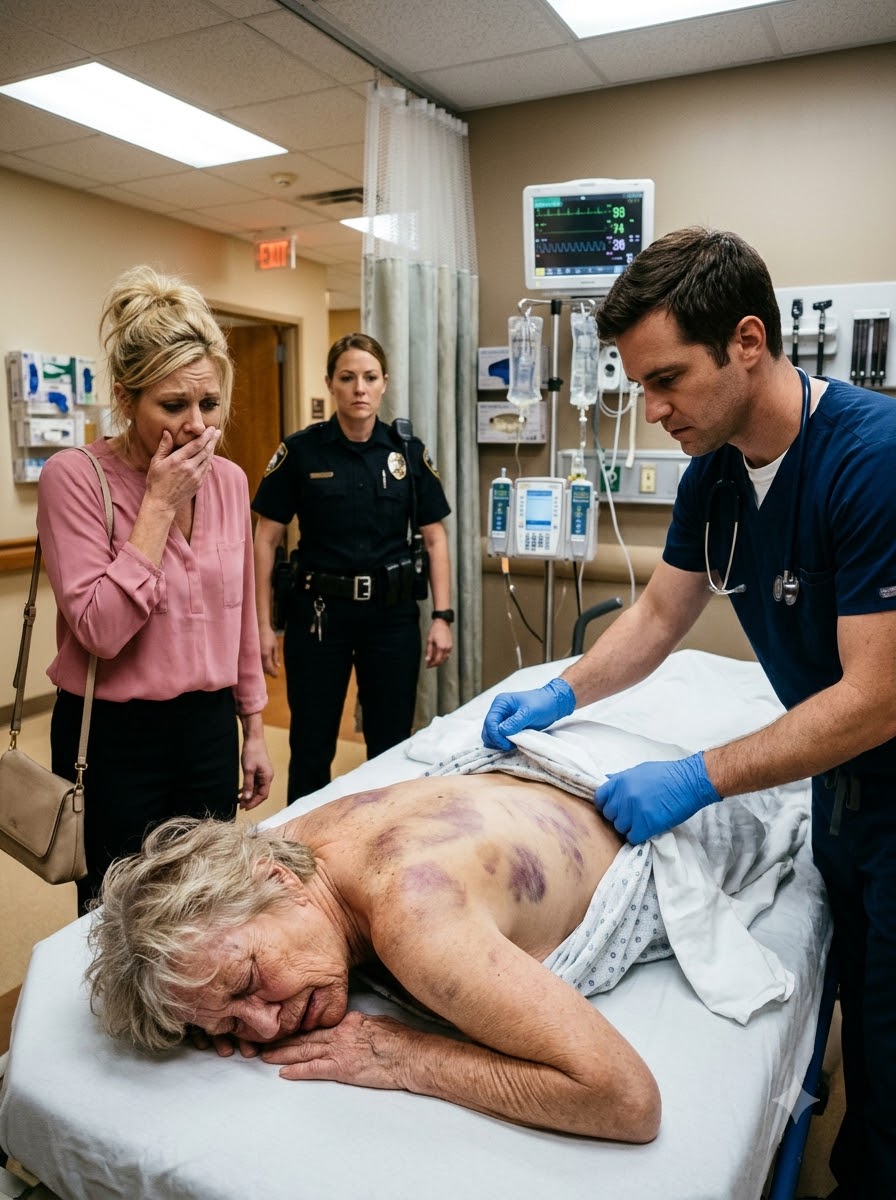
“I used to be the person everybody came to when something went wrong. It’s strange being the one who needs help.”
I reached for her hand.
“You spent forty years taking care of this family. Let me take care of you for a while.”
She squeezed my fingers.
Then she whispered, “Just don’t let David take away my house.”
My Brother’s First Lie
David appeared at James’s office that afternoon.
He looked exhausted, with dark circles beneath his eyes and a wrinkled shirt hanging loosely from his shoulders.
“Sarah, thank goodness. Karen says you’ve hidden Mom somewhere.”
I remained seated.
“Mom is receiving medical care. She asked me not to disclose her location.”
He frowned.
“I’m her son.”
“And she’s your mother. She gets to decide whom she wants to see.”
David looked toward James.
“This is ridiculous. Mom has been acting strangely for months, and Karen’s been trying to help her.”
I leaned forward.
“Then why did Mom end up at a police station with bruises on her wrists?”
He looked away.
“Karen said Mom became upset.”
“Did you see what happened?”
“Not all of it.”
“David, look at me. Did you know she was frightened of going home?”
He rubbed his forehead.
“You don’t understand what things have been like.”
“Then explain them.”
He remained silent long enough that James finally spoke.
“David, if there are circumstances we need to understand, now would be a good time to tell us.”
My brother shifted in his chair.
“Karen’s been different lately. Secretive. Angry. She’s been asking questions about Dad’s old business records.”
I frowned.
“What business records?”
“The investment fraud case he helped investigators with years ago. She keeps asking about a man named Frank Wilson.”
I remembered the name vaguely.
Dad had once helped uncover fraudulent transactions involving a former business associate.
“Why would Karen care about that?”
“I don’t know.”
I watched him carefully.
“Did you know she was hurting Mom?”
David went pale.
He didn’t answer.
That silence told me more than anything he had said.
The Doctor Who Changed His Story
Two days later, Dr. Miller contacted James and asked to speak with investigators.
He admitted that Karen had paid him to prepare misleading medical assessments.
He’d exaggerated ordinary age-related forgetfulness and described Mom as severely impaired without adequate supporting evidence.
He provided emails, payment records, and copies of the reports.
But the most disturbing item was an old newspaper photograph.
It showed my father outside a federal courthouse beside Frank Wilson, a businessman convicted in a major investment fraud case twenty years earlier.
Standing on the courthouse steps was a teenage girl.
I recognized her immediately.
Karen.
Except the caption identified her as Karen Wilson, Frank Wilson’s daughter.
The woman my brother had married had never told us about that connection.
Her father had gone to prison after a case in which my dad helped investigators follow the money.
He later passed away while incarcerated.
Karen had spent years blaming my father for her family’s downfall.
Investigators began examining whether her relationship with our family had been deliberate.
When James showed me the photograph, I sat staring at it.
For years, Karen had attended Thanksgiving dinners, brought Mom flowers, and volunteered to help with appointments.
She knew our family history, our finances, and the routines of Mom’s household.
I remembered something she’d said at Christmas two years earlier.
“Mary, you shouldn’t have to worry about money anymore. David and I can handle all of that.”
At the time, I’d thought she was being considerate.
Now the words sounded very different.
The Truth David Couldn’t Hide
Investigators eventually confronted David with financial records showing he’d improperly used money from several clients’ accounts to cover business losses and personal debts.
He had been trying to protect his reputation and keep his struggling financial practice afloat.
Karen discovered what he’d done.
Then she used it against him.
According to his later statements, she threatened to expose him unless he helped her gain control of Mom’s finances.
When I confronted him afterward, David looked like a man who had aged ten years in a week.
“You knew she was trying to take Mom’s money?”
He covered his face.
“I thought I could fix everything once the business recovered.”
“You let her convince Mom she was losing her mind.”
“I never wanted her hurt.”
“Then why didn’t you stop it?”
He looked up, his eyes wet.
“Because Karen had proof of what I’d done. I was terrified of losing everything.”
I stared at him.
“So you decided Mom could lose everything instead?”
He began crying.
For years, David had been the responsible one, the son who lived nearby and handled practical problems.
I’d trusted him because he always sounded confident and organized.
But when our mother needed him most, he’d chosen to protect himself.
He agreed to cooperate with investigators and provide the financial records he’d concealed.
He also revealed that Karen had recently purchased our childhood home through a limited liability company.
The house stood outside Richmond.
Mom and Dad had sold it years earlier.
I couldn’t understand why Karen wanted it.
Not until the following morning.
PART 2 — THE HOUSE WHERE EVERYTHING CAME APART
The Photograph From the Hospital
Mom had been recovering well.
Her independent medical assessment found no evidence of the severe cognitive impairment Karen had claimed.
She was tired, anxious, and frightened by what had happened, but she understood her circumstances and could make her own decisions.
She’d even begun talking about moving to a smaller home.
“I don’t need all those rooms anymore,” she told me.
“Just somewhere with a garden and a porch. Somewhere I can sit outside without anybody telling me what to do.”
I promised we’d look.
The next morning, an alarm sounded in the hospital wing.
Staff began moving patients away from the affected area.
During the confusion, someone wearing clothing resembling that of a hospital employee entered Mom’s room.
Security footage later showed the person escorting her toward a service exit using an unauthorized credential.
By the time staff discovered what had happened, Mom was missing.
I was at James’s office when the hospital called.
“Ms. Johnson, your mother is missing. We’ve notified law enforcement.”
For a moment, I couldn’t speak.
Then I contacted the investigative team and provided everything I knew about Karen, David, and the old house.
Minutes later, a message arrived on my phone.
It contained a photograph.
Mom was sitting in a wooden chair, wearing her blue cardigan.
Behind her was floral wallpaper I hadn’t seen in years.
The message read:
Come home, Sarah. We need to talk.
I recognized the room immediately.
Our childhood living room.
I forwarded the photograph to investigators and gave them the address.
Then Karen called.
“You finally figured it out,” she said calmly.
“Let me speak to Mom.”
“She’s fine.”
“Then put her on the phone.”
There was a pause.
Mom’s voice came through, weak but unmistakable.
“Sarah, sweetheart, don’t do anything foolish.”
My throat tightened.
“Mom, I’m getting you out of there.”
Karen took the phone back.
“Your father ruined my family. Now you’re going to find out what that feels like.”
The line went dead.
The House I Thought I’d Never See Again
Investigators established a perimeter around the property and began assessing how to bring Mom out safely.
Karen demanded to speak with me and refused to release Mom unless I came inside.
I wanted to rush through the front door.
Instead, I waited while the response team developed a controlled plan.
After assessing the circumstances, officers allowed me to approach with trained personnel positioned nearby.
The hallway looked smaller than I remembered.
The family photographs were gone, and the furniture had been replaced, but the old hardwood floors still creaked near the staircase.
Mom sat beside the fireplace.
Her face was pale, and her cardigan hung loosely around her shoulders.
Karen stood several feet away holding a small medical syringe.
A camera had been positioned across the room.
“You look just like your father,” Karen said.
“Let Mom go.”
She shook her head.
“Your father destroyed mine. Everybody called him a hero while my family lost everything.”
“Your father took money from people who trusted him. My dad helped expose what happened.”
Karen’s expression hardened.
“Don’t you dare lecture me about my father.”
She pointed toward the camera.
“You’re going to admit you used your mother’s money for illegal investments. You’re going to explain how you moved the funds.”
Investigators had already uncovered accounts opened using my stolen personal information.
Karen wanted a recorded confession to support the false story she’d been constructing.
I glanced at Mom.
Her hands were folded in her lap, but she was watching me carefully.
“I’ll talk,” I said.
“But Mom needs medical attention. Let her leave first.”
“After you tell the truth.”
“The truth is that you’ve been using my family to settle something that happened twenty years ago.”
Karen stepped closer.
“Your father should’ve thought about the consequences before he ruined mine.”
“And you should’ve thought about my mother before making an eighty-year-old woman afraid to sleep in her own house.”
For a moment, Karen had no answer.
Then she pointed at the camera again.
“Sit down, Sarah. We’re not finished.”
The Choice My Brother Should Have Made Months Earlier
Outside, David had been helping investigators identify the house’s layout.
He remembered a side entrance through the utility room and a narrow hallway connecting it to the kitchen.
Officers used that information while preparing their response.
Inside, Karen ordered me to face the camera.
“Start talking.”
I took a breath.
“My name is Sarah Johnson. I’m here because my mother was taken from her hospital room, and I want her returned safely.”
Karen’s face tightened.
“That’s not what I told you to say!”
Then a familiar voice came from the hallway.
“Karen, stop.”
David stood near the kitchen entrance, with officers positioned behind him.
His face was pale.
“Let Mom go. Please.”
Karen stared at him.
“You promised you’d stay out of this!”
“I made enough mistakes already.”
“You helped me!”
David nodded, tears running down his face.
“I did. And I’ll answer for it. But I’m not letting you hurt her anymore.”
For a moment, Karen looked toward David instead of Mom.
The officers moved when they had a safe opportunity.
Within seconds, they separated Karen from my mother and secured the room.
Medical personnel entered immediately afterward.
I hurried to Mom and knelt beside her chair.
“It’s over. You’re safe.”
She reached for my hand.
Then she looked toward David.
“Son, how could you let this happen?”
My brother began crying.
“I’m sorry, Mom. I’m so sorry.”
Mom closed her eyes.
She didn’t forgive him that day.
But when he reached for her hand, she didn’t pull away.
Justice Didn’t Erase the Pain
The investigation continued for six months.
Authorities uncovered evidence connecting Karen to additional financial schemes targeting older people with substantial assets.
Dr. Miller cooperated with prosecutors and provided records that helped identify other possible victims.
Investigators traced financial transactions through several companies and documented accounts opened using stolen personal information.
A grand jury eventually returned an indictment containing twenty-four criminal counts against Karen, including allegations involving financial fraud, identity theft, kidnapping, and related offenses.
Those were formal charges, not convictions.
The courts would determine the outcome.
David also faced proceedings over his clients’ money and his role in the attempt to take control of Mom’s affairs.
His cooperation mattered, but it didn’t erase his responsibility.
The disputed guardianship petition was withdrawn, and independent medical evaluations supported Mom’s ability to make her own decisions.
With James’s assistance, she updated her financial safeguards and estate planning documents.
Then she sold the large house she’d been living in and moved into a smaller home with a garden and a sunny front porch.
She began attending a community center twice a week.
She made friends.
She grew tomatoes.
And she started making decisions without having to explain herself to David or Karen.
But some nights, she still checked the locks twice.
I noticed.
I never told her she was being silly.
One evening, she called me because she couldn’t find her house keys.
When I arrived, she was standing in the kitchen, looking embarrassed.
“I know this sounds ridiculous,” she said.
“But I can’t remember where I put them.”
I helped her search.
We found them inside the pocket of her blue cardigan.
Mom stared at the keys.
“Karen would’ve told me this proved I couldn’t take care of myself.”
I smiled gently.
“Mom, I lost my phone in my own refrigerator last month.”
She laughed.
It was the first time I’d heard her laugh without hesitation in weeks.
The Letter Dad Left Behind
One October afternoon, I visited Mom after work.
The trees around her new house had turned red and gold, and she was sitting on the porch with two cups of coffee.
Her blue cardigan was draped across the back of her chair.
“Sit down, sweetheart,” she said.
“There’s something I’ve been meaning to give you.”
She handed me an envelope.
My name was written across the front in Dad’s handwriting.
Mom explained that she’d found it while sorting through an old safe-deposit box.
Dad had written it years before his death.
Inside was a letter.
My dear Sarah,
You’ve always been the one who wants to make things right. Even as a little girl, you couldn’t stand seeing somebody treated unfairly.
But I hope you remember that being strong doesn’t mean carrying every burden alone.
People will disappoint you. Sometimes even the people you love most will make choices you cannot understand.
You can love someone without excusing what they’ve done.
You can forgive without pretending nothing happened.
And you can do what’s right without letting anger become the center of your life.
Whatever happens, build a future that belongs to you.
Love, Dad.
I read the letter twice.
Then I rested my head against Mom’s shoulder.
“I wish he were here,” I whispered.
She squeezed my hand.
“So do I, sweetheart.”
For a while, neither of us spoke.
David was still facing the consequences of his decisions, and rebuilding our relationship would take time.
But Mom was safe.
She had her home, her independence, and the right to make her own choices.
I looked at the blue cardigan hanging over her chair.
Months earlier, she’d been clutching it in a police station because she was afraid of what her family might do next.
Now she’d left it outside simply because the afternoon was warm.
Mom noticed me looking at it.
“What?” she asked.
I smiled.
“Nothing. I’m just glad you’re here.”
She laughed softly.
“Well, somebody has to teach you how to grow decent tomatoes.”
I picked up my coffee, and we sat together as the October sunlight moved across the porch.
For the first time in months, Mom wasn’t watching the door.
She was watching her garden.
