

The Call That Emptied the Lecture Hall
The lecture hall smelled of damp wool, industrial floor wax, and the dry, chalky dust of dry-erase markers. Beyond the three-story arched windows of Halloran Hall, the sky hung bruised, gray, and suffocating. A ferocious Midwestern blizzard was building strength over the city, hurling sheets of frozen sleet against the reinforced glass with the steady, clicking rhythm of thrown sand.
At the front of the tiered auditorium, Professor Alistair Vance—no relation to me, though he shared the same glacial emotional detachment as the woman who had given me life—filled a forty-foot whiteboard with thermodynamic equilibrium formulas. The squeak of his blue marker was the only sound competing with the rustle of two hundred students turning notebook pages in unison.
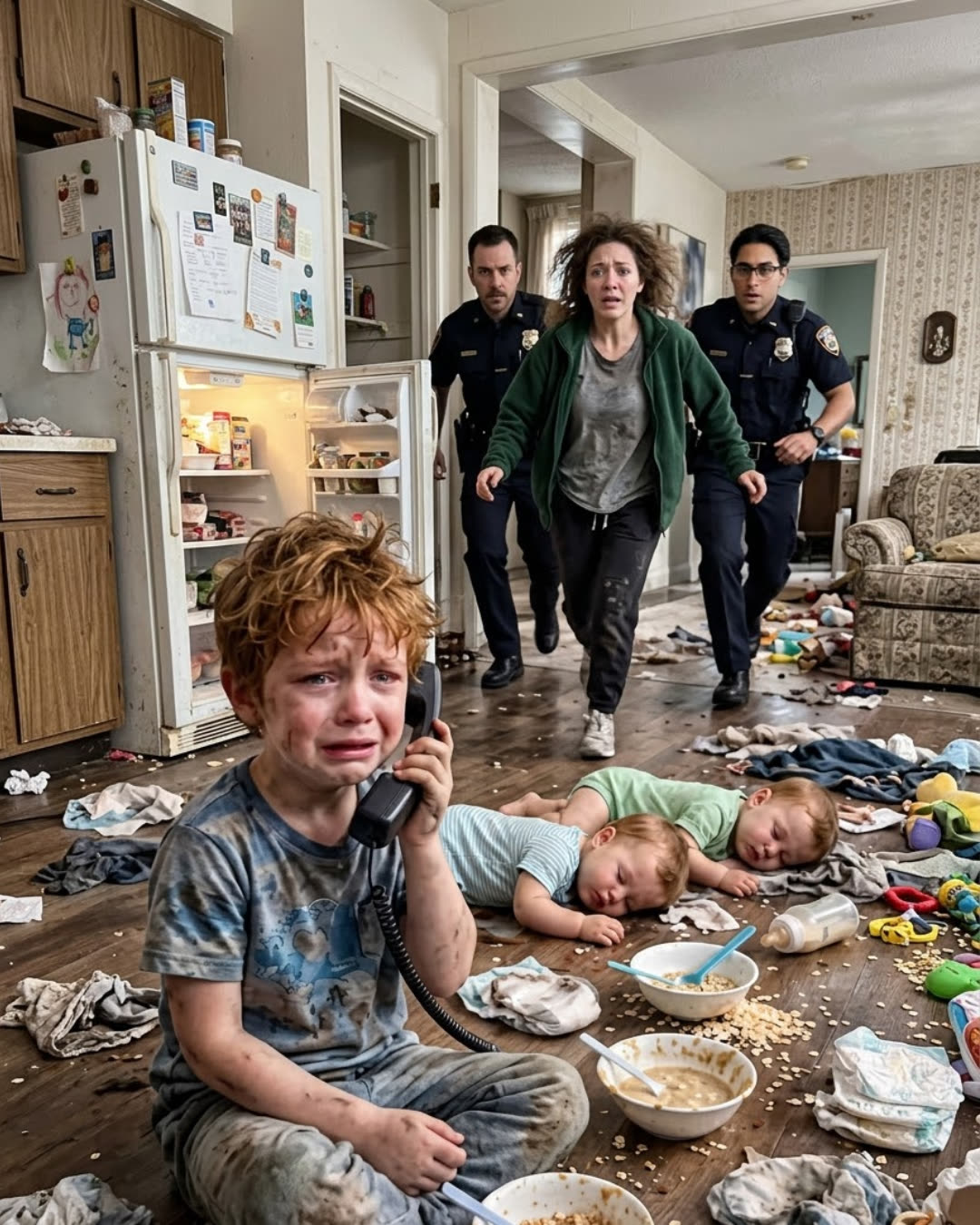
I sat in the second-to-last row, my spine straight, my shoulders wound tight enough to snap. At twenty-one, my life was an unforgiving math problem whose numbers never quite balanced. I was a senior biochemistry major carrying nineteen credit hours, while working thirty-two hours a week between a night stocking shift at an all-night pharmacy and early-morning dishwashing at the campus dining commons. Every dollar went toward groceries, pediatrician bills, and the overdue utility notices that piled up like dry leaves on the cracked linoleum counter of our home on Elm Street.
My mother, Victoria Vance, never troubled herself over utility bills. To Victoria, bills were crude, bureaucratic insults meant for the mediocre masses. She lived entirely in the glow of boutique vanity mirrors, spending her alimony checks on silk neckerchiefs, chemical peels, and imported hair oils while her four children split stale saltine crackers in the kitchen.
I was the eldest. By default, by necessity, and by the unyielding demand of my own conscience, I had become the mother.
Beneath the spiral binding of my organic chemistry notebook, my phone gave a violent, unbroken shudder. I glanced down, my heart skittering against my ribs. I kept the phone on complete silence during Vance’s lectures; he was notorious for summarily ejecting anyone whose device interrupted his seminars. But this was no ordinary vibration. It was the frantic, unbroken triple-buzz of a programmed emergency override. The screen glowed white in the dim hall: UNKNOWN LANDLINE – 414-555-0192.
My breath caught. My mother had disconnected the Elm Street house phone five months earlier to pay for a private Pilates instructor. That number shouldn’t exist anymore—unless someone had crawled behind the rusty water heater in the unfinished basement and plugged a handheld corded receiver into the archaic, dust-crusted master junction box. Only one person was small enough, and clever enough, to know that box still held a faint, residual phantom dial tone. My ten-year-old brother, Toby.
I didn’t wait to gather my coat. I jammed my notebook into my canvas pack, snatched my winter parka from the back of the seat, and slipped out of the row. Professor Vance stopped his marker mid-stroke, turning his hawk-like nose toward the stairs. “Miss Vance? We are in the middle of a derivation. If you walk through those double doors, you forfeit your attendance credit for the third time this month.”
“Keep the credit,” I said, my voice hoarse, raw, and totally stripped of deference. I shouldered through the heavy oak doors, the brass handles clattering against the jamb, and stepped into the empty, echoing corridor of the science complex. The air out here was cooler, smelling of radiator steam and old stone. With trembling fingers, I slid the green icon across the glass and raised the phone to my ear. “Toby?”
What came through the tiny earpiece was not the voice of a rambunctious, bright-eyed fourth-grader who loved drawing space shuttles and building block castles on the carpet. It was a thin, rattling, suffocating whimper—a sound so hollow and frail that the blood drained straight out of my face. Syllables crashed against each other like loose dice rattling in an empty tin cup. “S-Sissy…”
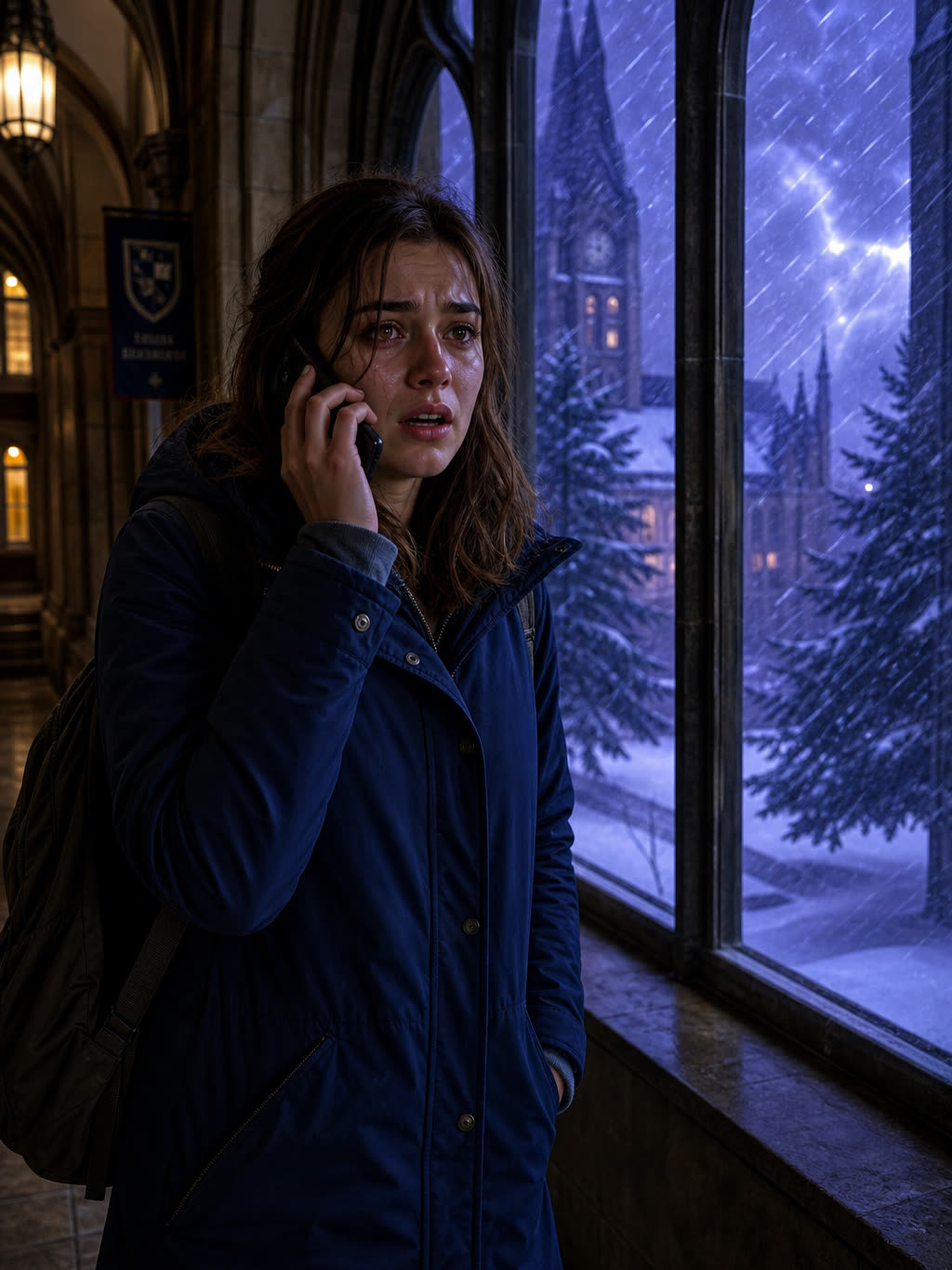
The line popped with static, a terrible, oceanic hiss. “Toby! I’m here. I’m right here, baby. Talk to me. Why are you calling from the basement?”
“Sissy… please come home… the lights won’t turn on. The switches… they don’t click. The windows… there’s ice growing on the inside of the glass. Like white feathers. Sissy, the twins… they’re so cold. Their hands are blue. Leo stopped crying an hour ago. Liam… Liam won’t wake up to drink the water from my fingers. His lips are dark… like bruised plums. We’re so cold, Clara. We’re so hungry. Please… my toes hurt so bad I can’t feel my boots…”
A punch of pure adrenaline hit my solar plexus. The world narrowed into a high-pitched ringing tunnel. My hand clamped around the phone case so hard the screen frame groaned. “Toby, listen to my voice. Focus on my voice! Where is Mom? Why isn’t the furnace running? Did the gas get turned off?”
“Mom left… she left on Tuesday, Sissy,” Toby whispered, his voice catching on a dry, hitching sob that tore straight through my marrow. “She packed the big gold suitcases. The ones from Paris. She told me she had an important dinner with a prince… she told me to be a big boy and not make any noise. Then she walked out. She locked the front deadbolt from the outside with her silver key. She took my school tablet and my cell phone. She put them in her purse so I wouldn’t call the police. I… I had to crawl behind the pipes in the cellar, Sissy. I remembered you told me once the phone wires have their own power… Clara, please… Liam’s chest isn’t moving fast anymore. It’s like… he’s forgetting to breathe.”
Four months old. The twins, Leo and Liam, were only four months old. Born in the humid heat of late August, they were tiny, fragile creatures who had never known anything from Victoria but cold stares and sharp, resentful sighs. To Victoria, their arrival had been an intolerable aesthetic catastrophe, a biological inconvenience that ruined her waistline and anchored her to an ordinary suburban address.
And now it was Tuesday to Friday. Seventy-two hours. Outside, the temperature stood at three degrees below zero, plunging toward an overnight low of negative fifteen, with a wind chill that could freeze exposed skin in under ten minutes.
“Toby, listen to me carefully,” I said, my voice dropping an octave into a low, steady, militaristic rhythm, even as my knees threatened to buckle under the weight of sheer terror. “You get off that basement floor right now. Go back upstairs to the linen closet. Grab every wool blanket, every towel, every down jacket you can find. Wrap Leo and Liam together in the master bedroom closet—it has no exterior walls. Cover them with your own body. Do you hear me? Breathe your warm air directly into their faces. Do not stop blowing on them. I am leaving campus right now. I am coming for you. I will be there in twelve minutes.”
“H-Hurry, Sissy… Liam’s eyes… they won’t look at me…” The line went dead with a flat, mechanical click.
I shoved the phone into my pocket, left my heavy winter boots behind in my locker, and tore through the glass vestibule into the teeth of the blizzard. The wind struck like a solid wall of iron, driving needle-like ice pellets into my eyes and cheeks. I skidded on the black ice of the faculty lot and scraped both palms raw on the asphalt, but I hardly felt the fire in my skin.
I scrambled into my beat-up, rusted-out 2008 Honda Civic, jammed the key into the ignition, and cranked the starter. The engine screamed, choked, and finally caught with a shuddering roar. I threw the shifter into reverse, spun the wheel until the front tires bit into the slush, and blew through the campus security gate at fifty miles per hour. The speedometer needle climbed past sixty, then seventy, then eighty, fishtailing wildly through the snow-drifted avenues toward the frozen tomb of Elm Street.
The neighborhood was deserted, smothered under an unplowed mantle of eight-inch snow. Driveways sat choked with drifts, and streetlights flickered a dull, sickly sodium-orange through the driving squall. While the neighboring houses showed the warm, amber glow of living room lamps and friendly curls of wood smoke rising from masonry chimneys, Number 412 sat dark, dead, and desolate. It looked like an abandoned skull sinking into the snowbanks.
I didn’t bother braking properly; I threw the car against the curb and let the deep drift on the lawn absorb my momentum with a dull, heavy crunch. I flung open the driver’s door, popped the trunk, and grabbed the heavy, forged-steel tire iron from the spare tire well.
The path to the porch hadn’t been shoveled in days. The snow came up to my knees, crusting over my jeans and soaking through my sneakers. By the front steps, the signs of a deliberate lockdown were unmistakable. Every storm window on the ground floor was sealed tight, its interior surface completely opaque, coated in an intricate, inch-thick layer of crystallized white frost. That only happened when the indoor temperature fell to match the arctic vacuum outside.
I grabbed the brass front door handle. It was frozen solid, the tumbler unresponsive. Above it, the heavy Schlage deadbolt was locked firmly in place. Victoria had turned it from the outside with her brass master key, sealing her three small sons inside a timber-frame freezer. “Toby!” I screamed, slamming my fist against the oak paneling. “Toby! Can you hear me?!”
Nothing. Only the mournful howl of the wind whipping beneath the eaves.
I didn’t hesitate. I jammed the chiseled end of the tire iron into the door jamb, right between the strike plate and the deadbolt casing, and threw my full body weight against the steel bar. CRACK. The dried oak frame splintered with a sound like a rifle shot, and splinters the size of knitting needles flew across the snow. I kicked the door once, twice, with the heel of my boot. BANG. The deadbolt sheared through the rotten wood of the frame, and the heavy door burst inward, slamming against the plaster of the entryway wall.
The air that rushed out of that house was worse than the storm. Outside, the wind was alive, violent, moving. The cold inside was motionless, stagnant, and petrified. It smelled of stale diaper moisture, ancient dust, and the sharp, chemical tang of sub-zero dry air. The foyer floor was a sheet of invisible glaze; water from an umbrella stand had spilled, frozen, and formed an unbroken ice slick across the parquet.
“Toby!” My voice bounced back to me off the bare walls, dead and muffled.
I kicked off my soaked shoes and ran down the center hallway in my wool socks, sliding across the ice. The living room was empty, its furniture draped in linen dust sheets—Victoria always covered the velvet upholstery when she planned to be away for “extended society functions” so the dust wouldn’t settle in the fibers. From the dark, narrow hallway near the central linen closet came a sound that turned my skin to ice. It was a wet, clicking rattle, the sound of an infant struggling for oxygen through lungs that were losing their fight against the cold.
I threw open the slatted sliding door of the linen closet. “Oh, God. Oh, merciful God…” The words tore out of my throat in a strangled sob.
Toby was huddled in the rear corner of the floorboards, wedged between a pile of musty summer quilts and the baseboard. He had stripped off his own heavy fleece pullover and his thickest sweatpants; he wore nothing but a threadbare, sleeveless cotton undershirt and athletic shorts. His skin had taken on a terrifying, waxy gray-purple hue, his bare arms covered in angry, red goosebumps that had frozen into hard nodules. His lips were chapped, split, and oozing a thin line of dark, dried blood.
Beneath his small, shivering torso, wrapped tightly in his discarded fleece and three damp dish towels, were the twins. They were four months old, but they looked like tiny porcelain dolls forgotten in an attic trunk. Liam lay completely motionless, his eyes rolled back beneath half-shut lids crusted with white frost crystals. His tiny nostrils flared once every seven or eight seconds—a shallow, agonizing gasping reflex known as agonal breathing. Beside him, Leo whimpered, a weak, high-pitched mewl that sounded more like an injured kitten than a human child, his small fingers clamped into Toby’s cold forearm.
Toby looked up at me through swollen, tear-streaked eyes. His teeth chattered so violently he could barely form words, his jaw shaking in rhythmic, spastic convulsions. “I… I t-tried, Clara,” he wept, the tears freezing instantly against his hollow, translucent cheeks. “I blew on their f-fingers… like you said. Liam… he got so q-quiet two hours ago. I tried to make a fire with the old phone books… but the lighter in the drawer was out of fluid. I stayed on top of them… I didn’t let the cold touch their chests… I didn’t let them sleep…”
“You did it, Toby. You saved them. You’re the bravest boy in the world,” I sobbed, dropping to my knees on the hardwood, ignoring the biting cold of the floor.
I scooped Liam against my chest, pressing his ice-cold face beneath my heavy down parka, directly against the bare skin of my neck to share my body heat. With my other arm, I hauled Leo against my ribs, tucking both infants inside my clothes. “Get up, Toby! Grab my belt! We have to get to the car! The heat is on!”
As I turned to run down the hallway, my shoulder slammed against the open basement door. I froze. A draft was rising from the cellar stairs, carrying a faint, unmistakable odor: the sharp, metallic smell of fresh ozone and industrial lubricant.
Forty-Two Calls Nobody Answered
I stepped to the landing and flipped the light switch. Nothing. The entire house was dark. But something was wrong with the way the darkness felt. If the storm had knocked down power lines across the county, the neighborhood streetlights wouldn’t have been flickering outside.
I pulled out my phone, switched on the LED flashlight, and aimed the beam down the wooden cellar steps. The basement was dry and empty. Mounted on the far stone foundation was the sixty-amp electrical breaker box, its gray metal door standing wide open. I took three rapid steps down the stairs, Toby clutching my coat from behind like a ghost.
The main sixty-amp exterior disconnect switch had been physically thrown down into the OFF position. It hadn’t tripped from a power surge; the heavy iron lever was held down by a bright yellow plastic zip-tie looped through the padlock eyelet so it couldn’t bounce back.
Worse: directly beside the electrical panel sat the mechanical housing of the central natural gas furnace. The heavy, cylindrical ceramic cartridge fuse—the heart of the furnace’s ignition circuit—had been unscrewed from its socket. It sat on a clean paper towel on the concrete washbasin, perfectly dry, beside a pair of thick, yellow latex dishwashing gloves.
The gas shutoff valve below the regulator had been turned ninety degrees clockwise, completely cutting off the fuel supply. A brand-new pair of adjustable channel-lock pliers lay neatly beside the pipe.
This wasn’t a power outage. This wasn’t an unpaid bill. This wasn’t even the criminal neglect of an incompetent, selfish woman who forgot her children while she went to a party.
Someone had systematically, mechanically shut down every life-support system in this house before locking the exterior deadbolts. Someone with small, manicured hands who wore dishwashing gloves so the grease wouldn’t ruin a fresh gel manicure.
My mother hadn’t left my brothers to fend for themselves.
She had built an execution chamber.
The pediatric emergency trauma bay at Children’s Memorial Hospital was an assault of bright fluorescent light, heated plastic, and the urgent, metallic bark of medical orders. “We need a core temp right now! Rectal probe!” Dr. Chen, the attending pediatric intensivist, barked as four nurses in dark blue scrubs swarmed the radiant warming bed where Liam had been stripped of his frozen onesie.
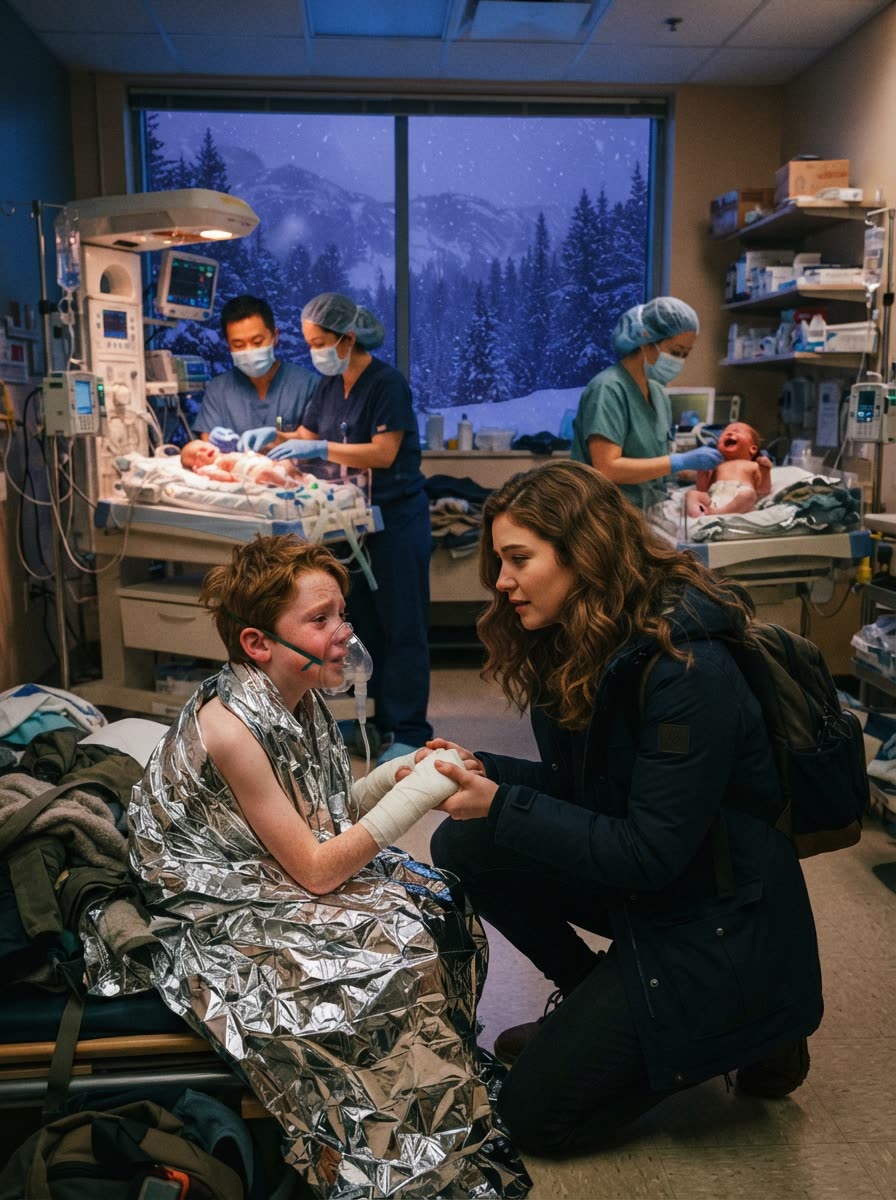
“Eighty-two point four degrees,” a nurse called out, her voice tight, reading the digital monitor. “Severe hypothermia. Heart rate is down to forty-eight beats per minute. Sinus bradycardia. Peripheral pulses are non-palpable.”
“Start active internal rewarming,” Chen commanded, his hands flying across the infant’s tiny, translucent chest. “Set the radiant warmer to thirty-eight Celsius. Warm the IV saline to forty-two degrees before infusion. If that core drops two more degrees, we lose his sinus rhythm and hit ventricular fibrillation. Get lines in his scalp veins now!”
Across the room, on a secondary warming table, Leo was screaming—a thin, reedy, miserable wail that was music to my ears. Screaming meant neurological function. Screaming meant lung capacity. Screaming meant life.
Beside me on the vinyl hospital bench sat Toby. A pediatric nurse had wrapped him in three layers of self-heating thermal blankets. His hands and feet were encased in thick wool dressing pads to treat the blistering, second-degree frostbite across his knuckles and the tips of his toes. A clear plastic mask covered his nose and mouth, pumping warm, humidified oxygen into his scorched bronchial tubes. He held a paper cup of warm chicken broth between his bandaged hands, his eyes wide and hollow, watching the medical team fight over our baby brother.
“Clara?” he whispered behind the mask, his voice trembling. “Did I… did I do something bad? Did Mom lock the door because I spilled the milk on Tuesday?”
The question was a physical blow. It tore through my chest with the violence of a jagged blade. I dropped to my knees in front of him, took his bandaged, trembling hands into mine, and buried my face in the wool of his blanket. “No, Toby. No, my sweet boy. You did nothing wrong. You hear me? You are a hero. You kept them alive. If you hadn’t stayed in that closet, if you hadn’t breathed into their faces, Leo and Liam wouldn’t be here. You are the bravest person in this entire city.”
“Then why didn’t she leave the food on the low counter?” he asked, a single tear cutting through the soot and frost grime on his cheek. “She put the bread on top of the refrigerator. I tried to climb the stool, but she took the step stool out to the garage before she left. I couldn’t reach it, Clara. I couldn’t reach the bread.”
I closed my eyes. The rage that rose inside me wasn’t hot; it was cold, pure, and absolute. It was the kind of rage that burns away all fear, all hesitation, all residual family loyalty. I pulled out my phone.
Over the last two hours—between the frantic ride in the back of the ambulance and the intake at the trauma center—I had dialed Victoria’s private mobile number forty-two consecutive times. Every single call had dropped after half a ring, kicked straight into her cheerful, pre-recorded voicemail greeting: “Hi there! You’ve reached Victoria. I’m currently out of the office and completely off the grid, embracing new beginnings, high altitudes, and the exquisite magic of the present moment! If this is an emergency, leave a message, though I likely won’t check this until after the new year. Ciao!”
Forty-two calls. The hospital switchboard had attempted another sixteen from its official landline, all rejected in the same way.
My thumb opened my social media app. Victoria’s profile—VICTORIA_VANCE_OFFICIAL—sat at the top of my feed, marked by a bright magenta ring that signaled a new video story posted less than ten minutes ago. I tapped the screen. The video loaded in stunning, crystal-clear 4K. The golden, radiant light of a Colorado sunset flooded the frame. Behind her stood the majestic, snow-capped peaks of the Rocky Mountains, seen from the panoramic, heated glass terrace of The St. Regis Aspen.
In the center of the frame was my mother. She wore a custom, form-fitting pearl-white Moncler down ski suit trimmed with silver fox fur, her blonde hair styled in effortless, cascading waves that showed off a pair of three-carat diamond cluster earrings. She held a crystal flute of vintage Dom Pérignon toward the camera, her smile dazzling, radiant, free of a single line of care or remorse.
Beside her stood a man in his late seventies, impeccably groomed, with aristocratic silver hair, wearing an eight-thousand-dollar bespoke shearling coat, his arm draped possessively around her waist. Julian Montgomery. I recognized him instantly from the society pages of the Chicago Tribune. He was an octogenarian industrialist, heir to a Great Lakes shipping dynasty, with an estimated net worth just north of four hundred million dollars.
In the video, Julian leaned down and kissed Victoria’s cheek with practiced, geriatric affection. Victoria turned toward the lens, winking as she raised her left hand to the light. On her ring finger sat a mammoth, seven-carat emerald-cut diamond that threw iridescent prismatic flares into the camera. The caption below read: “When the universe closes a door, it builds an entire palace in the mountains! A brand new life, an unburdened soul, and a future without limits. No baggage. No anchors. Just pure, unadulterated elevation. To our forever! #BillionaireWife #AspenGala #CleanSlate #NewBeginnings #ZeroRegrets.”
No baggage. No anchors. While her four-month-old infant lay on a stainless-steel warming slab with plastic tubes in the veins of his skull, his temperature hovering two degrees above biological death, his mother was celebrating her “clean slate” with vintage champagne at ten thousand feet.
“Miss Vance?” A deep, gravelly voice cut through the sterile hum of the trauma bay. I turned. In the entrance of the pediatric bay stood a man in his late forties, wearing a charcoal wool overcoat over an unpressed navy suit. He had short, iron-gray hair, eyes the color of slate, and a gold shield clipped to the breast pocket of his coat.
“I’m Detective Marcus Miller, State Police Major Crimes Division,” he said, pulling off his black leather gloves. His face was set in grim, deeply etched lines. “The local precinct called us the moment your tire iron took that door off its frame. I just came from Number 412 Elm Street.”
He pulled a clear plastic evidence bag from his pocket. Inside was the yellow zip-tie that had bound the main electrical breaker, cut cleanly down the center, along with high-resolution photographs of the missing ceramic fuse and the channel-lock pliers.
“The crime scene technicians just finished dusting the furnace unit,” Miller said, his voice dropping into a dangerous, lethal register. “We pulled three distinct, non-smudged latent prints off the ceramic threads of the ignition fuse. They belong to Victoria Vance. We also pulled prints from the pliers on the gas line.” He glanced at Toby, his jaw clenching so hard that a muscle knotted beneath his ear. Then he looked at Liam’s motionless form under the blue radiant lights.
“We ran her cell phone tower pings,” Miller continued, his eyes meeting mine with absolute, unsparing gravity. “She boarded a private Gulfstream jet at the regional executive airport on Tuesday afternoon at two o’clock. Miss Vance, your mother declined forty-two calls from you, and sixteen from this hospital’s critical care desk. We just tracked her device to the Grand Ballroom of the Aspen Mountain Club.”
Miller took out a ruggedized police tablet and tapped the glass. “This isn’t an abandonment case anymore, Miss Vance,” Miller whispered. “This is an active, premeditated, aggravated attempt on three human lives. And we are moving.”
He turned his shoulder toward the hallway and keyed the microphone pinned to his collar. “Dispatch, this is Unit 414. Patch me through immediately to the United States Marshals Service Fugitive Task Force and the Colorado State Patrol Special Operations Command. We have a confirmed location on our capital fugitive. Authorize interstate tactical apprehension.”
The Chains in the Grand Ballroom
The private consultation room off the PICU smelled of scorched industrial coffee and bleached linoleum. It was 8:45 PM. Outside, the blizzard had reached peak fury, howling through the hospital’s ventilation shafts, but inside, the silence between Detective Miller and me was heavy, cold, and toxic. Miller’s ruggedized field laptop sat on the laminate table between us, connected through a secure, encrypted satellite uplink directly to the digital forensics laboratory at State Police headquarters.
“Clara,” Miller said, his voice quiet, almost hesitant—the tone you use when you’re about to deliver news that will permanently alter someone’s psychological foundation. “Our cyber division just breached your mother’s cloud storage and her personal email archives pursuant to the emergency federal warrant. You need to look at this.”
He turned the laptop toward me. On the screen was a high-resolution PDF displaying the ornate, raised-letterhead logo of Vanderbilt, Sterling & Croft, LLP, an elite white-shoe estate planning firm based in Chicago. The title was stamped across the top in bold, black serif lettering: IRREVOCABLE PRENUPTIAL COVENANT AND ASSET SETTLEMENT AGREEMENT BETWEEN JULIAN T. MONTGOMERY AND VICTORIA M. VANCE
My eyes scanned down the dense legal terminology until Miller’s finger tapped a highlighted block of text on page fourteen. SECTION 18.4: SPECIAL PROVISIONS REGARDING ANCILLARY OFFSPRING AND DEPENDENTS. The language was cold, ruthless, and surgically precise.
“Whereas Party A (Julian T. Montgomery) maintains established biological heirs and complex testamentary trusts originating from his prior marital dissolution, Party A explicitly stipulates that he shall assume zero legal, financial, custodial, or residential obligations toward any prior offspring of Party B (Victoria M. Vance).
Furthermore, it is an express condition precedent to the solemnization of this union and the subsequent vesting of the Fifty Million Dollar ($50,000,000.00) Irrevocable Spousal Trust that Party B must enter the marital estate completely unencumbered by dependent minors.
In the event that Party B possesses physical custody, active legal guardianship, or immediate parental claims to minor children at the date of execution (December 31st), this agreement shall be rendered immediately null and void in its entirety, and Party B shall receive zero distribution from the Montgomery Estate.”
My vision blurred. A sound escaped my throat—a dry, gasping croak. “Fifty million dollars,” I whispered, the words tasting like lead and sulfur on my tongue. “Julian Montgomery wouldn’t marry a woman with four young children. He didn’t want the legal mess. He didn’t want his first family contesting his will.”
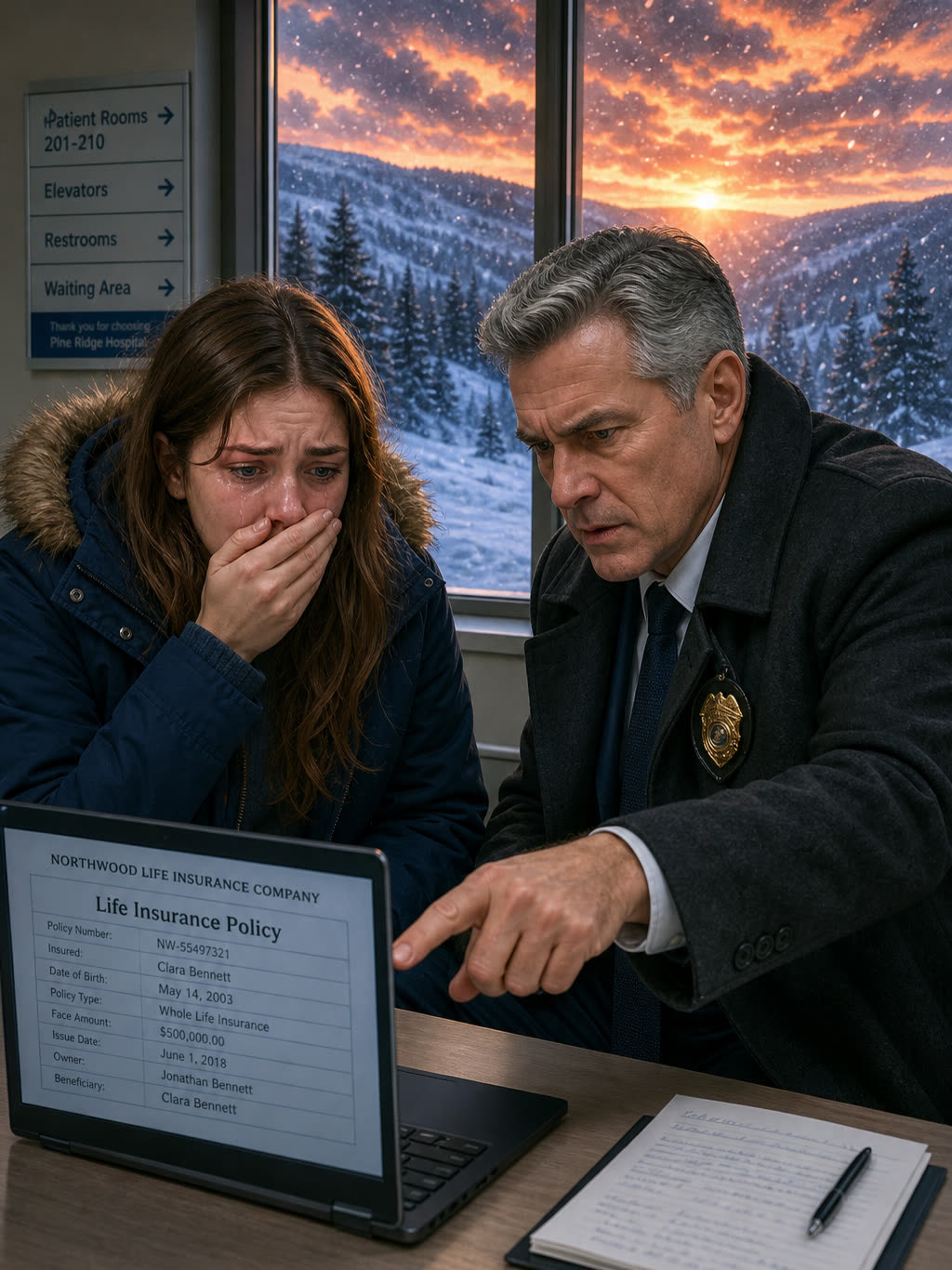
“He wanted an ornament,” Miller said, his face dark as a thunderhead. “A trophy with no strings attached. But your mother didn’t just want the fifty-million-dollar trust, Clara. Look at the timestamp on the next file.” He clicked the trackpad and another window opened. This document was an insurance binder from Aegis Continental Reinsurance, an offshore specialty underwriter registered in the Cayman Islands. The policy was dated November 28th—exactly seventy-two hours before Victoria packed her gold suitcases.
The insured names were listed in neat, bureaucratic alignment: Vance, Toby J. (Age 10) – Policy Face Value: $1,000,000.00. Vance, Leo M. (Age 4 Months) – Policy Face Value: $1,000,000.00. Vance, Liam D. (Age 4 Months) – Policy Face Value: $1,000,000.00. Primary Beneficiary: Victoria M. Vance (100%). Selected Endorsement Rider: Accidental Domestic Casualty / Environmental Exposure / Structural Utility Failure. Double Indemnity Rider Applied: In the event of accidental death occurring within the primary residence due to unforeseen mechanical failure, total settlement doubles to Six Million Dollars ($6,000,000.00).
The signature at the bottom was written in looping, elegant violet ink: Victoria Vance. “Do you understand what you’re looking at, Clara?” Miller whispered, his voice shaking with a cold, controlled fury that made the coffee cup on the table rattle. “She didn’t just abandon them to run off with a rich old man. If she simply signed over custody to you or put them up for state adoption, Montgomery’s lawyers would have found out during the background check, and it would have violated Section 18’s strict moral-reputation clause. Adoption takes months. Abandonment triggers social services. But a sudden, tragic, unpreventable tragedy?”
He pointed to the mechanical fuse report. “She pulled the fuse. She shut off the gas. She locked the storm windows. She deadbolted the heavy oak door from the exterior so a ten-year-old boy couldn’t kick it down. She took Toby’s phone so he couldn’t call for help. Then she got on a private jet and flew to Colorado, creating an airtight, nine-hundred-mile alibi with four hundred high-society witnesses.”
“She expected them to freeze,” I said. The realization washed through my veins like liquid nitrogen. “She didn’t expect them to be found until Monday morning when the mail carrier noticed the unplowed driveway.”
“By Monday morning,” Miller said, “in negative fifteen-degree weather without heat, three small bodies would have been completely frozen. It would have looked like an unfortunate, tragic furnace breakdown during an unprecedented municipal power surge. The insurance company would have paid out six million dollars into an offshore account. Montgomery would have consoled his ‘grieving, tragic bride,’ married her under the zero-dependents clause, and handed her fifty million dollars.”
Miller’s phone buzzed on the tabletop. He swept it up and hit the speakerphone button instantly. “Miller. Speak.” A crackling, professional voice came through the speaker, accompanied by the muffled roar of wind and the distant, polite swell of a chamber orchestra playing classical strings.
“Detective Miller, this is Deputy Marshal Vance Bradley, Federal Fugitive Task Force, Aspen Field Office. We are on-site at the St. Regis Grand Ballroom. We have eyes on the target. She is currently on the elevated stage with Montgomery, preparing to participate in the public ceremonial engagement announcement. We have four Colorado State Troopers and six federal operators in full tactical gear securing the exterior exits.”
Miller looked up at me, his slate-gray eyes burning with righteous, uncompromising fury. “Bradley,” Miller ordered, his voice ringing through the small hospital room like a bronze bell. “Execute the warrant. Do not wait for the dessert service. Take her down on that stage. And keep this open audio line active.”
The acoustics coming through the speakerphone were pristine, carrying the muffled, crystalline decadence of the Aspen mountain elite across two thousand miles of winter storm. You could hear the soft, polite clink of sterling silver against bone china, the delicate chime of crystal champagne flutes, and the lilting, airy strains of Vivaldi’s Four Seasons played by a hired quartet.
Then came the sound of a microphone being cleared—a smooth, aristocratic voice carrying the lazy, unearned confidence of eighty years of immense wealth. “Distinguished guests, senators, dear friends,” Julian Montgomery’s voice boomed softly over the ballroom’s sound system. “When a man reaches my stage of life, he realizes that true beauty lies in absolute simplicity. In purity. In finding a partner who walks beside you without the complications, the baggage, or the burdensome anchors of the past. Victoria Vance represents that pure, untethered future. To my gorgeous, devoted bride-to-be—”
BOOM. The heavy double doors of the Grand Ballroom didn’t just open; they blew off their brass latches, slamming against the gilded mahogany walls with a concussive shock that silenced the orchestra mid-crescendo. A sharp, collective gasp from four hundred billionaires, politicians, and socialites sucked the air out of the room.
“UNITED STATES MARSHALS! NOBODY MOVE! REMAIN IN YOUR SEATS!” The roar of Deputy Marshal Bradley’s voice through the microphone was an absolute, terrifying thunderclap. The disciplined, synchronized cadence of ten pairs of heavy, Vibram-soled tactical boots thudded against the polished parquet.
“What in God’s name is the meaning of this?!” Julian Montgomery’s voice sputtered over the live microphone, aristocratic outrage cracking into high-pitched bewilderment. “Do you have any idea who I am?! This is a private philanthropic gala! Security! Remove these men!”
“Mr. Julian Montgomery, step away from that woman right now!” Bradley bellowed. “Clear the podium! Clear the stage!” Over the open line, I heard my mother’s voice. It was that shrill, piercing, diamond-edged tone she used whenever a waiter brought the wrong brand of sparkling water or an airline attendant told her an overhead bin was full.
“Get your filthy, common hands off my dress!” Victoria shrieked, her voice echoing through the entire ballroom. “Do you know how much this custom Chanel gown costs?! Julian, call the governor! Call him right now! They are touching me! They are assaulting me!”
“Victoria Vance!” Marshal Bradley’s voice was deafening, broadcast through the podium microphone she was standing beside. “Pursuant to an emergency federal fugitive warrant issued by the Northern District of Illinois, you are under arrest for Three Counts of Attempted First-Degree Capital Murder, Aggravated Child Torture, and Multi-Jurisdictional Insurance Fraud!”
“It’s a lie!” she screamed, a wild, hysterical sound that had lost every shred of its manicured elegance. “It’s a mistake! I don’t know what you’re talking about! I don’t have children! Julian, tell them! Tell them I don’t have any children!”
A heavy, sickening THUD vibrated through the speakerphone: Victoria Vance’s body being driven face-first onto the polished hardwood of the raised stage by two two-hundred-pound federal operators. CLACK-CLACK. The violent, metallic ratchet of heavy carbon-steel handcuffs snapped around wrists that had never lifted anything heavier than an American Express black card.
“You animal!” Victoria wailed, her cheek pressed hard against the wood, her voice muffled and spitting splinters. “Julian! Don’t let them do this! Look at me! I’m your wife! Save me!” There was a long, terrible, suffocating pause. The only sound in the grand room was the rapid, ragged panting of Victoria Vance and the heavy breathing of the tactical officers.
Then came the sound of paper rustling close to the microphone. “Mr. Montgomery,” Marshal Bradley said, his voice level, professional, and merciless. “I suggest you look at Exhibit A of this warrant. This is a certified copy of a six-million-dollar offshore life insurance policy taken out seventy-two hours ago on three minor children currently in the pediatric intensive care unit with core temperatures of eighty-two degrees. And this is Exhibit B: your private prenuptial agreement, which she intended to satisfy by leaving those three infants to freeze to death behind a deadbolted door.”
A dead silence fell across the ballroom. You could have heard a single pearl drop onto the velvet carpet. Over the speakerphone came the sound of Julian Montgomery taking a slow, shuddering breath. When he spoke, his voice was no longer that of a charming, romantic patriarch; it was the icy, aristocratic snarl of a man whose pride, reputation, and legacy had just been dragged through a sewer in front of his entire social class.
“Marshal…” Montgomery said, each syllable dropping like an icicle onto stone. “Remove this grotesque creature from my premises.”
“Julian! No! Julian, please!” Victoria screeched, her voice cracking into a jagged, animalistic squeal. “I did it for us! I did it for the estate! Julian!” CLINK. A sharp, metallic bounce echoed over the microphone. Julian Montgomery had ripped the seven-carat emerald-cut diamond engagement ring off her finger and dropped it onto the floorboards beside her ear.
“The engagement is terminated,” Montgomery said, his tone devoid of any human warmth. “I will have my personal security assist your officers with her luggage. Do not let her foul my jet.”
“NO! JULIAN! LOOK AT ME! I AM VICTORIA VANCE! YOU CAN’T DO THIS TO ME! CLARA! CLARA, I KNOW YOU’RE LISTENING! YOU UNGRATEFUL BITCH, TELL THEM! TELL THEM I’M A GOOD MOTHER!”
CLINK-CLACK. The heavy, dragging rattle of leg shackles being cinched around her silk-stockinged ankles. Over the speakerphone came the chaotic, thunderous murmur of four hundred members of the American aristocracy in horror, cell phone cameras clicking in rapid-fire bursts, recording every second of Victoria Vance being dragged down the center aisle of the ballroom on her stomach, her designer gown tearing against the brass floor runners, her platinum-blonde hair matted with sweat and dirt, screaming until her vocal cords shredded into silence. The line went dead.
In the quiet of the Chicago PICU, Dr. Chen stepped back from Liam’s warming incubator. He pulled the stethoscope from his ears, exhaled a long breath that puffed against his surgical mask, and looked down at me with a soft, exhausted smile. “Core temperature is ninety-eight point four,” the doctor said quietly. “His sinus rhythm has stabilized. Liam is out of the woods, Clara. Your brothers are going to live.”
I collapsed onto the vinyl chair, buried my face in Toby’s wool blanket, and let the first tears of relief wash the cold out of my soul.
One Year Later.
The delicious fragrance of rosemary-seasoned chicken roasting slowly, steaming apple cider, and sourdough bread fresh from the oven drifted throughout the bright, welcoming kitchen of our timber-framed cottage nestled in the hills beyond Woodstock, Vermont.
Beyond the windows, delicate New England snowfall floated gently between the hemlock trees, enormous, feathery flakes descending slowly through the golden glow of the late-afternoon sunshine. The outdoor temperature had dropped to fifteen degrees above zero, yet our house remained wonderfully comfortable. Inside the enormous fieldstone fireplace, thoroughly dried birch logs burned with a cheerful crackle, spreading a constant, glowing heat over the handwoven wool carpets covering the broad pine floorboards.
The thermometer mounted beside the kitchen entrance displayed seventy-four degrees.
Racing across the living room carpet with boundless, carefree excitement was Toby, now eleven years old.
He wore a heavy cable-knit sweater, durable denim jeans, and vivid red wool socks. The purple marks left by frostbite across his knuckles had gradually softened into faint, almost imperceptible silver streaks—quiet symbols of courage carried by a boy who understood that he had endured the world’s darkest cruelty and somehow come through it stronger.
“Liam! Leo! Come get the bear!” Toby shouted between bursts of laughter, lifting a plush brown teddy bear high above his head while weaving around the solid oak coffee table.
Following close behind him on their short, plump, surprisingly powerful little legs were the twins.
They had reached sixteen months of age. Their round cheeks glowed as red as ripe winter apples, their little stomachs comfortably filled with whole milk and hot oatmeal, and their brilliant blue eyes shone with the pure, unquestioning confidence of children who had never known insecurity. Leo released an excited, bubbling squeal before wrapping both arms around Toby’s leg, sending them tumbling together into a laughing, affectionate pile on the thick wool carpet.
Liam clambered across them and planted a messy, wet baby kiss directly on the tip of Toby’s nose.
Cold had no place inside these walls. There were no locks secured from the outside. No delicate patterns of ice spreading like feathers across the interior surfaces of the windows.
I was seated at the substantial butcher-block dining table, my laptop resting open beside an official document marked with the raised golden seal of the United States District Court for the Northern District of Illinois.
Nearby stood my newly framed Master of Science degree in Clinical Pharmacology from the University of Vermont, together with a formal appointment letter confirming my remote research fellowship at the New England Children’s Health Initiative.
The judicial order was concise, uncompromising, and legally conclusive:
> “IN RE: THE MINOR CHILDREN VANCE. TERMINATION OF ALL PARENTAL RIGHTS AND PRIVILEGES OF VICTORIA MADELINE VANCE IS HEREBY ORDERED ABSOLUTE AND PERMANENT. SOLE, UNCONDITIONAL LEGAL AND PHYSICAL GUARDIANSHIP IS HEREBY VESTED IN CLARA ELIZABETH VANCE.”
Beneath the document lay a small article clipped from the Chicago Sun-Times, published three weeks earlier:
> “SOCIALITE SENTENCED TO LIFE: Victoria Vance, 44, received three consecutive life sentences without the possibility of parole yesterday morning at the Dirksen Federal Building. District Judge Robert G. Miller cited the ‘unfathomable, calculated depravity of a woman who weaponized the elements to slaughter her own flesh and blood for social elevation.’ Vance will serve her sentence at the Federal Medical Center, Carswell, in Fort Worth, Texas. Her appeals have been exhausted.”
Carswell. A grim concrete stronghold surrounded by the humid, brush-covered plains of northern Texas, where temperatures inside the prison’s uncooled housing units routinely climbed beyond one hundred and five degrees during summer, and where Victoria Vance’s name had become associated with the most contemptible kind of human being: a mother willing to freeze her own infants in exchange for three million dollars.
For the following forty years, she would exist in a rough, filthy cotton prison dress, resting each night on a thin, two-inch vinyl mattress laid across a metal sleeping platform, consuming cold beans served on plastic trays, utterly abandoned by the privileged world she had once dreamed of dominating. Julian Montgomery had taken a wealthy Dallas oil heiress as his wife only three months after Victoria’s arrest, and his attorneys had successfully eliminated every public association between her name and his estate.
She had dreamed of becoming a celebrated figure.
Instead, she had faded into an invisible prisoner behind federal bars.
Something small and warm pulled gently at the bottom of my cardigan.
I glanced downward. Liam stood next to my chair, extending a little wooden building block toward me, his chubby face lifted with the absolute, instinctive faith of a child who knew he was loved.
“Mama Clara,” he murmured in his baby voice, presenting his offering with a broad, toothy smile.
An overwhelming wave of tenderness surged through my chest, so powerful and deeply felt that my breathing momentarily caught. I leaned forward, gathered his sturdy, warm little body against me, and nestled my face into the delicate curve of his neck, inhaling the comforting mixture of baby soap, freshly washed flannel, and the beautiful scent of life.
Toby approached us and gently placed his chin against my shoulder, encircling both Liam and me with his long, slender arms. Leo climbed onto the bench beside us, resting his small head against my hip.
Warmth radiated from the stone hearth, surrounding us with its constant, gentle crackling and seemingly endless comfort.
“Sissy?” Toby whispered, his gaze moving toward the clear, ice-free window, beyond which evening shadows were slowly descending over the snow-covered pine trees.
“Yes, my brave boy?”
“Can we leave the porch light on tonight? Just so… just so everyone knows we’re home?”
I gathered all three children close against my chest, sensing the steady, extraordinary, almost perfectly synchronized rhythm of three healthy hearts beating beside my own. I pressed a loving kiss onto Toby’s hair, allowing the rich golden heat from our fireplace to seep into the deepest parts of my body.
“Leave it on, Toby,” I murmured, a gentle, victorious smile slowly spreading across my face. “The light is never going out again.”
Disclaimer: This story is a work of fiction inspired by real-life themes. Names, characters, places and events are fictionalized, and any resemblance to real persons is purely coincidental. Images are for illustration purposes only.
