

Part 1: The Chairs That Stayed Empty
When my unborn daughter’s heartbeat stopped at eight months, my parents promised they would come to the hospital. They never did. While I held my little girl for the last time, I watched them on a screen, smiling at my sister’s wedding rehearsal dinner. Three days after we buried Rosie, they turned up at my front door carrying a $42,000 wedding invoice. What my father said next has stayed with me ever since, and I don’t think it will ever leave.
My name is Natalie Hayes. I’m thirty-one years old, and I live in Charlotte, North Carolina, with my husband, Owen. For my entire adult life, I was the one my family called. If a bill went unpaid, I heard about it. If an argument needed settling, I was asked to settle it. And whenever my younger sister, Kelsey, wanted something our parents couldn’t afford, the conversation sooner or later found its way to me.
Losing my daughter finally showed me how wide the gap was between the family I thought I had and the family that really existed. Before that, I always had an explanation ready for why they weren’t there or why they didn’t seem to care. I told myself that their need for my money proved I mattered to them. I clung to that idea even when it meant my own needs went unanswered, again and again, year after year.
Owen and I spent three years trying to have a baby. Each month brought another disappointment, and each one had to be handled carefully so it didn’t swallow us whole. I hid the negative pregnancy tests where nobody would see them. I rehearsed the words "I’m happy for you" so I could say them smoothly whenever a friend shared her news, even though every announcement left me aching in private.
Then, one Tuesday morning, two pink lines appeared. I walked into our bedroom holding the test in shaking hands. Owen looked at my face first, trying to read it, and only then looked down at the result. For a moment neither of us said a word.
Then he pulled me into his arms, and we cried together. We had spent so many months holding our hopes back, keeping them small and quiet so they couldn’t hurt us, that we hardly knew how to welcome the chance that they might finally come true.
When we found out we were having a daughter, we named her Rosie. From then on I talked to her constantly. I spoke to her while I folded laundry and while I drove home, describing all the ordinary things she would soon get to experience, as if I were preparing her for the world one small detail at a time.
At night, Owen would lay his hand on my stomach and wait patiently for a kick. Every time she answered him, a wide grin spread across his face, and in those moments it felt as though the three of us were already a family.
We painted her nursery a soft yellow. A white wooden crib stood against one wall. Freshly washed blankets sat folded in neat stacks, and a drawer was filled with tiny pink socks. I opened that drawer far more often than I needed to, just to look at them and imagine the feet that would soon be inside.
By thirty-four weeks, I had made a habit of sinking into the rocking chair in that yellow room. I would rest my hands on my belly and picture the day Owen and I would carry Rosie through our front door, bringing her home at last to the room that had been waiting for her.

I imagined introducing her to her grandparents, too. I thought that maybe a granddaughter could soften the hard edges of my relationship with my parents. I hoped that we might finally share love without anyone keeping score of who had given what. In my daydreams, they were just as eager to meet her as Owen and I were, and all the difficult history between us began to matter a little less.
In my family, Kelsey had always required special consideration, and I had always been expected to understand. When she turned sixteen, Dad gave her a car. When I was the same age, I was told that a summer job would teach me responsibility. I took the job, and I learned the lesson, though perhaps not the one they intended.
That imbalance didn’t end when we grew up. Six years earlier, Dad’s printing business had started to struggle. Mom called me in tears because their mortgage was two months behind. She told me I was the only person they could count on, and I believed her.
At first, I sent a few hundred dollars whenever I could manage it. Slowly, those occasional favors became expected payments. Eventually, I was transferring $1,650 every single month to cover their mortgage and household bills. Mom usually thanked me when the money arrived, and then, almost in the same breath, she moved on to the next problem waiting on the horizon.
When another business debt threatened Dad, I lent him $52,000 from my savings. We signed a repayment agreement. I insisted on written terms because the amount was so large, but after only a few installments, he stopped paying. Instead of confronting him, I kept finding reasons to put the conversation off, telling myself the timing was never quite right.
Owen didn’t like any of this, though he never pressured me to turn my parents away. He could see how automatic the transfers had become, and he worried about the savings we might one day need for ourselves. Rather than argue, he asked questions I kept avoiding: Could we really keep this up forever? What if we needed that money? Were my parents making any kind of plan to support themselves?
Then Kelsey got engaged. With each new idea, the wedding grew more lavish, until the budget reached $95,000. All the while, my parents were still relying on my contributions just to keep their house.
Mom called it a once-in-a-lifetime event and reminded me that Kelsey had dreamed of her wedding since she was a little girl. She asked me for another $9,500, and she presented it as an act of love rather than one more financial obligation added to the pile.
"Think of it as your wedding gift to your little sister," she said.
I said yes, even though Owen and I were watching our savings shrink as Rosie’s due date drew closer. We put off several things we had planned to buy for the nursery. I told myself our daughter already had everything she truly needed. That was mostly true, but it bothered Owen that our sacrifices seemed invisible to everyone who benefited from them.
One evening, after spotting yet another payment on our bank statement, he asked, "Natalie, when does somebody start taking care of you?"
I gave him the reassurance I always gave: if something truly important ever happened, my parents would be there. They would never leave me alone in a real catastrophe. Surely not.
Owen just squeezed my hand. I took his gentleness as agreement. Looking back, perhaps he was simply letting me hold on to a belief I wasn’t ready to let go of yet.
Everything changed on a Thursday morning. I woke up around six and realized Rosie hadn’t moved. Normally she kicked whenever I rolled onto my left side. I waited. I shifted positions. I pressed my hand against my belly and waited again.
Nothing happened.
I called for Owen. The moment he heard my voice, he grabbed his keys. On the drive to the hospital, I begged Rosie for just one tiny kick, anything at all to prove she was still with us. Owen kept his eyes on the road, reaching over to hold my hand whenever traffic allowed.
The ultrasound technician started the scan. I couldn’t bring myself to look at the monitor, so I watched her face instead. She went quiet. Then she stepped out of the room and came back with a doctor, who pulled a chair up beside me and sat down.
"I’m so sorry, Natalie. We can’t find your baby’s heartbeat."
I begged them to check again. I told them Rosie had moved the day before. I said it over and over, as though repeating it enough times might somehow change what they had found.
It couldn’t.
The staff explained that I would still have to give birth. My body was getting ready for delivery while my mind refused to accept that our daughter was gone. Owen cried into my hair. I have no idea how long we held on to each other before I finally reached for my phone.
I called Mom. "Rosie’s gone," I managed to say. "Please come to the hospital. I need you."
She sounded shocked, and she promised that she and Dad would come. I believed her. After a lifetime of being the daughter who handled everything alone, I still couldn’t picture my mother failing to show up on that day of all days.
Hours passed. Nurses came and went, and Owen never left my side. He held out water I could barely swallow and answered questions when I couldn’t find my voice. The contrast was unbearable: he was handling every practical detail, while I kept waiting for two more familiar faces to appear in the doorway. Every time footsteps came near, my hope rose for a moment before reality crashed back down.
Eventually, I delivered Rosie, and I held her. She was so small and so beautiful that my mind instinctively reached for the moments we had been waiting for: her first cry, a tiny movement, Owen saying she had my eyes.
Instead, there was only silence. I studied every one of her features, terrified I might someday forget them. I told her I loved her and that I wished I could have given her more time. Owen gently touched her little hand. Together we sat inside a world that seemed to have stopped turning.
The chairs we had saved for my parents stayed empty. Because they had promised to come, I kept listening for them, even as I held Rosie for the very last time. When we needed them most, they were somewhere else.
That evening, worn out and dazed, I looked at my phone. Kelsey’s Instagram story showed golden decorations, smiling guests, and my parents standing side by side at her wedding rehearsal dinner.
I called Mom. She lowered her voice when she answered. "Natalie, we’re in the middle of dinner."
"You promised you’d come," I said. Behind her, the chatter and festive noise sounded as if they were coming from another universe entirely.
"Your sister needs us tonight," she replied. "We’ll visit tomorrow."
I looked down at Rosie in my arms. "Mom, I just gave birth to my daughter. She’s dead."
There was a pause. Then she said, "I know, sweetheart, but there’s nothing we can do about that now." I held my silent daughter and listened to the party carry on in the background, and I had no idea that the worst thing my family would say to me was still waiting just a few days ahead.
Part 2: The Invoice on the Coffee Table
Before we left the hospital, a nurse handed us a small white remembrance box. Inside were Rosie’s footprints, her hospital bracelet, and the blanket she had been wrapped in. I held it tight against my chest as we walked out, unable to escape one thought: I had come into that building carrying my daughter inside me, and I was leaving with nothing but the few things she had touched.
We buried Rosie. Those days are almost impossible to put into words. Ordinary life kept demanding decisions while everything that mattered to me had come to a standstill. The keepsake box was precious, but it was not the daughter we had waited so long to bring home.
Hardly anyone tells you how disorienting it is to walk past a nursery and realize you can no longer bear to open the door. The yellow walls, the crib, the drawer of pink socks were all still there, just on the other side, and I couldn’t face any of them.
Three days after the funeral, I was lying on our couch in the oversized sweater I had slept in for two nights straight. My body still ached from giving birth. Upstairs, behind a closed door, Rosie’s crib sat empty and unused.
At eleven o’clock, someone knocked. When I opened the door, my parents were standing there. For one brief moment, I felt a foolish rush of relief. Maybe they had finally come to apologize. Maybe Mom would hold me while I cried, instead of expecting me to stay calm and reasonable the way I always had.
But she walked right past me without a hug. Dad came in behind her, visibly uncomfortable but clearly determined. Mom sat down and pulled a folder out of her handbag.
"Natalie, we need to discuss something important."
She opened the folder on the coffee table. Inside was a $42,000 invoice for the remaining balance of Kelsey’s wedding. The venue needed payment by Friday.
I stared at the paper. "You came here to ask me for money?"
Dad crossed his arms. "We’ve already promised the vendors. We can’t embarrass ourselves now."
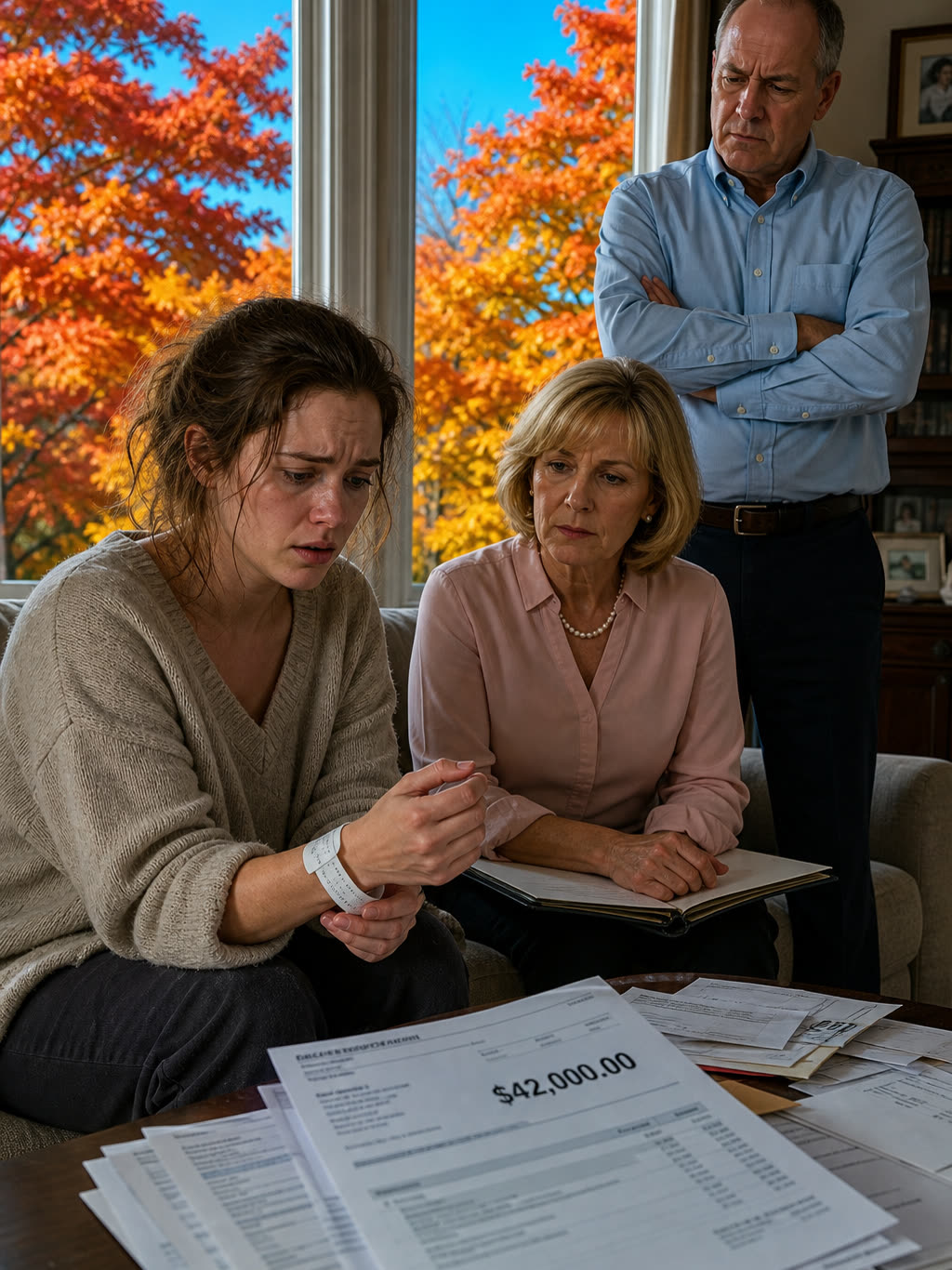
I touched the hospital bracelet still on my wrist. "Your granddaughter just died. I haven’t even recovered from giving birth."
Mom admitted I was upset, but she insisted that Kelsey deserved her special day. She spoke as if my grief were just an inconvenient item on their calendar, something to work around rather than something to stop for.
Then Dad said, "Your baby is gone, Natalie. Kelsey still has her whole future ahead of her."
I couldn’t answer. Owen appeared in the doorway and said quietly, "Get out."
Mom looked insulted, as though he had broken some unwritten rule about how guests should be treated. I picked up the invoice and pushed it back toward them.
"I’m not paying another dollar."
Dad gave a short laugh. "You’ll change your mind."
They left without asking a single question about Rosie. I went upstairs, opened the nursery door, and sat down beside the empty crib. I was no longer asking myself how to win my parents’ approval. I was asking myself why I had spent six years trying.
That night, after Owen fell asleep, I sat at the kitchen table and opened my laptop. I wasn’t plotting some dramatic revenge. I simply needed to look at the numbers without Mom’s voice in my ear explaining which overdue bill was most urgent or which crisis only I could fix.
I went through six years of bank records: the $1,650 monthly transfers, the money that had propped up Dad’s struggling printing company, and the $9,500 wedding contribution. On its own, each payment had felt manageable. Seeing them all together changed everything.
I had given my family more than $180,000. Once the total sat there in a single place, I could no longer pretend those transfers had been a string of unrelated emergencies. They were years of repeated choices, and almost every one of them had been made so my parents wouldn’t have to face a hard decision.
I kept staring at the number. They had needed help, and I had given much of it willingly. I didn’t regret caring for them. What crushed me was the memory of those empty hospital chairs. That day, I hadn’t needed a cent from them, only their presence. For years, I had answered Mom’s money requests right away, even when I was exhausted. When I needed her call, it never came. The contrast made me feel painfully foolish.
I found the signed contract for Dad’s $52,000 loan. He had made only a handful of payments, and eleven months had passed since the last one. I had never once asked him why.
The next morning, I contacted Rebecca Stone, an attorney Owen had recommended. I brought the loan agreement, the record of missed payments, and my bank statements. I told her what had happened without exaggerating my parents’ behavior and without softening it either.
Rebecca went through the documents carefully. She separated the voluntary gifts and household support from the money Dad had legally promised to pay back. The signed loan gave us grounds to demand the overdue amount, she explained, although collecting it would still require formal steps.
"You’ve spent years protecting people who haven’t protected you," she said gently.
I looked down at the agreement. I didn’t need one more lecture about being understanding. For once, what I needed was clarity about which decisions still belonged to me.
That afternoon, I canceled the recurring monthly transfers and authorized Rebecca to start pursuing Dad’s unpaid loan. Stopping those payments frightened me more than I expected. My finger hovered over the confirm button, because I knew I was choosing to disappoint my parents. But Owen was grieving too, and our own home needed care. Our savings, our time, and whatever strength we had left could no longer be treated as a reserve for every new family emergency.
Then I sent Mom a message: "I’m no longer paying your bills or Kelsey’s wedding expenses. Please direct all questions about Dad’s loan to my attorney."
The calls started almost immediately: Mom first, then Dad, then Kelsey. I could practically hear the panic in every ring. But their panic was about the missing money, not about how Owen and I were surviving.
I turned off my phone and went upstairs. Owen was sitting beside Rosie’s crib. He didn’t ask for details, and he didn’t praise me for being brave. He just held out his hand, and I sat down on the floor next to him.
I wanted to apologize for making our household carry so much of my family’s financial weight. Instead, I whispered, "I wish I’d done this while she was still here."
"You loved them," he answered. "And you loved her. Those aren’t things you need to apologize for."
I leaned into him. Nothing had been fixed, and our daughter was still gone. But for the first time since leaving the hospital, I had made a decision without weighing whether my parents would approve.
Hours later, I switched my phone back on. The screen lit up with missed calls, and at the very top sat a voicemail from Mom. I pressed play, and her voice filled the quiet room: "How could you do this to us, Natalie, after everything we’ve done for you?"
Part 3: The Name She Never Said
I listened to that message twice. As I did, I searched my memory for the last time Mom had asked whether I was sleeping, eating, or healing. I couldn’t find a single one. Yet she had found her way to the wedding invoice without any trouble at all.
My body was still recovering from childbirth. Some mornings, I woke up expecting Rosie to stir inside me before the truth came rushing back. All I wanted was room to grieve alongside Owen, but every message I received suggested my sorrow was getting in the way of their plans.
By Monday, Kelsey had sent seventeen messages, most of them about how hard wedding planning had become. The last one read, "You’re ruining my wedding because you’re jealous. I still have something to celebrate."
I stared at it until the words blurred together. Owen gently took the phone out of my hand. "You don’t have to keep reading them," he told me.
Two weeks later, Rebecca let me know she had reviewed the loan agreement and formally demanded repayment of the overdue balance. Dad had ignored the payment schedule she proposed. I let her handle it, because every direct conversation with my parents ended with me being blamed for choices they had made. She warned me that legal processes take time and that no outcome was guaranteed. I accepted that uncertainty, knowing the agreement would be judged through the proper channels instead of through another family fight. Waiting was still better than listening to Dad brush off his written promise one more time.
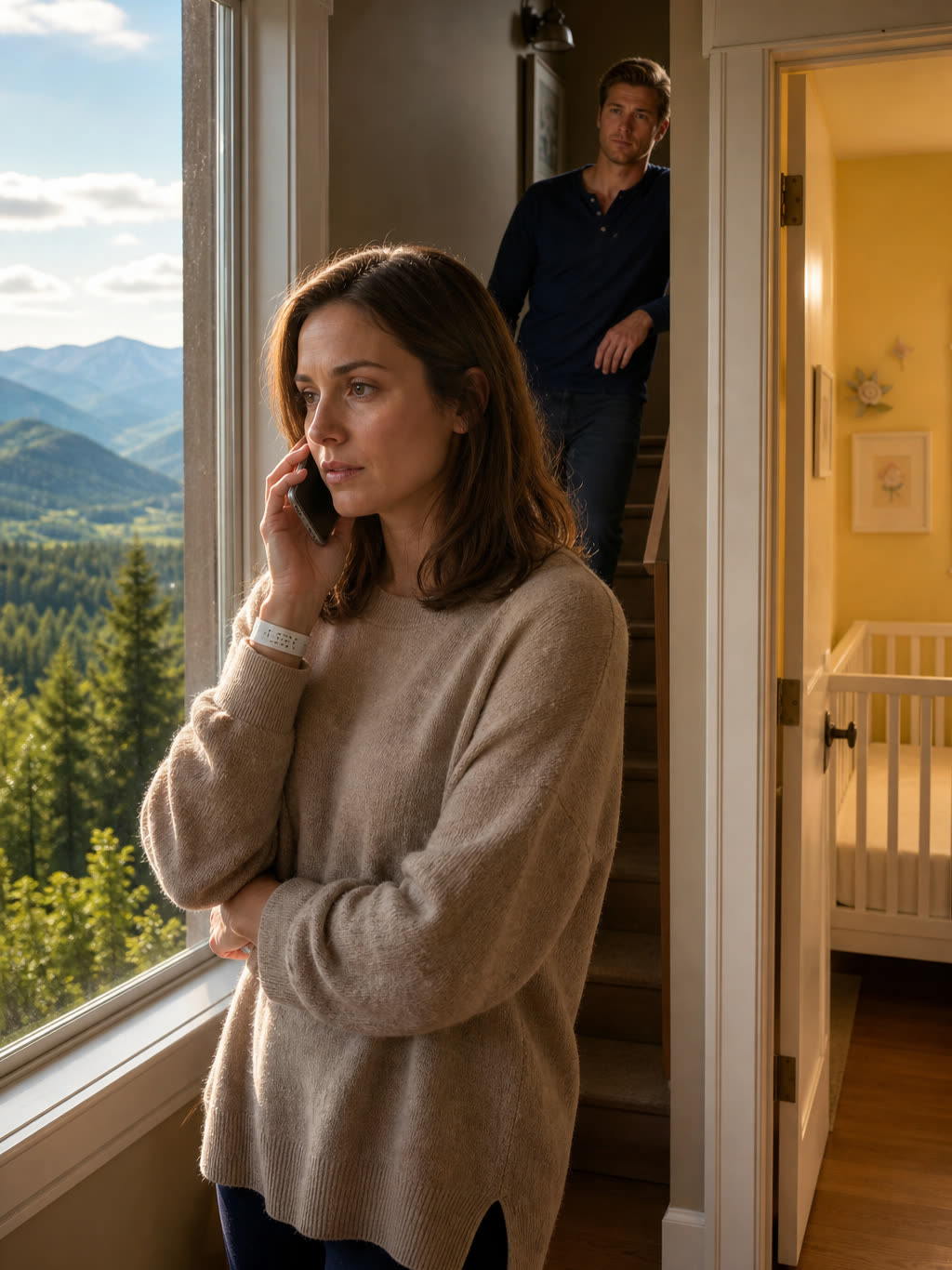
Without my monthly transfers, the bills my parents had counted on me to pay began coming due. Mom called from a number I didn’t recognize and said Dad might have to sell the house. She asked if that was what I wanted, as though I had personally threatened to take their home away.
"I want Dad to repay the money he borrowed," I said.
"But where are we supposed to live?"
I looked toward Rosie’s nursery. "Mom, did you ever wonder how I was supposed to live after losing my daughter?"
She went quiet. This time, I didn’t rush to comfort her, and I didn’t fill the silence.
For years, I had been afraid of what would happen if I stopped holding them up. Now the answer was obvious: they would have to make their own choices, the same way Owen and I always had. A month later, they put their house on the market. Rebecca negotiated repayment of the remaining loan from the sale proceeds. Dad agreed because he couldn’t afford another repayment plan. It wasn’t the future they had pictured, but I hadn’t created their debts, and I hadn’t signed their mortgage.
Meanwhile, Kelsey’s extravagant wedding started falling apart. Without the promised money, the upscale venue wouldn’t release the rest of the booking. Kelsey couldn’t cover it herself, so the celebration had to be scaled down.
She called me in tears and told me they were moving the event to a small restaurant. "You’ve humiliated me," she said.
I reminded her that I had already contributed $9,500.
"That’s not enough."
Those words were painfully familiar. There had always been one more request, one more favor, one more financial proof of love. I had believed that if I were generous enough, we might eventually feel like a real family.
"You’ve destroyed the happiest day of my life," Kelsey said.
I looked at Rosie’s photograph beside our bed. "I wanted my happiest day, too," I whispered. "I was supposed to bring my daughter home."
My sister said nothing. I let the silence sit there, and then I ended the call. Holding the phone in my hand, I knew none of this was a victory. Her wedding would be smaller, but my daughter was never coming back.
Six weeks later, my parents sold their house. After paying off their other debts and the rest of the loan, they rented a modest apartment. I took no satisfaction in it. That house held years of memories, some of them painful ones for me. I knew moving would be hard for them, but understanding their disappointment was not the same as taking responsibility for fixing it. And I knew that house had depended on money our household could no longer afford to give.
One afternoon, Mom showed up at my door. Her eyes were swollen, and she looked older than I remembered. She told me Kelsey barely spoke to them anymore and that Dad was miserable. Then she said, "We’ve lost everything."
I stood with my hand resting against the door, wondering if she had finally come to talk about Rosie. She hadn’t spoken my daughter’s name since that awful phone call during the rehearsal dinner. I wanted so badly to hear her say it without being asked.
Instead, she cried. "How could you let this happen to your own parents?"
"Mom, when I was in the hospital holding Rosie, I kept watching the door," I said. "Every time someone passed, I thought it was you. I waited until they took her away. You never came."
Mom dropped her gaze and covered her mouth. I couldn’t tell whether she finally understood or simply had nothing to say. I had spent too many years translating her feelings for her. I wasn’t going to keep doing it.
"You lost a house," I told her. "I lost my daughter. And somehow you’re still asking me to comfort you."
She left without the apology I had once longed for. It hurt, but at least this pain was honest, rather than one more promise I kept waiting to see kept.
That evening, Dad called. He sounded tired. "Are you really willing to lose your parents over money?"
I was holding Rosie’s tiny hospital bracelet, running my finger along its edge, before I answered.
"No, Dad. I didn’t lose you over money. I lost you when I held my daughter for the last time, and you decided wedding flowers mattered more."
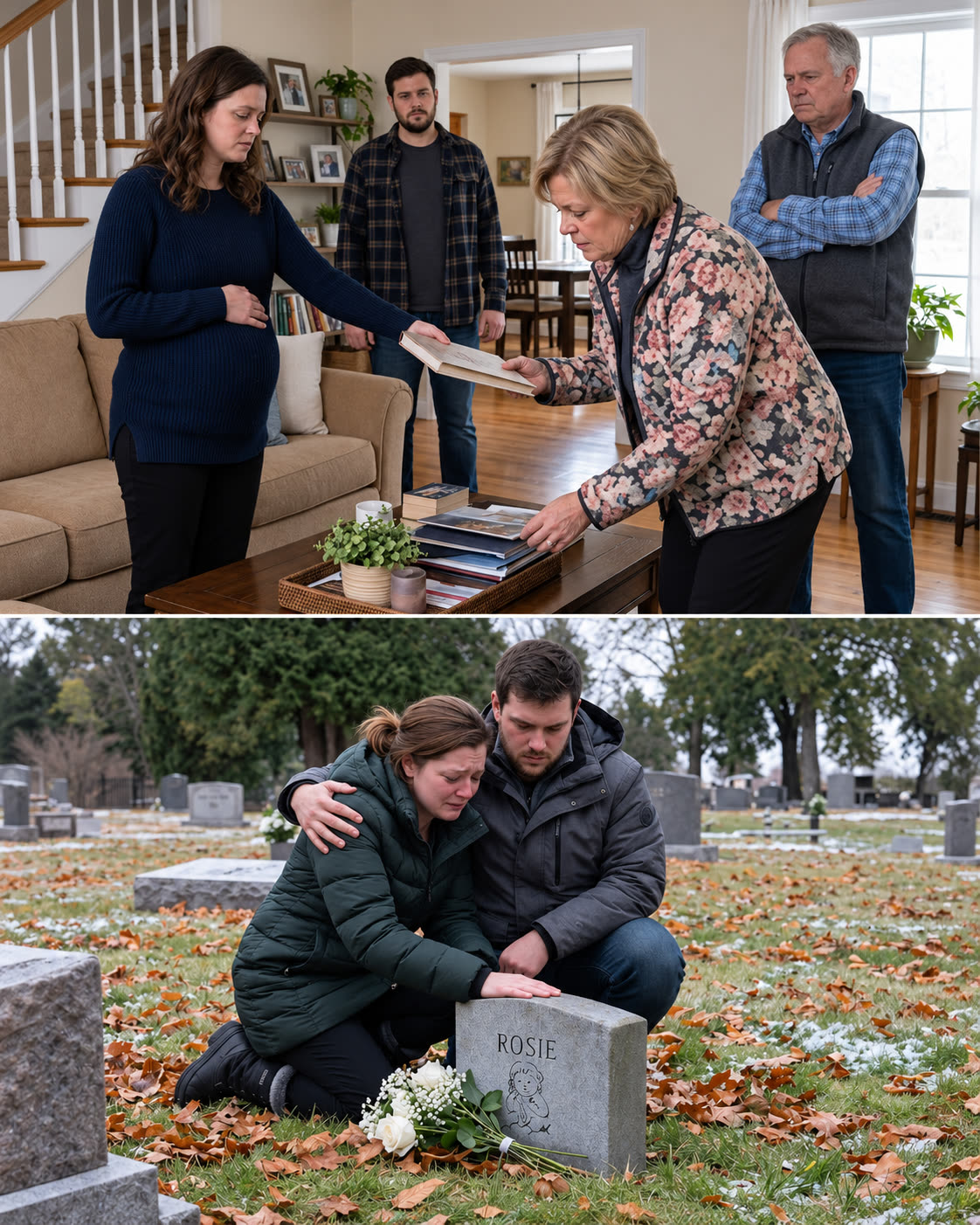
The following Sunday, Owen and I went to Rosie’s grave. I carefully laid white roses beside her headstone. The quiet there invited us to stay as long as we needed. I traced the letters of her name and told her I was sorry we hadn’t had more time together.
Owen knelt next to me and wrapped his arms around my shoulders. I cried for our daughter, for the future we had imagined, and for the grandparents she never truly got to know.
Getting Dad’s loan back hadn’t healed anything. Not the smaller wedding, not the sale of the house, not the unanswered calls could undo what happened in that hospital. I would trade every dollar I have ever earned for one more moment with Rosie, but life doesn’t offer that kind of bargain.
What I could still control was how Owen and I would live after losing her. I could stop begging for care that should have been given freely. I could fill our home with love for Rosie’s memory instead of with my family’s endless demands.
I will always wish we had carried Rosie into her yellow nursery. But when I think of her now, I want to remember her little kicks, Owen’s hand resting on my belly, and the hope in our voices whenever we said her name.
Rosie existed. We loved her. She is our daughter, and she always will be.
Disclaimer: This story is a work of fiction inspired by real-life themes. Names, characters, places and events are fictionalized, and any resemblance to real persons is purely coincidental. Images are for illustration purposes only.
