

PART 1
“What the hell do you mean you were helping somebody?”
My boss’s furious voice sliced through the office, instantly silencing even the interns standing near the copy room.
I stood in front of him with my laptop bag hanging from one shoulder, my tie hanging crookedly around my neck, and my breathing still uneven after rushing in from the parking lot.
Behind him, the conference room was deserted.
The clients had already left.
My presentation remained displayed on the wall monitor, the same pitch deck I had spent nearly half the previous night perfecting. Seeing it glowing inside that empty room felt like a cruel joke.
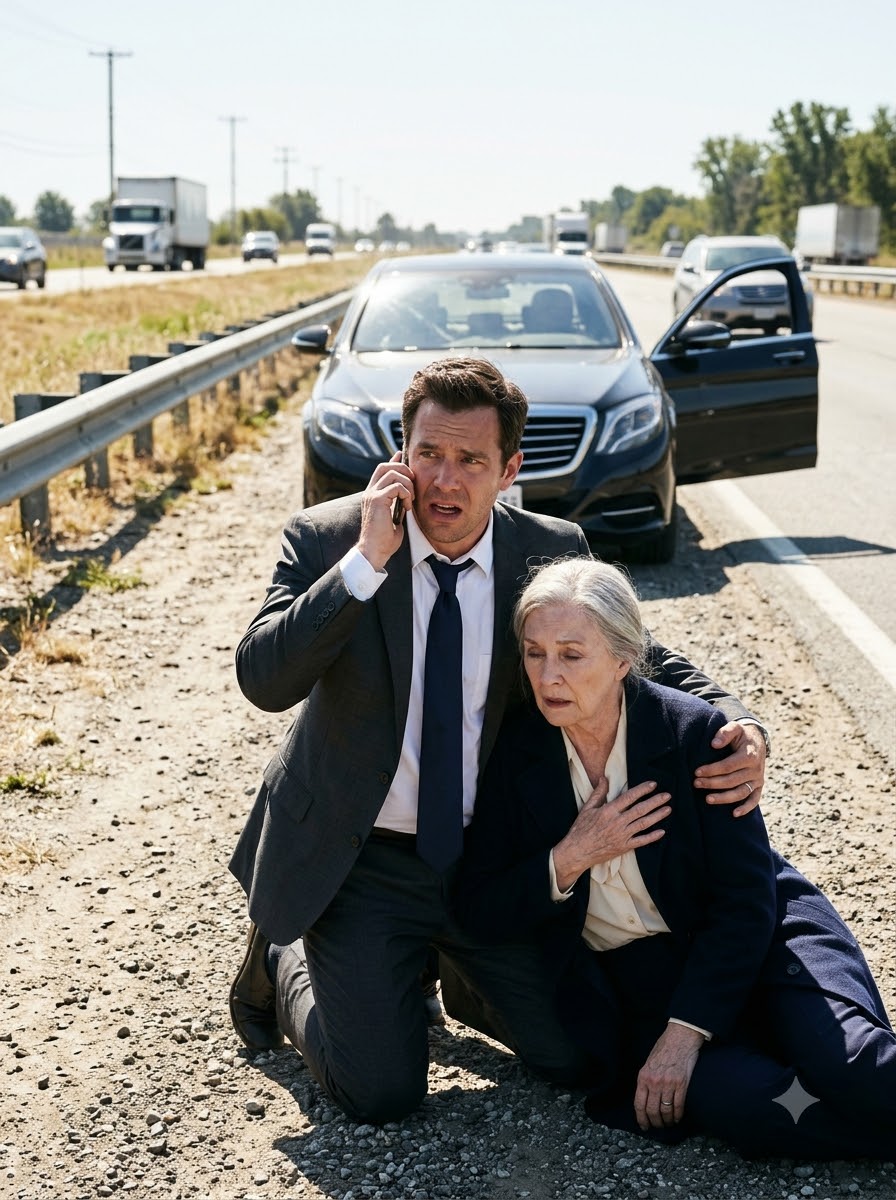
“I had an emergency,” I said, struggling to catch my breath. “A woman collapsed on the side of the road. She grabbed her chest and went down. I couldn’t just leave her there.”
Gavin stared at me as though I had suddenly begun speaking a language he couldn’t understand.
His jaw tightened.
He approached with two deliberate steps and lowered his voice, somehow making the confrontation feel even more threatening.
“Was it your wife?”
“No.”
“Your mother?”
“No.”
He released a brief, angry laugh and glanced around the office, almost as though he wanted everyone to witness what he was about to say.
“So let me understand this,” he said. “You skipped an eight-thirty presentation with our biggest potential account because some random woman on the roadside appeared to be sick.”
“She wasn’t just sick,” I said. “She collapsed in my arms.”
He flung one hand upward.
“And because of that, we lost the account.”
My mouth went dry.
I glanced toward the empty conference room, irrationally hoping the clients might still be inside, sipping coffee and patiently waiting for an explanation.
But they were gone.
All that remained was the smell of stale office coffee, printer toner, and the crushing realization that our small agency had apparently lost its biggest opportunity in months.
“Gavin, I’m sorry,” I said. “I really am. But what was I supposed to do? Just drive past her?”
“Yes,” he snapped.
The silence around us deepened.
For a moment, I honestly wondered whether I had heard him correctly.
He moved closer.
“Yes, Christopher. You were supposed to keep driving. You had a responsibility here. You had a team counting on you. You had clients waiting. We are not a charity. We are a business.”
A ringing sensation filled my ears.
I had devoted almost four years of my life to that agency.
I had answered calls late at night, sacrificed lunch breaks, worked through weekends, rescued campaigns that were falling apart, dealt with furious clients, trained inexperienced employees, and somehow produced results whenever everyone else had run out of ideas.
So often had I arrived before everyone else and left after the entire office emptied that even the cleaning staff knew the names of my daughters.
And now my boss was telling me I should have abandoned an unconscious stranger because an advertising presentation mattered more.
“Gavin,” I said, hearing my own voice shake. “I have given everything to this place.”
He didn’t hesitate.
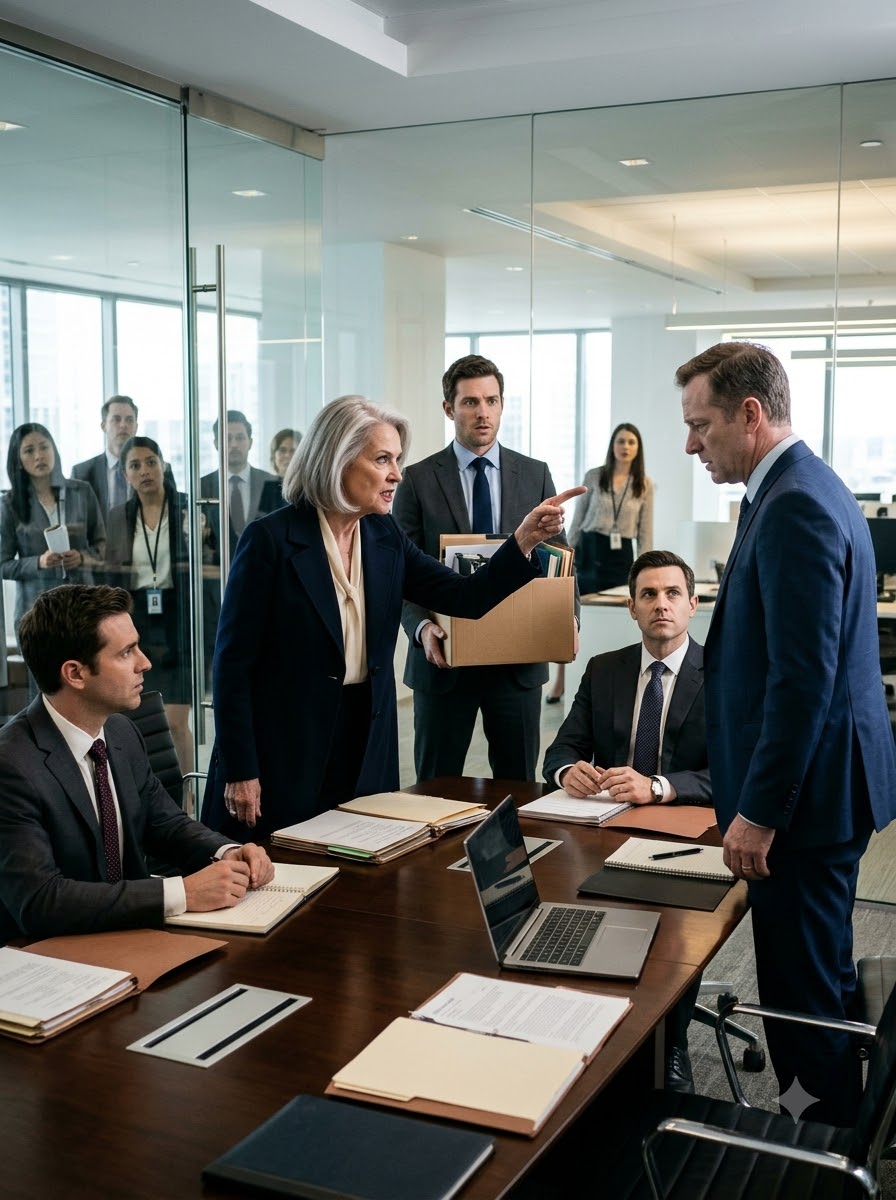
“I don’t care,” he said. “Pack up your things. You’re done here.”
I remained motionless.
My brain refused to accept what had just happened.
Some employees turned away.
Others watched with expressions that looked painfully close to pity.
One account manager lowered her gaze to her keyboard, suddenly behaving as though whatever was on her screen required her complete attention.
Not one person spoke.
Gavin gestured toward the hallway.
“That’s the end of it.”
I wish I could say I left with my pride untouched.
I wish I could tell you I delivered some unforgettable speech about compassion, loyalty, and the day he would regret treating me that way.
But the truth was far less impressive.
My face burned with humiliation.
My throat tightened.
And before I could control myself, tears began filling my eyes.
I turned away so abruptly that my bag nearly slipped off my shoulder.
Somewhere behind me, a chair scraped against the floor.
Then all I could hear was the pounding of my footsteps as I left the office where I had invested so much of my life.
I stepped into the bright morning sunshine feeling as though someone had abruptly pushed me out of the future I had spent years trying to build.
The moment I climbed into my car, I locked the doors.
Then I gripped the steering wheel and screamed.
There were no actual words.
Just one raw, furious sound that seemed to come from somewhere deeper than my lungs.
I had no idea that the woman I had stopped to help would soon come searching for me.
For nearly twenty minutes, I remained inside the car, both hands wrapped tightly around the steering wheel, staring through the windshield.
People passed carrying coffee, laughing into their phones, and hurrying toward appointments that still mattered.
Mine no longer did.
Four years of effort had been wiped away in less than five minutes.
There had been no warning.
No discussion about severance.
No acknowledgment of everything I had contributed.
Only one sentence.
Pack up your things. You’re done here.
The words repeated endlessly in my mind.
I leaned back and closed my eyes.
Immediately, the woman from the roadside appeared in my memory.
She had been standing beside a dark sedan on Route 18.
One hand gripped the open driver’s door while the other pressed against her chest.
Initially, I thought she was searching for something inside the car.
Then her legs buckled.
I had been three vehicles behind her.
The SUV ahead of me slowed down.
Then continued.
The van behind it did the same.
For one awful second, I had almost followed them.
My foot remained on the accelerator.
My thoughts raced toward the presentation.
Eight-thirty.
Our biggest potential account of the year.
Gavin had made it clear that nobody was permitted to arrive late.
Then I checked my rearview mirror.
The woman had disappeared from sight.
I pulled onto the shoulder.
That single decision had apparently cost me my career.
Yet even now, knowing the consequences, I couldn’t imagine leaving her alone on the gravel.
I opened my eyes.
My phone was vibrating on the passenger seat.
I expected another call from Gavin.
Instead, my ex-wife’s name appeared.
Sarah.
I nearly let it ring.
Then I remembered that she was supposed to collect our daughters after school.
“Hey.”
“Chris?”
Her tone changed immediately.
“What happened?”
“Nothing.”
“You sound terrible.”
“Long morning.”
“Are you sick?”
“No.”
A pause followed.
Then she asked gently, “Did something happen at work?”
I stared toward the building.
I assumed someone had already told her.
“Who told you?”
“Nobody.”
“Sarah.”
“You only use that voice when something’s wrong.”
I rubbed my forehead.
“I got fired.”
Silence.
“What?”
“This morning.”
“Why?”
I almost laughed at how absurd the explanation sounded.
“Because I stopped to help somebody on the way in.”
“What does that mean?”
“There was a woman on the roadside. She collapsed. I stayed until the ambulance came.”
“And Gavin fired you for that?”
“He said I missed the Whitcombe presentation.”
Sarah didn’t respond immediately.
Then she spoke softly.
“Chris, I’m sorry.”
For some reason, those words hurt more than I expected.
Sarah and I had spent years learning how to speak without reopening the wounds left by our divorce.
But occasionally, her voice still reminded me of the woman I had once imagined growing old beside.
I swallowed.
“I’ll figure it out.”
“Tuition is due next week.”
“I know.”
“I’m not bringing that up to pressure you.”
“I know.”
“And the mortgage?”
“I said I’ll figure it out.”
My response came out harsher than I intended.
Sarah fell quiet.
I shut my eyes.
“Sorry.”
“It’s okay.”
“No, it isn’t.”
Another silence followed.
Then she said something that tightened my chest.
“You always figure it out, Chris.”
I wanted desperately to believe her.
After the call ended, I stayed in the parking lot until the anger became unbearable.
Then I started driving.
I had no destination.
I simply kept moving through the city because driving was easier than sitting still with my thoughts.
Eventually, I found myself outside a diner Sarah and I had visited during our marriage.
It had cracked red booths, awful coffee, and a waitress named Marlene who somehow remembered what every regular customer ordered.
I chose a booth beside the window.
Marlene filled my cup.
“You look like somebody stole your dog.”
“Worse.”
“Wife?”
“Already lost one of those.”
She studied me.
“Job.”
She stopped pouring.
“Oh.”
I nodded.
“Today?”
“About an hour ago.”
“What happened?”
I told her the shortened version.
When I finished, she stared at me.
“He fired you because you helped somebody?”
“Pretty much.”
She shook her head.
“Then maybe getting fired was the first good thing that happened to you today.”
I looked up.
“That’s a strange definition of good.”
“Sometimes people do you a favor by showing you exactly who they are.”
Then she returned to work.
I considered what she’d said.
Maybe she was right.
But philosophy wasn’t going to pay my daughters’ tuition.
I opened my phone and searched for available positions.
Marketing director.
Account strategist.
Brand manager.
Senior creative lead.
Every job seemed simultaneously within reach and impossibly distant.
I had experience.
Strong performance numbers.
Good relationships with clients.
But I was thirty-eight, divorced, responsible for two daughters, and carrying a mortgage, car payment, insurance bills, and other financial obligations.
I didn’t have the luxury of taking months to rediscover myself.
I needed another paycheck.
Quickly.
I began updating my résumé right there in the booth.
Half an hour later, my phone rang.
The agency’s number appeared.
I ignored it.
It rang again.
I ignored that call too.
Then a message arrived.
CHRIS, PLEASE ANSWER.
It was Nina, the receptionist.
I called her back.
“What?”
“Where are you?”
“Why?”
“You need to come back.”
“No.”
“I’m serious.”
“So was Gavin.”
“Chris, listen to me.”
Her voice had dropped.
Something about it made me uneasy.
“What happened?”
“There’s a woman here.”
“What woman?”
“She says you helped her this morning.”
I straightened immediately.
The sounds of the diner seemed to disappear.
“She’s okay?”
“Yes.”
I released a breath I hadn’t realized I was holding.
“Good.”
“But she keeps asking for you.”
“Tell her I’m glad she’s okay.”
“Christopher.”
“What?”
“She didn’t come alone.”
I frowned.
“What does that mean?”
“There are three people with her.”
“Family?”
“I don’t think so.”
“Then who?”
“One is an attorney.”
My stomach tightened.
“Why does she have an attorney?”
“I don’t know.”
“And the other two?”
“I heard one of them say Halston Capital.”
The name was familiar.
Then I remembered.
Halston Capital was a private investment powerhouse involved in acquisitions, real estate, logistics, technology, and countless other industries.
It was the sort of company that could purchase entire businesses before most people finished breakfast.
“What does Halston Capital have to do with her?”
“I don’t know.”
I stood.
“Where’s Gavin?”
“In Conference One.”
“With her?”
“Yes.”
“How long?”
“Almost ten minutes.”
Nina lowered her voice further.
“And Chris?”
“What?”
“I have never seen Gavin this scared.”
Twenty-five minutes later, I returned to the agency parking lot.
I told myself I was only there to retrieve my belongings.
My photographs.
My notebook.
The headphones Lucy had given me for Father’s Day.
The ridiculous coffee mug Sophie had painted when she was six.
Nothing more.
I had no intention of begging Gavin to reconsider.
But when I entered reception, everyone turned toward me.
The same employees who had avoided meeting my eyes that morning were now openly staring.
Nina stood up.
“She’s in there.”
I looked through the glass wall of Conference One.
The woman from Route 18 was standing beside the table.
She looked completely different.
Her silver hair was neatly arranged.
The hospital blanket was gone.
Her posture was straight, her expression composed.
Two men in expensive suits sat nearby, along with a woman carrying a leather folder.
Gavin stood across from them.
His face was pale.
Then the woman noticed me.
Her expression changed instantly.
She hurried toward the door, crossed the office, and came straight to me.
“Christopher?”
“Yes.”
She took both my hands.
“You came back.”
“I heard you were asking for me.”
Tears gathered in her eyes.
“I didn’t know your last name.”
“Bennett.”
“Christopher Bennett.”
She repeated it carefully.
“How are you feeling?” I asked.
“Better.”
“Good.”
“I owe you my life.”
I shook my head.
“No.”
“You stopped.”
“So would most people.”
She glanced around the office.
Then she looked back at me.
“No, they wouldn’t.”
I knew exactly what she meant.
Several cars had passed without stopping.
She squeezed my hands.
“You stayed until the ambulance arrived.”
“Anyone should.”
“You kept me conscious.”
“I just talked.”
“You told me about your daughters.”
I smiled faintly.
“You kept asking questions.”
“Because I was afraid that if I stopped talking…”
Her sentence faded away.
After taking a breath, she asked another question.
“What happened after I left?”
I glanced at Gavin.
His expression silently begged me not to tell her.
“Nothing.”
The woman studied my face.
“Christopher.”
“It’s fine.”
“No, it isn’t.”
Gavin stepped forward abruptly.
“Mrs. Halston, I think perhaps this is better discussed privately.”
Mrs. Halston.
The name suddenly registered.
I looked at the woman.
Then at the logo printed on a folder.
HALSTON CAPITAL.
My eyes widened.
“You’re Eleanor Halston?”
She smiled.
“You know the name.”
Of course I knew it.
Eleanor Halston had founded Halston Industrial with her husband almost forty years earlier.
Following his death, she had transformed the business into an enormous investment empire.
Her photograph appeared on magazine covers.
She spoke at universities.
Her company owned stakes in businesses worth billions.
Yet I had never connected that famous businesswoman with the frightened woman lying beside Route 18.
“I didn’t recognize you.”
“Good.”
I blinked.
“Good?”
“That means what you did wasn’t influenced by who I am.”
She turned toward Gavin.
“Now tell me why he is carrying a box.”
I glanced down.
Nina had placed a cardboard box near my desk.
Gavin cleared his throat.
“Mrs. Halston, as I explained, there was a business incident this morning.”
“What incident?”
“Christopher missed a critical presentation.”
“Because he was helping me.”
“Yes, but…”
“But?”
Gavin’s jaw tightened.
“We lost a major account.”
Eleanor turned toward me.
“And?”
I remained silent.
She looked back at Gavin.
“And?”
Finally, he admitted it.
“I terminated his employment.”
Eleanor stared at him.
Every conversation in the office stopped.
“You fired him.”
“It was a management decision.”
“For stopping when I collapsed.”
“For abandoning a professional responsibility.”
Her expression hardened.
“Abandoning.”
Gavin raised his hands.
“Mrs. Halston, I understand how emotional this may feel from your perspective, but companies cannot function if employees decide personal impulses are more important than client obligations.”
I watched Eleanor’s expression turn cold.
“Personal impulse?”
“That isn’t what I meant.”
“You just called preventing someone from d/y/ing a personal impulse.”
Gavin swallowed.
“I’m speaking in operational terms.”
“Then let’s speak operationally.”
One of her attorneys opened a folder.
Eleanor gestured toward Gavin.
“You have been negotiating with Halston Capital for six months.”
I stared at my former boss.
Negotiating?
Nobody in the office had mentioned anything like that.
Eleanor continued.
“My company has been conducting due diligence on Mercer & Field for a potential acquisition.”
Whispers spread through the office.
Gavin looked embarrassed that the secret had been exposed.
“The preliminary valuation was eighteen million dollars.”
My mouth went dry.
Eighteen million dollars.
Gavin moved closer.
“Mrs. Halston, that process is confidential.”
“It was.”
One word.
Was.
Gavin heard its meaning too.
“What do you mean?”
Eleanor nodded toward her attorney.
He closed the folder.
“Halston Capital is terminating acquisition negotiations effective immediately.”
Gavin’s expression went blank.
“You can’t be serious.”
“I am.”
“Because of this?”
“No.”
She looked directly at him.
“Because I do not invest in companies led by people who cannot distinguish between urgency and humanity.”
Gavin’s voice tightened.
“This is an overreaction.”
“Is it?”
“Yes.”
“Then tell me something.”
She pointed toward me.
“How long has Christopher worked here?”
“Almost four years.”
“How much revenue has he helped generate?”
Gavin said nothing.
Eleanor turned toward an associate.
He read from a tablet.
“Based on due-diligence records, campaigns led or materially developed by Christopher Bennett account for approximately thirty-one percent of client revenue retained over the previous thirty-six months.”
I stared at him.
I had never known the figure.
Judging by Gavin’s face, neither had he.
Eleanor continued.
“How many weekends did he work last year?”
No answer.
“Average unpaid overtime?”
Silence.
“Client retention rate?”
Nothing.
Then she faced me.
“What did he tell you when you explained why you were late?”
I looked toward Gavin.
His expression pleaded with me.
Please don’t.
For one moment, I considered protecting him.
Four years of habit.
Four years of solving problems, covering mistakes, and defending a boss who rarely defended me.
Then I remembered what he had said.
“He asked whether you were my wife.”
Eleanor raised her eyebrows.
“Then?”
“He asked whether you were my mother.”
“And when you said no?”
I swallowed.
“He said I should have kept driving.”
Something shifted in her expression.
Not merely anger.
Disappointment.
She slowly turned toward Gavin.
“You told him to keep driving.”
“I was frustrated.”
“You told a man he should have driven past someone in medical distress because you had a presentation.”
“It sounds terrible when phrased like that.”
Eleanor spoke quietly.
“That is because it was terrible.”
Gavin stepped closer.
“Please. We have been working on this acquisition for months.”
“We have.”
“My partners have invested enormous time.”
“I know.”
“You cannot destroy everything because of one sentence.”
“One sentence did not destroy anything.”
She glanced around the office.
“Your priorities did.”
For the first time, I saw genuine panic on Gavin’s face.
“Eleanor.”
She raised her hand.
“Do not use my first name.”
He stopped.
She turned toward me.
“Christopher, I came here because I wanted to thank you personally.”
“You didn’t need to.”
“I did.”
She reached into her handbag.
I assumed she might offer money, and I already knew I would refuse.
Instead, she handed me a business card.
“Come see me Monday.”
I examined it.
Halston Capital.
Executive Office.
“I don’t understand.”
“I want to talk.”
“About what?”
“Work.”
I nearly laughed.
“Mrs. Halston, I’m in advertising.”
“So?”
“You invest in companies.”
“We also employ people.”
“I don’t know finance.”
“You know judgment.”
“That’s generous.”
“No.”
She studied me carefully.
“It is specific.”
I looked down at the card.
“I stopped because you needed help.”
“I know.”
“That doesn’t qualify me for anything.”
“Correct.”
I raised my eyes.
She smiled.
“But your professional record might.”
Gavin was watching us.
Then he spoke too quickly.
“Christopher is a very valuable employee.”
I turned toward him.
Less than four hours earlier, he had fired me.
Eleanor looked amused.
“Really?”
“Yes.”
“So valuable that you terminated him immediately.”
“That was emotional.”
I almost laughed.
Eleanor actually did.
“Interesting.”
Gavin became increasingly desperate.
“Chris, maybe we should speak privately.”
“No.”
Everyone looked at me.
Even I was surprised by how naturally the answer came.
Gavin blinked.
“What?”
“I said no.”
“Christopher.”
“You made your decision.”
“I can reverse it.”
“I don’t want you to.”
Silence settled around us.
And suddenly, everything felt real.
Not the firing.
Not Eleanor Halston.
Not the lost acquisition.
Those five words.
I don’t want you to.
For four years, I had chased Gavin’s approval.
I had wanted him to recognize my contributions.
I had wanted the promotion, the corner office, and the proof that I belonged.
Now none of it seemed important.
Gavin looked almost hurt.
“You’re throwing away four years.”
“No.”
I picked up the cardboard box.
“You did.”
Then I began collecting my belongings.
My daughter’s painted mug.
The headphones.
Two framed photographs.
A notebook filled with campaign ideas.
And the tiny plastic astronaut Lucy had hidden in my drawer two years earlier because, according to her, offices were “boring without space people.”
Coworkers approached quietly.
Some embraced me.
Others apologized for remaining silent during Gavin’s outburst.
One whispered, “You deserved better.”
Nina began crying.
That almost made me cry again.
When I finished, Eleanor was still standing nearby.
“You don’t have to stay,” I told her.
“I know.”
“Then why are you?”
“Because I want to see how a man carries himself after losing something he thought mattered.”
“That sounds like an experiment.”
“Most interviews are.”
I smiled.
Then one of her attorneys hurried out of the conference room.
His expression was tense.
“Mrs. Halston.”
She turned.
“What is it?”
“We have a problem.”
“What kind?”
He looked at Gavin.
Then at me.
Then back at Eleanor.
“Confidential Halston acquisition documents were accessed last night.”
Gavin stiffened.
Eleanor’s expression hardened.
“From where?”
The attorney hesitated.
“This office.”
My stomach tightened.
Gavin looked toward me.
Then toward my desk.
The attorney continued.
“We traced the download to an internal machine.”
Eleanor asked, “Which one?”
He turned his tablet around.
I saw a device identification number.
Beneath it was my name.
CHRISTOPHER BENNETT.
My blood seemed to turn cold.
“That’s impossible.”
Gavin suddenly looked different.
Not surprised.
Not confused.
Terrified.
I turned toward him.
“Gavin?”
His eyes shifted from the cardboard box in my arms to the laptop on my desk.
Then he spoke so quietly that I barely heard him.
“Chris…”
His voice was almost a whisper.
“Don’t open your computer.”
I stared at him.
“Why?”
His face had turned completely pale.
And in that moment, I realized something horrifying.
Gavin knew exactly what was on my laptop.
I slowly lowered the box.
Eleanor turned toward him.
“Mr. Mercer.”
But Gavin was looking only at me.
Then he said something that made the entire office freeze.
“Christopher, there are things about Halston Capital you were never supposed to see.”
PART 2
Only hours earlier, I had been sitting inside a diner, staring at coffee I couldn’t bring myself to drink.
The waitress had refilled my cup twice.
I hadn’t taken a single sip.
My phone had been lying beside my hand, filled with notifications I didn’t want to read.
Seventeen messages and missed calls.
Six from coworkers.
Three from people asking whether the rumors were true.
One from Sarah reminding me that our daughters’ tuition payment was due Friday.
And seven from numbers I didn’t recognize.
That morning, I had still been a senior account strategist with enough income to maintain my modest house, make my support payments, and convince myself my life was reasonably stable.
By lunchtime, I had become unemployed.
All because I had stopped on Route 18.
I could still picture the woman.
Silver-gray hair.
Dark blue coat.
One hand pressed to her chest.
The other weakly signaling toward passing traffic.
SUVs, delivery vans, and a pickup truck had gone around her.
Nobody stopped.
I did.
Perhaps Gavin had been right about one thing.
Stopping had cost me everything I thought I needed.
But even while my future seemed to be collapsing, I knew I would make the same decision again.
The waitress had approached my booth.
“You okay, honey?”
I managed a tired smile.
“Been better.”
She glanced at the untouched coffee.
“Bad morning?”
“I got fired.”
Her eyebrows rose.
“For drinking bad coffee?”
I almost laughed.
It was the first genuine sound I’d made since leaving the office parking garage.
“No. For being late.”
“That seems harsh.”
“I stopped to help someone.”
Her expression changed.
“You got fired for helping somebody?”
“Apparently that’s bad for productivity.”
She shook her head, muttered something about people losing their minds, and walked away.
Then Nina called.
That was how I learned that the woman I had helped had returned with people from Halston Capital.
And that was how I ended up standing inside the agency again, watching Gavin’s face as confidential corporate documents were traced to my computer.
My laptop sat exactly where I had left it.
Closed.
Connected to its charger.
Beside it stood a photograph of Sophie and Lucy smiling at the beach the previous summer, both holding ice cream cones that were melting in their hands.
Seeing their faces made everything feel painfully real.
Only that morning, I had been worried about losing my salary.
Now attorneys were discussing stolen corporate files.
Daniel stood beside my desk while a Halston cybersecurity specialist joined the investigation remotely.
“Don’t touch the keyboard yet,” he said.
“I haven’t.”
“Has anyone else used this device?”
“It’s company equipment. IT has administrator access.”
Gavin approached.
“This is ridiculous. Christopher has nothing to do with confidential documents.”
Eleanor stood near the glass wall.
“I certainly hope not.”
The specialist instructed me to open the laptop.
I did.
My desktop appeared.
Then Daniel pointed toward a folder.
HALSTON_DUE_DILIGENCE_FINAL.
My stomach dropped.
“I have never seen that.”
Gavin stared at me.
“Chris…”
“I have never seen that folder.”
Daniel remained calm.
“Don’t open it.”
The cybersecurity specialist began examining the computer’s activity records remotely.
Several minutes passed.
Nobody spoke.
Then his voice came through the connection.
“The files were copied onto this machine yesterday at 11:42 p.m.”
I frowned.
“I was here yesterday.”
Gavin turned toward me.
“You stayed until midnight.”
“Yes, working on the Whitcombe deck.”
Daniel asked another question.
“Were you alone?”
I tried to remember.
The cleaning crew had left around ten.
Nina had gone home at six.
Most of the creative department had disappeared before eight.
But someone else had been there.
I looked at Gavin.
“You were.”
His expression shifted.
“I left at eleven.”
“No.”
The memory became clearer.
“You came into my office after eleven-thirty.”
Gavin shook his head.
“No, Chris.”
“You asked if I was almost finished.”
“You’re mistaken.”
I stared at him.
“You were wearing your gray coat. You said your wife was angry because you missed dinner again.”
Gavin’s jaw tightened.
Daniel addressed the cybersecurity specialist.
“Can you identify the user credentials?”
There was a pause.
“The transfer was initiated under Christopher Bennett’s profile.”
My chest tightened.
Gavin released a sharp breath.
“There. That answers it.”
I turned toward him.
“You think I did this?”
“I don’t know what to think.”
“You just said I had nothing to do with it.”
“That was before—”
“Before you discovered someone used my login?”
Eleanor raised one hand.
“Enough.”
Everyone fell silent.
Daniel leaned slightly toward my desk.
“Christopher, do you lock your computer when you step away?”
“Usually.”
“Usually?”
“I went downstairs for coffee around eleven-forty.”
“How long?”
“Five minutes.”
The specialist interrupted.
“That fits the transfer window.”
Gavin folded his arms.
“Well, there you go.”
I studied him.
Something about his reaction felt wrong.
It wasn’t confusion.
It wasn’t fear.
It was certainty.
“You knew I left for coffee.”
His expression stiffened.
“What?”
“You complained about it.”
“I complain about everything.”
“You said, ‘If you’re going downstairs, bring me one.’”
Gavin gave a nervous laugh.
“This is absurd.”
Daniel leaned toward the monitor.
“Wait.”
The specialist had discovered something.
“The file transfer came from an external storage device.”
“A flash drive?” Daniel asked.
“Yes.”
“Can we identify it?”
“Serial number, yes.”
Gavin took a small step backward.
It was barely noticeable.
But I saw it.
So did Eleanor.
Daniel noticed as well.
“Mr. Mercer.”
Gavin froze.
“Do you own any external drives?”
“So does everyone in this building.”
Daniel nodded.
“Certainly.”
Then he looked toward the IT manager.
“Could you check Mr. Mercer’s office?”
Gavin raised his voice.
“You cannot search my office.”
Eleanor faced him.
“Halston still has active due-diligence authority under the acquisition agreement you signed.”
“That doesn’t give you the right—”
Before he could finish, the door to his office opened.
The IT manager stepped out carrying a small black flash drive.
Gavin’s face changed.
“I’ve never seen that.”
The IT manager looked uncomfortable.
“It was plugged into your desktop.”
Gavin stared.
“That isn’t mine.”
Daniel carefully took the device.
“Perhaps not.”
Within twenty minutes, the serial numbers had been compared.
They matched.
The flash drive used to place Halston’s confidential files on my laptop had been found connected to Gavin’s computer.
Gavin began shouting.
Someone had planted it.
Someone was trying to frame him.
I had done it.
Halston had done it.
The IT manager had done it.
By the time he accused the janitor, nobody believed a word.
Eleanor asked everyone except Gavin, Daniel, and me to leave.
Then she closed the office door.
“Why?” she asked.
Gavin looked defeated.
He lowered himself into his chair.
“I didn’t steal anything.”
Daniel placed the flash drive on the desk.
“Then explain that.”
Gavin covered his face.
Ten long seconds passed.
Then he whispered a single word.
“Field.”
I frowned.
“What?”
“My partner.”
The agency had originally been named Mercer & Field.
But I had never met Richard Field.
Most employees hadn’t.
According to office gossip, Gavin’s former partner had retired years earlier while keeping a minority ownership stake.
Gavin looked toward Eleanor.
“Richard wanted information about your acquisition offer.”
“Why?”
“Because he thought the valuation was too low.”
“So you gave him confidential documents?”
“I gave him access.”
Daniel’s expression hardened.
“That is corporate espionage.”
Gavin slammed his fist against the desk.
“I was trying to protect my company!”
“Our company,” another voice said from the doorway.
We turned.
A man in his early sixties stood there.
Tall.
Silver-haired.
Wearing a camel-colored coat.
I had never seen him before.
Gavin clearly recognized him.
His face went white.
“Richard.”
Richard Field entered the room.
He looked at Gavin with disgust.
“You were trying to protect yourself.”
Gavin stood.
“What are you doing here?”
“Cleaning up your mess.”
Richard turned toward Eleanor.
“I received a call from your counsel.”
Then he looked at me.
“You must be Christopher.”
“Yes.”
He gave me a grim smile.
“I’ve heard your name for years.”
“Hopefully not all bad.”
“Mostly from clients saying Gavin took credit for your ideas.”
Gavin snapped, “That’s enough.”
Richard ignored him.
Then I learned something nobody in the agency had told me.
Richard still owned forty-nine percent of Mercer & Field.
He hadn’t truly retired.
He had stepped away from daily operations after years of conflict with Gavin over the way employees were treated.
Their shareholder agreement also contained a misconduct provision.
Gavin’s unauthorized handling of confidential acquisition documents had triggered it.
Richard now had grounds to remove him from control.
Gavin realized the implications at the same moment I did.
“No.”
Richard looked at him.
“Yes.”
“You can’t.”
“I can.”
“This is my company.”
Richard’s expression became painfully calm.
“It stopped being your company when you decided the people building it were disposable.”
Gavin turned toward me.
“Chris, tell him.”
I almost laughed.
“Tell him what?”
“That I gave you opportunities. That I promoted you.”
“You fired me this morning.”
“That was a mistake.”
“No.”
I shook my head.
“It was a revelation.”
Gavin stared at me.
Richard placed a document on the desk.
“Effective immediately, Gavin Mercer is suspended from all executive responsibilities pending investigation.”
Gavin read the page.
Then read it again.
All the color drained from his face.
Less than six hours after firing me for helping a stranger, he had lost control of the company he treated as his personal kingdom.
But the satisfaction I felt didn’t last.
Daniel’s phone rang.
He answered.
His expression shifted.
“Yes.”
He listened.
Then looked directly toward Eleanor.
“When?”
Another pause.
“Are you certain?”
He ended the call.
Eleanor frowned.
“What now?”
Daniel glanced at me before answering.
“The driver who called emergency services before Christopher arrived has been located.”
I frowned.
“I was the one who called.”
Daniel shook his head.
“Someone called ninety seconds before you.”
Eleanor’s face tightened.
“But nobody was there.”
“That’s the problem.”
He raised his phone.
“The caller reported Mrs. Halston’s location before she collapsed.”
A cold silence settled over the office.
I stared at Eleanor.
“What does that mean?”
Daniel answered.
“It means someone knew exactly where she would be.”
His expression hardened.
“And her collapse may not have been an accident.”
Eleanor refused to return home.
Her attorneys wanted security surrounding her.
Daniel preferred moving her to a private medical facility.
But Eleanor insisted on finding out what had happened.
We relocated to a larger conference room upstairs while Halston’s security team reconstructed her morning.
At 6:40 a.m., she had left her estate.
At 7:10, she stopped at a bakery she had visited every Saturday for fourteen years.
At 7:35, she began driving toward the office.
At 7:51, she pulled onto Route 18 after becoming dizzy.
At 7:53, she collapsed beside her car.
At 7:54, I stopped.
The mystery involved an earlier emergency call.
Records showed that an unidentified caller had contacted dispatch at 7:51.
The caller had reported:
“There’s an elderly woman in distress near mile marker twenty-two.”
Then the call disconnected.
Eleanor hadn’t collapsed until almost two minutes afterward.
“How could anyone know?” I asked.
Daniel looked toward her.
“Unless they were following you.”
Eleanor gripped her coffee cup more tightly.
One attorney spoke carefully.
“Doctors found nothing suggesting deliberate p/o/isoning or any obvious external cause. Her episode was consistent with an underlying cardiac condition.”
“So maybe it was coincidence,” I said.
Daniel shook his head.
“Coincidences don’t usually know mile markers.”
Then Eleanor said something unexpected.
“My granddaughter knew my route.”
Daniel turned.
“Claire?”
Eleanor nodded.
“I told her last night I was going to the bakery before coming here.”
Daniel remained expressionless.
“Anyone else?”
“Claire’s husband.”
Something shifted in the room.
Marcus Vale.
Even I recognized the name.
Vale Development owned luxury hotels, commercial towers, private clubs, and numerous other properties.
According to the business press, it was also one of Halston Capital’s largest borrowers.
Daniel looked toward Eleanor.
“Mrs. Halston, there is something you need to see.”
He connected his laptop to the conference screen.
Financial records appeared.
I barely understood the documents.
Eleanor understood immediately.
Her face went pale.
“Where did you get this?”
“Internal audit.”
“Why wasn’t I informed?”
“You were scheduled to be informed this afternoon.”
Eleanor rose slowly.
Millions of dollars had moved through subsidiaries whose names meant nothing to me.
Vale Meridian.
Vale Infrastructure East.
North Crescent Holdings.
The numbers seemed endless.
“What am I looking at?” I asked.
Daniel answered.
“Marcus Vale borrowed nearly two hundred million dollars from Halston-backed funds for development projects.”
Richard whistled quietly.
“Jesus.”
Daniel continued.
“Some projects appear significantly overvalued. Others may not exist at all.”
Eleanor whispered, “No.”
Daniel looked at her.
“We believe at least forty-six million dollars may have been diverted.”
Nobody needed to say the word fraud.
It hung over the table.
Eleanor turned away.
“Claire wouldn’t know.”
“We don’t know what Claire knows.”
“My granddaughter would never—”
“I’m not accusing Claire.”
“Then what are you saying?”
Daniel closed his laptop.
“I’m saying Marcus had a reason to know where you were going this morning.”
Eleanor’s composure collapsed.
For the first time since meeting her, I saw someone who looked neither powerful nor untouchable.
She simply looked hurt.
“Why would he want to hurt me?”
Daniel softened his voice.
“I didn’t say he did.”
But everyone understood the possibility.
Before the conversation could continue, my phone vibrated.
A message from Sophie.
Dad, Mom says you lost your job. Are we okay?
My chest tightened.
Suddenly, the room full of attorneys, billion-dollar companies, and financial investigations felt distant.
None of it changed the fact that my daughters were worrying about whether I could keep paying the mortgage.
I stepped into the hallway and called Sophie.
She answered immediately.
“Dad?”
“Hey, kiddo.”
“You’re fired?”
“Temporarily unemployed.”
“That sounds like fired.”
Despite everything, I smiled.
“Your mother has always said you inherited my talent for inappropriate honesty.”
“Are you okay?”
The question nearly broke me.
Children shouldn’t have to ask their parents whether their world is falling apart.
Parents are supposed to protect them from that fear.
“I’m fine.”
“Are you lying?”
“Only a little.”
She went quiet.
Then she said, “Mom said maybe we shouldn’t do the Washington trip next month.”
My throat tightened.
I had been saving for that trip for an entire year.
Sophie wanted to visit the Smithsonian.
Lucy wanted to see “the big statue guy,” which I assumed meant Abraham Lincoln.
“We’re going.”
“You don’t know that.”
“Yes, I do.”
I said it with confidence I didn’t feel.
After hanging up, I stood by the windows, staring at the city.
Eleanor joined me.
“You have children.”
“Two daughters.”
“How old?”
“Fourteen and nine.”
She smiled faintly.
“Best ages.”
“You have grandchildren?”
“One.”
Her expression shifted.
“Claire.”
I nodded.
For a moment, we stood silently.
Then she asked, “Do they know why you lost your job?”
“Probably.”
“What did you tell them?”
“The truth.”
Eleanor looked at me.
“That you stopped for me?”
“Yes.”
“What did they say?”
I smiled.
“Lucy asked whether you said thank you.”
Eleanor laughed softly.
“And did I?”
“Eventually.”
Her smile faded.
Then she said something I would never forget.
“Christopher, wealth creates a dangerous illusion.”
“What illusion?”
“That money can protect the people you love from becoming strangers.”
She looked out the window.
“I spent forty years building companies because I thought stability was love. I gave my family homes, schools, opportunities, trust funds.”
Her voice cracked.
“But somewhere along the way, I stopped asking whether they were happy.”
I didn’t know how to respond.
Then the elevator doors opened.
A young woman hurried out.
She was in her early thirties, blonde, breathless, and visibly terrified.
“Grandma!”
Eleanor turned.
“Claire?”
The woman rushed into her grandmother’s arms.
Daniel stepped forward.
“Claire, how did you know she was here?”
Claire pulled away.
“Marcus told me.”
Everyone froze.
Claire looked around.
“What?”
Daniel spoke carefully.
“When did Marcus tell you?”
“This morning.”
“What time?”
“I don’t know. Eight? Eight-fifteen?”
Eleanor stared at her granddaughter.
“Claire.”
Claire looked confused.
“What is happening?”
Daniel asked another question.
“How did Marcus know Mrs. Halston had collapsed?”
Claire opened her mouth.
Then stopped.
Her expression changed.
“I…”
Nobody spoke.
She looked toward Eleanor.
“He said your security team called him.”
Daniel shook his head.
“We didn’t.”
Claire began breathing faster.
“Then maybe the hospital.”
“They didn’t have his number.”
She stepped backward.
“No.”
“Claire.”
“No.”
Her hand flew to her mouth.
“I told him where you’d be.”
Eleanor approached.
“That doesn’t mean anything.”
Claire’s eyes filled with tears.
“You don’t understand.”
“What?”
She looked at Daniel.
Then at me.
Then back at her grandmother.
“Marcus left the house before sunrise.”
Daniel went still.
“Where did he say he was going?”
“He didn’t.”
She swallowed.
“And when he came back…”
Her hands trembled.
“There was mud all over his shoes.”
Eleanor whispered, “Claire.”
But her granddaughter continued.
“He burned his coat.”
The room seemed to tilt.
“He what?”
“In the fireplace.”
Claire’s voice broke.
“He said coffee spilled on it.”
Daniel reached for his phone.
Then Claire caught Eleanor’s hand.
“There’s more.”
Eleanor stared at her.
“What?”
Claire removed a small envelope from her purse.
“I found this in his safe last week.”
She emptied its contents across the conference table.
Photographs scattered over the polished surface.
Eleanor leaving restaurants.
Eleanor entering meetings.
Eleanor walking away from her home.
Eleanor visiting the bakery.
And one image that made my stomach twist.
It showed me kneeling beside Eleanor on Route 18.
The photograph had been taken from across the road.
Someone had been watching us.
Daniel studied that photograph longer than any of the others.
Then he carefully lifted it using the edge of a folder.
“This wasn’t printed today.”
Claire shook her head.
“I found it six days ago.”
I stared at her.
“That’s impossible.”
Claire looked equally confused.
“What do you mean?”
“That happened this morning.”
Her face went pale.
Daniel examined the photograph again.
Then he brought it closer.
“Christopher.”
“What?”
“Look at your coat.”
I studied the picture.
The man kneeling beside Eleanor resembled me.
Same height.
Same dark hair.
Same charcoal coat.
But something was wrong.
My coat had a small tear near the right cuff.
The coat in the photograph didn’t.
“That isn’t me.”
Eleanor stared.
“Then who is it?”
Daniel enlarged the image.
The man’s face was partially turned away.
His build, hairstyle, and clothing resembled mine closely enough to be convincing.
The resemblance appeared deliberate.
Claire whispered, “Marcus said this was proof.”
“Proof of what?”
“I don’t know.”
Daniel arranged the remaining photographs across the table.
Then a disturbing pattern became apparent.
They weren’t simply pictures of Eleanor.
They documented locations.
Travel routes.
Intersections.
Building entrances.
Places where security cameras couldn’t see.
It looked less like ordinary surveillance and more like preparation.
A rehearsal.
A plan.
But for what?
Daniel contacted his security team and instructed them to involve the authorities.
Investigators arrived within an hour.
I provided a statement.
So did Claire.
Eleanor refused to leave until she understood what was happening.
Then one investigator examining the photographs asked me for my full name.
“Christopher James Bennett.”
He entered it into his tablet.
Then he looked at me strangely.
“Have you ever used another last name?”
“No.”
“Were you adopted?”
My heart skipped.
“What does that have to do with anything?”
“Just answer.”
I glanced toward Eleanor.
Then back at the investigator.
“Yes.”
I hated discussing that part of my childhood.
My mother had raised me.
My biological father disappeared before I was old enough to remember him.
When my mother remarried, my stepfather adopted me, and I became Christopher Bennett.
“What was your original surname?”
“Vale.”
Claire made a small sound behind me.
I turned.
Her face had gone completely white.
“What?”
I repeated the name.
“Vale.”
She stared at me.
“Christopher… what was your father’s name?”
“I don’t know.”
“You don’t know?”
“My mother refused to talk about him.”
Claire sat down.
Eleanor moved toward her.
“Claire?”
But Claire couldn’t take her eyes off me.
“My husband’s father had another son.”
Nobody spoke.
Pressure built inside my chest.
“What are you saying?”
“Marcus told me once.”
Her voice shook.
“His father had a child before he married Marcus’s mother. The family never acknowledged him.”
I stared at her.
“No.”
Claire continued.
“That child’s mother was named Laura.”
My knees nearly gave way.
My mother’s name was Laura.
Eleanor whispered, “Christopher.”
I shook my head.
“No.”
Claire asked, “When were you born?”
I told her.
She covered her mouth.
“That’s the same year.”
I stepped away from the table.
“No. This is ridiculous.”
But memories were already returning.
My mother crying whenever I asked about my biological father.
Birthday cards without return addresses arriving until I turned seven.
An old photograph of her beside a dark-haired young man near a lake.
She had torn that photograph in half when she discovered me holding it.
Eleanor turned toward Daniel.
“Daniel,” Eleanor said. “Find out.”
He nodded.
Hours later, the answer arrived.
My biological father had been Thomas Vale.
He was Marcus Vale’s older half-brother.
Thomas had died in an automobile accident when I was eight.
I had never known.
And as far as we understood, Marcus had never known I existed either.
At least, that was our assumption.
Until investigators examined the documents Claire had removed from Marcus’s safe.
One document contained an inheritance schedule.
Thomas Vale had owned shares in an early family real-estate partnership.
Those shares were supposed to pass to his descendants.
Marcus had spent years attempting to consolidate control over the older Vale family assets.
But if Thomas had a legally recognized heir…
Me…
Then Marcus did not own everything he believed belonged to him.
I stared at the papers.
“How much are we talking about?”
Daniel answered.
“Potentially tens of millions.”
I laughed.
Not because any of it was funny.
Because nothing made sense anymore.
“I was worried about paying school tuition this morning.”
Nobody responded.
“And now you’re telling me I might own part of a company I’ve never heard of?”
Eleanor nodded slowly.
“That photograph makes more sense now.”
I looked at her.
“How?”
Daniel answered.
“Marcus wasn’t only tracking Eleanor.”
He pointed toward the image of the man resembling me.
“He may have been trying to connect you to her.”
“Why?”
“To create a narrative.”
I felt cold.
“What narrative?”
Claire whispered the answer.
“That you were involved.”
The pieces began falling into place.
If Eleanor suffered a serious medical emergency…
If confidential Halston documents appeared on my laptop…
If a photograph showed someone who resembled me near Eleanor before the incident…
Then I might not look like an ordinary stranger who had stopped to help.
I might look like someone involved in a deliberate scheme.
And because I was secretly connected to the Vale family inheritance…
Marcus could claim I had a financial motive.
My mouth went dry.
“He framed me.”
Daniel’s expression hardened.
“He tried.”
I remembered the documents planted on my laptop.
“Gavin.”
Everyone turned.
“Marcus used Gavin.”
Richard frowned.
“How?”
Gavin had financial problems.
Everyone knew about his expensive divorce, his failed restaurant investment, and his habit of gambling on business ventures he couldn’t afford.
What if Marcus had paid him?
The answer came sooner than expected.
Bank records showed Gavin had received $300,000 through a consulting company linked to Vale Development.
Eventually, Gavin confessed.
He had been instructed to copy acquisition documents onto my laptop.
He claimed he believed the objective was corporate leverage.
He also insisted he knew nothing about Eleanor’s medical emergency.
Whether that was entirely true would be decided elsewhere.
But one thing was becoming clear.
Marcus had spent months building a trap.
The trap required Eleanor to appear vulnerable.
And it required me to appear guilty.
But something had gone wrong with his plan.
I had stopped the car.
Marcus had apparently expected me to keep driving.
The staged photograph could later have been presented as evidence that I had secretly met Eleanor.
Instead, I became the person who called emergency services, remained beside her, spoke with the paramedics, and created independent witnesses who could establish exactly where I had been.
My decision to help had not merely prevented Eleanor from being alone during a terrifying emergency.
It had destroyed the timeline of Marcus’s scheme.
But Marcus had disappeared.
His phone was switched off.
His car had been abandoned near the airport.
Claire stood trembling beside the windows.
“I married him.”
Eleanor embraced her.
“You didn’t know.”
“I slept beside him.”
“You didn’t know.”
“I gave him everything.”
Eleanor closed her eyes.
“So did I.”
That evening, as investigators prepared to leave, Claire approached me.
“Christopher.”
I turned.
She looked exhausted.
“Technically…”
She gave a broken laugh.
“You’re family.”
I had no idea what to say.
Neither did she.
Then my phone vibrated.
An unknown number.
I opened the message.
YOU SHOULD HAVE KEPT DRIVING.
Below those words was a photograph.
My house.
Taken from across the street.
And through the brightly lit living-room window, I could clearly see my two daughters.
PART 3
I don’t remember running.
I remember the elevator doors.
Daniel shouting instructions.
Security personnel moving quickly.
Eleanor grabbing my arm.
Then somehow I was sitting inside a black SUV speeding toward my neighborhood.
I called Sophie.
No answer.
I called again.
Still nothing.
My hands shook so badly that I nearly dropped the phone.
“Call the police,” Daniel said.
“I am.”
Finally, Lucy answered.
“Dad?”
Air rushed back into my lungs.
“Lucy, where are you?”
“At your house.”
“Is Sophie there?”
“She’s upstairs.”
“Lock every door.”
“Why?”
“Do it now.”
The sharpness of my voice frightened her.
I hated that.
“Dad?”
“Listen carefully. Go upstairs. Take Sophie. Lock yourselves in my bedroom. Don’t answer the door for anyone except uniformed officers. Understand?”
She began crying.
“Dad, what’s happening?”
“Nothing is going to happen.”
I needed her to believe me.
More than anything, I needed to believe it myself.
The police reached my house before we did.
Marcus wasn’t there.
There were no broken windows.
No damaged locks.
No indication anyone had entered.
Investigators believed the photograph had been taken from the sidewalk only minutes earlier.
My daughters were safe.
When I finally reached them, Lucy threw herself against my chest so hard that I almost stumbled backward.
Sophie tried to behave like the older, more composed sister.
She managed it for approximately six seconds before she started crying too.
I held both girls tightly.
And something inside me changed.
All day, I had been reacting to other people’s decisions.
Gavin.
Eleanor.
Halston Capital.
Marcus.
Not anymore.
Nobody was going to use my family as leverage.
Police arranged protection outside the house.
Sarah arrived furious, terrified, and determined to take our daughters home.
For once, we didn’t argue.
I kissed the girls goodbye.
Then Sophie stopped at the doorway.
“Dad?”
“Yeah?”
“Was the woman you helped today worth all this?”
Her question struck harder than she intended.
Everyone looked toward me.
I crouched in front of her.
“Yes.”
Sophie frowned.
“Even now?”
“Especially now.”
“Why?”
“Because if you ever fall on the side of a road, I want whoever sees you to stop.”
Tears gathered in her eyes again.
I gently touched her cheek.
“We don’t decide whether kindness matters based on whether it rewards us.”
Then I looked toward Lucy.
“We do it because somebody has to.”
After Sarah left with the girls, Eleanor remained quietly in my kitchen.
“You have good girls.”
“They have a good mother.”
“And father.”
I didn’t answer.
By midnight, investigators had traced Marcus’s burner phone.
He hadn’t gone to the airport.
Instead, he had driven north toward an abandoned Vale construction property.
Claire recognized the location immediately.
It was an unfinished resort complex purchased during the financial crisis.
Police found Marcus there before dawn.
There was no dramatic gunfight.
No cinematic pursuit.
No heroic confrontation.
Just a frightened, desperate man sitting alone in an unfinished lobby, surrounded by documents he had apparently intended to destroy.
And one laptop.
That computer contained everything.
Emails to Gavin.
Payment records.
Surveillance photographs.
Corporate documents.
Draft narratives designed to blame me.
Instructions for the man who resembled me.
And one message that shocked even Eleanor.
Marcus had never intended for Eleanor to die.
He had discovered her underlying medical condition months earlier after gaining access to private scheduling information.
He knew severe stress could trigger a dangerous episode.
He had manipulated circumstances around her morning route, hoping to create confusion, delay the Halston audit, and give himself an opportunity to conceal what he had done.
The outcome had been unpredictable.
Reckless.
Terrible.
But the larger conspiracy was financial.
Marcus wanted time to transfer assets overseas before auditors discovered the missing money.
He needed a distraction.
And I was supposed to become that distraction.
A forgotten relative.
A secret heir.
A convenient stranger who could be connected to both families.
Three days later, Marcus faced multiple financial charges, obstruction-related offenses, and other allegations connected to the scheme.
Gavin cooperated with investigators.
His legal troubles were only beginning.
Mercer & Field’s board permanently removed him.
Richard Field returned as interim CEO.
Then he called me.
“I want you back.”
I stood in my kitchen holding the phone.
“As what?”
“President.”
I laughed.
“I’m serious.”
“So am I.”
“You know the clients. You know the employees. They trust you.”
“Richard…”
“I’ll give you equity.”
I looked around my kitchen.
Bills were scattered across the counter.
Ordinary bills.
Electricity.
Insurance.
Tuition.
It was strange how comforting normal paperwork could feel after the week I had experienced.
“I appreciate it.”
“But?”
“But I don’t want Gavin’s chair.”
Richard was silent.
“Why?”
“Because I spent four years trying to become important enough for people like Gavin to respect me.”
I looked toward the window.
“I don’t want to spend the next four becoming him.”
Richard laughed quietly.
“That may be the best reason I’ve heard for offering you the job.”
I declined anyway.
On Monday morning, I went to Halston Tower.
Not because Eleanor had rescued me.
Not because I believed she owed me a career.
But because I wanted to find out whether the opportunity she had mentioned was real.
The interview lasted six hours.
Twelve executives.
Three case studies.
Financial scenarios I barely understood.
Management situations I understood immediately.
One board member asked:
“If a division misses its annual target because its leader prioritizes employee retention over short-term revenue, what would you do?”
“Depends.”
“On what?”
“Whether keeping those employees protects long-term value.”
“What if investors demand cuts?”
“Then explain the cost of losing institutional knowledge.”
“What if they don’t care?”
“Then they’re not investing. They’re extracting.”
The board member stared at me.
Then smiled.
Another interviewer asked:
“What is your biggest weakness?”
“I occasionally stop for strangers.”
For two seconds, nobody laughed.
Then the entire room burst into laughter.
Late that afternoon, Eleanor entered.
“How did it go?”
“I believe three people hate me.”
“Only three? Excellent.”
She sat across from me.
“I need to tell you something.”
“What?”
“The position you interviewed for isn’t available.”
My stomach sank.
“Oh.”
Eleanor folded her hands.
“I lied.”
I stared at her.
“What?”
“There was never an opening for Director of Human Capital Strategy.”
I almost laughed.
“Are you kidding me?”
“No.”
“Then why did I spend six hours interviewing?”
“Because I needed the board to meet you.”
My frustration rose.
“Eleanor, I’m not interested in games.”
“Neither am I.”
She placed a folder in front of me.
“Open it.”
I did.
The title read:
HALSTON COMMUNITY VENTURES — FORMATION PLAN.
I looked up.
“What is this?”
“A new company.”
“For what?”
“Small businesses.”
She leaned back.
“Every year, thousands of businesses fail because nobody believes they are large enough to matter. Family restaurants. Local manufacturers. Rural clinics. Repair shops. Small technology firms.”
She tapped the folder.
“I want to build an investment platform for companies Wall Street ignores.”
“That sounds admirable.”
“You’re going to run it.”
I froze.
“No.”
Eleanor smiled.
“Yes.”
“I have no investment experience.”
“You’ll have a chief investment officer.”
“I don’t know private equity.”
“You know people.”
“That keeps being your answer.”
“Because it keeps being true.”
She slid another document toward me.
It outlined the salary.
Equity.
Board authority.
A hiring budget.
I stared at the final figure.
“This can’t be right.”
“It is.”
“This is more money than I ever imagined making.”
“I’m aware.”
I closed the folder.
“Why me?”
Eleanor’s expression became serious.
“Because when my life had no value to you beyond being human, you treated it as valuable anyway.”
Her eyes glistened.
“I have spent forty years hiring people who could read balance sheets.”
She paused.
“I want one person at the table who remembers there are human beings behind them.”
I couldn’t find the words to answer.
Then she added another condition.
“And there’s another condition.”
“What?”
“You do not invest a single dollar in a company until you have met at least one ordinary employee.”
I smiled.
“That I can do.”
“So?”
I stared at the contract.
Then I thought about Gavin.
My daughters.
The highway.
Every car that had passed Eleanor before mine.
I picked up the pen.
But before I could sign, Eleanor stopped me.
“One more thing.”
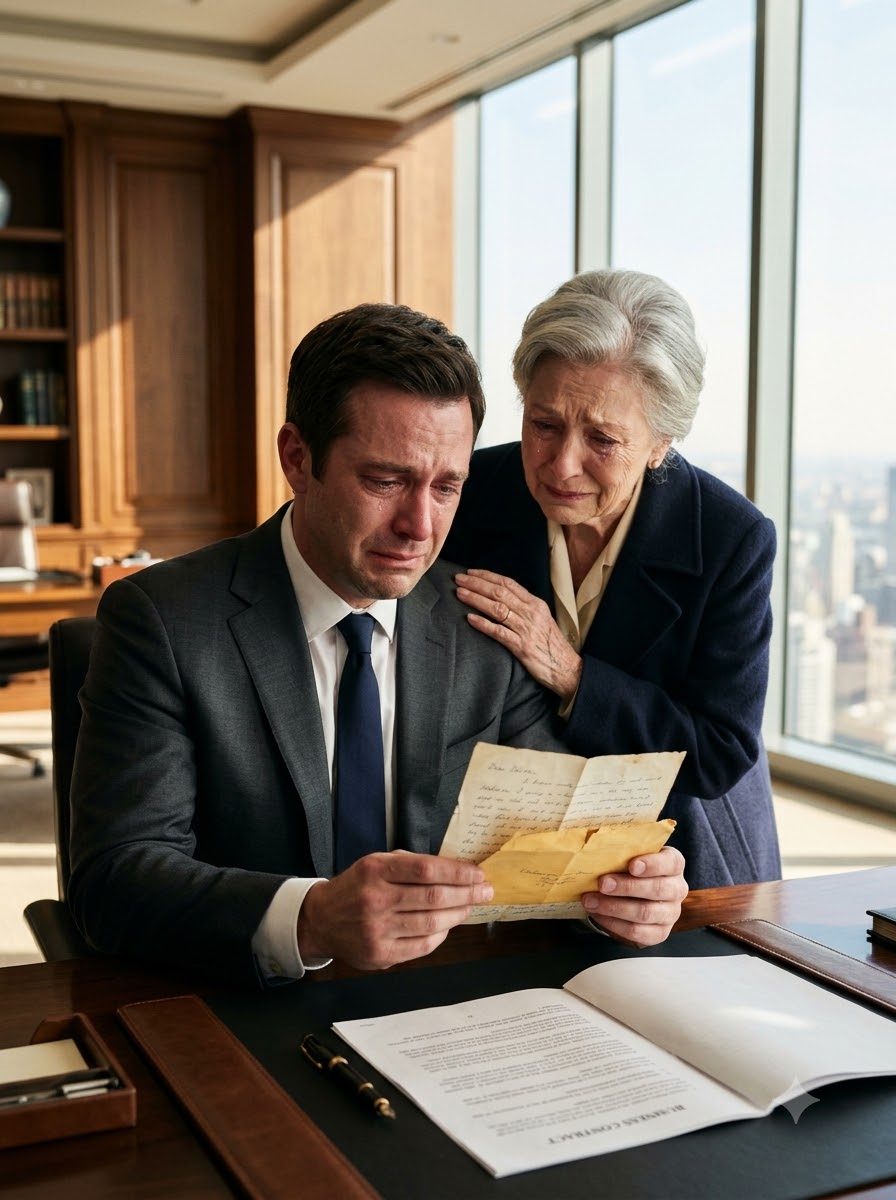
She reached into her handbag and placed an old envelope on the desk.
My name was written across the front.
But it wasn’t Christopher Bennett.
It was Christopher Vale.
My heart seemed to stop.
“Where did you get that?”
Eleanor’s voice softened.
“Your father gave it to me twenty-six years ago.”
I couldn’t move.
The envelope looked ancient.
Its corners had yellowed.
It was still sealed.
Across the front was my original name, written in handwriting I had never seen.
I looked at Eleanor.
“You knew my father?”
She nodded.
“How?”
“Thomas worked for me.”
The room became painfully quiet.
“When?”
“Long before Halston Capital became what it is today.”
She looked down.
“Your father was one of the first people who believed my husband and I could build something.”
I slowly sat.
Eleanor continued.
“He was twenty-four when I met him. Brilliant. Reckless. Funny. Always late.”
Despite everything, I smiled.
“That sounds unfortunate.”
“He once arrived forty minutes late to a financing meeting because he stopped to help a man whose truck had broken down.”
My smile disappeared.
Eleanor noticed.
“Yes.”
She moved the envelope closer.
“You’re more like him than you know.”
“Why do you have this?”
Her eyes filled with tears.
“Thomas gave it to me after you were born.”
I stared at the envelope.
“He knew about me?”
“Oh, Christopher.”
Her voice broke.
“He loved you.”
Those words struck something deep inside me.
A wound I had stopped acknowledging years earlier suddenly opened.
“My mother told me he left.”
“He did.”
“Then how could he—”
“Because his family threatened her.”
I stared at her.
Eleanor explained.
The Vale family had been wealthy even then.
Not as wealthy as Marcus would eventually become.
Not wealthy enough to control an empire.
But powerful enough to intimidate a young single mother.
Thomas had wanted to marry Laura.
His father refused to accept the relationship.
When Thomas rebelled, the family cut him off.
Laura eventually became frightened that the Vale family might attempt to take custody of me.
So she disappeared.
Thomas spent years searching for us.
“He finally found your mother,” Eleanor said. “But by then she had remarried.”
“My stepfather.”
“Yes.”
“He was good to me.”
“I know.”
I frowned.
“How?”
“Thomas knew too.”
She touched the envelope.
“That’s why he didn’t interfere.”
Tears blurred my vision.
“He just disappeared?”
“He decided that loving you meant allowing you to have a stable father.”
I looked away.
All my life, I had interpreted his absence as rejection.
Now Eleanor was telling me that his absence had been a sacrifice.
“What’s in the letter?”
“I don’t know.”
“You never opened it?”
“It wasn’t mine.”
“Why didn’t you give it to me?”
“I promised Thomas I would deliver it when you turned eighteen.”
My voice hardened.
“I’m thirty-eight.”
“I know.”
“Then you’re twenty years late.”
Eleanor closed her eyes.
“Yes.”
“Why?”
“Because after Thomas d/i/e/d, your mother begged me not to.”
I stood.
“She knew?”
“Yes.”
“She knew you had this?”
“Yes.”
Anger surged through me.
“Everyone knew except me.”
“Christopher.”
“Everyone decided what I could handle.”
“I’m sorry.”
I walked toward the window.
Far below, the city looked almost miniature.
Orderly.
Traffic moving along straight roads.
People returning home.
People carrying secrets that nobody around them could see.
My mother had died six years earlier.
I would never be able to ask why she had kept the letter from me.
Perhaps she had been frightened.
Perhaps she truly believed she was protecting me.
Perhaps there had never been a perfect choice.
Only imperfect human decisions.
I returned to the desk.
Then I opened the envelope.
Inside was a sheet of paper covered in handwriting.
I began reading.
Christopher,
If you are reading this, then you are old enough to understand something I wasn’t brave enough to explain when you were small.
I did not leave because you were unwanted.
My vision blurred.
I stopped reading.
Eleanor waited quietly.
Then I continued.
I left because your mother found a man willing to become the father I had already failed to be.
There are different kinds of courage.
Sometimes courage means fighting for someone.
Sometimes it means staying.
And sometimes it means stepping away because your presence would create more pain than your absence.
I pressed a hand over my mouth.
I hope you grow into a man kinder than the men in my family.
I hope money never teaches you that another person matters less.
I hope when life gives you the choice between being important and being decent, you choose decent.
I laughed through my tears.
Eleanor was crying too.
Then I reached the final lines.
And if you ever see someone stranded on the side of the road, stop.
Your father always did.
Love,
Dad.
For several minutes, I couldn’t speak.
The entire impossible week seemed to collapse into that single sentence.
The roadside.
Eleanor.
The lost job.
Marcus.
My father.
Everything connected by one painfully simple decision.
Stop.
Help.
Stay.
I folded the letter carefully.
Then I turned toward Eleanor.
“Did you know who I was when I stopped?”
“No.”
“You’re sure?”
“I recognized your surname at the agency, but Bennett meant nothing to me.”
“So this really was coincidence?”
She smiled through her tears.
“Maybe.”
I studied her.
“You don’t sound convinced.”
“At my age, you stop believing coincidence is always random.”
I laughed.
Then I signed the agreement to lead Halston Community Ventures.
Not because I suddenly believed I possessed every qualification.
But because, for the first time in years, the work in front of me felt connected to something more meaningful than winning advertising accounts.
Over the next eighteen months, we built the company.
Our first investment went to a family-owned manufacturing business in Ohio that was facing closure.
Our second supported a rural medical transport company.
Our third helped a bakery owned by two sisters who had been rejected by six banks despite operating profitably for fifteen years.
Every investment committee meeting followed the same rule.
Before reviewing spreadsheets, we met employees.
Machine operators.
Receptionists.
Drivers.
Cooks.
Warehouse workers.
People whose names rarely appeared in investor presentations but whose lives depended on decisions made in corporate boardrooms.
Some investments failed.
Some businesses couldn’t be saved.
Others flourished.
Within three years, Halston Community Ventures had invested in eighty-seven companies and protected more than twelve thousand jobs.
Richard rebuilt Mercer & Field.
He renamed the agency Field & Company.
Nina became chief operating officer.
Three former interns eventually became directors.
Gavin never returned.
Claire divorced Marcus.
For nearly a year, she avoided the business world entirely.
Eventually, she joined a nonprofit organization focused on teaching financial literacy to young adults.
Over time, Claire and I became something neither of us had expected.
Family.
Not immediately.
That took time.
But genuinely.
One Thanksgiving, she sat beside Sophie helping her prepare college applications while Lucy burned dinner rolls in my kitchen.
Eleanor watched us from the table.
She leaned toward me.
“You realize your father would love this.”
“I hope so.”
“He would.”
“You can’t know that.”
She smiled.
“I knew him.”
Years later, Eleanor finally retired.
For real this time.
At her retirement dinner, hundreds of employees gathered in a hotel ballroom.
There were speeches.
Videos.
Stories.
Awards.
Eleanor disliked almost every minute of it.
Near the end of the evening, she walked onto the stage and ignored her prepared remarks.
Instead, she told everyone about Route 18.
Not about Halston Capital.
Not about acquisitions.
Not about Marcus.
She spoke about the cars that had passed.
Then about the one that stopped.
I sat in the front row beside my daughters.
Sophie was twenty-one now.
Lucy was sixteen.
Eleanor looked toward me.
“People like to believe their lives change during grand moments,” she told the room.
“They imagine the important choices will announce themselves.”
She shook her head.
“They rarely do.”
“Sometimes your life changes because a stranger is standing beside a road.”
“Sometimes it changes because you are five minutes late.”
“Sometimes it changes because you lose the job you thought you needed.”
Then she smiled.
“And sometimes everything you thought was bad luck was simply the road turning.”
The audience rose to its feet.
I didn’t.
I couldn’t.
I was crying too hard.
After the dinner, my daughters and I walked Eleanor to her car.
Before she climbed inside, Lucy asked her a question.
“Mrs. Halston?”
“Yes?”
“Do you ever wonder what would’ve happened if Dad hadn’t stopped?”
Eleanor looked at me.
Then at Lucy.
“All the time.”
“What do you think would’ve happened?”
Eleanor smiled.
“Your father would still have eventually become who he was meant to become.”
I laughed.
“That’s generous.”
“No.”
She touched my arm.
“The road didn’t make you who you are, Christopher.”
She opened the car door.
“It revealed you.”
Then she left.
I remained on the sidewalk with Sophie and Lucy beneath the city lights.
My phone vibrated.
An email had arrived from our newest investment.
A small employee-owned furniture manufacturer in Pennsylvania.
The subject line read:
THANK YOU FOR BELIEVING WE MATTER.
I read it twice.
Then Sophie linked her arm through mine.
“You okay?”
I smiled.
“Yeah.”
Lucy looked suspicious.
“You’re doing the emotional dad thing again.”
“I’m allowed.”
“You’re really not.”
We started walking toward the parking garage.
Halfway there, rain began falling.
Cold autumn rain.
People hurried past, pulling jackets over their heads.
We reached an intersection.
Then I noticed an elderly man standing beside an old sedan with its hood raised.
Cars drove around him.
Pedestrians rushed past.
He looked soaked, frustrated, and completely alone.
Sophie noticed him at the same moment.
She looked at me.
I looked back at her.
Neither of us spoke.
Then she smiled.
And crossed the street toward him.
Lucy groaned.
“Oh, come on. We’re going to be here forever.”
But she followed.
So did I.
Because perhaps my father had been right.
Perhaps some things aren’t inherited through surnames.
Perhaps they aren’t passed down through wealth, property, or family businesses.
Perhaps they travel quietly from one person to another through example.
One stranger stops to help another.
Years later, someone else makes the same choice.
Then another person.
And another.
Until kindness becomes its own form of inheritance.
I had once believed losing my job was the worst thing that had ever happened to me.
Instead, it introduced me to Eleanor.
It exposed Marcus’s scheme.
It revealed the truth about my father.
It gave me work I genuinely believed in.
It brought unexpected family into my life.
And most importantly, it taught my daughters something no lecture ever could.
Success isn’t measured only by how far you manage to go.
Sometimes it’s measured by the people you refuse to abandon along the way.
The elderly man looked up as we approached.
“You folks know anything about engines?”
Sophie smiled.
“Not really.”
He blinked.
“Then why’d you stop?”
She glanced toward me.
I thought about Route 18.
About Eleanor lying on the gravel.
About Gavin telling me I should have kept driving.
About my father’s letter waiting twenty-six years to reach me.
Then Sophie gave an answer I would remember for the rest of my life.
“Because you looked like you needed someone to.”
And that was when I finally understood.
My life hadn’t changed the morning I lost my job.
It had changed a few minutes earlier.
The moment I chose not to keep driving.
THE END.
