

PART 1
I believed that agreeing to marry my terminally ill patient was an act of compassion. But after her funeral, her sister placed a mysterious box in my hands, with my name written across the lid. Before I could finish reading what was inside, an accusation emerged that threatened to destroy everything I had spent years building.
I was thirty years old, a physician with a white coat, a medical degree, and a mountain of student debt that still kept me awake at night.
Becoming a doctor had been my dream for as long as I could remember. My parents had never been able to afford my tuition, so I spent weekdays studying and weekends working to cover whatever expenses I could.
By the time Alicia entered my life, I honestly believed the hardest part of my journey was behind me.
Alicia was eighteen, and despite everything she was going through, she was easily the most entertaining patient on our oncology ward.
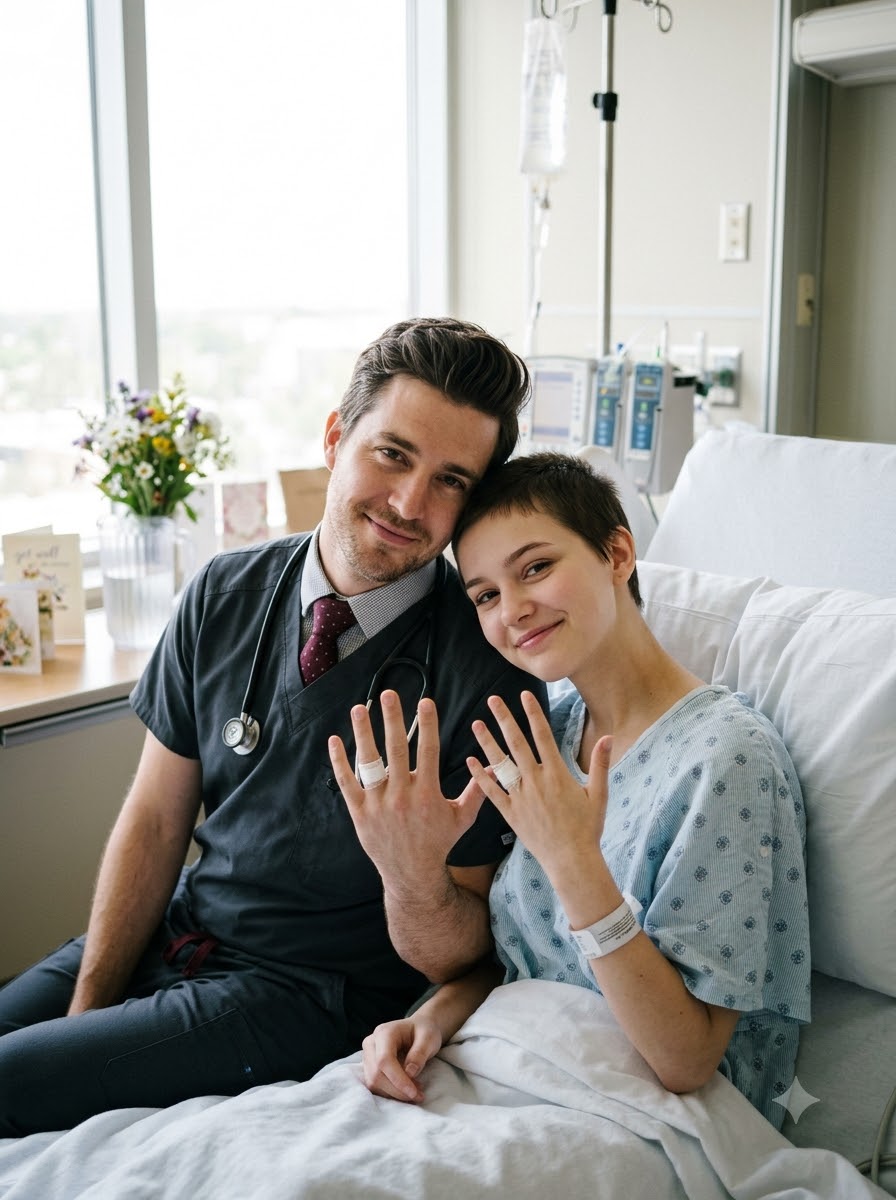
Even when her treatments left her completely drained, she somehow found enough energy to make the nurses laugh while they changed her sheets.
“Doctor Lucas, you know smiling is free, right?”
I would attempt to maintain a serious expression, but she always managed to make me smile.
About six weeks after we first met, she noticed me looking at a reminder about one of my student loan payments.
“Bad news?”
“I worked weekends through medical school. Still paying for it.”
She made a face.
“They should give you a refund for that handwriting.”
That was Alicia. Even when her own situation was frightening, she could still find something to joke about.
But eventually, the medication that had been helping her stopped working.
On a Tuesday, the attending physician informed her family that she likely had no more than three days left.
Afterward, I stood outside her hospital room, struggling to make myself enter.
I was afraid she would ask about another treatment, another possibility, or some way to change the outcome when I had nothing left to offer.
Instead, when I finally stepped inside, she asked me to sit beside her.
“I have one last wish.”
“What is it?”
“I want to marry you.”
At first, I thought she was making another joke.
But although a faint smile remained on her face, there was nothing playful about her expression.
“Come on. I don’t want to show up in heaven as an unmarried woman.”
“Alicia, I’m your doctor.”
“You’re not who I’d choose if I were marrying for love, doc.”
She glanced toward a nurse passing the doorway, her cheeks turning pink, before looking back at me.
“But I have my reasons.”
“Then why me?”
“Because you listen. Even when what I want sounds silly. I want one big thing I get to choose.”
“It isn’t that simple.”
“Why does having less time make my wish less worth thinking about?”
I couldn’t find a way to refuse without imagining the disappointment it would cause her.
Looking back, I know I should have made a greater effort to explain why her request was inappropriate.
But at that moment, all I could picture was one joyful afternoon in the middle of weeks filled with devastating news.
I arranged for another physician to take over her medical care.
What I failed to do was consult my supervisor, Dr. Patel, about whether the marriage itself was appropriate.
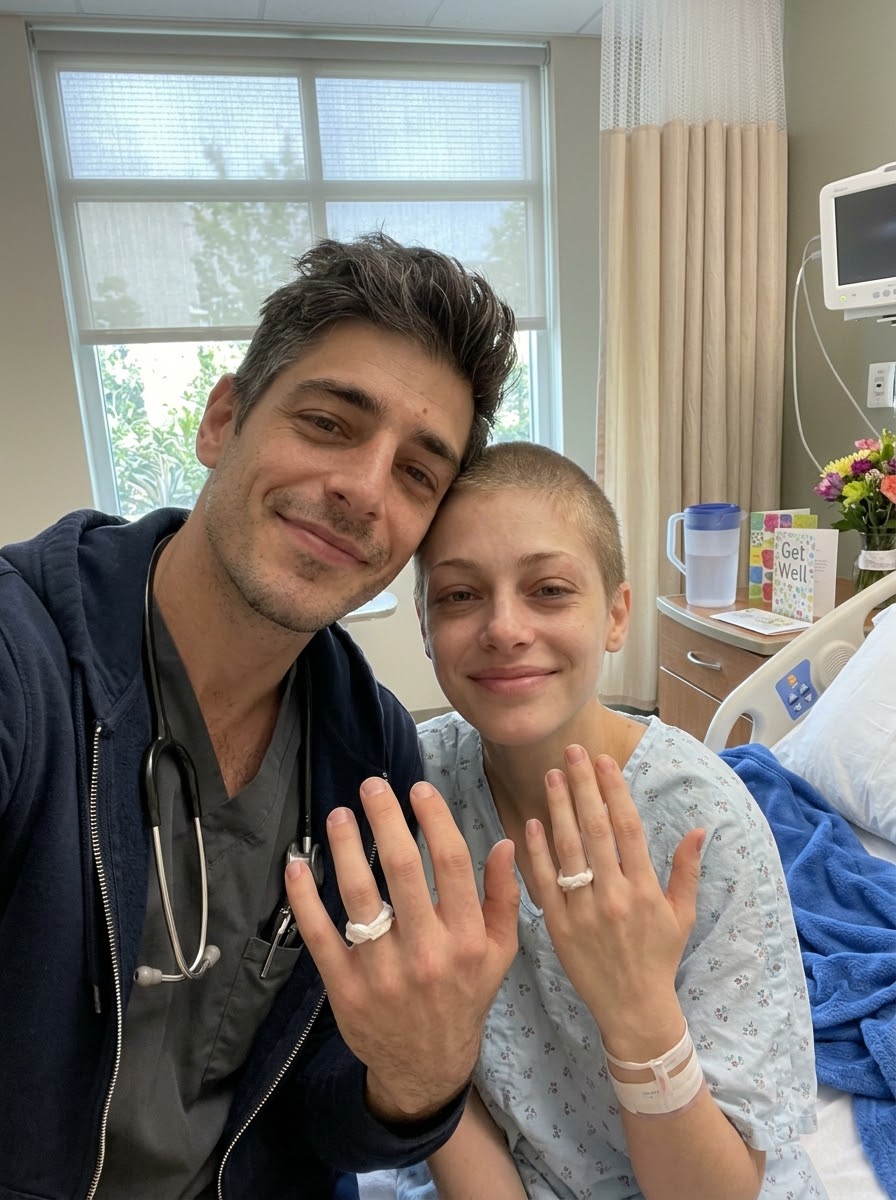
The following day, Alicia and I were married in her hospital room.
Instead of wearing my stethoscope, I put on a tie.
One of the nurses made two makeshift wedding rings using clean strips of bandage, and Alicia placed a white scarf over her bald head to resemble a bridal veil.
Her sister, Nora, arrived carrying flowers.
Alicia smiled through the entire ceremony.
Nora adjusted her sister’s scarf twice, then took my hand and squeezed it.
“Thank you. You gave her something. I mean it.”
For those brief moments, the hospital room felt unlike the oncology ward where we usually had to deliver heartbreaking information.
The ceremony allowed Alicia to decide how one afternoon of her remaining life would be spent.
I concentrated on the happiness in her expression and pushed aside the professional questions I should have been considering.
When I left her room, I genuinely believed I had done something good.
Two days later, Alicia passed away.
At her funeral, I stood behind the relatives and friends who had known and loved her throughout her eighteen years.
I wasn’t certain where I belonged among them.
After the service ended, I walked toward my car.
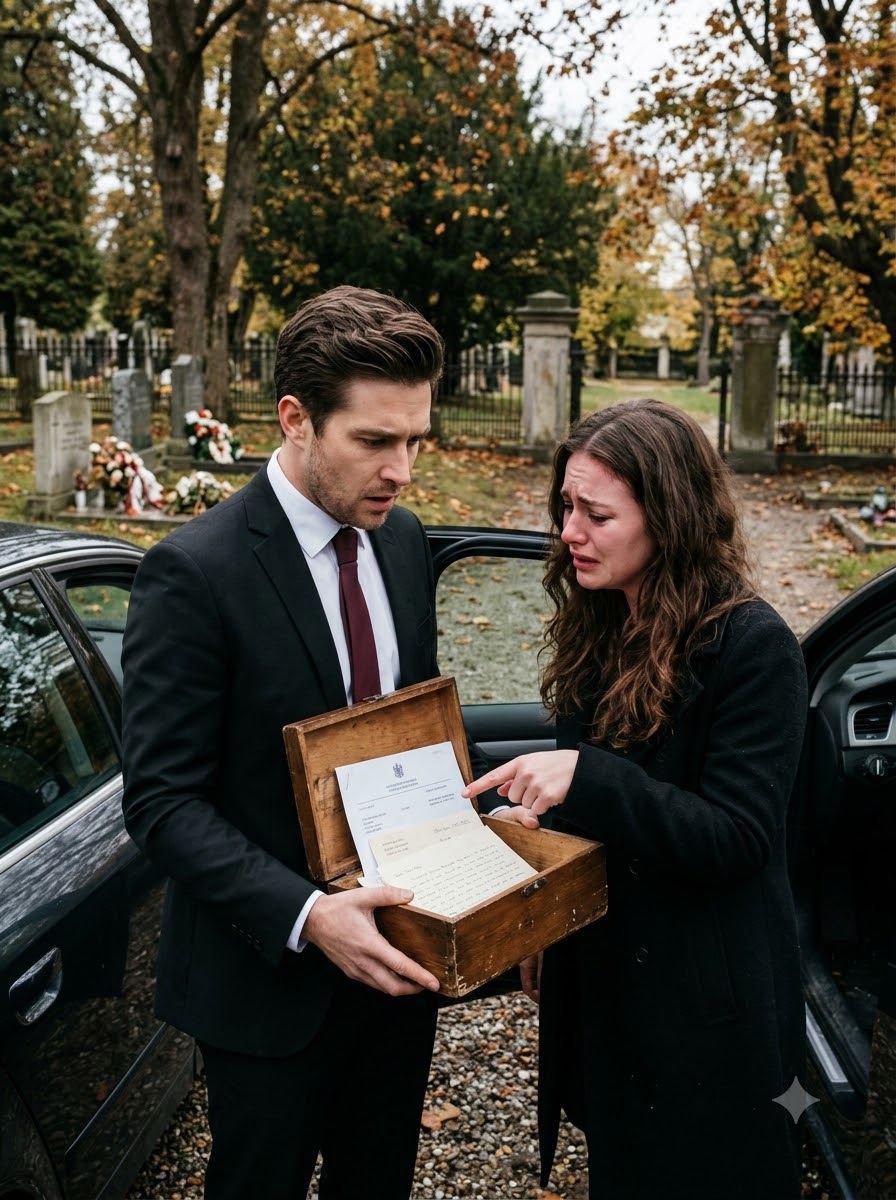
Before I could leave, Nora hurried toward me with a sealed box in her arms.
“She asked me to give you this only after she was gone.”
My name was written across the lid in Alicia’s handwriting.
I opened the box while Nora stood beside me.
Inside was a letter from an attorney explaining that Alicia had left me her portion of an inheritance from her grandmother.
I stared at the amount.
It was enough to eliminate every dollar of student loan debt I owed.
I read the figure again, then checked my name, convinced I must have misunderstood something.
Beneath the lawyer’s letter was a folded note.
Before I could open it, Nora leaned closer to see the document.
Her face suddenly turned red.
“What the hell!” she shouted.
“She left you Grandma’s money?”
She pointed at the letter in my hands.
“I didn’t know. I swear to you, I had no idea.”
“Then why did you marry her?”
“It wasn’t romantic. You knew that.”
“I did.” Her voice cracked. “And now I can see what you got out of it.”
She brought her hand over her mouth.
“No, I promise, it’s not like that.”
Nora stepped backward, still pointing at me.
“I’m reporting you to the hospital.”
Then she turned and walked away before I could explain anything else.
Only minutes earlier, she had been the grieving sister who thanked me for bringing happiness to Alicia’s final days.
Now she believed that the wedding had been a calculated betrayal.
Although her suspicion was wrong, I understood why the inheritance had changed the way she viewed everything.
The circumstances looked terrible.
And I had no simple explanation that could make them look better.
I remained beside my car, holding the box against my chest.
If the hospital concluded that I had married a vulnerable patient to obtain her money, my entire medical career could be at risk.
Part of me wanted to run after Nora and beg her to listen.
Another part wanted to look at the amount again.
Instead, I shut the box.
That night, I sat at my computer and entered the inheritance amount into my student loan calculator.
The result showed that every outstanding loan could be paid in full.
For a moment, I imagined what life might feel like without those monthly payments.
I pictured taking my parents out to dinner without worrying about how much money remained in my bank account afterward.
Then I closed my laptop.
I knew I needed to refuse the inheritance before the temptation became any stronger.
The following morning, I called the attorney who had prepared Alicia’s documents.
I told him I wanted to decline the money.
“Are you certain?”
My eyes drifted toward the loan reminder displayed on my screen.
Refusing meant continuing to make payments for years.
But keeping my career mattered more than becoming debt-free.
“Yes,” I said. “Send me what I need to sign.”
Before leaving for work, I called Nora.
“I refused the money. You don’t need to file a complaint.”
“Refusing it now proves nothing,” she said. “You got caught.”
“I didn’t know about it.”
“Grandma talked about that money like it was our whole future. I buried my sister on Saturday. Now there’s a letter naming you.”
I tried to explain, but nothing I said changed her mind.
“I’m sorry,” I said.
She ended the call.
I got dressed and drove to the hospital, hoping the situation could still be resolved.
But when I arrived at the oncology ward, Dr. Patel was waiting outside.
Her expression told me something was wrong before she spoke.
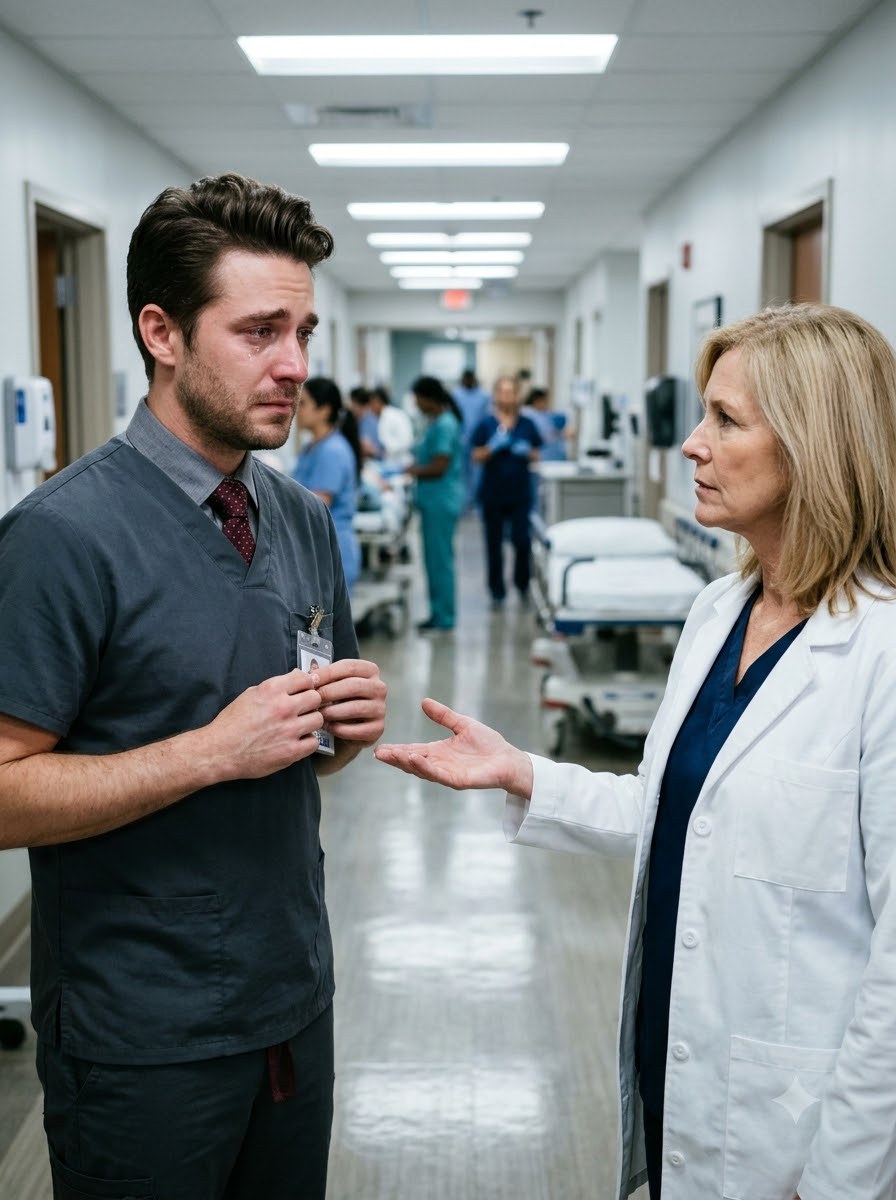
“Your patients have been reassigned,” she said. “I need your badge.”
“Why?”
“You married an 18-year-old patient and now stand to inherit her money.” Her jaw tightened. “What the hell were you thinking?”
“But I transferred her care…”
“Marrying a patient crosses a professional boundary. Transferring her care didn’t erase that.”
“Am I losing my job?”
“That’s what the review has to determine.”
I stood there, struggling to accept what was happening.
I had spent years studying, working weekends, and sacrificing sleep to earn the right to practice medicine.
Now I was standing outside the ward where I worked, unable to enter as one of its doctors.
I wondered how I would explain that to the people who knew how much my career meant to me.
Dr. Patel held out her hand.
Slowly, I removed my identification badge and gave it to her.
When I returned home, I finally unfolded the note Alicia had left inside the box.
It explained that her grandmother had given both sisters money to support their education and help them begin independent lives.
Then I read Alicia’s words.
You told me you worked your way through school. Everyone calls you lucky to be a doctor. I don’t think they know what it cost.
I hadn’t realized how carefully she had listened when I spoke about my past.
The note continued.
Nora still has her half. I can’t use mine for the life Grandma wanted me to have. Maybe it can give you some of yours back.
The wedding was something I wanted. This is something I want to give you. You deserve to have a good life, doc.
Beside her signature, she had drawn a little smiley face.
I stared at that drawing for a long time.
Alicia had intended the inheritance as a gift.
But accepting it could cost me the career she believed I deserved.
And the more I thought about what had happened, the more I began to realize that good intentions alone might not be enough to justify my decision.
PART 2
That evening, my parents invited me over for dinner.
Mom had prepared rice, and for a brief moment, sitting at their table and allowing someone else to look after me felt comforting.
Then Dad asked the question I had been dreading.
“Any news?”
“Not yet,” I said.
Mom put down her fork.
“Who was this girl, Lucas? Why risk everything for her?”
I began telling them about Alicia.
I described her humor, her illness, and the way she could brighten a hospital room even when she was suffering.
But when I mentioned that she had been eighteen, their expressions changed immediately.
“Eighteen!?” Dad shouted. “Why would you marry an eighteen-year-old patient?”
Mom covered her mouth in shock.
I explained that Alicia was dying, that the wedding had been her final request, and that there had never been a romantic relationship between us.
Dad listened until I finished.
“But why did you say yes?”
“Don’t make it sound weird. It wasn’t like that.”
“That doesn’t answer the question,” Mom said.
“I’m asking why you married her.”
I lowered my eyes toward my plate.
“Because there wasn’t anything else I could do for her.”
“Oh, Lucas.” Mom’s voice softened. “That doesn’t mean marrying her was the solution.”
I looked toward Dad, hoping he might disagree with her.
Instead, he reached for his glass of water.
Neither of my parents believed I had pursued Alicia for financial gain.
But neither of them believed that marrying her had been the right decision.
Eventually, Dad asked another question.
“Do you need money while this plays out?”
“No.”
“Lucas.”
“Maybe. I’ll tell you.”
When I left, they both embraced me.
Their love for me hadn’t changed, and I held on to that reassurance as tightly as I could.
Back at home, I began preparing the written account requested by the hospital.
In my first draft, I wrote that Alicia had insisted on getting married.
Then I stopped typing.
She had asked me.
I had agreed.
Those were not the same thing.
Describing her request as an insistence made it sound as though I had no choice.
But I did have a choice.
I was the physician in that room, and my professional responsibility had not vanished simply because Alicia had very little time remaining.
I deleted the sentence and rewrote it.
Finding a way to explain my actions without placing responsibility on Alicia took nearly the entire night.
When I finally finished, I submitted the statement before I could begin changing the wording to make myself look better.
Later that week, the situation became public.
Nora uploaded a photograph from our wedding to social media.
It showed me wearing my tie and Alicia smiling beneath her white scarf.
Alongside the picture, Nora wrote:
This doctor exploited my dying sister to obtain an inheritance.
My hands trembled as I called her.
“Why would you do this? The review isn’t finished.”
“Because I think the hospital will protect you. They’ll quietly bury it.”
“I’ve refused the money.”
“After I complained.”
She disconnected the call.
The photograph began circulating.
Strangers shared it, and people who knew nothing about Alicia or the circumstances of our wedding started discussing what had happened.
I opened a message window and began writing a response.
Then I remembered Alicia’s letter.
For a moment, I considered photographing her note and publishing it to defend myself.
Her words might help people understand that she had wanted both the marriage and the gift.
But the note had been written privately for me.
Alicia had trusted me with those thoughts.
Now I was considering exposing them simply to escape the judgment of strangers.
And even if I released the letter, it could not prove what I knew or didn’t know before the ceremony.
I understood that remaining silent might make me appear guilty.
Still, sharing her private message would not undo my decision.
It would only turn something deeply personal into another public argument.
I put my phone away without posting anything.
Soon, the accusations began reaching people close to me.
One of my aunts contacted my parents.
A former professor who had once recommended me for a position asked whether the allegation was true.
I started drafting a response, deleted it, and tried again.
Nothing seemed capable of explaining the situation properly.
Then my father called.
“The shop could use a hand,” he said. “If you want some work.”
“I’m a doctor, Dad.”
“I know what you are. I’m offering you a way to pay your bills. That’s all.”
I glanced at the bills beside my computer.
“What time should I come?”
“Eight. I’ll show you what needs doing.”
On Monday morning, I began unpacking merchandise behind the counter at my father’s shop.
When a customer asked whether I was his son, I braced myself for a question about the wedding photograph.
Instead, she simply wanted to know where the lightbulbs were.
I almost laughed from relief.
At lunchtime, Dad brought me a sandwich and left me alone with my phone.
I had already signed the inheritance refusal documents and submitted my account to the hospital.
But Nora’s accusation continued spreading.
Most of the people sharing it had no idea that she had helped organize the wedding.
They also didn’t know that she had no evidence I had expected to receive money.
I decided to contact her again.
This time, I asked whether we could meet in person.
Nora said she wanted Alicia’s scarf and the makeshift bandage ring returned. She had placed them inside the box after the funeral.
“I’ll bring them. I also need you to tell the hospital what you actually witnessed.”
“I’m not withdrawing my complaint.”
“I’m not asking you to.”
I wasn’t expecting Nora to forgive me.
I only hoped she would distinguish between what she personally knew and what she feared might have happened.
She could still believe that I had crossed a professional boundary.
I simply wanted her to acknowledge that she had no firsthand knowledge of any financial motive.
We agreed to meet on Saturday.
Before leaving, I gathered the wedding keepsakes, the lawyer’s notification, and the signed inheritance refusal.
Nora invited me into her kitchen.
I placed the box between us and opened it, revealing Alicia’s scarf and the bandage ring.
She touched the scarf gently before closing the lid again.
“I’m not apologizing,” she said. “I had every right to complain.”
“You did.”
Her hand remained on the box.
“I was her doctor,” I said. “I was responsible for my decision. Her asking didn’t change that.”
“So you admit it. You took advantage of her.”
Heat rose into my face.
Even now, I couldn’t honestly defend the marriage as an appropriate professional decision.
“I should have refused the marriage. But I didn’t marry her for money.”
“You were in her room every day.”
“Yes. You can tell them that. You can also tell them what you knew about the wedding when you helped with it.”
Nora pulled her hand away.
“The inheritance changed everything.”
“It raised questions. I understand why.”
I handed her the documents I had brought.
She examined the dates on the attorney’s letter and my signed refusal.
“This doesn’t prove you didn’t know.”
“No. It shows when I was formally notified and what I did afterward.”
“You want me to say you’re innocent?”
“I want you to say what you saw. You knew it wasn’t a romance. You helped with the ceremony. You don’t know that I expected money.”
She pushed the papers toward me.
“People will think I’m taking your side.”
“You can keep your concerns in the statement.”
“And you can get out.” Her voice broke. “I thought I was giving her something good. But you…”
I looked at the box, remembering the care with which Nora had adjusted Alicia’s scarf on our wedding day.
I wanted to tell her that we had both done the right thing.
But I had spent too many nights trying to convince myself of that already.
“I thought I was helping too,” I said. “I still made a decision I shouldn’t have made.”
Nora wiped her eyes with her sleeve.
“And if they let you go back?” Nora asked. “What happens when someone else asks you for something you shouldn’t give?”
My first instinct was to promise that I would never make the same mistake again.
But I recognized how easy that reassurance would be.
“I’ll ask for help before I answer,” I said.
Nora picked up her phone.
She hesitated, then lowered it again.
“What you did was wrong. And I’m not deleting the complaint.”
“I know.”
She opened an email addressed to the hospital reviewer and began writing.
I understood that whatever she submitted might not be enough to save my career.
Her statement explained that she had participated in a wedding she understood was not romantic.
She also acknowledged that she had no firsthand knowledge that I had anticipated receiving Alicia’s inheritance.
But she maintained her concerns about the marriage itself.
I read her draft twice.
It was not a declaration that I had done nothing wrong.
It was simply an accurate account of what she knew.
I thanked her.
Then she sent it.
Nora also corrected her public accusation, pausing before publishing the update.
I left Alicia’s keepsakes with her.
As I reached the doorway, I glanced back and saw her opening the box again.
Several more weeks passed before the hospital completed its review.
The investigators considered Nora’s statement, my written explanation, and the other evidence gathered during the process.
They found no evidence that I had deliberately exploited Alicia for financial gain.
However, they concluded that my decision to marry a patient demonstrated poor professional judgment.
I was offered the opportunity to return to work under specific conditions.
Those conditions included a formal reprimand, mandatory training on professional boundaries, and a period of supervised clinical duties.
I read the decision while sitting at my parents’ table.
Dad looked at me.
He asked whether I intended to accept the conditions.
“Yes.”
Mom reached over and squeezed my shoulder.
By then, my refusal of Alicia’s inheritance had also been finalized.
I understood that she had wanted to help me.
But I couldn’t accept the money.
The outcome wasn’t the complete vindication I had once hoped for.
Neither was it the end of my medical career that I had feared.
I would have to rebuild the trust I had damaged through my future actions rather than repeatedly insisting that my intentions had been good.
My student loans were still waiting to be paid.
I planned to continue helping at Dad’s shop on some Saturdays until I could catch up financially.
On my first morning back at the hospital, I stood outside the oncology ward while Dr. Patel confirmed the arrangements for my return.
A student loan reminder appeared on my phone.
I looked at it briefly, then put the phone away.
I took out my replacement identification badge.
My hand trembled slightly as I held it against the electronic reader.
The machine beeped.
The door unlocked.
Dr. Patel looked at me with a frown.
“No more weddings, Lucas.” Patel frowned at me.
I nodded.
I had entered medicine because I wanted to help people.
Alicia had reminded me why that desire mattered.
But losing my place in the hospital, even temporarily, had taught me something equally important.
Wanting to do something kind did not automatically make it the right thing to do.
Compassion needed judgment.
And sometimes, the most difficult way to care for someone was to recognize a boundary that should never be crossed.
I stepped through the door, ready to begin earning back the trust that had allowed me to become a doctor in the first place.
