

PART 1
The last time my father stood by and watched someone hurt me, he insisted that I was the one who owed an apology.
When he appeared at my door nearly a year later, his hands were shaking, his face was pale, and he was carrying paperwork that exposed a betrayal far greater than anything I’d imagined.
But the most devastating discovery wasn’t about my father.
It was about my mother.
The woman I’d grieved for fifteen years had known what was happening long before I did.
And before she died, she’d tried to leave me a warning.
To understand how I eventually ended up in a Texas courtroom watching my father sink helplessly into his chair, I have to take you back to my twenty-sixth birthday.
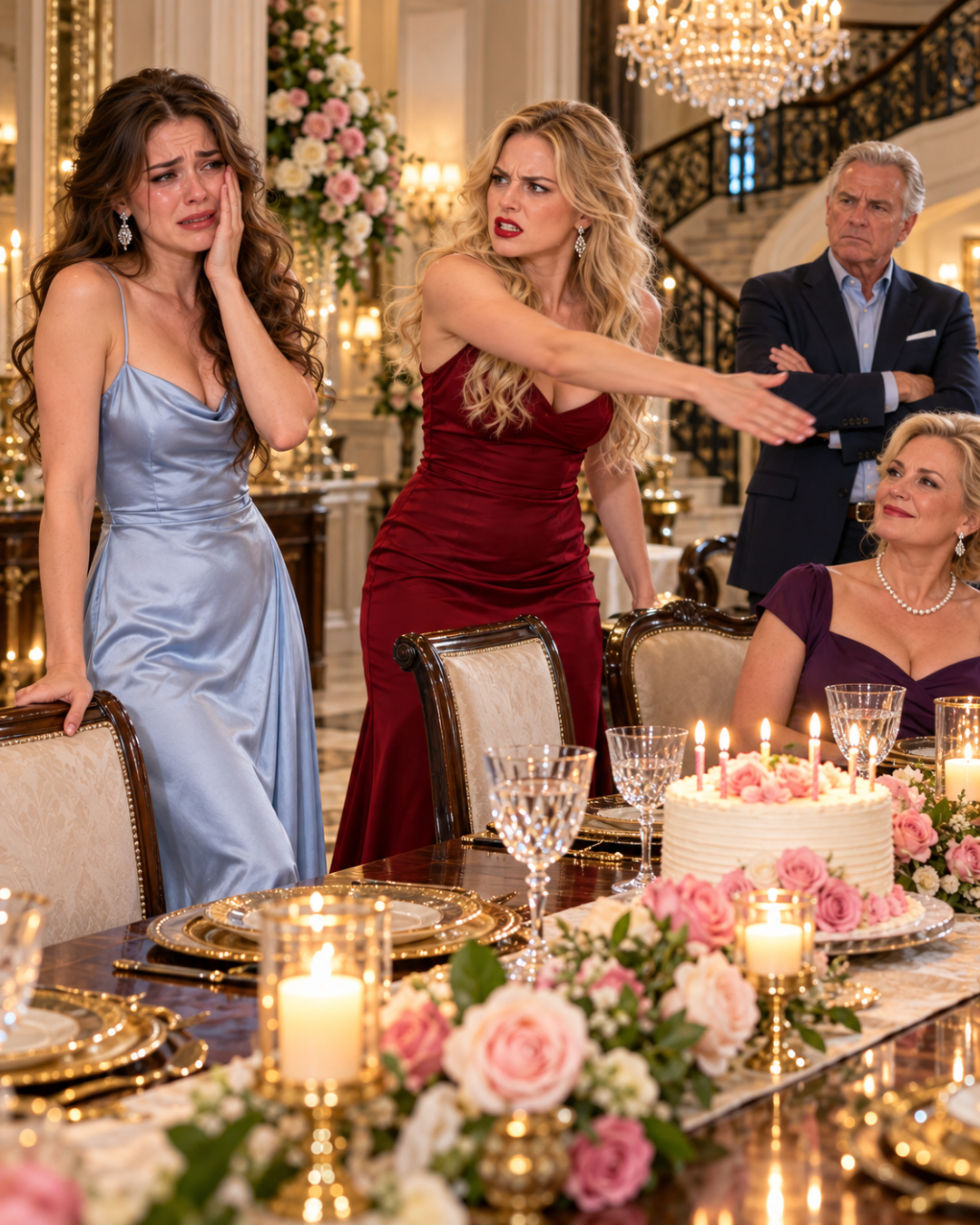
Everything began with a chocolate cake.
It cost twenty-eight dollars.
Chocolate sponge, pink frosting, and twenty-six little candles.
I’d bought it myself because no one in my family had thought to order one.
I’d even hung a few balloons around the dining room.
Looking back, I know how sad that sounds.
But at the time, I was still clinging to the hope that birthdays could mean something in our house.
My name is Zoe Bennett.
I grew up in Austin, Texas, in a lovely two-story home with white shutters, a massive oak tree out front, and a dining room where my mother could make any birthday feel like Christmas.
Her name was Elena.
She worked as an illustrator and graphic designer, and creativity seemed to follow her everywhere.
Our house was filled with colored pencils, paintings, fabric samples, and half-finished projects.
Mom believed ordinary things deserved beauty.
Even breakfast.
Especially breakfast.
On my birthdays, she’d wake me with the most gloriously off-key singing imaginable.
Then she’d lead me downstairs to discover whatever elaborate decorations she’d stayed awake creating.
When I was obsessed with mermaids, she transformed our kitchen into an underwater kingdom.
Another year, when I dreamed of becoming an astronaut, she suspended handmade cardboard stars from the ceiling.
But the tradition I loved most was the cake.
Mom always insisted that the birthday girl cut the first slice.
“Never let anybody take your first piece, sweetheart,” she would tell me, placing the knife in my hand.
“Some things belong to you simply because they’re yours.”
I was twelve when cancer took her from me.
And for the next fourteen years, I forgot the meaning behind those words.
Dad’s name was Carter Bennett.
He remarried when I was fourteen.
His new wife, Maria, arrived with expensive perfume, perfectly arranged blonde hair, and a daughter named Hazel, who was a year younger than me.
At first, I was genuinely excited.
I’d felt terribly lonely since Mom died.
I wanted a sister.
I imagined staying up late talking, sharing secrets, borrowing sweaters, and building the kind of friendship I’d seen between sisters in movies.
Instead, Hazel behaved as though anything that belonged to me should have belonged to her.
She borrowed clothes without permission.
She broke a necklace my mother had given me, then shrugged when I cried.
She read my private journal, laughed at what I’d written, and repeated my most personal thoughts at dinner.
When I was seventeen, she deleted an entire portfolio I’d spent three months preparing for an art scholarship.
I confronted her.
She burst into tears.
By the time Dad arrived home, Maria had already rewritten the incident.
Apparently, I’d bullied Hazel because I was jealous of her popularity.
Dad didn’t ask about the deleted work.
He didn’t request evidence.
He simply looked at me with disappointment.
“Zoe, you need to stop competing with your sister.”
“But Dad, she destroyed my work!”
“There’s no reason to shout.”
That evening taught me something I would remember for years.
In our house, whoever started crying first usually won.
And Hazel could cry on command much better than I could.
Maria was more subtle.
When Dad was present, she played the role of a patient, affectionate stepmother.
The moment he left, her warmth vanished.
She criticized my weight.
She dismissed my artistic dreams as childish.
Whenever I mentioned Mom, her expression became strained.
“Your father has moved on, Zoe.
Maybe it’s time you did too.”
Once, I overheard her telling Hazel that I was a permanent reminder of a life my father wanted to forget.
I spent hours crying in my bedroom.
Then I washed my face before dinner because I knew nobody would want to hear what had upset me.
Dad had a phrase he repeated constantly.
“Be the bigger person.”
He used it when Hazel stole my belongings.
He used it when Maria humiliated me.
He even said it when Hazel ruined my high school graduation dinner by announcing that she deserved a celebration too.
Eventually, I stopped fighting.
Because in that house, being the bigger person meant making myself smaller until almost nothing remained.
By twenty-six, I understood that Dad cared more about maintaining the appearance of a happy family than protecting his own daughter.
I worked at a café, saved whatever money I could, and dreamed of moving somewhere else.
Yet I kept inventing reasons to stay.
Maybe Dad would change.
Maybe Maria would finally accept me.
Maybe Hazel would mature.
Perhaps Christmas would be different.
Perhaps my next birthday would finally be happy.
Hope can become its own kind of prison when you keep using it to excuse the people who hold the keys.
My twenty-sixth birthday was the day I finally opened the door.
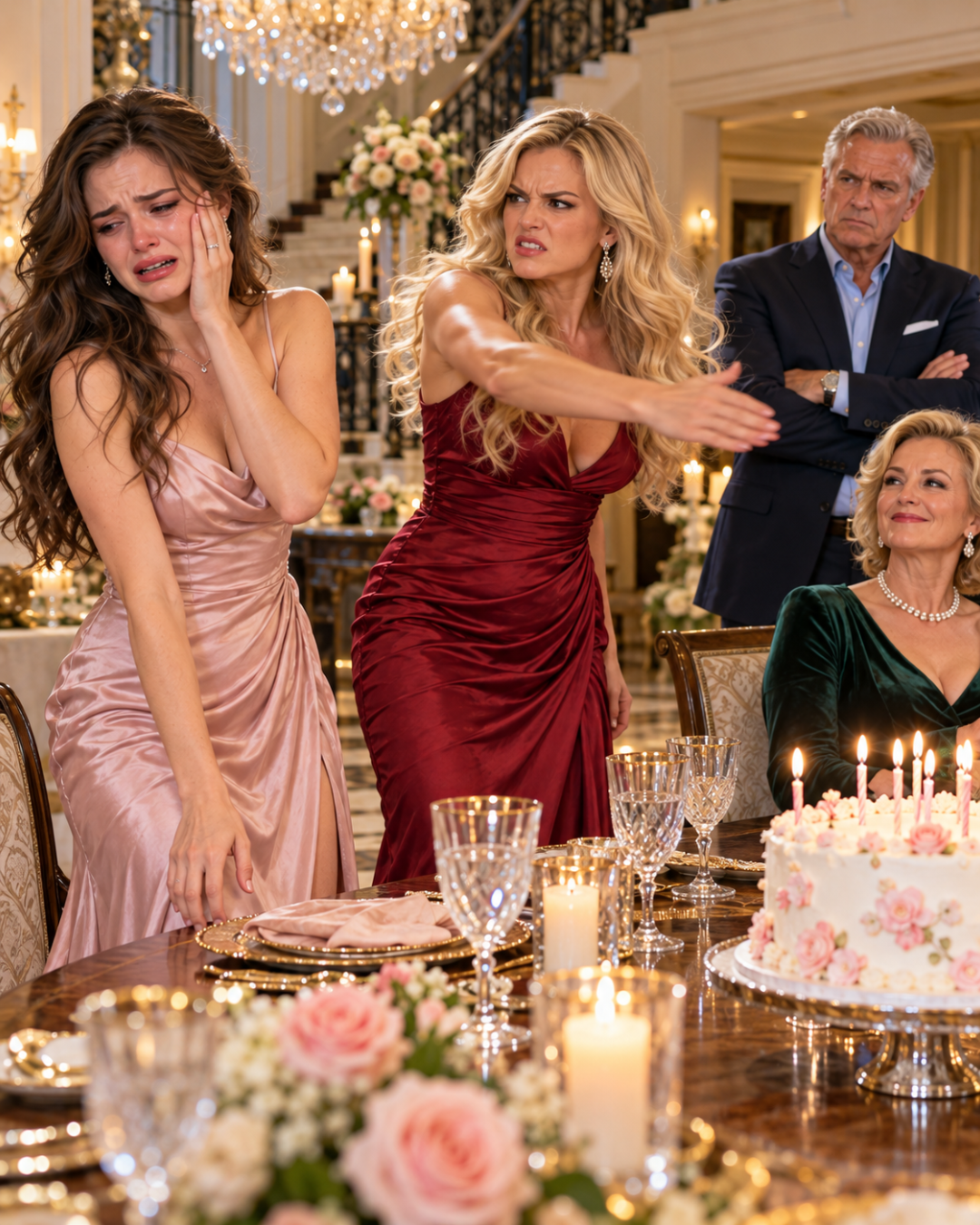
The four of us sat around the dining table.
Dad was looking at his phone.
Maria was sipping wine.
Hazel was scrolling through social media as though I wasn’t there.
I lit the candles myself.
For a fleeting moment, I imagined Mom standing behind me, her hands resting gently on my shoulders.
I could almost hear her singing.
Then Hazel raised her head.
“Wait.
I want to cut the cake.”
I blinked.
“What?”
“The cake.
I want to cut it.”
I laughed because I honestly assumed she was joking.
“Hazel, it’s my birthday.”
“So?”
“So I’d like to cut my own cake.”
She rolled her eyes.
“God, Zoe.
Why do you always make everything difficult?”
I turned toward Dad.
Surely he’d understand something this simple.
He sighed.
“Just let her cut it, Zoe.”
My chest tightened.
“Dad, I bought this cake myself.”
“And?”
“And it’s my birthday.”
“You’re twenty-six, not six.
Stop acting like a child.”
Hazel smiled.
I recognized that expression.
It was the little smile she wore whenever she knew Dad had taken her side.
“See?” she said.
“Even Dad thinks you’re ridiculous.”
I looked at the cake.
Twenty-six flames flickered above the pink icing.
And suddenly, I heard Mom’s voice in my memory.
Never let anybody take your first piece.
“No,” I said softly.
Hazel’s smile vanished.
“What?”
“I said no.
I’m cutting my own cake.”
The room fell quiet.
Maria set down her wineglass.
“Zoe, don’t ruin the evening.”
I almost laughed.
What evening?
The birthday I’d arranged myself?
The cake I’d paid for?
The celebration nobody had remembered until I reminded them?
Hazel stepped closer.
“Give me the knife.”
“No.”
“Zoe.”
“Leave me alone.”
Her expression hardened.
Then her hand moved.
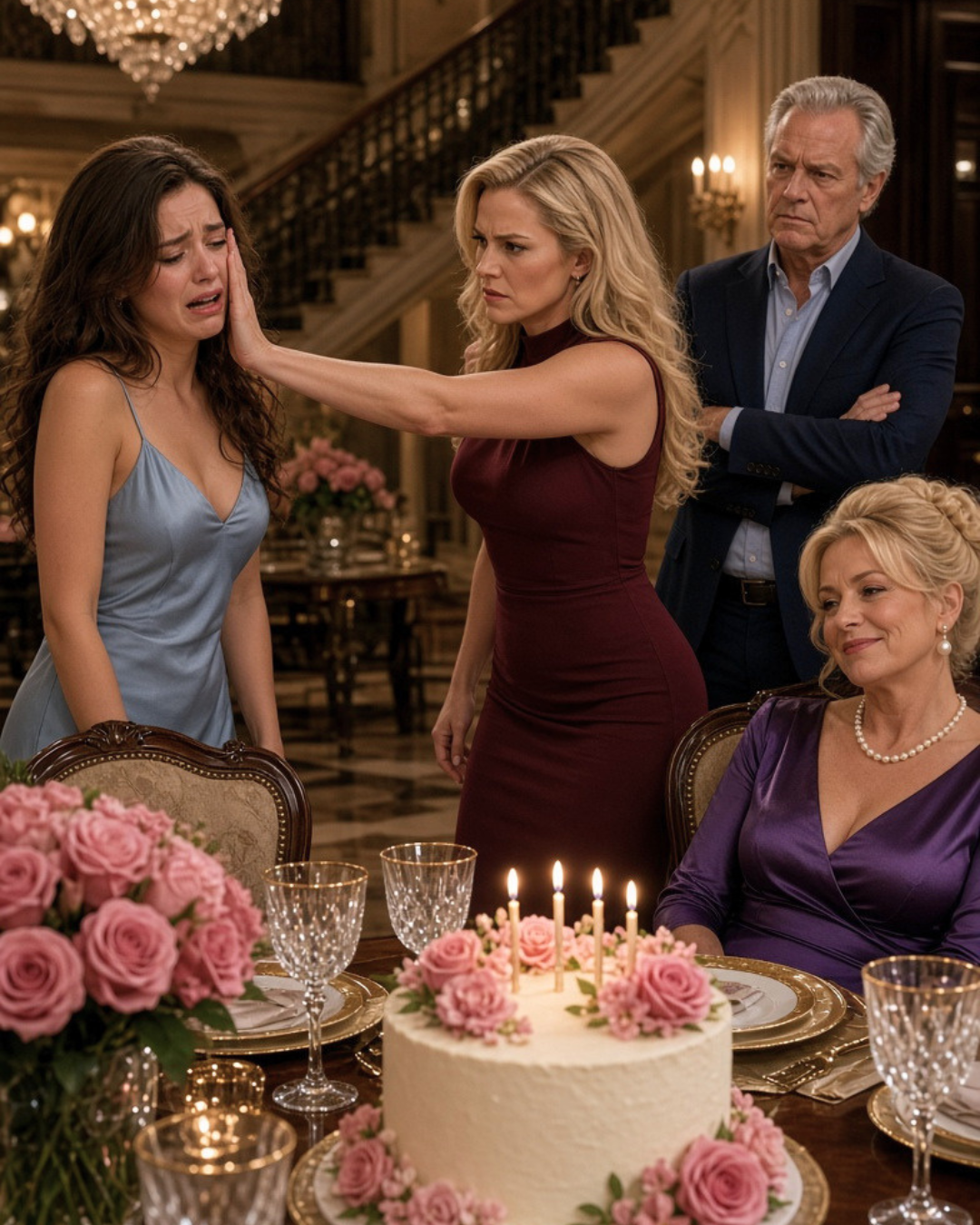
SLAP!
Her palm struck my left cheek with such force that my head jerked sideways.
The sound echoed through the dining room.
My ears rang.
For a moment, I couldn’t draw a proper breath.
Then I looked at Dad.
I waited.
Surely this time would be different.
Surely even Hazel couldn’t cross this line without consequences.
He’d witnessed everything.
There was no way to pretend he hadn’t.
But Dad looked irritated.
Not with Hazel.
With me.
“Zoe, you should have just let her do it.
Why do you always have to be so difficult?”
I stared at him.
“Dad… she hit me.”
He shook his head.
“She’s your sister.
Learn some family respect.”
Maria laughed quietly.
Hazel crossed her arms.
And something inside me went completely silent.
I didn’t scream.
I didn’t throw anything.
I didn’t overturn the table.
I simply understood, with terrible clarity, that my father had watched someone strike his daughter and decided the real offense was her refusal to surrender her own birthday cake.
I stepped away.
Nobody tried to stop me.
Nobody apologized.
Nobody asked whether I was hurt.
I went upstairs, shut my bedroom door, and packed a suitcase.
I gathered my identification documents, clothes, laptop, and the savings I’d managed to put aside.
Then I opened the bottom drawer of my dresser.
Inside was a photograph of Mom and me when I was nine.
Her arm was around my shoulders.
We were both laughing.
I slipped it carefully between two sweaters.
That night, I waited for Dad to knock.
I don’t know why.
Maybe some tiny part of me still believed he’d come upstairs and tell me he was sorry.
That he’d finally admit he’d failed me.
He never came.
Before sunrise, I carried my suitcase downstairs.
The house was silent.
I stopped in the dining room.
My birthday cake remained on the table.
Someone had cut it.
A large slice was missing.
The candles were gone.
I stared at the damaged frosting.
Then I smiled.
Not because anything was funny.
But because I finally understood.
They would always take whatever they wanted.
They would always expect me to accept it.
And they would always treat my pain as an inconvenience.
This time, however, they would have to learn to live without me.
I walked outside.
No note.
No goodbye.
I shut the front door and drove north toward Dallas.
Starting over was harder than I’d expected.
My first apartment was a cramped one-bedroom unit above a laundromat.
The refrigerator sounded like an angry lawn mower.
The bathroom window wouldn’t close properly.
And my downstairs neighbor apparently believed midnight was the ideal time to practice electric guitar.
I loved every inch of it.
Every crooked floorboard and broken cabinet belonged to a place where nobody had the right to humiliate me.
I found a job at Bluebird Coffee.
The owner, Nora Ellis, was forty-two, divorced, and armed with a sharp sense of humor that could send even the rudest customer retreating.
On my third day, I spilled a little milk and apologized repeatedly.
Nora handed me a towel.
“Sweetheart,” she said, “it’s milk, not a federal crime.”
I nearly cried.
She noticed.
But instead of asking me to explain, she handed me a clean apron.
“Come on.
We’ve got coffee to sell.”
Nora became the first person in years who made kindness feel normal.
When she discovered I loved graphic design, she asked to see my work.
I opened my laptop and showed her some sketches.
She studied them quietly.
Then she looked at me.
“Why are you serving coffee when you can do this?”
“Because coffee pays the rent.”
“So make your art pay the rent too.”
She let me redesign the café menus.
Then the website.
Then the packaging for its house-roasted coffee.
Customers began asking who’d created the designs.
Nora gave them my number.
I enrolled in evening classes at a community college.
For months, I worked mornings, studied nights, and accepted freelance assignments on weekends.
Sometimes I fell asleep at my desk.
Sometimes dinner was nothing more than a peanut butter sandwich because that was all I could afford.
But each exhausting day brought me closer to the life I’d dreamed about.
I made friends.
Genuine friends.
People who remembered my birthday without reminders.
People who didn’t turn every disagreement into a competition.
People who understood that no was a complete answer.
By the following summer, I had three regular freelance clients and a portfolio that was steadily growing.
I still struggled with money.
But I was happy.
At first, happiness felt unfamiliar.
I kept expecting someone to punish me for it.
Then, little by little, that fear faded.
Almost exactly a year after I left Austin, my life changed again.
It was Saturday afternoon.
I was sitting cross-legged on my living room floor, surrounded by fabric swatches and design mock-ups for a local boutique.
A thunderstorm had darkened the Dallas sky.
Someone knocked.
I wasn’t expecting visitors.
I went to the door and looked through the peephole.
My stomach dropped.
Dad was standing outside.
He looked dreadful.
His gray hair was messy.
His shirt was wrinkled.
Dark circles shadowed his eyes, and he kept glancing over his shoulder.
For a moment, I considered pretending I wasn’t home.
Then he knocked again.
“Zoe?
Please.
I know you’re there.”
I opened the door.
“Dad?”
His expression crumpled.
“Thank God.”
“What are you doing here?”
“I need your help.”
His voice cracked.
I hadn’t heard from him in almost a year.
No phone calls.
No birthday card.
No apology.
Now he was standing outside my apartment asking for help as though nothing had happened.
“What happened?”
I asked.
“Please.
Can I come inside?”
Against my better judgment, I moved aside.
He entered slowly.
His eyes traveled over my secondhand couch, drafting table, and framed designs.
“You’ve done well for yourself,” he murmured.
I said nothing.
He sat down and buried his face in his hands.
“Maria and Hazel kicked me out.”
I stared.
“They what?”
“They told me to leave.
They changed the locks.
Maria says she’s filing for divorce.”
I crossed my arms.
“Why?”
He hesitated.
“Money problems.”
“What kind of money problems?”
“Complicated ones.”
I felt the old instinct rising.
The urge to comfort him.
To solve his problems.
To prove that I was a good daughter.
Then I remembered the birthday cake.
“Why are you here, Dad?”
He raised his head, eyes wet.
“Because you’re my daughter.
You’re all I’ve got left.”
Those words should have touched me.
Instead, they made me furious.
“You had a daughter last year.”
“Zoe, please.”
“You had a daughter when Hazel slapped me.”
His expression tightened.
“That was a misunderstanding.”
I stood.
“No.
It wasn’t.”
He opened his mouth, then closed it.
For once, he couldn’t immediately produce an excuse.
Finally, he reached inside his jacket.
“There’s something I need to show you.”
He pulled out a folded letter.
The paper was yellowed and worn at the edges.
But it was the handwriting that made me stop breathing.
I recognized the graceful loops.
The slightly crooked capital letters.
The tiny flowers drawn beside important notes.
“Where did you get that?”
Dad lowered his eyes.
“Your mother wrote it.”
My knees weakened.
He held it toward me.
I took it with trembling fingers.
The first sentence nearly stopped my heart.
Carter, if anything happens to me, protect Zoe.
Never let Maria near her inheritance.
I read it again.
Then a third time.
“What inheritance?”
Dad began to cry.
“Your mother left you a trust fund.”
I stared.
“What?”
“She wanted you to have financial security.
Money for your education, your home, your future.”
“How much?”
He swallowed.
“Eight hundred thousand dollars.”
The room seemed to tilt beneath me.
“Eight hundred thousand?”
He nodded.
I thought about every extra shift.
Every cheap meal.
Every night I’d worried about paying tuition.
Every time I’d considered dropping out because I couldn’t afford supplies.
“Why didn’t you tell me?”
“Your mother wanted you to receive information about it when you turned twenty-one.”
I stared at him.
“I’m twenty-seven.”
“I know.”
“You knew about this for six years?”
“Zoe—”
“YOU KNEW?”
My voice cracked so sharply that he flinched.
He looked away.
“I thought I was protecting you.”
“From WHAT?”
He didn’t answer.
I looked at the letter again.
The next paragraph was worse.
I know who Maria is.
I know what she’s done.
And I know what you have hidden from me.
My mouth went dry.
“Dad… how did Mom know Maria?”
He covered his face.
“That’s a long story.”
“Then start talking.”
He stared toward the window.
“Your mother discovered something about Maria before she died.
Something I thought had been buried.”
“What?”
His lips trembled.
“Maria found out about the trust.
Hazel did too.
They’ve been moving money.”
A chill spread through me.
“Moving it where?”
“Into accounts.
Businesses.
Investments.”
“Whose accounts?”
He shut his eyes.
“Mostly theirs.”
I gripped the letter.
“How much is left?”
Silence.
“Dad.”
“Not much.”
My stomach turned.
Then he whispered something that frightened me even more.
“Zoe, there’s a reason Maria threw me out.
And I’m afraid they’re coming for you next.”
That night, while Dad sat on my couch, I began hearing pieces of a story more disturbing than anything I’d imagined.
Mom had established the trust shortly before her death.
She’d sold her ownership interest in a small design company and combined the proceeds with savings, insurance money, and investments.
She wanted the funds protected until I was mature enough to manage them.
An attorney named Vivian Whitaker had helped arrange everything.
“Vivian?”
Dad nodded.
“She was your mother’s closest friend.”
I vaguely remembered a dark-haired woman who brought lemon cookies to our house.
She’d attended Mom’s funeral.
Then disappeared from our lives.
“What happened to her?”
“She moved away.”
“Where?”
“I don’t know.”
“Then how did Maria get access to the money?”
Dad rubbed his hands.
“After Vivian stepped down from handling the trust, a financial institution took over.
There were forms.
Account changes.
Authorizations.”
“Whose authorizations?”
He looked miserable.
“Yours.”
I stared.
“I never signed anything.”
“I know.”
A terrible thought formed.
“Hazel?”
He nodded.
“She had copies of your identification.
Old signatures.
Tax information.”
I remembered my old bedroom.
The documents I’d kept in my desk.
The portfolios Hazel had repeatedly searched through.
My hands began shaking.
“Are you saying they impersonated me?”
Dad nodded again.
“Someone at the trust company helped them.
They used documents claiming you wanted money released for education, housing, and a business.”
My eyes filled with tears.
“They stole my identity?”
He remained silent.
I looked around my apartment.
The thrift-store furniture.
My school assignments.
The cracked ceiling I’d spent a year pretending wasn’t leaking.
Somewhere, Hazel had apparently been spending the money my dying mother had saved for me while I worked double shifts just to buy groceries.
I felt physically sick.
“Why did they kick you out?”
Dad hesitated.
“Because I refused to help them take the rest.”
For one brief moment, I wanted to believe him.
I wanted to believe he’d finally chosen me.
But something didn’t make sense.
If he’d known they were stealing my inheritance, why hadn’t he warned me?
Why had he waited until they turned against him?
And why did he keep looking toward the leather briefcase beside his feet?
“What’s in the case?”
I asked.
His expression changed.
“Documents.”
“What documents?”
He reluctantly opened it.
Inside were folders, bank statements, and a thick packet secured with a silver binder clip.
The title on the first page read:
BENEFICIARY ACKNOWLEDGMENT AND RELEASE
Below it appeared my full legal name.
Zoe Elena Bennett.
Dad quickly shut the folder.
“It’s just paperwork.”
I stared at him.
“What kind of paperwork?”
“Something that could help settle everything.”
“Help whom?”
He didn’t answer.
And in that moment, I realized my father hadn’t arrived at my apartment simply because he needed somewhere to stay.
He had brought documents he wanted me to sign.
Suddenly, his desperate visit no longer seemed innocent.
PART 2
The following morning, I called Nora.
I told her everything.
For once, she didn’t make a joke.
She listened until I finished.
Then she spoke firmly.
“Zoe, I want you to do exactly what I’m about to tell you.”
“What?”
“Don’t sign anything.
Don’t promise anything.
And don’t let your father convince you that loving your family means sacrificing yourself.”
I started crying.
“I don’t know what to do.”
“Yes, you do.
You’re just afraid to do it.”
She gave me the number of a lawyer she’d worked with during a difficult business dispute.
Her name was Rebecca Shaw.
By Monday morning, I was sitting in Rebecca’s office with Mom’s letter in my hands.
Rebecca was in her late forties, with short dark hair, observant eyes, and the calm expression of someone accustomed to watching dishonest people make foolish choices.
She carefully read the letter.
Then she examined the photographs I’d taken of Dad’s documents.
“Did you sign any of these documents?”
“No.”
“Did you authorize anyone to act on your behalf?”
“No.”
“Have you ever spoken with anyone at the trust company?”
“I didn’t even know the trust existed.”
Rebecca leaned back.
“Then we have a serious problem.”
She explained that unauthorized trust distributions, identity fraud, and falsified documents could involve multiple civil and criminal violations.
But before taking action, we needed proof.
Not suspicions.
Not Dad’s version of events.
Actual records.
She asked permission to contact the trust administrator, demand an accounting, and preserve the relevant documents.
I agreed.
Then she returned to Mom’s letter.
“Who’s Vivian Whitaker?”
“My mother’s friend.
She helped create the trust.”
Rebecca frowned.
“Do you have her contact information?”
“No.”
“Then we’re going to find her.”
Before I left, Rebecca said something I immediately wrote in my notebook.
“Zoe, the people who controlled your childhood may have controlled the story you heard.
But they don’t get to control the evidence.”
For the first time since Dad appeared at my apartment, I felt something stronger than fear.
Determination.
Three days later, Rebecca called.
She’d located Vivian Whitaker.
Vivian hadn’t vanished.
She was living in Santa Fe, New Mexico, working part-time as an estate-planning consultant after retiring from her law practice.
When Rebecca mentioned my name, Vivian had reportedly gone silent.
Then she’d asked one question.
“Is Zoe safe?”
We arranged a video call.
The moment Vivian appeared on my laptop, I recognized her.
Her hair had turned silver.
Her face had aged.
But her eyes were exactly as I remembered.
“Oh, sweetheart,” she whispered.
I started crying before we could say anything else.
She cried too.
Then she apologized.
Not casually.
Not defensively.
She apologized like someone who’d carried a terrible burden for years.
“I tried to find you,” she said.
“When?”
“After your twenty-first birthday.
Your mother wanted me to make sure you understood what she’d left.”
I frowned.
“Dad said you moved away.”
“I did.
But I wrote.
I called.
I even traveled to Austin.”
“What happened?”
Vivian’s expression hardened.
“Your father told me you didn’t want contact with anyone connected to your mother’s estate.”
I felt sick.
“He said you believed I’d interfered with your family and that you wanted to move on.”
“I never said that.”
“I know that now.”
She swallowed.
“He also told me you had received the trust information through the successor administrator.”
I stared.
“I didn’t.”
Vivian closed her eyes.
“I’m so sorry.”
Then she revealed something else I’d never known.
Mom had been far more successful professionally than Dad had ever allowed me to understand.
Elena Bennett had co-founded a design company called Wildflower Creative.
Its clients included restaurants, regional publishers, local businesses, and nonprofit organizations.
After receiving her cancer diagnosis, she’d sold her ownership interest so she could spend her remaining time with me.
The proceeds became part of the trust.
“Your mother was extraordinary,” Vivian said.
“She made everyone feel like they had something beautiful inside them waiting to be discovered.”
I smiled through my tears.
“She used to say that about my drawings.”
Vivian nodded.
“She showed me every single one.”
Then her expression turned serious.
“Zoe, there’s something else you need to understand.”
“What?”
“Your mother didn’t create that trust simply because she was dying.”
I went still.
“She created it because she’d discovered your father was hiding something.”
“What something?”
Vivian hesitated.
“I promised Elena I wouldn’t tell you until you had access to her records.”
My pulse quickened.
“Vivian, I’m twenty-seven.”
“I know.
And you’ve waited far too long.”
She held up an old folder.
Across the cover, in Mom’s handwriting, were four words.
FOR ZOE, WHEN READY
The package arrived two days later.
I placed it on my kitchen table and stared at it for nearly an hour.
I was terrified.
Not of the money.
Not even of Maria.
I was afraid the contents would destroy whatever good memories I still had of Dad.
Finally, I opened it.
There were photographs.
Financial statements.
Copies of letters.
And a little blue notebook decorated with faded yellow flowers.
I recognized it immediately.
Mom’s journal.
My hands shook as I opened the first page.
March 12.
Zoe drew a picture of us today.
She gave me purple hair and insisted it looked better than my actual hair.
She’s probably right.
I laughed through tears.
I kept reading.
The pages contained little pieces of the mother I’d lost.
Her worries about school.
Her excitement over design projects.
Her fear when doctors discovered the cancer.
Her determination not to let me see how frightened she was.
Then the entries changed.
September 18.
Vivian brought me the information today.
I wish she hadn’t been right.
I thought the worst betrayal would be discovering Carter had another woman.
I was wrong.
My breathing stopped.
I turned the page.
The woman is Maria Alvarez.
I remember her from the charity exhibition years ago.
And the child…
The sentence ended unfinished.
I turned another page.
Hazel is eleven.
Zoe is twelve.
The dates are impossible to ignore.
My blood ran cold.
A photograph was tucked between the pages.
Dad stood outside a hotel beside a younger Maria.
His arm was wrapped around her waist.
She held a little blonde girl.
On the back, someone had written:
Carter, Maria, and Hazel — Summer 2008.
I stared at the photograph.
Then the journal.
Then the photograph again.
Dad had always claimed he met Maria two years after Mom died.
He’d told me Hazel’s biological father abandoned her as a baby.
He’d described marrying Maria as a second chance for all of us.
But the photograph proved he knew Maria long before Mom’s death.
And the journal suggested something far worse.
I called Vivian.
She answered almost immediately.
“Zoe?”
My voice barely worked.
“Is Hazel my father’s daughter?”
Silence.
Then Vivian whispered, “Yes.”
I couldn’t breathe.
“His biological daughter?”
“Yes, sweetheart.”
I stumbled into a chair.
Hazel wasn’t simply my stepsister.
She was my father’s daughter from an affair that had begun while my mother was still alive.
Suddenly, fourteen years of memories rearranged themselves.
The favoritism.
The excuses.
The way Dad always protected Hazel.
The invisible power Maria seemed to hold over him.
The insistence that I treat Hazel like a sister even while she treated me like an enemy.
He hadn’t merely chosen his stepdaughter over me.
He’d spent my adolescence protecting the secret of his other daughter.
And he’d sacrificed me to maintain it.
I barely remember the next hour.
I remember sitting on the kitchen floor.
Watching sunlight move across the tiles.
Holding Mom’s journal against my chest.
And thinking about the woman who’d continued smiling at me after learning her husband had betrayed her for years.
She’d been dying.
She’d been frightened.
Yet while fighting for her life, she’d been trying to protect me from the people who would eventually move into our home.
I felt a rage unlike anything I’d known.
Not explosive.
Not hot.
Cold.
Focused.
Sharp.
When Dad returned that evening, I was waiting.
I’d allowed him to stay two nights while he arranged somewhere else to live.
He entered carrying groceries.
“I bought some things for dinner,” he said.
I didn’t respond.
Then he saw the journal.
The color drained from his face.
“Where did you get that?”
“Vivian.”
He set the groceries down.
“Zoe—”
“Is Hazel your daughter?”
He closed his eyes.
“Please.”
“Answer me.”
He sat.
“Yes.”
One word.
And somehow, it changed everything.
“How long?”
He stared at the floor.
“Maria and I… it started before Hazel was born.”
“While Mom was alive?”
“Yes.”
“While you were married?”
“Yes.”
I laughed.
It was an ugly, broken sound.
“And you let me believe she was just my stepsister?”
“I was trying to protect everyone.”
I slammed my hand onto the table.
“YOU WERE PROTECTING YOURSELF!”
He flinched.
“You let me believe I was jealous.
Difficult.
Selfish.
You let me spend fourteen years wondering why you loved her more.”
“Zoe, I loved you both.”
“No.”
I shook my head.
“You might have felt something for me.
But love doesn’t stand there while someone hits your child and tell her she deserved it.”
Tears filled his eyes.
“I made mistakes.”
“Mistakes?”
I lifted Mom’s journal.
“You lied to a dying woman.
You lied to me for fifteen years.
And now you’re sitting in my apartment asking for help because the family you chose finally turned against you.”
His shoulders collapsed.
For a moment, he looked like the father I remembered.
The man who carried me on his shoulders.
The man who taught me to ride a bicycle.
The man I once believed could protect me from anything.
But that man had been lying too.
“Why did Mom stay with you?”
I whispered.
Dad stared at the table.
“She wanted you to have stability.
She said you shouldn’t lose both parents at once.”
I closed my eyes.
Even while dying, Mom had been trying to protect me.
And Dad had spent the following years undoing everything she’d sacrificed.
Then I remembered the trust.
“Did you help them steal my money?”
He went still.
For several seconds, he didn’t speak.
Then he whispered, “I didn’t think it would go this far.”
My chest tightened.
“What does that mean?”
He stared at his hands.
“At first, Maria said we were just borrowing money.”
“Borrowing my inheritance?”
“She said we’d pay it back.”
“Who authorized it?”
Silence.
“Dad.”
He began crying.
And I finally understood.
My father hadn’t simply watched Maria and Hazel steal from me.
He had helped make it possible.
Two weeks later, Rebecca received the trust records.
Nora came with me to the meeting.
I hadn’t asked her to.
She appeared at my apartment with two coffees and announced, “Nobody should have to face a family-sized disaster without caffeine and a witness.”
Rebecca spread hundreds of pages across her conference table.
Bank statements.
Transfer requests.
Beneficiary correspondence.
Identification records.
Signatures.
My signatures.
Except they weren’t mine.
The earliest suspicious distribution was dated shortly after my twenty-first birthday.
It was supposedly for educational expenses.
Twenty-eight thousand dollars.
I remembered that month.
I’d been working overtime to repair my old car.
The next transfer was forty-five thousand.
Then sixty thousand.
Then ninety thousand.
The amounts kept increasing.
Some were marked for education.
Others for housing.
Several went to a company called Bright Orchard Creative LLC.
Rebecca pointed toward the name.
“Do you recognize this company?”
I shook my head.
She turned her laptop toward me.
A website appeared.
On the homepage, a stylish blonde woman stood inside an expensive office.
Hazel.
Beneath her photograph, a headline described her as the founder and creative director of an award-winning branding agency.
I stared.
Then I noticed the logo.
A delicate wildflower drawn with a single line.
My stomach dropped.
“That’s my design.”
Rebecca looked up.
“What?”
I leaned closer.
“That logo.
I drew it when I was nineteen.”
I remembered the sketchbook.
It had been a gift from Mom, saved for years after her death.
I’d filled it with ideas for a studio I dreamed of opening.
Hazel had stolen it.
Then told me she’d thrown it away.
I’d believed it was gone forever.
But there was my drawing.
On her company website.
I opened the portfolio.
A restaurant branding concept I’d created in high school.
A packaging design I’d submitted to an online competition.
A typography project I’d spent weeks developing.
Some had been modified.
Others were almost identical.
I recognized them all.
“She’s using my work,” I whispered.
Nora leaned forward.
“You’re kidding.”
“No.”
I kept scrolling.
Then I saw a design featuring a small blue bird perched on a coffee branch.
I’d drawn it during my first months in Dallas.
I’d never shown Hazel.
But I’d uploaded it to an old online portfolio linked to an email account from Austin.
An account Hazel knew about.
Suddenly, I understood.
She hadn’t stopped stealing when I moved away.
She’d continued taking pieces of my life from a distance.
Rebecca wrote in her notebook.
“Can you prove these designs are yours?”
I nodded.
“I have dated drafts, old emails, and project files.”
“Good.”
She turned another page.
“Because this company received a considerable portion of the trust distributions.”
“How much?”
Rebecca hesitated.
Then she slid a summary toward me.
Unauthorized distributions under investigation: $678,412.
I stared.
Six hundred seventy-eight thousand, four hundred twelve dollars.
Money Mom had earned.
Money she’d protected.
Money she’d intended for my education, home, and future.
Money that had been transferred into Hazel’s company, Maria’s investments, and accounts Rebecca was still tracing.
I began shaking.
Nora reached for my hand.
Rebecca waited until I could breathe.
Then she spoke.
“There’s something else.”
I looked up.
“One of the transfer authorizations was signed by your father.”
My stomach twisted.
She placed the document in front of me.
Carter Bennett.
His signature appeared beside a statement certifying that I’d approved the distribution.
I looked at the date.
Two weeks after my twenty-sixth birthday.
Two weeks after Hazel slapped me.
Two weeks after I fled Austin.
While I was struggling to rebuild my life in Dallas, Dad had been helping them spend the inheritance he’d hidden from me.
I looked at Rebecca.
“Rebecca?”
“Yes?”
“I want every document preserved.”
She nodded.
“I’ve already sent preservation notices.”
“I want whoever helped them at the trust company investigated.”
“That’s underway.”
“And I want my father held responsible too.”
She studied my expression.
“Are you certain?”
I looked at Mom’s handwriting.
Then the fraudulent signature.
“Yes.”
For once, I wasn’t going to be the bigger person.
I was going to tell the truth.
The investigation progressed slowly.
Painfully slowly.
I’d once imagined that exposing wrongdoing would be simple.
You showed people what happened.
They recognized the truth.
Justice followed.
But real life wasn’t like that.
Records had to be obtained.
Witnesses interviewed.
Accounts traced.
Investigators needed to establish which transfers had been authorized and which documents had been forged.
The trust administrator suspended additional distributions.
An independent forensic accountant began examining the transactions.
Rebecca referred the suspected identity theft and fraud to law enforcement.
Meanwhile, I kept working.
I attended classes.
Designed websites and menus.
And tried to behave as though strangers weren’t dissecting my entire childhood.
Some days, I managed.
Other days, I cried in the café bathroom until Nora knocked.
“Zoe?”
“I’m fine.”
“That’s unfortunate.
I brought cookies for a breakdown.”
She never told me to forgive my family.
She never suggested I should be grateful that Dad had finally admitted anything.
She simply stayed.
One evening, I asked her why.
She looked at me over her coffee.
“Because you show up for people, sweetheart.
It’s about time someone showed up for you.”
I thought of Mom.
And cried again.
Maria contacted me three weeks after the investigation began.
Her message arrived at 11:43 p.m.
Zoe, I understand you’re upset, but you need to think carefully before destroying your family over money.
I stared at the screen.
Another message appeared.
*Hazel built that company through hard work.
Your allegations could ruin her career.*
Then a third.
Your mother would be ashamed of this behavior.
I read that final sentence twice.
Then I took screenshots and forwarded everything to Rebecca.
I didn’t reply.
The next morning, Hazel called.
I ignored it.
She called again.
And again.
Eventually, she left a voicemail.
“Zoe, you need to stop this little revenge campaign.
I get that you’re bitter, but my business has employees.
Real people depend on me.
You can’t ruin their lives because you’re jealous.”
I listened without moving.
Then she laughed.
“Honestly, you were always dramatic.
All this because of a stupid birthday cake.”
A stupid birthday cake.
I closed my eyes.
The cake had never really been the point.
It was simply the moment I finally stopped surrendering.
I saved the recording.
Two days later, Hazel appeared outside Bluebird Coffee.
I was carrying clean mugs when I spotted her through the window.
She stood beside a white luxury SUV, wearing oversized sunglasses and an expensive cream-colored coat.
Her hair was immaculate.
Her expression wasn’t.
She entered before I could disappear into the back.
“Well,” she said loudly.
“Look at you.”
I set down the tray.
“What do you want?”
She glanced around.
“Still making coffee?”
Nora looked up from the espresso machine.
“Still insulting strangers in public?” she asked pleasantly.
Hazel blinked.
“I’m talking to my sister.”
Nora smiled.
“Then try acting like one.”
I almost laughed.
Hazel flushed.
“Zoe, we need to talk privately.”
“No.”
“Don’t be ridiculous.”
“I’m working.”
“This is important.”
I folded my arms.
“Then contact my lawyer.”
For an instant, fear crossed her face.
Then she leaned toward me.
“You have no idea what you’re doing.”
“You’re right,” I said softly.
“I didn’t know what you were doing either.
That’s why the accountants are looking.”
Her face went pale.
Nora stepped beside me.
“Anything else?”
Hazel looked between us.
Then lowered her voice.
“You think Dad came to you because he suddenly felt guilty?”
My stomach tightened.
“What?”
She smiled.
That same familiar, cruel smile.
“Oh, Zoe.
You really are the last person to figure things out.”
Then she walked away.
I stood motionless.
Nora touched my arm.
“What did she mean?”
I didn’t know.
But I was beginning to suspect Dad had revealed only the parts of the truth that made him appear sympathetic.
That evening, I called Rebecca.
She listened.
Then asked, “Where is your father staying?”
“At a motel.
Why?”
“Has he contacted you since leaving your apartment?”
“Several times.”
“What does he want?”
I hesitated.
“He keeps asking whether I’ve spoken to the trust company.
And whether I’m willing to settle things privately.”
Rebecca went quiet.
Then she said, “Zoe, I need you to stop discussing the case with him.”
“Why?”
“Because we’ve identified another account.”
My pulse quickened.
“Whose?”
“Your father’s.”
I sat down.
Rebecca explained that several trust transfers had passed through an account linked to a consulting company called C.B. Holdings.
The initials belonged to Carter Bennett.
Investigators initially considered whether it might be an administrative holding account.
But the records suggested otherwise.
Money had entered the account.
Then been transferred into investments and payments benefiting my father.
Not Maria.
Not Hazel.
Dad.
“How much?”
I whispered.
“At least one hundred and forty thousand dollars that we’re still tracing.”
I stared at the wall.
Rebecca continued.
“And there’s something unusual about the final set of documents he brought to your apartment.”
I remembered the briefcase.
The thick packet.
The title.
BENEFICIARY ACKNOWLEDGMENT AND RELEASE.
“What?”
“Those documents appear designed to make you acknowledge earlier transactions and release several people from civil claims.”
I felt cold.
“Who prepared them?”
“We’re trying to establish that.”
“But if I’d signed…”
Rebecca answered carefully.
“They could have tried to use your signature to legitimize the transactions and weaken your ability to recover the money.”
I covered my mouth.
Dad hadn’t simply come asking for shelter.
He’d come hoping I would save him from the consequences.
And he’d brought the paperwork to make it happen.
The following morning, I drove to his motel.
Rebecca had advised me not to discuss the investigation with him.
I didn’t intend to debate documents or transactions.
I wanted one answer.
Why?
He opened the door in a faded T-shirt.
“Zoe?”
I looked directly at him.
“Did you come to Dallas because you missed me?”
His expression changed.
“Of course.”
“Or because you needed me to sign those papers?”
He froze.
“Who told you that?”
I laughed bitterly.
“That’s your question?”
“Zoe, you don’t understand.”
“Then explain.”
He rubbed his forehead.
“Maria was threatening to expose everything.
I thought if we could settle it quietly—”
“Settle what?”
“Our financial problems.”
“Your financial problems?”
He looked away.
I stepped backward.
“You didn’t come because you were sorry.”
“That’s not fair.”
“You came because you needed something.”
“Zoe—”
“Did you ever intend to tell me about Mom’s trust if Maria hadn’t kicked you out?”
Silence.
Tears filled my eyes.
Not because I was surprised.
Because some foolish, hopeful part of me still wanted him to say yes.
He didn’t.
Instead, he whispered, “I was afraid you’d hate me.”
I nodded.
“Well, Dad…”
My voice shook.
“You should have been more afraid of becoming someone I couldn’t trust.”
He reached toward me.
I stepped back.
“Don’t.”
His hand dropped.
For a moment, neither of us spoke.
Then he said something that stayed with me.
“I did everything to keep this family together.”
I looked at him.
“No.”
I shook my head.
“You kept a lie together.
And you called it a family.”
I walked away before he could answer.
The next revelation came from Mom’s journal.
I’d been reading it slowly because absorbing everything at once was impossible.
One Sunday evening, I found an entry written only weeks before her death.
Her handwriting was shaky.
Several words had been crossed out.
Vivian says the trust is secure.
Carter will not be able to reach the assets simply by claiming parental authority.
I wish that were enough.
Money isn’t the only thing people can steal from a child.
They can steal her confidence.
They can make her doubt what she remembers.
They can convince her that love must be earned through obedience.
I stopped.
My eyes blurred.
It felt as though Mom had reached across fifteen years and described my entire adolescence.
The next entry hurt even more.
I cannot change what Carter has done.
I cannot make Maria kind.
And I cannot decide who Hazel will become.
But Zoe must know that none of this began because she was insufficient.
I pressed the journal against my chest.
Then turned the page.
A small envelope was taped inside the back cover.
Across the front, Mom had written:
For Hazel, when the truth becomes unavoidable.
I stared.
Why would Mom write a letter to Hazel?
The daughter of the woman who’d destroyed her marriage?
The child my father had hidden?
I wanted to open it.
Desperately.
But it wasn’t addressed to me.
After a long moment, I put it away.
There were still parts of Mom’s heart I didn’t understand.
Perhaps that letter was one of them.
By autumn, the investigation had grown considerably.
Investigators identified Derek Sloan, a former trust administrator who’d processed several suspicious distributions.
He’d left the institution months earlier.
Records suggested he’d received payments through a consulting arrangement connected to Maria’s accounts.
The institution reported suspected misconduct to the appropriate authorities and cooperated with investigators.
Rebecca warned me that proving fraud didn’t automatically mean recovering the money.
Some assets might be frozen.
Certain transactions might be reversed.
Insurance or professional liability claims might cover portions of the losses.
But nothing was guaranteed.
I understood.
I still wanted the truth.
The financial investigation also revealed something unexpected.
Hazel’s company had been struggling long before I hired Rebecca.
Its polished website and luxurious office concealed mounting debts.
Several clients had complained about unfinished work.
A lender was demanding repayment.
And Hazel had apparently been using business funds to maintain a lifestyle she couldn’t afford.
Designer clothing.
An expensive car.
Vacations.
Even the extravagant engagement party she’d thrown for herself the previous winter.
Everything rested above a financial trapdoor.
Then Rebecca showed me another document.
A proposed transfer of the remaining trust funds to an investment company controlled by Maria.
The transfer had been delayed because the institution restricted the account.
I examined the date.
The request had been prepared the week before Dad appeared in Dallas.
Attached was a draft acknowledgment bearing my name.
Rebecca looked at me.
“Zoe, do you recognize the signature?”
I shook my head.
“No.”
“Good.
Because the investigators believe they may have intended to get you to sign something similar in person.”
I remembered Dad sitting on my couch.
His shaking hands.
His tears.
His desperate words.
You’re my daughter.
You’re all I’ve got left.
Now the timing made sense.
Maria and Hazel were desperate for money.
Dad was frightened.
And my genuine signature might have helped them explain away fraudulent transactions.
“They were going to use me again,” I whispered.
Rebecca nodded.
“That appears to have been the plan.”
I looked at the paperwork.
“Not this time.”
A month later, Hazel sent me a photograph.
No explanation.
Just a picture of our old dining room in Austin.
Boxes covered the table.
The walls were bare.
A moving truck stood outside.
Another photograph followed.
My childhood bedroom.
My desk was gone.
The walls had been repainted.
Then a message arrived.
Hope you’re happy.
You’re destroying everything.
I studied the pictures.
The house where Mom made birthday cakes.
The staircase where she’d read bedtime stories.
The kitchen where we danced while dinner cooked.
So many memories.
So many years.
And Hazel wanted me to believe that protecting myself was destroying them.
I typed a response.
Deleted it.
Then forwarded the messages to Rebecca.
But that night, I finally broke down.
I sat on my bedroom floor and cried until my chest hurt.
I cried for Mom.
For the little girl who’d waited years for Dad to defend her.
For the birthday cake.
For the inheritance.
For every apology I’d made when someone else was hurting me.
And for the grief of realizing that the father I’d spent my life trying to earn had never existed the way I imagined.
At two in the morning, my phone rang.
Nora.
I’d messaged her earlier to say I was having a difficult night.
She didn’t ask whether she could come.
“Open your door,” she said.
I looked through the peephole.
There she stood in sweatpants, carrying a paper bag.
Inside were two slices of chocolate cake.
She placed them on my kitchen table.
“I know it’s not your birthday,” she said, “but I figured you were overdue for one.”
I stared at the cake.
Then laughed through my tears.
Nora handed me a plastic knife.
“Here.”
I took it.
She smiled.
“You cut the first piece.”
That sentence broke me more completely than anything cruel my family had ever said.
Because someone who’d known me for barely a year understood what my father had refused to understand for twenty-six.
Sometimes love is simply allowing someone to keep what belongs to them.
The first court hearing took place in November.
It concerned temporary protections for trust assets and records while the civil dispute continued.
The criminal investigation was proceeding separately.
Rebecca warned me not to expect dramatic speeches or instant justice.
“Most legal proceedings,” she said, “involve much more paperwork than television would have you believe.”
She was right.
The courtroom was smaller than I’d imagined.
The benches were uncomfortable.
The fluorescent lights made everyone look tired.
But Maria entered as though she were attending a charity luncheon.
She wore a cream suit, pearl earrings, and an expression of wounded dignity.
Hazel followed in a black dress.
Dad arrived separately.
He looked at me once.
I looked away.
For years, I’d feared being in a room with all three of them.
Now I felt strangely calm.
Not because I wasn’t afraid.
But because I no longer believed I needed their permission to protect myself.
Maria’s lawyer argued that the transfers were family financial arrangements rather than deliberate theft.
He suggested I’d known about benefits provided through the trust.
He claimed Dad had acted in good faith.
Then Hazel gave limited testimony concerning certain records.
Her voice was soft.
Controlled.
She described herself as a hardworking businesswoman caught in a family misunderstanding.
“I always tried to support Zoe,” she said.
I nearly laughed.
She continued.
“She’s had emotional difficulties since her mother’s death.
Sometimes she misinterprets things.”
There it was again.
The familiar story.
My feelings were the problem.
My memories couldn’t be trusted.
My objections proved I was difficult.
Rebecca calmly presented records showing that several supposed authorizations contained signatures inconsistent with verified examples of mine.
Then she introduced documents connecting the transfers to Hazel’s business.
Hazel’s expression shifted.
Her lawyer objected to certain questions.
The judge ruled on what evidence could be considered.
Nobody shouted.
Nobody collapsed.
But the atmosphere changed.
For the first time, Hazel’s explanations were being tested against documents she couldn’t dismiss with an eye roll.
When the court ordered disputed assets and records preserved pending further proceedings, something loosened inside me.
It wasn’t victory.
Not yet.
But it was protection.
And I’d spent too much of my life without it.
After the hearing, Dad approached me outside the courthouse.
“Zoe.”
I stopped.
He looked exhausted.
“I need to tell you something.”
Rebecca remained nearby.
Dad swallowed.
“I’ve been speaking with my attorney.
I’m going to cooperate with the investigators.”
I stared.
“Why?”
“Because I can’t keep lying.”
I wanted to believe him.
Then he added, “And because the evidence is worse than I thought.”
I nodded.
For once, his honesty didn’t contain a comforting illusion.
He wasn’t suddenly courageous.
He was afraid.
But perhaps fear would finally make him tell the truth.
“I know I don’t deserve forgiveness,” he said.
“No,” I answered.
“You don’t.”
He flinched.
I wasn’t trying to hurt him.
But I was finished shielding him from the consequences of his choices.
“I don’t know whether I’ll ever forgive you,” I continued.
“And I’m not going to promise that I will.”
He nodded.
Tears filled his eyes.
“I understand.”
I studied him.
“Do you?”
He lowered his gaze.
“Maybe I’m finally starting to.”
Then he reached into his jacket and produced a small envelope.
My stomach tightened.
“What’s that?”
“Something I should have given you years ago.”
I didn’t reach for it.
He placed it on the bench between us.
“It’s from your mother.”
Then he walked away.
I waited until I returned to Rebecca’s office before opening it.
Inside was a photograph.
Mom and I were sitting on our back porch.
I was probably ten.
Paint covered my fingers.
A blue streak marked Mom’s cheek.
On the back, she’d written:
My little artist.
Never stop making beautiful things.
Beneath the photograph was a folded letter.
My name appeared on the front.
I recognized Mom’s handwriting.
I carefully unfolded it.
My darling Zoe,
If you’re reading this, then you’ve reached an age when you may finally understand why I made certain decisions.
I wish I could explain everything while holding your hand.
I wish I had more time.
But wishes won’t change what is coming, so I must leave you the truth.
I stopped to wipe my eyes.
Then continued.
Your father has another daughter.
Her name is Hazel.
She is not responsible for the circumstances of her birth, and neither are you.
I hope that one day, you may know each other without carrying the sins of the adults who created this situation.
My hands shook.
But I need you to understand something very important.
Being related to someone does not give that person ownership of your happiness.
You may love your father and still refuse his demands.
You may wish Hazel well and still protect yourself from her.
You may forgive someone without inviting them back into your life.
Then came the words that nearly destroyed me.
You were never difficult to love, Zoe.
You were simply born into circumstances that required more courage from the adults around you than they were willing to show.
I covered my mouth.
For fifteen years, I’d wondered whether something was wrong with me.
Too sensitive.
Too stubborn.
Too emotional.
Too much.
And there was Mom, reaching through time to tell me the problem had never been my worth.
I kept reading.
The money I leave you is meant to offer choices.
Use it for education, or a home, or a business, or something I cannot even imagine.
But do not let anybody convince you that money matters more than your freedom.
I hope you become kind.
I hope you become strong.
And I hope you understand that those two things can exist together.
Most of all, sweetheart, I hope you learn something I learned too late.
You do not have to set yourself on fire to keep a family warm.
I pressed the letter against my chest.
But its final paragraph made me freeze.
There is one more matter Vivian will explain when the time is right.
The trust is not the only thing I arranged for you.
I stared at those words.
What else could Mom possibly have left?
PART 3
Vivian returned to Texas in December.
She met Rebecca and me in a private conference room.
For the first time since we’d reconnected, Vivian appeared genuinely nervous.
She kept adjusting the clasp on her handbag.
That frightened me.
“Zoe,” she began, “your mother created two separate arrangements before she died.”
I frowned.
“Two?”
“The first was the financial trust you’re already investigating.”
“And the second?”
Vivian looked directly at me.
“Your mother retained ownership of certain assets through a separate family holding arrangement.”
I stared.
“What kind of assets?”
“An interest in commercial property and the remaining intellectual-property rights associated with Wildflower Creative.”
I blinked.
“I thought she sold her company.”
“She sold her operating interest, yes.
But she retained certain rights and a property interest connected to the original studio.”
Vivian opened a folder.
Inside was a photograph of a redbrick building in downtown Austin.
I recognized it immediately.
Mom had taken me there when I was little.
It was an old warehouse with enormous windows, wooden beams, and a faded painted sign.
Wildflower Creative had occupied the building before moving to larger offices.
I remembered sitting on the floor while Mom worked.
The smell of paper.
The sounds of printers.
Afternoon sunlight pouring through the windows.
“What about it?”
I whispered.
Vivian smiled sadly.
“Your mother wanted you to have it someday.”
I stared.
“The building?”
“An ownership interest held for you through a separate trust.”
I looked toward Rebecca.
She nodded.
“We’ve verified the records.”
My heart pounded.
“How much is it worth?”
Vivian hesitated.
“The property has appreciated significantly.
A recent valuation puts the relevant interest at approximately two million dollars, though an actual sale could produce a different figure.”
I couldn’t speak.
Two million dollars.
I thought of my cramped apartment.
My tuition bills.
My café shifts.
Then I thought about the house in Austin.
The lifestyle Hazel had enjoyed.
The money they’d stolen.
And somewhere, all that time, Mom had left something else for me.
Something they apparently hadn’t been able to reach.
I looked at Vivian.
“Why didn’t anybody tell me?”
She sighed.
“That’s the part I owe you an explanation for.”
The property arrangement had been managed separately.
Notifications had been mailed to the address on record.
Dad’s house.
Once again, correspondence had been intercepted or ignored.
Vivian had believed I knew.
I hadn’t.
She looked devastated.
“I should have done more to verify that you received everything.”
I took a breath.
“Did Dad know about the property?”
Vivian shook her head.
“Not the details.
Elena deliberately placed it under independent management because she no longer trusted his financial decisions.”
I leaned back.
Dad had spent years helping Maria and Hazel steal what they knew existed.
But Mom had protected something else.
Something tied to the dream she’d passed down to me.
And I believed, for one brief moment, that they couldn’t take what they didn’t know existed.
Then Rebecca opened another folder.
Inside was a proposal to sell the property interest.
The proposal had been submitted months earlier by a development company.
Stonebridge Urban Partners.
Rebecca explained that the company had been acquiring property throughout downtown Austin.
The old Wildflower building sat near an area undergoing major redevelopment.
Its location had become extremely valuable.
I examined the proposal.
Then noticed something strange.
Attached correspondence identified a representative who’d contacted the property manager.
Maria Bennett.
My blood went cold.
“She knew?”
Rebecca nodded.
“We believe Maria discovered the connection while reviewing old estate records.”
I stared at the pages.
“But she didn’t own it.”
“No.”
“Then why was she involved?”
Rebecca leaned forward.
“That is precisely what we’re investigating.”
Vivian had gone pale.
“Elena was afraid Maria would eventually find a way to insert herself into anything valuable.”
I looked at the development company’s name.
Then noticed a detail.
One proposed consulting payment was directed toward C.B. Holdings.
Dad’s company.
Another toward Bright Orchard Creative.
Hazel’s company.
I looked up at Rebecca.
“They weren’t just stealing the trust.”
“No,” she answered quietly.
“They were trying to make money from the property too.”
Suddenly, everything became clearer.
The unauthorized distributions.
The business accounts.
The desperate attempt to obtain my signature.
Dad’s sudden appearance at my apartment.
The supposed family emergency.
They weren’t merely trying to conceal what they’d already taken.
They were attempting to gain access to something worth far more.
And Dad had arrived in Dallas carrying paperwork that might have helped them accomplish it.
The following months were exhausting.
Investigators continued tracing financial transactions.
Dad’s attorney arranged his formal cooperation with authorities.
The trust administrator’s handling of unauthorized distributions underwent a separate review.
Civil proceedings continued.
The development proposal involving Mom’s property was halted while ownership and authorization issues were examined.
I learned more about financial records than I ever wanted to know.
I learned how dishonest people disguised payments.
I learned that expensive cars and designer clothes didn’t necessarily mean someone was wealthy.
Sometimes they simply meant someone was deeply in debt.
And I learned that truth rarely arrives in one dramatic revelation.
It comes in fragments.
Some more painful than others.
Dad eventually admitted he’d signed false statements.
He acknowledged knowing about unauthorized trust withdrawals.
He admitted Maria had pressured him.
And he admitted he’d benefited financially.
But one question continued haunting me.
Why had Maria thrown him out?
If they’d all participated, what finally destroyed their alliance?
Dad answered during a meeting arranged through our attorneys.
Hazel had discovered he was keeping money in a separate account.
She believed he’d concealed funds that should have gone toward her business.
Maria confronted him.
The argument became explosive.
She threatened to report his involvement in the trust transactions unless he transferred his remaining investments.
Dad refused.
Maria ordered him to leave.
“So you came to me,” I said.
He nodded.
“Because you were the only person who might help.”
I stared.
“Even after everything you’d done?”
His eyes filled with tears.
“I thought you’d still love me.”
Those words reached a part of me I wished didn’t exist.
Because I did love him.
Not in the same way.
Not with the same trust.
But somewhere beneath my anger was still a little girl who remembered sitting on his shoulders at a county fair.
Sometimes I hated that part of myself.
Then I remembered Mom’s letter.
You may love your father and still refuse his demands.
I looked at him.
“I do love you, Dad.”
He began crying.
“But I will never again confuse loving you with letting you use me.”
He covered his face.
For the first time, I allowed him to cry without trying to save him.
Eventually, the civil case reached a turning point.
Using records gathered during the investigation, Rebecca pursued recovery from accounts and assets connected to the disputed transfers.
The trust institution acknowledged serious failures in processing certain distribution requests.
Negotiations followed.
They were slow.
Tense.
And nothing like television.
There were no dramatic declarations announcing that I was suddenly the rightful owner of a financial empire.
There were lawyers.
Accountants.
Insurance representatives.
Motions.
Deadlines.
And enough paperwork to flatten a small car.
But the process moved forward.
Over time, substantial amounts were recovered or restored through asset recovery, institutional resolution, and related claims.
Other losses remained disputed.
Rebecca never promised I’d recover every dollar.
She promised to pursue what the evidence supported.
That mattered to me.
Meanwhile, prosecutors brought charges against several people connected to the suspected fraud.
The criminal proceedings were separate from the civil case.
Dad eventually pleaded guilty to charges arising from his participation.
Derek Sloan also faced consequences for his role.
Maria and Hazel contested the allegations against them before their cases were resolved through the legal process.
I attended the proceedings where my presence was necessary.
I answered questions.
Provided evidence.
And refused to believe that telling the truth was cruel.
Still, I wasn’t prepared for the afternoon Hazel approached me outside the courthouse.
The wind was cold.
I was walking toward Rebecca’s car when I heard my name.
“Zoe.”
I turned.
Hazel stood a few feet away.
She looked different.
Not because she’d changed her appearance.
Her hair was still beautiful.
Her clothes still looked expensive.
But the arrogance I’d known since childhood seemed weaker.
Her eyes were red.
For once, she wasn’t smiling.
“Can we talk?”
I hesitated.
Rebecca remained nearby.
I nodded once.
Hazel looked down.
“Do you hate me?”
The question caught me off guard.
I’d imagined her saying a thousand things.
Threatening me.
Blaming me.
Demanding forgiveness.
But not that.
“I don’t know,” I answered.
She swallowed.
“I didn’t know your mom left that money because she was trying to protect you.”
I stared.
“What did you think?”
“Mom said it was family money.
She said your mother had wanted us all taken care of.”
Anger rose in my chest.
“And you believed that?”
Hazel looked away.
“I wanted to.”
For a moment, she seemed younger.
Like the thirteen-year-old girl who’d moved into our home.
Then she whispered, “Dad always said we had to look after each other.”
I laughed bitterly.
“Funny.
He never said that when you were hurting me.”
Her face crumpled.
“I know.”
I studied her.
“Did you know he was your biological father?”
She nodded.
“Since I was sixteen.”
My stomach tightened.
Seven years.
She’d known for seven years.
While I continued believing the story they’d told me.
“Why didn’t you tell me?”
She wiped her eyes.
“Mom said you’d hate me.
She said you’d take Dad away from us.”
I stared.
For the first time, I saw the machinery of the lie from another angle.
Maria had used fear to control Hazel too.
But that didn’t erase Hazel’s choices.
“You still made choices,” I said.
She nodded.
“I know.”
I wanted to ask whether she remembered the slap.
The birthday cake.
The stolen journal.
The laughter.
Instead, I reached into my handbag.
I’d been carrying something for weeks.
An envelope.
Mom’s letter.
The one addressed to Hazel.
I held it out.
“She wrote this for you.”
Hazel stared.
“Who?”
“My mother.”
Her mouth opened.
“Why?”
“I don’t know exactly.
I didn’t read it.”
She accepted the envelope with trembling hands.
For a moment, neither of us spoke.
Then I said, “Whatever that letter says, it doesn’t change what happened.
You still have to face the consequences.”
She nodded.
I turned away.
“Zoe?”
I stopped.
“I’m sorry about your birthday.”
I looked back.
For fourteen years, I’d imagined hearing those words.
I’d believed they would feel like victory.
Instead, I felt sad.
“Thank you,” I said.
Then I walked away.
Six months later, a letter arrived at my apartment.
It was from Hazel.
I nearly threw it away.
Then I opened it.
Her handwriting was neat and deliberate.
Nothing like the furious messages she’d sent before.
Zoe,
I read your mother’s letter.
I’ve read it more times than I can count.
I didn’t understand why she would write to me.
I spent most of my life pretending she was someone I didn’t need to think about.
But she knew about me.
She knew what Dad had done.
And she still understood that I was a child.
I stopped.
My hands trembled.
Your mother wrote that she hoped I would grow into a woman who refused to use another woman’s suffering as proof of her own importance.
She said being loved by our father should never require making you feel less loved.
She asked me to remember that we were both innocent of the circumstances that brought us into the world.
I began crying.
I wish someone had taught me that when I was young.
But I know I can’t blame everything on Mom and Dad.
I stole from you.
I hurt you.
I made you feel small because making you feel small was the easiest way to convince myself I mattered.
I’m ashamed of that.
I drew a shaky breath.
The final paragraph made me put the letter down.
Your mother ended her letter by saying that if I ever found myself standing in front of you with the choice between taking something from you and giving something back, she hoped I would choose to give.
I never did.
Not until now.
Another sheet of paper was enclosed.
It was a signed statement identifying several previously undisclosed financial records and accounts.
Hazel had provided the information to her attorney and investigators.
The records could help recover additional assets.
I stared at the pages.
For the first time, Hazel had voluntarily given me something useful.
Not because I’d demanded it.
Not because Dad instructed her.
But because she’d finally chosen to.
It didn’t erase our history.
It didn’t make us close.
It didn’t mean I trusted her.
But it was the first genuine act of sisterhood I’d ever received from her.
By the time I turned twenty-nine, my life looked completely different.
I’d finished my graphic design program.
Built a steady freelance business.
And, after extensive legal work, gained clear control over the property interest Mom had left for me.
The old Wildflower building had been maintained by tenants and property managers over the years.
When I visited it as an adult, I stood in the entrance and felt an ache deep in my chest.
The redbrick walls were just as I remembered.
So were the enormous windows.
The old staircase.
The high ceilings.
Even the scent of wood and paper seemed familiar.
Vivian stood beside me.
“Your mother loved this place,” she said.
I walked toward the far wall.
There was a faint blue stain near the baseboard.
My breath caught.
I knelt.
I remembered that paint.
I’d spilled it when I was seven.
Mom had laughed and said we should leave it because every artist deserved a signature.
I touched the faded mark.
Then I began crying.
Not from sadness.
But because something I’d thought was gone forever had survived.
Vivian crouched beside me.
“Elena would be so proud of you.”
I shook my head.
“I don’t know.”
“Why?”
“Because sometimes I still feel angry.
Sometimes I don’t feel kind at all.”
Vivian smiled.
“Your mother never expected you to be perfect.”
I looked around.
“What did she expect?”
Vivian glanced toward the windows.
“That you’d build a life no one could take away from you.”
I slowly stood.
And for the first time, I knew exactly what I wanted.
I didn’t sell the building.
Not immediately.
Instead, I used carefully planned financing and some of the funds available to renovate the property.
Rebecca helped review contracts.
Nora introduced me to a reliable accountant.
Vivian connected me with people who understood the building’s history.
Months of permits, construction delays, budgets, and difficult decisions followed.
Some mornings, I wondered whether I’d made a terrible mistake.
But gradually, the warehouse came back to life.
We restored the wooden floors.
Cleaned the brick walls.
Installed modern workstations beneath the enormous windows.
And converted the upstairs rooms into classrooms.
When the renovations were complete, a new sign hung above the entrance.
WILDFLOWER HOUSE
Beneath it, in smaller letters, were the words:
A Creative Space for New Beginnings
The building became home to my design studio and a community program offering affordable classes, mentorship, and workspace to young adults without financial support.
Some were leaving difficult homes.
Some were rebuilding after loss.
Others simply needed someone to believe their dreams mattered.
I didn’t create the program because I thought I could save everyone.
I’d learned better than that.
I created it because sometimes one open door can change a life.
And because Nora had once opened a door for me.
On opening day, she stood beside me wearing a bright yellow dress.
“Not bad for a girl who used to apologize to spilled milk,” she said.
I laughed.
“Don’t make me cry.”
“Too late.
I already started.”
The building filled with people.
Artists.
Students.
Business owners.
Neighbors.
Old clients.
New friends.
Vivian arrived carrying photographs of Mom.
Rebecca brought flowers.
For the first time, I was surrounded by people who celebrated my success without asking what they could take from it.
But someone was missing.
Dad.
He’d written several letters while facing the consequences of his actions.
Some were apologies.
Others contained memories from my childhood.
He no longer asked for money.
He didn’t demand forgiveness.
Eventually, he stopped asking for anything.
I answered only once.
Dad,
I hope you become someone who can live honestly with what you’ve done.
I am working on building a life that does not depend on whether you change.
I don’t hate you.
But I cannot be responsible for your redemption.
Zoe.
I meant it.
Some nights, I missed him.
Sometimes, I wanted to call.
But I’d learned that missing someone didn’t mean they belonged in my life.
Love wasn’t a contract granting unlimited access.
I could remember the good moments without returning to the place that had hurt me.
That was enough.
Or so I thought.
Until Vivian called one afternoon.
“Zoe,” she said, “I found something in the archived records.”
I was standing in my studio, reviewing packaging designs for a client.
“What kind of something?”
“A recording.”
I frowned.
“Of what?”
“Your mother.”
My heart stopped.
Vivian explained that while sorting through old company materials, the property manager had found several storage boxes.
They contained photographs, archived design files, and a digital recording device.
One file was labeled with my name.
Vivian had checked it.
It contained Mom’s voice.
I sank into a chair.
“What does she say?”
Vivian’s voice softened.
“I think you should hear it yourself.”
The recording arrived the next day.
I sat alone in Mom’s old office.
Afternoon sunlight poured through the windows.
I opened the file.
A faint crackle sounded.
Then a familiar voice filled the room.
“Hello, my beautiful Zoe.”
I covered my mouth.
Fifteen years disappeared.
It was Mom.
Her real voice.
Not a fading memory.
Not something I was desperately trying to reconstruct.
Her voice.
Warm.
Gentle.
A little breathless.
“If you’re hearing this, sweetheart, then I suppose you’ve found your way back to the studio.”
I began crying.
She laughed softly.
“I hope the old floor still creaks near the windows.
Your father always wanted to fix that, but I liked it.
Buildings should have personalities.”
I laughed through tears.
Then her voice grew quieter.
“I don’t know what your life will look like when you’re grown.”
“I don’t know who you’ll love, what work you’ll choose, or where you’ll live.”
“But I know something about you.”
A pause.
“You were always so eager to make everyone happy.”
My chest tightened.
“Even as a little girl, you’d give away your favorite toy if you thought another child might cry without it.”
“I loved your kindness.”
“But sometimes I worried.”
Her breathing became audible.
“Because kindness without boundaries can become another way of disappearing.”
I bowed my head.
“I hope someone teaches you that you are allowed to say no.”
“I hope you learn that disappointing someone doesn’t make you cruel.”
“And I hope you never spend your life trying to earn a love that should have been given freely.”
I cried harder.
Then Mom said something that made me look up.
“There’s one last thing I want you to understand about your father.”
My heart pounded.
“I don’t know whether Carter will ever become the man I hoped he could be.”
“I loved him once.
A part of me may always love the person I believed he was.”
“But loving someone doesn’t mean pretending they haven’t hurt you.”
Her voice trembled.
“And if one day he asks you to carry the consequences of his choices, sweetheart, I hope you have the courage to put them down.”
I closed my eyes.
It was as though she’d known.
Not the details.
Not the birthday cake.
Not the stolen trust.
But the danger of a father who valued his comfort more than his daughter’s safety.
Then her voice brightened.
“Now, I have one final request.”
I wiped my tears.
“Please make something beautiful with your life.”
“It doesn’t have to be expensive.”
“It doesn’t have to impress anyone.”
“It doesn’t even have to make sense to people who don’t understand your heart.”
“Just make it yours.”
A long pause.
Then a soft laugh.
“And Zoe?”
“Yes, Mom?”
I whispered into the empty office.
Her voice returned.
“Don’t forget to cut your own birthday cake.”
The recording ended.
I sat motionless.
Then I laughed.
And cried.
And laughed again.
Because of all the advice Mom could have left me, she’d chosen the one thing that had finally set me free.
On my thirtieth birthday, we held a small celebration at Wildflower House.
Nothing extravagant.
Just friends, music, flowers, and a homemade chocolate cake.
Nora insisted on baking it.
The cake was slightly crooked.
The frosting leaned suspiciously to one side.
But it was beautiful.
As everyone gathered, I looked around at the faces surrounding me.
Nora.
Vivian.
Rebecca.
My friends.
The young artists who’d become part of the studio.
People who loved me without expecting me to disappear.
For the first time, my birthday didn’t hurt.
Thirty candles flickered in the warm evening light.
Nora placed a knife beside the cake.
“Ready, birthday girl?”
I smiled.
“Almost.”
There was one more thing I wanted to do.
I reached into my handbag and removed Mom’s photograph.
The one I’d carried from Austin to Dallas.
The one I’d protected through every move.
I placed it beside the cake.
Then I closed my eyes.
For a moment, I was twelve again.
Standing in our kitchen.
Listening to Mom sing off-key.
Feeling safe.
Loved.
Important.
Then I opened my eyes.
I was thirty.
I’d survived.
And I’d built something beautiful.
“Make a wish!” someone called.
I smiled.
I didn’t need to wish for Dad to change.
I didn’t need another apology from Hazel.
I didn’t need Maria to understand what she’d done.
Those things belonged to other people.
Their decisions.
Their consequences.
Their futures.
Mine belonged to me.
I blew out the candles.
Everyone cheered.
Then I picked up the knife.
But before I cut the cake, Vivian approached.
She was holding a small envelope.
“Zoe,” she said softly, “there’s something I saved for today.”
I stared.
“Another letter?”
She smiled.
“Not exactly.”
Inside was a photograph of Mom standing outside Wildflower Creative.
She looked younger than I remembered.
Her hair was long.
Her smile was enormous.
And in her arms was a tiny baby wrapped in a pink blanket.
Me.
On the back, she’d written:
The greatest thing I ever created was not my company, my art, or my success.
It was a little girl who will someday discover that she was always enough.
Tears filled my eyes.
I looked at Vivian.
“Why did you wait until today?”
She touched my cheek.
“Because Elena asked me to give it to you when you finally had a birthday that belonged entirely to you.”
I couldn’t speak.
Vivian smiled through tears.
“She hoped that day would come long before you turned thirty.”
I looked around.
At my friends.
At the studio.
At the life I’d created.
And suddenly, I understood something extraordinary.
For years, I’d believed Mom’s greatest gift was the inheritance.
The money.
The property.
The financial security she’d fought to protect.
Those things mattered.
They’d helped me create opportunities.
They’d restored choices other people had tried to steal.
But her greatest gift wasn’t something that could be deposited into an account, forged on a document, or transferred into someone else’s name.
She’d left me the certainty that I deserved to exist without apologizing.
Nobody could steal that.
Not Maria.
Not Hazel.
Not even Dad.
I placed the photograph beside the cake.
Nora handed me the knife.
“Your turn, Zoe.”
I smiled.
And cut the first slice.
Later that evening, after everyone had gone home, I sat alone in Mom’s old office.
City lights shimmered beyond the windows.
Two photographs rested on my desk.
One showed Mom and me when I was nine.
The other showed her holding me as a newborn.
Beside them lay the final accounting from the trust recovery.
The numbers mattered.
Of course they did.
Money could pay for education.
Buy a home.
Start a business.
Help someone escape financial dependence.
Mom had understood that better than anyone.
But the page that mattered most wasn’t a financial statement.
It was her letter.
I read the final lines again.
You may love your father and still refuse his demands.
You may forgive someone without inviting them back into your life.
You were never difficult to love.
I thought about Hazel.
She was living a much quieter life, facing the consequences of her choices and trying to rebuild without the privileges she’d once taken for granted.
We weren’t close.
Maybe we never would be.
But she no longer contacted me with demands.
Occasionally, she sent a brief message about her progress.
I answered when I wanted to.
Not when she expected me to.
That difference mattered.
As for Maria, I no longer followed every detail of her life.
She’d occupied enough of my thoughts already.
Her future belonged to her.
Mine belonged to me.
And Dad?
Sometimes a missed call or letter still brought that familiar ache.
But it no longer controlled me.
I’d finally accepted something that once would have devastated me.
Someone can be your family by blood and still not be a safe place for your heart.
Sometimes your real family is made up of people who show up when you have nothing to offer except yourself.
Nora had taught me that.
Vivian had taught me that.
My friends had taught me that.
And somehow, even after death, Mom had taught me too.
I stood and walked toward the window.
Downstairs, a young woman was finishing a design project in one of our evening workshops.
She looked about eighteen.
I’d met her a few weeks earlier.
She’d left a difficult home and was working two jobs while trying to finish school.
When I offered her a scholarship for the program, she’d started crying.
“I don’t know how I’ll ever repay you,” she’d whispered.
I’d smiled.
“You don’t have to.”
Now she sat beneath the warm studio lights, completely absorbed in her work.
I watched for a moment.
Then noticed something on the table beside her.
A small cupcake.
One candle.
Earlier that afternoon, she’d mentioned it was her birthday.
I went downstairs.
“Hey,” I said gently.
She looked up.
“Oh, hi, Zoe.”
“Working late?”
She smiled shyly.
“Just trying to finish this.”
I nodded toward the cupcake.
“Birthday?”
She shrugged.
“Yeah.
It’s nothing special.”
Something tightened in my chest.
I knew that tone.
I’d used it for years.
The voice people develop when they’ve learned that expecting kindness only leads to disappointment.
I pulled up a chair.
“Can I tell you something?”
She looked puzzled.
“Sure.”
“When I was your age, I thought birthdays were only special if other people decided they should be.”
She glanced at the cupcake.
“And?”
I smiled.
“I was wrong.”
She laughed softly.
I opened the supply drawer and found a small plastic knife.
Then placed it beside her cupcake.
“Go ahead.”
She looked at me.
“What?”
“Cut the first piece.”
Her eyes filled with tears.
“It’s just a cupcake.”
I smiled.
“I know.”
I paused.
“But it’s yours.”
She stared at me.
Then smiled.
A genuine smile.
Bright.
Uncertain.
Beautiful.
And as she picked up the knife, I felt something inside me settle.
For years, I’d believed healing meant forgetting.
Forgetting the slap.
Forgetting Dad’s words.
Forgetting the birthday cake I’d left behind.
But healing wasn’t forgetting.
It was reaching a point where the memory no longer controlled how I lived.
Where I could remember what happened without believing I deserved it.
Where I could offer kindness without allowing others to demand it.
And where I could recognize someone standing at the beginning of a journey I’d already survived.
The young woman cut her cupcake.
I watched her take the first bite.
Then she laughed.
For one brief, beautiful moment, I could almost hear Mom’s voice.
Everybody deserves one day when they feel like the most important person in the world.
I looked around the studio.
At the warm lamps.
The unfinished artwork.
The space we’d created from something Mom had loved.
And I finally understood the most extraordinary part of her legacy.
The money had been stolen.
The family had shattered.
The truth had arrived fifteen years too late.
But the love she’d planted in me had survived every attempt to destroy it.
Now it was growing into something none of them could have imagined.
My stepsister had slapped me because I refused to let her cut my birthday cake.
My father had defended her because protecting his secrets mattered more to him than protecting me.
They’d tried to take my money, dreams, identity, and future.
But in the end, they lost the one thing they’d always believed they could control.
Me.
I returned upstairs and turned off the office lights.
Before leaving, I glanced at Mom’s photograph.
“Good night, Mom,” I whispered.
Then I smiled.
“I finally learned how to keep my first piece.”
And for the first time in my life, I knew I would never give it away again.
THE END.
