

PART 1
The air in our hallway that morning seemed unbearably heavy, even though cold air was slipping through the front doorway.
My eighty-two-year-old mother, Margaret, stood near the entrance, clutching the handles of her canvas hospital bag with her small, fragile hands. She wore her favorite blue cardigan, the one with pearl buttons that she reserved for special occasions. But what caught my attention wasn’t her clothing.
It was the quiet humiliation on her face.
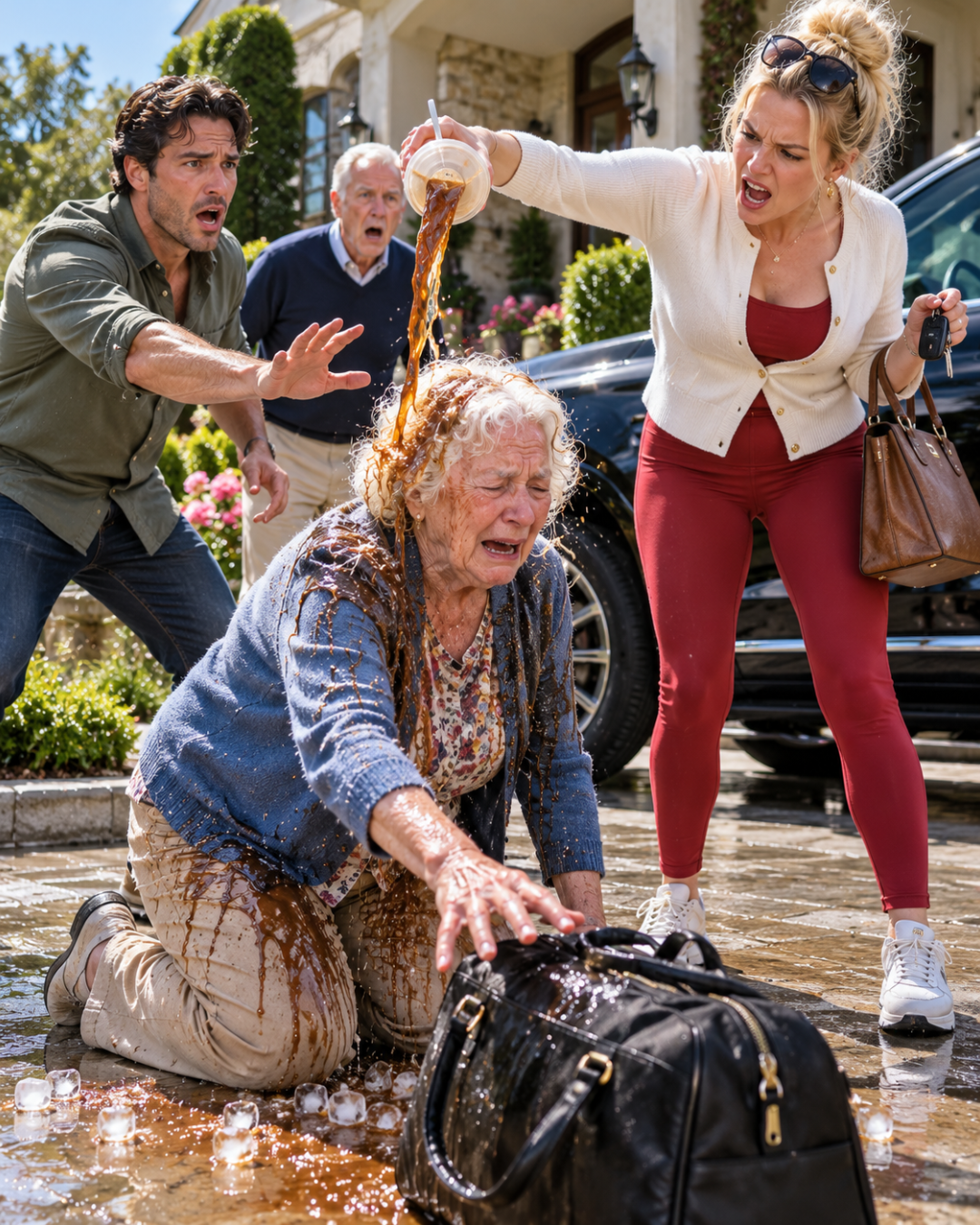
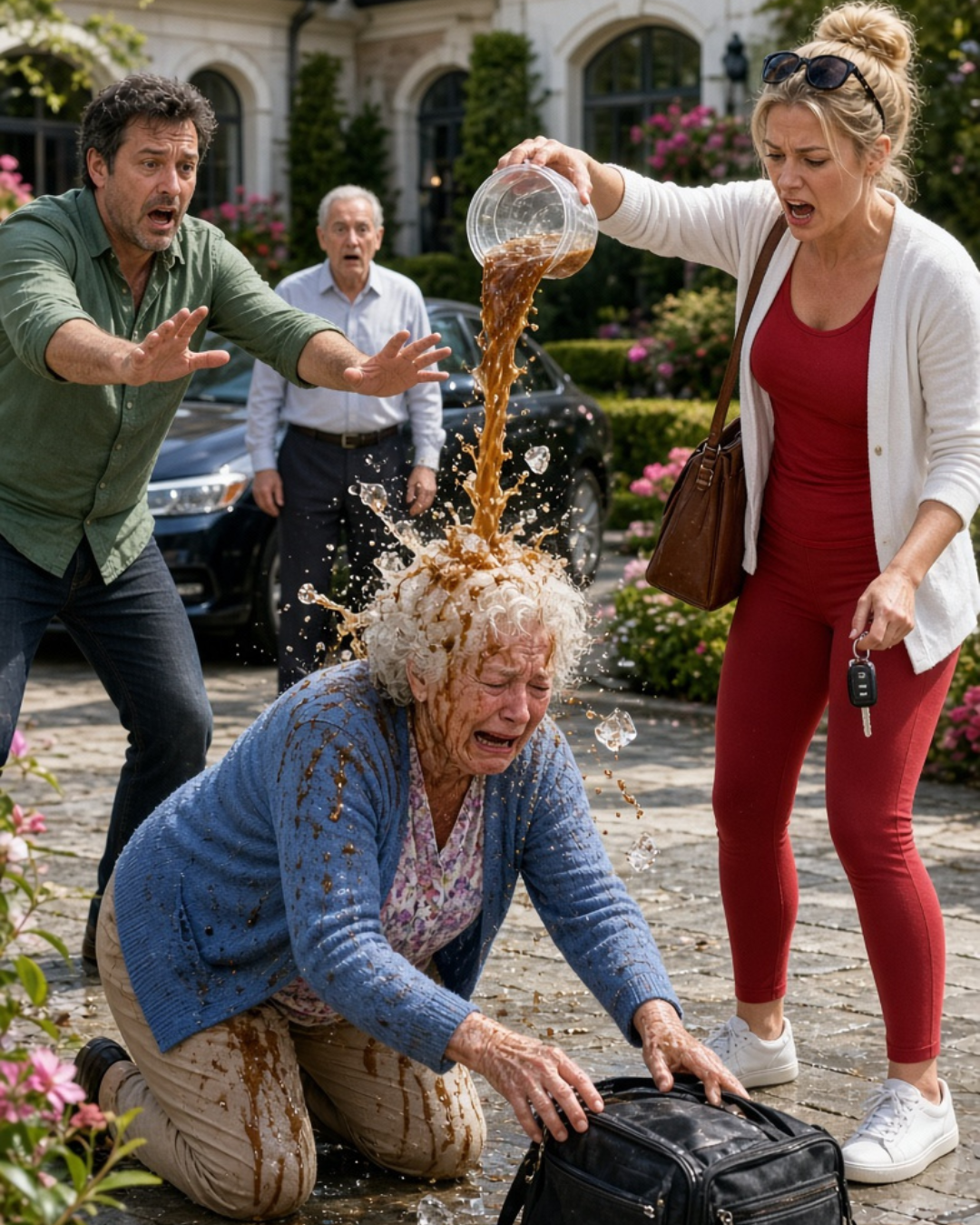
A few feet away stood Vanessa, my wife of eleven years, casually drinking an iced coffee.
She was dressed in immaculate, expensive yoga clothes. A designer handbag hung from her shoulder, and the keys to our SUV swung from her perfectly manicured fingers.
“Your mother isn’t my responsibility,” Vanessa said.
Her tone was completely flat, without the slightest hint of compassion.
I stared at her, struggling to believe that those words had actually come out of her mouth.
My own car was at the repair shop. The SUV parked in our driveway, which I had purchased and continued to maintain, was the only vehicle available to us.
Mom had a cardiology appointment in forty minutes. We’d waited three agonizing months for this follow-up, and the specialist needed to review her latest test results.
“Vanessa, she needs to see her specialist,” I said, deliberately keeping my voice quiet. I didn’t want an argument in front of my mother. “I only need the car for a couple of hours.”
Vanessa didn’t bother lifting her eyes.
Her thumbs continued moving rapidly across her phone.
“Then find another way. I have brunch plans with the girls. I’m not rearranging my entire day because your mother can’t manage her own schedule.”
My stomach twisted.
I glanced at Mom.
She had gotten out of bed at five that morning to organize her medical records, making certain every document was in the correct folder.
The previous evening, she’d even baked Vanessa’s favorite banana bread. She’d carefully wrapped two slices in cling film and attached a little note because she knew my wife had a habit of skipping breakfast.
And now Vanessa couldn’t spare a car for a few hours.
“It’s all right, David,” Mom whispered.
Her voice shook slightly, and she couldn’t bring herself to meet my eyes.
“We can reschedule. I don’t want to cause trouble between you two.”
Hearing that felt like someone had struck me in the chest.
My mother had spent her entire life trying to make herself smaller so she wouldn’t inconvenience anyone.
Now she was apologizing because she needed transportation to a doctor who was helping keep her heart functioning.
I turned back toward my wife.
“You know how important this visit is. The doctor needs to review her latest tests.”
Vanessa released a long, theatrical sigh, as though the conversation itself were an unbearable burden.
“And you know how tired I am of everything revolving around your mother. She’s eighty-two, David. You can’t expect the entire world to stop whenever she needs something.”
Something cold and heavy settled inside me.
For years, I’d defended Vanessa’s behavior.
I’d convinced myself she was overwhelmed by the demands of running her boutique.
I’d told myself she simply wasn’t the affectionate, family-oriented type.
I’d repeatedly chosen to avoid conflict in my marriage rather than defend the woman who had raised me.
But as I watched Mom shrink beneath Vanessa’s icy stare, I finally understood something I’d refused to acknowledge.
I hadn’t been keeping the peace.
I’d been behaving like a coward.
Without saying another word to Vanessa, I took out my phone and called Walter Bellamy.
Walter lived next door. He was a retired paramedic who’d spent thirty years responding to emergencies during the worst moments of other people’s lives.
He answered after two rings.
When I explained what was happening, he didn’t hesitate.
“I’ll be there in five minutes. Tell Margaret not to worry.”
Vanessa rolled her eyes as soon as I ended the call.
“Unbelievable. You really had to involve the neighbors just to make me look like the bad guy?”
“You managed that without any help from me,” I replied softly.
A few minutes later, Walter’s silver sedan pulled into our driveway.
I picked up Mom’s hospital bag, gently took her arm, and guided her toward the door.
Just as we stepped outside, Vanessa called after me.
“And David? Don’t use my credit card for the hospital parking again. I’m not paying for your mother’s expenses.”
I didn’t turn around.
I couldn’t trust myself to look at her.
Instead, I helped my mother settle into Walter’s car.
The trip to the hospital passed in a blur of tense silence.
At the clinic, the cardiologist gave us cautiously encouraging news.
Mom’s heart condition appeared to be stabilizing, but he stressed that keeping her stress levels low was absolutely essential.
Mom smiled politely and thanked him.
Yet when we returned to the quiet waiting area, with its harsh fluorescent lighting, while Walter went to bring the car around, I noticed something disturbing.
My mother’s hands were trembling uncontrollably.
“Mom, what is it? Are you okay?” I asked, reaching toward her.
She wouldn’t look at me.
Instead, she opened her worn leather purse and began searching through it with shaking fingers.
Eventually, she pulled out a folded sheet of paper.
It was a statement from her local credit union.
“David,” she whispered, her voice breaking. “I promised I wouldn’t show you this. But the doctor said no stress, and… I don’t think I can carry this secret anymore.”
I took the paper from her.
I assumed it was an unexpected medical bill she couldn’t afford.
But when I examined the figures printed on the page, the blood seemed to turn to ice in my veins.
The statement belonged to the little credit union Mom had used since my father was still alive.
I knew she kept her savings there.
It wasn’t an enormous amount of money, but she’d always been careful. Those savings were supposed to allow her to live comfortably and independently, without ever having to rely on me financially.
Now the balance showed less than one-third of what should have remained.
I blinked, convinced I’d misunderstood what I was seeing.
Then I examined the transaction history.
On the first day of every month, the same automatic withdrawal appeared.
Six hundred dollars.
Month after month.
The recipient was identified by just two words.
V. Carter.
Vanessa Carter.
My wife.
“Mom,” I choked out, barely recognizing my own voice. “What is this?”
She kept her eyes fixed on her lap.
Her wedding ring hung loosely around her thin finger.
“Thirty-six months,” she said quietly. “Three years this October.”
I calculated the total in my head.
Twenty-one thousand, six hundred dollars.
And that didn’t include the fourteen thousand dollars Mom had already given us three years earlier, when Vanessa’s boutique had been dangerously close to bankruptcy.
“Why?” I asked.
The word barely made it past my throat.
Mom nervously straightened the edge of her blue cardigan.
“After I helped with your mortgage… Vanessa came to my house. You were at work. She brought flowers. She sat at my kitchen table and cried, David. Real tears. She said the boutique was still failing, worse than you knew. She said if it closed, the debt would ruin both of you.”
I shut my eyes.
A sickening sense of betrayal swept over me.
“She told me you were already so stressed you weren’t sleeping,” Mom continued, almost inaudibly. “She said you had too much pride to ask me for more help, and that if you found out she’d come to me, it would humiliate you. She begged for a little help each month. Just for six months, she said. I’m your mother, David. I thought I was protecting you.”
“And it never stopped,” I said.
“Every time I asked, she said they were almost there. Just one more quarter. Then, a year ago, I saw pictures of her on that trip to Napa with her friends. I saw the new purses. I told myself it wasn’t my business.”
“You should have told me,” I pleaded.
Mom finally lifted her head.
The fear in her eyes nearly broke me.
“When I finally told her I couldn’t afford it anymore, she got angry. She told me I had agreed to help, and if I stopped, the boutique would fail and it would be my fault. She said you would blame me. She said you would never forgive me for ruining your marriage.”
Your mother isn’t my responsibility.
Vanessa’s words from that morning echoed through my mind.
She’d been taking money from my elderly mother’s life savings to support her own lifestyle, while treating Mom as though she were something unpleasant stuck to the bottom of her shoe.
Then Mom spoke again.
“There’s one more thing.”
I didn’t think I could endure another revelation, but I nodded.
“When Vanessa signed the new lease for the boutique storefront downtown two years ago… the landlord required a personal guarantor with perfect credit.”
She swallowed.
“I signed it, David. If she defaults on the rent, they can come after my house.”
For a moment, the entire room seemed to tilt.
“Mom… do you know how much that rent is?”
“I know,” she answered. “I thought I was helping my son’s family.”
“When is the lease up?” I asked, panic rising through my chest.
Mom reached into her purse again.
This time, she produced a letter.
“The current term ends this month. The landlord sent the renewal notice three weeks ago.”
Her eyes filled with tears she was struggling not to shed.
“Vanessa said she was bringing the papers over this weekend. The landlord needs the guarantor signature by Friday. If I don’t sign it… I don’t know what will happen to her store. Or to me.”
Friday.
It was Wednesday.
We had only forty-eight hours before my mother could be drawn into another financial obligation that might put her home at risk.
And for the first time in eleven years of marriage, I knew that protecting Vanessa from the consequences of her actions was no longer an option.
PART 2
Walter took us to Mom’s house instead of driving back to mine.
He didn’t question the change of plans.
He simply opened her car door, offered his arm, and escorted her carefully up the porch steps.
“Walter,” Mom said, still determined to be a gracious hostess despite everything she’d endured, “you’ll stay for a slice of banana bread. I insist.”
Inside, the familiar scent of cinnamon and old paper greeted us.
It had always been a place where I felt safe.
The loaf of banana bread Mom had prepared the previous night was still sitting on the kitchen counter.
Beside it lay two slices, neatly wrapped in plastic.
A sticky note was attached.
For Vanessa. Don’t skip breakfast, dear.
The sight made me so sick that I had to step outside onto the back porch.
A few minutes later, Walter joined me carrying two mugs of black coffee.
He handed one to me and rested against the wooden railing.
“I spent a long time on an ambulance, David,” he said in his deep, steady voice. “I know what a man looks like when he’s just found out something he can’t unknow.”
I drew a shaky breath.
Then I told him everything.
The monthly withdrawals.
Vanessa’s tears and fabricated explanations.
The threats she’d used to frighten Mom into silence.
And the lease guarantee that could endanger her home.
Walter listened without interrupting.
When I finished, he looked toward the quiet suburban street.
“My late wife used to say you learn exactly who a person is by how they treat someone who can’t do anything for them. Your mother can’t do anything for Vanessa anymore. And the second your mom needed a ride, Vanessa showed you who she was.”
“What do I do, Walter?” I asked.
For the first time in years, I genuinely didn’t know how to move forward.
“You stop standing between her and the truth,” he replied. “Consequences are the only things that change people.”
I went back inside and made two calls immediately.
The first was to Mom’s credit union.
With Mom sitting next to me and providing her verbal authorization, we permanently stopped the recurring monthly payment to Vanessa.
The second call went to Diane Okafor.
Diane was the daughter of one of Mom’s longtime friends, and she’d built a reputation as an exceptionally sharp attorney who didn’t waste time with excuses.
After I explained the situation, she asked me to email the boutique’s lease documents so she could examine them.
“I’ll review the guarantee language,” Diane said over the phone. “But regarding the transfers… that’s financial exploitation through coercion. Your mother gave it voluntarily, but under false pretenses. What do you want to do?”
I turned toward Mom.
She was sitting quietly beside me, her hands folded in her lap.
“I want her to look me in the eye,” Mom said. “I want the truth. The money comes later.”
That night, I stayed at my mother’s house.
I slept in the bedroom I’d occupied as a child.
My phone remained quiet until 7:12 the following morning.
Then Vanessa’s name appeared on the screen.
I let the call go unanswered.
At 7:14, she called again.
By eight o’clock, I’d counted fifteen missed calls.
At 8:03, the text messages began.
David answer your phone. This is serious.
The landlord just called. I need your mother’s signature by Friday. Why isn’t she answering?
The credit union payment bounced. Did she change her account? David, call me!
She had noticed the missing six hundred dollars on the very first morning of the month.
She hadn’t been thinking about Mom’s health.
She’d been monitoring her bank account as though my mother were an automatic cash machine.
By 5:48 that evening, the number of missed calls had reached thirty-eight.
When the phone rang for the thirty-ninth time, I finally answered.
“David!” Vanessa cried, her voice strained with panic. “Oh my god, where are you? Is your mother okay? Did she have a heart attack? Because I can come to the hospital right now—”
“She’s fine,” I said calmly. “She’s sitting right next to me.”
The other end of the line went silent.
Then her tone changed.
“Then why hasn’t she signed the lease renewal?” Vanessa demanded, irritation cutting through her fear. “I need that paperwork, David. If I don’t have a guarantor by tomorrow, the landlord wants six months’ rent as a deposit. I will lose the store!”
“I know,” I answered.
“What?”
“I know about the lease, Vanessa. I know about the six hundred dollars a month for three years. I know what you told her to keep her quiet.”
I heard her inhale sharply.
“David… I can explain. It’s not what it looks like.”
“Tomorrow at ten in the morning,” I said. “Come to Mom’s house. Come alone. She wants to hear your explanation face-to-face.”
“And if I don’t?” she asked, her voice shaking.
“Then her lawyer will handle it. But hear me clearly, Vanessa: my mother is never signing another piece of paper for you again.”
I ended the call.
I knew that by the following morning, the marriage I’d spent eleven years protecting would never be the same.
Vanessa arrived at 9:52 a.m.
I watched her car pull up from Mom’s living room window.
She looked nothing like the immaculate, self-assured woman who’d stood in our hallway the previous morning.
She wore faded jeans, an oversized gray sweatshirt, and no makeup.
Her eyes were swollen and red.
For five full minutes, she remained in the driver’s seat, clutching the steering wheel.
Eventually, she opened the door and stepped outside.
Mom insisted on answering the front door herself.
“Good morning, Vanessa,” she said kindly. “Come in. I’ve made coffee.”
Vanessa entered the kitchen with the defeated expression of someone approaching a terrible judgment.
She wouldn’t meet my eyes.
We gathered around the small oak table.
It was the very same table where Vanessa had sat crying three years earlier, persuading my mother to finance her failing business in secret.
Mom placed the printed bank statement in front of her.
Vanessa stared at the page.
“I’m not here to yell at you, dear,” Mom said with quiet dignity. “My heart is too tired for anger. But I want the truth. I think I have paid for it.”
Vanessa’s lower lip began trembling.
“The boutique was failing. That part was true. I was drowning in debt. I was so ashamed. Everyone thought I was this successful entrepreneur, and I was a fraud.”
“So you came to me,” Mom said.
“Yes. And you said yes so easily. You just hugged me and said family helps family.”
A tear rolled down her cheek.
“That’s what made it so awful. I meant to stop. I swear I did. But then the store recovered about eighteen months ago, and… and I had the money, but I spent it on a trip. And then the transfers just kept coming. It felt like free money. Like it wasn’t real.”
“It was real to me,” Mom answered softly. “It was my late husband’s pension. It was the money I saved so I wouldn’t have to be a burden on David.”
Vanessa covered her face with both hands.
Mom waited a moment before asking the question that had been hurting her most.
“Why did you tell me my son would never forgive me if I stopped paying?”
For a long time, the only sound in the kitchen was Vanessa’s muffled crying.
Finally, she raised her head.
“Because when I was fifteen, my grandmother moved in with us,” she whispered. “My mom worked two jobs, so I was the one who took care of her. I gave her medicine, I helped her to the bathroom. I lost my high school years. And when she died, my mother told me I should have done more.”
She wiped her nose against the sleeve of her sweatshirt.
“I swore I would never be responsible for an old person again. When I married David, I saw how much he loved you, and I was terrified. I thought one day I would lose my life again taking care of you. I started resenting you before you ever did anything wrong. And taking your money… it made me feel like I was in control. Like you owed me.”
I sat motionless.
In eleven years of marriage, Vanessa had never shared that experience with me.
For a moment, I felt genuine compassion for the fifteen-year-old girl who’d been forced into responsibilities no child should have carried.
But then I looked at Mom’s fragile hands.
Whatever pain Vanessa had suffered, it did not excuse what she’d deliberately done to my mother.
Mom reached across the table and gently covered Vanessa’s hand with her own.
Vanessa recoiled slightly, as though the unexpected kindness had burned her.
“I am so sorry that happened to you, Vanessa,” Mom said, her voice filled with sincere sadness. “No child should carry that burden. But I am not your grandmother. And what you did to me was cruel.”
Vanessa nodded through her tears.
“I am not signing the lease,” Mom continued firmly. “You will have to figure out your business on your own. Furthermore, my lawyer has drafted a repayment agreement. Twenty-one thousand, six hundred dollars. No interest, but you will pay back every cent.”
“Yes,” Vanessa managed. “Of course.”
Then Mom withdrew her hand and turned toward me.
“The rest,” Mom said, “is between you and my son.”
Vanessa looked at me, her face streaked with tears.
Over the previous twenty-four hours, I’d imagined that moment countless times.
I’d pictured myself shouting at her.
I’d imagined packing my belongings and handing her divorce papers.
But sitting there, I felt something much heavier than anger.
I felt calm.
“I’m not coming home, Vanessa,” I said.
Her expression collapsed.
“For eleven years, I made excuses for how you treated her,” I continued. “I let you disrespect her because I was afraid of conflict. That is my failure. But I need to see who you are when you aren’t backed into a corner. When nobody is paying you to be nice.”
“David, please—”
“I need space,” I told her, rising from my chair. “If you want this marriage to survive, you are going to have to prove it. Not with tears. With time. And right now, I don’t know if I can ever look at you the same way again.”
For the first time, Vanessa had no argument left.
And for the first time, I wasn’t going to rescue her from what she’d done.
PART 3
The boutique shut its doors on the final day of that month.
I learned about the closure from a friend we both knew.
Vanessa hadn’t asked me to rescue the business.
She hadn’t requested a loan or begged me to cover the rent.
Instead, she sold off the remaining inventory, parted with her designer handbags, and quietly closed the store around which she’d built so much of her identity.
She found work as a floor manager at a mid-range department store in the local shopping mall.
The hours were long.
She spent most of her shifts standing, dealing with frustrated customers, and earning only a fraction of the money she’d once brought home.
On November first, an envelope arrived at Mom’s house.
Inside was a cashier’s check for five hundred dollars.
Vanessa had written a short notation on the memo line.
1 of 72.
There was no accompanying letter.
No explanation.
Just the payment.
Mom entered it into her ledger.
The following month, another check arrived.
2 of 72.
I was still sleeping in my childhood bedroom.
Vanessa and I had begun marriage counseling with a therapist named Dr. Reyes.
Those sessions were painful.
I had to confront my own behavior, including the way my fear of becoming like my short-tempered father had led me to avoid confrontation at almost any cost.
In trying so hard not to become an angry man, I’d become someone who stood silently by while his mother was mistreated.
Vanessa had her own difficult work to do.
She was forced to examine the resentment, fear, and unresolved trauma she’d carried since her teenage years.
During one appointment, she stared at the floor of Dr. Reyes’s office and made an admission.
“I chose to be cold,” Vanessa said. “Cold felt safe. Caring felt like a trap.”
“But it wasn’t safe for David’s mother,” Dr. Reyes reminded her gently.
“I know,” Vanessa whispered.
Our marriage didn’t heal overnight.
Some weeks, we hardly spoke except during counseling sessions.
I kept expecting the old Vanessa to reappear.
I waited for her to demand praise simply because she was doing the minimum required to repair the damage.
But she didn’t.
She continued going to work.
And on the first of each month, another repayment check arrived at Mom’s house.
By March, my mother’s health had improved considerably.
Her cardiologist reported that her blood pressure had fallen and her heart rhythm was more stable.
“Keep doing whatever you’re doing,” he told her.
Mom believed the improvement had a great deal to do with finally being free of the terrible secret she’d carried for three years.
Then, on a rainy Tuesday afternoon, someone knocked hesitantly on her front door.
I opened it.
Vanessa stood on the porch.
She wore no makeup, and her hair was pulled into a frizzy ponytail.
She held a white bakery box marked with small grease stains.
She looked frightened, and the damp afternoon air made her shiver.
“I know I don’t have the right to just show up,” she said uncertainly. “But… I wanted to bring something.”
I moved aside to let her enter.
Mom appeared from the kitchen, drying her hands on her apron.
Vanessa carried the box to the table and carefully opened it.
Inside was a loaf of banana bread.
It leaned awkwardly to one side, with a blackened edge and a sunken center.
“I tried to bake your recipe,” Vanessa admitted, her cheeks turning bright red. “I found it on the church website. This is my ninth attempt. The others were completely inedible. I know it’s terrible, but I… I wanted to try.”
Mom approached the table.
She broke a small piece from the side that hadn’t burned and chewed it thoughtfully.
The silence seemed endless.
“It’s dreadfully dry,” Mom finally announced.
Vanessa’s shoulders sagged.
“You didn’t use ripe enough bananas,” Mom continued, sounding authoritative but not unkind. “They need to be almost black, dear. And you kept opening the oven door, didn’t you?”
Vanessa blinked in surprise.
“How did you know?”
“Because you lose heat every time you peek,” Mom replied.
A small but unmistakably genuine smile appeared on her face.
“Take your coat off, Vanessa. Wash your hands. Let me show you how it’s actually done.”
I remained in the doorway, unable to move.
I watched my wife remove her jacket and tie one of Mom’s spare aprons around her waist.
Her hands were trembling as she stepped into that kitchen.
It was as though she understood she was being invited somewhere sacred.
That afternoon changed the direction of all our lives.
From the hallway, I watched my eighty-two-year-old mother stand beside the woman who’d taken advantage of her, patiently demonstrating the proper way to mash bananas.
Mom was surprisingly strict about the recipe.
When Vanessa reached for too much sugar, she playfully tapped her hand with a wooden spoon.
At one point, Vanessa made a joke about her hopeless baking abilities.
Mom laughed.
Not a polite chuckle.
A genuine, bright laugh, the kind I hadn’t heard from her in years.
Vanessa began laughing too, even as tears streamed down her cheeks.
An hour later, the new loaf emerged from the oven.
The whole house filled with the warm smell of freshly baked banana bread.
Mom cut two slices, wrapped them in plastic, and placed them in Vanessa’s hands.
“For breakfast,” Mom said. “Don’t skip it.”
Vanessa broke down.
She leaned against my mother’s shoulder and began sobbing softly.
Mom held her and gently stroked her hair.
“I forgive you, Vanessa,” Mom whispered. “Not because you are paying me back. But because I’m eighty-two, and holding onto anger is too heavy. Just remember… trust is built slowly. One slice at a time.”
“One slice at a time,” Vanessa repeated through her tears.
I moved back into our home in May.
There was no celebration or dramatic announcement.
We simply began again.
We continued attending therapy.
Vanessa continued sending Mom a check on the first day of every month.
Eventually, she earned a promotion at the department store.
She didn’t celebrate by purchasing another expensive handbag.
Instead, the amount on Mom’s monthly checks doubled.
Vanessa wanted to repay the debt sooner.
In September, exactly one year after that terrible morning in our hallway, Mom was due for her annual cardiology appointment.
As though history were determined to repeat itself, my car had developed an unpleasant grinding noise and was once again at the repair shop.
I was getting ready to telephone Walter Bellamy when Vanessa entered the kitchen.
She was carrying Mom’s familiar canvas hospital bag.
In her other hand was a carefully organized binder containing all of Mom’s medical information.
“I requested today off two weeks ago,” Vanessa said in an almost casual voice, although I noticed the nervousness in her eyes. “I’ve got her medication list updated and alphabetized. I’m driving her.”
I followed them out to the porch.
Vanessa gently helped my mother settle into the passenger seat of the SUV.
There were no designer yoga clothes or impatient gestures this time.
Just a woman quietly taking care of someone in her family.
As they drove away, I saw Mom turn toward Vanessa and smile.
It wasn’t forced.
It wasn’t polite.
It was genuine affection.
That evening, the three of us gathered in Mom’s kitchen.
Walter stopped by and helped himself to a piece of the perfectly baked banana bread Vanessa had prepared that morning.
Mom was telling one of her familiar stories about my father.
I’d heard it at least a dozen times before.
In the past, Vanessa would have spent the entire conversation staring at her phone.
This time, she leaned forward.
She listened.
She asked questions.
And when Mom reached the funny parts, Vanessa laughed along with everyone else.
Later that evening, as we were preparing to leave, Mom stopped Vanessa near the front door.
She handed her a small package wrapped in plastic.
We walked out to the car together.
Beneath the glow of the streetlamp, Vanessa looked down at the package.
A sticky note was attached.
The handwriting was Mom’s familiar, slightly shaky cursive.
Vanessa let out a quiet gasp.
Tears immediately filled her eyes.
Without speaking, she handed the note to me.
It didn’t say, Don’t skip breakfast.
It said:
For my daughter.
Mom is eighty-three now.
Every Thursday night, she still manages to beat Walter at gin rummy.
Her savings account has almost been restored, and Vanessa’s checks continue arriving on schedule, each one bringing the remaining balance closer to zero.
I often find myself thinking about that morning in the hallway.
About how close I came to remaining silent.
How easily I could have convinced myself that avoiding an argument was more important than confronting what was happening.
I came dangerously close to letting silence win simply because I wanted to preserve the appearance of peace.
But I learned something I will never forget.
Silence is not the same thing as kindness.
Sometimes, staying quiet merely passes the pain to the person who has the least ability to defend themselves.
I also learned that forgiveness isn’t a sign of weakness.
It can be one of the strongest gifts one person offers another, but only after the truth has been acknowledged and brought into the open.
People are capable of changing.
But they don’t change because someone continually shields them from the consequences of their decisions.
Real change begins when they’re finally required to face what they’ve done.
And sometimes, love means allowing those consequences to happen while leaving the door open for the person who is genuinely willing to return with honesty.
My mother understood that better than either of us.
She rebuilt our family in the only way she knew.
Quietly.
Patiently.
One slice at a time.
If you want more stories like this, or if you’d like to share your thoughts about what you would have done in my situation, I’d love to hear from you. Your perspective helps these stories reach more people, so don’t be shy about commenting or sharing.
