

PART 1
Dad was salting his steak when he said, “The house goes to your sister. You have 24 hours to pack.”
Mom passed the potatoes. “Be grateful. Your sister wanted you out tonight.”
The dish was hot against my knuckles. I didn’t move my hand. The paper was already on the table, squared beside the salt. I read every line twice. Then I signed without a word and capped the pen.
I looked up. “So, nobody told you what grandma did?”
Dad told me to eat my steak. He hadn’t asked what she’d done. Neither had mom.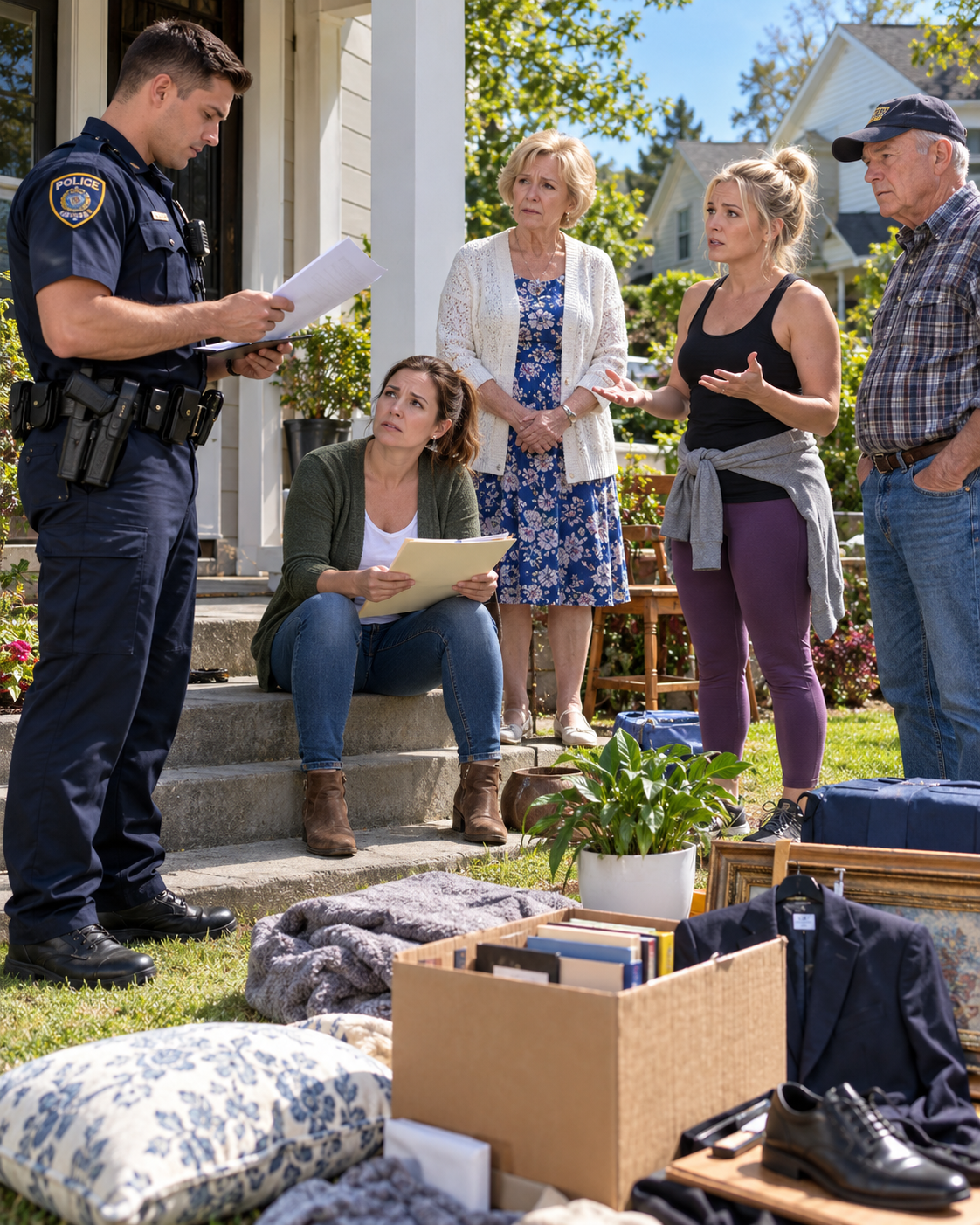
That paper would become the most expensive thing my sister ever touched.
My parents’ dining room window looks out on the back nine at Lachland. On a June Friday, every foursome walking in off the course can see whether a church elder still has his whole family at his table.
That Friday, only one of his daughters came. Me, Josie Halberg, 46, carrying Grandma’s rhubarb pie.
We’d buried Grandma 9 days earlier.
My mother, Linda Halberg, has never once let a silence sit at her table, and she’d called to fill this one.
“Just a family supper, honey.”
I’d said yes the way I’d said yes to that family my whole life, before she finished the sentence.
The pie was still warm. I could feel it through the dish towel the whole drive over.
Nobody meets you at the door in my parents’ house. You let yourself in and walk the hallway past the photo wall.
11 frames of my sister Kendra Voss. Dance recital. Her wedding. The ribbon cutting at her Omaha studio with a pair of scissors as long as my arm. The studio my parents had pulled their retirement money out to open.
And one frame of me. High school graduation. Half my face behind Kendra’s shoulder.
The table was set for 3.
“Kendra’s not driving down till morning,” Mom said, bright as a church bell, already pulling out my chair. “Oh, you didn’t have to bring anything. Sit. Sit, honey.”
“With the trailer,” Dad said from the head of the table.
Mom looked at him. Just a look. He went back to his plate.
I set the pie on the kitchen counter. Nobody cut it. Nobody mentioned it again.
My father, Gary Halberg, had been an elder at First Lutheran for 20 years, and he eats the way he runs a meeting. In order, without looking up. Beside his plate, squared against the silver salt cellar, lay a manila folder.
“Smells good, Dad,” I said.
“Grill ran hot.” He pointed the tongs at the patio door as if it had wronged him. “We’ll get mother’s things squared away after we eat.”
I sat where I always sit, with my back to the window and the golf course. Mom passed the green beans. The steaks came off the platter. The folder sat by the salt through all of it.
And nobody touched it. And I didn’t ask.
Dad salted his steak. Three shakes, even, the way he does everything.
Then, without looking up, “The house goes to your sister. You have 24 hours to pack.”
He opened the folder with his knife hand. One sheet, typed, a yellow flag where my name went.
“Kendra drew it up. Family agreement and release. I signed the quit claim at the bank this afternoon. It’s done on my end.”
Mom slid the potatoes across until the dish touched my hand.
“Be grateful. Your sister wanted you out tonight.”
She patted the dish the way she’d have patted me.
“We talked her into the 24 hours, honey.”
There it was. All of it. Between the salt and the potatoes, the house, the clock, the paper.
I’ve had dental appointments with more notice.
But it wasn’t the house that landed. It was the arithmetic.
My sister, who was not at this table, who hadn’t been in that house more than twice a year, had a wish.
And her wish outweighed my 8 years.
Eight years of pill boxes and bath chairs and nights in the armchair when her heart went sideways. Weighed on my father’s scale and found lighter than a phone call from Omaha.
Dad chewed. Mom spooned beans onto his plate. My fork was still in my hand.
The potato dish was hot against my knuckles, and I didn’t move my hand, and I didn’t say a word.
Mom said grateful. The way she said amen, like the matter was closed.
I read it twice while they ate. The paper was patient. So was I.
One line caught me the second time through: including any promise, oral or written, to leave the residence to me.
And every line of it, top to bottom, talked about one thing only: the estate of Ingred Halberg. My grandmother’s estate.
Not the house. The estate.
20 years running a doctor’s front office teaches you this. If that house were already my father’s, he wouldn’t need my signature for anything. You don’t ask a tenant to sign off on a house you own.
Somebody had wanted this paper. Somebody had asked for it.
Under the table, my thumb found the crack in the leather strap of Grandma’s watch. The crack her wrist had worn there, not mine. I held it like a railing on an icy step.
Then I signed without a word and capped the pen.
Mom had her phone out before the ink was dry. She photographed the page, sent it, and the phone buzzed back before she’d set it down.
Hurried people are frightened people.
I looked up.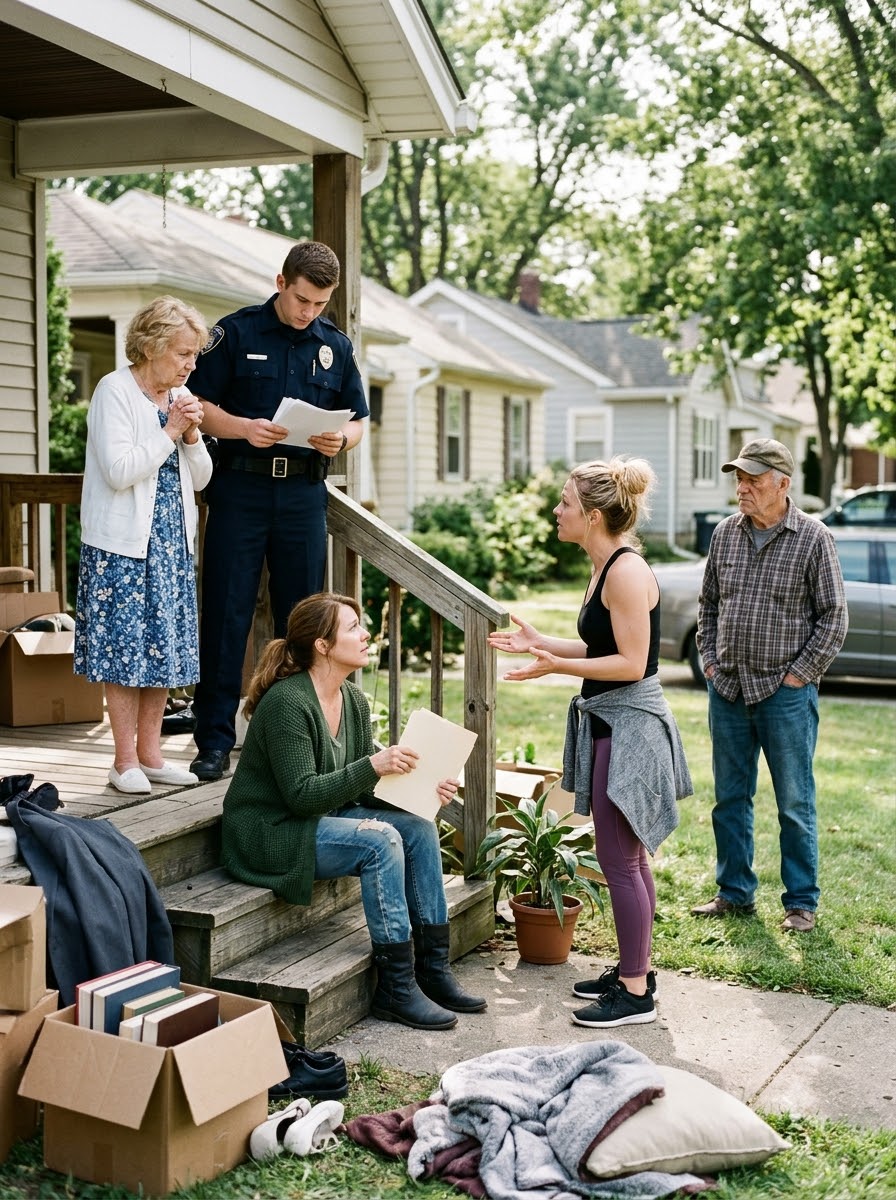
“So nobody told you what grandma did?”
“Mother did everything through me.” Dad didn’t stop cutting. “Her paper’s been in my safe since 2013.”
“Eat your steak, honey,” Mom said in her church voice. “Let’s not make tonight about mother.”
They looked at each other one beat, and nobody asked.
Not what, not when, now about everything going through my father.
My grandmother kept her own books at her own desk until the last weeks of her life. Nobody touched her checkbook. Not my father. Not me.
So everything through me was a lovely thing to say to a steak.
I knew exactly how far that paper could reach. I’ll tell you how when we get to the counter Grandma sat behind for 30 years.
Dad folded the sheet in thirds and slid it into his jacket.
His key ring stayed by his plate, and I counted the keys the way you count anything when you can’t look at a person’s face.
Truck, church, house, and one more, an old brass key with a dab of red nail polish on the bow, so a woman’s fingers could find it in the dark.
Grandma’s house key lay on Dad’s ring, the red-dabbed one missing from her hook since May.
Grandma’s house is a foursquare on a street of old elms three blocks from Hastings College. And that night I was on my knees in her dining room wrapping spoons.
I packed what the paper named estate: her hymnal, her church coat with the tissues still in the pocket, her reading glasses in the case with the cracked hinge. Every spoon and newspaper the way she’d taught me.
On each box I wrote “Estate for Gary” in marker.
And I taped the same label to the China Hutch and to her writing desk because those were hers, too.
My own things I left where they were. The blazers I wear to the clinic, my seed trays, my books, the Christmas plates on my kitchen shelf.
No note, no explanation.
In the living room, there are four dents in the carpet where the hospital bed stood until the week she died. I packed around them. I did not step on them once.
The funeral came back to me with the tape.
Dad in the pulpit in his elder’s voice, thanking Kendra for driving down from Omaha to sit with mother that Saturday afternoon in May, the most precious afternoon of her last weeks.
The ladies in the front pews turned around to smile at my sister.
He thanked the hospice nurses. He thanked the church kitchen.
8 years, and he didn’t say my name.
Something else came back uninvited.
After that precious afternoon, with the morphine running, Grandma had said clearly twice, “Kendra brought the Sorenson boy. He measured my windows.”
I’d stroked her hand and blamed the drug. Of course I had. What else does a person do at that hour with a woman who is dying?
By the time the last box went out, they were stacked on the porch under the light, labels facing the street where anybody could read them.
Across the way, one porch light was still on. The tape had started to burn my fingers, and I kept going.
Just after midnight, a hand truck came rattling across the street toward my porch light.
The man behind the hand truck was Lyall Brandt, who lives across the street, and whom I’d known until that night by his wave.
74. 41 years with the Burlington Railroad. A widower 5 years now.
The whole block remembers the spring Carol died because he kept her bird feeders full.
He’d brought moving blankets, a stack of them, left over from my brother-in-law’s move.
He thought what the whole street thought, that Gary Halberg’s older girl was being put out.
So he didn’t ask why.
He wrapped the china hutch where it stood. He wrapped the desk. Then he started carrying boxes to the garage.
And he carried them from the bottom, both hands under, never by the lid.
“That’s how you carry somebody’s whole life,” he said when I reached for a lid. “Lift with your legs.”
I did what I do. I offered coffee. I offered to pay him for his time. I said sorry for keeping him up. Sorry for the hour. Sorry for the mess.
And every time he waved it off, I wiped my hands on my jeans because the tape had rubbed them raw and I didn’t know what else to do with them.
“Coffee keeps me up,” he said. “I’m up anyway.”
He set the box of spoons on the garage floor the way you’d set down a basket of eggs.
We worked until there was nothing left on the porch. He didn’t talk much.
When he did, it was about the boxes.
“This one’s heavy. That one rattles. Watch the step.”
Not one question about the labels or my father or what a woman does when her own family writes for Gary on her grandmother’s desk.
When the last box was in, he folded the hand truck against the railing and stood a minute looking at the street.
Then he asked the only question he asked all night.
And he asked it the way you’d ask about rain, except his eyes never left my face.
“That fella with the clipboard?” Lyall asked. “The one your sister brought in May. He coming back?”
“What fella?” I said.
Lyall looked at me a long moment.
“Never mind,” he said. “Get some sleep.”
And he went home.
I didn’t sleep.
PART 2
I set his question down beside the other thing that didn’t fit, a paper that shouldn’t have needed my name, and let them sit in the dark.
Before the sun was up, eyes stinging, I baked cinnamon rolls from the frozen dough Grandma kept for funerals, carried the pan across the street, and set it on his porch.
Under the pan, I tucked a 50, folded in quarters.
I can’t bear to owe. I never could.
When I opened my door for the Tribune, the 50 was under my own doormat, folded the same way, no note.
I stood there with it longer than a person should stand on her own porch.
Then I went in and slid it under Grandma’s teacup on the windowsill, the chipped one she used for watering plants, and her voice came the way it does, out of nowhere and right on time.
“You don’t pay the rain, honey. You put out a bucket.”
I never understood that. I’d nodded like I had.
Hour 12 of 24 had come and gone.
To tell you about the counter, I have to tell you about the winter I came home.
I drove into Hastings from Lincoln with an old Buick, one suitcase, and a stack of credit card bills in my name, cards my ex-husband had opened, my signature on everyone, 38 years old and starting from less than zero.
The week I got back, Grandma slipped on the icy back steps and broke her hip.
In the hallway at Mary Lanning, my parents laid out the plan.
Sell the house. Move mother into Good Samaritan.
“It’s what’s best for her, honey,” Mom said. “We’ve prayed on it.”
I said I’d move in. I said I’d take care of her.
“You made your bed in Lincoln, Josie,” Dad said.
Then, before I could answer, “Kendra’s got two little ones. She can’t take this on.”
As if I’d asked Kendra to.
I remember the brick of that hallway wall, cold through my coat, and the Buick key biting into my palm because I’d made a fist around it without deciding to.
Grandma ended it from the bed.
“Josie lives with me.”
“Mother, you’re on painkillers.”
“My hip’s broken, Gary. Not my head.”
Dad looked at the floor. Mom looked at Dad.
That was the first time I heard my father call his mother confused. It would not be the last.
She came home with a walker, and the first thing she did before she’d sat down was clear the south windowsill of her African violets.
“Best light in the house,” she said. “It’s yours.”
My seed trays went there that afternoon.
Before she was off the walker, she took me downtown twice.
The first time was to the bank, where she sat beside me while I opened the first account in 15 years with only my name on it.
My name, not his.
“Every grown woman needs one door that opens to her own key,” she said.
And she signed as witness in that straight courthouse hand of hers.
The seed trays had just sprouted the week I couldn’t get out of bed.
I don’t have a better word for it than that.
The curtains stayed shut. The ceiling stayed where it was. My body felt like somebody had poured it full of lead and left it on the mattress.
And I couldn’t help anyone. Not Grandma, not the clinic, not myself.
Every morning I heard the walker in the hall.
Thump slide. Thump slide.
Grandma, 85, 11 weeks out from a broken hip, pushed that walker to the south window and watered my tomatoes and my peppers sown in egg cartons out of her chipped teacup.
Then she buttered a slice of bread, set it on the seat of the walker, and parked the walker outside my door.
She said one thing through the door the whole week.
“Seeds don’t care who’s sad. They just want water.”
Easter morning, I got up. I showered, I dressed, and I put double in the envelope on her desk.
$1,800, the first of the month, and then some.
On the front, in pen, “For the trouble.”
Now, my grandmother could count a stack of bills faster than any cashier in Adams County.
She picked up that envelope and didn’t open it. She put it in the drawer and shut the drawer.
At Easter lunch, my mother announced over the ham that she’d booked the pastor for Thursday. Counseling me and my ex-husband.
“The pastor has Thursday open, honey. He thinks there’s still hope.”
Grandma set her fork down.
“She’s done signing for that man, Linda. Pass the ham.”
“Mom.”
“Pass the ham.”
By market season, the seedlings Grandma had kept alive that week went to the Saturday market under a hand-lettered sign, Jos’s Starts.
She’d arranged for a friend from church to sit with her Saturday morning so I could go.
She never once asked me to stay home.
Not through the 7-day pill box, the bath chair, the nights in the armchair when her heart went sideways.
Two years ago, when I gave up the stall to stay close, she was the one who objected.
“You’ll go back to that market, Josephine.”
I didn’t.
The garden bed went to thistle.
In 8 years, nobody in my family ever asked why there was an envelope on Grandma’s desk.
The second time, in my church shoes, we went to her lawyer’s office and then to the courthouse, to the deeds counter.
Grandma sold me her house.
$900 a month, 96 months.
A contract for deed recorded that morning with her doctor’s letter clipped to the front.
Sound mind, sound memory.
Because I’ve watched what happens without one.
The whole law in one sentence: make the last payment and the house is yours.
And the record sits in a public book for anybody who cares to ask or to look.
“Nobody in this family gets to call you a charity case,” she said on the courthouse steps. “And the day they need to know, they’ll have to ask.”
So the envelope on her desk was never rent. It was payment one.
This New Year’s Day, it was payment 96.
3 days before the hospice nurse came, she had me push her wheelchair into the courthouse.
She rolled herself the last 10 ft to the counter she’d sat behind for 30 years and slid the deed across it with my name on it.
The clerk who took it was a woman she’d trained.
“Recorded,” the clerk said, and stamped it.
Then Grandma unbuckled her watch and buckled it onto my wrist.
“The rest is with my lawyer if they ever come.”
The paper on my parents’ table released my claims on my grandmother’s estate.
The house hadn’t been in her estate since the day she rolled that deed across the counter.
So, yes, I signed their paper.
It couldn’t reach a house I’d paid for 96 times.
Hour 14.
My brother-in-law’s trailer backed into my driveway and took the edge off the lawn.
Brady Voss wasn’t driving it. My sister was.
