

PART 1
The revolving doors sighed shut behind her. For a moment Elena stood frozen on the sidewalk, the phone pressed so hard against her ear that the edge bit into her cheek. Downtown traffic moved in its usual indifferent current. A bus exhaled at the curb. Somewhere above her the building’s glass facade caught the late-afternoon sun and threw it back in hard, clean sheets.
“Elena? Elena, what is it? Where are you?” Their mother’s voice crackled, already climbing toward panic.
Elena tried to speak and managed only a dry click. She looked back through the glass. The reception desk was a long curve of pale stone. Behind it, the wall was granite the color of wet slate. Mounted on that wall in brushed steel letters tall enough to be read from the street were two lines:
Voss & Associates
Principal Engineer
A. Voss
A. Voss. Not “Alicia Voss, unemployed.” Not “Alicia, the one who never finished her license.” Just A. Voss, set in metal that had been cut and polished and bolted into stone as if it had always belonged there.
“Mom,” she said again, and this time the word came out thin. “You need to get here. Right now. Don’t tell Dad yet. Just—get in the car.”
She lowered the phone without ending the call and stared at her own reflection in the revolving door. Ten years of the story they had told at church potlucks—Alicia was struggling, Alicia was hiding, Alicia couldn’t hold a job because of her “episodes”—collapsed against the letters on the wall. Her knees softened. She caught the edge of a planter and stayed upright only because the planter was bolted down.
Inside the atrium a security guard had already noticed her. He spoke quietly into a radio. Elena did not see it. She was still watching the name.
Up on the thirty-eighth floor, Alicia Voss stood at the long window of her office with a set of redlined structural drawings spread across the conference table behind her. The city below looked orderly from this height. She had learned to prefer it that way. Order was measurable. Order could be calculated, stamped, and defended. Family had never offered her any of those things.
Her assistant’s voice came through the intercom, careful and low. “Ms. Voss, there’s a woman in the lobby who appears distressed. Security says she was staring at the wall and then backed out onto the sidewalk. She matches the description you gave us last year—dark hair, your sister’s height. They’re holding her at the desk now. She hasn’t asked for you by name.”
Alicia closed her eyes for one measured second. She had expected this eventually. She had not expected it on a Thursday when the city permit office had finally released the foundation package for the riverfront tower and her team was still arguing about shear walls.
“Have them bring her up,” she said. “Conference room B. No one else in the room. And call building security to the floor, quietly. I don’t want a scene if my mother arrives behind her.”
“Yes, ma’am.”
Alicia rolled the drawings, slid them into their tube, and set the tube on the credenza. She did not change her clothes. The navy sheath and low heels were what she wore when she walked a site or sat across from a city engineer who needed to be reminded that the stamp on the drawings belonged to someone who would stand behind every number. She checked the small scar on her left wrist—old, pale, from the day she had slammed a car door on it while moving her last boxes out of her parents’ house—and then she walked down the corridor to Conference Room B.
Elena was already there when Alicia opened the door. She sat at the far end of the table with her hands flat on the wood as if the table might tilt. Her phone lay face-up between them, the call to their mother still active and on speaker by accident. Their mother’s voice was a thin, repeating thread: “Elena? Are you still there? Elena?”
Alicia closed the door. The soft latch sounded very loud.
“Hang up,” she said.
Elena’s thumb moved. The call ended. For a long moment neither of them spoke. The only sound was the low hum of the building’s air system and the distant, muffled ring of someone’s desk phone down the hall.
“You look well,” Alicia said at last. It was true in the narrow sense. Elena’s coat was good wool. Her nails were done. The handbag on the chair beside her had cost more than Alicia’s first month’s rent after she left home. None of that had been visible in the church-basement stories.
“Your name is on the wall,” Elena said. Her voice cracked on the last word. “In metal. Like you own the place.”
“I don’t own the building,” Alicia answered. “I own the firm that leases the top four floors. The landlord put the letters up when we signed the renewal three years ago. It was in the lease.”
Elena stared at her. “Three years. You’ve been here three years and none of us knew.”
“That was the point.”
Alicia pulled out the chair at the near end of the table and sat. She did not offer water. She did not soften her posture. Ten years of distance had taught her that softness was interpreted as an opening.
“Dad came to my office in 2016,” she said. “I was twenty-six. I had eighteen months left before I could sit for the PE exam. I had stopped the eleven-hundred-dollar transfers because I needed the money for the review course and because I was tired of listening to him explain why the church building fund was more important than my rent. He wore the blue suit. He told my supervisor I had been institutionalized, that I was a danger to clients, that they should watch me around the junior staff. He used the phrase ‘psychologically unstable’ loud enough for the open office to hear. They let me go the following Monday. No reference. The hours I had already logged toward the license were wiped because the firm wouldn’t certify them after a termination for cause they invented to avoid a lawsuit.”
Elena’s mouth opened and closed. “He said you quit. He said you had an episode and walked out.”
“I have the termination letter,” Alicia said. “I have the email he sent my supervisor the night before, from the church computer, so there would be a record. I kept both. I also kept the police report from the afternoon he waited for me in the parking garage and tried to take my car keys because he said I was unfit to drive. Security walked him out. I have that footage too. It is date-stamped.”
She let the silence sit. Elena’s hands had begun to tremble again, small, involuntary movements against the tabletop.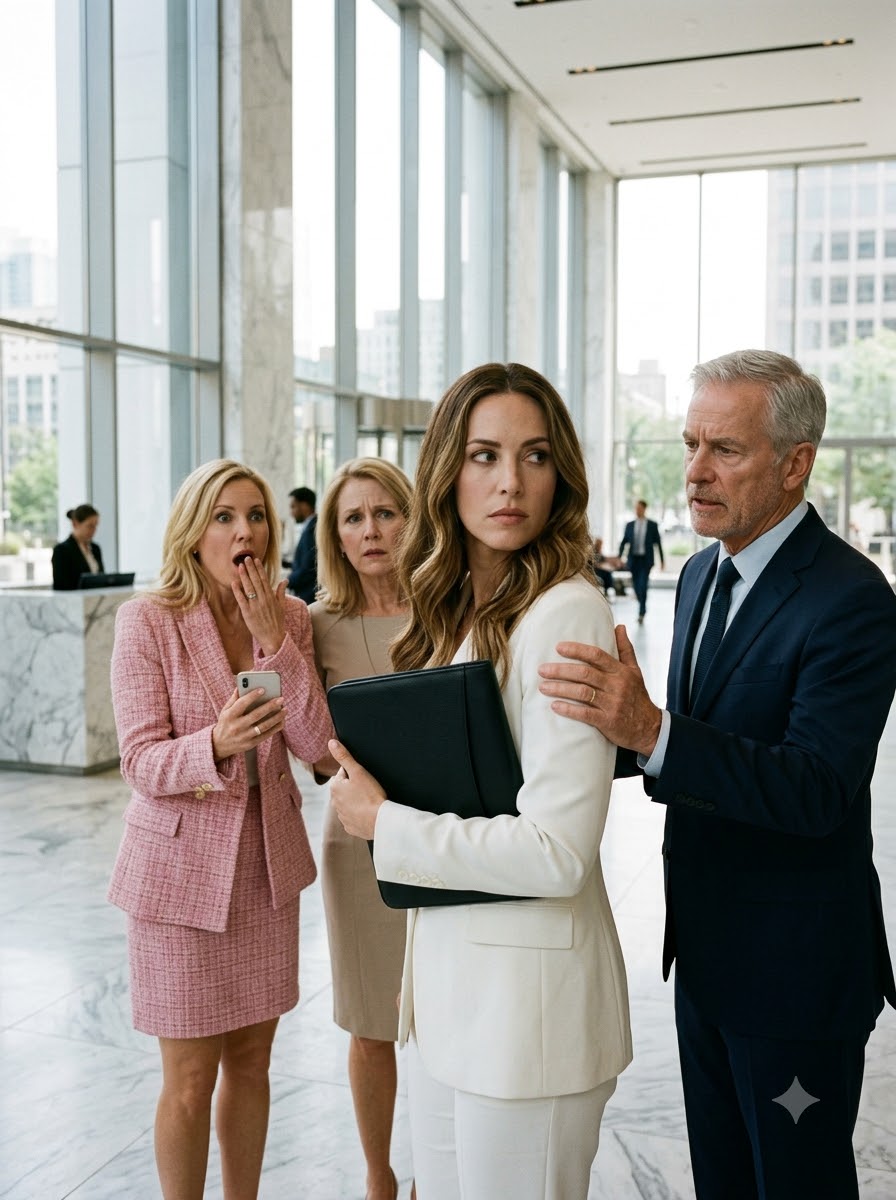
“After that I stopped telling any of you where I worked,” Alicia continued. “I finished the license under a different firm that didn’t know my family. I took the jobs no one else wanted—night shifts on bridge rehabs, forensic reviews of buildings that had already failed, the projects that paid in experience instead of reputation. When I had enough stamped drawings and enough saved money, I opened this office. The first year we were four people in a rented suite over a print shop. The second year we won the city contract for the school seismic upgrades. The third year the landlord offered us these floors if we would put the name on the wall. I said yes.”
Elena looked at the door as if she expected it to open and restore the version of the world she had walked in with. “Mom thinks you’re living in a studio in Ferndale. She tells people at Bible study that you’re too proud to ask for help.”
“I know what she tells them. I stopped correcting it because correcting it required contact, and contact required me to pretend the parking-garage afternoon had not happened.”
The intercom on the wall chimed once. Alicia pressed the button. “Yes.”
“Ms. Voss, a second woman has arrived in the lobby. She is asking for Elena Voss and she is becoming agitated with security. They would like direction.”
Alicia looked at her sister. Elena’s face had gone the color of the granite downstairs. “That’s Mom,” Elena whispered. “I told her not to tell Dad. I don’t think she listened.”
“Have them escort her up,” Alicia said into the intercom. “Same room. And keep the floor restricted until I clear it.”
She released the button. Elena pushed her chair back an inch, then stopped, as if she had remembered there was nowhere else in the building that belonged to her.
“If she sees the wall,” Elena said, “she’s going to call him from the elevator.”
“Then she will call him,” Alicia answered. “I am not going to hide the letters because they make her uncomfortable. I stopped hiding the day the termination letter arrived.”
They waited. The minutes stretched. Alicia watched the small scar on her wrist and counted her breaths the way the occupational therapist had taught her in the six weeks after the parking garage, when her hands shook too badly to hold a scale ruler. The shaking had stopped years ago. The counting had stayed because it was useful.
The door opened. Their mother stepped in ahead of a security officer who remained in the hall. Margaret Voss was sixty-one and still wore the same pearl earrings she had worn to every Sunday service since Alicia was in high school. She looked at Elena first, then at Alicia, then at the long window and the city beyond it. Her hand found the back of the nearest chair.
“Elena said your name is on the wall,” she said. The sentence came out smaller than she had probably intended.
“It is,” Alicia said. “Sit down if you want. Or stand. The conversation will be the same length either way.”
Margaret sat. She kept her purse in her lap with both hands locked over the clasp. “Your father is on his way. I called him from the car. He has a right to know where his daughters are.”
PART 2
“He has the right to know what I choose to tell him,” Alicia said. “He lost the right to arrive uninvited when he used a church computer to email my employer a lie that cost me my job and two years of licensure credit. If he comes through that door, security will walk him back to the lobby and he can wait there until I decide whether I have anything to say to him. That is the policy for anyone who has previously been removed from a property where I worked.”
Margaret’s mouth tightened. “You were always dramatic when you didn’t get your way. Eleven hundred dollars a month was not extortion. It was family. The church needed a new roof. Your father was on the building committee. You had a good job. We thought you understood obligation.”
“I understood that the transfers stopped being gifts the day he told me the amount was non-negotiable and that he would speak to my boss if I missed a month,” Alicia said. “I have the text. I also have the recording from the Sunday he made the announcement at the dinner table in front of both of you and the youth pastor. Elena was home from college that weekend. She heard it.”
Elena flinched. She had not expected to be named. Margaret turned toward her, and Elena looked at the table.
“I was twenty,” Elena said, barely audible. “I didn’t know what to do with it. He said it was temporary.”
“It was never temporary,” Alicia said. “And when I stopped, he did not ask me why. He put on the blue suit and drove to my office. You both know the rest because you have spent ten years repeating a different version of it to anyone who would listen.”
Margaret’s eyes shone, but the tears did not fall. “We were protecting you. People at church were asking questions. It was easier to say you were struggling than to explain that you had cut your father off over money. We thought if we gave you time you would come back and apologize and we could fix it quietly.”
“I did not cut him off over money,” Alicia said. “I stopped paying a bill he had invented. The difference mattered to the state licensing board when I reapplied. It mattered to the two firms that would not hire me until I could produce a letter explaining the gap. It mattered every time I had to sit across from a client and wonder whether someone from my family had already called them. You were not protecting me. You were protecting the story that let you stay comfortable.”
The intercom chimed again. Alicia answered it without taking her eyes off her mother.
“Ms. Voss, the gentleman from the lobby is now demanding to speak with building management. He has identified himself as your father. Security is prepared to escort him out if you confirm.”
“Confirm,” Alicia said. “And tell him that if he remains on the property after the escort, they are to call the police and provide them with the 2016 police report number I have on file. He already knows the number. He was there when they wrote it.”
She released the button. In the hallway, faintly, a man’s voice rose and then receded as the elevator doors closed. Margaret’s hands tightened on her purse until the leather creased.
“You would have your own father arrested,” she said.
“I would have the building’s security team follow the policy they follow for every former employee or visitor who has been trespassed,” Alicia answered. “He is not special because he is related to me. That was the part he never understood.”
Elena made a small, helpless sound. “The youth group still prays for you on Wednesday nights. They think you’re sick. Pastor Ellison asked me last month if you were in a facility. I didn’t know what to tell him.”
“You can tell him I am at work,” Alicia said. “You can tell him the address if you want. The letters are already on the wall. I am not going to take them down so the prayer list stays simple.”
Margaret stood. The chair legs scraped. “This is not how family works. You don’t get to decide the terms after you have humiliated us in front of security and threatened your father with the police. We raised you. We paid for your first two years of college before the scholarships started. You owe us more than a view from the thirty-eighth floor and a speech about policy.”
Alicia remained seated. Her voice did not rise. “I owed you honesty about where the money was going. I gave you that. You decided the honesty was less useful than the eleven hundred dollars. When I stopped providing the money, Dad decided my career was less useful than his version of events. I have spent ten years building something that does not require either of you to approve it. You are welcome to be proud of it or angry about it or silent about it. You are not welcome to arrive here and renegotiate the price of my silence.”
She looked at Elena. “If you want to tell the youth group the truth, tell them. If you want to keep telling them I am unwell, that is also a choice. I will not correct it for you. I have clients and employees and a set of drawings that need to be resealed before the city meeting on Monday. That is where my afternoon is going.”
Margaret’s face had settled into the expression Alicia remembered from every childhood disagreement that ended with her being sent to her room until she could “speak respectfully.” It had worked when Alicia was twelve. It did not work now.
“Your father will never forgive this,” Margaret said.
“Then we are even,” Alicia answered. “I have not forgiven the parking garage or the email or the two years I spent rebuilding a license he tried to take. I do not need his forgiveness to stamp drawings. I needed the license. I have it. The rest is optional.”
Elena rose slowly. She looked smaller in the big room than she had in the lobby. “Can I—can I tell people the name on the wall is real? If they ask?”
“You can tell them whatever you can stand to say out loud,” Alicia said. “The wall will still be there either way.”
Margaret moved toward the door. She stopped with her hand on the handle. “If you ever need anything—if the firm has a bad year, if you get sick—you know where we are.”
“I know where you are,” Alicia said. “I have known for ten years. That is why the security desk has your names.”
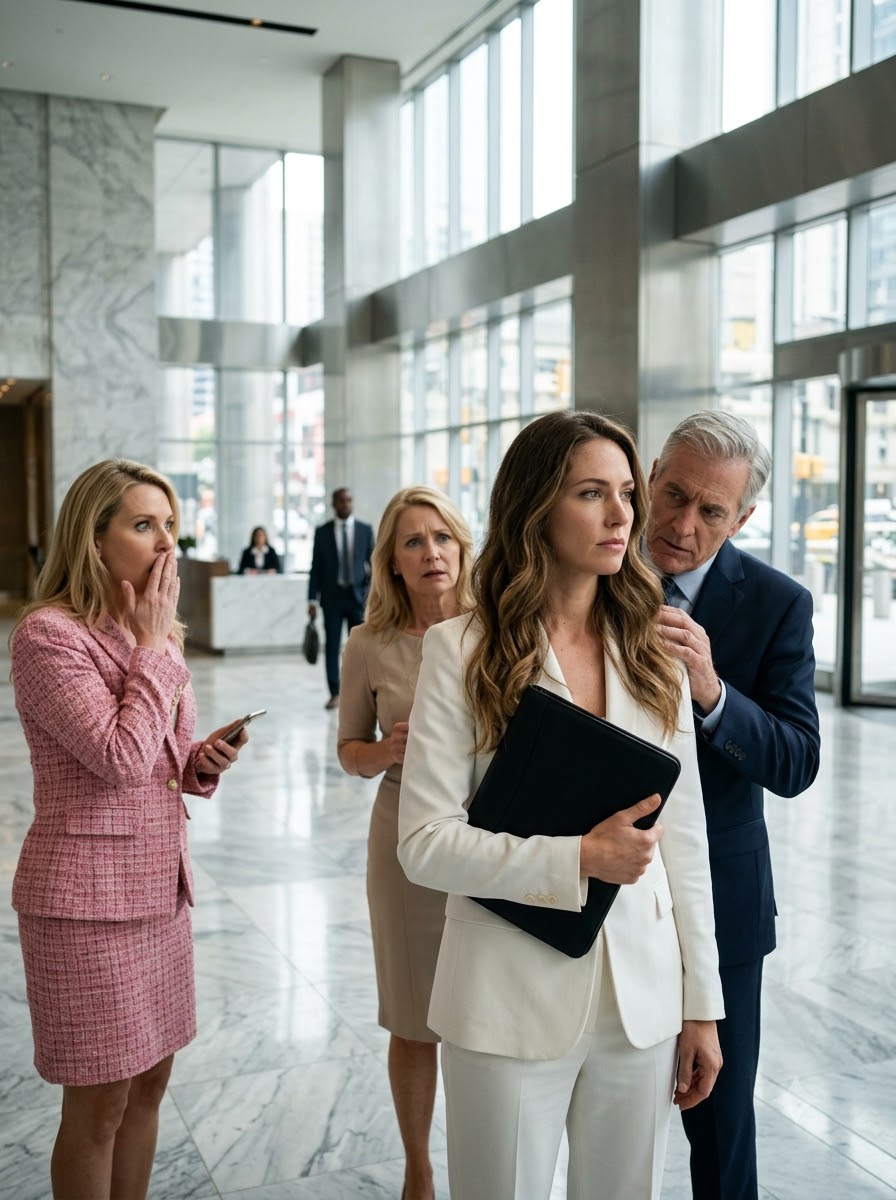
Margaret opened the door. The security officer in the hall stepped aside. Elena followed their mother without looking back. The door closed. The latch clicked. The hum of the air system returned.
Alicia sat for another minute with her hands flat on the table, counting breaths until the count reached twenty and her pulse had settled. Then she stood, smoothed the front of her dress, and walked back to her office. The redlined drawings were still on the credenza. She unrolled them, weighted the corners with the same steel scale she had carried since the first job after the termination, and picked up a red pencil.
On the thirty-eighth floor the city continued its ordinary movement. Somewhere below, two women were crossing the lobby toward the revolving doors, and a man in a blue suit was being walked to the sidewalk by a security officer who had already radioed the report number. None of that changed the shear calculations on the page in front of her. The numbers held. The stamp at the bottom of the drawing would be hers. She had earned the right to place it, and she had kept the records that proved no one else could take it away.
She made the first correction, checked the load path, and reached for the next sheet.
