

PART 1: The Man They Thought They Could Humiliate
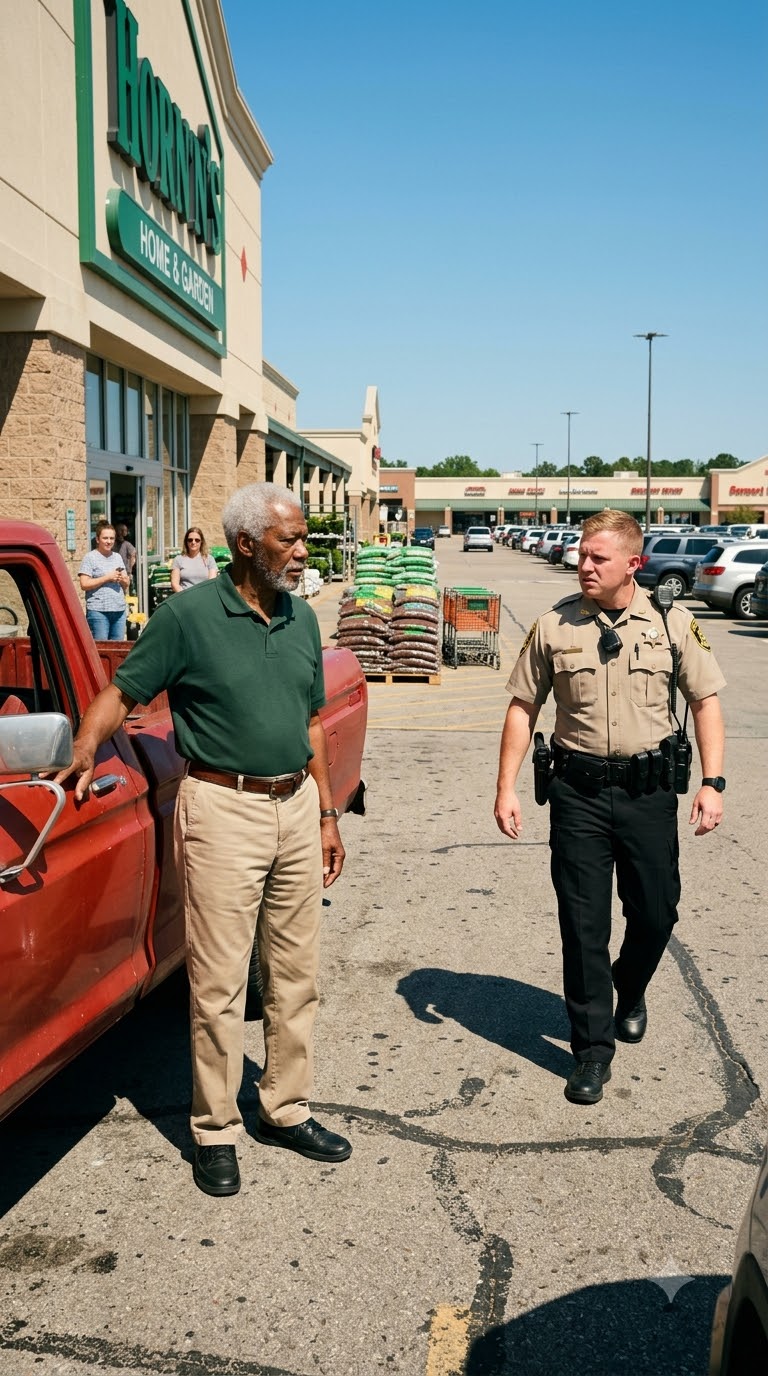
“Get your hands off that truck before I drag you out and book you like every other thief.”
“Officer, this truck is mine, and every document proving that is sitting in the glove compartment.”
“Don’t insult me with fake papers. Men like you don’t own something this clean legally.”
“Run the plate, check the VIN, and stop pretending suspicion is the same thing as evidence.”
“Put your hands behind your back, old man, before I make this much worse for you.”
Officer Nolan Griggs snatched the registration documents from Isaiah Bellamy’s hand and scattered them across the hot asphalt.
The papers fluttered beneath parked cars and shopping carts.
Isaiah didn’t chase them.
He didn’t shout.
He stood quietly beside his father’s beautifully restored red pickup while shoppers watched in disbelief.
Then Griggs shoved him against the truck.
And when Isaiah refused to react, the officer slapped him across the face.
What Griggs didn’t know was that the man he was humiliating had the authority to investigate the entire county government.
And when his partner finally opened the leather folder inside the truck, the color drained from his face.
Because the name printed beneath the official state seal was one neither officer could afford to ignore.
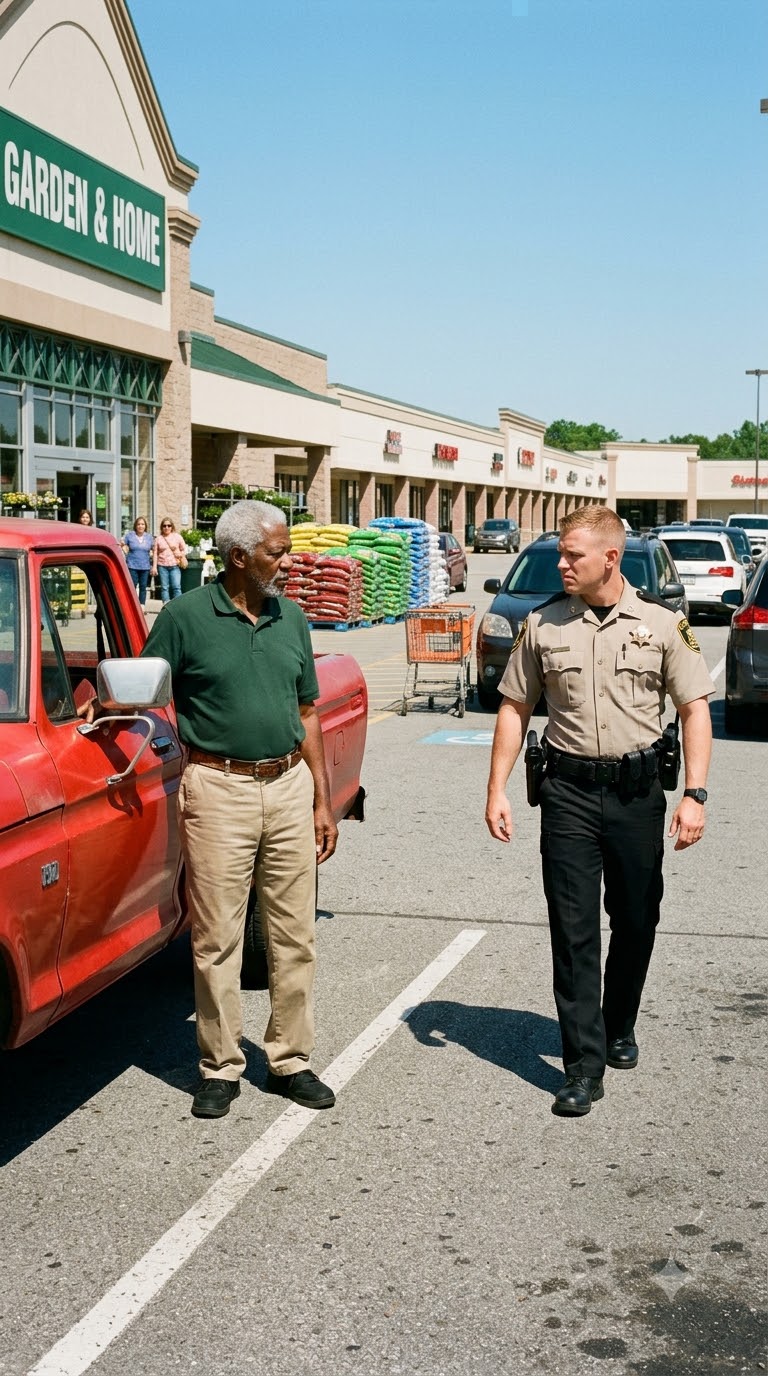 The afternoon sun beat mercilessly against the parking lot of Juniper County Shopping Center.
Heat shimmered above the asphalt.
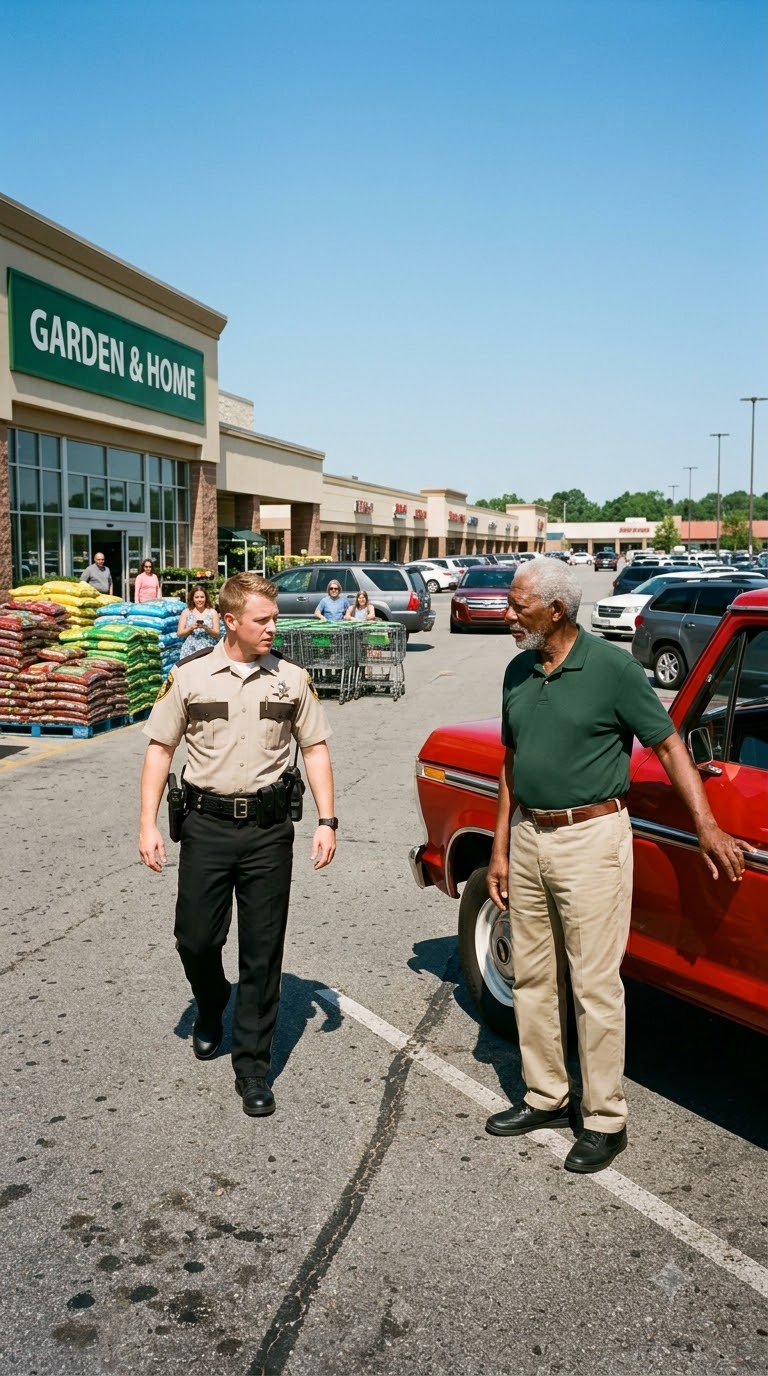
Families pushed shopping carts toward their vehicles while workers carried bags of fertilizer, gardening supplies, and animal feed out of the farm supply store.
Into that ordinary scene rolled a restored red pickup truck.
Its chrome bumpers reflected the sunlight.
The paint had been polished until it gleamed.
Behind the steering wheel sat Isaiah Bellamy.
He was an older Black man with a calm expression and the deliberate movements of someone who had learned never to waste energy.
The truck had once belonged to his father, Abraham Bellamy.
Decades earlier, Abraham had driven it along these same county roads, carrying lumber, church supplies, and whatever else his neighbors needed.
Isaiah had spent years preserving it.
To strangers, it was simply a beautiful vintage pickup.
To him, it was a connection to his father and a lifetime of memories.
He parked near the farm supply store, switched off the engine, and reached for his water bottle.
The motor ticked softly as it cooled.
Isaiah watched a family loading gardening supplies into an SUV.
An elderly man struggled with several bags of mulch.
Everything seemed peaceful.
For exactly forty-three seconds.
Then a Juniper County Patrol cruiser roared into the parking lot.
Its emergency lights flashed.
The vehicle swung sharply across the asphalt and stopped at an angle directly in front of Isaiah’s truck, blocking his exit.
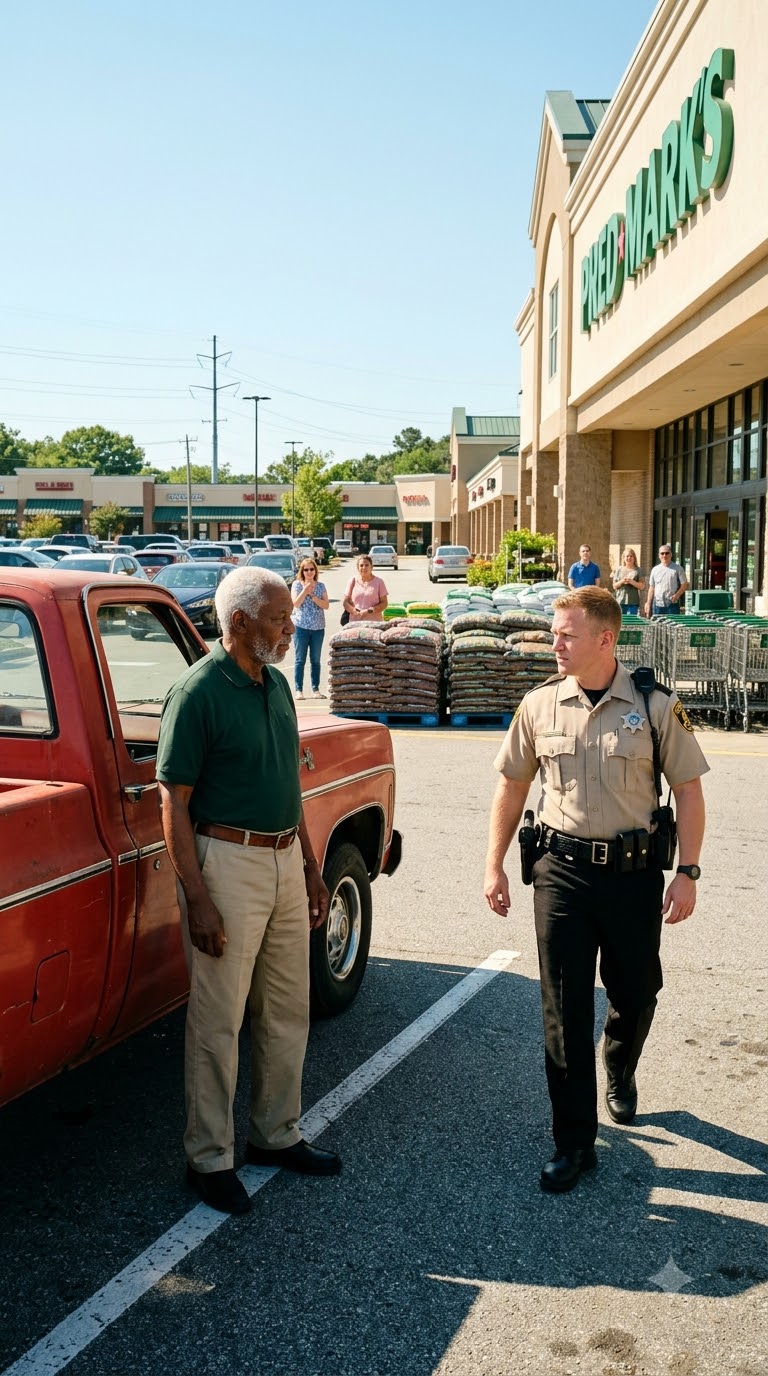
Officer Nolan Griggs climbed out.
His uniform was crisp despite the heat.
His hand rested near his weapon.
His expression suggested that he had already decided what kind of man he was dealing with.
Isaiah opened his door halfway and placed one foot on the pavement.
He kept his movements slow.
“Afternoon, officer. Is there a problem?”
“Get out of the truck!”
The command echoed across the parking lot.
Shoppers turned.
A mother pulled her children closer.
An elderly man stopped loading mulch.
Isaiah remained composed.
“I’m asking what the problem is.”
“The problem is you’re driving a stolen vehicle.”
Griggs pointed toward the pickup.
“This truck was reported stolen less than 10 minutes ago.”
Isaiah looked at him.
“That’s not possible. This truck is mine.”
He gestured toward the glove compartment.
“It’s registered in my name. I have the documents in the glove compartment.”
“Sure you do.”
Griggs laughed without amusement.
“Every truck thief says that.”
“I’m not a truck thief.”
“Yeah, then how does a man like you end up with a truck this clean?”
The question hung in the air.
Isaiah noticed the nearby shoppers listening.
He also noticed Griggs’s badge number.
He noted the patrol vehicle’s identification markings and the position of the officer’s body camera.
Then he looked directly at Griggs.
“A man like me?”
“Don’t play games. You know what I mean.”
Another patrol cruiser arrived.
Sergeant Clay Roar stepped out.
He was older than Griggs, with gray at his temples and a hard expression.
He approached as though the accusations had already been proven.
“What do we have?”
“Stolen vehicle,” Griggs replied. “Suspect claims it’s his.”
“It is mine,” Isaiah said. “Let me show you the registration.”
“Keep your hands where I can see them,” Griggs snapped.
“You don’t reach for anything unless I tell you to.”
Isaiah raised his hands slightly.
The crowd continued growing.
A few witnesses lifted their phones.
Roar walked around the pickup, studying its spotless paint and polished chrome.
“Nice vehicle.”
He looked at Isaiah.
“Too nice for some people.”
Isaiah met his gaze.
“Some people?”
“You heard me.”
Isaiah watched Roar position himself near the truck.
He noticed how the sergeant partially obstructed one of the security cameras.
He noticed Griggs’s restless movements and growing impatience.
These officers behaved like men who had performed this routine before.
“The registration is in the glove compartment,” Isaiah repeated. “Along with insurance and maintenance records.”
“I bet it is,” Griggs sneered. “Fake paperwork to go with your fake story.”
“Why would I drive a stolen truck to a public parking lot in broad daylight?”
“Because thieves are stupid.”
Isaiah let the insult pass.
“Run the plates. Check the VIN number. Call it in properly.”
“Don’t tell me how to do my job.”
“I’m suggesting you do your job.”
Griggs stepped closer.
“My job is keeping trash like you from stealing decent people’s property.”
Isaiah held his gaze.
“Trash like me?”
“You heard what I said.”
Roar folded his arms.
“Look at you. Then look at this truck. Does that seem right to you? Old man in wrinkled clothes driving something this clean.”
“I earned this truck.”
“Sure you did,” Griggs laughed. “What did you do? Win the lottery?”
Isaiah remained still.
He understood what was happening.
The officers weren’t looking for evidence.
They were trying to provoke him.
Every calm answer seemed to make Griggs angrier.
“You’re making a serious mistake,” Isaiah said quietly.
“The only mistake here is thinking you could drive through my county in a stolen truck and get away with it.”
Griggs moved closer until his chest nearly touched Isaiah’s shoulder.
“Time for you to learn some respect, old man.”
Isaiah saw the shove coming.
Griggs’s shoulders tightened.
His hands rose.
Then he slammed both palms against Isaiah’s chest.
Isaiah stumbled backward into the open truck door.
The metal rattled.
Pain shot through his ribs when his back struck the window frame.
He didn’t retaliate.
He didn’t raise his fists.
He simply steadied himself.
A gasp spread through the crowd.
“You’re making a serious mistake,” Isaiah repeated.
Griggs’s face flushed.
His right hand rose.
And before anyone could intervene, he slapped Isaiah across the face.
The sound cracked through the parking lot.
Everything seemed to stop.
A woman covered her mouth.
Several shoppers froze beside their carts.
The farm supply store’s automatic doors continued opening and closing, but nobody seemed interested in going inside.
Isaiah’s cheek burned.
He didn’t touch it.
He didn’t lower his eyes.
He stood beside his father’s truck, staring calmly at the officer.
“Hands behind your back,” Griggs barked.
“Now.”
“For what?”
“Resisting arrest.”
“I haven’t resisted anything.”
“Don’t argue with me.”
Griggs seized Isaiah’s wrist and twisted his arm behind his back.
Pain surged through his shoulder.
“You’re hurting me,” Isaiah said.
“Good. Maybe you’ll learn to follow orders.”
Roar moved toward the gathering witnesses.
“Move along, folks. Police business.”
Near the store entrance, manager Lorraine Massie watched with growing horror.
She had seen everything.
The insults.
The discarded documents.
The shove.
The slap.
Her store’s security cameras were recording the entire confrontation.
But Lorraine hesitated.
She knew what happened when people challenged the Juniper County Sheriff’s Department.
Her nephew had lost his tow truck after filing a complaint about aggressive stops.
A friend’s restaurant had faced sudden inspections after questioning a deputy.
Lorraine depended on local permits and county relationships to keep her business operating.
So she remained near the entrance, gripping her keys and hating her own silence.
Meanwhile, Griggs forced Isaiah against the pickup again.
“This truck is being impounded as evidence. You’re going to county lockup for theft, resisting, and whatever else I can think of on the way.”
Isaiah felt the door handle pressing into his ribs.
He concentrated on remembering details.
Badge 347.
Patrol unit 23.
Four visible security cameras.
The faces of witnesses.
The approximate time.
He had spent his professional life examining evidence.
Now he was collecting it while being assaulted.
“Before you impound anything,” Isaiah said, “I need you to retrieve something from the passenger seat.”
“I’m not retrieving anything for you.”
“Sergeant Roar.”
Roar looked over.
“There’s a leather folder on the passenger seat. Please get it before anyone touches the truck further.”
Roar smirked.
“What? Your fake insurance papers? Your stolen receipts?”
He walked around the pickup and opened the passenger door.
A worn brown leather folder rested on the seat.
Official-looking documents were visible through a clear sleeve.
Roar picked it up.
He expected forged registration papers.
Perhaps a counterfeit business license.
Something he could mock before continuing the arrest.
He opened the folder.
And stopped breathing for a moment.
His face turned pale.
His fingers began trembling.
The folder nearly slipped from his hands.
“Griggs.”
The officer didn’t look up.
“What?”
“Griggs.”
Roar’s voice cracked.
“You need to see this.”
“Whatever it is can wait. I’m booking this thief.”
“Griggs!”
The shout echoed across the parking lot.
Griggs finally turned.
He saw Roar’s expression.
The fear.
The trembling hands.
The official credentials.
“What?”
Roar stared at Isaiah.
Then at the folder.
“This man is the state attorney general.”
Sergeant Roar read the credentials again.
The official seal was unmistakable.
The photograph matched.
The signature was embossed.
The expiration date was still two years away.
State Attorney General Isaiah Bellamy.
Roar looked from the document to Isaiah and back again.
“That’s impossible,” he whispered.
“Read it again,” Isaiah said.
Roar did.
Nothing changed.
The credentials were legitimate.
Griggs still had one fist twisted into Isaiah’s shirt.
But his grip began to loosen.
“What are you talking about? What credentials?”
“This man,” Roar whispered, “is the state attorney general.”
Griggs stared.
Confusion crossed his face.
Then disbelief.
Then recognition.
Finally, fear.
He released Isaiah’s shirt.
Isaiah straightened his collar.
He brushed a small piece of lint from his green polo shirt.
The red mark across his cheek remained clearly visible.
“Officer Griggs,” Isaiah said, “do you still believe this truck is stolen?”
Griggs opened his mouth.
No answer came.
“There was a report,” he finally muttered.
“Yes, there was.”
Isaiah nodded.
“We’ll be discussing that report very thoroughly.”
Lorraine Massie stepped forward from the store entrance.
“The store cameras got everything,” she called.
Her voice shook.
“Every second of it. The slap, the shove, all of it.”
Griggs spun toward her.
“Get back inside. This is police business, ma’am.”
Isaiah spoke without raising his voice.
“Please don’t move.”
Lorraine stopped.
Griggs looked between them.
The authority he had wielded so confidently moments earlier had disappeared.
Then another vehicle entered the parking lot.
It was a newer patrol unit equipped with additional antennas and emergency lights.
Sheriff Hollis Vardell stepped out.
He was fifty-eight, silver-haired, and impeccably dressed.
His expression carried practiced concern.
He approached with both hands raised.
“Gentlemen, gentlemen. What seems to be the situation here?”
Isaiah studied him carefully.
The sheriff seemed remarkably prepared.
Almost as though he had been expecting this encounter.
“Sheriff Vardell,” Isaiah said. “I’m Attorney General Isaiah Bellamy.”
Vardell’s eyebrows rose.
“Attorney General Bellamy, what an unexpected honor. I had no idea you were visiting our county.”
“I don’t believe I announced my visit.”
“Of course not. Of course not.”
The sheriff spread his hands.
“I can only imagine what kind of misunderstanding brought you into contact with my officers.”
Isaiah looked at the scattered registration documents.
Then at Griggs.
Then at the red mark on his cheek.
“Misunderstanding.”
“Exactly,” Vardell replied. “An unfortunate misunderstanding that I’m sure we can resolve quickly and quietly.”
Isaiah didn’t smile.
“Sheriff, who entered the stolen vehicle alert for this truck?”
Vardell’s expression flickered.
“Well, I’d have to check with dispatch, of course.”
“I’d appreciate that check.”
The sheriff reached for his radio.
Isaiah waited.
The response came through clearly enough for nearby witnesses to hear.
“Unit 17 to sheriff. The stolen vehicle alert for the red pickup was entered at 2:47 p.m. through the restricted LEO channel. Alert originated from your direct access terminal.”
Silence fell.
Isaiah checked his watch.
2:51 p.m.
“Four minutes,” he said quietly.
“The alert was entered four minutes before Officer Griggs arrived.”
Vardell said nothing.
Isaiah looked directly at him.
And for the first time, he understood that this confrontation had not begun with an overzealous deputy.
Someone had arranged for his father’s truck to be stopped.
Someone with access to the sheriff’s restricted system.
And the man standing in front of him had just been identified by dispatch.
Despite the credentials and valid registration, Sheriff Vardell insisted that the pickup needed to be impounded for verification.
He claimed investigators had to examine the vehicle for evidence of tampering.
Isaiah knew the explanation was weak.
But he agreed.
He wanted to see what happened next.
He followed the tow truck in a state vehicle to the Juniper County impound lot.
Behind a chain-link fence topped with razor wire sat dozens of seized vehicles.
Rusted sedans.
Damaged SUVs.
Work trucks.
Family cars.
Some appeared to have been abandoned for months.
Others looked recently confiscated.
The tow truck carried Isaiah’s red pickup through the gate.
Sergeant Roar took charge of the intake.
“Nobody touches that vehicle without my direct supervision,” he announced.
Isaiah watched from outside the fence.
He noticed how the employees avoided Roar’s eyes.
A nervous clerk named Bethany Pike photographed the truck and completed the intake paperwork.
Her hands trembled slightly.
Afterward, Roar ordered most employees away from the vehicle.
He and Griggs approached the pickup.
They opened the driver’s door.
Roar leaned inside.
Then he pointed beneath the seat.
Griggs hurried toward the office trailer and returned with Bethany.
“We need this documented immediately,” Griggs announced.
“Found something suspicious under the driver’s seat.”
Isaiah watched carefully.
Roar reached beneath the seat and withdrew a thick manila envelope.
Griggs put on latex gloves.
He opened it.
“Counterfeit title documents,” he announced.
He held up the contents.
“And approximately $2,000 in cash.”
Bethany photographed the discovery.
But her expression suggested she wanted to be anywhere else.
Isaiah knew the envelope hadn’t been there.
He also knew the officers were deliberately staging the discovery for the security camera.
Then Sheriff Vardell arrived.
“Attorney General Bellamy,” he called across the fence.
“I’m afraid we have a problem.”
“What kind of problem, Sheriff?”
“The kind that suggests you may have interfered with an active vehicle theft investigation.”
Vardell’s smile was cold.
“The kind that raises questions about whether the state attorney general has been abusing his position for personal gain.”
Isaiah understood the purpose immediately.
They weren’t simply trying to take his truck.
They were constructing a public accusation that could destroy his credibility.
He called his chief investigator.
“Dana, it’s Isaiah.”
Dana Mercer answered immediately.
“I need you to preserve everything. Every camera angle, every tow record, every dispatch entry, every piece of paper that touches this case.”
“What’s happening down there?”
“They just planted evidence in my truck.”
Isaiah looked through the fence.
“I want every second of security footage from this impound lot. I want the chain of custody for that envelope. I want to know who had access to my vehicle and when.”
“Are you safe?”
“For now.”
He lowered his voice.
“But Dana, this wasn’t random. Someone knew I was coming.”
As darkness settled over the impound lot, Isaiah watched his father’s pickup beneath the harsh security lights.
The confrontation had been staged.
The stolen vehicle alert had been created minutes before the stop.
The sheriff’s officers had planted evidence.
And someone was trying to discredit him before he could investigate whatever was happening in Juniper County.
But the most disturbing question remained unanswered.
Who had known his confidential travel plans?
And why were they so desperate to stop him?
PART 2: The County That Stole Its Own People’s Vehicles
That evening, Isaiah and Dana Mercer established a temporary command room inside a hotel conference room near the Juniper County Courthouse.
The space was plain.
Fluorescent lights buzzed overhead.
The carpet smelled faintly of cleaning chemicals.
Folding tables held laptops, legal pads, and stacks of evidence.
Isaiah chose the location because it was close enough to the courthouse to be practical but separate from the sheriff’s department.
Witnesses might feel safer speaking there.
Dana spread the initial documents across the table.
She was furious.
“We should hold a press conference tonight,” she insisted.
“Get ahead of whatever narrative Vardell is spinning. Show the world what they did to you.”
Isaiah shook his head.
“That’s exactly what Vardell wants.”
He attached photographs to a wall.
His red pickup.
Griggs approaching.
Registration papers scattered across the asphalt.
The shove.
The slap.
“He wants me angry,” Isaiah continued. “He wants me reactive. He wants the story to become about my response instead of their corruption.”
He began constructing a timeline.
The restricted alert.
The patrol stop.
The arrival of backup.
The staged discovery at the impound lot.
“Look at this pattern.”
Dana approached.
“The parking lot stop, the restricted alert, the towyard search, the planted envelope. Each step was planned. Each step had backup ready.”
“This wasn’t Griggs acting alone,” Dana said.
She examined the dispatch records.
“The stolen vehicle alert came through a terminal that requires supervisor approval.”
Isaiah nodded.
Someone with authority had arranged the stop.
The question was why.
Dana’s phone rang.
She answered briefly.
Then looked up.
“That was Lorraine Massie from the farm supply store.”
Isaiah turned.
“She confirms the security footage was backed up automatically to their cloud server before local officers requested access.”
For the first time that evening, Isaiah felt a measure of relief.
The footage couldn’t simply disappear from a local recording system.
A knock interrupted them.
Dana checked the door before opening it.
An elderly woman with silver hair stood outside.
She carried a worn canvas folder.
“Marlene Whitaker,” she introduced herself.
“Retired court clerk.”
She stepped inside.
“I heard you might need some help understanding what’s been happening in this county.”
Isaiah offered her a chair.
“Please sit down. Tell us what you know.”
Marlene opened her folder.
Inside were copies of seizure notices, auction records, court filings, and property transfers.
The documents were carefully organized.
“Juniper County has been stealing vehicles from residents for years,” she said.
“They use fake stops, inflated fees, and rushed auctions. They make the paperwork so confusing that people give up fighting.”
She laid out the records.
“They schedule hearings during work hours when folks can’t attend. They charge storage fees that double every week until the vehicle is worth less than the debt.”
Isaiah examined the papers.
“How many vehicles?”
“In the past five years, at least forty that I could document. Probably twice that many where the records were sealed or destroyed.”
The pattern was unmistakable.
Vehicles were stopped.
Ownership was questioned.
Cars and trucks were impounded.
Fees accumulated.
Hearings were scheduled under difficult circumstances.
Then the vehicles were auctioned to a small group of recurring buyers.
Marlene reached into her folder again.
She withdrew a photograph.
It showed a white passenger van bearing the words New Hope Baptist Church.
She placed it in front of Isaiah.
“They took this from us, too.”
 The following morning, two state investigators arrived from the capital.
Marcus Webb and Jennifer Torres joined Isaiah and Dana in the hotel conference room.
Marlene returned with additional records.
Isaiah asked her to explain the system from the beginning.
“It starts with the stop,” she said.
“They target older vehicles driven by residents. Not junkers that might actually be suspicious, but decent vehicles that people worked hard to afford.”
She placed a traffic citation on the table.
“Griggs, or one of his officers, claims the driver is nervous. The registration looks questionable or the VIN might be altered.”
Dana took notes.
“What happens next?”
“The vehicle gets impounded, pending investigation.”
Marlene showed them another document.
“The owner gets a receipt and a phone number to call. But when they call, they get transferred between departments. Nobody can give them straight answers.”
Isaiah studied the language of the seizure notice.
It was dense and confusing.
Fees appeared in small print.
Daily storage charges accumulated quickly.
“They make it impossible to navigate on purpose,” he observed.
“How much time do people have to reclaim their vehicles?”
“Thirty days,” Marlene replied.
“But they don’t tell you about the storage fees until week three.”
She shook her head.
“By then, you owe more than the vehicle is worth.”
Hearings were scheduled during working hours.
People who missed them risked having their vehicles declared abandoned.
Then came the auctions.
Jennifer Torres looked up.
“That’s not law enforcement. That’s organized theft with badges.”
Another knock sounded.
Marlene introduced a thin man in his sixties.
“This is Earl Freeman.”
Earl wore a faded work shirt and clean jeans.
His hands were calloused from decades of manual labor.
Isaiah stood and shook his hand.
“Mr. Freeman, thank you for coming. Please have a seat. Tell us what happened to you.”
Earl sat slowly.
“It was my work van.”
He looked down at his hands.
“White Ford Transit, nothing fancy, but it was mine. Had all my tools, my contracts, my business cards, everything I needed to keep working.”
He explained that Griggs had stopped him near the county line.
The officer claimed the van resembled a recently stolen vehicle.
When Earl produced his registration, Griggs alleged that the VIN had been altered.
“That VIN was clean as the day I bought that van,” Earl said.
“Never been touched by anything but factory stamps.”
The van was impounded.
Griggs promised that verification would take a day or two.
Six months later, Earl still didn’t have it.
He had lost major contracts.
Then his insurance.
Then his apartment.
Without the van and tools, he couldn’t work.
Storage fees began at fifty dollars a day.
Additional investigation and processing charges followed.
By the third week, he owed more than the van was worth.
“They said I could get it back if I paid the full amount,” Earl explained.
“But where was I supposed to get $2,000 without my tools or my business?”
Isaiah let him finish.
Then he asked whether certain names appeared repeatedly.
Earl nodded.
“Griggs did the stop. Sergeant Roar handled the impound paperwork. Sheriff Vardell’s signature was on the final seizure notice.”
He paused.
“And the auction was handled by three companies that kept bidding on everything.”
Dana looked up.
“Do you remember the company names?”
“Valley Auto Salvage, Premium Vehicle Recovery, and Juniper Holdings.”
Earl recited them without hesitation.
“Same three buyers at every auction.”
Marlene reached for another stack of documents.
She had already traced the ownership connections through business filings, tax records, and campaign finance reports.
The auction companies were connected to people within Vardell’s political network.
Isaiah studied the evidence.
This wasn’t a collection of unrelated mistakes.
It was a coordinated operation.
Traffic stops created seizures.
Seizures generated fees.
Fees prevented owners from recovering their vehicles.
Auctions transferred those vehicles to connected buyers at prices far below market value.
And the people authorizing the seizures benefited from the sales.
Later that afternoon, Isaiah, Dana, and Marlene visited the county records annex.
The building stood behind the courthouse.
Its hallways smelled of old paper and disinfectant.
Marlene led them toward an archive storage room.
“Most people don’t know this place exists,” she explained.
“The county moved all the computerized records to the main building years ago, but the old paper files are still here.”
She unlocked the door.
Inside, metal shelves stretched toward the ceiling.
Boxes and ledgers filled every available space.
Some records dated back to 1967.
Marlene guided them toward the section containing vehicle seizures and impound records.
She pulled out a thick ledger bound in cracked leather.
“I started here because I wanted to see how long this has been going on.”
She opened it to a page marked with a yellow note.
Isaiah leaned forward.
Then stopped.
Written in faded cursive was a name he knew better than almost any other.
Abraham Bellamy.
His father.
Beside the name was an entry describing a red Ford pickup.
Suspicious ownership inquiry.
County Road 47.
Deputy H. Vardell investigating.
The date was thirty-two years old.
Isaiah stared at the page.
The same truck Griggs had accused him of stealing had been targeted when his father was alive.
And the investigating deputy had apparently been Hollis Vardell, long before he became sheriff.
“They’ve been doing this for over thirty years,” Dana whispered.
Isaiah’s hands tightened around the ledger.
The corruption was older than he had imagined.
Marlene reached for another file.
“There’s something else, Isaiah.”
Her voice softened.
“Something I didn’t know how to tell you at the hotel.”
She opened a thinner folder.
Inside was a records-access request dated seven years earlier.
Isaiah read the heading.
Confidential investigation.
Vehicle seizure patterns.
Auction records.
Complaints involving the sheriff’s department.
Then he saw the signature.
Naomi Bellamy.
His late wife.
Isaiah gripped the edge of a filing cabinet.
Naomi had been a civil rights attorney.
She had worked on voting access and housing discrimination cases.
But she had never told him she was investigating vehicle seizures in Juniper County.
Marlene watched him carefully.
“Your wife requested copies of these same seizure records.”
She pointed toward the date.
“She came here about eight months before she died.”
Isaiah remembered the night Naomi died.
Heavy rain.
A winding county road.
Her car leaving the pavement and plunging into a ravine.
Investigators had ruled the crash weather-related.
No evidence of foul play had been reported.
For years, Isaiah had accepted that conclusion.
Now he was holding evidence that Naomi had been investigating the same corrupt network he had just uncovered.
“Did she say why she needed the records?” Dana asked.
Marlene shook her head.
“She said she was following up on a client complaint. Asked me to keep the request confidential because the investigation was sensitive.”
Dana examined the approval section.
Then she stopped.
“Isaiah.”
He looked at her.
“Look at who approved her access to the files.”
Isaiah read the signature.
Victor Harrow.
His trusted senior counsel.
The man who knew his travel schedule.
The man who had access to confidential investigative plans.
The man who had attended Naomi’s funeral and supported Isaiah through years of grief.
Isaiah stared at the document.
Someone inside his own office had known about Juniper County’s activities for years.
And that person might have known he was coming.
That evening, the Juniper County Civic Auditorium filled with residents.
Mayor Patricia Henley called a public meeting to address the growing controversy.
Sheriff Vardell stood against the wall.
Griggs and Roar remained nearby.
Their expressions suggested they expected the meeting to restore their reputations.
Vardell stepped toward the microphone.
“Citizens of Juniper County deserve to know the truth about what happened in that parking lot.”
He looked toward Isaiah.
“My officers followed proper procedure during a routine vehicle check.”
Then he added:
“Unfortunately, Attorney General Bellamy chose to escalate the situation instead of cooperating.”
Several voices shouted support.
“He’s trying to destroy our police department!”
“We don’t need outsiders telling us how to run our county!”
Isaiah recognized some speakers as people connected to Vardell’s auction network.
He remained seated.
He didn’t argue.
He waited.
When the sheriff finished, Isaiah rose.
He approached the podium.
“I’m not here to defend myself,” he said.
“I’m here to listen to you.”
He invited Marlene forward.
She opened her canvas folder.
“Thirty-four vehicles seized from residents in the past three years,” she began.
“Seventeen work trucks, eight family cars, five church vans, four motorcycles belonging to veterans.”
The room quieted.
She described the repeated pattern.
Minor stops.
Suspicious ownership allegations.
Confusing paperwork.
Escalating storage fees.
Rushed auctions.
Then she held up Earl Freeman’s records.
His van had been seized and eventually sold for eight hundred dollars despite being worth approximately twelve thousand.
Earl stood.
“That van was worth 12,000.”
His voice trembled.
“I used it to fix people’s roofs, their plumbing, their electrical work.”
He looked toward Griggs.
“Took me thirty years to build my business. Officer Griggs destroyed it in one afternoon.”
Other residents began standing.
Martha Washington described losing her son’s motorcycle after an officer claimed it matched a theft report.
James Mitchell explained how his pickup was impounded after Roar questioned its registration.
More people spoke.
The atmosphere changed.
Fear gave way to anger.
“How many families did they rob?”
“Where’s our money from those auctions?”
Vardell tried to interrupt.
“These are serious accusations.”
A woman in the front row shouted back.
“Sit down, Hollis. We want to hear what they took from us.”
Marlene displayed auction records and title transfers.
The same buyers appeared repeatedly.
The same companies acquired vehicles at unusually low prices.
The same political connections surfaced.
Isaiah let the documents speak.
Then he returned to the microphone.
“I’m requesting an emergency preservation order from the state court.”
He looked across the auditorium.
“All seizure records, all auction documents, all body cam footage, all dispatch logs will be protected, pending a full investigation.”
Vardell stepped forward.
“You can’t just—”
“I can,” Isaiah said.
“And I will.”
He looked directly at Griggs.
“This investigation is no longer about one truck.”
At 11:47 that night, Dana’s phone rang.
She answered.
Then her expression changed.
“Isaiah.”
He looked up.
“The county evidence room is burning.”
They drove immediately to the sheriff’s office.
Orange flames illuminated the courthouse windows.
Firefighters battled smoke pouring from the rear section of the building.
Vardell stood near the entrance, speaking with the fire chief.
Roar watched from a distance.
His uniform was unusually neat for someone supposedly awakened by an emergency.
Isaiah approached the sheriff.
“What happened?”
“Electrical accident,” Vardell replied.
“Old wiring in the evidence storage area.”
“Where’s the body cam server?”
Vardell hesitated.
“Storage room. Same area that caught fire.”
“And the impound records?”
“Probably damaged by smoke and water.”
Isaiah looked at him.
“What about the envelope from my truck?”
“Gone.”
Vardell sighed.
“Along with most of the seized vehicle documentation from the past six months.”
Isaiah said nothing.
He had expected an attempt to destroy evidence.
But the speed of the fire suggested the conspirators were becoming desperate.
At 12:23 a.m., his phone rang again.
“Mr. Bellamy, this is County General Hospital.”
Isaiah listened.
“We have Marlene Whitaker in the emergency room. She was in a car accident about an hour ago. She’s asking for you.”
He and Dana reached the hospital twelve minutes later.
Marlene lay in a hospital bed.
Her left arm was in a sling.
Stitches marked her forehead.
She gripped Isaiah’s hand.
“Wasn’t no accident,” she whispered.
“Big truck forced me off Mil Pond Road right after I called your voicemail.”
Isaiah leaned closer.
“What did you find?”
“The hidden owner.”
Her eyes remained sharp despite the pain.
“The name behind all the shell companies.”
She swallowed.
“It goes higher than Vardell. Someone in your office has been protecting this whole operation.”
“Who?”
Before she could answer, Isaiah’s phone rang.
Victor Harrow.
Isaiah answered.
“I just heard about the fire and Marlene’s accident,” Victor said.
“You need to step back from this case immediately.”
“Why?”
“An ethics complaint was filed against you three hours ago.”
Isaiah looked toward the hospital window.
“Abuse of office. Personal vendetta. Improper use of state resources.”
Victor paused.
“The review board wants your emergency powers suspended pending investigation.”
Isaiah’s expression remained still.
“Who filed the complaint, Victor?”
“I can’t say yet.”
Victor lowered his voice.
“But Isaiah, this looks bad. Really bad.”
Isaiah ended the call.
Marlene watched him.
Dana stood beside the bed.
They all understood that the investigation had reached beyond the sheriff’s department.
The people protecting Juniper County’s corruption were close enough to threaten Isaiah’s own office.
And one of them had just called to warn him away.
PART 3: The Auction That Brought Down a County
By dawn, Dana had returned to the hotel command room.
She hadn’t slept.
Fresh files covered the conference table.
When Isaiah entered, she handed him coffee.
“Marlene’s car was totaled,” she said.
“But the state police recovered her folder from the passenger seat.”
Isaiah examined the damaged documents.
Water had soaked through the pages.
Ink had blurred.
Some records had dissolved into pulp.
Years of Marlene’s careful work appeared ruined.
But at the bottom of the folder was a clear plastic sleeve.
Inside, one document remained intact.
Isaiah removed it.
It was a flowchart drawn in Marlene’s precise handwriting.
Shell companies.
Auction brokers.
Bank accounts.
Vehicle transfers.
Red arrows connected the names.
At the top, circled twice, was Victor Harrow.
Dana leaned closer.
“The profits from the seizure auctions went through three shell companies before landing in accounts tied to Victor’s consulting firm.”
She traced the connections.
“Marlene tracked the paper trail back four years.”
Isaiah stared at the name.
Victor had attended Naomi’s funeral.
He had worked beside Isaiah for years.
He had known confidential travel plans and investigative details.
And now the records connected him to the financial network protecting Vardell.
“We arrest him today,” Dana said.
“Right now, before he destroys whatever’s left.”
“No.”
Dana looked at him.
“Isaiah, he set you up.”
“I know.”
“He leaked your route to Vardell. He may have arranged for Marlene’s accident.”
“I know.”
“Then why aren’t we moving on him?”
Isaiah studied the evidence board.
“Because Victor is not just stealing money.”
He pointed toward the connections.
“He’s been protecting this operation from inside the attorney general’s office.”
If they arrested him too early, Victor might claim he had been conducting a legitimate investigation.
Other conspirators could flee.
Records they hadn’t located might disappear.
Isaiah needed the entire network exposed.
Dana folded her arms.
“What’s your plan?”
Isaiah took out his phone.
He called Victor.
When the senior counsel answered, Isaiah deliberately sounded exhausted.
“Victor, it’s Isaiah. I need your advice.”
“Of course. How are you holding up after last night?”
“Not well.”
Isaiah paused.
“The ethics complaint, the fire, Marlene’s accident. Maybe you’re right. Maybe I pushed too hard too fast.”
Victor sounded relieved.
“You did the right thing calling me.”
Isaiah glanced at Dana.
“I’m thinking about returning to the capital. Let someone else handle the seizure investigation.”
“That’s probably wise,” Victor replied.
“Take some time. Let the review board see you’re not pursuing a vendetta.”
“There’s just one thing I want to wrap up first.”
“What?”
“Juniper County is holding an emergency auction tomorrow for disputed vehicles, including mine.”
Isaiah lowered his voice.
“I’d like to attend, maybe get some closure before I step back.”
“Of course. That sounds reasonable.”
After the call ended, Isaiah turned to Dana.
“Now we let every corrupt player gather where they feel safest.”
He paused.
“The county auction.”
 The investigation moved quickly.
Two state investigators returned to the farm supply store.
Lorraine Massie met them at the rear entrance.
She led them to the security system in her office.
“I’ve been thinking about this since the town hall,” she said.
“That officer never looked at any papers before he grabbed Mr. Bellamy.”
She opened the cloud recordings.
The footage showed Isaiah stepping from his truck.
Griggs approaching aggressively.
The registration documents scattering across the pavement.
The shove.
The slap.
Every movement was recorded from multiple angles.
The timestamps contradicted the officers’ account.
Griggs had not properly checked the vehicle before escalating the encounter.
He had assaulted Isaiah before establishing whether any theft had occurred.
The investigators copied the footage and obtained Lorraine’s sworn statement.
Meanwhile, Dana visited the county impound lot.
She found Bethany Pike behind the office trailer.
The clerk was smoking nervously.
“I can’t keep doing this,” Bethany said.
“I got kids. I need this job, but I can’t keep watching them destroy people’s lives.”
Dana sat beside her.
“Tell me about Isaiah’s truck.”
Bethany took a breath.
“Sergeant Roar ordered me to process the intake alone.”
She explained that normal procedures required two employees to document the vehicle’s condition and contents.
But Roar had ordered her to leave the truck unlocked in Bay 7 for twenty minutes.
“He said someone would inspect it for evidence.”
“What happened when you returned?”
“Griggs was standing beside the open door with that envelope in his hand.”
Dana leaned forward.
“Had you seen that envelope before?”
“Never.”
Bethany shook her head.
“And I searched that truck completely during intake. There wasn’t nothing under no seats except an old blanket and some tools.”
She took out her phone.
On it were photographs of the truck’s interior before the envelope appeared.
“Why did you take these?”
“Because Roar been making me falsify reports for months.”
Bethany explained that she had been ordered to record nonexistent damage and claim that officers found items that hadn’t been present.
She had begun secretly preserving evidence because she feared becoming the scapegoat.
Dana obtained the photographs and Bethany’s statement.
The planted envelope was no longer simply a suspicion.
There was direct evidence that it had appeared after the vehicle was searched.
At New Hope Baptist Church, Marlene led Isaiah into a basement storage room.
The air smelled of dust and old hymnals.
Boxes lined the walls.
Choir robes hung from racks.
Marlene moved several garments aside.
Behind them were more boxes.
“I’ve been copying county records for fifteen years,” she explained.
“Every auction notice, every seizure report, every suspicious title transfer.”
Isaiah opened the first box.
Inside were meticulously organized files.
Years.
Case numbers.
Vehicle descriptions.
Names of owners.
Auction buyers.
Final title transfers.
Marlene had preserved the history of Juniper County’s seizure operation.
She handed Isaiah a thick folder.
“Every vehicle seized from families since 2018, cross-referenced with auction buyers and final ownership transfers.”
The evidence showed the same pattern repeatedly.
Vehicles were seized from residents.
Sold to connected companies at low prices.
Then transferred to dealers associated with Vardell’s political supporters.
“They’ve been stealing from us for years,” Marlene said.
“Taking cars from people who couldn’t afford lawyers, then selling them cheap to their friends.”
Isaiah looked at the records.
For years, ordinary families had been forced to navigate a system designed to defeat them.
Marlene had preserved the evidence almost entirely on her own.
And now those records would help expose the people responsible.
Later that evening, Isaiah’s red pickup was returned under court order.
Sheriff Vardell personally delivered the keys.
“All verification procedures have been completed,” he said with a strained smile.
Isaiah accepted the keys without comment.
After the sheriff left, he inspected the truck.
The exterior appeared undamaged.
But scratches around the door handles showed signs of repeated access.
“They went through every inch of this truck,” Dana observed.
Isaiah nodded.
Then he knelt beside the driver’s seat.
He lifted the edge of the carpet.
Beneath it was a concealed latch.
His father had installed the compartment decades earlier.
Isaiah opened it.
Inside rested a waterproof case.
He removed the case and found a small thumb drive.
A handwritten label read:
NB insurance.
He recognized the handwriting immediately.
Naomi.
His late wife.
Dana connected the drive to her laptop.
Folders appeared.
Scanned seizure records.
Bank statements.
Shell-company filings.
Handwritten notes.
Naomi had documented an early version of Vardell’s vehicle seizure operation.
She had traced illegal impounds to money laundering through Victor Harrow’s consulting firm.
And she had been building a case when she died.
Isaiah opened her final notes.
They were dated three days before the fatal crash.
One sentence stood out.
“Victor approved sealed warrant requests he should never have seen. He’s protecting them from inside our office.”
Isaiah stared at the screen.
For years, he had believed Naomi’s death was a tragic accident.
The new evidence didn’t establish exactly what caused her crash.
But it proved she had been investigating a dangerous network that included someone Isaiah trusted.
He touched the screen gently.
“I promise you,” he whispered.
“This case will finally be finished.”
The next morning, Isaiah sat in the hotel lobby with luggage stacked beside his chair.
He deliberately appeared exhausted.
County employees passing through the building saw him preparing to leave.
Soon, word spread.
The state attorney general was returning to the capital.
Sheriff Vardell seized the opportunity.
He announced an accelerated auction of disputed vehicles.
“We cannot allow bureaucratic delays to burden county taxpayers,” he told reporters.
“These vehicles have been properly processed through established procedures and they will be sold this Saturday as scheduled.”
Griggs appeared on local radio.
His confidence had returned.
“The attorney general thought he could come into our county and throw his weight around,” he said.
“But the truth came out. He overplayed his hand, and now he’s running back to the capital with his tail between his legs.”
He added that he expected an apology.
Victor called Isaiah twice.
During the second conversation, he urged him to abandon the investigation.
“Let the civil rights division handle it from here,” Victor insisted.
“Your personal involvement has compromised the integrity of any potential case.”
Isaiah let fatigue enter his voice.
“Maybe you’re right, Victor.”
Then he added:
“Someone’s been feeding them information.”
Victor paused.
“What do you mean?”
“Nothing concrete. Just a feeling that they’ve been one step ahead from the beginning.”
Another pause.
“You’re probably just tired,” Victor replied.
“Get some rest and we’ll reassign this when you’re back in the capital.”
Isaiah ended the call.
While the conspirators celebrated his apparent retreat, Dana coordinated the final operation.
Investigators secured the farm supply store footage.
Bethany’s statement established evidence tampering.
Marlene’s records documented years of questionable seizures.
Naomi’s files traced financial connections to Victor.
Forensic accountants followed the money.
State investigators obtained warrants involving conspiracy, civil rights violations, money laundering, and racketeering.
State police units moved into neighboring counties overnight.
They remained outside Vardell’s immediate jurisdiction to avoid detection.
Every piece of the operation was timed carefully.
Isaiah wanted the conspirators gathered together.
He wanted the auction buyers present.
He wanted the records preserved.
And he wanted the victims to witness the moment the system finally answered for what it had done.
The auction began beneath a gray morning sky.
Rows of impounded vehicles stood behind the chain-link fence.
Some had been seized only recently.
Others had remained there for months.
Families gathered near the perimeter.
Earl Freeman stood looking at his work van.
An elderly woman stared at the pickup she had once used to take her husband to dialysis appointments.
They had been told their vehicles were gone.
Now they were about to watch them sold.
Sheriff Vardell stood on a wooden auction platform.
His uniform was immaculate.
Griggs leaned against a patrol car near the side gate.
Roar checked names at the registration table.
Three familiar auction brokers occupied seats near the front.
Two county commissioners were present.
Several political donors had also arrived.
Near the back stood Victor Harrow.
He wore an expensive suit and repeatedly checked his phone.
He had traveled from the capital, supposedly to observe the conclusion of Isaiah’s failed investigation.
Vardell raised his microphone.
“Ladies and gentlemen, welcome to today’s county surplus auction.”
He gestured toward the vehicles.
“All vehicles have been lawfully seized and processed according to state guidelines.”
The first lots sold quickly.
A sedan went for three hundred dollars.
A motorcycle sold for fifty.
The buyers appeared pleased.
The families watched helplessly.
Then Vardell announced the next vehicle.
“Lot 17, one restored red pickup truck previously claimed by an individual under investigation for vehicle theft and interference with police procedures.”
Isaiah’s father’s truck stood beneath the morning light.
Its red paint gleamed.
The chrome bumpers reflected the surrounding vehicles.
Vardell lifted his gavel.
Before he could bring it down, a voice sounded from the crowd.
“This auction is suspended by emergency court order.”
Every head turned.
Isaiah Bellamy stepped forward.
Dana Mercer walked beside him.
Six state investigators followed.
Behind them came forensic accountants carrying sealed evidence boxes.
Uniformed state police officers entered through the side gates.
Within moments, every exit was secured.
Vardell froze.
“Now hold on—”
“Sheriff Vardell,” Dana said, approaching the platform.
“You are under arrest for conspiracy, civil rights violations, and racketeering.”
She displayed the warrant.
“Please step down from the platform.”
The crowd erupted.
Griggs pushed away from the patrol car.
He hurried toward the side gate.
Two state troopers blocked him.
“You can’t do this!” he shouted.
“This is harassment!”
One trooper took his arm.
“Officer Griggs, you are under arrest for assault, falsifying police reports, and deprivation of rights under color of law.”
Griggs struggled briefly.
Then the handcuffs closed.
Roar dropped his clipboard.
He reached for his phone.
Dana was already beside him.
“Sergeant Roar, that device is evidence under court warrant.”
She seized it before he could delete anything.
Isaiah approached the auction platform.
Vardell stood motionless.
“For years,” Isaiah said, “you have used false stolen vehicle alerts to justify illegal stops.”
The sheriff stared at him.
“You have planted evidence in seized vehicles to prevent court challenges.”
Isaiah gestured toward the rows of trucks and cars.
“You have burned public records to hide your crimes.”
His voice remained calm.
“And you have profited from the sale of stolen property through shell companies operated by conspirators inside my own office.”
At the back of the crowd, Victor Harrow began moving toward the parking area.
State investigators surrounded him.
“Mr. Harrow, you are under arrest for conspiracy and money laundering.”
Victor looked stunned.
“This is insane. I’m senior counsel in the attorney general’s office.”
Isaiah turned toward him.
“You were.”
Victor stared at him.
“Until you decided to betray it.”
The handcuffs closed around Victor’s wrists.
On the auction platform, Vardell was restrained before the same residents whose property had been taken under his authority.
The man who had controlled Juniper County’s seizure system could no longer issue orders.
Griggs stood in custody near the gate.
Roar’s phone had been seized.
Victor’s financial network was exposed.
And the auction that was supposed to destroy Isaiah’s credibility had become the scene of the conspirators’ arrests.
By afternoon, the courthouse was crowded.
State officials carried evidence boxes through secured entrances.
Investigators reviewed seizure records and financial documents.
Families gathered on the courthouse steps.
Some cried.
Others stood silently, struggling to believe what had happened.
Griggs was led past Isaiah in restraints and jail clothing.
He no longer wore the confident expression of the officer who had slapped an older man in a shopping center parking lot.
His eyes remained lowered.
The charges against him included assault under color of law, falsifying police reports, evidence planting, and civil rights violations.
Sergeant Roar faced charges involving conspiracy, evidence tampering, and obstruction of justice.
The phone Dana had seized contained deleted messages coordinating planted evidence and witness intimidation.
Sheriff Vardell faced allegations of racketeering, public corruption, and conspiracy to violate civil rights.
His carefully maintained public image had collapsed.
Victor Harrow was taken through a separate entrance.
His role in the financial operation had been exposed through business records, bank transfers, and Naomi’s preserved documents.
He faced prosecution and professional consequences for betraying the office he had been trusted to serve.
Isaiah watched the proceedings without celebrating.
The arrests mattered.
But he was thinking about the people who had lost their vehicles.
The families who had lost jobs.
The businesses that had collapsed.
The elderly residents who had missed medical appointments.
The people who had been told there was nothing they could do.
He wanted the investigation to restore more than public confidence.
He wanted it to restore what had been taken.
Earl Freeman stood beside his work van in the courthouse parking lot.
He ran his hands over the familiar dents.
The scratches.
The door handle.
The vehicle that had once carried his tools and supported his business was finally his again.
State officials returned his keys.
He also received a payment covering lost income and illegal storage fees.
Earl looked toward Isaiah.
“I can work again,” he said quietly.
His voice thickened.
For months, he had been unable to support himself.
Now he could begin rebuilding.
Nearby, Marlene Whitaker watched as the New Hope Baptist Church van was released from the impound lot.
Her arm was still injured.
The stitches on her forehead had not fully healed.
But she smiled when the vehicle appeared.
“They said we’d never see it again,” she whispered.
The van had carried elderly church members to Sunday services and community events.
Its return meant more than recovering property.
It meant restoring something the community had depended on.
Other families received their vehicles.
A grandmother recovered the pickup she needed for her husband’s medical appointments.
A young father reclaimed the sedan that allowed him to get to work.
Residents who had been trapped by storage fees and confusing procedures were finally given back the transportation they had lost.
Every returned key represented another part of a life being rebuilt.
Isaiah insisted that restitution remain a priority as investigators continued tracing the money.
Funds recovered from the shell-company accounts would support a statewide public corruption task force.
He wanted the new initiative to carry Naomi’s name.
The Naomi Bellamy Justice Initiative.
His wife had begun uncovering the corruption years before he arrived in Juniper County.
Her records had survived because she understood the danger of the people she was investigating.
And although she had not lived to see the network exposed, her work had helped make the arrests possible.
Isaiah wanted that contribution remembered.
As evening approached, the courthouse grounds began to quiet.
The last evidence vehicles departed.
Families drove away in cars and trucks they had feared were lost forever.
The crowd gradually dispersed.
Isaiah walked toward his restored red pickup.
The same truck that had been accused of being stolen now sat legally returned to its owner.
Its registration was valid.
Its history was documented.
Its connection to the Bellamy family stretched back decades.
He paused beside the driver’s door.
He remembered his father hauling lumber for their church.
He remembered the years spent restoring the vehicle.
He remembered Naomi’s handwriting on the thumb drive hidden beneath the floor.
And he remembered the moment Griggs had scattered his documents across the parking lot.
The officer had believed Isaiah was powerless.
He had mistaken patience for weakness.
He had assumed an older Black man driving a beautiful truck could be humiliated without consequences.
But Isaiah had refused to react the way Griggs expected.
He had watched.
Listened.
Documented.
And followed the evidence until it exposed a criminal operation that had harmed families for decades.
Isaiah opened the driver’s door.
He climbed behind the wheel.
The familiar seat welcomed him.
He turned the key.
The engine came alive.
Through the courthouse windows, Griggs watched from a holding area as the red pickup moved slowly across the parking lot.
The man he had slapped was leaving with his dignity intact.
The corrupt network that had protected Griggs was being dismantled.
And the families his department had targeted were beginning to recover what had been taken from them.
Isaiah didn’t look toward the courthouse.
He didn’t need to see Griggs watching.
He didn’t need an apology from the man who had assaulted him.
The evidence had already spoken.
The warrants had been executed.
The vehicles were being returned.
And the investigation would continue through the courts.
Isaiah drove toward the county road.
The late afternoon sun reflected off the truck’s polished hood.
For the first time since entering Juniper County, he could think about his father without remembering the officer’s hand striking his face.
He thought instead about the people who had finally been heard.
Earl.
Marlene.
Lorraine.
Bethany.
The families who had found the courage to speak at the public meeting.
And Naomi, whose determination to uncover the truth had reached beyond her lifetime.
Isaiah rested his hands on the steering wheel.
He knew that one investigation could not eliminate every abuse of authority.
But it could expose a system that had operated for years without meaningful accountability.
It could return property.
It could preserve evidence.
It could give people who had been ignored an opportunity to seek justice.
And it could remind officials that a badge, a title, or an elected office did not place them above the law.
The red pickup continued along the road.
Isaiah Bellamy had entered Juniper County hoping to uncover corruption.
He was leaving with evidence that had brought down an entire network.
And the truck his father once drove to help neighbors had become part of a much larger story.
A story about the people who were told they had no power.
The officials who believed they would never be challenged.
And the quiet determination of a man who refused to let either assumption decide the outcome.
Isaiah drove away without looking back.
THE END.
