

PART 1
The worst thing my mother ever said to me wasn’t that I was selfish. It wasn’t that I owed my sister everything I had. It wasn’t even that my life-threatening injuries were less important than decorating someone else’s house. It was six words she whispered beside my hospital bed.
“You weren’t supposed to survive this.”
At the time, I thought those words were simply another expression of her cruelty. I was wrong. And by the time I discovered what she really meant, the people I’d spent my entire life trying to please were facing consequences none of us could have imagined. But everything began with nine unanswered phone calls.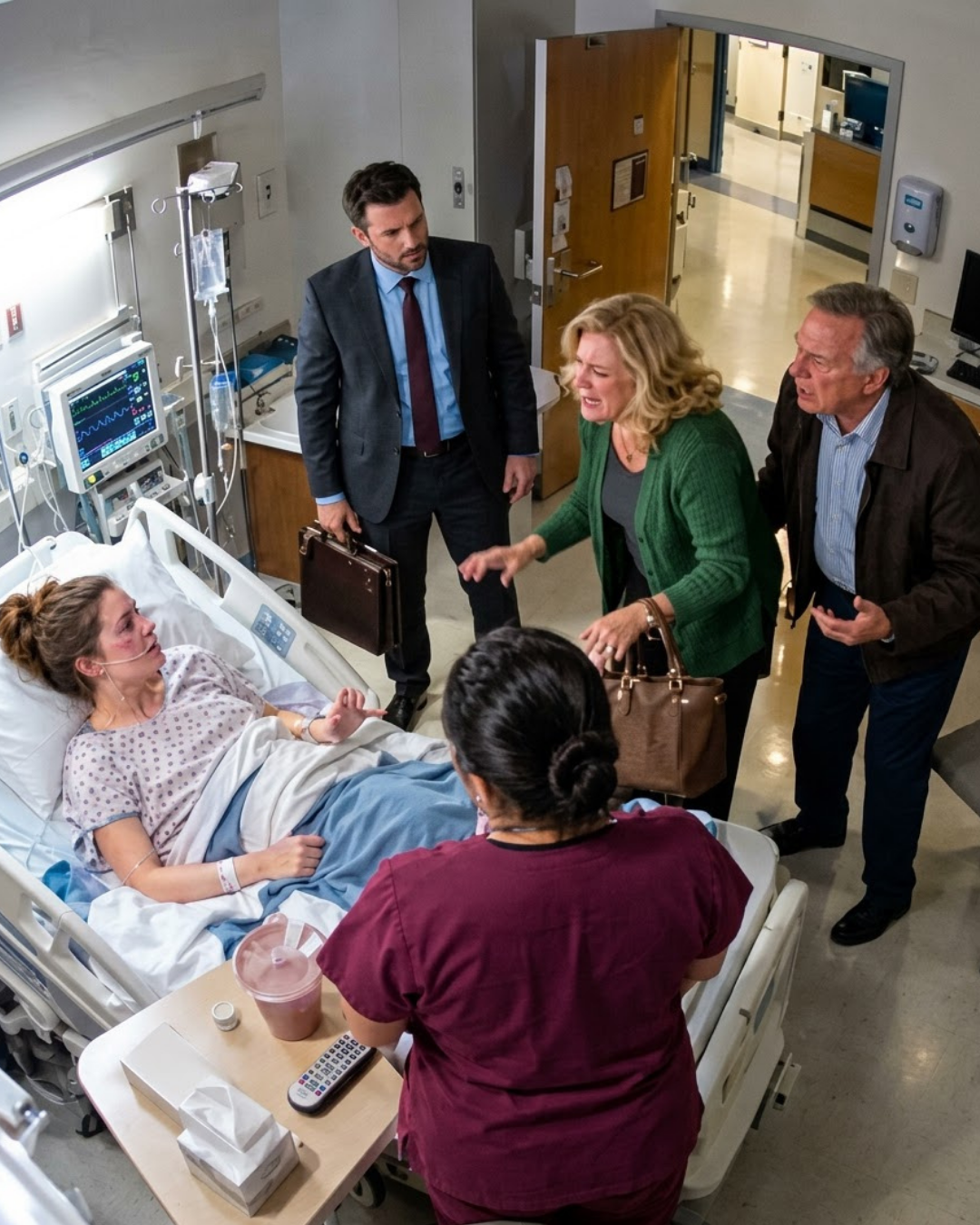
My name is Miranda. I was thirty-eight years old, financially independent, and recovering from emergency surgery when I finally understood that being needed by your family isn’t the same as being loved by them.
Two years earlier, I’d sold the medical software company I’d built from a rented office and a secondhand laptop. I had spent nearly ten years developing hospital communication systems, working weekends, surviving on coffee, and risking every dollar I had. When the company sold, the financial settlement changed my life.
I paid off my mortgage. I purchased a beautiful lake house. I established a charitable foundation. And, because I genuinely believed success meant nothing unless you shared it with family, I made sure my parents would never have to worry about money again. That was my first mistake.
My mother, Evelyn, and my father, Richard, were both retired. They lived comfortably in a house I’d helped them renovate.
Their vehicles were paid for. Their medical expenses were covered. I had even given them limited access to designated emergency financial accounts so they could handle urgent family expenses without waiting for me.
At the time, it seemed sensible. What I didn’t understand was that somewhere along the way, my generosity had stopped being something they appreciated. They had started treating it as something they owned.
My younger sister, Lauren, was thirty-four. She was beautiful, outgoing, and accustomed to getting exactly what she wanted.
Growing up, she was the child whose problems became family emergencies. If Lauren failed a test, Mom called the school.
If Lauren lost a job, Dad made phone calls. If Lauren needed money, everyone was expected to contribute. When I needed something, I was told to be independent. “You’re the strong one, Miranda,” Mom always said. For years, I accepted that as a compliment. I didn’t realize it was an excuse.
Lauren married Eric three years before my accident. He was charming in public, always wore expensive watches, and spoke about investments as though he personally controlled the stock market.
In reality, he moved between business ventures that never seemed to make much money. Still, Lauren adored him. And my parents adored the lifestyle he promised her.
When Lauren announced they were buying a large suburban home in Ridgefield, Mom practically cried with happiness.
The house had five bedrooms, a white designer kitchen, a massive primary suite, and a nursery Lauren insisted she’d need someday. It also had an enormous mortgage.
At least, that was what I assumed. Lauren never wanted to discuss the actual numbers. Whenever I asked whether she and Eric were stretching their finances, she became defensive. “We’re doing fine, Miranda. Not everyone needs financial advice from you.” I stopped asking.
A month before the move, however, Dad made an unusual request. He wanted to know whether the lake house could be placed under a broader family trust. “For estate planning,” he explained.
I told him Julian Vance, my attorney, already handled those matters. Dad didn’t seem pleased. Then Mom asked whether the emergency accounts still allowed her to authorize large payments.
That question stayed with me. “Only for legitimate emergencies,” I said. She smiled. “Of course, sweetheart.”
I should have paid closer attention. But I had spent my entire life believing that suspicious thoughts about my own parents were somehow a betrayal.
Then Thursday arrived. That morning, Mom called while I was getting ready to leave for a business meeting. She sounded unusually cheerful. “Sweetheart, are you driving past the old industrial intersection this afternoon?” “I might. Why?”
“I need you to pick something up for Lauren’s new place. Some framed family photographs. I’ll send you the address.” I checked my calendar. “I can probably stop after my meeting.” “Wonderful,” she replied.
“Try not to be late.” She sent a location. I never made it there.
At an intersection several miles from my destination, a delivery truck ran a red light and crashed directly into the driver’s side of my car. The impact was tremendous. I remember the horn. The windshield cracking. The sickening sensation of being thrown sideways. Then silence.
When I opened my eyes again, I was in a hospital recovery unit. A nurse explained that I’d undergone emergency surgery. I had fractured ribs, internal injuries, extensive bruising, and significant respiratory complications. The doctors told me the next twenty-four hours would be critical. I wasn’t certain I would survive. And despite everything my family had ever done, the first people I wanted were my parents.
They visited briefly Friday morning. Mom straightened the blanket around my legs. Dad stood near the window, checking his phone. “You’re looking better,” Mom announced. “I don’t feel better,” I whispered. “Well, recovery takes time.”
A doctor came in and explained that I needed close monitoring. Mom listened, nodding. Then she asked a question that struck me as strange.
“Is there a chance she could suddenly get worse?” The doctor answered carefully. “She’s stable at the moment, but these injuries can have complications. We’re watching her closely.” Mom nodded again. Dad cleared his throat. “We should probably get going.” I stared at him. “Going where?” “Lauren’s house,” he said.
“Moving day.” For a moment, I thought he was joking. “You’re leaving?”
“Only for a few hours,” Mom said. “Your sister is overwhelmed.” “Could you at least stay until this afternoon?” Mom’s smile vanished.
“Miranda, you heard the doctor. You’re stable.” I looked at the oxygen tubing beneath my nose. “I almost died yesterday.” “And thank goodness you didn’t,” she replied briskly. “But Lauren needs us today.” Then they left.
By 2:17 p.m., I was frightened enough to call Mom. Voicemail. At 2:46, I called Dad. No answer. At 3:20, I tried the family group chat. Nothing.
Throughout the afternoon, I continued calling. My chest hurt every time I inhaled. The oxygen monitor occasionally dipped low enough to summon a nurse. At one point, Marisol, my primary nurse, helped me sit more comfortably against the pillows. “Is there anyone you’d like us to contact?”she asked.
“My parents,” I whispered.
“I’ve been trying.” She gave me a sympathetic look. “Keep resting. We’ll take good care of you.” I believed her. But I still wanted my mother.
By late afternoon, I’d made nine calls. Finally, a message arrived. Mom. “We’re at Lauren’s. Is this urgent?” I read it three times. Then I typed: “I’m scared. Please come.” No response.
At 6:40 p.m., my phone buzzed again. A video notification. Lauren had uploaded a tour of her new house. “Couldn’t have done today without Mom and Dad!” she sang. The camera moved through the gleaming kitchen. My father carried a decorative lamp. My mother arranged throw pillows.
Eric stood near the counter holding a drink. They were laughing. Then Lauren turned the camera toward the empty nursery. “Someday, this room is going to be perfect,” she said. Mom appeared beside her. “And we’re going to spoil those babies rotten.” I looked away.
I had already established education trusts for Lauren’s future children. I’d arranged for my parents to receive generous benefits from my estate. I’d even offered them seats on the board of my charitable foundation. All those years, I’d assumed the people I loved would be there if I needed them. But I was lying in a hospital bed wondering whether I’d live until morning, and they were celebrating throw pillows.
Something changed inside me. Not suddenly. Not dramatically. It felt more like a door quietly closing.
I pressed the call button. When Marisol entered, I handed her my phone. “Could you help me contact my attorney?” She frowned gently. “Of course. Is something wrong?” “Yes,” I answered. “But I think I’m finally going to fix it.”
The number was saved under Harding & Vance — Estate. Julian Vance had represented me since the sale of my company. He knew my financial affairs better than anyone. More importantly, he knew that my estate plan still treated my parents and sister as the people I trusted most.
By 8:15 p.m., he arrived wearing a navy suit, carrying a leather briefcase. He looked concerned when he saw me. “Miranda, good grief.
I had no idea you were injured this badly.” “Neither do my parents,”
I said. I told him everything. The accident. The unanswered calls. The video. The request for the lake house. And the strange financial questions my parents had asked before Lauren moved. Julian listened without interrupting. When I finished, he sat beside my bed. “Before we discuss any legal changes, I need to know you’re certain. You’ve just undergone major surgery.” “I’m certain.”
“Anger is understandable. But this isn’t something I want you to regret.” I looked at the monitor beside my bed. “Julian, if I die tonight, I don’t want my family celebrating an inheritance they couldn’t even bother coming to protect.” He said nothing.
Then he asked several careful questions to assess my understanding of the decisions I wanted to make. I answered clearly.
After consulting the medical team about my condition and ensuring I was capable of making decisions, he began reviewing my estate documents.
He explained what could be signed immediately, what required trustee approval, and what financial institutions needed to be notified.
I wanted everything legally enforceable. No shortcuts. No mistakes. First, I removed my parents as beneficiaries.
Then Lauren. Their financial authorizations were revoked. The family arrangements concerning my lake house were terminated, and its future ownership was redirected toward a charitable endowment. The education trusts I’d planned for Lauren’s future children were replaced.
My parents’ expected foundation positions disappeared. Instead, eighty percent of my estate would benefit a dedicated pediatric trauma fund at the hospital.
The remaining twenty percent would support independent-living grants for people recovering from catastrophic injuries.
Julian reviewed every document. His assistant arrived to serve as an additional witness alongside Nurse Marisol, who had remained with me through the worst afternoon of my life. My fingers trembled when I picked up the pen. “Are you all right?” Marisol asked. I nodded. “More than I was this morning.” And I signed. Every signature felt like setting down something heavy I’d been carrying for decades.
At 10:00 p.m., the documents were completed. Julian was coordinating urgent notifications with the financial institutions and trustees when he received an unexpected call. He stepped into the hallway.
When he returned, his expression had changed. “Miranda, there’s been an attempted transaction on one of your emergency accounts.” I stared at him. “What kind of transaction?” “An unusually large withdrawal request.” “How large?” He hesitated. “One million, eight hundred thousand dollars.” My pulse quickened. “Who requested it?” “We’re still confirming the details.”
Before I could ask another question, my hospital door opened. Mom entered first. She wore a pale cardigan and beige pants, carrying a half-eaten takeout muffin. Dad followed in a navy polo shirt. He was yawning. Yawning. I’d spent the afternoon wondering whether my lungs would keep working. My father looked as though he’d just finished a mildly inconvenient road trip.
“Miranda, sweetheart,” Mom said, “you gave us quite a scare with all those calls.” I stared at her. “We had terrible reception at Lauren’s,” she continued. “Besides, the doctors said you were stable.
Your sister was exhausted from moving.” Dad dropped his keys onto my bedside tray. “Honestly, kiddo, you’ve always been dramatic. Couldn’t you handle one afternoon alone?”
I didn’t answer. His eyes moved toward Julian. “Who’s this? Insurance?” “I’m Julian Vance, Miranda’s legal counsel.” Mom sighed. “A lawyer? Miranda, really? You should be resting.” Then she casually added, “Lauren wants the lake house this weekend. She’s planning a little barbecue. Can you make sure she has the keys?” I almost laughed. “She can’t use it.” Mom frowned. “Why not?”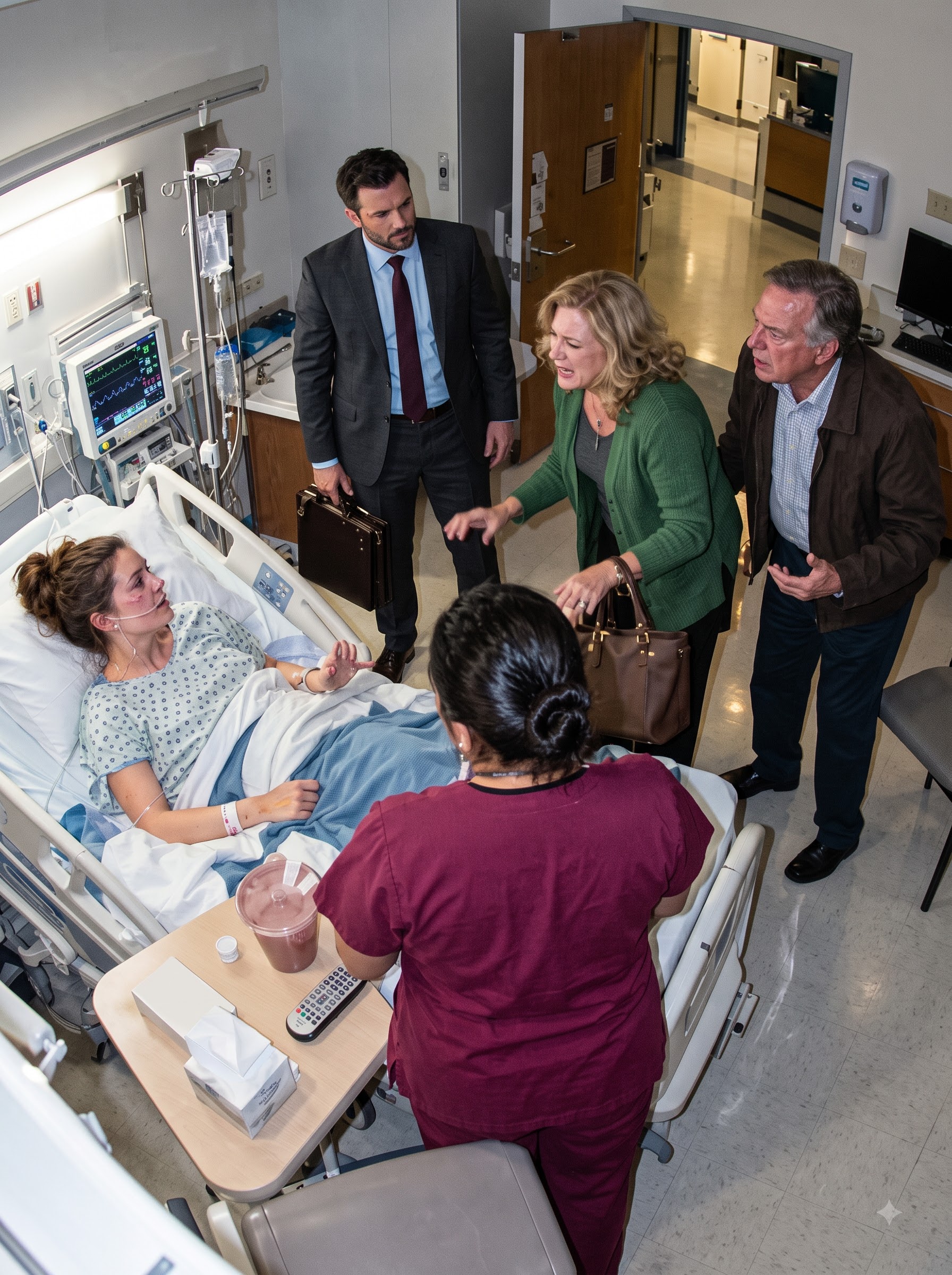
“Because it’s no longer available to the family.” “Don’t be ridiculous.” Julian stepped forward. “Your daughter has executed substantial changes to her estate plan. Her prior beneficiary arrangements have been revoked, and the lake house is now subject to new charitable trust instructions.” Dad stopped moving. “What?”
“Your interests in her estate have been removed,” Julian said calmly. “The emergency financial authorizations connected to your names have also been terminated.” Mom looked at me. “You wouldn’t dare.” “I called you nine times,”
I whispered. Dad’s face reddened. “You have obligations to this family! What about Lauren’s children? What about the promises you made?” “Lauren doesn’t have children.” “She will someday!” “And she has a husband and two parents who clearly have plenty of time for her.” Mom stepped toward my bed.
“You’re being cruel.” I looked at her for a long moment. “Cruel?” My voice broke. “I begged you to come because I thought I might die.”
She reached toward my arm. Julian immediately moved between us. “Mrs. Vance, don’t touch her.” Mom froze. Then her expression twisted into something I’d never seen before. Cold anger. Fear. Almost disbelief. And she whispered: “You weren’t supposed to survive this.”
I felt the air leave my chest. “What did you say?” Mom’s eyes widened. “I meant the accident.” Dad grabbed her elbow. “Evelyn. Stop talking.” Julian stood perfectly still.
“Mrs. Vance, who told you Miranda wasn’t expected to survive?” Mom looked toward the door. No answer. Then Dad’s phone vibrated. It lay beside my water cup, its screen facing upward. A message from Lauren appeared. “Did the transfer go through? Eric says we can’t afford another delay.” I stared at it. “What transfer?” Dad snatched up the phone. “That’s private.” Julian’s expression hardened.
“Richard, did you submit a withdrawal request against Miranda’s account tonight?” Dad didn’t answer. Mom began crying. “Please, Miranda. You don’t understand.” “Then explain.” She clasped her hands.
“Lauren’s house. There were some unexpected problems with the financing.” I couldn’t believe what I was hearing. “You tried to take almost two million dollars from me?” “It was going to be temporary,” Dad snapped.
“Family helps family.” Julian opened his briefcase. “The bank has a signed authorization request. Miranda did not sign it.” Mom went pale. I looked directly at my father. “Did you forge my signature?” He said nothing.
Then his phone vibrated again. I saw the beginning of another message before he turned the screen away. “Eric says the driver is getting nervous…”
The words seemed to hang in the air. The driver. My mind jumped back to the intersection. The truck. The shattered glass. I looked at Mom. “Why is Lauren talking about a driver?” She began shaking her head. “No. No, honey. Don’t start imagining things.” But Julian had already taken out his phone. He contacted hospital security. Then he asked me a question.
“Miranda, do you want me to notify the authorities about the attempted financial transfer?” “Yes.” My voice was barely audible.
“And tell them about the accident.” Dad took a step toward the door. Security arrived before he reached it. Mom started sobbing. Dad demanded to speak to an administrator. Marisol stood beside my bed, watching my breathing as the argument escalated. Finally, I managed two words. “Get out.”
My parents were escorted into the hallway. The door closed. And for several minutes, I couldn’t stop shaking.
Marisol gently adjusted the blanket around me. “You don’t have to deal with anything else tonight,” she said. I wanted to believe her. But I already knew something terrible. My family hadn’t simply abandoned me after my accident. They were hiding something about it.
The next morning, Julian returned with information from my private bank. The attempted withdrawal had been submitted shortly before six o’clock Friday evening. It requested $1.8 million to cover a payment to an escrow-related company connected to Lauren’s new house.
The authorization included my signature. Except I hadn’t signed it. Julian showed me a scanned copy. I recognized the signature immediately. Not because I’d written it that day.
Because I’d written it two years earlier. It had been copied from a document associated with the sale of my company. A document my father had once asked to examine. The bank’s fraud department had already frozen the request, and an internal investigation was underway.
My parents had not received the money. Neither had Lauren. And the emergency access arrangements had been canceled before further payments could be attempted. But the financial fraud wasn’t what frightened me most. It was that message about the driver.
On Sunday, a detective named Rebecca Hall visited my hospital room. She was a composed woman in her forties with short dark hair and a notebook full of questions. “I understand you believe your collision might not have been accidental,” she said. “I don’t know what I believe anymore.”
I told her what I’d seen. She listened carefully. Then she asked about my mother’s call on Thursday morning. “The one about picking up family photographs.” “Yes.” “Do you still have the address she sent?” I opened my messages.
The location was still there. Detective Hall studied it. Then she asked me to forward it to her. “Why?” “Because it’s very close to the intersection where the truck hit you.” A chill moved through me.
That afternoon, Julian told me he’d contacted a forensic accounting specialist. He wanted every transaction involving my parents’ emergency financial access reviewed. I gave him permission. For the first time, I realized how carelessly I’d trusted people who had grown comfortable spending my money.
Over the next several days, the truth began emerging. Lauren and Eric had purchased their Ridgefield home using complicated short-term financing. They had borrowed far more than they could comfortably repay.
Eric’s latest business venture had failed. The house had been purchased partly to maintain the image of success they wanted everyone to believe. And a significant payment had come due.
They couldn’t make it. So they turned to my parents. My parents turned to my money. The $1.8 million request wasn’t an emergency payment. It was an attempted rescue of Lauren’s lifestyle.
PART 2
When Julian confronted Dad through his attorney, Dad insisted he’d believed I would approve the transfer. But that didn’t explain the forged signature. Nor did it explain why nobody had asked me.
Lauren finally called me four days after the confrontation. I stared at her name on my phone. Part of me wanted to ignore it. Instead, I answered. “Miranda?” Her voice sounded small. “What do you want, Lauren?”
She started crying. “I’m so sorry.” “For what?” “For everything.” “That isn’t an answer.” She sniffed. “Eric told me the money was a temporary loan. Dad said you’d agreed to help.” “Did you ask me?”
Silence.
“Lauren, did you ask me?” “No.”
“Then you knew.” She started sobbing harder.
“I thought you would be okay. Everyone said you were recovering.”
I looked at the bruises still covering my arms. “You posted a celebration video while I was fighting to breathe.”
“I didn’t know it was that bad.” “You knew enough to read my messages.” Another silence. Then I asked the question that had been haunting me.
“Who’s the driver, Lauren?” Her crying stopped.
“What?”
“The driver Eric said was getting nervous.” I heard her breathing. Then a man’s voice in the background. Eric.
“Hang up,” he said sharply.
“Lauren?” “I’m sorry,” she whispered. The call ended. I sat motionless. That was the moment I stopped hoping there was an innocent explanation.
My recovery took weeks. Physical therapy was exhausting. I had difficulty walking long distances, and even laughing could make my ribs ache. But Marisol kept encouraging me. One afternoon, she brought an extra blanket and found me looking through old family photographs.
“Good memories?” she asked. “Some.” She studied my expression. “Sometimes losing the future we imagined hurts more than losing what we actually had.”
I looked up.
“How did you get so wise?” She smiled. “Night shifts and raising teenagers.” For the first time in weeks, I laughed. It hurt. But it felt good.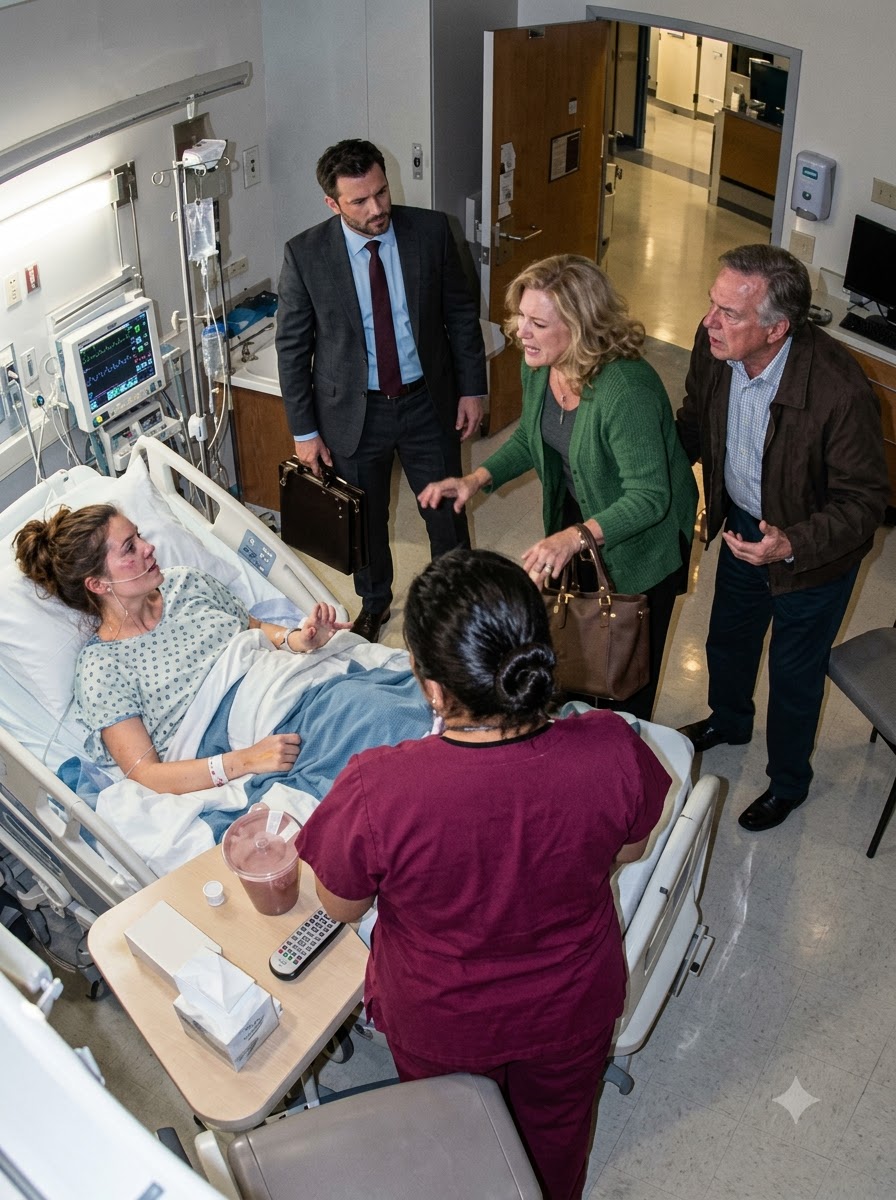
While my body healed, the investigation continued. Detective Hall obtained traffic-camera footage showing the truck entering the intersection after the light had turned red. That wasn’t surprising.
It was the reason I’d been hospitalized. What interested investigators was the vehicle’s movement before impact.
According to the preliminary reconstruction, the truck had not made a convincing attempt to brake before entering the intersection. Its speed appeared to increase.
Detective Hall cautioned me that this alone didn’t prove intent. Drivers panic. They become distracted.
They make terrible mistakes. But additional information raised questions. The driver had claimed he couldn’t remember what happened. His employer reported that he’d stopped reporting for work. And investigators were trying to locate him.
Two weeks later, Detective Hall called Julian. The driver had been found. His name was Daniel Mercer. He’d been working for a regional delivery contractor, transporting supplies through the area on the afternoon of my accident.
During questioning, he’d admitted receiving an unusual payment before the collision. He initially claimed the money was compensation for a private transportation job. Investigators didn’t believe him.
The payment had been routed through a small company associated with Eric’s business network. When Julian told me, I felt sick. “Eric arranged it?” “We don’t know that yet,” he said. “But the money came from his company.”
“An entity connected to him. That isn’t the same as proof he ordered the collision.” I was beginning to understand how much patience the truth sometimes required. It wasn’t enough to know someone was lying. We had to prove what had actually happened.
A few days later, Lauren came to the hospital.
I had been moved to a rehabilitation unit, where I could sit comfortably in a chair and walk short distances with assistance. She stood in the doorway wearing jeans and a pale blue sweater. Her honey-blond hair was tied back. She looked exhausted.
“Can I come in?” I considered saying no. Then I nodded. She sat across from me, gripping her purse. “I’ve left Eric,” she whispered. I said nothing. “The police searched his office. They took computers. They asked me all these questions.” “Did you answer them?” She stared at her hands.
“Eventually.” “Eventually?” “I was scared.” I felt anger rise in my chest. “I was scared too, Lauren. I was scared when I woke up with tubes coming out of my body.
I was scared when I couldn’t breathe. I was scared when I called our parents nine times and nobody answered.” Tears spilled down her face. “I know.” “No, you don’t.”
She wiped her cheeks. Then she said something unexpected. “Mom told us you weren’t going to make it.” I froze.
“What?” “Friday afternoon. She said the doctors were worried you might die during the night.” My heartbeat quickened. “The doctors told me I was stable.” Lauren nodded.
“That’s what I said. But Mom told us she’d spoken to someone at the hospital and things were much worse than they’d admitted.” I felt cold. “Then why didn’t any of you come?”
Lauren covered her face. “Eric said we needed to finish the financial paperwork before the banks closed. Dad agreed.
They said we could visit you afterward.” I stared at her. They had known I might be dying, and they had chosen to complete a money transfer first.
My own family. My own mother. The woman who had held my hand when I learned to walk. The man who had taught me to ride a bicycle. My sister, who used to crawl into my bed during thunderstorms. All of them had weighed my life against a house. And the house had won.
“Lauren,” I asked quietly, “did you know about the truck?” Her expression changed. She looked toward the doorway.
“I knew Eric had spoken to the driver after the accident.” “Why?” “He said the driver wanted more money.” My mouth went dry. “More money for what?” She shook her head. “I didn’t ask.” “Lauren.” Her voice broke.
“Because I was afraid of the answer.” She began crying again. This time, I didn’t comfort her. I couldn’t. There are moments when compassion becomes another way of allowing people to escape responsibility.
I’d spent most of my adult life doing that. I wasn’t going to do it anymore. Lauren eventually left. I immediately called Detective Hall. I told her everything.
Three days later, she returned. This time, she brought a recording. She asked whether I was emotionally prepared to listen. I nodded. The recording was from an interview with Daniel Mercer, the delivery-truck driver.
His voice was strained. He admitted he’d been offered money to cause a collision that would appear accidental. He said he’d been told the target would be driving a silver sedan through a particular intersection. He knew the approximate time. He knew the route. And he’d been promised a much larger payment afterward.
My stomach twisted. “Who hired him?” Detective Hall paused the recording. “We’ve been working to determine that.” I stared at her. “Was it Eric?” “Eric was involved in communicating with him after the collision.
We’re investigating exactly what he knew beforehand.” “And my parents?” She hesitated. “There’s something else.” She handed Julian a document. He read it. His face changed. Then he looked at me. “Miranda, do you remember the location your mother sent you before the accident?” “Of course.”
“Investigators recovered messages showing that location was shared with a third party before your collision.”
I felt my fingers go numb. “Who?” Detective Hall answered. “Daniel Mercer.” The room seemed to tilt. I heard the soft hum of the hospital ventilation. A cart passing in the corridor. Somebody laughing at the nurses’ station. Normal sounds. Ordinary sounds. While the foundation of my entire life collapsed.
“Mom sent him my location?” Detective Hall nodded. “That’s what the recovered communications indicate.” I shook my head. “No. Eric must have used her phone.” “That’s one possibility we considered.” She turned another page. “We also traced the initial payment.” I looked from her to Julian. “The money passed through a business account connected to Eric,” she continued.
“But investigators traced its original source to a personal account controlled by your mother.” For several seconds, I couldn’t speak. Then I whispered: “My mother paid the man who hit me?”
Detective Hall’s expression softened. “The evidence points to her involvement in arranging the collision. We’re continuing to establish everyone’s role.” I began shaking. Marisol, who had been checking on me nearby, came to my side. “Miranda, focus on your breathing.”
But I couldn’t stop seeing Mom’s face. The way she’d straightened my blanket. The way she’d asked the doctor whether I might suddenly get worse.
The way she’d left the hospital smiling. And the words she’d whispered when she learned I’d changed my estate. “You weren’t supposed to survive this.” Suddenly, the sentence wasn’t cruel exaggeration. It was a confession.
The investigation expanded. Eric’s financial records, Lauren’s messages, and my parents’ banking activity were examined.
Authorities alleged that my family had been preparing to exploit my wealth for months. The immediate problem was Lauren’s house. The larger prize was my estate.
Investigators believed that if I died, my parents and Lauren expected to inherit enough to erase their financial problems permanently.
The attempted $1.8 million withdrawal was meant to secure money quickly while I was incapacitated. And the accident had been deliberately arranged. My mother had supplied the route.
Eric had facilitated contact with the driver. My father had helped coordinate the attempted withdrawal and forged paperwork. Lauren had participated in the financial scheme and concealed information after learning something was wrong. Not everyone had played the same role. But everyone had made choices. And those choices had consequences.
Over the following months, the criminal case moved forward.
My parents, Eric, and the driver faced serious charges connected to the alleged conspiracy, attempted financial theft, and deliberate collision. Lauren cooperated with investigators and admitted her role in the financial deception. Her cooperation mattered. It did not erase what she’d done.
I moved out of the rehabilitation unit and into a smaller home near the hospital while I recovered. Julian helped me establish stronger financial controls. No family member retained access to my accounts.
The charitable trust arrangements were finalized. The lake house was transferred into the charitable structure, with the proceeds designated for pediatric trauma care.
The foundation board was rebuilt with independent professionals. And the education money that had once been reserved for hypothetical children in Lauren’s future became part of a grant program for people whose lives had been interrupted by serious injuries.
I still had difficult days. Some mornings, I woke up reaching for my phone, half expecting Mom to call and apologize.
Other days, I was furious with myself for not recognizing the signs sooner. But gradually, I stopped measuring my worth by whether my family wanted me.
The hospital invited me to visit its pediatric rehabilitation program. One afternoon, I met a little boy recovering from a serious car accident.
He was learning to walk again. He had bright red sneakers and a determined expression. His mother stood beside him, cheering each tiny step. When he reached the end of the therapy room, she hugged him so tightly that he started laughing.
I cried in the hallway afterward. Not because I was sad. Because I’d finally seen what love was supposed to look like. It wasn’t a financial arrangement. It wasn’t an obligation. It wasn’t something you had to earn by being useful. It was showing up when someone needed you, even when there was nothing in it for you.
Nearly a year after the accident, I attended a court hearing connected to my mother’s case. I hadn’t seen her in months.
She looked older. Her gray-blond hair was neatly combed, and she wore a plain dark jacket. For the first time in my life, she seemed small. When she noticed me, she started crying.
“Miranda,” she whispered. I didn’t respond. Her attorney had advised her against speaking to me, but she tried anyway. “I never wanted it to go this far.” I studied her. “How far did you want it to go, Mom?”
She lowered her eyes. I continued. “Did you just want me hurt? Unable to manage my accounts? Was that the plan?” Her lips trembled. “I thought everything would work out.” “For who?” She looked away. That was my answer.
There was no apology that could make what happened disappear. No excuse that could give me back the moment I woke up frightened and reached for people who had already decided my life was expendable.
The court proceedings eventually established the central facts of the scheme, including the deliberate collision and fraudulent financial activity.
The people responsible were held accountable through the criminal justice system. My family’s carefully maintained image collapsed. Lauren lost the house in Ridgefield. Eric’s business dealings unraveled.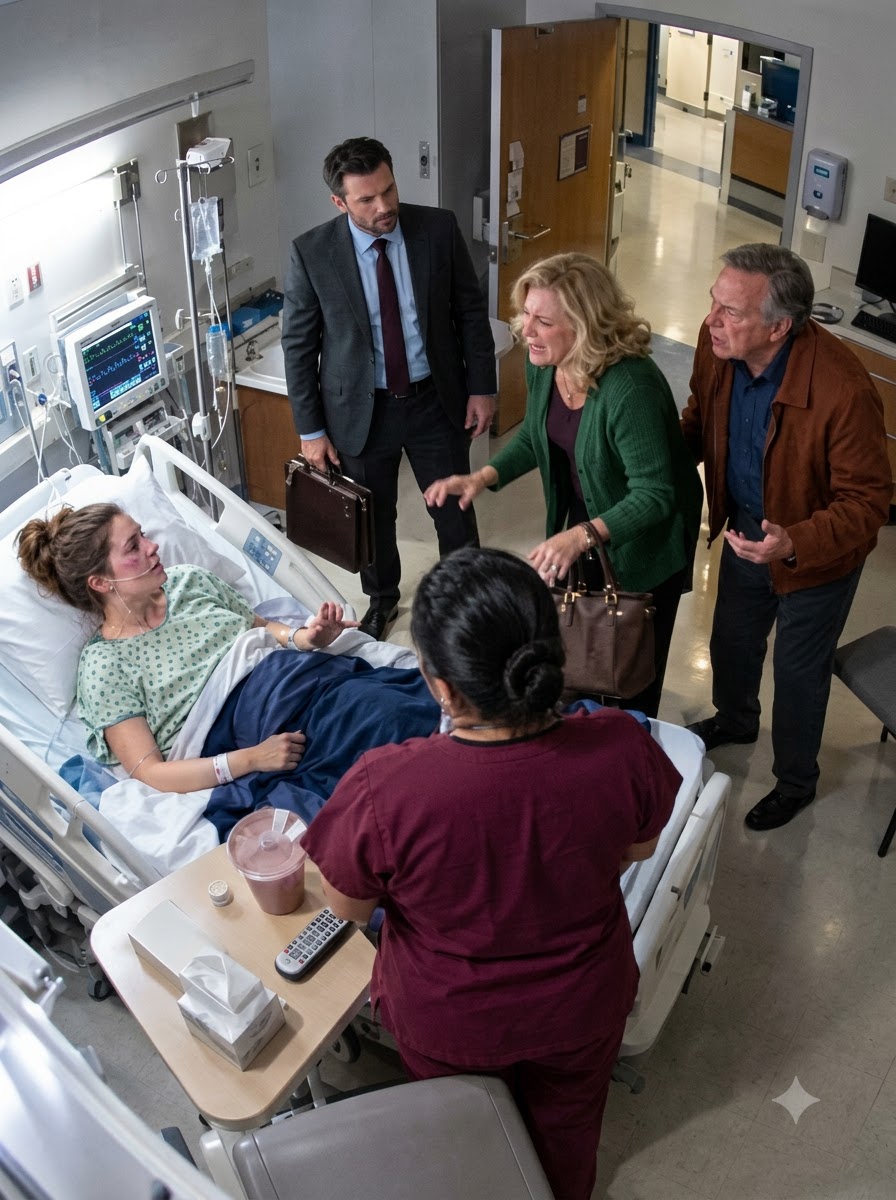
My parents lost the financial comfort they had assumed would last forever. The lake house was gone. The expected inheritance was gone. The foundation positions were gone. But the most important thing I’d taken away from them couldn’t be measured in dollars. They no longer had the power to make me feel guilty for protecting myself.
Several months later, Julian brought me a final packet of investigative records. The documents included a reconstructed timeline of the days surrounding my accident. One entry caught my attention. Thursday morning.
My mother had made a call shortly before sending me the location of the supposed family photographs. The call was to a number investigators connected to Daniel Mercer.
There were additional messages establishing when I was expected to travel through the intersection. And the final recovered exchange was devastating. My mother had confirmed the route.
The driver had confirmed he understood. Then she’d sent the address to me with a cheerful message.
“Try not to be late, sweetheart.” I stared at those words for a long time. They were the last ordinary words she’d ever sent before my accident. I’d thought she was asking me to do a favor for Lauren. In reality, she’d been guiding me toward a trap.
I closed the file. Julian sat quietly across from me. “Are you okay?” I thought about the nine calls I’d made from my hospital bed. About the voicemail. The silence. The video from Lauren’s beautiful kitchen.
About the day my mother arrived holding a muffin, more worried about a lake house barbecue than her injured daughter. Then I thought about the one call that changed everything. The call I’d asked Marisol to make to Julian. “I’m getting there,” I said. And for once, I meant it.
That evening, I walked outside and sat on the porch of my new home. The air was cool. The sky was turning pink.
My phone rested beside me, silent. I no longer checked it every few minutes, hoping my parents would finally call. I no longer needed an explanation. I had the evidence. I had my freedom. And I had a future that belonged to me.
The trauma fund was already helping children receive treatment their families could never have afforded.
The independent-living grants were helping accident survivors find accessible housing, transportation, and the equipment they needed to rebuild their lives. Money my family had expected to inherit was becoming something far more meaningful. It was becoming second chances.
I thought again about the words my mother had spoken beside my hospital bed. “You weren’t supposed to survive this.” For a long time, that sentence had haunted me. Now it reminded me of something else. She’d been wrong. I survived the collision. I survived the surgery. I survived the betrayal. And I survived losing the family I’d spent my whole life trying to deserve.
But the final truth was the one I would never forget. My mother had ignored nine urgent calls from my hospital bed. Yet when it came time to arrange the accident that put me there, she had made her call right on time.
