

PART 1
The soup struck my face before I even registered that my mother had raised the bowl.
Heat surged across my cheek and jaw, and for several terrifying seconds, I forgot how to breathe. I shoved my chair away from the kitchen table as hot broth dripped down my chin and soaked the front of my blouse. My mother stood over me, still gripping the empty ceramic bowl.
“Give her everything she asked for—or get out!” she shouted. Behind her, my stepsister Violet smiled.
It wasn’t the uneasy smile of someone who had just witnessed something awful, nor did her face show even the slightest hint of guilt. It was the triumphant smile of someone who believed she had finally gotten her way.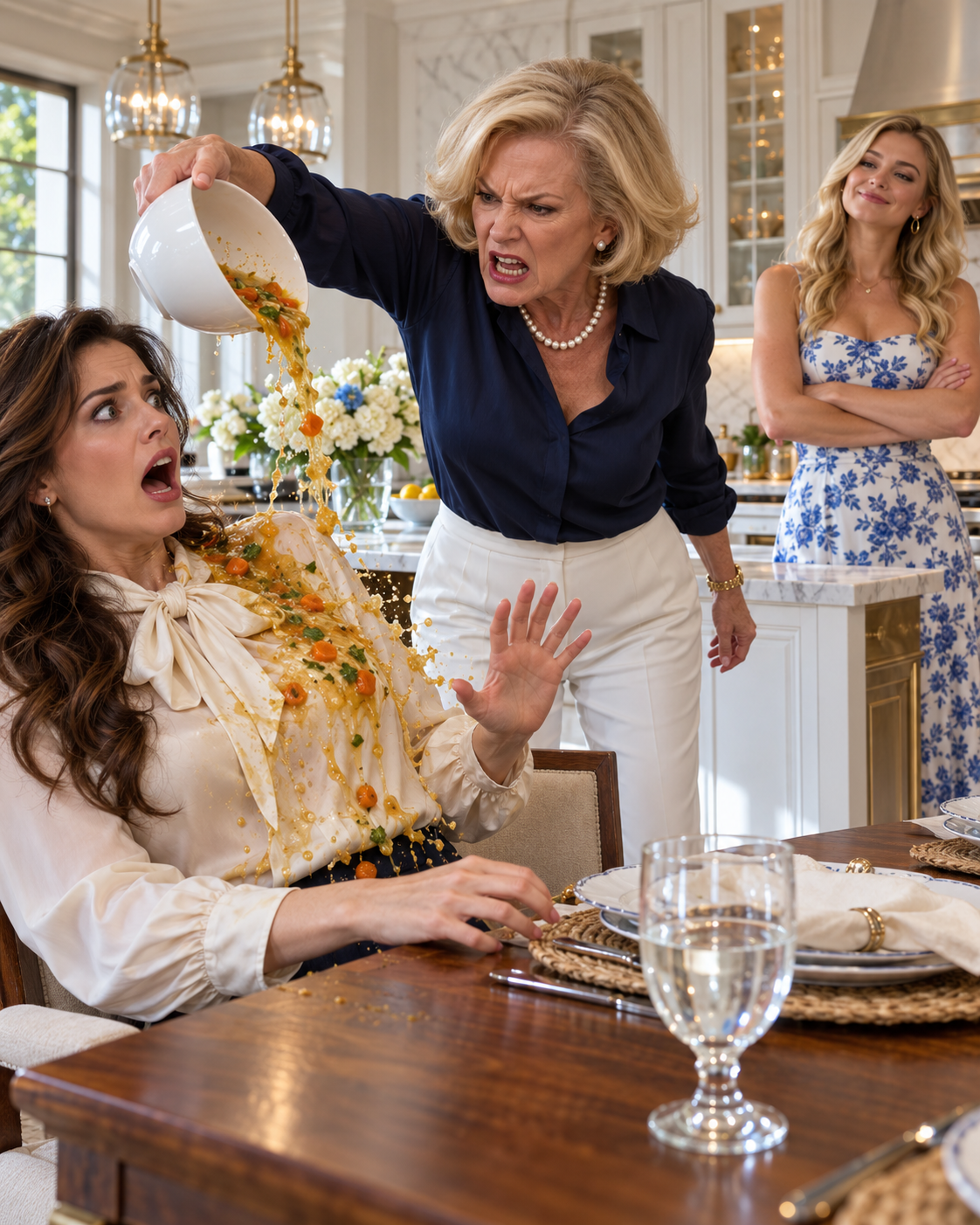
I pressed a trembling napkin to my burning cheek. “All I said was no.”
“And you humiliated me,” Violet replied, folding her arms.
“You asked for my car, my laptop, and the necklace Dad gave me.”
My mother tossed the empty bowl into the sink, where it landed with a sharp clatter. “Violet has an interview tomorrow. She needs transportation, and you work from home, so stop being selfish.”
“The car belongs to me.”
“And you live under my roof.”
For a moment, silence filled the room.
I slowly surveyed the kitchen—the polished marble countertops, the brass pendant lights, and the oak cabinets my father had installed with his own hands. Near the pantry hung an old photograph from my parents’ wedding. It was slightly crooked because Dad had always refused to drive another nail into the wall.
My mother had referred to this place as her house for so many years that I sometimes wondered whether she had convinced herself it was the truth.
But the deed told a different story.
When my father died four years earlier, he left the house to me. It wasn’t jointly owned by my mother and me, and it certainly didn’t belong to Violet, who had entered our lives years later after my mother remarried.
The property was mine alone.
I had never reminded my mother of that fact because grief had softened me. Guilt had silenced me, and my desperate hope of keeping what remained of my family together had led me to tolerate behavior I should have put a stop to long ago.
But pain has a peculiar way of bringing clarity.
Violet leaned against the kitchen island and looked at me with mock sympathy. “Face it, Nora. You’re thirty-two, single, and practically invisible. Mom is the only reason you’re not completely alone.”
My mother gestured toward the staircase.
“Pack a bag. Leave the car keys, the laptop, and anything else Violet needs.”
I stared at her.
She had just thrown scalding soup at me because I wouldn’t surrender my belongings, yet she still expected me to fight back. She anticipated an argument, tears, perhaps another desperate attempt to keep our family from falling apart.
Instead, I got to my feet.
“Okay.”
My mother blinked in surprise. “What?”
“I said okay.”
Violet burst out laughing. “That’s it? You’re not going to cry?”
I grabbed another napkin and gently pressed it against my cheek before heading for the stairs. Halfway up, I stopped and turned to face them.
“No,” I said softly. “No crying.”
Then I went upstairs and locked my bedroom door.
My hands didn’t begin trembling until I was alone.
I stood before the bathroom mirror, studying the angry redness spreading across my cheek and neck. For years, I had justified my mother’s cruelty by blaming grief, stress, loneliness, or frustration. But after what had just happened, there was no excuse left that could make her behavior acceptable.
So I stopped searching for one.
First, I photographed my face.
Then I opened the security app on my phone.
Years earlier, after a burglary in our neighborhood, my father had installed cameras throughout the property. Following his death, I had upgraded the system. The kitchen camera had recorded everything—the argument, Violet demanding my belongings, my refusal, my mother raising the bowl, and every word spoken afterward.
I downloaded the footage and saved three separate copies.
Then I made three phone calls.
The first went to an urgent care clinic.
The second went to my attorney, Marcus Hale.
The third went to the security company. I instructed them to preserve every recording from the previous twenty-four hours and limit administrative access to my account alone.
When I finished, I pulled a small suitcase from my closet.
I packed some clothes, my passport, essential documents, medication, and the silver necklace Dad had given me shortly before he died. Its tiny pendant was shaped like a book because he used to remind me that understanding what was written on paper could protect me from people who depended on intimidation.
“People who understand paper don’t get erased,” he had once told me.
Back then, I had laughed.
That afternoon, I finally understood what he meant.
I left everything else untouched.
As I carried my suitcase downstairs, I heard Violet speaking from the kitchen.
“She finally learned her place.”
My mother chuckled softly. “She’ll come crawling back tomorrow.”
I paused in the hallway.
Neither of them realized that the house they were celebrating in belonged to the very woman they had just ordered to leave.
And neither knew that, before coming downstairs, I had emailed Marcus one final document.
The deed.
By the time I stepped outside, the first part of his response had appeared on my phone.
Nora, do not tell them anything yet.
A second message followed.
Let them believe they won.
I walked out of the house with nothing but a single suitcase.
I didn’t take the designer handbags Violet had been admiring for months, the jewelry box she liked rummaging through whenever she thought I wasn’t home, or the expensive laptop she had repeatedly suggested should be hers. I carried only the essentials—clothes, my passport, medical documents, and the silver necklace Dad had given me.
Everything else stayed exactly where it was.
Before checking into the hotel, I drove directly to urgent care. The doctor examined my face and neck, treated the burn, photographed the injured areas, and recorded the cause as a thermal injury resulting from hot liquid.
When she quietly asked who had thrown it at me, I hesitated for only a moment.
“My mother.”
The doctor looked at me before returning to the report, making no judgment. By the time I left with medication and gauze covering part of my cheek, the medical documentation had already been sent to Marcus.
When I briefly returned to collect my suitcase, my mother hardly glanced at the bandage.
“Keys,” she demanded.
I reached into my pocket and placed one key on the kitchen table.
Violet frowned. “That’s not the car key.”
“No. It’s the guest room key.”
My mother’s expression grew hard. “Don’t get clever with me, Nora.”
“I wouldn’t dream of it.”
I lifted my suitcase and headed for the door.
Violet followed me into the hallway. “What about the laptop?”
I continued walking.
“And the necklace?”
I opened the front door.
“Nora.”
At last, I turned around.
She stood beside my mother, wearing the same entitled expression she had displayed when asking for my car, as though my possessions were simply things waiting to be handed over to her.
“You told me to leave,” I said. “So I’m leaving.”
Then I stepped outside and shut the door behind me.
I remained in my car for almost ten minutes before turning the key in the ignition. Through the windshield, I gazed at the house Dad had spent years building and improving—the porch he repainted every spring, the maple tree he planted when I was nine, and the upstairs window where he used to wave whenever I left for college.
Walking away hurt more than I had anticipated.
But I wasn’t abandoning the house.
I was giving my mother enough space to expose exactly what she believed she had the right to do with it.
By the time I arrived at the hotel, my phone had begun ringing.
My mother called twelve times that evening.
Violet sent thirty-one messages.
Bring back the car.
Mom says she’s changing the locks.
You’re being ridiculous.
That house belongs to Mom anyway.
You’ll regret this.
I forwarded every message to Marcus and didn’t respond to a single one.
Then another message appeared. If you don’t bring the car back tonight, we’ll report it stolen.
That message nearly made me laugh.
The title was under my name.
The insurance policy was under my name.
Every payment had come out of my bank account.
I sent Marcus a screenshot, and less than a minute later, he called me.
“Do not argue with them,” he said. “Do not explain ownership. Do not correct anything they say.”
“Why?”
“Because right now they’re documenting their intentions for us.”
I understood what he meant.
So I sent Violet exactly one reply.
Do whatever you think is smart.
They took me at my word.
The next morning, Violet posted a photograph of herself standing in the driveway beside my car, wearing oversized sunglasses and holding a set of keys that didn’t belong to me.
Her caption read:
New chapter. Finally getting what I deserve.
She couldn’t actually drive the car because I still had the only active key, but that didn’t stop her from pretending otherwise.
I saved the post.
That afternoon, my mother called a locksmith.
The security cameras recorded him arriving shortly after two. From my hotel room, I watched as she stood on the porch explaining something to him, occasionally pointing toward the street as if she were worried I might come back.
By four o’clock, she had replaced the locks on a property she didn’t own.
Marcus was thrilled.
“Why are you happy?” I asked when I called him.
“Because she just gave us another documented example of her attempt to exclude the legal owner from her own property.”
The following evening, Violet made matters even worse.
She invited friends over.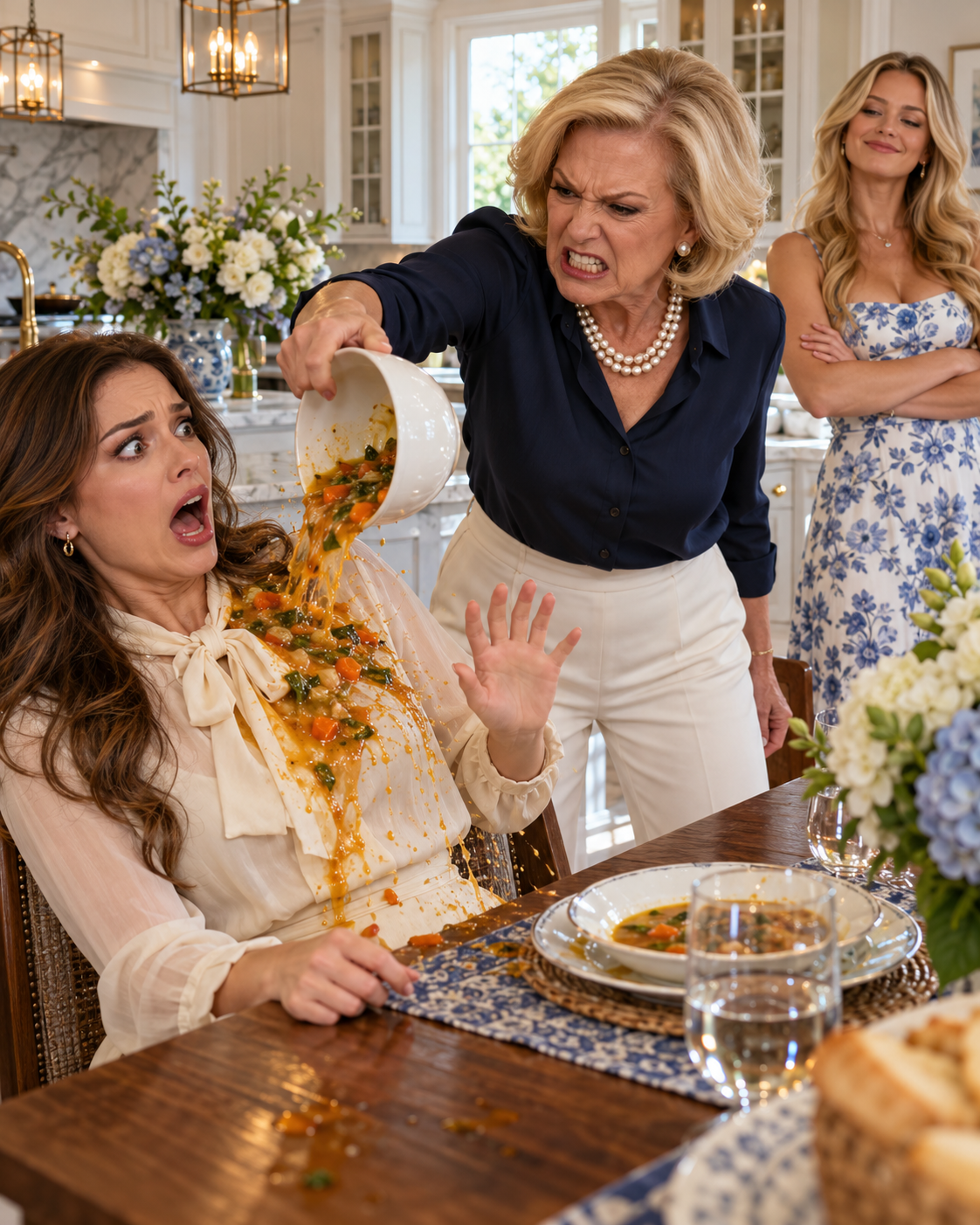
Through videos posted online, I watched strangers drink wine from Dad’s collection, rummage through cabinets, try on coats from my closet, and dance across the living room beneath his portrait.
One woman recorded Violet sitting in Dad’s old leather chair, raising a glass toward the camera.
“So the house is yours now?” someone asked.
Violet laughed.
“Basically.”
I saved that video, too.
Then another.
And another.
By the third morning, my anger had begun to fade.
All I did was create folders.
Property.
Messages.
Security Footage.
Social Media.
Medical.
Dad would have approved of the organization.
That afternoon, Marcus arrived at my hotel in a dark suit, carrying a leather folder. His expression shifted the moment he noticed the bandage still covering part of my cheek.
He sat across from me and placed the folder on the table.
“Before we discuss the house,” he said, “I need an answer.”
I waited.
“Do you want to pursue the incident with your mother separately?”
The question hurt more than I had anticipated.
Despite everything she had done, she was still my mother. Somewhere beneath my anger remained the woman who had once stayed awake beside me when I had pneumonia at eleven, packed my school lunches, and cried with me at Dad’s funeral.
But that woman had also stood over me with an empty bowl while my face burned.
“I don’t know yet.”
Marcus nodded. “You don’t have to decide today.”
He opened the folder.
Inside were copies of the deed, photographs from urgent care, screenshots of Violet’s messages, transcripts of the kitchen recording, and several documents I didn’t recognize.
“What are those?”
“Your options.”
He slid the first document across the table.
It was a formal notice demanding that my mother and Violet vacate the property.
Next, he showed me paperwork designed to prevent either of them from selling, transferring, damaging, or substantially altering anything connected to the house while the ownership dispute was being addressed.
“They’re going to fight this,” I said.
“Probably.”
“They’ll claim Dad intended Mom to have the house.”
Marcus leaned back in his chair.
“Then they’ll have a problem.”
I frowned. “What problem?”
Rather than answering, he pulled one last envelope from the folder.
It was old.
Not old in the way legal documents became old.
Genuinely old.
The paper was slightly yellowed around the edges, and my name was written across the front in handwriting I recognized immediately.
My breath caught.
I hadn’t seen that handwriting in four years.
“Where did you get this?”
Marcus placed the envelope in front of me.
“Your father gave it to my firm before he died.”
I stared at him.
“You knew my father?”
His expression changed.
“Yes.”
Suddenly, the house was no longer the biggest secret in the room.
I looked down at the envelope again.
Across the front, in Dad’s handwriting, were six words:
For Nora, if they challenge the house.
