

“What happens now?” My voice stayed steady, colder than I had ever heard it. He pushed his chair back without saying anything else.
Someone, maybe Mom, maybe one of our cousins, asked, “What’s happening?” I turned around, still calm, still quiet. “This is the final time you’ll see us.”
Their faces went still, mouths half-open, hands frozen in place. Nobody laughed.
Then I reached for Olivia’s hand.
She didn’t pull away. She simply allowed me to lead her from the table, her small fingers trembling inside mine.
We left that house without another word. We passed the kitchen, the dining room where the adults remained frozen, and the Christmas tree glowing with flashing lights before stepping into the crisp, cold night.
Their laughter still seemed to linger inside the house, the kind that hurts.
I opened the car door for Olivia and buckled her in. She stared through the window, her lips pressed together, saying nothing.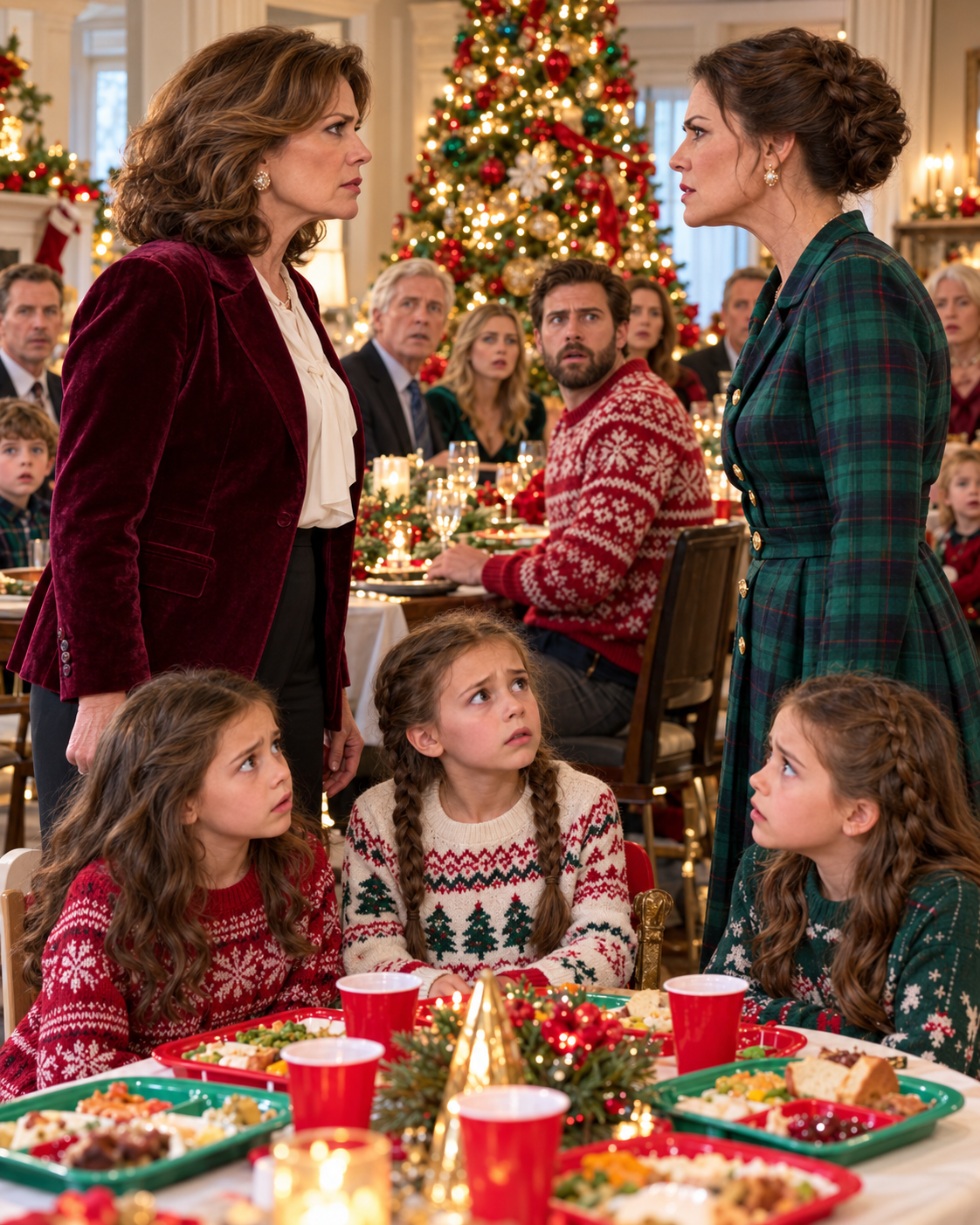
Adam slid into the driver’s seat and glanced at me, but he didn’t ask. Not yet.
The engine turned over. We pulled away from the curb. Only then did I finally allow myself to breathe.
They thought humiliating my daughter was nothing more than a game.
Very soon, Monica would learn just how wrong they were.
Soon, she would receive a letter, and nothing would ever feel the same again.
If you’ve ever wondered what it feels like to grow up as the family’s black sheep, let me spare you the suspense.
It’s like being invited to a gathering where everyone else understands a joke you don’t, and somehow, you are always the punchline.
I had one sister, Monica, and one brother, Daniel.
Between the two of them, they gave our parents enough pride to last a lifetime.
Monica was the outgoing one, the golden girl.
Daniel was athletic and charming, the kind of son every parent proudly mentioned at dinner parties. And then there was me, the nerd.
Not the entertaining kind, either. Not the quirky movie-trivia nerd, but the serious kind.
My nose was always buried in books, and I experimented with computers before most people even knew how to program a VCR.
My siblings never let me forget it.
When I needed glasses, they called me an owl and hooted whenever I spoke.
At dinner, they once pulled my chair away from the table as a prank.
Everyone laughed while I stood there holding my tray, unsure whether to sit on the floor or simply disappear.
Whenever I tried joining a conversation, Daniel would sigh and announce, “Shh, the encyclopedia is talking.”
But the hardest part wasn’t even my siblings. It was Mom and Dad.
They never participated, but they never stopped it either. Sometimes Dad chuckled as though he couldn’t help himself. Mom would touch my shoulder and say, “Don’t be so sensitive.”
That sentence became the soundtrack of my childhood.
Don’t be so sensitive when they hid my homework. Don’t be so sensitive when they criticized my clothes. Don’t be so sensitive when they joked that I must have been adopted because otherwise, how could I possibly be so different?
Sometimes I laughed along because what else could I do?
But privately, I knew I didn’t belong.
Not completely.
And when you grow up believing you don’t belong, you learn to make yourself useful. That was how I became the helper, the person who washed dishes, carried trays, and kept everyone calm.
If I couldn’t be loved, maybe I could at least be tolerated.
The irony, of course, was that everything they mocked me for—the books, the glasses, the obsession with computers—eventually became the very things that saved me.
I built a career around them. Senior software engineer. Good salary, good benefits. Adam, my husband, works in tech too. Two nerds building a nerdy little life together.
Our family works. Theirs, not quite.
AND SOMEHOW, I ENDED UP PAYING FOR A HOUSE THAT WASN’T MINE.
Five years ago, when Olivia was six, Monica came to me crying. Her husband was “finding himself,” which basically meant he moved between classes and part-time jobs without ever settling into dependable income. Monica was working part-time too, insisting she couldn’t balance a career and motherhood.
She had tried several side businesses—handmade candles, an Etsy shop, a fitness coaching venture—but each one ended in debt.
She told me she only wanted stability for Madison, a secure home where her daughter could finally feel settled.
It started when she asked if I could help with a deposit. “Just a little boost,” she said.
Then I learned the real situation. Her credit had been damaged by unpaid cards and loans, and no bank would approve her mortgage.
So I did what I believed was the generous thing, the family thing. I bought the house in my name and let her live there.
It was supposed to be temporary, six months, maybe a year, until she and her husband got their finances under control.
That was five years ago.
They paid the electricity and water. That was all. I covered every mortgage payment.
And somewhere along the way, the house stopped feeling like mine to them.
It became their home, their expectation.
My name might have been on the deed, but in their minds, I was simply the nerd with the money.
“Must be nice,” Monica once remarked when I mentioned a work project. “Just sitting at a computer all day. You wouldn’t even know what to do with that money if you weren’t helping us.”
I brushed it aside. That’s what I do.
But later that night, I stared at the ceiling and wondered, “Maybe she’s right. Maybe I’ve been paying for acceptance this entire time.”
Of course, I never said those words aloud. It was easier to convince myself I was simply helping. That’s what family does, right?
And for a while, it worked. Or at least I let myself believe it did.
Adam never approved of it. He’s too considerate to tell me I was being taken for granted, but I could see it in his eyes.
Every month when the mortgage payment disappeared, every holiday when we arrived carrying gifts while Monica barely showed appreciation, Adam would look at me as if he were waiting for me to finally react.
I didn’t, because deep down I believed maybe this was the price of belonging.
By then, Olivia was already part of our world.
She and Madison were only months apart, growing up alongside each other. Olivia was quiet and thoughtful, happiest with a book in her hands or a Lego set spread across the floor. Brilliant, but shy and socially awkward, much like Adam and me.
In other words, an easy target in this family.
At first, I convinced myself everything was fine. Kids tease, families sometimes play favorites. It wasn’t exactly what I had experienced.
Except it was.
At Thanksgiving, Olivia tried to tell a story about her science fair project. Monica cut her off halfway through. “Let Madison finish first.”
Everyone nodded as if it were perfectly normal.
Another time, Olivia brought along a robotics kit she had built. She explained how the sensors worked, her eyes shining with excitement. Mom smiled, patted her head, then immediately turned toward Madison. “Show us your cheer routine.”
The room filled with applause and praise.
Olivia quietly sat down, twisting her hands together and pretending she didn’t care.
I saw it. I felt it. And I convinced myself it wasn’t serious. That I was imagining things. That history wasn’t repeating itself.
But after Christmas dinner, I couldn’t deny it anymore.
SOMETHING INSIDE ME CHANGED THAT NIGHT. I WOULDN’T STAND QUIETLY, TRAY IN HAND, WHILE OLIVIA BECAME THEIR NEXT PUNCHLINE.
Not anymore. It ends here.
The drive home was filled with the heavy kind of silence. The kind that isn’t peaceful, only uncomfortable.
Adam kept his eyes on the road. Olivia stared through the window, her breath fogging the glass. I sat in the passenger seat with my arms folded so tightly that I could feel my fingernails pressing into my skin.
Adam tried once, halfway down the block. “What’s going on?” he asked, his voice cautious, as though testing the temperature of boiling water.
“Later,” I said, my throat too tight to discuss it.
He nodded, but I could feel his confusion moving through the car like static. Neither of us spoke again.
By the time we reached the driveway, my jaw hurt from clenching it.
Inside, Adam dropped his keys into the dish beside the door and turned toward me. “Okay,” he said. “What was that?”
I took off my coat and hung it carefully because if I moved too quickly, I would probably snap it in half.
“They were mocking Olivia.”
He frowned.
“Mocking her openly in front of everyone. It wasn’t teasing, Adam. It was deliberate hum!liation.”
His eyebrows rose. “I didn’t hear anything like that. I honestly thought they were playing some silly game.”
“Exactly.” My voice stayed flat and sharp. “They believed it was a game, too.”
Adam looked stunned.
He had always been the peacekeeper, the one smoothing over awkward moments at family gatherings while I carried trays. He couldn’t quite understand that we had just ended Christmas over something he hadn’t even heard.
Before I could explain further, Olivia spoke for the first time since we left the house.
Her voice was small, the kind that makes you lean closer because it sounds as though it might disappear.
“It was just a joke.”
I turned around. She was standing beside the couch, still wearing her coat and staring down at her shoes. Her words hurt more deeply than anything Monica had said all evening.
“If I walked away whenever people made jokes about me, I’d have no friends,” she added, almost whispering.
That was when something inside my chest cracked because I recognized it. Word for word, thought for thought. It was me at 11 years old, absorbing every remark my family threw at me and convincing myself it was normal.
Adam rubbed his forehead, still confused.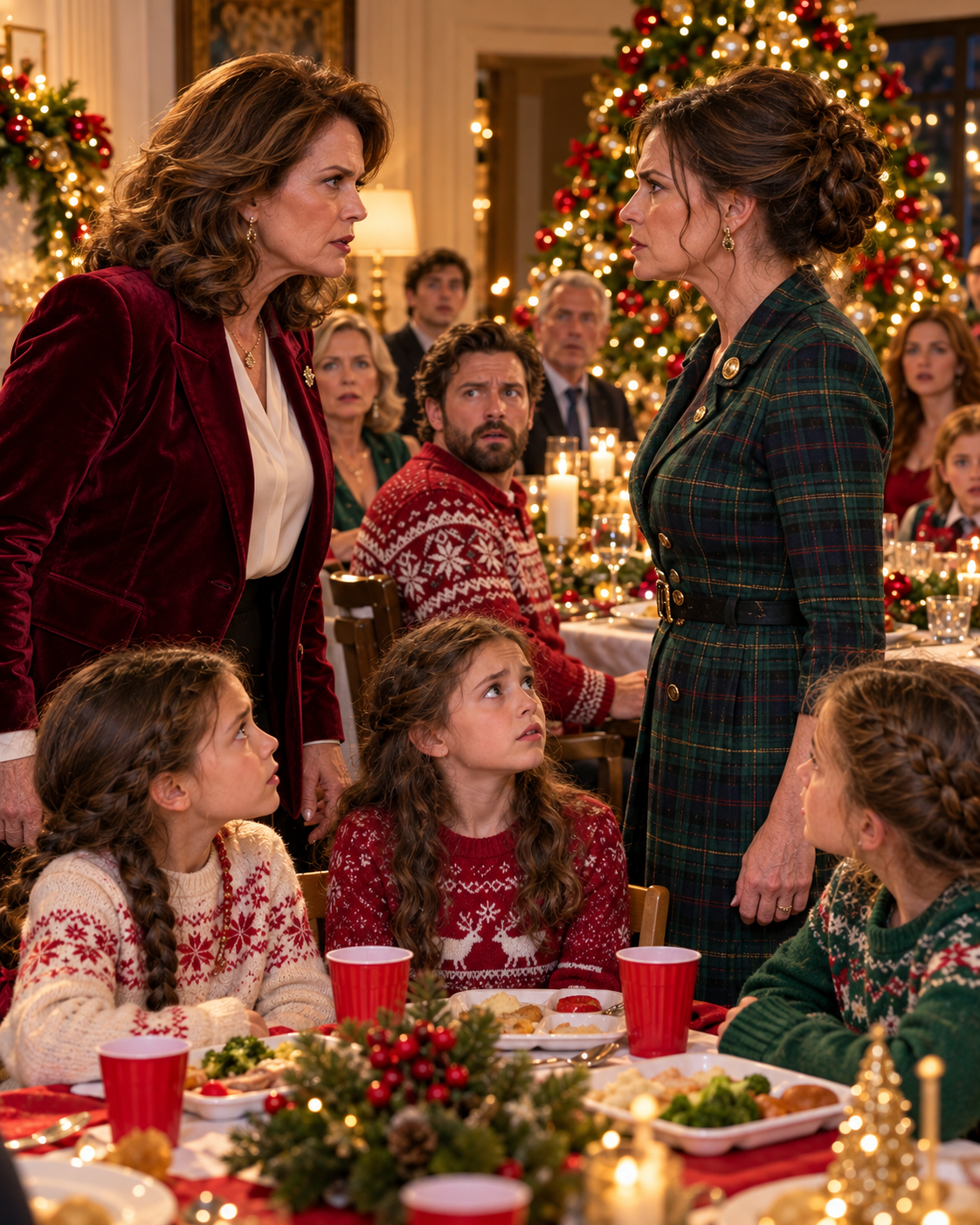
“Olivia, what kind of jokes?”
She hesitated, then her lower lip trembled. “They said Madison’s smarter than me, funnier, better, that I’m annoying.”
The words hung in the air like a warning.
She blinked hard and quickly added, “But it’s okay. It’s probably true. She really is smarter than me.”
Her voice cracked on that final word, and it nearly broke me.
I crouched in front of her, taking her cold hands in mine. “None of that is true,” I said, steady but firm. “They weren’t being truthful. They were being unkind. Jokes that hurt people aren’t jokes.”
She shook her head, tears shining but refusing to fall. “But if I can’t handle it, maybe I am weak. Maybe they’re right.”
I wanted to shout.
Not at her, but at them. At every one of them who had taught her to believe cruelty was some test she needed to pass.
Instead, I took a breath.
“No,” I said as calmly as I could manage. “You are not weak. You are kind. You are brilliant. And people who make you feel small don’t deserve you ever.”
Her lips trembled. The tears finally came, falling quickly as though she had been holding them inside for hours. She buried her face against me, her little body shaking.
Relief. That was what it was: relief that someone was finally giving her the truth.
She didn’t have to accept it.
I held her until her breathing settled, until the storm inside her finally faded. Later, I tucked her into bed. She was quiet and thoughtful, still trying to process everything.
But I noticed something had changed in her eyes. A seed had been planted.
When I returned to the kitchen, Adam was leaning against the counter with his arms folded, looking as though he couldn’t decide whether to be angry or bewildered.
“You’ve always said yes to them,” he said. “Always helped, always tried to keep the peace.”
“What changed?”
“That version of me is gone.”
I pulled out a chair and sat down. “I kept saying yes, hoping someday it would matter. It never did.”
He paused.
“But the house, they’re finished.” My voice was cold. “I want them gone.”
He studied my face. “Are you certain? That’s a major step.”
I held his gaze. “I’ve never been more certain about anything.”
For a moment, he looked as though he might disagree. Then he sighed, his shoulders dropping.
“Okay.”
That was all I needed.
I pulled my laptop toward me. The glow of the screen lit up the kitchen as I drafted the letter. It was brief, professional, and firm.
Monica and her family had 30 days to leave the house.
Adam read it over my shoulder, his lips pressed together. He said nothing.
When it was finished, we put it into an envelope. Adam slipped it into the outgoing mail pile beside the door. I stared at it for a long moment.
That envelope meant more than paper and ink.
It was the first real boundary I had ever established in my life. It marked the difference between the old me, the girl who endured every joke until she believed them, and the woman determined not to let her daughter live through the same future.
The house was quiet. Almost painfully quiet.
No one had called since Christmas. No apologies. No explanations. Maybe they thought I wasn’t serious. Maybe they believed, as they always had, that eventually I would give in.
They were wrong.
Soon, Monica would open that letter. And once she did, nothing in this family would ever be quite the same.
Three days later, the phone rang.
Monica.
I knew what was coming before I answered. She didn’t surprise me.
“You’ve completely lost your mind,” she snapped through the phone. “30 days. You seriously think you can make us leave like we’re strangers because of a joke? This is ridiculous, Hannah. You’ve always been too sensitive.”
There it was again. That familiar refrain.
Too sensitive.
I let her vent, then answered calmly and steadily, “This isn’t a joke. You have 30 days. I’m selling the house.”
“You can’t sell it,” she shouted. “We live here.”
“My name is on the deed. Not yours.”
She argued, called me selfish, and accused me of tearing the family apart. Then she ended the call.
I stared at my phone for a moment, almost expecting it to ring again immediately.
It didn’t.
Not yet.
But later that evening, it did.
Mom.
Her voice was gentle, almost soothing, like she was putting me to bed again.
“Hannah, sweetheart, I think everyone should calm down. Don’t make any sudden decisions. Think about Madison. She needs stability. You’ve always been the generous one. Don’t throw that away because of one unfortunate evening.”
I nearly laughed.
Generous. That was a new description.
“It isn’t about one evening,” I said, my voice even. “It’s about Olivia and years of being treated like we don’t matter. The letter stands.”
“Hannah, listen.” Mom continued, sweetness coating every word. “You’ve already helped so much. Can’t we simply move beyond this? You don’t want to pull the family apart.”
I leaned back in my chair. “This family fell apart a long time ago. I’ve only finally recognized it.”
The silence stretched.
Then the sweetness disappeared.
“You’ll regret this,” she said sharply before ending the call.
So much for kindness.
The days passed slowly. I understood their strategy.
Do nothing, delay everything, wait for me to give in as I always had.
But I didn’t.
I contacted a realtor and listed the house. He warned me Monica might refuse showings or make things difficult for potential buyers.
“She could make this complicated,” he explained gently, as though I didn’t already understand.
“Then I’ll follow the proper process,” I said. “Either way, the house belongs to me, and she’s leaving.”
I wasn’t backing down. Not anymore.
The warnings continued to come. Lawyers, court, declarations that they would never leave. But they understood that I had ownership rights, and dragging out the dispute would only create more expenses.
Day 30 arrived cold and gray.
When I turned onto the street, a moving truck was already parked outside. Monica’s husband was carrying a box down the steps. Monica was giving directions, her face flushed, her arms folded whenever she wasn’t gesturing toward him.
My parents stood nearby, organizing everything like commanders.
When they saw me getting out of my car, their expressions immediately hardened.
I crossed the street slowly, the sound of the truck door closing echoing behind me.
Boxes covered the driveway. Monica’s husband muttered under his breath as he passed me carrying another load. Mom and Dad stacked belongings near the entrance, whispering tensely to each other.
Then our eyes met.
I stood on the walkway while they remained on the steps.
Mom put down a box and hurried toward me.
Dad followed immediately behind her.
Monica came next, her arms folded tightly, anger obvious on her face.
“How could you do this to your own sister?” Mom demanded. “To all of us? Over nothing more than words.”
Monica pointed at me. “You were always jealous, always different. You never belonged here.”
The words landed heavily in my chest.
Heavy. Familiar.
“So that’s really it?” I asked quietly. “All these years. I never belonged.”
Mom’s expression hardened.
No more sweetness. No more persuasion. Only words that were difficult to hear.
“You were never like us. You never fit in. And yes, perhaps you tried to buy your place in this family. But that was your decision.”
Everything around me seemed to stop.
It was something I had suspected my entire life but had never wanted to accept.
And now it was there, spoken aloud, impossible to ignore.
I straightened, keeping my voice steady. “No, that was me trying to believe I mattered to you. And now I understand. You never valued me the way I hoped, and I’m finally done chasing your approval.”
Silence.
Behind them, the moving truck started. Monica’s husband called her name.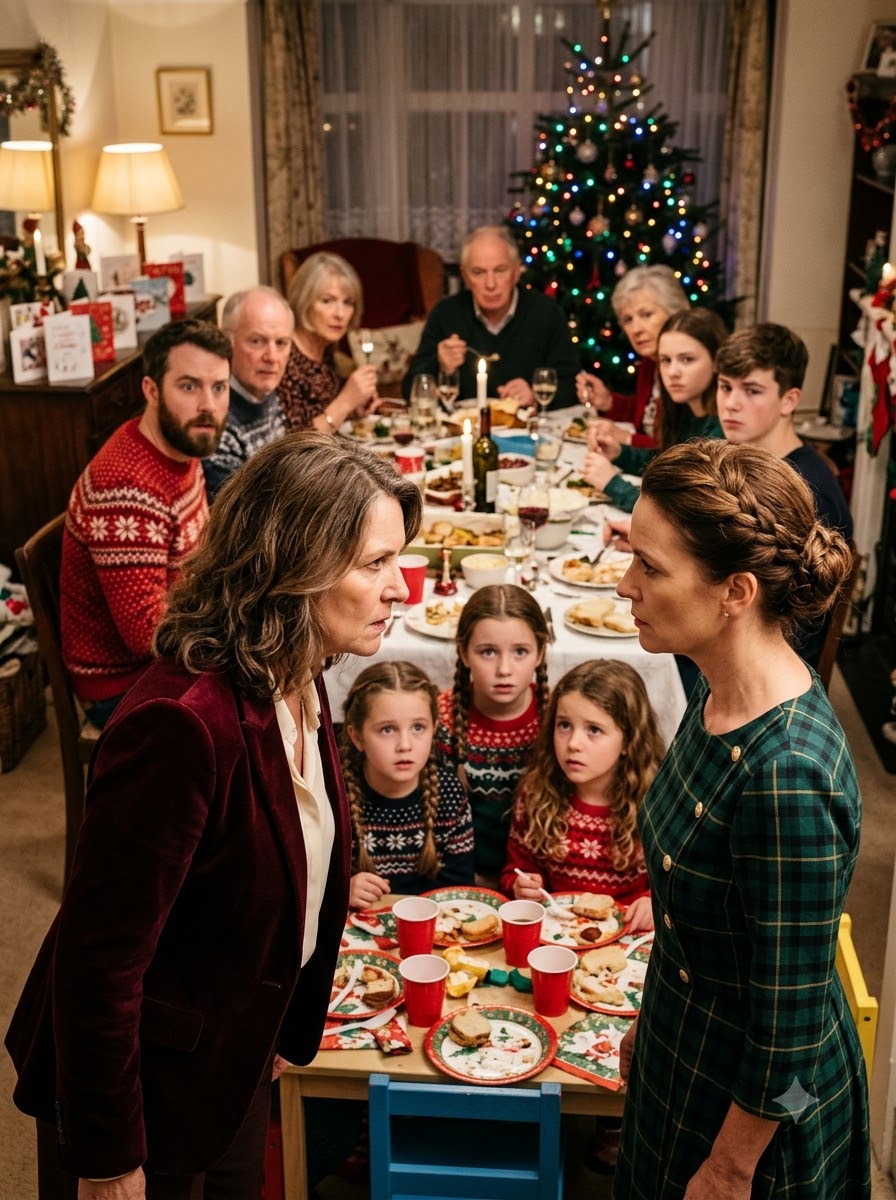
I stepped backward, resting my hand against the door frame.
“Goodbye,” I said.
Then I closed the door.
About a year later, Olivia came home from school, her backpack bouncing against her shoulder.
She dropped it beside the door and said almost casually, “Remember that friend who was always making little jokes about me?”
I nodded, preparing myself.
“I don’t sit with her anymore,” she said. “I realized she wasn’t actually a good friend.”
Before I could respond, she smiled. “I spend time with someone new now. She likes the same books I like. She doesn’t laugh at me. She laughs with me.”
I don’t cry easily, but at that moment, I nearly did.
For the first time, Olivia had understood something that took me decades to learn.
You don’t have to keep people close when they constantly make you feel small. You can choose people who encourage you instead.
And then, naturally, came the family updates.
Through relatives, I eventually learned what had happened with Monica.
After moving out, they returned to Mom and Dad’s house. It lasted two months before tensions grew. Too many people were sharing one roof, disagreements became frequent, and the atmosphere grew increasingly uncomfortable.
Eventually, they moved into a smaller rental in a less desirable part of town.
The days of side businesses and finding yourself were over.
Monica started working a full-time job she didn’t enjoy. Her husband gave up his creative ambitions for physically demanding work, coming home each evening exhausted, frustrated, and discouraged.
They were tired. Money was tight. And they were still arguing.
And Mom and Dad were now the ones helping Monica financially, giving her money and covering some of her expenses.
The same parents who had once told me I was too sensitive.
The irony wasn’t lost on me.
They had chosen Monica over me years earlier. And now they were carrying responsibilities I had once handled for them.
One afternoon, I watched Olivia curled up on the couch beside her new friend, giggling over a book they both loved.
The sound filled our house with something I hadn’t experienced in years.
Peace.
They believed making jokes about me was harmless. They believed doing the same to Olivia was funny.
But in the end, those choices changed everything.
And they taught me something I should have understood long ago.
I never needed their acceptance in the first place.
