

Then our plane stopped before takeoff.
The cockpit door opened.
And the captain stepped into the cabin asking for me by name.
That was the precise moment Patricia’s smile vanished in first class.
Two hours earlier, she had dropped her crocodile handbag into my arms at Terminal 4 as if I were part of the baggage crew.
“Careful, Nora,” she said, admiring the diamonds on her wrist beneath the terminal lights. “That bag is probably worth more than your apartment.”
My father heard every word.
He said nothing.
He merely looked away.
That hurt more than anything Patricia could have said.
More than Mason’s quiet, amused laugh.
More than watching his fiancée lift her phone while I struggled with three designer suitcases and two garment bags.
My father saw exactly what was happening.
And chose not to step in.
We were flying from New York to Aspen for Mason’s engagement weekend.
Patricia had planned the entire trip like a coronation.
A private chalet.
A celebrity chef.
Perfectly staged snowmobile photographs.
And a formal family announcement that Mason would soon join my father’s investment company as a “future partner.”
I had only been invited at the last minute.
Invited.
Not welcomed.
Three days before the flight, Patricia had called me.
“Your father insists that you come,” she said with a sigh.
Then she added,
“Just don’t make everyone uncomfortable by bringing up your little career situation.”
My “career situation” was what she called the two years after my mother died.
The years when I sold my condo.
Stopped showing up at family dinners.
Disappeared from their social circle.
And quit correcting anyone who assumed I was struggling financially.
At check-in, Patricia collected four first-class boarding passes from the agent.
Then she turned to me and handed me one.
31B.
I looked at the seat number.
“Economy?”
Mason smiled.
“Come on, Nora. Think of it as character building.”
Patricia leaned closer.
“First class is for people who contribute.”
Then she pushed another bag toward me.
“You can still make yourself useful with the luggage.”
The gate agent looked at me.
Her eyes lingered on my surname.
For a moment, I saw recognition in her expression.
Maybe she recognized the name.
Maybe she knew exactly who I was.
I gave her the slightest shake of my head.
Not yet.
So I continued playing along.
I carried Patricia’s coat.
Carefully placed Mason’s garment bag overhead so his tuxedo wouldn’t wrinkle.
And smiled when Patricia announced loudly enough for several nearby passengers to hear,
“Nora does very well when everyone keeps their expectations realistic.”
Then I walked past them.
Past first class.
Past my father.
Past Mason.
All the way to seat 31B.
Nobody noticed the slim silver aviation badge tucked inside my passport case.
Nobody saw the notification glowing across my phone.
**BENNETT AERO HOLDINGS**
**Board approval complete.**
**Controlling authority transfer effective immediately.**
And absolutely nobody relaxing in first class understood that the airline they were using to humiliate me had just come under my control.
A few minutes later, boarding was complete.
The cabin doors closed.
The aircraft pulled away from the gate.
We began moving toward the runway.
Then the plane slowed.
The sound of the engines shifted.
The brakes hissed.
And we stopped.
Passengers began looking around.
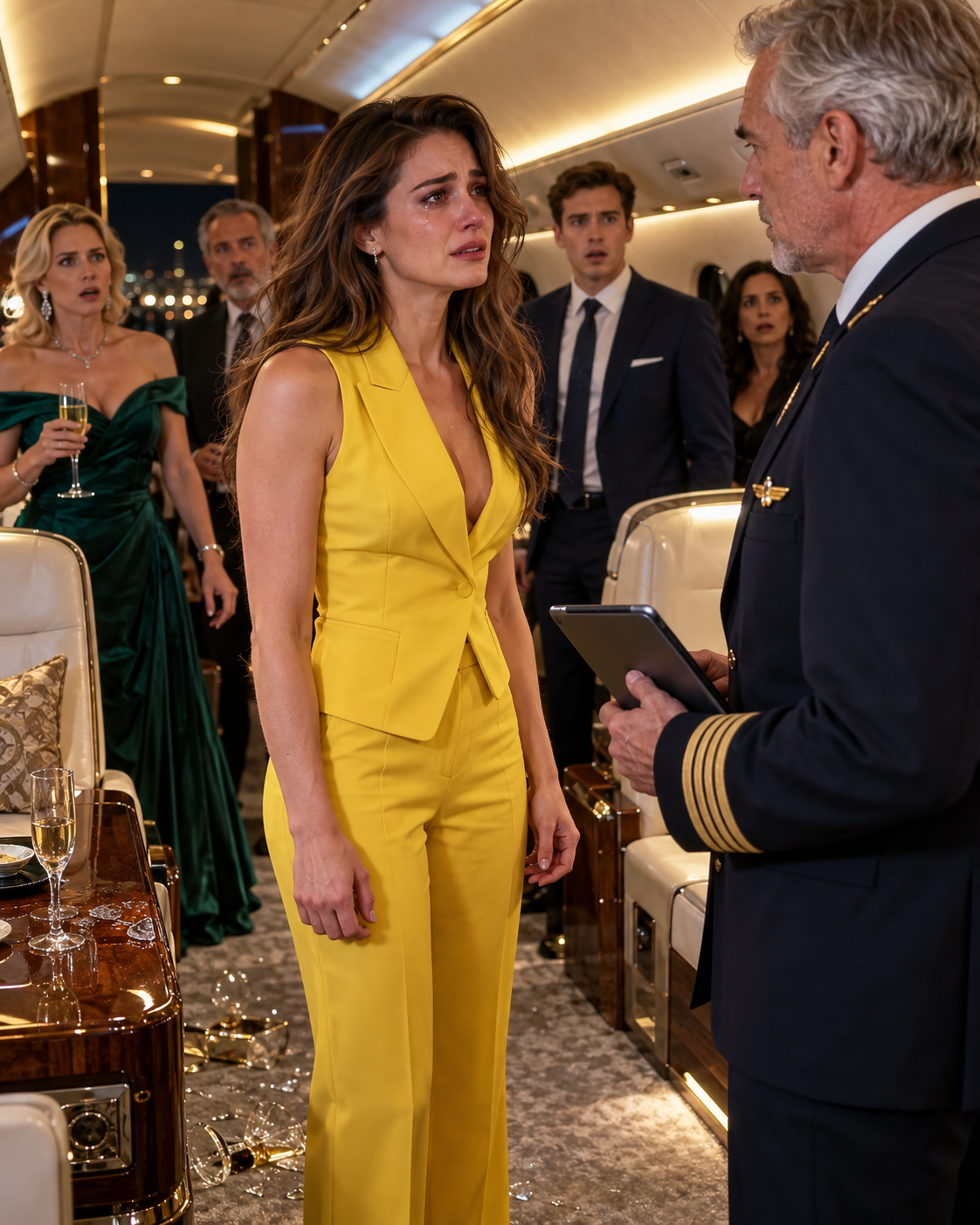
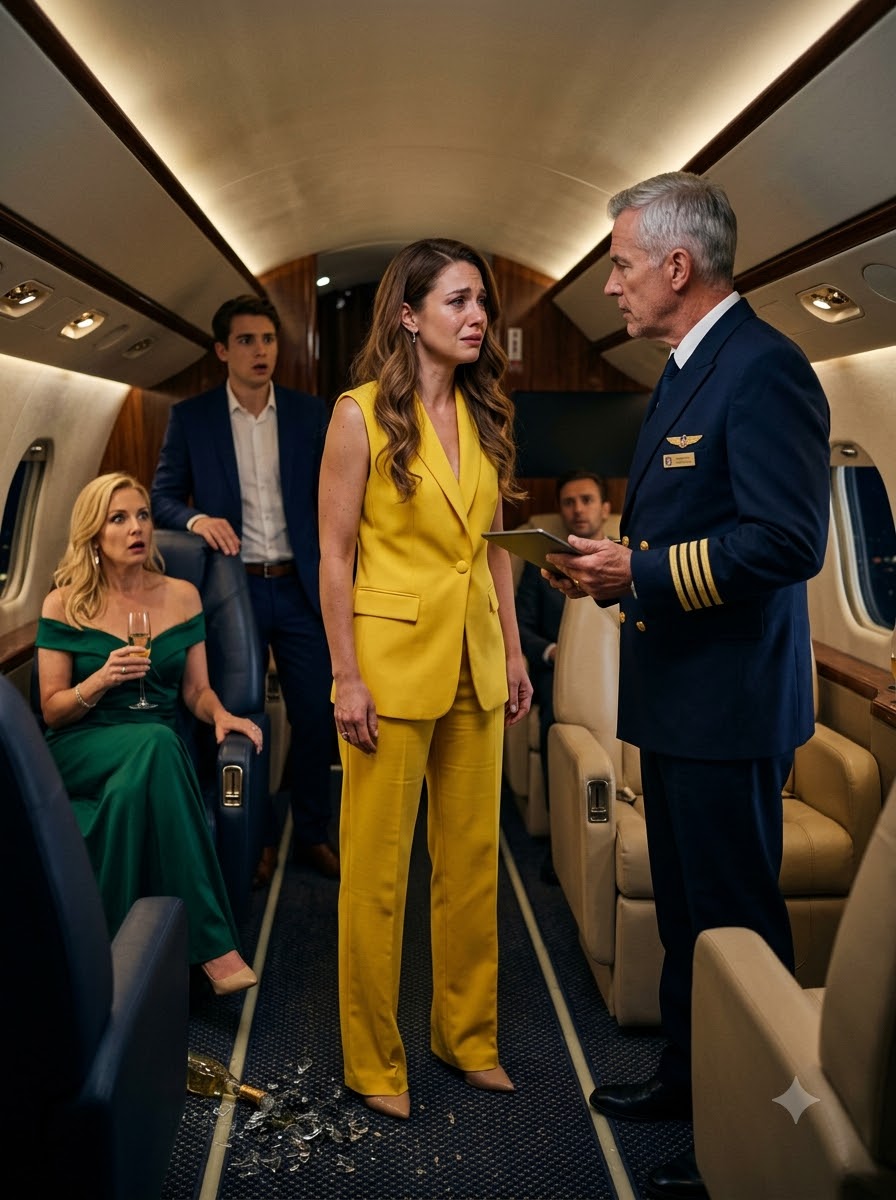
A moment later, the cockpit door opened.
The captain stepped into the aisle.
He looked through first class.
Past Patricia.
Past Mason.
Past my father.
Then his gaze moved toward the rear of the aircraft.
“Ms. Nora Bennett?”
Patricia slowly turned around in her seat.
Our eyes met from opposite ends of the cabin.
And for the first time since we arrived at the airport—
she wasn’t smiling anymore.
I unfastened my seat belt.
The woman beside me glanced up as I stood.
“Yes?”
The captain smiled.
“Ms. Bennett, I apologize for the interruption. May I speak with you for a moment?”
The cabin had become strangely quiet.
I stepped into the aisle.
As I walked forward, I could feel people watching me.
Patricia was among them.
Her eyes moved from me to the captain.
Then to my father.
Mason leaned into the aisle.
“What’s going on?”
The captain didn’t answer him.
He waited until I reached the front.
Then he lowered his voice.
“We received confirmation from corporate while we were taxiing. Operations asked me to personally acknowledge the transfer before departure.”
I nodded.
“Everything cleared?”
“Yes, ma’am.”
His expression became formal.
“Congratulations.”
I could practically feel Patricia listening.
Mason definitely was.
My father had gone completely still.
The captain continued.
“Mr. Reynolds also asked me to tell you that the Aspen operations team is waiting for your instructions regarding tomorrow’s review.”
“Thank you.”
I glanced toward the cockpit.
“Any operational issue with this flight?”
“No, ma’am. We’re simply waiting on updated departure clearance.”
“Then please don’t delay everyone because of me.”
“Of course.”
I started to turn away.
Then Patricia spoke.
“Nora?”
Her voice had changed.
The sharp amusement was gone.
“What transfer?”
I looked at her.
For several seconds, I considered giving her the same silence my father had given me in the terminal.
Instead, I said calmly,
“Business.”
Mason laughed.
But this time the sound was uncertain.
“What business?”
The captain glanced at me.
I could tell he wasn’t sure whether he should leave.
I gave him a small nod.
He returned to the cockpit.
The door closed.
I started back toward economy.
“Nora.”
My father said my name this time.
I stopped.
He was staring at me with an expression I hadn’t seen in years.
Not disappointment.
Not pity.
Confusion.
“What did the captain mean by corporate?”
Patricia folded her arms.
“Yes. I’d like to know that too.”
I looked at all three of them.
Then at Patricia’s handbag resting beside her expensive shoes.
The same bag she had pushed into my arms.
“Bennett Aero Holdings completed an acquisition this morning.”
Mason frowned.
“So?”
“So this airline is one of its operating companies.”
Silence.
Patricia blinked.
Once.
Twice.
Then she gave a little laugh.
It sounded forced.
“That’s ridiculous.”
I didn’t answer.
She looked at my father.
“Robert?”
My father was staring at me.
“Nora, what exactly are you saying?”
“I’m saying the transaction closed this morning.”
“Whose transaction?”
“Mine.”
Mason’s fiancée lowered her phone.
For once, she wasn’t recording.
Patricia stared at me.
“You bought an airline?”
“Not exactly.”
I paused.
“I acquired the holding company that controls it.”
That landed differently.
My father’s face changed.
He had spent forty years in finance.
He understood exactly what those words meant.
Mason apparently didn’t.
“What’s the difference?”
My father answered without taking his eyes off me.
“A very large one.”
Patricia looked between us.
Her face had lost color.
“But you sold your condo.”
“Yes.”
“You disappeared.”
“Yes.”
“You told everyone you were taking time away.”
“I was.”
She shook her head.
“No. You were struggling.”
“I never said that.”
“You let us believe it.”
I held her gaze.
“You decided to believe it.”
That silenced her.
Because it was true.
I had never told Patricia I was broke.
I had never told Mason I had failed.
I had never asked my father for money.
I had simply stopped explaining myself.
And because I no longer wore expensive clothes to family dinners or talked about work, they had filled in the blanks themselves.
After Mom died, I didn’t want the life I had been living.
I had spent seven years working inside my father’s investment company.
Seven years sitting in rooms where my ideas were praised until people discovered they belonged to me.
Then they became “aggressive.”
“Impractical.”
“Too ambitious.”
Mason, meanwhile, could repeat one of my suggestions six months later and be called visionary.
My mother had always noticed.
She was the only person who did.
After she died, something inside me stopped wanting to fight for a chair at a table where everyone kept pretending I hadn’t earned it.
So I left.
Quietly.
I sold the condo because I needed liquidity.
I stopped attending parties because I needed time.
And I spent the next two years building Bennett Aero Holdings with a small group of investors who cared far more about numbers than family politics.
We started with regional maintenance facilities.
Then cargo contracts.
Then aircraft leasing.
Then airport services.
One acquisition became three.
Three became seven.
And that morning, after eleven months of negotiations, we had completed the largest transaction of my career.
My father slowly removed his glasses.
“How much?”
Patricia looked at him.
“What?”
He ignored her.
“How large was the acquisition?”
I named the figure.
Mason stopped smiling.
Patricia’s mouth opened slightly.
My father stared at me for several seconds.
“That’s impossible.”
“It was difficult.”
“That’s not what I said.”
“I know.”
His face tightened.
“You couldn’t have financed something that large alone.”
“I didn’t.”
“Who backed you?”
“Investors.”
“Which investors?”
I almost smiled.
There it was.
Not congratulations.
Not pride.
Due diligence.
The language he understood best.
“You’ll probably meet some of them eventually.”
The seat-belt sign chimed.
A flight attendant stepped forward.
“Ladies and gentlemen, we’ll be resuming taxi shortly. Please return to your seats and fasten your seat belts.”
I looked at Patricia.
Then Mason.
Then my father.
“I should go back to 31B.”
Patricia flinched.
“Nora, don’t be childish.”
That almost made me laugh.
Twenty minutes earlier, economy had apparently been the appropriate place for someone who didn’t “contribute.”
Now returning there was childish.
“I’m sitting in the seat you bought me.”
Her cheeks reddened.
“That isn’t what I meant.”
“It’s exactly what you meant.”
My father finally spoke.
“Nora, sit here.”
He pointed toward the empty first-class seat across the aisle.
It had belonged to a passenger who had missed the flight.
I shook my head.
“No.”
“Nora.”
“I’m comfortable in 31B.”
Then I walked away.
Nobody laughed this time.
When I returned to my seat, the woman beside me was trying very hard to pretend she hadn’t been listening.
I fastened my seat belt.
She lasted maybe ten seconds.
Then she whispered,
“Did you really buy the airline?”
I smiled.
“Part of a holding company.”
She nodded solemnly.
“Still impressive.”
For the first time that morning, I laughed.
The plane took off six minutes later.
Once we were in the air, I opened my laptop.
I had work to do.
Contracts to review.
An operations report from Denver.
A message from our general counsel.
And seventeen congratulatory emails I hadn’t answered.
Halfway through the flight, a shadow fell across my screen.
Mason.
He stood in the aisle.
“Can we talk?”
I glanced toward first class.
Patricia was pretending not to watch us.
My father wasn’t pretending.
“About what?”
Mason lowered his voice.
“You could’ve told us.”
“Told you what?”
“That you were doing all this.”
“Why?”
He frowned.
“Because we’re family.”
I looked at him.
“You laughed when Mom died and I left the company.”
His expression hardened.
“I never laughed about Mom.”
“I didn’t say you did.”
He looked away.
“You know what I mean.”
“Yes.”
I did.
Mason had never been cruel in the dramatic way Patricia was.
He didn’t need to be.
His cruelty was easier.
A smirk.
A joke.
A silence at exactly the right moment.
He let Patricia do the cutting and then acted as though he had merely happened to be standing nearby.
He leaned closer.
“Dad’s planning to announce me as future partner this weekend.”
“I know.”
“He wants to expand into aviation infrastructure.”
I closed my laptop.
There it was.
Not even fifteen minutes.
“What does that have to do with me?”
Mason swallowed.
“We should talk.”
“We are talking.”
“Professionally.”
I studied him.
“You mean now that you know I’m useful.”
His face tightened.
“That’s not fair.”
I glanced toward the overhead compartment.
“Your garment bag is up there. I made sure your tuxedo didn’t wrinkle.”
He understood.
His jaw clenched.
Then he returned to first class.
Patricia came next.
She waited until the cabin lights dimmed.
Then she appeared beside my row wearing the same expression she used at charity events when she wanted people to believe she was compassionate.
“Nora.”
I kept reading.
She touched the top of my seat.
“I think there’s been a misunderstanding.”
“No.”
She paused.
“We were teasing.”
“You weren’t.”
“Families tease each other.”
“You handed me your luggage.”
Her face tightened.
“You offered to help.”
“No. You dropped your bag into my arms.”
The woman beside me suddenly became fascinated by the clouds outside.
Patricia lowered her voice.
“I was trying to include you.”
“In carrying your luggage?”
She exhaled sharply.
“You’re determined to make me sound horrible.”
“I haven’t described anything you didn’t do.”
That was the problem with people like Patricia.
They could survive almost any accusation.
What they couldn’t tolerate was an accurate transcript.
She glanced toward first class.
“Your father is upset.”
“He watched you humiliate me and looked away.”
“He didn’t know what to say.”
“He could have started with stop.”
Patricia’s expression changed.
For just a second, something colder appeared beneath the polished surface.
“You’ve always been difficult.”
There she was.
The real Patricia.
I looked up.
“And you’ve always been more comfortable when you thought I was powerless.”
She straightened.
“I never thought you were powerless.”
“You gave me seat 31B because you believed I was.”
Her eyes flicked toward my laptop.
Then back to me.
“This new business doesn’t change the way this family works.”
“No.”
I closed the screen.
“It changes whether I care.”
Patricia stared at me.
Then she walked away.
My father came last.
He waited until we were less than an hour from Aspen.
He didn’t stand over me.
Instead, he stopped beside the empty aisle seat across from my row.
“May I?”
I nodded.
He sat down.
For a while, neither of us spoke.
Then he said,
“I should have said something at the airport.”
I looked at him.
“Yes.”
He nodded once.
No excuse.
That surprised me.
“I’ve spent years telling myself Patricia was simply blunt.”
“She’s cruel.”
“Yes.”
The word seemed difficult for him.
But he said it.
“And I allowed it.”
I didn’t rescue him from the silence afterward.
Eventually, he continued.
“When your mother died, I thought you were falling apart.”
“I was grieving.”
“I know that now.”
“No. You knew it then.”
He looked at me.
I held his gaze.
“You just found grief inconvenient because it didn’t fit the schedule.”
His eyes dropped.
That one hurt him.
I could tell.
But it was true.
My mother had died suddenly.
Three weeks later, my father was back at the office.
Two months later, Patricia had started appearing at charity dinners beside him.
Less than a year after that, they were married.
I had never accused him of replacing Mom.
But I had never stopped wondering why he seemed so desperate to erase every room where grief might enter.
He rubbed his hands together.
“Why didn’t you tell me about Bennett Aero?”
“Would you have believed me?”
He started to answer.
Then stopped.
That was answer enough.
I looked out the window.
Snow-covered mountains stretched beneath us.
“I didn’t hide it to punish you.”
“Then why?”
“Because I needed to know whether I could build something without being Robert Bennett’s daughter.”
He looked down.
“And could you?”
“Yes.”
The answer came easily.
His mouth moved into something that wasn’t quite a smile.
“I suppose you did.”
For a moment, I saw the father I remembered from childhood.
The man who taught me how to read financial statements at fourteen.
The man who once stayed awake all night helping me prepare for a college economics competition.
Then his expression became serious again.
“Mason’s announcement.”
“What about it?”
“I’m reconsidering it.”
I shook my head.
“Don’t.”
He looked surprised.
“If he deserves the position, give it to him.”
“And if he doesn’t?”
“Then don’t.”
“It’s more complicated than that.”
“No, Dad.”
I met his eyes.
“That’s exactly the problem. You’ve spent years making family and business complicated because you refuse to separate love from entitlement.”
He was silent.
“Mason shouldn’t lose a career because he was rude to me on an airplane. And he shouldn’t receive one because he’s your son.”
My father leaned back.
I continued.
“Judge him by his work.”
A long moment passed.
Then he nodded.
“You sound like your mother.”
That nearly broke me.
I looked away before he could see it.
When we landed in Aspen, two black SUVs were waiting near the private arrivals area.
Patricia immediately assumed they belonged to the chalet service.
She walked toward the first one.
A man in a charcoal overcoat stepped forward.
“Ms. Bennett?”
Patricia turned.
“Yes?”
The man looked past her.
“To Ms. Nora Bennett.”
I stepped forward.
“Here.”
He smiled.
“Welcome to Aspen. The operations team is ready whenever you are. Your vehicle is the first one.”
Patricia’s face went still.
Mason looked at the second SUV.
“And ours?”
The driver checked his tablet.
“Your family’s transportation is through the chalet company. They should be waiting at the main pickup area.”
There was a silence.
I almost admired the symmetry.
At JFK, Patricia had made me carry her luggage because she believed status gave her the right.
Now my car was waiting twenty feet away.
And hers wasn’t.
I could have smiled.
I could have made a comment.
I could have told her that the walk to the main pickup area would be good for character building.
But I didn’t.
That would have made me too much like her.
Instead, I handed her crocodile handbag back.
“Careful, Patricia.”
Her eyes snapped toward mine.
For half a second, I considered repeating her own words.
That bag is probably worth more than your apartment.
But I didn’t.
I simply said,
“You’ll want to keep this with you.”
Then I walked toward the SUV.
The engagement dinner was scheduled for the following evening.
I almost skipped it.
But I had spent too many years disappearing whenever Patricia made a room uncomfortable.
So I went.
The chalet looked exactly as she had promised.
Candles.
White roses.
Champagne.
A private chef.
Snow falling beyond enormous glass windows.
About thirty guests had gathered.
Investors.
Family friends.
Two board members from my father’s company.
And several people I hadn’t seen since my mother’s funeral.
Patricia had recovered her smile.
Almost.
She greeted me near the entrance.
“Nora.”
“Patricia.”
Her eyes moved over my black dress.
“You look nice.”
“Thank you.”
It might have been the first compliment she had given me in years without attaching an insult afterward.
Dinner went smoothly.
Until dessert.
My father stood.
Everyone quieted.
Patricia straightened beside him.
Mason reached for his fiancée’s hand.
This was the moment they had planned all weekend.
My father lifted his glass.
“I intended tonight to make an announcement regarding the future leadership of Bennett Capital.”
Mason smiled.
Patricia did too.
My father continued.
“But I’ve decided that announcement should wait.”
Mason’s smile disappeared.
Patricia turned sharply.
“Robert.”
He didn’t look at her.
“Leadership is not an inheritance.”
The room went completely silent.
My father looked toward Mason.
“It has to be earned.”
Mason’s face flushed.
Then my father looked at me.
“And sometimes the people closest to us become the easiest to underestimate.”
I didn’t move.
“I made that mistake with my daughter.”
Patricia stared down at the table.
My father’s voice became quieter.
“I won’t make it again.”
He raised his glass.
“To Nora Bennett and Bennett Aero Holdings.”
Nobody moved for perhaps one second.
Then one of the board members stood.
“Congratulations, Nora.”
Others followed.
Glasses rose.
Applause filled the room.
I looked at my father.
He wasn’t smiling proudly for the room.
He looked ashamed.
And strangely relieved.
After dinner, Mason found me alone on the terrace.
Snow drifted through the lights.
He stood beside me.
“I was an ass.”
I looked at him.
“Yes.”
He laughed once.
Not because it was funny.
Because there was nothing else to say.
“I thought you failed.”
“I know.”
“And I liked thinking that.”
That surprised me.
He stared out toward the mountains.
“You were always the one Dad compared me to.”
“I didn’t know that.”
“He never said it in front of you.”
For the first time, Mason looked less like Patricia’s polished golden child and more like the insecure younger brother I remembered.
“I’m not asking you to forgive me.”
“Good.”
He nodded.
“I just wanted to say I know what I did.”
That mattered more than an elaborate apology.
“Then do better.”
He looked at me.
“I will.”
Maybe he meant it.
Maybe he didn’t.
Time would tell.
Patricia never apologized that weekend.
Not really.
On Sunday morning, she found me drinking coffee alone.
She sat across from me.
For several moments, she said nothing.
Then she asked,
“Do you hate me?”
I thought about it.
“No.”
She seemed surprised.
“I stopped caring enough to hate you a long time ago.”
That hurt her more.
I could see it.
She looked down at her coffee.
“I suppose I misjudged you.”
“No.”
She looked up.
“You judged me exactly the way you wanted to.”
Her lips tightened.
I continued.
“You thought money determined who deserved respect. You thought I didn’t have any, so you treated me accordingly.”
“That isn’t fair.”
“It’s completely fair.”
She didn’t answer.
I stood.
“Whether I own one airline or none shouldn’t determine whether you treat me like a person.”
For once, Patricia had nothing to say.
Six months later, Bennett Aero completed another acquisition.
A year after that, we expanded internationally.
Mason remained at my father’s company, but he didn’t become partner that weekend.
He spent eighteen months proving he deserved consideration.
Eventually, he earned the promotion.
I congratulated him.
And I meant it.
My father and I rebuilt our relationship more slowly.
Not with dramatic speeches.
Not with expensive gifts.
With lunches.
Phone calls.
Questions he finally learned to ask without assuming he already knew the answer.
He never again looked away when Patricia crossed a line.
And Patricia crossed fewer of them.
Not because she suddenly became kind.
Because boundaries taught her what silence never had.
As for seat 31B?
I kept the boarding pass.
It sits framed in my office now.
Not because I enjoy remembering the humiliation.
Because it reminds me of something I spent years learning.
People reveal themselves when they believe you have nothing they need.
Patricia believed I was broke.
Mason believed I had failed.
My father believed silence was easier than defending me.
And for a long time, I believed I needed to prove them wrong.
I didn’t.
The company wasn’t revenge.
The acquisition wasn’t revenge.
The captain walking down that aisle wasn’t revenge.
It was simply the truth arriving at an inconvenient moment.
The best part wasn’t Patricia’s face when the captain asked for me.
It wasn’t Mason realizing the sister he mocked controlled an aviation company.
It wasn’t even my father finally admitting he had underestimated me.
The best part happened after we returned from Aspen.
I walked into Bennett Aero’s headquarters on Monday morning.
Nobody carried my coat.
Nobody rushed to open doors because of my surname.
Nobody cared where I had sat on the flight.
My operations director was waiting with a stack of reports.
“We have a problem in Denver,” she said.
I smiled.
“Good morning to you too.”
She laughed.
“Morning.”
Then we went to work.
Real work.
The kind I had built my new life around.
And as I sat down at the head of the conference table, I thought about that airport.
Patricia dropping her bag into my arms.
Mason laughing.
My father turning away.
Seat 31B.
For years, I thought power meant convincing people to see your value.
Now I knew better.
Power was knowing your value even when they didn’t.
Because sometimes the person everyone sends to the back of the plane isn’t the one who lost everything.
Sometimes she’s the one who quietly built something bigger.
And sometimes the people laughing in first class don’t realize the truth until the cockpit door opens—
and the captain asks for her by name.
