

Chapter 1: The Exiled Daughter and the Burning Snow
“Don’t come home this year, Becca.”
My father delivered the words with the casual precision of a surgeon making a necessary, if unpleasant, incision. He said it three nights before Christmas, while I was locking my office at the Army base in Colorado. The winter wind was already howling against the reinforced glass, but the chill that settled over my skin had nothing to do with the weather.
“Jason’s going to be here,” he continued, his voice echoing slightly over the line. “People will ask about your deployments, your rank, your medals. Jason just got a major corporate promotion. This is important to him.”
I tightened my grip on the secured phone, my knuckles turning white. “You think me sitting at the dinner table will embarrass your stepson?”
“I think you’ll suck the oxygen out of the room. You always do.”
For eighteen years, I had served my country without ever expecting my family to rearrange their lives for me. I had missed birthdays, funerals, and holidays because duty dictated my coordinates. Now my own father was asking me to make myself disappear because my mere presence might make his favorite, agreeable, suburban-dwelling stepson feel smaller.
“I understand,” I said, my voice entirely stripped of emotion. I did not mention the plane ticket already purchased, nor the holiday shifts I had traded with junior officers who desperately needed the time with their toddlers.
I simply hung up and volunteered for the overnight duty watch.
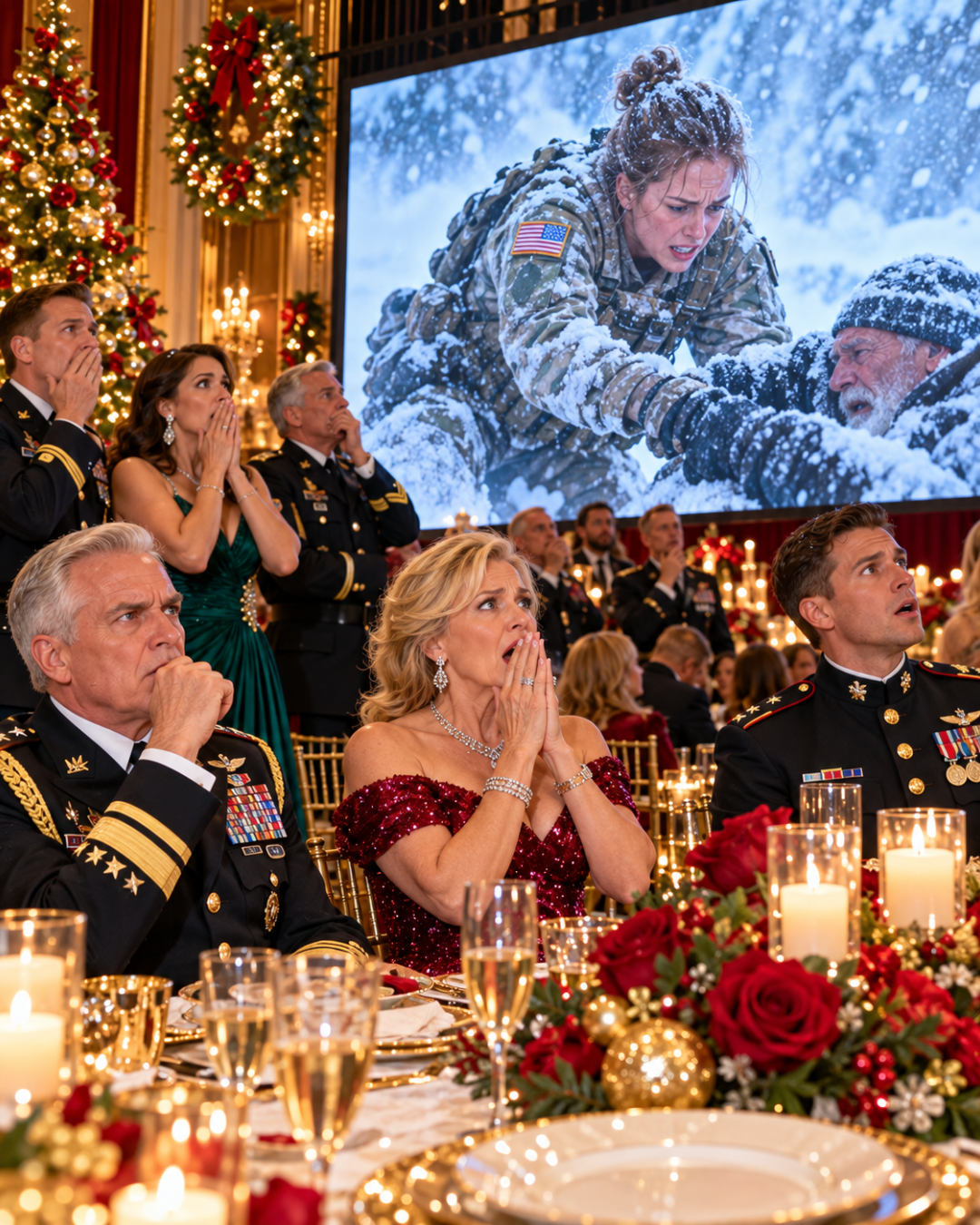
By Christmas Eve, Colorado’s light snowfall had mutated into a blinding, dangerous blizzard. Interstate visibility collapsed to zero. Shortly after 1800 hours, our unit was activated to support state and county emergency responders. We were the first organized military response unit to reach the nightmare near mile marker 214.
A charter bus carrying nearly forty passengers had skidded and rolled onto its side. A civilian pickup had jackknifed nearby, and further uphill, a massive, unmarked commercial transport truck leaned dangerously toward the frozen, crumbling shoulder.
“Alvarez, coordinate with State Patrol,” I ordered my sergeant, shouting over the roaring wind. “Get those ambulances positioned downhill. Nobody approaches that transport truck until we know what it’s hauling.”
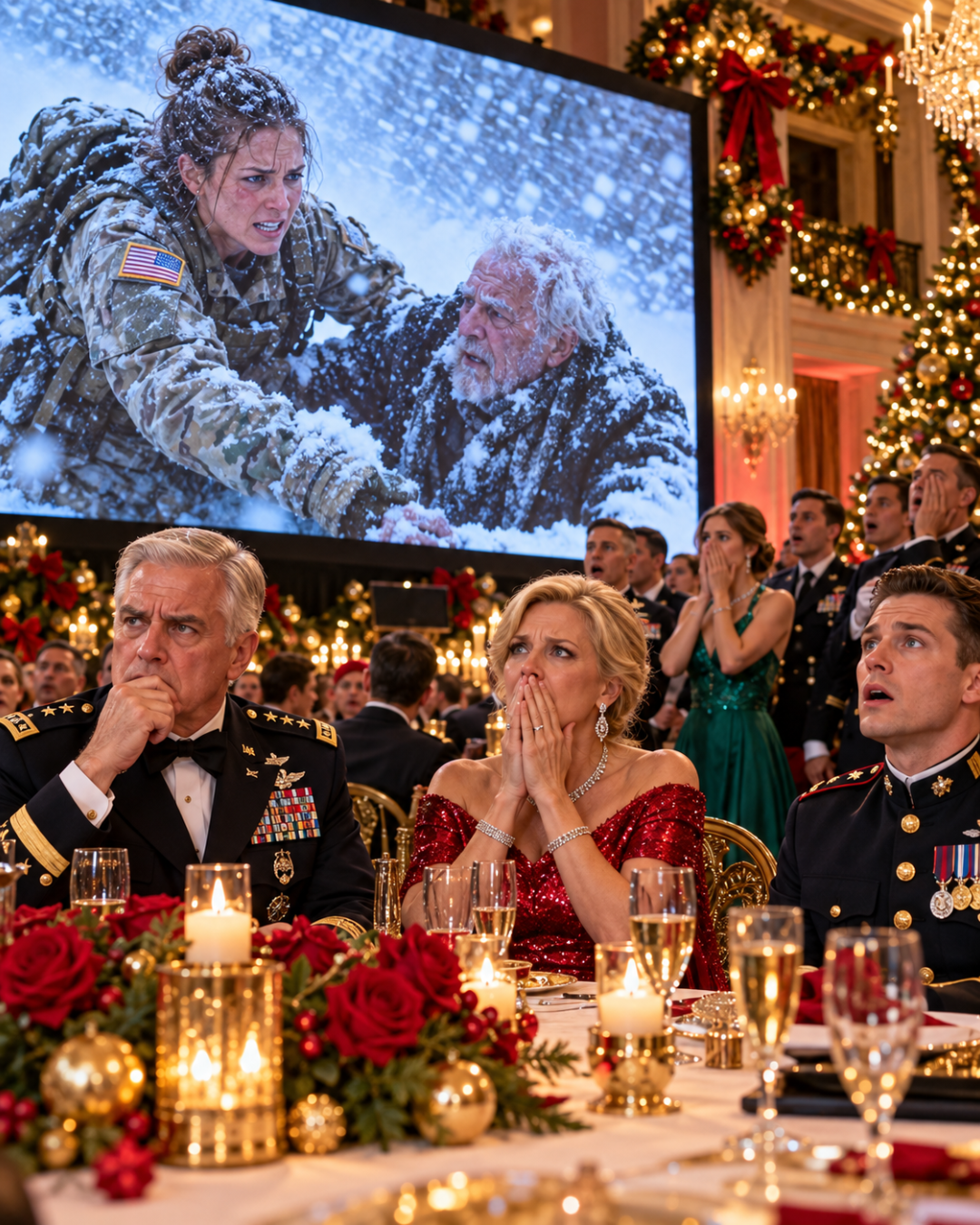
The chaos inside the bus was deafening—terrified parents screaming for their children in the dark. I climbed onto the exposed side of the metal hull, ripped open the emergency roof hatch, and began hauling passengers out into the biting cold, one by one.
Then a shout cut through the howling wind. The driver of the transport truck was alive.
His name was Walt. He was an older man, pinned by his left leg beneath the crushed steering column as the truck cab shifted precariously on the ice. Waiting for the heavy rescue crew was the standard protocol. But Walt was fading fast, his skin the color of wet ash.
I hauled myself up the slick metal of the cab. “Stay with me, Walt,” I shouted, wedging my shoulder against the dashboard to relieve the pressure on his leg.
He did not talk about his family. He did not show me a picture of a grandchild. Instead, as I strained to pry the metal back, his bloodied hand shot out and gripped my collar with a strength that defied his dying state.
“She knew,” he coughed, a thin line of red spilling down his chin.
“Who knew? Walt, keep your leg still.”
“She knew you were coming,” he wheezed, his eyes wide, pupils blown wide with shock. “The phantom… Fort Bragg… it never stopped.”
My blood ran colder than the snow melting on my neck. Fort Bragg. Fourteen years ago, I had been a young captain who stumbled onto a massive logistics and procurement fraud case there. It was a case that had nearly gotten me killed before it was buried under layers of red tape.
Before I could demand answers, the metal groaned. The side panel of Walt’s trailer ripped open from the sheer torsion of the crash. Crates spilled out onto the snow. Not commercial goods. Military-grade lockboxes. And stamped on the side of the nearest crate, illuminated by the flashing red and blue strobes of the police cruisers, was a black, serpentine insignia.
The exact insignia from the missing Bragg manifests.
A local news chopper, fighting the storm, was hovering low, its spotlight washing over me, Walt, and the spilled cargo. A cameraman on the embankment had his lens pointed directly at my face.
“Get out!” Walt suddenly screamed, shoving me backward with his remaining strength. “The detonators—”
I threw myself backward out of the cab, hitting the snowpack and rolling furiously down the embankment just as the transport truck’s cargo bay erupted. A shockwave of heat and deafening sound ripped through the canyon, vaporizing the truck and sending a plume of orange fire into the blizzard.
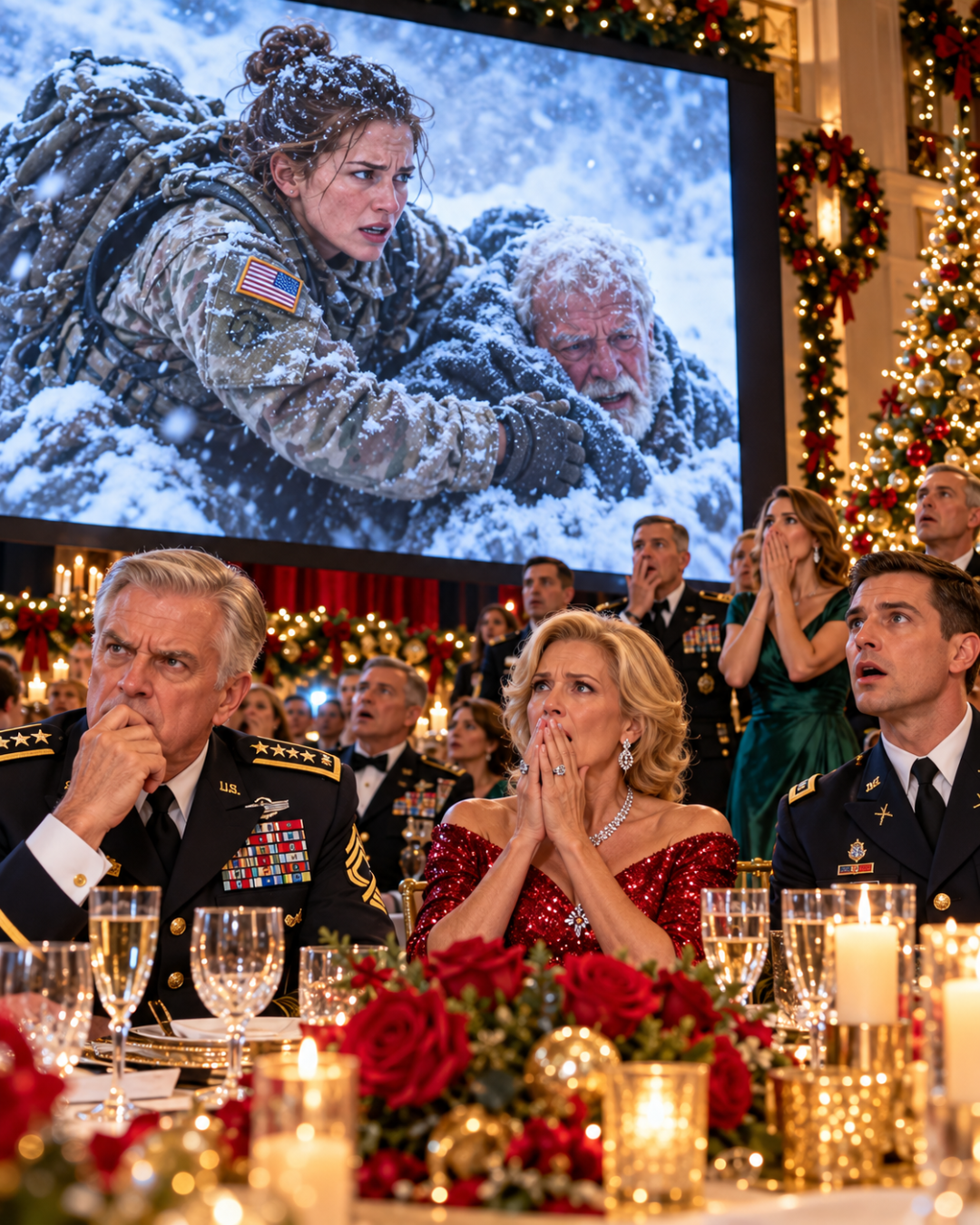
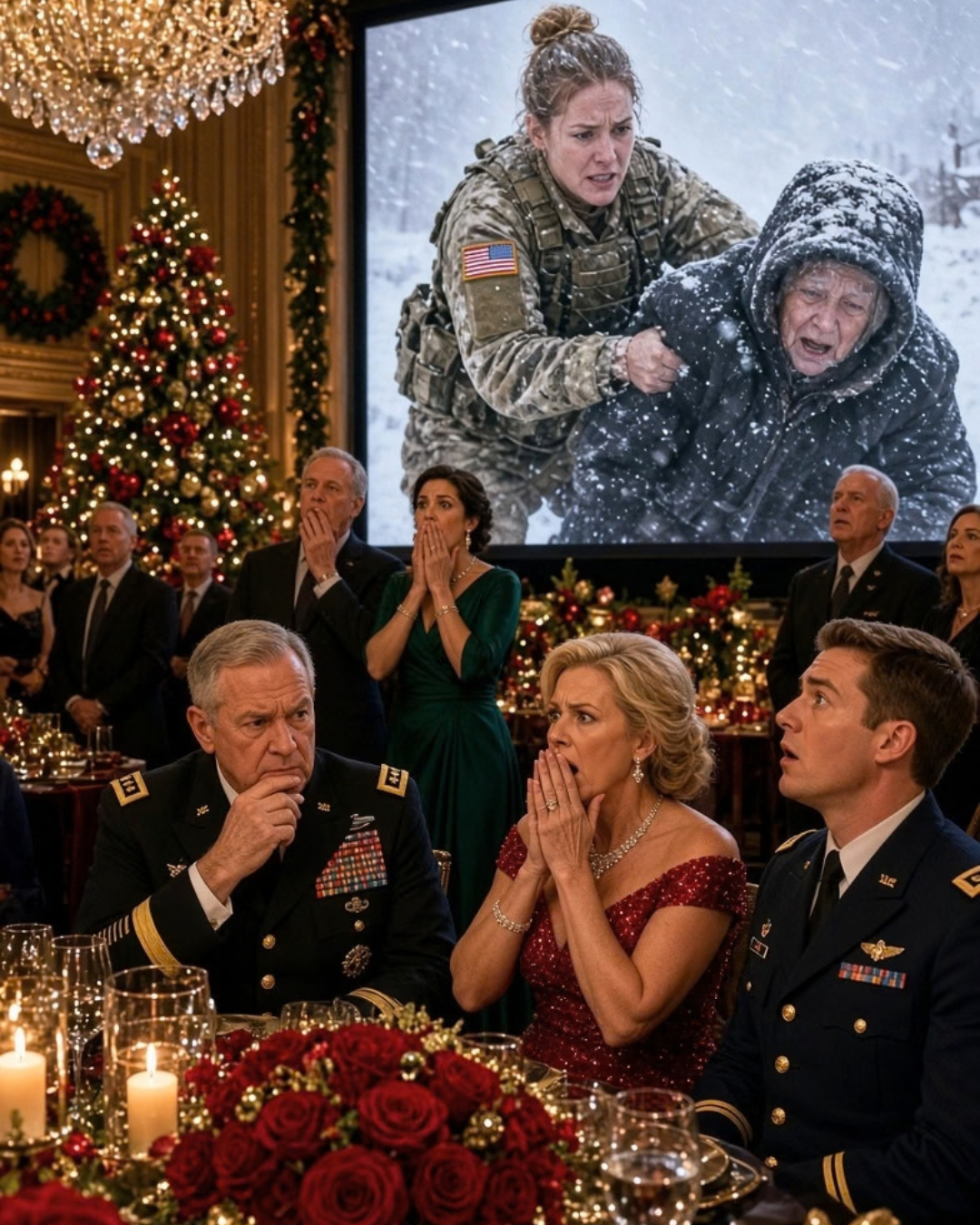
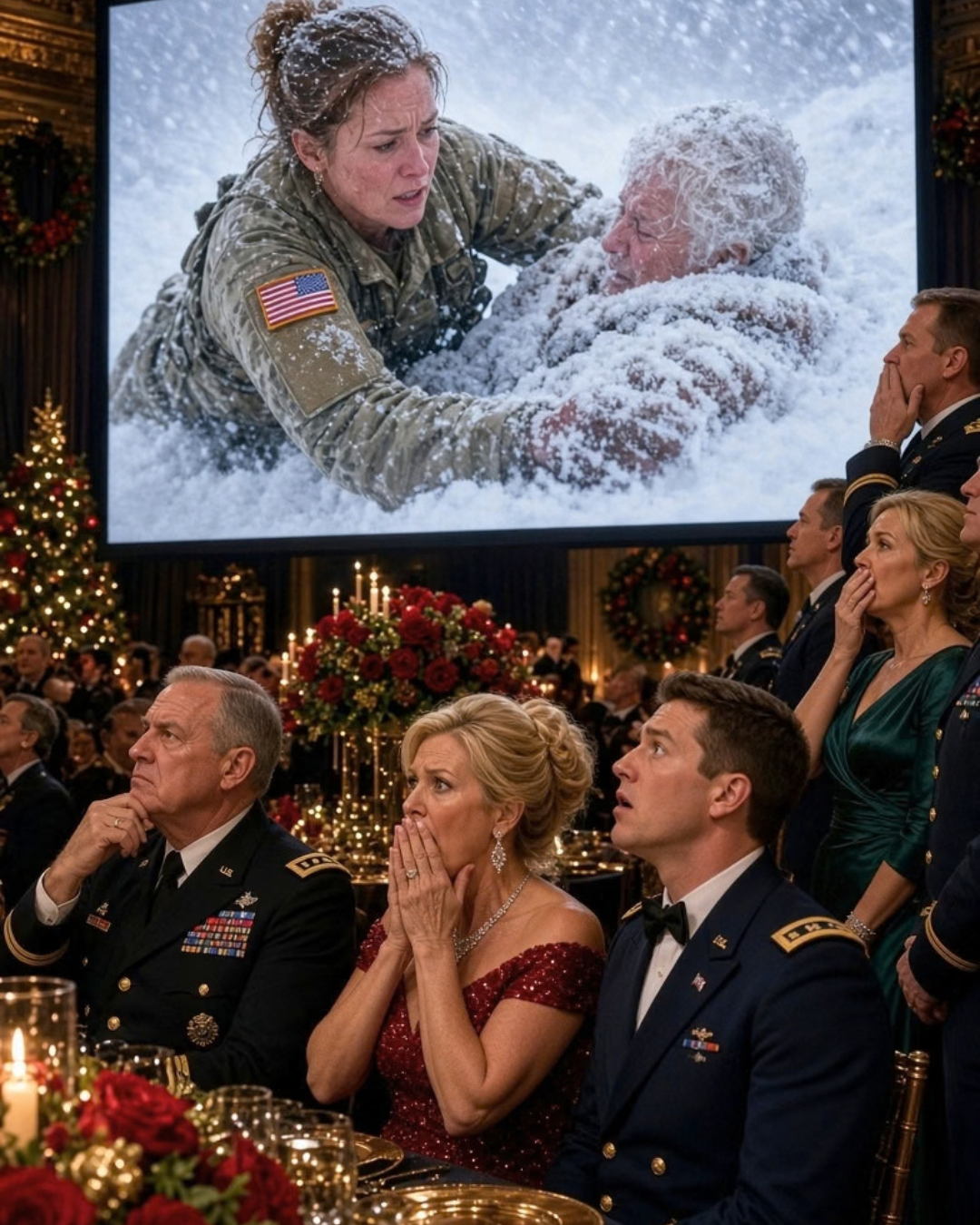
I lay in the snow, ears ringing, staring at the burning wreckage. The news cameras had caught it all. The heroic rescue attempt. The illegal, classified military cargo spilling onto a public highway. And my face, broadcast live to the entire nation, standing right in the middle of a fourteen-year-old ghost story.
Chapter 2: The Blackout
We limped back to the base shortly before midnight. The scent of ozone and burning diesel was permanently etched into my uniform. I was operating on pure adrenaline, a cold, calculated fury replacing the exhaustion in my muscles.
I needed to secure those manifests. I needed to run the serial numbers of whatever had just exploded on that highway.
But as I stepped into the Operations center, the room was bathed in the sickly yellow glow of emergency backup lights.
“What the hell is going on?” I demanded, stripping off my frozen tactical gloves.
Sergeant Alvarez looked up from a dead communication console, her face pale. “Major, we’re dark.”
“Define dark. The storm took down the towers?”
“No, ma’am.” Alvarez stood up, lowering her voice. She glanced nervously at the two other specialists in the room. “Not the storm. The primary uplinks were physically severed. The backup generators for the comms array have been flooded with water. Someone inside the perimeter did this. We have no internet, no radio out of the county, no secure military channels.”
A mole.
Someone on this base had watched that live news feed, seen the cargo I exposed, and immediately cut the cord to keep me from reporting it. The realization locked around my chest like a vice. I was the commanding officer of this unit, and someone wearing the same uniform was currently hunting me in the dark.
“Lock down the building,” I ordered quietly. “Nobody enters or leaves. Issue sidearms to the command staff.”
“Major, we can’t hold the perimeter indefinitely without comms—”
“Just do it, Alvarez.”
I retreated into my private office, locking the heavy steel door behind me. I paced the floor, my mind racing back to Fort Bragg. I had been a low-level logistics officer who found a discrepancy. I thought it was missing Humvee parts. My superiors told me it was a clerical error. But now those same missing crates had just detonated on a Colorado highway, and someone was willing to isolate a military base to cover it up.
Suddenly a harsh, buzzing sound shattered the silence of my office.
I jumped. It was the emergency satellite phone locked in my bottom desk drawer—a hardline reserved strictly for catastrophic command failures. No one had this number except my highest chain of command.
And, for reasons of emergency family protocol, my father.
I yanked the drawer open and snatched the heavy plastic receiver. “Hale.”
“Becca.”
It was not my father. It was Jason. His voice was ragged, pitched high with a terror I had never heard from my polished, corporate stepbrother.
“Jason? How are you calling this number?”
“I took Dad’s emergency file. Becca, you have to listen to me. Oh god, I’m so sorry.”
“Slow down. Where are you?”
“I’m in Dad’s study. I… I opened the envelope. The one Erica gave me years ago. She said if she ever went missing, or if things went wrong, I had to find it.”
Erica Whitmore. A civilian analyst from the Fort Bragg investigation who had vanished without a trace eleven years ago. Jason had confessed earlier that he had a brief, strange connection with her.
“What was in the envelope, Jason?” I demanded, pressing the phone hard against my ear, listening to the heavy, panicked sound of his breathing.
“It’s not just papers, Becca. It’s an old digital voice recorder. A hard drive. I plugged it in. I listened to it.” He let out a sound that was half-sob, half-laugh. “It’s about you. Your whole career.”
“Make sense, Jason.”
“You didn’t earn it, Becca! None of it! Fort Bragg, your deployment to Kandahar, your promotion to Major… it was all orchestrated. I’m looking at the ledgers. They moved you around like a chess piece to guard their transport routes. And when your unit got hit in Afghanistan… the ambush that killed your lieutenant…” Jason choked on his tears. “They paid the local militia to hit your convoy so you’d get pulled back to base. They needed you alive to sign off on the quarterly logistics reports.”
My stomach bottomed out. The world tilted on its axis. The ambush. The blood on the sand. The guilt I had carried for six years because I survived and my lieutenant did not.
“Who, Jason?” I whispered, my voice trembling with a rage that felt nuclear. “Who orchestrated it?”
“Play the tape!” a voice screamed in the background. It was my father. He sounded frantic. “Don’t tell her, Jason, just play it!”
A click echoed over the line. Static hissed, followed by the grainy, unmistakable sound of a recording from decades ago.
“…I need her stationed at Bragg by 2012,” a woman’s voice commanded. It was sharp, authoritative, and terrifyingly familiar. “If the selection board pushes back, fabricate a disciplinary mark on the other candidates. Rebecca goes to Bragg. She’s the only one I trust blindly with the blind-spots in the ledger.”
The phone nearly slipped from my sweaty palm.
I knew that voice. It was the voice that had sung me to sleep. The voice that had faded away in a hospital room when I was twelve years old.
“Mom?” I breathed.
“She’s not dead, Becca,” Jason cried over the phone. “She’s the one running the smuggling ring. She’s—”
Suddenly a massive crash echoed through the receiver. The sound of heavy oak splintering. Jason screamed.
“They’re inside!” Jason yelled.
Glass shattered. A gunshot cracked like a whip, followed by my father’s roar of pain. The sat phone clattered to the floor, the line remaining open, broadcasting the violent destruction of my family’s Christmas straight into my ear.
Chapter 3: The Home Invasion
“Jason! Dad!” I screamed into the receiver, slamming my fist against the desk.
Through the static, I heard the chaotic symphony of a home invasion. Heavy boots crunching over the hardwood floor of my father’s pristine suburban house. The sickening thud of a body being thrown against drywall.
Then I heard my stepmother, Linda. She was not screaming in terror. She was screaming in fury.
“Get off him!” Linda shrieked. A moment later, the crackle of a roaring fire intensified.
“She’s burning the secondary ledgers!” an unfamiliar, gruff male voice shouted. “Grab her!”
“I’ll kill you!” Linda hissed, followed by the sound of a brutal struggle.
I stood paralyzed in my dark office, a thousand miles away, utterly impotent. My mother was alive. She was a ghost running a black-ops syndicate, and my entire life of service, honor, and sacrifice had been a meticulously engineered fraud to facilitate her treason. And now the bill had come due at my father’s house.
“Becca…” My father’s voice groaned near the dropped phone. He sounded wet, breathless. “Becca, if you can hear this…”
“Dad, I’m here! Hold on, I’m calling local PD—”
“Don’t,” a new voice interrupted.
The sound of a high-heeled boot clicking against the floorboards resonated through the phone. Someone had picked up Jason’s dropped receiver.
“Hello, Major Hale.”
The voice was cool, smooth, and chillingly calm amidst the background noise of my father bleeding and my stepbrother being zip-tied.
“Erica Whitmore,” I said, the name tasting like poison on my tongue.
“You have an excellent memory, Rebecca. It’s a shame you didn’t use it to forget about Fort Bragg when you were warned.”
“What are you doing to my family, Erica?”
“Cleaning up a mess,” she replied casually. “Your father was supposed to keep you occupied in Colorado. But you just couldn’t help playing the hero on the highway, could you? You blew open a transport truck carrying fifty million dollars in off-the-books ordnance, and you did it on national television. Your mother is… exceptionally disappointed.”
“Where is she?” I snarled.
“She’s untouchable. But you’re not. And neither are they.”
“Erica, listen to me. If you kill them, I will hunt you to the ends of the earth. I don’t care who you work for.”
Erica laughed, a dry, humorless sound. “You think your father is a victim here? Ask him how he funded his massive construction empire. Ask him where the seed money came from after your mother ‘died’.”
I felt a cold knife twist in my gut. I thought of the sudden wealth my father acquired during my teenage years. The massive house. The country club.
“And Linda?” Erica continued, her voice dripping with venom. “You think your stepmother is just a suburban housewife? Tell her, Linda. Tell your precious stepdaughter who you really are.”
I heard the sound of someone being dragged by their hair. Linda gasped in pain near the receiver.
“Tell her,” Erica commanded.
“I… I was her handler,” Linda sobbed.
The world stopped.
“What?” I whispered.
“Before she faked her death,” Linda cried, her voice breaking, “your mother needed someone to watch you. To make sure you followed the path she laid out. My real name isn’t Linda. I’m an operative. I married your father to keep the asset—you—on track.”
A wave of nausea washed over me. My childhood, my parents’ grief, my father’s remarriage. It was all a theatrical production. A cage built by my own mother, with my family acting as the wardens.
“Take the boy,” Erica’s voice echoed, directing her mercenaries.
“No! Please!” Jason screamed.
“Jason!” I yelled.
“We’re taking your brother, Major,” Erica said into the phone. “If you want to see him alive, you will not contact the authorities. You will not speak to your chain of command. You will wait for instructions.”
“Erica, wait—”
“Merry Christmas, Becca.”
The line went dead.
I stood in the suffocating darkness of my office, the dial tone humming like a flatline. Everything I was—an officer, a daughter, a hero—had been incinerated in the span of ten minutes. I was not a soldier. I was a pawn.
But a pawn that makes it to the end of the board becomes a queen.
I slammed the sat phone down, drawing my standard-issue M17 pistol from its holster, and racked the slide. The metallic clack echoed loudly in the dark room.
I opened my office door. Alvarez was standing there, her hand hovering near her own holster, looking at me with wide, terrified eyes.
“Major?” she whispered. “Are we under attack?”
“Yes, Sergeant,” I said, my voice eerily calm. “But the enemy isn’t outside the wire. They’re inside the house. And we’re going to burn it down.”
Chapter 4: The Breakout
I did not have time for grief. I did not have time to process the psychological annihilation of my entire existence. My stepbrother had been taken hostage, my father was bleeding out in his ruined study, and a mole within my own command was actively keeping me trapped.
“Alvarez,” I said, stepping into the dim emergency lighting of the Ops center. “Who had access to the main comms array in the last hour?”
Alvarez swallowed hard. “Just engineering. And Captain Mercer.”
Mercer. The executive officer who had tried to send me to the medical ward immediately after the rescue, trying to isolate me.
“Where is he?”
“He went down to the motor pool to check on the snowplow chains.”
“Stay here. Keep the doors locked. Trust no one but me.”
I moved through the shadowed corridors of the base like a ghost. The storm outside battered the concrete walls, muffling my footsteps. My mind was a hyper-focused weapon. My mother—the woman I had mourned for twenty-six years—was an international arms smuggler who had orchestrated the deaths of my friends to protect her supply lines. The grief had not hit me yet. It was dammed up behind a massive, titanium wall of pure, unadulterated rage.
I reached the motor pool. It was a cavernous, freezing garage, smelling of oil and wet concrete. The emergency lights cast long, distorted shadows among the parked Humvees and tactical vehicles.
“Captain Mercer,” I called out, my voice slicing through the gloom.
A figure stepped out from behind a heavy transport truck. Mercer. He did not look surprised to see me. In fact, his hand was already resting on the grip of his sidearm.
“You shouldn’t be down here, Major,” Mercer said, his tone devoid of its usual deference. “You were ordered to medical.”
“Who pays you, Mercer?” I asked, keeping my distance, my hand resting casually near my thigh, inches from my M17. “Is it Erica Whitmore? Or does my mother write the checks directly?”
Mercer flinched. Just a micro-expression, but it was enough.
“I don’t know what you’re talking about,” he lied smoothly. “I’m trying to get the plows operational so we can restore comms.”
“You cut the comms. You saw the broadcast of the crash. You saw the cargo I exposed, and you panicked. You needed to lock me in a box so Erica could clean up the mess at my father’s house.”
Mercer sighed, his shoulders dropping slightly. “You’re too smart for your own good, Becca. You always were. But you’re out of your depth. You think you’re a decorated officer? You’re just a mascot. Your mother bought every medal on your chest with the blood of the people who got in her way.”
“Draw your weapon, Mercer,” I whispered, the rage finally bleeding into my voice.
“Be reasonable. If you stand down, they’ll let Jason go. They just need time to scrub the highway site and relocate the remaining inventory.”
“I said, draw your weapon.”
Mercer’s eyes hardened. He pulled his gun, but I was faster. The eighteen years of tactical training—training my mother had supposedly manipulated, but which I had physically endured—took over.
I fired twice. Center mass.
The crack of the gunshot was deafening in the concrete garage. Mercer slammed backward against the truck tire, his gun clattering to the floor. He slid down, clutching his chest, gasping for air.
I kicked his weapon away and stood over him. I felt no remorse. He had sold his uniform, sold my troops, and facilitated the kidnapping of my brother.
“Where did they take Jason?” I demanded, pressing the barrel of my gun against his knee.
Mercer coughed up blood, a grim smile forming on his lips. “You… you can’t stop her. She’s a goddamn ghost.”
“Ghosts bleed, Mercer. Where are they?”
His eyes rolled back. He was gone.
I cursed, holstering my weapon. I ran to the nearest tactical SUV, checking the ignition. The keys were in the visor. I threw open the heavy garage doors manually, the freezing Colorado wind instantly blasting me in the face.
As I climbed into the driver’s seat, my personal cell phone—which had been dead to the world due to the jamming—suddenly buzzed.
I froze. Mercer must have had a localized jammer on him, and with him dead, my signal had reconnected.
I pulled the phone from my pocket. A text message from an unknown number.
It was a picture. Jason, bruised, bleeding from his lip, bound to a metal chair in what looked like an abandoned, concrete hangar.
I stared at the image, my heart pounding. Then a second message arrived.
Ask your father who signed your commission paperwork.
I already knew. Erica and my aunt, Linda. The lie was absolute.
But it was the third message that made the breath freeze in my lungs. I did not recognize the number at first. But as I stared at the digits, a memory from a childhood long buried clicked into place. It was the old landline number to our house. The number that was disconnected the week my mother “died.” I had kept it in my contacts for twenty-six years because I could not bear to delete the last piece of her.
The message read:
You’ve played the hero long enough, Becca. Come home. I’m waiting.
Attached was a GPS coordinate.
I slammed the SUV into gear, the tires spinning on the ice before catching traction. I was leaving my post. I was going AWOL. I was likely driving into an ambush. But the woman waiting for me at the end of this road was not just an international terrorist. She was the architect of my misery.
It was time to kill a ghost.
Chapter 5: The Resurrection
The GPS coordinates led me two hours north of Denver, deep into the desolate, snow-blind plains. The blizzard had reduced the world to a chaotic swirl of white and gray. The heater in the military SUV blasted at full force, but I was freezing from the inside out.
The location was an old, decommissioned Cold War-era auxiliary airfield. Long forgotten by the public, it was the perfect staging ground for a ghost.
I cut the headlights a mile out, relying on the ambient glow of the snow and my tactical night-vision goggles to navigate the treacherous access road. I parked the SUV behind a rusted, collapsed radar tower and proceeded on foot.
The wind tore at my tactical jacket. The snow crunched loudly beneath my boots, a sound that made me hyper-aware of my vulnerability. I moved methodically from the cover of a dilapidated barrack to the edge of the massive, corrugated steel hangar sitting at the end of the cracked tarmac.
Faint slivers of light bled through the rusted seams of the hangar doors.
I drew my M17, checking the chamber. One round ready. Fourteen in the magazine. It felt absurdly inadequate for what I was about to face, but it was all I had.
I found a side maintenance door. The lock had been recently shattered. I slipped inside, the sudden absence of the howling wind making the silence inside the hangar feel deafening.
The interior was massive, lit by portable industrial halogen lamps that cast harsh, blinding glares and deep, impenetrable shadows. In the center of the vast space, idling quietly, was a twin-engine cargo plane, its rear ramp lowered. Men in dark tactical gear were loading the last of the black crates—the same crates that had detonated on the highway.
And in the middle of the loading zone, tied to a metal chair, was Jason.
He looked terrible. His face was swollen, his eyes darting frantically around the room. Standing next to him, holding a suppressed pistol, was Erica Whitmore.
But my eyes did not stay on them. They drifted past the armed mercenaries, past my beaten stepbrother, to the figure standing at the base of the plane’s ramp.
She was wrapped in a heavy, dark wool coat. Her hair, once a vibrant chestnut, was now streaked with silver and cut ruthlessly short. The posture was impeccable, the stance commanding.
She turned, sensing my presence in the shadows before she could even see me.
“Step into the light, Rebecca,” the voice echoed across the hangar. It was older, harder, but unmistakable. “You’re late.”
I stepped out from behind a stack of rusted oil drums, keeping my weapon raised, the laser sight painting a red dot directly on her chest.
My mother.
Evelyn Hale. Dead for twenty-six years. Alive, breathing, and looking at me with the cold, assessing gaze of a general inspecting a disappointing recruit.
“Drop the gun, Becca,” she said, her tone conversational, as if we were discussing the weather. “You’re outnumbered, outgunned, and out of your depth.”
“Let Jason go,” I demanded, my voice remarkably steady despite the hurricane of emotion tearing through my chest.
Evelyn smiled. It was a terrifying expression. “Jason is collateral damage. Your father got sloppy. Linda got sentimental. They were supposed to keep the Fort Bragg files buried, but they let Jason find the insurance policy.”
“You faked your death,” I whispered, the reality finally anchoring itself in my mind. “You abandoned me. You let me cry at a closed casket.”
“I freed you,” she countered, taking a step toward me. The mercenaries raised their rifles, but she waved them down with a flick of her wrist. “If I had stayed, you would have been the daughter of an arms broker. You would have been a target. Instead, I gave you a pristine narrative. The tragic, heroic daughter who channeled her grief into serving her country. I built your career, Becca. I paved every road you walked.”
“You murdered my lieutenant in Kandahar to get me a desk job,” I spat, the tears finally burning my eyes. “You paid the Taliban to ambush my convoy!”
For the first time, a flicker of something—regret? annoyance?—crossed her face. “That was a miscalculation. The contractors hit the wrong vehicle. But it achieved the desired result. You were moved to logistics. You were safe. You were positioned exactly where I needed you.”
“I am not your asset!” I screamed, the sound echoing off the high steel ceiling.
“You are my legacy!” she fired back, her voice suddenly booming with authority. “Do you think the world works through honor and medals? It works through leverage. Through power. I control supply lines that topple governments, Becca. I wanted to hand this empire to you. I put you in uniform so you could learn how the machine works from the inside.”
I looked at her. Really looked at her. I searched for the mother who used to read me stories, the woman who smelled of vanilla and old paper. She was not there. The creature standing before me was a parasite that had fed on my life to sustain its own shadow empire.
“You’re insane,” I said softly.
“I am a realist,” Evelyn replied. She glanced at her watch. “The window is closing. The authorities will trace the highway explosion back to this airspace soon. You have a choice, Rebecca. You lower that weapon, you get on this plane with me, and you take your rightful place. Or you stay here, you pull that trigger, my men cut you to pieces, and Jason dies.”
Erica pressed the barrel of her suppressed pistol hard against Jason’s temple. Jason squeezed his eyes shut, trembling violently.
“Choose, Becca,” Evelyn said, extending a gloved hand toward me.
I looked at Jason. The agreeable, easy son. The man who had a wife, a mortgage, and a life entirely untouched by the darkness our family was rooted in. I looked at the red dot of my laser sight resting on the heart of the woman who gave birth to me.
Everything I believed about myself was a lie. My rank, my medals, my trauma. It was all a script written by a monster.
But the woman holding the gun? The woman who had dragged herself through freezing mud, who had pulled a dying man from a burning truck, who had stood her ground against a traitor in a dark motor pool? That woman was real. I built her. Not Evelyn.
I did not lower my weapon.
“You think you wrote my story, Mom,” I said, my finger tightening on the trigger. “But you forgot one thing about the military.”
Evelyn narrowed her eyes. “And what is that?”
“We don’t negotiate with terrorists.”
I shifted my aim a fraction of an inch to the right and fired.
Not at my mother.
At the massive, high-pressure aviation fuel tank situated directly behind the cargo plane’s left engine.
The bullet pierced the pressurized steel. The spark ignited the vapor.
The explosion was catastrophic. A massive fireball erupted in the confined space of the hangar, blowing the mercenaries off their feet. The shockwave threw Evelyn backward against the tarmac.
In the chaos, amidst the screaming and the roaring flames, Erica stumbled, lowering her weapon to shield her face from the heat.
I sprinted forward, diving into the smoke. I tackled Erica to the ground, slamming the butt of my pistol into her jaw. She went limp.
I grabbed Jason’s chair, pulling a combat knife from my boot, and slashed through the heavy zip-ties binding his wrists.
“Run!” I screamed, hauling him to his feet. “Get to the door!”
Jason did not hesitate. He scrambled blindly toward the exit.
I turned back. The cargo plane was engulfed in flames, the secondary explosions from the crates detonating inside the hull like a string of massive firecrackers.
Through the thick, black smoke, I saw her. Evelyn was on her knees, her heavy coat singed, blood dripping from a cut on her forehead. She was looking at the burning wreckage of her empire, her life’s work turning to ash.
She slowly turned her gaze to me. Through the flames, our eyes met one last time. There was no motherly warmth, no forgiveness. Only the cold recognition of an adversary who had finally been defeated.
The roof of the hangar groaned, the steel beams buckling under the intense heat.
I turned and ran, bursting through the side door out into the freezing, blinding blizzard, leaving the ghost to burn in the fire she had started.
Epilogue
The fallout was biblical.
The fire at the airfield, coupled with the highway explosion, triggered a massive federal investigation. The evidence I pulled from Jason, along with the digital recorder and the files recovered from the ashes of my father’s house, blew the lid off a twenty-year international smuggling ring operating under the guise of military logistics.
My father survived the gunshot wound, but the man who recovered in the hospital was a shell. He and Linda are currently awaiting trial in federal lockup, facing decades of charges for conspiracy and treason. Jason moved his family to the East Coast, changing his name, desperately trying to scrub the stain of the Hale legacy from his life. We do not speak much, but when we do, there is a quiet, mutual understanding of the nightmare we survived.
Erica Whitmore made a deal. She traded everything she knew for a reduced sentence in a supermax facility.
As for Evelyn… they never found a body in the ashes of the hangar. The authorities say the fire burned hot enough to incinerate bone. Part of me hopes that is true. The other part—the part that checks the locks on my doors twice at night—knows that ghosts do not die so easily.
I resigned my commission. I had to. Even though I was the one who broke the syndicate, my entire career was built on a foundation of blood and lies. I could not wear the uniform knowing how I got it.
I live in a quiet town in Montana now. The winters are harsh, but I like the snow. It reminds me that even the ugliest things can be buried, if only for a season. I spend my days teaching wilderness survival to at-risk youth. I teach them that you cannot control the storm you are born into, but you can control how you walk through it.
I lost my career, my family, and my past. But for the first time in thirty-six years, the steps I take are entirely my own. I am no longer a piece on a board. I am the player.
And I am finally free.
If you want more stories like this, or if you would like to share your thoughts about what you would have done in my situation, I would love to hear from you. Your perspective helps these stories reach more people, so do not be shy about commenting or sharing.
