

The Smallest Plate at the Table
There are moments that seem unimportant as they happen, moments nobody thinks to photograph or write down. Years later, though, you can still remember the room’s color, the sound of a fork touching china, and exactly where everyone sat when your life quietly split into a before and an after.
For me, it began when my eight-year-old daughter reached for breakfast. We were spending a long weekend at a resort outside Charleston, South Carolina, for my mother-in-law’s sixty-eighth birthday. By Sunday morning, everyone was worn out from two days of pretending we enjoyed each other more than we actually did. The dining room looked out over a marsh washed in pale spring sunlight, and the breakfast buffet was crowded with families carrying coffee, fruit, pancakes, eggs, and plates piled far higher than necessary.
My daughter, Lily, had been unusually quiet.
She picked up a small plate and placed two strips of bacon beside her scrambled eggs.
My husband, Grant, noticed.
“Put that back.”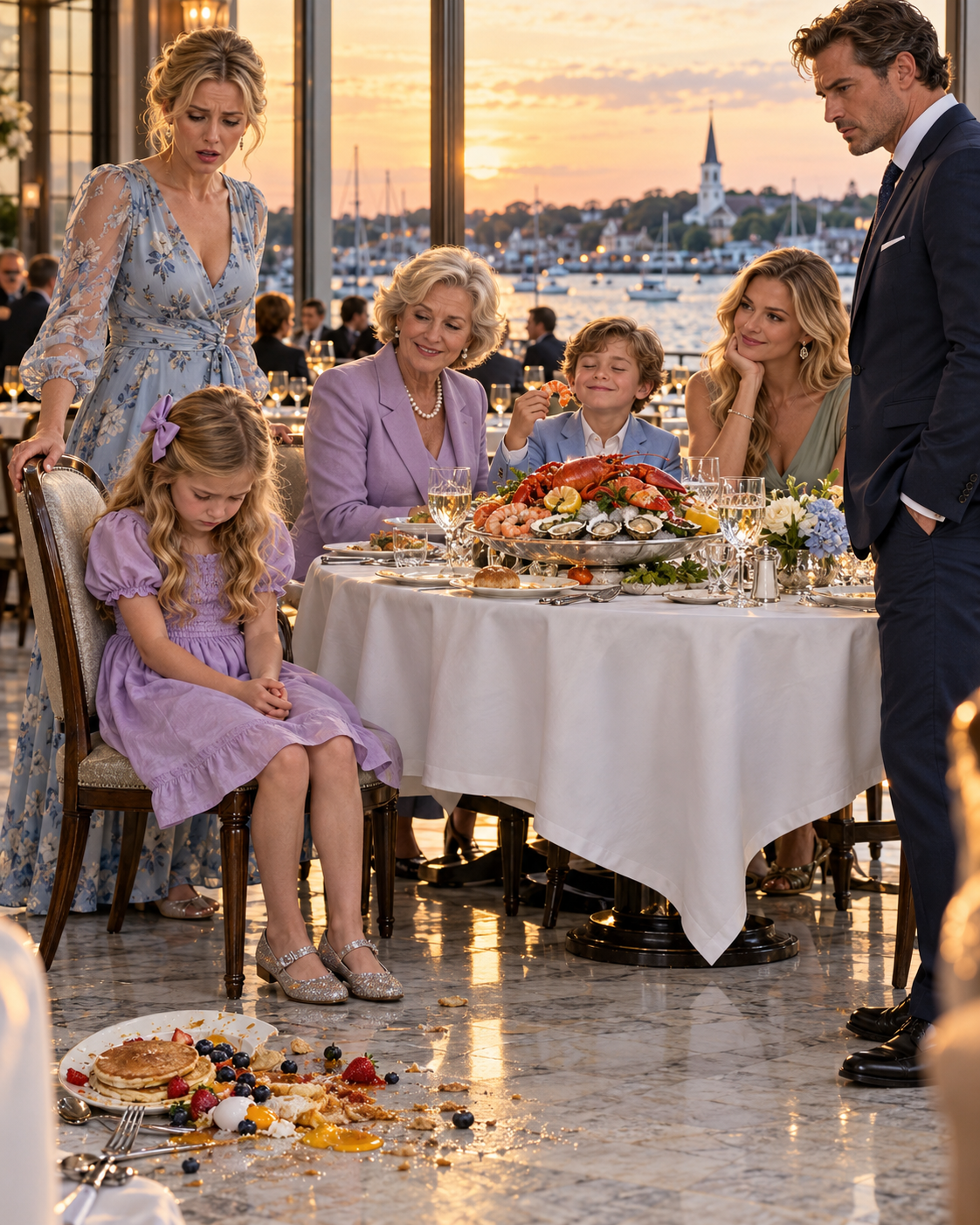
Lily froze.
“I only took two.”
Grant reached across the table and struck the back of her hand hard enough to make the plate slip from her fingers and land sideways on the carpet.
A server turned toward us.
Lily looked at her fingers, then hid her hand beneath the table.
She didn’t cry.
That made it worse somehow.
“Grant,” I said, barely recognizing my own voice. “Did you seriously just do that over two pieces of bacon?”
He leaned back as though I were the one causing trouble.
“Somebody has to teach her self-control, Claire. You let her have whatever she wants.”
I remember looking at him and thinking the bacon had probably cost the restaurant less than three dollars.
Before I could respond, Grant’s nine-year-old nephew, Owen, picked up the specialty menu and pointed to a seafood breakfast platter.
“Uncle Grant, can I get this?”
It was $149.
Grant glanced at it for barely half a second.
Then he smiled.
“Sure, buddy. Get whatever you want.”
My mother-in-law, Judith, reached over and smoothed Owen’s blond hair.
“A growing boy needs a real breakfast. Besides, this young man is carrying the family name forward.”
Lily looked down at the bacon on the floor.
Something inside me went completely still.
For years, I had told myself Judith was old-fashioned, not cruel. Grant was demanding, not controlling. The comments about having only one daughter were irritating, but harmless. I had become very good at translating behavior I didn’t want to face into words I could live with.
Then Owen crumpled his napkin and tossed it toward Lily.
“Girls don’t need as much food anyway.”
“Owen,” I said, “apologize to Lily.”
Grant slammed his palm against the table.
“Enough, Claire. He’s a kid.”
His sister-in-law, Melissa, immediately pulled Owen toward her.
“He’s been through a lot. You know that.”
Melissa had supposedly lost her husband, Grant’s older brother Nathan, several years earlier. Somehow, every rude thing Owen did became excusable because he was being raised without his father.
Grant looked at Melissa with a softness I hadn’t seen directed at me in years.
“You don’t need to apologize for him.”
Then he turned to me.
“Maybe you’d be less sensitive about Owen if you’d given me a son.”
Judith gave a small laugh.
“I’ve always said the same thing.”
I said nothing.
Everyone at that table knew why another pregnancy had never been a realistic possibility for me.
Eight years earlier, late in my pregnancy with Lily, Grant and I had argued in our kitchen. He shoved past me in anger, and I lost my balance against the edge of the island. Lily arrived weeks early, and my recovery was long and complicated. Later, my doctors told me another pregnancy could carry serious risks.
For years, Grant’s family treated that history as an unfortunate inconvenience instead of something that had happened to me.
And I stayed.
I told myself Lily needed both parents.
I told myself difficult marriages went through seasons.
I told myself vows mattered most when things were hard.
What I had never asked was what my daughter was learning while watching me honor those vows alone.
That morning, looking at her small hand hidden beneath the table, I finally asked.
“Lily, get your coat. We’re leaving.”
The Ride We Were Not Allowed to Take
By the time Lily and I reached the entrance, heavy rain was falling. We stood beneath the awning waiting for a rideshare when our SUV pulled around.
I had paid for most of that vehicle.
Grant was driving.
Melissa sat beside him.
Judith and Owen were in the back.
From where I stood, they almost looked like a family posed for a Christmas card.
Lily instinctively raised her hand.
“Dad?”
Grant lowered the window.
“Your mother can apologize, and then you can both get in.”
I honestly thought I had misunderstood him.
“Apologize for what?”
“For the way you treated Owen.”
“I defended our daughter.”
Grant climbed out.
“You embarrassed me in front of my family.”
“Your daughter is your family.”
His jaw tightened.
“Don’t forget who’s been supporting you all these years.”
That sentence almost made me laugh. Grant had no idea how carefully I had protected the illusion that he was the financial engine of our household.
His commercial construction company, Whitmore Development, looked successful from the outside. It had large projects, expensive vehicles, and a polished office in downtown Charleston. But twice in six years, I had quietly helped keep it afloat with investment assets inherited from my father. Several lenders had offered favorable terms because accounts connected to me stood behind portions of Grant’s borrowing.
Grant loved telling people banks trusted him.
What he never understood was that they trusted the collateral.
Then I noticed Melissa resting one hand on her stomach.
She looked at me.
And smiled.
Something about that smile stayed with me.
Not happiness.
Possession.
I looked at Grant.
“What’s going on?”
He caught my arm.
“Stop making a scene.”
I pulled away, slipped on the rain-slick pavement, and landed hard in a shallow puddle.
Lily screamed and ran to me.
Grant stared at us for a moment before returning to the SUV.
“Without me,” he said through the open window, “you two wouldn’t last a month.”
Then he drove away.
I sat in the rain with Lily clinging to me, her swollen hand pressed against my shoulder, and something strange happened.
I wasn’t frightened anymore.
I called my older brother, Daniel, who worked in commercial banking and knew Grant had recently applied for a multimillion-dollar expansion loan.
“Is Grant’s application still under review?”
Daniel hesitated.
“Yes. Why?”
“From now on, no personal favors, no assumptions about my support, and no new guarantees connected to me unless I personally approve them.”
“Claire, are you sure?”
I looked at Lily.
“Completely.”
That evening, after Lily fell asleep beside me at my mother’s house, I opened our financial records.
I found one transfer to Melissa.
Then another.
Then dozens.
Over several years, hundreds of thousands of dollars had moved in her direction.
The newest transaction included a note.
“Toward our fresh start.”
Attached was a purchase agreement for a house near Savannah.
Four bedrooms.
A fenced yard.
A highly rated elementary school nearby.
The buyers were Grant Whitmore and Melissa Whitmore.
Move-in date: six weeks away.
One additional note appeared beneath the floor plan.
“Prepare fourth bedroom for baby.”
I stared at those words until the screen blurred.
Grant wasn’t planning to leave me someday.
He had already been building another life.
And without realizing it, I had helped finance it.
The Numbers Begin Talking
The next morning, I called Evelyn Price, an attorney who had handled my family’s estate matters for years.
I didn’t ask her how to punish Grant.
I asked her to help me understand the numbers.
By lunchtime, Evelyn’s conference table was covered with bank statements, corporate records, property documents, credit agreements, and tax filings.
After nearly two hours, she removed her glasses.
“Claire, the payments to Melissa didn’t all come from your household accounts.”
My stomach tightened.
“Where else?”
“Whitmore Development.”
That mattered because Grant had spent almost a year complaining that the company was struggling with rising material costs, delayed payments, equipment repairs, and difficult clients.
Meanwhile, money had been quietly leaving the business.
“Remove me from any future financial backing I’m legally entitled to withdraw,” I said.
Evelyn studied me.
“That may make borrowing considerably harder for Grant.”
“I’m not asking anyone to hurt his company. I want lenders to judge it on its own finances instead of mine.”
By eleven that morning, Grant was calling.
By noon, he was pounding on the front door.
Melissa remained in the SUV outside.
“What did you do?” he demanded.
“Nothing to your company.”
“The lender stopped processing my loan.”
“They’re reviewing it without assuming I’ll support it.”
“That’s the same thing.”
“If your company is as strong as you’ve always told everyone, it shouldn’t matter.”
The expression on his face told me it mattered enormously. Evelyn arrived shortly afterward and placed the Savannah purchase agreement on the kitchen table. Grant’s expression changed immediately.
“Claire, I can explain that.” “Good. Explain why Melissa is listed as Melissa Whitmore.”
“The realtor made a mistake.”
Evelyn laid another document beside it.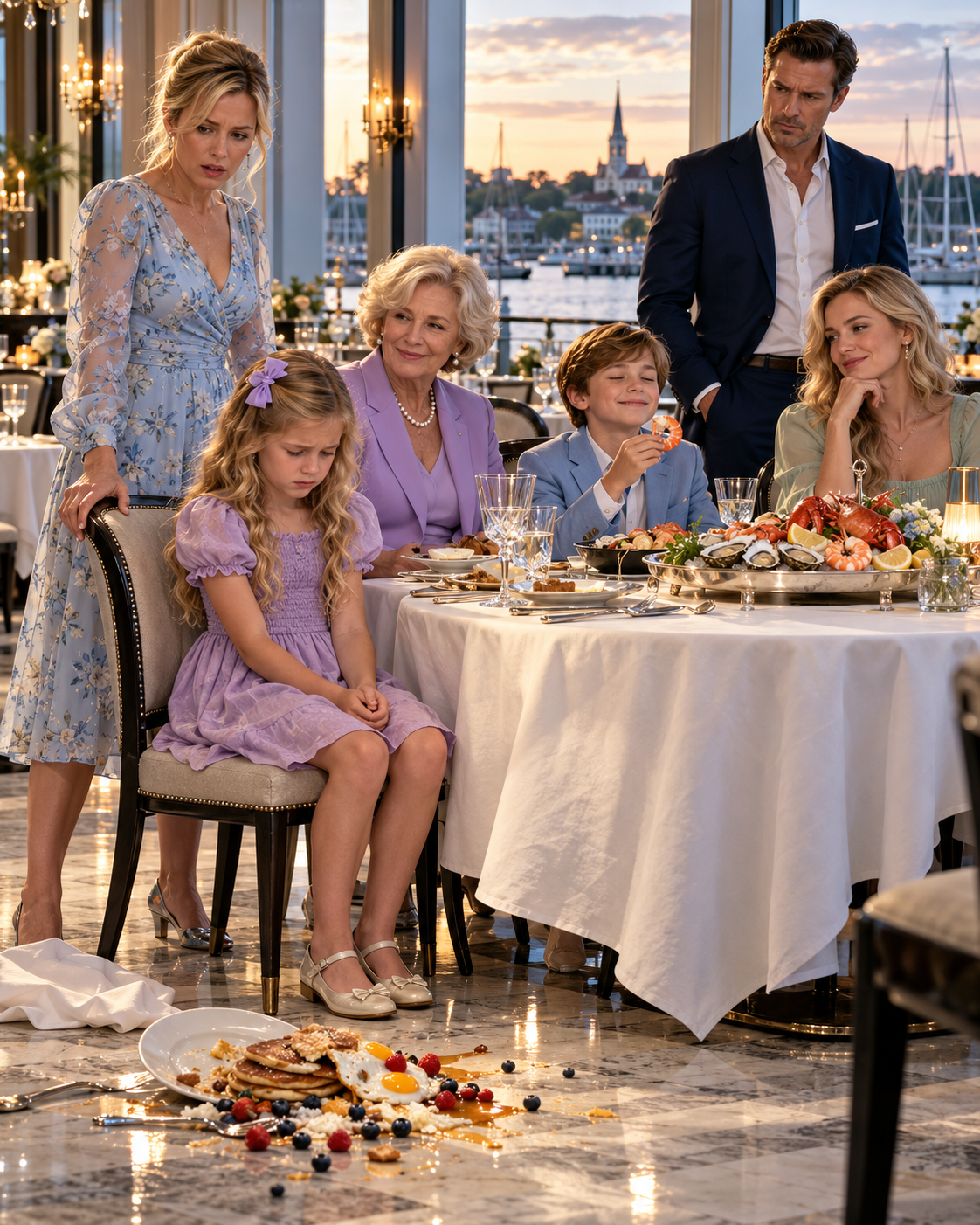
“The insurance company apparently made the same mistake.”
Then another.
“And the bank.”
Then another.
“And Owen’s school.”
Grant said nothing.
Lily appeared at the end of the hallway.
The second she saw him, she moved behind me.
Grant noticed.
For perhaps one second, embarrassment crossed his face.
But embarrassment wasn’t enough anymore.
Later that afternoon, Evelyn called with something even stranger.
The transfers tied to Melissa had started almost eight years earlier, long before Nathan supposedly died.
Several payments carried the same reference: “O.W. Trust.”
Evelyn spent the rest of the afternoon following the trail.
When she called again, her voice was unusually careful.
“Grant created a trust for Owen nine years ago.”
“Why?”
“It says Owen receives an ownership interest in Whitmore Development when he turns ten.”
I frowned.
Grant had always talked about those shares as though they belonged to the Whitmore family and would eventually go to the family’s “next man.”
“Can Grant give him those shares?”
There was a pause.
“Not the shares described here.”
Evelyn had found documents my father signed years earlier, back when Grant’s business was little more than a small office, two aging trucks, and more ambition than cash.
My father had provided much of the capital that allowed the company to grow.
But he had never simply handed Grant that ownership.
After Lily was born, he placed a substantial portion into a protected structure.
The beneficiary was Lily.
I had management rights while she was a minor, but the economic interest belonged to my daughter.
I sat down.
“Lily owns part of Grant’s company?”
“A meaningful part, yes.”
For years, Grant had promised Owen an inheritance he didn’t actually own.
Then Evelyn found the document that changed everything.
It appeared to contain my signature, authorizing a future restructuring that would move some of Lily’s interest into Owen’s trust.
I had never seen it.
“I didn’t sign this.”
“I don’t believe you did.”
The date on the document was from the week I had been hospitalized after Lily’s early arrival.
Worse, the notary whose information appeared on the copy said he had never witnessed my signature.
Suddenly, Grant’s urgent loan, the new house, Melissa’s pregnancy, and the trust all seemed connected.
He hadn’t simply been preparing to replace us emotionally.
Someone had been preparing to move property away from my daughter.
The Brother Who Was Supposed to Be Gone
Grant texted me the next morning.
“We can handle this like adults. Don’t ruin a company over marriage problems.”
I showed Evelyn.
“He still thinks this is about Melissa,” I said.
“Then don’t correct him yet.”
An independent forensic accountant began reviewing the company.
The pattern became clearer quickly.
For years, personal spending had been categorized as consulting fees, vendor advances, client entertainment, temporary loans, equipment expenses, and travel.
Some payments supported Melissa.
Others covered Owen’s tuition, vacations, insurance, furnishings, and an apartment Grant had never mentioned.
Whitmore Development wasn’t struggling only because business had become difficult.
Grant had been treating it like a private wallet.
When auditors requested original corporate records, he resisted.
The lender then identified inconsistencies between the financial statements used for the loan application and the actual cash movements, and the application stalled on its own merits.
Grant came to my mother’s house that evening and stood outside demanding that I come out.
I didn’t.
Before security escorted him away, he shouted loudly enough for Lily to hear:
“When the company falls apart, she’ll know her mother caused it!”
I found Lily upstairs hugging a pillow.
“Mom, is Dad going to lose his company because of me?”
That question hurt more than anything Grant had said to me.
I knelt in front of her.
“No, sweetheart. Adults are responsible for what adults choose to do. None of this belongs to you.”
She looked down at her hand, where the swelling had finally started to fade.
“Is he still mad because I took the bacon?”
I had to steady myself before answering.
“No. That breakfast just helped me notice some things I should have noticed a long time ago.”
Two days later, Evelyn called.
“We found Nathan.”
I thought I had heard her incorrectly.
According to Melissa and the Whitmore family, Nathan had been gone for years.
But the official record they had repeatedly relied upon belonged to a distant relative with a similar name.
Grant’s brother was alive and living in North Carolina.
He had separated from Melissa years earlier and deliberately disappeared from the Whitmore family’s life.
He agreed to meet us.
Nathan looked older than the photographs I remembered, with silver beginning around his temples and the exhausted expression of someone who had spent years trying not to reopen a closed door.
The moment he saw me, he sighed.
“So you finally found out about Grant and Melissa.”
I stared at him.
“You knew?”
“Before Owen was born.”
My hands went cold.
Nathan folded his hands together.
“Owen isn’t my biological son, Claire.”
I could barely process the sentence.
“Then whose son is he?”
Nathan looked directly at me.
“Grant’s.”
Everything rearranged itself at once.
Judith calling Owen the family’s heir.
Grant’s trust.
The money.
His extraordinary attachment to the boy.
Melissa.
The house.
Nathan explained that he had discovered the relationship while he and Melissa were still married. Judith had begged him to keep the matter private because Grant’s company was growing and a public family conflict could hurt everyone financially.
Nathan initially agreed to raise Owen as his own.
Later, after privately confirming the boy’s parentage, he finally left.
“Does Judith know?” I asked.
Nathan gave me a sad look.
“She always knew.”
He had also saved old emails.
One exchange between Grant and Melissa discussed the ownership my father had protected for Lily.
Melissa had asked what would happen if I discovered it.
Grant replied that he would “fix the structure” before Lily became old enough to understand what she owned.
Another email was worse, not because of its financial meaning but because of what it revealed about how Grant saw me.
Judith had apparently assured him I would never leave because I had stayed through everything else.
The years I considered proof of my loyalty had become proof, to them, that there would never be consequences.
The most recent message was only weeks old.
Melissa wanted Grant to finish things after their baby arrived.
Grant replied that he first needed the expansion loan approved and Lily’s ownership transferred into Owen’s trust.
The false authorization wasn’t some forgotten draft.
It was part of a plan.
The Meeting Grant Thought He Controlled
Two weeks later, Whitmore Development held an emergency ownership meeting.
Grant arrived wearing the navy suit he always wore when he wanted a room to believe him.
Judith came with him.
Melissa stayed away.
I sat beside Evelyn and the trustee representing Lily’s protected interest.
Grant spoke for nearly twenty minutes.
He described everything as a private family dispute that had spilled unnecessarily into business. He said the payments involving Melissa had legitimate explanations, that the questionable authorization had never been finalized, and that the company needed stability rather than emotional decisions.
When he finished, the trustee opened the original ownership documents.
“Mr. Whitmore, before operations can be discussed, the ownership structure needs to be clarified.”
Grant frowned.
“I built this company.”
“You started it. The capital responsible for much of its expansion came from Claire’s father.”
Grant looked at me.
For once, I did not rescue him from an uncomfortable silence.
The trustee continued.
“Under the investment agreement, a significant ownership interest was placed in a protected structure for Lily Whitmore.”
Judith leaned forward.
“She’s eight years old.”
“Which is exactly why the structure exists.”
“Grant is her father.”
“Being her father does not give him unrestricted authority over property held for her benefit.”
Then the accountant entered.
His preliminary report described years of spending that required explanation, along with personal payments that had weakened the company’s cash position.
It did not mean every questionable transaction was automatically unlawful, and Evelyn was careful about saying so. It meant Grant could no longer act as though the company and everything within it belonged solely to him.
Finally, he looked at me.
“Claire, are you really doing this to me?” The question was so unbelievable that, for a moment, I could only stare at him.
“I didn’t create that document.”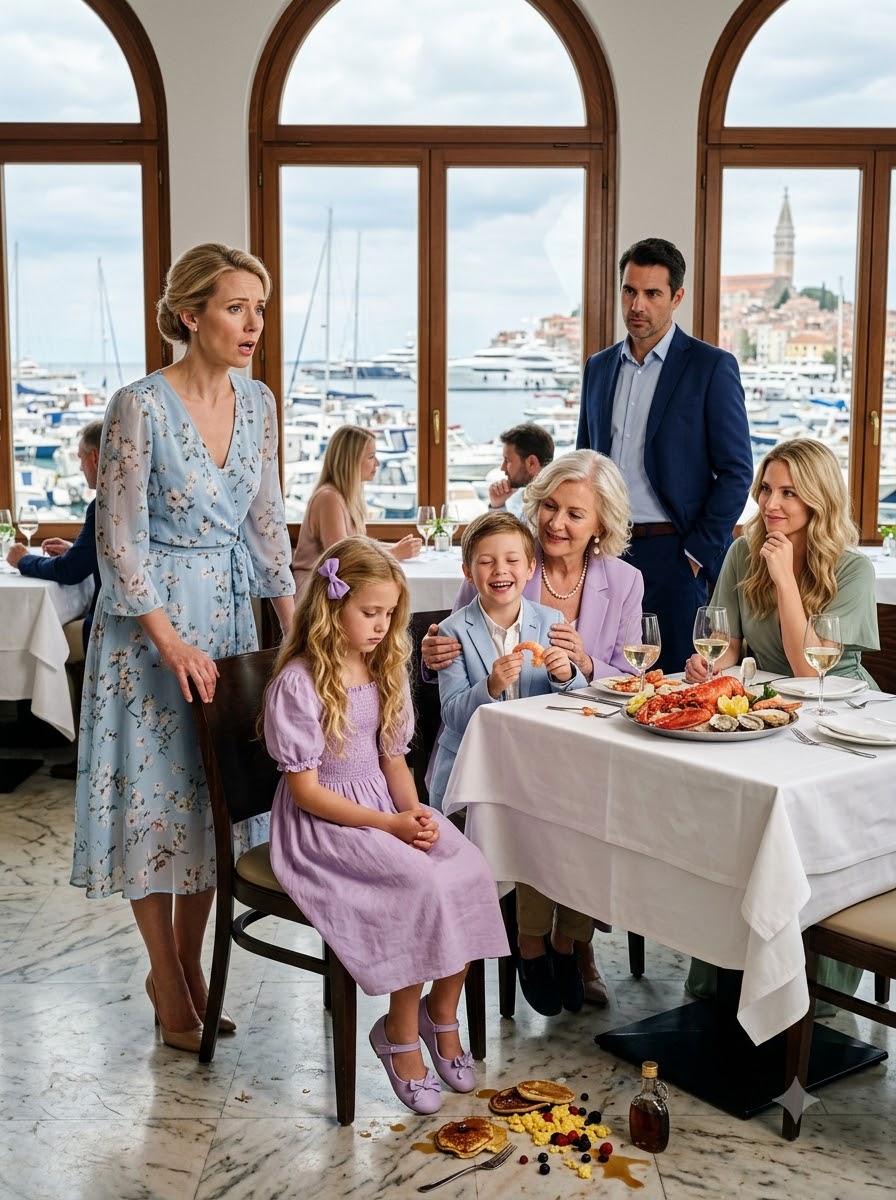
“Neither did I.”
“Then tell us who did.”
He said nothing.
“I didn’t send company money to Melissa. I didn’t promise my daughter’s property to Owen. And I didn’t spend years telling Lily she mattered less because she wasn’t a boy.”
Judith rose suddenly.
“Owen is family too!”
Silence filled the room.
Grant shut his eyes.
Judith appeared to realize what she had just revealed.
I turned to her.
“Yes, Judith. He is. Would you like to explain exactly how?”
She looked away.
“I don’t know what you’re implying.”
“Nathan is alive.”
The color drained from her face.
Grant stared at me.
“That doesn’t change anything.”
“It changes plenty.”
“Owen hasn’t done anything wrong.”
“I know.”
And I meant it.
Owen was nine years old.
He had simply repeated the beliefs the adults around him had taught him—the belief that boys mattered more, that Lily should give way, and that being the family’s male descendant gave him a special claim.
He was only a child carrying the damage created by other people.
“I won’t take anything from Owen that legally belongs to him,” I said. “But you will not take something from Lily simply because you decided he deserved it more.”
Grant shoved his chair backward.
“You’re tearing this family apart.”
I looked at the man I had spent ten years shielding from the consequences of his actions.
“The truth didn’t break this family, Grant. The choices made before the truth came out did.”
WHAT SURVIVED
The ending was not dramatic.
Real endings rarely are.
Grant did not lose everything in one afternoon, and Whitmore Development did not disappear.
Instead, his administrative authority was limited while the financial review continued. Lenders required stronger documentation. Several projects needed to be renegotiated. Unnecessary assets were sold, personal expenses were removed from company accounts, and an outside chief financial officer was brought in.
I became far more involved than I had ever expected.
Not because I wanted to save Grant.
Because more than seventy people depended on that company, and they had mortgages, children, grocery bills, aging parents, and ordinary lives completely separate from our marriage.
I was done protecting my husband from himself.
I was not prepared to let innocent employees suffer because of him.
The company survived, smaller and less glamorous, but healthier.
Lily’s ownership remained protected.
The questionable authorization carrying my name was independently examined, and specialists determined that the signature was not mine. What happened afterward became a matter for attorneys and the appropriate authorities.
I stopped seeking revenge.
I wanted boundaries, accountability, and peace.
Several months later, Melissa gave birth.
A little girl.
When I heard that Judith had gone silent after learning the news, I almost laughed.
Not because there was anything amusing about a baby girl.
Quite the opposite.
After years of treating daughters like consolation prizes, Judith had been given another granddaughter who might teach her what she should have understood all along.
Grant and Melissa tried living together in the Savannah house.
It did not last.
Once company money was no longer quietly financing the life they had envisioned, ordinary pressures appeared quickly, and apparently secrecy had been one of the strongest things keeping them together.
I felt no triumph.
By then, I was too exhausted for triumph.
Grant eventually asked to see Lily, and under professional guidance, their first visits were supervised.
At the first visit, he arrived carrying an enormous bag of gifts.
Lily left it unopened.
“I bought you the things you wanted,” he told her.
She stared at him for a long time.
“I didn’t want toys.”
Grant looked confused.
“What did you want?”
My eight-year-old daughter folded her hands in her lap.
“I wanted you not to hurt my hand because I was hungry.”
From the other side of the observation window, I watched with tears quietly running down my face.
For months, Grant had apologized for the loan, the company, Melissa, and “the way everything happened.”
That was the first moment I believed he understood that the deepest damage had never appeared on a balance sheet.
It existed inside a little girl who remembered being afraid to put food on her plate.
THREE PIECES OF CHICKEN
Lily turned nine the following spring.
We celebrated in my mother’s backyard with chocolate cake, music, folding tables, cousins running across the lawn, and enough food to feed twice the number of guests we had invited.
At one point, Lily walked over to the buffet.
She placed two pieces of chicken on her plate.
Then she stopped.
From across the yard, she looked directly at me.
I recognized that expression immediately.
Without saying a word, she was asking permission.
It nearly broke my heart.
I walked over.
“Want another piece?”
“Can I?”
I placed another piece beside the others.
“You can eat until you’re comfortably full.”
She examined the plate.
“Three might be too many.”
“Then eat two. If you’re still hungry later, come back.”
She looked up at me.
“You won’t get mad?”
I put my arm around her.
“Never because you’re hungry.”
She hugged me, carefully holding the plastic plate between us.
Standing there in my mother’s backyard, I finally understood something that no attorney, banker, accountant, or court could ever have taught me.
For ten years, I had believed protecting my daughter meant keeping her parents together.
I had been wrong.
Protecting her meant showing her that love does not demand humiliation.
Love does not measure worth between boys and girls.
Love does not require a child to earn the right to feel safe.
And love certainly does not teach a daughter that preserving a family matters more than preserving herself.
Lily’s shares remain protected.
When she grows older, she will decide what she wants to do with them. Maybe she will work for the company. Maybe she will sell them. Maybe she will create an entirely different life and never sit through another corporate meeting.
That decision belongs to her.
Owen eventually started counseling too, and as the adults stopped putting him on a pedestal, he slowly became a kinder child.
During one supervised family gathering, he approached Lily.
“I’m sorry I threw that napkin at you.”
She looked at him seriously.
“That was mean.”
“Yeah. It was.”
“Don’t do it again.”
“I won’t.”
Then they went outside to play.
In less than a minute, two children resolved what adults had spent years transforming into a battle over inheritance, loyalty, gender, and pride.
Judith never gave me the apology I once believed I needed.
She continued insisting she had only been “trying to protect the family.”
Eventually, I realized that some people use the word family to describe any arrangement that shields them from consequences.
I no longer needed to make her understand otherwise.
Grant changed too, although slowly, and I still cannot say how much of it came from regret and how much came from losing the control he once believed would always be his.
I no longer spend much time wondering.
Peace has a way of making certain questions feel unimportant.
Not long ago, Lily asked why her grandfather had placed part of the company in her name.
I told her something my father used to tell me when I was young: that every woman should have enough independence to leave any room where she is repeatedly being asked to make herself smaller.
Lily thought about that.
“Grandpa was pretty smart.”
I smiled.
“He was.”
“So money makes you free?”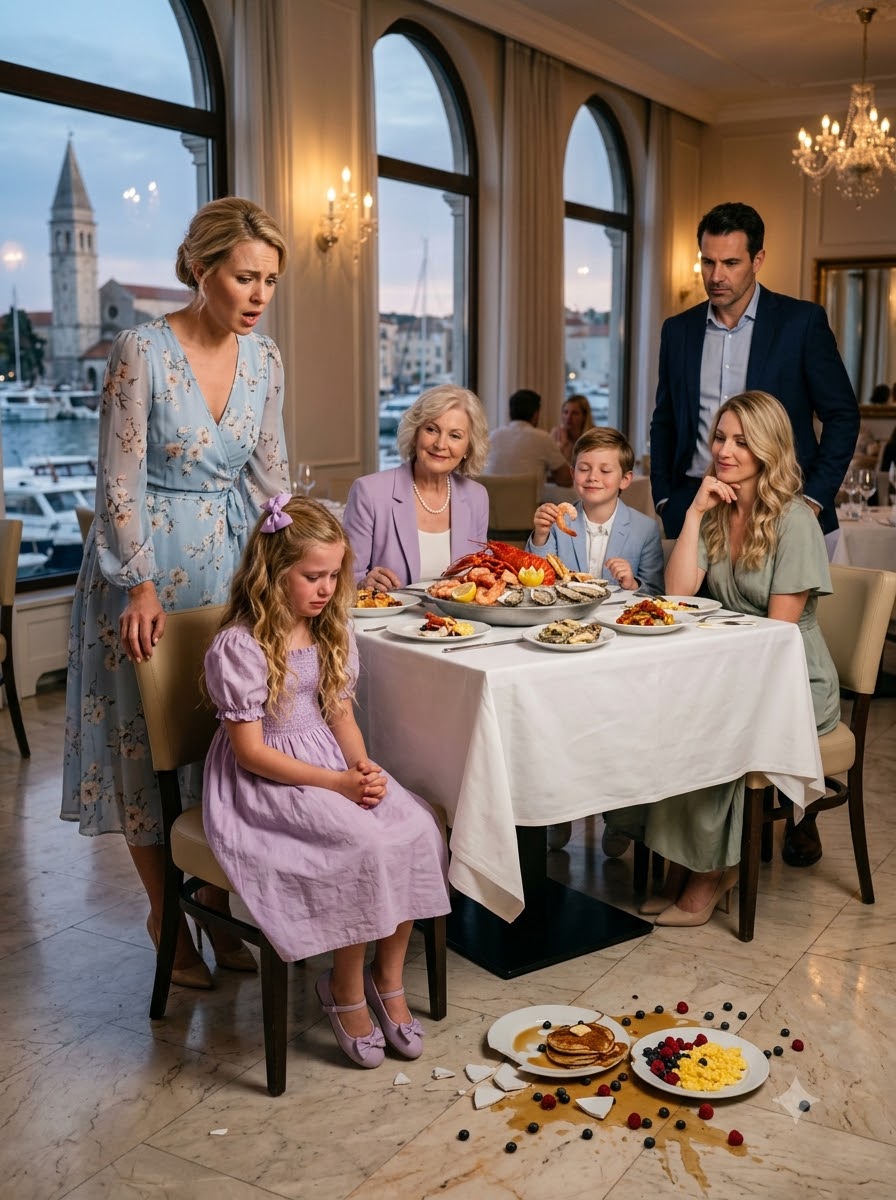
“Not exactly. Money can’t buy a good life by itself.”
I paused for a moment.
“But sometimes it can help you find the door.”
She laughed.
I laughed too.
Every now and then, I still remember that rainy morning in South Carolina: Grant driving away in a vehicle I had helped pay for, Melissa beside him with her hand resting over the child she was expecting, Judith convinced that only a boy could carry the family’s future, and Lily kneeling beside me in the rain because her father believed we could not survive without him.
They thought I had reached the point where I had nothing left.
In reality, it was the first moment in years when I started getting things back.
My voice.
My judgment.
My dignity.
And, most importantly, my daughter.
It began with two pieces of bacon worth almost nothing.
But it had never truly been about breakfast.
It was about who Grant believed deserved abundance and who was supposed to learn to accept less, whose future mattered and whose could quietly be traded away, whose voice counted and whose was expected to remain grateful for whatever was left.
For years, I had allowed him to believe those decisions were his to make.
Then one morning, my eight-year-old daughter hid her sore hand beneath a restaurant table because she was ashamed of being hungry.
And I finally understood that keeping a family together is never worth teaching a daughter to tolerate the very things you hope she will someday be brave enough to walk away from.
