

PART 1: THIRTEEN MINUTES
I sat there watching my own mother swear under oath that I had never served my country.
She didn’t pause.
She didn’t avert her gaze.
She didn’t show even the slightest trace of shame.
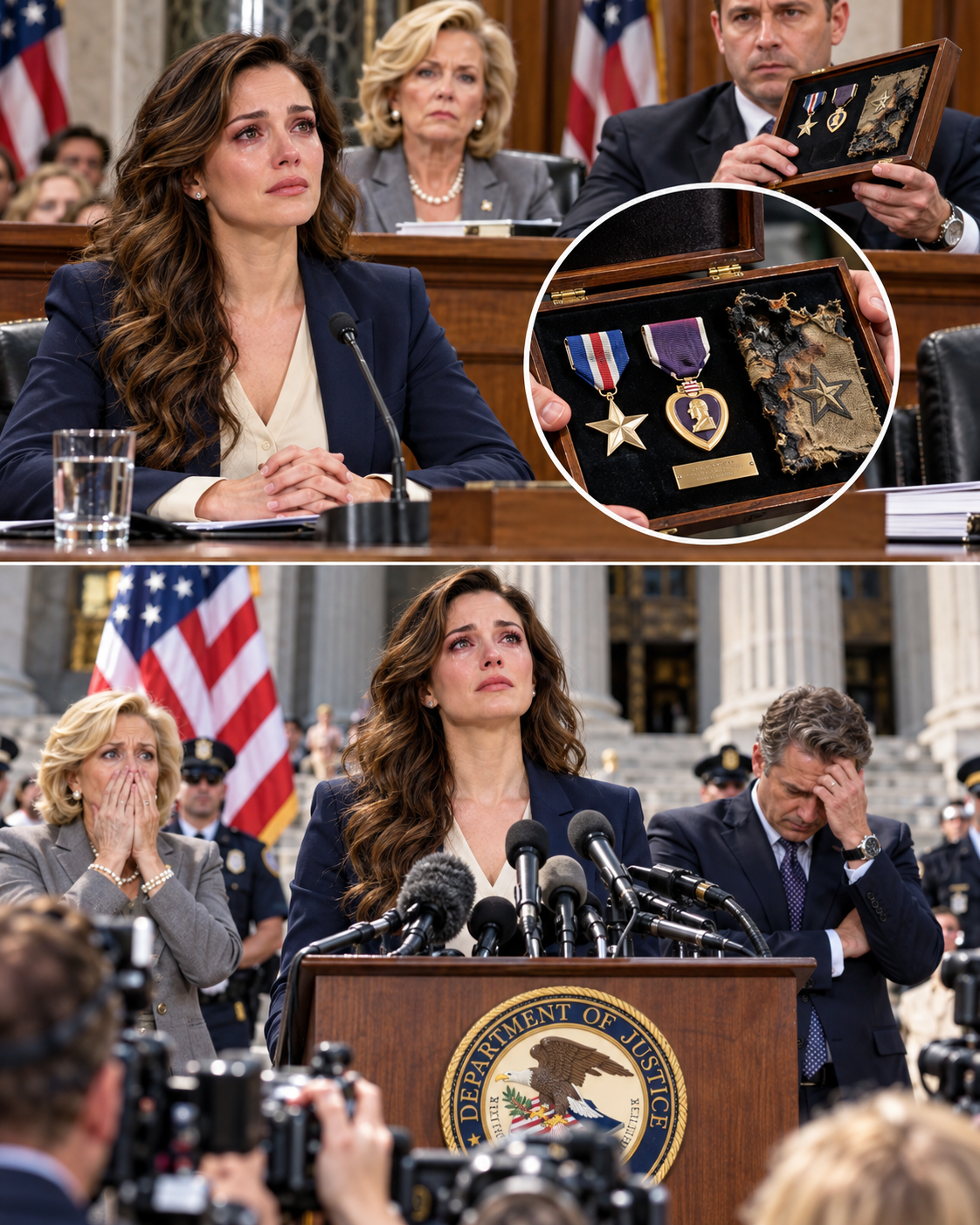
Evelyn Cross sat rigidly upright in the witness chair, one hand placed delicately over the other, wearing the gray pearl earrings my father had bought her for their twenty-fifth anniversary.
Her tone was composed enough to make the lie sound credible.
“She was never in the Army.”
The courtroom became so silent I could hear the aging ventilation system humming overhead.
The prosecutor allowed the silence to linger.
My mother went on.
“She invented all of it. The deployments. The missions. The injuries.”
Then she angled her head toward me.
Not completely.
Only enough.
Her eyes lowered toward my ribs, where a jagged scar vanished beneath my blouse.
“And those scars she likes people to believe came from combat?”
She gave a slight, disdainful shake of her head.
“They’re fake too.”
A murmur passed through the jury box.
I showed nothing.
That was exactly what Ryan wanted.
If I became angry, I was unstable.
If I cried, I was manipulative.
If I stayed silent, I was guilty.
There wasn’t a single expression I could make that my family hadn’t already figured out how to turn against me.
At my side, my attorney, Daniel Mercer, leaned closer.
“Claire,” he whispered. “Don’t respond.”
“I won’t.”
He examined my face for a second.
“That concerns me even more.”
I nearly smiled.
Across the aisle, my younger brother lowered his gaze as though he were reviewing the documents in front of him.
But I caught the corner of his mouth rising.
Ryan had worn that same smile since the trial started.
Never openly.
Never enough for a camera to capture.
Just enough to make sure I understood what he believed.
He believed he had already won.
Maybe everyone else in the courtroom believed it too.
Three rows behind him were reporters from national newspapers, defense-industry publications, and local television stations. Laptop screens illuminated their faces.
I had already read the headlines.
HEIRESS ACCUSED OF FABRICATING MILITARY CAREER.
DEFENSE EXECUTIVE’S DAUGHTER FACES STOLEN VALOR CLAIMS.
CROSS MERIDIAN SUCCESSION BATTLE TURNS CRIMINAL.
One television commentator had spent twenty minutes wondering aloud how anyone could construct an entire identity around fictional military service.
Another had labeled me a “decorated fraud.”
The phrase spread everywhere.
During those weeks, I discovered something strange about being publicly humiliated.
Once enough people repeated the same lie, nobody seemed interested in asking whether it was actually true.
They only debated how severely the supposed liar deserved to be punished.
The prosecutor moved toward the evidence table.
“Mrs. Cross,” he said, “your daughter claims she served twelve years in the United States Army. During that time, did she ever show you deployment orders?”
“No.”
“Did she ever show you official photographs?”
“No.”
“Did she ever introduce you to commanding officers?”
“No.”
“Did you attend any military ceremony honoring her?”
My mother hesitated.
“No.”
Every answer landed harder than the previous one.
Not because every word was false.
Because Ryan had constructed the case from carefully chosen pieces of truth.
I had never shown my mother deployment orders.
I had never mailed her photographs.
I had never brought my unit home for Thanksgiving.
I had vanished for months and offered explanations so vague that, in hindsight, they sounded absurd.
Training.
Assignment.
Travel.
Restricted duty.
That was simply the reality of the work.
Even after leaving active service, much of what I had done remained sealed behind barriers I was legally prohibited from opening.
My mother knew that.
Ryan knew it as well.
Which was precisely why the attack was effective.
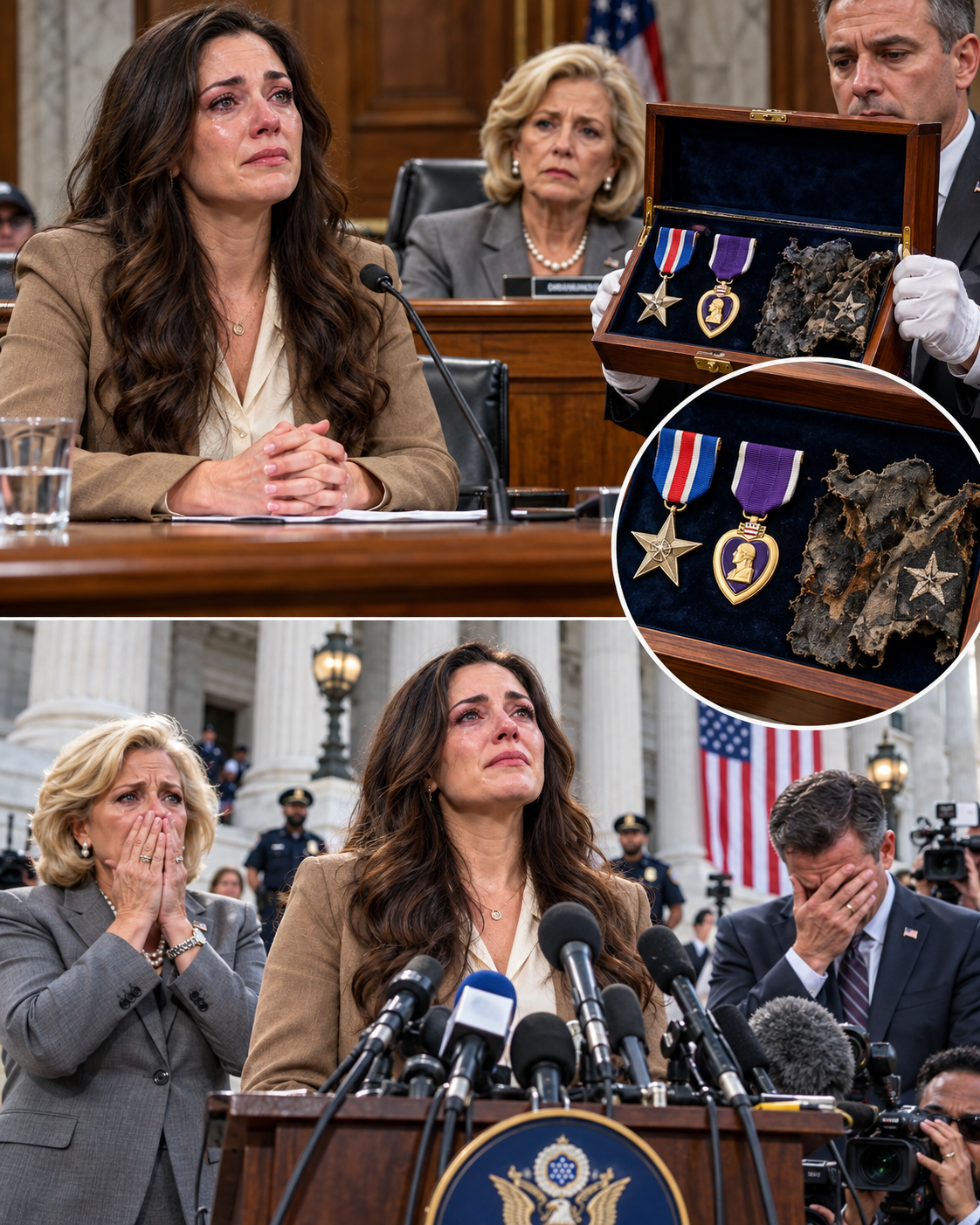
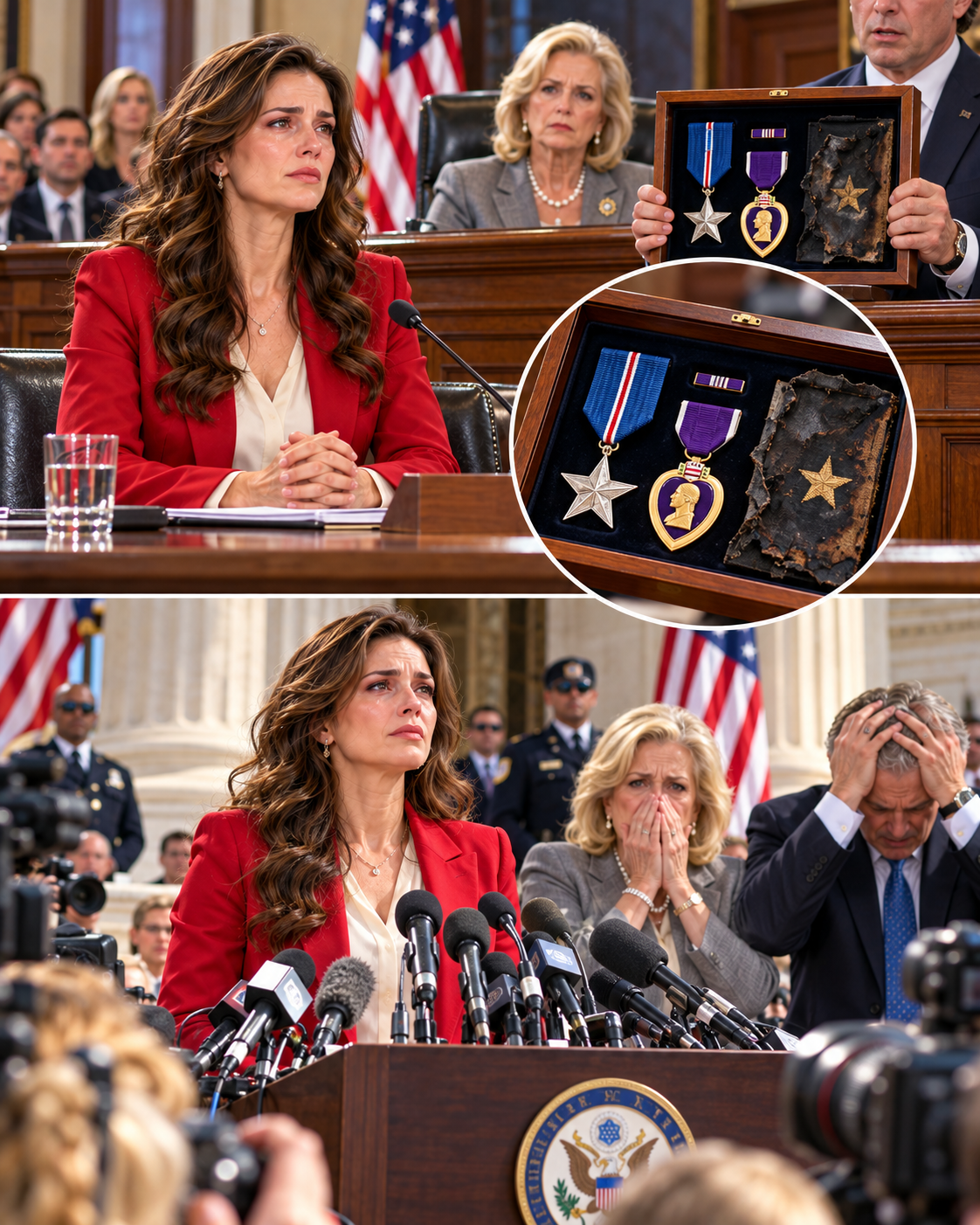
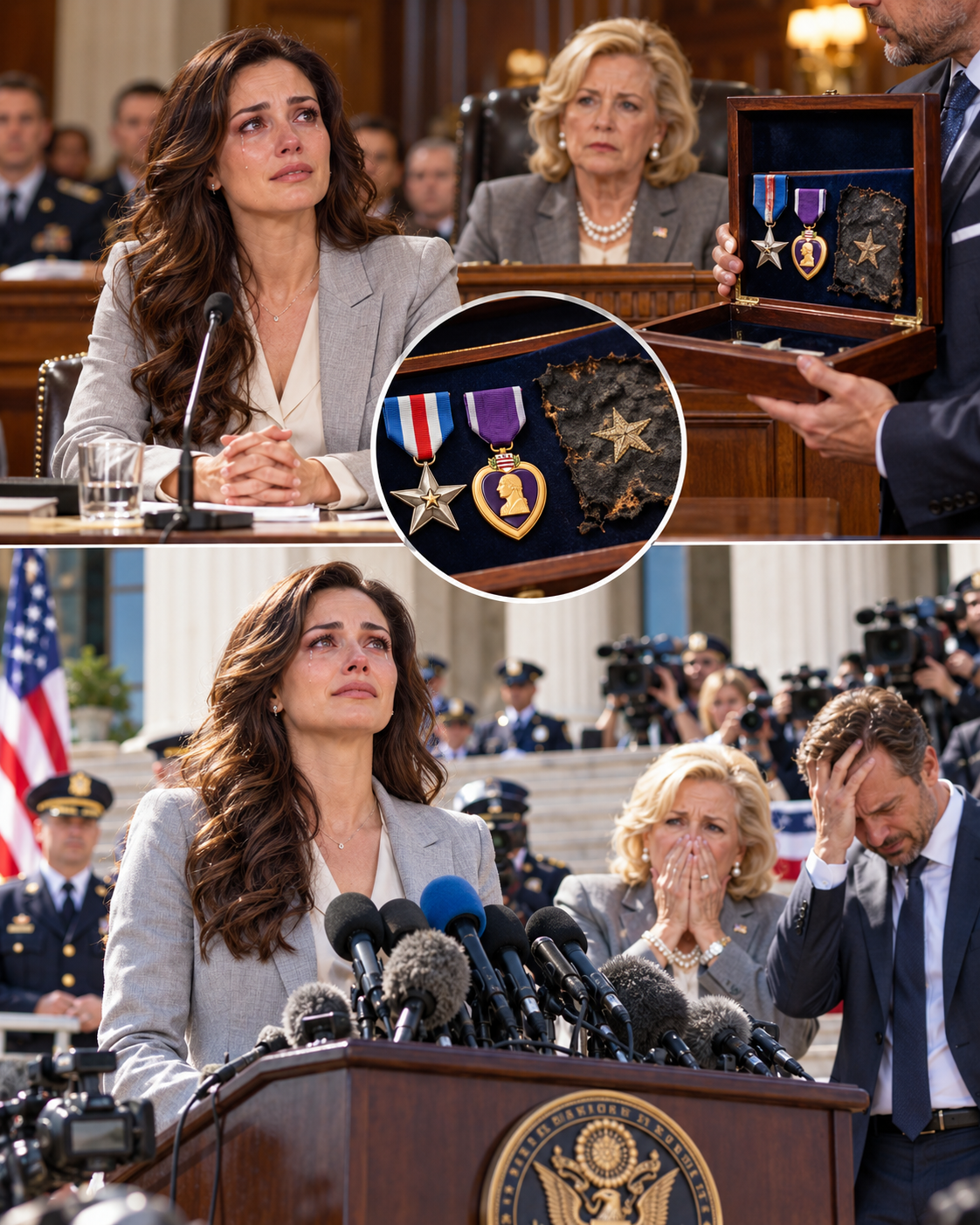
The prosecutor returned to the evidence table and picked up a wooden shadow box.
I knew every mark and scratch in the walnut frame.
My father had built it himself.
Chemotherapy had already made his hands tremble, but he refused to allow anyone else to complete it.
Inside lay my Silver Star.
My Purple Heart.
And a scorched fragment of cloth—the remains of a unit patch recovered from the uniform that had been cut from my body after the mission that almost killed me.
The prosecutor lifted the box where the jury could clearly see it.
“Do you recognize these?”
My mother pressed her lips together.
“Yes.”
“Where did you first see them?”
“In Claire’s house.”
“Did she tell you what they were?”
“She said they were military decorations.”
“And did you believe her?”
“No.”
The prosecutor paused.
“Why not?”
For the first time, my mother looked straight at me.
“She purchased them online.”
Several jurors immediately turned toward me.
An older man crossed his arms.
A woman seated near the end of the row looked from the Purple Heart to my face, and uncertainty hardened into disgust.
Fraud.
Liar.
Imposter.
Nobody needed to say the words.
I could hear them anyway.
The scar running along my ribs began throbbing.
It always did when exhaustion set in.
Or anger.
Or memories.
For one dangerous instant, the courtroom disappeared around me.
Helicopter rotors hammered through the darkness.
Metal shrieked.
An explosion erupted behind me.
Then heat.
Smoke.
The metallic taste of blood.
I remembered trying to inhale and realizing that breathing had become something my body no longer understood how to do.
I remembered Major Ethan Walker yelling my name.
Then hands beneath my shoulders.
His hands.
Pulling me through wreckage while rounds snapped somewhere beyond the flames.
I remembered ordering him to leave me.
I remembered his response containing enough profanity to make a chaplain resign.
And I remembered waking three days later with a tube buried in my chest.
None of that had been fake.
The nightmares weren’t fake.
The scars weren’t fake.
The medals weren’t fake.
But the documents explaining how I had earned them were still restricted under a national security classification attached to an operation that had never been publicly acknowledged.
Ryan understood that before he ever accused me.
That was the brilliance of his lie.
The truth existed.
I simply wasn’t allowed to use it.
My father’s attorney, Samuel Greene, stood for cross-examination.
He had represented Cross Meridian Systems for nearly two decades. He appeared more exhausted and older than I remembered, but his voice remained precise.
“Mrs. Cross, did your daughter ever tell you that portions of her military work were classified?”
“Yes.”
“So you were aware that she claimed she was legally restricted from discussing certain assignments?”
“She used that excuse frequently.”
“Excuse?”
“That’s what it was.”
Samuel stepped closer to the witness stand.
“Did your husband believe Claire served in the Army?”
My mother’s jaw shifted almost imperceptibly.
“He believed whatever Claire told him.”
“That wasn’t my question.”
The prosecutor rose.
“Objection.”
“Overruled,” the judge said. “The witness may answer.”
Samuel asked again.
“Did your husband believe his daughter had served?”
My mother faced the jury.
“My husband was sick for a long time.”
Cold spread through me.
Samuel’s expression hardened.
“Before his illness became serious.”
“He believed her.”
“Enough to appoint her executor of his estate?”
“Yes.”
“Enough to transfer controlling shares of Cross Meridian Systems to her?”
“Yes.”
Ryan’s smile disappeared.
Only briefly.
But I noticed.
Samuel noticed too.
My father had transferred those shares while he remained fully competent, almost a year before he died.
That detail mattered.
Ryan’s mysterious new will could challenge whatever remained inside Dad’s estate.
But reversing something Dad had transferred while alive would be far more difficult.
Unless Ryan persuaded a court that I had obtained those shares through deception.
That was why my military history mattered so much.
If I had deceived our father about who I was—if I had manipulated him through a fabricated story of military sacrifice and service—Ryan could claim that every decision Dad made in my favor had been corrupted by fraud.
This case had never truly been about medals.
It was about Cross Meridian.
A defense technology company Dad had grown from a six-person engineering operation into a contractor employing thousands.
It was about contracts.
Patents.
Voting authority.
And money.
An enormous amount of money.
Three days after Dad’s funeral, Ryan had entered Samuel Greene’s office holding an envelope.
Inside was a new will.
According to that document, Dad had reversed his decisions during his final months.
Ryan would inherit almost everything.
Company interests.
Real estate.
Investment accounts.
Decision-making authority.
I would receive a modest trust and nothing more.
There was one problem.
Dad had never once told me he intended to change his estate plan.
The second problem was much larger.
Six weeks before he died, when cancer had reduced his voice almost to a whisper, he had gripped my hand beside his hospital bed and told me something I never forgot.
“They’re moving money through shell companies.”
I bent closer.
“Who?”
His eyes shifted toward the closed door.
“Protect the company.”
“Dad, tell me who.”
His fingers tightened around mine with unexpected strength.
“Find it. Stop it.”
Then he drew a painful breath.
“But don’t expose your unit.”
I stared at him.
Even while dying, Dad understood what Ryan apparently had discovered: if the corruption inside our company became connected to details surrounding my classified assignments, one crisis could ignite another.
“I promise,” I whispered.
Dad closed his eyes.
I kept that promise.
Even when Ryan revealed the new will.
Even when he accused me of manipulating Dad.
Even when he told investigators that my medals were fake.
Even when prosecutors began questioning why portions of my official service record seemed to vanish behind restricted systems.
I stayed silent.
Because promises made beside someone’s deathbed carry a weight ordinary promises don’t.
Samuel faced my mother again.
“Mrs. Cross, did you personally purchase these medals for your daughter?”
“No.”
“Did you see her purchase them?”
“No.”
“Did you find receipts?”
“No.”
“Did you speak to any seller?”
“No.”
“So when you say she purchased them online, you have no personal knowledge of that.”
For the first time, my mother’s composure fractured.
Barely.
“I know my daughter.”
My throat tightened.
Samuel stared at her.
“Do you?”
The courtroom fell completely still.
My mother looked toward me.
For one brief moment, I saw something in her eyes.
Not guilt.
Fear.
Then it disappeared.
“She was never in the Army,” she repeated. “She made up the scars, the medals… everything.”
That was the first lie.
The lie intended to erase twelve years of my existence.
The second lie was worse.
Because that one had been designed to send me to prison.
Samuel returned to his seat.
Daniel pushed a legal pad toward me.
He had written one sentence across it.
ANY UPDATE?
I glanced toward the clock hanging above the judge.
11:47 a.m.
My heartbeat remained controlled.
Daniel followed my gaze.
He leaned closer.
“What are you waiting for?”
I kept watching the second hand move.
“Authorization.”
His eyebrows drew together.
“For what?”
At last, I smiled.
“In thirteen minutes, classified becomes declassified.”
And for the first time that morning, Ryan turned and looked straight at me.
PART 2: THE LIE MY BROTHER BUILT
Ryan had spent his entire life confusing patience with weakness.
When we were children, he would steal things from my bedroom and deny taking them while they were practically still in his hands.
If I yelled, Mom accused me of being dramatic.
If I proved Ryan had lied, she told me I needed to learn how to share.
If Dad disciplined him, Mom always found some way to soften the punishment.
Ryan learned early that consequences rarely lasted if someone loved you enough to rewrite the story afterward.
I learned something entirely different.
I learned to document.
Observe.
Wait.
And never spend ammunition on a target you had no chance of hitting.
The Army merely sharpened instincts my family had created long before I ever wore a uniform.
Perhaps that was why Ryan resented my service even before he chose to pretend it had never happened.
He couldn’t control the person it had turned me into.
The morning after Dad’s funeral, Ryan showed up at my house carrying two coffees.
That alone should have warned me.
He had never remembered how I drank mine.
“Black,” I said when he handed me the cup.
“I know.”
“You brought cream.”
He shrugged.
“Close enough.”
We sat quietly at my kitchen table.
The dress I had worn to Dad’s funeral hung over the back of a chair.
Dad’s shadow box sat on the counter because I had taken it from his study after the service.
Ryan kept glancing toward it.
Eventually, he spoke.
“You know Dad wasn’t himself near the end.”
I put my coffee down.
“He knew who we were.”
“That’s not what I mean.”
“I know what you mean.”
His mouth tightened.
“We should make decisions together.”
“About Mom?”
“About everything.”
“There’s nothing to decide yet. Samuel hasn’t finished the estate inventory.”
Ryan leaned against the chair.
“You already have voting control of the company.”
“Dad transferred the shares last year.”
“I know when he transferred them.”
“Then what are we discussing?”
His gaze returned to the medals.
“You.”
Something in his tone made the kitchen suddenly seem colder.
I waited for him to continue.
Ryan smiled.
“You disappear for twelve years, come home with medals nobody can verify, Dad starts treating you like some kind of hero, and suddenly you control the company.”
My hands became motionless around the coffee cup.
“Be careful.”
“Why?”
“Because you don’t know what you’re talking about.”
“That’s always your answer, isn’t it?”
He raised both hands in mock surrender.
“Classified. Can’t discuss it. National security.”
“Some things I legally cannot discuss.”
“How convenient.”
I should have recognized what was happening then.
Maybe some part of me did.
But grief can make even careful people foolish.
Our father had been gone for less than twenty-four hours.
I still half expected my phone to light up with his name.
I still hadn’t learned how to walk into a room without noticing the empty place where he belonged.
I had no emotional space left for Ryan’s jealousy.
So I told him to get out.
Three days afterward, he appeared with the new will.
Samuel called me from his office.
“Claire, you need to come here.”
His voice made it clear I shouldn’t ask questions over the phone.
When I arrived, Ryan and Mom were already seated inside the conference room.
Ryan had brought an attorney.
Mom refused to meet my eyes.
Samuel slid a photocopy toward me.
I read page one.
Then page two.
Then the signature page.
Dad’s name was written at the bottom.
The signature resembled his.
Almost.
My stomach twisted.
“What is this?”
Ryan clasped his hands.
“Dad’s final will.”
“No.”
“Claire—”
“No.”
Mom spoke softly.
“Your father changed his mind.”
I stared at her.
“About everything?”
“He wanted Ryan to have a chance.”
“A chance at what?”
“The company.”
“The company isn’t part of his estate. He already transferred voting control.”
Ryan’s attorney cleared his throat.
“The petition we intend to file addresses that transfer as well.”
I looked from the attorney to Ryan.
“On what basis?”
Ryan answered himself.
“Fraud.”
That word followed me for months afterward.
Fraud.
First through estate filings.
Then corporate lawsuits.
Then investigator interviews.
Ryan alleged that Dad had transferred control to me because I had created an elaborate fake identity based on military service.
According to Ryan, I had convinced our father that I was a decorated combat veteran when in reality I was an unemployed drifter who had spent years inventing classified missions.
The accusation sounded ridiculous.
Until investigators attempted to verify my record.
Ordinary records showed enough to establish that I had entered the Army.
Then the trail became uneven.
Assignments appeared redacted.
Dates vanished behind controlled-access databases.
Award citations could not be obtained through normal verification channels.
A significant portion of my personnel record simply could not be released.
That was entirely normal considering the work I had performed.
To anyone unfamiliar with classified service, however, it looked deeply suspicious.
To Ryan, it looked useful.
He started speaking to reporters.
At first, he insisted he only wanted “the truth.”
Then he claimed he was concerned about stolen valor.
Eventually, he alleged that documents I had submitted during corporate security reviews included falsified federal records.
That allegation brought federal investigators into the dispute.
Once they became involved, events moved quickly.
My lawyers submitted formal requests through military channels.
Rejected.
We requested limited confirmation of my service dates.
Delayed pending security review.
We requested an in-camera review so the judge could privately examine restricted materials.
Complicated.
Because one of the operations connected to my decorations remained subject to an active classification order extending beyond the operation itself.
I could establish fragments of the truth.
I couldn’t establish enough publicly.
Ryan knew precisely where those gaps existed.
That question tormented me more than anything else.
How?
How had Ryan discovered which portions of my record would be hardest to verify?
The answer began inside Dad’s study.
Two weeks before trial, I discovered an old notebook concealed behind technical binders inside a locked cabinet.
Most pages contained company information.
Contract numbers.
Supplier names.
Amounts circled with red ink.
But near the back, one page contained only three lines.
RYAN ASKING ABOUT C.’S CLEARANCE.
WHY?
KEEP PERSONNEL MATERIAL SEPARATE.
The first time I read those words, my breathing stopped.
Ryan had questioned Dad before he died.
Questions about me.
That same notebook contained references to payments routed through shell corporations Dad had apparently been investigating.
That was when everything began taking shape.
Not proven.
But visible.
Ryan hadn’t invented the military-fraud accusation after Dad’s funeral.
He had been preparing it while Dad was still alive.
I brought the notebook to Daniel.
He read the page twice.
“This gives us motive.”
“It gives us suspicion.”
“It gives us a path.”
“But not one I can use if it reveals why Dad knew my clearance restrictions.”
Daniel closed the notebook.
“So we wait for authorization.”
“Yes.”
He hated that response.
Daniel Mercer hated anything he couldn’t cross-examine.
But he trusted me enough to file the necessary motions.
Using restricted channels, we requested an emergency review of the classification order attached to the mission connected with my decorations.
We didn’t request operational specifics.
Our request was far narrower.
Confirmation that I had served.
Authentication of my decorations.
Release of sufficient information to establish how my injuries occurred.
And authorization allowing two witnesses with direct knowledge to testify.
One was an Army records official.
The second was Ethan Walker.
The man who had pulled me through fire.
The first response arrived three days before trial.
REQUEST UNDER REVIEW.
The second came at 6:12 on the morning my mother testified.
STATUS CHANGE ANTICIPATED AT 1200 HOURS.
I handed the message to Daniel.
He stared at the screen.
“Anticipated?”
“That’s the word they used.”
“You’re betting your freedom on the military meaning what it says by ‘anticipated’?”
“I spent twelve years in the Army.”
“That is not reassuring.”
I nearly laughed.
Nearly.
Instead, I put my phone away.
By eleven that morning, the prosecution had presented enough material to make its version of events seem straightforward.
No publicly available award citation.
No ordinary deployment record.
No family photographs showing me in combat zones.
No commanding officer willing to testify.
No ceremony my mother could remember attending.
And a brother willing to swear under oath that I had lied for years.
Ryan’s testimony had been smoother than Mom’s.
He told jurors that I had always been “obsessed with being special.”
He claimed Dad respected veterans and that I knew exactly how to exploit that admiration.
He described the shadow box.
He described my scars.
He even described the evening I returned home after my final hospitalization.
“You never saw her arrive in uniform?” the prosecutor asked.
“No.”
“What was she wearing?”
“Civilian clothes.”
That was true.
I had returned under medical restrictions and had absolutely no intention of walking through an airport wearing anything that encouraged questions.
“Did she provide documentation of combat wounds?”
“No.”
Another true statement.
“Did you ever see her active-duty identification?”
“When we were younger, maybe. I don’t remember.”
Another carefully positioned half-truth.
Then came the question Ryan had clearly been waiting for.
“Mr. Cross, why do you believe your sister invented her military history?”
Ryan looked toward me with such convincing wounded sadness that part of me almost admired the performance.
“Because my father trusted heroes.”
He swallowed.
“And Claire needed him to see her as one.”
That line reached the evening news before court had even recessed.
But during cross-examination, Daniel extracted one thing from Ryan.
One important thing.
“Mr. Cross,” Daniel asked, “when did you first attempt to verify your sister’s military records?”
Ryan shifted slightly.
“After Dad died.”
“Are you certain?”
“Yes.”
“You never asked your father about her security clearance before his death?”
“No.”
“You never asked him whether her records were restricted?”
“No.”
“You never asked anyone at Cross Meridian to determine which parts of her military history could be publicly verified?”
“No.”
Four questions.
Four denials.
And Dad’s notebook sitting inside Daniel’s briefcase.
The clue existed.
The contradiction existed.
We simply weren’t authorized to use all of it yet.
Now Mom remained in the witness chair, repeating the narrative Ryan had constructed.
I checked the clock once more.
11:53.
Seven minutes.
Daniel checked his phone underneath the table.
Nothing.
At 11:55, the judge summoned counsel to the bench.
They spoke quietly.
The prosecutor sought permission to introduce enlarged photographs comparing my medals with examples sold through military surplus websites.
Daniel objected.
The judge sustained part of his objection.
Outside the courtroom, cameras were already waiting in the hallway.
I could practically imagine the notifications being drafted.
DECORATED FRAUD EXPOSED.
Perhaps Ryan could imagine them too.
When he returned to his table, he turned just enough to meet my eyes.
Then his lips silently formed two words.
It’s over.
I looked toward the clock.
11:57.
Not yet.
PART 3: 11:59
Sometimes three minutes can feel longer than twelve years.
At 11:58, nothing changed.
No message arrived.
No vibration came from Daniel’s phone.
No uniformed officers suddenly appeared through the courtroom doors.
My mouth became dry.
Daniel refreshed his secure inbox once more.
“Claire.”
“I know.”
“What happens if noon comes and we have nothing?”
I looked toward the jurors.
“We continue.”
“That’s not an answer.”
“It’s the only one I have.”
The prosecutor resumed questioning Mom.
“Mrs. Cross, did your daughter’s alleged military history affect your husband’s opinion of her?”
“Yes.”
“How?”
“He admired her.”
Her response came quietly.
Painfully quietly.
“He talked about her courage. Her sacrifices. He said she understood responsibility in a way Ryan didn’t.”
Ryan’s expression shifted.
There.
For the first time, I could hear the injury underneath his anger.
Dad had compared us.
Perhaps too frequently.
Perhaps unfairly.
In Ryan’s mind, my military service had become evidence that I was the child Dad respected more.
If Ryan could erase that service, perhaps he believed he could erase the comparison along with it.
Understanding the source of his resentment didn’t make forgiveness easier.
But it made his cruelty understandable.
The prosecutor nodded sympathetically.
“And if that military service never occurred?”
Mom faced the jury.
“Then my husband made decisions based on a lie.”
“And those decisions included transferring control of Cross Meridian Systems to Claire?”
“Yes.”
There it was.
No longer concealed.
The decorations.
My scars.
My reputation.
Every part of it had merely been the weapon.
Cross Meridian had always been the target.
11:59.
Daniel’s phone vibrated.
His hand shot toward it so quickly that he nearly tipped over his water glass.
He read the screen.
Then his face fell.
“What?”
“Administrative notice.”
My chest tightened.
“What does it say?”
“Decision entered. Release packet pending transmission.”
“Decision entered means a decision exists.”
“Yes, but I don’t know what decision.”
Mom was dismissed from the witness stand.
As she walked down, she passed directly beside our table.
For years, I had imagined that if my mother ever betrayed me deeply enough, something about her appearance would change afterward.
Maybe she would look monstrous.
Cruel.
Unfamiliar.
She didn’t.
She still looked exactly like my mother.
The same perfume.
The same carefully applied makeup.
The same tiny crease between her eyebrows whenever she became nervous.
She stopped beside me.
The bailiff watched carefully.
Mom leaned slightly closer.
“You should have let Ryan have the company.”
I stared back at her.
“So that’s what this is?”
Her gaze flickered toward the judge.
“You always have to win.”
“No.”
I kept my voice low.
“I just stopped losing quietly.”
Her lips parted.
Then the bailiff motioned her onward.
I watched her return to Ryan’s side.
Daniel whispered, “Did she just—”
“Yes.”
“That was almost useful.”
“Almost.”
The judge checked the clock.
12:00.
The second hand moved across twelve.
Nothing.
For half a heartbeat, it felt as though the floor had vanished beneath me.
Then Daniel’s phone vibrated once more.
He opened the new message.
His eyes widened.
“Claire.”
I kept my gaze forward.
“What?”
“Approved.”
He had barely spoken the word when the courtroom doors swung open.
Everyone turned.
Three people entered.
The first wore a dark Army service uniform.
The second carried two locked cases filled with documents.
The third looked older than the man who still appeared in my nightmares.
More gray streaked his temples.
His left leg carried a slight stiffness.
But I recognized him before my mind fully processed his face.
Major Ethan Walker.
For twelve years, I had been trained to hide emotion whenever emotion could reveal information.
That training abandoned me.
My breath caught.
Ethan saw me.
He stopped walking.
For one instant, the courtroom disappeared.
Fire.
Smoke.
His hand reaching toward me through both.
Then he gave me the smallest possible nod.
Alive.
Here.
The judge’s clerk approached the group.
The officer in uniform handed over a sealed packet.
Ryan rose halfway from his seat.
“What is this?”
His attorney caught his sleeve and pulled him down.
Daniel was already on his feet.
“Your Honor, we have received notice that the Department of Defense has completed the expedited classification review referenced in our sealed motion.”
The prosecutor spun toward him.
“What sealed motion?”
The judge took off his glasses.
“One that this court was required to handle under restricted procedures, counsel.”
The prosecutor appeared stunned.
Ryan appeared terrified.
The judge opened the sealed material.
He read the first page.
Then the next.
The silence deepened.
Reporters stretched their necks for a better view.
Nobody typed.
Not yet.
The judge looked toward me.
Then toward the jury.
“Ladies and gentlemen, we are going to take a brief recess.”
Ryan’s attorney stood.
“Your Honor, I object to—”
“You don’t know what you’re objecting to.”
The judge’s voice cut sharply across the courtroom.
“Sit down.”
He sat.
The jurors were escorted from the room.
As soon as the door shut behind them, the judge turned toward counsel.
“Effective twelve hundred hours today, portions of the classification restrictions relevant to the defendant’s military service have been formally modified. I have also received authorization permitting two designated witnesses to testify regarding matters previously unavailable to this court.”
The prosecutor turned toward Daniel.
“You knew this was coming?”
Daniel looked briefly at me.
“She knew it might.”
The judge went on.
“The court will review the released material before determining admissibility.”
Ryan bent toward his lawyer.
His whisper traveled farther than he intended.
“Stop this.”
His attorney stared back at him.
“I can’t stop a federal declassification order.”
Mom had turned pale.
She stared beyond everyone else toward Ethan.
I wondered whether she remembered his name.
I had mentioned Ethan once.
Years ago.
Not what he had done.
Only his name.
Mom had been chopping vegetables in the kitchen.
Who’s Ethan?
Someone I served with.
Were you close?
He saved my life.
She had rolled her eyes.
At the time, I assumed she was simply tired of all the secrecy.
Now I wondered when disbelief had transformed into something she could use.
Ethan stayed near the back doors.
He didn’t approach me.
Not yet.
We both understood procedure.
The judge stood.
“Twenty-minute recess.”
The gavel came down.
The courtroom erupted.
Reporters hurried toward the exits.
Ryan immediately turned on his lawyer.
Mom clutched the edge of the table.
Daniel lowered himself into the chair beside me.
“You could have warned me they were sending Walker.”
“I didn’t know they were.”
“You knew he was one of the requested witnesses.”
“Yes.”
“That is not the same sentence.”
“No.”
Daniel breathed out.
Then his expression softened.
“Are you all right?”
I looked toward Ethan.
He was quietly speaking with the Army legal officer.
“No.”
Daniel waited.
I swallowed.
“But I will be.”
Five minutes later, Ethan finally approached.
For several seconds, neither of us spoke.
He studied my face, then the courtroom, then the shadow box still resting on the prosecution’s evidence table.
“They put your medals in evidence?”
“Yes.”
His jaw tightened.
“I see.”
The understatement almost made me laugh.
“You still do that.”
“What?”
“Say two words when you want to swear for five minutes.”
The faintest smile crossed his face.
Then disappeared.
“I’m sorry it took this long.”
“It wasn’t your decision.”
“No.”
His eyes moved toward Ryan.
“But I wish it had been.”
I had a thousand questions I wanted to ask.
How was his leg?
Did he still wake at 3:17 in the morning?
Could he still remember the smell of hydraulic fluid?
Did he remember me ordering him to leave?
Instead, I asked, “What were you authorized to say?”
“Enough.”
My throat tightened.
“Everything?”
“No.”
Of course not.
The mission itself had not suddenly become public knowledge.
Only the information necessary to establish the truth had been released.
Ethan lowered his voice.
“I can confirm the operation occurred. I can confirm your assignment. Your injuries. The evacuation. The awards.”
“And the others?”
He met my gaze.
“Protected.”
Relief hit me so suddenly that my knees almost weakened.
That had always been my greatest fear.
Not prison.
Not Cross Meridian.
Not even the public humiliation.
I had feared that defending myself might expose people who had relied on the same silence I had.
“Good,” I whispered.
Ethan studied me carefully.
“You really were going to let them convict you before you crossed that line.”
“I was going to find another way.”
“That sounds exactly like something you would say before doing something reckless.”
“You dragged me through burning wreckage.”
“Yes.”
He glanced toward the clock.
“And apparently I’m still doing it.”
PART 4: THE MAN WHO PULLED ME OUT OF THE FIRE
When court reconvened, something in the room had shifted.
The reporters returned first.
Then the spectators.
Finally, the jury.
But the atmosphere no longer felt the same.
Ryan wasn’t smiling anymore.
Mom sat with her hands tightly clasped in her lap.
During recess, the prosecutor had read the first portion of the newly released records.
He looked physically ill.
The judge addressed the jurors.
“You are about to hear testimony and review records that were previously unavailable due to federal classification restrictions. You are not to speculate about information that remains withheld. You will consider only what has been admitted.”
The Army records officer testified first.
She gave her name and official position.
Then Daniel stepped forward.
“Were you authorized to review the defendant’s complete military personnel file?”
“Yes.”
“Did Claire Cross serve in the United States Army?”
“Yes.”
A sound rippled across the courtroom.
Barely audible.
But unmistakable.
It was the sound of an entire narrative breaking apart.
Daniel continued.
“For how long?”
“Twelve years.”
I shut my eyes for half a second.
Twelve years.
Four words had just given them back to me.
“Was her service honorable?”
“Yes.”
“Did portions of her record remain inaccessible through standard public verification procedures?”
“Yes.”
“Why?”
“They were held within restricted-access systems associated with classified assignments.”
“Was Ms. Cross responsible for those restrictions?”
“No.”
“Could she legally disclose information covered by them?”
“No.”
The prosecutor shifted uncomfortably.
Daniel walked toward the shadow box.
He raised it.
“Were the decorations in this box examined?”
“Yes.”
“Are they authentic?”
“Yes.”
“Is the Silver Star authentic?”
“Yes.”
“The Purple Heart?”
“Yes.”
Mom lowered her eyes toward the floor.
Daniel kept his tone steady.
“Were these decorations awarded to Claire Cross?”
“Yes.”
The juror who earlier had stared at me with disgust now lifted a hand toward her mouth.
The Army officer authenticated the materials that had been released.
Award documentation.
Service dates.
Medical records.
Not everything.
Enough.
Then Daniel called Ethan Walker.
He took the oath.
Seeing him lower himself into the witness chair hurt more than I had anticipated.
Suddenly, all the years between then and now seemed almost nonexistent.
Daniel approached.
“Major Walker, did you serve with Claire Cross?”
“Yes.”
“Under circumstances you are now authorized to discuss in limited form?”
“Yes.”
“Did you know her before the operation described in the newly released record?”
“For several years.”
“Did you consider her competent?”
Ethan looked at Daniel as though the question itself offended him.
“Extremely.”
Several people smiled.
Even the judge almost did.
Daniel gestured toward me.
“Were you present when Ms. Cross received the injuries documented in these medical records?”
“Yes.”
My ribs started aching again.
The edges of the courtroom seemed to blur.
“Tell us what happened.”
The prosecutor stood.
“Your Honor—”
The judge raised one hand.
“The witness will remain within the scope of the declassification authorization.”
Ethan nodded.
He inhaled once.
“Our team was operating overseas under authorities that remained classified until noon today. During extraction, our aircraft took fire. There was an explosion.”
Something shifted in his voice.
Only slightly.
But I could hear the memory underneath.
“Ms. Cross was injured.”
Daniel waited.
“How seriously?”
“Serious enough that I wasn’t certain she would survive transport.”
The entire room became silent.
“Did she sustain the scar visible in the medical photographs as a result of that incident?”
“Yes.”
“Did you personally observe the injury?”
“Yes.”
“Why?”
Ethan looked straight at me.
“Because I pulled her out.”
Mom made a noise.
Small.
A sharp intake of breath.
Ethan went on.
“There was fire inside the aircraft. Secondary rounds were cooking off. She was trapped against damaged equipment.”
His hands became perfectly still on the witness stand.
“She was conscious when I reached her.”
The memory opened again.
Ethan!
Move!
Leave me!
“Did Ms. Cross attempt to leave the scene under her own power?”
“She attempted everything under her own power.”
This time, the judge clearly smiled.
Ethan remained expressionless.
“She couldn’t stand. She had significant blood loss and thoracic trauma.”
Daniel indicated the scorched patch.
“Do you recognize that?”
“Yes.”
“What is it?”
“Part of the unit patch from the uniform she was wearing.”
“How did it become burned?”
“The same fire.”
“Were you present when it was recovered?”
“Yes.”
Daniel picked up the Silver Star.
“What about this decoration?”
Ethan stared at it for several long seconds.
Then his eyes moved to the jury.
“She earned it.”
Three words.
Nothing more.
But something inside me fractured.
For months, strangers had argued about whether I had the right to call myself a veteran.
My family had transformed my silence into evidence against me.
People online had studied photographs of my scars and claimed I had manufactured them.
And now Ethan sat beneath the fluorescent courtroom lights and spoke the sentence I had been legally forbidden to speak for myself.
She earned it.
Daniel let the words remain in the room.
Then he continued.
“Major Walker, before today, could you have publicly confirmed this information?”
“No.”
“If Ms. Cross had contacted you and asked you to reveal it without authorization?”
“I would have refused.”
“Even if she faced criminal prosecution?”
Ethan looked at me again.
“Yes.”
That answer mattered.
It showed the jury exactly what Ryan had depended upon.
My silence had never been suspicious.
My silence was duty.
Daniel returned to the defense table.
“No further questions.”
The prosecutor stood slowly.
He approached Ethan.
“Major Walker, are you personally aware of every statement Ms. Cross has ever made about her military career?”
“No.”
“So you cannot testify that she has never exaggerated any aspect of her service.”
“No.”
The prosecutor nodded, seemingly relieved to have found some opening.
“But you can confirm she served.”
“Yes.”
“For twelve years.”
“Yes.”
“That she deployed.”
“Yes.”
“That she was wounded.”
“Yes.”
“That she received the decorations presented in this case.”
“Yes.”
The prosecutor stopped.
His entire strategy had collapsed within five questions.
He looked toward the medals.
Then toward me.
“No further questions.”
Ethan left the witness stand.
When he passed Ryan’s table, my brother refused to meet his eyes.
Then Daniel stood.
“Your Honor, the defense calls Claire Cross.”
Every person in the courtroom turned toward me.
That morning, Daniel had asked whether I still intended to testify if authorization arrived.
I had told him yes.
Not because Ethan’s testimony required reinforcement.
Not because the records did.
Because this part of the truth belonged to me.
I walked toward the witness chair.
Raised my right hand.
Swore that I would tell the truth.
The irony nearly made me laugh.
Daniel stepped forward.
“Ms. Cross, why didn’t you simply explain all of this when your brother first accused you?”
“Because I wasn’t legally permitted to.”
“Even when reporters called you a fraud?”
“Yes.”
“Even when your mother publicly denied your service?”
“Yes.”
“Even when criminal charges were filed?”
“Yes.”
“Why?”
I faced the jury.
“Because classified information doesn’t become yours to reveal just because keeping it secret becomes painful.”
Nobody moved.
Daniel lifted Dad’s notebook.
The section involving my military records had now been authorized for limited use.
“Do you recognize this?”
“Yes.”
“My father’s notebook.”
“When did you find it?”
“After his death.”
“Please read the three lines marked by the court.”
I lowered my eyes.
Dad’s handwriting tilted slightly toward the right.
RYAN ASKING ABOUT C.’S CLEARANCE.
WHY?
KEEP PERSONNEL MATERIAL SEPARATE.
Daniel looked toward Ryan.
“Did you know your brother was asking your father about your restricted records before his death?”
“No.”
“When did you learn?”
“When I found this.”
“Why was that important?”
“Because Ryan testified that he first tried to verify my service after Dad died.”
Daniel nodded once.
“So one of those statements cannot be true.”
“Correct.”
Ryan leaned toward his attorney and whispered something.
Daniel continued.
“Why did your father transfer controlling shares of Cross Meridian Systems to you?”
I remembered Dad’s fingers wrapped around mine.
“He believed money was being moved improperly through companies that existed mostly on paper. He wanted me to protect Cross Meridian while he investigated.”
“Did he tell you who was responsible?”
“No.”
“Did you eventually identify transactions that concerned you?”
“Yes.”
Those documents weren’t new evidence.
They had been part of the corporate litigation from the beginning.
Until that moment, Ryan’s side had characterized my investigation as yet another fabrication created by an unstable fraud.
Now those same spreadsheets appeared very different.
Daniel displayed corporate records that had already been admitted.
Payments.
Consulting fees.
Transfers.
A collection of shell entities connected by addresses, registered agents, and accounts already identified during Cross Meridian’s internal investigation.
Authorization for several payments traced back to Ryan’s executive division.
That alone did not prove every accusation.
But it explained Dad’s concern.
And Ryan’s desperation.
“If your father’s transfer of voting shares remained valid,” Daniel asked, “what power did that give you?”
“The power to continue the internal audit.”
“And potentially reverse unauthorized transactions?”
“Yes.”
“Terminate executives involved?”
“Yes.”
“Refer findings to authorities?”
“Yes.”
Ryan’s face had drained of color.
Daniel faced the jury.
“So if your brother could establish that you obtained those shares through fraud—”
“He could challenge my control before the investigation was finished.”
Daniel looked back at me.
“What did your father tell you shortly before he died?”
I could almost hear Dad’s weak voice again.
Protect the company.
But don’t expose your unit.
“He told me to stop the money moving through shell companies.”
My throat tightened.
“And he told me not to expose the people I had served with.”
“Did you promise him?”
“Yes.”
“Did you keep that promise?”
I looked toward Ethan.
Then Mom.
Then Ryan.
“Yes.”
Daniel’s voice softened.
“What did it cost you?”
For the first time that day, I had no immediate answer.
My reputation.
My family.
Months without proper sleep.
My privacy.
The medals Dad had placed inside a box he built with his own trembling hands being transformed into evidence in a prosecution engineered by my brother.
My mother pointing toward scars she had never touched and telling strangers they were fake.
I faced the jury.
“Almost everything.”
Daniel waited.
“But not the truth?”
I shook my head.
“No.”
Ryan could tear apart my name in newspapers.
Mom could lie beneath oath.
Strangers could ridicule scars they had never earned.
But noon had arrived.
“No,” I repeated. “Not that.”
PART 5: WHAT REMAINED AFTER THE LIE
The prosecutor asked for a recess before proceeding.
It lasted forty-three minutes.
When he returned to the courtroom, he didn’t face the jury.
He faced the judge.
“Your Honor, based on newly authenticated federal records and after consultation with my office, the government is moving to dismiss the counts related to falsification of military records and fraudulent representation of decorations.”
Noise rose behind me.
The judge brought down his gavel.
“Order.”
The prosecutor continued.
“The remaining fraud theory was substantially dependent upon the allegation that Ms. Cross fabricated the military service used to influence her father. In light of the evidence admitted today, the government cannot ethically maintain that theory in its current form.”
Ryan shot to his feet.
“No.”
His attorney immediately dragged him back down.
“No,” Ryan repeated louder. “She manipulated him.”
The judge fixed him with a hard stare.
“Mr. Cross, one more interruption and you will be removed.”
Ryan looked directly at me.
His smugness had vanished completely.
All that remained was panic.
For months, he had been sheltered by the same force that once protected me.
Secrecy.
He had constructed his entire accusation around the assumption that the wall would never open.
He had never seriously considered what might happen if it did.
The judge approved the government’s motion.
The criminal case against me ended before the sun went down.
There was no dramatic verdict.
No jury foreman announcing my innocence.
Instead, the prosecutor acknowledged that the evidence could no longer support the accusation.
I had imagined that moment many times.
I expected triumph.
What I felt instead was exhaustion.
Sometimes justice doesn’t resemble fireworks.
Sometimes it feels like finally receiving permission to set down something impossibly heavy.
Outside the courthouse, reporters packed themselves behind the barriers.
“Claire!”
“Ms. Cross!”
“Do you forgive your family?”
“Were you part of a special operations unit?”
“What mission was declassified?”
“Will your brother face charges?”
“What happens to Cross Meridian?”
Daniel steered me toward the courthouse steps.
“Say nothing about the mission,” he murmured.
“I know.”
“I realize how ridiculous it is that I’m reminding you.”
“It’s a little ridiculous.”
For the first time in weeks, he smiled.
I stopped in front of the microphones.
Hundreds of cameras faced me.
Only hours earlier, many of those same organizations had been preparing stories describing me as a convicted fraud.
Now they wanted redemption packaged into a neat thirty-second statement.
Life rarely works that neatly.
“I served twelve years,” I said.
The shouting immediately stopped.
“I was wounded while serving. The decorations presented in court are authentic. I remained silent about restricted information because I had a legal and moral duty to do so.”
Someone shouted, “Did your brother know your records were classified?”
“That question will be addressed in the appropriate proceeding.”
Another reporter called out, “Do you want revenge?”
I thought of Ryan.
Mom.
Dad’s notebook.
The years spent excusing my brother because confrontation made my mother uncomfortable.
“No.”
I looked directly toward the cameras.
“I want the truth to have consequences.”
Then I walked away.
Those consequences came slowly.
That mattered.
Real life didn’t completely transform at noon simply because a classification order had changed.
The estate litigation continued.
So did the investigation into Cross Meridian.
But Ryan could no longer challenge my control by claiming I had fabricated the identity that caused Dad to trust me.
The lifetime transfer of controlling shares remained valid while the court considered the estate dispute.
Samuel Greene produced documentation showing Dad’s long-established estate plan.
The mysterious later will Ryan had submitted came under much closer examination once Dad’s notebook contradicted Ryan’s sworn testimony about when he began investigating my record.
The court didn’t instantly declare every allegation true.
Instead, it did something far more dangerous for Ryan.
It started asking questions he had expected nobody to ask.
Why had he investigated my security restrictions while Dad was still alive?
Why had he denied that under oath?
Why had Dad written that my personnel materials needed to remain separate?
Why had certain Cross Meridian payments increased during the months when Dad’s health was deteriorating?
Why did shell companies repeatedly appear around transactions authorized through Ryan’s division?
And why had Mom testified with complete certainty about events she had never personally witnessed?
There was no single dramatic confession containing all the answers.
People like Ryan rarely confess once evidence starts surrounding them.
They revise.
They minimize.
They blame.
First, he claimed Dad had misunderstood what he was asking.
Then he insisted his concern had only been security compliance.
Then he claimed he had completely forgotten those conversations.
Eventually, his attorney stopped allowing him to speak publicly.
Mom held out longer.
Three days after the criminal case ended, she appeared at my house.
I saw her standing outside through the front window.
For several seconds, I considered pretending I wasn’t there.
Then I opened the door.
She seemed smaller than she had in court.
No pearl earrings.
No perfectly tailored suit.
Only dark pants and a cream sweater.
“Can I come in?”
“No.”
Her face tightened.
“Claire.”
“What do you need?”
“I need to explain.”
I waited.
She glanced toward the street.
“There are photographers.”
“Then you probably shouldn’t stand here long.”
“That’s cruel.”
I nearly laughed at the word.
Instead, I crossed my arms.
“Explain.”
Mom swallowed.
“I believed Ryan.”
“No.”
She blinked.
“You don’t get to start there.”
“What does that mean?”
“You testified that my scars were fake.”
Her gaze shifted away.
“You knew I came home injured.”
“You never told me what happened.”
“I told you I couldn’t.”
“You always shut us out.”
“So you decided I’d invented twelve years of my life?”
“I didn’t know what to think.”
“That isn’t what you said under oath.”
She flinched.
Good.
I hated myself slightly for thinking it.
But I did.
“You said you knew.”
Silence settled between us.
Eventually, she whispered, “Ryan said if you kept control of the company, everything your father built could be destroyed.”
“By me?”
“He said you were investigating things you didn’t understand.”
“I understood them very well.”
“He said people would lose their jobs.”
“Ryan was moving money.”
“You don’t know that.”
“Dad believed it.”
Her expression shifted.
There it was.
The subject she had been trying to avoid.
Dad.
Not me.
Not Ryan.
Dad.
“You knew,” I said.
She immediately shook her head.
“No.”
“You knew Dad was worried about Ryan.”
“He was worried about everyone at the end.”
“That’s why you called him confused in court.”
“I never said confused.”
“You implied it.”
“Claire—”
“You tried to erase his judgment because his judgment didn’t favor Ryan.”
Tears filled her eyes.
For most of my life, Mom’s tears had functioned like an alarm.
Everyone stopped.
Everyone softened.
Everyone rearranged themselves until she felt comfortable again.
I remained still.
“He was your brother,” she whispered.
“He still is.”
“You could have shared control.”
“This wasn’t about sharing.”
“He always felt second to you.”
“I know.”
That answer surprised her.
I looked past her toward the silent street.
“Dad compared us. He shouldn’t have done that.”
Mom’s face softened slightly, as though she believed I was finally moving toward forgiving Ryan.
I wasn’t.
“But Ryan decided the way to stop feeling second was to erase me.”
Her gaze fell.
“And you helped him.”
“I was trying to keep the family together.”
“No.”
My voice remained level.
“You were trying to keep Ryan from facing consequences.”
Then the tears spilled down her cheeks.
The old instinct immediately surfaced inside me.
Comfort her.
Promise everything would be okay.
Make things easier.
I allowed the instinct to pass without acting on it.
“What happens now?” she asked.
“With us?”
She nodded.
I considered the question carefully.
The answer hurt.
That didn’t make it incorrect.
“I don’t know.”
“Claire.”
“I can’t promise you forgiveness because you’re frightened by the alternative.”
She closed her eyes.
“I’m your mother.”
“I know.”
That was precisely what made it tragic.
If she had been a stranger, her betrayal would have been simpler.
I could have hated her without complication.
But she was my mother.
She had stayed beside my bed when I developed pneumonia at nine.
She taught me to drive.
She mailed cookies to every address I was permitted to share during my first years away.
Love doesn’t automatically vanish when someone betrays you.
Sometimes it remains.
And that is exactly why betrayal hurts so much.
“I love you,” I told her.
Her eyes opened.
Hope appeared immediately.
Then I finished.
“But I don’t trust you.”
The hope disappeared.
“I don’t know whether that changes.”
She remained there for another moment.
Then she nodded.
I watched her return to her car.
I never called after her.
Two weeks later, I went back to Cross Meridian.
The security guards at the main entrance straightened when I approached.
One of them, Frank, had worked for Dad for twenty years.
“Ms. Cross.”
“Claire is fine.”
He shook his head.
“Not today.”
I smiled.
“Okay.”
Employees watched from across the lobby.
Some appeared embarrassed.
Others looked relieved.
A few had publicly distanced themselves from me after charges were filed.
I couldn’t blame every one of them.
People had mortgages.
Children.
Careers.
During the dispute, Ryan had served as acting executive chairman.
Cross Meridian was their livelihood.
It wasn’t their family war.
I rode the elevator to the top floor.
Dad’s office had stayed locked.
Samuel waited outside holding the key.
“You ready?”
“No.”
He smiled sadly.
“Your father would approve of that answer.”
We entered together.
The office still carried a faint scent of cedar and old coffee.
Dad’s books remained exactly where he had left them.
A mechanical pencil rested beside the blotter on his desk.
The first Cross Meridian patent certificate hung on the wall.
Samuel placed a folder on Dad’s desk.
“The board confirmed your voting authority this morning.”
I rested my hand against the back of Dad’s chair.
“And Ryan?”
“Suspended pending completion of the investigation.”
“Mom?”
“She resigned from the family trust committee.”
I nodded.
Samuel hesitated.
“There’s something else.”
Every muscle in my body tightened.
“What?”
He reached inside his briefcase.
Then he gave a quiet laugh.
“Nothing terrible. You’ve had enough.”
He pulled out the shadow box.
My shadow box.
The court had finally released it from evidence.
For several seconds, I couldn’t bring myself to touch it.
My Silver Star.
Purple Heart.
The burned patch.
Dad’s imperfect woodworking.
I traced my fingertips along the wooden frame.
“He was proud of you,” Samuel said.
I lowered my eyes.
“He was proud of Ryan too.”
“Yes.”
“Ryan never believed that.”
“No.”
I wished Dad had communicated that better.
I wished Ryan had been willing to hear it.
I wished Mom had stopped shielding him from consequences long enough for him to grow.
There were hundreds of things I wished could have happened differently.
None could change what had already happened.
I set the shadow box on Dad’s desk.
“No.”
Samuel raised an eyebrow.
“What?”
“It doesn’t belong here.”
I picked it back up.
“Where does it belong?”
I considered his question.
For years, the medals had stayed inside my home because Dad insisted they deserved to be displayed.
During the trial, they became evidence.
To journalists, they became symbols.
To Ryan, weapons.
To Mom, lies.
But none of those interpretations reflected what they meant to me.
The medal didn’t hold the memory.
It didn’t contain the men and women who had been there.
It didn’t contain Ethan’s hands dragging me through smoke.
It didn’t contain the hospital ceiling I had stared at while wondering why I had survived.
It didn’t contain twelve years of my life.
It was only proof.
And I no longer wanted my life organized around proving myself to people determined to misunderstand me.
“Home,” I said.
That evening, Ethan stopped by.
He had returned to Washington after testifying but was passing through before another assignment.
I made coffee.
He examined his mug.
“This is terrible.”
“You drank powdered coffee out of plastic bags.”
“That was necessity. This is a choice.”
I laughed.
The sound caught me by surprise.
We sat together on the back porch.
For a while, neither of us mentioned the trial.
That was another thing I had missed about people from my old life.
Silence around them didn’t need to be repaired.
Eventually Ethan asked, “What happens to your brother?”
“I don’t know.”
“That answer still bothers you?”
“Yes.”
“Good.”
I looked toward him.
“Why good?”
“Because if you already knew exactly how you wanted him destroyed, I’d worry.”
“I don’t want him destroyed.”
Ethan nodded.
“I know.”
“I want accountability.”
“That tends to feel like destruction to people who’ve never had much of it.”
I stared into the darkness beyond the yard.
Inside the house, the shadow box sat on a shelf.
Not concealed.
Not dramatically displayed.
Simply there.
“Was it hard?” I asked.
“What?”
“Testifying.”
Ethan drank deeply from the terrible coffee.
“Yes.”
I studied him.
“You didn’t seem nervous.”
“I was trained by the United States government to look calm while making poor decisions.”
I laughed again.
Then his expression turned serious.
“I hated hearing what they said about you.”
“You weren’t supposed to follow the coverage.”
“I wasn’t supposed to do many things.”
“True.”
He slowly rotated the mug between his palms.
“When the authorization came through, there was a list of exactly what I could confirm.”
“I know.”
“I read it three times.”
“Why?”
“To make sure they hadn’t found a way to keep me from saying the part that mattered.”
My chest tightened.
“Which part?”
He met my eyes.
“That you were there.”
I said nothing.
He continued.
“That you served. That you were wounded. That you did what they said you didn’t.”
Night insects buzzed beyond the porch light.
“I knew,” I whispered.
“What?”
“That it was real.”
“I know you knew.”
“That should have been enough.”
Ethan’s expression softened.
“Sometimes it is.”
“And sometimes?”
“Sometimes somebody opens a courtroom door at noon.”
We sat quietly for a while.
Months later, the estate court rejected Ryan’s effort to use my alleged military fraud as justification for invalidating Dad’s lifetime transfer of company control.
The later will remained trapped in litigation while questions about how it had been prepared were investigated.
The corporate audit moved forward.
The shell-company transfers were referred for additional review.
Ryan resigned from every position he still held at Cross Meridian before the board could formally remove him.
Mom stopped speaking to reporters.
I stopped reading what strangers said about me.
There was no perfect conclusion.
My family didn’t gather around a table and apologize.
Ryan didn’t suddenly understand who I was.
Mom and I didn’t repair decades of unhealthy loyalty through one emotional conversation.
Truth has power.
But it isn’t magic.
It cannot restore everything a lie destroys.
What truth can do is prevent the destruction from continuing.
I retained control of Cross Meridian.
Not because I wanted Ryan’s defeat mounted on the wall.
Because Dad had asked me to protect what he built.
We strengthened the company’s financial controls.
Closed the channels that had allowed questionable transfers.
Protected the engineers and employees who had nothing to do with our family conflict.
And when the board offered to release a public statement celebrating my military service, I refused.
My service had already spent enough time being turned into corporate currency.
On the anniversary of Dad’s death, I visited his grave alone.
I didn’t bring flowers.
Dad had always hated cut flowers.
“They’re already dying,” he used to complain. “Why would I want them in my house?”
So instead, I brought coffee.
One cup for myself.
Another poured into the grass because he also hated waste, and imagining his objection amused me.
I sat beside his headstone.
For a while, I talked about Cross Meridian.
The audit.
The employees.
Samuel.
Eventually, I spoke about Mom.
Then Ryan.
“I kept the promise,” I said.
Wind moved softly through the trees.
“I protected the company.”
My fingertips moved across the grass.
“And I didn’t expose the unit.”
That mattered most.
For months, I had wondered whether Dad’s final request had demanded too much from me.
Maybe it had.
Maybe every promise should have limits.
But I understood why he had asked.
He knew what Ryan was doing.
He knew my restricted history could become vulnerable.
And he understood that when the pressure came, I would have to decide whether protecting myself justified exposing people who had trusted me.
I had made that choice.
It almost cost me everything.
But when the courtroom doors opened at noon, the truth came through without requiring me to betray anyone to obtain it.
I looked at Dad’s name carved into the stone.
“You could have made our family easier, you know.”
The trees offered no response.
“That would have been nice.”
I smiled.
Then I stood.
Walking back toward my car, I remembered Mom’s voice inside the courtroom.
Calm.
Certain.
Almost peaceful.
“She was never in the Army.”
Once, that sentence had seemed powerful enough to erase me.
It wasn’t.
Ryan believed the truth was powerless because it remained silent.
Mom believed a lie became harmless if she delivered it softly.
The jury had stared at me as though twelve years of my life could simply be discarded because no document immediately appeared on their screens to prove otherwise.
For thirteen minutes, everyone in that courtroom assumed my silence meant I possessed nothing.
They were wrong.
Silence isn’t emptiness.
Sometimes silence is discipline.
Sometimes it is a promise.
Sometimes it is a locked door waiting for the proper authority to open it.
My family’s greatest lie survived because they believed that door would stay locked forever.
At 11:59, Ryan still believed he had won.
At noon, the lock turned.
And when the truth finally walked through those courtroom doors, it didn’t need to shout.
It only needed to say my name.
