

PART 1: THE NIGHT MY FATHER CHOSE HER LIE
I was fifteen when my father threw me out of our house during an October storm. Thirteen years later, I can still remember the exact words he said before locking the door behind me.
“Get out of my house. I don’t need a sick daughter.”
My name is Sher Walls, and I am twenty-eight now, living in Boston with a life that looks nothing like the one I had back then. A letter from my father recently arrived from a nursing home, saying he was dying and wanted to see me after thirteen years of silence.
But whenever it rains, I remember October 14, 2011.
I came home from school unusually happy because I had done well on an algebra test. The second I entered the living room, I knew something was wrong. Dad stood there holding cash in one hand and two empty prescription bottles in the other.
Karen, my nineteen-year-old sister, stood behind him looking devastated. Her expression was convincing, but when our eyes met, I caught a flash of satisfaction that told me she knew exactly what was happening.
“You’ve been stealing from me for months!”
Dad threw the cash at my feet.

“Buying pills? Hiding them in your room?”
“I don’t know what you’re talking about.”
“Karen found everything. Cash in your dresser, pills in your closet, and messages on a burner phone.”
I tried to tell him I had never touched his money, never seen the pills, and did not own a burner phone. Dad refused to listen because Karen had already spent hours convincing him that I was lying and that she had only exposed me because she wanted to help.
He grabbed my backpack and pushed me toward the front door before I could take my coat or phone. Outside, the temperature had dropped sharply, and freezing rain swept sideways across the porch.
“Dad, please. Just listen to me.”
He stared at me with disgust.
“Get out.”
The door slammed, and I heard the deadbolt click behind me.
For several minutes, I stood on the porch waiting for him to change his mind. When the light inside finally went dark, I realized nobody was coming back for me.
My grandmother Dorothy lived seven miles away, so I began walking toward her house. I had no coat, no money, and nothing useful in my backpack except schoolbooks and a crushed granola bar.
After a few miles, the cold started taking a serious toll. My clothes were soaked, my hands were numb, and I could barely stop shaking.
I kept walking because turning around meant going back to the man who had already decided I was guilty.
I made it about four miles before my legs gave out near a roadside mailbox. The last thing I remember was telling myself I only needed to rest for a minute.
Three hours after Dad locked me outside, his phone rang.
“Mr. Walls? This is Officer Daniels with the County Police.”
The officer told him that his fifteen-year-old daughter had been found unconscious beside Route 9 and was being taken to the hospital with severe hypothermia. Then he delivered the sentence that changed everything.
“Child Protective Services has been notified. We need to know why your daughter was alone in a dangerous storm without a coat.”
Dad arrived at the hospital expecting to explain what I had supposedly done. What he did not know was that the woman who found me had spent thirty-five years working for Child Protective Services, and she had already decided that someone needed to start asking much harder questions.
Her name was Gloria Hensley.
And she believed me.
PART 2: THE FORTY-FIVE-THOUSAND-DOLLAR MOTIVE
To understand why Karen went so far, you have to understand what happened to our family after our mother died. Patricia passed away from cancer when I was ten and Karen was fourteen, and our father responded by disappearing emotionally even though he remained physically present in the house.
Karen immediately stepped into the empty space. She cooked, handled paperwork, paid bills, and took on responsibilities no fourteen-year-old should have carried, while Dad constantly praised her for holding the family together.
“You’re the glue, Karen. What would I do without you?”
At first, I admired her too, but eventually something changed. Karen did not simply become responsible; she became powerful, and she learned that Dad trusted her version of events more than anyone else’s.
Small things started happening around me. Homework disappeared, clothes were ruined, friendships became strained, and Karen quietly encouraged teachers and Dad to believe I was unstable because I was still struggling with Mom’s death.
By the time I was fifteen, our roles were firmly established. Karen was the reliable daughter who could do no wrong, while I had become the difficult younger sister everyone expected to cause trouble.
Then money entered the picture.
Before Mom died, she created trust funds worth $45,000 for each of us, available when we turned eighteen. Karen received hers first and spent almost all of it within eleven months on a sports car, expensive clothes, and her boyfriend, Trent Barlow.
By 2011, Karen was broke, Trent was constantly chasing questionable investments, and my untouched $45,000 trust was still waiting for me. Under the terms of the trust, however, there was one possible way someone else could gain control over it.
If I were declared legally incompetent or institutionalized for substance abuse before turning twenty-one, the money would be managed by a court-appointed family guardian. Karen apparently believed that if she could convince everyone I was addicted to drugs, she could position herself as the responsible sister who should manage my funds.
The week before Dad threw me out, she began building the evidence. She took his ATM card, collected empty prescription bottles connected to Trent, and bought a burner phone that could later be presented as mine.
Forty-five thousand dollars.
That was enough, in Karen’s mind, to justify destroying my reputation, separating me from my father, and putting me in a situation that nearly killed me.
I woke in the hospital surrounded by antiseptic smells and the steady beeping of monitors. Gloria Hensley, the retired CPS worker who had found me on Route 9, sat beside my bed reading a paperback.
“There she is. Drink this. It’s terrible, but it’s warm.”
She handed me a cup of cafeteria coffee, and I drank it even though my hands were still trembling. Then she put the book aside and asked the question nobody in my family had bothered to ask.
“Tell me why you were walking alone on Route 9.”
I told her everything about the money, the pills, the burner phone, and my father refusing to listen. Gloria did not interrupt or look at me as though she were waiting for me to contradict myself.
“I believe you.”
Those three words broke something open inside me.
When Dad and Karen finally arrived, they did not find the frightened child they expected. Gloria was beside me, a police officer was already in the room, and a CPS caseworker named Maria Santos had begun asking questions.
Then Grandma Dorothy arrived.
She walked directly between Dad and my hospital bed.
“That is my granddaughter.”
Dad tried to defend himself.
“She was stealing. The pills…”
Dorothy cut him off immediately.
“Did you ask her? Did you investigate? Or did you throw a child into a dangerous storm because it was easier than thinking?” Then she turned toward Maria.
“I’m filing for emergency custody tonight.”
By half past midnight, I was leaving the hospital wrapped in blankets in the passenger seat of Grandma Dorothy’s old Buick. Dad had been served with a temporary restraining order, and for the first time since Mom died, I knew I was going somewhere no one could simply throw me away.
“Grandma, I don’t have anything. No clothes. Nothing.”
She squeezed my hand.
“Honey, you have me. Tomorrow we buy what you need. Tonight, you sleep somewhere nobody locks you out.”
Karen thought her plan had succeeded because Dad had believed her lie.
She had not expected anyone to investigate.
PART 3: THE EVIDENCE KAREN FORGOT COULD TALK
Karen’s entire scheme depended on one thing: nobody examining the evidence too closely. Unfortunately for her, Maria Santos did exactly that.
Two weeks after I moved in with Grandma Dorothy, Maria called with an update. The cash, pills, and burner phone Dad had accepted as proof were beginning to collapse under even basic scrutiny.
“The evidence your father gave us doesn’t match the story he was told.”
The first issue was the $800 supposedly stolen from Dad and hidden in my room. Bank records showed the withdrawal occurred at 2:47 p.m. on October 14, while I was sitting in fifth-period chemistry with a teacher and thirty classmates who could confirm I never left school.
ATM surveillance made the truth even clearer.
Karen was the person who withdrew the money.
The footage showed her unmistakably in a North Face jacket with her hair pulled into a messy ponytail. There was no reasonable confusion about who was standing at the machine, and for the first time, Dad had to confront evidence that could not be dismissed as Karen’s version of events.
Then Maria investigated the burner phone.
Store surveillance showed Karen purchasing it with cash four days before I was thrown out. Her white sedan, including the dented rear bumper everyone in the family recognized, was visible outside the convenience store.
The prescription bottles created another problem.
They had been prescribed to Trent Barlow.
Worse, Trent had filed a police report claiming the pills were stolen from his car three days after Dad supposedly discovered them in my closet. The timeline made no sense unless Trent had been trying to create a story afterward.
Maria continued digging, and what she uncovered went far beyond framing me.
Karen had been forging checks in Dad’s name for almost two years, usually taking small amounts that were easy to overlook. Once investigators added everything together, nearly $18,000 had disappeared.
Grandma Dorothy hired Leonard Vance, a family-law attorney who immediately filed for permanent guardianship and began preparing a civil fraud case. Dad’s trust in Karen had already started collapsing, but the final blow came one month before the court hearing.
Trent was arrested in Nevada on unrelated investment-fraud charges.
Facing the possibility of a lengthy prison sentence, he began cooperating with investigators. His written statement explained how he and Karen had planned the setup, how he supplied the prescription bottles, and why they needed me to appear to be a drug addict.

The motive was my trust fund.
According to Trent, Karen believed that if I were institutionalized, she could become the responsible family member appointed to manage the $45,000 Mom had left me.
One sentence from his statement stayed with me longer than anything else.
“Karen said her sister was a nobody who wouldn’t fight back.”
By March 2012, that assumption had become Karen’s greatest mistake.
I walked into family court holding Grandma Dorothy’s hand. Gloria sat in the gallery, Leonard Vance stood beside us, and Dad sat alone in the back row while Karen faced questions she could no longer avoid.
The prosecutor displayed the ATM photograph.
“Ms. Walls, is this you withdrawing the money you later accused your sister of stealing?”
Karen tried to claim she had been buying groceries, but the explanation collapsed as soon as the timestamp was compared with my school attendance records.
Then another witness confirmed hearing Karen tell Trent that “everything was in place.”
Finally, Judge Morrison turned toward Dad.
“You expelled a minor child into a dangerous storm based on unverified accusations. You made no attempt to investigate.”
Dad began crying.
The judge did not soften.
“That is not parenting. That is abandonment.”
By the end of the hearing, Karen’s carefully built image as the responsible sister was gone.
But the consequences were only beginning.
PART 4: THE DAY THE COURT CHOSE THE TRUTH
By the time our case reached family court in March 2012, Karen’s story had been dismantled piece by piece. The ATM footage, store surveillance, prescription records, forged checks, and Trent’s statement all pointed to the same conclusion: I had been deliberately framed so someone could gain access to my trust fund.
Karen sat beside a public defender and looked nothing like the confident sister who had watched Dad throw me into the storm. Dad sat alone in the back row, while Grandma Dorothy held my hand and Gloria quietly watched from the gallery.
The prosecutor began with the ATM photograph.
“Ms. Walls, is this you withdrawing the money you later accused your sister of stealing?”
Karen tried to explain that she had been buying groceries, but the timestamp made that impossible to defend. At that exact moment, I was sitting in chemistry class surrounded by witnesses.
Another witness confirmed seeing Karen enter my bedroom and later hearing her speaking with Trent. Under oath, she admitted hearing Karen laugh and say that everything was already in place.
Then Judge Morrison turned toward Dad.
“You expelled a minor child into a dangerous storm based on accusations you never verified. You made no meaningful attempt to investigate before placing your daughter in danger.”
Dad started crying, but I felt strangely detached. His tears could not erase the sound of the deadbolt or the miles I had walked through freezing rain.
“That is not parenting. That is abandonment.”
Karen ultimately pleaded guilty to fraud, theft, and child endangerment rather than risk a harsher sentence. She received a felony conviction, a suspended sentence, and five years of probation, while the conviction effectively ended the future she had imagined in finance.
Dad lost all guardianship rights over me. He was ordered to pay restitution and continue supporting my education until I turned twenty-one, while Grandma Dorothy received permanent sole custody.
When we left the courthouse, Dad tried to approach me.
“Sweetheart, I…”
Grandma stepped directly between us. “You don’t get to call her that. You lost that right in the rain.”
We walked away together into the bright March afternoon, and I never turned around.
Thirteen years went by. I built a life in Boston, became a marketing director, and eventually got engaged to Colin, a pediatric nurse who treated kindness as something natural rather than something I had to earn. Grandma Dorothy remained a constant part of my life, fierce as ever, while Dad became little more than a name connected to memories I had learned to survive.
Then his letter came.
He was living at Maple Grove Care Center after suffering a stroke and said he was dying. He wanted to see me, apologized for what he had done, and asked for one opportunity to speak face-to-face.
For several days, I left the letter unopened on my kitchen island. Whenever rain hit the windows, I was fifteen again, standing outside without a coat while the person who should have protected me chose to believe someone else’s lie.
Eventually, I drove to the nursing home.
Dad looked smaller than I remembered, his body weakened by the stroke and his face hollowed by age. The moment he saw me, he started crying.
“I’m sorry. I was blind. I was cruel. I think about that night every time it rains.”
I listened silently.
For thirteen years, I had imagined what I would say if I ever saw him again. But standing there, I realized anger was no longer what I carried.
“I forgive you.”
His shoulders relaxed with relief, but I wasn’t finished.
“Forgiveness doesn’t mean access. I built a good life without you. I’m safe, I’m happy, and I’m marrying someone who would never treat me the way you did.”
Dad nodded through his tears.
For the first time, I understood that I had not come there to repair our relationship.
I had come to close it.
PART 5: I SURVIVED THE STORM
Dad remained seated in the nursing-home chair with tears streaming down his face, but I no longer felt compelled to comfort him. I had spent thirteen years learning that forgiveness and reconciliation were not the same thing, and I was finally strong enough to keep them separate.
“I forgive you.”
His shoulders sank with relief.
“But understand this. Forgiveness doesn’t mean access. I built a beautiful life without you, and I’m not giving that life back to the people who nearly destroyed it.”
Dad slowly nodded.
“I know.”
I told him I was happy in Boston, that I had a career I was proud of, and that I was engaged to a man named Colin who treated me with patience and respect. Colin was a pediatric nurse, and the kindness he showed children every day had taught me something important about what protection was supposed to look like.
“I’m marrying someone who would never throw me outside in a drizzle, let alone a storm.”
Dad lowered his gaze.
“I just wanted to hear you say you were sorry.”
He looked at me again.
“Goodbye, Dad.”
As I stepped into the hallway, a nurse stopped me and asked if I was his younger daughter. After I confirmed it, she quietly told me that Karen had visited the previous week.
“Your father refused to see her. He had security remove her. He said he couldn’t look at her without remembering what she did to you.”
I stood there for a moment, absorbing the strange reversal.
Karen had once been the daughter Dad trusted above everyone else, while I had been treated like the problem that needed to disappear. Now she was the one being turned away, and I was the person he had spent years wanting to see.
The irony did not make me happy.
It simply reminded me how much time had been wasted because believing one lie had been easier for Dad than facing the truth.
When I stepped outside, the October air was cool and dry. The rain had finally stopped, and the trees around the parking lot were turning gold and red.
Back in Boston, Colin was waiting with takeout and a terrible movie already playing on television. When I walked through the door, he looked at me carefully but didn’t bombard me with questions.
“How did it go?”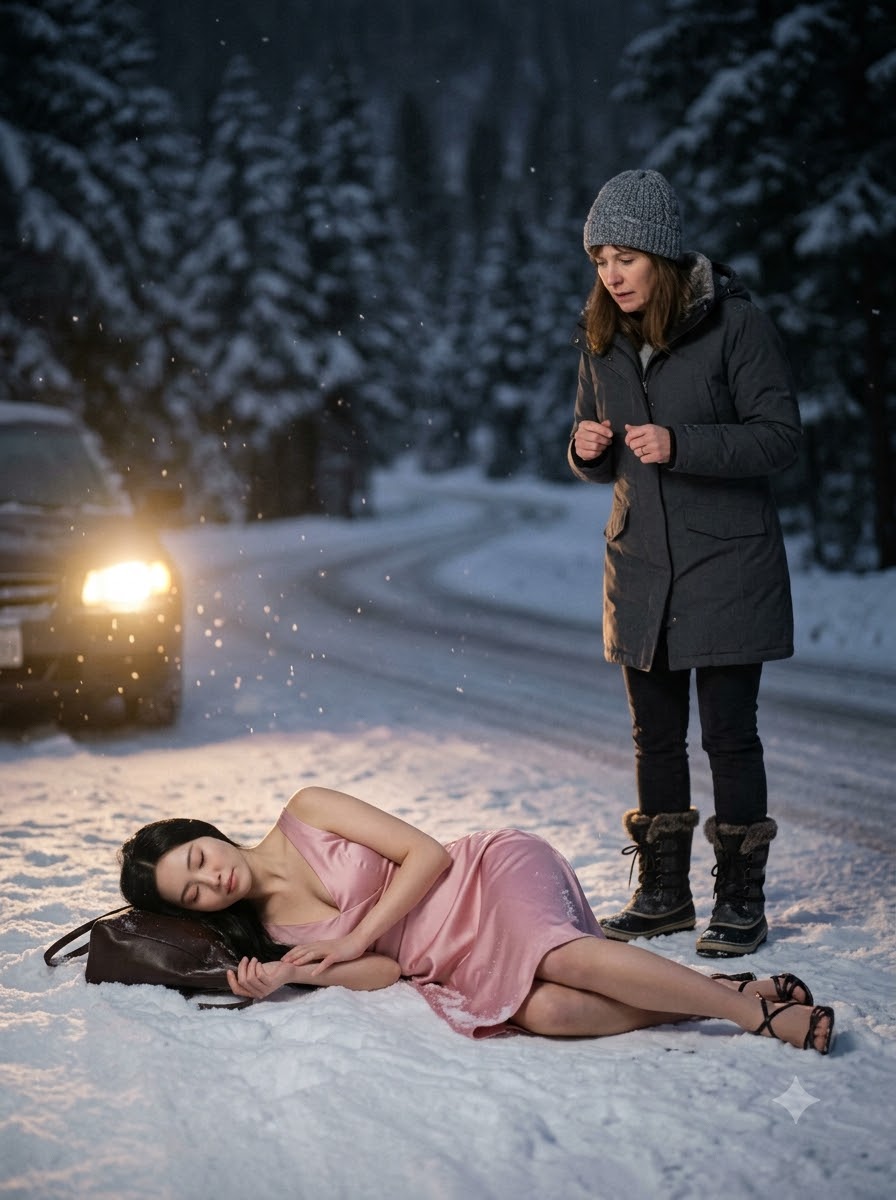
I put down my keys and leaned against him.
“I think I’m finally done. I think the story is over.”
The following spring, we planned to get married in Grandma Dorothy’s backyard. She was eighty years old, still sharp enough to intimidate anyone who crossed her, and already insisting that meatloaf belonged somewhere on the wedding menu.
My life wasn’t perfect, but it was mine.
Somewhere, Karen was living with the consequences of the choices she had made at nineteen. Dad remained in the nursing home with thirteen years of regret and no way to reclaim the childhood he had helped destroy.
I no longer needed either of them to suffer for me to feel whole.
In my office, I keep a framed vintage band poster hanging on the wall. It is the same poster I had been saving my allowance to buy when I was fifteen, before I came home from school and watched my old life disappear in less than an hour.
Eventually, I found one online and paid far too much for it.
Whenever I look at it, I remember the girl who walked four miles through freezing rain because she believed there had to be somewhere safer ahead. She didn’t know that a stranger named Gloria would find her, that Grandma Dorothy would fight for her, or that the truth would eventually dismantle every lie used against her.
She only knew she had to keep moving.
For years, I believed surviving meant proving Karen wrong or making Dad understand what he had done. Now I know survival was much quieter than that.
It was building a career.
It was choosing people who chose me back.
It was learning that family can be the person who drives through the night to bring you home, even if they aren’t the person who raised you.
And it was finally reaching the point where rain no longer felt like a warning.
At fifteen, I was thrown into a storm with almost nothing.
At twenty-eight, I had a home, a future, and people who would never lock me out of either.
I survived the storm.
And I found my way home.
