

CHAPTER 1: THE GATHERING STORM
The headlights of my military-issued sedan sliced through the thick North Carolina mist like twin bayonets.
I was still dressed in my Class A dress uniform when I passed through the security gates of Fort Liberty that evening. The dark midnight-blue wool jacket felt unusually rigid across my shoulders, pressed to razor perfection and adorned with four rows of service ribbons, two Bronze Stars, and the jump wings of a Master Parachutist. The gold oak-leaf insignia on my shoulder boards caught the passing streetlights as I drove along the winding, manicured boulevards of south Charlotte—an enclave where old money, political influence, and corporate status shielded the state’s elite from the grit of the outside world.
My hands clenched the steering wheel so tightly that the black leather groaned beneath my tactical gloves. The dashboard clock changed with cold, mocking precision: 2142 hours.
Forty-seven minutes earlier, a scrambled fourteen-second voicemail had reached my encrypted line. There had been no greeting. No explanation. Only the sound of porcelain breaking, a wet gasp, and my daughter’s voice—thin, reedy, deprived of air: “Mom… gatehouse… they’re taking the files… Richard found out—”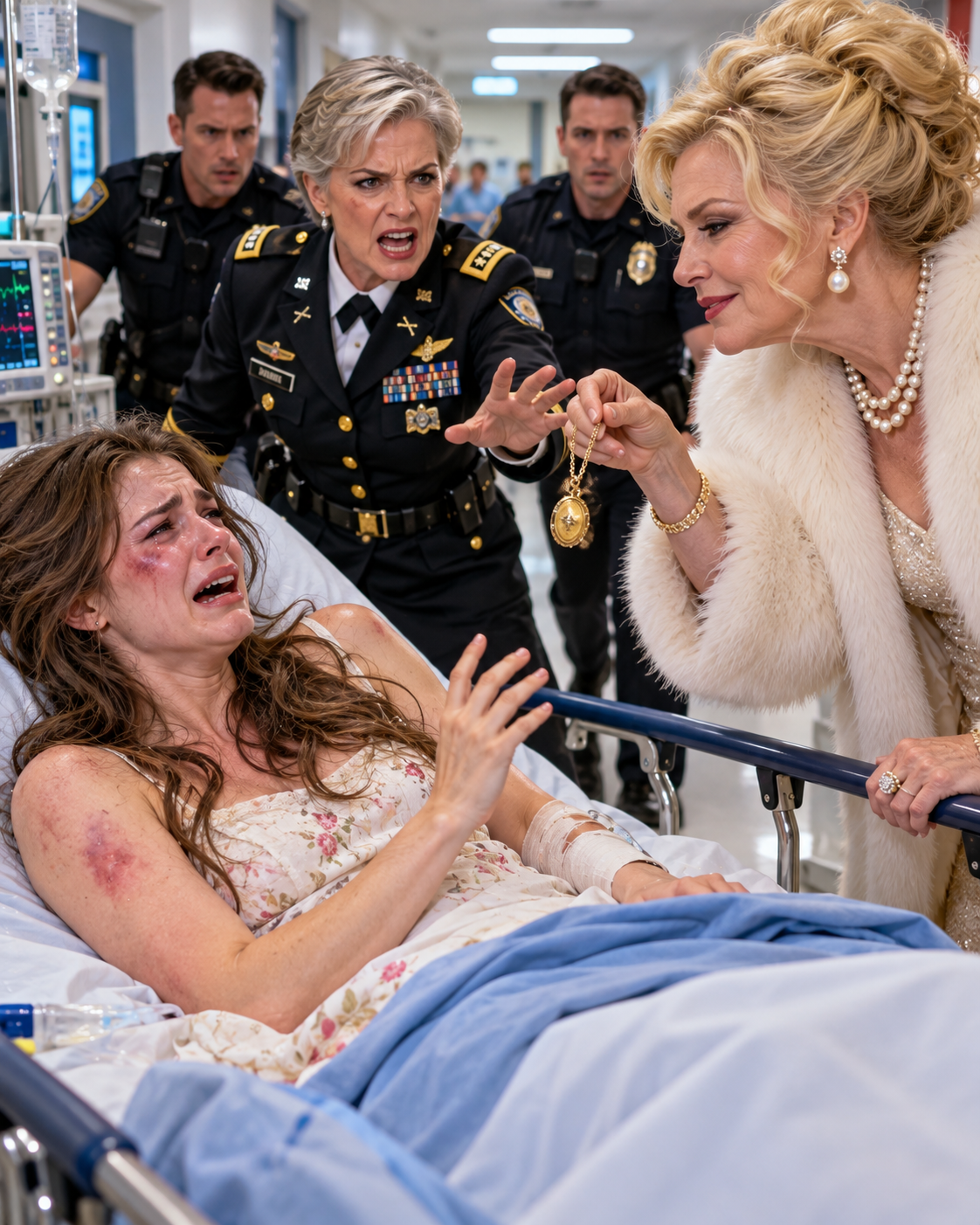
The connection had ended with the blunt, unmistakable sound of a phone being crushed beneath a boot heel.
I didn’t contact the local police. When an heiress marries into the Sterling empire, the local police are not an impartial shield; they are another arm of the Sterling estate’s private security machine. I called the only people whose oaths had not been purchased on the private stock exchange.
I parked the sedan across two spaces in the ambulance bay of Mercy General Hospital, leaving the engine running hot. The hospital was a private, limestone-fronted medical pavilion heavily subsidized by the Sterling Family Foundation.
The sliding doors opened with a quiet hiss, letting me into an expanse that smelled of high-grade surgical disinfectant, ozone, and cold fear. A young triage nurse stepped into the corridor, but I kept moving. I didn’t reach for my credentials. I let my boots strike the linoleum with the measured, resonant cadence of a garrison commander crossing parade grounds.
“Room 104-B,” she stammered, shrinking back as I passed.
I turned the corner into the surgical observation wing. My blood seemed to turn to liquid nitrogen.
I wasn’t simply late. They were already carrying out the extraction.
Two men in dark navy scrubs were pushing a heavy steel transport gurney toward the rear freight elevator. But they weren’t orderlies. Twenty-six years in the infantry teaches you to recognize the geometry of violence in a man’s posture. These men had thick, corded necks, cauliflower ears, and the unmistakable flat-footed stance of private military contractors. Mercenaries on the Sterling payroll.
Strapped to the gurney was my daughter, Chloe.
Thick canvas restraints were fastened tightly around her slender wrists and ankles. Her right eye was swollen shut, encircled by a ring of blackened, necrotic purple. Dried blood ran from her lower lip across her chin, crusting against the torn collar of an ivory silk blouse. But what drew my attention was the thick, bloodied gauze taped carelessly over her left collarbone.
She was struggling, her heels kicking against the end of the gurney. “Mom!” she screamed, the sound breaking into a ragged wheeze.
The larger PMC stepped forward, lowering his hand toward the tactical folding knife clipped to his scrub pants. “Stand back, lady. Authorized patient transport.”
I said nothing. I stepped into his strike zone.
He lunged toward me, reaching to shove my chest. I deflected his wrist with my left forearm, stepped inside his guard, and drove the heel of my right hand upward into his radial nerve, twisting his arm into a brutal, calculated joint lock. The snap of his elbow dislocating echoed down the corridor like a gunshot. As he dropped to his knees, choking on his breath, I swept his legs aside and drove my knee into his ribs to keep him pinned.
The second PMC reached toward his waistband, but froze when he saw my service pistol drawn, its barrel aimed directly at his chest.
“Get your hands off my daughter,” I whispered.
I holstered the weapon only after he backed away, keeping my eyes fixed on Chloe. I dropped beside the gurney. She was radiating a dry, burning heat.
“Chloe. I’m here. Eyes on me, soldier,” I murmured, my gloved fingers resting against her unbruised cheek.
“The… the coin, Mom,” she whimpered through split lips. “Don’t let them…”
“Well, isn’t this an extraordinarily violent display of maternal hysteria?”
The voice behind me was like chilled vermouth. I slowly stood and turned to face Beatrice Sterling, the family matriarch, wrapped in a cashmere coat. Beside her stood her two sons: Carter, the elder, sweating nervously, and Richard, my daughter’s husband. Richard’s silk tie was crooked. His knuckles were raw and split.
Beatrice held a manila legal folder. “Colonel Miller. Assaulting private hospital staff. Dr. Evans signed the provisional 72-hour psychiatric hold twenty minutes ago. Chloe suffered a catastrophic nervous breakdown. She attacked Richard. We are moving her to Oakridge Institute.”
Oakridge. A private psychiatric fortress in the mountains. A black hole for inconvenient wives.
“You’re trying to bury her,” I said, my muscles tense.
“We are managing a domestic crisis,” Beatrice purred. She moved closer to the gurney and looked down at Chloe with undisguised disgust. Then her eyes narrowed as she noticed the thick, blood-soaked square of medical tape bulging strangely from Chloe’s shoulder.
“What is this?” Beatrice snapped. “She wouldn’t let the nurses clean this laceration. She was biting them.”
Before I could respond, Beatrice leaned over the side rails. With a vicious, effortless pull, she ripped the heavy tape and gauze from Chloe’s flesh.
Chloe released an agonizing, guttural scream, arching against the restraints.
Beneath the gauze, lodged deep inside an open, jagged laceration on her collarbone, was not a medical stent. It was a heavy, tarnished brass disk. A military Challenge Coin.
Beatrice pressed her long, manicured nails directly into Chloe’s open wound. Chloe sobbed in agony as Beatrice pried the blood-slicked coin from the torn flesh.
“Disgusting,” Beatrice sneered, wiping the blood onto a sterile towel. “Hiding cheap military trinkets in her own flesh like a psychotic animal. Throw this in the biohazard incinerator.” She turned toward the disposal chute on the wall.
“Nobody moves.”
The voice came from the double doors. Major Denise Calloway, the Provost Marshal of Fort Liberty, strode in with four armed Military Police investigators and a federal agent carrying a sealed dossier.
Beatrice froze, the coin still in her hand. Richard’s face lost all color.
I stepped forward and took the coin from Beatrice’s trembling, bloody fingers. With a sharp twist, I unscrewed the microscopic seam along the edge of the brass coin. It separated, revealing a high-capacity micro-SD card tucked inside the hollow cavity.
“You think you control this room because your name is on the building,” I said, my voice echoing across the tile. “But my daughter didn’t have a mental breakdown. She just spent three hours ripping every encrypted offshore ledger from your husband’s private servers.”
The federal agent stepped toward Richard. “Richard Sterling, you are under arrest for federal procurement fraud and treason.”
As the MPs pressed Richard against the wall and cuffed him, Beatrice stared at me, her aristocratic mask breaking into something rabid and terrifying. She leaned closer, her voice a venomous hiss.
“You think you’ve won, Sarah?” she whispered, her eyes wide with madness. “You just declared war on a billion dollars. Before this trial begins, I will strip your rank, I will burn your pension, and I will make you watch as I tear your daughter apart piece by piece.”
She smiled, a cold, dead expression. “You have no idea what is coming for you tonight.” CHAPTER 2: THE THREE-MINUTE WINDOW
We didn’t return home. Going back to my civilian apartment in Charlotte would have been a death sentence. Under armed military escort, I took Chloe straight to the high-security VIP barracks within the razor-wire perimeter of Fort Liberty.
For the first week, Chloe barely slept. Her physical injuries—the fractured cheekbone, the torn flesh on her shoulder—were healing under the care of military surgeons. But the psychological trauma remained a live wire. She flinched whenever the air conditioner switched on.
Yet as the days stretched into weeks, the fragile heiress disappeared, replaced by a cold, calculating tactician.
It was late October, two months into our exile. We sat inside a windowless briefing room, the glow from three encrypted laptops illuminating our faces. Chloe was guiding a team of forensic accountants through the data she had extracted from the Challenge Coin.
“How did you even get this, Chloe?” I asked, watching endless streams of offshore routing numbers—funds stolen from a prosthetic program intended for wounded veterans, funneled to the Caymans. “Richard’s home server requires biometric authentication. A fingerprint.”
Chloe looked up, blue light reflecting in her hazel eyes. She didn’t smile.
“It was the night of the polo club gala,” she began, her voice eerily calm as the memory drew her back into the lion’s den.
FLASHBACK: THREE MONTHS AGO
Sterling Manor was unnaturally quiet. Richard had come home heavily drunk, fueled by expensive scotch and the arrogant rush of closing a fraudulent defense contract. He tossed his jacket onto the Persian rug, poured himself one final, heavy glass of Macallan, and collapsed into the leather armchair in his study.
I stood in the hallway shadows, my heart pounding against my ribs like a trapped bird. I waited until I heard the heavy, steady rhythm of his snoring.
I slipped into the study. His glass rested on the mahogany desk, marked by his sweaty thumbprint. I had no spy equipment. I had clear packing tape and a little finely ground graphite powder from one of my sketching pencils.
My hands trembled as I dusted the glass. Carefully, I pressed the tape over the clearest print and peeled it away. A perfect, ghostly spiral of his thumb remained.
Suddenly, Richard snorted and shifted in the chair. I froze, holding my breath until my lungs burned. He settled back into place.
Ten minutes later, I heard the shower running in the master suite. The heavy rush of water meant I had exactly three minutes. Richard never showered longer than three minutes when he was drunk.
I slipped into his home office and locked the heavy oak door behind me. I powered up the private server terminal. The screen glowed red: BIOMETRIC AUTHENTICATION REQUIRED.
I took the piece of tape, wrapped it around the fleshy part of my own thumb to imitate the heat and pressure of a human finger, and pressed it against the optical scanner.
Scanning… Scanning… Access Denied.
Cold sweat broke out across the back of my neck. I adjusted the tape, smoothing out a microscopic bubble. Above me, I could hear the shower running. Two minutes.
I pressed my thumb down again. Harder this time.
Scanning… Scanning… Access Granted.
The system unlocked. I inserted the hollowed-out Challenge Coin into the USB port and started the transfer protocol. The progress bar crawled. 14%… 28%… 45%…
Upstairs, the pipes groaned. The water stopped.
Panic tightened my throat. He was getting out. He would walk to the closet. He would notice the office door was closed.
60%… 78%…
Footsteps crossed the hardwood floor above me. Heavy, angry footsteps.
89%… 95%… 99%…
Transfer Complete.
I yanked the coin from the drive, shoved it into my pocket, and shut down the monitor. I unlocked the door and silently sprinted down the carpeted hallway just as Richard’s heavy footsteps reached the top of the stairs. I slipped into the guest bedroom, pulling the covers over my clothes in the darkness seconds before the office door handle turned.
“He never knew I was in there,” Chloe said, bringing us back to the present. She rubbed the healing scar along her collarbone. “He didn’t find out until the night I tried to leave, when Carter noticed the server logs had been pinged.”
I stared at my daughter, awe mingling with the terrifying realization of how close she had come to dying that night.
Before I could respond, the heavy steel door to the briefing room swung open. Major Calloway stood in the doorway, her expression grim.
“Colonel,” Calloway said. “We have a problem. The Pentagon just suspended your pension pending a ‘civilian behavioral inquiry.’ And that’s not all.”
Calloway pressed a button on the wall remote. The flat-screen TV came alive, tuned to a national news network.
There was Beatrice Sterling, dressed in mourning black, sitting across from a prime-time anchor. She was crying delicately.
“My daughter-in-law is deeply unwell,” Beatrice lied beautifully to millions of viewers. “She suffers from severe paranoid delusions. And her mother, a disgraced military officer, kidnapped her from a hospital against medical advice. We just want our Chloe back.”
“They’re burying you in the press, Sarah,” Calloway said. “They’re trying to destroy your credibility before the grand jury convenes.”
Suddenly, the red emergency klaxons outside the building began wailing, cutting through the thick concrete walls. The headquarters building’s heavy blast doors automatically slammed shut with a hydraulic hiss.
Calloway touched her earpiece, her eyes widening. She drew her sidearm.
“Calloway, what is it?” I demanded, rising and instinctively moving Chloe behind me.
“Perimeter breach at Gate Four,” Calloway said, racking the slide of her weapon. “Two heavily armored SUVs just rammed the barricades. They’re heading straight for this building.” **CHAPTER 3: SIEGE ON FORT LIBERTY**
For six months, the war wasn’t fought in a courtroom. It was a brutal, grinding battle of attrition.
The breach at Gate Four wasn’t a full-scale assault—it was a warning. The SUVs had been driven by hired contractors who abandoned them and disappeared into the Carolina pine woods before the MPs could surround them. Inside the trunk of the lead vehicle, they found one item: a photograph of Chloe and me, captured through a high-powered sniper scope as we crossed the supposedly secure base quad.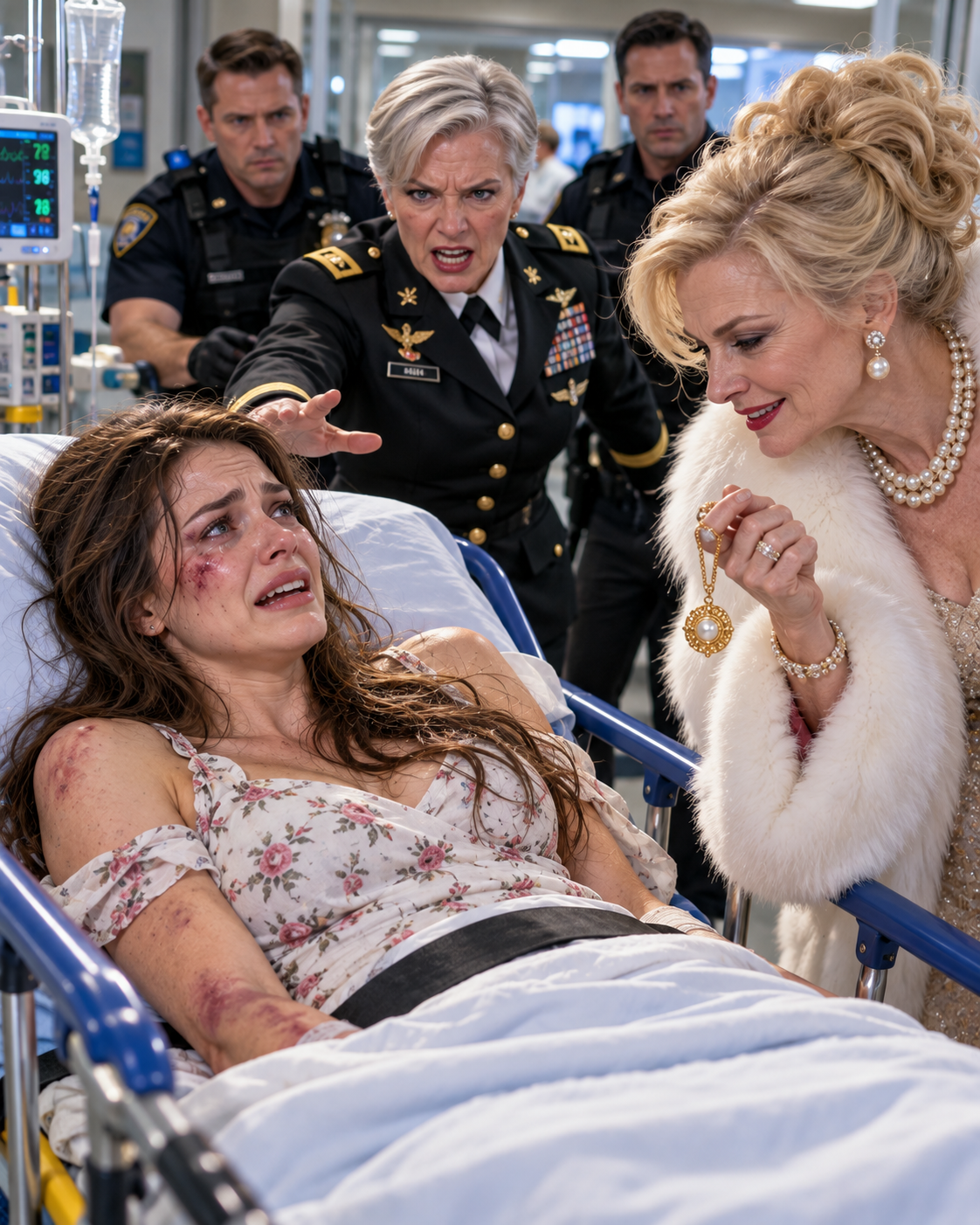
Beatrice was making it clear that no wall was high enough and no military base secure enough to keep her out.
The financial strangulation followed. With my pension frozen and my bank accounts tied up in a maze of hostile civil lawsuits filed by the Sterling lawyers, we survived on military rations and the generosity of my old unit. Beatrice unleashed her army of lobbyists in Washington. Senators I had briefed during the Afghan war suddenly refused to take my calls.
We were being starved out.
We relocated to an undisclosed, reinforced bunker-style apartment on the far edge of the artillery ranges. For six months, Chloe and I never slept at the same time.
I took the night watch. Every evening, I sat beside the reinforced window, my customized M1911 pistol stripped, cleaned, and reassembled on the table. I watched the treeline. Sometimes, I caught shadows moving among the pines—drones flying just beyond radar range, men using thermal optics to test our security.
One December night, freezing sleet was falling. I sat in darkness, watching the perimeter, when I heard the unmistakable metallic *click* of a tripwire I had rigged along the back stairwell being bypassed.
I didn’t shout. I didn’t switch on the lights. I moved through the dark apartment like a ghost, years of combat muscle memory taking control. I pressed my back against the hallway wall and raised my weapon.
The back door handle began turning slowly. The lock, reinforced with a steel bar, groaned beneath immense, quiet pressure. Someone was using a hydraulic ram.
I flicked off the safety of my pistol. *Breathe in. Breathe out.*
Suddenly, Chloe appeared beside me in the darkness. She wasn’t carrying a gun; she held a heavy cast-iron fire poker, her face pale but her eyes burning with fierce, almost feral defiance. She nodded at me. She was ready to fight to the death.
Before the door could break, the roar of military Humvees thundered along the access road. Floodlights flooded the apartment in blinding white. Whoever had been at the door scattered into the night, leaving only deep gouges across the steel frame.
We survived the winter. We survived the sabotage. And through the crucible of those terrifying nights, the bond between my daughter and me hardened into something unbreakable. We were no longer simply mother and daughter. We were a vanguard.
By the time the final preliminary hearing arrived during the second week of October, we were ready.
The Charlotte Federal District Courthouse was packed to the gallery rails. Reporters, industry lobbyists, and socialites crowded the wooden pews, eager to watch the Sterling empire crush a pensioned colonel and her “delusional” daughter.
Chloe sat beside me at the plaintiff’s table, dressed in a dark navy suit. She looked composed, cold, and untouchable.
Across the aisle sat Beatrice. She wore a tailored black silk dress, pearls around her throat, radiating the arrogant confidence of a woman who believed she owned the judges, the jury, and the building itself. Richard, out on bail, sat beside her, sweating through his custom suit.
At the center of the bench sat **Judge Robert Harmon**, an eighty-year-old jurist known for running his courtroom like a dreadnought.
The hearing began. The federal prosecutor presented the evidence extracted from the Challenge Coin—the offshore accounts, the forged defense contracts. It was a watertight case.
Then the lead defense attorney, **Arthur Vance**, rose. He moved with the oily, gliding gait of a corporate shark who already knew the game was rigged.
“Your Honor,” Vance began, his voice resonant. “The prosecution’s entire case relies on documents allegedly stolen from Sterling Defense Logistics. However, under the corporate charter, the CEO holds sole discretion over these funds. Unless the CEO testifies that these transfers were unauthorized, there is no fraud. It is merely corporate strategy.”
A murmur moved through the gallery. The CEO was General Nathaniel Sterling, Richard’s grandfather. He hadn’t appeared in public for more than a year.
Vance withdrew a gold-embossed document from his briefcase. “I submit a certified medical affidavit, signed by the Chief of Neurology at the Carolina Brain Institute. It confirms that General Nathaniel Sterling is suffering from advanced, non-reversible vascular dementia. He is legally, medically incapacitated.”
Beatrice smiled—a slow, venomous smirk aimed directly at me.
“Under the family trust,” Vance continued triumphantly, “executive authority transfers to his trustee: Beatrice Sterling. She formally moves to suppress all data as illegally seized trade secrets. Without a competent CEO to allege fraud, Your Honor… there is no case.”
The prosecutor’s face went pale. Judge Harmon rubbed his temples and looked over his reading glasses.
“If the founder is legally non-compos mentis,” Judge Harmon sighed heavily, raising his wooden gavel, “I am inclined to grant the defense’s motion to suppress the financial exhibits pending—”
BANG.
The heavy, soundproof oak double doors at the back of the courtroom didn’t simply open. They slammed against the brass stops with the violent crack of a breaching charge.
The entire courtroom turned.
There, flanked by two private nurses and strapped into a motorized, high-backed medical wheelchair, sat **General Nathaniel Sterling**.
His head hung to one side. A clear plastic oxygen tube ran beneath his nose. A blanket was tucked tightly around his frail legs. He looked exactly as Vance had described him: an empty shell of a man, drooling slightly onto his chin, his eyes vacant as they stared at the ceiling.
Beatrice rose, her face arranged into a mask of false outrage. “Your Honor! This is abhorrent! Who brought my incapacitated father-in-law here? This is a cruel stunt!”
Vance looked smug. The General’s pathetic condition only reinforced his argument. The old man was gone. The case was dead.
Chloe stood from our table. She slowly stepped out from behind the desk, her heels clicking softly against the hardwood floor. She approached the wheelchair, ignoring the bailiffs who moved to stop her.
She knelt beside the old man. Gently, she wiped the saliva from his chin with a linen handkerchief.
Then she leaned closer, her lips inches from his ear. The microphone on the clerk’s desk caught her whisper and broadcast it throughout the silent courtroom.
*“The Eagle has broken its wing, sir.”*
For three seconds, nothing happened. Beatrice gave a scoff of contempt.
Then General Nathaniel Sterling blinked.
The vacant, glassy expression disappeared from his pale blue eyes, replaced instantly by the sharp, terrifying focus of a four-star battlefield commander.
With a sudden, forceful movement that made the nurses jump back, the General tore the oxygen tube from his nose. He threw the heavy wool blanket from his lap.
He gripped the wheelchair’s armrests. And as the entire courtroom watched in breathless, paralyzed shock, the ninety-one-year-old General placed his polished leather shoes on the hardwood floor and stood.
His spine straightened into perfect, ninety-degree military posture.
“I don’t need this damn chair,” the General rumbled, his voice like stones grinding in a riverbed. He stared directly at Beatrice, whose face had drained of every trace of color. “And I don’t need a medical proxy, you treacherous snake.”
Beatrice stumbled backward, clutching the edge of the defense table. “No… no, the doctors said—”
“The doctors you paid,” the General interrupted, his voice echoing like thunder. “The doctors who prescribed me heavy sedatives, hoping I would quietly die in my sleep so you could pillage the company I built.”
He turned toward the judge. “Your Honor. For the last twelve months, I have played the part of a dying, senile fool to survive the assassination attempts orchestrated by my own daughter-in-law.”
The courtroom erupted into complete chaos. Reporters shouted, pounding their hands against the wooden pews.
“I am in full command of my faculties!” the General roared above the uproar. “And I authenticate every single document Chloe Sterling extracted! They are legitimate, and they prove that Richard and Beatrice Sterling are guilty of high treason!”
Beatrice’s face twisted into an ugly, desperate snarl. She pointed a trembling, diamond-covered finger at the General.
“You old fool!” she screamed, her composure completely shattered. “It doesn’t matter! I still hold the majority voting shares! I still control the board! You can’t authorize anything without a board vote, and the board belongs to me!”
CHAPTER 5: A HOUSE BUILT ON SAND
Beatrice was correct. Even with the General’s unexpected return and his authentication of the stolen ledgers, corporate law remained a maze of technicalities. Beatrice had spent ten years filling the board of directors with her loyal allies. As long as she controlled the votes, she could keep the federal indictments trapped in civil litigation for years. She could drain us financially.
She stood at the defense table, breathing heavily, her hair slightly disordered but her eyes still blazing with malicious confidence.
“I am the trustee!” Beatrice shouted at Judge Harmon. “I motion for an immediate recess! This old man is having a lucid moment, but he is legally barred from executive action!”
Judge Harmon glanced down at his ledger, his expression severe. “She may have a procedural point regarding the immediate corporate jurisdiction—”
“Your Honor.”
The voice was soft. Trembling. Yet it sliced through the commotion like a razor.
Everyone turned.
Carter Sterling stood at the defense table.
Carter, the older son. The quiet, overweight alcoholic who had spent his entire life shrinking beneath his mother’s ambition and his brother’s arrogance. Carter was sweating heavily, his hands trembling so badly that he could barely grip the small digital recorder in his palm.
Beatrice spun toward him, fury flashing in her eyes. “Carter! Sit down and shut your mouth!”
Carter remained standing. He didn’t look at his mother. Instead, he stared directly at Chloe, tears gathering in his bloodshot eyes.
“I’m sorry, Chloe,” Carter whispered, his voice breaking. “I… I couldn’t stop them that night. I was too much of a coward.”
“Carter, I swear to God—” Richard lunged toward his brother, but a US Marshal forced him back into his chair by the collar.
Carter raised the recorder. “Your Honor. I am a senior executive officer of Sterling Defense Logistics. I have a fiduciary duty to report criminal malfeasance to the court.”
He pressed play and held the device toward the microphone on the defense table.
The recording was crystal clear. It wasn’t the audio from the assault at the gatehouse. This was a private conversation captured in the drawing room of Sterling Manor, days after Chloe escaped.
“The girl is a problem, Beatrice,” Richard’s voice echoed across the courtroom, filled with panic. “If she gets to the Feds, the Cayman accounts are exposed.”
“She won’t get to the Feds,” Beatrice answered, her voice chillingly calm and ruthless. “I’ve already paid the psychiatric board at Oakridge. Once she’s admitted, they will administer electroconvulsive therapy. She won’t remember her own name, let alone a routing number. And if Sarah Miller tries to intervene, I have contacts in the Pentagon who will ensure the Colonel suffers a fatal, single-car accident on her way home.”
The courtroom fell into complete silence.
It was premeditated murder. A conspiracy to kill a federal officer.
Carter lowered the recorder. “She was going to kill Colonel Miller. And she was going to fry Chloe’s brain. I… I couldn’t let her do it. I turn myself over to the custody of the court.”
Something inside Beatrice Sterling broke. It was a catastrophic collapse.
With a guttural, animal-like scream, Beatrice vaulted over the heavy mahogany defense table. She wasn’t going for the judge. She charged at Carter, her hands curled like claws, reaching straight for her own son’s throat.
“You ungrateful little rat!” she screamed, her designer skirt ripping as her knees struck the wood.
She never reached him.
Three United States Marshals struck her from the side with tremendous force. The impact drove Beatrice hard onto the floorboards. Her South Sea pearls snapped apart, scattering hundreds of white beads across the courtroom floor like teeth. She kicked and screamed, spitting curses as the deputies pinned her down and locked heavy steel handcuffs around her wrists.
“Secure her!” Judge Harmon roared, striking his gavel so hard the handle cracked. “Bail revoked for all defendants! Remand them to federal custody immediately!”
Richard openly sobbed as he was taken away. Carter quietly surrendered to the bailiffs, his head lowered.
Beatrice was dragged down the center aisle, her heels striking the pews. As she passed our table, she twisted around, her face purple with exertion, staring viciously at Chloe.
“You’re nothing!” Beatrice screamed, saliva flying from her mouth. “You’re trailer trash! You’ll never be a Sterling!”
Chloe stood straight, her posture echoing the General’s. She looked down at the woman who was screaming at her.
“You’re right,” Chloe said, her voice completely steady. “I’m a Miller.”
Eight months later, the crisp Carolina autumn arrived.
I stood on the stone veranda of what had once been the Sterling family estate. The wrought-iron gates were gone. The enormous lawn had been transformed with wheelchair-accessible walking trails.
The grim guest house where Richard had beaten my daughter had been demolished completely. In its place stood a modern glass pavilion: The Operation Valiant Return Recovery Institute, a world-class prosthetic and rehabilitation center for wounded veterans, funded entirely with millions recovered from Richard’s offshore accounts.
General Nathaniel Sterling sat beside me in his wheelchair—using it by choice now, giving his tired body a rest. He watched with pride as injured soldiers made their way through the physical therapy courtyard.
“She’s a force of nature, Colonel,” the General murmured, nodding toward the glass doors.
Chloe stepped outside carrying two cups of coffee. She wore a simple linen shirt, her hair tied back. Around her neck, resting over the faint white scar where the coin had been hidden, was a simple silver chain.
She handed me a coffee and leaned against my shoulder.
“The federal court finalized the sentencing,” Chloe said quietly. “Richard got twenty-five years at Butner. Carter got five, reduced for cooperation.”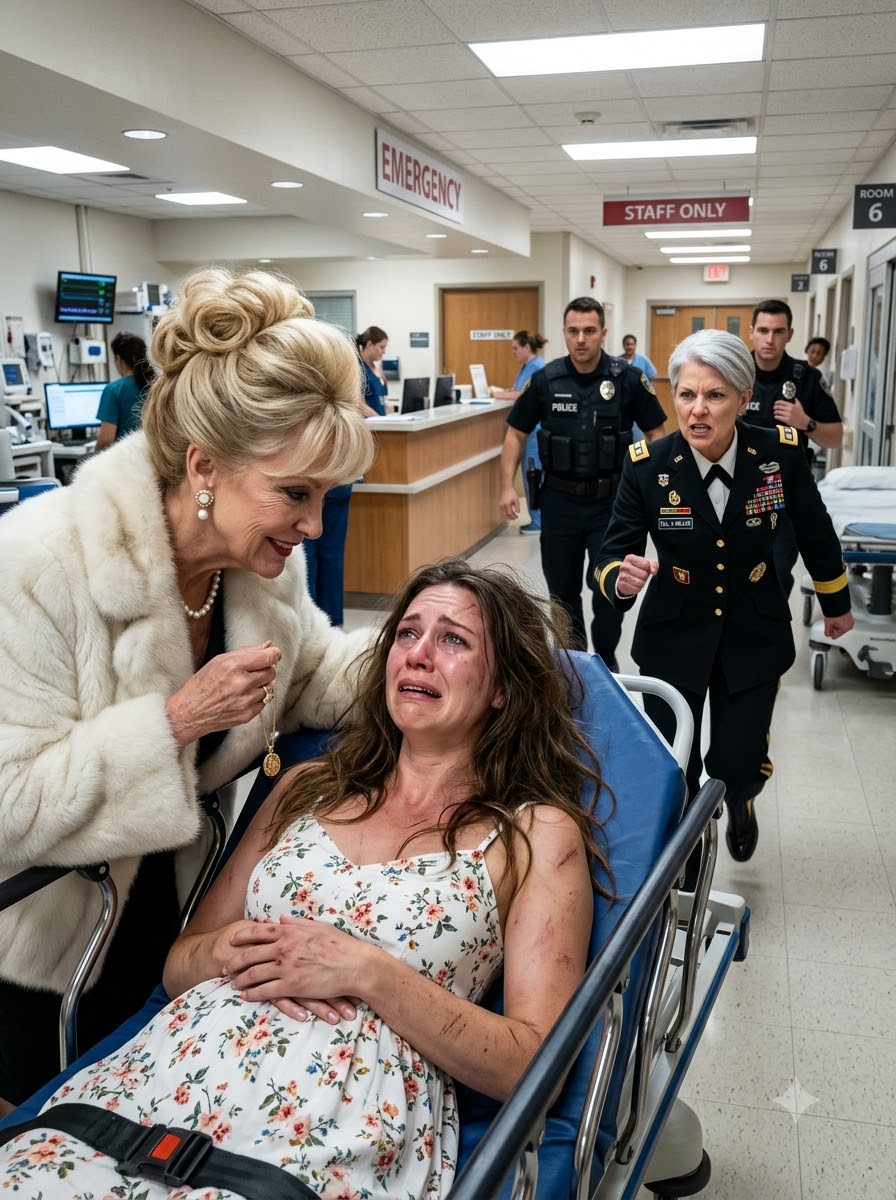
I took a sip of the dark coffee. “And Beatrice?”
Chloe gazed out toward the trees. “Beatrice was transferred to the maximum-security federal women’s penitentiary in Aliceville. No country club prison. General population.”
The next morning, I made the drive.
The visitor’s room at Aliceville Federal Penitentiary smelled of bleach and despair. I sat at a stainless-steel table, wearing my Class A uniform, every ribbon precisely aligned.
The heavy steel door opened. Two guards escorted Beatrice inside.
She was almost unrecognizable. The tailored silk and diamonds were gone, replaced by a loose, faded orange jumpsuit. Her once-perfectly styled hair was completely gray, pulled into a severe, greasy knot. Her skin looked sallow, her eyes hollow and restless. The absolute power she had once possessed had been stripped away, leaving only a frightened, aging woman.
She sat across from me, her cuffed wrists resting on the cold steel. She refused to meet my eyes.
I didn’t gloat. I didn’t smile. I didn’t say a word.
I reached into my breast pocket and pulled out a single photograph. It had been taken the previous week at the ribbon-cutting ceremony for the new clinic. Chloe stood in the center, smiling brightly, surrounded by General Sterling and a dozen wounded veterans standing proudly on their new, state-of-the-art prosthetic legs.
I slid the photograph across the steel table until it stopped directly beneath Beatrice’s lowered eyes.
Beatrice stared at the picture. A single ragged tear escaped the corner of her eye, tracing a path through the deep lines of her cheek. In that moment, she understood that her legacy was ash, while ours had been forged in steel.
I rose, adjusted my cover, and walked out of the prison into the bright, cloudless Carolina sun.
