

“We got a call. Suspicious person. Unloading stuff into a house that ain’t his.”
“There’s been a mistake, officer. I own this home. I have the paperwork inside. I can show you.”
“You really expect me to buy that? You’re awfully confident for somebody under investigation.”
“I don’t have anything to worry about. I haven’t done anything wrong.”
Officer Petrov’s jaw tightened.
Every calm answer sounded less like cooperation to him and more like a challenge to his authority. Rather than consider that the situation might have been misunderstood, he called for additional officers.
“He won’t cooperate. Thinks he’s better than the rest of us.”
“I haven’t refused a single thing. Ask me anything. I’ll answer.”
“We don’t need your permission to ask. Maybe it’s time somebody taught you some respect.”
The officers believed they were putting an arrogant suspect in his place.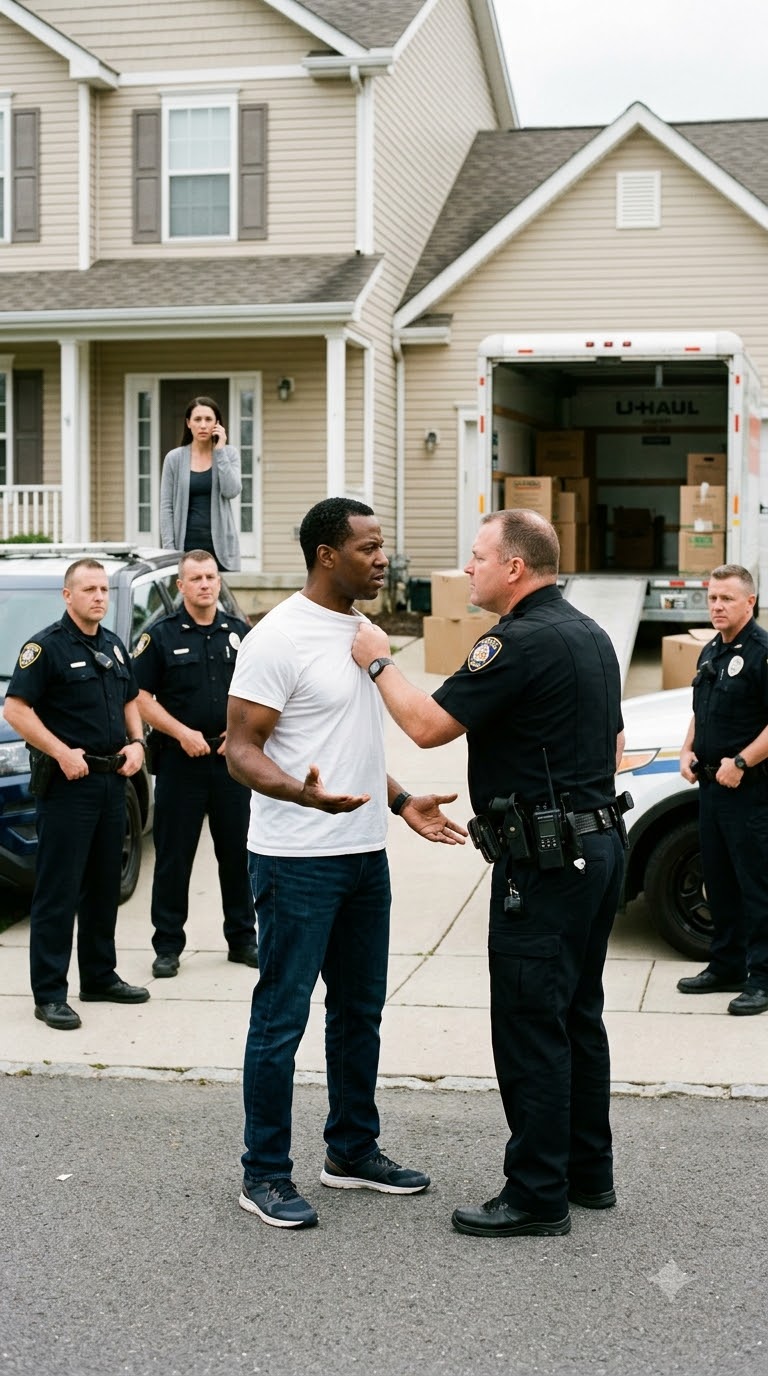
None of them knew they were surrounding their newly appointed captain.
Mackie Rogers ran exactly the way he always had.
Steady. Relaxed. Unhurried.
He moved as though the street belonged to him just as much as it belonged to everyone else.
It was seven in the morning, and the sunlight remained low and gentle over Maple Ridge.
Large homes lined the street. Lawns were carefully maintained. Everything about the neighborhood suggested people paid considerable money for the feeling of safety.
In one week, Mackie and his wife, Darlene, would move into a house only three blocks from where he now stood, catching his breath beside a stop sign.
He wasn’t merely moving into the neighborhood.
He was about to oversee the entire police department responsible for patrolling it.
Captain Mackie Rogers.
Already sworn in.
Beginning Monday.
But nobody on this street knew that yet.
Mackie heard the engine before he saw the vehicle.
A slow approach.
Tires rolling over old leaves.
He glanced behind him and noticed a patrol car easing alongside him, matching his pace.
The window lowered.
“Where are you headed?” the officer asked.
His name tag read Petrov.
His voice carried the irritation of a man who seemed to believe Mackie had interrupted something simply by existing on the street.
“Just running,” Mackie said.
He continued jogging in place, breathing easily.
“Morning workout.”
“You live around here?”
“Not yet. Moving in next week.”
Petrov narrowed his eyes as though the answer bothered him.
“You got some ID on you?”
Mackie kept moving his feet.
He didn’t raise his voice.
He didn’t argue.
He simply answered.
“I do. Mind telling me why you’re asking?”
“Because we’ve had reports,” Petrov said, “of somebody who doesn’t belong out here.”
There it was.
Mackie had heard that sentence before.
Different city.
Different badge.
Same old meaning.
Somebody who doesn’t belong.
He knew exactly what the words meant.
And he knew exactly what they didn’t mean.
They didn’t mean there had been a crime.
They meant someone had looked at a Black man jogging through a neighborhood and decided he looked out of place.
Mackie reached into the small pocket of his running shorts and slowly removed his identification, keeping his hands visible throughout the movement.
He held it out.
Petrov took it abruptly rather than accepting it.
He studied the card longer than necessary, as though he expected it to reveal something worse than Mackie Rogers.
Then he spoke into his radio and read the information to dispatch.
His eyes remained fixed on Mackie.
It was almost as though he expected the man to run.
Dispatch responded.
Clean.
No warrants.
No record.
Nothing.
Petrov’s jaw shifted.
He was searching for a reason.
Any reason.
Mackie wasn’t giving him one.
“You always this calm when a cop pulls you over?” Petrov asked.
Something unpleasant sat underneath the question.
As if calmness itself were inappropriate.
As if Mackie’s composure were an act of defiance.
“I don’t have a reason not to be,” Mackie answered.
“I haven’t broken any laws, have I?”
Petrov didn’t respond.
He simply stared.
His jaw tightened again, as though Mackie had committed an offense by asking a reasonable question.
“You can go,” Petrov finally said.
He pushed the identification through the window rather than handing it to Mackie.
“Appreciate it,” Mackie replied.
He meant it.
There was no sarcasm in his voice.
He put his identification away and resumed his run.
The entire encounter seemed to disappear behind him.
Mackie had been stopped before.
He had learned years ago that certain people needed you to become frightened.
They wanted trembling.
They wanted anger.
They wanted pleading.
Because fear gave them something to push against.
Mackie never gave them that.
He remained steady.
He let his composure answer for him.
Behind him, Petrov stayed inside his cruiser for several seconds.
He watched Mackie’s back grow smaller down the road.
The man’s relaxed pace never changed.
Mackie never turned around.
He never looked over his shoulder.
That was what bothered Petrov most.
Not that Mackie had argued.
Not that he had broken a rule.
It was that Mackie had not been afraid.
Not even for a second.
Petrov had possessed all the apparent power that morning.
The badge.
The firearm.
The radio.
The authority of the department.
Yet none of it seemed to affect the man jogging away.
Mackie had looked at all of it and remained completely composed.
Petrov gripped the steering wheel until his knuckles tightened.
“We’ll see how calm you are next time,” he muttered to the empty cruiser.
Then he drove away.
Already thinking about it.
Already replaying the encounter.
Already turning it over in his mind.
He didn’t know it yet, but there would be a next time.
And it would come much sooner than he expected.
The moving truck sat in the driveway with its rear door open like a massive metal mouth.
Mackie carried another box up the walkway while Darlene directed him from the porch.
“Careful with that one,” she called.
“Dishes.”
“I got it,” Mackie replied, smiling despite the sweat running down his back.
It was a good kind of exhaustion.
The kind that came from building something new.
One week earlier, he had been jogging past this house as a stranger.
Now he was carrying boxes through its front door.
Darlene watched him set the box down.
“You know,” she said, “most people hire movers and let them do this.”
Mackie laughed.
“Most people aren’t stubborn enough to carry their own dishes.”
Darlene smiled.
“You’re going to regret that when your back hurts tomorrow.”
“Probably.”
She walked closer.
“You still thinking about Monday?”
Mackie nodded.
“Every day.”
“You nervous?”
“A little.”
Darlene looked surprised.
“Really?”
“It’s a big department.”
“It is.”
“And I’m walking into a place where people already have relationships, routines, expectations.”
Darlene folded her arms.
“You’ve spent your whole career preparing for this.”
“I know.”
“So what are you worried about?”
Mackie looked toward the street.
“I don’t want to walk in thinking I have something to prove.”
Darlene nodded.
“That sounds like you.”
He smiled.
“I want to listen first.”
Neither of them noticed the patrol car passing slowly at the end of the block.
It was Petrov.
He saw the moving truck.
Then the house.
Then Mackie standing on the porch.
Petrov’s eyes narrowed.
He recognized him.
He slowed the cruiser.
Then he continued driving.
He didn’t yet connect the man carrying boxes with the new captain whose arrival had been discussed inside the department for weeks.
The next morning, another call came in.
A resident reported a “suspicious Black man” near one of the homes on the street.
The description was vague.
Dark clothing.
Moving boxes.
Possibly entering a residence.
Petrov heard the dispatch.
His expression changed.
He knew exactly who it was.
“I’m close,” he said over the radio.
He drove toward the address.
Two other patrol units were already responding.
A fourth officer joined them.
By the time Petrov arrived, Mackie was carrying a large box from the truck toward the front door.
He noticed the first cruiser.
Then the second.
Then the third.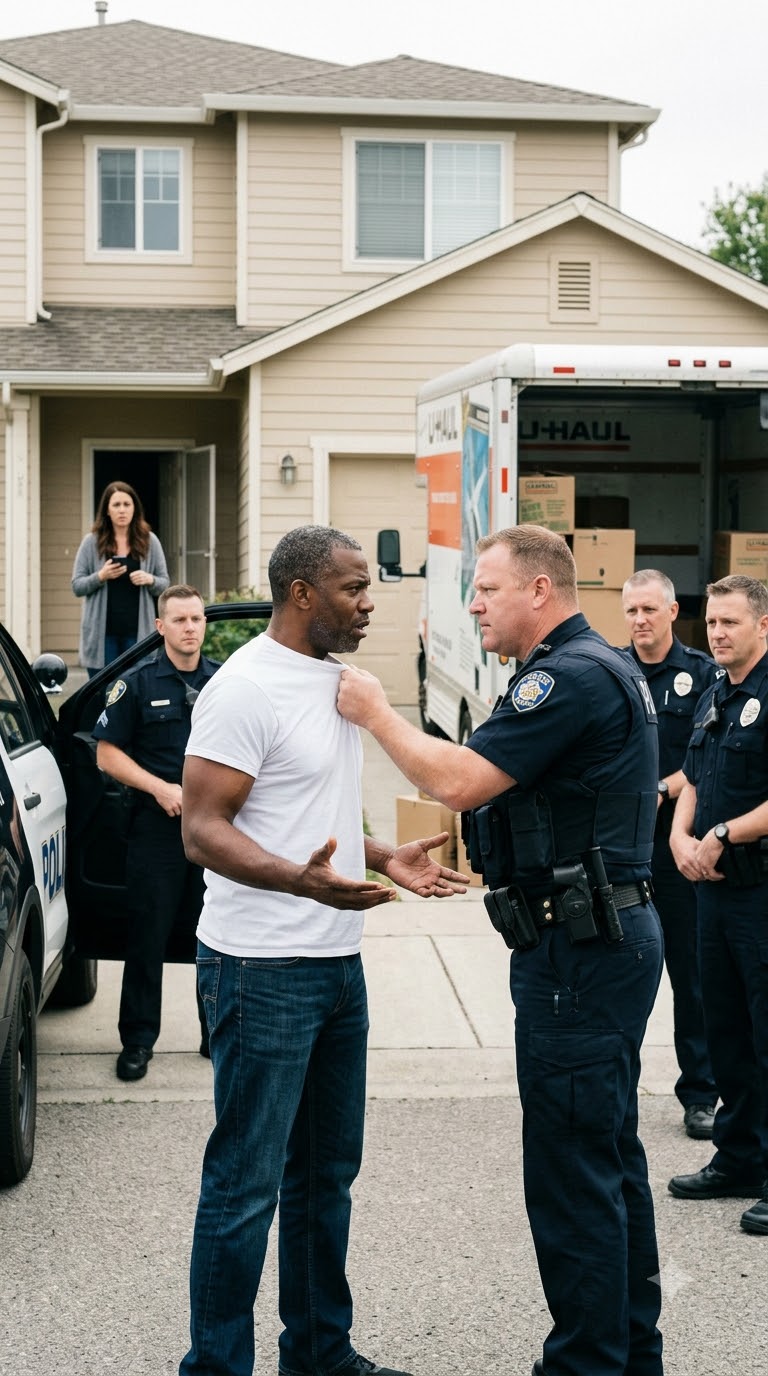
He stopped.
The fourth arrived behind him.
Mackie slowly set the box down.
Four officers stepped out.
Petrov approached.
“Morning.”
Mackie looked at him.
“Morning.”
Petrov’s expression was harder than the previous day.
“We got a call.”
Mackie waited.
“Suspicious person. Unloading stuff into a house that ain’t his.”
Mackie glanced toward the house.
Then toward the moving truck.
Then back at Petrov.
“There’s been a mistake, officer. I own this home. I have the paperwork inside. I can show you.”
Petrov folded his arms.
“You really expect me to buy that?”
Mackie remained calm.
“You’re awfully confident for somebody under investigation.”
Mackie looked at the four officers surrounding him.
“I don’t have anything to worry about. I haven’t done anything wrong.”
Petrov’s jaw tightened.
One officer moved to Mackie’s left.
Another positioned himself behind the cruiser.
A third stood several feet away.
Mackie noticed the formation.
He also noticed the expressions.
This wasn’t about confirming ownership anymore.
They were trying to establish control.
Petrov reached for his radio.
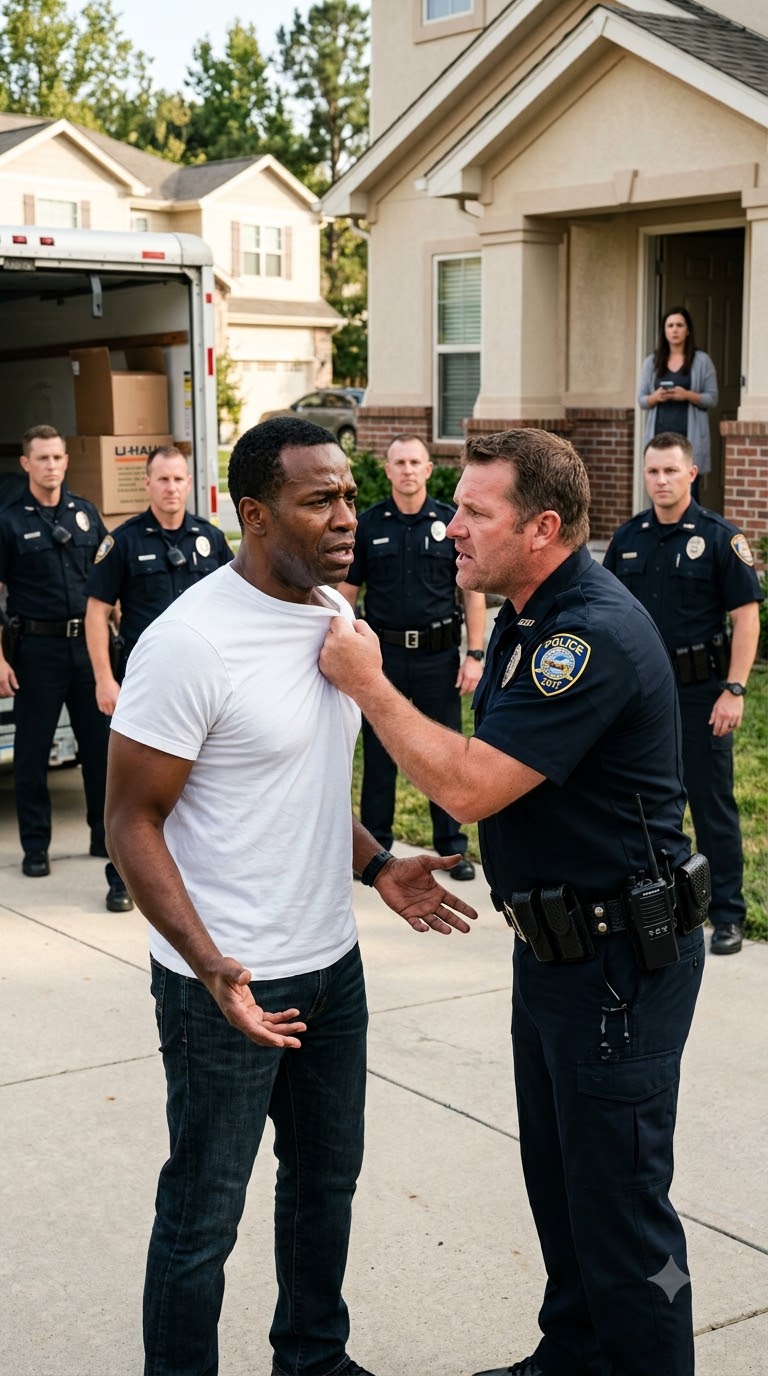
“He won’t cooperate. Thinks he’s better than the rest of us.”
Mackie shook his head.
“I haven’t refused a single thing. Ask me anything. I’ll answer.”
Petrov stepped closer.
“We don’t need your permission to ask.”
He looked toward the other officers.
“Maybe it’s time somebody taught you some respect.”
The sentence hung in the morning air.
Mackie stared at him.
For the first time, the calm expression on his face became more serious.
Not angry.
Not frightened.
Disappointed.
He looked at each officer.
Four men.
Four badges.
Four people who had decided what kind of person he was before learning anything about him.
Mackie finally asked, “What exactly did the caller report?”
Petrov answered, “Suspicious activity.”
“What activity?”
“You unloading boxes.”
“From my moving truck.”
“Into a house.”
“My house.”
Petrov stepped closer.
“You keep repeating that.”
“Because it’s true.”
One of the younger officers laughed quietly.
Mackie looked at him.
The laughter stopped.
Then Mackie said something none of them expected.
“Do any of you know the name of the person you’re dealing with?”
Petrov frowned.
“We know you’re Mackie Rogers.”
“That’s my name.”
“That’s all we need.”
Mackie nodded.
“I see.”
Petrov interpreted the response as sarcasm.
“You think this is funny?”
“No.”
“You think you’re smarter than us?”
“No.”
“Then stop acting like it.”
Mackie took a breath.
He had spent his career learning how to de-escalate situations.
He knew what happened when authority became personal.
He also knew what happened when someone challenged an officer publicly.
So he remained calm.
“Officer Petrov, I am not resisting you. I am not threatening you. I am not refusing to identify myself. I am not attempting to leave.”
He pointed toward the house.
“I’ve offered to show you the deed.”
Then toward the moving truck.
“I’ve explained where the boxes came from.”
Finally, he looked directly at Petrov.
“What else do you need?”
Petrov didn’t answer.
One of the other officers stepped forward.
“Maybe you should put your hands where we can see them.”
Mackie slowly raised his hands.
“They’re visible.”
“Keep them there.”
“I will.”
Darlene stepped onto the porch.
“Mackie?”
He turned his head slightly.
“Stay inside, Darlene.”
She froze.
Four officers surrounded her husband.
She immediately understood that something had gone terribly wrong.
She reached for her phone.
Petrov noticed.
“Ma’am, stay inside.”
Darlene stared at him.
“That’s my husband.”
“We’re conducting an investigation.”
“He lives here.”
Petrov ignored her.
Mackie looked at Darlene.
“It’s okay.”
She didn’t look convinced.
Then a fifth patrol car arrived.
A lieutenant stepped out.
He was older than Petrov and carried himself differently.
He looked at the scene.
Then at Mackie.
Then at the house.
“What’s going on?”
Petrov answered.
“Suspicious person. Refusing to cooperate.”
The lieutenant looked at Mackie.
“Refusing?”
Mackie shook his head.
“I’ve answered every question.”
The lieutenant looked at Petrov.
“Did he refuse identification?”
“No.”
“Did he attempt to leave?”
“No.”
“Did he threaten anyone?”
“No.”
“Did he commit an offense in your presence?”
Petrov hesitated.
“No.”
The lieutenant’s expression changed.
“Then what exactly are we doing?”
Petrov opened his mouth.
Nothing came out.
The lieutenant looked at Mackie.
“Sir, do you own this property?”
“Yes.”
“Can you prove that?”
“Yes.”
Mackie pointed toward the house.
“The paperwork is inside.”
The lieutenant nodded.
“Let’s see it.”
Petrov looked irritated.
The lieutenant turned toward him.
“Petrov.”
“Yes, sir.”
“Let him get the paperwork.”
Mackie lowered his hands.
He walked slowly toward the porch.
Darlene met him at the door.
“You okay?”
“I’m fine.”
She whispered, “Who are these people?”
Mackie looked at her.
“Apparently my neighbors.”
Darlene almost laughed despite herself.
Inside, Mackie retrieved the property documents.
He returned outside.
The lieutenant examined them.
Everything matched.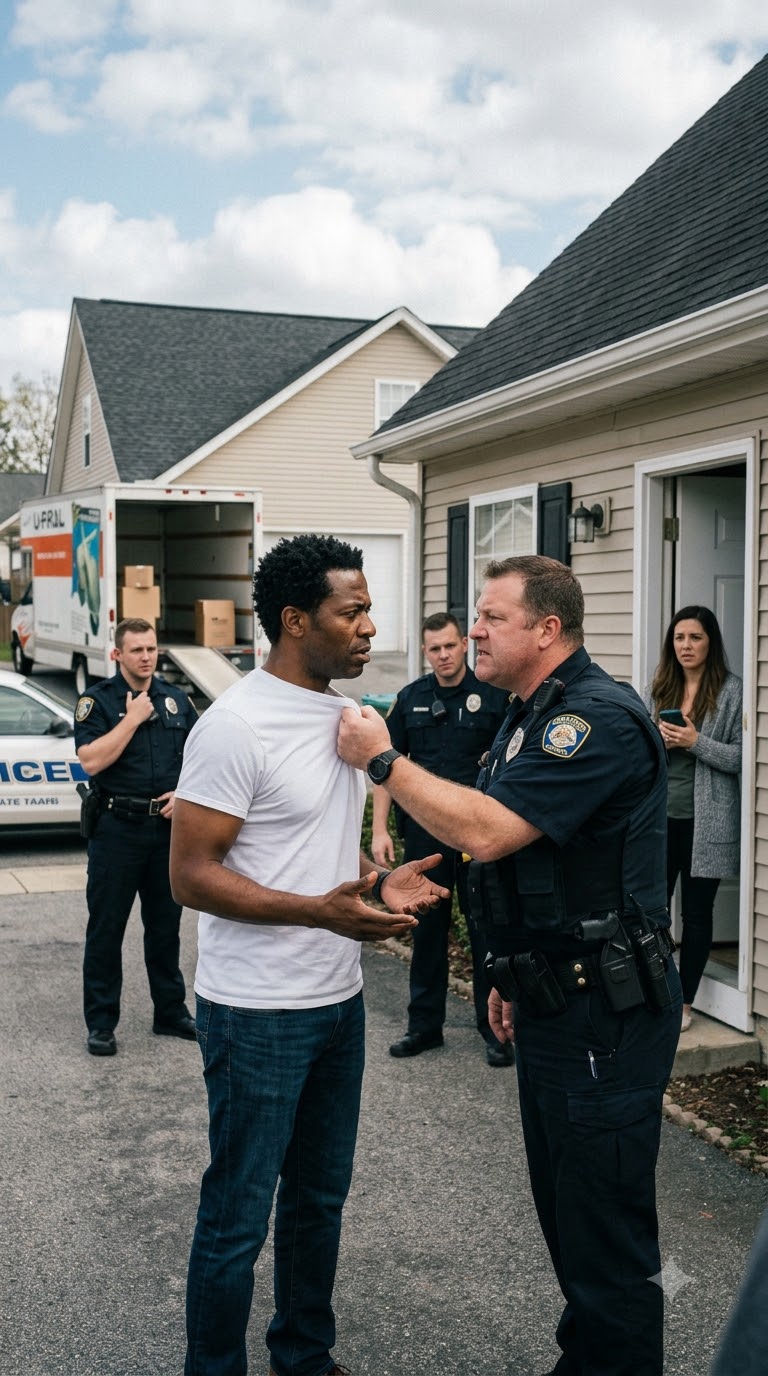
Name.
Address.
Ownership.
He looked at Mackie.
“I apologize.”
Mackie nodded.
“Thank you.”
The lieutenant turned toward Petrov.
“You’ve confirmed the property belongs to him.”
“Yes.”
“Then we’re done.”
Petrov didn’t move.
The younger officers looked uncertain.
Mackie thought the matter was finally over.
Then the lieutenant’s radio crackled.
“Unit 14, command requesting status.”
The lieutenant answered.
“Incident resolved.”
A pause.
Then the dispatcher replied.
“Copy. Also, command says the new captain is expected at headquarters Monday morning. Administration confirmed his arrival packet was delivered.”
The lieutenant looked at Mackie.
Mackie looked back.
Something clicked.
The lieutenant’s eyes widened.
“Captain Rogers?”
Mackie said nothing for a moment.
Then he nodded.
“Yes.”
The lieutenant straightened immediately.
The other officers stared.
Petrov’s face changed.
“Captain?”
Mackie looked directly at him.
“Yes.”
Nobody spoke.
The lieutenant stepped forward.
“Sir, I didn’t realize—”
Mackie raised his hand.
“Don’t.”
The lieutenant stopped.
“I don’t want an apology because of my rank.”
He looked around at all five officers.
“I want you to think about what happened before you knew it.”
Petrov’s face was pale.
“You’re the new captain?”
“I am.”
Petrov swallowed.
The previous morning flashed through his mind.
The calm jog.
The identification.
The question.
The words he had muttered inside the cruiser.
We’ll see how calm you are next time.
Mackie had heard everything.
Now Petrov stood in front of the man who would be his commanding officer.
But Mackie didn’t use the moment to humiliate him.
He didn’t raise his voice.
He didn’t threaten his job.
He didn’t even mention the previous encounter.
Instead, he said, “Everyone makes mistakes.”
Petrov looked up.
“But mistakes become something else when people refuse to correct them.”
Petrov lowered his eyes.
Mackie continued.
“You had no report of a crime. You had no witness to a crime. You had no evidence of a crime. You had a vague description and an assumption.”
Nobody moved.
“And instead of testing that assumption, you escalated it.”
The lieutenant nodded slowly.
Mackie turned toward him.
“That’s what I need this department to understand.”
He looked at every officer.
“My job isn’t to make you afraid of me.”
The words were quiet.
“My job is to make sure the people you serve don’t have to be afraid of you.”
Darlene stood silently on the porch.
She had heard her husband’s voice many times.
But she knew that tone.
It was the tone he used when something mattered deeply.
Petrov finally spoke.
“Captain Rogers.”
Mackie looked at him.
“I was wrong.”
Mackie waited.
“I judged you before I knew who you were.”
“Yes.”
“I shouldn’t have.”
“No.”
Petrov swallowed.
“I’m sorry.”
Mackie nodded.
“Thank you.”
Petrov looked confused.
“That’s it?”
“For today.”
A faint smile crossed Mackie’s face.
“But Monday morning, you’re going to tell me exactly what happened.”
Petrov nodded.
“Yes, sir.”
“And you’re going to tell me what you think should have happened instead.”
“Yes, sir.”
Mackie looked toward the other officers.
“And all of you are going to do the same.”
They nodded.
Then Mackie picked up the box he had left on the driveway.
The lieutenant stepped forward.
“Sir, let me get that.”
Mackie shook his head.
“No.”
He carried it toward the house himself.
Darlene opened the door.
As Mackie passed her, she whispered, “Captain?”
He smiled.
“Apparently.”
She laughed softly.
“I knew something was going to happen when you told me not to worry about Monday.”
Mackie smiled.
“I didn’t know this would happen.”
Behind them, the officers remained in the driveway.
Petrov looked at the other men.
Nobody said anything.
For the first time, the lesson they had intended to teach someone else had turned back toward them.
Monday morning arrived.
Mackie walked into headquarters wearing his new uniform.
The building became unusually quiet.
Officers stood straighter.
Conversations stopped.
People who had spent weeks wondering what kind of captain they were getting now finally saw him.
Mackie entered the briefing room.
Petrov was already there.
So were the other officers from the weekend.
Mackie looked around the room.
“Good morning.”
“Good morning, Captain.”
He placed a folder on the table.
Then he looked at Petrov.
“Let’s start with Saturday.”
Petrov stood.
He explained everything.
The initial call.
The approach.
The assumptions.
The additional officers.
The confrontation.
He did not leave out the parts that made him look bad.
When he finished, Mackie nodded.
“Thank you.”
Then he looked around the room.
“This is not about punishing one officer.”
Nobody moved.
“This is about understanding how quickly assumptions can become actions.”
He paused.
“You don’t know who the person in front of you is.”
He looked directly at Petrov.
“And you shouldn’t need to.”
The room remained silent.
“If someone is breaking the law, investigate it.”
“If someone isn’t, don’t manufacture a reason.”
“Ask questions.”
“Listen to answers.”
“And never confuse calmness with disrespect.”
Petrov nodded.
Mackie continued.
“Respect isn’t something an officer demands from everyone else.”
He looked around the room.
“It’s something an officer demonstrates first.”
No one spoke.
Then Mackie closed the folder.
“We’re going to be better than what happened on that street.”
The meeting ended.
Petrov approached him afterward.
“Captain.”
Mackie turned.
“I meant what I said.”
Petrov nodded.
“I know.”
“I don’t expect perfection.”
Petrov looked down.
“What do you expect?”
Mackie answered immediately.
“Accountability.”
Petrov nodded.
“I can do that.”
“I know.”
Petrov hesitated.
Then he asked, “Why didn’t you tell us who you were?”
Mackie smiled slightly.
“Because the point wouldn’t have meant anything if you treated me differently after learning my title.”
Petrov understood.
Mackie had not wanted special treatment.
He wanted to see what happened when nobody knew his position.
The answer had been uncomfortable.
But it had also given him something valuable.
A clear picture of what needed to change.
Months later, the department’s culture had begun to shift.
Training sessions changed.
Supervisors became more deliberate about reviewing vague calls.
Officers were encouraged to slow down before escalating situations that began with assumptions.
Community meetings became more direct.
Mackie didn’t pretend one new policy could solve everything.
He knew change required repetition.
Consistency.
Accountability.
And time.
One morning, months after the incident, Mackie went for another run through Maple Ridge.
The same streets.
The same lawns.
The same low morning light.
He passed the stop sign where Petrov had first stopped him.
A patrol car approached.
Mackie slowed slightly.
The window lowered.
A young officer smiled.
“Morning, Captain.”
Mackie smiled back.
“Morning.”
“You running far today?”
“About five miles.”
“Stay safe.”
“You too.”
The cruiser continued down the street.
Mackie resumed his pace.
Steady.
Relaxed.
But this time, nobody watched him wondering whether he belonged.
He had never needed a badge to belong there.
And he had never needed a title to deserve respect.
The title simply gave him the responsibility to make sure others received it too.
