

PART 1: ONE HOUR
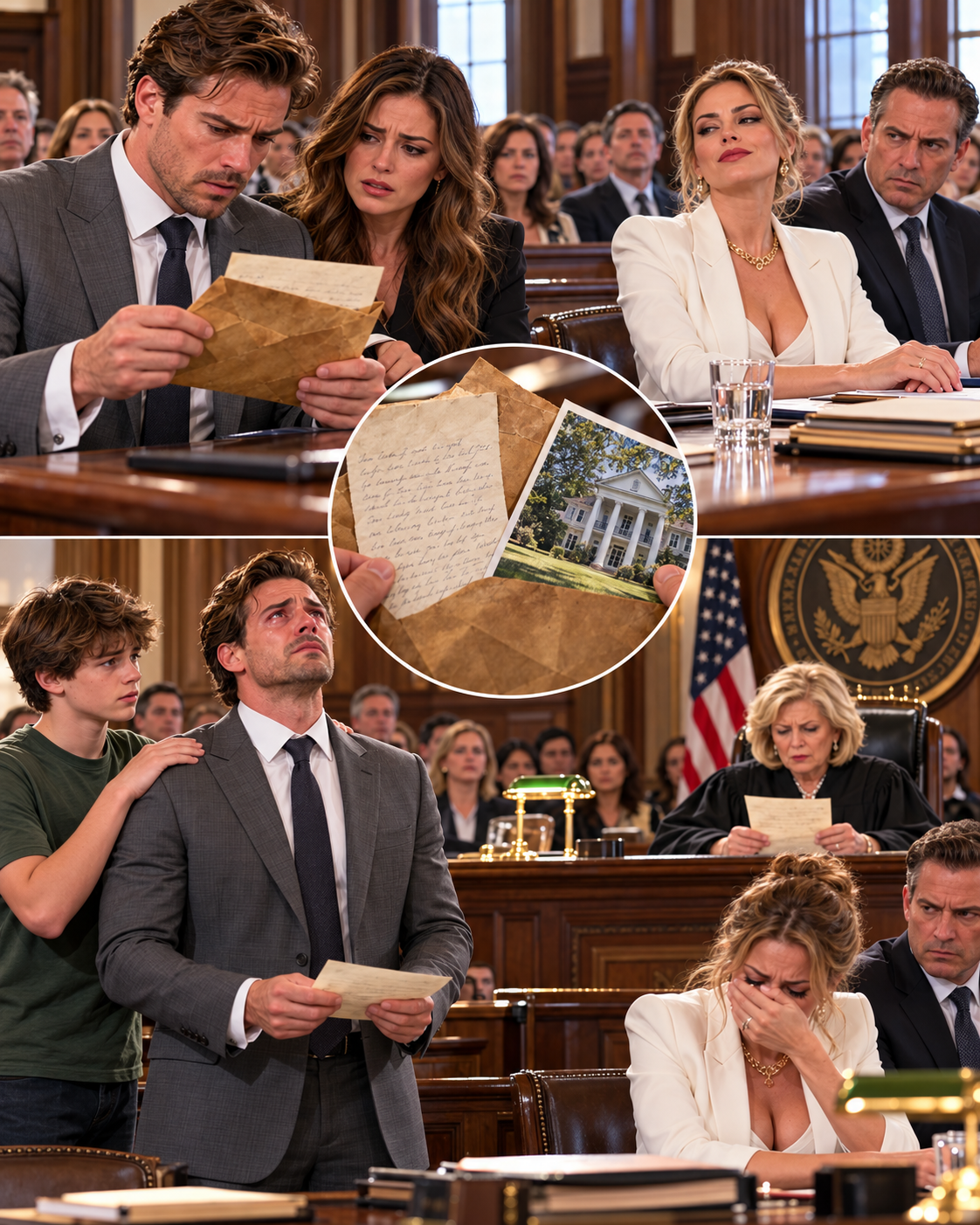
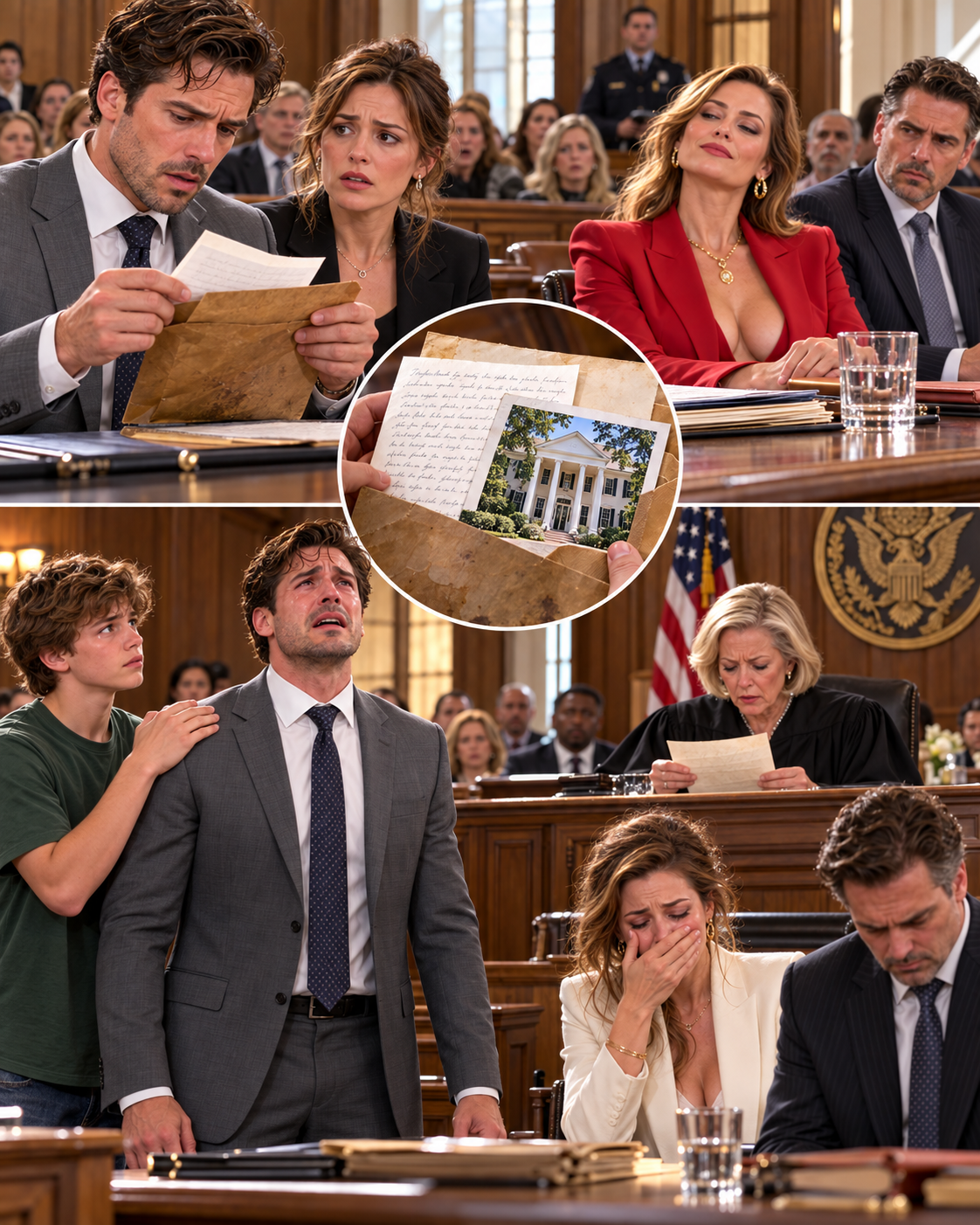
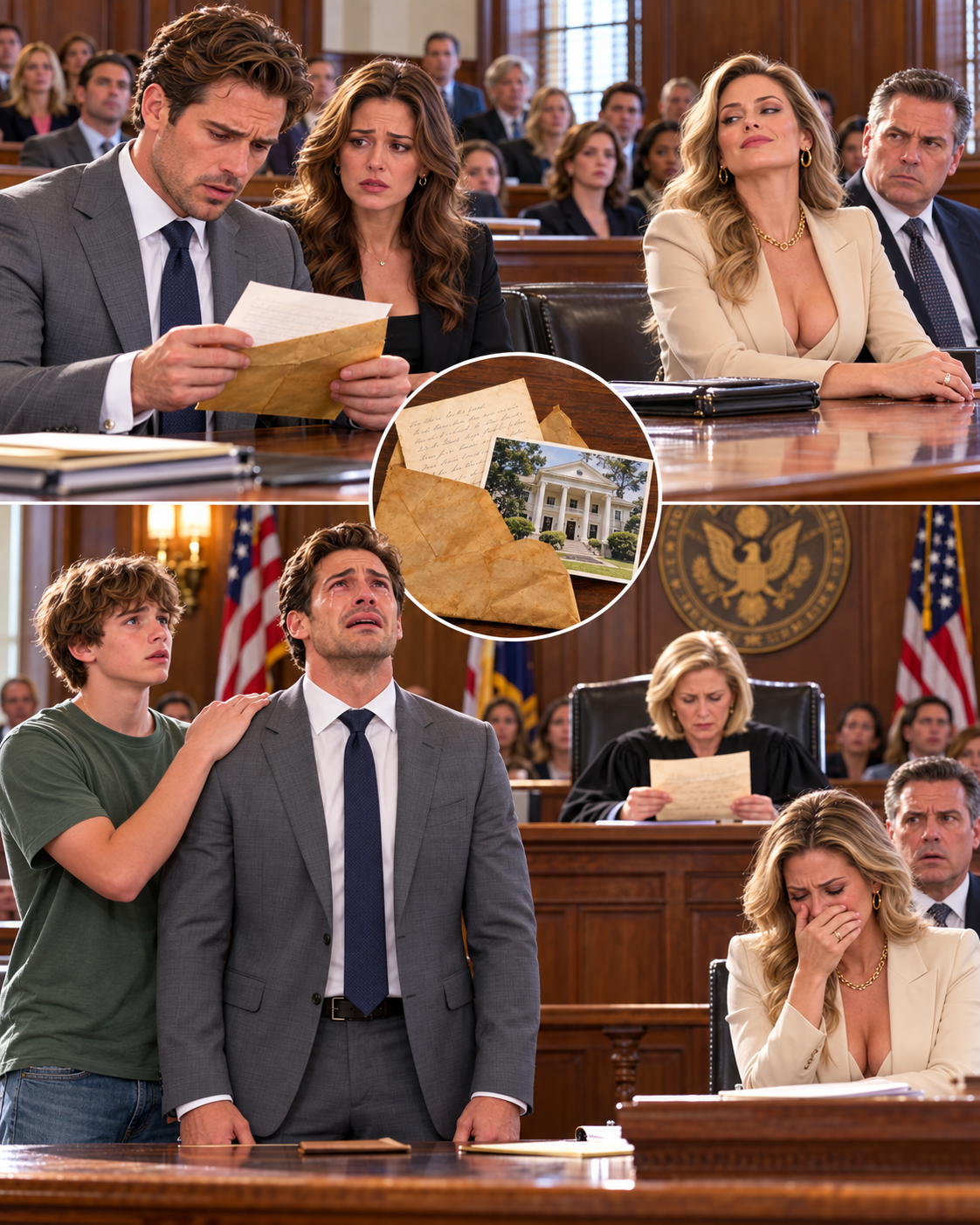
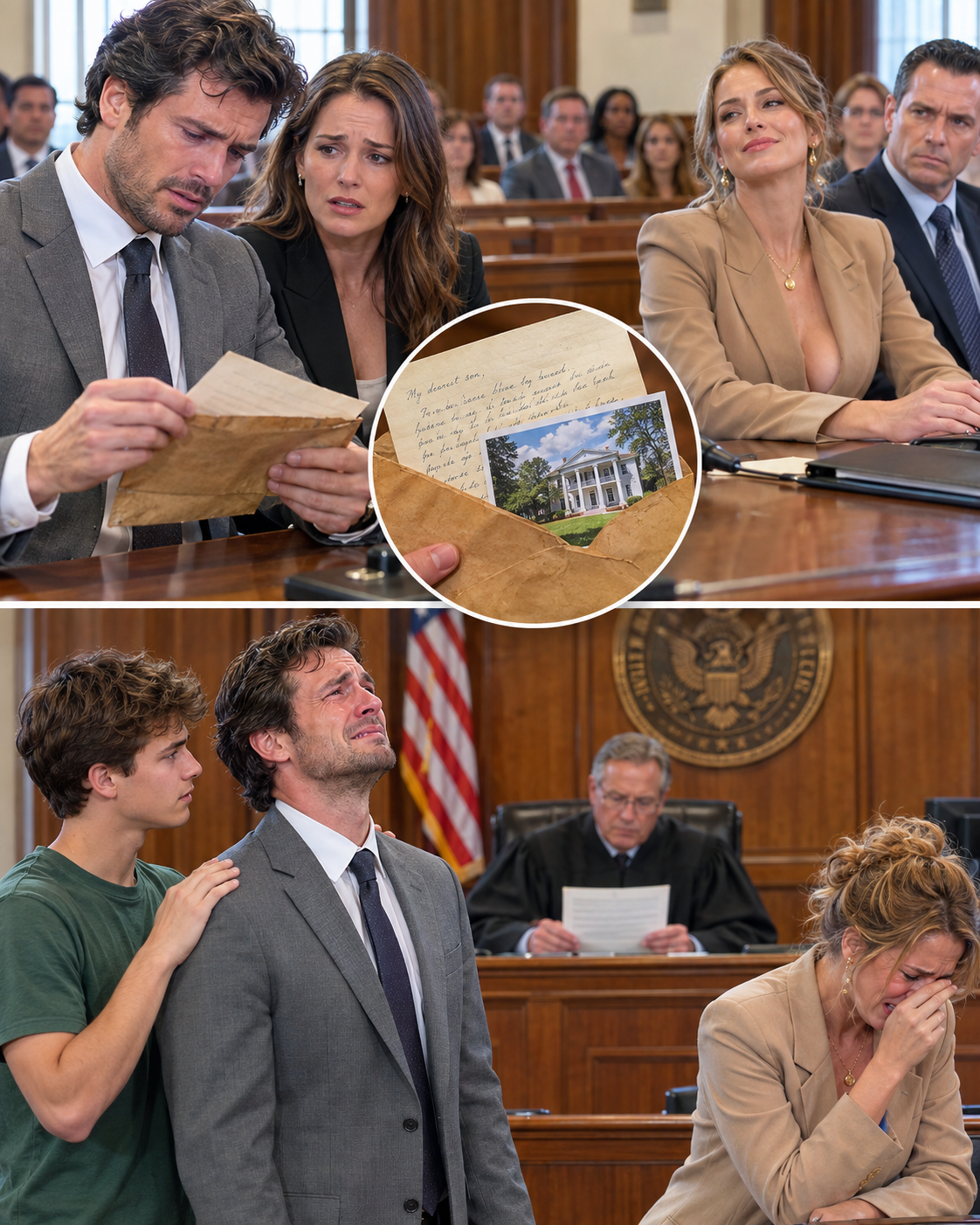
The day my sister accused me of stealing her children, she wore white.
I remember that because everything else in the courtroom seemed gray.
Gray walls. Gray carpet. Gray September light pressing against the windows.
And Chloe sat across from me in a white suit, looking polished enough for television, while her lawyer explained to a family court judge that I had manipulated four innocent children into believing their mother had abandoned them.
My mother sat behind Chloe.
My father sat beside her.
Neither of them looked at me.
According to Chloe, I had stolen twelve years of her life.
According to Chloe, I had kept the children from her.
According to Chloe, I had poisoned them against the woman who loved them more than anyone in the world.
I listened until the word love almost made me laugh.
Then her lawyer said, “Mr. Hayes has constructed an entire parental role around another woman’s children.”
Another woman.
My sister.
The woman who had dropped four children on my porch in the middle of a thunderstorm and promised she would be gone for one hour.
I looked at Chloe.
She smiled.
Not a happy smile.
A confident one.
The kind of smile people wear when they think everyone else has forgotten what they did.
I reached beneath the table.
My attorney touched my wrist.
“Kevin,” she whispered.
“I know.”
I pulled out a thick brown envelope.
Across from me, Chloe’s smile moved slightly.
Just enough.
I slid the envelope toward my attorney.
She passed it to the bailiff.
The bailiff handed it to the judge.
And when the judge opened it, he stopped speaking.
Twelve years earlier, I had been twenty-three and still foolish enough to believe my life belonged to me.
I had a graduate school acceptance letter pinned above my desk.
The paper had been there for three weeks, and I still looked at it every morning.
Illinois Institute of Technology. Master of Architecture.
Chicago.
My escape.
My beginning.
Under the desk lamp sat a half-finished architectural model I had spent almost eighty hours building. White walls, glass panels, tiny stairs cut by hand. I was supposed to photograph it for my portfolio that weekend.
Instead, on a Friday night in October, thunder shook the windows of my apartment.
Then tires screamed outside.
I looked through the blinds and saw Chloe’s car half on the curb.
My first thought was that she had been in an accident.
My second was that somebody was chasing her.
By the time I opened the door, she had already pulled Leo from the back seat.
He was eight.
Too thin.
Soaking wet.
He carried no coat.
Behind him, six-year-old Sophie held a one-eyed teddy bear against her chest.
Noah, four, was crying because everyone else was crying.
And baby Mia screamed beneath the cracked plastic rain cover of her stroller.
“What happened?”
Chloe pushed the stroller toward me.
“Kev, please.”
Rain streamed down her hair and face. She looked over her shoulder toward the street.
“Please what?”
“Just watch them.”
“For how long?”
“One hour.”
She dropped a diaper bag at my feet.
“Chloe.”
“One hour.”
“Where are you going?”
She backed toward the car.
I grabbed the stroller before it rolled off the edge of the porch.
“Have they eaten?”
No answer.
“Does Mia need anything?”
No answer.
“Why is Leo wearing no shoes?”
That stopped her.
For half a second.
Her eyes met mine.
Something moved through her face.
Shame, maybe.
Fear.
I wish I could tell you I recognized it.
I didn’t.
I was twenty-three.
I thought emergencies came with explanations.
“Chloe, what the hell is happening?”
She whispered, “I can’t do this right now.”
Then she turned.
Noah broke away from me.
“Mommy!”
He ran down one porch step.
I caught him before his bare foot hit the sidewalk.
“Mommy!”
Chloe opened the car door.
“Chloe!”
She looked at us once.
One frozen picture I have never been able to erase.
Leo standing beneath the porch light, silent.
Sophie clutching that ruined teddy bear.
Noah struggling in my arms.
Mia screaming.
And me staring at my older sister, still believing she was going to explain herself.
Instead, she got into the car.
The engine started.
Her taillights disappeared into the rain.
Noah kept screaming after the car was already gone.
I checked my watch.
7:14 p.m.
One hour, I told myself.
I got everyone inside.
I had exactly one towel clean enough for children.
Leo refused it.
“I’m fine.”
“You’re shaking.”
“I said I’m fine.”
He had always been a serious kid, but that night there was something different in his face.
Something old.
I found him a pair of my socks. They came almost to his knees.
Sophie sat on my couch without speaking.
Noah wandered from window to window.
Mia needed a diaper.
I had never changed one.
I opened the diaper bag and stared at its contents like someone had handed me equipment from a foreign planet.
Bottles.
Powdered formula.
Two diapers.
Baby wipes.
A pink sweater.
Half a packet of crackers.
No medicine.
No instructions.
No emergency numbers.
At the bottom was a folded sheet of notebook paper.
I pulled it out.
Then Noah asked me if Mommy would be back before bedtime.
I put the paper aside without reading it.
“Yes,” I said.
That was the first lie I ever told those children.
At 8:14, Chloe wasn’t back.
At 9:00, I called her.
Voicemail.
At 10:30, I called again.
At midnight, Leo was still awake.
I found him sitting on the kitchen floor beside the refrigerator.
“Can’t sleep?”
He shrugged.
“You can take my bed.”
“I don’t care.”
“Leo.”
He stared at his knees.
Then he asked, “Did she say where she was going?”
“No.”
His jaw tightened.
“She does this.”
I sat down.
“What do you mean?”
He immediately shut down.
“Nothing.”
“Leo.”
“She leaves.”
“For an hour?”
He gave me a look I still remember.
It was the first time I understood that the children knew more about their mother than I did.
At one in the morning, I called my parents.
My mother answered on the sixth ring.
“Kevin?”
“Chloe left the kids here.”
Silence.
“All four?”
“Yes, all four.”
My mother sighed.
Not gasped.
Not panicked.
Sighed.
“What did you two argue about now?”
“We didn’t argue. She dumped them on my porch.”
“She didn’t dump them.”
“Mom, she drove away.”
“She probably needs to clear her head.”
“She said one hour. It’s been six.”
In the background I heard my father.
“Who is it?”
“Kevin.”
“What does he want?”
I raised my voice.
“I want somebody to explain why I have four children in my apartment and nobody knows where their mother is.”
My father said something to my mother.
She covered the phone, but not well enough.
I heard him clearly.
“Tell him to handle it. He’s the older brother.”
Older brother.
I had always hated that sentence.
It had followed me through childhood.
Chloe breaks the lamp? You’re the older brother.
Chloe takes the car? You’re the older brother.
Chloe disappears for a weekend? You’re the older brother.
I was eleven months older than her.
In our family, those eleven months apparently made me responsible for every disaster Chloe created.
“Mom.”
“She’ll come back.”
“How do you know?”
“Because she’s their mother.”
I looked through the doorway.
Noah had fallen asleep on my rug.
Sophie lay curled around her teddy bear.
Mia slept in a laundry basket because I did not own a crib.
Leo was pretending not to listen from the couch.
I lowered my voice.
“What if she doesn’t?”
My mother was quiet.
Then she said, “Don’t be dramatic.”
She hung up.
The next morning, Chloe was still gone.
I called hospitals.
I called police stations.
I drove past her apartment with four children in my car.
The door was unlocked.
Half the closet was empty.
That was when fear became something colder.
She had packed.
Not everything.
Enough.
I returned to my apartment and finally remembered the folded paper from the diaper bag.
I opened it at the kitchen table.
The first line was my name.
Kev—
I’m sorry. I know I said an hour. I don’t know how long I need. I can’t breathe here anymore. I can’t be who everyone wants me to be.
My stomach dropped.
I kept reading.
Please keep them safe. Especially Mia. Leo knows where Sophie’s inhaler is. Mom and Dad will make this worse, so don’t let them scare you into giving the kids to them unless you think it’s right.
Then, near the bottom:
Don’t come looking for me.
And underneath that:
I know this makes me a terrible mother. Maybe it does. But right now they are safer with you than they are with me.
No signature.
Just a smear where the ink had gotten wet.
I read the note three times.
Then I folded it.
I almost threw it away.
Instead, something made me place it inside the envelope that held my graduate school acceptance letter.
By the eighth day, Chloe still had not returned.
My university called about enrollment paperwork.
I stared at the architectural model under the lamp.
Then I looked through the bedroom door at four children sleeping in places no child should have had to call a bed.
I took my acceptance letter off the corkboard.
Folded it carefully.
Put it in the envelope with Chloe’s note.
And called the school.
“I’m sorry,” I told them. “I won’t be coming.”
Afterward, I sat alone at the kitchen table.
For the first time since the storm, I cried.
Quietly.
Because the kids were asleep.
And because I was beginning to understand that one hour had just become my life.
PART 2: THE THINGS THAT MAKE A FAMILY
There was nothing heroic about what came next.
People like to imagine that when someone unexpectedly takes responsibility for children, there is a moment when everything becomes clear.
There isn’t.
There is paperwork.
There are bills.
There is panic.
There are children who do not care that your entire future has collapsed because they need breakfast.
On Day Nine, Noah developed a fever.
On Day Ten, Sophie’s school called because nobody had picked her up on Friday before Chloe brought them to me, and they still had an emergency contact form listing an old boyfriend Chloe had not dated in two years.
On Day Eleven, Mia ran out of formula.
On Day Twelve, Leo punched another boy at school.
I sat in the principal’s office wearing a shirt with baby spit on the shoulder while Leo stared at the floor.
The principal cleared her throat.
“Leo says the other student made a comment about his mother.”
“What comment?”
Leo’s face hardened.
“Doesn’t matter.”
The principal looked at me.
“Mr. Hayes, are you his legal guardian?”
I opened my mouth.
Nothing came out.
That question changed everything.
Until then, some part of me had still been counting hours.
Then days.
Waiting for Chloe’s key in the door.
Waiting for an apology.
Waiting to give the responsibility back.
But schools did not care about promises made on porches.
Neither did doctors.
Neither did insurance companies.
Neither did the state.
I called my mother again.
“I need Chloe to sign temporary guardianship papers.”
“She’ll be back.”
“It’s been almost two weeks.”
“She is going through something.”
“So are her children.”
My mother’s voice sharpened.
“You don’t understand how hard things have been for her.”
That sentence hit something inside me.
“I don’t understand?”
“Kevin—”
“I dropped graduate school.”
“That was your decision.”
I actually laughed.
A short, ugly sound.
“Yes. Because Mia can’t sign medical consent forms.”
“Don’t martyr yourself.”
I hung up.
Two weeks became a month.
Then two.
A legal aid attorney helped me petition for temporary guardianship.
I hated every line of the forms.
Mother’s whereabouts unknown.
Children currently residing with maternal uncle.
Duration of placement: ongoing.
The words made Chloe’s absence feel official.
We sent notices to her last known address.
Returned.
We mailed one to a friend she had once stayed with in Arizona.
Returned.
Another to an address my mother swore Chloe might be using.
Returned.
I kept them all.
At first because the attorney told me to.
Later because I began to understand that memory is fragile when someone needs the truth to be different.
Three months after the storm, temporary guardianship was granted.
Chloe did not appear.
My parents did not appear either.
My father called that night.
“You embarrassed the family.”
I held the phone away from my ear.
“What?”
“Taking this to court.”
“I needed permission to take Mia to a doctor.”
“You could have asked us.”
“I did.”
Silence.
Then he said, “Your sister is still their mother.”
“I never said she wasn’t.”
What I didn’t say was that motherhood was becoming something I had trouble recognizing.
The first year nearly broke me.
I took drafting work at night and construction planning jobs during the day.
I sold the little sports car I had spent five years paying off and bought a used minivan that smelled permanently like stale french fries.
I moved us into a rental house with three bedrooms.
Leo and Noah shared.
Sophie got the smallest room.
Mia’s crib went in mine.
For six months, I woke every time she moved.
At twenty-four, I knew the difference between a hungry cry and a frightened cry.
I knew how to warm a bottle with one hand.
I knew which grocery store marked down meat after eight on Tuesdays.
I knew Sophie’s inhaler dosage.
I knew Leo hated peas.
I knew Noah could not sleep after thunderstorms.
The first storm after Chloe left, he crawled under the kitchen table.
I found him there with his hands over his ears.
“She left in the rain,” he whispered.
I sat on the floor beside him.
“I know.”
“People leave when it rains.”
“No.”
“She did.”
I had no answer.
So I crawled under the table too.
We sat there until the thunder stopped.
Sometimes parenting is not fixing fear.
Sometimes it is making sure a child is not afraid alone.
Leo was the hardest.
Not because he was bad.
Because he remembered.
He remembered Chloe forgetting dinner.
He remembered strangers sleeping on their couch.
He remembered being told to watch Sophie and Noah while Chloe disappeared.
He remembered promises.
For almost a year, he slept in jeans.
One night I asked why.
“So I can go fast.”
“Go where?”
He shrugged.
“If we have to.”
My chest hurt.
“You don’t have to go anywhere.”
“You don’t know that.”
He was nine years old.
I sat beside him on the edge of his bed.
“I know I can’t promise everything.”
He watched me carefully.
“But I can promise this. If something changes, I tell you. I don’t disappear. I don’t sneak out. I don’t make you wake up and guess.”
He didn’t answer.
But the next week, he started sleeping in pajamas.
Sophie processed abandonment differently.
She tried to become perfect.
Perfect grades.
Perfect manners.
Perfect little braids she attempted herself when I failed.
The first time I did her hair for school, I made one braid so crooked she stared into the bathroom mirror and burst out laughing.
Not cruelly.
Really laughing.
I had not heard that sound in weeks.
“What?”
“You made me look like a pine tree.”
“I watched a video.”
“You watched the wrong video.”
So we did it again.
Years later, I could braid her hair with my eyes half closed.
Still, she always made me do it twice.
“The first one is practice,” she would say.
Noah asked questions.
Endless questions.
Why was the moon visible in the daytime?
Why did dogs understand pointing?
Why did cereal get soft?
Why did moms leave?
That last one appeared without warning.
Usually in the car.
Usually when I was least prepared.
“Did Mom leave because we were loud?”
“No.”
“Because Leo was bad?”
“No.”
“Because Mia cried?”
“No.”
“Because Sophie got sick?”
“No.”
“Then why?”
“I don’t know.”
“You always say that.”
“Because I’m not going to lie to you.”
That was the promise I kept after the lie on the first night.
If I didn’t know, I said I didn’t know.
If I was scared, I admitted I was scared.
If money was tight, I didn’t tell them we were about to be homeless. But I did tell them we had to be careful.
I learned the difference between protecting children and deceiving them.
And Mia—
Mia knew none of it.
That was both mercy and tragedy.
Her memories began with me.
Me cutting toast into squares.
Me carrying her through ear infections.
Me sitting beside her preschool cot because she refused to nap on her first day.
She was four when it happened.
I had put her to bed after reading the same book three times.
Around two in the morning, I woke because I heard her voice.
“Dad?”
I froze.
The hallway light was on.
I walked to her room.
She was still asleep.
One hand beneath her cheek.
“Dad,” she murmured again.
I stood in the doorway for a long time.
I should have corrected her.
Maybe.
Instead, I went back to bed and stared at the ceiling until sunrise.
That one word frightened me more than Chloe leaving had.
Because by then I understood what I stood to lose.
Years passed.
I eventually finished my architecture degree locally, one class at a time.
Night classes.
Weekend studios.
Drafting after bedtime.
Leo sometimes found me asleep over blueprints at the kitchen table and covered me with a blanket.
By the time I started my own small design firm, the kids were old enough to complain about having to answer the office phone.
We were never rich.
But slowly, almost invisibly, the emergency became a life.
I bought a house.
Not a huge one.
An old craftsman with worn floors, crooked stairs, and enough bedrooms if we were creative.
We repaired it together.
Leo helped strip paint.
Sophie chose wall colors and changed her mind six times.
Noah learned how to use a drill and immediately drilled through a board into my workbench.
Mia painted a handprint inside a closet and made me swear never to cover it.
I kept the old brass lamp from my grandparents’ house in the living room.
It was one of the only family things my parents had given me.
They visited occasionally.
Birthdays.
Christmas every second or third year.
They brought presents.
They took photos.
They acted as though they were grandparents in a story where nothing unpleasant had happened.
The first time my mother told Mia she had “her mommy’s eyes,” Mia asked, “Which mommy?”
The room went silent.
My mother turned toward me.
I said nothing.
Mia frowned.
“I mean Chloe. I’ve seen pictures.”
Mom’s face tightened.
Afterward, she cornered me in the kitchen.
“You let her call you Dad?”
“I never told her to.”
“You should correct her.”
“She knows I’m her uncle.”
“That isn’t the point.”
“What is the point?”
“You are confusing her.”
I looked through the doorway.
Mia was helping Noah assemble a puzzle.
“She’s the least confused person in this family.”
My mother left early.
Chloe never called.
Not on birthdays.
Not at Christmas.
Not when Sophie spent three days in the hospital after a severe asthma attack.
Not when Leo graduated high school.
Not when Noah broke his wrist.
Not when Mia won a statewide science competition and checked the mailbox for three days after my mother told her Chloe “might have heard.”
Nothing.
Still, every year, I sent one letter to the last address we had for Chloe.
Not because I wanted her back.
Because I never wanted anybody to say I had hidden the children.
I included my phone number.
Email.
Our mailing address.
I wrote:
The kids are safe. If you want contact, please do it through me so we can make sure it is handled carefully.
Most came back.
A few did not.
No response.
I kept those records too.
By year twelve, I had two filing boxes.
School forms.
Medical bills.
Court orders.
Returned mail.
Emergency guardianship papers.
Permanent guardianship papers.
Photos.
Receipts.
Letters.
And one small envelope containing the piece of paper Chloe had left in the diaper bag.
I thought of it as history.
I did not know it was about to become ammunition.
That October afternoon, my house smelled like garlic and tomato sauce.
Leo was at the dining table working on college applications after taking a winding path through community college and work.
Sophie sat on the porch with her guitar.
Noah and Mia were in the backyard arguing over whether our ancient basketball hoop leaned enough to count as cheating.
I was chopping onions.
The doorbell rang.
I wiped my hands.
Opened the door.
And saw my sister for the first time in twelve years.
Chloe looked beautiful.
That was my first thought.
My second was that I hated myself for having it.
Her hair was cut neatly to her shoulders.
Her coat looked expensive.
A delicate gold chain rested at her throat.
She looked rested.
Healthy.
Whole.
Behind her stood our mother.
Our father.
And a man carrying a leather briefcase.
For a few seconds, nobody spoke.
Then Chloe smiled.
“Hi, Kev.”
I could hear Sophie’s guitar stop behind the house.
I looked at my parents.
“What is this?”
The man stepped forward.
“Mr. Hayes, my name is Martin Geller. I represent your sister.”
I stared at him.
“For what?”
Chloe looked past me into the house.
At the floors.
At the staircase.
At the photographs covering the wall.
Twelve years of birthdays and school concerts and scraped knees and graduations.
Her children growing up without her.
She did not look at any picture for more than a second.
Then her eyes landed on the old brass family lamp.
Something about that made my skin go cold.
Her lawyer opened his briefcase.
“We are beginning the process of family reunification.”
I almost laughed because the words were too absurd to understand.
Then Chloe lifted her chin.
“I want my children back.”
Behind me, I heard a chair scrape across the floor.
Leo had stood up.
Chloe saw him.
Her face changed.
For the first time, the confidence cracked.
“Leo?”
He stared at her like she was a stranger who knew his name.
She took one step forward.
“My God. Look at you.”
Leo did not move.
Chloe’s eyes filled.
“You’re so grown up.”
His voice was quiet.
“You missed it.”
She stopped.
“What?”
“You said look at me like you’re surprised.”
His hands tightened at his sides.
“You missed it.”
Chloe swallowed.
Then she looked at me.
And something hardened behind her eyes.
There it was.
The story she had already chosen.
The explanation that did not require her to face herself.
“You turned them against me.”
And suddenly I understood why she had brought a lawyer.
She had not come home to apologize.
She had come home to rewrite history.
PART 3: THE MOTHER WHO CAME BACK
I did not let Chloe into the house.
That decision became Exhibit A in her version of events.
Her lawyer sent papers three days later.
Technically, Chloe could not demand custody of Leo or Sophie. They were adults.
The petition concerned Noah and Mia.
But Chloe’s filing repeatedly referred to all four children and described them as a “sibling unit unlawfully alienated from their biological mother.”
I read that sentence five times.
Then I read the accusations.
I had obstructed contact.
I had manipulated the children.
I had presented myself as their father.
I had failed to encourage reunification.
I had exploited Chloe’s “temporary mental and emotional crisis” to replace her.
The filing said she had always intended to return.
Always.
Twelve years.
My attorney, Mara Singh, sat across from me in her office while I stared at the page.
Mara was in her early fifties and had the unnerving ability to become calmer the angrier everyone else became.
“Do not contact Chloe directly,” she said.
“I wasn’t planning to.”
“Do not argue with your parents.”
“That one’s harder.”
“Do not post anything online.”
“I don’t post online.”
“Good.”
She closed the petition.
“The strongest thing you can do right now is remain exactly who you have been for twelve years.”
I looked at her.
“What does that mean?”
“The stable parent.”
“I’m not their parent.”
Mara held my gaze.
“Kevin.”
Something in my chest tightened.
“You know what I mean.”
“Yes,” she said. “I do.”
Chloe started calling the children.
I had no idea how she got their numbers.
Probably my mother.
Leo blocked her after the first call.
Sophie answered twice.
The second conversation ended with Sophie locking herself in her bedroom and crying so quietly I almost didn’t hear.
I sat outside the door.
“Soph?”
“I’m fine.”
“You inherited that lie from Leo.”
Silence.
Then the door opened.
She was sitting on the floor, guitar beside her.
Her eyes were swollen.
“She asked if you ever hit us.”
I felt something inside me go perfectly still.
“What?”
“She said maybe I was scared to tell the truth.”
I sat beside her.
“What did you say?”
“I hung up.”
“Okay.”
“She kept saying you were young when she left. That you resented her. That you wanted a family.”
I didn’t answer.
Sophie wiped her face angrily.
“Did you?”
“Did I what?”
“Want a family?”
I looked down at my hands.
“At twenty-three?”
She nodded.
“No.”
That surprised her.
“I wanted Chicago.”
“Do you regret us?”
The question cut deeper than anything Chloe’s lawyer had written.
“No.”
“That’s not the same thing.”
She was right.
So I told her the truth.
“I regret that you needed me the way you did.”
Her face crumpled.
I continued before she could misunderstand.
“I wish your mother had been able to be your mother. I wish you never had to wonder why she left. I wish Leo hadn’t learned how to pack a bag in five minutes. I wish Noah didn’t hate thunderstorms. I wish Mia remembered being held by the woman who gave birth to her.”
I swallowed.
“But do I regret being there?”
I shook my head.
“Not for one second.”
Sophie leaned against me.
We stayed on the floor until dinner.
Noah was furious.
Not confused.
Not curious.
Furious.
“I don’t want to see her.”
“You might be asked to talk to someone from the court.”
“Fine. I’ll tell them I don’t want to see her.”
“They’ll ask why.”
“Because she left.”
“She may have explanations.”
“I don’t care.”
“You’re allowed not to care.”
He stared at me.
“Are you trying to make me forgive her?”
“No.”
“Then why are you defending her?”
“I’m not.”
It took me a moment to find the right words.
“I just don’t want my anger to become yours.”
Noah looked away.
“It already is.”
Mia scared me the most.
She was twelve.
Young enough to be curious.
Old enough to understand rejection.
She asked to meet Chloe.
Leo nearly exploded.
“No.”
Mia looked at him.
“You’re not Dad.”
The room went silent.
Leo stood.
“No, I’m the one who remembers her.”
“That doesn’t mean I do.”
“She left you in a stroller.”
“Leo.”
He turned on me.
“No. She needs to know.”
“I know,” Mia shouted.
“Then why do you want to see her?”
“Because everybody else has memories!”
Mia was crying now.
“I don’t have any. I have everybody telling me what happened to me.”
Leo’s anger vanished.
Mia wiped her cheeks.
“I just want one thing that’s mine.”
I understood.
So I arranged the meeting through the lawyers.
Supervised.
Neutral office.
Mara warned me not to expect closure.
“I don’t expect anything from Chloe anymore.”
“That may be true for you,” she said. “It isn’t true for Mia.”
The meeting lasted thirty-seven minutes.
I know because I watched the clock.
When Mia came out, Chloe followed several steps behind her.
Chloe had been crying.
Mia had not.
I stood.
Mia walked straight to me.
“Can we go home?”
“Yes.”
Chloe said, “Mia.”
Mia stopped.
Chloe reached into her purse.
“I brought something.”
She held out a bracelet.
Silver.
Small charms hanging from it.
Mia looked at the bracelet.
Then at Chloe.
“You don’t know what I like.”
Chloe’s face collapsed.
“I can learn.”
Mia was quiet.
“Why didn’t you before?”
Nobody moved.
Chloe glanced at me.
That was the moment I saw it happen again.
Pain becoming blame.
She could not answer her daughter.
So she looked for me.
“What has he told you?”
Mia frowned.
“What?”
“What did Kevin tell you about me?”
Mia stepped closer to my side.
I said, “Don’t.”
Chloe pointed at me.
“You did this.”
I wanted to scream.
Instead I heard my own voice become frighteningly calm.
“No, Chloe.”
“You made them hate me.”
“I spent twelve years making sure they survived you.”
Her lawyer appeared from the conference room.
“Mr. Hayes, I think that’s enough.”
Chloe stared at me.
“You always wanted to be better than me.”
“No.”
“You always looked down on me.”
“No.”
“You took my children.”
That one broke through.
I stepped forward.
“You left them on my porch.”
The entire hallway went silent.
Chloe’s lips parted.
“You said one hour.”
She looked away first.
My parents became more aggressive as the hearing approached.
My father came to my office.
He had never visited my office before.
He stood among models of houses and framed design awards as if he had accidentally entered someone else’s life.
“You’ve done well.”
I kept working.
“What do you want?”
“Your mother is sick over this.”
“Then she should stop helping Chloe sue me.”
He sighed.
“You don’t understand.”
“I understand perfectly.”
“Chloe has gotten her life together.”
“Good.”
“She has a good job. A home.”
“Good.”
“She deserves a chance.”
I set my pencil down.
“A chance at what?”
“To make things right.”
“With the kids?”
“Yes.”
“Then why isn’t she starting by saying she’s sorry?”
My father looked irritated.
“Because every conversation becomes an attack.”
“Dad, she vanished for twelve years.”
“She was unwell.”
“Then say that.”
“She was young.”
“So was I.”
That stopped him.
I stood.
“She was twenty-two.”
“Yes.”
“I was twenty-three.”
His jaw tightened.
“You were always more responsible.”
I stared at him.
For years that sentence had controlled me.
This time, it sounded pathetic.
“You don’t get to punish the responsible child because you expect less from the irresponsible one.”
His face went red.
“Watch your tone.”
“No.”
He blinked.
I had never said that to him.
“No?”
“No. I raised four children while you told me to handle it. You do not get to walk into the life I built and ask me to make Chloe comfortable.”
He left without saying goodbye.
That night, I opened the closet in my office at home.
Pulled down the filing boxes.
Leo found me on the floor surrounded by twelve years of paper.
“What are you doing?”
“Preparing.”
He sat opposite me.
For a while we sorted silently.
Hospital statements.
Report cards.
Court notices.
Returned envelopes.
Then Leo picked up a photograph.
It was his tenth birthday.
He stood beside a crooked cake I had tried to decorate myself.
“You remember this?”
“Unfortunately.”
He smiled.
“You spelled birthday wrong.”
“I was exhausted.”
“You wrote BIRHTDAY.”
“You still ate it.”
He turned the photograph over.
His smile disappeared.
“Do you think she can win?”
I wanted to tell him no.
Instead, I kept my promise.
“I don’t know.”
He stared at the boxes.
“What happens to Noah and Mia?”
“I fight.”
“And if they make Mia go?”
“I fight again.”
He nodded.
Then he saw the small envelope.
The old one.
The one that had once contained my graduate school acceptance letter.
“What is that?”
I held it for a second.
“Something your mother left.”
Leo went still.
“What?”
“A note.”
His eyes snapped to mine.
“She wrote a note?”
“Yes.”
“You never told me.”
“You were eight.”
“I’m twenty.”
“I know.”
“What does it say?”
I hesitated.
Then handed it to him.
Leo unfolded the paper.
I watched his face as he read.
Anger first.
Then pain.
Then something worse.
Relief.
He looked up.
“She knew.”
“Yes.”
“She knew she was leaving us with you.”
“Yes.”
“She said we were safer with you.”
“Yes.”
His voice broke.
“All this time I thought maybe she just drove too far.”
I closed my eyes.
That was the cruelty of abandonment.
Children build softer explanations because the truth hurts too much.
Leo folded the note carefully.
“What are you going to do with this?”
I looked at the boxes around us.
For twelve years, Chloe had been absent.
Now she wanted the court to believe I had erased her.
I placed the note back inside the envelope.
“The truth is going to get its turn.”
PART 4: WHAT SHE SAID UNDER OATH
The hearing began on a Monday morning.
Chloe arrived with our parents.
I arrived with Mara.
Leo and Sophie came separately because they insisted.
Noah and Mia were not in the courtroom. The judge had already spoken to them privately with a court-appointed guardian present.
I did not ask what they said.
I didn’t want them feeling responsible for the outcome.
Chloe testified first.
Her lawyer guided her gently.
He asked about the period before she left.
Chloe cried.
She spoke about exhaustion.
Depression.
Fear.
Feeling unsupported.
Some of it may have been true.
That was the hardest part.
Real pain and real abandonment can exist in the same person.
I had never needed Chloe to be a monster.
I only needed her to stop pretending she had done nothing.
“I loved my children,” she said.
Her lawyer nodded sympathetically.
“Did you intend to abandon them?”
“No.”
“What did you intend?”
“To leave briefly.”
“How briefly?”
Chloe paused.
“I don’t remember exactly.”
I stared at her.
One hour.
Those were the words that had lived in my bones for twelve years.
One hour.
“Were you prevented from returning?”
“Yes.”
Mara leaned toward me.
I felt my heart begin pounding.
Her lawyer asked, “By whom?”
Chloe looked directly at me.
“My brother made it clear that I was no longer needed.”
A sound came from the gallery.
Leo.
I did not turn.
Her lawyer continued.
“How?”
“He took control. He involved the courts almost immediately. He moved the children. Changed schools. Presented himself as their parent.”
Almost immediately.
Three months.
A fever.
A principal’s office.
Returned notices.
Temporary guardianship.
But Chloe spoke smoothly.
That frightened me more than if she had sounded obviously dishonest.
Good lies do not sound like lies.
They sound like wounded truth.
She testified that she had struggled financially.
That she had moved often.
That she felt ashamed.
That every year she waited, returning became harder.
That part I believed.
Then her lawyer asked, “Why return now?”
Chloe looked toward Leo and Sophie.
“Because I finally realized fear had already stolen enough time.”
Sophie turned her face away.
Chloe’s voice trembled.
“I know I made mistakes. But children need their mother.”
Mara wrote something on her legal pad.
Then came cross-examination.
She stood.
“Ms. Hayes, did Kevin force you to leave his home on October 17 twelve years ago?”
“No.”
“Did he ask you to bring your children to him?”
“No.”
“Did he know in advance you were bringing them?”
“No.”
“Did he prevent you from taking them with you?”
“No.”
“Did he know where you were going?”
“No.”
Chloe shifted.
Mara’s voice remained gentle.
“You testified that Mr. Hayes made it clear you were no longer needed. When did he communicate that to you?”
“I don’t remember.”
“By telephone?”
“Possibly.”
“Email?”
“I don’t remember.”
“Letter?”
“Possibly.”
“Do you have any of those communications?”
“No.”
“Did you ever call law enforcement and report that your brother was refusing to return your children?”
“No.”
“Did you ever file for custody during the next twelve years?”
“No.”
“Did you attend the temporary guardianship hearing?”
“I wasn’t notified.”
Mara stopped.
“Were you aware that notices were sent to multiple addresses associated with you?”
“No.”
My hands went cold.
Mara picked up a folder.
“We have returned certified mail from three addresses.”
Chloe looked at her attorney.
He objected.
Discussion followed.
The judge allowed Mara to continue.
“Did you contact your children’s schools?”
“I didn’t know which schools they attended.”
“Did you ask?”
“I was afraid of Kevin.”
That one almost got me.
Mara glanced toward me.
A warning.
Stay still.
She continued.
“Did Mr. Hayes ever threaten you?”
“Not directly.”
“Indirectly?”
“He always had a way of making people feel inferior.”
Mara paused.
“That’s not what I asked.”
Chloe’s lawyer objected.
The judge sustained it.
Mara changed direction.
“Ms. Hayes, what is Noah’s middle name?”
Chloe blinked.
Her attorney stood.
“Relevance?”
“Your Honor, the petitioner is seeking reunification with two minor children after twelve years of no documented contact. Her knowledge of those children is directly relevant.”
The judge allowed it.
Chloe answered correctly.
I wasn’t surprised.
Birth certificate information.
Then Mara asked, “What grade is Noah in?”
Chloe guessed.
Wrong.
“What subject does Mia struggle with?”
“I don’t know.”
“What medication does Noah take for seasonal allergies?”
“I don’t know.”
“What happened to Mia when she was seven that required emergency care?”
Chloe looked at me.
I knew exactly what she was doing.
Searching my face.
“She fell?”
No.
Appendicitis.
Three nights in the hospital.
I slept sitting upright beside her bed because she refused to let go of my sleeve.
“What instrument does Sophie play?”
“Piano.”
Sophie inhaled sharply.
Guitar.
“What was Leo’s first job?”
“I don’t know.”
Mara nodded.
“No further questions at this time.”
My mother testified next.
That was worse.
She said she had always believed the children should know their mother.
True.
She said I was controlling.
Sometimes true.
She said I had “taken over.”
Also true, if you removed every reason I had done it.
Then Chloe’s lawyer asked whether my parents believed I had discouraged contact.
My mother said yes.
Mara cross-examined.
“Mrs. Hayes, when your son called you the night Chloe left the children, did you go to his home?”
My mother stiffened.
“No.”
“Did your husband?”
“No.”
“Did you take the children the following morning?”
“No.”
“Did you offer financial support?”
“Occasionally.”
“During the first year?”
“I don’t recall.”
I recalled.
Zero dollars.
Mara asked, “Did you know where your daughter was?”
My mother’s eyes moved toward Chloe.
“No.”
“Did you make efforts to locate her?”
“We respected that she needed space.”
Mara let the silence sit there.
“How much space?”
My mother’s mouth tightened.
Mara returned to her seat.
Then it was my turn.
I hated testifying.
I hated speaking about the children’s worst years while Chloe sat ten feet away.
I described the storm.
The porch.
The diaper bag.
The calls.
The schools.
The doctors.
The guardianship process.
I described trying to contact Chloe.
I described the letters.
Chloe’s attorney stood for cross-examination.
He was good.
That mattered.
“Mr. Hayes, you love these children.”
“Yes.”
“You consider yourself their father.”
I hesitated.
“I consider myself the person who raised them.”
“That’s not what I asked.”
Mara objected.
Overruled.
I looked toward the judge.
Then toward Leo.
“Yes.”
“Despite knowing you are not their biological father.”
“Yes.”
“And Mia calls you Dad.”
“Yes.”
“Did you discourage that?”
“No.”
“Why not?”
“Because she started doing it when she was four.”
“And you allowed it.”
“Yes.”
“You enjoyed it.”
My jaw tightened.
“I loved her.”
“That isn’t an answer.”
“Yes.”
I heard Chloe breathe behind him.
Her attorney moved closer.
“You had planned to attend graduate school in Chicago, correct?”
“Yes.”
“You did not.”
“No.”
“Your life changed because Chloe left.”
“Yes.”
“You resented her.”
“Yes.”
Mara looked at me sharply.
The lawyer almost smiled.
Finally.
He thought he had me.
“You resented my client?”
“I did.”
“So it is possible your feelings toward Chloe influenced the children’s perception of her.”
“No.”
“You just testified you resented her.”
“I did.”
“Then—”
“You asked whether I resented Chloe. You didn’t ask whether I told the kids to.”
The lawyer paused.
I continued.
“I resented her every time I had a sick baby and no medical history. I resented her when I worked until two in the morning and got up at six to make lunches. I resented her when Noah asked what he had done wrong. I resented her when Sophie watched every mother in the audience at school performances. I resented her when Leo stopped being a child because someone had to be responsible before I understood what was happening.”
My voice shook.
“But I never told them to hate her.”
The lawyer interrupted.
“Mr. Hayes—”
“I told them I didn’t know why she left.”
“Please answer only the questions.”
“I sent letters.”
He stopped.
“What?”
“Every year.”
Mara closed her eyes briefly.
I had gone beyond the question.
But it was out.
The judge leaned forward.
“What letters?”
The lawyer objected.
Mara stood.
“Your Honor, the correspondence is part of our submitted records.”
The judge nodded.
Chloe looked at her attorney.
Her confidence was fading.
The lawyer recovered.
“Mr. Hayes, isn’t it true that after the first few years you became comfortable with the arrangement?”
“Comfortable?”
“You built a family.”
“Yes.”
“A successful career.”
“Yes.”
“A home.”
“Yes.”
“You benefited emotionally from being needed.”
I stared at him.
“What answer do you want?”
“I want the truth.”
“So do I.”
He frowned.
“You liked being their father.”
“Yes.”
The courtroom went still.
I didn’t care anymore.
“Yes,” I repeated. “I liked it when they laughed. I liked teaching Leo to drive. I liked doing Sophie’s hair even when she insulted my braids. I liked Noah asking questions I couldn’t answer. I liked Mia falling asleep on my shoulder.”
I turned toward Chloe.
“But none of that required her to disappear.”
Her face changed.
The lawyer said, “No further questions.”
The judge asked both sides whether there was anything additional before he recessed.
Mara whispered, “This is the time.”
I looked at the old brown envelope beside my hand.
For twelve years, I had carried Chloe’s decision for her.
I had softened it for the children.
Softened it for my parents.
Sometimes even softened it for myself.
Maybe that had been a mistake.
“Your Honor,” I said.
The judge looked at me.
“My sister testified that she intended to come back.”
Chloe went completely still.
Mara stood.
“We have one final item.”
I slid the envelope across the table.
And Chloe stopped breathing.
PART 5: THE ENVELOPE
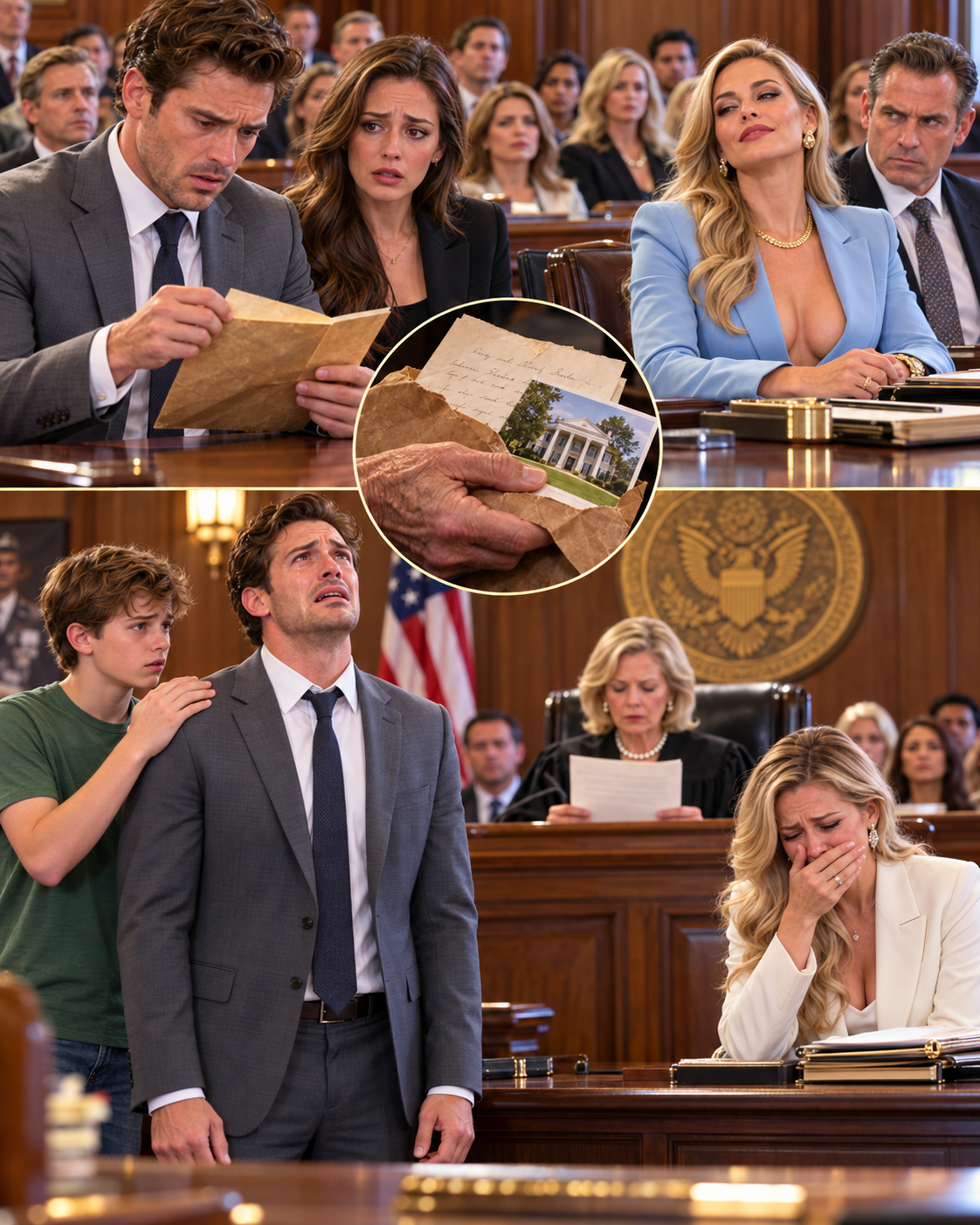
The envelope was worn at the corners.
My handwriting from twelve years earlier was still visible on the front.
IIT — GRADUATE ADMISSION.
The judge looked at it.
Then at Mara.
“What exactly am I receiving?”
Mara answered.
“The original note located inside the children’s diaper bag on the night Ms. Hayes left them with Mr. Hayes, along with the original graduate admission letter he placed in the same envelope eight days later. We also have copies previously disclosed, but Mr. Hayes retained the originals.”
Chloe’s attorney rose.
“We object to foundation.”
Mara nodded.
“Mr. Hayes can authenticate when and where he found it.”
The judge looked at me.
“You found this note?”
“Yes, Your Honor.”
“Where?”
“In the diaper bag Chloe left on my porch.”
“On the same night?”
“Yes.”
“Has it remained in your possession?”
“Yes.”
The judge unfolded the paper.
For a few seconds, there was only the faint sound of paper moving.
I knew every line.
I had read it enough times that I could see the handwriting without looking.
Kev—
I’m sorry. I know I said an hour. I don’t know how long I need. I can’t breathe here anymore. I can’t be who everyone wants me to be.
The judge kept reading.
Chloe stared at the table.
Behind her, my mother had gone pale.
Then the judge reached the lines that mattered.
His expression changed.
He read them again.
The courtroom became so quiet I could hear someone coughing in the hallway outside.
Finally, he looked at Chloe.
“Ms. Hayes.”
She raised her head.
“Your testimony was that you intended to return promptly.”
“Yes.”
The judge lifted the note.
“You wrote, ‘Don’t come looking for me.’”
Chloe swallowed.
“I was upset.”
He looked down.
“You also wrote, ‘I know this makes me a terrible mother.’”
Her lawyer shifted.
“Your Honor—”
The judge continued.
“And: ‘Right now they are safer with you than they are with me.’”
Chloe’s eyes filled.
“I wasn’t well.”
Nobody argued with her.
The judge didn’t look angry.
That almost made it worse.
He looked disappointed.
“Ms. Hayes, being unwell would be relevant to why you left.”
His voice was measured.
“It does not explain twelve years of no meaningful contact.”
“I was scared.”
“Twelve years?”
She began crying.
“Yes.”
He put the note down.
“Fear may explain delay. Shame may explain avoidance. Mental health struggles may explain poor decisions. None of those things permit this court to pretend the caregiver who remained somehow caused the absence of the parent who left.”
Chloe covered her mouth.
Her attorney put a hand near her arm.
The judge turned pages in the file.
“And according to the records submitted, Mr. Hayes did not merely keep this note.”
He lifted another document.
“He preserved returned correspondence spanning multiple years.”
Another.
“He supplied the same address and phone number through guardianship filings.”
Another.
“Your client did not object to permanent guardianship.”
Chloe’s lawyer said quietly, “There were issues regarding notice.”
“Yes. I have reviewed those issues.”
The judge’s tone sharpened for the first time.
“There were repeated attempts.”
I felt Leo’s hand settle on the back of my chair.
I didn’t know he had moved closer.
The judge continued.
“This court’s responsibility is not to punish Ms. Hayes for leaving twelve years ago. Nor is it to reward Mr. Hayes for taking responsibility.”
He looked at both of us.
“Our responsibility is the welfare of the two minor children.”
Noah.
Mia.
My heart began pounding again.
“The guardian’s report reflects that both children understand Ms. Hayes is their biological mother.”
Chloe wiped her eyes.
“Neither child appears confused regarding Mr. Hayes’s biological relationship to them.”
My mother looked down.
“Both identify Mr. Hayes as their primary parental figure.”
My throat closed.
“Both express significant anxiety at the possibility of removal from his home.”
Chloe whispered something to her lawyer.
The judge continued.
“Noah is sixteen. His preference carries considerable weight.”
I closed my eyes.
“And although Mia is younger, the court finds no evidence that her position resulted from coercion.”
Then came the sentence I had barely allowed myself to imagine.
“The petition for a change of custody is denied.”
Behind me, Sophie sobbed.
I didn’t move.
I couldn’t.
The words continued.
The court would permit therapeutic contact with Mia if Mia wished.
No forced overnight visits.
No immediate unsupervised custody.
No removal from my home.
No mandatory relationship with Leo or Sophie because they were adults.
Future visitation with Noah would depend on his consent and therapeutic recommendations.
Chloe listened with her face empty.
Then the judge looked at her directly.
“There is still an opportunity for you to develop a relationship with your children.”
Her head lifted.
“But reunification does not begin with rewriting their childhood.”
Something inside me broke open.
Not victory.
It didn’t feel like winning.
It felt like finally setting down a weight I had carried so long I had forgotten it was there.
The judge recessed.
People began moving.
Mara squeezed my shoulder.
“You did well.”
I looked toward Chloe.
She remained seated.
My parents went to her immediately.
Of course they did.
Leo leaned down.
“Dad.”
The word hit me harder than any ruling.
I stood.
He hugged me.
Leo had not hugged me in public since he was thirteen.
Sophie joined us.
For a minute I couldn’t see anything.
Just their shoulders.
Their hair.
The people they had become.
Then someone touched my arm.
Mia.
The court-appointed guardian had brought her from another room now that the hearing was over.
“Are we going home?”
I crouched.
“Yes.”
“For real?”
“For real.”
Her face changed.
The child vanished and returned at the same time.
She threw her arms around my neck.
Noah waited behind her, pretending not to be emotional.
I opened one arm.
He rolled his eyes.
Then came into the hug.
When I looked up, Chloe was watching us.
The four children she had left.
The four children I had raised.
For a moment, anger told me to enjoy her face.
To let her see what she had lost.
Then something quieter took its place.
Pity.
Not forgiveness.
Not yet.
Maybe not ever.
But pity.
Because I had spent twelve years believing Chloe had taken my future.
Chicago.
Graduate school.
Freedom.
The life I thought I was supposed to have.
Now I understood something I couldn’t have understood at twenty-three.
A life is not only the thing you planned.
Sometimes it is the thing that arrives screaming on your porch in the rain.
I told the kids to wait with Mara.
Then I walked toward Chloe.
My mother stepped between us.
“Kevin, this has gone far enough.”
I looked at her.
For once, I was not angry.
“Mom, it went far enough twelve years ago.”
She stared at me.
I turned to Chloe.
Her face was streaked with mascara.
Without the perfect hair and white suit and lawyer beside her, she suddenly looked younger.
Not twenty-two.
But close enough that I could see the woman from the porch.
“I hate you,” she whispered.
I nodded.
“You’re allowed.”
“You took everything.”
“No.”
Her face twisted.
“You have my children. Mom and Dad respect you. You have the house, the business, everything worked out for you.”
I almost couldn’t believe it.
Then I realized Chloe truly believed what she was saying.
She saw the finished house.
Not the years of repairing it.
She saw the children loving me.
Not the nights they cried for her.
She saw my career.
Not the acceptance letter folded in an old envelope.
“You think I got your life.”
Her eyes flashed.
“You did.”
“No, Chloe.”
I stepped closer.
“You gave me responsibility.”
She flinched.
“I built a life around it.”
Her mouth trembled.
“You could have found me.”
“I tried.”
“You could have tried harder.”
“There it is.”
“What?”
“The thing you always do.”
She looked confused.
“You leave someone else holding the consequences, then blame them for not carrying them the way you wanted.”
Her face went still.
I lowered my voice.
“You want to know the part that hurts?”
She did not answer.
“I would have helped you.”
Her eyes shifted.
“If you’d called after a week, I would have helped you.”
I swallowed.
“After a month, I would have helped you.”
My voice cracked.
“After a year, Chloe, I would have been furious—but I still would have helped you come back carefully.”
Tears slid down her face.
“But you didn’t call.”
“I was ashamed.”
“I know.”
“You don’t know what it was like.”
“No.”
I shook my head.
“I only know what it was like on the other side.”
For the first time since she returned, Chloe had nothing to say.
I walked away.
Behind me, my father called my name.
I didn’t turn.
Outside, rain had begun to fall.
Not a storm.
Just a light October rain.
Mia immediately grabbed my hand.
Noah pulled his hood up.
Sophie lifted her face toward the sky.
Leo stopped beneath the courthouse awning.
I felt him watching the rain.
For one terrible second, I remembered him at eight years old.
Barefoot.
Shivering.
Waiting for taillights to come back.
I touched his shoulder.
“You okay?”
He looked at me.
Then at the parking lot.
“Yeah.”
We walked together.
Months passed before Chloe contacted Mia again.
This time, there was no lawyer.
No demand.
No accusation.
Just a handwritten letter sent through the therapist.
Mia showed it to me.
“You want to read it?”
“Only if you want me to.”
She thought about it.
Then shook her head.
“No.”
I smiled.
“Okay.”
That mattered.
It was hers.
Leo never resumed contact.
Sophie eventually allowed Chloe to email her.
Noah refused every invitation for almost a year.
I never pushed them in either direction.
Their relationship with Chloe belonged to them.
Not me.
Not my parents.
Not a judge.
Chloe.
Them.
Consequences do not disappear because someone finally regrets causing them.
But regret can become a beginning if it stops demanding to be treated like an ending.
My parents took longer.
My mother called several times to tell me how badly Chloe was suffering.
The fourth time, I stopped her.
“If you want to support Chloe, support her.”
“She needs family.”
“So did four children twelve years ago.”
Silence.
I continued.
“And so did I.”
My mother cried.
Maybe that sounds cruel.
It wasn’t meant to be.
For the first time, I simply refused to rescue everyone from the truth.
A year after the hearing, I found my old architectural model while cleaning the attic.
Half-finished.
Dusty.
One wall crushed.
Mia climbed the ladder behind me.
“What is that?”
“My graduate school portfolio project.”
“You made this?”
“Most of it.”
“Why didn’t you finish?”
I smiled.
“Something came up.”
She examined the tiny stairs.
“This is actually pretty cool.”
“Actually?”
“For an old person.”
“I’m thirty-six.”
“Exactly.”
She carried the model downstairs.
That evening all four kids were home.
Leo had been accepted into college.
Sophie was preparing to move into her first apartment.
Noah was looking at cars he absolutely could not afford.
Mia had somehow decided my old model belonged in the living room.
I found them gathered around it.
Leo pointed at one wall.
“This is crooked.”
“You ate glue while I was building that.”
“I was eight.”
“Old enough to know better.”
Sophie laughed.
Noah said, “Can we finish it?”
I looked at him.
“What?”
“The model.”
He shrugged.
“Seems wrong to leave it like this.”
For some reason, I couldn’t answer immediately.
Mia grabbed a bottle of wood glue from the drawer.
“Come on, Dad.”
Dad.
Even after all those years, sometimes the word still stopped me.
I sat down at the table.
We worked until almost midnight.
Leo repaired the broken wall.
Sophie rebuilt the tiny staircase.
Noah cut roof panels.
Mia painted things nobody had given her permission to paint.
It did not look the way I had designed it at twenty-three.
There were seams.
Different materials.
A few mismatched pieces.
One wall leaned slightly.
Mia had painted a tiny blue handprint inside.
When we finished, Sophie stepped back.
“Well?”
I looked at the model.
Then at them.
“It’s better.”
Leo laughed.
“No, it isn’t.”
“Yes, it is.”
Architecturally, it was a disaster.
But I meant it.
That night, after everyone went to bed, I returned to the table alone.
The brown envelope was in front of me.
The court had returned the originals after the case.
I opened it.
Chloe’s old note.
My graduate school letter.
Two futures sharing the same envelope.
For years, I had thought one had destroyed the other.
I understood now that life was more complicated than that.
Chloe had abandoned her children.
That was true.
She had been frightened and unstable and ashamed.
That could also be true.
I had sacrificed things.
True.
I had gained things I never would have chosen because I had never known enough to want them.
Also true.
None of those truths canceled the others.
I folded Chloe’s note once more.
Then I looked at the line I had spent twelve years trying not to hate.
They are safer with you than they are with me.
She had been right about one thing.
Maybe the most important thing she ever did for them was admitting it for long enough to leave them somewhere safe.
Everything after that had been her failure.
But that night on the porch, buried beneath panic and selfishness and fear, there had been one correct choice.
She had brought them to me.
I slipped the note back into the envelope.
Then I placed my old graduate school acceptance letter beside it.
I did not throw either one away.
They were both pieces of my life.
Upstairs, a door opened.
Footsteps came down the hallway.
Mia appeared at the top of the stairs.
Her hair was a mess.
“Dad?”
“Yeah?”
“Hallway light.”
I looked behind me.
I had turned it off.
Even at thirteen, she still hated sleeping in total darkness.
“Sorry.”
I switched it on.
Warm yellow light filled the hall.
Mia smiled sleepily.
“Thanks.”
She disappeared into her room.
I stood there for a moment looking at that light.
Twelve years earlier, I had been a twenty-three-year-old man standing in the rain with four terrified children, waiting for someone older and wiser to arrive and tell me what to do.
Nobody came.
So I stayed.
I changed diapers badly.
I burned dinners.
I lost sleep.
I signed forms.
I sat beside hospital beds.
I learned how to braid hair.
I learned when to speak and when to sit under a kitchen table during a storm.
I learned that being someone’s parent is not about the moment they enter your life.
It is about all the moments when leaving would be easier and you stay anyway.
Chloe promised me one hour.
She gave me twelve years.
Then she came back believing those years belonged to her.
They didn’t belong to me either.
They belonged to Leo.
To Sophie.
To Noah.
To Mia.
They were childhoods.
Messy, wounded, ordinary childhoods held together by school lunches and hallway lights and repaired promises.
I could never give those years back to Chloe.
Neither could a judge.
But I could protect what had grown from them.
A family.
Not the family any of us had planned.
Not the family my parents wanted to pretend we still were.
Not the family Chloe imagined she could reclaim by walking through a courthouse door.
Ours.
The next morning, I found Mia asleep on the couch beneath a blanket.
Noah had left cereal bowls in the sink.
Sophie’s guitar case blocked the hallway.
Leo had fallen asleep over an application essay at the dining table.
The finished model sat among them.
Crooked.
Patched.
Stronger than it looked.
I opened the curtains.
Sunlight came through the windows.
Leo woke first.
“What time is it?”
“Too early.”
“Then why are you awake?”
“I live with animals.”
He smiled and closed his eyes again.
I looked around the room.
Twelve years earlier, I thought Chloe had arrived on my porch and stolen my future.
I had been wrong.
She had shattered the future I had planned.
There was a difference.
Because a shattered plan is not a shattered life.
Sometimes you rebuild.
Sometimes the new structure carries scars from every break.
Sometimes nothing fits the original blueprint.
And sometimes, when you finally stand back far enough to see the whole thing, you realize the life you built from the wreckage is the first place that ever truly felt like home.
