

PART 1: THE WOMAN THEY THOUGHT WAS CONFUSED
My son laughed when I walked into the courtroom.
Not a nervous laugh.
Not one of those uncomfortable little sounds people make when they suddenly realize they’ve gone too far.
Evan actually leaned toward his wife, Claire, covered his mouth badly enough that I could still see his grin, and whispered, “Look at her.”
Claire didn’t bother whispering.
“After today, she won’t have anything left to fight us with.”
I heard every word.
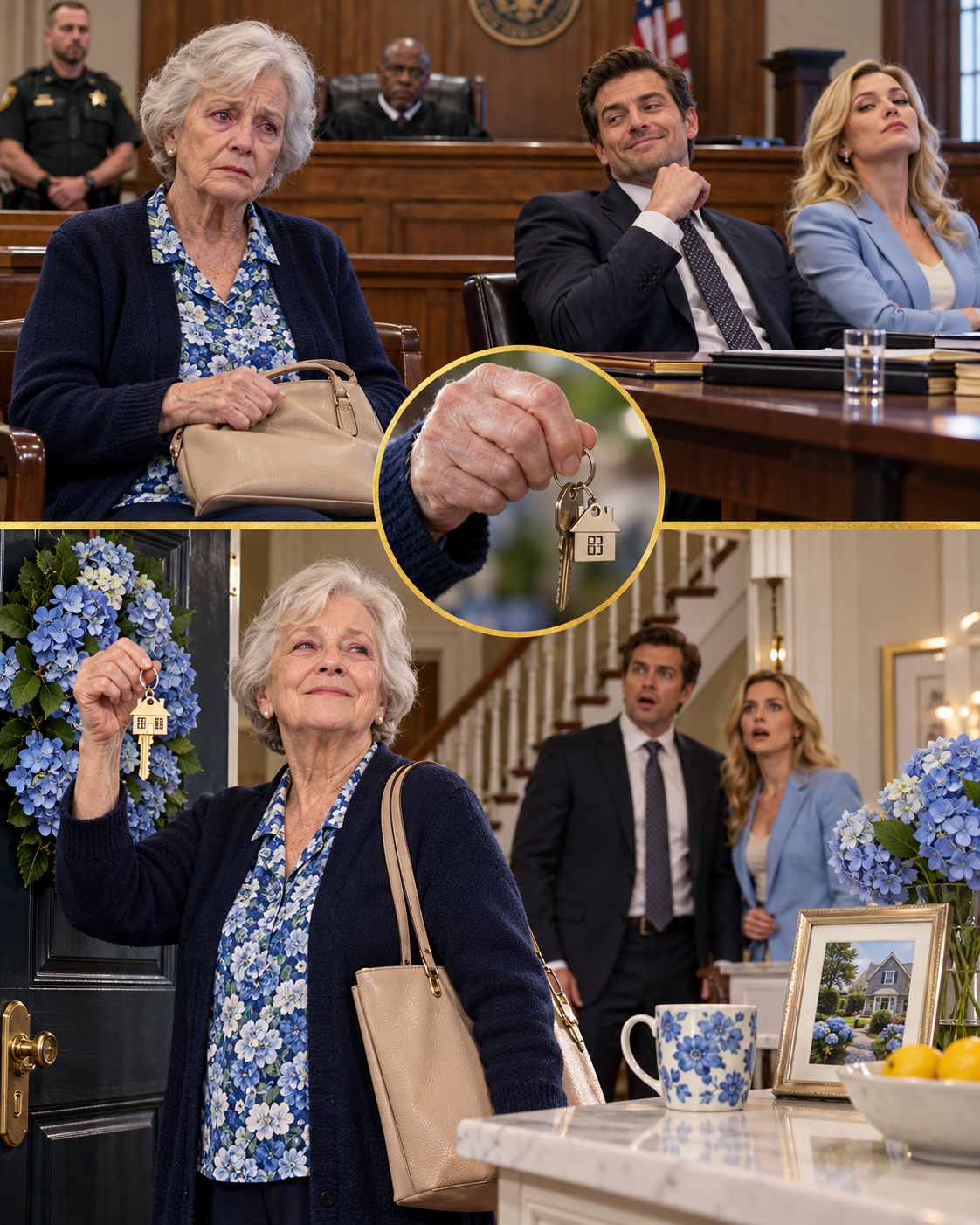
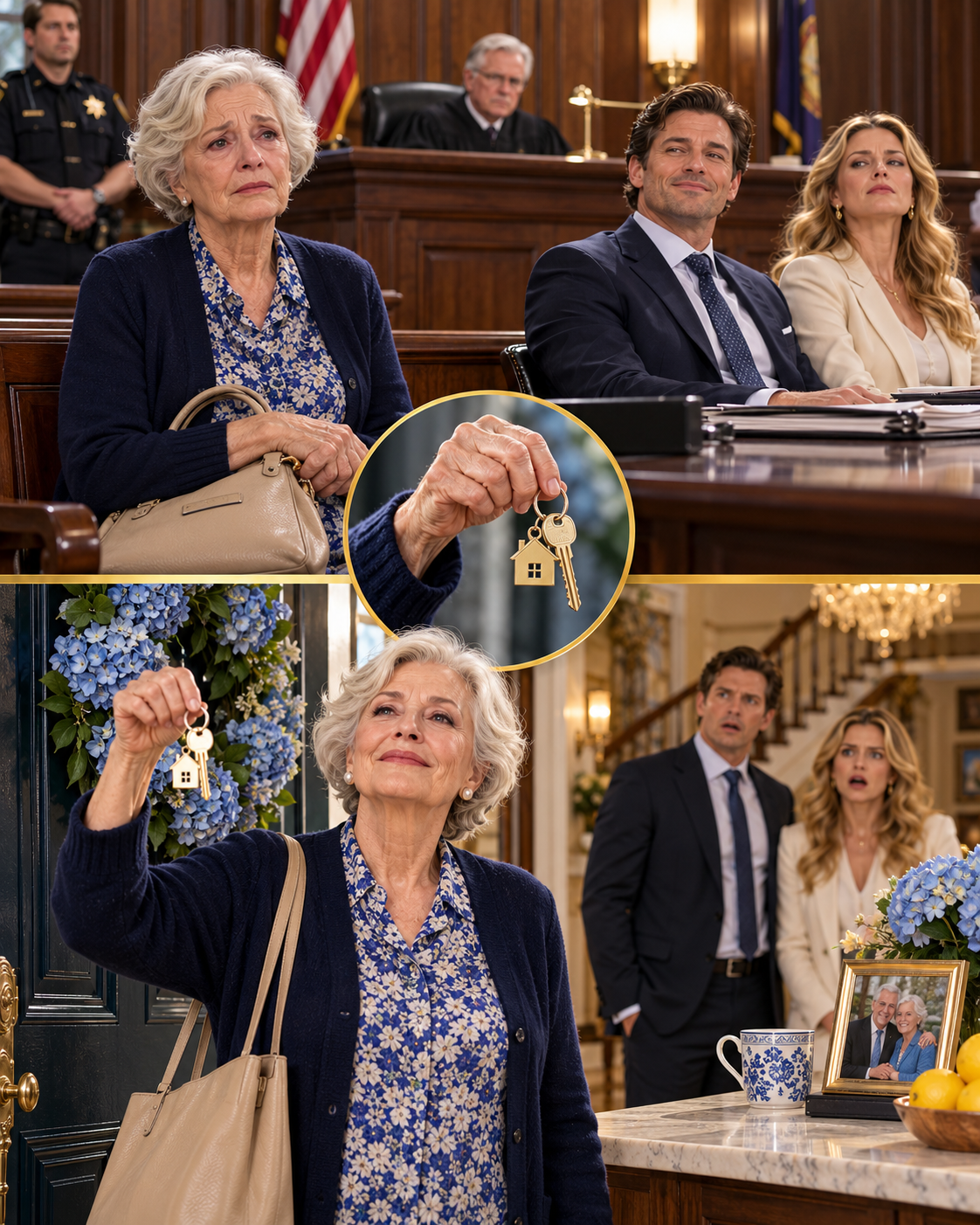
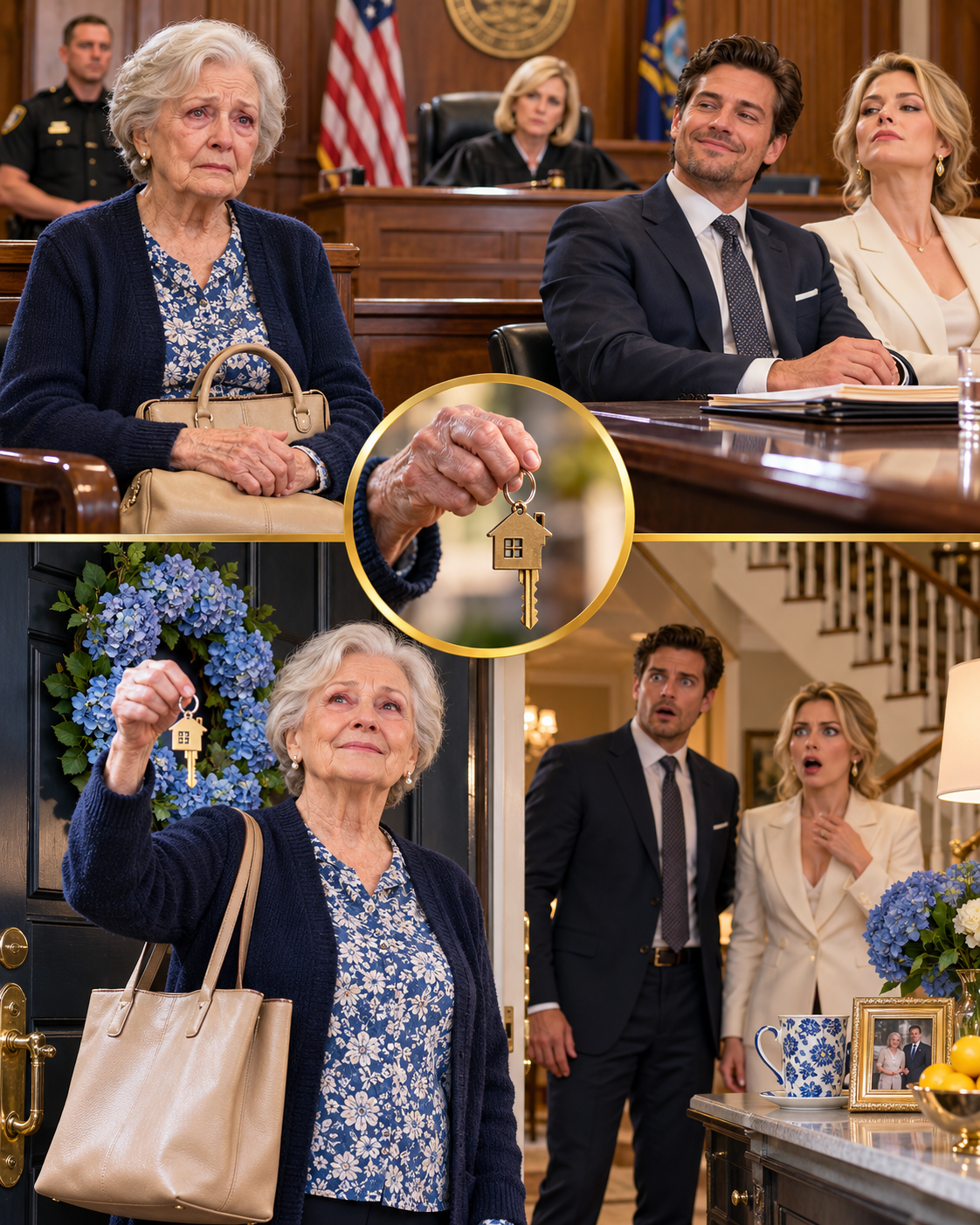
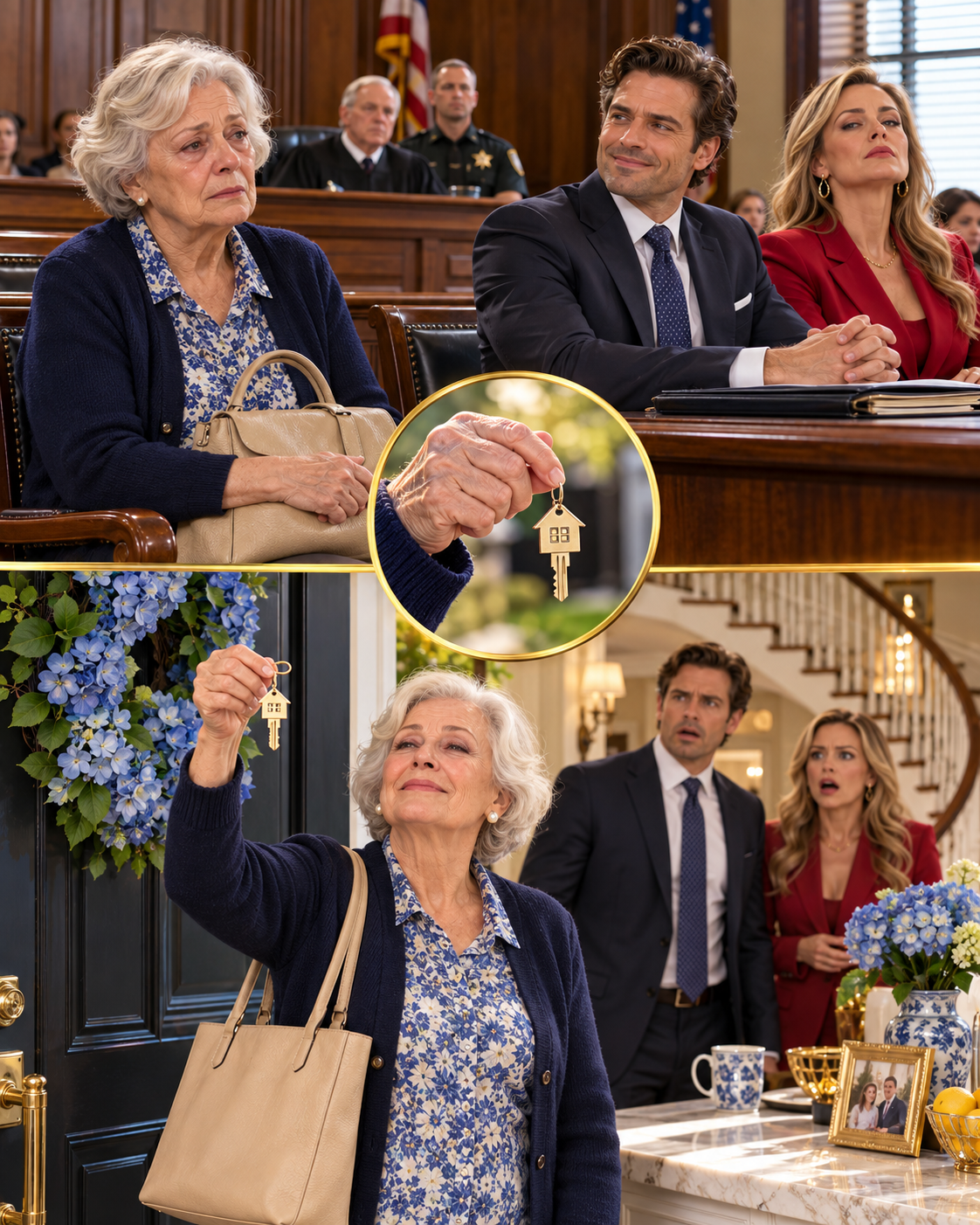
I was seventy-one years old, wearing a plain navy cardigan, sensible shoes, and the expression of a woman who had supposedly become too confused to manage her own life.
That was precisely how Evan wanted me to look.
For three weeks, I had let him believe it.
The courtroom smelled like old carpet, printer toner, and coffee that had probably been sitting on a warmer since sunrise. Fluorescent lights hummed overhead.
Evan sat beside Claire at the petitioner’s table.
His charcoal suit looked expensive.
His tie was perfectly knotted.
His hair had been trimmed recently.
Claire wore a cream-colored jacket and the delicate gold earrings I had given her for her thirty-fifth birthday.
I noticed that.
Funny what a person notices when someone is trying to take away her freedom.
Their attorney arranged papers into neat stacks.
His name was Tyler Grant.
He looked young enough that I wondered whether his law school diploma was still warm.
He glanced at me several times.
Not cruelly.
More curiously.
I realized Evan had probably described something very different to him.
A helpless widow.
A confused mother.
A frightened old woman who had become suspicious of everyone after losing her husband.
Their petition asked the court to declare me incapable of managing my property and financial affairs.
The language sounded polite.
The effect would not have been.
If Evan succeeded, he would gain control over my investment accounts, my house, my financial decisions and, depending on what the court eventually authorized, almost every meaningful choice connected to the life Thomas and I had spent forty-three years building.
According to the petition, I had become forgetful after my husband died.
According to Claire, I left appliances running.
According to Evan, I signed documents without understanding what they meant.
According to both of them, I had become paranoid about money.
And according to the final paragraph of Evan’s affidavit, he was acting only because he was “deeply concerned for his mother’s safety and well-being.”
That was my favorite part.
Concerned.
Three weeks earlier, I had come downstairs shortly after six in the morning and found Claire sitting in my kitchen.
My kitchen.
She was drinking coffee from Thomas’s old blue mug while Evan stood at the counter opening envelopes addressed to me.
I stopped in the doorway.
“What are you doing?”
Evan looked up.
He smiled.
“Helping.”
There are moments when one word tells you everything you need to know about another person.
Helping.
He had opened a brokerage statement.
A property tax notice lay beside it.
Two envelopes from my bank had already been torn open.
“You’re opening my mail.”
“You weren’t keeping up with things.”
“I was.”
“Mom.”
The way he said it bothered me more than the mail.
Soft.
Patient.
Condescending.
As if I were a child insisting I could tie my own shoes.
Claire blew across the surface of her coffee.
“You’ve had a difficult year, Margaret.”
“My husband died.”
“Yes. Exactly.”
I looked at her.
Thomas had been dead eleven months.
Eleven months of waking up and still turning toward his side of the bed.
Eleven months of almost calling his name when I found something funny.
Eleven months of discovering how silence could fill a room more completely than noise.
Grief had made me tired.
It had made me lonely.
Sometimes it made me walk into the pantry and forget what I had come for.
But grief was not dementia.
Loneliness was not incompetence.
And age was not permission.
I took the brokerage statement from Evan’s hand.
“If I need help, I’ll ask.”
His smile disappeared for half a second.
Then it returned.
“Of course.”
That should have been the end of it.
It wasn’t.
Three days later, the password to one of my investment accounts stopped working.
I assumed I had typed it incorrectly.
I tried again.
Then again.
Finally, a message appeared telling me the password had recently been changed.
I called Evan.
“Did you do something with my investment account?”
A pause.
Then a sigh.
“Mom, we talked about this.”
“No, we did not.”
“You’ve been having trouble keeping track of passwords.”
“I keep my passwords in a locked book.”
“You lost the book.”
I looked toward my desk.
The little brown notebook was exactly where I had left it.
“I’m looking at it.”
Another pause.
Then he laughed softly.
“Well, maybe I misunderstood.”
The next morning, my tablet disappeared from the side table beside my chair.
I searched the living room.
The kitchen.
My bedroom.
I even checked the laundry room because by then I understood what they wanted me to do.
They wanted me to search ridiculous places.
They wanted me to doubt myself.
Claire watched from the kitchen doorway.
“What are you looking for?”
“My tablet.”
“Again?”
I turned.
“What do you mean, again?”
Her face changed.
Just slightly.
She had moved too quickly.
“I just mean you’ve been misplacing things lately.”
“I have never misplaced my tablet.”
She shrugged.
“Maybe you don’t remember.”
That was when I understood.
Not completely.
But enough.
They weren’t responding to my confusion.
They were creating it.
Once you see that distinction, everything changes.
I didn’t confront them.
That surprised even me.
Twenty years earlier, I would have.
Ten years earlier, I probably would have demanded answers until the windows shook.
But I was seventy-one, not twenty-one.
And one advantage of growing older is that you eventually learn anger is most useful when nobody knows you’re carrying it.
So I smiled.
“You’re probably right.”
Claire stared at me.
I watched suspicion soften into satisfaction.
That was the first time I pretended.
It wasn’t the last.
Two days later, Claire’s younger brother, Lucas, arrived with three suitcases and moved into my guest house.
Nobody asked me.
Evan said it was temporary.
“He can keep an eye on the property.”
“I’m capable of looking after my own property.”
“Mom, nobody said you weren’t.”
That sentence became one of his favorites.
Nobody said you weren’t.
While doing everything possible to prove I wasn’t.
Then came the morning that changed everything.
I had gone to the pharmacy shortly after breakfast.
When I returned, my key would not turn in the front-door lock.
I tried once.
Twice.
Three times.
The deadbolt had been changed.
I stared at the brass key resting uselessly in my palm.
Then footsteps approached from inside.
Evan opened the door approximately six inches.
He did not look embarrassed.
That was the part I remember most.
“Why doesn’t my key work?”
“We changed the locks.”
“You changed the locks on my house?”
“Mom, you lost a set of keys last month.”
“No, I didn’t.”
“You told me you did.”
“No, Evan. I did not.”
His expression became unbearably gentle.
“You’re getting confused.”
I still remember the cold metal of the useless key pressed into my palm.
I remember the little click of Claire’s shoes somewhere behind him.
I remember seeing a suitcase belonging to Lucas near my hallway.
And I remember thinking:
That was your mistake.
Not changing the locks.
Assuming confusion was the only reason I might stay quiet.
I looked down at the key.
Then back at my son.
Maybe he expected shouting.
Maybe tears.
Maybe a scene he could later describe in another affidavit.
Instead, I nodded.
“All right.”
He blinked.
“All right?”
“I must have forgotten.”
For the first time, he looked relieved.
“Yes.”
I slipped the key into my handbag.
“I’m tired.”
“You should rest.”
“I think I will.”
That afternoon, I checked into a motel twelve miles away.
I paid with a credit card Evan didn’t know I still carried.
And I told no one where I was.
For three weeks, I let them believe exactly what they wanted to believe.
When Evan called, I repeated questions occasionally.
When Claire texted to tell me about an appointment I had never made, I responded, “Thank you for reminding me.”
When Evan told me the lawyer was “just helping the family put protections in place,” I pretended not to understand the difference between a power of attorney and a guardianship petition.
He seemed almost disappointed by how easy it was becoming.
Every evening, I sat beneath the motel room’s ugly white ceiling, opened my canvas handbag, and added something else to the file.
Dates.
Copies.
Texts.
Bank notices.
Account records.
A medical evaluation.
A timeline.
And their petition.
Especially their petition.
Because people who lie repeatedly often make the same mistake.
They begin believing nobody else is keeping count.
I was.
Now that file sat beside me in the courtroom.
Tyler Grant rose when the door behind the bench opened.
“All rise.”
I stood more slowly than everyone else.
Partly because my left knee genuinely hurt.
Partly because Evan was watching.
Judge Malcolm Reed entered.
He had silver hair, narrow reading glasses, and the habit of pausing before turning each page.
I studied him.
Something about his face bothered me.
Not fear.
Recognition.
I had seen him somewhere before.
Or perhaps he had seen me.
Judge Reed began reviewing the petition.
He read silently for several minutes.
Nobody spoke.
Evan looked confident.
Claire looked bored.
Tyler looked prepared.
I simply folded my hands in my lap.
Finally, Tyler stood.
“Your Honor, this case concerns an elderly widow experiencing what appears to be rapid cognitive decline following the death of her husband.”
Rapid cognitive decline.
The phrase almost made me smile.
Tyler continued.
“The petitioner, Mrs. Hale’s only son, is deeply concerned she can no longer make safe financial decisions independently.”
Judge Reed glanced down at the file.
“Mrs. Hale is present?”
“Yes, Your Honor.”
Tyler turned slightly and gestured toward me.
Judge Reed lifted his head.
His eyes found mine.
Then stopped.
For several seconds, he said nothing.
His expression changed.
He removed his glasses.
I saw recognition settle over his face.
“Mrs. Margaret Hale?”
I stood.
“Yes, Your Honor.”
He leaned forward.
And then the entire courtroom seemed to become very still.
“Margaret Hale,” he repeated.
His eyes narrowed.
“Is that really you?”
Evan’s smile disappeared.
And for the first time since he changed the locks on my house, I knew he was finally beginning to understand that he had missed something.
Something important.
PART 2: THE NAME MY SON FORGOT TO RESPECT
Evan turned toward me.
Not dramatically.
Just enough.
His eyes moved from Judge Reed to my face, then back again.
Claire whispered something I couldn’t hear.
Tyler Grant looked genuinely confused.
“Yes, Your Honor,” I said. “It’s me.”
Judge Reed stared another moment.
Then a smile touched one corner of his mouth.
“I haven’t seen you in… what? Fifteen years?”
“Closer to eighteen.”
“That long?”
“I’m afraid so.”
Evan shifted in his chair.
Tyler rose.
“Your Honor, may I ask—”
Judge Reed raised one hand.
“Mr. Grant, before you become concerned, Mrs. Hale and I do not have a personal relationship requiring recusal. But I believe the parties are entitled to know the context.”
He looked at me.
“Unless you object?”
“I don’t.”
Judge Reed turned toward Tyler and Evan.
“Mrs. Hale spent nearly thirty years working as a forensic accountant and fiduciary reviewer in matters involving estates, trusts and court-supervised guardianships.”
Silence.
I watched my son’s face.
There it was.
Not surprise exactly.
Evan knew what I had done for a living.
Of course he did.
He had simply never cared enough to understand what it meant.
To him, I had always “worked with numbers.”
Thomas had been the one with the impressive job title, the business cards, the client dinners, the stories Evan liked repeating.
My work happened in offices, conference rooms and court files.
Quiet work.
Detailed work.
The kind where a misplaced decimal or unexplained withdrawal could reveal that someone trusted with another person’s life savings had decided trust was the same thing as ownership.
Judge Reed continued.
“When I was a young attorney, Mrs. Hale’s training materials on fiduciary accounting were used extensively in this courthouse. I attended one of her seminars early in my career.”
He looked directly at Tyler.
“That history does not determine anything before this court. Evidence does. I’m mentioning it because the petition describes Mrs. Hale simply as a retired widow with no relevant professional background.”
Tyler slowly looked at Evan.
That was the first crack.
Very small.
But visible.
I remembered Tyler’s neat stacks of paper.
His careful posture.
His confidence.
Now I saw something else.
A question.
What else hadn’t his clients told him?
Evan cleared his throat.
“My mother has been retired for years.”
Judge Reed replaced his glasses.
“That is certainly true.”
“And whatever she did thirty years ago doesn’t mean she’s competent now.”
“No,” Judge Reed said. “It does not.”
Evan relaxed slightly.
Then the judge added, “Which is why we will consider evidence instead of assumptions.”
I almost smiled.
Tyler resumed his presentation.
He was more careful now.
He described my alleged forgetfulness.
Claire testified first.
She walked to the witness stand with the solemn expression of someone preparing to discuss a tragedy.
I had seen that expression before.
At Thomas’s funeral.
Claire was good at looking sad in public.
Tyler approached.
“Mrs. Hale—”
Claire corrected him softly.
“Claire Bennett. Hale is my husband’s name.”
“Mrs. Bennett, how often were you seeing Margaret before the petition was filed?”
“Almost daily.”
“Why?”
“To help her.”
“With what?”
“Meals. Appointments. Household things. Bills.”
I listened.
Meals?
Claire had ordered takeout twice.
Appointments?
She had canceled one dental cleaning without asking me.
Household things?
She had rearranged my kitchen drawers because she claimed I kept knives “in a dangerous location.”
Bills?
She had opened them.
That was apparently the same as paying them.
Tyler asked, “Did you observe anything that made you concerned about Mrs. Hale’s memory?”
“Yes.”
“What?”
Claire looked toward me.
I gave her nothing.
She continued.
“She would ask the same questions repeatedly.”
“Can you provide an example?”
“She asked Evan several times why her account password had changed.”
Technically true.
Interesting choice.
Tyler continued.
“Anything else?”
“She misplaced important things. Her tablet. Keys. Documents.”
My fingers rested lightly on the canvas handbag.
Tablet.
Keys.
Documents.
Three things.
All three had disappeared after Evan and Claire began “helping.”
Tyler asked about the stove.
Claire said she had found a burner left on.
“When?”
She hesitated.
“Early March.”
“Do you remember the date?”
“March sixth, I believe.”
I wrote the date on my notepad.
Not because I needed it.
Because I wanted Evan to see me writing.
He did.
His jaw tightened.
Then Tyler called him.
My son looked convincing on the witness stand.
That hurt more than I expected.
A mother spends decades learning a child’s face.
I knew the expression Evan made before he lied about breaking a window at thirteen.
I knew how his mouth tightened when he wanted money from Thomas.
I knew the little movement of his thumb against his index finger when he was nervous.
I watched that thumb now.
“Has your mother changed since your father’s death?” Tyler asked.
“Yes.”
“How?”
“She’s suspicious.”
“Of whom?”
“Everyone.”
I almost laughed.
Everyone consisted of Evan and Claire.
“And financially?”
“She makes impulsive decisions.”
“What kind?”
“She wanted to move money.”
“From where?”
“One investment account to another.”
“Was there a reason?”
“She couldn’t explain it clearly.”
That was a lie.
I had explained it in a twenty-minute conversation.
Interest rates.
Management fees.
Tax exposure.
Evan had stared at his phone through half of it.
Now my inability to make him listen had become my inability to explain.
Tyler nodded solemnly.
“Why are you asking this court to intervene?”
Evan looked at me.
For one second, I saw my little boy.
Six years old.
Standing on a kitchen chair helping Thomas frost my birthday cake.
Then the image disappeared.
“I don’t want my mother taken advantage of.”
A strange pain moved through my chest.
Not because he was lying.
Because somewhere inside the lie was probably something he had once believed.
Maybe when he first started going through my mail, he had told himself it was temporary.
Maybe when he changed the password, he had convinced himself he was protecting me.
People rarely wake up and announce they are becoming the villain in someone else’s life.
They adjust a boundary.
Then another.
Then another.
Eventually, they stand inside your house with your key in their pocket and call it love.
Tyler finished.
Judge Reed looked toward me.
“Mrs. Hale, do you have counsel?”
“No, Your Honor.”
“You understand you have the right to obtain counsel?”
“I do.”
“Would you like additional time?”
“No.”
Evan leaned toward Tyler.
I heard the chair creak.
Judge Reed studied me.
“You intend to respond yourself?”
“Yes.”
“Very well.”
I stood.
My knee hurt.
I ignored it.
I picked up the canvas handbag and carried it to the table in front of me.
Then I removed the file.
Evan’s eyes followed it.
I set it down.
It was nearly three inches thick.
Claire stopped whispering.
I turned toward the judge.
“Your Honor, before I respond to my son’s concerns, may I clarify something?”
“Yes.”
“My son says he filed this petition because he fears I may be taken advantage of.”
“Yes.”
I looked directly at Evan.
“I agree that someone has been attempting to take advantage of me.”
His face hardened.
I turned back toward the bench.
“We simply disagree about who that person is.”
The courtroom went silent again.
I opened the file.
And pulled out the first document.
PART 3: THREE WEEKS OF SILENCE
The first thing I gave Judge Reed was not a bank statement.
It was not a medical report.
It was a calendar.
That surprised everyone.
“Your Honor,” I said, “my daughter-in-law testified that on March sixth she found a stove burner burning unattended in my kitchen.”
Judge Reed checked his notes.
“That is my understanding.”
I handed a copy to the clerk.
“On March sixth, I was not living in my house.”
Claire’s head snapped toward me.
I continued.
“I checked into the Pinecrest Motor Lodge on March second, four days earlier, after discovering my son had changed the locks on my home.”
Tyler looked at Evan.
Evan stared straight ahead.
The clerk passed the receipt to Judge Reed.
It showed my check-in date.
March 2.
Room 214.
Twenty-one consecutive nights.
Claire began shifting in her seat.
Tyler stood.
“Your Honor, the witness may simply have mistaken the date.”
“I may have,” Claire said quickly.
I nodded.
“Of course.”
Then I took out another page.
“That is why I checked.”
The second document was a copy of a text message Claire had sent me on March sixth.
I had saved it.
MARGARET, EVAN SAYS YOU’RE STILL STAYING SOMEWHERE ELSE. PLEASE COME HOME WHEN YOU’RE READY TO ACCEPT SOME HELP.
Timestamp: 8:43 p.m.
I had printed it in large enough type that nobody could pretend it was difficult to read.
Judge Reed looked from the text to Claire.
“Mrs. Bennett?”
Claire swallowed.
“I may have meant another day.”
“You testified under oath that you believed it was March sixth.”
“I said I believed.”
“Yes.”
He handed the page back to the clerk.
“Continue, Mrs. Hale.”
My hands were steady.
That pleased me.
Because my heart was not.
This was my son.
Whatever else he had become, he was still my son.
Every document I presented felt like tearing another photograph from an album.
But I reminded myself of the locked door.
The password.
The tablet.
The petition.
Love does not require surrender.
“My son testified I had been losing important objects.”
I removed a photograph.
“This is the brown notebook where I keep account information and passwords. Evan told me I had lost it.”
Judge Reed examined the photograph.
“When was it taken?”
“The morning after he told me it was missing. It was in the locked drawer of my desk where I always kept it.”
Evan spoke from his seat.
“That doesn’t prove anything.”
Judge Reed looked sharply at him.
“Mr. Hale, your attorney will have an opportunity to respond.”
Evan leaned back.
His thumb rubbed against his finger.
I noticed.
So did Tyler.
I continued.
“My tablet went missing the same week.”
“Did you recover it?” Judge Reed asked.
“Yes.”
“Where?”
I looked at Claire.
“Inside a cabinet in my guest house.”
Lucas had left the guest house unlocked one afternoon while he went into town.
I had gone to retrieve winter clothing from a storage closet on the property.
I had no intention of entering his living space.
Then I saw my tablet charger through the window.
I called Lucas.
He told me he did not know anything about it.
I told him I was standing outside looking at the charger.
He came back twenty minutes later.
My tablet was in the cabinet.
He claimed Evan had put it there because he was “keeping it safe.”
I had made Lucas put that explanation in a text message before I left.
I slid the printed message across the table.
Tyler closed his eyes briefly.
That was the second crack.
The next document concerned the investment account.
I explained the password change.
Then I provided the bank’s notice confirming that a password reset had been requested during a period when I was still able to access the account normally.
“Did you authorize your son to change the password?” Judge Reed asked.
“No.”
“Did he have lawful authority to control the account?”
“No.”
“Did you give him your login information?”
“No.”
Tyler stood.
“Your Honor, my client disputes that he personally changed the password.”
I turned toward him.
“I understand.”
Then I produced a text Evan had sent me after I called asking about the account.
It said:
I ONLY RESET IT BECAUSE YOU KEPT GETTING LOCKED OUT. I’LL GIVE YOU THE NEW PASSWORD WHEN WE TALK.
I looked at my son.
His face had become pale.
Tyler took the page.
He read it once.
Then again.
He did not look at Evan immediately.
That was worse.
When an attorney stops looking at his client, the client should worry.
Judge Reed asked, “Mr. Grant, was this communication provided to you?”
Tyler’s answer came slowly.
“No, Your Honor.”
Evan whispered something.
Tyler raised a hand without turning toward him.
I continued.
The locks were next.
I showed the invoice from the locksmith.
I had obtained it after explaining I was the homeowner.
The service had been requested by Evan.
I showed the deed confirming the property belonged solely to me after Thomas’s death.
I showed another message Evan had sent two days later.
YOU SHOULDN’T BE GOING IN AND OUT OF THE HOUSE ALONE UNTIL WE GET THIS SITUATION SETTLED.
Judge Reed removed his glasses again.
“What situation?”
Evan’s attorney did not answer.
Neither did Evan.
I did.
“The situation in which I disagreed with him.”
Nobody laughed anymore.
I remembered the first night in the motel.
The room smelled faintly of bleach and old air-conditioning.
I sat on the edge of the bed with a paper cup of tea between my hands.
For the first hour, I did nothing.
I simply stared at the wall.
I had spent my career studying financial exploitation.
I knew what coercive control looked like.
I knew how small acts accumulated.
Isolation.
Access to records.
Control of communications.
Changing passwords.
Creating narratives of incapacity.
Separating a vulnerable person from familiar surroundings.
Speaking on that person’s behalf until everyone forgot to ask the person herself.
I had taught those patterns to attorneys.
Bank officers.
Social workers.
Court investigators.
Yet when they happened to me, I had spent days trying to explain them away.
That was the part I had been most ashamed of.
Not because I had failed to recognize the danger.
Because I had recognized it and resisted naming it.
Naming it meant admitting my son was responsible.
That night, sitting in the motel, I heard Thomas’s voice in my memory.
Margaret, numbers don’t care what you wish were true.
He used to say that when I was struggling with a difficult case.
Numbers didn’t care.
Neither did dates.
Neither did documents.
So I stopped asking what kind of son Evan had once been.
And started recording what the man standing in front of me was doing now.
Judge Reed looked at the file.
“Mrs. Hale, the petition also expresses concerns regarding cognitive impairment. Do you have anything addressing that?”
“Yes.”
Now Evan smiled again.
Just a little.
He had been waiting for this.
Because documents could be explained.
Locks could be called precautions.
Passwords could be called assistance.
But age?
Age was visible.
I could not cross-examine the wrinkles on my face.
I reached into the file.
Three weeks earlier, after checking into the motel, I had scheduled a comprehensive cognitive evaluation.
Not because Evan demanded one.
Because I wanted the truth.
That is another thing people forget about those of us who have spent careers examining facts.
We are not afraid of facts simply because they might hurt.
If I had been losing my ability to manage my affairs, I wanted to know.
I would have made plans.
Chosen someone responsible.
Placed safeguards around my finances.
I might even have asked Evan to help.
Before he proved he should never be trusted with that power.
I placed the evaluation on the table.
Judge Reed read the summary.
His expression did not change much.
But Tyler’s did.
The report found no evidence of dementia.
No evidence of significant cognitive impairment.
My memory performance was consistent with my age.
My reasoning remained intact.
My ability to understand financial information was described as “strong.”
The physician had included one sentence that made me laugh when I first read it.
PATIENT DEMONSTRATES UNUSUALLY HIGH FACILITY WITH FINANCIAL AND LEGAL CONCEPTS FOR AGE-MATCHED PEERS.
Unusually high.
Thirty years of auditing other people’s mistakes apparently counted for something.
Tyler asked to examine the report.
He read it in silence.
Evan leaned close.
“What does it say?”
Tyler did not answer him.
Judge Reed looked at the petition again.
“Mr. Grant, does the petitioner have an independent medical opinion contradicting this evaluation?”
Tyler flipped through his papers.
“No formal medical evaluation, Your Honor.”
“Any physician diagnosing Mrs. Hale with dementia?”
“No.”
“Any physician concluding she lacks capacity to manage her finances?”
“No.”
“Then on what professional evidence was the allegation of rapid cognitive decline based?”
Tyler’s jaw tightened.
“The family’s observations.”
The judge glanced at Claire.
Then at Evan.
The same family whose observations now included an imaginary stove incident on a day I wasn’t living in the house.
I had one more document for that section.
This one hurt most.
It was a copy of the petition itself.
I opened to the page containing Evan’s sworn declaration.
“Your Honor, may I ask the court to look at paragraph seventeen?”
Judge Reed found it.
I knew the words by heart.
“Petitioner states that Respondent has become unable to understand complex financial decisions and routinely signs documents without reading them.”
“Yes.”
I placed one final sheet beside it.
“This is an email Evan sent me six weeks before filing the petition.”
I read it aloud.
MOM, CAN YOU LOOK OVER THE NUMBERS IN THIS AGREEMENT? CLAIRE AND I DON’T UNDERSTAND THE TAX PART AND YOU’RE BETTER AT THIS STUFF THAN ANYONE I KNOW.
I stopped.
Nobody moved.
Six weeks.
Not six years.
Six weeks before he asked a judge to declare me financially incapable.
Judge Reed looked toward Evan.
For the first time, my son looked afraid.
Then the judge asked him one question.
“Mr. Hale, which statement was true?”
PART 4: WHEN THEIR STORY COLLAPSED
Evan did not answer immediately.
That was unusual.
My son had always been quick with words.
As a child, he could explain a broken lamp before the pieces stopped moving.
As an adult, he had become even better.
But there are questions that punish speed.
If he said the email was true, then he had trusted my financial judgment shortly before claiming I could not understand financial matters.
If he said the petition was true, then he had knowingly asked a cognitively impaired woman to analyze his tax agreement.
Either answer damaged him.
Finally, Tyler stood.
“Your Honor, may I confer with my client?”
Judge Reed nodded.
“Briefly.”
They moved several feet away.
I could not hear everything.
I heard Tyler say, “You told me—”
Then Evan whispered sharply.
Claire interrupted.
Tyler turned toward her.
His expression hardened.
When they returned, Tyler looked ten years older.
“Your Honor, my client maintains that his concern increased substantially in the weeks following that email.”
Judge Reed tapped the evaluation report.
“The evaluation performed during those weeks?”
Tyler said nothing.
Judge Reed continued.
“And the change in the locks occurred before this petition was filed?”
“Yes.”
“Without legal authority?”
Tyler looked at Evan.
“So far as I am aware, yes.”
The judge leaned back.
There was no anger in his voice.
That made it worse.
“Mr. Hale, concern for an aging parent does not create legal authority. Filing a petition does not retroactively create legal authority. A son does not become the owner of his mother’s property because he has decided she requires assistance.”
Evan stood.
Tyler immediately touched his arm.
“Sit down.”
But Evan ignored him.
“This is ridiculous.”
Judge Reed’s expression sharpened.
“Mr. Hale.”
“You don’t know what it’s been like.”
“Sit down.”
“She has changed.”
My chest tightened.
There it was.
The sentence he had wanted to say from the beginning.
Not legal language.
Not attorney language.
His language.
“She has changed since Dad died.”
I looked at him.
“Yes,” I said.
Judge Reed looked at me but did not interrupt.
I continued.
“I have changed.”
Evan stared at me.
I had not planned this part.
Documents were easier.
Numbers were safer.
But some truths cannot be placed into exhibits.
“Your father died,” I said. “Of course I changed.”
“You stopped doing things.”
“Yes.”
“You barely went anywhere.”
“Yes.”
“You forgot things.”
“Occasionally.”
“You’d sit in that chair for hours.”
I swallowed.
“Yes.”
His voice broke slightly.
“You weren’t you.”
For the first time that morning, my anger softened.
Not disappeared.
Softened.
Because I suddenly understood something I had refused to consider.
Evan had been frightened.
At least in the beginning.
He had watched Thomas die.
He had watched me fall apart afterward.
He had mistaken grief for the beginning of losing me too.
That did not excuse what followed.
Understanding is not absolution.
But motives matter.
Especially when someone crosses the line between helping and controlling.
“You could have talked to me,” I said.
“I tried.”
“No. You talked around me. You talked over me. You talked about me with Claire. You never talked to me.”
He looked away.
I continued.
“You could have asked me to see a doctor.”
“You would have said no.”
“I went without you.”
“You could have given me access to the accounts.”
“They were not your accounts.”
“I’m your son!”
The words echoed.
Judge Reed said quietly, “Mr. Hale.”
Evan lowered his voice.
But the courtroom had already heard what mattered.
Not I’m trying to protect you.
Not I love you.
I’m your son.
As though that were ownership.
As though birth created entitlement.
Claire finally spoke.
“Margaret, this wasn’t about stealing from you.”
I turned toward her.
“What was it about?”
She opened her mouth.
Nothing came out.
I waited.
“So tell me.”
“We were trying to preserve things.”
“For whom?”
“For the family.”
“I am the family.”
Her eyes flickered.
There it was.
A tiny moment.
But I saw it.
The same way I used to see a suspicious number in a ledger.
Not because the number screamed.
Because it didn’t belong.
“For the family,” I repeated.
Claire looked toward Evan.
Then Tyler.
And I understood.
Not everything.
Enough.
“You thought I would spend it.”
Claire said nothing.
I almost laughed.
“You thought I would spend my own money.”
Evan sat again.
“Mom, Dad worked his entire life for what you have.”
The sentence landed harder than anything said in court that day.
For one moment, I couldn’t breathe.
Thomas worked his entire life.
What you have.
As if I had found our home lying beside the road.
As if the investments had appeared while I slept.
As if I had not worked for thirty years.
As if I had not packed lunches, balanced accounts, paid tuition, cared for Thomas’s mother through cancer, missed promotions because Evan had pneumonia, then gone back to work, studied at night and built a career of my own.
I looked at my son.
“Your father worked hard.”
“I know.”
“So did I.”
“I didn’t mean—”
“Yes, you did.”
My voice was quiet.
That was why he heard every word.
“You just never thought about it.”
Silence.
I remembered Thomas’s funeral.
Evan standing beside me as people left the church.
His arm around my shoulders.
“You don’t have to worry about anything now, Mom.”
At the time, I had thought it was love.
Maybe it had been.
Maybe the problem began when worry turned into authority.
When authority turned into access.
When access turned into expectation.
And when expectation turned into entitlement.
Judge Reed addressed Tyler.
“Counsel, are you seeking to continue with the petition?”
Tyler hesitated.
He glanced at Evan.
Then he did something I respected.
He stopped performing.
“Your Honor, given the evidence produced today, I believe I need to reassess the factual basis provided to my office.”
Evan stared at him.
“What?”
Tyler kept his eyes on the judge.
“I would request a brief recess.”
Granted.
The moment Judge Reed left the bench, Evan came toward me.
“Mom.”
I closed my file.
“Not here.”
“You embarrassed me.”
I looked up slowly.
Of all the things he could have said.
That was what he chose.
“You filed a court petition asking strangers to declare me incapable of running my own life.”
“I was trying to help.”
“You changed the locks.”
“You were unstable.”
“You took my tablet.”
“I moved it.”
“You changed my password.”
“So you wouldn’t make a mistake.”
“You moved your brother-in-law into my guest house.”
“Lucas needed somewhere to stay.”
That stopped me.
For three weeks, Evan had described Lucas’s presence as protection for me.
Now, under pressure, the truth slipped out.
Lucas needed somewhere to stay.
Not me.
Him.
I nodded slowly.
Evan realized what he had admitted.
“That’s not what I meant.”
“I know exactly what you meant.”
Claire approached.
“Margaret, this can still be handled privately.”
I almost admired her nerve.
“You mean now that it is going badly?”
Her face tightened.
“We are family.”
“You remembered that very suddenly.”
“I have been taking care of you for months.”
“No. You have been occupying my space for months.”
People nearby were listening.
I lowered my voice.
“I want my house key.”
Evan shook his head.
“Mom—”
“My key.”
“We can talk after the hearing.”
“No.”
I held out my hand.
He stared at it.
That was when Tyler Grant came over.
“Mr. Hale.”
Evan looked at him.
Tyler’s tone remained professional.
“Give your mother the key.”
“Tyler—”
“Give her the key.”
Evan reached into his pocket.
For one second, I thought he might refuse.
Then he placed the key in my palm.
It was silver.
New.
Cold.
Almost identical in weight to the useless brass key I had held outside my own front door three weeks earlier.
But this one turned the lock.
I closed my fingers around it.
Evan looked at me.
“What are you going to do now?”
I put the key into my handbag.
“Something you should have allowed me to do from the beginning.”
“What?”
“Decide.”
The courtroom officer called us back.
Judge Reed returned.
Tyler stood.
“Your Honor, after conferring with my client, we are prepared to withdraw the petition.”
Evan’s head turned sharply.
Apparently that had not been the exact agreement.
Judge Reed noticed.
“Mr. Hale?”
Evan’s face reddened.
“I…”
Tyler whispered something.
My son looked at me.
Years passed between us in that look.
Birthdays.
Christmas mornings.
School plays.
Hospital rooms.
His father’s funeral.
A kitchen full of open mail.
A locked door.
Finally, he said, “Yes.”
Judge Reed nodded.
“Mrs. Hale?”
I stood.
“I do not object to dismissal.”
Evan exhaled.
Too soon.
“I do, however, request that the record reflect the evidence presented today and that there has been no judicial finding that I lack capacity.”
Judge Reed nodded.
“It will.”
“I also request confirmation that my son has no authority to interfere with my accounts, residence or personal property based upon this petition.”
“Granted.”
“And I want it reflected that I did not consent to being excluded from my residence.”
Judge Reed looked at Evan.
Then back at me.
“It will be reflected.”
I sat.
For the first time that morning, I felt tired.
Not confused.
Not fragile.
Tired.
There is a difference.
Judge Reed reviewed several final matters, then looked over his glasses toward me.
“Mrs. Hale?”
“Yes, Your Honor?”
“I remember something from your seminar all those years ago.”
I waited.
“You told us that financial exploitation rarely begins with somebody announcing an intention to steal.”
I smiled faintly.
“I did.”
“You said it usually begins when one person decides another person no longer deserves to control what belongs to them.”
I looked at Evan.
“Yes.”
Judge Reed closed the file.
“I remembered that today.”
The petition was dismissed.
And my son, who had entered court laughing because he thought I would leave with nothing, walked out carrying nothing but his own paperwork.
But the hardest part was still waiting outside the courtroom.
PART 5: WHAT WAS LEFT AFTER THE JUDGE STOOD UP
The hallway outside the courtroom was almost empty.
Claire walked ahead of us with her arms folded tightly across her chest.
Tyler stopped Evan near the elevator and spoke to him in a low voice.
I couldn’t hear the entire conversation.
I heard enough.
“You should have disclosed those messages.”
“I didn’t think they mattered.”
“They mattered.”
“My mother twists things.”
Tyler looked at him for a long moment.
Then he said something I will always remember.
“Your mother didn’t write your messages.”
Evan had no answer.
Tyler left.
Claire pressed the elevator button.
I began walking in the opposite direction.
“Mom.”
I stopped.
Evan followed me.
“Can we talk?”
I considered saying no.
Instead, I turned.
“Yes.”
He looked suddenly younger without the courtroom behind him.
Not like a child.
Just smaller.
Claire stayed near the elevator.
“What happens now?” he asked.
“To what?”
“The house.”
“My house?”
His jaw tightened.
“Yes.”
“I go home.”
“What about Lucas?”
“He moves out.”
“Mom, he has nowhere—”
“Then he will need to find somewhere.”
“He’s family.”
“He is your wife’s brother.”
“That makes him family.”
“Family can ask permission.”
Claire approached quickly.
“He wasn’t hurting anything.”
“He was living in my guest house without my consent while the two of you described his presence as necessary for my safety.”
Claire’s eyes narrowed.
“You make everything sound sinister.”
“No.”
I shook my head.
“I make it sound accurate.”
That was something I had learned years ago in financial investigations.
People often called accurate language cruel when vague language protected them.
Withdrawal sounded better than taking.
Oversight sounded better than control.
Assistance sounded better than interference.
Concern sounded better than entitlement.
And helping sounded much better than changing an old woman’s locks and telling her she was confused.
Evan rubbed his forehead.
“Are you going to call the police?”
“No.”
Claire relaxed.
“Today,” I added.
Her face tightened again.
“I will give Lucas until tomorrow evening to remove his belongings. I will have a locksmith at the house afterward. If anything is missing, damaged or interfered with, I will deal with it properly.”
“You’d really do that to us?” Evan asked.
I stared at him.
“To you?”
His face changed.
He heard it.
Finally.
The absurdity.
For weeks, every boundary had been something I was supposedly doing to him.
Refusing account access hurt him.
Questioning the password change insulted him.
Objecting to Lucas made me difficult.
Wanting entry into my own house made me unstable.
Producing documents in court embarrassed him.
I was done carrying responsibility for the consequences of decisions I had not made.
“I did not file the petition,” I said.
“I know.”
“I did not lie about the stove.”
“I know.”
“I did not change the locks.”
“I know.”
“I did not take the tablet.”
He looked away.
“I did not change the password.”
“I said I know.”
“No.”
I stepped closer.
“You keep saying that because you want me to stop talking. I need you to actually understand it.”
His eyes met mine.
“Everything that happened today began with choices you made.”
Claire shook her head.
“This is pointless.”
I looked at her.
“For you, perhaps.”
She walked to the elevator.
The doors opened.
She stepped inside.
“Evan.”
He didn’t move.
The doors closed without him.
That surprised both of us.
We stood alone.
My son put his hands into his pockets.
“Did you really think I wanted to steal everything?”
I studied him.
“No.”
He looked almost relieved.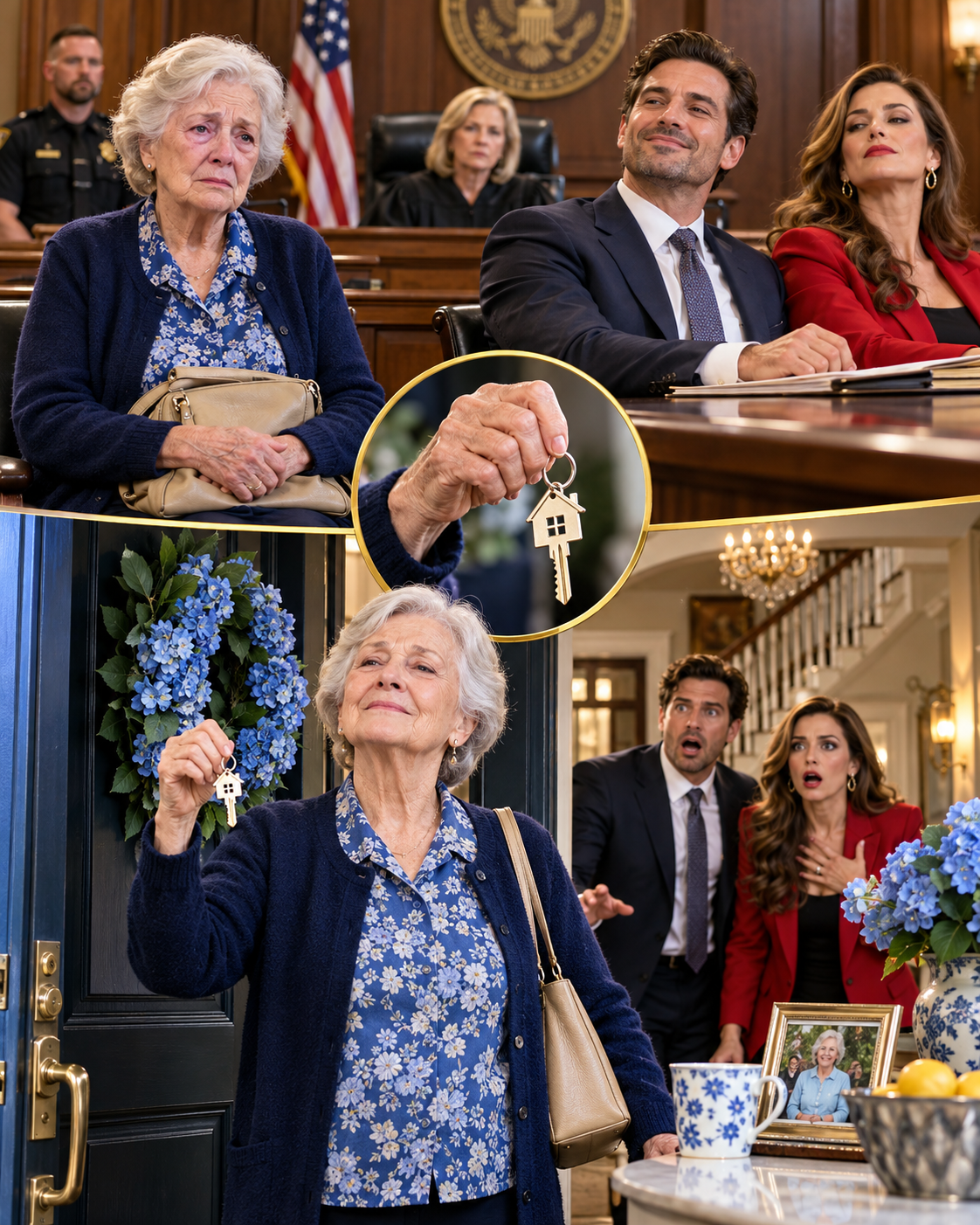
Then I continued.
“I think you convinced yourself that because you were going to inherit something someday, you had a right to protect it from me now.”
His face went still.
I had spent weeks thinking about that.
Not just what he had done.
Why.
The answer was uglier because it wasn’t cartoonish.
Evan did not want to throw me into the street and run away with bags of money.
He wanted control.
He wanted certainty.
He wanted to know the house would remain.
The investments would remain.
The savings would remain.
He wanted the future he had imagined after Thomas died to stay exactly where he expected it.
And if preserving that future required reducing me from owner to obstacle, he had found a way to justify it.
“You and Claire were afraid I might sell the house,” I said.
He said nothing.
“You were afraid I might travel.”
Nothing.
“You were afraid I might spend more than you considered reasonable.”
Still nothing.
“And every dollar I spent felt like something disappearing from your future.”
His eyes filled.
Very slightly.
I wished that made me feel victorious.
It didn’t.
Victory is an easy word when the person you defeated is a stranger.
Harder when you remember teaching him to ride a bicycle.
“Dad wanted the house to stay in the family,” he said.
“Your father wanted me to be happy.”
“You don’t know what he would have wanted.”
I almost laughed.
“I was married to him for forty-three years.”
“I was his son.”
“Yes.”
I softened my voice.
“And he loved you.”
Evan looked away.
“So do I.”
His eyes came back to mine.
The words hurt him.
They hurt me too.
“But loving you does not mean trusting you with my life after what you did.”
“Mom—”
“That is the consequence.”
His shoulders dropped.
I had spent three weeks imagining that moment.
In some versions, I shouted.
In some versions, he apologized.
In some versions, Thomas was somehow still alive and none of it had happened.
Reality was quieter.
“I thought you were falling apart,” Evan said.
“I was.”
He looked surprised.
“I was grieving. I was lonely. Some days I didn’t want to get dressed. Some nights I ate crackers for dinner because cooking for one person felt ridiculous.”
His face tightened.
“You see?”
“No.”
I stepped closer.
“That did not give you ownership of me.”
“I was scared.”
“You were allowed to be scared.”
“I didn’t know what to do.”
“You were allowed not to know.”
He said nothing.
“You were allowed to ask for help. You were allowed to insist I see a doctor. You were allowed to worry. You were allowed to disagree with me.”
My voice dropped.
“You were not allowed to erase me.”
His eyes lowered.
That was the first moment I believed he finally heard me.
Whether he accepted it was another matter.
We said goodbye in the courthouse hallway.
Not dramatically.
No hug.
No final curse.
He walked toward the elevator.
I walked toward the stairs.
Halfway down, my knee complained.
I gripped the railing and laughed quietly to myself.
If Evan had seen me, perhaps he would have filed another affidavit.
ELDERLY WOMAN REQUIRES HANDRAIL.
The thought made me laugh harder.
A woman climbing the stairs below looked up.
“You all right?”
“Yes.”
I wiped my eyes.
“I think I finally am.”
I returned home that afternoon.
For several seconds, I sat in my car at the curb.
The house looked exactly the same.
Thomas and I had bought it when Evan was nine.
The maple tree had grown taller than the roof.
One gutter needed cleaning.
There was a crack in the driveway Thomas had promised to fix for six consecutive summers.
I smiled when I saw it.
Then I looked at the new silver key.
My hand shook.
Not from confusion.
From anger.
From grief.
From relief.
From everything.
I inserted the key.
The lock turned.
I stepped inside.
The house smelled wrong.
Claire’s perfume.
Lucas’s cooking.
A lemon-scented cleaning product I never bought.
For a terrible second, I felt like a guest.
Then I saw Thomas’s blue mug on the kitchen counter.
The same mug Claire had used while Evan opened my mail.
I picked it up.
Washed it.
Dried it.
Returned it to the shelf where Thomas had always kept it.
A ridiculous thing.
A tiny thing.
But houses are built from tiny things.
So are lives.
The following morning, Lucas packed.
He apologized.
Not gracefully.
Not completely.
But enough.
He claimed he believed Evan had authority to let him stay.
I told him that should have been the first question he asked.
By six that evening, he was gone.
At seven, the locksmith arrived.
I stood beside him while every exterior lock was changed.
When he handed me the new keys, he smiled.
“Want extras?”
“Yes.”
“How many?”
I thought about it.
“Two.”
One went into my purse.
The second went into a small safe-deposit box several days later.
None went to Evan.
I restored my account passwords.
I contacted every financial institution connected to me and added verbal security instructions.
I changed the code to my alarm.
I retrieved the remaining documents Evan had handled.
And I revised the list of people authorized to receive information about me.
That list became very short.
For several months, Evan and I barely spoke.
Claire did not contact me at all.
That hurt less than I expected.
His silence hurt more.
There were mornings I reached toward the phone.
Thanksgiving nearly broke me.
Thomas had loved Thanksgiving.
He would wake before sunrise, turn on music and begin cooking as though thirty people were coming even when there were only eight.
That first Thanksgiving after the court hearing, I stood in my kitchen staring at a turkey far too large for one person.
Then the doorbell rang.
It was my neighbor, Ruth, holding a pie.
Behind her stood two women I had worked with years earlier.
One carried wine.
The other had mashed potatoes.
I looked at them.
“What is this?”
Ruth shrugged.
“You said you weren’t doing anything.”
“I didn’t invite you.”
“Correct.”
She walked past me.
“We’re old enough to invite ourselves.”
I laughed until I cried.
That evening, six of us sat around my table.
We told stories about Thomas.
Real ones.
Not funeral stories where everyone becomes a saint.
We remembered how he snored.
How he burned hamburgers.
How he once bought a boat without telling me and then spent three months trying to convince me it was an “investment.”
For the first time since he died, remembering him did not feel like drowning.
It felt like having loved someone.
There is a difference.
Near Christmas, Evan called.
I watched his name appear on the screen.
I almost let it ring.
Then I answered.
“Hello?”
“Hi, Mom.”
His voice sounded cautious.
“Hello, Evan.”
A long pause.
“I’ve been seeing someone.”
I frowned.
“What do you mean?”
“A therapist.”
I sat down.
“I see.”
“Claire and I are… having problems.”
I said nothing.
“I’m not calling to make you feel sorry for me.”
“That’s probably wise.”
A tiny laugh.
It sounded almost like the boy he used to be.
Then he became serious.
“I’ve been thinking about what happened.”
“So have I.”
“I was wrong.”
I closed my eyes.
I had imagined those words for months.
When they finally arrived, they did not repair anything.
But they opened a door.
A small one.
“I shouldn’t have changed the locks,” he continued.
“No.”
“I shouldn’t have touched the account.”
“No.”
“I shouldn’t have filed that petition.”
“No.”
He breathed slowly.
“I kept telling myself I was protecting what Dad left.”
I waited.
“But it wasn’t mine.”
“No.”
“And you weren’t… something Dad left.”
My throat tightened.
“No.”
“You’re my mother.”
“Yes.”
“I’m sorry.”
I looked around the room.
At Thomas’s chair.
At the bookshelf.
At the old rug we had argued about buying because it cost too much.
At the life Evan had almost turned into an inventory.
“I believe you are sorry,” I said.
“Does that mean—”
“It means I believe you are sorry.”
Another pause.
“Can we start again?”
That question was harder than the court hearing.
Because courts can decide legal authority.
They cannot decide trust.
A judge can return property.
He cannot return innocence.
“I don’t know,” I said.
Evan was silent.
Then, quietly, “Okay.”
“But we can start somewhere.”
He exhaled.
“Where?”
“Coffee.”
“When?”
“Next week.”
“At your house?”
“No.”
Another silence.
Then he understood.
“Okay.”
“We’ll meet somewhere.”
“Okay.”
“And Evan?”
“Yes?”
“If Claire comes, I leave.”
He hesitated.
“I understand.”
We met six days later.
A small diner near the library.
He arrived first.
For years, whenever we met for lunch, he had chosen my order if I was late.
That day, there was nothing waiting in front of my chair.
No coffee.
No food.
No decision made on my behalf.
I noticed.
He noticed me noticing.
“I figured you could order for yourself.”
I sat down.
“Yes.”
A waitress approached.
“What can I get you?”
I opened the menu.
For a moment, neither of us said anything.
Then I smiled.
“I think I’ll decide.”
One year after the hearing, I returned to the courthouse.
Not because of Evan.
A local professional association had asked me to speak to a group of attorneys and financial advisers about exploitation of older adults.
I almost refused.
Then I remembered Judge Reed.
So I accepted.
The seminar room was smaller than I remembered.
The chairs were newer.
The coffee was still terrible.
I stood at the front of the room with my notes.
There were approximately forty people.
Young attorneys.
Bank officers.
Social workers.
Estate planners.
I looked around.
For a moment, I was fifty again.
Then forty.
Then seventy-two.
All of those women were still me.
I began with the line I had apparently taught Malcolm Reed decades earlier.
“Financial exploitation rarely begins with somebody announcing an intention to steal.”
Pens moved.
I continued.
“It usually begins when one person quietly decides another person no longer deserves control over what belongs to them.”
I paused.
“And sometimes the person taking control genuinely believes they are helping.”
The room became still.
“That is why intent is not enough.”
I thought of Evan.
The locks.
The email.
The courtroom.
The silver key.
“Respect requires more than love,” I said. “It requires boundaries.”
Afterward, I stepped outside.
Judge Reed was standing near the hallway.
I laughed.
“Were you checking my work?”
“Absolutely.”
“How did I do?”
“Still terrifying.”
“Good.”
He smiled.
Then his expression became more serious.
“How are things with your son?”
I considered the question.
“Complicated.”
“Better?”
“Different.”
He nodded.
Sometimes different is the most honest kind of better.
Evan and I never returned to what we had been.
I do not believe relationships always should.
Some things, once broken, need to be rebuilt into a different shape.
He never received another key to my house.
He never got access to my accounts.
He never handled my mail.
Those boundaries remained.
But he called.
I answered when I wanted to.
We had coffee.
Eventually dinner.
Months later, he came to the house to repair the loose railing Thomas had ignored for years.
Before entering, he rang the doorbell.
That meant more to me than he probably understood.
I opened the door.
He stood on the porch with a toolbox.
“Can I come in?”
Such a small question.
The question that should have existed from the beginning.
I stepped aside.
“Yes.”
He entered.
I closed the door behind him.
Sometimes people ask what I felt when Judge Reed recognized me.
Satisfaction?
Vindication?
Victory?
Yes.
For a few seconds.
But the real victory did not happen when the judge said my name.
It happened three weeks earlier, outside my own locked front door.
That was the moment I could have screamed.
I could have begged.
I could have tried to force my way inside.
Instead, I looked at the key in my hand and understood something.
My son had mistaken quiet for weakness.
Age for helplessness.
Grief for incapacity.
Love for permission.
He thought because I did not fight immediately, I could not fight.
He was wrong.
I had spent decades following numbers through complicated records, waiting patiently for contradictions to reveal themselves.
So I did exactly what I had always done.
I watched.
I documented.
I waited.
And when the moment came, I told the truth in the one place where Evan could not change the locks, hide the tablet or reset the password.
On the record.
Under oath.
In front of a judge.
That morning, my son had laughed when I entered the courtroom.
He thought I was going to leave with nothing.
Instead, I left with my name.
My house.
My money.
My choices.
My dignity.
And the new silver key to my own front door.
Evan left with something too.
Not my property.
Not control.
A lesson.
I hope he keeps it longer than he ever kept my key.
Because I am seventy-two now.
I still forget why I walk into a room sometimes.
I still need the handrail on bad days.
I still miss Thomas so badly that certain songs can empty the air from my lungs.
None of those things makes me incapable.
They make me human.
And if the day ever comes when I truly need help, I will accept it.
But help will arrive through the front door.
It will knock.
It will ask permission.
And it will remember that the life inside belongs to me.
