

My father invited me to a prestigious military gala for one reason: to embarrass the daughter he had spent years calling the family disappointment. “Dress appropriately,” he warned with a laugh. “You’ll be surrounded by real officers tonight.” He had no idea that when I entered that ballroom, senior officers would rise from their seats, and a four-star general would address me by my rank.
My name is Colonel Claire Bennett.
I’m forty-two, and I’ve served in the United States Army for twenty years. My family knew I was military, but they never understood what I actually did.
That mattered most to my father, Richard Bennett.
Dad worshipped status despite never serving himself. My younger brother Ethan had served six years and left as a captain, so his commissioning photograph hung proudly in our living room and his medals sat inside a glass case.
To Dad, Ethan was the family hero.
Whenever he asked about my career, I gave deliberately boring answers like “operations,” “planning,” or “staff work.” Much of my work couldn’t be openly discussed, so eventually my family decided I had spent twenty years behind a desk.
I stopped correcting them.
Then came the Liberty Armed Forces Foundation Gala.
Three hundred guests were expected, including senior officers, veterans, defense executives, and major donors. Dad had spent months trying to secure seats.
Three days before the gala, he called me.
“Saturday night. You’re coming.”
I heard my sister Madison laughing behind him.
“Tell her it’s formal,” she said. “I want to see what she wears.”
Dad laughed. “Black tie, Claire. Please don’t embarrass us.”
I looked at the invitation already sitting on my desk.
“Understood.”
“There will be actual senior officers there,” he added. “Don’t exaggerate your career.”
“I won’t.”
What Dad didn’t know was that I already had my own invitation.
Heavy cream paper. Embossed seal.
Underneath my name were the words:
COLONEL CLAIRE BENNETT, UNITED STATES ARMY
GUEST OF HONOR.
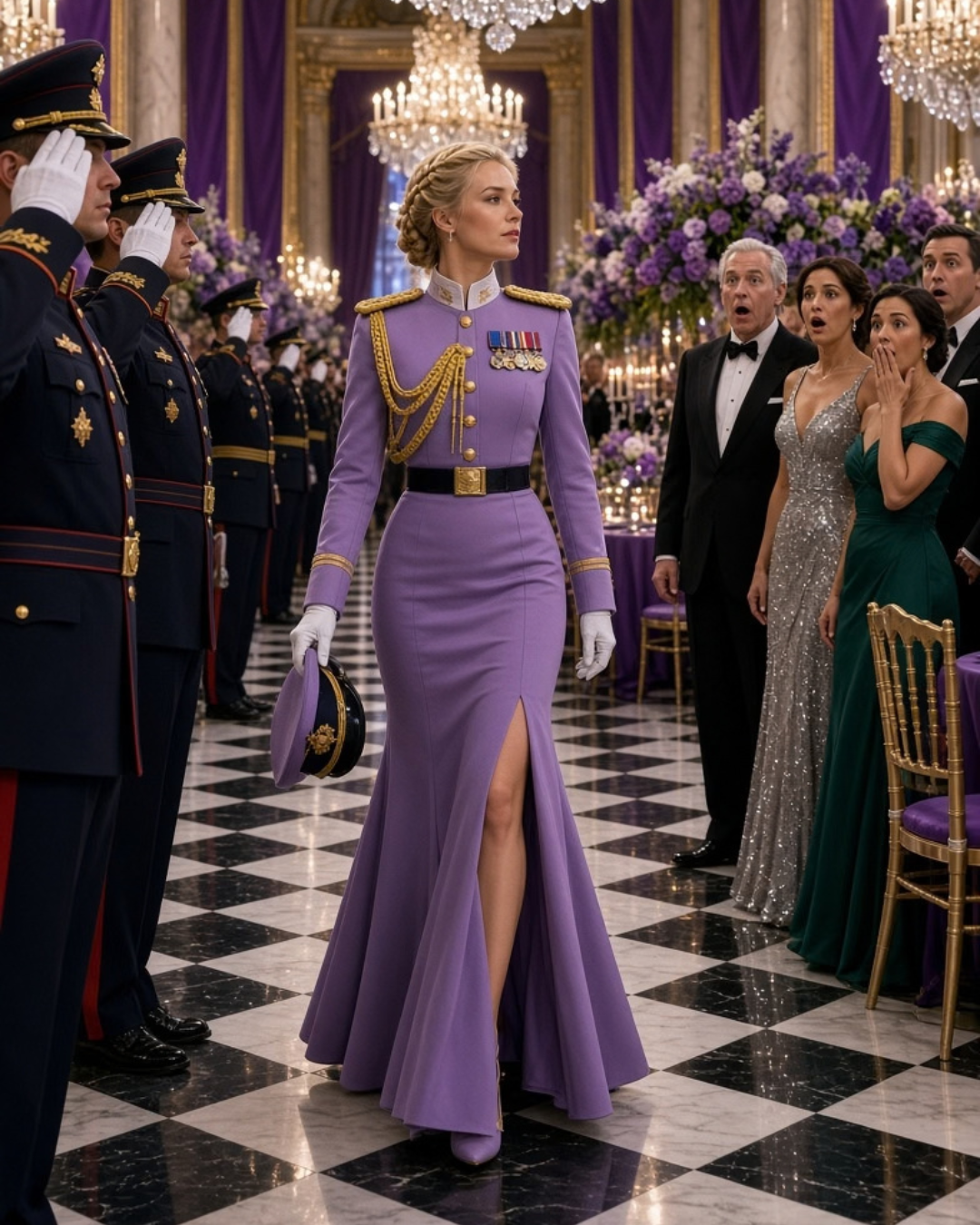
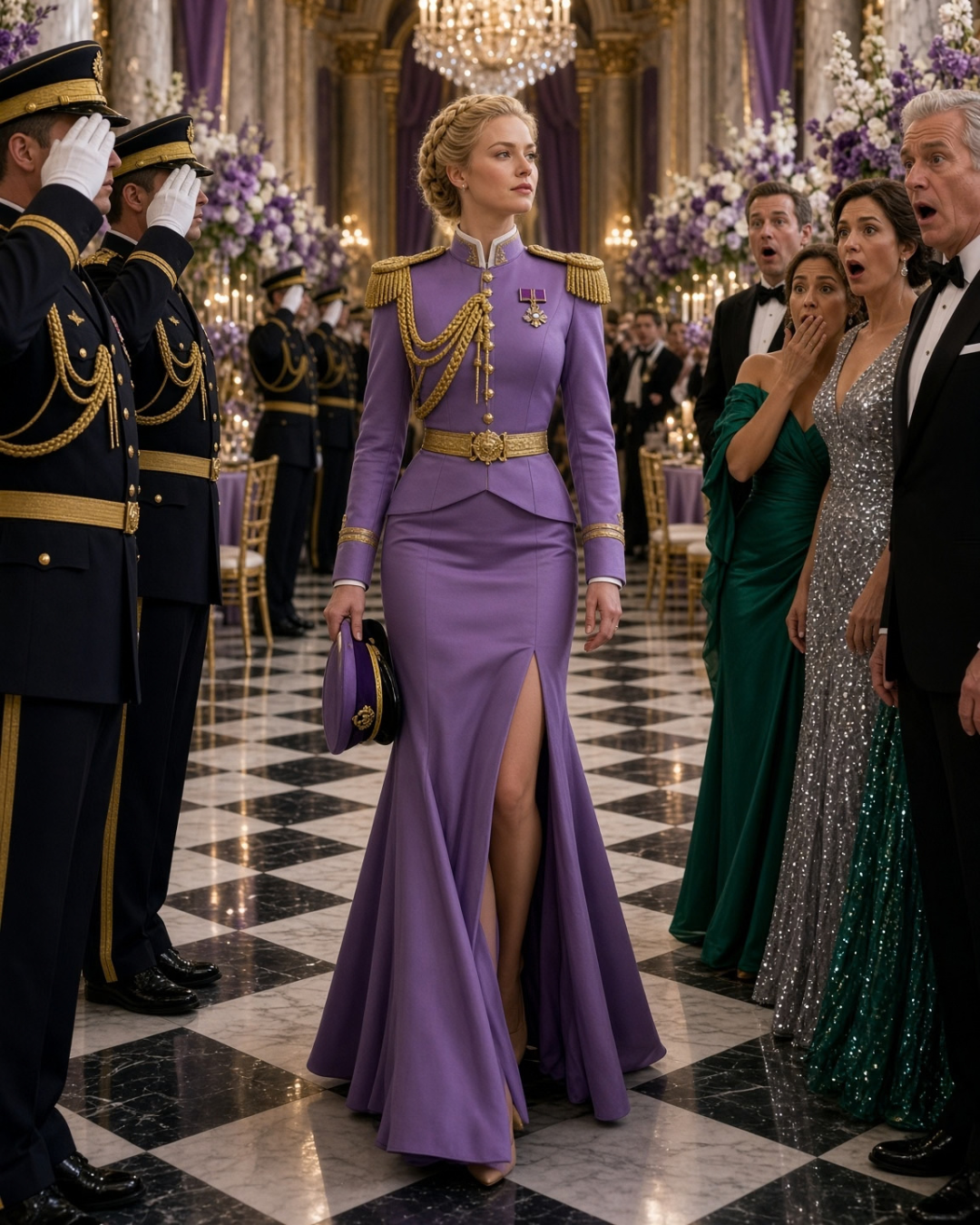
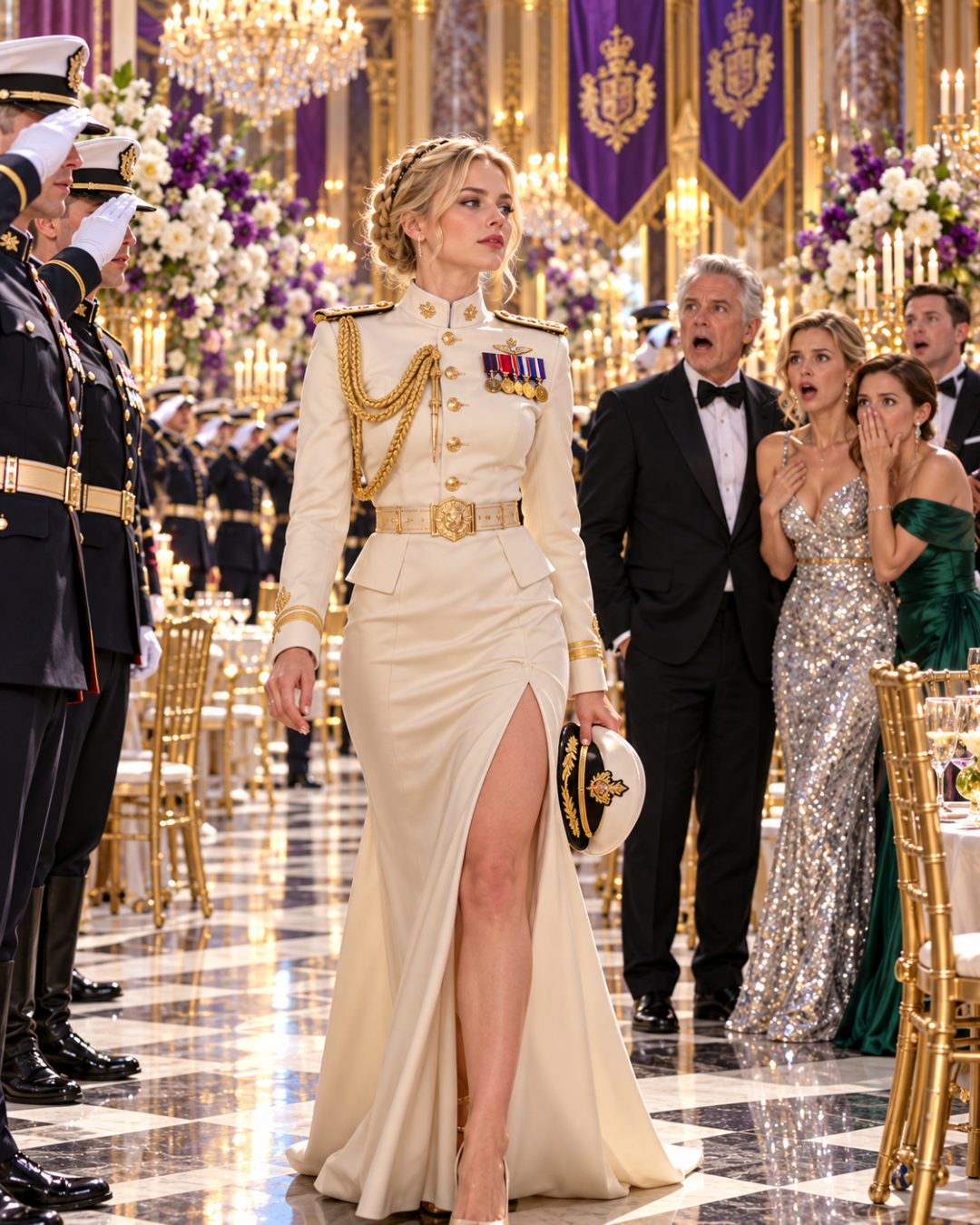
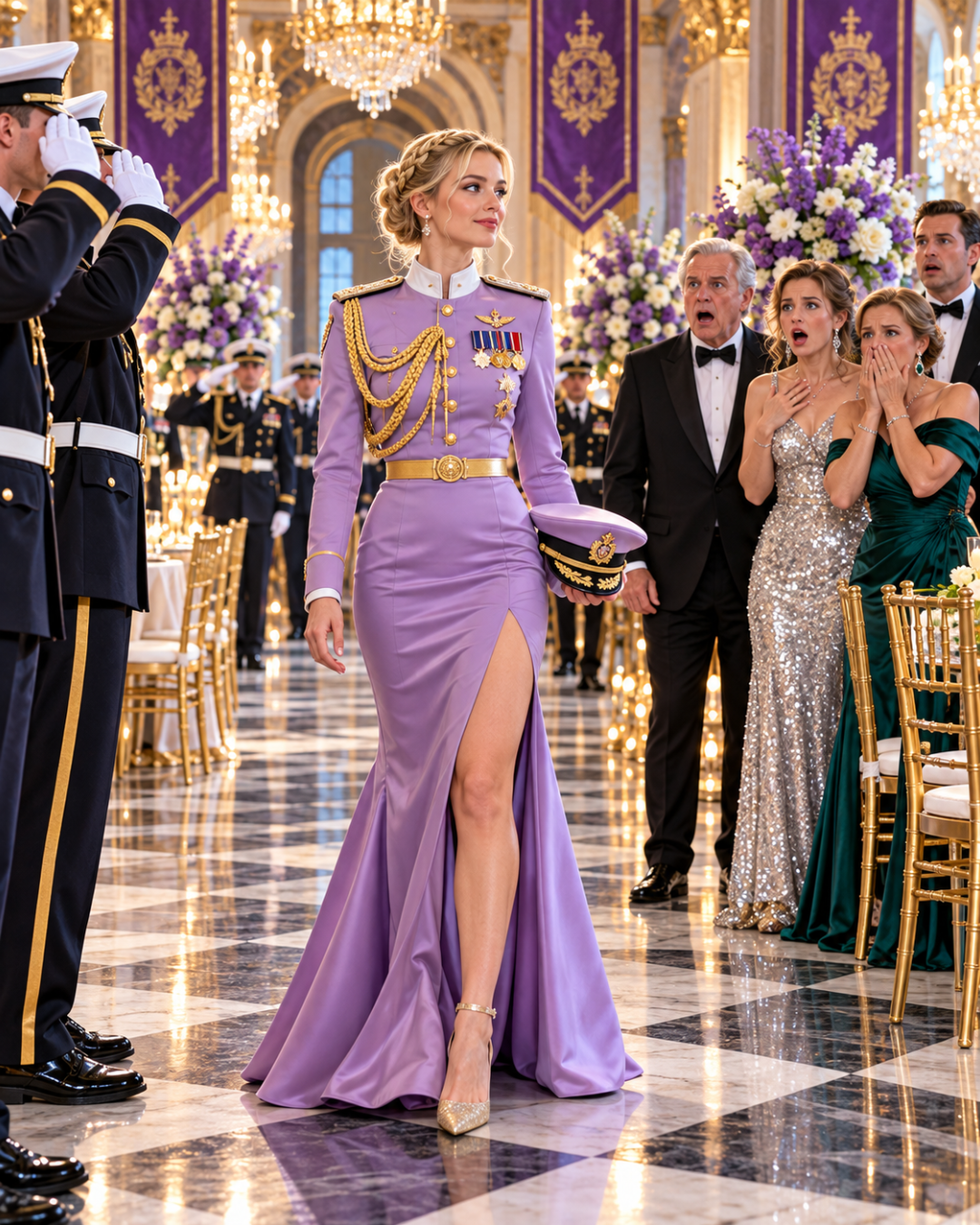
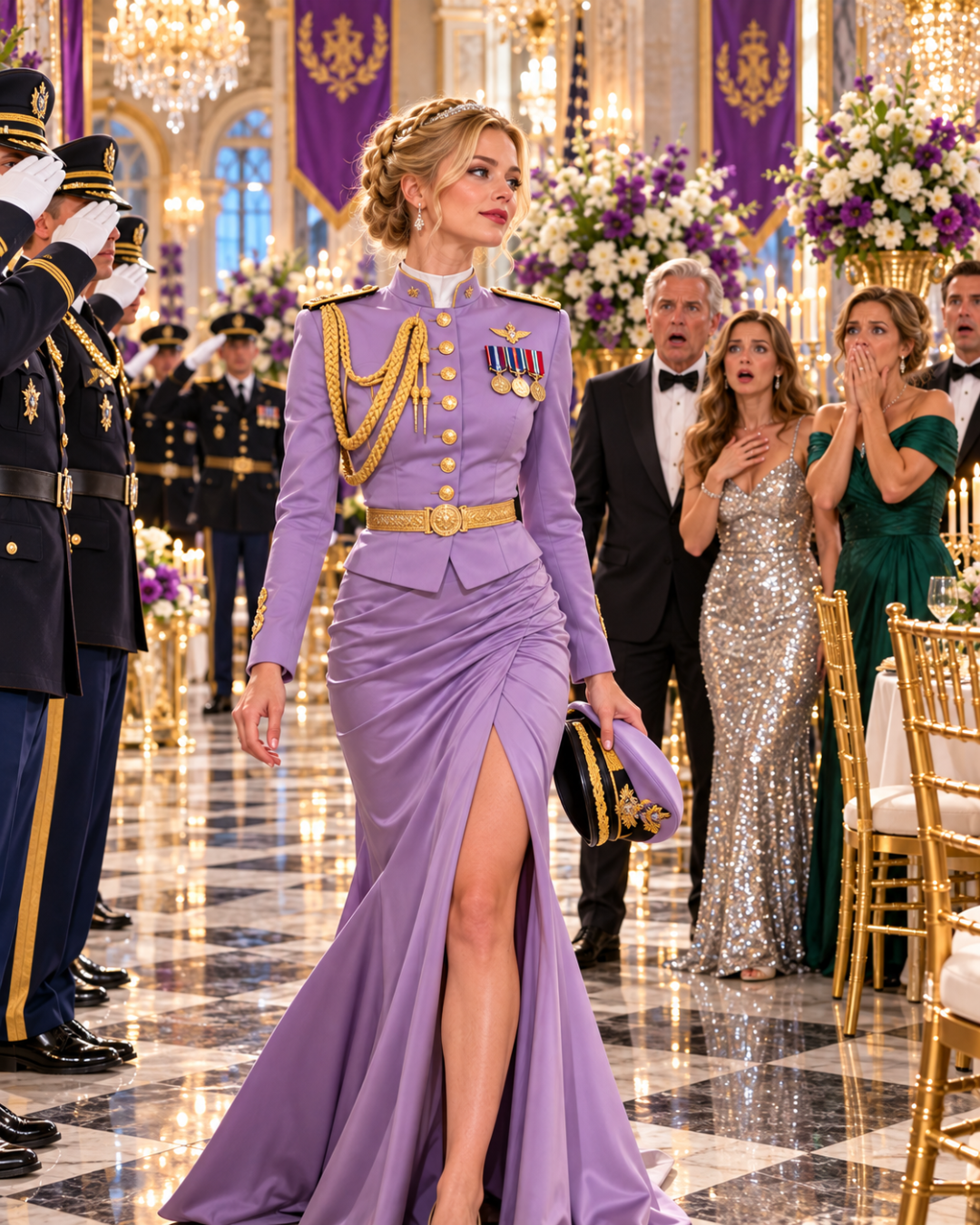
Saturday night, I arrived in my Army Service Uniform.
Colonel’s insignia rested on my shoulders, while twenty years of ribbons and decorations covered my chest. The two soldiers at registration immediately straightened.
“Good evening, ma’am.”
One checked the list. “Colonel Bennett? We’ve been expecting you.”
Across the ballroom, Madison saw me first.
Her smile disappeared.
Then Ethan turned, and his eyes went directly to the insignia on my shoulders.
His face changed instantly.
Dad still didn’t understand.
He marched toward me. “What are you wearing?”
“My uniform.”
“I can see that. Why?”
“Because I’m in the Army.”
His expression hardened.
“Claire, don’t start. There are generals here tonight. People who have actually accomplished something.”
Then a voice came from behind him.
“Colonel Bennett.”
Dad froze.
Four-star General William Harrington stood several feet away.
Dad recognized him immediately. “General, sir, it’s an honor.”
The general barely glanced at him.
“Glad you made it, Colonel.”
“Thank you, General.”
He smiled at me. “We weren’t going to begin without you.”
Dad stared between us.
“Without… Claire?”
An event coordinator approached. “Colonel, we’re ready whenever you are.”
Dad suddenly grabbed my arm.
“What exactly do you do in the Army?”
Before I could answer, the ballroom lights dimmed.
“Ladies and gentlemen,” the master of ceremonies announced, “please remain standing as we recognize tonight’s guest of honor, Colonel Claire Bennett, United States Army.”
Ethan stood.
Then General Harrington.
Then senior officers throughout the ballroom.
My father remained frozen.
But as I started toward the stage, I knew the part that would truly shock him hadn’t been announced yet.
Tonight wasn’t about my rank.
They were about to reveal the operation my family had spent years believing I was never important enough to be part of.
PART 2
I had walked toward podiums hundreds of times in my career.
Briefing rooms.
Promotion ceremonies.
Memorial services.
Command conferences where every word had to be chosen carefully because the people listening might have to make decisions affecting thousands of lives.
But that night, the distance between my family’s table and the stage felt longer than any of them.
I could feel my father staring at my back.
General Harrington walked beside me for several steps before turning toward the front table.
I continued alone.
The applause settled gradually.
At the podium, I looked across the ballroom and saw uniforms from every branch, veterans wearing miniature medals on their lapels, civilians in evening gowns and dark suits.
Then I found my family.
Ethan was standing very still.
Madison looked as though someone had handed her a book written in a language she could almost understand.
Dad had finally sat down.
His face held something I had rarely seen there.
Uncertainty.
The master of ceremonies, retired Major General Paul Mercer, approached the microphone.
“Most people in this room understand,” he began, “that some of the most important military work never appears in headlines.”
A few people nodded.
“Sometimes success looks dramatic.
Other times, success means preventing a difficult situation from becoming a disaster.”
My hands rested lightly against the edge of the podium.
I already knew what came next.
My family did not.
“Seven years ago,” Mercer continued, “a rapidly deteriorating political crisis in the nation of San Cordoba placed American personnel, military families, aid workers, and allied civilians at risk.”
San Cordoba was a fictional name used here publicly because certain diplomatic arrangements surrounding the operation remained sensitive even after portions of the mission had been declassified.
The event itself was no longer secret.
The names of several partner organizations still were.
“Within forty-eight hours,” Mercer said, “transportation routes were closing.
Civilian airports had become unreliable.
Communications were inconsistent.
More than two thousand people needed safe passage to designated evacuation points.”
Dad leaned forward.
I saw Ethan close his eyes briefly.
That was when I realized something.
Ethan knew the name.
Maybe not everything.
But something.
Mercer continued.
“A planning team was assembled to coordinate personnel movement, aircraft scheduling, medical support, diplomatic clearances, temporary housing, and communication between multiple agencies and allied governments.”
He looked toward me.
“The officer who organized that effort was then-Lieutenant Colonel Claire Bennett.”
The room applauded again.
I did not look at Dad immediately.
Instead, I looked toward General Harrington.
Seven years earlier, he had been the three-star commander responsible for the region.
I had spent seventy-one hours sleeping in pieces of twenty minutes at a time while my team tried to solve problems faster than they appeared.
There had been no heroic moment.
No cinematic breakthrough.
Just hundreds of decisions.
Which aircraft could land where.
Which families needed priority because of medical conditions.
Which convoy could move before a bridge closed for repairs.
Which allied government had room for another three hundred temporary arrivals.
Where to place interpreters.
How to reunite spouses who had been separated during movement.
Which passenger list was accurate.
Whether a weather system would close the secondary airfield.
Nothing looked impressive individually.
Together, those decisions meant people got home.
That was the part I had always remembered.
Mercer read from a citation that had recently been cleared for public release.
“Colonel Bennett’s leadership during Operation Lantern Bridge resulted in the coordinated relocation of 2,417 American and allied personnel and family members without loss of life during a rapidly changing regional emergency.”
The applause this time was louder.
I swallowed.
Not because I needed applause.
Because after seven years, I could finally hear those words spoken in a room where my family was sitting.
Mercer stepped aside.
General Harrington approached the microphone.
“I worked with Colonel Bennett during Lantern Bridge,” he said.
Then he smiled slightly.
“And by ‘worked with,’ I mean that I repeatedly asked whether something impossible could be done, and she repeatedly returned twenty minutes later with three ways to do it.”
Laughter moved through the ballroom.
Even I smiled.
“She will object to me giving her too much credit,” Harrington continued.
“That is one of her most dependable habits.”
More laughter.
“But leadership is not always the person at the front of a formation.
Sometimes leadership is the person in a planning room at two in the morning noticing that a manifest includes an elderly passenger who cannot climb the stairs of the aircraft assigned to her.”
I remembered her.
Mrs. Alvarez.
Seventy-eight years old.
Traveling with her daughter.
We had changed aircraft arrangements because the available lift equipment at one staging location had failed.
Nobody in my family had ever heard that story.
“Colonel Bennett built the team that noticed details like that,” Harrington said.
“And because they noticed them, people arrived home safely.”
He turned toward me.
“Colonel?”
I stepped to the microphone.
For several seconds, I simply looked at the room.
Then I said, “General Harrington is correct about one thing.”
He raised an eyebrow.
“I am going to object to him giving me too much credit.”
The room laughed.
I continued.
“Lantern Bridge worked because hundreds of people did unglamorous jobs exceptionally well.
Pilots changed schedules.
Logistics teams found beds.
Medical personnel reviewed passenger needs.
Embassy staff stayed on phones through the night.
Young specialists checked names repeatedly because one mistake could separate a family.”
I paused.
“The Army taught me a long time ago that responsibility and visibility are not the same thing.”
My gaze moved involuntarily toward Dad.
He was looking down at the table.
“For some of us,” I continued, “the work we are proudest of is work we cannot always explain when we get home.”
Ethan looked at me then.
Directly.
There was something painful in his expression, but not resentment.
Recognition.
I finished my remarks without mentioning my family.
I thanked my team.
I thanked the foundation.
I spoke about the importance of supporting military families during transitions and emergencies.
Then I returned to my seat.
Except my assigned seat was not with my family.
It was beside General Harrington at the front table.
That fact seemed to bother me more than I expected.
For years, I had imagined what it would feel like if Dad finally understood.
I had thought there might be satisfaction.
Instead, sitting beneath chandeliers while servers poured coffee into porcelain cups, I found myself wishing our family table were somewhere private and ordinary.
A kitchen, perhaps.
Someplace where nobody could watch us discover how little we knew about each other.
During dinner, I caught Ethan looking toward me several times.
Eventually, he excused himself from his table.
A few minutes later, someone touched my shoulder.
“Claire.”
I turned.
Ethan stood there.
He looked older than the photograph Dad kept in the living room.
Not physically.
The expression did it.
“Can we talk?”
I followed him into a quieter corridor outside the ballroom.
For several seconds, neither of us spoke.
Then Ethan exhaled.
“I knew about Lantern Bridge.”
I stared at him.
“How?”
“Not everything.”
He rubbed the back of his neck.
“I was still in the Army then.
Our unit supported equipment movement for one piece of the response.
We got a summary afterward.”
My mind moved quickly backward.
Seven years.
Ethan had been a first lieutenant.
“You knew I was involved?”
“No.”
“Then what did you know?”
“That the planning cell was led by an officer named Bennett.”
I waited.
He looked ashamed.
“I wondered.”
That hurt more than I expected.
“You wondered?”
“Claire—”
“You heard that an officer named Bennett led the operation, and you never asked me?”
“I did ask you.”
“No.
You asked what I was doing that year, and I told you I couldn’t discuss it.”
“I know.”
“Then you let Dad keep making jokes.”
His face tightened.
“Yes.”
The single word stopped me.
He did not defend himself.
“I should have said something,” he continued.
“You didn’t know.”
“I knew enough to stop laughing.”
That was fair.
I leaned against the wall.
Through the ballroom doors, I could hear distant applause for another speaker.
Ethan said, “Do you know why I didn’t?”
I looked at him.
“Because Dad finally respected me.”
I said nothing.
His voice dropped.
“When I commissioned, suddenly he introduced me to everyone as Captain Bennett before I was even a captain.
He memorized the names of my units.
He bought that ridiculous display case.”
Despite myself, I almost smiled.
The display case was ridiculous.
It was large enough for the medals of a nineteenth-century field marshal.
Ethan continued.
“You were already the capable one.”
I blinked.
“What?”
“You were.”
“That isn’t how Dad treated me.”
“Not Dad.
Everybody else.”
He looked down the corridor.
“You got the scholarships.
You left home.
You handled everything yourself.
Mom used to say, ‘Ask Claire, she’ll know what to do.’
Madison called you whenever she had a problem.
Even I did.”
“That doesn’t mean—”
“I know.”
He shook his head.
“But when Dad started treating my military service like it was the greatest achievement anybody in our family had ever managed, I liked it.”
There was no accusation in his voice.
Only embarrassment.
“I liked having one thing that belonged to me.”
My anger shifted.
It did not disappear.
But it changed shape.
“You could have had that without letting him diminish me.”
“I know.”
He met my eyes.
“I know that now.”
Before I could answer, Madison appeared from the ballroom.
“There you are.”
She looked between us.
“Is this private?”
“Yes,” Ethan and I said together.
Madison folded her arms.
“Well, unfortunately, Dad is having some kind of existential crisis beside the dessert table, so family privacy has been temporarily canceled.”
Ethan actually laughed.
I did too.
It broke something open between us.
Madison looked at me.
“I owe you an apology.”
“You don’t have to do this tonight.”
“Yes, I do.”
“Madison—”
“I thought you were being mysterious because you wanted us to think your job was more interesting than it was.”
I stared at her.
“That makes absolutely no sense.”
“I am aware of that now.”
Ethan covered his mouth.
Madison glared at him.
“Do not enjoy this.”
“I’m trying not to.”
She turned back to me.
“I made jokes because Dad made jokes.
And because every time you refused to explain your work, I decided that meant there wasn’t much to explain.”
“That was convenient.”
“Yes.”
She lowered her voice.
“And unfair.”
For years, Madison and I had communicated through birthday texts, holiday meals, and occasional phone calls that never moved beyond work, weather, and Mom’s recipes.
Standing in that hallway, I suddenly saw how much distance could be built from small assumptions.
Not betrayal.
Not hatred.
Just laziness repeated until it became a relationship.
“Where is Dad?”
I asked.
Madison glanced toward the ballroom.
“He wants to talk to you.”
“Of course he does.”
“He’s nervous.”
I almost laughed.
“Dad?”
“Very.”
That was new.
Richard Bennett had opinions about everything from mortgage rates to proper steak temperatures.
Nervousness was not one of his public emotions.
We found him near the back of the ballroom.
He was alone now.
His untouched dessert sat on the table.
When I approached, he stood.
For the first time all evening, he looked carefully at my uniform.
Not dramatically.
He simply studied it.
The insignia.
The ribbons.
The nameplate.
The years represented in things he had dismissed because he had never bothered to learn what they meant.
“I didn’t know,” he said.
I pulled out a chair.
“No.”
He remained standing.
“You never told me.”
Ethan inhaled sharply behind me.
I held up a hand before he could intervene.
Dad continued, “You could have told me you were a colonel.”
“I did.”
His face changed.
“When?”
“Three years ago.
Mom’s birthday dinner.”
He searched his memory.
I remembered the evening perfectly.
Dad had been discussing one of Ethan’s old Army stories when Mom asked whether my promotion board had met.
I had said, “It did.
I’m being promoted to colonel.”
Dad had nodded while cutting his roast and said, “That’s nice.
Ethan, tell Madison about that field exercise in Germany.”
I had not mentioned it again.
Madison slowly sat down.
Dad’s expression fell.
“I don’t remember that.”
“I know.”
Two words.
No anger.
Somehow they landed harder than anger would have.
Dad lowered himself into the chair across from me.
For a while, the four of us sat silently.
Finally he said, “Why did you come tonight?”
The question surprised me.
“You invited me.”
“That’s not what I mean.”
He looked toward the stage.
“You knew what they were going to say.”
“Yes.”
“You knew I’d find out.”
“Yes.”
“And you still came after the way I spoke to you.”
I considered my answer.
“Part of me wanted you to find out.”
Dad nodded slowly.
“That part I understand.”
“But that isn’t why I came.”
“Then why?”
“Because Mom asked me last year to stop disappearing from the family whenever things became uncomfortable.”
His eyes lifted.
Our mother, Helen Bennett, had died eighteen months earlier after a brief illness.
She had been the quiet center of our family.
After her death, none of us had quite figured out where the center had gone.
Dad looked down.
“She knew, didn’t she?”
I hesitated.
“Knew what?”
“What you did.”
“Some of it.”
“How much?”
“More than you.”
The answer was honest.
He accepted it.
Then Ethan said softly, “Dad, why didn’t you ever ask?”
Dad looked at him.
“I did.”
“No,” Madison said.
“You asked questions you already thought you knew the answers to.”
That silenced him.
A server passed nearby.
Music began again as the formal program moved toward its final portion.
Dad rubbed one hand over the edge of the tablecloth.
“I thought you were embarrassed,” he said to me.
“About what?”
“About not having the kind of career Ethan had.”
I stared at him.
Ethan stared at him too.
Dad seemed to hear himself for the first time.
“I realize how ridiculous that sounds now.”
“Yes,” I said.
“It does.”
He nodded.
“I thought when you said you couldn’t talk about something, you were avoiding the subject.”
“Sometimes I was.”
His eyes lifted.
“But not because I was embarrassed about my career.”
“Because of me?”
I could have softened it.
I chose not to.
“Because you weren’t listening.”
Dad looked toward the stage again.
For a long time, nobody spoke.
Then General Harrington appeared beside our table.
“Colonel.”
I stood automatically.
“Sir.”
“At ease.
I’m interrupting.”
His gaze moved politely across my family.
Dad straightened.
Harrington looked at Ethan.
“Former Captain Bennett?”
“Yes, sir.”
“I remember your name from the support roster.”
Ethan looked startled.
“Yes, sir.”
“Good work on that mission.”
Three sentences.
That was all.
But I watched something change in Ethan’s expression.
The general had acknowledged his contribution without making it compete with mine.
Perhaps that was what our family should have learned years ago.
Pride did not have to be rationed.
Harrington turned back to me.
“There’s someone here who has been asking to see you.”
“Who?”
He glanced toward the entrance.
An elegant woman in her late seventies stood beside the doorway, leaning lightly on a silver-handled cane.
For a moment, I didn’t recognize her.
Then she smiled.
Seven years disappeared.
I remembered a crowded staging room.
A broken lift.
A passenger manifest.
A woman insisting that someone else take her seat because she did not want to delay the aircraft.
“Mrs. Alvarez?”
I whispered.
Her smile widened.
Dad looked from her to me.
The woman crossed the room slowly.
When she reached us, she took both of my hands.
“I wondered if you would remember an old lady who caused so much trouble.”
I laughed softly.
“You didn’t cause any trouble.”
“Oh, I absolutely did.”
Her daughter stood a few steps behind her, smiling.
Mrs. Alvarez looked toward my father.
“And you must be Colonel Bennett’s family.”
Dad stood.
“Yes.”
She held his gaze kindly.
“Then there is something you should know about your daughter.”
I glanced at General Harrington.
He seemed as surprised as I was.
Mrs. Alvarez squeezed my hands.
“Everyone talks about the thousands of people she helped that week,” she said.
“But I came tonight because I wanted her family to know what she did after the operation was supposedly finished.”
I frowned.
“Mrs. Alvarez?”
Her daughter reached into her handbag and removed a faded envelope.
My name was written across the front in my mother’s handwriting.
I stopped breathing for a second.
Dad saw it too.
“That’s Helen’s writing,” he whispered.
Mrs. Alvarez nodded.
“Yes.”
She handed the envelope to me.
“Your mother asked me to give you this when the right moment came.”
I stared at the sealed envelope.
My mother had been gone for eighteen months.
And somehow, on the night my family finally learned the truth about my career, a letter from her had found its way into my hands.
PART 3
For several seconds, I could only stare at the envelope.
My mother’s handwriting had always leaned slightly to the right, neat but hurried, as though her thoughts were forever moving faster than the pen.
CLAIRE.
Nothing else.
No date.
No explanation.
I looked at Mrs. Alvarez.
“How did you know my mother?”
Her expression softened.
“Because of you.”
That answer only deepened my confusion.
General Harrington quietly pulled out a chair for her.
Mrs. Alvarez sat.
Her daughter joined us.
The ballroom continued around us—music, conversation, the faint clink of glasses—but our table seemed to become its own small room.
Mrs. Alvarez looked at me.
“You may not remember what happened after I arrived in Virginia.”
“I remember receiving confirmation that your group cleared processing.”
“That is what the Army needed to know.”
She smiled.
“But I had nowhere to go.”
Her daughter, Sofia, spoke for the first time.
“My husband and I were living overseas then.
I was trying to return to the United States, but flights were disrupted.
My mother was temporarily placed in a hotel with other evacuees.”
I remembered.
Temporary lodging had been arranged for anyone whose onward travel was delayed.
“What happened?”
Mrs. Alvarez answered.
“You called.”
I frowned.
“I called hundreds of people that week.”
“You called me twice.”
That stirred a memory.
A voice on a temporary phone.
An older woman trying to sound cheerful.
“You were waiting for your daughter,” I said.
Mrs. Alvarez nodded.
“And I had lost my medication bag during the transfer.”
Now I remembered.
One of our medical officers had arranged replacements.
“That was Captain Reeves,” I said.
“She handled it.”
“Yes.
Because you asked her to.”
I smiled faintly.
“That was my job.”
Mrs. Alvarez tilted her head.
“You said exactly that seven years ago.”
Ethan looked at me.
She continued.
“A few months later, the Army sent me a form asking about my experience.
I wrote a long letter instead.”
I could imagine that.
“I wrote that Colonel Bennett—although you were not a colonel then—had treated me as though I were the only person on her list when I knew very well there were thousands.”
My throat tightened slightly.
“What does that have to do with Mom?”
“The letter was forwarded through the proper offices.
Eventually someone asked permission to use part of it in an internal leadership program.”
General Harrington nodded.
“I remember that.”
I looked at him.
“You never told me.”
“You would have complained.”
“That is possible.”
He smiled.
Mrs. Alvarez continued.
“Several years later, your mother contacted me.”
I stared at her.
“How?”
“She attended a military family event where someone mentioned Lantern Bridge without giving your name.
Your mother recognized details you had shared privately with her.”
That sounded exactly like Mom.
She had possessed an extraordinary ability to assemble truth from fragments without demanding the missing pieces.
“She asked one of the organizers whether the older woman mentioned in the leadership story could receive a letter.
Eventually the letter reached me.”
Sofia smiled.
“My mother and your mother became pen pals.”
Madison covered her mouth.
“You’re serious?”
“Oh, yes,” Mrs. Alvarez said.
“Your mother had very strong opinions about gardening.”
Dad’s face changed.
For the first time that night, he smiled without strain.
“She certainly did.”
“And tomatoes.”
Dad nodded.
“Especially tomatoes.”
Mrs. Alvarez laughed.
“She insisted everyone planted them too close together.”
“That sounds like Helen,” Dad said.
I looked again at the envelope.
“How long did you write to each other?”
“Almost four years.”
I felt strangely off balance.
There had been an entire friendship attached to my life that I had never known existed.
“Why didn’t she tell me?”
Mrs. Alvarez considered that.
“I asked her once.”
“And?”
“She said, ‘Claire spends her life carrying responsibilities.
I don’t want to turn kindness she gave freely into another thing she has to carry.’”
That was Mom too.
Completely.
Painfully.
I ran my thumb over the edge of the envelope.
“When did she give you this?”
“About two months before she died.”
Dad looked away.
“She knew the foundation planned to recognize you someday,” Mrs. Alvarez said.
“Not when.
But General Harrington had contacted me about possibly attending whenever the operation was publicly discussed.”
Harrington nodded.
“Your mother knew a ceremony might eventually happen.”
Mrs. Alvarez looked at the envelope.
“She asked me to bring that if I ever attended one.”
“Did she tell you what’s inside?”
“No.”
I could have opened it immediately.
Instead, I slipped it carefully into the inside pocket of my uniform jacket.
Madison looked surprised.
“You’re not reading it?”
“Not here.”
Dad nodded before anyone else could speak.
“Your mother would approve.”
Our eyes met.
Something quiet passed between us.
For once, he had understood my choice without requiring an explanation.
The gala ended just after ten.
Outside, Washington was cool and bright beneath the city lights.
Dad had planned for all of us to return to his house afterward because Madison and Ethan had traveled in for the event.
Normally, I would have gone back to my apartment.
That night, I followed them home.
The Bennett house looked almost unchanged from my childhood.
Same brick steps.
Same brass porch light.
Same maple tree Mom had planted the year Madison started kindergarten.
Inside, Dad automatically turned on the lamp beside Mom’s old chair.
Then he stood there for a second, as though realizing what he had done.
Nobody commented.
Madison changed out of her heels and curled up on the sofa.
Ethan loosened his tie.
I went upstairs and changed from my uniform into dark trousers and a sweater I had left in the guest room.
When I returned, Dad was making tea.
Dad never made tea.
Mom had made tea.
Dad made coffee strong enough to repair pavement.
He placed four mugs on the kitchen table.
“I don’t know how much tea goes in those little metal things,” he admitted.
Madison peered inside hers.
“Apparently half the box.”
For the first time all evening, we laughed like a family instead of people cautiously negotiating one another.
The letter remained in my pocket.
Dad noticed.
“Do you want privacy?”
I thought about it.
“No.”
I sat at the table.
Carefully, I opened the envelope.
There were three pages.
Mom’s handwriting filled both sides.
I began silently.
Then Madison said, “Read it out loud?”
I looked around the table.
Ethan nodded.
Dad did not.
He simply waited.
So I read.
“My dearest Claire,
If you are reading this, then Mrs. Alvarez has decided the moment is right, which means I am trusting two stubborn women at once.
This is risky.”
Madison laughed through her nose.
Dad smiled into his tea.
I continued.
“I hope you are not angry that I found out more about Lantern Bridge than you intended to tell me.
In my defense, you have never been as mysterious as you think you are.”
That made Ethan laugh.
“Accurate,” he said.
I gave him a look and kept reading.
“I have always been proud of your service.
But I want you to understand something more important.
I am proud of the way you serve, not the title attached to it.”
My voice slowed.
Mom wrote about Mrs. Alvarez.
About the letters.
About how one small act of attention could travel farther than the person who performed it would ever know.
Then the letter shifted.
“I also know our family has developed a bad habit.
We have confused being proud of one another with comparing one another.
Your father does it most loudly, but the rest of us have learned our own quieter versions.”
Dad stared at the table.
“Ethan believes he must impress people to deserve their admiration.
Madison believes humor can protect her from ever admitting she is hurt.
And you, Claire, believe independence means never asking anyone to understand you.”
I stopped.
Ethan leaned back.
“Wow.”
Madison pointed at the letter.
“She could have softened mine.”
Dad almost smiled.
I continued.
“None of you are entirely wrong about yourselves.
That is what makes these habits so difficult.
Claire, secrecy is sometimes part of your profession.
Silence is not.
Those are different things.”
I read the sentence twice in my head before saying it aloud.
Something inside me resisted it.
Because Mom was right.
I had spent years telling myself I could not discuss my work.
That was true.
But I could have discussed loneliness.
I could have said, Dad, that joke hurts.
I could have told Ethan I felt invisible when Dad praised his service while dismissing mine.
I could have called Madison more often instead of deciding her teasing meant she did not care.
Somewhere along the way, professional discretion had become personal armor.
Mom’s letter continued.
“Your father loves you.
He is also very capable of being foolish.
Both things can be true.”
Dad gave a small, defeated laugh.
“I walked into that one.”
I continued.
“I hope, when the right moment comes, you will give him the opportunity to know you better.
Not because he has earned every detail.
Not because you owe anyone proof of your worth.
But because being known is one of the gifts families can still learn to give one another, even late.”
I stopped reading.
There were still several paragraphs.
But my eyes had blurred.
I placed the letter down.
Madison reached across the table and rested her fingers against mine.
Nobody spoke until Dad said quietly, “I’m sorry.”
Not the quick apology people offer when they want discomfort to end.
He took his time.
“I’m sorry I made Ethan’s service a standard the rest of you had to measure against.”
Ethan looked at him.
“And I’m sorry I turned your accomplishments into something that belonged to me.”
Dad faced him.
“You earned what you earned.
I just…”
He searched for the words.
“After you left the Army, I think I kept talking about Captain Bennett because I didn’t know what else to praise.”
Ethan’s expression shifted.
“I thought you were disappointed that I got out.”
“I was surprised.”
“You asked me for three years when I was going back.”
“I know.”
“That sounded like disappointment.”
Dad nodded slowly.
“I suppose it did.”
Ethan looked at his mug.
“I left because I wanted another life.”
“I know that now.”
“I’m happy, Dad.”
Ethan worked in civil engineering and had recently become engaged to a woman named Rachel.
“I know,” Dad repeated.
“Do you?”
The question hung there.
Dad considered it.
“Maybe I’m learning.”
Madison looked at me.
“What about you?”
“What about me?”
“Are you happy?”
I almost gave the automatic answer.
Fine.
Busy.
Good.
Instead, I looked at Mom’s letter.
“Sometimes.”
Madison waited.
“I love my work,” I continued.
“But I’ve spent so much time being useful that I’m not sure I’ve been very good at building a life outside it.”
Ethan frowned.
“You have friends.”
“I have excellent friends.”
“That counts.”
“It does.”
I smiled.
“But Mom was right about something.
I don’t ask people to know me.”
Dad looked at me carefully.
“Did I teach you that?”
There was no good answer.
So I gave him the true one.
“Partly.”
He absorbed it without defending himself.
Then I finished the letter.
The last paragraph was shorter.
“One last thing.
There is something in the bottom drawer of my desk that belongs to Claire.
Richard, if you are hearing this, you were supposed to give it to her months ago.
Knowing you, you probably forgot the moment I stopped reminding you.”
Dad suddenly froze.
Madison stared.
“Dad.”
He blinked.
“What?”
“The desk.”
His face drained.
“Oh.”
Ethan groaned.
“Please tell me you did not ignore instructions from Mom after she literally predicted you would ignore them.”
“I didn’t ignore them.”
Dad stood.
“I forgot them.”
“That is impressively worse,” Madison said.
He hurried toward the small study off the hallway.
We followed.
Mom’s writing desk still stood under the window.
Dad opened the bottom drawer.
Old stationery.
Receipts.
A sewing tin.
Two photograph envelopes.
Then his hand stopped.
He withdrew a narrow wooden box.
My name was taped to the top.
CLAIRE.
Dad handed it to me.
“I’m sorry.”
I opened the box.
Inside lay an old brass compass.
I recognized it immediately.
It had belonged to my grandfather, Mom’s father, who served as an Army medic decades before I was born.
He had given me my first book about military history when I was eleven.
He died before I commissioned.
Beneath the compass was another folded note.
This one was much shorter.
I opened it.
Claire,
Your grandfather gave this to me before he died.
He said you should have it when you finally understood that knowing where you are going matters less than knowing why.
I think you understand now.
Love,
Mom
I held the compass in my palm.
The brass was scratched from age.
Dad touched the edge of the desk.
“I didn’t know she kept that.”
“Neither did I.”
Ethan leaned against the doorframe.
Madison wiped beneath one eye and immediately pretended she had not.
I turned the compass over.
There was an engraving on the back.
Not military.
Not ceremonial.
Three small words.
COME HOME WHOLE.
I stared at them.
Then I remembered something Mom had said during our last long conversation.
She had asked when I planned to stop volunteering for every difficult assignment simply because I was good at them.
At the time, I had dismissed the question.
Now the compass felt heavier.
Dad noticed my expression.
“What is it?”
I closed my fingers around it.
“There’s something I haven’t told any of you.”
Madison looked worried.
“About Lantern Bridge?”
“No.”
“Your job?”
“Sort of.”
Three months earlier, I had been offered another senior assignment.
A prestigious one.
The kind of assignment people built careers around.
I had accepted in principle.
It would mean another move, another demanding schedule, and likely several more years of putting everything else on hold.
The final paperwork was waiting for my signature.
Until that moment, I had assumed I would sign it.
That was what Colonel Claire Bennett did.
She went where she was needed.
She took the difficult job.
She solved the problem.
But sitting in my mother’s study, holding my grandfather’s compass, I realized there was another question I had never seriously asked.
What did I want if usefulness was no longer the only measure?
Dad waited.
“What haven’t you told us?”
I looked at the three people standing around me.
Then I said, “I’ve been offered a job that would take me overseas again.”
Dad’s face changed, but he said nothing.
“And?”
Ethan asked.
I looked down at the compass.
“And for the first time in twenty years, I’m not sure I’m going to take it.”
PART 4 – ENDING
Nobody tried to tell me what to do.
That may have been the most surprising moment of the entire weekend.
Not General Harrington standing when I entered the ballroom.
Not hearing Operation Lantern Bridge described publicly after seven years.
Not Mrs. Alvarez appearing with a letter from my mother.
This.
My family standing in Mom’s study while I admitted I did not know what came next—and nobody rushing to decide it for me.
Dad finally asked, “When do you have to choose?”
“Friday.”
It was Saturday night.
Madison frowned.
“That soon?”
“I’ve had the offer for weeks.”
Ethan gave me a look.
“And you told none of us.”
“I was going to.”
“When?”
I considered lying.
“Possibly after I moved.”
Madison sighed.
“Mom’s letter was annoyingly accurate.”
I smiled.
“Yes.”
Dad sat in Mom’s chair.
“Is it a promotion?”
“No.”
“Would it help you make general someday?”
Ethan looked at him.
“Dad.”
“What?
That’s a reasonable question.”
I surprised them both.
“Yes.
Probably.”
Dad nodded.
For years, that would have ended the discussion.
Prestige.
Rank.
Achievement.
Those had always sounded like complete answers to him.
Instead he asked, “Do you want to be a general?”
I opened my mouth.
Nothing came out.
Dad waited.
“I don’t know.”
“Then maybe that’s the question.”
I stared at him.
He looked almost uncomfortable with his own wisdom.
“What?” he said.
“I’m allowed one good thought tonight.”
Madison sat on the edge of the desk.
“What would you do if you didn’t take it?”
“There’s another position at the Pentagon.”
“Is that what you want?”
“It’s interesting work.”
“That was not my question.”
I gave her a look.
She smiled.
“Mom left instructions.
Apparently we have to know you now.”
The next morning, we had breakfast together.
Nothing profound happened.
Dad burned the first batch of toast.
Madison complained that he had no decent fruit in the house.
Ethan showed us photographs of the small home he and Rachel were considering buying.
And I sat at the kitchen table watching sunlight move across the same scratched wood where we had eaten cereal as children.
It felt strangely important.
For years, I had associated home with obligation.
Birthdays I might miss.
Questions I could not answer.
Jokes I pretended not to hear.
Now, for the first time, I wondered whether home could become something else.
Not a place where everyone understood me perfectly.
A place where they were willing to try.
Before I left, Dad followed me to the driveway.
I placed my overnight bag in the car.
He stood awkwardly with both hands in his coat pockets.
“Claire.”
I turned.
“I’ve been thinking about something.”
“Dangerous.”
He smiled faintly.
“You sounded like your mother just then.”
“I’ve been told.”
He looked toward the house.
“I don’t expect you to forgive twenty years because I figured out I was wrong during one dinner.”
I leaned against the car.
“I don’t think forgiveness works like a receipt, Dad.”
“No.”
He nodded.
“I suppose not.”
He pulled one hand from his pocket.
In it was a small brass key.
“What’s that?”
“The display case.”
I stared at him.
Ethan’s famous display case.
Dad looked embarrassed.
“I’m taking it down.”
“You don’t have to do that.”
“I know.”
“Ethan earned those medals.”
“I know that too.”
“Then why?”
“Because I realized something last night.”
He looked through the front window toward the living room.
“I made one wall in that house a museum to one version of success.”
I said nothing.
“I’m moving Ethan’s things to the study.
Properly.
I asked him this morning.
He likes the idea.”
“What are you putting on the wall?”
“Family photographs.”
I raised an eyebrow.
“All of us?”
“All of you.”
“Even Madison?”
He pretended to consider.
“She is under review.”
From the porch, Madison shouted, “I can hear you!”
Dad smiled.
Then the smile faded.
“I want a photograph of you in uniform.”
My first instinct was resistance.
Twenty years too late, some stubborn part of me thought.
He seemed to see it.
“Not because you’re a colonel.”
That surprised me.
“Then why?”
“Because it’s part of who you are.”
He swallowed.
“And I should have wanted to know that part before a general explained it to me.”
I looked at him.
There are apologies that attempt to erase the past.
This was not one of them.
Dad was not asking me to pretend.
He was simply trying to become someone different going forward.
“I’ll send you one,” I said.
His shoulders loosened.
“Thank you.”
Then I added, “But not the official command photo.”
“Why not?”
“I look terrifying.”
“You always look terrifying.”
“Goodbye, Dad.”
He laughed.
I drove back to Washington with my grandfather’s compass on the passenger seat.
Monday morning, I arrived at work before seven.
At nine, General Harrington called.
He was technically no longer in my direct chain of command, which allowed him to dispense advice with the enthusiasm of a man who would not have to complete any associated paperwork.
“You’re taking the assignment,” he said.
It was not a question.
“I haven’t decided.”
Silence.
Then, “Really?”
“Surprising?”
“Yes.”
“I appreciate your confidence.”
“I’ve known you twelve years.
You treat difficult assignments like other people treat restaurant reservations.”
I laughed.
He continued.
“What changed?”
I looked at the compass beside my computer.
“Someone asked whether I actually wanted it.”
Another pause.
“That can be an inconvenient question.”
“Extremely.”
“Do you?”
“The work matters.”
“That was also not the question.”
Apparently everyone in my life had joined the same conspiracy.
I leaned back.
“I don’t know if I want the life around the work.”
“That’s a better answer.”
Harrington had spent nearly four decades in uniform.
He understood what I meant.
“There’s something younger officers rarely believe,” he said.
“A career can be honorable without consuming every available piece of you.”
I looked through the window.
People hurried between buildings carrying folders and coffee.
“What if turning it down closes a door?”
“It might.”
He did not soften it.
“That’s the difficulty of real choices, Claire.
Choosing something usually means not choosing something else.”
I appreciated that answer.
No slogans.
No promise that everything would work perfectly.
Before we ended the call, he said, “For what it’s worth, the Army already knows what you can do.”
That sentence stayed with me.
By Wednesday, I had made my decision.
I declined the overseas assignment.
Not dramatically.
There was no speech.
No grand resignation.
I simply called the appropriate office, thanked them for the confidence, and explained that I wished to remain available for a stateside strategic planning position I had previously overlooked.
They were disappointed.
They were also professional.
By Friday, I accepted the Pentagon assignment.
It was meaningful work.
Demanding work.
But it kept me in the same city for at least two years.
For the first time in my adult life, I signed a lease longer than twelve months.
Madison reacted to this news as though I had announced I was settling permanently on a farm.
“You mean you’re buying furniture?”
“I own furniture.”
“You own a sofa designed for people waiting for dental appointments.”
“It is practical.”
“It is gray.”
“Gray is practical.”
Two weeks later, she arrived with Ethan and Rachel carrying a rug I had specifically told them not to buy.
Dad came separately.
He brought a framed photograph.
Not my command portrait.
It was a picture from the gala.
I was standing beside Mrs. Alvarez.
General Harrington was laughing in the background.
Dad, Ethan, and Madison were visible just behind us.
None of us were looking at the camera correctly.
It was imperfect.
I loved it.
Dad placed it on my bookshelf.
“Better than the terrifying one.”
“Much.”
Over the following months, our family changed slowly.
That mattered.
Instant transformation would have been easier, but it would not have been real.
Dad still occasionally began telling someone about “my daughter, the colonel” with entirely too much enthusiasm.
The first time, I corrected him.
“Your daughter Claire.”
He understood.
After that, he usually got it right.
Ethan and I started having lunch whenever his consulting work brought him to Washington.
One afternoon he admitted that he had kept his Army years frozen in amber because he worried civilian life looked less impressive from the outside.
I told him that the bridge project he was designing would serve three rural communities.
“That sounds useful,” I said.
He laughed.
“Is useful your highest compliment?”
“Possibly.”
He married Rachel the following spring.
At the reception, Dad gave a speech.
I prepared myself.
Old habits die slowly.
But he surprised us.
He did not mention Ethan’s former rank once.
Instead, Dad talked about watching Ethan become patient, dependable, and generous.
He talked about Rachel making him laugh.
He talked about the home they were building together.
Ethan found me afterward near the terrace.
“He didn’t say captain.”
“I noticed.”
“He’s learning.”
“So are we.”
Madison came up behind us.
“I have learned nothing.”
“You have learned to eavesdrop more quietly,” I said.
“That is professional development.”
We laughed.
A year after the gala, the Liberty Armed Forces Foundation invited me back.
Not as guest of honor.
As a panelist.
The topic was service, transition, and family communication.
When the moderator asked what military families often misunderstood about one another, I looked toward the audience.
Dad was sitting beside Mrs. Alvarez.
They had become unlikely friends.
He mailed her tomatoes from Mom’s garden every summer.
She repeatedly told him he planted them too close together.
Mom would have enjoyed that immensely.
I answered the moderator carefully.
“Sometimes we assume silence means there is nothing to say.”
The room grew quiet.
“Military members may have things they cannot discuss.
Families may not know what questions are appropriate.
Over time, everyone fills the gaps with assumptions.”
The moderator asked, “What fixes that?”
I thought about Mom’s letter.
“Not one conversation.”
Dad looked at me.
“Usually many small ones.”
Afterward, a young captain approached.
“My parents think I work in supply because I once told them I coordinate resources.”
“That sounds familiar.”
“They don’t really understand what I do.”
“Do you want them to?”
He hesitated.
“I think so.”
“Then tell them the parts you can.”
It was simple advice.
It had taken me twenty years to understand it.
That Christmas, our family gathered at Dad’s house.
The old display case was gone from the living room.
In its place hung photographs.
Ethan and Rachel on their wedding day.
Madison finishing her graduate degree.
Mom kneeling beside her garden with dirt across one cheek.
My parents on their thirtieth anniversary.
One picture of me in uniform.
One of me at twelve holding a fishing pole upside down.
And the gala photograph.
No hierarchy.
No shrine.
Just a family.
After dinner, Dad handed me a small package.
Inside was a wooden stand he had made himself.
It was designed to hold Granddad’s compass.
A tiny brass plate beneath it read:
KNOW WHY.
I looked at him.
“That’s all?”
He frowned.
“What did you expect?”
“Something about Colonel Claire Bennett.”
He looked offended.
“I’ve grown.”
Madison nearly choked on her drink.
Later, after everyone had gone to bed, Dad and I remained in the kitchen.
Snow had begun falling outside.
He poured coffee.
I made tea.
Some traditions could remain separate.
“I keep thinking about that gala,” he said.
“So do I.”
“I was awful to you before we went in.”
“You were.”
He winced.
“You could occasionally make forgiveness more comfortable.”
“I could.”
“But you won’t.”
“No.”
He smiled.
Then he became serious.
“I thought the worst part was everyone in that room realizing I didn’t know who my own daughter was.”
I waited.
“But nobody cared.”
“No.”
“That surprised me.”
“They were mostly interested in dinner.”
He laughed.
Then he shook his head.
“The embarrassing part wasn’t that other people knew more about your career than I did.”
“What was it?”
“That I had years to know you, and I kept choosing the easiest version.”
I looked down at my mug.
“You know me better now.”
“I’m trying.”
“That counts.”
He nodded.
For a while, we listened to the old kitchen clock.
Then Dad asked, “Are you glad you stayed?”
He meant the assignment.
Washington.
Perhaps more than that.
“Yes.”
It was true.
I had not become less ambitious.
I had not stopped caring about my career.
I had simply learned that a meaningful life did not require saying yes to every opportunity that proved my value.
Two years later, I was selected for another promotion opportunity.
This time, when I told my family, nobody asked what rank came afterward.
Dad asked whether I wanted it.
Ethan asked what the job would involve.
Madison asked whether the new office had windows.
Progress took different forms.
As for Operation Lantern Bridge, the official citation eventually appeared in a public Army archive.
Dad printed it.
Of course he did.
But he did not frame it.
Instead, he kept it in a folder with Mom’s letters, Ethan’s old unit photographs, Madison’s graduation program, and dozens of ordinary family things.
That was where it belonged.
Not above anyone else.
Among us.
Sometimes people imagine the most important moment of my story was the instant those senior officers stood in the ballroom.
It wasn’t.
I had known my rank before they stood.
I had known what I had accomplished.
Their recognition did not create my worth.
The important moment came later.
It happened in a kitchen with burnt toast.
In a study with an old compass.
In awkward apologies that did not fix everything but opened doors.
In phone calls where my father learned to ask questions without already deciding the answers.
In lunches where Ethan and I finally stopped competing in a contest neither of us had knowingly entered.
In Madison calling me on a Tuesday evening for absolutely no reason except that she wanted to talk.
And in my own decision to stop using silence as protection.
Mom had been right.
Secrecy and silence were not the same thing.
Neither were achievement and worth.
Neither were pride and comparison.
The night of the gala, my father finally discovered that the daughter he had dismissed as the family disappointment was a colonel whose quiet work had helped thousands of people.
But that was only the beginning.
Because afterward, all four of us discovered something harder and more valuable.
We had spent years knowing one another’s accomplishments.
We had spent far less time knowing one another.
And once we finally understood the difference, we still had time to change it.
The compass from my grandfather sits on my desk today.
The scratched brass catches the afternoon light.
On difficult days, I sometimes turn it over and read the words Mom chose to preserve.
COME HOME WHOLE.
For most of my life, I thought coming home meant arriving at a place.
Now I know better.
Sometimes coming home means allowing the people who love you to meet the person you became while you were away.
And sometimes it means giving them another chance to listen.
