

I told him my son was saving for a bicycle.
The man went completely silent.
Then he said,
“Ma’am, you need to sit down. Everything your boy has told you about that money is a lie.”
My thirteen-year-old son, Evan, had been obsessed with the same bicycle for months.
Every time we passed the sporting-goods store, his eyes immediately went to the window.
Matte black.
Orange lettering.
He knew everything about it.
The gears.
The frame.
Even the exact price.
But Evan never asked me to buy it.
That was simply the kind of boy he had become.
His father died unexpectedly three years earlier, and afterward, Evan seemed to grow up almost overnight.
He watched me worry about bills.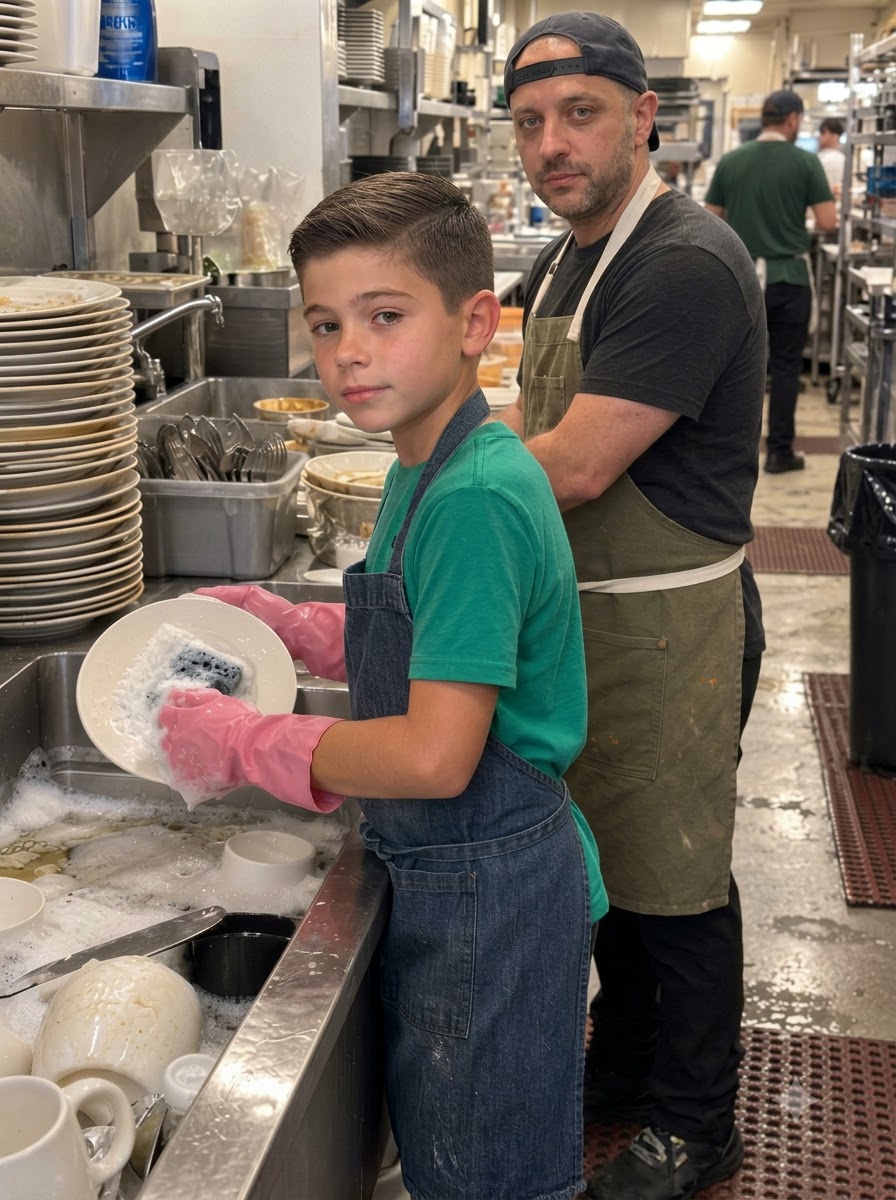
He watched me cut back on expenses.
And somewhere along the way, he decided he didn’t want to ask me for anything expensive.
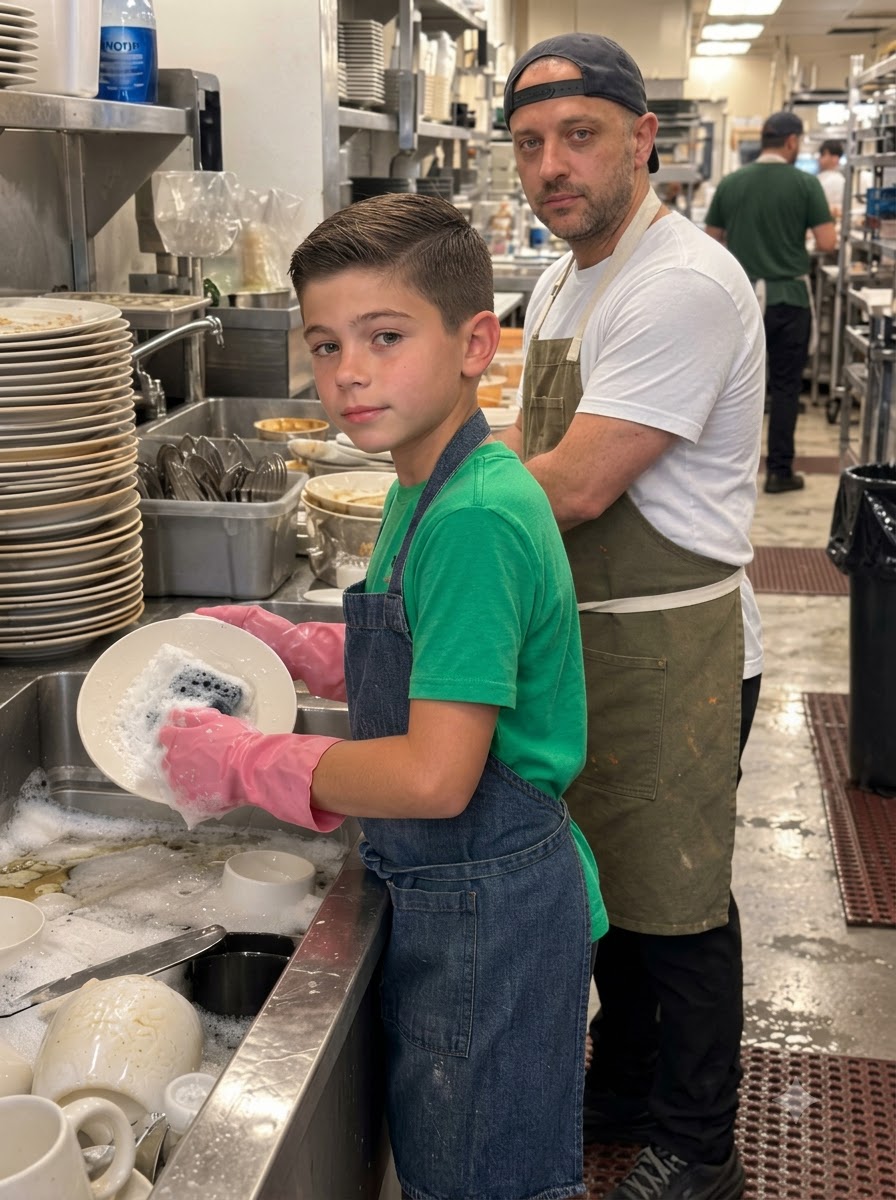
So when he told me he had found a Saturday job washing dishes at a neighborhood diner, I wasn’t surprised.
“I’m going to buy the bike myself,” he said proudly.
“You know you don’t have to do that.”
“I want to.”
I smiled.
“All right. But school comes first.”
“Deal.”
Every Saturday morning, Evan left the house wearing old jeans and worn sneakers.
Every Saturday evening, he returned smelling like dish soap, fryer grease, and french fries.
The hot water left his hands dry and red.
Whenever I asked about the bike, he gave me the same answer.
“Almost there.”
At first, I believed him.
Then three months passed.
Four.
Five.
Six.
Still, there was no bicycle.
That was when I started doing the math.
Evan was earning enough every Saturday that he should have been able to afford the bike months earlier.
So where was his money going?
I tried not to overthink it.
Maybe he’d changed his mind.
Maybe there was a girl.
Maybe he was saving for something else.
Maybe he was planning some kind of surprise.
Then one night, I walked past his bedroom and noticed that the light was still on.
His door was slightly open.
I glanced inside.
Evan was sitting on the floor, counting a thick stack of cash.
There was far more money there than I expected.
The second he noticed me, his whole expression changed.
He quickly gathered the bills, shoved them into his backpack, and zipped it closed.
“What are you doing?”
“Nothing.”
I looked at the backpack.
“Was that your bike money?”
He nodded quickly.
“Yeah.”
“That looked like a lot of money.”
“Sal pays me in small bills. It just looks like more.”
Then he gave me a nervous smile.
“I’m getting close.”
Something about his answer bothered me.
But I didn’t push.
He was thirteen.
He deserved some privacy.
So I convinced myself there had to be an innocent explanation.
A few weeks later, it became much harder to believe that.
Evan normally came home from the diner around six.
That Saturday, six became seven.
Then seven-thirty.
His phone went straight to voicemail.
When the back door finally opened, it was nearly eight.
I hurried into the hallway.
Then I froze.
His sneakers were covered in mud.
His clothes were filthy.
One sleeve was torn.
And a fresh scrape ran along the side of his face.
“Evan! What happened?”
He wouldn’t look at me.
“I fell.”
“You fell where?”
“Near the creek.”
He immediately tried to head upstairs.
I stepped in front of him.
“Your clothes are torn.”
“I slipped down the bank. It’s fine.”
Something about his explanation didn’t make sense.
Then I asked:
“Where’s the money you earned today?”
Evan stopped.
His eyes dropped to the floor.
“I put it somewhere safe.”
I stared at him.
“Somewhere safe where?”
“It’s fine, Mom.”
“What does that mean?”
He finally looked at me.
“Can I please just take a shower?”
Then he went upstairs.
I stayed alone in the kitchen, listening to the water begin to run.
By then, my imagination was working against me.
The hidden cash.
The torn clothes.
The lies.
The missing bicycle.
What if someone older had gotten my son involved in something?
What if the diner job wasn’t the whole story?
What if my grieving thirteen-year-old had become involved in something dangerous and was too frightened to tell me?
I hated myself for thinking that.
But I couldn’t make the pieces fit any other way.
I decided I would sit him down and demand the truth.
Before I got the chance, his boss called.
I was at work when an unfamiliar number appeared on my phone.
“Hello?”
“Is this Evan’s mother?”
The man’s voice sounded older.
“Yes. Who’s calling?”
“My name is Sal. I own the diner where Evan works.”
My stomach tightened immediately.
Then he said,
“I need to talk to you about your son.”
My heart began pounding.
“Did he do something wrong?”
There was a pause.
A long one.
Finally, Sal answered.
“I honestly don’t know how to answer that.”
“What does that mean?”
Another silence.
Then he asked something I wasn’t prepared to hear.
“Do you know what your son does with every paycheck?”
I frowned.
“He’s saving it.”
“For what?”
“A bicycle.”
Sal slowly exhaled.
Then his voice changed.
“Ma’am, you should probably sit down.”
I gripped the edge of my desk.
“Why?”
“Because everything that boy has told you about that money is a lie.”
My stomach dropped.
“What are you talking about?”
“He isn’t saving for that bike.”
My mouth went dry.
“Then what is he doing?”
Before Sal could answer, shouting erupted in the background.
Then I heard Evan.
“Please! Don’t tell my mom!”
I jumped to my feet.
“Evan?!”
Someone else shouted.
Then something crashed loudly.
“Evan!”
I was screaming into the phone now.
“Sal, what’s happening?”
Sal came back on the line, breathing heavily.
“Ma’am, you need to come down here.”
“What happened?”
“Your son tried to do it again.”
My heart stopped.
“Tried to do what?”
“Just get here. Now.”
The call ended.
I didn’t even grab my coat.
I snatched my keys and ran.
During the drive, every terrible possibility raced through my head.
Had Evan stolen money?
Had he gotten into a fight?
Was someone threatening him?
Was he hurt?
Was the cash I had seen in his bedroom even his?
By the time I reached the diner, my hands were shaking.
I pulled into the parking lot and ran inside.
The kitchen was completely silent.
Several employees stood gathered around the dishwashing area.
Then I saw Evan.
He was standing in the middle of the room.
His backpack lay open on the floor.
Things I had never seen before were scattered beside it.
Papers.
Receipts.
Several small packages.
And something else that made me stop cold.
All the color drained from my face.
Then I looked at my son.
And suddenly, six months of strange behavior began to make sense.
The hidden money.
The muddy clothes.
The torn sleeve.
The repeated promise that he was “almost there.”
And most of all…
why there had never been enough money for that bicycle.
I couldn’t move.
Evan looked at me, and the fear in his eyes was worse than anything I had imagined.
“Mom…”
His voice cracked.
I looked down again.
The packages weren’t drugs.
They weren’t stolen goods.
They were groceries.
Canned food.
Bread.
Bottled water.
Basic things that could fit inside a backpack.
Beside them were receipts from different stores, each one paid for in cash.
Then I noticed the papers.
They weren’t random.
They were handwritten lists.
Names.
Food items.
Amounts.
Dates.
And next to several names were small check marks.
I looked at Sal.
“What is this?”
Sal rubbed a hand over his face.
“That’s what I’ve been trying to tell you.”
I turned toward Evan.
“What have you been doing?”
He stared at the floor.
“Nothing bad.”
“Evan, look at me.”
Slowly, he lifted his eyes.
“Where has your money been going?”
He swallowed.
Then he whispered,
“To people who need it.”
I felt as if the entire room had shifted beneath me.
“What people?”
He didn’t answer.
Sal did.
“There’s a family living near the creek.”
My eyes moved toward my son’s muddy shoes.
“That’s where you were?”
Evan nodded.
Sal continued.
“They lost almost everything. Evan found out about them months ago.”
I looked at my son.
“How?”
“He saw them when he was walking home one Saturday,” Sal said. “At first, he just brought them some leftover food from the diner.”
Evan’s eyes filled with tears.
“I didn’t think you would understand.”
I crouched in front of him.
“Understand what?”
He wiped his face with his sleeve.
“I knew you were already worried about money.”
My chest tightened.
“So you decided to spend your own money helping them?”
He nodded.
“I thought if I told you, you’d tell me I couldn’t afford it.”
I couldn’t speak.
Sal looked down at the floor.
“And he didn’t just spend one paycheck.”
I looked at him.
“He gave away almost every dollar he earned.”
Evan immediately shook his head.
“Not every dollar.”
Sal gave him a tired look.
“Evan.”
“I kept some.”
“For what?”
Evan hesitated.
Then he reached into the backpack and pulled out a small envelope.
He handed it to me.
Inside were a few bills.
I stared at them.
“What’s this?”
“My bike money.”
I looked at him in disbelief.
“You still wanted the bike?”
“Of course.”
A tiny, embarrassed smile appeared on his face.
“But they needed food more.”
I felt tears fill my eyes.
For six months, I had believed my son was lying because he was hiding something shameful.
He had been lying because he was trying to hide something he thought I might be proud of.
But then I remembered Sal’s words.
“Why did you say everything he told me about the money was a lie?”
Sal sighed.
“Because he told you he was saving all of it for the bike.”
He glanced at Evan.
“He wasn’t.”
“But why did you call me now?”
Sal’s expression changed.
“Because today he tried to do it again.”
I looked at Evan.
“What happened?”
Sal pointed toward the packages.
“He tried to take food from the kitchen after his shift.”
Evan immediately spoke.
“They hadn’t eaten.”
Sal nodded.
“I know.”
“He wasn’t stealing it,” Sal said. “He came to me first.”
I looked at Evan.
“Then why was everyone shouting?”
Evan’s face crumpled.
“Because Sal said he couldn’t keep doing it.”
Sal sighed.
“I told him he couldn’t keep giving away everything he earned. He’s a kid. He needs to be a kid.”
Evan looked down.
“They needed it.”
“I know,” Sal said softly.
“But you can’t save everyone by yourself.”
The kitchen became quiet again.
I looked at the receipts scattered across the floor.
There were six months of them.
Six months of my son’s Saturdays.
Six months of dish soap burning his hands.
Six months of coming home exhausted.
And all that time, I had thought he was secretly saving for a bicycle.
Instead, he had been quietly trying to make sure another family had something to eat.
I pulled him into my arms.
He resisted for half a second.
Then he broke down against my shoulder.
“I’m sorry I lied.”
I held him tighter.
“I’m not angry because you helped them.”
He cried harder.
“I just didn’t want you to worry.”
“I was already worried.”
“I know.”
“And I was wrong about you.”
He didn’t say anything.
I kissed the top of his head.
“You should have told me.”
“I was scared.”
“Of what?”
“That you’d tell me we couldn’t afford it.”
I pulled back and looked into his eyes.
“We couldn’t afford you carrying this alone.”
He started crying again.
So did I.
Sal quietly walked away, giving us privacy.
A few minutes later, he returned with a paper bag.
He handed it to Evan.
Inside was food from the diner.
“What’s this?”
“Dinner.”
Evan stared at him.
“For the family?”
Sal nodded.
“And tomorrow, we’re going to figure out something better.”
Evan looked confused.
“Better than what?”
“Better than you spending every paycheck.”
Sal folded his arms.
“Your job is to wash dishes. My job is to run the diner. If we’re going to help somebody, we’re going to do it properly.”
For the first time that night, Evan smiled.
I looked at Sal.
“Who is this family?”
He hesitated.
Then he gave me their names.
I didn’t recognize them.
But I knew what I needed to do next.
The following morning, Evan and I drove toward the creek.
He showed me where he had been going.
The place was much more modest than I had imagined.
There was a small family living there, trying to get by with very little.
Evan stood beside me nervously.
“I didn’t know what else to do.”
I took his hand.
“You did what you thought was right.”
He looked at me.
“Are you mad?”
“No.”
“Not even a little?”
“I’m upset that you felt like you had to hide it.”
He nodded.
We spent the morning helping with what we could.
Not because Evan had to.
Not because he owed anyone anything.
But because now I knew.
And because he was no longer carrying the secret alone.
When we got home that afternoon, Evan went straight to his room.
A few minutes later, he came back holding the envelope with his remaining bike money.
He placed it on the kitchen table.
“I think I need to start over.”
I smiled.
“You don’t have to give this away too.”
“I know.”
He looked toward the window.
Then he smiled.
“I still want the bike.”
I laughed for the first time in days.
“Good.”
He looked surprised.
“Really?”
“Really.”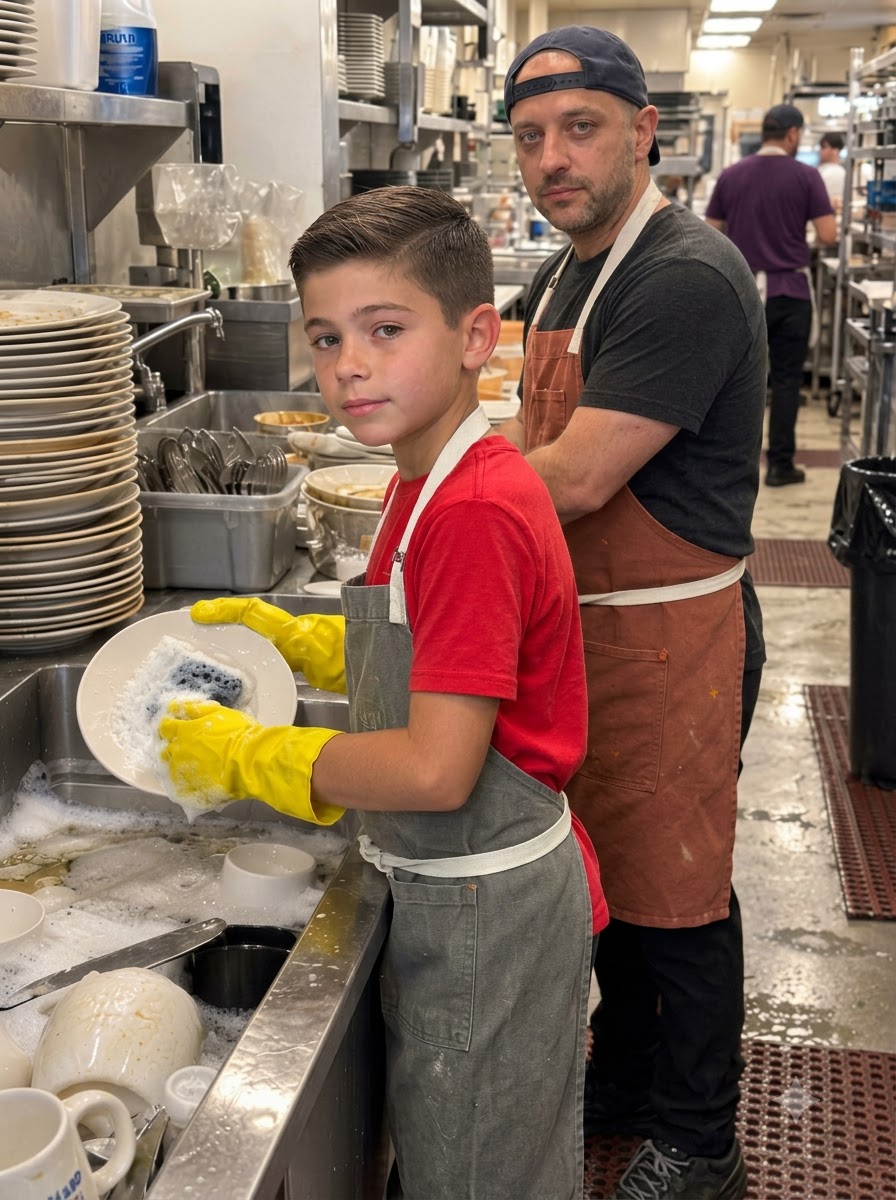
“But I haven’t saved enough.”
“You don’t have to buy it all by yourself.”
His expression immediately changed.
“But you said—”
“I know what I said.”
I smiled.
“School comes first. And sometimes, your mother gets to help her son.”
His eyes filled with tears again.
“Does that mean…”
“We’ll figure it out.”
That evening, we walked past the sporting-goods store.
The same matte-black bicycle with orange lettering was still in the window.
Evan stopped.
He stared at it.
But this time, something was different.
He wasn’t looking at it with the same desperate determination.
He looked at me.
Then he smiled.
“Maybe someday.”
I squeezed his shoulder.
“Maybe sooner than you think.”
And as we walked home, I realized something I would never forget.
For six months, I had believed my thirteen-year-old son was secretly lying to me because he wanted something for himself.
I had been wrong.
He had been lying because he wanted to give something to someone else.
He wasn’t hiding selfishness.
He was hiding kindness.
And maybe the greatest lesson he taught me wasn’t about money, bicycles, or sacrifice.
It was that sometimes the child you think you need to protect is quietly teaching you what courage really looks like.
