

At precisely 2:13 in the morning, my parents abandoned my six-year-old son and me beside an almost deserted highway in the Nevada desert.
My mother stared through the passenger-side window as their SUV drove away.
My father never turned around. They were convinced they had taken away everything I could use to help myself: my wallet, my apartment keys, my phone charger, and even the emergency cash I usually carried.
What they had failed to take was the one thing my years in military service had taught me never to surrender.
Control of myself.
By sunrise, the carefully constructed story my parents had prepared was already beginning to fall apart.
The Moment Everything Changed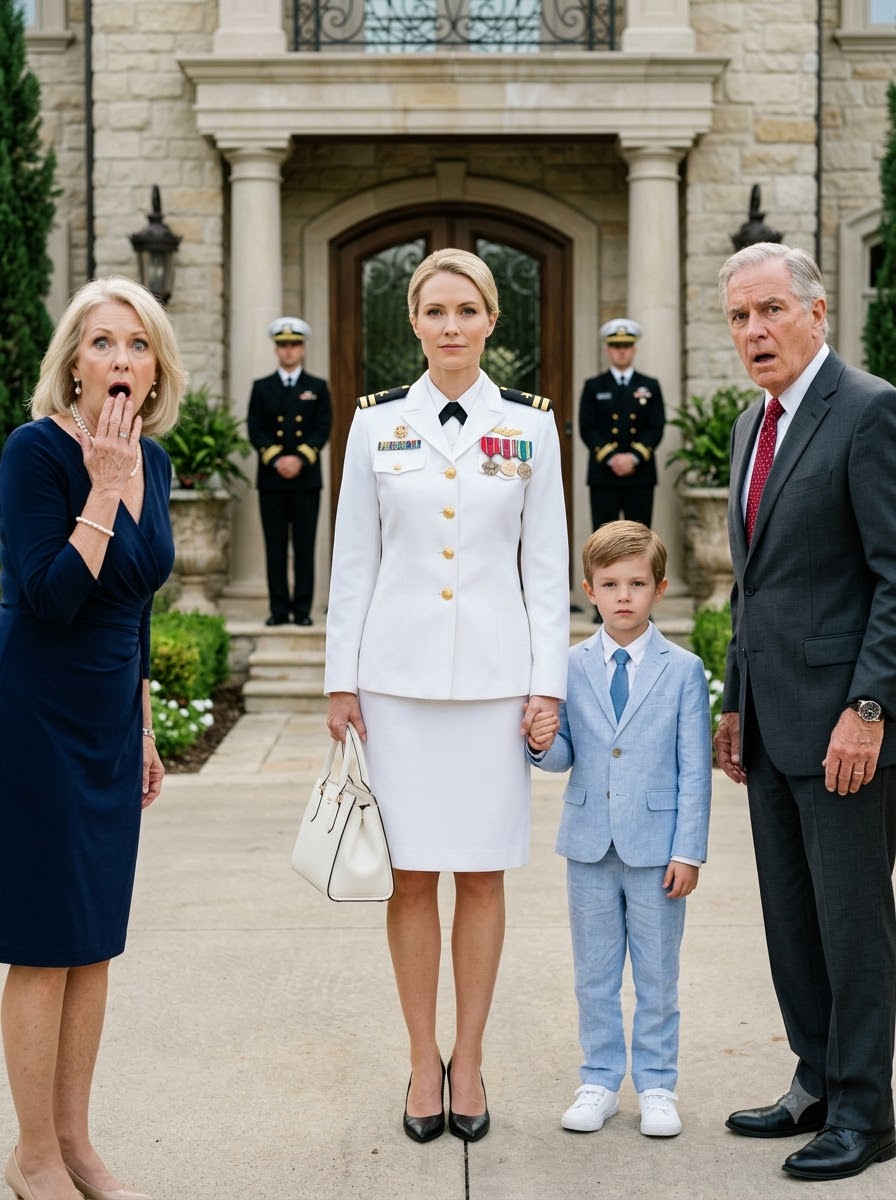
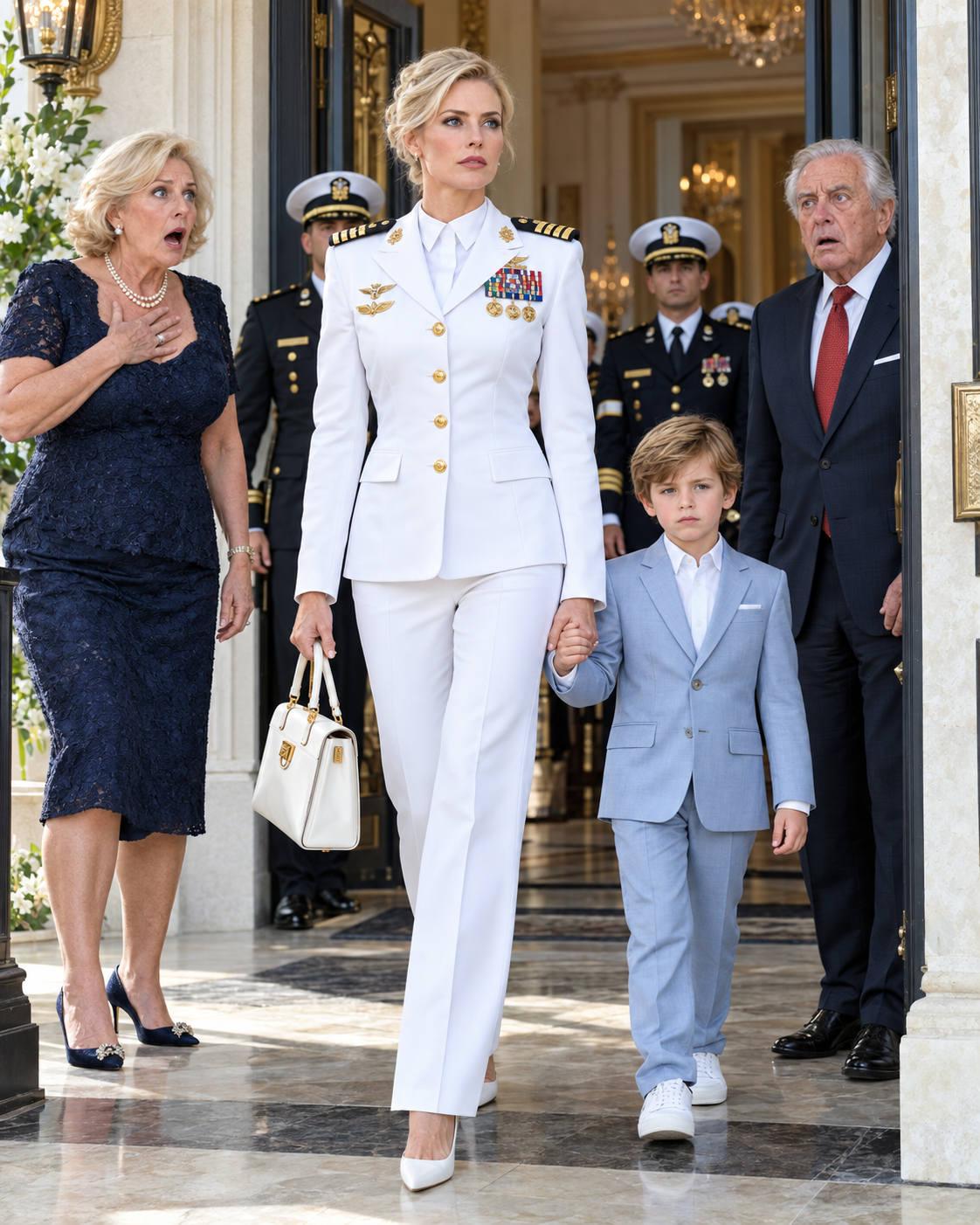
My name is Audrey Kincaid, and at thirty-seven, I had spent the majority of my adult life serving in the United States military.
I had risen into a senior officer role, commanded teams through challenging situations, and learned how to make sound decisions when everyone around me was overwhelmed.
That did not mean I was without fear.
It meant I knew how to handle it.
That difference mattered more than ever on the night my father unexpectedly pulled onto the shoulder of U.S. Route 95 north of Beatty, Nevada.
The SUV came to such a sudden stop that my son, Noah, jerked forward against his seat belt.
I immediately turned toward him.
“Are you okay, sweetheart?”
He nodded, still confused and half asleep.
Before I could ask my father what had happened, he turned around.
His expression was oddly calm.
“Get out, Audrey.”
For a second, I wondered if I had heard him correctly.
“What?”
“You heard me. Get out of the car.”
I looked outside the window.
There were no houses anywhere nearby. No gas stations. No businesses. Only a long stretch of highway surrounded by darkness.
The temperature had fallen sharply throughout the night.
Then my mother spoke.
“Your father isn’t going to repeat himself.”
I looked directly at her.
“Noah is six years old.”
She showed almost no reaction.
“That isn’t our problem anymore.”
Those words made everything clear.
This was not an argument.
It had been planned.
The Clues I Had Missed
The warning signs had been there for hours.
I simply had not put them together.
Earlier that night, my father had offered to drive Noah and me back toward my apartment after a family gathering.
Before we left, he asked me for my keys.
“You always have too much in your hands,” he said. “I’ll hold onto these until we get there.”
It irritated me, but it seemed harmless enough.
Later, when we stopped for coffee, my mother offered to place my wallet inside her purse.
“You don’t need to carry that big bag inside,” she told me.
Once again, I thought nothing of it.
Then my phone battery fell below ten percent.
When I reached for the charging cable, my father said it was not working correctly and tossed it into the center console.
Three minor moments.
Three decisions that seemed completely insignificant.
Now, sitting beside an isolated highway after two in the morning, I finally understood what they had been doing.
They had made certain I had no keys.
No identification.
No money.
No dependable phone.
And no transportation.
“Grandpa, Please Don’t Leave”
My father got out and opened the rear hatch.
He took out my overnight bag and dropped it onto the pavement.
The zipper caught on the ground and opened.
A sweater, two shirts, and Noah’s pajamas spilled across the shoulder.
Then he took out Noah’s small backpack.
I stepped outside.
“Dad, stop. Whatever you’re angry about, Noah has nothing to do with it.”
He did not respond.
My mother stayed inside the SUV.
I moved toward her window.
“Mom, look at your grandson.”
For a moment, she looked at Noah.
He stood beside the vehicle, holding his stuffed dinosaur tightly against his chest.
“Grandma?” he whispered.
Her face became tense, but she looked away.
My father placed Noah’s small blue blanket on top of my bag.
Then he climbed back behind the wheel.
Noah suddenly realized what was happening.
He took two steps toward the SUV.
“Grandpa, please don’t leave us here.”
I caught his hand before he could get any closer.
The SUV drove away.
Noah watched as the red taillights became smaller in the distance.
“Mom, are they coming back?”
I wanted to tell him yes.
Instead, I knelt down in front of him.
“Listen to me, Noah. You’re staying right beside me, and we’re going to be okay. I need you to trust me.”
His eyes filled with tears, but he nodded.
That was when the mother in me wanted to break down.
The officer in me would not let that happen.
Not yet.
Training Took Over
Military training does not make people into machines.
You still experience fear.
You still experience pain.
You simply learn that panic cannot be permitted to make your decisions.
So I followed the same mental process I had relied on countless times throughout my career.
Assess the child. Assess the environment.
Identify immediate risks.
Find communication. Find shelter.
Preserve evidence. Noah had bumped his forehead when the SUV came to a sudden stop, so I checked him first.
There was a small red mark, but he was alert, speaking clearly, and able to walk normally.
The next concern was the cold.
I took off my coat and wrapped it around him.
“Aren’t you cold?” he asked.
“I’m fine.”
That was not completely true.
But he needed the coat far more than I did.
I guided us farther from the traffic lane and placed Noah in the safest area of the shoulder.
Then I started observing our surroundings.
That was when I noticed it.
Roughly sixty yards behind us stood a tall metal pole.
Mounted at the top was a highway traffic camera.
I looked at it for several moments.
My parents had chosen an isolated road because they believed darkness meant no one would know.
But the camera had a clear view.
If it was working, it might have recorded their vehicle stopping.
It could have captured my father unloading our belongings.
It could have shown Noah and me being left beside the highway.
For the first time that night, I felt something other than shock.
Hope.
The Stranger Who Stopped
We waited.
The cold made every minute seem longer.
Noah leaned against me.
“Mom, why did Grandma and Grandpa do this?”
Some questions a six-year-old should never have to ask.
I refused to place adult problems on his shoulders.
“Sometimes grown-ups make very bad decisions when they’re angry. What happened tonight is not because of you.”
About fifteen minutes later, headlights appeared.
A tractor-trailer was coming from the south.
I moved closer to the visible edge of the shoulder while keeping Noah safely behind me.
I raised one hand.
The truck slowed.
Then it carefully pulled onto the shoulder ahead of us.
The driver stepped down.
He was a broad-shouldered man in his fifties wearing a heavy jacket and a baseball cap.
He looked at me, then at Noah.
His expression changed immediately.
“Ma’am, do you need help?”
For years, I had been the person others relied on.
That night, I had to accept help myself.
“Yes,” I said. “My son and I were left here, and my phone is nearly dead.”
The driver’s name was Randall Pierce.
He did not ask unnecessary questions.
He simply opened the passenger door.
“Get the little guy somewhere warm first.”
Inside the cab, he gave Noah an extra blanket and turned up the heat.
Then he handed me a charging cable.
“Use whatever you need.”
My phone slowly came back to life.
I called for assistance.
Randall stayed with us until officers arrived.
Before leaving, Noah reached toward him.
“Thank you for stopping.”
Randall smiled.
“Always look out for the people who need somebody to stop.”
I never forgot those words.
My Parents Had Prepared Their Own Story
By early morning, officers had already started putting together what had happened.
That was when I discovered how far my parents had intended to go.
At first, they claimed there had been a family disagreement and that I had chosen to leave the vehicle.
According to their version, they believed I had arranged transportation.
It sounded convenient.
It also did not fit the evidence.
I explained that my wallet, keys, and charging cable had remained inside their SUV.
Investigators confirmed those belongings were still in their possession.
Then came the highway footage.
The camera had been working.
An officer asked me to sit down before showing me part of the recording.
There was my father’s SUV.
There was my father unloading our bags.
There was Noah standing beside me.
There was the vehicle driving away while we remained on the shoulder.
No argument could be heard on the recording, but none was needed.
The sequence spoke for itself.
One officer looked at me.
“This doesn’t appear consistent with the explanation we were given.”
I stared at the screen.
For hours, I had tried to understand how my own parents could do something so deliberate.
Now I realized something else.
Their confidence had made them careless.
The Real Reason Behind Their Anger
The conflict had started months earlier.
My parents had always believed that family loyalty meant obedience.
As long as I agreed with them, everything remained peaceful.
The moment I set boundaries, their attitude changed.
They wanted more control over how Noah was raised.
They criticized my career.
They complained that military service had made me “too independent.” My mother once said to me:
“You act as though you don’t need your family anymore.”
I replied: “Needing family and allowing family to control my life are two different things.”
She never forgot those words.
Things grew worse when I refused to move closer to them and turned down my father’s repeated attempts to become involved in my finances.
The highway incident was apparently meant to scare me.
They expected me to panic.
They expected me to call them afterward, apologize, and accept their demands.
Instead, they had crossed a line that could never be uncrossed.
WHAT MY SON SAID THAT MORNING
Not long after sunrise, Noah and I were sitting in a warm room while arrangements were being made for us to return home.
He was wrapped in a blanket, sipping hot chocolate.
For the first time that entire night, he appeared calm.
Then he looked at me.
“Mom?”
“Yeah, buddy?”
“Were you scared?”
I could have lied and said I wasn’t.
But children misunderstand courage when adults teach them that brave people never feel afraid.
So I gave him the truth.
“Yes. I was scared.”
He frowned.
“But you didn’t look scared.”
I pulled him closer.
“Being brave doesn’t mean you aren’t scared. It means you still make good choices while you’re scared.”
He considered that for a moment.
Then he rested his head against my shoulder.
“I think you were really brave.”
That meant more to me than any professional recognition I had ever received during my career.
THE BOUNDARY THEY COULD NEVER CROSS AGAIN
I did not celebrate what happened afterward.
There was nothing satisfying about seeing a family fall apart.
But consequences are not the same as revenge.
My parents had made their choices.
Now I had to make mine.
I cooperated completely with the authorities and documented everything.
More importantly, I made it clear that my parents would no longer have unsupervised access to Noah.
When my mother eventually attempted to contact me, her first concern was not how frightened Noah had been.
She wanted to know why I had “made everything so serious.”
That told me I had made the right decision.
“You left a six-year-old child beside a highway in the middle of the night,” I told her. “I didn’t make this serious. Your choices did.”
She became silent.
Then she said something I had heard in different forms throughout my entire life.
“We’re still your parents.”
I closed my eyes.
For years, that sentence had been used as though it erased every boundary.
Not anymore.
“And I’m still Noah’s mother. Protecting him comes first.”
I ended the call.
THE LESSON I CARRIED HOME
People sometimes think strength has to be loud.
They imagine shouting, confrontation, or dramatic revenge.
But the strongest thing I did that night was much quieter.
I remained calm.
I held my son’s hand.
I paid attention.
I accepted help when it came.
And when morning arrived, I told the truth.
My parents believed they could strip away every advantage I had.
They took my wallet.
They kept my keys.
They disconnected my charger.
They drove away in the vehicle.
But they could not take my experience.
They could not take my judgment.
And they could not decide what kind of mother I would become.
Several weeks later, Noah asked me if I still remembered the truck driver who had stopped.
“Of course I do.”
He smiled.
“When I’m big, I’m going to stop too.”
“Stop for what?”
“For people who need help.”
I looked at him and realized that perhaps the worst night of our lives had still managed to leave something good behind.
My parents wanted that lonely highway to teach me helplessness.
Instead, it taught my son compassion.
They wanted me frightened enough to return to the role they had chosen for me.
Instead, I finally understood that some boundaries exist because the people we love most are sometimes the very people from whom we need those boundaries most.
At 2:13 that morning, my parents believed they were driving away from two powerless people standing alone in the desert.
By sunrise, a traffic camera had captured what happened, a stranger had reminded us that kindness still existed, and the truth had begun to speak for itself.
My parents had carefully planned that night.
They simply made one mistake.
They believed taking away my possessions would also take away my strength.
They were wrong.
Sometimes the people closest to us expect love to mean unlimited obedience, but genuine love should never require us to surrender the boundaries that protect ourselves and our children.
Strength is not always visible through dramatic confrontation; sometimes it appears in the quiet decision to remain calm, think clearly, and take the next responsible step when everything feels uncertain.
A difficult moment does not erase the skills, wisdom, and resilience you have developed over the years, even when someone deliberately tries to make you feel as though you have nothing left.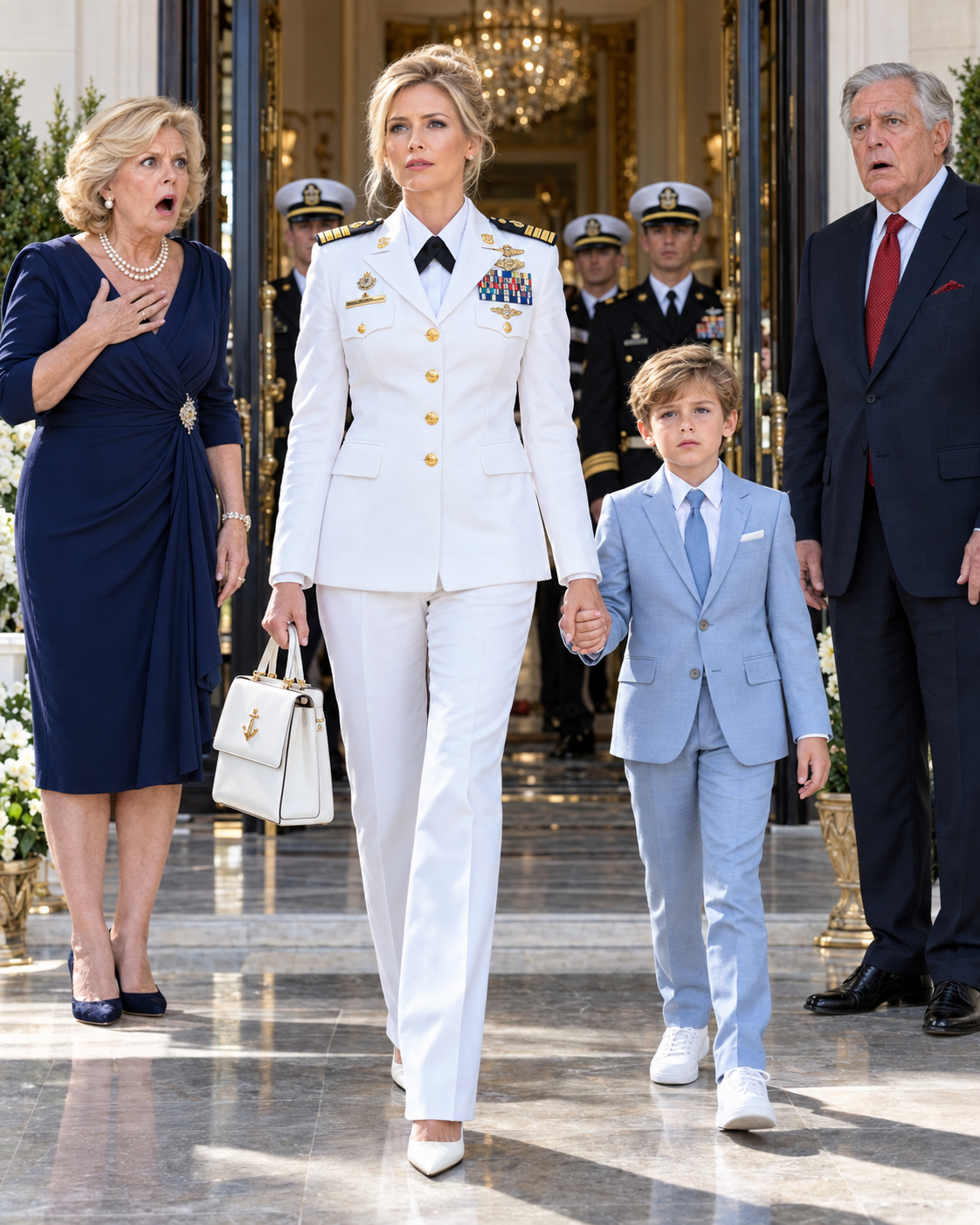
Children remember more than the frightening moments they experience; they also remember who held their hand, who protected them, and who showed them what courage looks like when life becomes difficult.
Accepting help from a stranger, friend, neighbor, or professional does not diminish your independence, because sometimes true strength means recognizing that you do not have to handle every crisis entirely alone.
Family relationships deserve love and patience, but being related to someone does not give that person unlimited permission to disregard boundaries, manipulate circumstances, or place a child in an unacceptable situation.
When someone expects panic, anger, or desperation from you, responding with patience, documentation, and clear thinking can often protect you far more effectively than giving them the emotional reaction they wanted.
Courage does not mean living without fear; courage means acknowledging that fear exists while refusing to let it determine what you do next or what kind of person you become.
One painful night can change a family forever, but it can also reveal unexpected kindness, clarify necessary boundaries, and teach a child that good people still exist even after someone they trusted has disappointed them.
No matter how carefully another person tries to control the circumstances around you, they cannot easily take away your judgment, your experience, your values, or your determination to protect the people who depend on you.
