

Chapter 1: The Rotting Foundation
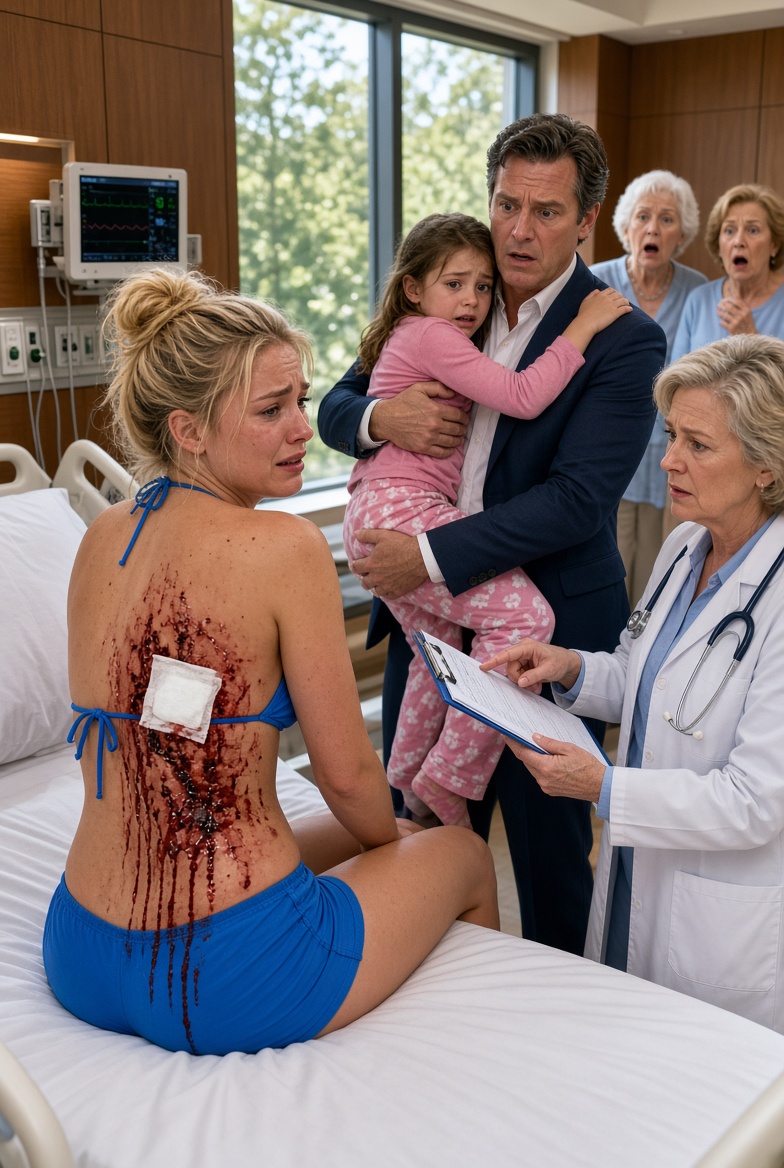
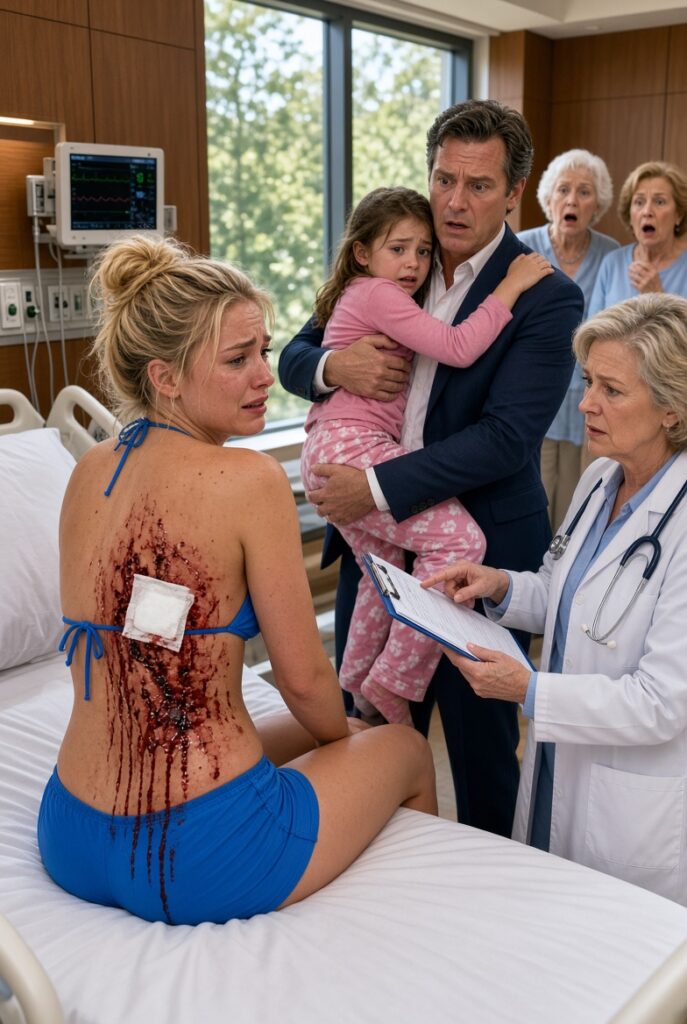
Twenty-four hours after I let a surgical team hollow out my pelvis with a marrow needle—eleven distinct, agonizing punctures to spare my eight-year-old niece’s life—my younger sister walked into my recovery room. She didn’t ask about my pain. She didn’t thank me. Instead she walked past the monitors tracking my fluctuating vitals, laced her fingers through my husband’s hand, and announced that the child I had just bled for was his.
My name is Rowan. I am thirty-five years old, and I work as an architect in Sacramento. My entire professional life follows one unforgiving law: gravity always wins, and it will exploit any lie hidden in a structure. You can wrap a building in breathtaking glass, dress it in imported marble, and light it like a jewel. But if the load-bearing columns are compromised—if the blueprints are a fiction—the whole edifice will eventually fall. And it will fall at the worst possible moment.
I know that law in my marrow. What I failed to see, until I was lying paralyzed by pain in that sterile hospital bed, was that I had been living in a collapsing building for decades. The people I loved most had known the beams were rotting, and their answer had been to keep applying fresh coats of paint.
To understand the cruelty of what happened in that hospital room, you have to understand the blueprint of my family. I am the eldest of two daughters. My mother, Karen, and my sister, Sloan—three years younger—formed an impenetrable alliance from the moment Sloan took her first breath.
In our house there wasn’t simply sibling rivalry. There was a monarchy. Sloan was the golden child, the one sunlight seemed to follow. She had a magnetic, effortless charm, a way of tilting her head and smiling that made people feel instantly warmed. My mother adored her with a fierce, uncomplicated blindness she could never quite summon for me.
I was the pragmatic one. The serious daughter who earned flawless grades, built a stable career, and could always be counted on when things fell apart. But in my family’s twisted ecosystem, being dependable was not the same as being loved. It only meant you were the designated provider. Sloan was born to receive; I was trained to yield. That was the silent contract I had signed before I was old enough to read it, and I spent more than three decades treating it like the weather of my life.
Sloan never simply wanted things; she coveted what I had. It wasn’t need. It was a hollow, grasping compulsion I didn’t recognize until much later. If my eyes lit up over something, Sloan’s aim locked onto it. And because my mother could not stand to see her favorite child want for a moment, my possessions inevitably moved.
When I was seventeen, I spent fourteen months scrubbing drafting-room floors and running errands to buy my first car—a battered powder-blue hatchback. It was my first taste of building something myself, paid for with blistered hands. Sloan, fourteen and unable to drive, threw a weeping tantrum about the injustice of my having a car while she did not. Within weeks my mother arranged a “family sharing” plan. I became Sloan’s chauffeur. By the time she turned sixteen, the keys lived in her purse, and I was called selfish for mourning the only thing I had built for myself.
That was the training. The theft was always slow, always wrapped in the language of family duty, and if you named the robbery, you became the villain. Two decades later my sister would use the same strategy to steal my husband and my dignity.
I met Emmett when I was twenty-six, and we married a year later. For eight years I truly believed our marriage was the solid ground I had always wanted. We were not without sorrow. We wanted a child badly, and the universe refused. We endured the humiliating carousel of fertility clinics, the monthly surge of desperate hope, and the crushing silent grief when the tests came back negative. I spent my days designing bright sunlit nurseries for clients, then came home to a house with a spare room we would not furnish, afraid that filling it would mean giving up.
I thought Emmett carried that heavy sorrow with me. I believed our shared grief was the mortar holding our bricks together.
Then, four months ago, the unthinkable happened. Posie, Sloan’s eight-year-old daughter, began showing unexplained bruises. A persistent fever would not break. The diagnosis shattered us: aggressive leukemia. After the brutal ravages of chemotherapy, her survival came down to one desperate requirement. She needed a bone marrow transplant to reboot her destroyed immune system.
I entered the crisis the only way I knew how: by becoming the structural support. While Sloan wept and my mother posted performative tragic updates on social media to harvest sympathy, I did the actual work. I drove them to every oncology appointment. I sterilized Sloan’s apartment. I researched hematology until my eyes bled. I sat through the invisible 3:00 a.m. fevers while my mother conveniently vanished.
When the doctors said they were testing the entire family and the national registry for a marrow match, my phone rang while I was alone in my drafting studio.
“Rowan,” the transplant coordinator’s voice was tight with urgency. “We’ve run the HLA Typing—the genetic markers needed for a match. Against all odds, you are the only viable donor we have found. If you don’t do this, Posie will not survive.”
I didn’t let her finish explaining the agonizing surgical extraction. I didn’t check my calendar or weigh the risks. I just said yes.
Because she was Posie. Because you do not let a child die to spite a sister who is hard to love.
I was ready to give my niece the marrow from my bones. I just didn’t know my family was sharpening a knife for my back the moment I went under anesthesia.
Chapter 2: The Harvest and the Thread
To understand the weapon they tried to use against me, you have to understand the science of the procedure. Matching bone marrow is not like matching a blood type; it relies on Human Leukocyte Antigens (HLA), complex protein markers that tell your immune system what belongs in your body and what is a foreign invader.
Here is the architectural truth of human biology: a child inherits exactly one complete set of HLA markers from their biological mother, and exactly one complete set from their biological father. This genetic law is absolute. It is why siblings have a twenty-five percent chance of being a perfect match.
Posie had no siblings. Sloan had gotten pregnant at twenty-three, and the identity of the father was a shifting, nebulous story our family was trained never to question. So the doctors tested everyone. Aunts are rarely close enough matches to be viable donors, but genetics can be a strange lottery. I was the anomaly. I was the bridge to Posie’s survival.
A week before the surgery, Sloan brought Posie to my house. The chemotherapy had stripped away her hair, leaving her tiny head covered by a soft knitted cap. Her skin was translucent, her frame terrifyingly frail. But she sat on my kitchen floor surrounded by a tangle of embroidery thread, her tongue poking out in intense concentration.
For an hour she wove a crooked friendship bracelet.
“Purple is for being brave,” she whispered, her thin fingers tying a clumsy double knot around my wrist. “And yellow is for being happy. Mommy said you have to be brave for me, Aunt Rowan.”
I pulled that fragile, hollowed-out little girl into my arms, terrified of dislodging the medical port in her chest. I will be the bravest person in the world for you, I promised her.
I wore that woven thread into the operating theater. When the surgical nurses asked me to remove my jewelry, I pleaded to keep it. A sympathetic nurse taped it securely to my wrist. That flash of purple and yellow was the last thing I saw before the heavy dark tide of general anesthesia pulled me under.
The “harvest” is not a gentle donation of blood. While I slept, a surgeon drove a thick hollow needle deep into my pelvic bone, extracting the dark, thick marrow that contained the stem cells meant to rebuild Posie’s life.
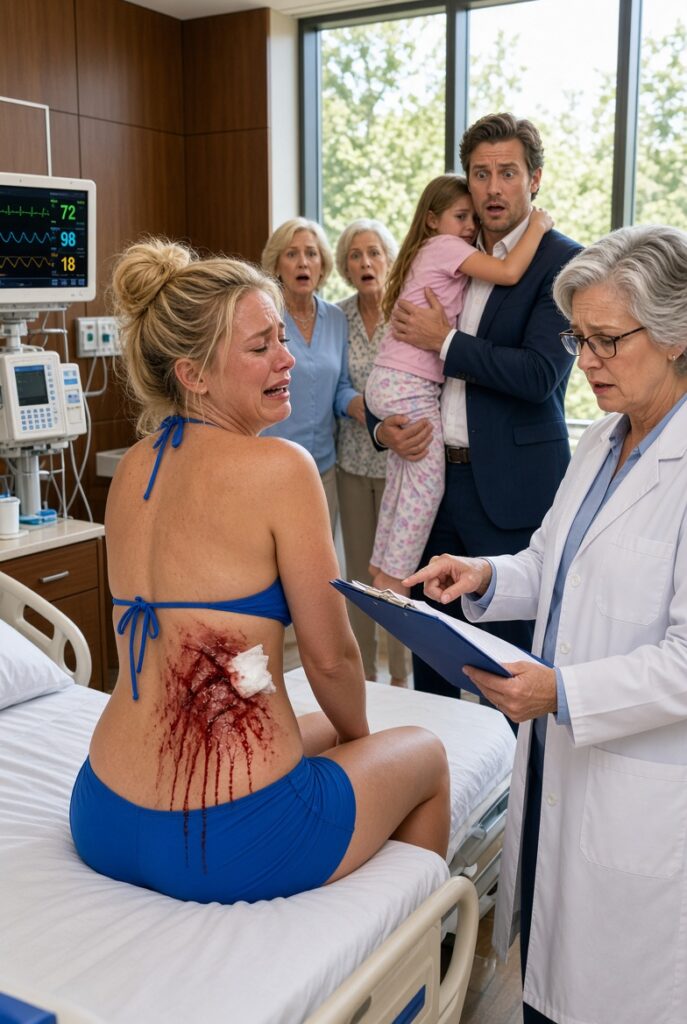
I clawed my way out of the anesthesia hours later into a world of profound, suffocating pain. It felt as though a draft horse had kicked me squarely in the lower spine. A deep bruised ache throbbed in the core of my skeleton.
But as I lay in the recovery ward, full of painkillers, a transcendent joy washed over me. There is a piece of me that will live inside her now, I thought. I had mourned my inability to give life for nearly a decade, and here, in this sterile beeping room, I had finally been granted the privilege of saving one.
Emmett was there when I opened my eyes. He smoothed the damp hair from my forehead. He pressed a cup of ice chips to my dry lips. He held my hand and called me a hero. His eyes were red-rimmed, his touch gentle. I fell back asleep wrapped in the comforting illusion that my marriage was a fortress.
I woke the next morning feeling gray, nauseous, and entirely hollowed out. The painkillers were wearing off, leaving me paralyzed by the fiery ache in my hips.
The door to my private room clicked open.
I expected a nurse. I expected an update on Posie’s transplant.
Instead, a tribunal walked in.
Sloan entered first, her posture stiff, her eyes glinting with a terrifying manic energy. Emmett followed, his head bowed, clutching a thick manila envelope to his chest like a shield. My mother, Karen, brought up the rear, pulling the heavy wooden door shut behind her with a sickeningly final click.
I tried to push myself up on my elbows, but the agony in my pelvis forced me flat against the mattress. “How is Posie?” I rasped, my throat still raw from the intubation tube.
Nobody answered. The silence in the room was suffocating, heavy with premeditated violence.
Sloan stepped to the foot of my bed. With slow, deliberate theatricality—making sure my gaze was locked on her movements—she reached out and took Emmett’s hand. She threaded her fingers through his.
My husband did not pull away.
What is this? My brain, still foggy from narcotics, struggled to process the image.
Sloan looked down at me, her face arranging itself into a mask of faux-pity that failed to hide the predatory triumph beneath.
“Rowan,” she said, her voice dripping with weaponized sorrow. “You deserve the truth. Emmett and I… it happened years ago, before you two were even married. Posie is his. She always has been.”
The heart monitor beside my bed began to spike, a frantic rhythmic alarm echoing the sudden terror seizing my chest.
“We couldn’t tell you,” Sloan continued, stepping closer. “We didn’t know how to break your heart. But after what you just did… giving her your marrow… we realized she deserves to know she was saved by her own blood. She saved her real family. Emmett and I can’t keep living this lie.”
I turned my horrified gaze to my husband. The man who had kissed my forehead hours earlier now looked like a ghost. His skin was ashen, his jaw trembling. I read it then as the guilt of an adulterer caught in the spotlight. I didn’t yet have the context to see it as the agony of a manipulated pawn.
Before I could force a single word through my paralyzed vocal cords, my mother stepped out from behind them. She looked at my broken, bandaged body, and a small satisfied smile played on her lips. It was the smile of a spectator watching her champion cross the finish line.
“Well, Rowan,” my mother purred, aiming directly for the deepest, most unhealed wound in my soul. “At least you finally did something useful with your life. At least you managed to save his real family.”
His real family.
The words struck me like a physical blow. She knew I had spent eight years weeping over negative pregnancy tests. She knew I felt defective. And she was standing over my hospital bed, weaponizing my own barrenness, telling me that the child I had just allowed a surgeon to carve me open for was the child I had failed to give him.
Then Emmett—the man I had pledged my life to—stepped forward. His hands shook so violently that the manila envelope rattled in the quiet room. He placed it directly onto my lap, the heavy paper pressing into the bandages covering my punctured pelvis.
“I’m so sorry, Ro,” he whispered, a tear slipping down his pale cheek. “I didn’t know how else to do this.”
I looked down. Protruding from the envelope were divorce papers, already marked with neon “Sign Here” tabs.
They hadn’t just come to confess. While I was unconscious, bleeding for her child, they had choreographed this execution. They had timed the ambush for the exact moment I was physically incapable of standing up, fighting back, or running away.
The conditioning of thirty-five years is a heavy chain. Lying there, utterly defeated, the old instinct flared. Just give it to her, a tired voice whispered in my mind. She wants him. Let her take him, like she took the car, like she took everything else.
My trembling hand actually lifted from the sheets, gravitating toward the pen Emmett had placed on the nightstand. I was going to surrender my marriage without a fight.
And then the heavy wooden door swung open again.
Chapter 3: The Lab Report Collision
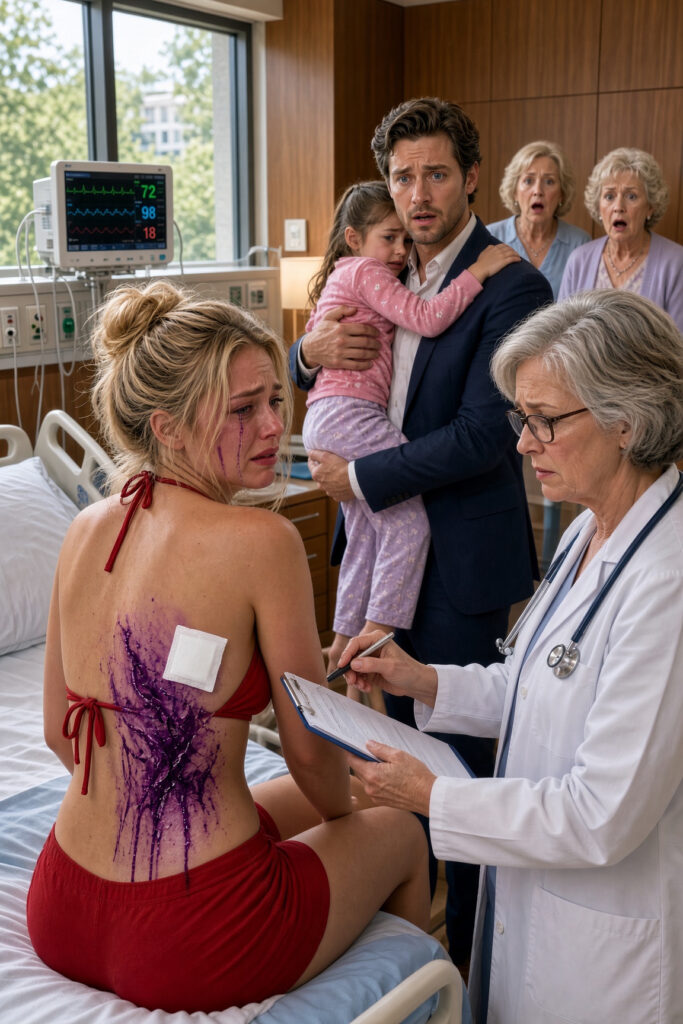
Dr. Halverson was a meticulous, unsmiling woman in her late fifties. As the head transplant physician, she commanded a room through sheer competence. She walked in holding a sleek blue medical folder—the final consolidated lab report from the family’s donor workup.
She stopped dead in her tracks.
It takes a seasoned medical professional about three seconds to assess a crisis. Dr. Halverson’s sharp eyes darted from my weeping, terrified husband holding my sister’s hand, to the smug expression on my mother’s face, and finally rested on the divorce papers sitting atop my surgical dressings.
The temperature in the room plummeted.
“I apologize for the intrusion,” Dr. Halverson stated, her voice slicing through the thick tension like a scalpel. She did not look at Sloan or my mother. She locked her gaze entirely on Emmett. “Mr. Ellery, this concerns you directly. Given the… dynamic unfolding in this room, you need to hear this before any irreversible decisions are made.”
She stepped forward, tapping the blue folder. “Before you sign a single document on that bed, you need to read what is printed on Page Three.”
The silence that followed was absolute. I stopped reaching for the pen. Sloan’s grip on Emmett’s hand faltered.
Here is the architectural flaw in Sloan’s master plan. Months earlier, when Posie first fell ill and everyone secretly believed Emmett was the father, Emmett had done what any terrified father would do: he had quietly volunteered to be HLA typed as a potential donor. He had offered his cheek for a swab and his arm for a blood draw, desperately hoping his genetics could save his secret daughter.
But science does not care about sisterly rivalries, and biology does not negotiate with liars.
Dr. Halverson opened the blue folder. “As part of the transplant protocol, we analyze the inherited HLA markers. A child must inherit one half of her genetic profile perfectly from her biological father. When we ran your sample, Mr. Ellery, against Posie’s, the results were not merely a mismatch for donation.”
She pulled out a single sheet of paper—Page Three—and held it out to him.
“You do not share the paternal genetic sequence with the patient,” the doctor explained, her tone devoid of emotion but heavy with consequence. “Because you presented to my staff as the biological father, and because this discrepancy is medically impossible, we ordered a confirmatory DNA paternity analysis.”
Emmett released Sloan’s hand as if she had suddenly caught fire. He took the paper with trembling fingers.
“The results are definitive,” Dr. Halverson concluded. “Probability of paternity is zero percent. You are genetically excluded from being Posie’s father. You never were.”
The revelation detonated in the small room, blowing the facade of my family’s lies to absolute dust.
Zero percent.
There was no affair that produced a child. The secret family was a phantom. The entire foundation of this grotesque ambush rested on a catastrophic fabrication that my sister had spun out of thin air.
I watched the color completely drain from Emmett’s face as his eyes scanned the undeniable laboratory text. I saw the crushing guilt of an adulterer shatter, instantly replaced by the horrific, paralyzing realization that he had been played.
Sloan had taken a foggy, insignificant memory—a shared cab ride or a drunken conversation before our wedding—and over the course of Posie’s illness, she had meticulously watered a seed of doubt in his mind. She had weaponized his inherent insecurities, leveraging the emotional chaos of a dying child to convince him of a sin he never committed. He wasn’t a villain reveling in his betrayal; he was a manipulated dupe who had blown up his own life for a ghost.
And Sloan? I shifted my gaze to the golden child.
Her face was a portrait of architectural collapse. The smugness evaporated, replaced by raw, naked panic. She opened her mouth, closing it again like a landed fish. She had spent a lifetime rearranging reality through charm and tears, backed unconditionally by our mother. But you cannot charm a genetic sequencer. You cannot gaslight a DNA test.
Page Three didn’t care that she was the favorite. It branded her a liar in black and white ink.
My mother let out a strangled, pathetic gasp, taking a stumbling step backward. Her grand victory—the ultimate humiliation of her least favorite daughter—had just evaporated into thin air.
Dr. Halverson, maintaining her flawless professionalism, closed the blue folder. She turned to me, and for the first time, her severe expression softened into profound respect.
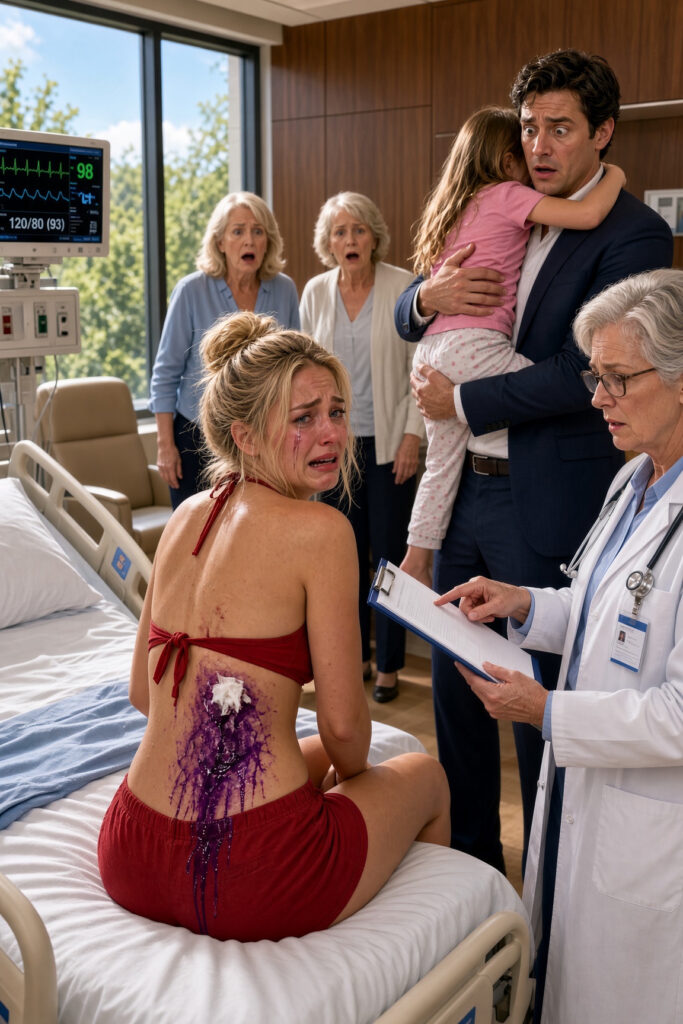
“Rowan,” she said softly. “The stem cell graft was successful. Posie’s vitals are stabilizing. Whatever madness is occurring in this room, you need to know that you gave that little girl her life back yesterday. That is real.”
With that, she turned on her heel and exited the room, leaving us in the smoking crater of Sloan’s destroyed narrative.
For thirty-five years, I had swallowed my rage. I had absorbed the theft of my car, my peace, and my mother’s love. I thought I would be too weak, too hollowed out by the surgery to fight. But as I looked at the purple and yellow thread tied around my wrist, a massive, unyielding strength surged through my battered bones.
I didn’t scream. I didn’t weep. I simply locked eyes with my sister.
“Get out,” I commanded. My voice was a low, gravelly rasp, but it carried the weight of a falling anvil.
Sloan blinked, tears of panic finally spilling over. “Rowan, wait, the lab could have made a mistake, I can explain—”
“I said get out!” I roared, the effort sending a spike of blinding white pain through my pelvis, but I didn’t care. “Take your garbage papers. Take your lies. I have my niece’s marrow to regenerate, and I am entirely, permanently done being the collateral damage of this family.”
My mother fled first, unable to meet my eyes. Sloan lingered for a fraction of a second, staring at the ruins of her coup d’état, before scrambling out the door like a frightened rat.
Emmett stood frozen at the foot of the bed. He reached for the divorce papers, his hands shaking so violently he dropped them twice. He looked at me, his eyes pleading for a chance to speak, to beg, to explain the psychological torture chamber Sloan had locked him in.
I just turned my head away, staring at the blank hospital wall.
“Leave the room, Emmett,” I whispered.
The heavy wooden door clicked shut. I was finally alone. And for the first time in my life, the foundation beneath me felt solid.
Chapter 4: The Aftermath of the Earthquake
Real life rarely resolves neatly before the closing credits roll. The dust settles slowly, and you have to decide what to do with the rubble.
The most vital truth is this: Posie lived.
My marrow took root in her fragile bones. Over the following months, the aggressive leukemia was beaten back into remission. Her immune system rebuilt itself using the blueprint of my cells. Today, she is a vibrant, gap-toothed menace who runs too fast and laughs too loud, and I would endure every agonizing puncture of that marrow needle a thousand times over to keep her in this world.
The rest of the structures did not survive.
Emmett did not simply walk away, but neither did I let him stay. Once the shock of the DNA exclusion wore off, the reality of what he had done crushed him. He entered intensive therapy. He spent months groveling, writing letters, trying to explain the diabolical patience of Sloan’s manipulation.
He detailed how, months before Posie got sick, Sloan had caught him alone and tearfully confessed her “guilt” over a night they had shared a decade prior. A night he barely remembered because they had both been drinking heavily. It was nothing—a shared cab ride, a stumbled walk to a door. But Sloan took that blank space in his memory and painted a masterpiece of deceit. She dropped subtle hints. She compared Posie’s mannerisms to his. When the cancer struck, she leveraged his desperation to save the child to lock in the delusion.
I believed him. I genuinely believed he was a victim of psychological warfare.
But my architectural instincts could not ignore the structural failure of his character. When he believed he had committed a terrible sin, he did not come to me, his wife, to confess and seek absolution. He conspired behind my back with my sister to serve me divorce papers on the day I was surgically butchered. He chose cowardice and ambush over honesty.
You cannot build a life on a foundation that crumbles the moment pressure is applied. I filed my own divorce papers six months later. I didn’t do it out of spite; I did it because the building was condemned.
As for my blood relatives, the severing was absolute.
Once Page Three existed, the truth could not be contained. The extended family learned of Sloan’s grotesque fabrication. The aunts and uncles who had spent their lives making excuses for her “eccentricities” recoiled in horror. It was too specific, too evil, and too thoroughly documented by a medical professional to be spun into a misunderstanding.
Sloan lost the only currency she ever truly valued: her reputation as the tragic, misunderstood heroine. She became a pariah, and I never had to lift a finger to orchestrate her downfall. Her own lie, intercepted by science, acted as her executioner.
My mother, predictably, attempted a rug-sweep. Three months after the transplant, she called me, deploying the familiar, saccharine tone she used when she wanted to rewrite history.
“Rowan, sweetheart,” she cooed through the receiver. “Families go through dark times. We need to move past this ugliness. It’s toxic to hold onto grudges.”
I let her finish. I listened to the silence hum on the line.
“You watched your golden child try to destroy my life,” I said, my voice perfectly level. “And you smiled. You told me I finally did something useful by saving his real family while I was bleeding into a hospital mattress. There is no misunderstanding here, Mom. There is no rug large enough to sweep that under.”
“You’re being incredibly cruel and vindictive, Rowan,” she snapped, her mask slipping instantly.
“No,” I replied. “I’m just finally changing the locks.”
I hung up, blocked her number, and felt a massive, invisible weight lift from my chest. They always brand you as the villain when you stop allowing them to victimize you. You can’t win the argument, so you simply resign from the game.
Epilogue: Purple and Yellow
The only complication in my newfound freedom was Posie.
I refused to abandon that child. She did not orchestrate the ambush. She did not choose the venomous mother who raised her. She was just a frightened little girl who wove me a bracelet so I would be brave. I was not going to let Sloan’s pathology cost Posie the aunt who literally lived in her bloodstream.
I hired a ruthless family attorney and drafted an ironclad, legally binding visitation agreement. Sloan fought it initially, demanding total reconciliation or total exile—the only two modes she understood. But she had lost too much social standing to risk a public court battle where Page Three would become public record.
We settled into a cold, corporate arrangement. I pick Posie up on alternating weekends. We go to the aquarium. We eat too much ice cream. I keep a drawer full of juice boxes and brand-new crayons in my pristine, quiet house. When I look at her, I don’t see the ghost of her mother’s sins; I see the bravest thing I ever did.
Someday, when she is old enough, she might ask why Aunt Rowan and Mommy don’t sit in the same room. I won’t tell her about the divorce papers or the DNA test. I won’t saddle a child with the heavy, rotting legacy of her family’s cruelty. I will simply tell her that sometimes, adults build houses that can’t stand the weather, and it is safer to live apart.
I will tell her that my love for her was the only structurally sound thing in the entire wreckage.
On the dresser in my bedroom, resting atop a velvet jewelry box, is a crooked, faded friendship bracelet. The purple thread is fraying, and the yellow is stained. But I look at it every single morning before I face the world.
In a hospital room overflowing with adults wielding hidden daggers and performing counterfeit grief, an eight-year-old girl handed me a circle of string and demanded that I be brave. She was the only person in that building whose words matched her soul. The adults brought legal documents and venom; she brought embroidery thread and unconditional love.
Ultimately, that braided string and a genetic lab report were the only two honest artifacts in the room. Together, they gave me the blueprint I needed to finally bulldoze the ruins of my past and build something entirely my own.
They thought a woman lying flat on her back, hollowed out by a surgeon’s needle, would simply absorb their final, fatal blow. They forgot that the truth does not require you to be strong.
It just requires you to let it speak.
What do you think? When a family member repays your ultimate sacrifice with a calculated betrayal, is forgiveness a moral obligation, or is walking away the only way to survive? Drop your thoughts in the comments below, and please Like and Share this post if you found Rowan’s journey of vindication empowering.
