

Chapter 1: The Silence of the Snow
There is a suffocating truth combat veterans know better than anyone else: the deepest, most terrifying silence is not found on a battlefield. The quiet of a warzone is charged, humming with the next blast or ambush. It is a silence you can fight.
The truly terrifying silence lives in the place that is supposed to be safe. It is the hollow quiet of a house that has been quietly taken over by a monster while you were looking the other way.
My name is David Miller. To the people in our affluent Chicago suburb, I was a quiet, unassuming widower who worked as a high-level international corporate security consultant. I spent months overseas keeping supply chains and executives safe in hostile territory.
The truth, buried under federal classification, was that I was a decorated combat veteran, a former tier-one operative who had spent a decade neutralizing high-value targets in the most unstable places on earth. I left active duty to raise my daughter, Lily, after my first wife died of a sudden aneurysm when Lily was three.
But a single father, constantly traveling for brutal classified contract work to cover the enormous medical bills for his daughter’s severe spinal condition, needs help.
I needed a partner. I needed a mother for Lily.
I found Evelyn.
Evelyn was a beautiful, charming, impeccably dressed woman who volunteered at Lily’s elementary school. She radiated maternal warmth. She took on Lily’s complex medical needs—especially the rigid, custom-molded thoracic brace Lily had to wear twelve hours a day to correct a severe curve in her spine. Evelyn promised to handle the doctors, the physical therapy, and the house while I was away.
I married her, believing I had finally built a safe, loving shelter for my child. I believed my absences were justified because I was giving them luxury and complete security.
I was completely, blissfully, and catastrophically wrong.
It was Christmas Eve. Snow fell in thick, heavy, blinding sheets across the Chicago suburbs.
I had spent the last four months in a sweltering, hostile combat zone in the Middle East, running a highly volatile extraction. I had survived the dust, the gunfire, and the exhaustion on the dream of coming home. I had managed an early flight, intending to surprise my ten-year-old daughter and my beautiful wife three days sooner than planned.
I parked the rental a block away and walked through the driving snow. I quietly unlocked my heavy oak front door, my heart pounding with happy anticipation. My heavy canvas duffel sat silent on the porch.
I moved through the grand foyer carrying a beautifully wrapped gift—a rare vintage book Lily had been begging for. I expected pine, cinnamon, and roasting meat. I expected holiday movies blasting from the television.
Instead the house was eerily, oppressively silent.
The only sound breaking that unnatural quiet was the faint, rhythmic clink of a wine glass, then a sharp, cruel laugh I did not recognize echoing from the formal living room.
I stepped onto the plush hallway carpet with the trained silence of a ghost and approached the archway to the living room.
Evelyn was pacing near the roaring fireplace. She wore an expensive flowing silk robe I had bought her in Paris. She held a crystal glass of dark Merlot. She was speaking loudly on her cell phone in a venomous, aristocratic tone I had never heard from her.
“Oh, please, she’s fine,” Evelyn sneered into the phone, rolling her eyes dramatically. “Bad children have to be disciplined. Her father completely spoils her, and she thinks she can just run this house.”
I froze in the shadows, my brow furrowing in deep confusion.
“I’m telling you, it works,” Evelyn laughed, taking a slow sip of her wine. “Look at her now—obedient as a dog.”
I stepped fully into the archway as my eyes adjusted to the flickering firelight.
The blood in my veins turned instantly, violently to ice. The air left my lungs.
Lying on the cold polished hardwood, pushed into the dark corner away from the fire, was my ten-year-old daughter.
Lily was shaking hard. Her face was deathly pale, streaked with silent, exhausted tears.
She was locked inside her rigid plastic thoracic brace. But the heavy velcro straps, meant to be adjusted for comfort, had not only been tightened.
They had been bound together with heavy-duty industrial zip-ties. And woven through the main buckle, locking the whole thing permanently shut around her small chest, was a heavy solid brass padlock.
She was trapped. She could not sit up, bend, or breathe deeply. She was pinned to the floor like a tortured animal, crying silently because she knew that making a sound would only bring more punishment.
Evelyn took another casual sip of her expensive Merlot, chatting about a country club luncheon, completely unaware that the man who had spent a decade neutralizing hostile threats, the man who had authorized drone strikes on foreign warlords, was standing ten feet away, staring at the monster who had taken over his home.
The joyful, exhausted father died permanently in that hallway. The cold, lethal predator took complete command.
Chapter 2: The Fracture
There is a point in a hostage situation when negotiation is no longer a viable option. The situation stops being a domestic argument and becomes a life-or-death extraction.
I dropped the wrapped Christmas present.
The heavy book hit the hardwood with a loud THUD.
Evelyn spun around, startled. The crystal glass slipped from her fingers and shattered across the floor, dark red wine pooling like blood on the wood.
She looked at the doorway, her eyes widening in primal shock as she stared at a man who looked ready to commit a murder.
“David! My god, you’re home early!” Evelyn gasped.
The change was instant and sickening. Her face shifted from cruel aristocratic arrogance into a flawless show of panicked innocence. She rushed forward, stepping carefully over the broken glass, her hands reaching for me.
“Darling, it’s not what it looks like!” Evelyn cried, her voice pitching high with manufactured desperation. “Lily was having a violent, terrible meltdown! She was thrashing around, she was going to hurt her spine! I had to secure the brace for her own protection! I was just calling the doctor!”
I didn’t blink. I didn’t speak a single word.
I moved past my wife as if she were a ghost, an irrelevant obstacle in the way. I dropped to my knees beside my daughter.
Lily’s breathing was shallow and ragged. Her wide, bloodshot eyes locked on my face. I saw raw terror and overwhelming relief wash over her at once.
“Daddy,” she whimpered, her voice barely a raspy breath.
“I’ve got you, bug. I’ve got you,” I whispered fiercely, my hands moving fast over the rigid plastic brace.
I yanked at the heavy brass padlock and knew at once the thick shackle would not give. If I tried to smash the lock or cut the zip-ties with a knife in the dark, I risked badly injuring her already fragile spine.
I could not safely free her in that room.
Without a word I stood, ripped off my heavy fleece-lined waterproof military trench coat, knelt again, and wrapped the massive warm coat around my rigid, weeping child. I slid my arms beneath her and lifted her locked body against my chest.
“David, where are you going?!” Evelyn shrieked, panic bleeding through her fake concern as she realized she was losing the story. She lunged and grabbed my arm. “You can’t take her out in this storm! She needs to stay here! Let me call the doctor!”
I stopped. I turned my head slowly and looked at the woman I had married.
My eyes burned with a lethal, contained fury that seemed to drop the temperature in the room.
“If you are here when I get back,” I whispered, my voice a dead, flat rumble that shook the air, “I will kill you.”
Evelyn recoiled. Her hand fell from my arm as if it had been burned. She stumbled back, the color leaving her face, finally seeing the monster under the surface of the man she thought she had managed.
I turned my back on her, kicked the front door open, and ran into the howling blizzard, shielding Lily with my body.
I set her carefully in the passenger seat of the rental SUV, turned the heat to maximum, and drove like a madman through the treacherous snow-covered streets.
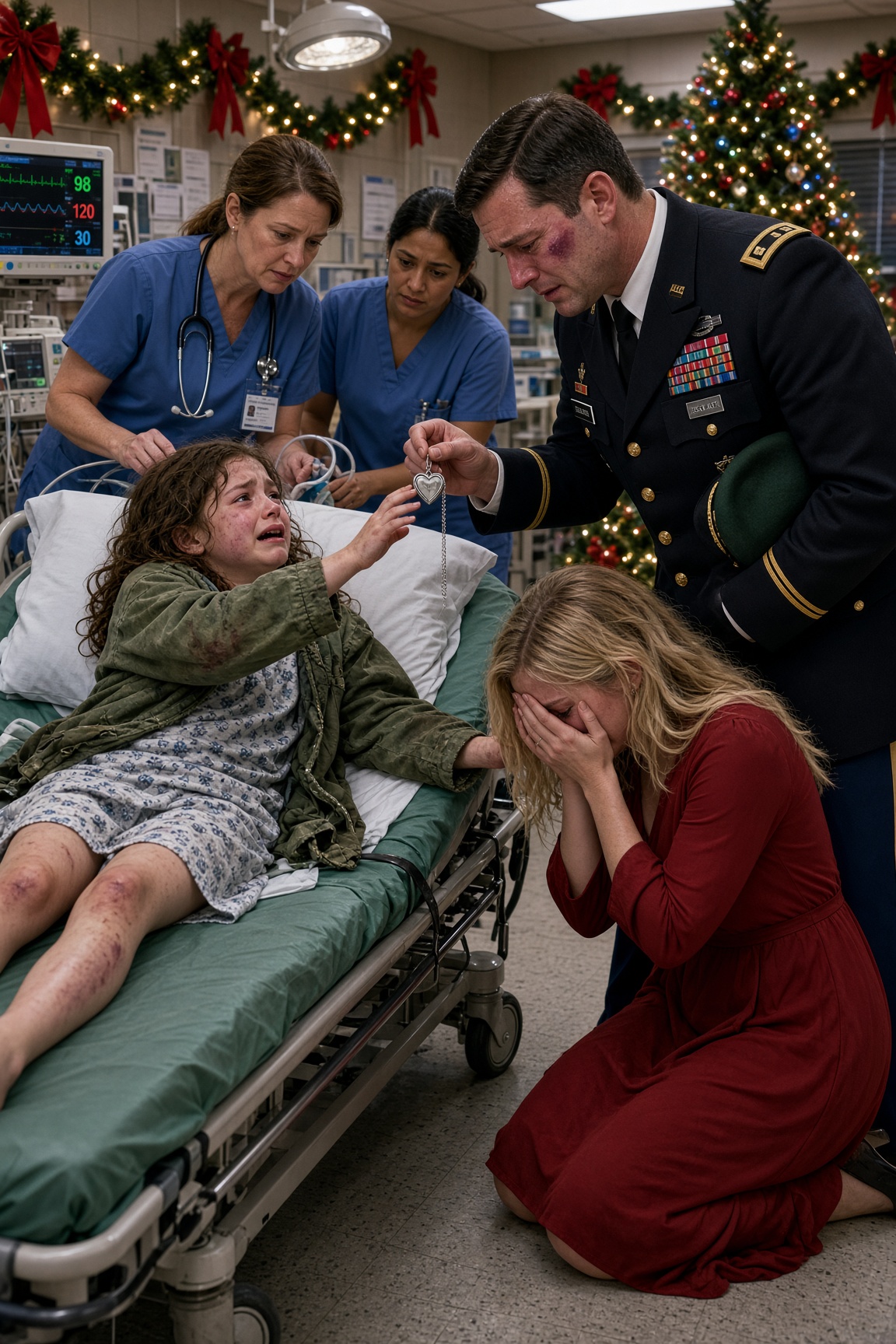
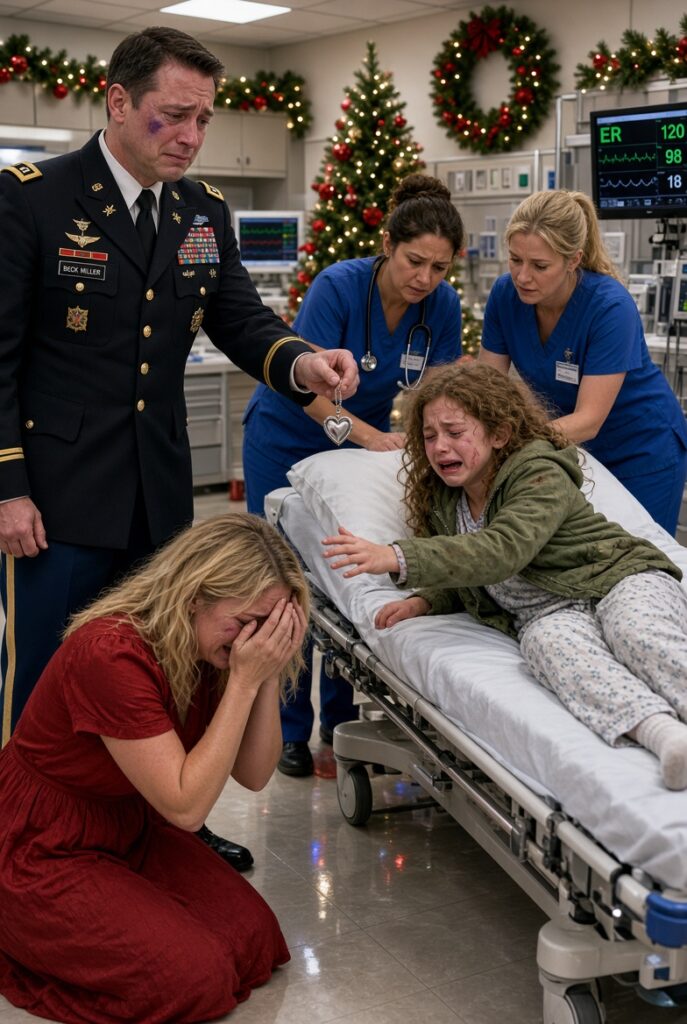
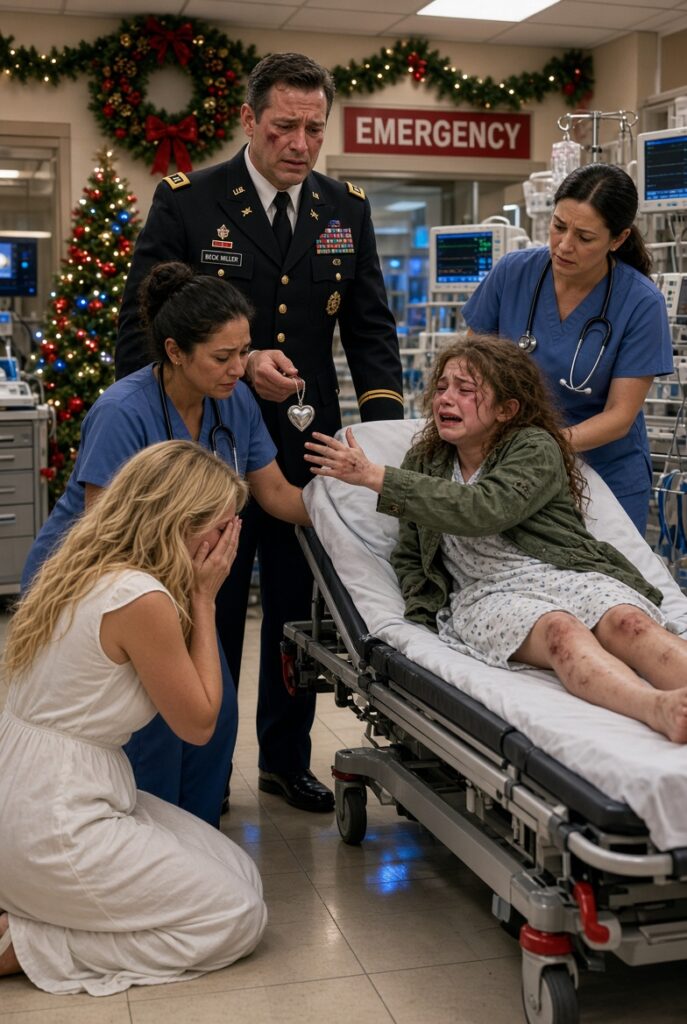
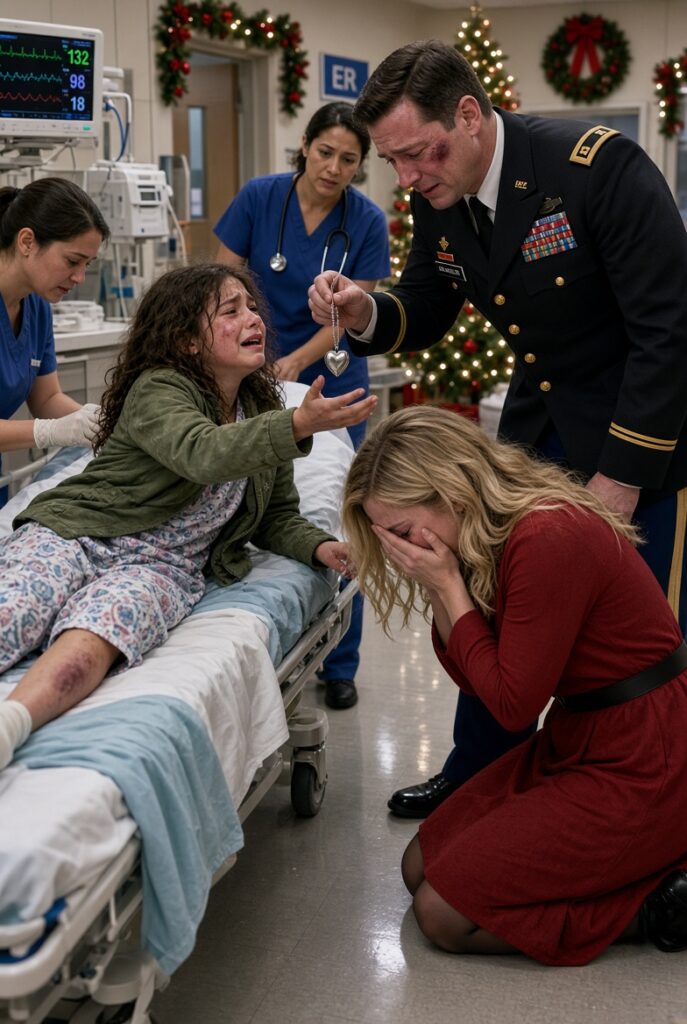
Twenty agonizing minutes later I burst through the sliding glass doors of the local hospital’s Emergency Room carrying my daughter.
“I need a trauma team and industrial shears! Now!” I roared, my voice cutting through the chaos of the ER.
The triage nurses took one look at the panicked father holding a child locked in a modified medieval device and swarmed the gurney. They rushed us into a trauma bay.
Two nurses used heavy industrial trauma shears to cut through the thick plastic zip-ties and the heavy velcro, bypassing the padlock entirely.
With a loud crack, the rigid brace sprang open.
Lily took a massive, deep, shuddering breath as her lungs finally expanded. She sobbed and buried her face in my chest while I held her and kissed the top of her head.
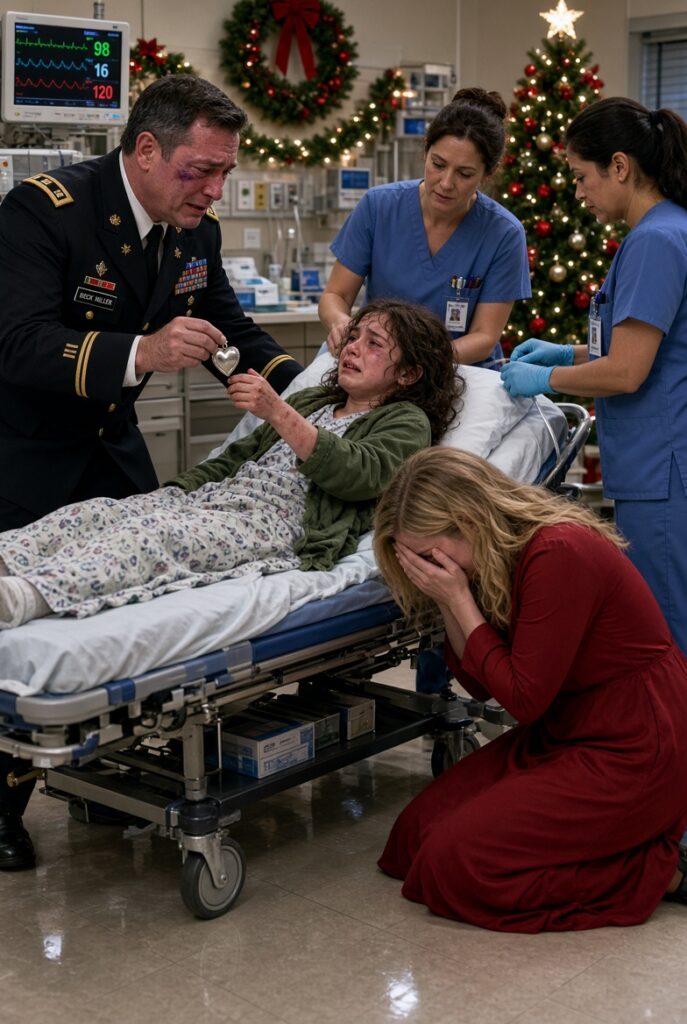
But as the nurses pulled the heavy plastic shell away from her body and tossed it on the floor, a small object tumbled from beneath Lily’s shirt.
It hit the sterile linoleum with a sharp metallic clink.
I reached down and picked it up.
It was a small, cheap silver locket on a broken chain.
I looked at Lily, whose chest was finally rising and falling freely. The ten-year-old wiped tears from her pale cheeks. The terror in her eyes had receded, replaced by a cold, hard, adult resolve that broke my heart.
“Open it, Daddy,” Lily rasped, her voice dry and raw from crying.
I popped the cheap clasp on the silver locket.
Inside there was no smiling family photo. No keepsake.
Tucked carefully into the small metal casing was a microscopic high-capacity micro-SD card.
I stared at the tiny piece of plastic.
“I bought it online with my allowance,” Lily whispered, her eyes meeting mine with devastating maturity. “Nobody would ever believe a kid over her. So I recorded her.”
“And then,” Lily added, her voice dropping to a chilling whisper, “you need to call the police.”
I slid the tiny card into the encrypted port of my military smartphone, my thumb hovering over the screen, with no idea of the unfiltered evil I was about to see.
Chapter 3: The Ghost’s Ledger
When you look into the abyss, you expect monsters. You do not expect the face of the woman who kissed you goodbye at the airport.
I sat in the dim quiet of the hospital room. Lily had finally fallen into a deep, exhausted sleep, her small hand still gripping my fingers.
I pulled my encrypted smartphone from my pocket and opened the files on the micro-SD card.
There were dozens of videos, all timestamped over the past three months. Lily had hidden a microscopic pinhole camera in the living room corner, disguised on a bookshelf, angled to capture the main living area.
I pressed play on the most recent file.
The footage was a little grainy, but the audio was crystal clear. It showed Evelyn towering over Lily, shoving my daughter into the kitchen corner, screaming at her for leaving a glass on the counter. It recorded the daily psychological torture—meals withheld, constant verbal degradation, careful sociopathic isolation.
But it was the recording from two weeks earlier that froze the blood in my veins and stopped my heart.
The video showed Evelyn lounging on the expensive living room sofa. She was drinking a large glass of wine, talking loudly on speakerphone to her sister, completely unaware she was being recorded.
“I swear to God, Chloe, if his convoy hits an IED over there, I am absolutely set for life,” Evelyn’s recorded voice laughed.
It was a cold, empty, soulless sound in the quiet hospital room.
“The military payout, the private security life insurance… it’s easily over four million dollars,” Evelyn continued, swirling her wine. “I’m just playing the waiting game. The second I get that check, I am sticking the crippled brat in a cheap state ward, selling this massive house, and moving to the coast. I can’t stand looking at her.”
The video showed Evelyn standing up and walking to where Lily sat at the dining table, quietly trying to do homework.
Evelyn grabbed the back of the medical brace. She violently tightened the straps far past their intended limit until Lily gasped in pain.
“Learn to stay out of my sight until your father is dead,” Evelyn hissed directly into the child’s ear.
I paused the video.
I sat in the dark hospital room. The silence was absolute.
I did not smash my phone against the wall. I did not roar. I did not break into hysterical weeping.
My heart ached for the pure hell my daughter had endured alone while I was thousands of miles away playing soldier. But my mind left grief and locked into militaristic, tactical precision.
Evelyn was not only a cruel, abusive stepmother. She was a sociopathic predator praying for my violent death in combat so she could collect a multi-million-dollar insurance payout and throw my child away.
I did not call a divorce lawyer. A divorce lawyer negotiates. I wanted an execution.
I forwarded the encrypted videos, the audio transcripts, and the metadata to two specific contacts in my phone.
The first was a highly placed, ruthless federal prosecutor in the Department of Justice who owed me a life debt from an extraction in Bogota.
The second was the Chief of Police for our local district, a man who had served under my command in the Marines.
As the files finished uploading, locking in Evelyn’s destruction, I looked through the glass of the emergency room.
The automatic sliding doors at the front of the ER hissed open.
Evelyn rushed into the hospital lobby.
She was a masterpiece of manufactured panic. She was crying hysterically, clutching a shredded tissue, her hair deliberately mussed. She ran to the triage nurse, frantically asking where her “darling, beautiful daughter” was, claiming her husband was having a violent PTSD-induced psychotic break.
She was trying to control the story. She was playing the victim, preparing to use my military background to paint me as unstable and dangerous before the police arrived.
I stood up from the chair. My jaw set. The cold armor of the Phantom Commander locked into place.
I walked out of the hospital room holding my phone, ready to let the monster dig her own grave in front of an audience.
Chapter 4: The Public Execution
There is a fatal delusion that comes with a narcissist performing a lie. They believe the act is flawless. They believe the tears work. They are so lost in the script they wrote that they never notice the audience already has the original screenplay.
I left the quiet pediatric wing and walked down the long, bright corridor toward the main ER lobby.
Evelyn was standing near the reception desk, clinging to the arm of a seasoned gray-haired police sergeant who had just arrived on the hospital’s security call.
“Officers, you have to understand, he just got back from a warzone!” Evelyn wailed, her voice echoing across the crowded waiting room. She buried her face in the sergeant’s shoulder, sobbing theatrically. “He’s having a violent psychotic break! He’s completely unhinged! He ripped Lily out of my arms and ran into the storm! I only locked the brace because she was thrashing and hurting herself! I was trying to save her!”
The sergeant patted her back awkwardly and looked up as he heard my heavy boots in the hallway.
He rested his hand cautiously on his utility belt, his eyes narrowing as he assessed me. I was a large, imposing man with a hard, unreadable face.
“Sir, I need you to stop right there,” the sergeant ordered cautiously, stepping slightly in front of Evelyn. “Keep your hands visible. Are you David Miller?”
I stopped exactly ten feet away. I complied perfectly. My posture was immaculate, my hands loose at my sides, carrying the calm authority of a highly decorated commanding officer.
“I am,” I replied. My voice was steady, resonant, and empty of panic or anger.
Evelyn peered around the officer and pointed a shaking finger at me. “Arrest him! He needs to be committed! He threatened to kill me!”
“I am perfectly sane, Sergeant,” I said, projecting my voice clearly down the hall, addressing the officers and ignoring my wife entirely. “I am a retired military commander and a private security consultant. I have no history of PTSD, and I have never been diagnosed with a psychological disorder.”
I took a slow step forward.
“But my wife,” I continued, my voice dropping to a lethal chill, “is an incredibly talented, sociopathic liar.”
Evelyn gasped and clutched her chest in feigned horror. “Listen to him! He’s delusional!”
“Fortunately,” I stated, pulling my smartphone from my pocket and holding it up, “my ten-year-old daughter is significantly smarter than her.”
I didn’t argue. I didn’t yell. I didn’t debate her lies.
I simply turned the volume on my phone to maximum. I tapped the screen, angled it toward the officers, and pressed play on the second video file.
The high-definition audio blasted through the quiet sterile corridor and off the linoleum floors.
“I swear to God, Chloe, if his convoy hits an IED over there, I am absolutely set for life.”
Evelyn’s recorded voice, cold, arrogant, and laughing, filled the room.
The fake tears vanished instantly. The color drained from her skin until she was a sickly translucent white. She gasped and staggered back as if she had been struck.
The recording continued, merciless and undeniable.
“The military payout, the private security life insurance… it’s millions. The second I get that check, I am sticking the crippled brat in a state ward and selling this house.”
The sergeant’s sympathetic, protective manner vanished in a second. He stepped away from Evelyn and looked at her with raw revulsion.
The video ended with the sickening, clear sound of Evelyn violently tightening the brace, followed by Lily’s muffled cries of pain.
“Learn to stay out of my sight until your father is dead.”
The audio file ended. The silence in the emergency room was absolute, heavy, and apocalyptic.
A passing ER nurse who had stopped to listen covered her mouth. “You psychotic bitch,” the nurse whispered, the disgust palpable.
I lowered my phone. I locked my cold, dead eyes on my trembling, hyperventilating wife.
“You wanted the military payout, Evelyn?” I asked softly, my voice carrying the weight of a judge’s gavel. “You wanted to profit off a warzone?”
She backed against the reception desk, shaking her head wildly, stripped of her story, her power, and her freedom.
“Congratulations,” I whispered. “You’re about to experience exactly how the military deals with hostile insurgents.”
Evelyn panicked. The realization that her life was over triggered a feral flight response. She spun and tried to sprint for the automatic exit doors.
She didn’t make it three steps.
The sergeant lunged, grabbed her by the arm, spun her around, and slammed her face-first against the nearest concrete pillar.
“Evelyn Miller,” the sergeant barked, wrenching her arms aggressively behind her back. “You are under arrest for felony child abuse, aggravated assault, and reckless endangerment.”
The sharp metallic click-click-click of steel handcuffs ratcheting around her wrists echoed down the hallway, the sound of a cage locking shut.
Chapter 5: The Purge and the Promise
When a parasite is cut from a host, the wound bleeds, but healing starts at once. The host comes out stronger, changed by the trauma.
“David, please! It was the wine! I was drinking! I was just stressed from taking care of her while you were gone!”
Evelyn shrieked, thrashing against the officers as they secured the cuffs. Her expensive designer coat dragged across the sterile floor. All of her aristocratic vanity and haughty superiority was spectacularly gone.
“I love you! I’m your wife! Please, David, don’t let them do this!” she begged, tears of pure terror streaming down her face.
I stood still, my posture immaculate. I watched the groveling creature thrash against the consequences of her own actions. I felt no pity. I felt no sorrow for the death of my marriage. I felt only the cold, satisfying relief of a successful extraction.
“You were a parasite,” I said, my voice dropping to a whisper of chilling finality that only she could hear. “And you are going to spend the rest of your life in a cage far, far tighter than the one you put my daughter in.”
I looked at the sergeant. “Take this garbage out of my sight.”
As the officers dragged the screaming, wailing woman through the double doors into the freezing night and toward a waiting cruiser, I turned my back on her.
I walked away from the chaos and back toward the pediatric recovery wing.
I pushed open the door to Lily’s room.
The horrific rigid plastic brace had been fully removed. She was sitting up in the hospital bed against a mountain of soft white pillows, eating a bright red cherry popsicle a kind nurse had brought her.
She looked small, bruised, and exhausted, but the suffocating terror that had clouded her eyes for months was gone.
I walked to the bed. The cold armor of the Phantom Commander dissolved. I was just a father again.
I sat heavily on the edge of the mattress. I pulled my daughter into a fierce, desperate hug. I buried my face in her soft hair, held her against my chest, and the tears I had held back finally fell.
I wept. I wept for the pain she had endured. I wept for the months I had been gone, believing I was protecting her by providing for her, when I had left her in a monster’s den.
“I’m so sorry I left you in the dark, baby,” I sobbed quietly into her shoulder. “I’m so sorry I wasn’t here.”
Lily dropped her popsicle onto the tray. She wrapped her small, strong arms around my neck and hugged me back just as hard.
“You came back, Daddy,” Lily whispered, her voice filled with profound, unbreakable love and absolute forgiveness. “That’s all that matters. You came back.”
I pulled back and looked into her brave, resilient blue eyes. I wiped my face as a new, unshakeable resolve settled in me.
“I’m never leaving again, Lily,” I promised her, my voice thick with emotion but absolute in its certainty. “I’m submitting my formal retirement papers to the firm tomorrow morning. My war is over. I’m staying right here. Nobody will ever hurt you again.”
The fallout from the arrest was swift, brutal, and catastrophic for Evelyn.
Over the next six months her life was systematically taken apart in public and in court.
At the highly publicized bail hearing, the federal prosecutor—the man who owed me a favor—presented the irrefutable high-definition video of the abuse and the audio of her homicidal intent regarding my life insurance.
The judge, disgusted by the premeditated malice of torturing a disabled child for money, denied bail entirely. Evelyn was remanded to county lockup, trading her silk robes for a bright orange jumpsuit.
Her defense attorneys collapsed under the evidence. Facing a long, humiliating public trial and a possible life sentence, Evelyn took a desperate plea. She pleaded guilty to felony child abuse, aggravated assault, and conspiracy to commit insurance fraud.
In the expedited divorce she was stripped of all marital assets. She was left destitute, bankrupt, and isolated.
She was sentenced to fifteen years in a maximum-security state penitentiary. She was erased from our world, a ghost locked in a concrete box, living the exact nightmare she had designed for my daughter.

Chapter 6: The Star on the Tree
Time is the final architect of reality. It crushes the weak and the arrogant under their own cruelty, and it lifts the resilient on the solid ground of love and truth.
It is exactly one year later.
The sprawling suburban Chicago house smells of roasting turkey, fresh pine, and genuine, unforced laughter.
It is Christmas Eve. Last year’s heavy blinding storm is a distant memory. Outside, snow falls gently, covering the neighborhood in a clean layer of white.
Inside, the house is a sanctuary of warmth and light.
I am standing by the blazing stone fireplace in a comfortable thick wool sweater, holding a mug of hot cocoa. I am forty-five, and I am thriving in a life I built entirely around my daughter.
I officially retired from my lucrative, dangerous overseas security contracts. I used my background to launch a successful local cybersecurity and domestic protection firm. I set my own hours. I set my own terms. Most important, I am home every night to cook dinner, help with homework, and tuck my daughter into bed.
According to the online court dockets I occasionally check, Evelyn is in the first full year of her fifteen-year sentence. She has tried repeatedly to appeal, claiming emotional distress, but every motion has been swiftly denied. She is permanently gone from our lives. Her name is never spoken in this house.
Across the living room, a fire crackles.
Lily is dancing to a classic holiday song on the stereo.
She is eleven. Her spine is straight and strong. Through rigorous physical therapy and a successful, minimally invasive surgery funded by my retirement package, she has outgrown the rigid medical brace entirely.
She is wearing a beautiful bright red velvet dress. She is vibrant, healthy, and completely safe. The haunted look that once lived in her eyes is gone, replaced by a fierce, joyful confidence.
She stops dancing and runs to the massive decorated Christmas tree in the corner. She reaches into a box and pulls out a large glittering silver star.
She turns and smiles at me, her eyes sparkling in the firelight.
“Lift me up, Dad?” she asks, holding the star toward me.
I smile, a heavy peace filling my chest. The suffocating anxiety of the past is gone.
I walk over, scoop my daughter up, and lift her high so she can place the glittering star on the very top branch.
Evelyn believed my absence was permanent. She believed a child in a medical brace was a weak, easy target. She assumed a father’s love was fragile enough to be overwritten by greed.
She never understood a fundamental truth of the universe.
They tried to break my daughter’s spirit. They tried to lock her in the dark, assuming she was too weak to fight back and that I was too far away to care.
But as I hold my laughing, resilient universe in my arms and watch her adjust the star, I know the greatest truth of all.
The strongest armor a child will ever have is not rigid plastic, velcro straps, or medical steel.
It is forged from the unbreakable love of a father who will burn the world down to keep her safe.
If you want more stories like this, or if you’d like to share your thoughts about what you would have done in my situation, I’d love to hear from you. Your perspective helps these stories reach more people, so don’t be shy about commenting or sharing.
