

Chapter 1
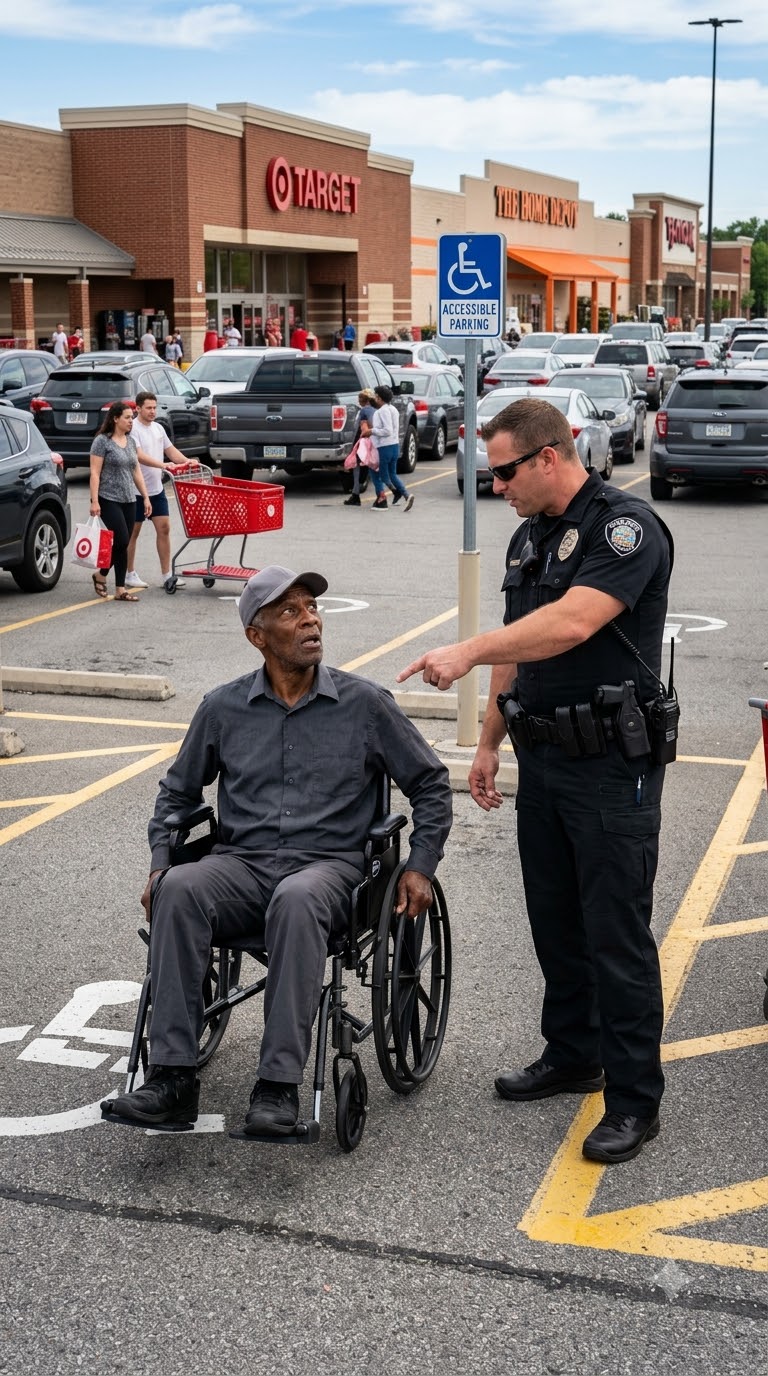
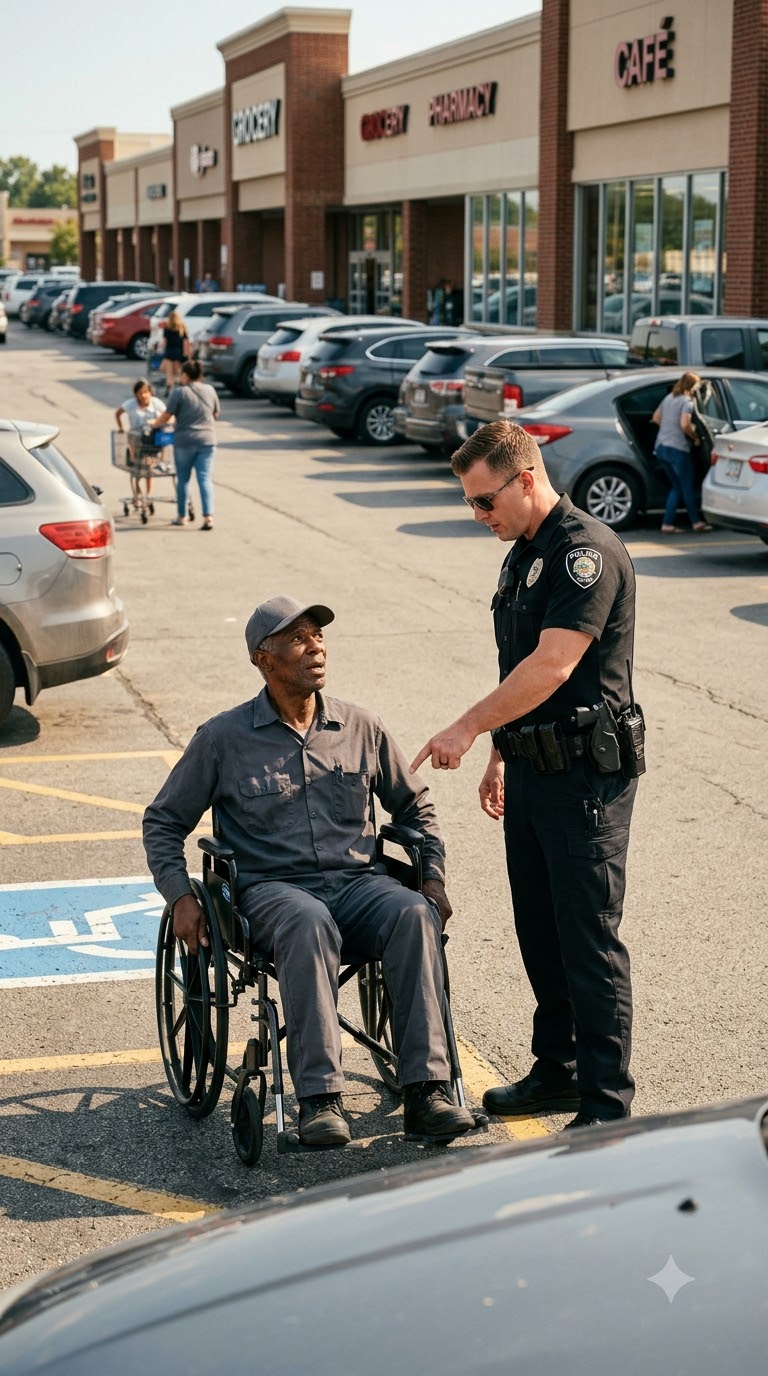
The Tuesday afternoon crowd outside a Denver supermarket hardly noticed the police cruiser until Officer Derek Vance stepped out and began approaching the man seated beside a silver SUV in a wheelchair. The vehicle was legally parked in a marked accessible space, and its Colorado license plate clearly carried the disabled-veteran designation. The man wore a dark jacket, gray sweatpants, and a baseball cap pulled low over his face against the bright mountain sun. Nothing about him appeared threatening, but Derek had already convinced himself that something was wrong.
“Hey, you,” Derek called as he came closer. “Why are you just sitting here?”
The man looked up from his phone and replied, “Waiting for my wife. She’s inside getting groceries.”
Derek stopped directly in front of the wheelchair.
“I’m Officer Vance. Let me see identification.”
The man slipped his phone into his jacket pocket.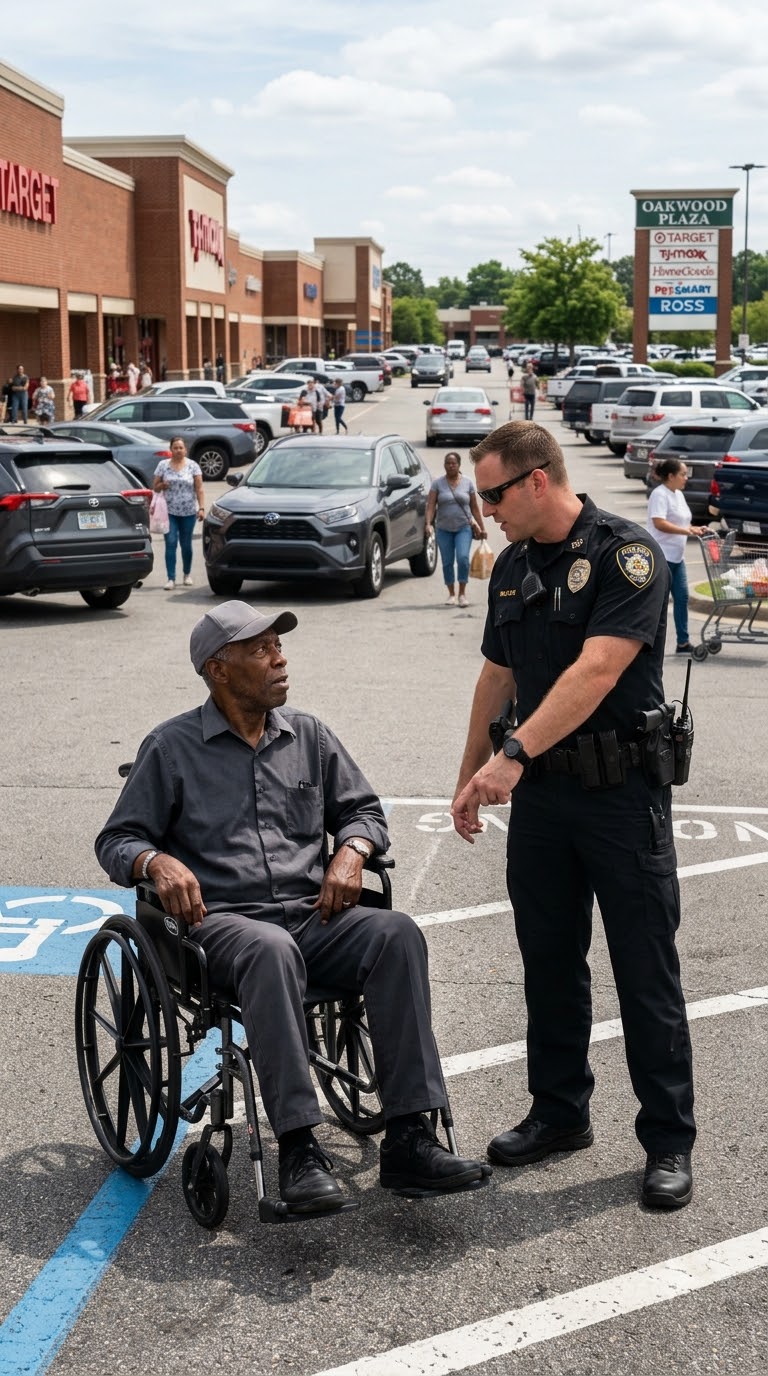
“Is there a problem, Officer?” he asked.
Derek gestured toward the blue accessible-parking symbol beneath the SUV.
“The problem is you’re taking a handicap space.”
The man glanced at his license plate before answering.
“I’m aware. It’s mine.”
Derek studied the plate and then looked back at him.
“Name?” he demanded.
“Leonard Price,” the man replied. “I’m a disabled veteran.”
Derek let out a brief laugh.
“Everybody has a story.”
Leonard showed no reaction to the disrespectful tone. He had spent too many years in situations where an emotional response could turn a bad moment into something much worse.
“The plate is registered to me,” he said. “I can show you my VA identification if you need it.”
Derek folded his arms.
“Stand up first.”
Leonard stared at him.
“Excuse me?”
Derek repeated the command more slowly, speaking as though he were dealing with a stubborn child.
“Stand up and show me you actually need the chair.”
Leonard’s expression shifted almost imperceptibly, but his voice stayed controlled.
“I cannot stand without my prosthetics,” Leonard said.
Derek looked down toward Leonard’s covered legs and smirked.
“Sure you can’t.”
Leonard answered, “Both of my legs were amputated below the knee. I’m asking you not to make assumptions.”
A woman loading groceries into a minivan three spaces away stopped what she was doing. Near the entrance, a teenage employee gathering shopping carts turned around. Another customer pushing a cart toward the return station slowed down and stared.
None of them had taken out their phones yet.
Derek leaned closer to Leonard.
“People fake this stuff all the time,” he said. “They borrow placards, use relatives’ plates, pretend they can’t walk, and expect everybody else to stay quiet.”
Leonard carefully reached into his wallet and removed a Department of Veterans Affairs identification card.
“My disability status is on this card.”
Derek barely gave it a glance.
“Cards can be faked.”
Leonard kept the card extended.
“Then verify it.”
Derek shook his head.
“Stand up.”
Leonard’s voice became more forceful.
“Officer Vance, I have told you I cannot stand without prosthetic legs.”
Derek pointed toward the wheelchair.
“Then prove the chair isn’t part of the scam.”
Leonard replied, “My medical history is not something I need to demonstrate physically in a grocery-store parking lot.”
The response irritated Derek.
He had spent eight years working patrol and had developed the dangerous confidence of a man who confused suspicion with instinct. Other officers considered him aggressive and impatient, and they knew he was convinced he could identify dishonesty simply by looking at someone. His personnel record contained no major sustained complaints, but several colleagues had privately warned him that he was too quick to turn ordinary encounters into confrontations.
Derek had always dismissed those concerns. He believed policy existed for officers who lacked good judgment, while he considered his own judgment exceptional. Over the years, he had encountered enough people misusing accessible-parking placards to convince himself that fraud was everywhere. Every time he had been right made it easier for him to forget the occasions when he had merely been suspicious.
Leonard Price was familiar with officers like Derek. He had investigated some of them.
Before retiring, Leonard had spent nineteen years with the Federal Bureau of Investigation, much of that time working public-corruption and civil-rights cases involving the misuse of government authority. He understood how quickly certainty could become misconduct when an officer stopped verifying facts.
None of that was visible from the wheelchair.
Leonard looked like a fifty-year-old Black man waiting outside a supermarket. There was no FBI badge clipped to his belt, no military uniform, no expensive suit, and no group of officials surrounding him.
That was exactly why Derek failed to recognize the danger in his own behavior.
Leonard had grown up on the South Side of Chicago in a family where service was almost considered an inheritance. His grandfather served in Korea, an uncle served in Vietnam, and Leonard enlisted in the Army at twenty-one because remaining safely at home while others served never felt right to him.
He became a combat medic and eventually deployed twice to Afghanistan.
His second deployment changed everything.
The convoy had been traveling outside Kandahar when the lead vehicle struck an improvised explosive device. Leonard remembered the flash and the pressure.
Then nothing.
He woke in a military hospital in Germany.
Denise, his wife, was sitting beside his bed when doctors explained that both of Leonard’s legs had been amputated below the knee.
He was twenty-seven years old.
For months, Leonard hated mirrors.
He hated rehabilitation even more.
He learned how to transfer from beds to wheelchairs, how to balance using prosthetic legs, and how to drive with adaptive controls while trying not to imagine that the life he knew had ended.
Denise refused to let him describe survival as an ending.
After more than a year of rehabilitation, Leonard began searching for another way to serve. A former Army investigator suggested federal law enforcement, and Leonard initially laughed at the idea.
The FBI, however, took his application seriously.
He passed the academic requirements, his physical accommodations were reviewed, and his military experience became an asset rather than a limitation.
Leonard spent nearly two decades investigating corruption, civil-rights violations, and public officials who believed their authority protected them from consequences.
He testified in federal courts.
He interviewed frightened witnesses.
He sat across from police officers who insisted their worst decisions were merely misunderstandings.
Over time, Leonard learned that the words “I thought” could explain a mistake, but they did not automatically excuse one.
What mattered was what evidence existed before the decision was made.
Leonard retired at forty-seven and moved with Denise to Colorado.
They bought a modest home outside Denver where he could see the mountains from the back porch. Leonard volunteered with veterans’ organizations, helped recently injured service members navigate benefits, and occasionally lectured at law-enforcement training sessions.
He almost never mentioned his FBI career to strangers.
That afternoon, Denise had gone into the grocery store for milk, coffee, fruit, and medication.
Leonard stayed outside because the weather was unusually pleasant, and he preferred fresh air to fluorescent aisles whenever possible.
His SUV had adaptive hand controls, proper registration, and a disabled-veteran plate issued in his name.
There was no legal problem for Derek to solve.
“Call a supervisor,” Leonard said.
Derek’s expression hardened.
“You don’t tell me what to do.”
Leonard replied, “I’m requesting supervisory review because you’re refusing to verify documents and demanding a physical demonstration I cannot provide.”
Derek answered, “I said stand up.”
The woman beside the minivan reached into her pocket and pulled out her phone.
The teenage cart attendant did the same.
A middle-aged man returning a cart stopped near a light pole and began recording from about twenty feet away.
Derek still did not notice the cameras.
Leonard looked directly toward Derek’s body camera.
“Your camera is recording this, correct?”
Derek automatically glanced down.
“Why?”
Leonard replied, “Because I want the record clear. I have told you several times that I am a bilateral amputee and cannot stand without prosthetics.”
Derek stepped closer.
“You keep talking like a lawyer.”
Leonard answered, “I’m talking like a citizen explaining a disability.”
Derek said, “People who are telling the truth usually don’t need speeches.”
Leonard almost smiled at the irony but decided against it.
“I’m asking you to verify my vehicle registration, my VA identification, or call your supervisor,” Leonard said. “Any of those would resolve this.”
Derek pointed toward the wheelchair.
“Standing up would resolve it faster.”
Leonard replied, “That is not going to happen.”
Derek’s jaw tightened.
“Last chance.”
Leonard remained still.
“I cannot stand.”
Derek reached down toward Leonard’s left arm.
The woman beside the minivan shouted, “Officer, he just told you he can’t walk.”
Derek ignored her.
Leonard kept both hands visible and made no movement toward the officer.
“Do not pull me from this chair,” he said.
Derek grabbed his arm.
Leonard’s voice grew louder without becoming frantic.
“Officer Vance, I am a disabled veteran, and I am telling you I cannot stand.”
Derek pulled upward anyway.
The wheelchair rocked beneath Leonard’s weight.
“Stop,” Leonard said.
Derek brought his second hand into the struggle and pulled harder.
The chair tipped forward.
Leonard hit the pavement.
His left elbow struck first.
Then his shoulder and ribs.
One pant leg shifted high enough to expose the lower section of a carbon-fiber prosthetic socket attached beneath his knee.
Someone screamed.
“Oh my God, he really is an amputee,” the woman beside the minivan shouted.
The teenage employee moved closer while continuing to record.
Derek stood completely still for several seconds, staring at the exposed prosthetic hardware.
Leonard remained on the pavement.
Pain burned through his shoulder and ribs, but he deliberately refused to let Derek lift him.
“Do not touch me again,” he said.
Derek instinctively reached toward him.
Leonard repeated, “Do not touch me.”
Derek stepped backward.
“I was trying to verify—”
Leonard interrupted him.
“You had verification.”
Derek looked toward the VA card lying beside the overturned wheelchair.
The people recording moved closer while still keeping several feet of distance.
One man said, “We saw everything.”
Another added, “He told you over and over.”
Derek looked around and finally noticed the phones.
That was when fear arrived.
Not fear for Leonard.
Fear for himself.
Derek’s body camera had captured the encounter, while civilian phones had recorded different angles.
He could already imagine the footage without the explanation he had intended to provide later.
A police officer ordering an amputee to stand would not become better with context.
Inside the supermarket, Denise Price finished paying at self-checkout. She placed two grocery bags on the wheelchair-accessible section of the cart and began walking toward the automatic doors.
Before she reached them, she heard shouting outside.
Then she saw Leonard on the ground.
The grocery bags fell from her hands.
Denise ran.
“What happened?” she demanded as she dropped beside him.
Leonard looked at her and said, “I’m okay. He pulled me out of the chair.”
Denise looked toward Derek.
Her expression changed.
Twenty-seven years of marriage allowed Leonard to recognize the exact expression she wore when anger moved beyond shouting and became something colder.
“You pulled my husband out of his wheelchair?” she asked.
Derek began speaking.
“Ma’am, I believed—”
Denise cut him off.
“He has no legs.”
Derek glanced toward Leonard’s prosthetic socket.
“I understand that now.”
Denise stared at him.
“You understand it now?”
Leonard touched her wrist.
“Denise.”
She looked at him.
“Call Martin.”
Derek had no idea who Martin was.
Denise did.
Martin Shaw had been Leonard’s final FBI supervisor and remained one of his closest friends. Denise called him before contacting the family attorney because she knew Martin would immediately understand what needed to be preserved.
She placed the phone on speaker.
Martin answered.
“Hey, Denise.”
“A Denver police officer just pulled Leonard out of his wheelchair.”
Silence.
“What?”
“We’re at the grocery store on East Colfax.”
“Is Leonard conscious?”
“I’m right here,” Leonard said.
Martin’s tone changed instantly.
“Do not leave until a supervisor arrives unless medical personnel require transport.”
“I know.”
“Preserve every witness.”
“Already happening.”
Martin paused.
“Body camera?”
Leonard looked toward Derek.
“Running.”
“Good.”
Derek heard the conversation.
Something about the calm precision made him uneasy.
“Who is that?” he asked.
Denise looked at him.
“Someone you should have hoped never needed this phone call.”
Two backup officers arrived minutes later.
Officer Elena Ruiz stepped out of the first cruiser and approached slowly.
The second officer, Thomas Reed, looked toward Leonard and stopped.
Recognition crossed his face.
“Leonard?”
Leonard looked over.
“Tom.”
Derek turned.
Thomas Reed had worked with Leonard nearly nine years earlier during a joint federal-city investigation involving an interstate robbery crew. He remembered the federal agent who conducted interviews from a wheelchair and occasionally used prosthetics depending on the demands of the assignment.
He remembered Leonard’s reputation too.
Thomas looked toward Derek.
“What happened?”
Derek began to answer.
Leonard said, “Let the witnesses answer first.”
Thomas’s eyes moved toward the twelve people gathered nearby.
Then he looked at the overturned chair.
The exposed prosthetic limb.
The VA identification card lying on the pavement.
Thomas stepped toward Derek.
“Move away from him.”
Derek frowned.
“Tom—”
“Move.”
The tone ended the argument.
Elena called for medical assistance and supervisory response.
Thomas asked the teenage employee whether his video had captured the fall.
The boy nodded.
“Everything from before the officer grabbed him.”
A patrol lieutenant arrived eight minutes later.
Her name was Karen Douglas.
She took one look at Leonard and immediately understood the seriousness of the situation.
“Secure Officer Vance’s body camera,” she ordered.
Derek’s face tightened.
“Lieutenant, I can explain.”
“You will.”
She looked toward Elena.
“Not here.”
Karen separated Derek from the witnesses and walked toward Leonard.
“Sir, I’m Lieutenant Douglas. I’m sorry you’re on the ground.”
Leonard nodded.
“I’d prefer you preserve evidence before moving anything unnecessary.”
Karen studied him.
Then Thomas quietly said, “Lieutenant, this is Leonard Price.”
She frowned.
Thomas added, “Retired FBI.”
Karen briefly closed her eyes.
When she opened them, Leonard said, “My previous employment should not change how this is handled.”
“No, sir.”
“It shouldn’t.”
“Then treat it like I spent my career teaching people to treat every case.”
Karen nodded.
“Facts first.”
Leonard gave his statement.
No speeches.
No accusations about motive.
Times.
Words.
Documents shown.
Supervisor requested.
Physical command refused because medically impossible.
Force used anyway.
Karen listened and wrote.
Derek stood near his cruiser, watching the scene move beyond his control.
Paramedics examined Leonard and recommended hospital evaluation for his shoulder and ribs.
He reluctantly agreed.
Denise followed in their SUV after one officer helped secure the wheelchair.
Before Leonard left, the teenage cart attendant approached him.
“Sir.”
Leonard looked over.
“I have the video.”
“Keep the original.”
“I sent it to my mom already.”
Leonard nodded.
“Good.”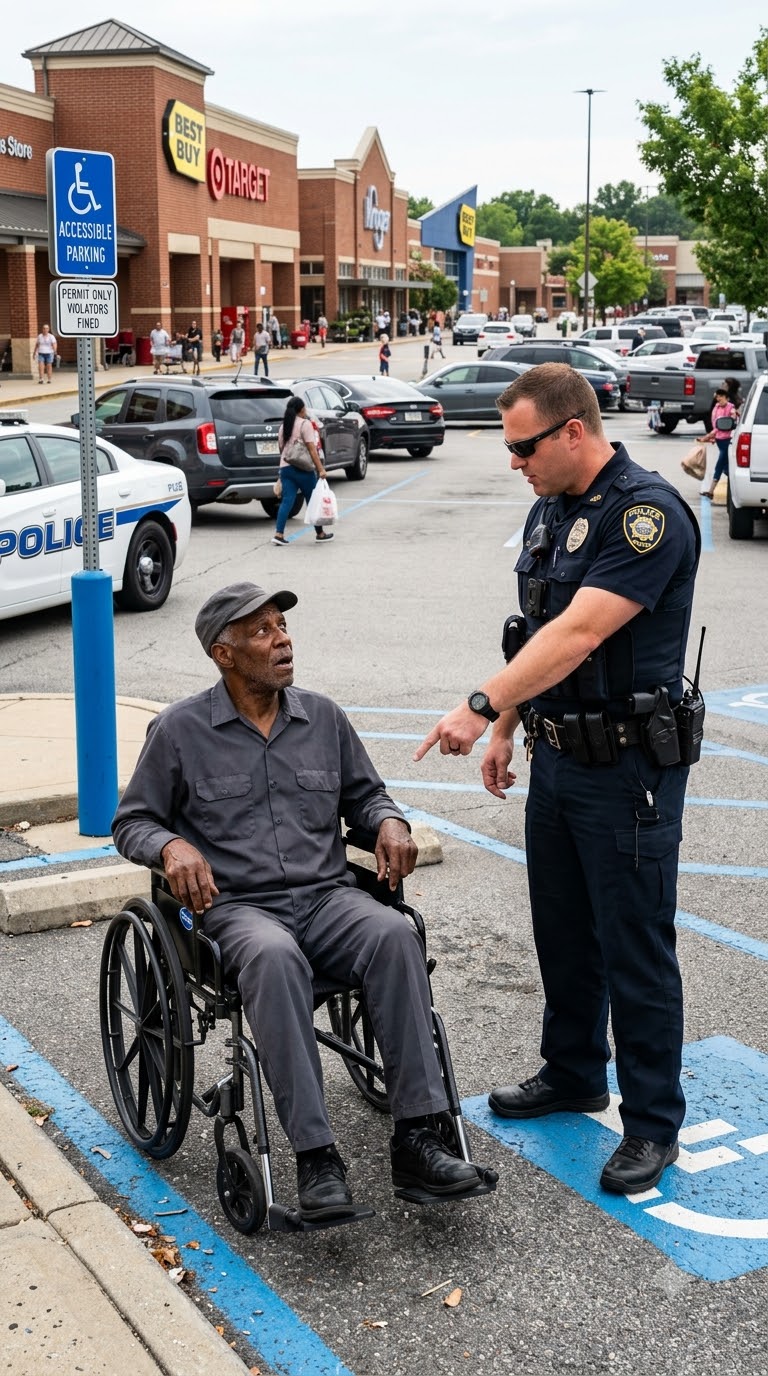
The boy hesitated.
“I’m sorry.”
Leonard looked at him.
“You didn’t do it.”
“No.”
“I mean I almost didn’t record.”
Leonard paused.
“But you did.”
The boy nodded.
“That matters.”
At the hospital, imaging showed no fractures.
Leonard had a severe shoulder contusion, bruised ribs, abrasions along the elbow, and soft-tissue injuries that made transfers painful for several weeks.
Denise photographed everything.
Leonard hated being photographed injured.
He let her.
Evidence mattered.
By the time they returned home that evening, three videos were already online.
