

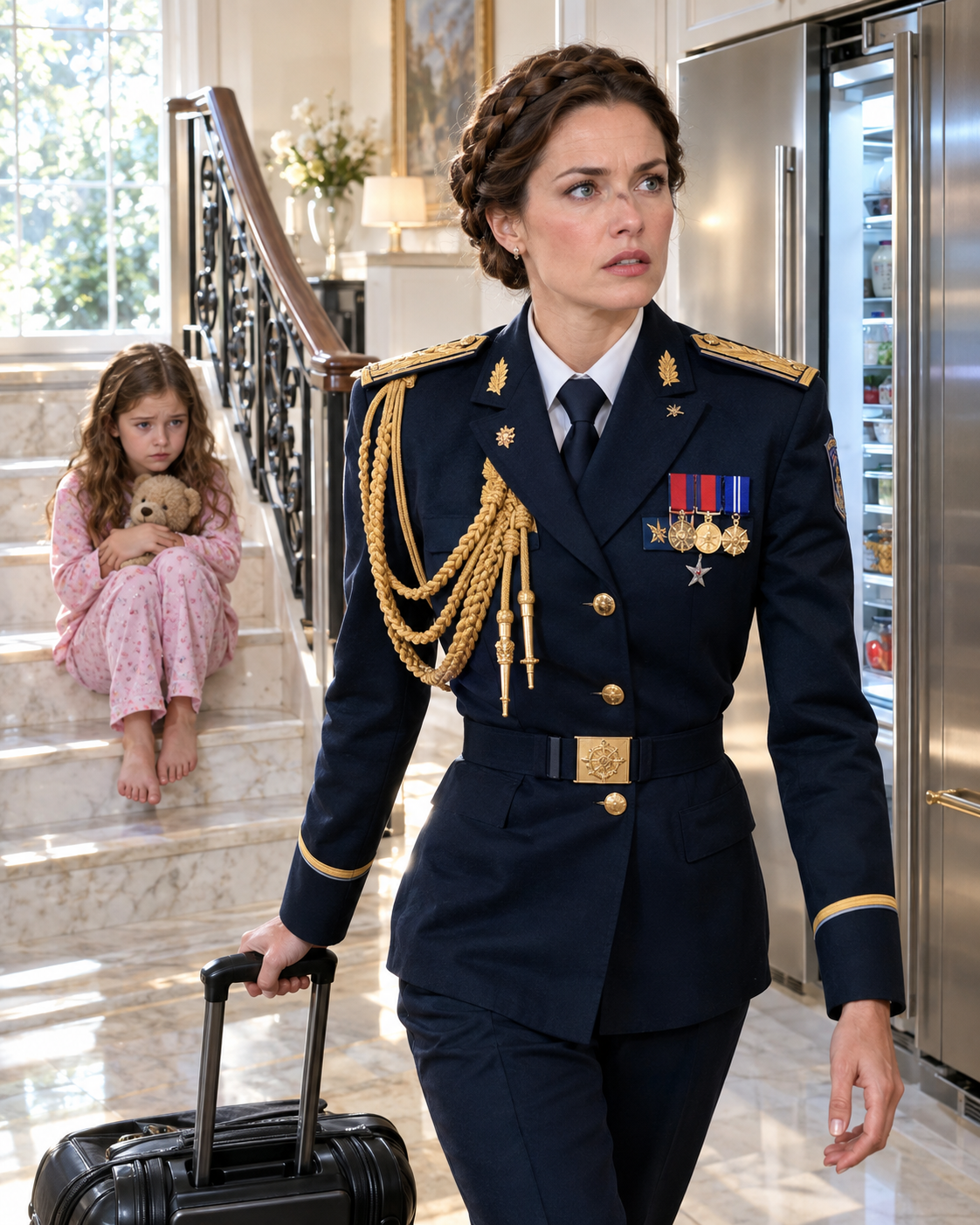
She had been left by herself for two days, hungry, terrified, and without a single adult around. When my husband eventually returned from his trip, looking perfectly tanned and carefree, I didn’t confront him. Instead, I quietly took out the documents, asked the bank to examine one of our accounts, and waited. Because the more evidence I found, the more I understood that my daughter hadn’t merely been abandoned. She had been deliberately left behind as part of a plan—and the real target wasn’t her. It was me.
PART 1
“Let’s toast to Lucy: while other women stay home raising their kids, she prefers putting on a uniform… though at least her paycheck never fails to land.”
My husband, George, said it in front of his entire family the night before I left for a three-month medical assignment at a military hospital in the north.
His mother, Teresa, laughed first. Then his sister, Fiona. I stood there frozen, watching my five-year-old daughter, Chloe, drag her spoon through a piece of cake without taking a bite.
“Mom, I want you to stay,” she whispered softly.
The laughter stopped instantly.
I had served eighteen years as a military physician, and this assignment was far from optional. The northern district was facing a critical shortage of anesthesiologists, and George had been the one pressuring me most to accept it.
“Go without worrying,” he kept saying. “I’ll take care of Chloe. Besides, with the extra stipend, we can finally finish remodeling the house.”
The house. That was the heart of the matter.
The property wasn’t jointly owned by us. My Aunt Ellen had left it to me four years before I even met George. It was a large two-story home with a small courtyard and a separate commercial storefront in front—where Fiona had opened a nail salon without paying any rent because, according to George, “family helps family.”
Before I left, I gave George a secondary debit card connected exclusively to an account for groceries, tuition, medicines, and household utilities.
“The main savings account is not to be touched,” I warned him.
For a split second, his expression changed. Then he kissed my forehead.
“Of course, sweetheart. Who do you think I am?”
For the first few weeks, everything appeared normal. Chloe showed me her drawings during video calls and laughed at the uneven braids her father tried to make. But as April continued, the calls became shorter. Then my daughter began repeating something strange: “Everything’s okay, Mommy. Don’t worry about anything.”
No five-year-old says something like that without a reason.
I directly asked George whether she was being left alone. He immediately became offended. “Now you’re surveillance-monitoring me from a thousand miles away? You should trust your family a little more, Lucy.”
We had security cameras installed at the front gate and inside the kitchen. Not long after that conversation, my phone stopped receiving the camera feed notifications. George said Fiona’s contractors had accidentally cut a main line while expanding the salon.
I wanted to believe him.
My assignment was supposed to finish in June, but in early May, my replacement physician arrived earlier than expected. I chose not to call home. I wanted to surprise Chloe.
On May 6th, I reached home around noon.
The house was disturbingly quiet. I unlocked the front door with my key.
A small child’s jacket was lying on the foyer floor. In the kitchen, a bowl rested in the sink with dried oatmeal stuck to the bottom. I opened the refrigerator.
Mustard. Half a lemon. One bottle of water. Nothing more.
Then I heard slow, shaky footsteps coming from upstairs.
Chloe appeared at the top of the stairs wearing an oversized T-shirt, her hair knotted, her lips pale and dry. She looked at me as though I were a ghost.
“Mommy?”
I raced upstairs and pulled her into my arms. Her skin was burning hot.
“Where is your father, sweetie?”
Chloe lowered her eyes to her bare feet. “He went to the beach.”
“Who is here with you?”
“Nobody.”
My heart stopped. “Since when?”
She raised two tiny fingers. Two days.
My five-year-old daughter had been alone in that house for almost forty-eight hours. She had eaten one yogurt, dry cereal, and the end of a loaf of bread. She had attempted to cook pasta on the stove, but she couldn’t figure out how to turn on the burner.
I immediately called 911 and contacted Child Protective Services.
While we waited for the paramedics, Chloe held onto my uniform with a vice grip. “Daddy said I shouldn’t bother grown-ups.”
At the hospital that afternoon, the doctors confirmed acute dehydration, low blood sugar, and severe gastric irritation.
George called me an hour later. His first question wasn’t about Chloe.
It was: “Why did you decline my card transfer?”
I sat beside my daughter’s hospital bed, watching her sleep with an IV taped to her tiny arm. In that quiet, weighty moment, I understood that those two days were not some simple accident or oversight.
Something much bigger was happening. Something George’s entire family was desperately trying to keep hidden from me—and I had only just started discovering how far they had gone.
PART 2
The next morning, George marched into the hospital room with Teresa and Fiona beside him. All three had obviously just returned from the coast; George’s face was sunburned, Teresa was carrying a gift shop bag from a luxury beach resort, and Fiona still wore an all-inclusive hotel wristband.
“I’m here to pick up my daughter,” George announced.
“No, you’re not,” I said flatly.
Teresa scoffed. “Don’t be so dramatic, Lucy. I was going to drop by and check on her.”
“When?” I asked.
“Every day!”
“Then explain to me why she’s been alone since Sunday.”
Teresa fell silent. George changed tactics, raising his voice loud enough for the nurses in the hallway to hear: “You’ve been abandoning your family for months to chase your military career, and now you want to play the perfect mother?”
Once, that guilt-trip would have hurt. Now, I could see straight through him—a man more concerned about a blocked bank card than checking on his hospitalized daughter.
When the child welfare officers arrived, the trio’s accounts quickly dissolved into a tangled mess of accusations. George said Teresa was supposed to remain at the house. Teresa claimed Fiona was responsible for picking Chloe up. Fiona insisted George had told her their mother was already there.
Too many excuses. Too many conveniently missing pieces.
Even worse, George presented screenshots of messages supposedly sent from my messaging account. One allegedly said: “Chloe is big enough to stay by herself for a few hours.” Another supposedly showed me telling Teresa not to bother staying overnight.
The messages carried my profile picture, my name, and even my usual way of speaking.
A cold chill went through me—not because the messages were genuine, but because the fabrications were disturbingly convincing.
Then I remembered that before deploying, I had left my personal laptop in my home office. My messaging account was still logged in, and George knew the administrative password.
While authorities examined the forged messages, temporary custody of Chloe was awarded solely to me, while George was limited to supervised visits.
He struck back by filing an emergency legal claim against me, accusing me of using my military position and connections to turn his child against him. He also claimed the house was “marital property” because he supposedly had invested ten years of improvements into it.
A week later, my bank’s senior branch manager called and asked me to come in personally.
On his desk was a copy of a notarized power of attorney. According to the document, I had supposedly given George permission to liquidate investments, obtain detailed financial statements, and carry out property transactions for me.
The document was dated April 10th—a day when I had been in an operating room more than a thousand miles away.
“Did he try to withdraw cash?” I asked.
“He attempted to liquidate a substantial high-yield certificate,” the manager replied. “It failed because he couldn’t answer the secondary security protocols. But he also applied for a commercial line of credit to finance the expansion of your sister-in-law’s salon—using your inherited house as collateral.”
The loan request exceeded two hundred thousand dollars. My forged signature appeared at the bottom. Everything suddenly connected. The resort trip. The laptop. The card limits. The salon construction. The two days Chloe had been left locked inside the house.
On Monday, while my daughter was trying to survive on tap water and dry cereal, George had a scheduled verification call to finalize a commercial loan application. Chloe couldn’t appear on camera. She couldn’t be heard in the background asking where her grandmother was. Someone had apparently decided it was easier to lock her inside.
Now, they had to prove it.
That was when the security technician uncovered the evidence none of them had expected.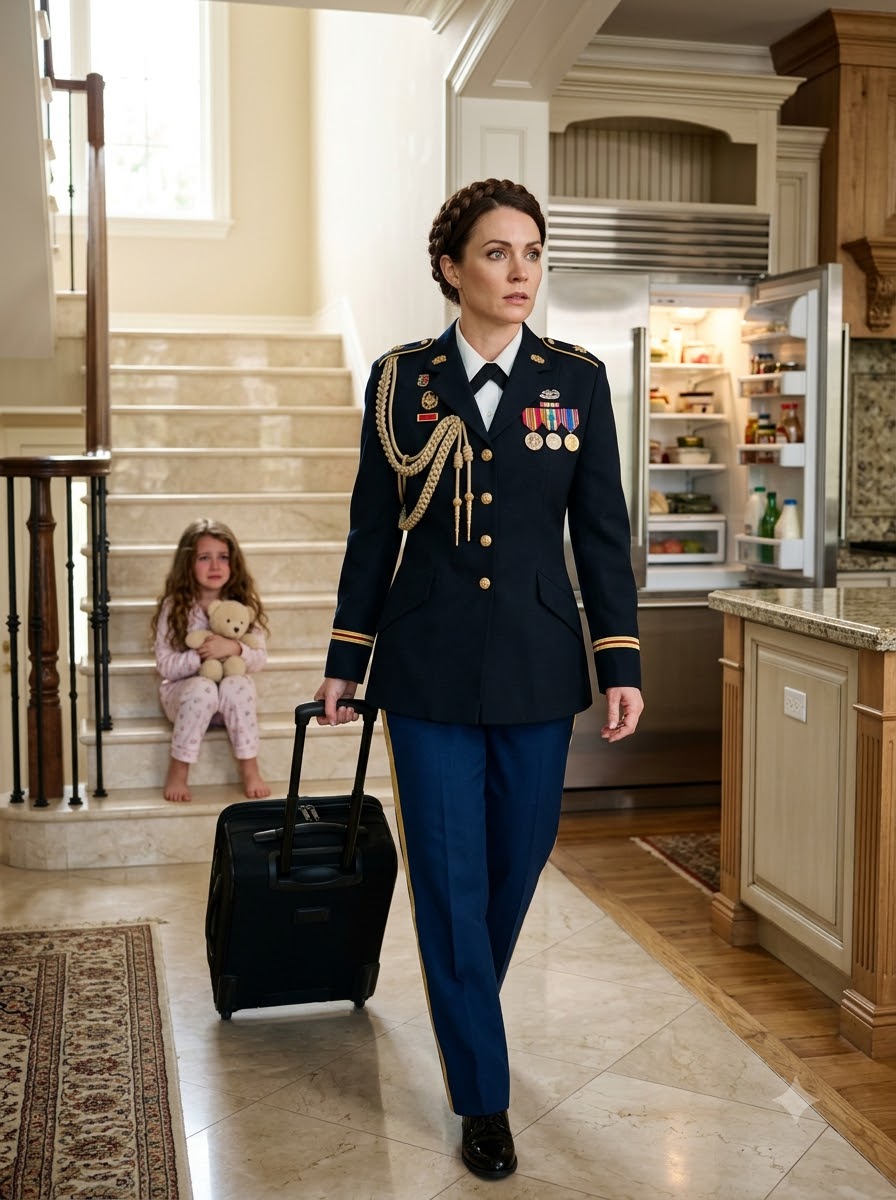
He examined the home security system. Although the main power cable to the external router had indeed been severed, the unit had an internal battery backup and an offline storage card that automatically synchronized with a private cloud server once the connection was restored.
The footage hadn’t been erased.
When the May 4th recording appeared on the screen, George stopped breathing.
On the monitor, George was packing a blue suitcase while Chloe sat at the kitchen counter coloring.
“Daddy, when is Grandma coming?” she asked in the recording.
“Tomorrow morning. There’s yogurt and cereal. Don’t open the front door.”
Then Fiona entered the frame, followed by Teresa. Standing directly in front of the camera, unaware that the secondary sensor was still operating, the three of them began talking.
Their conversation exposed why my daughter had been left alone—and uncovered a plan far darker than anything I had imagined to take control of my inheritance.
As the investigator froze the frame to export the recording as evidence, George suddenly sprang to his feet. For the first time since I had known him, I saw pure terror in his eyes.
PART 3
The security footage began playing from the start.
George packed clothes into his suitcase as Chloe sat coloring.
“When is Grandma coming?”
“Early tomorrow. There’s cereal and yogurt.”
Fiona entered the room. “Did you bring the file from the bank?”
George raised a black folder. “Got it right here.”
Teresa joined them moments later. “I have a spa appointment tomorrow morning. I can drop by after lunch.”
George didn’t even object. “Fine. Lucy doesn’t get back until June anyway.”
Fiona looked toward the kitchen. “What about the kid?”
George looked at Chloe. “She’s fine. She’s big enough.”
My daughter was five years old.
At 10:14 AM, the three of them left through the front door and locked it behind them. The sensors recorded no one entering again until I arrived two days later.
The kitchen camera showed Chloe coming into the room again and again. On the first night, she ate the last yogurt. The following morning, she forced down dry cereal. By afternoon, she opened the refrigerator, stared at the empty shelves for a long moment, then quietly shut it.
In another recording, she pulled a wooden chair across the tile toward the gas stove and tried to place a pot on the burner. When she couldn’t light it, she sat down on the floor.
On Monday evening, she quietly cried in front of the empty refrigerator—not throwing a tantrum, but covering her mouth as though she were afraid that making noise while alone would cause trouble.
Teresa started crying in the investigator’s office as the footage continued. “I thought Fiona was going back!”
Fiona spun around. “You said you were going!”
George snapped at both of them: “Neither of you checked!”
The three of them turned against one another right there in the room. I said nothing. The footage told the entire story.
Technical analysis confirmed the recording had not been edited. Then came the messaging records; server logs established that the forged messages originated from my desktop in Guadalajara while my military surgical records placed me in an operating room hundreds of miles away. The login authorization had been verified through George’s personal tablet.
His custody defense collapsed immediately.
Desperate, he shifted his focus to the house. He produced invoices and contracts meant to show that he had spent years paying for major structural renovations on the property.
I hired an experienced family and asset attorney, Arthur Sterling. His strategy was straightforward: “Secure Chloe’s permanent custody first. Then dismantle the property claims. Let law enforcement handle the criminal forgery.” We reviewed every invoice George had submitted. Almost all of the house repairs had been paid directly from my personal accounts. The remaining receipts were exclusively connected to Fiona’s salon.
However, one document created a serious problem: a contract claiming George had paid for a complete roof replacement before we were married. If he could prove that he had significantly increased the home’s value using his separate funds, he could seek substantial financial compensation.
The contractor’s stamp and signature appeared genuine. George even provided a photograph of himself standing on the roof beside workers from that year.
Arthur located the retired contractor. The man recognized his company’s stamp but not the signature. More importantly, company records showed that his firm wasn’t even operating in the city on the date written on the contract.
The photograph, however, was genuine. George had been there during the roof repair—he simply hadn’t paid anything. My Aunt Ellen had hired the crew herself and paid them directly in cash before she died.
Lupita, a longtime neighbor, still had the foreman’s contact details. The elderly builder found his physical job ledgers from that year; written in faded ink was my aunt’s name beside the notation: “Ellen Morales. Paid in full, cash.”
George had taken something real and created a forged paper trail around it. That was his pattern: take a small piece of truth and surround it with a lie.
It was true that I traveled for work. It was true that he took Chloe to school. It was true that he had sometimes been affectionate. Using those facts, he tried to construct the ultimate fabrication: that I was an unfit mother who abandoned her child, while he was the noble victim.
The next discovery involved the household card. Account statements showed that during my deployment, George had emptied the account—not for groceries or Chloe’s needs, but for commercial lighting, seating, and equipment for Fiona’s salon expansion.
When questioned, Fiona claimed, “I thought my brother was giving me a gift.”
“With whose money?” Arthur asked. She had no answer.
The Department of Child Services issued an immediate ruling: Chloe would remain solely in my custody, while George was limited to professional, court-supervised visitation.
George retaliated by creating a scene outside Chloe’s kindergarten, arriving with Teresa, Fiona, and several spectators while Fiona recorded everything on her phone.
“Tell everyone why you vanish for months!” George shouted when I arrived.
Chloe heard the commotion from inside and suffered a panic attack. When she ran toward me, she wrapped her arms around my neck so tightly that I had to hold her with both arms. George tried to provoke me, hoping I would scream or push him on camera.
I stayed completely silent, showed the responding officers the official court order restricting his access, and drove away with my daughter. The video Fiona uploaded online to shame me completely backfired, instead triggering public outrage against them. In the weeks afterward, Chloe started hiding food. I discovered dry crackers in her pockets, bread beneath her pillow, and an apple tucked inside a toy box.
Her child psychologist told me not to scold her or remove the food in front of her. I put a clear, easily accessible storage tub on a low refrigerator shelf and filled it with her: yogurts, fruit, cheese sticks, and juice boxes.
“This is yours,” I told her. “Nobody will ever take it away.”
For weeks, she woke during the night simply to open the refrigerator and make sure the tub was still there.
That was the hardest thing for me to forgive: he hadn’t merely stolen money or forged paperwork—he had transformed hunger into a lasting fear inside our daughter.
Months later, the final custody and property hearing took place.
The court psychologist’s report determined that I was fully fit, while noting that George demonstrated a severe pattern of avoiding responsibility and using a minor child as leverage.
The bank’s legal representative testified that the power of attorney was completely forged; the notary seal belonged to an unrelated corporate document, and the signature had been duplicated.
The court ruled without ambiguity: Chloe would remain in my sole custody. George’s property claims were completely dismissed because the house was proven to be separate inherited property. The court also ordered the immediate seizure of equipment bought with my money for Fiona’s salon to satisfy restitution.
When the hearing ended, George confronted me in the courthouse hallway.
“Are you happy now?” he spat bitterly. “You took a father from your daughter, a house from my family, and a business from my sister.”
I looked at him, Chloe gripping my hand tightly. “I didn’t take anything from you, George. You simply stopped using things that were never yours.”
Weeks later, law enforcement and a court officer arrived to formally carry out the eviction and property seizure at the salon. Fiona had organized a promotional event that day and attempted to livestream the confrontation.
When ordered to hand over the keys, George threw them into a bush. The court officer documented the obstruction, and a locksmith immediately replaced the deadbolts.
Fiona’s salon equipment was cataloged and taken away. Teresa stood on the curb yelling insults, but for the first time in years, I felt no need to defend myself. It was no longer my word against theirs. There were cloud recordings, bank records, forensic audits, and court orders.
And most importantly, there was a little girl who would never go hungry in her own home again.
That evening, Chloe and I went grocery shopping together. She chose milk, apples, cheese, yogurts, and fresh bread. When we returned home, we put everything away together in the quiet house.
She stood before the open refrigerator, studying every shelf.
“Will the food still be here tomorrow, Mommy?” she asked softly.
I knelt beside her. “Yes, sweetie. Every single day.”
She took out a small roll, tore it in half, and gave one piece to me.
Over the next several months, her fear gradually disappeared. The day I discovered her room completely free of hidden food, she came into the kitchen carrying an old, dry piece of bread she had found beneath a rug.
“This one’s old, Mom,” she said calmly. “There’s fresh ones in the fridge.”
I smiled. “There always will be.”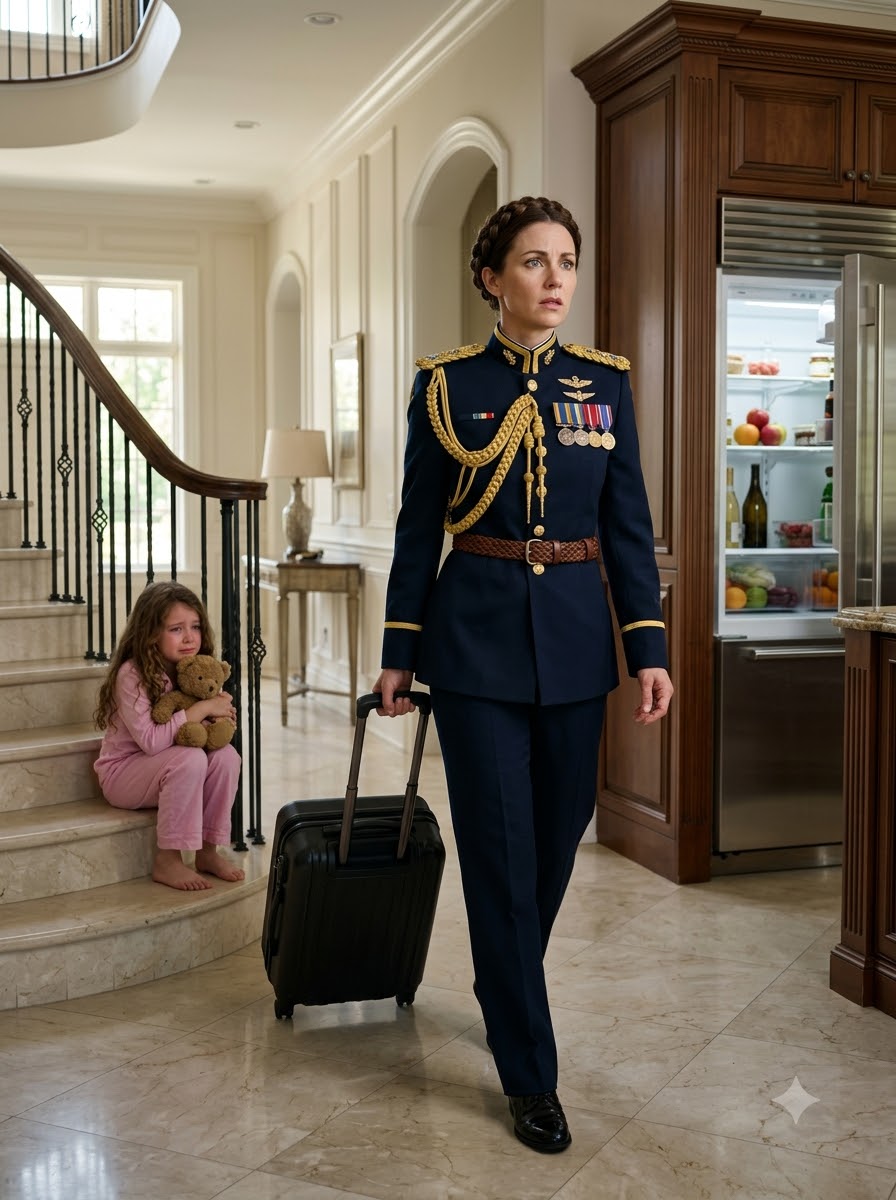
I returned to my position at the local hospital, turning down overnight shifts so I could stay home with my daughter. George’s supervised visits remained infrequent because he struggled to keep up with the required court fees and professional monitoring. Fiona had to rent a single chair at another salon across town, while Teresa and George moved into a small rented apartment together.
One Sunday afternoon, my neighbor Lupita sat with me in the courtyard while Chloe drew with sidewalk chalk on the patio. She drew a large house, a tree, flowers, and an enormous refrigerator right in the center of the yard.
Lupita smiled gently. “Why is the fridge outside, Chloe?”
Chloe answered without looking up: “So everyone can see that it’s full.”
Neither of us laughed. The depth of a child’s healing is a quiet thing.
A few minutes later, Chloe ran inside and came back carrying a plain white bowl—the same bowl I had found empty in the sink when I returned home. I had planned to throw it away, but she had asked me to keep it.
She placed it on the patio table, filled it to the top with fresh strawberries, sat down, and ate them one by one.
No fear. No hoarding. No wondering whether anyone was coming to save her.
I reached into my pocket and felt the cold metal of my new house key.
Reclaiming a house was never the real victory. The real victory was watching my daughter open the refrigerator, knowing there would always be food—and knowing that no one would ever make her feel abandoned again.
