


WHEN I LOST MY JOB, MY WIFE PACKED A SUITCASE AND WALKED OUT — THREE DAYS LATER, SHE CAME BACK FURIOUS AFTER FINDING A FOLDER I NEVER MEANT HER TO SEE
The morning after my wife left, I still made her coffee.
My alarm went off at 6:10 out of habit. Half asleep, I wandered into the kitchen, filled the kettle, and instinctively reached for two mugs. Mine was the chipped navy-blue one I’d had since college.
Sienna’s was white with tiny gold stars around the rim.
I set both mugs on the counter.
Then I looked at hers.
Her suitcase was gone.
Her makeup bag was gone.
The ceramic dish where she left her earrings every night was empty.
And less than twenty-four hours earlier, my wife had looked straight at me and said,
“I married a provider, Rowan. Not a problem.”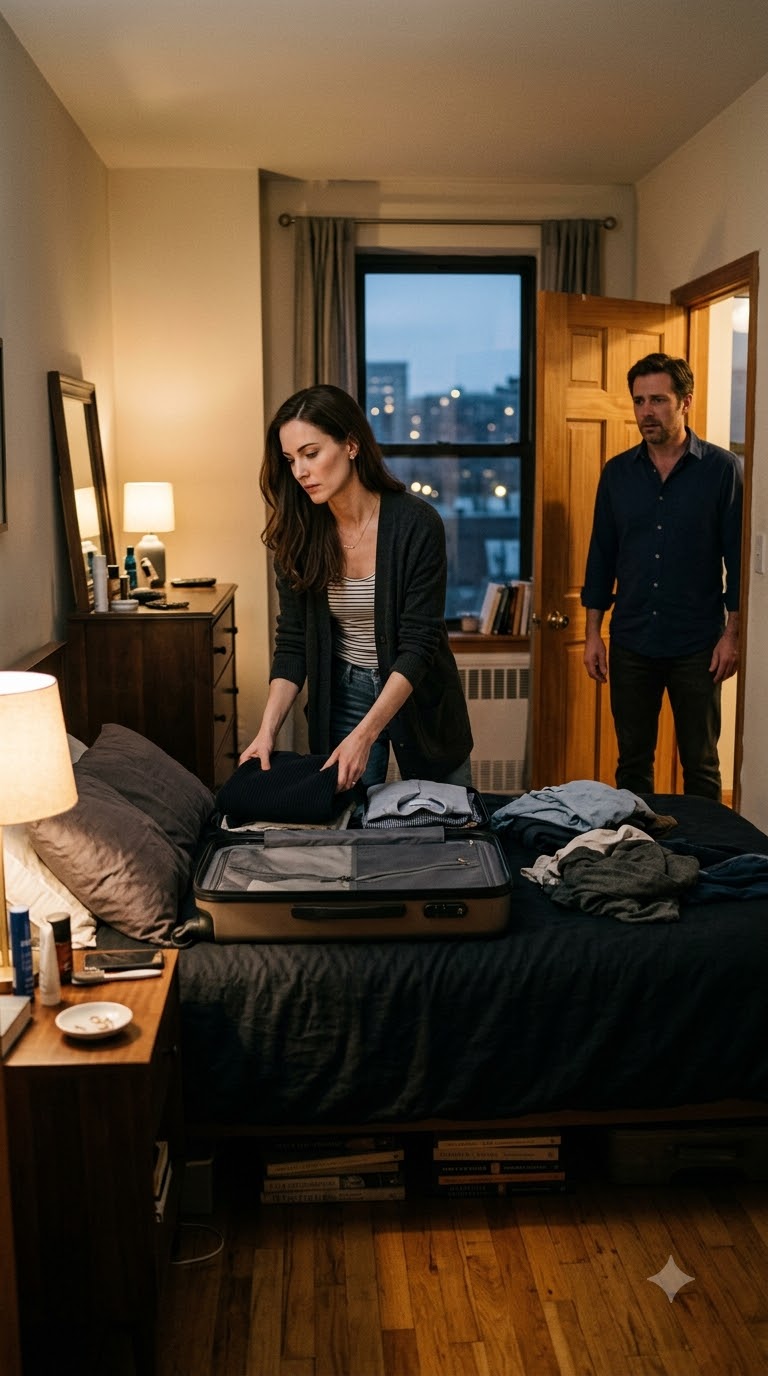
I slowly returned her mug to the cabinet. Then I opened my laptop and began searching for another job.
Or at least, I tried.
Because every few minutes, those words returned to my mind.
Not because losing my job had left us financially destroyed.
It hadn’t.
We had savings.
My severance package would cover several months.
I had fourteen years of management experience, and several former colleagues were already sending me job openings.
What I had lost wasn’t financial security.
It was something I had believed in without question for six years.
That Sienna and I were a team.
The day before, the company had shut down our entire local branch.
Seventy-eight people lost their jobs in less than an hour.
I spent most of the afternoon helping employees carry boxes to their cars, exchanging contact information, and promising to write recommendations wherever I could.
When everyone had finally gone, I sat alone in my car for nearly twenty minutes before starting the engine.
I was scared.
Of course I was.
But I wasn’t hopeless.
All the way home, I kept thinking about what I would tell Sienna.
“We’ll cut back for a while.”
“I’ll start applying tomorrow.” “We have savings.”
“We’re going to be okay.”
I even stopped for her favorite Thai food because I knew neither of us would want to cook after I told her.
She was sitting on the sofa when I walked in.
“You’re home early.”
“Yeah.”
She noticed the bag in my hand.
“Thai?”
I placed it on the counter.
“Sienna, I need to tell you something.”
That immediately caught her attention.
I sat across from her and explained everything.
The branch was closing.
My position had been eliminated.
So had everyone else’s.
For several seconds, she simply stared at me.
“You lost your job?”
“The entire branch shut down.”
“But you lost yours.”
“Yes.”
She stood.
Then she walked toward the bedroom.
I followed her.
“We’re okay,” I said. “We have the emergency fund, and the severance should arrive next week. I’ll start calling people tomorrow morning.”
Sienna said nothing.
Instead, she pulled our biggest suitcase from the closet.
At first, I genuinely thought she needed something behind it.
Then she placed it on the bed and began packing.
“Sienna?”
She folded two dresses and placed them inside.
“What are you doing?”
“I’m going to my parents’ house.”
I laughed once.
Not because anything was funny.
BECAUSE ACCEPTING THAT SHE WAS SERIOUS FELT IMPOSSIBLE.
“For the night?”
She stopped packing and looked at me.
There was no fear in her expression.
Only irritation.
“I can’t do this.”
“Do what?”
“This.”
She gestured toward me as though unemployment were some contagious illness I had brought home.
“I didn’t sign up to wonder whether the mortgage will get paid or whether we’ll be able to afford groceries.”
“We can afford groceries.”
“That isn’t the point.”
“Then what is?”
She zipped the suitcase halfway.
“I married a provider, Rowan.”
She paused.
“Not a problem.”
I said nothing.
There was nothing I could think of that wouldn’t make the moment worse.
She finished packing.
At the bedroom door, I finally asked,
“You’re leaving because I lost one job?”
“I’m leaving because I need time to think.”
“About our marriage?”
She sighed.
“About what my life looks like if this becomes permanent.”
Permanent.
I had been unemployed for approximately four hours.
Sienna rolled the suitcase past me.
I didn’t follow her outside.
A few seconds later, I heard her car start.
Then the house became completely silent.
That silence followed me into the next morning.
And once I stopped trying to understand why Sienna had left so quickly, I started noticing things about our marriage that I had never truly examined before.
At 9:15, my phone reminded me that her car insurance renewal was due.
I automatically opened the payment app.
Then stopped.
She knew the login.
At least, I assumed she did.
I closed it.
At eleven, I remembered she had a dentist appointment the following Tuesday.
I typed:
Don’t forget Tuesday at 2.
Then deleted it.
At noon, the dry cleaner texted me saying Sienna’s dresses were ready.
For years, I had picked up her dry cleaning because the shop was on my way home from work.
Except now there was no route home.
No office.
No suits hanging behind my chair.
And no wife waiting to ask whether I had remembered hers.
By late afternoon, I had applied for seven jobs.
And I had also realized something uncomfortable.
I hadn’t merely been the person earning most of the money in our marriage.
I had been handling almost everything.
Insurance.
Taxes.
Appointments.
Travel reservations.
Home repairs.
Retirement accounts.
Renewals.
Passwords.
Even the ridiculous subscription for replacement water filters.
I used to joke that Sienna had outsourced adulthood to me.
She would kiss my cheek and say,
“That’s why I married you.”
At the time, I loved hearing that.
Now it bothered me.
Because Sienna hadn’t always been like this.
Six years earlier, when we married, she had been halfway through a design program.
Interior drafting.
Space planning.
Computer-assisted design.
She could walk into an empty room and immediately start talking about lighting and traffic flow as though the walls themselves had made mistakes.
Then I got promoted.
We moved.
Her credits didn’t transfer properly.
She told me she would finish school later. I told her there was no need to rush.
Then another promotion came.
More money.
A larger house.
Vacations.
Restaurants.
Designer clothes.
I enjoyed being able to give her those things.
And every year, returning to school became easier to put off.
I thought I was giving my wife a comfortable life.
Maybe I was.
But comfort can quietly turn into dependence before either person realizes it.
On the second day, Sienna still hadn’t called.
Her mother sent me one message.
Sienna needs space. Please respect that.
I replied:
I will.
THAT AFTERNOON, I PACKED THE THINGS SIENNA HAD LEFT BEHIND.
Shoes.
Her tablet charger.
Medication.
The sweater she wore almost every evening.
I took a shipping box from my home office and put everything inside.
What I failed to notice was the thick cream-colored folder beneath the cardboard insert at the bottom.
On the third morning, I woke up before my alarm.
This time, I took only one mug down.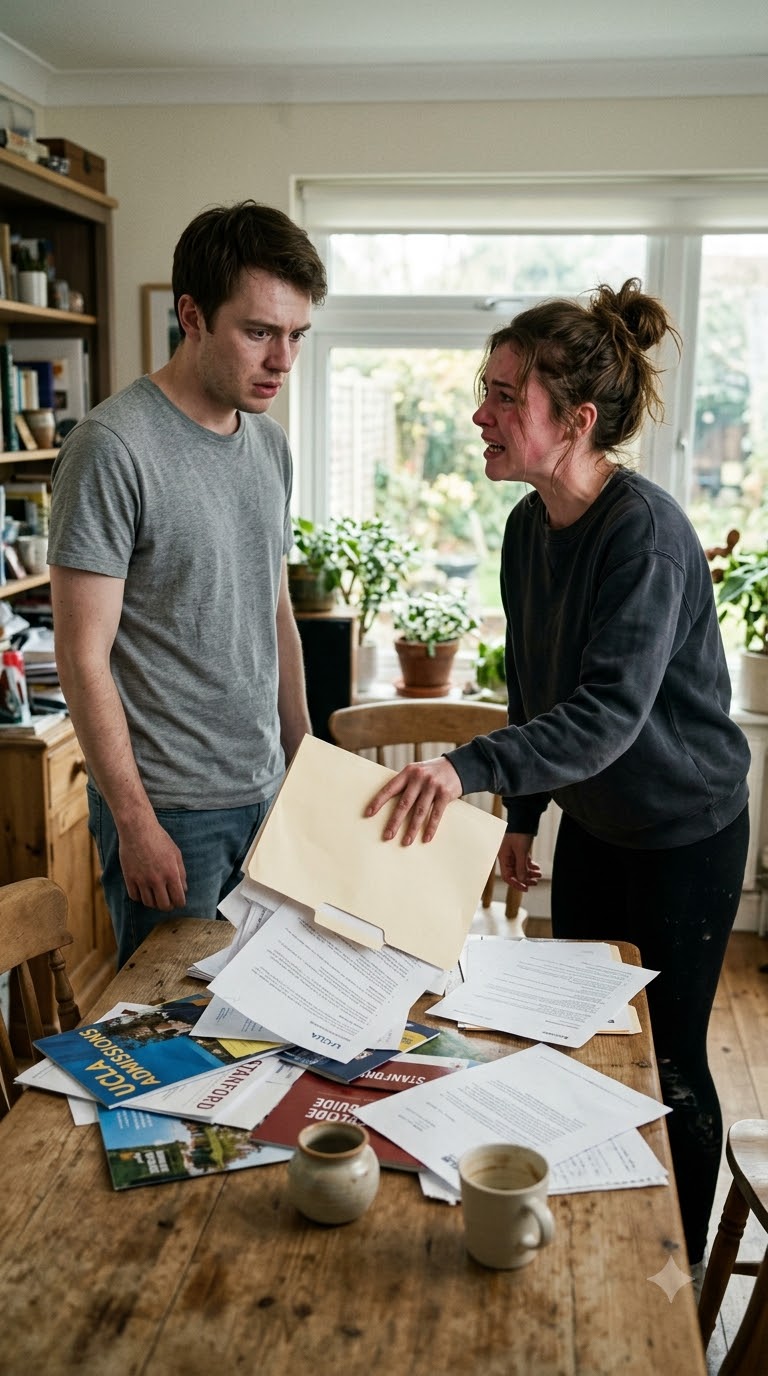
Coffee.
Laptop.
Another application.
Then, at 8:42, someone began pounding on the front door.
Not knocking.
Pounding.
I got up immediately.
“Sienna?”
She pushed past me before I could say anything else.
Her hair was tied up messily, and she was still wearing what appeared to be yesterday’s leggings.
In one hand, she carried a thick cream folder.
My stomach dropped. I recognized that folder.
And the moment I saw it, I knew why she had returned.
“How long?” she demanded.
I shut the door.
“Sienna…”
“How long were you planning to hide this from me?”
She slammed the folder down on the dining table.
Papers scattered out.
Printed emails.
A college brochure.
Credit-transfer information.
Tuition estimates.
Software requirements.
And on top, written in my handwriting:
SIENNA: PROGRAM OPTIONS + FINANCIAL PLAN
She pointed toward the date printed on one of the emails.
“You were making an exit plan for me behind my back.”
“No.”
“Don’t lie.”
“I’m not lying.”
She picked up another page.
“You contacted my old college.”
“Yes.”
“You asked which of my credits still count.”
“Yes.”
“You asked what I would need to finish the program.”
I nodded.
“And you never told me?”
“That part is true.”
Sienna stared at me as though she had finally found proof of something terrible.
“What was this? Some secret backup plan for when you got tired of supporting me?”
“No. God, Sienna, no.”
“Then what?”
I checked the time.
If Elaine’s schedule hadn’t changed, she would still be teaching that morning.
I picked up my keys.
Sienna laughed bitterly.
“Where are you going?”
“To show you.”
“Show me what?”
I opened the front door.
“The part I should have told you fourteen months ago.”
For a moment, she stayed still.
Then she picked up the folder and followed me outside.
Neither of us spoke during the drive.
Not until I turned into a parking lot she immediately recognized.
Sienna leaned forward.
“No.”
I parked.
She stared through the windshield at the community college she had attended before we got married.
“Rowan, why are we here?”
“You wanted to know how long I’ve been hiding something from you.”
I switched off the engine.
“Let me show you.”
The design department was on the second floor.
Sienna walked beside me, clutching the folder tightly against her chest.
At reception, I asked for Elaine.
A woman’s voice came from the doorway behind the desk.
“Rowan?”
An older woman stepped into the hallway.
Then she saw Sienna.
She froze.
“Sienna?”
My wife blinked. “Do I know you?”
Elaine smiled.
“I taught your second-year drafting class.”
Sienna stared at her.
Elaine glanced at the folder.
“I remember your portfolio.”
Sienna’s grip relaxed slightly.
Elaine motioned for us to come into her office and pulled up Sienna’s old academic records.
Some credits were still valid.
Others were not.
The curriculum had changed.
The software had changed even more.
She would need refresher classes.
Portfolio work.
Probably several semesters, depending on how many courses she took.
There was no shortcut.
No miracle restart.
But there was still a path back.
Sienna barely glanced at the computer screen.
She kept her eyes on me.
Finally, she asked,
“Why did you come here fourteen months ago?”
Elaine looked between us.
“I’ll give you two some privacy.”
She walked out of the office.
Sienna waited.
“Well?”
I leaned back.
“Because a man named Derek walked past my office carrying a cardboard box.”
She frowned.
“What?”
“He worked with me for eleven years.”
“What does that have to do with me?”
“Everything.”
And for the first time since she had stormed back into our house, Sienna stopped arguing.
So I told her.
Derek had been laid off during a restructuring.
Eleven years with the company.
Two children.
A mortgage.
And a wife who hadn’t worked since their youngest child was born.
“I watched him carry that box out,” I said, “and all I could think was: what happens to you if one day that becomes me?”
Sienna slowly lowered herself into the chair across from me.
“So you decided I needed a career?”
“No.”
I looked directly at her.
“I realized we had built your entire financial security around my paycheck.”
She looked away.
“I tried talking about school six months ago. Remember?”
She did.
“You asked whether we were having financial trouble. When I said no, you asked why you should bother going back.”
Sienna stared at the folder.
“I should have kept talking,” I admitted. “Instead, I did what I always do.”
“What?”
“I tried to solve everything myself.”
She looked down.
“You should have told me.”
“Yes.”
She seemed surprised that I didn’t argue.
Then I continued.
“And you should have stayed long enough for me to explain that I lost one job—not my ability to be your husband.”
Neither of us spoke.
Outside the window, students walked across the courtyard carrying backpacks and coffee.
Finally, Sienna asked the question she apparently should have asked three days earlier.
“Are we broke?”
“No.”
Relief crossed her face before she could conceal it.
“We have savings. Severance. I told you that the night I came home.”
She frowned.
“You did?”
“Yes.”
I held her gaze.
“You heard that I lost my job and immediately decided I had lost my value.”
Sienna looked down.
We left the college and drove to the diner where we had gone on our first date.
Halfway through our coffee, Sienna suddenly laughed.
“My card paid for dinner that night.”
“Mine got declined.”
“You were so embarrassed.”
“You told me I could pay the next time.”
Her smile slowly disappeared. Then she asked quietly,
“When did I become this person?”
I looked into my coffee.
“Probably around the same time I started feeling proud that you needed me for everything.”
Sienna wiped beneath one eye.
Then she asked,
“Do you want me to come home?”
“No.”
She flinched.
I continued before she could misunderstand.
“I don’t know whether I want our marriage to end. But I can’t let you come home simply because you discovered we still have money.”
“What am I supposed to do?”
“Figure out whether you would have come back if the bank account had been empty.”
She couldn’t answer.
Two weeks later, Sienna asked me to meet her at the diner again.
She told me she had enrolled in one refresher design course.
When the check arrived, I instinctively reached for it.
So did she.
Our hands stopped above the bill.
Sienna took it.
“I’ve got this one.”
I slowly pulled my hand away.
She smiled faintly.
“You can get the next one.”
Then she caught herself.
“If there is one.”
Outside, we walked toward separate cars.
“Good luck with your interview tomorrow,” she said.
“Thanks.”
She hesitated.
“Do you want me to call afterward?”
I thought about it.
“Yeah.”
Through the diner window, I could see our two empty coffee cups sitting across from each other.
And between them was the check.
Already paid.
