

PART 1
“If she passed out, she can learn not to defy me again.”
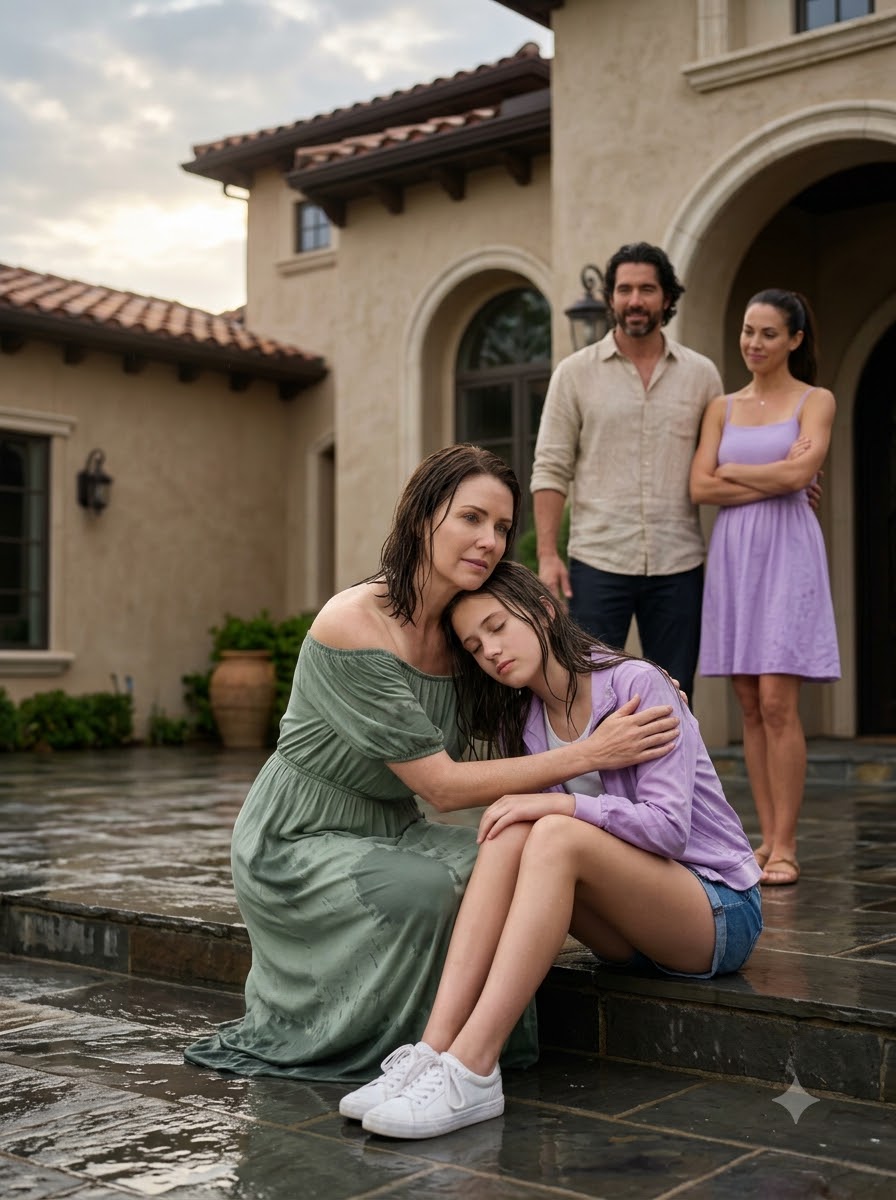
Those were the first words my ex-husband said after I found our fifteen-year-old daughter lying motionless on the pavement outside his front door, soaked through by the freezing rain.
It was 7:10 PM. I had just gotten back from an out-of-town work training and had been looking forward to picking up Maya, taking her home, and making dinner for us. Earlier that afternoon, I had messaged Richard: “I’ll be there to pick her up between 7:00 and 7:15.” His entire reply had been: “K.”
Four years had passed since our divorce, and throughout that time, I had gone out of my way to avoid unnecessary arguments. My focus had always been Maya. I wanted her to feel secure knowing that, despite the divorce, both of her parents loved and supported her.
But the moment I pulled into Richard’s driveway, something felt wrong.
The house was mostly dark, with only the porch light illuminating the entrance.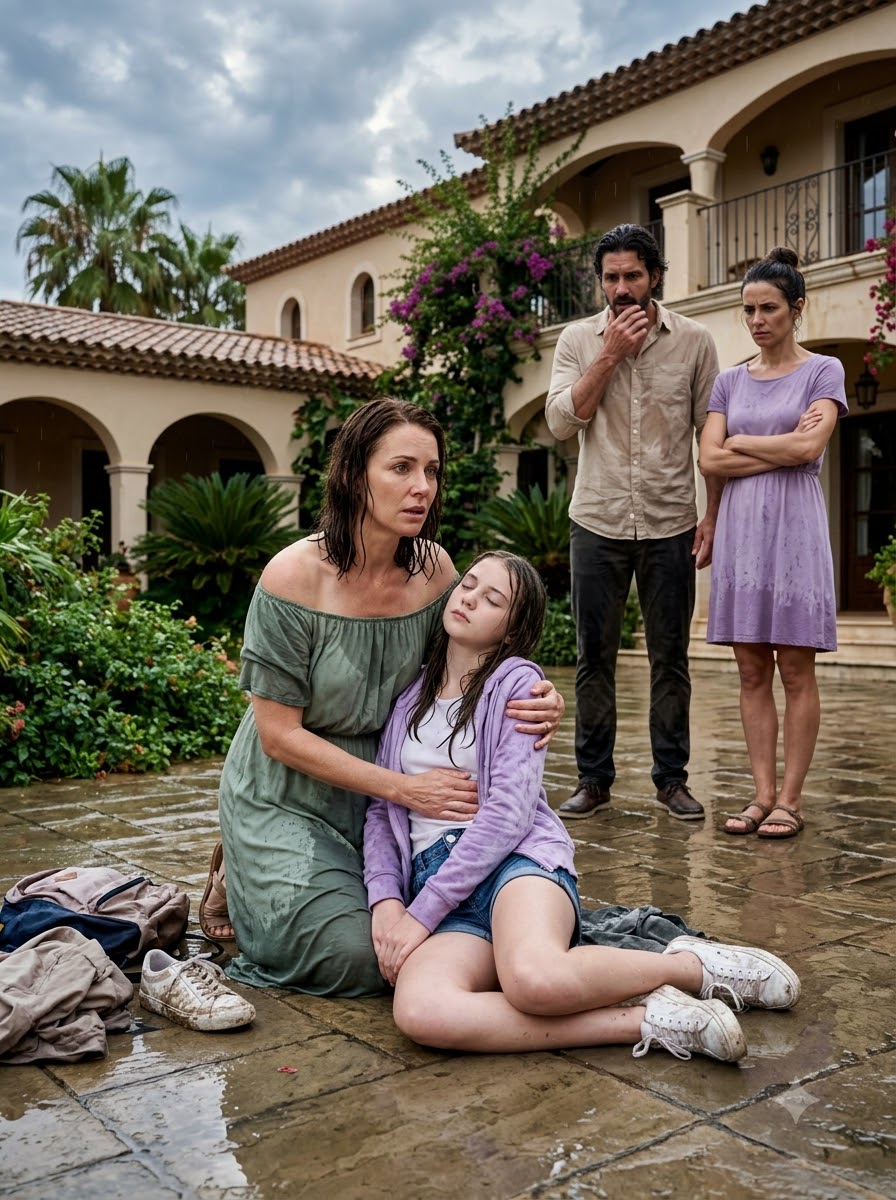
Then I saw my daughter.
Maya was curled on her side against the wet concrete. Her clothes were soaked, her hair was plastered against her face, and her backpack had been tossed several feet away. One of her sneakers was missing.
I threw open my car door and ran toward her.
“Maya! Maya, baby!”
She didn’t respond.
Richard finally appeared on the porch. Patricia, his wife, stood behind him with her arms tightly crossed.
“What happened?!” I cried, dropping beside Maya.
Richard remained where he was.
“She’s grounded.”
“She’s unconscious, Richard!”
“Don’t be dramatic, Sarah,” he scoffed. “She threw a tantrum because we confiscated her phone.”
My hands shook as I pulled out my phone and called 911.
“Don’t make a scene,” Richard warned. “She’s just throwing a fit. She’ll snap out of it.”
I stared at my daughter’s pale face.
“How long has she been lying out here in the rain?!”
He didn’t answer.
Minutes later, the paramedics arrived. They immediately began checking Maya’s pulse, breathing, temperature, and responsiveness.
One of them, a paramedic named Mark, looked directly at Richard.
“Sir, did you place a call to emergency services earlier tonight?”
“No,” Richard said flatly.
Mark held his stare for several seconds before returning his attention to Maya.
When they lifted her onto the stretcher, Mark approached me.
“Ma’am, is he your husband?”
“My ex-husband.”
“I’ve been called out to this address before,” Mark said quietly.
A heavy chill moved through me.
“For Maya?”
Before Mark could say anything else, his partner called him back toward the ambulance.
Richard hurried after me as I moved toward my car.
“Don’t you dare try to use this to mess with my custody arrangement, Sarah.”
“I’m not trying to start anything, Richard,” I said, my voice trembling with rage. “I am trying to figure out what you two did to my daughter.”
At the emergency room, Maya eventually opened her eyes.
She looked exhausted, pale, and frightened.
Her gaze immediately swept around the room.
“Is… is Dad here?”
“No, sweetie. It’s just me.”
She released a long breath and closed her eyes.
The relief on her face broke something inside me.
I sat beside her and gently ran my hand through her damp hair.
“Maya, what happened?”
“Patricia said I was being disrespectful because I rolled my eyes,” Maya whispered, her throat raw. “They took my phone and told me I couldn’t come back inside until I learned some respect.”
My stomach tightened.
“How long were you out there?”
“I don’t know. It started raining, and then… they left.”
“They left?!”
She gave a weak nod.
“Mom… please don’t make me go back there. Please.”
I squeezed her hand.
“I won’t.”
I didn’t know yet what I was promising.
But I knew I meant it.
Several hours later, Maya finally drifted into an uneasy sleep.
A nurse came into the room carrying her damp backpack.
“This was brought in with her,” she explained.
I thanked her and placed it on the chair.
When I opened the bag to look for anything that might help explain what had happened, I found a small piece of notebook paper folded tightly into a square.
Maya’s handwriting covered the page.
There were dates.
And underneath each date was a short sentence.
Tuesday: Wouldn’t let me inside after school.
Friday: Sent to room without dinner.
Sunday: Confiscated phone so I couldn’t call Mom.
Wednesday: Patricia told me Mom wouldn’t believe me anyway.
At the bottom, written slightly darker than the other lines, was one final sentence:
If they do it again, I just have to wait outside until someone sees me.
I stared at the paper.
Then I read it again.
And again.
My fingers began to tremble.
This wasn’t one terrible night.
This was a pattern.
And suddenly, I remembered every strange moment from the previous year.
Every time Maya became unusually quiet when I mentioned Richard.
Every time she insisted she was “fine.”
Every time she returned from his house exhausted.
Every time I asked whether something was wrong and she gave me that small smile before changing the subject.
I had told myself she was growing up.
I had blamed teenage moods.
I had convinced myself that different households simply meant different rules.
Now, sitting beneath the harsh hospital lights, I realized those explanations had protected me from seeing what was happening.
I folded the note carefully and placed it inside my purse.
Then I looked at my sleeping daughter.
“No more,” I whispered.
This time, I wasn’t going to dismiss the signs.
PART 2
The next morning, I called my attorney before Maya even woke up.
I sent her photographs of the note, explained what had happened, and told her what Mark had said about previous emergency calls to Richard’s address.
Her response was immediate.
“Do not send Maya back there.”
My heart pounded.
“I wasn’t planning to.”
“Good. I’m going to start working on an emergency custody filing. But I need documentation. Everything you have.”
I opened the note again.
“There may be more.”
“Then find it.”
After we hung up, I sat beside Maya’s bed.
She was awake now, staring at the ceiling.
“Mom?”
“I’m here.”
“Are you mad at me?”
The question nearly broke me.
“No. Never.”
She swallowed.
“I should’ve told you.”
“You should never have had to be afraid to tell me.”
She turned toward me.
“I tried.”
My chest tightened.
“When?”
“Lots of times.”
I couldn’t speak.
Maya looked down at her hands.
“I told you Patricia didn’t like me. I told you she made me stay in my room. I told you Dad got angry when I talked back.”
“Why didn’t you tell me everything?”
“Because every time I did, Dad said I was exaggerating.”
She hesitated.
“And Patricia said you’d think I was trying to get out of their house.”
I felt tears burn my eyes.
“Why didn’t you call me?”
“They took my phone.”
I looked at the note.
The line about Sunday suddenly carried a completely different weight.
Maya continued quietly.
“Sometimes they took my phone before I even got there.”
I reached for her hand.
“How long has this been happening?”
She stared at our joined hands.
“Months.”
The word landed like a blow.
“Why didn’t anyone know?”
“I thought nobody would believe me.”
I closed my eyes for a moment.
Then I pulled her gently into my arms.
“I believe you.”
She started crying.
And once she began, she couldn’t stop.
I held her while she finally released months of fear, shame, and helplessness.
Later that afternoon, a child-protection investigator arrived at the hospital.
She spoke to Maya privately first.
Then she came to me.
“Your daughter has provided a consistent account,” she said. “We’re going to investigate the home situation.”
“What about Richard?”
“He has been notified.”
My stomach dropped.
“Can he come here?”
“Not without authorization.”
For the first time since I had found Maya outside in the rain, I felt like someone else understood the seriousness of what had happened.
That evening, Mark, the paramedic, contacted the investigator.
He had remembered the previous calls to Richard’s address.
One had involved Maya being locked outside after school.
Another had been for dizziness after Maya reportedly hadn’t eaten all day.
The reports hadn’t seemed connected at the time.
Now they were.
The investigation moved quickly.
School records showed that Maya had accumulated several unexplained absences and had begun visiting the counselor more frequently.
The counselor remembered Maya asking whether a parent could force a teenager to stay outside as punishment.
She had been too afraid to explain why she was asking.
The school had documented it.
Richard and Patricia had never known.
Or perhaps they had assumed nobody would connect the pieces.
The notebook wasn’t the only evidence.
There were messages saved on an old school tablet Maya had used when her phone was confiscated.
Most were short.
“Can I come home early?”
“Please call Mom.”
“I don’t want to stay here tonight.”
There were no replies.
My attorney gathered everything.
Then came the emergency custody hearing.
Richard arrived with Patricia.
He looked angry rather than concerned.
The moment he saw me, he shook his head.
“You’ve turned this into something it isn’t.”
I didn’t answer.
The judge reviewed the hospital records, the photographs, the school reports, the emergency-service history, and Maya’s statements.
Richard tried to explain.
He said Maya was rebellious.
He said Patricia was strict.
He insisted the punishment had been misunderstood.
Then the judge asked one question.
“Why was a fifteen-year-old child left outside alone in cold rain?”
Richard opened his mouth.
Nothing came out.
Patricia began crying.
But I noticed something.
Maya wasn’t crying.
She sat beside her attorney, shoulders straight, staring forward.
For the first time, she wasn’t trying to protect them.
The judge issued a temporary emergency order placing Maya in my care.
Richard was prohibited from taking her from the hospital or school without court authorization.
The investigation would continue.
When we walked out of the courthouse, Maya stopped on the steps.
“Mom?”
“Yes?”
“Does this mean I don’t have to go back?”
“Not right now.”
She looked toward the sky.
Then she took a deep breath.
“I can breathe.”
I wrapped my arms around her.
“You can.”
The following weeks were difficult.
Maya started counseling.
She struggled with nightmares and sometimes woke up convinced she was still outside Richard’s house.
Whenever it rained heavily, she became anxious.
So we changed our routines.
We ate dinner together.
We left lights on at night.
We rebuilt the ordinary things she had lost.
One evening, while we were folding laundry, Maya found the notebook paper in a folder on my desk.
She stared at it.
“I thought you threw that away.”
“No.”
“Why did you keep it?”
“Because I never want to forget what you were brave enough to write down.”
She looked at me.
“Mom, I wasn’t brave.”
“You were.”
“I was scared.”
“Being scared doesn’t mean you aren’t brave.”
She smiled faintly.
Months later, the investigation concluded.
The evidence confirmed a repeated pattern of neglect and inappropriate punishment.
Richard’s custody was suspended pending further proceedings, and Patricia was barred from having unsupervised contact with Maya.
There were additional legal consequences, but by then, I had stopped caring about punishment.
What mattered was my daughter.
One Saturday morning, months after that night, rain began tapping against the windows.
Maya froze for a second.
I noticed immediately.
“Hey.”
She looked at me.
“You’re safe.”
She nodded.
Then, unexpectedly, she smiled.
“I know.”
She walked to the window and watched the rain fall across the yard.
I stood behind her.
For a long moment, neither of us said anything.
Then she turned around.
“Mom?”
“Yeah?”
“Thank you for coming that night.”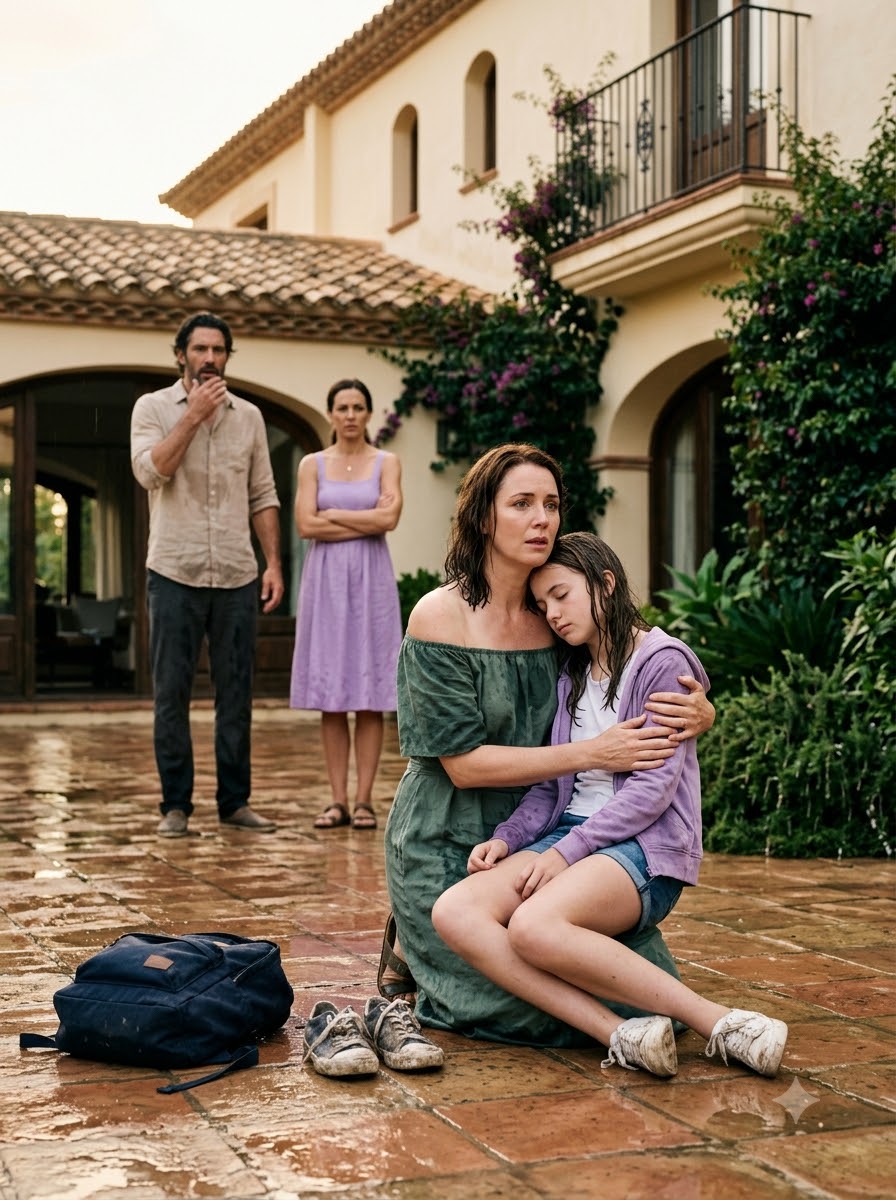
I hugged her tightly.
“I’ll always come.”
She rested her head against my shoulder.
And I realized something I wished I had understood much earlier.
Sometimes children don’t tell you everything.
Not because they don’t trust you.
But because someone has taught them that speaking won’t change anything.
Maya had spent months writing down what happened because she was afraid nobody would listen.
That little folded piece of paper had been her voice when she couldn’t find the courage to use it aloud.
I kept it.
Not as a reminder of the worst night of our lives.
But as proof that my daughter had never stopped trying to be heard.
And from that day forward, I promised myself I would listen—not only when she spoke, but also when she became quiet.
Because sometimes silence isn’t peace.
Sometimes it’s a warning.
And this time, I had finally heard it.
