

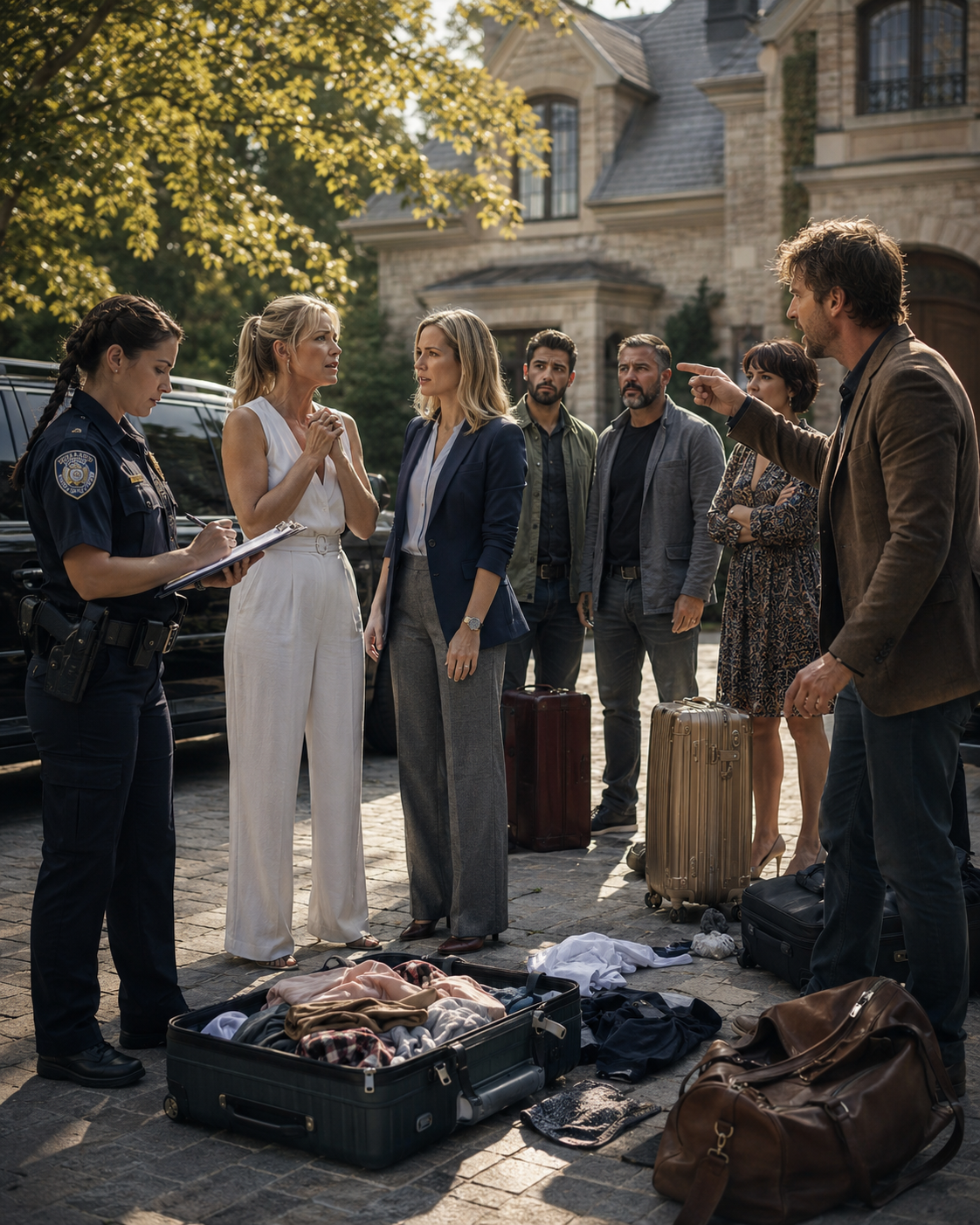
My attorney, Daniel Reyes, had repeated those words so often that morning I could still hear them in my head as I stood outside the Fulton County Courthouse.
He had said them before we walked inside.
Again in the elevator.
And one last time just outside the courtroom.
“Whatever they say, whatever they do, keep your expression neutral. Keep looking forward. Let me handle the rest.”
I had nodded each time.
But I didn’t fully understand why until I stood beneath the blazing Atlanta sun, watching Patricia Monroe clap her hands together as though she had just watched the ending of a wonderful performance.
Except the performance she was celebrating was the collapse of my marriage.
Eight years.
That was how long I had been married to Grant Monroe.
Eight years reduced to a judge’s signature inside a courtroom that smelled of old paper and industrial cleaner.
The judge had signed our divorce decree with the exhausted efficiency of someone who handled dozens of broken marriages every week.
To him, it was another file.
To me, it was the end of nearly a decade of my life.
“Well,” Patricia announced loudly from the courthouse steps, “at least the Monroe house is safe now.”
The family laughed.
About a dozen of them had gathered there.
Grant’s sister, Vivian, wore an expensive linen dress and enormous sunglasses.
His uncle Douglas, who had somehow forgotten my name repeatedly throughout our marriage, stood beside several cousins and their spouses.
They looked more like guests at a celebration than people who had just witnessed a divorce.
And that was exactly why they had come.
They wanted to watch me lose.
They wanted to remember the day the outsider had finally been removed from the Monroe family.
Later, they would tell the story at Thanksgiving.
At Christmas.
At every gathering where my name came up.
Allison.
The woman Grant had foolishly married.
The woman the family had finally gotten rid of.
I stood several feet away holding my purse, a manila folder, and the freshly stamped court papers.
I kept my face still.
Eyes forward.
Then Patricia approached me.
I smelled her perfume before she reached me.
Floral.
Expensive.
Overpowering.
After eight years, I had learned to associate that scent with every occasion when Patricia wanted to remind me how little she thought of me.
“You should be grateful Grant put up with you for as long as he did,” she said with a smile. “Some women simply don’t know when they’ve been replaced.”
Replaced.
She finally said it openly.
I already knew about the other woman.
I had known for almost a year.
First came the hotel receipt in Grant’s blazer.
Then perfume that wasn’t mine.
Then the sudden flood of “client dinners” that stretched until two in the morning.
Her name was Brooke.
Twenty-six years old.
She worked at the same firm where Grant was a junior partner.
And from everything I had learned, Brooke didn’t even know at first that the man she was seeing still had a wife at home.
A wife managing his house.
His social calendar.
His family obligations.
And a marriage she still believed was worth saving.
I looked toward Grant.
He stood at the edge of the group adjusting his gray suit jacket.
The same suit I had helped him choose at a tailor on Peachtree.
The same suit he had worn to his father’s funeral.
The same one he wore to mine.
And now the same suit he wore while our marriage officially ended.
I waited for him to say something.
Anything.
Tell his mother to stop.
Defend me once.
Show me that eight years had meant something.
Instead, Grant looked away.
That tiny movement answered every question I’d carried throughout our marriage.
Had he ever truly chosen me?
Had he ever been willing to stand between me and Patricia when it mattered?
No.
The answer had always been no.
I simply hadn’t wanted to accept it.
Patricia shook her car keys in the air.
“Come on, everyone! Lunch is on me. Today we celebrate!”
And they did.
The entire family streamed down the courthouse steps, laughing and congratulating Grant.
They called him a free man.
Someone told him his best years were still ahead of him.
Vivian said something that made the group erupt in laughter.
Then they climbed into two black luxury SUVs and headed toward Buckhead.
Patricia’s favorite steakhouse was there.
The staff knew her by name.
A lunch for twelve would easily cost more than a thousand dollars.
And Patricia would put it on her American Express without blinking.
I watched them drive away.
I didn’t cry.
That mattered to me.
I stood outside the Fulton County Courthouse and watched my ex-husband’s family leave to celebrate what they believed was my defeat.
And I didn’t shed one tear.
Instead, I climbed into Daniel Reyes’s sedan.
He was waiting at the curb with the engine running and the air conditioning blasting against the July heat.
I closed the passenger door.
For a moment, neither of us spoke.
“You did well,” he finally said. “That was harder than it looked.”
I placed the folder on my lap.
My hands were surprisingly steady.
“How long before they get home?”
Daniel checked his watch.
He was in his mid-fifties, silver-haired, careful, and the kind of attorney who could make even disaster sound manageable if the paperwork was properly prepared.
My friend Renata had recommended him.
She had survived a brutal divorce three years earlier and come through with both her dignity and retirement account intact.
When I called her at two in the morning the previous October, sobbing about the hotel receipt and Brooke’s perfume, she gave me one piece of advice.
“Do not use anyone connected to Grant. Get your own lawyer. A good one.” Then she gave me Daniel’s number.
Daniel glanced toward the downtown traffic.
“Patricia holding court over lunch? Two hours minimum. Probably three. We have more than enough time.”
I looked through the window as the courthouse disappeared behind us.
“Are you absolutely sure about this?”
“Allison,” Daniel said, pulling into traffic, “I’ve practiced law for twenty-six years. I have never been more certain of anything.”
Then he smiled slightly.
“That house is yours. It has always been yours. And in roughly three hours, the Monroe family is going to discover something the state of Georgia has known for more than a year.”
I looked down at the manila folder resting in my lap.
Inside it was the truth Patricia had never bothered to uncover.
To understand what happened next, you need to understand the house.
The Monroe home sat on Habersham Road in Buckhead.
A brick colonial built in the 1920s.
White columns.
Slate roof.
A full acre of carefully maintained grounds.
It had belonged to the Monroe family for three generations.
Patricia spoke about it as though it were sacred.
Grant and Vivian had grown up there.
The first Thanksgiving I attended as Grant’s fiancée, Patricia made it painfully clear that I was a guest.
Not family.
A guest.
She watched how I arranged my silverware.
She praised whatever food I brought with the faintly insulting tone of a woman complimenting hired help.
And for years, she reminded me that the house represented the Monroe legacy.
There was only one problem.
Patricia didn’t own it.
She never had.
The house belonged to her husband, Walter Monroe.
Walter was Grant’s father.
Quiet.
Kind.
Gentle in a family that seemed to value volume and status.
I loved Walter in a way I eventually realized I had never quite managed to love his son.
Walter was the only Monroe who treated me like a person.
At endless family gatherings, while Patricia dominated the living room, Walter and I would sit together on the back porch.
He told me stories about the property.
How he built the treehouse in the oak when Grant was small.
The winter the pipes froze.
How his own father had bought the house during the Depression for an amount that today wouldn’t cover a year of property taxes.
Walter noticed how Patricia treated me.
He noticed that Grant rarely defended me.
He never said much.
But I think it bothered him.
I think part of him was ashamed.
Walter died four years into my marriage.
A sudden heart attack while working among the roses he insisted on pruning himself.
Patricia’s grief was enormous.
Public.
She wore black for nearly a year and constantly referred to Walter as the great love of her life.
Within weeks of his funeral, however, she began taking control of everything he left behind.
Most importantly, the house.
She immediately started calling it “my home.”
As though Walter had never existed.
But Walter had been far more careful than Patricia realized.
And Walter had loved me.
I discovered the truth accidentally about a year before my divorce.
This was before I knew about Brooke.
Patricia had ordered me to help clear the remaining documents from Walter’s study.
It was the kind of unpleasant family task she routinely handed to me.
While sorting through the papers, I found a copy of Walter’s will.
Attached to it was another document.
I read it once.
Then again.
The house had not been left to Patricia.
Walter had given Patricia a life estate.
That meant she could live in the house for the rest of her life.
But she did not own the property outright.
The actual ownership—the remainder interest—had been placed inside a trust.
And the beneficiary named in that trust was not Grant.
Not Vivian.
Not any Monroe by blood.
It was me.
Allison Reeves Monroe.
Walter had signed the documents eighteen months before his death.
They had been witnessed.
Notarized.
Prepared by his own lawyer.
And Patricia knew nothing about them.
Walter had given the house to me.
His daughter-in-law.
The outsider.
The woman who had sat beside him on the porch and listened when everyone else was too busy talking.
There was also a letter.
I still have it.
I have read it so many times that I practically know every sentence.
Walter wrote that he had watched the way Patricia and Grant treated me.
He admitted he should have spoken up more.
He said leaving me the house was the only way he knew to make things right.
A house was only a house, he wrote.
But it was also the most valuable thing he had left to give.
And he wanted it to belong to the one person in the family who had consistently treated others with kindness.
He hoped I would never need it.
But if the day came when I did, it would be there.
I returned every document exactly where I had found it.
And I told no one.
Not even Renata.
For more than a year, I carried that secret alone.
Part of me couldn’t believe it was real.
And as long as my marriage remained intact, it was a bridge I hoped I would never have to cross.
Then I found the hotel receipt.
Then Brooke.
Then came months of watching Grant slowly abandon our marriage while Patricia grew increasingly cruel.
Finally, I called Daniel Reyes.
I placed Walter’s will on his desk.
I watched Daniel read it.
Then his entire expression changed.
“Do they know?”
“Who?”
“Grant. Patricia. Does anyone in that family know what this says?”
“No.”
Daniel looked stunned.
“They believe Patricia owns the property outright?”
“Yes.”
“And Grant thinks he’ll inherit it someday?”
“Yes.”
Daniel leaned back and removed his glasses.
He looked at me for a long moment.
Then he said,
“Mrs. Monroe, I think I’m going to enjoy this case.”
Grant’s attorney approached the divorce like a demolition job.
Their goal was simple.
Leave me with almost nothing.
Grant earned excellent money.
I didn’t.
After we married, I stopped working as a paralegal.
Patricia had strongly suggested that “Monroe wives” did not need careers.
So I spent eight years running Grant’s household, managing his social obligations, and dealing with his impossible mother.
Then, during mediation, his lawyer argued that I had contributed very little financially and therefore deserved almost nothing.
Their settlement offer was insulting.
A lump sum barely enough to cover two years of rent.
No meaningful alimony.
No proper share of retirement accounts I had never been able to build because I had been discouraged from working.
Daniel listened without interrupting.
Then he smiled.
“My client accepts.”
I almost jumped out of my chair.
Later, in the hallway, I confronted him.
“Why did you agree to that? It’s insulting.”
Daniel remained calm.
“Because they think they’re winning.”
I stared at him.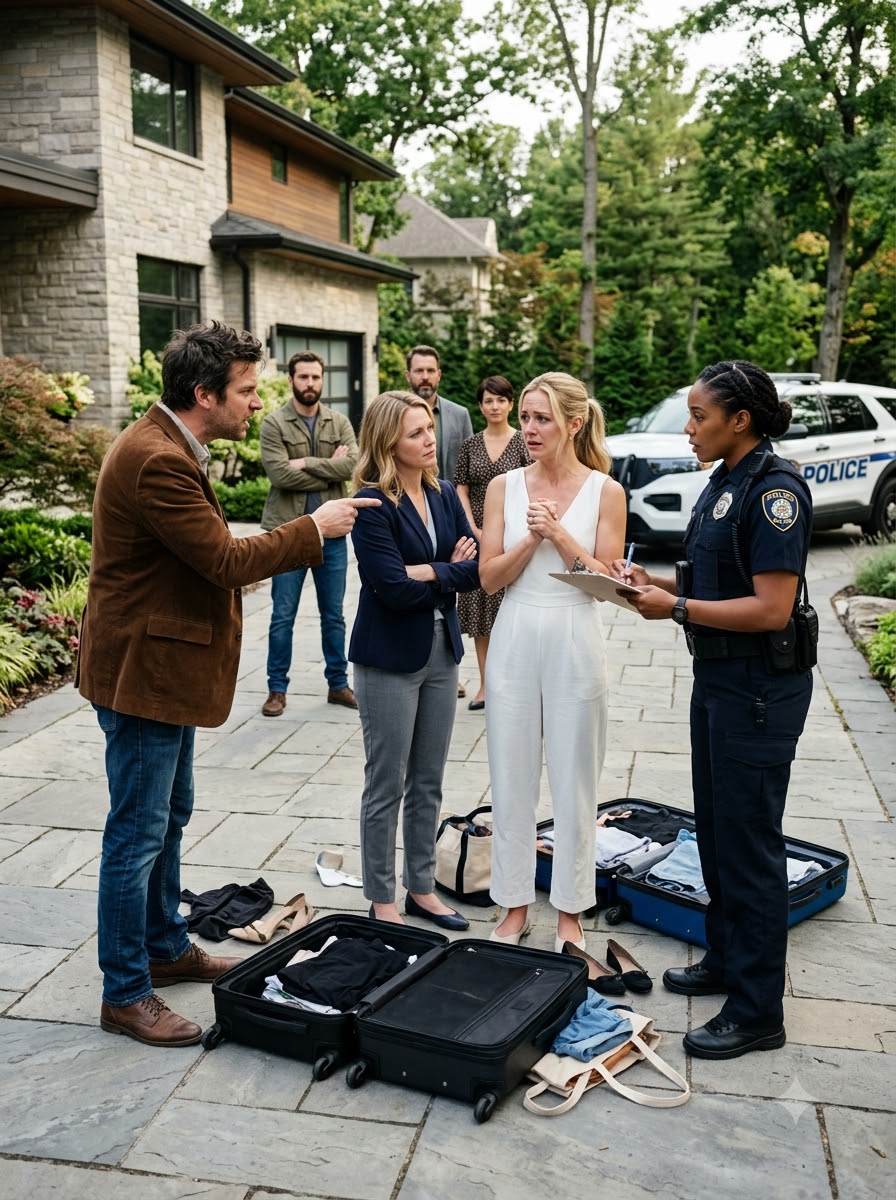
“They’ve decided to keep their property separate and give you almost nothing in exchange for you giving up any claim against Grant’s assets. They believe Patricia’s house is completely outside this divorce. They believe you have nothing.”
He paused.
“And they have no idea the most valuable asset in the family already belongs to you.”
Then Daniel explained the part I hadn’t understood.
Walter had given Patricia a life estate. But there were conditions attached.
She was required to maintain the property.
Keep the taxes paid.
Keep the homeowners insurance active.
And refrain from doing anything that could harm the interests of the remainder beneficiary.
Me.
During discovery, Daniel’s team uncovered something Patricia’s own attorney had apparently overlooked.
Patricia had taken out a substantial home-equity line against the property.
A property she did not actually own.
She had used the money to maintain her lifestyle.
Luxury SUVs.
Galas.
Trips.
Expensive dinners.
Then she allowed the homeowners insurance to lapse for several months.
She also stopped paying the property taxes.
Those taxes had become delinquent.
A lien was already accumulating.
And she had done all of it without notifying the trust.
Without authorization from the actual owner.
Walter’s trust was unusually precise.
Patricia had materially breached the conditions attached to her life estate.
She had put the property at risk.
Daniel called it waste.
And Walter had anticipated exactly that possibility.
If Patricia materially violated the conditions, the remainder beneficiary could petition the court to terminate her life estate.
That beneficiary was me.
Daniel planned to file the necessary action once the divorce was final.
As it turned out, he had already prepared everything.
I once asked him if what we were doing was cruel.
If I was becoming the bitter, vengeful woman the Monroes had always assumed I was.
Daniel took the question seriously.
Then he said,
“No.”
He leaned forward.
“Revenge would be doing something solely to hurt them. What we’re doing is enforcing Walter’s clearly documented wishes, protecting property that legally belongs to you, and stopping Patricia from continuing to damage it.”
Then he added,
“That isn’t revenge. It’s enforcement. And perhaps, in Walter’s own way, justice.”
So that July afternoon, while the Monroes celebrated at their favorite steakhouse in Buckhead, Daniel and I headed toward Habersham Road.
Earlier that morning, almost immediately after the divorce became final, another judge had signed the order terminating Patricia’s life estate.
It was a separate proceeding.
A separate case.
Patricia’s attorney had not been watching because they did not even know the trust existed.
By the time the divorce decree was finalized, Patricia’s legal right to occupy the house had ended.
I was no longer merely the remainder beneficiary.
I had full possession.
The house was mine.
And the Fulton County Sheriff’s Office was prepared to enforce the order.
When Daniel and I arrived, the movers were already there.
Six professional movers.
A locksmith.
A sheriff’s deputy.
Daniel had arranged everything with precision.
He had specifically hired movers experienced in court-ordered removals.
Nothing would be carelessly dumped onto the lawn.
Nothing would be damaged.
Nothing would vanish.
Every belonging that belonged to Patricia and Grant would be inventoried.
Photographed.
Wrapped.
Cataloged.
Furniture.
Boxes.
China.
Grant’s golf clubs.
Patricia’s prized antiques.
Everything would be handled properly.
Daniel had made his instructions unmistakably clear.
“We give them nothing to complain about. When Patricia tells this story—and believe me, she will—she will never be able to say we stole or destroyed anything.”
I stood in the front yard and watched the movers work.
I had expected to feel victorious.
Instead, I felt strangely sad.
My thoughts went to Walter.
The roses he had carefully tended.
The porch where we had spent so many quiet conversations.
The years I had lived there feeling like an unwelcome guest in a house that legally belonged to me.
The garden had been neglected.
The roses had grown wild.
The lawn service had apparently been canceled during Patricia’s financial decline.
The Monroe legacy she had treated as sacred had quietly begun deteriorating under her care.
Daniel walked over to me.
“We can repair it.”
I looked toward the overgrown roses.
“The taxes can be handled. We’ll challenge the credit line. The insurance will be reinstated today.”
Then he said something I would never forget.
“It’s yours to save now.”
Yours to save.
I liked that more than yours to own.
Because the house was more than brick and mortar.
It was the treehouse.
The porch.
Walter’s roses.
The place where one decent man had made me feel that I belonged when his own family never had.
The movers had just finished placing the final belongings when two black SUVs turned onto Habersham Road.
I recognized Patricia’s vehicle first.
It slowed.
Nearly stopped.
Then suddenly accelerated up the driveway.
The doors opened before the SUV had completely settled.
Grant jumped out first, still dressed in the gray courthouse suit.
Confusion covered his face.
“What the hell is going on?”
His eyes moved from the furniture to the boxes.
Then to the locksmith fitting the final new lock.
Patricia stepped out behind him.
She moved much more slowly.
Her gaze swept across the lawn.
Her antique furniture.
Her belongings.
Her boxes.
For the first time in eight years, Patricia looked genuinely old.
“Why is everything outside?”
The authority that normally filled her voice was gone.
The sheriff’s deputy stepped forward.
“Are you Grant Monroe?”
“Yes. This is my mother’s house. What are you people doing?”
“Sir, I need you to remain calm. There is a valid court order regarding this property. The removal of these belongings and the change of locks have been conducted lawfully. Everything has been inventoried and protected.”
Patricia slowly turned.
Then she saw me.
The look on her face was unlike anything I had ever seen.
There was no superiority.
No amused contempt.
No false warmth.
Only disbelief.
And fear.
“You,” she said.
“What did you do?”
I said nothing.
Daniel had warned me.
Don’t engage.
Let the documents speak.
He stepped forward with a folder in his hand.
“Mrs. Monroe, I’m Daniel Reyes. I represent Ms. Reeves.”
Ms. Reeves.
My name.
My own name finally returned to me.
“As of this morning, my client’s divorce from your son is final. What you may not know is that this property was never owned by you outright.”
Patricia stared at him.
“Your late husband gave you a life estate. You had the right to occupy the home during your lifetime under certain conditions. Ownership of the property itself was placed into trust.”
Daniel paused.
“The beneficiary of that trust is my client, Allison Reeves.”
Silence followed.
Even Vivian, who had just stepped from the second SUV, stopped in her tracks.
“That’s impossible,” Patricia whispered. “Walter left this house to me.”
“He left you the right to live here,” Daniel said. “Subject to specific conditions.”
Then he laid everything out.
The home-equity line.
The lapse in insurance.
The unpaid property taxes.
The growing lien.
The harm to the trust’s interests.
And the court order terminating her right to remain.
Patricia looked as if she could barely breathe.
Grant finally lost control.
“This is insane! Allison, you can’t do this! This is my family’s house! My mother’s house! You were never anything but—”
“Careful,” Daniel said quietly.
The calmness in his voice stopped Grant more effectively than shouting ever could.
“My client has complied with every legal requirement. Nothing belonging to your family has been taken. Nothing has been damaged. She has only taken possession of what has legally belonged to her since your father’s death.”
Then Daniel said,
“What Walter wanted her to have.”
Patricia made a faint sound.
“Walter?”
I finally spoke.
“Yes.”
She looked directly at me.
“Walter did this?”
“Yes.”
Then, after eight years of swallowing every insult, every humiliation, and every moment I had been made to feel insignificant, I said what I needed her to hear.
“Walter did this because he cared about me. He watched the way you treated me. He watched Grant allow it. And he decided the person who had shown kindness inside this house would eventually be the person who kept it.”
My voice remained steady.
“You spent eight years telling me I didn’t belong here.”
I looked toward the front door.
“It turns out I’m the one who does.”
I could have told her about Walter’s letter.
I could have read every word to her.
But I chose not to.
That letter belonged to me.
I wasn’t going to turn the words of a kind man into a weapon.
Vivian was already calling the family attorney.
Douglas wandered between the boxes as though the answer might somehow be hidden beneath a moving blanket.
And Grant stood in the driveway staring at me.
My ex-husband of only a few hours.
He had cheated.
He had lied.
He had allowed his mother to humiliate me for years.
And on the courthouse steps, when Patricia publicly mocked me, he had looked away. His attorney had negotiated a settlement intended to leave me with almost nothing.
And I had allowed Grant to believe he had won.
I let every one of them believe it.
Right up until they turned onto Habersham Road and saw the truth laid out neatly across the lawn.
Then Patricia asked quietly,
“Where am I supposed to go?”
She lowered herself onto the arm of her own displaced sofa.
And something happened that I never expected.
I felt sorry for her.
Not enough to reverse what had happened.
Not enough to surrender what Walter had left me.
But enough for the anger I had carried for eight years to finally begin fading.
Because Patricia had brought this upon herself.
Not merely through unpaid taxes and expired insurance.
Those were only the legal reasons.
She had done it through years of quiet cruelty.
By treating the one person Walter trusted as an enemy.
By teaching her son that contempt was easier than courage.
By treating the house like a throne and everyone inside it like subjects.
For twelve years, she had a daughter-in-law who wanted nothing more than to belong.
And she rejected her.
Again and again.
Certain she would always have the upper hand.
Daniel answered her question.
“That is no longer my client’s responsibility.”
Then he told Patricia to contact her attorney and the bank about the credit line.
The sheriff’s deputy escorted them away from the property.
Everything remained calm.
Professional.
There was no shouting and no physical confrontation.
The SUVs took what they could.
The remaining belongings were scheduled to be collected the next day.
By early evening, the lawn was empty.
The house was quiet.
And I stood alone in the front hallway, holding a new set of keys.
For the first time in eight years, the house on Habersham Road was unquestionably mine.
I didn’t move in right away.
There were too many financial complications to resolve.
And emotionally, I needed some time before I could sleep beneath that roof.
But the following morning, I returned by myself.
I unlocked the door with my own key.
Then I walked through the empty rooms as sunlight filled them.
Eventually, I stepped onto the back porch.
Walter’s porch.
His old wicker chairs were still there.
I sat in the chair he had always used and stared at the neglected roses.
That was when I finally cried.
Not because Grant had left me.
Not because Patricia hated me.
I cried for Walter.
For the quiet man who had truly seen me.
Who had protected me.
Who never lived long enough to know that his gift had reached me at exactly the moment I needed it most.
I cried for the eight years I had spent making myself smaller.
Then I stopped.
I stood.
Walked to the garden shed.
Found Walter’s old pruning shears.
And began cutting back the roses.
The months that followed were complicated.
Daniel’s team spent nearly a year sorting through Patricia’s financial problems.
The credit line was eventually determined to be Patricia’s personal responsibility because she had taken it out against property she did not own.
The overdue property taxes became mine to resolve, and I paid them.
I reinstated the homeowners insurance.
I hired the lawn service again.
The house itself had no mortgage.
Walter had left it completely paid off.
Grant challenged the trust.
Of course he did.
His attorney filed motions.
But Walter’s documents had been prepared by an extremely careful estate lawyer.
Daniel described them as “airtight.”
Grant’s challenges failed.
The following spring, I heard he had married Brooke.
They live in a condo in Midtown.
And I genuinely hope they find whatever happiness they are capable of building.
I have never spoken to Patricia again.
I heard she stayed with Vivian for a while.
Apparently, that arrangement did not last.
Eventually, Patricia moved into a retirement community outside Marietta.
Her life became much smaller than it had once been.
I don’t celebrate that.
But I don’t feel responsible for it either.
She built her identity around believing the house belonged to her and that I was the intruder.
Both beliefs were wrong.
I live in the house now.
Really live in it.
I returned to work as a paralegal.
Ironically, I joined Daniel’s firm.
Then, with his encouragement, I enrolled in evening classes and began pursuing the law degree I had abandoned years earlier after marrying into a family that believed wives shouldn’t work.
It turns out I’m good at law.
Maybe eight years of living inside the fine print of my own life prepared me for it.
Maybe Walter’s trust taught me just how much power can exist inside a carefully written paragraph.
The roses returned.
It took two seasons.
But every June, Walter’s garden blooms again.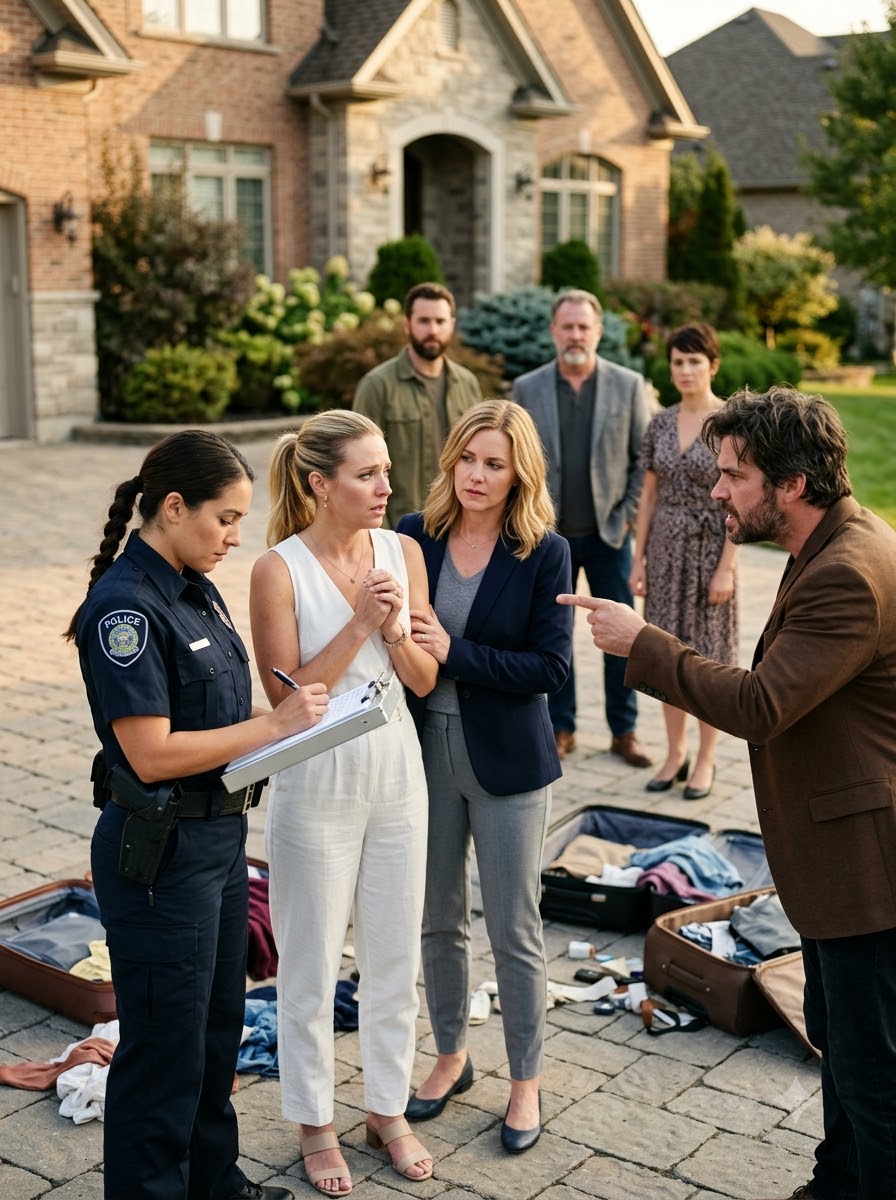
I cut the flowers and place them in the crystal vases Patricia once used to make me feel inadequate.
Then I sit in Walter’s chair on the porch and think about how quietly justice can arrive.
There is one Monroe family photograph still hanging in the house.
Walter.
Standing in his garden.
Old cardigan.
Pruning shears in one hand.
A shy half-smile on his face.
He never raised his voice.
Never treated the house like a throne.
Never once made me feel like a guest.
Sometimes I still take out his letter.
A house is just a house, he wrote.
But it was the most valuable thing he had to give.
For years, I believed that was true.
Now I think Walter was wrong about one thing.
The house wasn’t the greatest gift he gave me.
The greatest gift was knowing, on one of the worst days of my life, while an entire family stood outside a courthouse celebrating my humiliation, that I didn’t have to react.
I didn’t have to beg.
I didn’t have to scream.
I didn’t have to give them the dramatic scene they were expecting.
I could simply remain still.
Keep my eyes forward.
And let the quiet machinery of a good man’s final act of kindness arrive exactly when it was meant to.
The Monroes raised their glasses in Buckhead, convinced they had finally gotten rid of me.
A few hours later, they returned to discover that the house had belonged to me all along.
And I never gave them the scene they wanted.
I gave them something far more difficult to forget.
A clean lawn.
A new lock.
A court notice on the door.
And a house that was finally, completely, legally mine.
