

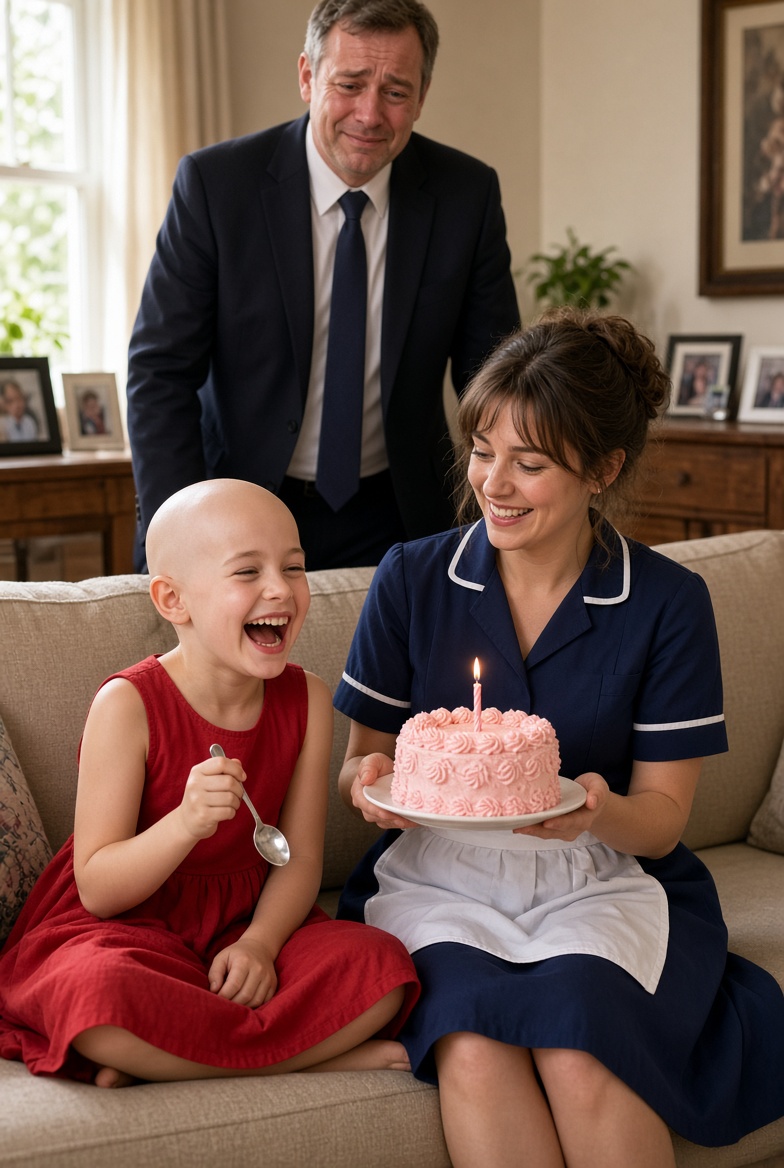
Jonathan Hale Had Everything—Except the One Thing He Would Give It All For
Jonathan Hale had spent two decades teaching the world that almost anything could be acquired if a man was willing to pay the true price. His companies moved capital across time zones before most people finished their morning coffee. His name sat on glass towers, on hospital wings he had funded without ceremony, and on the title deeds of a cliffside estate that looked as if it had been cut from the Pacific itself. The house was all light and edges, every surface chosen, every silence designed. Guests used to say it felt like standing inside a decision.
None of it mattered the afternoon Dr. Becker closed the folder.
They were in the west sitting room, the one with the long window that made the ocean look obedient. Isla was upstairs, sleeping after another round of tests that had already become routine. Jonathan sat with his hands flat on his knees, the posture he used in boardrooms when he intended to win.
“We’ve tried everything,” Becker said. His voice had the careful gentleness of a man who had delivered this sentence before and still hated it. “Treatments. Trials. Specialists in three countries. The degeneration is not responding. At most… she has a few months.”
Jonathan did not raise his voice. He asked for names, for papers, for the next impossible option. Becker gave him all of them. None of them changed the number.
Isla was seven. She had her mother’s fine bones and her father’s stubborn mouth. Before the illness she had filled the house with questions that arrived like weather: why the tide left gifts on the rocks, why some birds hovered instead of landing, why grown-ups pretended not to be afraid. After the diagnosis the questions thinned. Color left her hair in slow degrees. Her laughter, when it came at all, sounded as if it had traveled a long way to reach her throat.

The estate changed the way a body changes after a fever breaks the wrong direction. Music stopped. The kitchen staff learned to move without sound. Friends who once filled the terrace at dusk sent flowers and then stopped coming, as if joy itself might be contagious in the wrong way. Jonathan flew her to clinics that smelled of ozone and hope. He signed checks that would have funded small nations. He sat through night consultations with men and women who spoke in probabilities. Hope, he discovered, evaporated at the same rate as money. Faster, sometimes.
Rosa came in through an agency that supplied night nurses and companions when the regular staff began to look exhausted. She was in her mid-forties, dark hair drawn back without vanity, hands that looked as if they had done real work. She did not hover. She did not speak to Isla in the softened voice people reserve for the dying. On her first afternoon she sat on the floor of the child’s room and asked what the stuffed fox on the pillow was named.
Jonathan noticed her the way he noticed a new variable in a model: useful, probably temporary.
He was passing the door three days later when he heard Rosa’s voice, low and even.
“What are you doing?” he asked from the threshold.
Rosa did not stand. “Sharing a story. About a hummingbird that never stops flying, even when the storm is strong.”
Isla’s eyes were open. For the first time in weeks they looked interested rather than merely present.
Jonathan left them. He told himself it was harmless. Children needed distraction. Stories were cheaper than another flight to Zurich.
Something shifted anyway.
Isla asked for paper. She drew the bird with a beak like a needle and wings that did not rest. She ate half a pear without being asked. She wanted the window open so she could hear the actual birds in the garden. The laboratory numbers did not move. Jonathan watched her face and knew the numbers were not the only measurement that existed.
Suspicion arrived the way it always did with him: quietly, then all at once. He reviewed the corridor cameras. He paused outside the door at odd hours. He told himself he was protecting her from false comfort.
Then, one night, he heard singing.
It was not a lullaby he recognized. The melody was older than the house, warm in the middle and slightly rough at the edges, the sound of a voice that had sung to other children in other rooms. He opened the door.
Painted stones lay in a careful arc across the rug. Small figures made of twigs and scraps of fabric sat among them like sentries. Isla sat upright against her pillows, color in her cheeks that no infusion had produced. She held one of the figures as if it had weight.
“They protect my dreams,” she said.
Jonathan felt the old machinery of control lock into place.
“This ends now.” His voice was the one that ended negotiations. “You’re filling her head with fantasies. Hope does not heal disease.”
Rosa rose without hurry. “Connection does.”
He accused her of interfering, of substituting theater for medicine, of giving a dying child a story instead of the truth. Rosa did not defend the stones or the dolls. She only said, “Your daughter is still fighting. Fighting requires meaning. Not only medicine.”
That night Isla slept without the small sounds of pain that had become the house’s metronome.
Jonathan did not sleep.
In the morning he issued the order. No more stories. No more painted stones. No more figures. Rosa was to keep the room clean and the child comfortable and nothing else. She inclined her head and did as she was told.
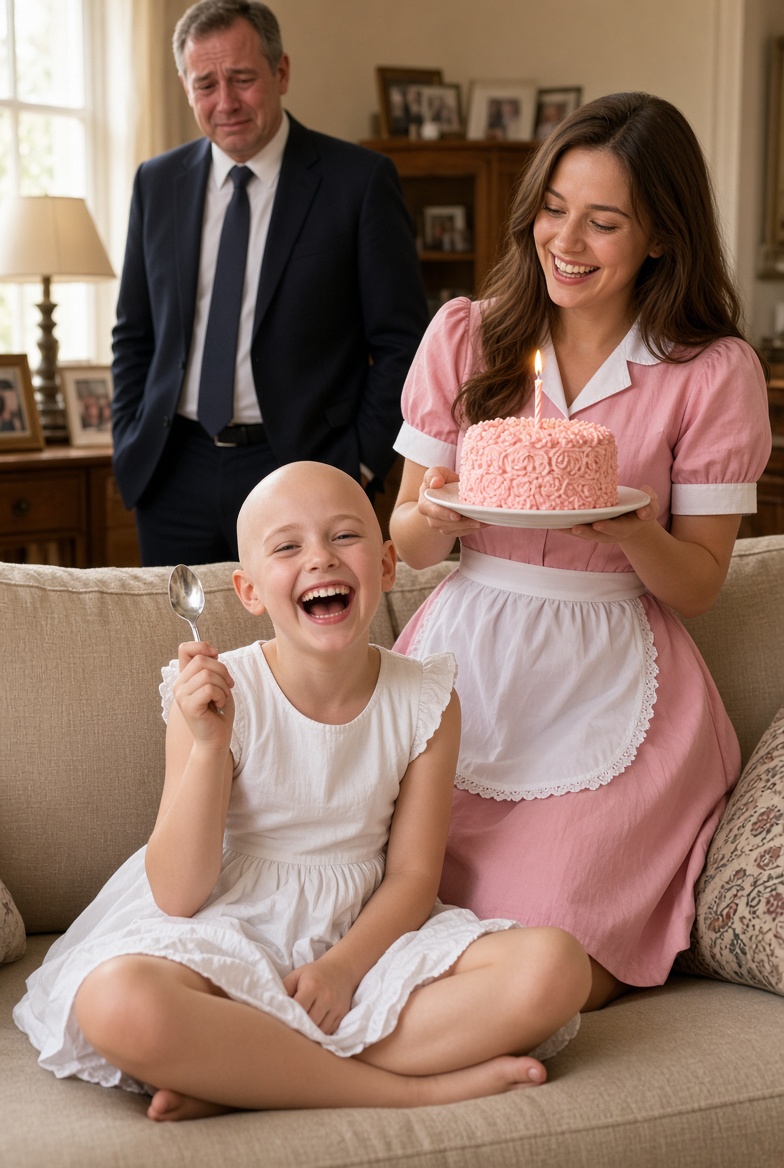
Isla faded the way a tide withdraws: not all at once, but unmistakably. The drawings stopped. The pear sat untouched. The light in her eyes retreated to some interior distance Jonathan could not follow. Becker’s reports remained unchanged. Jonathan, standing in the doorway at two in the morning, saw the change anyway.
He sat beside the bed and looked at the empty place on the nightstand where the twig figure had been. He remembered the way her fingers had closed around it. For the first time since the diagnosis he allowed a thought he had spent a fortune trying to make unnecessary: perhaps he did not understand everything that kept a child in the world.
He found Rosa in the kitchen before dawn. The staff had not yet arrived. She was drinking tea as if the house belonged to ordinary hours.
“She’s getting worse,” he said.
Rosa waited.
“The doctors are out of options.” He heard how the sentence sounded in his own mouth: an admission, not a strategy. “I want you to continue. The stories. Whatever you were doing.”
She set the cup down.
“This is not pretend,” she said. “You must be part of it.”
He agreed before he had time to calculate the cost to his dignity.
They began that same afternoon. Jonathan sat on the floor because that was where Rosa sat. His hands, accustomed to fountain pens and the cool weight of devices, were clumsy with river stones and cheap acrylic paint. Isla watched him with an expression he had not seen since she was five and he had attempted to assemble a kite. When he finished a stone with a crooked sun on it, she placed it in the arc herself.
Rosa told them about the village where she had grown up: a place of steep green and sudden rain, where people did not wait for institutions to tell them a child was still worth gathering around. Healing there was not a single act. It was food brought to a door, a song repeated until the sick person remembered the words, a story told so often it became a kind of architecture the mind could live inside. The hummingbird, she said, was not a metaphor they had invented for comfort. It was a creature that had to keep moving or it would fall. The lesson was not that storms could be avoided. The lesson was that rest was not the same as surrender.
Jonathan listened. He did not interrupt. Curiosity, he discovered, was a sensation he had almost forgotten.
Days acquired a different shape. In the mornings they painted. In the afternoons Rosa sang and Isla, then Jonathan, learned the refrain. In the evenings they arranged the little guardians at the foot of the bed as if the night were a territory that required witnesses. Isla’s appetite returned in small, stubborn increments. She asked to be carried to the garden. She named the twig figures. She told her father, without drama, that the hummingbird was still flying.
Becker came on a Thursday and found her standing, unaided, beside the rosemary. He watched her laugh at something Rosa said and then looked at Jonathan as if the two of them had broken a law of physics.
“I don’t understand this,” he said quietly. “But it’s real.”
The blood work began to shift in directions the models had not predicted. No one used the word miracle in Jonathan’s presence. He would not have allowed it. He used a different word, privately: attention.
The turning point was not a scan. It was a late afternoon when he sat alone with Isla and she held the first twig figure against her chest.
“Daddy,” she said. Her voice was steady. “I’m not scared anymore. The hummingbird doesn’t give up.”
He understood then what he had been too proud, and too terrified, to see. The dolls had never been medicine. They had been a way for a child to remain inside her own life long enough for the body to remember how to follow. Meaning was not the opposite of science. Meaning was the reason a person continued to take the next breath when science had already written the ending.
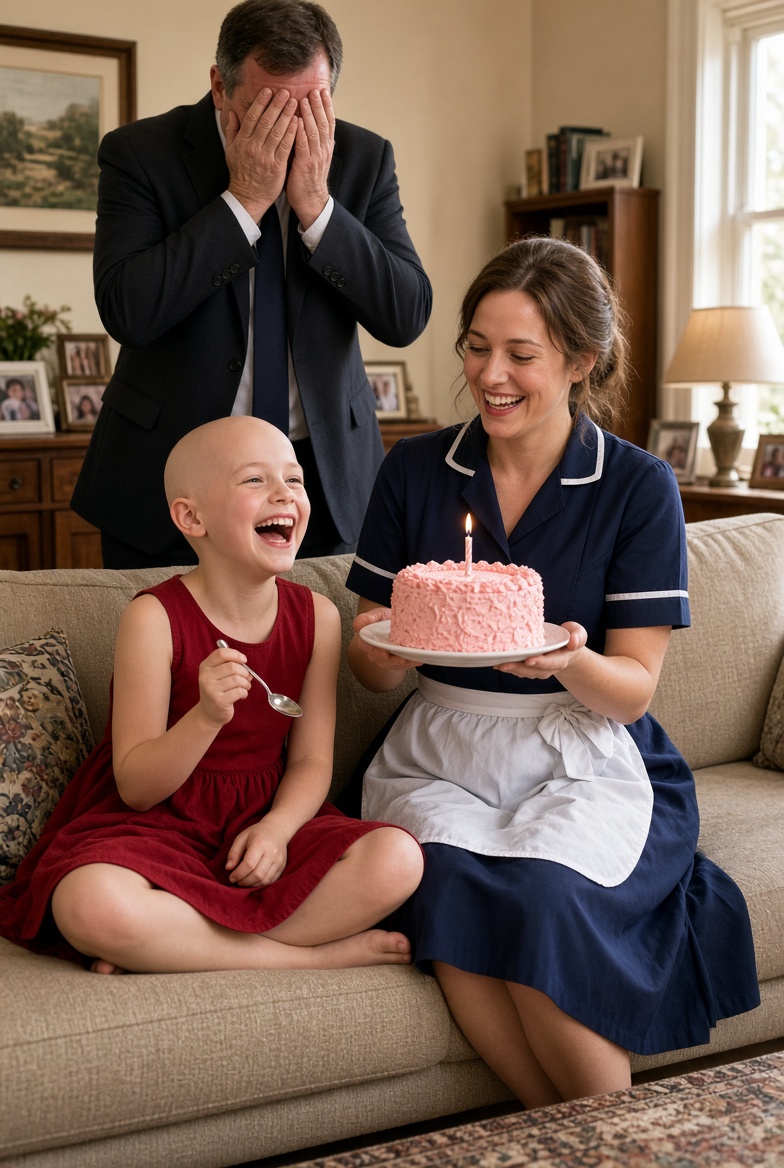
Months passed. Isla did not merely stabilize. She returned. Color came back into her hair. She ran, carefully at first, then with the heedless joy of a child who has decided the ground will hold. The physicians wrote “spontaneous remission” in the file because they needed a phrase that fit the forms. Jonathan did not argue with the phrase. He knew what he had witnessed.
His life rearranged itself around the knowledge. He established a foundation that funded both clinical trials and the slower work no grant committee knew how to measure: rooms where chronically ill children could be told stories that treated them as participants rather than patients, programs that trained caregivers to sit on the floor, research that asked what belief and belonging did to cortisol and sleep and the will to eat. The glass estate, once a monument to control, became a place where pediatric specialists and village midwives and illustrators sat at the same table and tried to learn one another’s language.
Rosa did not leave. The agency contract expired and was never renewed. She had a room that faced the garden. Isla called her Tía. Jonathan, who had once believed staff should remain invisible, learned the particular peace of a house that contained more than one adult who knew how to stay.
Years later Isla Hale walked across a stage in a dark green dress and accepted a degree she had chosen for herself. She was tall, clear-eyed, still in possession of the stubborn mouth. In her apartment there was a small wooden box. Inside it were river stones with faded suns and a hummingbird drawn in a child’s hand, and three twig figures whose fabric had grown soft with time. She took them out when she needed to remember that survival is sometimes a communal act.
Jonathan Hale still ran companies. He still signed documents that moved astonishing sums. But he had learned the limit of purchase. Time cannot be bought. Presence can be given. Hope is not a luxury item. Love, practiced daily and without audience, is the only currency that compounds when everything else fails.
And the courage to believe—when the folders are closed and the specialists have gone home and a child is still looking at you as if you might yet become the kind of father the story requires—that courage is the one thing he would, and did, give everything for.
