

THE WOMAN I THOUGHT I HAD LEFT BEHIND
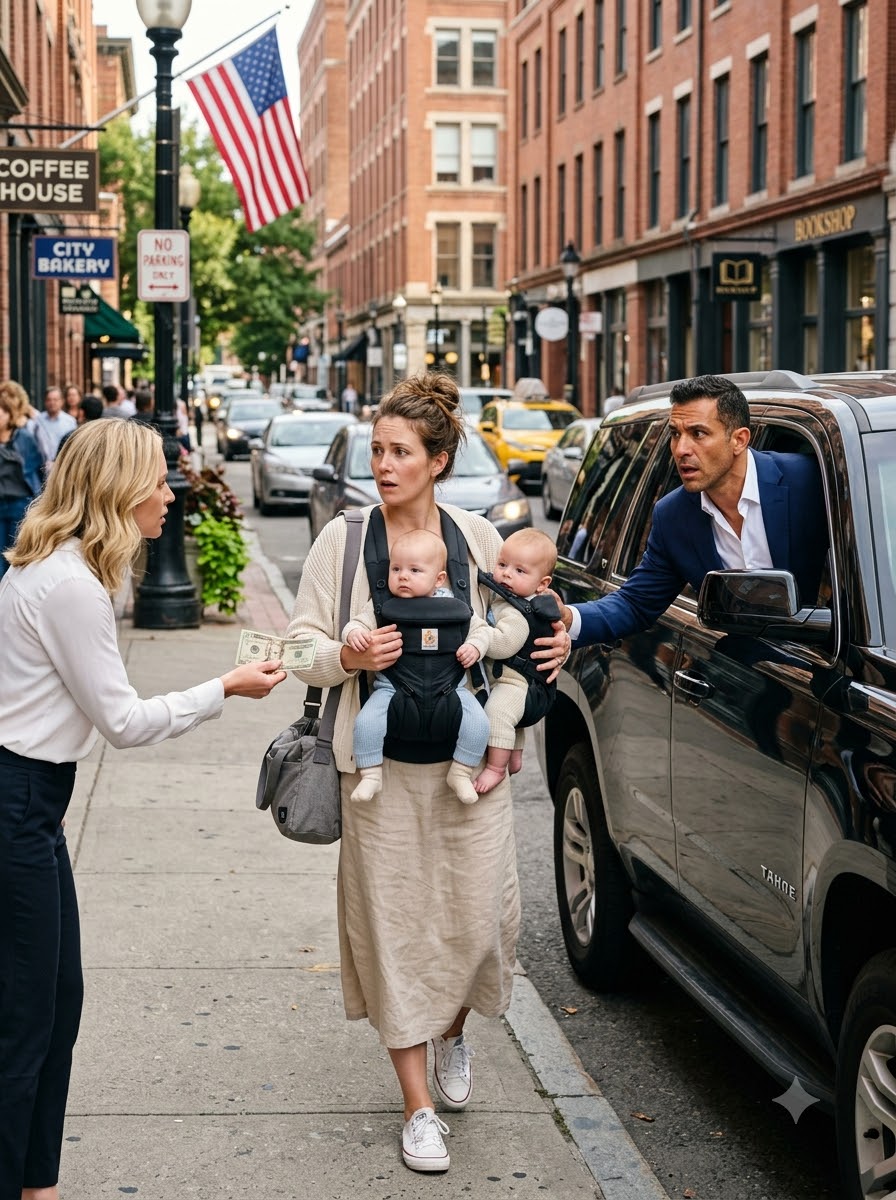
I nearly laughed when I spotted my former wife walking by herself along a peaceful country road outside Lexington, Kentucky.
For almost a year, I had convinced myself that Tessa Monroe was responsible for destroying our marriage. I trusted the photographs, the missing family jewelry, and the messages that supposedly proved she had been unfaithful. I accepted every carefully constructed piece of evidence because believing it was easier than facing the possibility that I had made a terrible mistake.
Then I saw the two infant carriers secured against her chest.
I slowed my SUV.
Tessa looked worn out, yet she was still the same woman who had once understood me better than anyone. She glanced at my expensive vehicle, then looked at me, and there was no anger in her eyes.
Only disappointment.
Somehow, that hurt even more.
“Tessa?”
She shifted one of the sleeping babies.
“You should keep driving, Beckett.”
I stared down at the tiny faces.
One boy had my pale hair. The other had the same little crease between his eyebrows that showed up in every childhood picture of me.
My stomach knotted.
“Whose children are those?”
Tessa held my gaze for several long moments.
“You really don’t know?”
That question stayed with me long after she disappeared down the road.
Within hours, I found myself sitting opposite Curtis Hale, the private investigator I had hired during our divorce.
And for the first time, Curtis seemed afraid to look directly at me.
THE NOTE THAT CHANGED EVERYTHING
Curtis reached into a locked drawer and pulled out a weathered envelope.
“I should have told you sooner,” he said.
“Told me what?”
He spread several documents across the desk.
Hospital records.
Courier receipts.
Copies of emails.
Then he placed a handwritten note in front of me.
I read it twice.
If Beckett ever discovers the twins, make certain he never learns what happened to the third child.
I stopped breathing.
“Third child?”
Curtis nervously rubbed his palms together.
“Tessa gave birth to triplets.”
The entire room seemed to shift.
Three children.
Not two.
Three.
I shot to my feet so quickly that my chair scraped against the floor.
“Where is the third baby?”
“I don’t know.”
“Then why do you have this?”
Curtis confessed that after my divorce, my fiancée, Arden Vale, had privately contacted him. She wanted any effort by Tessa to reach me quietly redirected or ignored.
Curtis had taken money.
Eventually, he discovered that some of the evidence against Tessa had been fabricated.
By that point, he was too scared to reveal what he had done.
“Arden wasn’t working alone,” he said.
I stared at him.
“Who else?”
He paused.
Then he gestured toward the handwritten note.
I knew the handwriting before he even spoke the name.
My mother.
Lenora Sloan.
The woman who had spent my entire childhood drilling into me that the Sloan family name had to be protected at any cost.
THREE NAMES I SHOULD HAVE KNOWN
That evening, I located Tessa at a small roadside motel near Nicholasville.
I kept several yards between us when she came outside.
She carried one baby while the other slept inside a carrier beside her feet.
“I know about the triplets,” I said.
Tessa became completely still.
“Who told you?”
“Curtis had records.”
Her expression hardened.
“Of course he did.”
I told her that I knew there had been a third baby.
For several moments, she couldn’t bring herself to look at me.
Finally, she whispered, “Her name is Maisie.”
Her.
A daughter.
My daughter.
I slowly lowered myself onto the curb.
Tessa glanced down at the little boy in her arms.
“These are Owen and Miles.”
Owen.
Miles.
Maisie.
My children had names, birthdays, medical histories, favorite ways of being held—and I knew nothing about them.
“What happened to Maisie?”
Tessa’s eyes filled with tears.
She told me the babies had arrived prematurely. Maisie was the smallest and required specialized care.
While Tessa was recovering and barely able to remain awake, documents were brought to her.
She thought she was authorizing a medical transfer.
Instead, Maisie vanished into a private placement system.
Then my mother came to her hospital room.
“Lenora told me you knew,” Tessa said. “She said you agreed it was better if Maisie was cared for somewhere else.”
I felt physically ill.
“I never knew.”
Tessa slowly nodded.
“I believe that now.”
Those words should have brought me relief.
They didn’t.
Because she had once pleaded with me to believe her, and I had refused.
THE LIE WAITING IN MY HOUSE
That night, I went home and acted as though nothing had changed.
Arden stood waiting near the staircase in a silk robe.
Wedding flowers covered the entry table. We were supposed to marry in less than a month.
She smiled when I walked inside.
“Where have you been?”
“Driving.”
Her eyes shifted toward the bags in my hands. Diapers, formula, and wipes Tessa had asked me to purchase.
“What are those?”
“Donations for a family pantry.”
Something briefly flickered across Arden’s face.
Then it vanished almost instantly.
I studied the woman I had trusted after my marriage ended.
“Why do you hate Tessa so much?”
Arden gave a light laugh.
“I don’t hate her. She caused enough trouble on her own.” “What exactly did she do?”
“Beckett, seriously? She embarrassed you. She took things from your family. She was seeing someone else.”
The words sounded scripted now.
I quietly moved away from her.
“I’m tired.”
Arden’s expression shifted.
“Your mother warned me this might happen if you saw Tessa again.”
There it was.
My mother.
Again.
I said nothing.
That night, I shut myself inside my study and called Simone Park, an attorney who had represented me years before but had no ties to Sloan Enterprises.
I told her everything.
When I finished, Simone remained silent.
Then she said, “Do not confront Arden. Do not use your company email. And especially do not tell your mother what you know.”
“I need to find my daughter.”
“Then we find evidence before we make noise.”
A TRANSFER THAT WASN’T MEDICAL
The next morning, Tessa permitted me to accompany her to Owen and Miles’s pediatric appointment.
It was the first time anyone had called me their father.
Those two words nearly shattered me.
Their doctor, Dr. Marissa Cole, waited until the babies were with a nurse before closing the office door.
“There’s something you both need to see.”
She set an archived transfer form on the desk.
Maisie’s original destination had been changed.
Beneath the newer stamp, faint lettering was still visible.
Wellington Family Services.
My heart dropped.
Tessa noticed immediately.
“You know that name.”
I nodded.
Wellington was a private family organization my mother had supported for decades.
Publicly, it was known for helping families through difficult situations.
Privately, wealthy families relied on it when they wanted sensitive matters handled discreetly.
“My mother served on its advisory council,” I said.
Before Tessa could respond, my phone vibrated.
A photograph arrived from Arden.
It showed the documents I had hidden inside my home office.
Then her message appeared.
You should have talked to us before searching through family business.
A second message followed.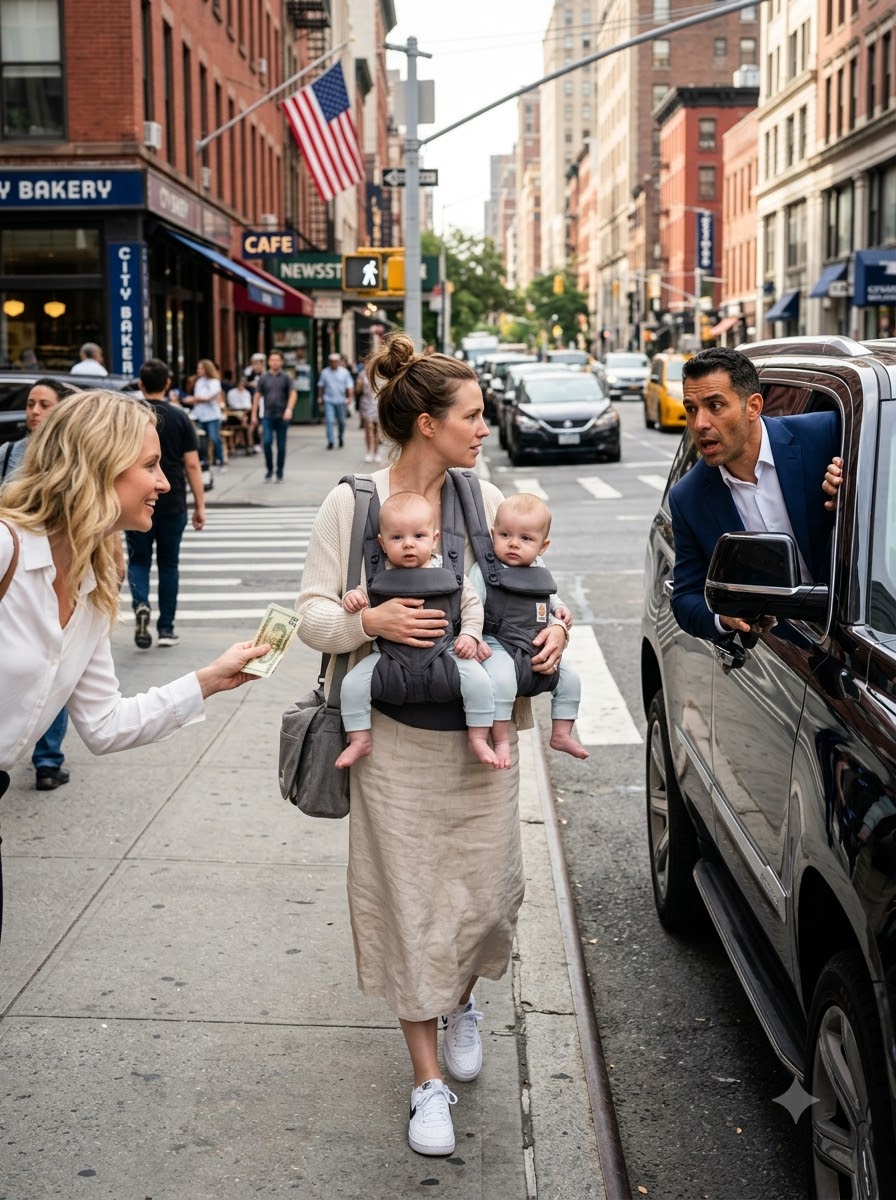
This one came from my mother.
Come to the estate tonight. Alone. There are things about your father you were never told.
MY FATHER’S LAST SECRET
Simone pleaded with me not to meet my mother without a plan.
So I went—but she knew where I was, and my phone stayed recording inside my jacket.
Lenora was waiting in the sitting room of our family estate.
Arden was already there.
I looked between them.
“Where is Maisie?”
Arden’s face turned pale.
My mother remained expressionless.
“Who told you that name?”
That alone gave me the confirmation I needed.
Arden spoke first.
She confessed to arranging the false photographs and helping build the story that Tessa had betrayed me.
“Why?” I asked.
Tears filled her eyes.
“Because she always had what I wanted.”
My mother’s voice interrupted her.
“Enough.”
I faced Lenora.
“You arranged Maisie’s transfer.”
“I arranged stability.”
“You separated a baby from her mother.”
“I protected this family.”
That sentence finally revealed how differently we understood the meaning of family.
Then I asked about my father.
Everett Sloan had died six years earlier after collapsing in his study. I had always believed it was an unavoidable medical emergency.
My mother finally confessed that he had discovered Wellington’s private placement records.
He wanted them exposed.
He planned to remove Lenora from the family trusts.
“Your father was going to destroy everything generations had built,” she said.
“He was trying to stop something wrong.”
Lenora looked away.
Then she admitted they had argued on the night he collapsed.
She had delayed calling for help because she feared what he intended to expose.
I could barely absorb what she was saying.
Then she made a mistake.
“You sound exactly like him.”
I looked toward my father’s portrait above the fireplace.
Suddenly, I remembered something Tessa had once told me: not long after Everett died, she had watched Lenora take a letter addressed to me from his study.
I walked toward the portrait.
Taped carefully behind the wooden frame was an envelope.
My name was written across it in my father’s handwriting.
Inside were a letter and an old brass key.
The message was simple.
The Sloan name is not our legacy. People are.
He explained that evidence tied to Wellington had been hidden beneath the floor of the old groundskeeper’s cottage behind the family orchard.
Then came one sentence I would never forget.
If you are ever forced to choose between protecting appearances and protecting a child, choose the child.
Every time.
THE BOX BENEATH THE FLOOR
Simone joined me at the cottage that night.
Using my father’s key, we entered the neglected building.
Dust covered everything.
Behind the pantry shelves, we discovered a loose floorboard.
Beneath it sat a metal box packed with records.
Transfers.
Payments.
Private agreements.
Medical documents.
And finally, a file carrying my daughter’s name.
Maisie Sloan Monroe.
A photograph was clipped inside.
She was tiny, wrapped in a hospital blanket.
I touched the edge of the photograph.
“That’s my daughter.”
Simone kept reading.
A temporary placement had been arranged with Daniel and Rebecca Winslow, a married couple living outside Louisville.
They had been told Maisie’s mother was unable to care for her.
“They may not know what happened,” Simone warned. That mattered. Tessa had been betrayed.
But I didn’t want another innocent family torn apart because of the damage mine had caused.
I drove straight to Tessa.
She opened the door before I could knock again.
“You found something.”
I nodded.
The color drained from her face.
“Is she okay?”
“She’s alive.”
Tessa covered her mouth.
For almost a year, she had lived without knowing whether she would ever hold her daughter again.
Now hope came rushing in so suddenly that she could barely carry its weight.
THE DOOR IN LOUISVILLE
The next morning, with Simone directing every step, Tessa and I stood outside a brick house on a quiet Louisville street.
Rebecca Winslow answered the door.
When Simone explained why we had come, confusion quickly turned to fear in Rebecca’s expression.
Then a baby’s laughter came from somewhere inside.
Tessa froze.
Daniel walked out of the living room carrying a little girl.
Maisie.
I knew instantly.
Tessa whispered her name.
“Maisie.”
The little girl turned toward the voice.
Rebecca began crying.
“They told us her mother had disappeared from her life.”
“I never gave her away,” Tessa said.
Daniel looked horrified.
They handed Simone the paperwork.
Everything appeared legitimate.
Tessa’s signature was shown on the final consent page.
But it wasn’t hers.
Rebecca covered her face with both hands.
“We didn’t know.”
Tessa looked around their home.
Pictures of Maisie filled the shelves.
Her first holiday.
Her first smile.
Food smeared across her cheeks.
Sleeping peacefully against Rebecca’s shoulder.
Tessa cried, but when she spoke, there was no bitterness in her voice.
“I can see that you love her.”
Rebecca nodded through her tears.
“More than anything.”
A painful reality settled over everyone.
Someone had taken a year away from Tessa.
But during that same year, Maisie had been loved and cared for.
So Tessa made a choice that showed me once again how badly I had underestimated her.
She refused to turn Maisie’s world upside down overnight.
“I want my daughter back,” she said. “But I want her to feel safe even more.”
THE FAMILY WE BUILT FROM THE TRUTH
The months that followed were filled with hearings, paperwork, appointments, and carefully arranged visits.
The evidence from my father’s box revealed what had happened.
Arden confessed her part in destroying my marriage.
Curtis cooperated.
Former Wellington employees began coming forward with records.
My mother lost control over the Sloan family foundations and trusts.
I temporarily stepped away from the company because my children needed their father more than my office needed another executive.
Maisie slowly began spending more time with Tessa.
And because Tessa understood that love wasn’t a competition, the Winslows continued to have a place in her life.
Eventually, Maisie came home permanently.
On the first morning she woke beneath the same roof as Owen and Miles, both boys immediately began crying.
Maisie stared at them.
Then she laughed.
Tessa laughed too.
I stood in the kitchen holding a bottle, watching all three of my children create enough noise for ten people.
For the first time, the chaos felt like peace.
Tessa didn’t forgive me quickly.
She shouldn’t have.
Some evenings, we sat outside together after the children had gone to sleep.
One night, she said, “I don’t know what you and I are supposed to become.”
“Neither do I.”
“I can’t return to who we were.”
“I’m not asking you to.”
She looked at me.
“Then what are you asking for?”
I considered my answer carefully.
“The chance to keep showing up.”
Months later, she reached for my hand for the first time.
It wasn’t a reunion.
It wasn’t a promise.
It was simply evidence that trust, once shattered, could sometimes grow again into something different.
A year after I first saw her walking along that lonely road, Tessa and I returned to the same area with all three children.
Near the small pantry that had helped her when she had nowhere else to turn, we opened a family support center funded through my personal trust.
Tessa called it Maisie’s House.
No Sloan logo.
No portraits of wealthy ancestors.
No speeches about redemption.
Just diapers, formula, legal assistance, counseling referrals, and people willing to listen before passing judgment.
As I watched Tessa stand beneath the new sign with Maisie in her arms while the boys played nearby, I finally understood my father’s letter.
Legacy was never a name carved into a building.
It was the people we protected when protecting them demanded something from us.
Tessa stepped beside me.
“Ready?”
I smiled.
“For what?”
She nodded toward our children.
“Whatever comes next.”
This time, I didn’t walk ahead of her.
We moved forward together.
Sometimes the most dangerous lie isn’t the one someone else tells us, but the one we accept too quickly because it protects our pride from having to question itself.
Trust can vanish through one painful decision, but rebuilding it takes hundreds of quiet choices made consistently when nobody is watching.
A family name, reputation, or fortune means very little if preserving it requires sacrificing the dignity and well-being of the people that family is meant to protect.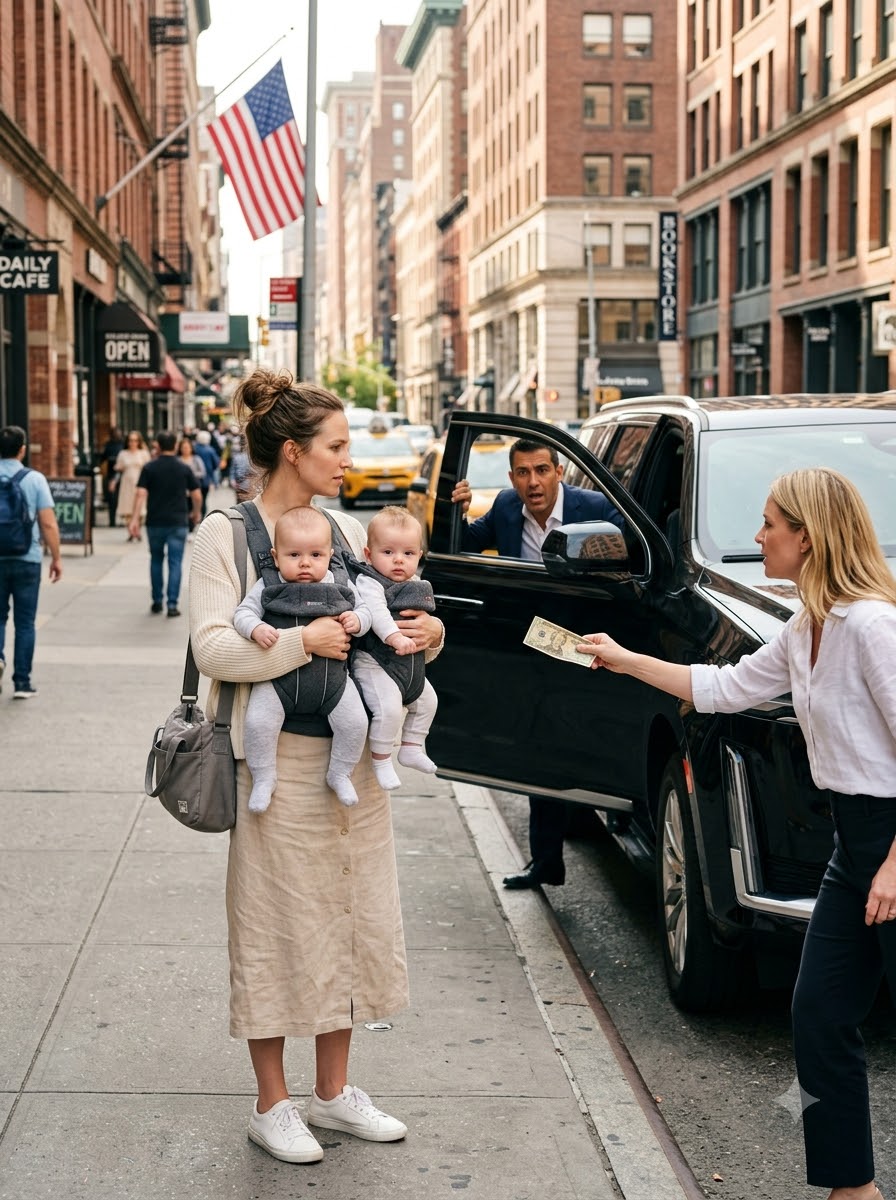
Apologies matter most when they are followed by changed behavior, patience, and the willingness to accept that forgiveness may come slowly—or may never come at all.
Love isn’t proven by demanding that someone forget what happened; it is proven by becoming safer, kinder, and more honest because you finally understand what your choices cost them.
Children should never become pieces in an adult battle over pride, money, or appearances, because their need for stability matters more than anyone’s desire to be right.
Sometimes doing what is best for a child means respecting every person who has genuinely loved that child, even when their presence reminds us of time we can never recover.
Real strength isn’t controlling every outcome; sometimes it means admitting you were wrong, listening without defending yourself, and allowing another person to decide what they need.
The past cannot always be restored to what it once was, but truth can still give people the opportunity to build something healthier than the life that existed before everything fell apart.
The legacy we leave behind isn’t measured by the size of our homes, businesses, or bank accounts, but by whether the people closest to us felt protected, respected, and loved when it mattered most.
