

Part 1: WHERE THEY REALLY WENT
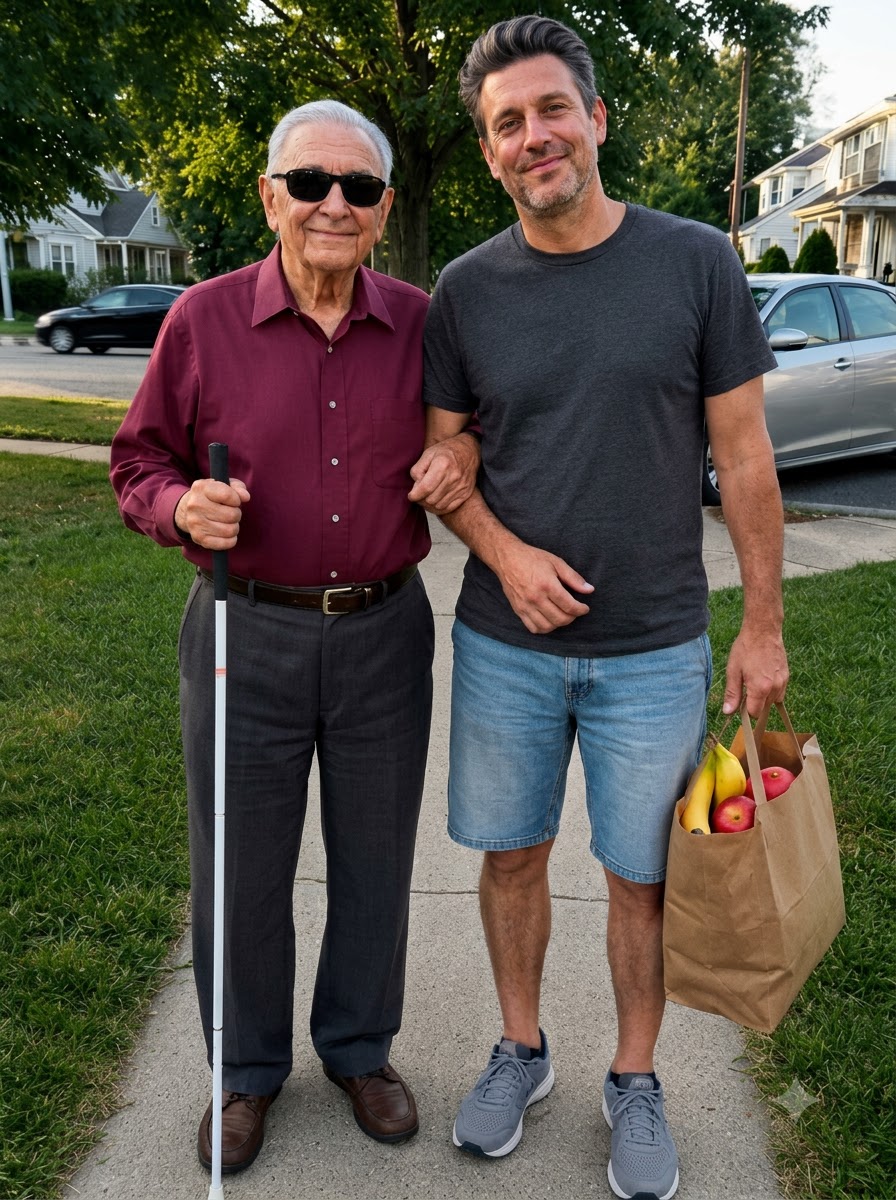
For eight years, I believed my father spent every Thursday going to medical appointments, grocery shopping, and having lunch with our neighbor, Ben.
I was wrong.
Ten years earlier, Dad had been diagnosed with glaucoma. By the time doctors discovered it, the damage was severe, and within two years, he could see little more than shadows.
Still, he refused to leave the house where he had lived with my mother.
“The hallway still has the dent from when you crashed your bicycle,” he would tell me. “Leaving would feel like losing forty years with her again.”
I lived nearly a thousand miles away with two children, a demanding career, and a busy marriage. Dad could handle most things by himself, but he needed transportation for checkups, medication, and shopping. Ben, his retired neighbor and longtime friend, offered to help.
Every Thursday, I paid him to drive Dad wherever he needed to go.
The arrangement gave me peace.
Dad and I spoke every day. He told me about meals he prepared by touch, terrible audiobooks, and checkers games Ben supposedly lost on purpose. Sometimes, I could hear Ben arriving in the background.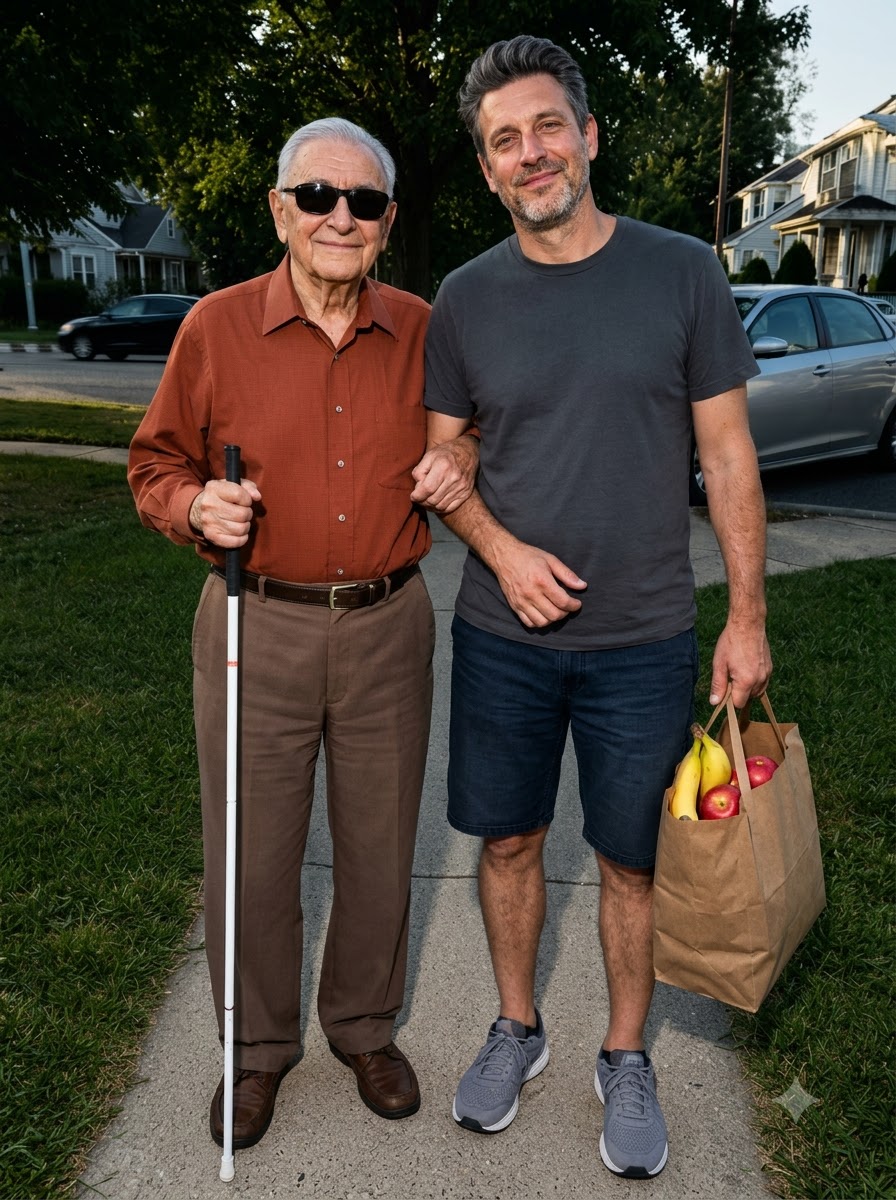
“Your royal carriage awaits,” he would announce.
Dad always replied, “It smells like old coffee and poor decisions.”
Their laughter made the distance between us feel smaller.
Then Dad died peacefully in his sleep.
The funeral passed in a blur. People brought food, shook my hand, and told me how proud he had been of me. But I kept thinking about our last phone call.
“Thursday was productive,” he had said.
When I asked what that meant, he laughed and told me not to interrogate an old man. I promised to call him the following day.
There was no following day.
After the burial, I stayed beside the grave as light rain began to fall.
Ben approached carrying a sealed envelope with my name written in Dad’s uneven handwriting.
His hands trembled as he held it out.
“Your father made me promise to tell you where we really went.”
I assumed he meant casinos, hidden restaurants, or some harmless adventure Dad had kept secret because I worried too much.
Ben shook his head.
“I wasn’t only driving him. The places mattered, but what we were doing there mattered more.”
Then he told me about Claire.
Claire was Ben’s only daughter. They had not spoken properly in years. According to Ben, every conversation ended in an argument.
Dad noticed how quiet Ben became whenever I mentioned my own children.
One Thursday, Dad finally asked him what had happened.
Ben blamed Claire. He said she was stubborn, rarely visited, and had created a life that excluded him.
Dad refused to accept the excuse.
Eventually, Ben admitted he had spent years making critical comments about Claire’s career, her marriage, and the way she raised her family.
He claimed he only acted that way because he missed her.
Dad’s response was blunt.
“You miss many things. You miss your daughter, and you missed your chance to make peace with her.”
That same morning, Dad ordered Ben to drive to the public library.
Part 2: DAD’S SECRET PROJECT
At the library, a patient employee taught Ben how to send photographs, record videos, and use messages without sounding angry or judgmental.
Dad sat nearby, listening.
Whenever Ben complained, Dad reminded him that Claire had spent years learning things to impress her father.
He could learn something for her.
The following week, they went to a bakery and bought ingredients for cinnamon rolls—the same treat Ben had made when Claire was a child.
They practised in Dad’s kitchen.
The first batch burned.
The second was raw in the middle.
Ben blamed the oven.
Dad blamed the man who had forgotten to set the timer.
Then came the apologies.
Ben recorded one in the car. Dad deleted it.
He tried again over lunch. Dad deleted that version too.
Finally, Ben demanded to know what Dad expected him to say.
“Stop defending yourself,” Dad told him. “Tell her why she matters to you.”
The envelope Ben gave me contained several letters.
He had read each one aloud to Dad. Dad told him which parts sounded dishonest, which were excuses, and which revealed what he truly felt.
The final letter had no corrections.
Dad said it was ready.
Ben still couldn’t deliver it.
Then Dad gave him one final instruction: after his death, I was supposed to make sure Ben finished what they had started.
Anger rose inside me.
I had buried my father less than an hour earlier, and Ben was already giving me another responsibility.
I pushed the envelope back.
“I cannot do this for you today.”
Ben nodded.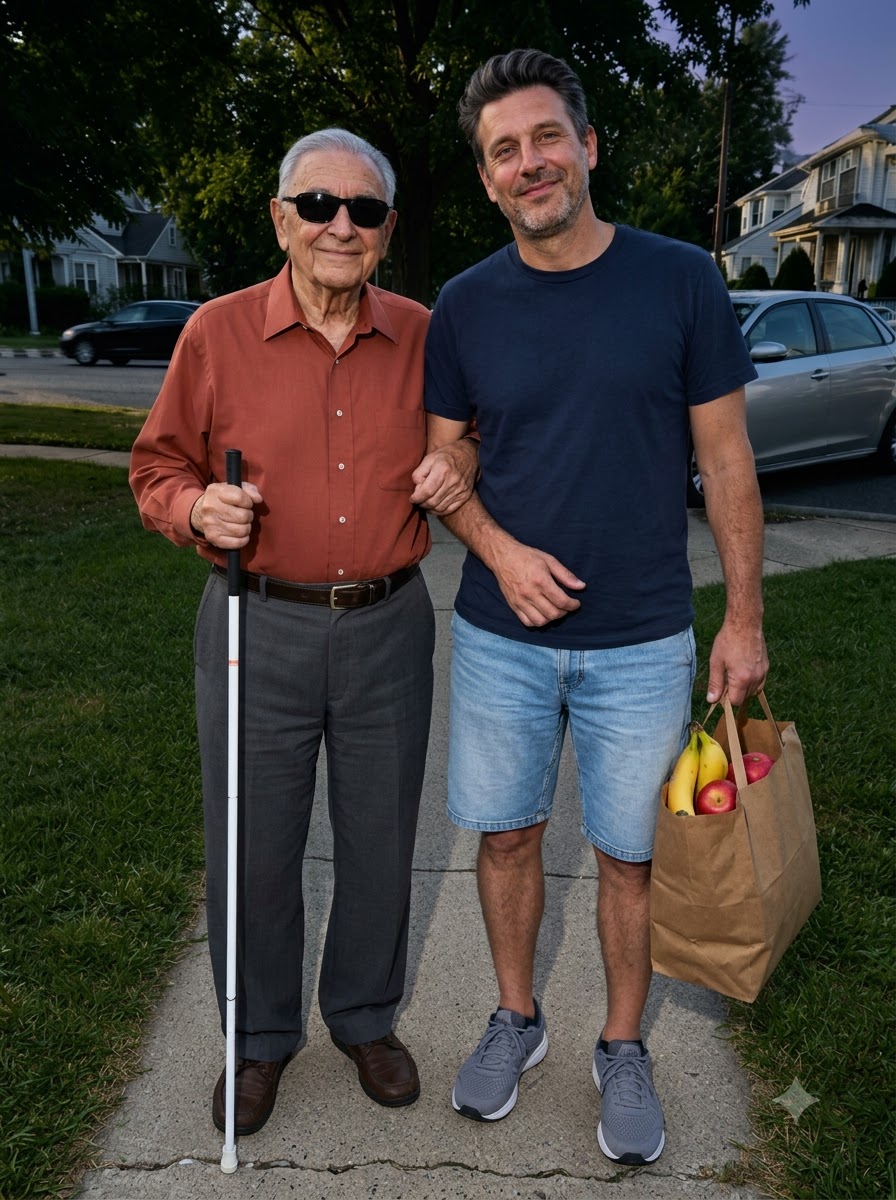
“There is another note,” he said. “That one is for you.”
I opened it because I couldn’t refuse one final message from Dad.
He wrote that Ben had given him freedom every Thursday without ever making him feel helpless.
Ben described curbs, doorways, food, and people so Dad always knew what was around him. He waited during appointments but allowed Dad to answer the doctors himself. He offered help without making him feel small.
Dad explained that helping Ben repair his relationship with Claire was his way of returning that dignity. Then I reached the line that broke me.
You may believe I was hiding something. I was.
I was hiding how useful I still felt.
I read it three times.
Those Thursdays had not only given Dad transportation.
They had also given him purpose.
He was still advising, teaching, and helping someone. Even as his vision disappeared, he had discovered a way to influence another family’s future.
I looked at Ben.
“I will go with you,” I said. “But I will not speak for you. I will only stand beside you, the way you stood beside Dad.”
The next morning, we drove three hours to Claire’s home.
Ben repeatedly practised his apology.
Every version started with regret and ended with an explanation for why he was not completely responsible.
Each time, I stopped him.
“That part is an excuse.”
By the fourth attempt, he looked as though he wanted to throw the letter out the window.
I locked it inside the glove compartment.
When we arrived at Claire’s house, she answered the door wearing gardening gloves.
She had Ben’s eyes and that same stubborn expression.
“You should have called,” she said coldly.
Ben nearly backed away.
I stood beside him and quietly repeated Dad’s instruction.
“Tell her why she matters.”
PART 3: ONE THURSDAY CALL
Ben handed Claire the letter and a box of cinnamon rolls.
“I spent years protecting my pride,” he said. “I waited for you to return because admitting I hurt you would mean admitting I was wrong.”
He swallowed.
“I was wrong. More importantly, I made you feel as though you did not matter.”
Claire did not hug him.
She did not forgive him.
For several moments, she looked as though she might close the door.
Then she opened the box and smelled the cinnamon rolls.
“They may be terrible,” Ben admitted. “His father refused to finish one.”
Claire looked at me.
“Your dad helped him do this?”
I nodded.
“That makes sense,” she said. “This old badger would never apologise on his own.”
She opened the gate.
We spent nearly two hours talking on the porch.
Ben told her about the library, the bakery, the failed recordings, and the afternoons spent rewriting letters in Dad’s kitchen.
I told her about my daily calls with Dad, his terrible jokes, and the empty chair still waiting inside his house.
Talking about him eased my grief.
Eventually, Claire brought out a small wooden box filled with unsigned postcards she had received over the previous months.
One said:
Your father remembers more than he knows how to say.
Another read:
He still makes cinnamon rolls badly.
A third said:
Pride takes its toll. I think he is growing tired of it.
Ben stared at them in disbelief.
He had not sent them.
Dad had.
He had been preparing both sides for reconciliation.
Claire held Ben’s letter against her chest.
“I cannot pretend everything is repaired,” she said. “I do not trust you yet.”
Ben nodded.
“You do not have to.”
She studied him for a moment.
“One phone call every Thursday. Start there.”
“I will.”
During the drive home, Ben apologised for continuing to accept my payments after the Thursday trips became personal.
He explained that Dad insisted I would become suspicious if the arrangement changed.
Dad had managed both of us until the end.
The following Thursday, I was still at his house sorting through tools and clothes that carried his familiar scent.
At nine o’clock, Ben’s car appeared outside.
He had come out of habit.
I was waiting on the porch with two coffees.
“I assume the royal carriage still operates on Thursdays,” I said.
Ben looked toward Dad’s empty window.
“The carriage feels rather empty now.”
We decided to drive anyway.
He passed the library, the bakery, and Dad’s clinic.
Then his phone rang through the car speakers.
Claire’s name appeared on the dashboard.
Thursday.
Exactly as promised.
Ben reached for the button, then paused to rehearse his opening.
I touched his wrist.
“No rehearsal.”
He nodded and answered.
“Hello, Claire.”
His voice shook.
For a moment, the car felt painfully empty.
Then Claire replied:
“Hello, Dad.”
Ben exhaled as though he had been holding his breath for years.
I looked toward the passenger seat where my father should have been and unfolded his letter one final time.
He had spent his final years proving that losing his sight had not made him powerless.
Every Thursday, he helped a stubborn father find his way back to his daughter.
And through that, he taught me how to keep helping even after he was gone.
