

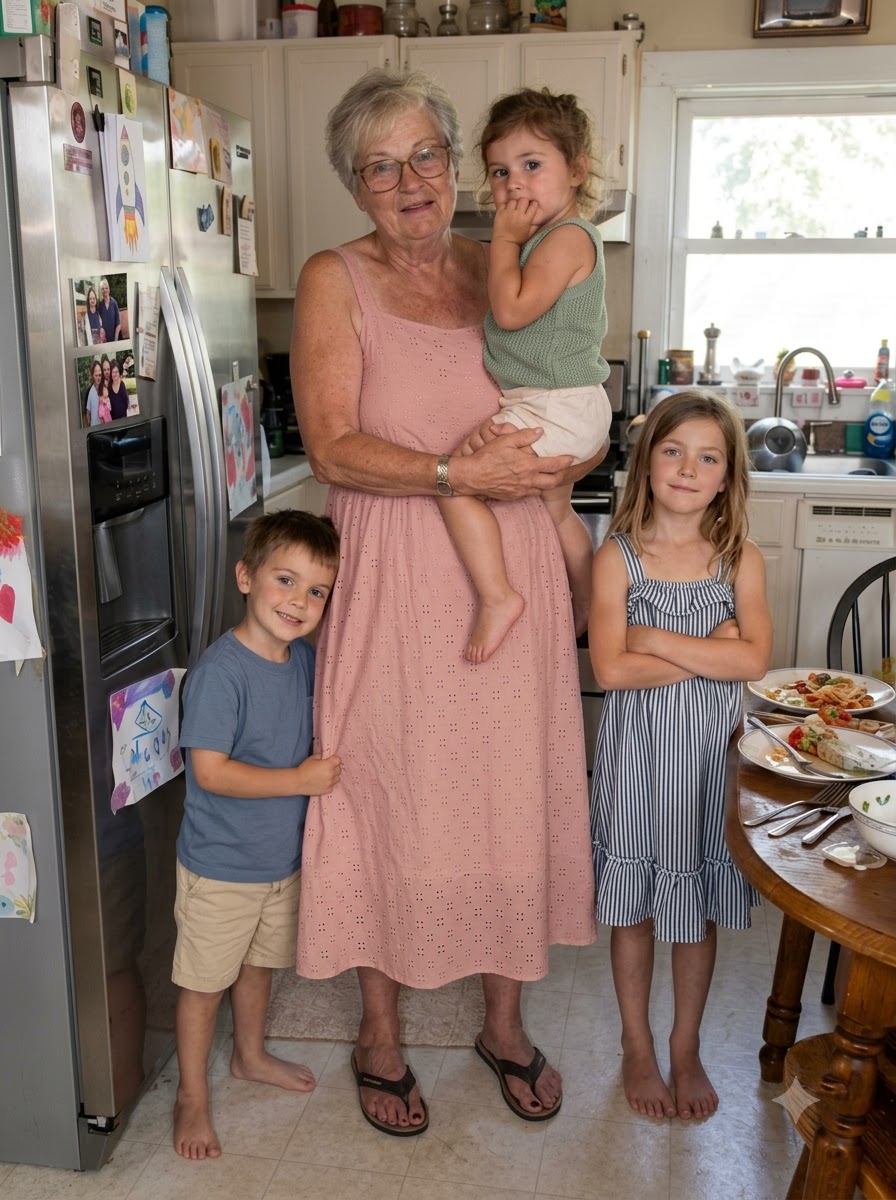
My mother, Lenette, lived just a few streets away from my husband’s older sister, Sloane.
At first, I assumed their arrangement was convenient for everyone.
Sloane could drop by whenever Mom needed help carrying something. Mom could attend the children’s school activities without having to drive across town. Family dinners were simpler because everyone lived within a few streets of each other.
What I hadn’t realized was that Sloane never actually asked whether Mom was available.
She only asked whether Mom was home.
To Sloane, those were apparently the same thing.
One Tuesday evening, a meeting at work finished earlier than expected. I stopped to pick up chicken soup and fresh bread from Mom’s favorite café, intending to surprise her.
Her car was sitting in the driveway, but when I rang the doorbell, there was no response.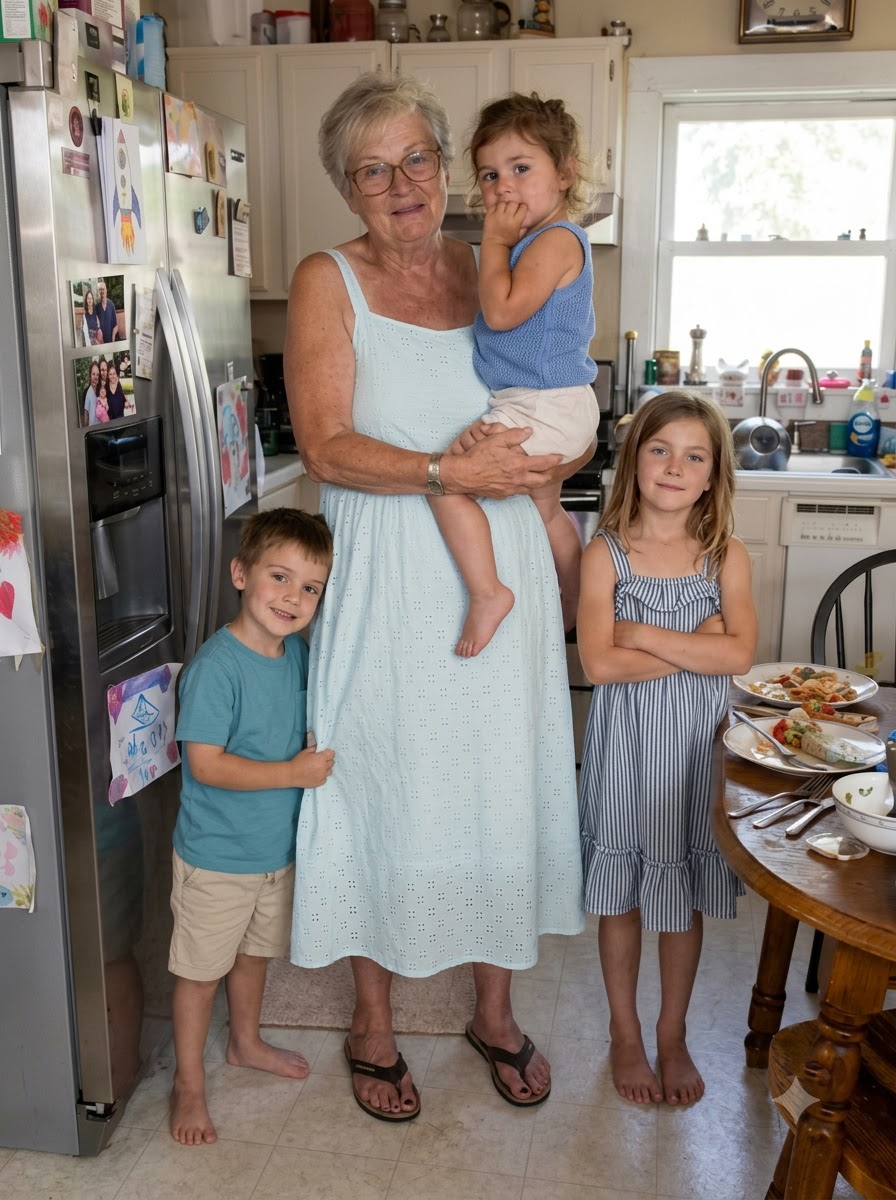
I tried the handle.
The door was unlocked.
Before I could call her name, something crashed inside the kitchen.
A child screamed.
“He broke my castle!”
Another voice yelled back, “It was in my way!”
I rushed down the hallway and froze in the kitchen doorway.
Sloane’s three children were scattered everywhere.
Eight-year-old Jasper was crouched behind the dining table with a broken plastic tower in his hands. Five-year-old Millie was crying beside a heap of wooden blocks. Two-year-old Teddy was standing on a chair near the stove, reaching toward a pot of boiling pasta.
My mother stood between them with one hand pressed against her lower back.
A bowl of cereal was spread across the floor. Wet clothes had been left sitting in the washing machine. Something was burning inside the oven.
Mom looked at Teddy, then the stove, then Millie.
She looked overwhelmed, as though she couldn’t decide which danger needed her attention first.
I set the food on the counter and immediately lifted Teddy down from the chair.
“Mom, what is going on?”
“Please turn down the stove,” she said weakly.
I pulled the pot away from the flame and opened the oven. A tray of garlic bread had burned black around the edges.
When I turned back, Mom was slowly lowering herself into a chair.
Pain tightened her expression.
“What are Sloane’s children doing here?”
“She needed someone to watch them.”
“For how long?”
Mom rubbed her lower back.
“She said an hour.”
I glanced at the clock.
It was nearly six thirty.
“What time did she bring them?”
“A little after seven this morning.”
For a moment, I thought I had heard her incorrectly.
“She left three children here for eleven hours?”
Mom looked toward the children before lowering her voice.
“She was supposed to come back sooner.”
“Where is she?”
“I don’t know.”
“You don’t know?”
“She stopped answering.”
I picked up Mom’s phone from the counter.
There were five unanswered calls to Sloane and several unread messages.
Mom’s last message said:
My back is getting worse. Please tell me when you are coming.
Sloane had responded almost two hours later.
Relax. I said I’d be there eventually.
There was no apology.
No question asking whether the children had eaten.
Not even a thank-you.
I set the phone down on the table.
“How often does this happen?”
Mom looked uncomfortable.
“Not that often.”
“Mom.”
She lowered her eyes to her hands.
“Maybe two or three times a week.”
My stomach knotted.
“You told me your back had been getting worse because of the weather.”
“It has.”
“Is that the only reason?”
She said nothing.
I knelt beside her chair.
“How often are you lifting Teddy?”
“He is still little.”
“That is not what I asked.”
Shame appeared in her eyes.
“Sometimes Sloane brings them four days in one week. But not every week.”
“Four days?”
“She always says it will only be an hour.”
“And then?”
“She goes to the gym. She shops. Sometimes she meets friends.”
“Why do you keep agreeing?”
Mom’s lips began to tremble.
“I don’t always agree.”
I remained silent.
“What do you mean?”
“Sometimes she comes early and rings the bell until I open the door. The children already have their backpacks. Then she says she has an appointment and rushes back to her car.”
“You could tell her no.”
“I have tried.”
“What does she do?”
Mom glanced toward the hallway, where Jasper was helping Millie rebuild her castle.
“She says the children are already here. What am I supposed to do? Shut the door in their faces?”
That was the moment everything became clear.
Sloane had never really been asking Mom for help.
She had been putting the children in front of her so refusing became almost impossible.
I cleaned the kitchen while Mom rested. Then I served the children the soup I had brought.
At seven forty, Sloane finally came through the front door without knocking.
She was dressed in fitted workout clothes and carrying three shopping bags.
“Kids, get your shoes,” she called.
Then she noticed me. “Oh. Calla.”
“Where have you been?”
She glanced at the bags.
“Out.”
“You left your children here for more than twelve hours.”
“I asked Lenette to watch them.”
“You asked her for one hour.”
Sloane sighed as though I were taking up her valuable time.
“I got busy.”
“Mom called you five times.”
“My phone was in my locker.”
“For the entire day?”
She rolled her eyes.
“Why are you making this such a big problem? We’re family.”
Mom slowly rose to collect the children’s jackets. I noticed how heavily she leaned against the edge of the table for support.
“She can barely stand,” I said.
Sloane looked over at her.
“She looks fine.”
“She has a damaged disc in her back. Her doctor told her not to lift anything heavy.”
“Teddy is not heavy.”
“He weighs thirty pounds.”
“She loves him.”
“Loving him does not make lifting him safe.”
Sloane folded her arms across her chest.
“You act like I abandoned them with a stranger. She’s their grandmother.”
“By marriage,” I said. “And you are leaving them here several times a week without asking properly.”
“She can say no.”
“She does, and you bring them anyway.”
Sloane’s expression grew colder.
“Why are you speaking for her?”
“Because she is afraid that setting a boundary will hurt the children.”
“That is her choice.”
“No. You are using that fear against her.”
Sloane gave a brief, dismissive laugh.
I was stunned by how little guilt she seemed to feel.
“Have you ever offered to pay her?” I asked.
Her laugh grew louder.
“Pay her?”
“Yes. You would have to pay anyone else who watched three children all day.”
“I am not paying your mother.”
“Why not?”
“She is retired. She sits at home and does nothing anyway.”
The words seemed to strike Mom physically.
Her hand slipped away from the table.
For years, she had worked as a hospital receptionist. She had raised two children after my father died. Even after retiring, she volunteered at the church pantry, maintained a small garden, and checked on an elderly neighbor who could no longer drive.
Yet Sloane had reduced her entire existence to sitting at home doing nothing.
Worse, she had said it in front of the children.
Sloane picked up Teddy’s coat.
“Honestly, I’m giving her something useful to do.”
Mom turned her face away.
I watched her wipe a tear from her cheek.
Something inside me suddenly became very calm.
Arguing would accomplish nothing. Sloane had already decided that everyone else’s time was less valuable than hers.
So I smiled.
“You know what? You’re right.”
Sloane blinked.
Mom looked at me with alarm.
“Family should help family,” I continued. “Come to our house tomorrow at seven. Everett and I are hosting dinner.”
“Why?”
“I think we should arrange a better system for helping one another.”
Sloane’s expression softened.
“Finally.”
She gathered the children and headed toward the door. “Make something Jasper will eat,” she called back over her shoulder. “He hates anything spicy.”
After she was gone, Mom looked at me.
“What are you doing?”
“Giving Sloane a chance to hear herself.”
“I don’t want the family fighting because of me.”
“The family is already hurting because of this. Everyone is simply pretending not to see it.”
That evening, I called my husband, Everett.
He listened without interrupting while I explained everything that had happened.
When I repeated Sloane’s comment about Mom doing nothing, he closed his eyes.
“I’m sorry,” he said.
“Did you know she was leaving the children there?”
“I knew Mom helped sometimes. I did not know it was this much.”
“Will you support me tomorrow?”
Everett answered without hesitation.
“Yes.”
The following morning, we started making calls.
We invited Everett’s parents, two aunts, an uncle, and several cousins. I asked everyone to write down one task they would like Sloane to take care of for them during the next three months.
Aunt Maris needed someone to drive her to physical therapy twice a week.
Everett’s father wanted help cleaning out his garage.
One cousin needed Saturday childcare.
Another wanted someone to prepare meals after her surgery.
Nobody actually expected Sloane to take on those responsibilities.
That was exactly the point.
By six thirty the following evening, our dining room was packed.
An enormous calendar covered the wall behind the table.
Almost every square had Sloane’s name written across it.
Drive Aunt Maris to therapy.
Watch four children from eight until six.
Clean Dad’s garage.
Take Grandma shopping.
Prepare Sunday dinner for fourteen people.
Help cousin Nadia after surgery.
The schedule stretched across twelve weeks.
When Sloane arrived at seven fifteen, she carried a bottle of wine.
“Sorry I’m late. I had to—”
Then she noticed the calendar.
Her words stopped.
“What is that?”
She stepped closer.
Her eyes traveled from one square to another.
Then she turned around.
“Why is my name on everything?”
I pulled out a chair for her.
“Sit down. We made a family-help schedule.”
“You made a what?”
“We all have things that need to be done. Since we’re family, we decided you could handle them.”
Sloane stared at everyone.
“You volunteered me without asking?”
No one responded.
Her voice became louder.
“I have three children! I have appointments! I cannot spend every day driving people around and watching other people’s kids!”
Aunt Maris nodded.
“Exactly.”
Sloane frowned.
“What is that supposed to mean?”
I walked over to the calendar.
“Everything you just said is true. Your time belongs to you. You have responsibilities. You deserve to be asked before someone fills your day.”
“Then take my name off this ridiculous thing.”
“In a moment.”
She turned toward Everett.
“You are allowing your wife to embarrass me?”
Everett stayed in his chair.
“No. I’m allowing my wife to defend someone you have been embarrassing for months.”
Sloane’s face turned red.
“This is completely different.”
“How?” I asked.
“Your mother is retired.”
“So retirement means she no longer owns her time?”
“She loves my children.”
Mom spoke for the first time.
“I do love them.”
Sloane opened her hands.
“See?”
Mom’s voice trembled, but she kept going.
“I love seeing them when I am able. I do not love being frightened every time someone rings the bell before eight in the morning.”
The entire room went quiet.
Sloane stared at her.
“You never said that.”
“I tried.”
“You could have refused.”
“You would already have the children standing behind you. Then you would say you were late and hurry away.”
Sloane lowered her gaze.
Everett placed Mom’s small kitchen calendar on the table.
Mom had recorded every visit in the margins beside her medication schedule.
During the previous eight weeks, Sloane had left the children with her twenty-one times.
Several of those visits had lasted more than ten hours.
Everett read several entries aloud.
“Monday, seven twenty until six forty. Wednesday, eight ten until seven fifteen. Saturday, nine in the morning until after dinner.”
Sloane shook her head.
“That cannot be right.”
“It is in Mom’s handwriting,” he said.
“She must have counted days when I was only gone briefly.”
“You were gone for an average of eight hours,” I said. “She missed a medical appointment because you did not return. She stopped attending her gardening group because she never knew when you might arrive.”
Mom lowered her eyes.
That revelation affected Sloane more than anything else.
“You stopped going to the garden club?”
“I could not keep canceling at the last minute.”
“But you loved that.”
“Yes.”
For the first time, Sloane had nothing to say.
I started taking the papers down from the large calendar.
“Nobody here expects you to perform these tasks.”
Aunt Maris removed her therapy appointments.
The cousins took down their childcare requests.
Everett’s father removed the note about his garage.
Within moments, the calendar was empty.
“We wanted you to experience one evening of what Mom has experienced for months,” I said. “Other people made plans for you before asking whether you were willing.”
Sloane lowered herself into a chair.
Her anger remained, but something else had appeared beneath it.
Embarrassment.
Mom sat across from her.
“I want to see the children,” she said. “But I can offer one afternoon every other week. You must call first. If I say no, you need to accept it.”
“Every other week?” Sloane asked.
“Yes.”
“What am I supposed to do the rest of the time?”
Everett leaned forward.
“Talk to your husband. Look for an after-school program. Hire a babysitter. Do what every other parent does.”
Sloane looked around the table.
No one stepped in to save her.
No one asked Mom to surrender her boundary.
She left before dessert.
For several days, we heard nothing.
Then Mom called me one afternoon.
“Sloane asked whether she could bring the children on Saturday.”
“What did you say?”
“I told her I already had plans.”
My heart tightened.
“What plans?”
Mom laughed quietly.
“I am going back to the garden club.”
“Did Sloane argue?”
“She was quiet for a moment. Then she asked about next Saturday.”
It was a small change, but it lasted.
Sloane found an after-school program for Jasper and Millie. Her husband adjusted his work schedule twice a week. Teddy began spending two mornings at a licensed daycare.
Mom saw the children on the days she chose.
Her back gradually improved.
She stopped keeping her phone beside the shower because she was afraid Sloane might appear while she was washing her hair.
About two months later, Sloane asked Mom to meet her privately.
I did not hear their conversation, but Mom told me about it afterward.
Sloane had placed a blank monthly calendar on the kitchen table.
“I kept saying you could refuse,” she told Mom. “But I made sure refusing felt cruel.”
Mom waited.
“I acted as if your life stopped mattering when you retired.”
Then Sloane pushed the calendar toward her.
“Please mark the days you would actually enjoy having the children.”
Mom circled two afternoons.
Sloane did not add another date.
She did not negotiate.
She simply nodded and took the calendar home.
At the next family dinner, Mom reached for the bowl of potatoes.
Before she could take it, Sloane picked up the bowl.
For a moment, I thought she was about to serve Mom without asking, just as she always had.
Instead, she stopped.
“Would you like some?”
Mom smiled.
“Yes, please.”
It was an ordinary question.
But to my mother, it meant something important: her choices finally belonged to her again.
