

PART 1
I allowed my sister-in-law to use the lake house my late grandmother had left me after the venue for her wedding flooded two days before the ceremony. I asked for only three things: don’t touch Grandma’s garden, don’t damage the house, and take every piece of trash when the celebration ended. Kelsey promised. To me, those rules weren’t about controlling anyone. The house was the last place where Grandma’s presence still felt tangible, and the garden meant more than anything.
The following morning, I discovered she had ignored every one of them.
My grandmother Penny treated her garden like a family album. The peonies represented the year I was born. Lavender lined the walkway because she planted it after recovering from surgery. Roses beside the porch marked her anniversary, and white daisies appeared after my first school recital. When Grandma died, she left me the lake house with a note: “Keep it lived in.”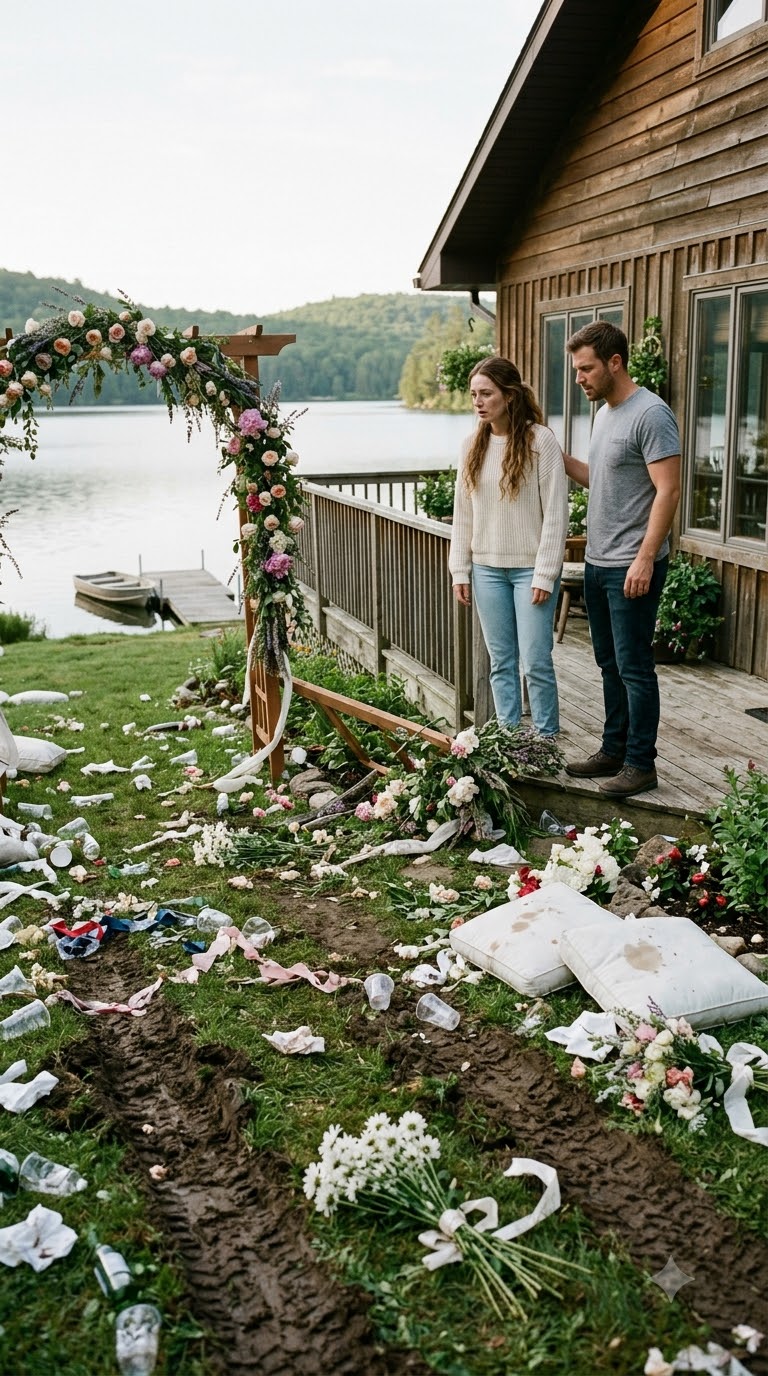
I repaired whatever broke while protecting the garden. My husband Zac understood what it meant to me. His sister Kelsey didn’t.
Two days before her wedding, Kelsey showed up in a panic. A burst pipe had ruined the restaurant reserved for her reception, and every nearby venue was unavailable. Then she opened her wedding binder to a picture of my lake house.
“We’ll have it there.”
I initially refused, but she pleaded with me, reminding us that guests were already traveling. Eventually, I agreed.
But I clearly laid out the rules.
“No cutting flowers. No heavy furniture on the soft lawn. Nothing inside gets damaged or moved. And every piece of trash leaves with you.”
“Of course,” she said.
On the morning of the wedding, my aunt suddenly collapsed. Zac and I hurried to the hospital and missed the ceremony. Before we went inside, I called Kelsey.
“The rules still apply.”
“Yes, Nadia. I remember the sacred flowers.”
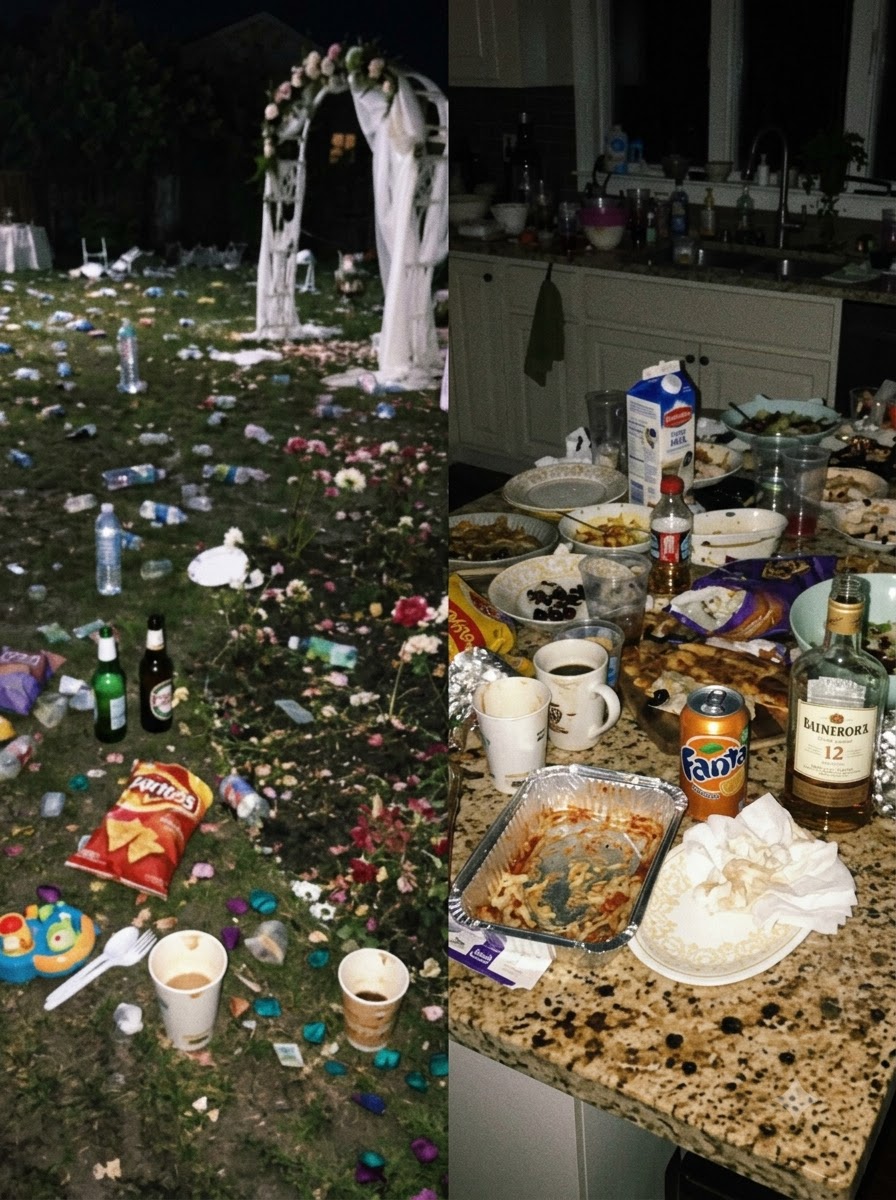
My aunt stabilized late that evening. We returned to the lake house the next morning. A handmade cushion was soaked beside the driveway. Cups littered the lawn, bottles were scattered near the dock, and deep tracks ran across the grass.
Then I noticed the wedding arch.
It was decorated with Grandma’s flowers.
The anniversary roses had been cut down. Lavender had been pulled from the ground. The daisies were tied with ribbon. The peonies had been completely uprooted.
Inside, wine had stained the cushions and her rocking chair was damaged.
I called Kelsey.
When I demanded to know why she had destroyed the garden, she said, “We needed fresh flowers. It was my wedding.”
I reminded her that she had promised not to touch them.
She laughed.
“They’re flowers, Nadia. They grow back. You own the place, so clean it yourself.”
Then she hung up.
# **PART 2**
Normally, Zac would have tried to keep everyone calm. This time, he stared at the destroyed garden and asked, “What do you need?”
“Grandma’s garden map.”
He retrieved a long cardboard tube from the study.
Inside was Grandma’s hand-drawn layout of the entire garden. Each flower bed had a number. Beside every number, she had recorded the plant, the date, and the memory associated with it.
Peonies — my first summer.
Lavender — the year she recovered.
Daisies — my first recital.
Roses — her anniversary.
Zac and I spent the afternoon matching the damaged beds against her map. By the time we finished, we had identified exactly 286 destroyed or uprooted plants.
That number gave me an idea.
Using Grandma’s old seed box, I assembled 286 numbered packets containing seeds, bulbs, cuttings, or replacement roots for everything Kelsey had destroyed.
At the bottom, I included a laminated copy of Grandma’s map. On top, I attached a plaque:
**RESTORATION KIT.**
A courier delivered it to Kelsey the next afternoon.
Less than an hour later, she called.
“What did you send me?”
“My wedding gift.”
“You sent me dirt!”
“I sent you everything you said would grow back.”
She noticed the numbers.
“You expect me to plant 286 flowers?”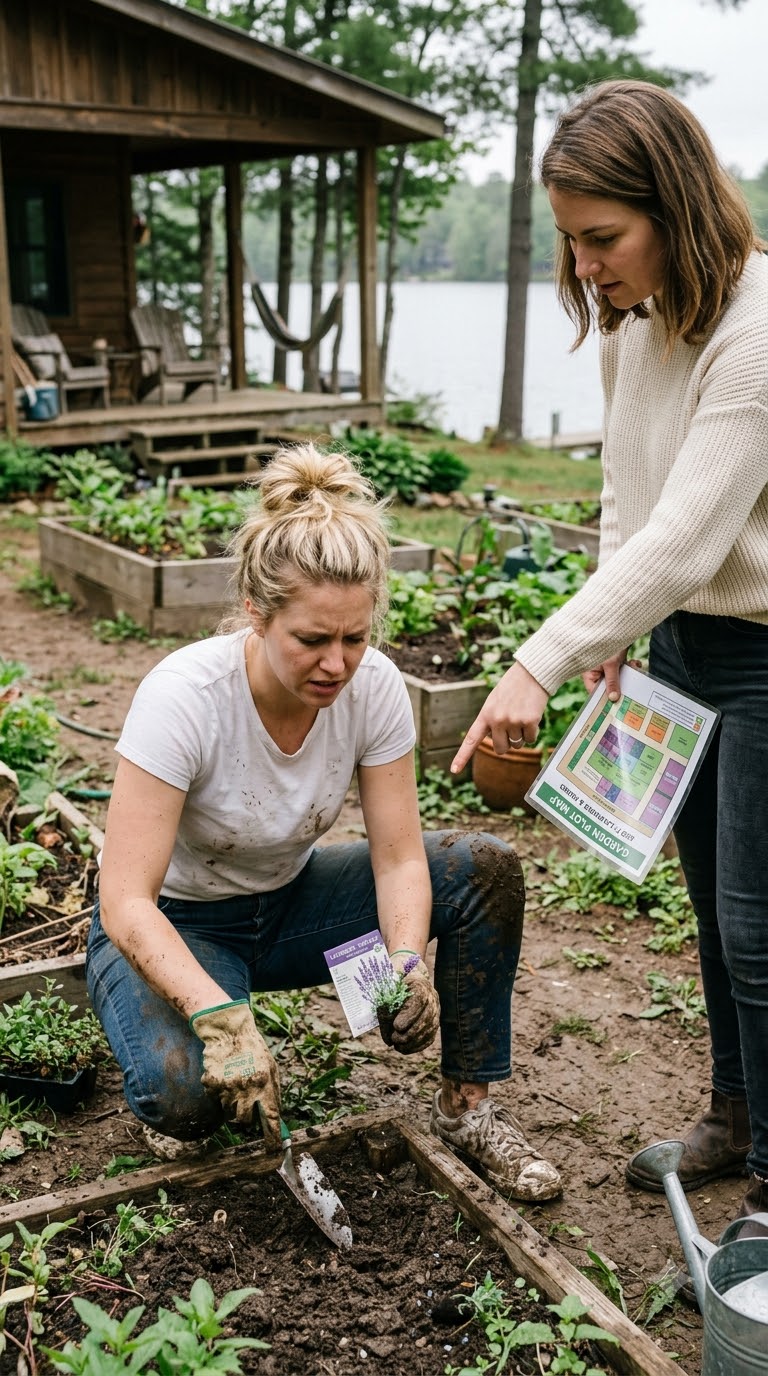
“No. I expect you to restore 286 memories.”
She offered to hire a landscaper and pay double. I refused.
Finally, she demanded to know what I wanted.
“Come here every Saturday until the garden is restored.”
She said she would never spend her weekends gardening.
I told her she could refuse, but then I would tell the family that the flowers she claimed would “grow back” apparently needed someone to do the work.
The following Saturday, Kelsey showed up wearing brand-new gardening gloves.
“This is humiliating,” she said.
I handed her packet number one.
“Lavender.”
She asked where it belonged.
I pointed toward Grandma’s map.
By lunchtime, Kelsey had mud covering her shoes.
“How many did I plant?”
“Eight.”
“Eight?”
“Only 278 left.”
The next Saturday, she came back wearing old jeans.
That was the first indication that something had changed.
# **PART 3**
As the weeks went by, Kelsey gradually began to understand what the garden truly represented.
While planting flowers around an old bench, she asked why they had been arranged that way.
I explained that Grandma and Grandpa had sat there every anniversary.
Another week, she asked about the bee balm. I told her Grandma planted it after a difficult summer because she wanted something cheerful that refused to disappear.
Neighbors shared stories too: roses that survived a storm, herbs Grandma used for soup, and lilies planted after my graduation.
Kelsey stopped making jokes.
She no longer saw landscaping.
She saw history.
One afternoon, she stood beneath the wedding arch.
“I thought it looked beautiful,” she said quietly. “I didn’t realize I was taking beauty from somewhere else to create it.”
By the eighth Saturday, only one packet was left.
Number 286.
A peony root.
Kelsey held it carefully.
“The last one?”
I nodded.
She knelt where Grandma’s map indicated, measured twice, dug the hole, and gently covered the root with soil.
No rushing. No complaining.
When she rose, her hands were filthy.
“These were planted when you were born, right?”
“Yes.”
She looked over the garden.
“I thought I was only cutting flowers. I didn’t understand I was destroying things people had built memories around.”
For the first time since the wedding, I believed her apology.
Then Zac surprised both of us.
“I owe Nadia one too,” he said.
He admitted that for years he had asked me to be the reasonable one whenever Kelsey caused problems because he knew I was easier to reason with.
“That wasn’t keeping the peace,” he said. “It was making the kinder person carry the cost.”
Kelsey lowered her eyes.
“I’m sorry.”
The following spring, Grandma’s garden came alive once more.
The garden had regained its shape.
One Saturday, I arrived to find Kelsey already kneeling beside the peonies, pulling weeds.
A little girl from a nearby cottage reached toward one of the flowers.
Kelsey gently stopped her. “Careful.”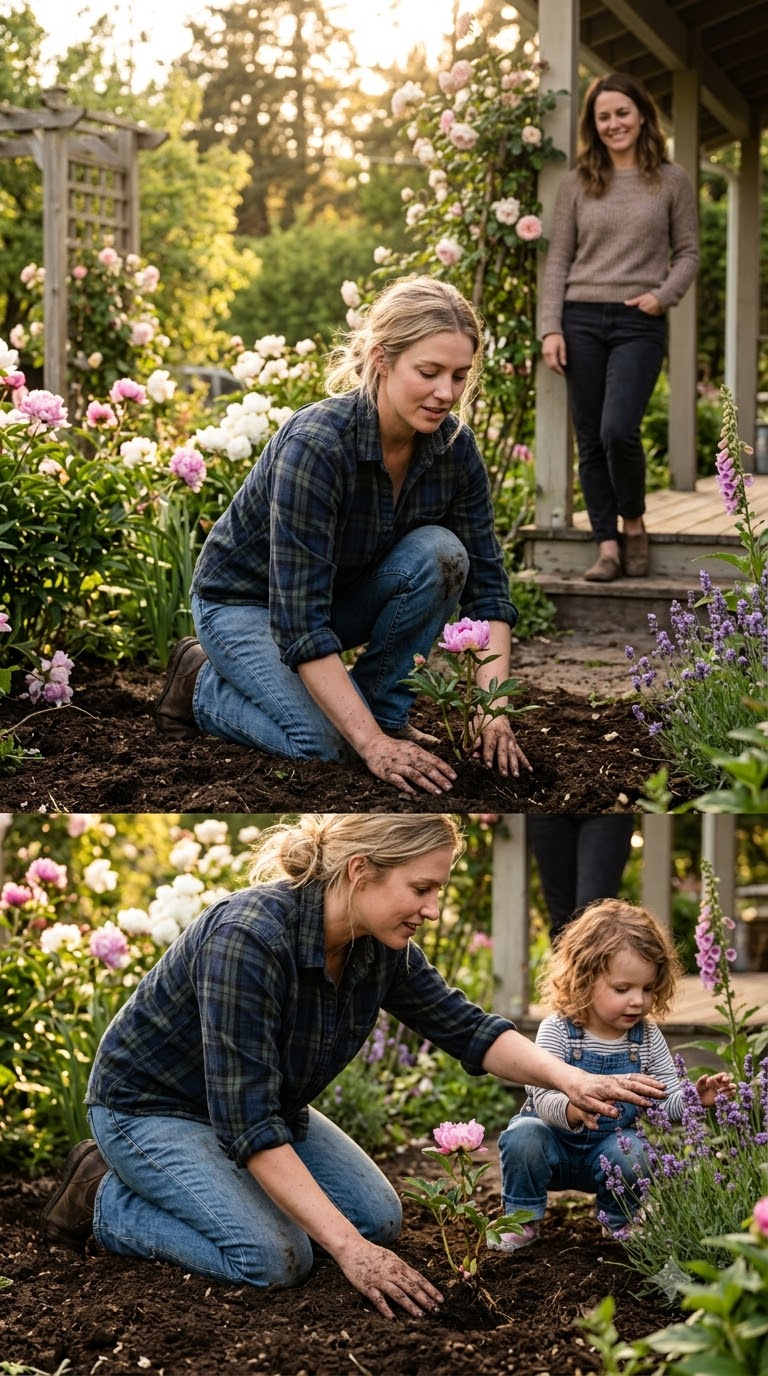
“Why?” the child asked.
Kelsey smiled.
“Because somebody loved that flower long before we did.”
I stood silently on the porch.
For the first time since Grandma died, the yard no longer felt trapped in the past.
It felt alive.
Grandma always said flowers were better than photographs.
A photograph preserves a moment.
A garden proves someone cared enough to keep coming back.
And now Kelsey finally understood why.
