

PART 1: THE SEATS HE WAITED A LIFETIME TO SEE
My ninety-two-year-old grandfather, Jeremy, taught me that football started long before kickoff.
Every Saturday, he pulled open the curtains, wrapped the same faded blue scarf around his neck, and settled into the worn recliner beside the television. No one else was allowed to sit there because, according to Grandpa, our routine was part of the team’s success.
My grandmother June used to joke about his scarf. She passed away twelve years ago, but he still carried her photograph in his wallet and kept the chair beside him vacant.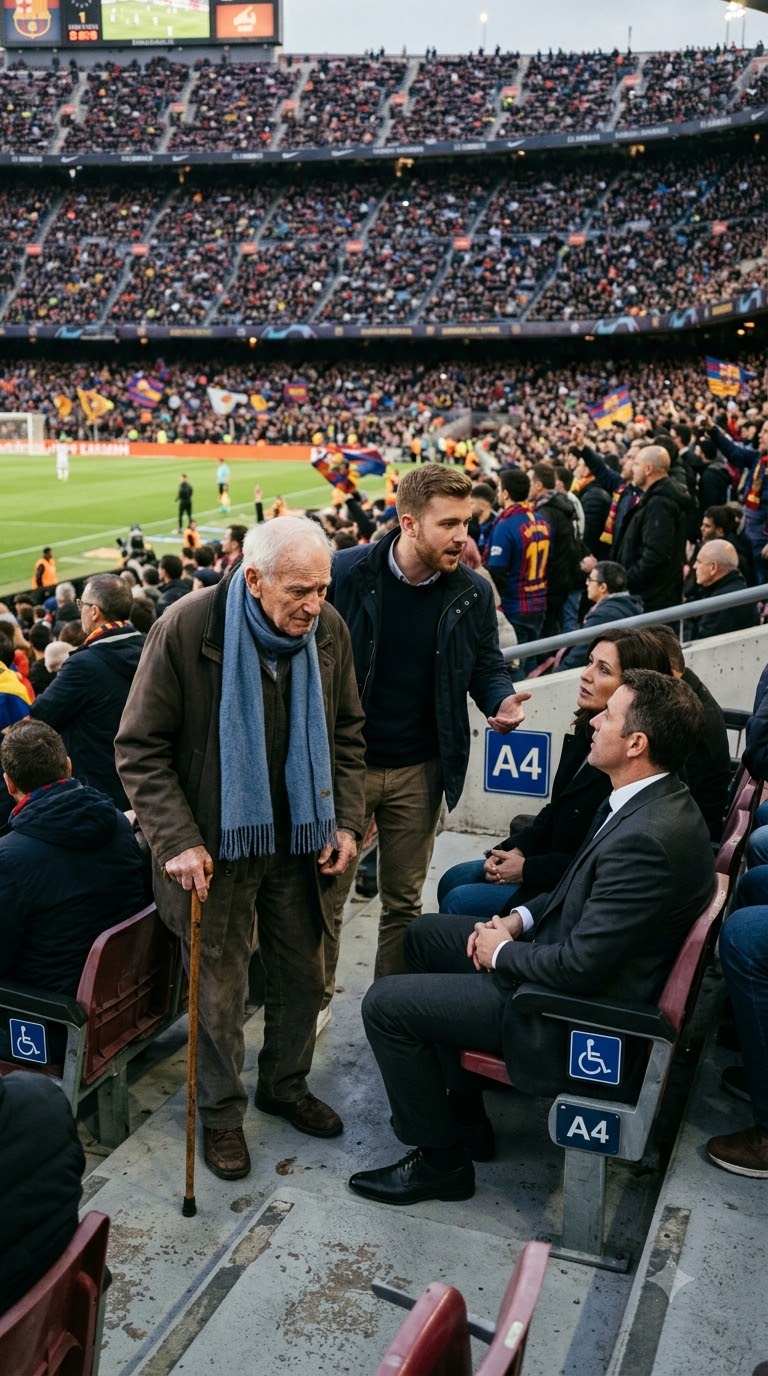
That spring, Grandpa’s doctor warned me not to delay anything meaningful. His heart had grown weaker, and walking was becoming harder.
When the biggest match in years was announced, I spent most of my savings on two premium accessible seats close to the field. Grandpa cried when he saw the tickets.
“You should be saving for your future,” he said.
“You are part of my future,” I replied.
On match day, Grandpa slipped June’s photograph into his pocket. When we reached the stadium, he held it toward the field.
“We finally made it, sweetheart.”
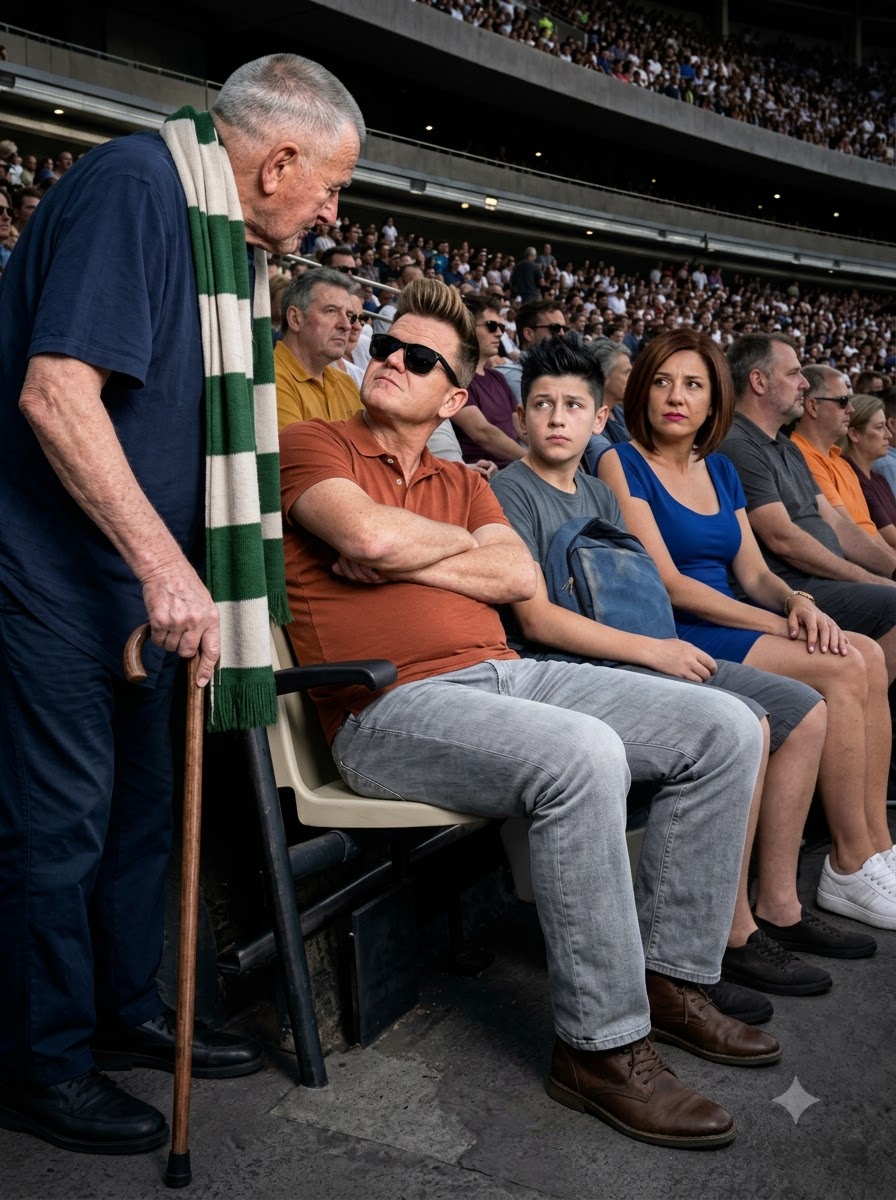
Then a sharply dressed man approached with his wife and teenage son. He checked our seat numbers, looked at his own row, and declared that he was taking ours.
“These are accessible seats,” I said. “They belong to us.”
He looked at Grandpa and shrugged.
“The old man can sit anywhere. He probably won’t remember the match tomorrow.” His son, Brandon, went pale.
I called for a steward, but Grandpa placed a hand on my wrist.
“We didn’t come here to fight.”
The stranger lowered himself into Grandpa’s seat. His wife followed, refusing to meet my eyes. Brandon stayed standing.
I helped Grandpa turn toward the aisle. The excitement had disappeared from his face, and that hurt more than losing the seats.
Before we reached the end of the row, Brandon called out to us.
He unzipped a faded blue backpack and pulled out an old captain’s armband. The cloth was nearly gray, with an old club crest sewn across it.
“It belonged to my grandfather,” Brandon explained. “He wore it to every match.”
Then he looked at his father. “My grandfather always said a captain gives up his place before taking someone else’s.”
The entire section went quiet.
PART 2: THE BOY WHO STOOD UP
Brandon’s father told him to sit down, but the boy refused.
“You said this gentleman wouldn’t remember today,” Brandon said. “I think Grandpa would be ashamed of us.”
Nobody laughed or applauded. The silence felt heavier than shouting.
Brandon turned toward Jeremy again and held out the armband.
“My dad doesn’t deserve this anymore. I think you do.”
Grandpa looked at the boy for a long moment. Then he carefully folded Brandon’s fingers around the faded cloth.
“If your grandfather wore this to every match, it belongs with you.”
Brandon shook his head, but Grandpa refused to take it.
A woman sitting behind us stood and demanded that the stranger return the seat. Another supporter joined her, followed by someone from across the aisle.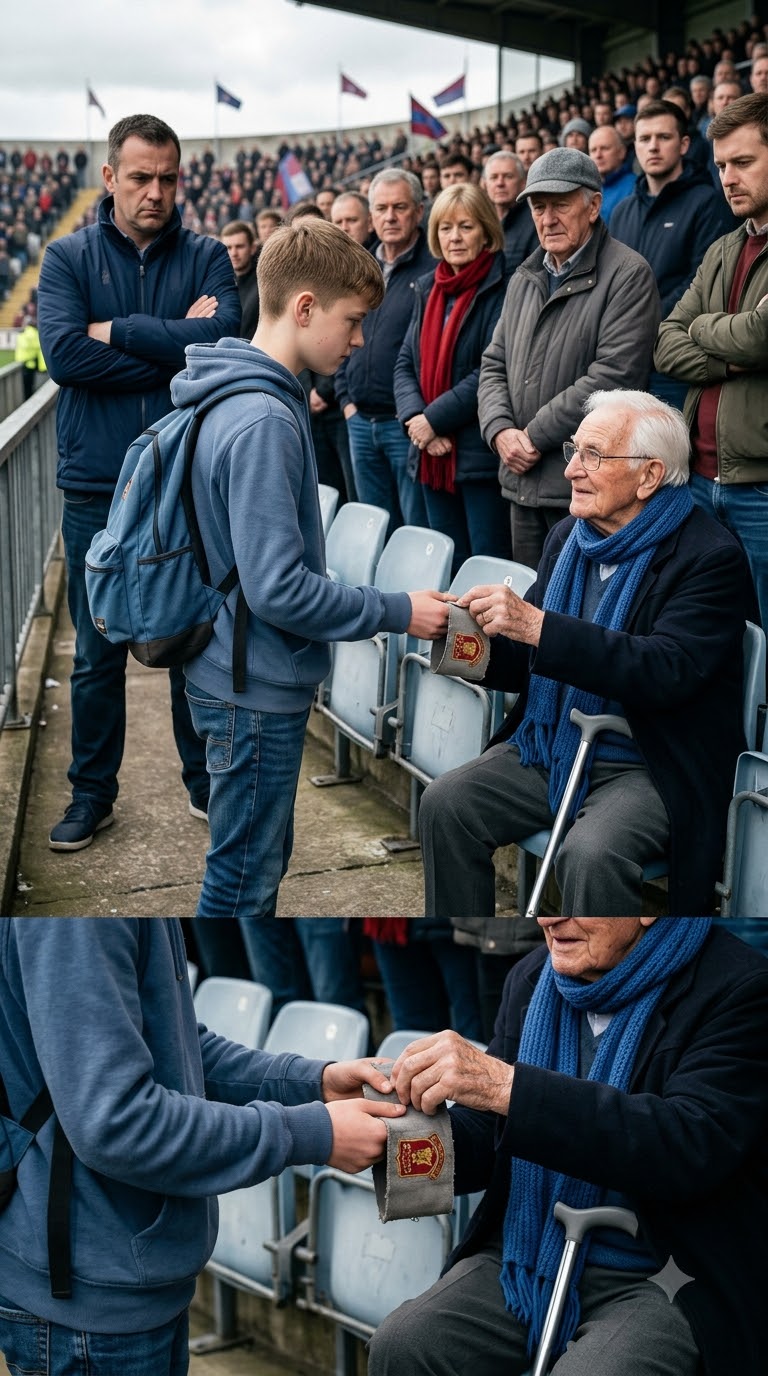
The stranger finally moved away. His wife followed without saying a word.
Yet Grandpa still did not sit down immediately.
“The match is beginning,” he said. “I don’t want anyone to miss it because of me.”
Brandon stepped onto the concrete step and lifted the armband.
“This gentleman waited his entire life for a match like this,” he announced. “If you think he deserves a better view, please stand.”
For one second, nothing happened. Then one person stood.
A second person rose behind them.
Within moments, almost the entire section was on its feet.
A steward came over expecting a disturbance, but instead found several strangers offering Grandpa their seats. A couple closer to the front shifted over, and the steward arranged even better places for both of us.
Grandpa settled between Brandon and me.
The entitled man and his wife went back to their original row. Nobody forced them out. Their consequence was simply watching the crowd choose the person they had dismissed.
When the whistle sounded, Grandpa leaned forward like a man decades younger. Brandon grinned whenever Grandpa commented on the formation, saying he sounded exactly like his own grandfather. By halftime, the two were arguing about tactics as if they had known each other for years.
Brandon’s father watched from the row above. His anger had disappeared. In its place was the gradual realization that his son seemed happier sitting beside Grandpa than he had beside him.
During the break, he came down and asked Brandon if he could wear the old armband during the second half.
Brandon studied him carefully.
“Not today, Dad. You haven’t earned it yet.”
The words clearly hurt, but for once, the man did not protest.
Grandpa leaned closer to Brandon.
“That took courage.”
“It felt awful,” the boy admitted.
“Most courage does, son.”
PART 3: UNTIL THE FINAL WHISTLE
The second half started poorly.
For most of it, neither team managed to score. Then the opposition found the net, and the stadium let out a collective groan.
Grandpa raised his faded scarf.
“There’s still time!”
I smiled because those words had appeared in every birthday card he had ever given me:
Never stop believing until the final whistle.
With only two minutes remaining, our team equalized.
The stadium exploded. Grandpa rose halfway from his seat, waving his scarf as I steadied him.
Then, deep into added time, our striker broke through.
One pass.
One shot.
Goal.
The noise around us became overwhelming.
Grandpa actually jumped and laughed as tears streamed down his face.
“You saw that, June!” he shouted toward the sky.
When the celebration quieted, he opened his wallet and touched my grandmother’s photograph.
“We made it.”
Then he looked at Brandon, who was still holding the captain’s armband.
This time, Grandpa reached toward it. Brandon handed it over, thinking he had finally decided to accept the gift.
Instead, Grandpa carefully slipped it over Brandon’s sleeve and straightened the faded crest.
“A captain doesn’t take the best place,” he explained. “He makes sure someone else has one.”
Brandon looked up toward his father in the upper row.
The man stood, placed one hand over his heart, and gave his son a small nod.
It was not a full apology, but perhaps it was the beginning of one.
After the final whistle, Grandpa remained seated as the crowd gradually made its way out. Then he spotted an empty paper cup near his shoe, picked it up, and handed it to me.
“Trash can on the way?”
I laughed through my tears.
“You are ninety-two years old, and you are still cleaning the stadium.”
He smiled.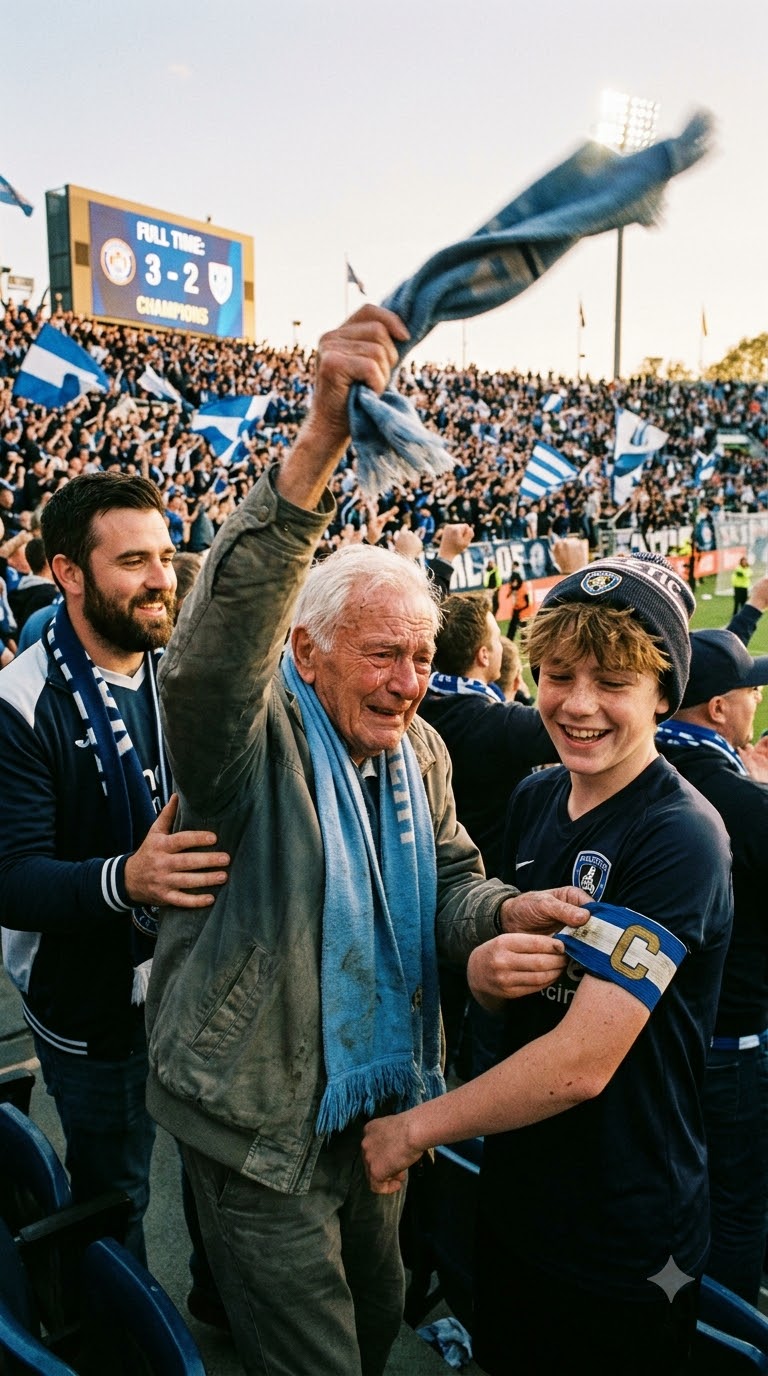
“A real fan leaves the game better than he found it.”
Brandon crouched down and picked up two more cups.
Together, we headed toward the exit. Grandpa leaned on his cane as I walked beside him, while Brandon followed with the armband wrapped around his sleeve.
Grandpa had come hoping to experience one unforgettable football match before his health declined any further.
Instead, he gave a grieving teenager something more meaningful than a seat, a victory, or an old piece of fabric.
He showed Brandon that loyalty was not measured by how loudly someone demanded the best place. It was measured by what they were willing to surrender so someone else could belong.
My grandfather had spent ninety-two years loving the game.
That afternoon, he passed its most important lesson to the next captain.
