

PART ONE
THE THIRTY EMPTY CHAIRS
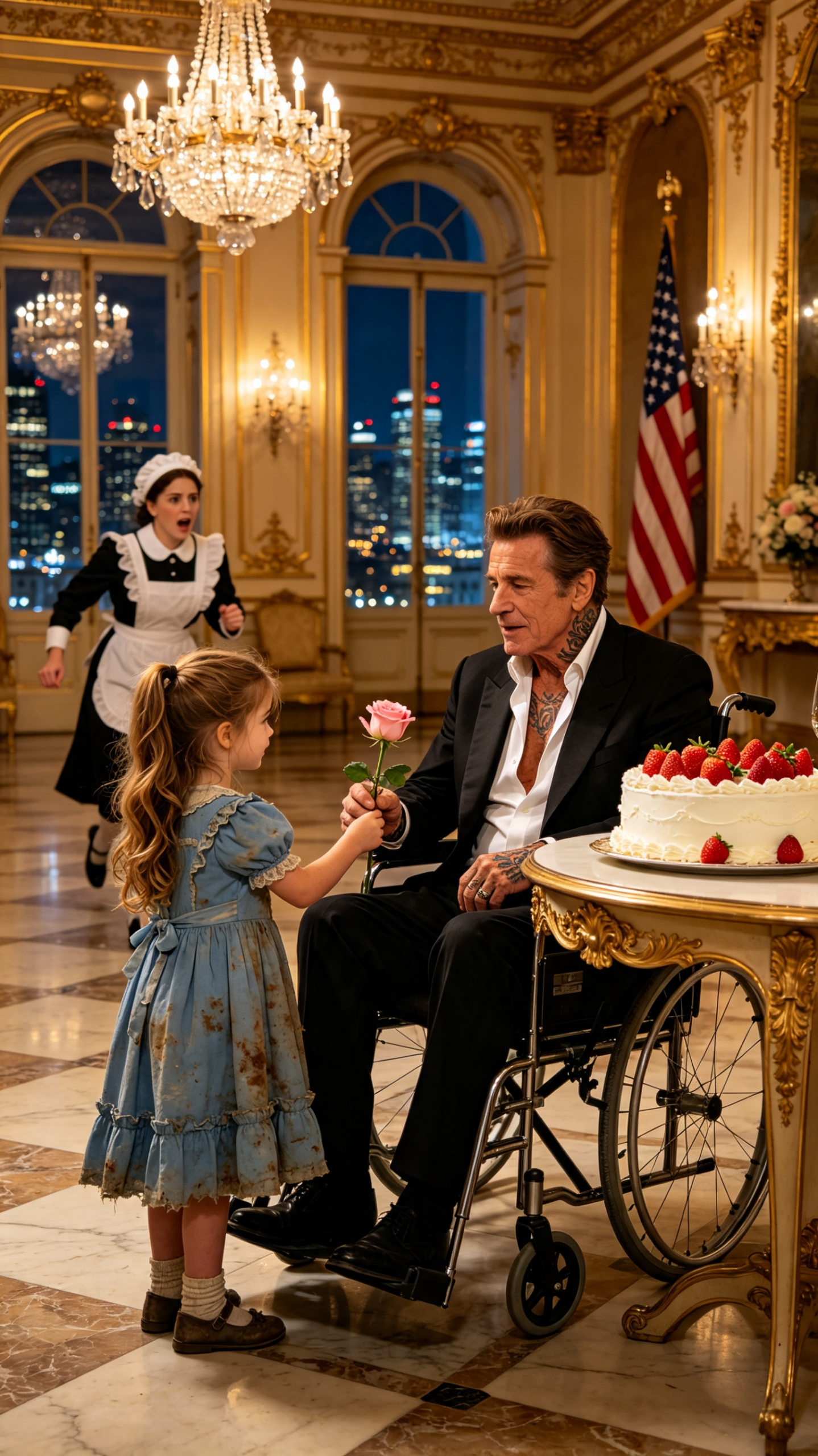
Rowan handed the phone to Finley and looked at the thirty empty chairs.
The message remained bright on the screen.
Tonight was only the beginning. Step down quietly, or the next chair left empty will be yours.
Finley read it twice.
His expression did not change, but one hand closed slowly around the telephone.
“Garrett?”
“Too obvious.”
“August?”
“Too careful.”
“Both?”
Rowan looked toward the wilted white flower leaning from the top of the cake.
Wax had begun to harden around the candles. Piper’s tiny fingerprints remained in the espresso frosting where she had pushed the bent stem into place.
“Perhaps.”
Finley moved toward the door.
“I’ll bring them back.”
“No.”
“Thirty men insulted you.”
“They did more than that.”
Rowan’s voice remained quiet.
“They declared themselves.”
Humiliation was useful when a man survived long enough to study it.
Before the shooting, every person invited to that room would have arrived half an hour early. They would have stood when Rowan entered. They would have carried gifts chosen by assistants and offered loyalty polished until it sounded sincere.
Sixteen months in a wheelchair had changed the cost of courage.
Men who once feared his shadow had begun to believe the shadow was all that remained.
“Find out where they are,” Rowan said. “No calls. No warnings.”
Finley nodded.
“And the waitress?”
Rowan looked toward the closed side door.
“Maeve.”
“What about her?”
“She entered a private dining room with a child despite two hotel security stations.”
“She said the girl slipped away.”
“I believe her.”
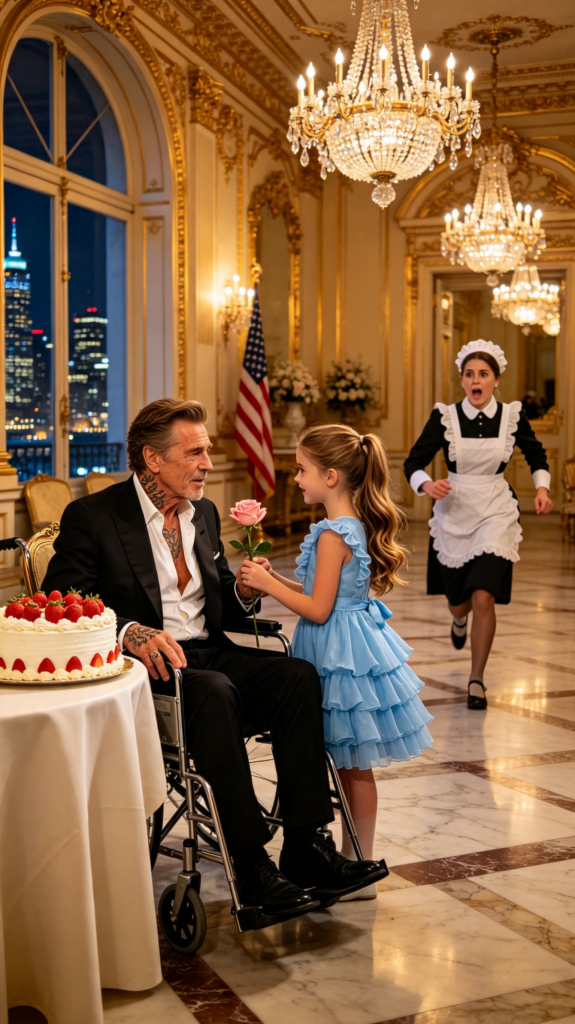
Finley glanced at the flower.
“But?”
“The child called me Uncle Rowan.”
“She is six.”
“Children repeat what they hear.”
The flower sagged farther into the cake.
“Find out who taught her my name.”
The answer arrived before midnight.
Finley returned carrying a thin personnel file and a security tablet.
“Maeve Quinn,” he said. “Twenty-nine. Three years at Sterling Court. Breakfast shifts, private events, occasional overnight catering.”
“Quinn?”
“Yes.”
Rowan knew the name.
His fingers tightened around the wheelchair rim.
Finley noticed.
“Her husband was Noah Quinn.”
The private dining room seemed to lose its remaining warmth.
Sixteen months earlier, Noah Quinn had been driving the second vehicle in Rowan’s convoy when gunfire erupted beneath the Harbor Bridge.
The lead car crashed into the barrier.
Rowan’s sedan rolled against the concrete divider.
A bullet entered through the rear door and struck his spine.
Noah died thirty feet away.
Investigators later found Rowan’s route inside Noah’s apartment, along with payments from a rival organization.
Noah Quinn had been declared the traitor who sold the convoy.
His widow received no death benefits.
His name was removed from the Hale memorial wall.
Rowan had signed the order himself while lying in a hospital bed, unable to feel his legs and too full of rage to question evidence placed neatly in front of him.
“Why is she working here?” Rowan asked.
“Because the Hale compensation claim was denied.”
Finley’s answer came carefully.
“Her husband’s accounts were frozen during the investigation. She lost their apartment six months later.”
“And the child?”
“Piper Quinn. Six years old.”
Rowan looked toward the cake.
“Show me the footage.”
Finley placed the tablet on the table.
The recording began in a staff lounge behind the hotel kitchen. Maeve was sorting silverware while Piper colored at a corner table.
At 8:41, the child lifted her head.
Someone passed the partially open door.
A man in a dark suit.
Only his back appeared.
Piper left the table and followed.
The next camera showed her walking through a service corridor toward the private dining wing.
She stopped near a memorial table beneath an old portrait of Evelyn Hale, Rowan’s mother.
White camellias stood in a crystal vase below the painting.
Piper looked around.
Then she pulled one flower free.
“That is what she put on the cake,” Finley said.
Rowan already knew.
His mother had loved white camellias.
She called them winter roses because they bloomed when most gardens appeared dead.
Every birthday during Rowan’s childhood, Evelyn placed one beside his plate.
After she died, no one continued the tradition.
Sterling Court kept fresh camellias beneath her portrait because the Hale family had financed the hotel’s restoration thirty years earlier.
Piper had not chosen a random flower.
The footage followed the child into the dining room.
Before opening the door, she looked directly toward the ceiling camera and whispered something.
Finley increased the volume.
The child’s voice emerged beneath the kitchen noise.
“Daddy said he would be lonely today.”
Rowan stopped breathing.
Finley replayed it.
Daddy said he would be lonely today.
Noah Quinn had died sixteen months earlier.
Yet he had known Rowan’s birthday.
He had known about the camellias.
And he had taught his daughter to call Rowan uncle.
“Where are Maeve and Piper now?”
Finley’s expression darkened.
“The hotel dismissed Maeve twenty minutes ago.”
“For allowing the child into the room?”
“That was the reason given.”
“Who authorized it?”
“Garrett.”
Rowan looked at the threat message.
Garrett Hale was his cousin and next in line to inherit control if Rowan died without a recognized direct heir.
“Find them.”
“Already trying.”
The fire alarm began screaming.
A guard entered through the main door.
“Boss, smoke in the staff housing wing.”
Rowan’s body became completely still.
“Maeve lives there.”
The guard nodded.
“Third floor.”
Finley was already moving.
Rowan turned his chair toward the door.
“Bring the van.”
“You stay here.”
Rowan looked up.
Finley had protected him for almost twenty years. He was one of the few men still willing to speak to Rowan as a person rather than a title.
That did not make the command acceptable.
“Bring the van.”
Smoke filled the narrow street behind Sterling Court.
Hotel employees stood beneath emergency blankets while firefighters carried hoses through the staff entrance.
Maeve was near the curb, barefoot and wearing only her uniform. She held Piper against her chest beneath a man’s oversized coat.
The child clutched a stuffed rabbit.
Rowan’s accessible van stopped beside them.
Maeve saw him through the open door.
Her face hardened.
“You.”
Rowan looked toward the dark windows above.
“Was the fire in your room?”
“Yes.”
“Did it begin naturally?”
“How would I know?”
Finley crouched near the building supervisor.
A minute later, he returned holding a small metal object sealed inside a plastic evidence bag.
An incendiary timer.
Maeve stared at it.
Piper tightened her arms around her mother.
Rowan extended one hand.
“Get in.”
Maeve laughed in disbelief.
“My room catches fire after my daughter enters your party, and your solution is to put us in your car?”
“My solution is to move you somewhere the next attempt will be harder.”
“Next?”
“Someone sent me a threat after you left.”
“That has nothing to do with us.”
“Your husband’s name was Noah Quinn.”
Maeve’s face changed.
Piper looked up.
“You knew Daddy?”
Rowan met the child’s eyes.
“Yes.”
Maeve stepped between them.
“No. You knew the story your people invented after he died.”
“That may be true.”
“May?”
Her voice shook.
“You called him a traitor. You froze his accounts. Your men came to my apartment and took every paper he left behind. Piper and I lost our home because you decided a dead driver was easier to blame than the powerful men sitting beside you.”
Rowan accepted each word.
He could have told her he was recovering from spinal surgery when he signed the order.
He could have blamed medication, grief, Garrett, or August.
None of it changed the signature.
“I was wrong.”
Maeve stared at him.
Men like Rowan were not expected to say those words.
That did not make them sufficient.
“You don’t know that yet.”
“No.”
He looked toward the smoking windows.
“But somebody tried to burn your daughter because she put a flower on my cake.”
Piper touched the wilted flower still tucked through the belt of her pink coat.
She had removed it from the frosting before leaving.
Maeve saw Rowan notice.
“Why did you take that flower?” she asked her daughter.
Piper looked down.
“Daddy told me.”
Maeve became very still.
“What did Daddy tell you?”
“That Uncle Rowan doesn’t like birthdays.”
Rowan’s chest tightened.
Piper continued.
“He said if I ever saw him alone, I should get the white flower and make him share his cake.”
Maeve crouched.
“When did he tell you that?”
“The night before he went to work and didn’t come back.”
The child had carried the instruction for sixteen months.
Perhaps she had walked past Evelyn Hale’s portrait dozens of times while waiting in the staff lounge. Perhaps she had recognized the camellia immediately.
Her father had planted a message inside a five-year-old’s memory because paper could be stolen.
Rowan opened the van door wider.
“I have a secure house fifteen minutes away.”
Maeve did not move.
“You destroyed my husband’s name.”
“Yes.”
“You left us with nothing.”
“Yes.”
“And now you expect me to trust you because you sent a car?”
“No.”
His gaze moved toward Piper.
“I expect you to trust whoever Noah was trying to protect when he taught his daughter my birthday.”
Maeve looked at the burned building.
Then at her child’s bare feet.
She entered the van.
Not because she trusted Rowan.
Because fear had reduced the available choices.
Rowan understood the difference.
The Hale residence stood on Beacon Hill behind iron gates and winter-bare trees.
Maeve carried Piper inside but refused every room offered until she saw the locks could be opened from within.
Piper fell asleep almost immediately beneath a wool blanket in the library.
Maeve remained beside her.
Rowan waited across the room.
The firelight cast moving gold across the wheels of his chair.
“You believed Noah betrayed you,” Maeve said.
“Yes.”
“What evidence?”
“His apartment contained my convoy route. Two offshore transfers had been made in his name. The rifle used in the ambush had his fingerprints.”
Maeve gave a bitter smile.
“He didn’t own a rifle.”
“I know that now.”
“No. You know he told our daughter to give you a flower.”
Rowan lowered his gaze.
“Did he ever speak about my family?”
“Never clearly.”
“Did he call me his brother?”
Maeve looked toward Piper.
“Sometimes she called you Uncle Rowan after his death. I thought she had confused one of his stories.”
“What stories?”
“A little boy in a cold house. A mother who brought white flowers. Two brothers who were never allowed to sit at the same table.”
Rowan felt something cold move beneath his ribs.
“My mother had one son.”
“That is what history says.”
“What did Noah say?”
“That history belonged to whoever locked the nursery door.”
Finley entered carrying a small toolbox recovered from Maeve’s damaged apartment.
“We found this beneath the floorboards.”
Maeve stood.
“That was Noah’s.”
The toolbox contained ordinary things.
Wrenches.
Electrical tape.
A photograph of Maeve holding newborn Piper.
Beneath the removable tray lay a brass key and an old digital recorder.
A white camellia had been pressed between two pieces of wax paper.
On its stem, Noah had written one word.
ROWAN.
Maeve sat down.
“I never found that compartment.”
Finley inserted fresh batteries into the recorder.
A single audio file appeared.
The date was the night of the Harbor Bridge ambush.
Rowan pressed play.
Noah’s voice filled the library.
“If Rowan hears this, then I failed to reach him alive.”
Static followed.
Heavy breathing.
A car alarm in the distance.
“Garrett changed the convoy route. August paid the shooters. The evidence in my apartment was planted two days ago. I know because I saw one of August’s men leaving with my spare key.”
Rowan looked toward Finley.
The guard’s face had become iron.
Noah continued.
“They think Rowan’s injury will make the captains turn on him. If the bullet does not kill him, isolation will.”
The empty chairs returned to Rowan’s mind.
This betrayal had begun sixteen months earlier.
“Noah,” Maeve whispered.
“I cannot go to police. Half the harbor unit belongs to Garrett. I cannot go home because they are watching Maeve and Piper.”
His breathing became more strained.
“There is something Rowan does not know. Something his father buried.”
A rustling sound.
Then:
“My name at birth was Noah Hale.”
The room stopped.
Maeve covered her mouth.
Rowan stared at the recorder.
“Our mother was Evelyn Hale. Malcolm had me declared dead before Rowan was born. I had a damaged foot. He said the family could not have a firstborn son who looked weak.”
Rowan’s fingers went numb against the wheelchair rim.
His father had built a criminal empire around the worship of strength.
A child born with a correctable physical difference would have looked, to Malcolm Hale, like an insult made flesh.
Noah continued.
“Evelyn placed me with the Quinn family. She visited when she could. She told me Rowan existed when I was eight. I watched him from a distance for most of my life.”
Rowan remembered Noah Quinn.
A quiet driver who never stared at him.
A man who knew when Rowan needed silence.
A man who once placed a white camellia on the dashboard after Evelyn’s memorial service and claimed it had fallen from a delivery truck.
“I entered the organization to protect him from Garrett,” Noah said. “Not to claim his chair. Not to take the Hale name.”
Piper stirred beneath the blanket.
“Daddy?” she whispered in her sleep.
Maeve moved beside her.
On the recording, Noah’s voice weakened.
“If I die, tell Piper Rowan is her uncle. Tell her the white flower means she may approach him even if every door is closed.”
Rowan closed his eyes.
The camellia was not merely a family tradition.
It had been Evelyn’s promise to the son she was forced to hide.
White flower.
Open door.
You are allowed to come near.
“I am sorry, little brother,” Noah said.
Rowan’s breath caught.
“I wanted to tell you after I had proof. I thought blood would make you question everything I did. Maybe I was afraid you would look at me and see a rival.”
A sharp sound erupted in the recording.
Gunfire.
Noah spoke one final time.
“Garrett wants the chair. August wants the ports. But the worst thing they want is Rowan alone enough to believe no one came because no one loved him.”
The file ended.
No one moved.
The fire shifted inside the hearth.
Rowan looked at Piper.
His niece.
The daughter of the brother whose name he had erased.
The little girl had entered his empty birthday party carrying a flower that meant family could still cross a locked door.
Maeve’s tears fell silently.
“You signed the paper calling him a traitor.”
“Yes.”
“He spent his last breath calling you brother.”
“Yes.”
“What are you going to do?”
Rowan looked at the thirty-eight years behind him.
A father who worshipped strength.
A mother forced to divide her sons.
An empire that treated disability as permission to betray.
Then he looked at the wheelchair.
“They believe this chair ended my authority.”
He turned toward Finley.
“Let us show them what it ended instead.”
PART TWO
THE BROTHER BURIED WITHOUT HIS NAME
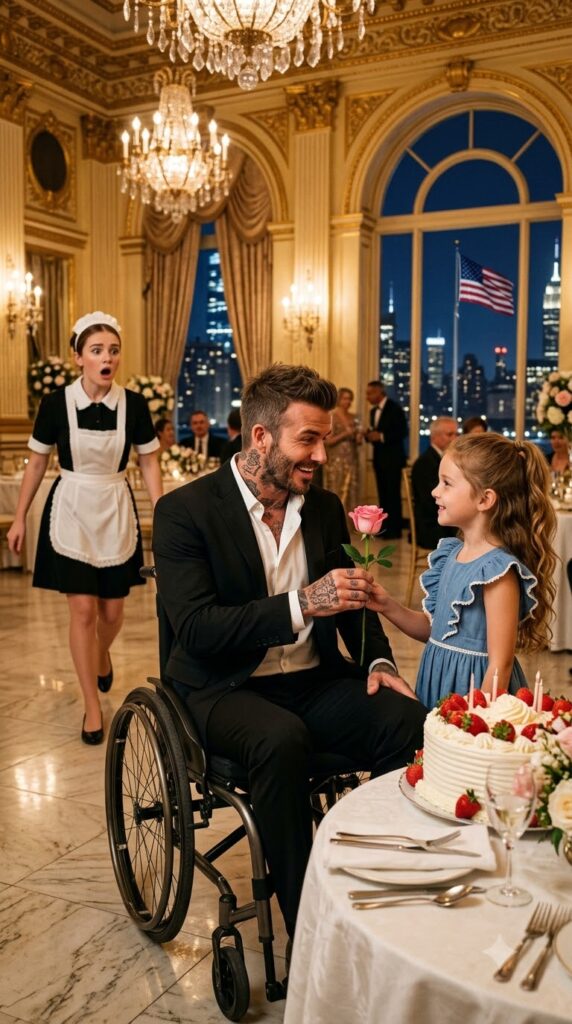
By morning, Finley had located the missing guests.
All thirty were gathered at a private warehouse near the harbor.
Garrett had called an emergency council meeting.
The stated purpose was to protect the Hale organization from “leadership instability.”
The actual purpose was to remove Rowan.
Under old organization rules, a majority of captains could appoint a temporary leader if the current boss became physically or mentally incapable of command.
Rowan had written those rules himself after his father’s death.
He never imagined they would be used against him because he could no longer stand.
“They will vote at noon,” Finley said.
“And if I refuse?”
“Garrett plans to release medical reports claiming you suffer cognitive damage from the shooting.”
“My mind is intact.”
“Truth is rarely the first document reporters receive.”
Maeve stood near the library table wearing borrowed clothes. Her hair remained damp from the shower, and exhaustion shadowed her eyes.
“What happens to Piper if they learn who Noah was?”
Rowan answered honestly.
“She becomes dangerous to Garrett.”
“Because she is your niece?”
“Because Noah was my father’s firstborn son.”
The original Hale family trust controlled hotels, shipping companies, warehouses, and legitimate property worth hundreds of millions.
Its succession rules favored the oldest surviving branch.
If Noah’s identity became legally recognized, Piper would hold a future claim superior to Garrett’s.
Maeve’s face hardened.
“We don’t want your money.”
“Garrett will not care what you want.”
“Then sign it away.”
“I cannot sign away a child’s rights while deciding what protection is best for her.”
Maeve laughed bitterly.
“You learned that sentence quickly.”
Rowan accepted the blow.
“I have had a long night.”
Piper entered wearing one of Rowan’s childhood sweaters, the sleeves rolled several times.
She carried the stuffed rabbit and the wilted camellia.
“Is Daddy still dead?”
Maeve’s face crumpled.
“Yes, sweetheart.”
“Did Uncle Rowan hear him?”
Rowan moved closer.
“I did.”
“Was Daddy mad?”
“No.”
Piper looked disappointed.
“He should be.”
Rowan nearly smiled.
“You are right.”
She climbed into the chair beside his wheelchair.
“Are the rude people coming today?”
“What rude people?”
“The ones who left the chairs empty.”
Maeve looked at Rowan.
He had not mentioned them.
“How do you know?”
Piper shrugged.
“Daddy said bad men leave chairs empty before they take the table.”
The sentence was too precise to be childish invention.
Noah had prepared her for a future he hoped would never arrive.
Piper held out the flower.
“You can keep Gary now.”
“Gary?”
“The flower.”
“Why is he named Gary?”
“He looked lonely.”
Rowan accepted it.
The petals had begun turning brown at the edges.
“Thank you.”
“Are you going to the rude people?”
“Yes.”
“Are you scared?”
Finley looked away.
No captain had asked Rowan that question in his adult life.
“Yes,” Rowan said.
Piper nodded approvingly.
“Daddy said brave people are just scared people who already picked a direction.”
Maeve closed her eyes.
Noah’s voice survived everywhere inside the child.
Rowan placed the flower inside his breast pocket.
“I have picked one.”
August Reed arrived at eleven.
He claimed he had reconsidered the council meeting.
He entered the Hale residence carrying concern carefully arranged across his face.
“Rowan, Garrett is out of control.”
Rowan waited in the drawing room.
Maeve and Piper remained behind a concealed security door with two trusted guards.
Finley stood near the window.
August approached the wheelchair.
“I never wanted this.”
“You missed my birthday.”
“Harbor trouble.”
“Thirty men had harbor trouble at the same hour.”
August lowered his voice.
“Garrett forced their hands.”
“And yours?”
“I came back.”
Piper’s voice sounded from the half-open security passage.
“That’s the man from Daddy’s picture.”
August turned.
Fear crossed his face.
Only once.
Enough.
Maeve pulled Piper behind the door.
Finley drew his weapon.
August raised both hands.
“What picture?”
Rowan removed a photograph from Noah’s toolbox.
It showed August standing beside Garrett near Noah’s car two days before the ambush.
“Your picture.”
August’s expression emptied.
Rowan placed the recorder on the table.
“Noah left his account.”
“He was a traitor.”
“He was my brother.”
The words struck August harder than the recording.
“You knew,” Rowan said.
August glanced toward the exits.
Finley blocked the nearest one.
“Garrett discovered the birth record four years ago,” August said.
“So you killed Noah.”
“Garrett ordered the ambush. I arranged the route.”
“And the evidence?”
“Planted.”
“Why leave me alive?”
August looked at the wheelchair.
“We didn’t expect you to remain dangerous.”
There it was.
Not remorse.
Miscalculation.
Rowan rolled closer.
“Who sent the threat last night?”
“Garrett.”
“Who burned Maeve’s room?”
“I don’t know.”
Finley moved toward him.
August’s composure cracked.
“Garrett hired the hotel supervisor. He saw the child put Evelyn’s flower on the cake. He realized Noah had told her.”
“What happens after the council vote?”
August said nothing.
Rowan’s voice became colder.
“What happens to Piper?”
“A boat leaves from Pier Nine at three.”
Maeve stepped from behind the security door.
Her face had become pale.
“A boat?”
August looked at her.
“Garrett planned to make the fire appear fatal. When it failed, he arranged another method.”
Rowan felt something older than anger enter him.
His father’s world had always called children collateral when adults wanted to avoid saying murder.
“You will testify,” Rowan said.
August laughed.
“To whom? The police chiefs who eat at your restaurants?”
“Federal prosecutors.”
The laughter disappeared.
“You would expose the organization?”
“I am going to bury the part that taught you a wheelchair made murder reasonable.”
“You lose everything.”
Rowan touched the wilted flower in his pocket.
“No.”
He looked toward Piper.
“I lose the table.”
For the first time, that did not sound like defeat.
Rowan entered the harbor warehouse at noon.
Thirty men sat around a long oak table.
Garrett occupied the head chair.
The chair built for Rowan.
Conversation stopped when Finley pushed open the doors.
Rowan rolled himself inside without assistance.
He wanted them to see his hands on the wheels.
His direction chosen.
Garrett smiled.
“Cousin.”
“You took my seat.”
“You were late.”
“I was attending to family.”
A murmur moved through the room.
Garrett looked toward August, who entered behind Finley wearing a recording wire beneath his shirt.
“Sit down,” Garrett ordered.
Rowan stopped at the opposite end of the table.
“No.”
Garrett leaned back.
“Then let us vote.”
“First, a birthday gift.”
Finley connected Noah’s recorder to the warehouse sound system.
Noah’s final testimony filled the room.
Garrett’s face changed when Noah named him.
Several captains looked toward the exits.
Federal agents waited beyond every door, but the men inside did not know yet.
The recording reached the final revelation.
My name at birth was Noah Hale.
Garrett struck the table.
“Turn it off.”
Rowan allowed the voice to continue.
Tell Piper Rowan is her uncle.
When the file ended, the warehouse remained silent.
Garrett pointed toward Rowan.
“This changes nothing. A dead bastard appears through a recording and suddenly we are expected to surrender the organization to a waitress’s child?”
Rowan looked at each man seated around the table.
“No.”
His voice carried without effort.
“You are expected to understand what you declared last night.”
He indicated the empty chair beside Garrett.
“Not one of you attended because Garrett promised my disability made him stronger than my name.”
Several men lowered their eyes.
“You believed paralysis meant dependence. You believed dependence meant weakness. You believed weakness made betrayal moral.”
Garrett laughed.
“You cannot even stand.”
Rowan touched the wheels.
“You mistook sitting for surrender.”
Finley placed the Hale ledgers on the table.
Rowan continued.
“The legitimate businesses enter independent management today. The ports, trafficking accounts, illegal gaming operations, and bribery records have been surrendered to federal authorities.”
The room erupted.
Men stood.
Weapons appeared.
Red lights flashed beyond the warehouse windows.
Agents entered through three doors.
Garrett remained seated.
He stared at Rowan.
“You destroyed your father’s empire.”
“My father destroyed it when he buried his first son for being born imperfect.”
Garrett’s hand moved beneath the table.
August shouted a warning.
Garrett drew a gun.
Finley fired first.
The bullet struck Garrett’s shoulder, spinning him away from the head chair.
Agents forced him onto the floor.
Rowan did not look away.
Garrett stared up from the concrete.
“You think that child will love you after she learns what you did to her father?”
“No.”
Rowan’s answer surprised him.
“I think she has the right to decide after knowing the truth.”
“You will have nothing.”
Rowan glanced toward the harbor visible beyond the warehouse doors.
Cold sunlight moved across the water.
“I have spent sixteen months learning what nothing feels like.”
He touched the flower inside his pocket.
“This is not it.”
PART THREE
THE FIRSTBORN SON
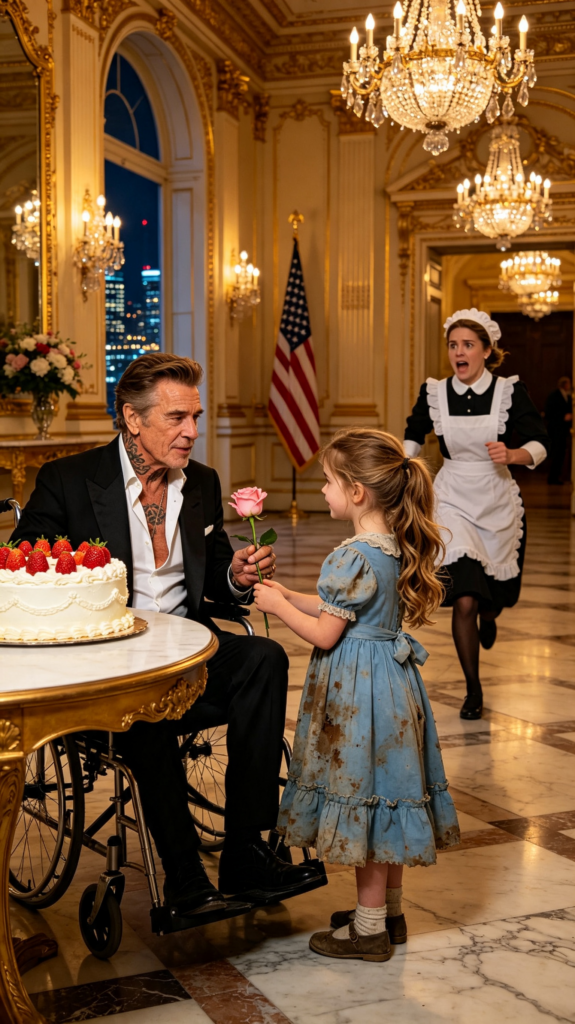
The dismantling of the Hale organization lasted eighteen months.
Garrett, August, and seventeen captains were charged with conspiracy, attempted murder, fraud, trafficking, and bribery.
August received a reduced sentence for testifying.
The men who attended the empty birthday meeting lost far more than their chairs.
Rowan retained the Sterling Court Hotel, several legitimate transportation companies, and the Hale properties that could be separated cleanly from criminal money.
Everything else was surrendered or sold to compensate victims.
Newspapers described it as the fall of the Frost.
Rowan preferred that headline to the lies that came before it.
Noah Quinn’s name was legally cleared.
His death certificate was amended to state that he died protecting Rowan during an organized attack.
The Hale memorial wall received a new plaque.
NOAH EVELYN HALE QUINN
FIRSTBORN SON.
BROTHER. HUSBAND. FATHER.
HE CAME TO THE TABLE WITHOUT ASKING FOR THE CHAIR.
Maeve cried when she saw it.
Then she struck Rowan across the face.
The movement was so unexpected that Finley nearly intervened.
Rowan raised one hand.
Maeve’s palm remained red.
“That was for signing the traitor order.”
“I understand.”
“And this—”
She placed her arms around his shoulders.
“—is for correcting it.”
Rowan did not know where to put his hands.
Men had embraced him after victories, deaths, and deals. None of those gestures had contained the terrible generosity of being held by someone who had every right to hate him.
He rested one hand against Maeve’s back.
Piper wrapped both arms around the side of his wheelchair.
“Group hug,” she announced.
Finley turned away with suspicious speed.
Maeve refused to move into the Hale residence permanently.
“I do not want Piper growing up inside guarded gates believing danger is an inheritance.”
Rowan purchased nothing for them without permission.
Instead, Maeve accepted a management position at Sterling Court overseeing employee housing and workplace protections.
She was good at it.
Better than the executives who had previously treated poor staff as replaceable machinery.
Piper attended a small school near the hotel.
Every Friday, she visited Rowan for dinner.
She continued calling him Uncle Rowan.
At first, the words hurt.
Then they became the only title he cared to keep.
His physical condition did not change miraculously.
The bullet had severed too much.
He did not stand because a child believed in him.
He did not walk because love repaired nerves.
Healing was less convenient than that.
He learned to move through the world without treating accessibility as humiliation.
He began rehabilitation again.
Not to chase a fantasy of walking.
To strengthen what remained.
He learned adaptive swimming.
He allowed ramps to be built at Hale properties rather than entering through loading docks to preserve appearances.
When the Sterling Court ballroom was renovated, Piper rejected the architect’s first accessibility plan.
“The ramp is behind the plants,” she said.
“It meets regulation,” the architect replied.
“Then the regulation is rude.”
Rowan agreed.
The ramp was moved beside the main staircase.
No hidden entrance.
No apology.
One year after the empty birthday, Rowan refused another large party.
Maeve and Finley ignored him.
At seven that evening, he entered the Sterling Court private dining room.
The same chandelier glowed above the same long table.
But the thirty chairs were gone.
In their place stood six.
Finley.
Maeve.
Piper.
Dr. Lena Morris, Rowan’s rehabilitation physician.
Mrs. Alvarez, the hotel baker who had made the previous cake.
One empty chair.
Rowan stopped.
“Who is missing?”
Piper stood on her chair.
“That one is Daddy’s.”
A small framed photograph of Noah rested beside the plate.
Rowan looked toward Maeve.
She nodded.
The cake was smaller this year.
One tier.
Chocolate and espresso.
Thirty-nine candles.
On top lay a fresh white camellia.
“Not stolen,” Piper said proudly. “The hotel gave permission.”
“I am relieved.”
“You have to make a wish.”
Rowan looked around the table.
A year earlier, he had wished for the room not to feel empty.
He had received family.
Truth.
Loss.
A brother returned through a recording only to be mourned properly.
He closed his eyes.
“What did you wish?” Piper asked immediately.
“You said I cannot tell.”
“You learned.”
He blew out the candles.
Everyone clapped.
The sound was small.
It filled the entire room.
After cake, Piper presented him with a narrow envelope.
“I forgot this last year.”
Maeve looked surprised.
“What is it?”
“Daddy said to give it to Uncle Rowan after he had a birthday where people came because they wanted to.”
Rowan stared at her.
“Where did you keep it?”
“Mr. Buttons.”
She held up the stuffed rabbit.
A seam near one ear had been opened.
Maeve closed her eyes.
“Noah hid messages inside everything.”
Rowan opened the envelope.
The handwriting belonged to Noah.
Little brother,
If Piper gives you this, then you finally let someone sit near you without making them prove loyalty first.
Rowan almost smiled.
The letter continued.
There is one truth I kept from the recording because I needed you alive before you carried it.
Malcolm Hale was not the person who gave me away.
Mother was.
Rowan stopped reading.
Maeve moved closer.
He continued.
Our father wanted me hidden because of my foot, but Mother had another reason for agreeing.
She learned Malcolm planned to raise us as rivals. The Hale trust named the firstborn son as heir. He intended to make you fight me for the organization once we were old enough, then give control to whichever son survived.
Mother chose to erase my name rather than let our father turn our blood into a contest.
She did not save me cleanly. There is no clean way to make a mother disappear from her child.
But she saved both of us from becoming men who could only love each other after one was defeated.
Rowan read the paragraph twice.
For years, he had imagined Evelyn as powerless beneath Malcolm’s cruelty.
She had been frightened.
Compromised.
But she had also made a brutal choice to keep her sons from becoming weapons aimed at one another.
The firstborn clause meant Noah had been the rightful Hale heir.
After Noah’s death, that legal position passed to Piper.
Rowan looked toward his niece.
She was using a fork to steal frosting from Finley’s plate.
The family empire had never legally belonged to Rowan.
Not completely.
He had ruled from a chair taken from the brother who spent his life protecting him.
Noah’s letter continued.
You will be tempted to give everything to Piper because guilt prefers dramatic payments.
Do not.
She is a child, not an heir-shaped container for our family’s sins.
Give her choices.
Give Maeve peace.
Give yourself a life outside the chair at the head of the table.
I never wanted your empire.
I wanted a seat beside you.
The final sentence was written in darker ink.
If you must inherit something from me, inherit the courage to make room.
Rowan lowered the letter.
The room blurred.
Piper noticed.
“Are you crying?”
“No.”
“You are.”
“Yes.”
She climbed down and approached him.
“Was Daddy sad?”
“He was brave.”
“That means yes.”
Rowan laughed.
She had inherited Noah’s refusal to accept incomplete answers.
He lifted her carefully onto his lap.
“The trust says the hotel and several family properties belong to your branch of the family.”
Piper looked at the chandelier.
“Does that mean I own the cake?”
“Not yet.”
“I want the cake part.”
Maeve shook her head.
“No one is putting an empire in a six-year-old’s backpack.”
“No,” Rowan said.
He folded Noah’s letter.
“We will place the assets in an independent trust. Piper receives choices when she is old enough, not obligations before she can understand them.”
Maeve studied him.
“And you?”
“I remain manager if the trustee considers me useful.”
Finley raised his glass.
“A dangerous demotion.”
Rowan looked at the empty chair set for Noah.
“No.”
He placed the letter beside his brother’s photograph.
“The first honest position I have held.”
The Hale family trust was rewritten.
Piper’s legal inheritance remained protected, but criminal authority could not pass through blood again.
No child would become a boss because adults placed an empire in front of her before she could refuse it.
Sterling Court’s profits funded employee housing, spinal-injury rehabilitation, and legal assistance for families denied compensation after workplace deaths.
Maeve named the first housing building after Noah.
Rowan objected to naming the rehabilitation center after himself.
Piper solved the argument by naming it Gary House.
“The flower?” Rowan asked.
“He started everything.”
Finley laughed for nearly a full minute.
Years later, visitors would assume Gary Hale had been a forgotten philanthropist.
Piper never corrected them.
On Rowan’s forty-fifth birthday, the private dining room was no longer private.
Long tables stretched beneath the chandeliers.
Hotel workers sat beside executives. Children from Gary House ran between chairs. Former dock employees argued over cake portions. Music moved through doors once guarded by armed men.
Rowan remained in his wheelchair.
Silver had entered his hair.
The white camellia on his cake leaned sideways because Piper—now thirteen—still insisted flowers looked more trustworthy when imperfect.
Maeve placed Noah’s photograph on the table.
Finley raised a glass.
Rowan looked across the crowded room.
Once, thirty empty chairs had told him loyalty was dead.
Now every seat was occupied by someone who had arrived without fear, payment, or command.
Piper stood beside him.
“Wish.”
“I already have everything.”
“That’s lazy.”
Rowan closed his eyes.
He thought of Evelyn leaving white flowers for two sons who could not sit together.
Noah driving toward gunfire because a brother who did not know him was in danger.
Maeve entering a guarded room to protect her child.
Piper stealing one bruised flower and placing it on a cake no one else had cared enough to cut.
He blew out the candles.
The room erupted in applause.
Piper leaned near him.
“What did you wish?”
Rowan looked toward Noah’s empty chair.
Then toward every living person around it.
“I wished your father could see the table.”
Piper took his hand.
“He can.”
Rowan did not ask how she knew.
Some truths did not become smaller because they could not be proved.
Music resumed.
Someone cut the cake.
Piper removed the camellia before frosting ruined it and placed it beside Noah’s photograph.
The flower had opened wider beneath the chandelier.
And at the table where weakness had once been measured by who could stand, Rowan Hale finally understood that his brother’s true inheritance was not the empire buried beneath their name, but one stolen white flower—and the little girl brave enough to carry it through a locked door and make room for everyone.
