

I used to believe love meant staying, even when it wasn’t given back. Looking back now, I understand the most difficult chapter of my life didn’t begin with loss, but with the moment everything I believed was suddenly turned upside down.
When I married David, I knew there was one part of his life I couldn’t simply inherit—I had to earn it. His 13-year-old daughter, Emily, had lost her mother to cancer two years before I entered their lives. I promised myself I would be patient. I believed love would eventually reach her. I swore I would love her as if she were my own daughter.
Emily made sure I understood she would never allow that to happen.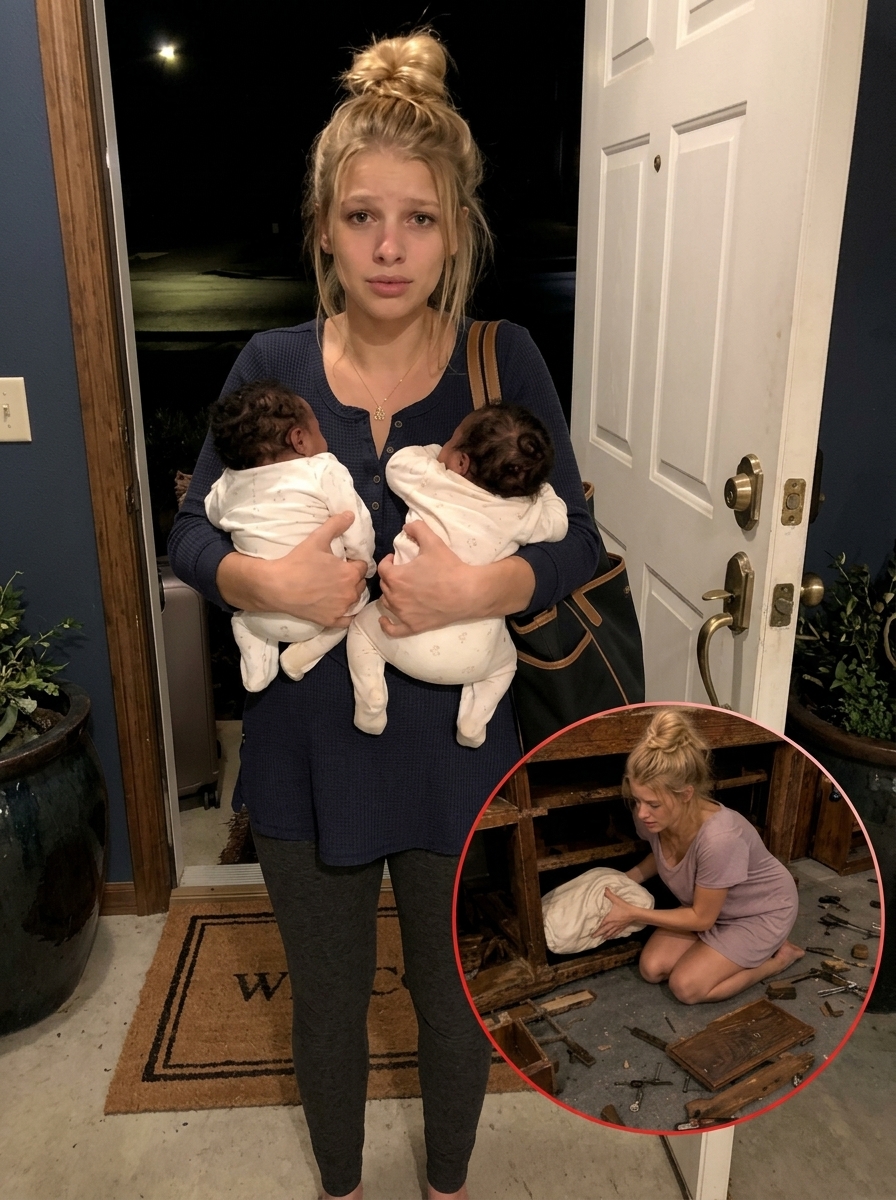
I packed her lunches and tucked little notes inside the napkins. I stayed awake until after midnight sewing a witch costume the evening before Halloween because she’d “forgotten” to tell me about the school parade until the last minute. At school, she’d unwrap her lunch and throw my note straight into the trash without reading it. I only knew because one of her friend’s mothers gently mentioned it over coffee.
“I’m only nice to you because Dad makes me,” my stepdaughter said one afternoon while absentmindedly stirring her cereal as though it had offended her.
I forced a smile.
“That’s okay, Em. You don’t have to be nice. You just have to be honest.”
She raised her eyes and gave me that emotionless stare.
“Fine. Then I think you’re the replacement.”
That single word stayed with me for years.
Replacement.
Meals I’d spent hours cooking somehow “accidentally” ended up on the floor. A pot roast mysteriously “slipped.” The birthday cake I’d baked for David toppled off the counter after being knocked over.
Still, I kept trying. I drove Emily to dance lessons, attended every recital, bought tampons before she ever had to ask, and applauded louder than anyone else when she graduated from middle school.
David witnessed every bit of it. He would gently squeeze my hand beneath the table and whisper, “Thank you. She’ll come around.”
She never did.
Then, after years of marriage, my husband suddenly collapsed at work.
A heart attack. Swift and unforgiving. By the time I reached the hospital, the doctors were already shaking their heads. David remained conscious just long enough to find my hand and squeeze it.
“Sarah,” he whispered.
I leaned in close.
“I’m here. I’m right here.”
“Please. Don’t give up on Emily. She’s angry about losing her mom, not at you.”
“I won’t. I promise.”
His eyes drifted toward the window as though searching for something beyond it. His words began to fade. His grip weakened.
“David?” I leaned even closer. “David, what were you going to do?”
A faint, apologetic smile crossed his face, like a man who simply ran out of time.
“Emily knows,” he breathed. “Ask Emily.”
A few minutes later, the monitor fell silent.
I remained there holding his hand long after the nurses stopped checking on me, replaying his final words over and over in my mind.
Emily knows what?
When I finally stepped into the waiting room, my stepdaughter sat curled up in the corner with her knees pulled to her chest, her eyes swollen red yet impossible to read.
I opened my mouth, ready to tell her what her father had said.
But something in her expression—closed off, guarded, almost fearful—made the words die in my throat.
The morning after David’s funeral, I woke to the sound of zippers closing.
Still wearing my robe, eyes swollen and throat raw from crying into his pillow all night, I walked down the hallway. Emily’s bedroom door stood open. Two suitcases rested on the bed with a duffel bag at her feet. She was eighteen, dressed entirely in black, her jaw set with determination.
“What does it look like?”
“Sweetheart, we just lost him. Please, let’s just sit down and…”
“There is no ‘we.'” She zipped the bag shut. “There never was.”
I stood frozen in the doorway, my hands trembling against the frame. I wanted to tell her about the promise. About her father’s hand slowly slipping from mine.
Instead, she brushed past me and hauled her suitcase downstairs. At the front door, my stepdaughter finally stopped and faced me.
“As long as you live in this house,” she said, “I’ll never come back.”
Then she stepped into the gray morning and walked away without turning around.
Five years.
That was how long the silence lasted.
I left her voicemail messages every holiday. I reminded her the porch light would always stay on and that I loved her, even if I wasn’t sure she’d ever listen. The house seemed to shrink a little more each year. I kept David’s workshop locked because opening it hurt too much. I left Emily’s bedroom untouched because I couldn’t bear to change it either.
Then, late last month, just after midnight, the doorbell rang.
I nearly ignored it. Good news never arrives at that hour.
But I answered.
The moment I opened the door, my knees almost buckled.
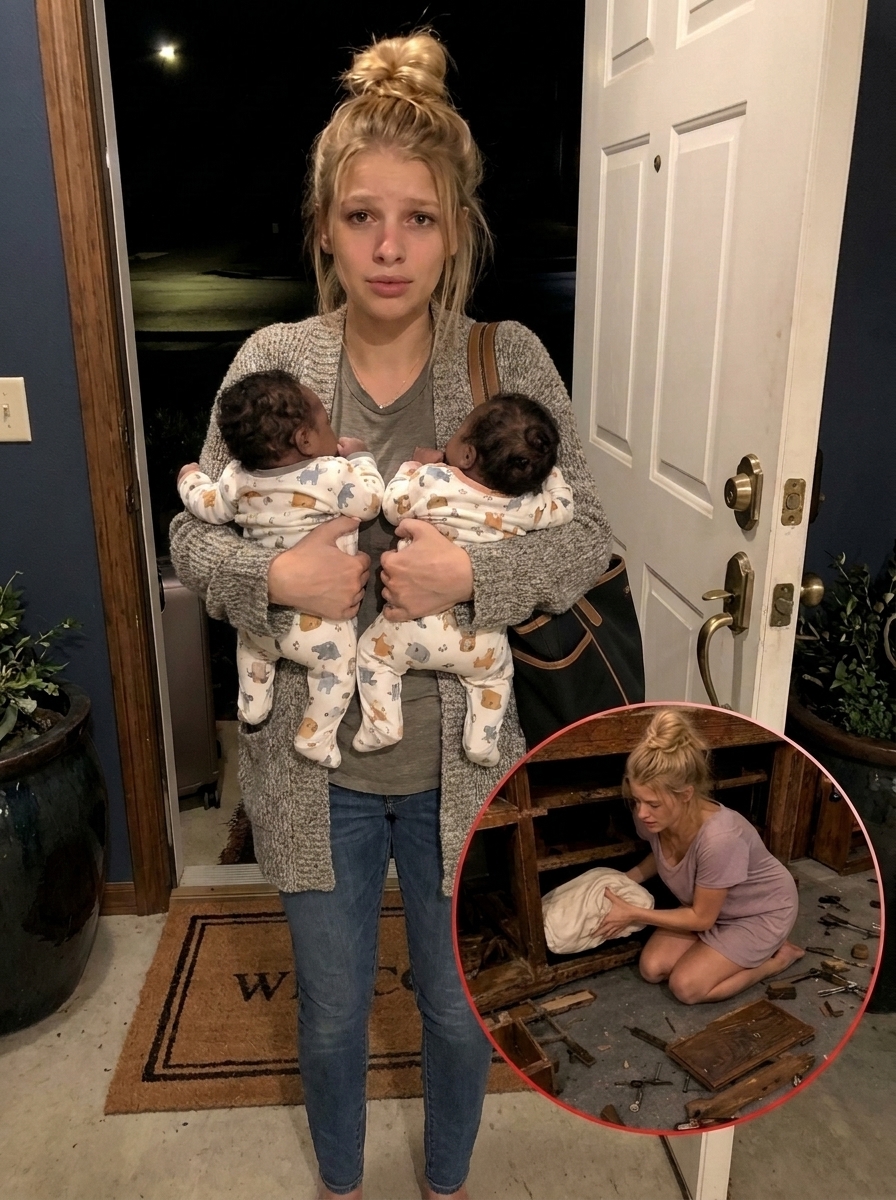
Emily stood on the porch wearing a thin jacket. She cradled a newborn baby in each arm, both wrapped in mismatched blankets. Behind her, a rideshare vehicle was already pulling away from the curb, and a diaper bag slumped beside her feet. She looked like someone who hadn’t slept in days.
“My boyfriend threw us out,” she whispered. “Please. I don’t have anywhere else to go.”
I didn’t hesitate for even a second. I reached out and took one of the babies before asking her name. Then I gently lifted the other before asking how old they were. Three weeks, she told me. Twin girls.
“Lily and Rose.”
Within just a few days, the house had transformed into a whirlwind of bottles, diapers, crying infants, endless laundry, sleepless nights, and the unique exhaustion that only newborn babies can create.
Emily stayed quiet and respectful. She thanked me for every meal, every diaper change, and every tiny onesie I folded in the middle of the night. But she never held my gaze for more than a moment.
I told myself not to rush anything. Maybe this was the second chance I’d long since stopped hoping for.
Last Thursday, Emily shuffled into the kitchen looking pale, one hand gripping the doorframe.
“Sarah, I think I’m running a fever. Would you mind taking the girls for a walk? I just need to sleep.”
“Of course, sweetheart. You rest.”
I tucked Lily and Rose into the stroller, pressed a kiss to Emily’s warm forehead, and headed out into the bright summer sunshine, completely unaware she’d spent five years waiting for the house to be empty.
I’d gone only three blocks before I realized I’d forgotten the twins’ sun hats. The July heat was already beating against the stroller canopy, and Lily had begun fussing from the warmth.
I turned around and headed home.
I slipped inside through the side entrance, making sure the screen door didn’t slam shut. Emily needed sleep, and the babies had finally drifted off peacefully.
Her bedroom door stood open.
When I looked inside, the bed was empty. The blanket had been thrown back as though she’d rushed out. The thermometer she’d shown me earlier rested untouched on the nightstand.
Then I heard it.
A heavy thudding sound.
Wood striking wood.
It was coming from the back of the house.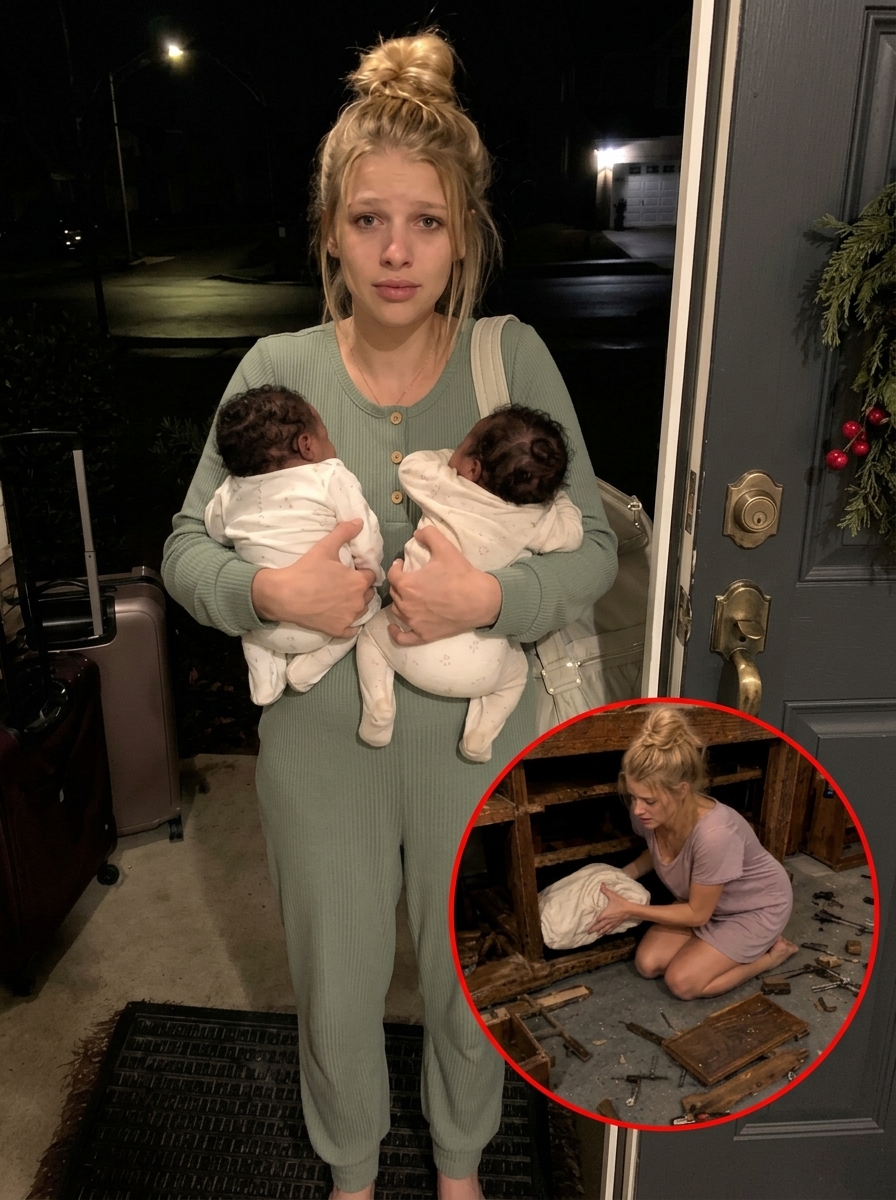
David’s old workshop.
That door had remained closed for five years. David had always kept it secured with a padlock, and after he passed away, I never found the strength to open it. I kept telling myself I’d remove the lock one day, clean everything out, and make the space my own.
One day never came.
The padlock stayed exactly where David had left it, turning the workshop into a quiet memorial.
Keeping the stroller beside me, unwilling to leave the twins alone, I slowly made my way toward the sound.
The broken padlock lay on the floor.
A crowbar rested beside it.
The moment I pushed open the workshop door, my heart nearly stopped.
David’s sturdy oak workbench had been dismantled.
Drawers were overturned across the concrete floor.
His tools were scattered everywhere, as though someone had been searching desperately for something.
Emily knelt in the middle of the mess.
She clutched a bundle wrapped in white fabric tightly against her chest.
I stared at her, unable to believe what I was seeing.
She froze the instant she noticed me.
“Oh my God,” I whispered. “What are you doing in here?!”
She said nothing.
Her eyes glistened with tears, but she refused to loosen her grip on the bundle.
“Emily.”
My voice trembled.
“What is that?”
“It’s yours,” she answered softly.
“What?”
“It always was,” Emily swallowed hard. “Dad asked me to give this to you the day he died. I hid it for five years. But now it’s time.”
The room seemed to spin.
I reached for the doorframe to steady myself while easing the stroller just inside beside me.
“Give it to me,” I said.
She slowly rose and carefully crossed the destroyed workshop.
Her hands trembled as she held it out to me.
I accepted it.
The wrapping was an old pillowcase I instantly recognized from a set we’d retired years ago.
I sat down right there on the dusty floor, keeping the stroller within arm’s reach.
Emily lowered herself across from me until our knees were almost touching.
Carefully, I unfolded the fabric one layer at a time.
Inside sat a small hand-carved wooden box.
A crooked letter “S” was carved into the lid.
David’s work.
I knew those hands.
I lifted the lid.
Inside rested a folded letter written in my late husband’s handwriting, a velvet pouch, and beneath them, a thick envelope bearing a notary seal.
I opened the velvet pouch first.
David’s mother’s wedding ring rolled gently into my hand, beautifully restored and polished until the stone sparkled in the light.
“He had it done for your anniversary,” Emily whispered. “He told me. He said he wanted to surprise you.”
Next, I opened the envelope.
It was the deed to a cabin on Pine Lake.
My name appeared across the top.
The color drained from my face.
Looking at my stepdaughter with David’s letter trembling in my hands, I whispered,
“Why now?”
My voice sounded fragile.
“Emily, why did you wait so long?”
She closed her eyes.
The first tear slid slowly down her cheek.
Her shoulders trembled as the truth finally came pouring out.
“He gave it to me that morning,” she whispered. “He said it was an anniversary surprise for you, that he’d tucked it away in the workshop for safekeeping until the day. Dad made me promise that if anything ever happened to him, I’d bring it to you.”
Her voice broke.
“Hours later, he was gone. I was barely an adult and still grieving Mom. I couldn’t go back in there. I ran before I could even get it, and every year after that, the thought of walking through that door again felt like dying twice.”
I lowered myself beside her on the dusty workshop floor.
“I ran from the guilt,” she said. “Not from you. Then I had Lily and Rose, and I finally understood what you’d done for me. I came back to give it to you. To give you back what was yours.”
I nodded, though I could barely process everything unfolding around me.
With shaking hands, I unfolded David’s letter and read it aloud.
He wrote about loving both of us.
He wrote about wanting a family that never measured who belonged and who didn’t.
When I finished reading, I wrapped my arms around Emily.
She cried like the frightened young woman who had lost everything in a single day.
“I’m so sorry,” she sobbed into my shoulder. “I’m so sorry!”
“You came home,” I whispered. “That’s what matters.”
Several months later, our kitchen was full of life again.
Sticky high chairs filled the room.
Mashed bananas decorated every surface.
Two laughing little girls happily rubbed oatmeal through their hair.
Emily handed me a cup of coffee across the counter.
I paused.
She didn’t seem to realize what she’d just done.
But I noticed.
I gently fastened Lily’s bib, kissed the top of her head, then Rose’s, and finally leaned over to kiss Emily too.
David’s framed letter hung above the mantel, quietly watching over all of us.
In the end, his greatest gift wasn’t the restored ring, the cabin, or even the words he left behind.
It was the daughter I was finally able to keep.
