

PART 1: THE TAKEOVER
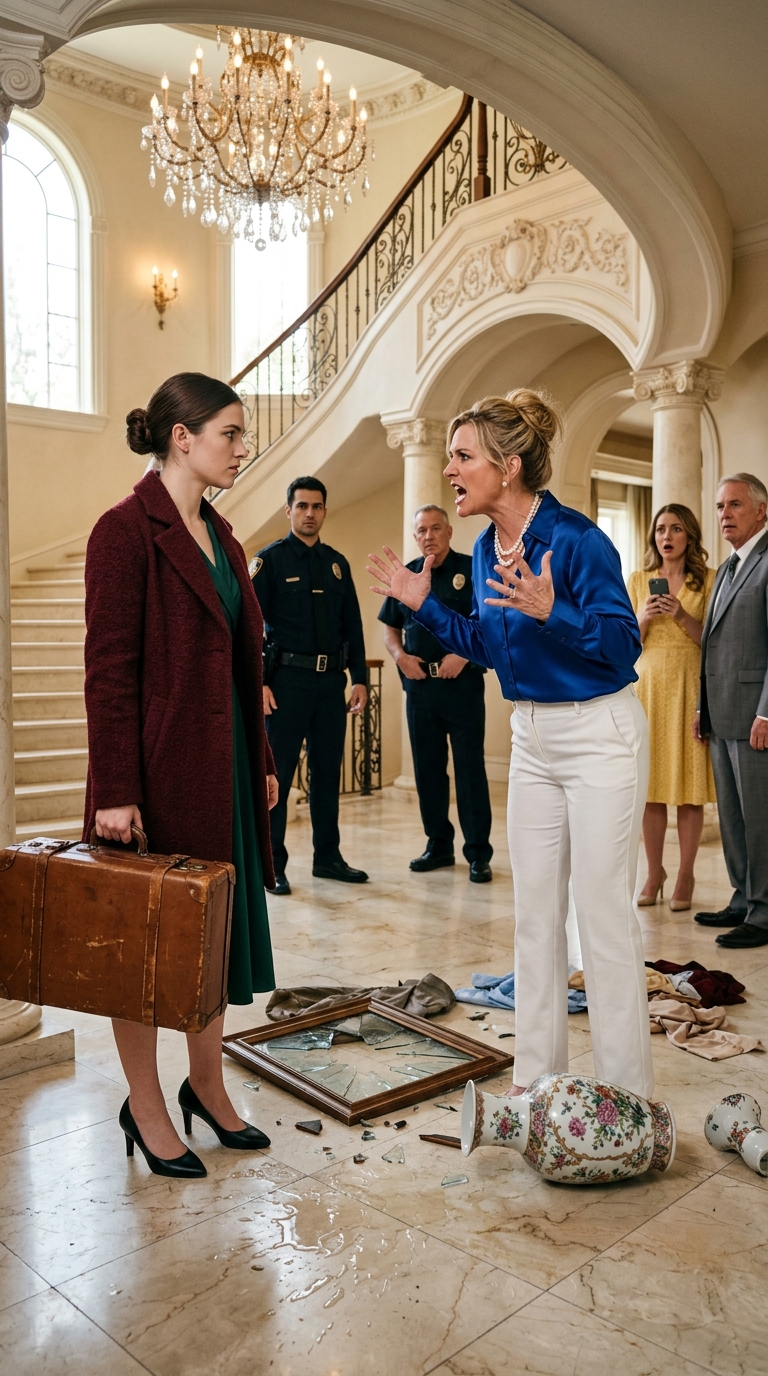
“Get out right now or I’m calling the police! My son bought this apartment for me!”
Those were the first words my mother-in-law screamed before I had even pulled my second suitcase fully through the front door.
For one surreal moment, I wondered if exhaustion had distorted reality. My flight from Boston had been delayed, my shoulder still throbbed from trying to sleep upright in seat 22C, and the zipper on my garment bag had burst somewhere between baggage claim and the parking garage. It was nearly eight on a gloomy Thursday evening in Atlanta, and all I wanted was to walk into my own apartment, kick off my shoes, pour myself a glass of water, and sleep for twelve uninterrupted hours.
Instead, Fiona Vance stood in my living room wearing a satin robe the color of stale champagne, hot rollers in her hair, and holding my grandmother’s favorite mug.
My grandmother’s mug. White ceramic with blue violets painted across it. A tiny chip marked the handle where I had dropped it when I was twelve, sobbing because I believed I had ruined something precious. Grandma Elise had simply smiled, glued the crack together, and told me, “Pretty things with chips still hold coffee, Maya. Don’t let anyone tell you different.”
Now Fiona’s bright red lipstick stained the rim. She stood there as though every inch of the apartment belonged to her.
Behind her, my home had been transformed into someone else’s fantasy. The framed photographs from the console table had disappeared: my parents at Lake Lanier, my sister Olivia laughing with powdered sugar across her face, and me holding the keys on closing day beside a cheap bouquet from the grocery store. My soft cream pillows had been swapped for stiff embroidered cushions that declared Bless This Home and Family Is Everything. A lace cover hung over my dining room chandelier as though Fiona had decided even light fixtures required modesty.
The entire apartment smelled of her perfume—faded roses mixed with entitlement.
I released the handle of my suitcase. “Fiona,” I said.
“Do not Fiona me,” she snapped, gripping the mug tighter. “You heard me. Get out. This is my home now.”
My name is Maya Sterling. I was thirty-one, recently separated from Fiona’s son, and standing inside the Atlanta apartment I had purchased three years before Arthur Vance ever entered my life. I bought it with my own salary. The deed carried only my name. Every renovation had been paid for with bonuses from the consulting career Arthur loved ridiculing until those same bonuses paid for the hardwood floors, new kitchen appliances, custom bookshelves, and the down payment he never contributed a single dollar toward.
I had spent six weeks in Boston helping my younger sister recover after emergency surgery. Apparently, six weeks was enough time for Arthur and Fiona to treat my absence like an invitation.
“This is my apartment,” I said.
Fiona laughed dramatically, the kind of laugh people use when they mistake arrogance for proof. “Oh, honey,” she drawled, stretching the word until it became an insult. “You really have no idea what’s happening, do you?”
I looked beyond her into my own living room. My linen curtains had been tied back with tassels I had never purchased. A framed needlepoint prayer hung where my abstract artwork once had. On the coffee table rested gossip magazines, half a lemon cookie, and Arthur’s old law school mug—even though he had quit after one semester and still described it as a sabbatical from destiny.
“Where are my things?” I asked.
Fiona flicked her manicured hand dismissively. “Stored.”
“Where?”
“Somewhere safe.”
“Fiona.”
Her expression hardened. “You abandoned this place, Maya. You left my son behind, rushed off to Boston, and expected everyone to pause their lives while you played nurse for your sister. Arthur made a decision. He decided someone dependable should be living here.”
Dependable. That almost made me laugh. Fiona Vance calling herself dependable was like a lit match claiming to be a fire inspector.
“Arthur made a decision about property that doesn’t belong to him,” I replied.
Her face tightened for only a moment. “My son bought this apartment for me,” she repeated, louder this time. “He signed papers. You don’t have the right to march in here dragging suitcases around like some bargain renter. This is a family home now, and you’re no longer part of this family.”
I glanced toward the hallway behind me. No neighbors had appeared yet, though someone had almost certainly heard us. Sound carried easily through high-rise hallways, especially among people who pretended not to eavesdrop while listening to every word.
Fiona stepped closer. “You were never good enough for Arthur,” she said. “You know that, don’t you? All those spreadsheets, business suits, and little corporate trips. You thought earning money made you a wife. It didn’t. A wife supports her husband. A wife doesn’t embarrass him by acting like she’s the man.”
There it was. The old wound wearing a fresh shade of lipstick.
Arthur had spent years saying gentler versions of the same thing. At first they sounded like jokes. “Maya’s the CFO of our marriage,” he would say whenever I paid the mortgage. “She loves her little reports.” Then came resentment. “Not everything is a client presentation, Maya.” Eventually it became mockery whenever one of his investment schemes collapsed while my paycheck kept our lives afloat. “Must be nice billing people six figures just to tell them what color their charts should be.”
Yet he never objected when my consulting income cleared his credit card after another “temporary liquidity issue.” He never mocked my bonuses when they financed the kitchen remodel he proudly called “our upgrade” in front of friends. He never complained about my spreadsheets when they organized our taxes, insurance, vacations, retirement savings, and the emergency fund he secretly tried to dip into twice.
Fiona slowly looked me over.
“You’re trash,” she said. “Expensive trash, maybe, but trash all the same.”
Something inside me became perfectly still.
I had imagined coming home very differently. I expected I might cry walking back into the apartment by myself because, despite the separation, it still carried memories of the years before marriage became a constant negotiation with a man determined to spend my stability while resenting me for providing it. I thought I might rest my hand on the kitchen counter and remember us comparing cabinet paint samples at midnight, drinking cheap wine from coffee mugs, laughing because we believed adulthood would be difficult but fair.
I never imagined finding his mother drinking from my grandmother’s mug while calling me trash.
The strange thing about finally reaching the end of your patience is that it rarely looks like anger.
Sometimes it feels almost peaceful.
One final door closes.
And you stop searching for kindness in people who have been showing you exactly who they are all along. I placed my second suitcase beside the first, then carefully laid my garment bag across both of them.
Fiona smirked, taking my silence as surrender. “That’s right,” she said. “Take your little bags and leave.”
I reached into the side pocket of my purse and pulled out my phone. She continued talking—about my lack of gratitude, about Arthur finally “setting things right,” about how women like me shouldn’t leave good men alone for too long if they expected to come back to the same life.
I let her finish.
Then I pressed a single button.
“Building security,” I said evenly when the front desk answered, “this is Maya Sterling in Unit 12B. There is an unauthorized occupant inside my apartment threatening me. Please come up immediately and bring the building manager.”
Fiona froze.
Only briefly.
But that brief hesitation told me everything.
She never truly believed Arthur owned the apartment.
She had simply counted on me panicking before anyone checked the paperwork.
For the first time that evening, I smiled.
“You have two minutes,” I told her, “to pick up your purse and leave on your own.”
She laughed directly in my face.
That was her mistake.
Exactly one minute and forty-three seconds later, Fiona Vance was standing outside in the hallway without my grandmother’s mug, shouting at security, while my husband had no idea the real catastrophe was only beginning.
PART 2: THE AUDIT
Removing Fiona turned out to be almost too easy.
The building manager, a meticulous woman named Harper who had congratulated me the day I bought the apartment, arrived with two security guards. She checked the ownership records on her tablet once, and that was enough.
Fiona cycled through every tactic she knew—outrage, tears, righteous indignation, and the familiar “I’m his mother” defense people like her rely on when the law stops favoring them.
Harper answered with a single sentence that still comforts me whenever I remember it.
“Mrs. Vance, your relationship to a man who does not own this property is irrelevant.”
Beautiful.
Security escorted her away while she shouted that Arthur would “fix this” and that I had “no idea what papers had already been signed.”
That last remark stayed with me.
Fiona was never clever enough to invent convincing lies. Whenever she got angry, she accidentally exposed the truth.
So after she was gone and Harper remained while the locks were changed, I walked straight to Arthur’s small office area.
The bottom drawer of his desk was locked.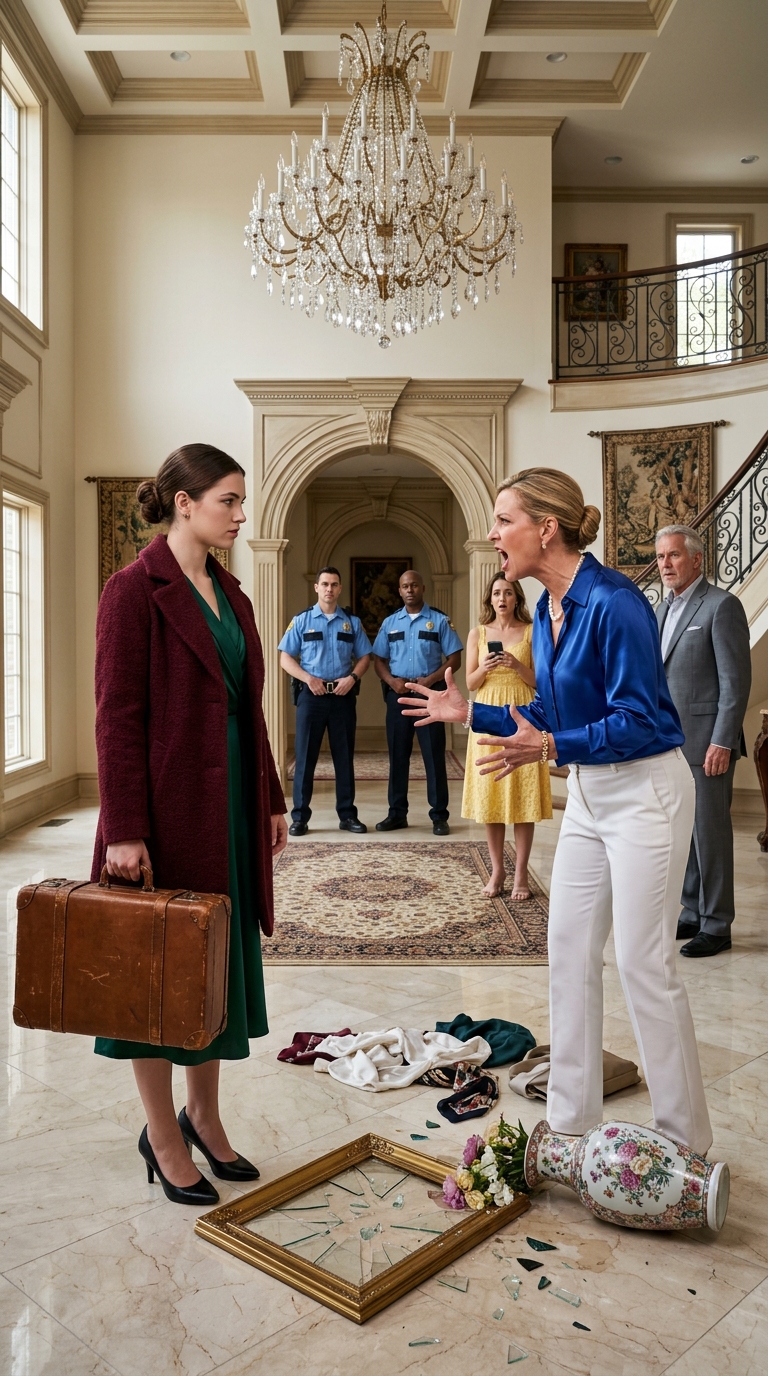
Arthur never locked anything unless he believed the lie still had enough time left to survive.
I went to the safe in my bedroom and retrieved my envelope of spare keys.
The third key unlocked the drawer.
Inside sat a blue folder labeled:
Transfer / Mother.
The first page made the room seem to sway.
Arthur had forged a “Limited Property Authorization” using a scanned version of my signature taken from an old refinancing packet. It wasn’t an actual deed transfer—he wasn’t capable of pulling that off—but it was a fake occupancy agreement and power-of-access document designed to establish Fiona as the apartment’s “resident manager” while I was supposedly “temporarily relocated.”
The wording was awkward but polished enough that, if it had reached the wrong bank, insurance company, or utility provider before I came home, it could have created weeks of administrative chaos.
The second document forced me into a chair.
It was an application for a business line of credit.
Applicant: Arthur Vance, Vance Equity Partners LLC.
Collateral/Asset Support: Family-controlled residential property, Midtown Atlanta, Unit 12B.
Owner Consent Documentation: Attached (My forged signature).
While I had been in Boston helping my sister learn to walk again, my husband had apparently been using my apartment as collateral to prop up a failing private investment venture he had repeatedly insisted was “doing great.”
The takeover of my apartment had never truly been about giving Fiona a place to live.
She was simply the distraction wrapped in perfume.
The real objective was leverage.
Move his mother into my apartment.
Create confusion over who occupied it.
Use forged documents to make the property appear jointly controlled.
Then quietly attach debt to it before I returned home in time to stop him.
He thought I would spend so much energy arguing with Fiona that I’d overlook the paperwork.
He was wrong.
I photographed every document and immediately forwarded the entire folder to my real estate attorney and family lawyer, Cynthia Thorne.
Then I called Arthur.
He answered on the second ring, sounding irritated.
“Did my mother calm down yet?”
I almost admired his confidence.
“No,” I replied. “But security did.”
Silence.
Then, much more cautiously:
“What does that mean?”
“It means your mother is standing in the hallway crying. It means the locks have been changed. And it means I’m holding the fake occupancy documents and your fraudulent credit application in my hand.”
The silence that followed stretched much longer.
When Arthur finally spoke, his voice had completely changed.
Not into an apology—men like Arthur rarely begin there.
Into fear.
“Maya,” he said, slipping into the calm, reasonable voice he always used whenever he wanted a woman to believe she was being irrational. “Don’t overreact. You don’t understand what those documents are.” I laughed.
“Too late,” I said. “I’m not reacting anymore. I’m filing.”
PART 3: THE BOARDROOM EXECUTION
Arthur arrived at my apartment shortly after nine o’clock. I knew before I saw him because Harper called from the front desk.
“Maya, Arthur Vance is in the lobby. Fiona is with him. He says he’s coming up.”
“Let him up,” I replied. “With security. And please make sure the hallway camera is recording.”
Before Arthur reached the twelfth floor, I called Cynthia and placed her on speakerphone on the entry table. I locked the deadbolt, fastened the chain, and secured the secondary latch. The blue folder rested squarely in the middle of the foyer.
The elevator chimed.
Footsteps.
Then Arthur knocked—firm, controlled, and heavy.
“Maya. Open the door.”
I looked through the peephole. Arthur stood outside wearing his navy blazer, the one he always chose when he wanted to appear respectable during a crisis. Fiona lingered near the elevator, her face flushed with humiliation.
“Maya,” Arthur repeated, his voice lower now. “Open the door. You’re making this much worse than it has to be.”
There it was.
As always, the problem was my reaction.
Never his betrayal.
“I’ve already forwarded the documents to my attorney,” I answered through the door. “They’re on their way to the bank’s fraud department and your employer’s ethics board.”
The color drained from his face.
“Why would you do that? You’ll destroy me.”
“No, Arthur. I’m simply refusing to protect you from the consequences of what you chose to do.”
Cynthia’s voice echoed from the speakerphone on the entry table, composed and devastating.
“Mr. Vance, this is Cynthia Thorne, legal counsel for Maya Sterling. You will not attempt to enter Unit 12B. You will not claim any interest in this property to any bank, investor, or third party. If you continue, this matter will escalate from civil fraud exposure to a criminal referral before midnight.”
Fiona finally found her voice.
“This is ridiculous!” she shrieked. “She is his wife!”
Cynthia let out a soft, dangerous laugh.
“No, Mrs. Vance. She is the sole owner of the apartment you were lawfully removed from earlier this evening. Your connection to her estranged husband creates no ownership rights. It creates noise.”
Arthur remained outside the door for another eleven minutes, firing off frantic text messages.
Not once did he type the words I’m sorry.
Eventually, security escorted both of them off the floor.
The following weeks unfolded with the cold, relentless rhythm of institutional accountability.
The bank suspended Arthur’s credit application while opening a criminal fraud investigation.
His employer—a respected investment advisory firm—received copies of his falsified asset declarations and terminated him within a month for serious ethical misconduct.
At our first official mediation session, the Vance family’s confidence completely unraveled.
Once Fiona realized Arthur had lost all leverage and that much of her retirement savings had been tied to his collapsing financial schemes, she hurried across the room and dropped to her knees. Arthur’s father stepped forward as well, and moments later Fiona was crying, clutching the edge of the conference table.
“Please, Maya,” she pleaded, every trace of her polished composure gone. “We’re family. Withdraw the fraud complaint. Save his career.”
I looked down at her without emotion.
“You stood in my living room, drank from my grandmother’s mug, and called me trash. Then you insisted your son owned the home I paid for.”
I gently removed her hand from where she had reached toward me.
“You only remembered we were family after the bill for your cruelty finally arrived.”
EPILOGUE
Our divorce became final nine months later.
Arthur accepted complete responsibility through a civil settlement covering every attorney’s fee, civil damage, and fraudulent misrepresentation. He also signed a permanent, non-negotiable legal waiver confirming that he possessed no ownership interest, occupancy rights, or future claim to Unit 12B.
Cynthia called it “the paper version of a permanent lockout.”
The day the divorce decree became official, I hosted dinner in my apartment.
My sister Olivia flew in from Boston, fully recovered.
Harper joined us.
So did Cynthia, carrying a bottle of wine so expensive I teased that she had added it to my legal bill.
We gathered around my dining table beneath the chandelier—which, thankfully, was no longer covered in lace.
After everyone had gone home, I stood beside the windows overlooking Atlanta’s endless lights.
The apartment was peaceful.
Spotless.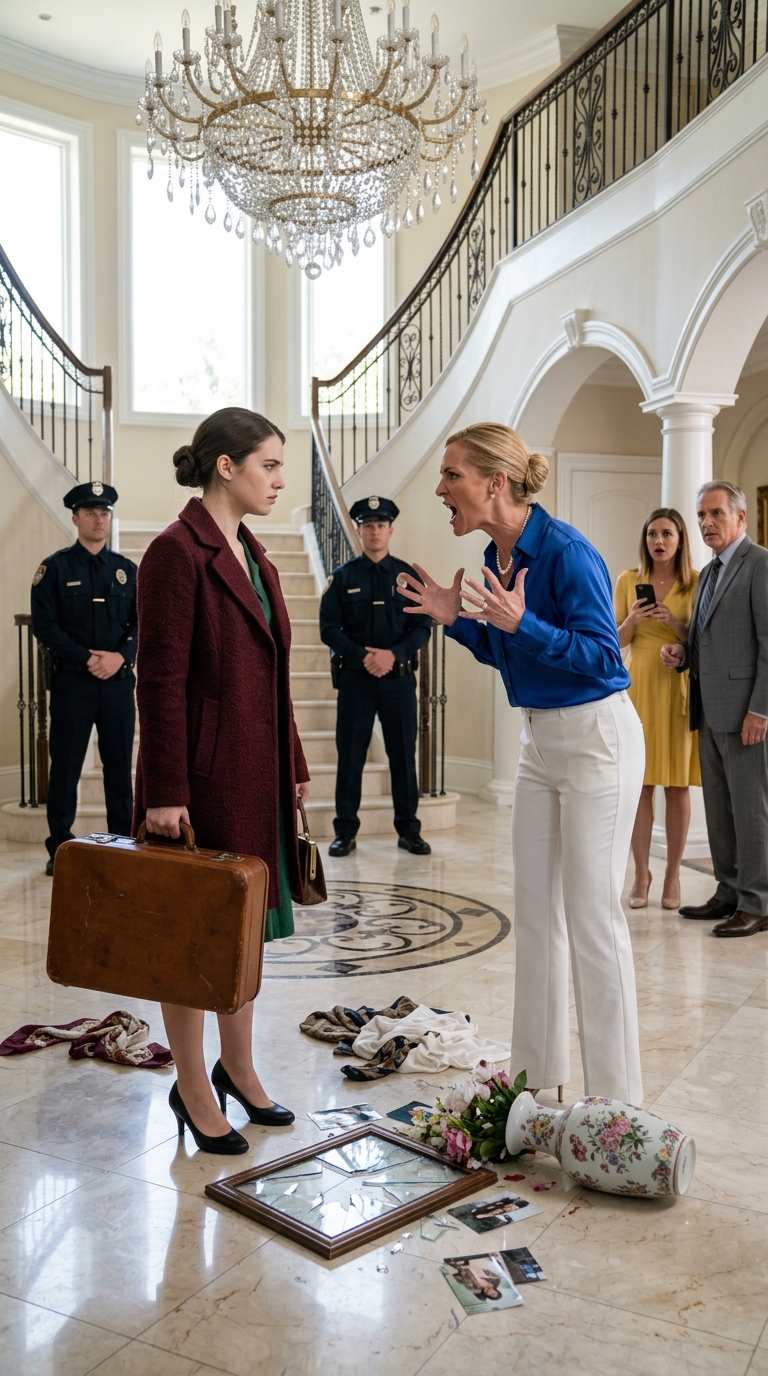
And completely mine.
I thought about people like Arthur and Fiona.
They rarely try to steal your life in one dramatic moment.
Instead, they slip in through small, calculated assumptions—a joke, a spare key, a mother wearing your robe, a signature copied from an old document.
They count on you focusing on the emotional wound while they quietly strip away everything underneath.
But I had spent too many years carefully building my life to let it be dismantled by people who mistook patience for permission.
I lifted my grandmother’s beautifully chipped mug, took a slow sip of tea, looked out across the city, and smiled.
The silence inside my home no longer felt dangerous.
It felt like peace.
