

PART 1
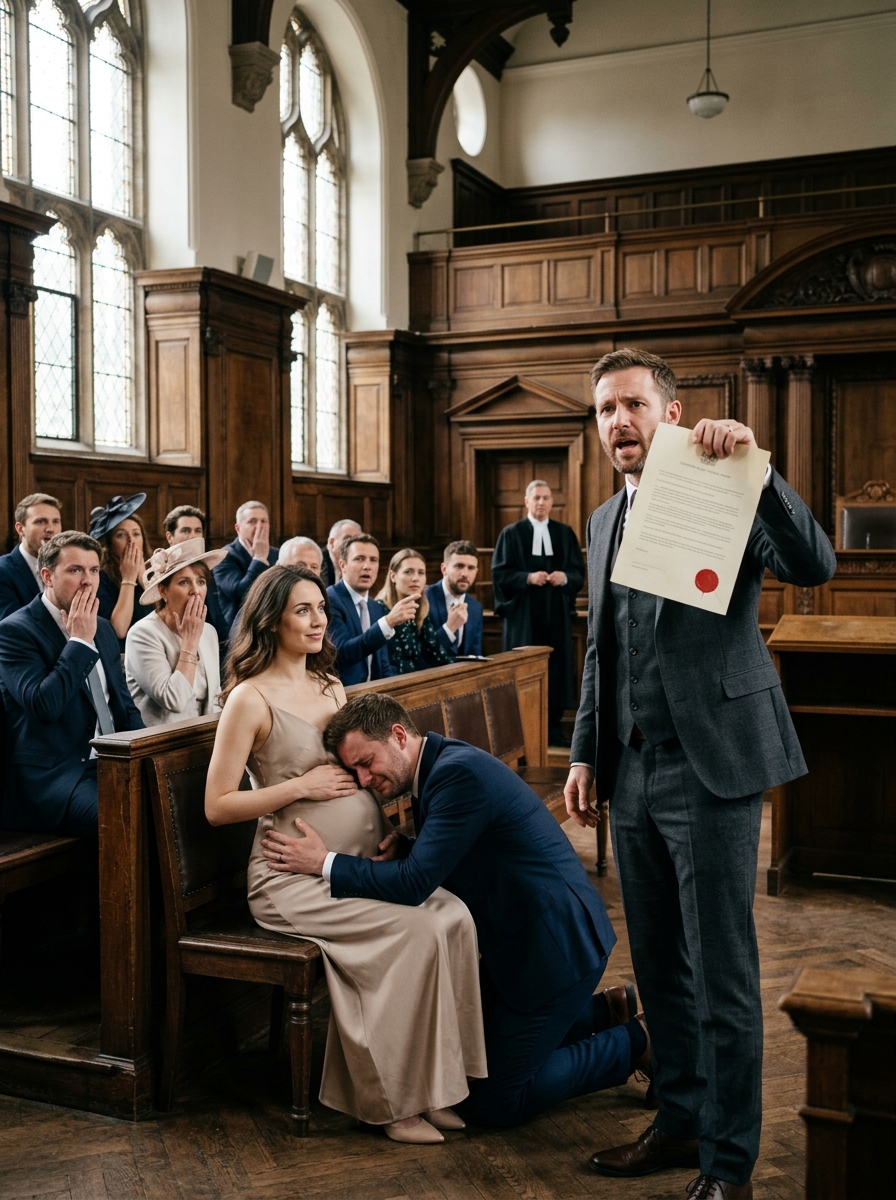
Calm and unmoved, I nodded to my attorney to activate the concealed “Infidelity Forfeit” provision.
The entire courtroom froze into silence.
The self-satisfied grin on my ex-husband’s face collapsed instantly when the judge revealed that his proven adultery had legally transferred his entire…
The courtroom became eerily quiet when my husband looked at me as though my fate had already been sealed.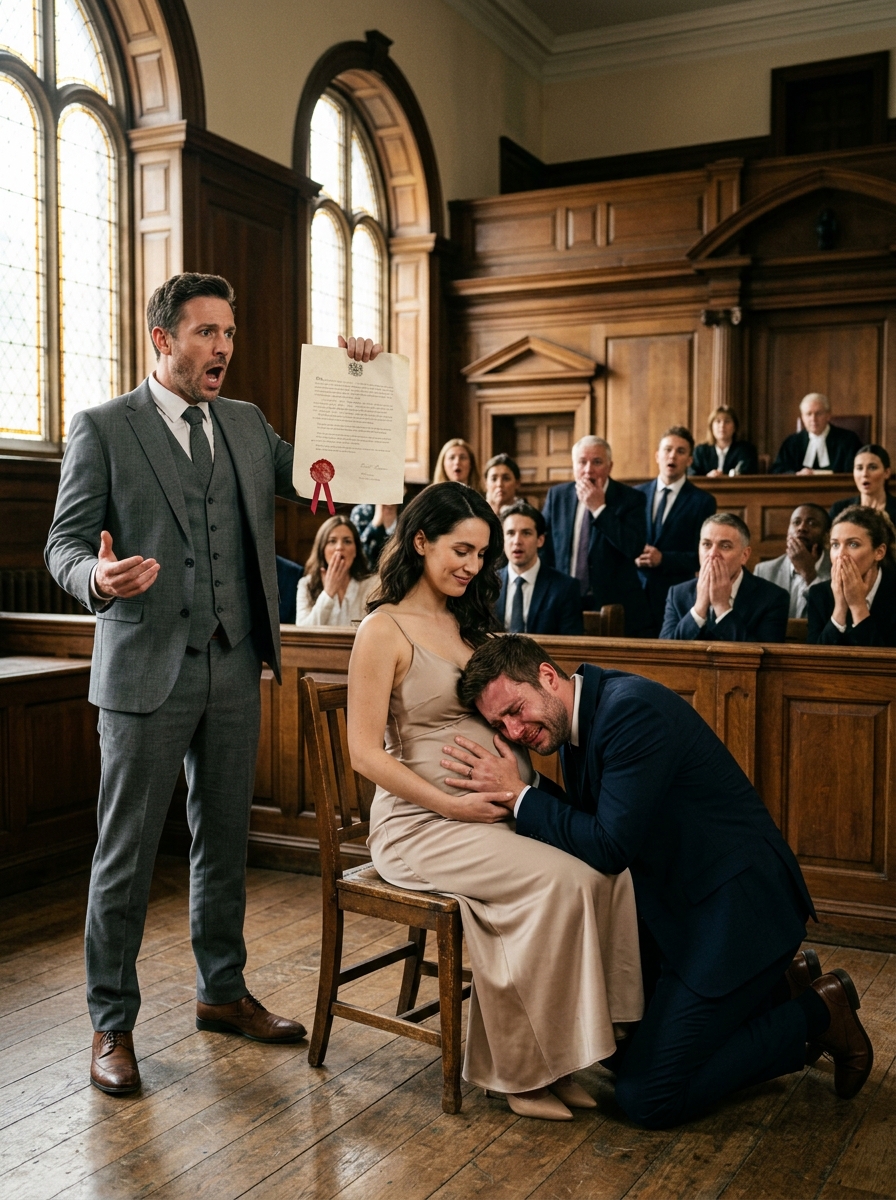
I was eight months pregnant, my feet swollen, my wedding ring gone, and my identity reduced to another entry in a billionaire’s divorce paperwork.
Richard Sterling reclined beside a wall of expensive attorneys, flawless in a charcoal suit worth more than the first vehicle I ever owned.
Seated behind him in the gallery, his twenty-three-year-old mistress crossed her legs and stifled a giggle behind her hand.
“Don’t look so frightened, Caroline,” Richard said, making sure those in the front row could hear. “This will be painless if you stop pretending you have leverage.”
My attorney, Miriam Vance, brushed my wrist beneath the table.
A warning. Stay still.
So I remained motionless.
Richard adored that. He always confused silence with surrender.
For six years, I had played the role he wanted: composed at charity galas, elegant beside him at shareholder dinners, smiling politely while he corrected my pronunciation of French wines I had studied years before he ever walked across the campus of his Ivy League university.
His relatives called me “graceful.”
His friends called me “lucky.”
Richard called me “manageable.”
Those weren’t the words he used the night I discovered the hotel receipts. That night, he called me hysterical. Then unstable.
And after I hired Miriam, greedy.
Now he intended to convince the judge that I had married him for wealth, trapped him with a pregnancy, and fallen apart when he “moved on.” His legal team portrayed me as fragile, emotional, and dependent.
His mistress, Sloane, wore winter-white silk and my sapphire earrings.
That was the first thing I noticed.
My grandmother’s earrings.
Richard followed my gaze and smirked.
“Consider them a preview of how little you’ll be taking home.”
The judge entered, and everyone rose.
My son kicked sharply beneath my ribs, as if protesting before I could.
Judge Harrison reviewed the documents with the weary patience of someone who had watched too many wealthy men mistake legal contracts for morality.
Richard’s lead attorney stood first.
“Your Honor, the prenuptial agreement is clear. Ms. Sterling waived all claims to marital property, corporate holdings, residences, trusts, and future appreciation of assets connected to Sterling Capital.”
He pushed a file forward.
“She leaves with the agreed settlement: one hundred thousand dollars and the personal belongings she brought into the marriage.”
Sloane whispered, “That’s generous,” and laughed again.
My throat tightened.
Not because I was afraid.
Because I remembered.
Richard slamming my laptop shut at midnight.
Richard insisting nobody would believe a pregnant woman suffering from “hormonal mood swings.”
Richard’s mother patting my hand over brunch and saying, “Sterling women endure quietly.”
But I had endured loudly when nobody was watching.
I copied emails.
Saved voicemails.
Photographed jewelry invoices.
Tracked shell-company payments.
And three weeks earlier, inside a locked records room beneath Richard’s family office, I discovered the clause they had forgotten was there.
Miriam rose deliberately.
“Your Honor,” she said, “before this court enforces the prenup, we ask to address a condition precedent embedded in Article Twelve.”
Richard’s smile faltered.
Only briefly.
But I noticed.
And for the first time that morning, I smiled back…
Richard’s lead attorney released a dismissive laugh.
“Article Twelve? Your Honor, opposing counsel is referring to an outdated family trust provision. It has absolutely no relevance to these proceedings.”
Richard leaned toward me, his voice low and sharp.
“Caroline, stop this. You’re embarrassing yourself.”
In the gallery, Sloane adjusted my grandmother’s sapphire earrings and giggled.
“Is she crazy?” she whispered to the associate seated beside her.
Miriam remained completely composed.
She opened a slim black folder.
“The clause is not outdated. It was specifically reaffirmed and signed by Richard Sterling himself in his 2018 succession agreement.”
She pressed a small remote.
The large courtroom monitor flickered on.
High-definition security footage filled the screen, accompanied by timestamped bank transfers and the lease agreement for a luxury Tribeca loft.
Sloane’s laughter vanished.
All color drained from Richard’s face.
A split second too late, he understood that I had not spent the last several months crying myself to sleep.
I had been auditing him…
The courtroom fell silent when my husband smiled at me as though I were already finished.
The room was vast and cold in downtown Manhattan, carrying faint traces of lemon polish, aging paper, and the metallic edge of nervous adrenaline. I sat at the petitioner’s table, eight months pregnant, my swollen ankles aching against the leather of practical flats. My wedding ring was gone, leaving only a pale imprint on my finger. To the law—and certainly to the man seated twenty feet away—my identity had already become another line in a billionaire’s divorce file.
Richard Sterling sat comfortably beside his battalion of elite attorneys. As always, he looked flawless, dressed in a custom charcoal suit worth more than my first car. His dark hair was perfectly styled, his expression relaxed. He carried the effortless confidence of a man who had rarely heard the word “no.”
Behind him in the polished oak gallery, his twenty-three-year-old mistress, Sloane Kensington, crossed her long legs and giggled quietly behind a manicured hand.
“Don’t look so frightened, Caroline,” Richard said. He made no effort to lower his voice. The courtroom’s acoustics carried his smooth tone effortlessly to the spectators in the front row, most of whom were his devoted junior partners. “This will be completely painless if you just stop pretending you have any leverage.”
Beside me, Miriam Vance shifted slightly in her chair. Without looking at him, she reached beneath the heavy mahogany table and pressed two cool fingers against my wrist.
A warning. Stay still. Don’t react.
So I obeyed.
My expression remained blank.
I stared straight ahead at the judge’s empty bench.
Richard loved that.
He could probably feel my silence and mistake it for defeat.
He always had.
For six years, I played precisely the role he wanted: the soft-spoken wife at endless charity galas, the polished companion at ruthless shareholder dinners, the woman who smiled politely while he corrected my pronunciation of French wines I had studied long before he ever stepped onto his Ivy League campus.
His family—the royalty of New York private equity—called me “graceful.”
His friends called me “lucky.”
Richard called me “manageable.”
He stopped using those words the night I discovered the hotel receipts.
That night he called me hysterical.
Then unstable.
Then, after I packed a single suitcase, moved into a modest Brooklyn rental, and hired Miriam, he called me a greedy, ungrateful parasite.
Now he wanted the court to believe the same story his public relations team had spent months feeding to the tabloids: that I was a gold-digger who trapped him with a calculated pregnancy and suffered a breakdown when he “moved on” in pursuit of happiness. His attorneys had spent ninety days portraying me as fragile, emotional, and dependent upon his generosity.
Sloane shifted behind him.
She wore winter-white silk.
And my sapphire earrings.
I recognized them instantly.
The deep ocean-blue stones.
My grandmother’s earrings.
The pair I had left in the penthouse wall safe.
Richard followed my eyes.
He leaned back slightly, met my gaze, and widened his smirk into a triumphant grin.
“Consider them a preview,” Richard whispered, “of exactly how little you’ll be taking home today.”
The courtroom doors swung open.
The bailiff cleared his throat.
“All rise for the Honorable Judge William Harrison.”
Everyone stood.
As I pushed myself upright, my son kicked sharply beneath my ribs.
It felt as though he objected to the proceedings before I even spoke.
Judge Harrison took his seat.
He was a man in his late sixties with the weary patience of someone who had spent decades watching wealthy men confuse financial agreements with human decency.
He adjusted his glasses and glanced down at the towering stack of files before him.
Richard’s lead attorney, Marcus Thorne, was on his feet almost immediately.
“Your Honor,” Thorne declared, his voice thick with practiced superiority, “we are here to finalize a straightforward matter. The prenuptial agreement signed by the petitioner is ironclad. Ms. Sterling explicitly waived all claims to marital property, corporate holdings, primary and secondary residences, family trusts, and any future appreciation tied to Sterling Capital.”
He slid a thick binder toward the clerk.
“She leaves this marriage with the agreed-upon settlement: a one-time payment of one hundred thousand dollars and the personal belongings she physically brought into the marriage six years ago. Nothing more.”
From the gallery, Sloane whispered, “That’s incredibly generous,” and laughed softly again.
My throat burned.
Not from fear of losing money.
From memory.
I remembered Richard six months earlier, slamming my laptop shut so violently the hinge cracked, insisting nobody would believe a pregnant woman suffering from “hormonal mood swings.”
I remembered his mother, Eleanor Sterling, patting my trembling hand during a tense brunch and saying, “Sterling women endure quietly, Caroline. Don’t make a mess.”
But I had not endured quietly.
I had simply endured where nobody could see.
Judge Harrison peered over his glasses toward our side of the courtroom.
“Counselor Vance? Does the petitioner have a response before I sign off on this waiver?”
Miriam stood.
Unhurried.
She straightened her navy blazer, picked up a single slim black folder, and looked directly at Richard.
“We do, Your Honor,” Miriam said calmly. “Before this court enforces the prenuptial agreement, we ask to address a specific condition precedent. One that the respondent appears to have forgotten.”
Richard’s smirk disappeared.
Three months earlier.
The penthouse air always felt sterile and filtered, stripped of the energy of the city fifty stories below. It was less a home than a museum curated by Eleanor Sterling to display Richard’s growing fortune.
I was simply another exhibit placed among the velvet furnishings.
The manipulation hadn’t begun with shouting or broken objects. It started with tiny distortions of reality. A missing credit card Richard insisted I had misplaced, only for me to later discover it tucked inside his briefcase. A dinner reservation he claimed I forgot to make, despite the confirmation email sitting plainly in my inbox.
“You’re just tired, Caroline,” he would say, brushing a kiss across my forehead that felt more like a mark than affection. “Pregnancy brain. You need to rest. Let me handle the complex things.”
I held a master’s degree in forensic accounting from the University of Chicago. Before Richard proposed, I spent my days auditing Fortune 500 corporations, tracing hidden assets through sprawling corporate mazes. Yet in Richard’s version of reality, my education was little more than an amusing pastime I had abandoned to fulfill my real purpose: coordinating catering staff for his company’s quarterly retreats.
Everything changed on a rainy Tuesday in October.
Richard was supposedly in London, according to his travel schedule. I entered his home office searching for a stamp. His secondary laptop—the one reserved exclusively for Sterling Capital communications—sat open on the mahogany desk. A notification appeared on the screen.
It wasn’t an email from London.
It was a digital receipt from the Grand Meridian Hotel, located only twelve blocks away in Midtown Manhattan.
Room 412.
In-room dining.
Two glasses of Dom Pérignon.
Strawberries.
One massage.
I stood motionless, the screen’s blue glow reflecting against my pregnant stomach as a cold knot of dread tightened inside me.
I opened the receipt.
The charges were billed to a corporate card I didn’t recognize.
I clicked deeper, old instincts overriding the shock threatening to paralyze me. Using access credentials Richard had forgotten to revoke after once assigning me to organize his family’s digital photo archives, I entered his linked cloud storage.
There were folders.
Dozens of them.
Not just hotel receipts.
Jewelry invoices.
A lease agreement for a luxury loft in Tribeca.
A consulting contract tied to a company called Kensington Strategies.
When Richard finally came home twelve hours later, carrying the scent of vetiver, jet fuel, and someone else’s expensive perfume, I was waiting.
The printed receipts lay spread across the glass coffee table like cards predicting disaster.
I didn’t scream.
I simply asked him who Sloane Kensington was.
Richard didn’t hesitate.
He picked up the papers and calmly tore them in half.
Then into quarters.
“You’re invading my privacy, Caroline,” he said in a chillingly flat tone. “These are corporate expenses for a client. You wouldn’t understand the structure.”
“There’s a receipt for a diamond tennis bracelet, Richard. What client requires a tennis bracelet?”
He stepped forward until he towered over me.
For the first time, the warmth of his presence felt threatening.
“You are becoming unhinged,” he whispered, his eyes empty and dark. “Look at yourself. You’re shaking. You’re paranoid. If you ever, ever, breach my private firm documents again, I will have you committed. Do you understand me? Who do you think a judge will believe? The CEO of Sterling Capital, or a hormonal housewife having a paranoid break?”
The following morning, every one of my credit cards was declined.
The passwords to our joint accounts had been changed.
The household staff stopped meeting my gaze.
Eleanor Sterling called to warn me that if I humiliated her son with my “baseless jealousy,” she would personally make sure I never again stepped into Manhattan society—or saw my own child.
They believed they had trapped a songbird inside a golden cage.
They believed I would remain on the perch and cry.
But as I sat alone in that silent, sterile penthouse, feeling my son kick against my ribs, the fear slowly disappeared.
What remained was something harder.
Colder.
A diamond forged from pure rage.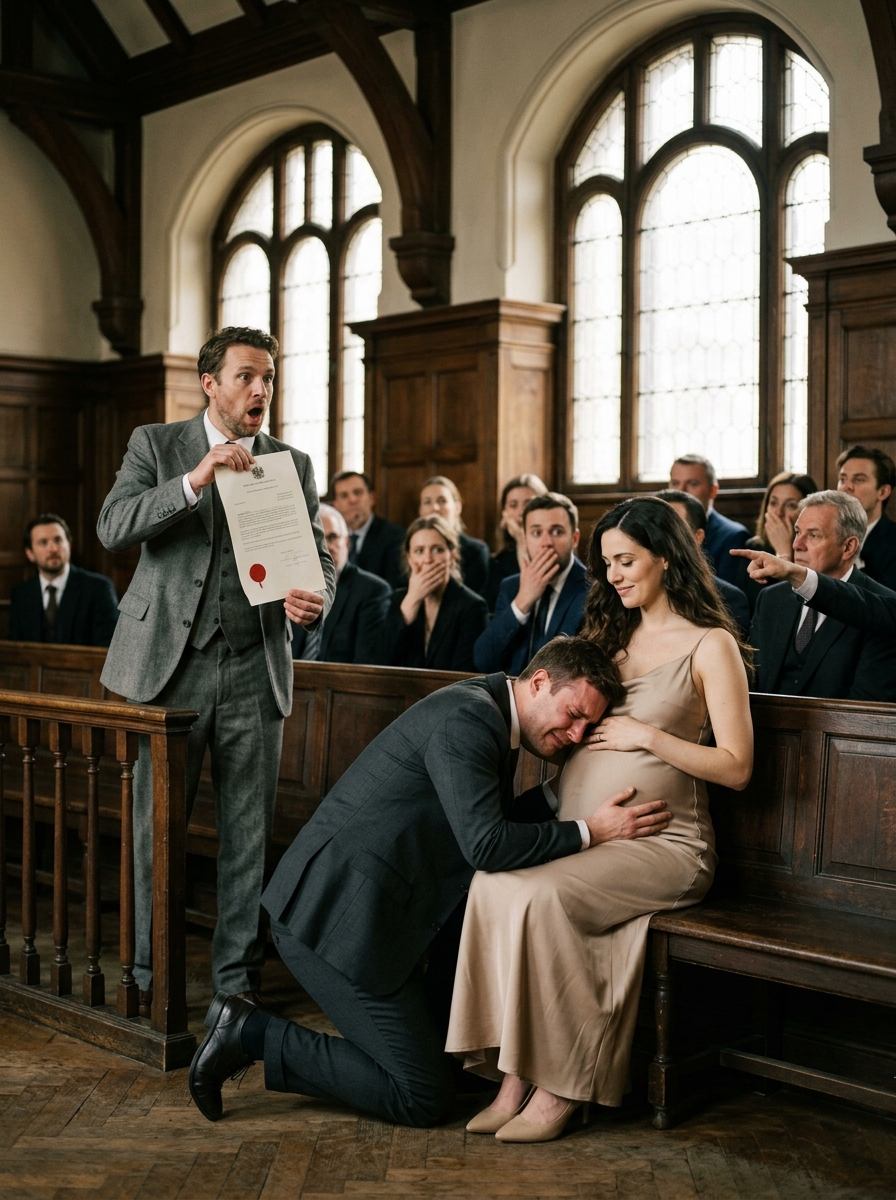
If Richard wanted corporate warfare, he had forgotten one critical fact.
I was the auditor.
I waited until midnight, when the lobby security team rotated shifts.
Then I slipped out of the penthouse, rode the private elevator to the sub-basement, and approached the reinforced steel entrance to the Sterling family archives.
A place Richard hadn’t entered in over a decade.
I entered the four-digit code—his grandfather’s birth year.
The lock clicked.
The heavy door swung open.
I stepped inside and quietly closed it behind me.
The locking mechanism engaged with a deep, final thud.
The archive smelled of aging leather, dry decay, and the metallic scent of inherited wealth.
It was a vast climate-controlled bunker lined with steel shelves containing a century of Sterling family records, tax returns, and original corporate charters.
The only sound came from the steady hum of a dehumidifier in the corner.
My back ached.
At six months pregnant, squeezing through narrow aisles stacked with heavy boxes was exhausting.
Dust drifted through the beam of my flashlight.
Richard’s grandfather, Edmund Sterling, had founded Sterling Capital in the late seventies.
He was infamous for his ruthlessness.
To Edmund, family members weren’t loved ones.
They were extensions of the corporation.
He controlled every dollar.
Every marriage.
Every divorce.
Years earlier, after too many glasses of scotch, Richard casually mentioned that Edmund had forced every Sterling heir to sign an extreme marital agreement before inheriting voting shares.
Richard had laughed about it.
Called his grandfather a paranoid tyrant.
Boasted that modern lawyers had updated the prenup to make it invincible against “gold diggers.”
But I understood how legacy law firms operated.
Old provisions were rarely removed.
They were simply buried beneath layers of newer legal language.
I spent four hours underground.
Dust blackened my fingers.
My swollen feet throbbed relentlessly.
I pulled ledger after ledger from the shelves, sneezing into my arm to keep quiet.
I ignored recent tax filings and property deeds.
I was searching for the foundation.
The original framework.
At 3:15 AM, on the lowest shelf of a forgotten rack tucked into the back corner, I found it.
A black leather binder.
Its faded gold lettering read:
E.S. – Succession & Marital Directives, 1994.
I carried the heavy binder to a small reading table, switched on a solitary overhead light, and opened it.
The pages were thick and typed on an old IBM Selectric.
I skimmed past asset waivers.
Non-disclosure agreements.
Clauses covering death and disability.
Then, buried on page forty-two beneath a section labeled Preservation of Institutional Integrity, I found exactly what I had been looking for.
Article Twelve.
The Infidelity Forfeit Provision.
I read it once.
Then again.
My heart pounded against my ribs.
Edmund Sterling despised scandal even more than poverty.
During the early nineties, Richard’s uncle had nearly destroyed the company’s reputation through a notorious affair involving a rival’s wife.
To prevent history from repeating itself, Edmund had inserted a poison pill into every family trust document.
“Should any beneficiary holding voting control of Sterling Capital engage in documented adultery, and subsequently attempt to financially dispossess the betrayed spouse through bad-faith enforcement of prenuptial waivers, said beneficiary shall immediately forfeit all voting shares. Said shares shall transfer irrevocably into trust for any legitimate minor child born of the marriage, with the betrayed spouse serving as sole trustee with full voting authority until the child reaches the age of twenty-five.”
It was archaic.
Savage.
A financial execution order.
And Richard had reaffirmed this exact trust structure when he became CEO in 2018.
I knew because I watched him sign it.
He barely looked at the eighty-page document, scribbling his signature over breakfast before tossing it aside and complaining that his eggs were cold.
Then a sudden sound echoed from the hallway.
Footsteps.
Heavy.
Deliberate.
Approaching the archive room.
I froze.
The flashlight trembled in my hand.
It was four in the morning.
No one came down here.
Security guards never inspected the storage units unless an alarm had been triggered.
The brass handle began turning.
A key slid into the lock.
The metallic scrape sounded deafening in the silence.
I switched off the flashlight instantly.
Darkness swallowed the room.
Pressing myself against a cold steel shelving unit, I held my breath until my lungs ached.
The door opened slightly.
A thin strip of fluorescent light spilled across the concrete floor.
“Hello?” a voice called.
A maintenance worker.
Bored.
Exhausted.
“Anyone in there? Motion sensor pinged on the board.”
I stayed perfectly still.
I silently prayed my son wouldn’t choose that exact moment to start kicking.
The worker lingered for ten agonizing seconds.
Then, muttering about faulty wiring, he pulled the door closed.
The lock clicked.
I released a shaky breath.
The sound seemed impossibly loud in the darkness.
Five minutes later, I turned the flashlight back on.
I photographed every page of Article Twelve.
Carefully.
Making sure each signature and line of text was crystal clear.
Then I returned the binder exactly where I had found it and smoothed the surrounding dust to erase any evidence of my visit.
The following day, I contacted Miriam Vance.
Miriam wasn’t the kind of divorce lawyer whose face appeared on billboards.
She was a former federal prosecutor who specialized in corporate misconduct before transitioning into family law.
We met in a rundown diner in Queens, far from the Michelin-starred restaurants frequented by Richard’s associates.
When I slid the printed photographs of Article Twelve across the sticky Formica table, Miriam adjusted her reading glasses.
She read in silence for nearly three minutes.
When she finally raised her eyes, they gleamed with a sharp, predatory intensity.
“He signed a reaffirmation of this?” she asked quietly.
“In 2018,” I said. “I saw him do it.”
“This is a loaded gun, Caroline,” Miriam said, tapping the document. “But a contract means nothing without evidence that activates it. We need documented adultery. We need proof he’s diverting marital assets to support the affair. And we need him to walk into court and attempt to use the prenup to leave you with nothing. That’s what triggers the bad-faith provision.”
“I can get the proof,” I replied. “I know exactly how he hides his money.”
Over the next two months, while I boxed up my belongings and settled into a small Brooklyn apartment under the appearance of a “hysterical, defeated wife,” I got to work.
Using a burner laptop, I traced consulting payments flowing into Kensington Strategies. I compared the dates of Richard’s so-called business trips to London against Sloane’s public Instagram posts, matching locations and timestamps.
I uncovered the shell company used to rent her Tribeca loft.
I found the invoice for the sapphire earrings Richard had taken from my safe and gifted to her.
I built spreadsheets.
Created timelines.
Piece by piece, I assembled a forensic case so airtight that even the best white-collar defense team would struggle to find a way through it.
Richard believed I spent every night crying myself to sleep.
He thought the isolation and intimidation were slowly crushing me.
He sent mocking messages, offering me scraps if I would simply sign the divorce papers and disappear quietly.
Don’t make this ugly, Caroline, he texted one evening. You have no money to fight me. Think of the baby.
I sat alone in the darkness of my modest apartment, staring at the glow of my phone. Around me were stacks of financial records proving he had funneled more than three million dollars in marital assets to a twenty-three-year-old influencer.
I am thinking of the baby, I thought as I shut my laptop. I’m securing his empire.
But first I had to survive the humiliation.
I had to allow Richard to drag me into court.
I had to let him stand before a judge and attempt to leave me with nothing.
The trap would not spring until he willingly stepped into its center.
And now, inside Judge Harrison’s cold courtroom, the jaws of that trap were seconds away from closing.
Miriam held the thin black folder in both hands while silence stretched across the room until it felt heavy enough to crush my chest.
“Your Honor,” Miriam repeated, turning toward Richard’s lead counsel, “we are invoking Article Twelve of the Sterling Family Trust, incorporated into the prenuptial agreement.”
Thorne responded with a loud, dismissive laugh.
He glanced around the courtroom as though inviting everyone to share in a joke.
“Article Twelve?” he scoffed, waving his hand. “Your Honor, opposing counsel is resorting to theatrics. They’re referring to an outdated, obsolete provision drafted by a paranoid old man thirty years ago. It has absolutely no relevance to these proceedings.”
Richard leaned forward, resting his elbows on the table.
His eyes narrowed as they fixed on me.
“Caroline, stop this,” he hissed quietly. “You are embarrassing yourself. For God’s sake, have some dignity.”
Behind him, Sloane released a delighted little gasp and whispered loudly to the associate seated beside her.
“Is she crazy?”
Miriam remained unfazed.
She opened the folder.
“Your Honor, the clause is not obsolete. It was expressly reaffirmed by the Sterling Capital Board of Directors and personally signed by Richard Sterling on page forty-seven of his 2018 succession agreement. I have copies for the Court and opposing counsel.”
Miriam’s assistant stepped forward carrying a thick bound volume.
The bailiff delivered one copy to the judge.
Another landed directly on Thorne’s desk with a heavy thud.
Thorne grabbed it immediately.
His eyes raced across the highlighted language.
The color slowly drained from his face until he resembled aged parchment.
“The Infidelity Forfeit Provision,” Miriam read aloud, her voice clear and commanding, “states that if the controlling shareholder commits documented adultery, conceals marital assets, and subsequently attempts to dispossess the betrayed spouse through enforcement of the prenuptial agreement, the waiver becomes void. Furthermore, all voting shares must immediately transfer into trust for the legitimate minor child of the marriage.”
Richard froze.
The relaxed arrogance disappeared instantly.
His posture straightened.
His eyes locked onto Miriam.
In the gallery, his mother, Eleanor, seemed to stop breathing altogether.
She leaned forward, gripping the oak pew so tightly that her knuckles turned white.
“This is absurd,” Richard snapped, the polished confidence vanishing from his voice. “We are not living in the Victorian era. You cannot use a morality clause to seize corporate equity.”
“We are not in the Victorian era, Mr. Sterling,” Miriam replied calmly. “We are operating under Delaware contract law. And you signed the contract.”
“There is no documented adultery!” Thorne shouted, finally finding his voice again. “My client’s personal life has absolutely nothing to do with—”
Miriam pressed a button on the small remote in her hand.
The courtroom monitor illuminated.
The first image appeared.
Not a grainy paparazzi photo.
A sharp, high-definition security image from the Grand Meridian Hotel lobby.
Richard, dressed in a custom tuxedo, walking toward the elevators with his hand resting low against Sloane’s bare back.
The timestamp displayed a date exactly three months earlier.
Click.
A photograph from a private villa in St. Barts.
Richard and Sloane standing together on a balcony.
Click.
A bank wire transfer.
$500,000 sent to Kensington Strategies.
Click.
A lease agreement for the Tribeca loft.
Signed by Richard.
Listing Sloane as the primary resident.
“Objection!” Thorne shouted, springing to his feet so abruptly that his chair screeched across the floor. “These documents are unverified! This is a blatant invasion of privacy!”
“They were stored on a shared family cloud account, Your Honor,” Miriam replied evenly. “My client had complete legal access to those files. We also possess the corporate ledger demonstrating that Mr. Sterling charged the St. Barts trip to Sterling Capital’s executive security budget, effectively blending company expenditures with his extramarital affair.”
Sloane’s smile vanished.
She looked at the screen.
Then at Richard’s furious attorneys.
Then back at Richard.
“Richard…” she whispered, her voice shaking. “What is she talking about?”
He never looked at her.
He couldn’t.
His gaze remained locked on the monitor as the elaborate structure of lies he had built was dismantled piece by piece.
For the first time in six years, Richard truly saw me.
Not the quiet, manageable wife.
Not the pregnant woman he had mocked and discarded.
He saw the auditor.
He saw the woman who had spent months patiently turning his own arrogance into the rope tightening around his neck.
“You followed me?” he hissed across the courtroom, his face twisting with pure hatred.
“No, Richard,” I answered softly, ensuring only he could hear. “I just did the math.”
The gallery erupted into a storm of hushed whispers.
Eleanor Sterling rose to her feet, her face burning with anger.
“This is a private family matter!” she declared, her aristocratic outrage trembling through every word. “Turn off that screen!”
Judge Harrison struck his gavel.
The sharp crack silenced the courtroom immediately.
“Madam, you will sit down and remain silent, or I will instruct the bailiffs to remove you from my courtroom.”
Eleanor lowered herself into her seat slowly, looking as though she had just been struck.
Thorne desperately tried to regain control.
“Your Honor, even if these allegations were true, the clause is punitive and completely unenforceable! You cannot strip a CEO of voting control because of a marital dispute!”
“The clause was created specifically to protect the institutional integrity of Sterling Capital from this exact type of reckless and financially damaging conduct,” Miriam replied. “And because Ms. Sterling is carrying the only legitimate heir currently recognized under the succession agreement, the contract clearly states she will serve as sole trustee, with full voting authority, until the child reaches twenty-five.”
I watched Sloane’s expression twist with confusion and panic.
She jumped to her feet despite the bailiff’s warning stare.
“Only legitimate heir?” Sloane demanded, her voice sharp and shrill. “Richard, what does she mean? Tell them!”
The entire courtroom froze.
The air suddenly felt heavy and suffocating.
Richard closed his eyes.
A vein pulsed wildly at his temple.
And there it was.
The second bombshell.
The one I had saved until the very end.
Miriam did not smile.
She calmly reached into her briefcase, removed a sealed envelope covered in redactions, and placed it on the table.
“Your Honor,” Miriam said, her voice lowering enough to command the attention of everyone present, “the respondent has repeatedly stated that his urgency to finalize this divorce stems from his desire to begin a new family with Ms. Kensington. Ms. Kensington has publicly—and within sworn affidavits connected to residency requests—claimed she is carrying Mr. Sterling’s child.”
Sloane’s hands instinctively moved to her stomach.
“I am!” she cried. “He knows I am!”
“However,” Miriam continued relentlessly, “we subpoenaed the findings of an internal investigation commissioned by Mr. Sterling’s own corporate counsel last month. It appears Mr. Sterling became suspicious regarding the financial demands being made of him.”
Richard whispered hoarsely, “Shut up, Miriam.”
But Miriam’s words sliced through the room.
“The medical records obtained through that investigation concluded definitively that Ms. Kensington is not, and has never been, pregnant. The ultrasound images provided to Mr. Sterling were downloaded from an open-source medical database.”
The silence that followed was absolute.
A vacuum.
It seemed to pull all the oxygen from the room.
Sloane stared at Miriam.
Her mouth opened and closed soundlessly.
Then she slowly turned toward Richard.
“You… you investigated me?” she whispered, her voice breaking. “You put your lawyers on me?”
Richard finally looked at her.
His eyes were empty.
Cold.
Lifeless.
Every trace of affection had disappeared.
“You lied to me,” he said flatly. “You tried to extort me for a penthouse.”
Sloane slapped him.
Not a timid slap.
She threw her entire body into it.
The crack of her palm against his cheek echoed beneath the high ceiling like a gunshot.
The sound was beautiful.
Chaos exploded across the courtroom.
Bailiffs rushed forward, grabbing Sloane as she screamed obscenities, mascara streaking down her carefully crafted makeup.
She fought against them, shouting that Richard had promised her everything—the lifestyle, the engagement ring, the status, the company.
Eleanor Sterling attempted to follow as the officers escorted Sloane toward the heavy wooden doors.
But Richard reached backward and seized his mother’s wrist.
“Sit down,” he snarled, his face crimson, the imprint of Sloane’s hand blooming across his cheek. “Fix this.”
Eleanor stared at her son.
Not with maternal affection.
Not with sympathy.
She looked at him like an enormously expensive liability that had suddenly become impossible to ignore.
“I told you,” Eleanor whispered, her voice trembling with icy fury. “I told you never to give a smart woman a reason to read the fine print.”
I remained seated.
My hands rested calmly on my stomach.
That was always the difference between Richard and me.
He relied on intimidation, noise, and force to feel powerful.
I relied on documentation.
“Order!” Judge Harrison thundered, striking the gavel repeatedly until the gallery quieted.
The judge’s face was dark with irritation.
For the next ten minutes, he reviewed Article Twelve, examined Richard’s 2018 signature, and studied the timestamps attached to the evidence.
Richard stared straight ahead.
His jaw was clenched so tightly it looked as though his teeth might crack.
Finally, Judge Harrison removed his glasses and looked directly at him.
“The court finds the prenuptial agreement enforceable,” the judge began.
For the briefest moment, Richard exhaled.
“However,” Judge Harrison continued, his voice growing harder, “it is enforceable only to the extent that its forfeiture provisions are equally enforceable. Mr. Sterling’s documented pattern of adultery, concealment of substantial marital expenditures, and bad-faith attempt to use this court to dispossess his pregnant wife fully satisfy the triggering requirements outlined in Article Twelve.”
Richard shot to his feet, knocking his chair backward.
“You cannot do this! This is my company! I built it!”
Judge Harrison struck the gavel one final time.
“It was your voting control, Mr. Sterling. And you signed it away the moment you booked that hotel room.”
The words hit him like a physical blow.
Miriam stood beside me, calm and immovable.
“Effective immediately,” Judge Harrison ruled, “all voting shares held personally by Richard Sterling are transferred into a blind trust for the unborn child of Richard and Caroline Sterling. Caroline Sterling is hereby appointed sole trustee, possessing full voting authority over those shares until the child reaches the age specified in the governing agreement.”
Richard’s expression emptied.
The rage disappeared.
The arrogance evaporated.
Only hollowness remained.
Because he understood.
Every lawyer in that room understood.
Without voting control, he was no longer untouchable.
No longer king.
The board could remove him.
Lenders could demand repayment.
And the countless enemies he had accumulated would begin circling like sharks scenting blood.
In New York, men like Richard rarely collapsed quietly.
They collapsed spectacularly.
With investigations.
With cameras.
With former friends who suddenly stopped answering their calls.
Miriam rested a hand lightly on my shoulder.
“Stand up, Caroline.”
I rose slowly.
Every muscle ached.
My back protested after months of tension.
Yet as I stood facing the man who had tried to break me, I felt lighter than I had in years.
Richard turned toward me.
His voice was ragged.
Desperate.
“You planned this. You set me up.”
I met his gaze.
“No, Richard,” I said evenly. “You set the fire. I just refused to burn in it.”
His mouth twisted into a desperate sneer.
“You think you can run Sterling Capital? You? A housewife?”
“No,” I replied, picking up my purse. “I think the board of directors can. I think federal auditors can. I think people who don’t bill luxury hotel suites to investor relations can.”
The judge awarded me temporary residence in the penthouse, full medical coverage, litigation expenses, and immediate protection of the trust assets pending the birth.
He also referred the corporate spending evidence to regulatory counsel for further investigation.
Thorne aggressively packed his briefcase, refusing to meet Richard’s eyes.
He looked like a man scrambling to abandon a sinking ship.
As Miriam and I exited the courtroom through the heavy double doors, a crowd of reporters surged against the velvet barricades.
Camera flashes exploded around me.
A microphone was thrust forward.
“Mrs. Sterling! Did you know you were going to win today?”
I paused.
I looked toward the cameras.
Then down at my stomach.
“I didn’t know if I would win,” I answered clearly. “I just knew my child deserved much more than his father’s contempt.”
Three months later, I sat in the sunlit nursery of the Tribeca penthouse—the same penthouse Richard once insisted I had “no claim to.”
My son, Edmund James Sterling, slept peacefully against my chest.
Warm.
Safe.
Completely unaware of the empire resting on his tiny shoulders.
The city beneath us no longer looked like a battlefield.
It looked like possibility.
The fallout had been swift and brutal.
Sterling Capital’s board, alarmed by the extent of the misconduct I uncovered, voted unanimously to remove Richard.
The federal investigation into his misuse of company funds dominated headlines for weeks.
Eleanor Sterling resigned from the family foundation and retreated to her Hamptons estate, refusing all media requests.
Sloane Kensington sold her story to a tabloid, but after contradictions surrounding the fake pregnancy surfaced, she disappeared from society entirely, leaving behind unpaid luxury bills and ruined credibility.
Richard sent me exactly one text after the board removed him.
You destroyed me.
I read it while sitting in that same rocking chair.
I looked at the words.
Felt my son breathing steadily against me.
Then deleted the message and blocked his number.
I had not destroyed Richard.
I had simply stopped shielding him from the consequences of his own choices.
A week later, I entered the Sterling Capital boardroom on the fiftieth floor.
I wore a tailored black suit.
My wedding ring was gone.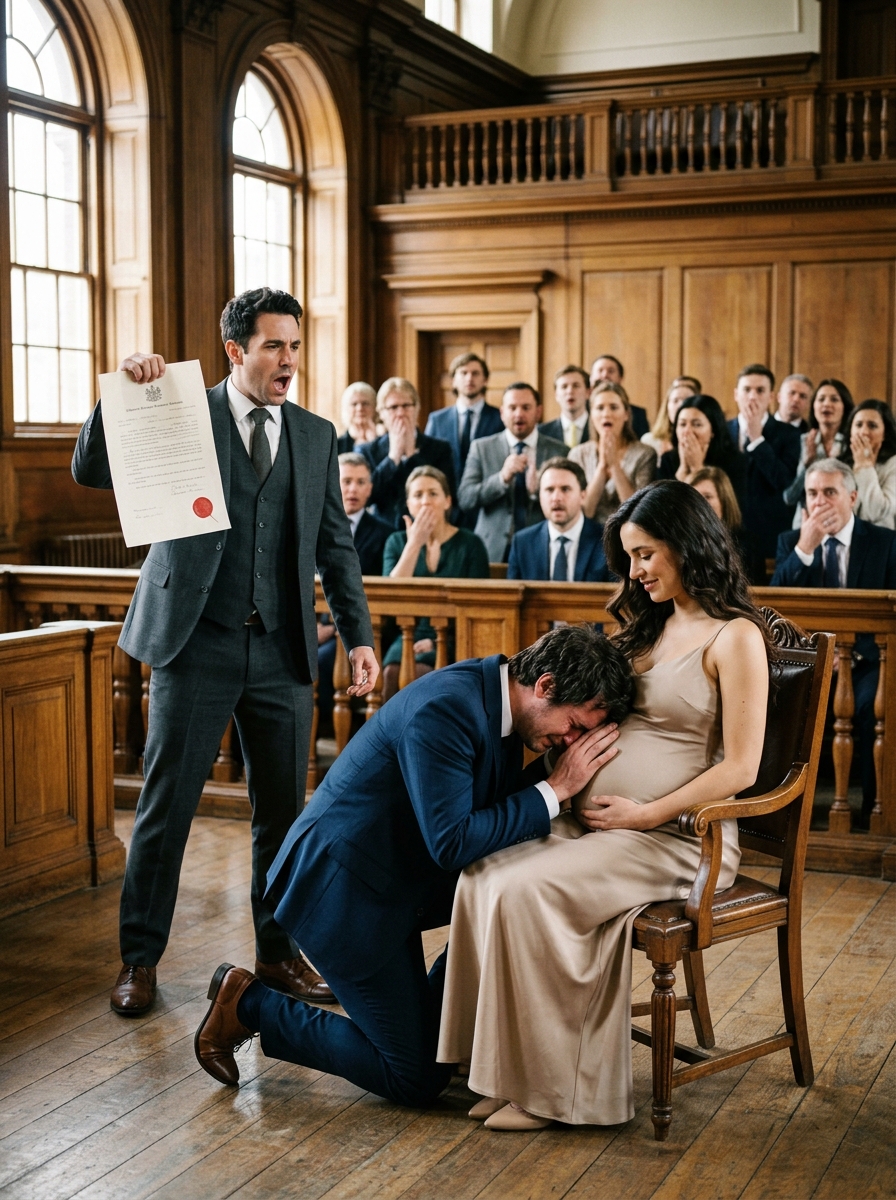
But my grandmother’s sapphire earrings had been recovered through a court order and polished until they blazed beneath the recessed lights.
As I walked through the glass doors, every conversation stopped.
All twelve directors rose to their feet.
They were not standing for Richard Sterling’s former wife.
They were not standing for a woman they once believed was vulnerable and easy to manipulate.
They stood for the trustee.
They stood for the mother of the heir.
They stood for the woman they had underestimated until underestimating her became the most expensive mistake of Richard Sterling’s life.
I walked to the head of the mahogany table.
Set down my briefcase.
Took the seat Richard had occupied for years.
I looked around at the silent faces watching me.
Then I opened the first agenda packet, smoothed the pages flat, and smiled.
“Gentlemen,” I said, my voice carrying through the quiet room. “Let’s begin.”
