

My name is Emily Harper, and I married Daniel Whitmore on a bright Saturday afternoon in Portland, Oregon. He was thirty-two, polished, charming, the kind of man who remembered servers’ names and opened car doors when people were watching. His younger sister, Vanessa, was twenty-seven and had been living with him “temporarily” for almost a year.
Before the wedding, Daniel told me Vanessa was fragile. “She’s been through a lot,” he said. “Just be patient with her.”
I tried.
I truly tried.
On Monday evening, I came home from work with aching feet, still wearing the blouse I had worn to orientation at my new job. Daniel had texted me a grocery list during lunch, then called twice to remind me Vanessa liked her mashed potatoes “extra buttery.” When I opened the front door, the television was blaring some reality show. Vanessa was curled on the couch under a blanket, scrolling her phone while laughing at the screen.
The kitchen sink was full. Empty soda cans covered the coffee table. Daniel stood near the counter with his arms folded, as if waiting for a servant.
“You’re late,” he said.
“It’s 6:20,” I replied carefully. “Traffic was bad.”
Vanessa didn’t look away from the TV. “I’m starving.”
I cooked anyway. Chicken, potatoes, green beans. I plated everything and placed two dishes on the dining table. Daniel sat down. Vanessa stayed on the couch, eyes locked on the screen.
“Dinner’s ready,” I said.
“Bring it here,” Vanessa said, waving a hand without turning around.
I stared at her. “You can eat at the table.”
The room fell silent except for the laughter from the television.
Daniel’s chair scraped back. “What did you just say?”
“I said she can eat at the table,” I replied. “I’m not serving dinner to someone glued to the TV like I’m hired help.”
Vanessa finally looked over, her expression twisting. “Wow. Two days in and she already thinks she owns the place.”
Daniel crossed the room so fast I stepped back instinctively.
“Apologize,” he snapped.
“No.”
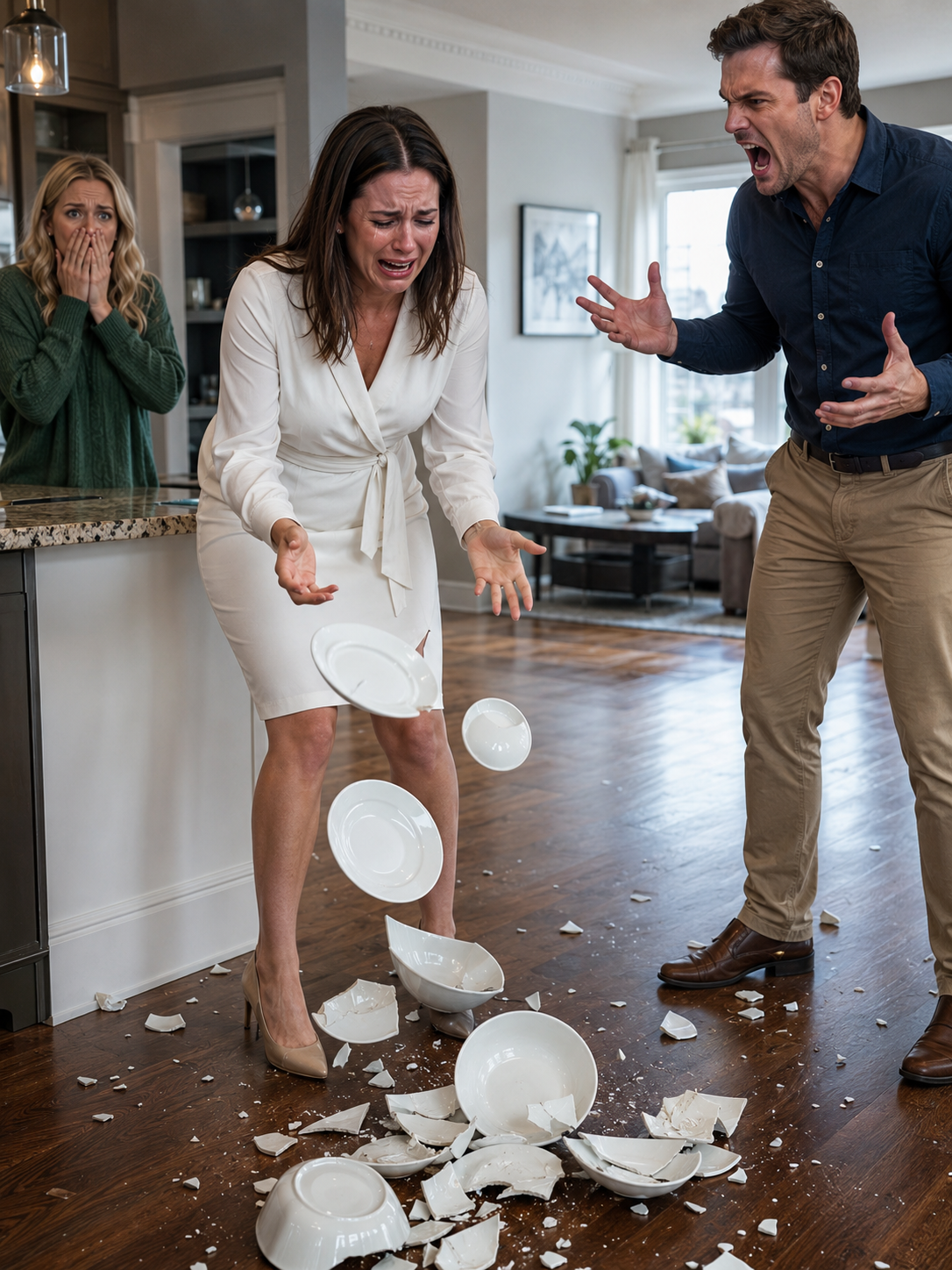
His hand struck my face before I even processed his movement. A sharp wave of pain burst across my cheek. My ear rang. For a single second, everything froze—the blue-and-white flicker of the TV, Vanessa’s mouth slightly open, Daniel breathing hard in front of me.
Then something inside me snapped cleanly in two.
Without hesitation, I shoved the food away. Plates crashed onto the floor. Chicken slid across the tiles. The bowl of green beans shattered near Daniel’s shoes.
I looked him directly in the eyes and said, “You just made the biggest mistake of your life.”
PART 2
Daniel stared at the broken dishes as if they had offended him more than the slap had offended me.
For years afterward, I would remember that moment in fragments: the sting burning across my cheek, the smell of butter and garlic, Vanessa clutching the blanket to her chest, Daniel’s expression shifting from rage to shock when he realized I wasn’t crying.
He expected tears. He expected pleading. He expected me to lower my gaze and apologize for embarrassing him in his own home.
Instead, I reached for my phone.
Daniel lunged. “What are you doing?”
I stepped back and raised it high. “Calling the police.”
Vanessa shot up. “Are you insane? It was one slap.”
“One slap two days after the wedding,” I said, my voice shaking but steady. “That’s not a mistake. That’s a preview.”
Daniel’s expression shifted again. The anger faded just enough for calculation to surface. He softened his voice, using the same tone he had used with my parents at the rehearsal dinner.
“Emily,” he said, “don’t be dramatic. I lost my temper. You threw food everywhere.”
“You hit me first.”
“You humiliated my sister.”
“I asked her to sit at a table.”
Vanessa scoffed. “You came into our family acting like a queen.”
That sentence told me everything.
Our family. Not my home. Not our marriage. Their family, where I was expected to earn my place through service.
Daniel stepped closer. “Put the phone down.”
I dialed 911.
His eyes widened.
When the operator answered, I gave the address before Daniel could interrupt. I said my husband had slapped me across the face, that I did not feel safe, and that I wanted officers dispatched. Daniel started talking over me, insisting I was emotional, newly married, overwhelmed by wedding stress. Vanessa shouted that I had ruined the kitchen.
The operator told me to move away if I could.
I grabbed my purse from the chair.
Daniel blocked the hallway.
“Move,” I said.
“You are not leaving this house like this.”
I looked at him—really looked at him. This was the man who had danced with me two nights earlier under string lights, whispering promises that he would always protect me. Now he stood between me and the door, jaw clenched, his hand still red from striking me.
“I am leaving,” I said. “And you will never touch me again.”
For a moment, I thought he might try.
Then headlights swept across the living room window.
Vanessa whispered, “You actually called them.”
“Yes,” I said. “I actually did.”
The police knocked heavily. Daniel stepped aside with a curse under his breath. I opened the door before he could reconstruct himself.
Two officers entered. One spoke with me in the hallway while the other stayed with Daniel and Vanessa. I told the truth plainly. No embellishment. No emotion added. I said he yelled, slapped me, and tried to block me from leaving. My cheek was already swelling.
Daniel told them I had “lost it” and thrown dinner.
The older officer looked at the broken plates, then at my face.
“Do you have somewhere safe to go tonight?” she asked.
I nodded. “My friend Rachel lives twenty minutes away.”
I packed a bag while the officer remained at the bedroom doorway. Daniel watched from the living room in silence now, his mask fractured but still partially in place.
As I zipped my suitcase, my wedding dress hung inside the closet door in its garment bag—white, untouched, and pointless.
I placed my ring on the kitchen counter beside the broken pieces of plate.
PART 3
Rachel Morgan opened her apartment door before I even finished knocking.
She was thirty-one, a nurse, and the kind of woman who could read injury in a single glance. Her eyes immediately landed on my cheek. She did not react with shock. She did not ask what I had done to deserve it. She simply stepped aside and said, “Come in.” Women’sempowerment coaching
That was the first act of kindness that made me cry.
I sat at her small kitchen table while she wrapped an ice pack in a towel. The apartment smelled of coffee and lavender detergent. Outside, Portland rain tapped gently against the windows, calm and ordinary, as though my life had not just split open.
Rachel pressed the ice pack against my cheek.
“Did the police take a report?” she asked.
“Yes.”
“Good.”
Her voice stayed steady, but her hands shook slightly as she turned to boil the kettle.
I looked down at my left hand. The pale outline where my ring had been felt strange, almost inappropriate. Two days married. Forty-eight hours. People were still reacting to our wedding photos online, while I sat in my friend’s apartment with a swollen face and a police report number in my purse.
My phone began buzzing at 9:14 p.m.
Daniel.
Then Daniel again.
Then Vanessa.
Then Daniel’s mother, Patricia. Familyrelationship coaching
Rachel glanced at the screen. “Don’t answer.”
“I know.”
But knowing and resisting were different things.
The messages came in waves.
Daniel: You embarrassed me in front of my sister.
Daniel: I said I was sorry.
He had not said he was sorry.
Daniel: We need to talk like adults.
Vanessa: You are seriously ruining his life over one slap?
Patricia: Emily, marriage requires forgiveness. Call me.
Then Daniel sent a photo from our wedding. The two of us smiling under the arch, his arm around my waist, my face turned toward him like I had felt safe.
Below it, he wrote: Don’t destroy this because you’re angry.
I placed the phone face down.
Rachel sat across from me. “Tomorrow, we go to the courthouse.”
I looked up. “For what?”
“A protective order, if you want one. And then a lawyer.”
The word lawyer felt enormous. Heavier than divorce. Heavier than police. It felt like a closing door.
“I don’t even know if an annulment is possible,” I said.
“Then we find out.”
I slept poorly on Rachel’s couch. Every passing car outside made my body tense. I replayed everything repeatedly—Daniel’s hand, the sound, Vanessa’s expression, the food hitting the floor. By morning, my cheek had darkened into a bruise makeup could not hide. Food
At 8:30 a.m., Rachel drove me to the courthouse.
I expected something dramatic, but it wasn’t. It was gray, crowded, fluorescent, filled with people holding folders and trying not to cry. A clerk handed me forms. I filled in Daniel’s name, my name, the address, and the incident details. My hand cramped from gripping the pen.
When I reached the question about threats or attempts to prevent me from leaving, I paused.
Rachel touched my shoulder. “Write it.”
So I did.
By afternoon, I had a temporary protective order. It wasn’t a shield. It was paper. But it was paper that acknowledged what had happened.
The lawyer’s office was downtown, on the sixth floor of a building with narrow windows and quiet carpeting. Her name was Marjorie Klein. She was in her fifties, composed, sharp, and direct.
She listened without interruption, then asked for dates.
“Wedding was Saturday, June 14,” I said. “He hit me Monday, June 16.”
Her eyebrows lifted slightly, but her expression remained controlled.
“Do you have witnesses?”
“His sister saw it.”
“Will she admit it?”
“No.”
“Any photos?”
Rachel had taken pictures of my cheek that morning in natural light. I handed them over. Marjorie studied them and nodded once.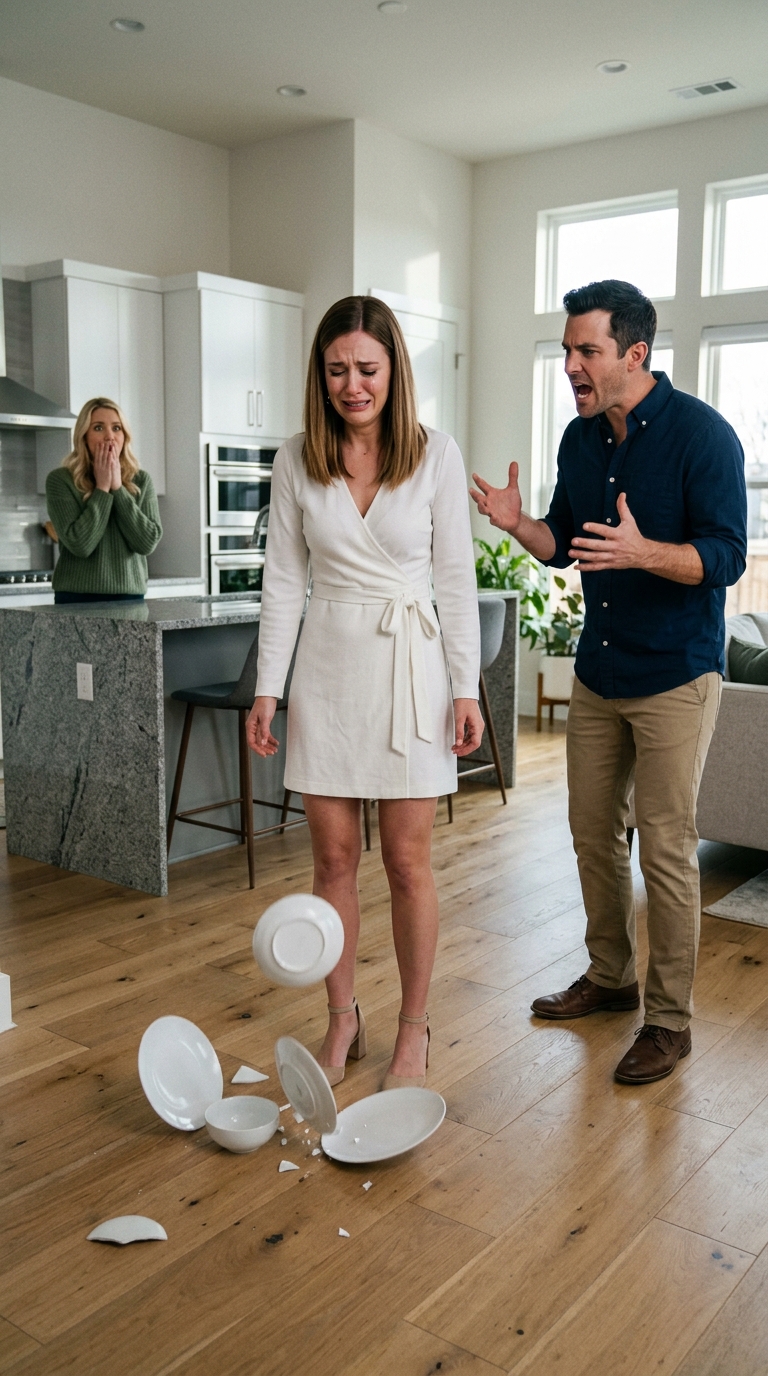
“Police report?”
I gave her the number.
“Good,” she said. “We will file for divorce immediately. Annulment may be difficult depending on grounds, but divorce is straightforward. You need distance, documentation, and no direct contact.”
“No direct contact,” I repeated.
“None. He will escalate in stages—anger, apology, guilt, romance, panic. Do not respond. Everything goes through counsel.”
She was right.
Daniel began with anger.
He sent messages from new numbers after being blocked. He said I had made him look like a criminal. He said his boss’s wife knew people in the police department and rumors could spread. He said I was selfish, unstable, ungrateful.
Then he tried apology.
He emailed a long message titled “My Heart.” He wrote that stress had overwhelmed him, that Vanessa had always been difficult, that he felt trapped between wife and sister. He said he loved me and hated himself for hurting me.
He did not say, “I chose to hit you.”
He wrote, “Things got out of control.”
Then he tried romance.
Flowers arrived at Rachel’s apartment despite him never being given the address. That frightened me more than anything before it. The card read: Come home, Mrs. Whitmore.
Rachel threw the flowers into the dumpster.
I filed an update with the police.
Then came guilt.
Patricia called my mother crying. My mother, Linda, had always liked Daniel—polished men, steady jobs, firm handshakes. At first she asked if I truly wanted to “end a marriage over one incident.” Familyrelationship coaching
I sent her the photo of my cheek.
Five minutes later, she called back sounding different.
“I’m sorry,” she said.
Those words loosened something inside me.
My father, George, drove from Salem the next day. He was sixty-one, a retired mechanic, quiet and broad-shouldered. When he saw me, he hugged me carefully, as though I might break.
“I should have seen something,” he said. “So should I,” I whispered.
He pulled back slightly. “No. He hid it. That’s on him.”
The following month passed with unsettling speed. I returned to Daniel’s home once, accompanied by police, to retrieve the remainder of my belongings. Calling it Daniel’s home now felt accurate. I had only lived there two nights as his wife. My clothes were still packed in boxes. My favorite mug sat in the cabinet, clean and unused. The bed was neatly made.
Vanessa was there.
She leaned against the hallway wall with her arms folded as I packed.
“You’re enjoying this, aren’t you?” she said.
I ignored her.
She followed me into the bedroom. “Daniel is barely sleeping.”
I folded sweaters into a suitcase.
“He cries,” she said. “He actually cries because of you.”
I looked at her then. She wore sweatpants and one of Daniel’s old college hoodies. Her hair was tied into a loose bun, and her eyes were sharp with resentment.
“Vanessa,” I said, “your brother hit me.”
Her mouth tightened. “You provoked him.”
“No. I broke the system you both relied on.”
For the first time, she had no immediate response.
I closed the suitcase.
“You wanted me to become what you were used to,” I continued. “Someone who cooked, cleaned, served, stayed quiet, and absorbed blame when Daniel lost control. I was in that house for two days, and he already showed me the rules. I’m lucky he showed me early.”
Her face flushed. “You think you’re better than us.”
“No,” I said. “I think I’m leaving.”
The officer in the hallway stepped forward slightly, and Vanessa backed away.
I walked out with my suitcases and never looked at the wedding photo still on the mantel.
Daniel contested the divorce at first. He claimed reconciliation was possible. He claimed I had abandoned the marital home. He claimed I was exaggerating for attention. But documentation carries a weight that charm cannot override. The police report existed. The photographs existed. The protective order existed. The messages existed—especially the ones where he admitted he “lost control.”
Marjorie advised patience.
“He wants a private emotional battlefield,” she said. “We keep everything in writing, in court, and on record.”
Daniel hated that.
At the first hearing, I saw him across the room in a navy suit, still attractive but thinner now. His hair was carefully styled. His mother sat behind him. Vanessa was absent. Familyrelationship coaching
He looked at me once, long and wounded, as if I had betrayed him by surviving his version of marriage.
My hands trembled under the table.
Marjorie leaned in. “Breathe.”
The judge reviewed the temporary order and evidence. Daniel’s lawyer attempted to frame it as a newlywed dispute that escalated on both sides. Marjorie did not raise her voice. She simply presented the timeline.
Dinner disagreement.
Shouting.
Physical strike.
Attempt to block exit.
Police involvement.
Visible injury.
Repeated unwanted contact.
Flowers sent to an unlisted address.
The judge extended the protective order.
Daniel’s expression hardened.
That was the moment I stopped separating two versions of Daniel—the charming one and the violent one. There was only one man. The charm had been a tool. The anger was also a tool. He used whichever worked.
After the hearing, Patricia approached me in the hallway.
Rachel moved between us, but Patricia lifted her hands.
“I just want to say something,” she said.
Marjorie warned, “Mrs. Whitmore, be careful.”
Patricia’s lips trembled. She looked older than at the wedding, her makeup sitting unevenly on tired skin.
“I told him to apologize,” she said to me. “I told him he couldn’t do that.”
I said nothing.
Then she added, almost sharply, “But you didn’t have to call the police.”
There it was.
Not accountability. Reputation protection.
I walked away.
The divorce was finalized seven months later.
By then, I had moved into a small one-bedroom apartment near my office. The place had aging floors, thin walls, and a view of brick, but it was mine. I bought a round dining table just large enough for two chairs. On the first night it arrived, Rachel came over with Thai food and a bottle of sparkling cider. Food
We ate at the table.
No television. No commands. No one waiting to be served.
Just two women laughing too loudly in a half-empty apartment while rain slid down the glass.
A week after the divorce, Daniel sent one final message through his attorney. It was brief.
I hope someday you understand what you destroyed.
I read it once, then forwarded it to Marjorie. I did not reply.
Because I did understand.
I had destroyed the future where I learned to flinch at footsteps. I had destroyed the marriage where dinner mattered more than my face. I had destroyed the illusion that a ring could transform control into love.
And I did it two days after the wedding—before mortgages, children, and years of excuses could lock in place.
Months later, I ran into Vanessa in a grocery store.
She stood in the frozen aisle, thinner, her face bare of makeup. For a moment, we both froze. She looked toward the exit, then back at me. Food
“Emily,” she said.
“Vanessa.”
No shouting. No audience. Only the hum of refrigeration.
She swallowed. “Daniel moved to Seattle.”
“I heard.”
“He and Mom don’t talk much anymore.”
I said nothing.
Vanessa tightened her grip on the basket. “He started yelling at me after you left. More than before.”
The words hung there, heavy and delayed.
“I’m sorry,” I said.
She let out a small, hollow laugh. “You were right about the system.”
I looked at her properly then. She was not innocent in what happened. She had mocked, enabled, and protected him. But she had also lived inside that house longer than I had. Maybe she had learned survival through usefulness.
That did not erase her actions.
It only clarified them.
“Take care of yourself,” I said.
She nodded, eyes glistening, and walked away.
I never saw her again.
On what would have been my first wedding anniversary, I did not stay home. I took my parents and Rachel to a restaurant overlooking the Willamette River. My father wore the same suit as the wedding, but this time he smiled without effort. My mother ordered dessert first because, as she said, “We are celebrating backwards.” Familyrelationship coaching
Rachel raised her glass.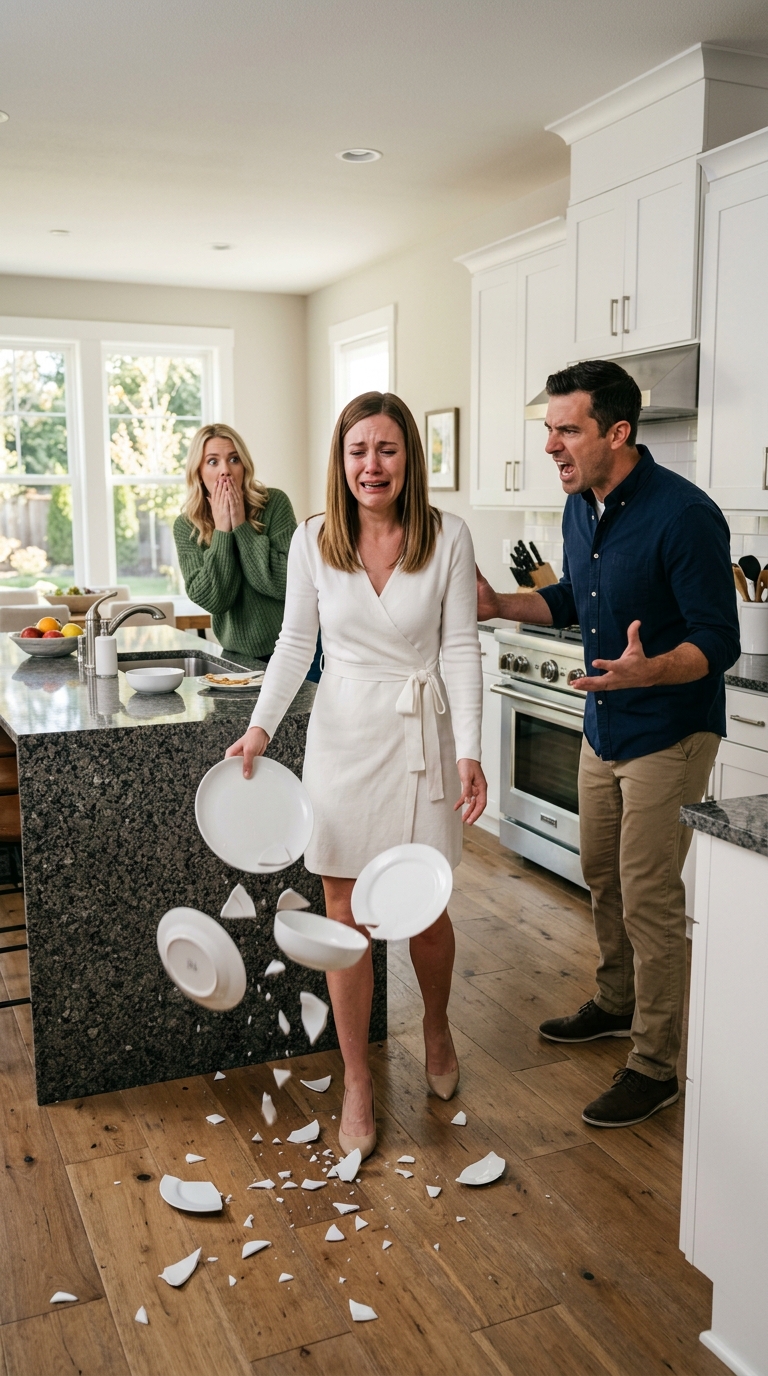
“To Emily,” she said. “For leaving before it got worse.”
I looked around the table—my father’s worn hands, my mother’s soft smile, Rachel’s steady gaze, the city lights reflected on water.
Then I touched my cheek.
There was no bruise left. No visible mark. But I remembered the slap—not as the moment I broke, but as the moment denial ended.
Daniel wanted obedience.
Vanessa wanted service.
Patricia wanted silence.
I chose the door.
And when people later asked why my marriage ended after two days, I no longer softened the answer.
I said, “Because on the second day, he hit me. And on the second day, I left.”
That was the whole story.
Not a scandal. Not a failure. Not a tragedy dressed in white.
A beginning.
